Digital Insights Report 2016 - Virgin Media - Virgin Media Ireland
←
→
Page content transcription
If your browser does not render page correctly, please read the page content below
Virgin Media
Digital Insights
Report 2016
Contents
2    Executive Summary
5    Introduction
6    Digital Economy
10   Digital Lives
14   Digital Media

                     “   I’m delighted to share with
                         you this third report from our
                         unique research which tracks
                         the uptake and impact of digital
                         technology in Ireland since 2012.
                         The findings underline the many
                         benefits of high speed broadband
                         as an enabler of life and living
                         in a rapidly moving society and
                         economy. The report highlights
                         significant opportunities and
                         some challenges for people and
                         businesses everywhere as we
                         continue towards an increasingly

                                             “
                         connected future.

                         Tony Hanway, CEO,
                         Virgin Media

                                                             1
Executive Summary
    We’re at a fascinating juncture in Ireland’s    Digital Lives                                    Overall conclusions
    journey to the digital future where digital
    technologies are having a pervasive             The report reveals that consumers are still      Growth in the digital economy continues
    impact on almost every aspect of our lives.     adjusting to both the positive and               to outpace that of the overall economy
                                                    sometimes not so positive effects of             while digital technologies are having an
    The monetary value we place on our              digital technologies on their personal           increasingly widespread effect on our
    broadband connections has tripled since         lives. Promoters of digital                      working and personal lives.
    2014 – the average consumer would now           solutions will in future need to focus on the
    demand compensation of €390 per month           emotional and relational impact of those         There will be winners and losers
    if their broadband service was removed.         solutions on their customers’ lives – creating   in the digital future. The goal of
                                                    an overall wellbeing effect will be important    all stakeholders should be to
    This report focuses on three aspects of that    for the future.                                  ensure that citizens
    journey: the Digital Economy; Digital Lives;                                                     and consumers are among the
    and Digital Media. You can see more                                                              winners and that the economic
    detailed information online at                                                                   growth necessary to underpin
    Virginmedia.ie/Insights                                                                          sustainable national progress is
                                                                                                     achieved.

    Digital Economy
    In value terms, the digital economy is
    now worth about 6% of Ireland’s GDP
    and every indication is that its growth will
    continue to outpace total GDP growth over
    the rest of the decade.

    Some 94% of Irish internet users now shop
    online with average adult online spending
    per month rising by 13% since 2014, from
                                                    Digital Media
    €71 to €80 per month per person. Overall        Digital media is changing the relationship
    consumer spending grew by just 9% over the      between consumers and media, in how
    same period.                                    they select their news and information and
                                                    form opinions. This study provides strong
    The share of Irish consumer spending            evidence that consumers want more
    accounted for by the digital economy is         control over their use of and exposure
    expected to grow from 7.7% in 2016 to 12.4%     to media.
    by 2021.
                                                    This means that media owners and
    We predict that the value of online             advertisers must continue to provide more
    spending will almost double between now         choice to consumers while persuading them
    and 2021, rising from an estimated €7.5bn       to remain open to receiving their messages.
    to €14.1bn. Unfortunately, about 60% of Irish
    online shopping still goes abroad.

2                                                                                                                                               3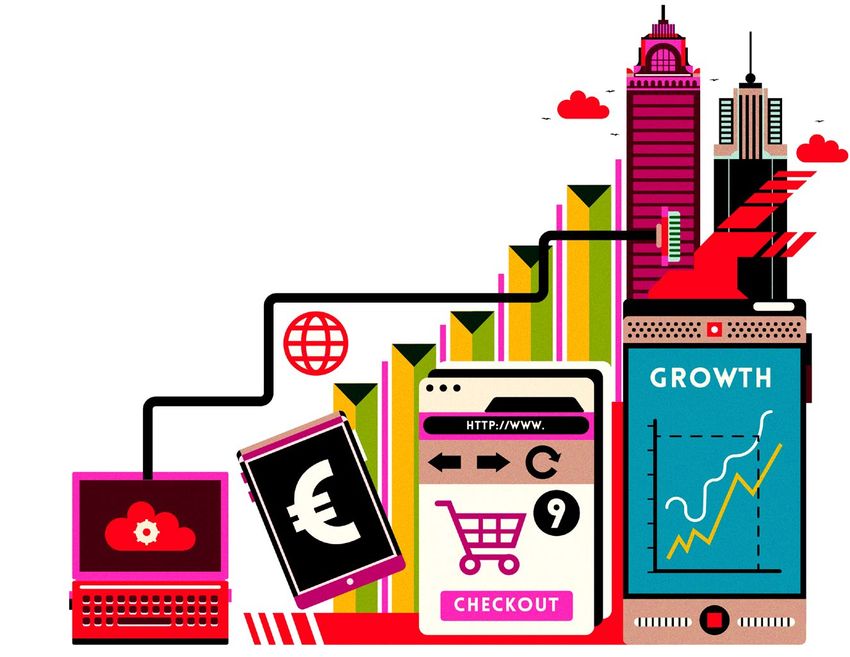
Introduction
    As a nation, Ireland is at a critical juncture                   We hope you find the Virgin Media Digital
    in its digital development. We already                           Insights report helpful and informative as
    enjoy many of the benefits of a digital                          we continue our shared journey towards
    economy and society with the vast majority                       Ireland’s digital future.
    of consumers utilising advanced digital
    technologies and services in their daily lives
    at home and at work. But our digital journey                     Methodology
    is just beginning when it comes to realising
    the full potential for economic growth, job                      This study was commissioned by Virgin
    creation and higher standards of living.                         Media Ireland. As in the previous studies
                                                                     carried out in this series in 2012 and 2014,
    Compensation required every month if a                           Amárach conducted an online survey of
    consumer's broadband was ‘removed’:                              a representative sample of 1,000 adults
                                                                     throughout the Republic of Ireland exploring

    2014 = €130
                                                                     their experiences, behaviours and intentions
                                                                     in relation to the digital future.

    2016 = €390                                                      This latest survey, allows us to make direct
                                                                     comparisons with previous studies, as
                                                                     well as to look in detail at the different
    The report also highlights changes from                          experiences and attitudes of various
    previous studies in this series¹, giving an                      age groups, social classes and regions
    indication of just how far we have come in                       throughout Ireland.
    terms of our digital development.

    The report also highlights in stark terms our
    increased level of digital dependence – the
    degree to which we have become dependent
    on digital technologies in our everyday lives.

    One simple measure of this dependence
    is the ‘consumer surplus’ – the amount of
    compensation an average consumer would
    want if their broadband service was cut
    off. That is the difference between the
    monetary value we place on our broadband
    connections and what we actually pay for
    them. In 2014 this difference or ‘surplus’
    stood at €130 per month; now just two years
    later it has tripled to €390.

    This offers proof, if any were needed,
    of the extraordinary speed at which we
    have adopted, and adapted to, digital
    technologies.
    1

        See: The UPC Report on Ireland’s Digital Future 2012 & The
        Second UPC Report on Ireland’s Digital Future 2014

4                                                                                                                   5
The Digital Economy
       What is it?                                                       opportunities as well as posing substantial
                                                                         challenges in the years and decades ahead.
       Ireland’s economic growth has been among
       the fastest in Europe in recent years.² But
                                                                         All available medium and long term
                                                                         forecasts for the digital economy at a global
                                                                                                                                                  the Digital
       this wasn’t always the case. When we
       started this series back in 2012 Ireland’s
                                                                         level and for Ireland point to strong and                                Economy is now
       economic recovery was fragile and patchy
                                                                         sustained growth in both its value and the
                                                                         number of jobs reliant on it.⁴
                                                                                                                                                  worth about 6%
       at best.
                                                                                                                                                  of Ireland’s GDP
                                                                         Ambitious companies and start-ups will
       However, one part of the Irish economy has
                                                                         find their prospects for success and growth
       consistently flourished and is set to continue
                                                                         enhanced as a result of the availability of
       growing at a faster rate than the rest. This is
                                                                         digital channels as a platform for selling
       the element known as the digital economy.
                                                                         goods and services.
       The digital economy comprises those
                                                                         But success will require a deep
       products and services which are purchased
                                                                         understanding of the needs, wants and
       online, the businesses and employees who
                                                                         preferences of online customers who for the
       deliver them, as well as those aspects of
                                                                         most part will be consumers but could also
       wider business activity and government
                                                                         be other businesses, at home or abroad.
       spending conducted over the internet.
                                                                         The Virgin Media Digital Insights Report
       Our 2014 report predicted strong growth for
                                                                         offers just such insights for ambitious Irish
       the digital economy and recent estimates³
                                                                         entrepreneurs, business leaders and policy
       valued it at €12.3 billion in 2015 which was
                                                                         makers.
       broadly in line with our 2014 forecast. In
       value terms, the digital economy is now
       worth about 6% of Ireland’s GDP and every
       indication is that its growth will continue to
       outpace total GDP growth over the rest of
       the decade.

       Why does it
       matter?
       The digital economy has proven to be
       remarkably resistant to the economic
       volatility experienced in recent years and
       it accounts for an increasing share of
       consumer spending and business activity.
       For businesses and government, the growth
       in the digital economy will create new

    2 Eurostat: http://ec.europa.eu/eurostat/web/national-accounts/statistics-illustrated
    3Assessment of the Macro-Eonomic Impact of Internet Digital on the Irish Economy, Indecon report for Department of Communications, Energy
       and Natural Resources, March 2016
    4See, for example, Ovum forecast for 2025: http://www.ovum.com/press_releases/road-to-2025-digital- economy-to-hit-4-8trillion-during-
       second-digital-revolution-analysts-predict/
6                                                                                                                                                                    7
What do we Top four most frequently used apps or
functions on smartphone:
know? almost unchanged from the 2014 survey – rising
just 1% to 41%. A lot of online shopping is still
Texting 58%
Talking 50%
Our study illustrates how quickly the Irish going abroad. Facebook 46% % using internet to
economy is changing and how rapidly Whatsapp 42% interact with Government
consumer demand is shifting towards digital There has been a notable shift in the reasons
Departments or public
platforms. for buying online rather than in a store, Another highly significant component of the authorities in the past 12
however. digital economy is Government services. Nearly months:
For example, the average adult online spend half – 45% – of Irish adults have interacted with
per month has risen by 13% over the 2014 a Government Department or public authority
level. That’s considerably ahead of the overall in the past 12 months and the overwhelming Revenue Online 87%
9% growth in total consumer spending over the Reasons to purchase a 2014 2016 majority of internet users have chosen digital System (ROS)
same period. product or service online channels for that interaction. Car tax 83%
rather than in a store:
2014 2016 Property tax 82%
There is also a clear appetite for even
€71 €80
The product is not 41% 53%
available in local shops greater use of online and digital channels for Water charge 67%
this purpose. Some 62% of those who have
per person per person I can get it online at 59% 72% Income tax 61%
per month per month interacted with them in the past 12 months
a lower price
agree that Government Departments and
While rising incomes and improved connectivity More convenient to 55% 48% authorities could make better use of the
are undoubtedly playing a role in this trend it’s purchase online internet and other digital tools to deliver
clear that it is also driven by online spending services to citizens.
complementing offline consumption (e.g.
Netflix and Spotify subscriptions replacing the Price still dominates consumer motivations Forecast for Online Consumer for those independent retailers and SMEs
purchase of DVDs/CDs). for shopping online, but the lack of local Spending in Ireland offering their products online to better target
availability is now the second most important Irish consumers. It also, of course, provides
influence, with convenience falling to third. 14% €16bn
In these circumstances, we expect a Value of online spend €Bn opportunities for the same SMEs and start-ups
€14bn
continuation to at least the end of the decade 12% Online % of all to grow their sales overseas.
of the trend of digital spending rising faster One intriguing finding from the study is that consumer spending €12bn
10%
than total spending. nearly 6 in 10 online shoppers say they would €10bn
With online spending by Irish consumers set
not buy a product online if they knew they 8% €8bn
to almost double in value in the next five
As a result, we believe that the value of online could buy it at the same price in a local shop. 6% €6bn
years, there will be even more opportunities
spending by Irish consumers could almost This suggests that Irish retailers need to do a €4bn for digitally-savvy Irish SMEs and start-ups
4%
double between 2016 and 2021. better job of using digital channels to connect €2bn to capture their share of the fastest-growing
with potential customers in order to attract 2% €0bn sector in the economy.
2016 2021 them to their stores.
Government
€7.5 €14.1 There is evidence in our study of a new
dynamic driving online shopping; the impact
Implications Just as SMEs can expect new opportunities
BILLION BILLION of web chat on customer experiences. Over In this section we step back from trends to emerge in the digital economy, so also can
4 in 10 Irish internet shoppers have interacted and survey findings to explore some of the the Government and its Departments and
Frequency of purchasing goods online: with customer service agents on a website implications for different stakeholders in the agencies. Citizens have already demonstrated
via web chat when shopping online and 92% successful development of Ireland’s digital an extremely strong preference for online
of them found it to be a helpful part of the economy. engagement with public service providers. That
shopping experience. preference is likely to grow further in the years
Weekly Monthly
SMEs & Start-ups ahead.
10 %
60 % This may reflect the growing familiarity and
comfort of Irish consumers with interactive
social media and messaging tools such as
What should Irish SMEs and start-ups do to
benefit from the trends/forecasts for the digital
Our research shows that Government is
pushing on an open door with regard to digital
WhatsApp and Twitter. economy? channels and eCitizen engagement and that
it should move ahead to reap the rewards of
4 in 10 92%
A particularly interesting finding from the We have seen that the share of Irish websites
survey is the fact that the share of online better public services and more efficient and
in online sales has remained static. This may lower cost delivery.
purchases accounted for by Irish websites is use webchat find it helpful. mean that there is a ‘substitution’ opportunity
8 9
Digital Lives Why does it 'The Internet of Things’ and other aspects
of the next wave of digital innovation will
matter? present all of us with exciting new outlooks
in terms of addressing emerging needs
Many of the products and services we (some of which we didn’t know we had!) and
take for granted nowadays – Facebook, sustainable growth prospects.
What is it? Another example is 'The Internet of Things’.
As digital intelligence becomes embedded in
Hailo, and Netflix to name but a few –
have only emerged because of an existing There is also an important requirement to
many of the physical products and devices infrastructure of connectivity and technology take stock of how digital technologies are
Digital technologies are now so embedded
that we use every day, so will our ‘offline’ that made it easy and simple for consumers already impacting us. We forget sometimes
in our daily lives that we are often not even
lives become more integrated into the digital to start using them. how quickly we have adopted digital
aware of how integral they have become to
world. The clear implication is that the technologies – the smartphone is less than
how we work, relax, learn and socialise. The impact on Irish lifestyles is already quite
distinction between offline and online may ten years old and smartphones have only
actually become redundant in the fairly near advanced: consumers claim that over a third been adopted by the majority of adults in
Even as the digital economy continues of TV viewing in Ireland is recorded or replay
future. The Internet of Things as we currently the past few years.
to flourish and grow, the ways in which it TV. We expect to see a similar dynamic
describe it will be the digital catalyst for
impacts on consumer lifestyles, spending shaping the next generation of digital
our relationship or connectedness with Add to that the rapid adoption of broadband
patterns and our overall wellbeing are set products and services as they build on a new
technology in all its guises. (fixed line as well as mobile) and it seems
to change dramatically due to these new generation of technologies. appropriate to ask how we are doing as
opportunities.
In this section we look at just some of the a result of our enthusiastic embrace of
opportunities which are already evident % of time 10% Replay TV digital technologies.
For example, by 2020 nearly half of all viewing TV in
today and likely to become even more
entertainment viewing in the EU will be real-time vs 28% Recorded
prevalent by 2021.
time-shifted or non-linear, and the average recorded: 62%
global viewer will spend 24 hours a week 5
See: The Value of Content Report from Liberty Global:
watching online content.⁵ http://www.libertyglobal.com/pdf/public-policy/The- Val- Real time
ue-of-Content-Digital.pdf
What do we know?
Our survey of 1,000 Irish adults took a deeper look at the behavioural and emotional impacts
of digital technologies on our lives and on our wellbeing, our relationships and moods.
Turning first to relationships, it is apparent that Irish consumers are still adjusting to both
the positive and sometimes not so positive consequences of digital lives. This was evident
in responses to our question about the extent to which digital technology helps or hinders
different aspects of our lives:
Do you feel your use of digital technology
(e.g., internet/smartphone) helps or hinders:
Studying/learning new skills 71% 15%
Your Work 53 %
15%
Watching TV 50% 28%
‘Switching off’ from work 50 %
28%
Relaxing in General 55% 31%
Relationships with partners (current or previous) 39 %
30%
Reading Books 42% 34%
Relationships with kids 33 %
32%
Being intimate with your partner (current or previous) 24% 37%
Going to sleep 15 %
61%
10 11
% who say home broadband speed However, there is some evidence in our study of Safety and saving money tend to dominate But this doesn’t mean they are open to
sufficient for needs: potential barriers to realising the full potential consumer preferences for the next generation absolutely anything in the future. As they
of technology in our digital lives. Indeed, the of digital products and services, particularly the seek to consolidate the gains from the digital
percentage of Irish internet users who say Internet of Things, though not all such options economy in terms of work, leisure, shopping
their broadband speed is sufficient for their or innovations are equally welcome. This is not and their social lives, they may well become
2014 2016
household needs has fallen significantly to say that the majority of consumers reject the more discriminating about which additional
75% 69% since 2014. innovations explored in our study. While only products or services they let into their lives.
a minority would ‘really value’ each solution,
We also need to be aware of the emotional likewise only a minority would place absolutely Perhaps one of the biggest challenges to
Nevertheless, our research suggests that the impact of technologies on our lives, especially no value on them. SMEs, start-ups and even to large companies
impact of digital technologies on relationships in terms of key positive emotions such as in the future will be that of persuading already
and lifestyles is broadly positive. This bodes happiness, control and connection. The results satisfied customers that they should try
well for the future impact of new and emerging from our study are encouraging in terms of the new products and services that digital
digital products and services. emotional impact: % who feel more technology will make available in the
connected to family coming years.
How use of digital through digital The brands and designs that shape
technology makes you feel:
communications: 65% digital technology may become even more
important influences on consumer choices.
Happy 80% Sad 20%
% worried about Popular 80% Unpopular 20%
impact of digital
technology on
Calm 80%
Modest 80%
Stressed 20%
Vain 20%
Implications
privacy: 49% Empowered 79% Enslaved 21%
We are at a fascinating point in the story of Ireland’s journey towards the digital future. The past
decade – even the past half-decade – has seen remarkable rates of adoption of digital technologies
There are some concerns, however, with Content 79% Frustrated 21% by grateful Irish consumers. Whether in our homes, workplaces, schools, or on the move, we have
almost half of Irish consumers expressing worry found benefits from the plethora of hardware, software and apps that are now so important to our
In control 79% Out of control 21% daily lives. So what are the implications for those who will shape our future lives?
about the impact of digital technology on their
privacy – broadly unchanged since 2014. Connected 78% Disconnected 22%
The potential importance of the Internet
Confident 77% Insecure 23% SMEs & Start-ups them to experience, when they use your new
product or service, will make you much
of Things was noted earlier. We asked how Sociable 76% Anti-social 24% Those seeking to catch the wave of the next more likely to win in the next wave of the
appealing potential new digital services and generation of digital trends would do well digital economy.
Safe 73% Unsafe 27%
solutions might be in the future, and a fairly to focus less on technology and more on
clear hierarchy of preferences emerged: Energized 72% Drained 28% psychology. They should look at what has Government
worked already in technologies that make
us feel happier, more in control and more There are implications in our findings for
Most preferred services and solutions for the future: connected than before; and maybe sleepier government too. So much of what government
as well (thinking of the 6 in 10 for whom does in our lives – through education, health,
27% Control home security via smart phone smartphones hinder going to sleep!) social welfare and other services – is focused on
making us better, happier and more productive
25% Bringing new technologies to the marketplace citizens. But when it comes to our digital lives,
Monitor electricity use through smart phone will demand an even greater understanding government remains relatively peripheral to our
of the needs and circumstances of Irish needs and hopes for the future.
22% Use smart phone to make payments instead of cash
consumers, especially their emotional drivers
and expectations. If government takes a leaf out of the play book
that entrepreneurs and businesses are adopting
20% Control home heating through smart phone Against the background of an improving for the digital future, there is no reason
economy and rising online spending, there will why the next generation of public services
be opportunities for businesses to invent and and eGovernment could not make a huge
16% Food ‘alerts’ from your fridge to your phone launch new products and even to create new contribution to our wellbeing - as citizens and
markets. Starting with the customer and to the health of our families and communities.
13% Cars connected to internet
the emotional and relational impact you want
12 13
Digital Media
Not only are consumers confronted with
a widening choice of media options, the
ways in which they consume old and new
media is changing as well. Moreover, there
is growing evidence from the Virgin Media
Digital Insights study and other studies⁷
What is it? Irish advertisers will spend more than
€1 billion in 20176 as consumer spending
that consumers want more control over
their exposure to media in general and to
continues to grow. Understanding the advertising in particular: adding another level
We noted in the section on Digital Lives
sources of influences on consumers’ of complexity to the task.
that Irish consumers have enthusiastically
opinions and behaviours is therefore
embraced social media as part of their daily
extremely important. As new online content value-chains emerge,
lives. As a result of this and other trends,
the consumer will enjoy even greater choices
digital media is changing the relationship of
than today, but the content industry (from
how consumers select their news, opinions
creators to broadcasters) will have to navigate
and information.
Digital media is a fast-changing and more fragmented media
landscape in the meantime.
changing the
Why does it relationship between
7
See for example: http://www.digitalnewsreport.org/sur-
vey/2016/ireland-2016/
matter? consumers and media
This year’s report comes against a backdrop
of renewed concerns about the future of the But identifying how consumers consume
news industry, the rise of ad-blocking and media is an increasingly difficult task as Irish
the role of social media. consumers adopt more complex and diverse
media consumption patterns.
The use of adblocking is already significant:
Aware of adblocking: 61% What do
Installed adblocking: 32% we know?
6
Based on 2016 analysis: http://www.coremedia.ie/
outlook2016/ Change is usually evolutionary rather than revolutionary. Television and online channels
remain the primary news sources for most people but the biggest change in digital media
has been the growth of news accessed through social media sites such as Facebook, Twitter,
LinkedIn and Instagram.
Main sources of news and current % who have posted comment or
affairs – ranked in order of dialogued on different media:
importance:
TV 59% Facebook Twitter
News or current affairs web
sites/apps e.g. Irish Times or
Independent.ie
43%
43% 11%
None
Radio 41% Instagram
Newspapers or magazines (in
paper form)
Social media e.g. Facebook or
38%
36%
8% 51%
twitter
14 15
The rise of ad-blocking is beginning to
resonate among consumers. As this software
% who watch video streaming mainly on
mobiles/tablets/laptops: Implications
is becoming more ubiquitous, even the current
relatively new revenue model for digital media
will have to change again. 61 % As the digital economy continues to grow and
technology becomes more integral in
Consumers
our lives, the development of new and existing There are implications in our findings for
One option might be to offer a subscription to
digital media content that is ‘advertising free’ 41 % sources of digital media will become an even
more important part of how we keep ourselves
consumers too. While digital consumers have
for the user, alongside ‘free’ content but with enjoyed something of a ‘free lunch’ in recent
informed, and how we allow others to inform us. years thanks to the burgeoning availability
advertising as part of the package. About 12%
of adults would be interested in 37% So what are the implications for those in the
of digital content and devices for accessing
the ‘advertising free’ option, but again this it, that may be coming to an end as more
digital influence business? viable economic models are sought by digital
suggests that the vast majority would rather be
exposed to advertising than pay for an online 19% influencers everywhere.
media service. The strategic role of Media Consumers already enjoy a substantial ‘surplus
Another important dynamic, evident in our Owners & Advertisers in the value’ from the digital services they consume
study, is the extent to which consumers of value chain (in terms of the difference between what they
digital content want to interact online. What pay as opposed to what they would demand
we are seeing is that a sizeable minority of A key message coming through our research in ‘compensation’ if the same services were
61%
consumers are now active contributors to is that consumers want to be in control of the removed). Don’t be surprised if some of the
social media. In the future, digital influencers news and content they choose to access. creators of that surplus seek new ways to keep
will comprise both media owners and For some, control means the use of more of it for themselves.
media consumers. ad-blocking while for others it means being
able to avoid subscription costs in return for
One example of the increasing complexity and seeing advertisements.
diversity of the digital media ecosystem is the
growth and consumption of video streaming % spending up The implication for media owners and for the
content. While most of this consumption is to 4 hours a advertisers who communicate through them is
entertainment oriented, some is also news and that they must continue to provide more choice
current affairs related (e.g. documentaries etc). week watching to consumers while persuading them to remain
video streaming open to receiving their messages.
However, not all video streaming services are
consumed in the same way, most users of the content
RTE and TV3 players watch the streamed
content on their TV (as opposed to their laptop
or smartphone), but in the case of YouTube
content, only a minority view it on their TV:
?
?
At the moment, it’s too early to tell if the Nevertheless, all of these trends are driven by
expanding availability of video streaming the steady improvement in broadband access What else?
choices is complementing other TV viewing, and broadband speeds. As noted earlier, Irish
or simply increasing the overall amount of consumers have never faced a richer choice Find out more about
time people spend watching TV. Our study
shows that those who spend more time viewing
of news and content sources, nor a greater
range of channels and devices to access such
the Virgin Media Digital
streamed content also spend more time content. But with choice comes challenges Insights study at:
viewing TV in general. both for incumbents and for new entrants, as
the speed of disruption⁸ in the digital news
space in particular appears to be accelerating. Virginmedia.ie/Insights
8
See The Value of Content Report from Liberty Global referenced earlier
16 17© 2016 Virgin Media and Amárach Research, the content of this report may be used and republished freely once The Virgin Media Digital Insights Report is credited.
You can also read


