Digital Transformation The Shift from Analogue to Digital - Tim Mulrey Associate, TSA 27 June 2019
←
→
Page content transcription
If your browser does not render page correctly, please read the page content below

Digital Transformation
    The Shift from
 Analogue to Digital

        Tim Mulrey
       Associate, TSA

       27 June 2019

                                           @TSAVoice
                                      www.tsa-voice.org.uk
        Committed to Making a Difference / Inspiring Trust and Confidence / Strong Together
Service Users

                                                                Association of
     National Fire                                               Ambulance
     Chiefs Council                                              Chief Execs

                                                                                      Standards
  Regulators                     TSA Quality
                                  Standards
                                                                         European
                                                                         Standards
                                                                                     Collaboration
CI, CQC, RQIA,                   Framework                                Boards
     CIW

                                                                    Department
             Ofcom                                                   of Health

                                                British Standards

     @TSAVoice        www.tecquality.org.uk
2019 Quality
Standards
Development

Focus of the TSA in the digital shift
                      •   Creating events and sharing information as to how
                          members can make best use of TECS in the delivery of
                          their services
                      •   Publishing guides to relevant technical standards to
                          support stakeholders
                      •   Developing and agreeing test specifications for TEC
                          industry stakeholders to adhere to
                      •   Publishing testing results to ensure openness and
                          transparency
                      •   Supporting individual members to a greater or lesser
                          extent on their transition testing to All-IP
Benefits of Digital

                      Digital alarm alerts much quicker to send

                      Devices are online – connected continuously

                      Published protocols eg SCAIP

                      Data rich services

                      Internet Protocol signalling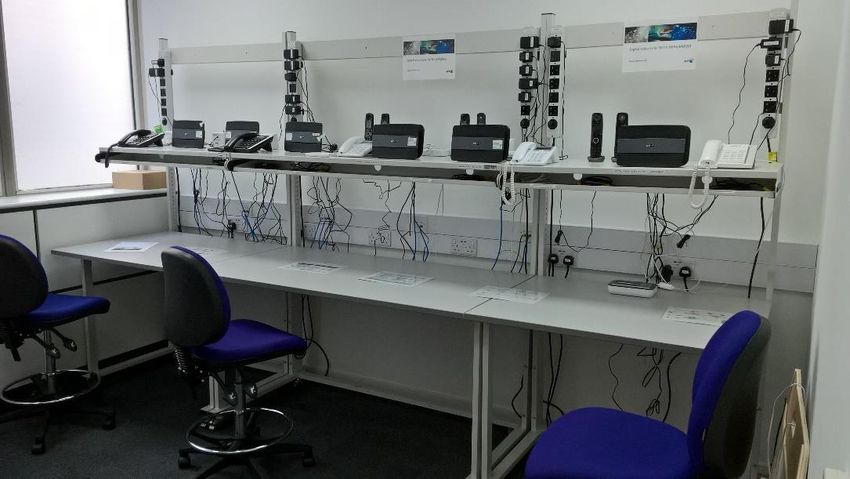
Barriers to take up of fixed digital alarms

                        Long established analogue industry

                        Digital not yet required by procurement

                        Capital cost of wholesale device replacement

                        Alarm Receiving Centre capability

                        SIM cost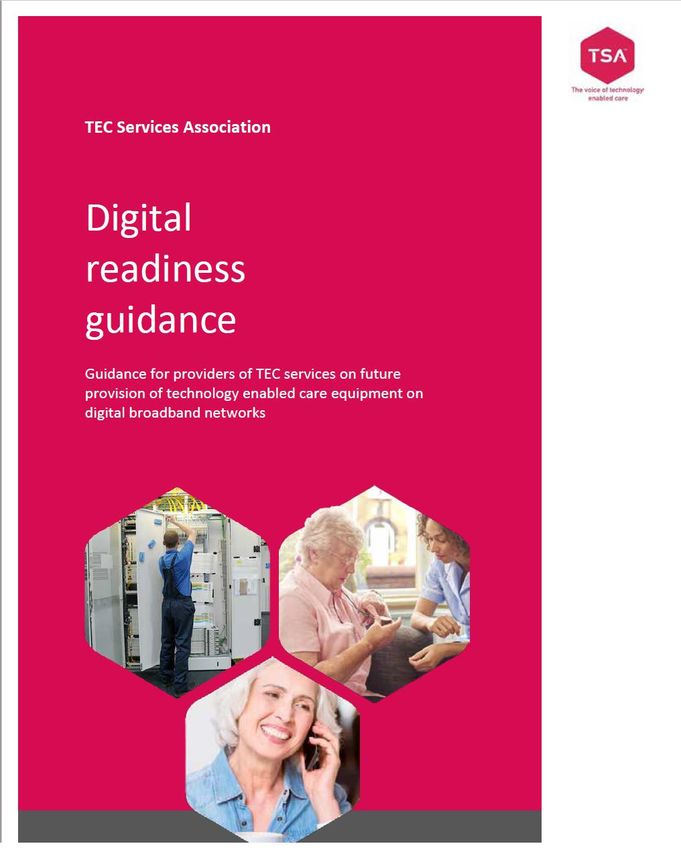
Digital Readiness Guide

                          Highlights:
                          How analogue & digital alarms work
                          Considerations for Alarm Receiving Centres
                          Failover and redundancy
                          Installing digital alarms in the home
                          Glossary of terms
Mobile Readiness Guide

                         Highlights:
                         Global Roaming SIMs
                         USB Dongle guidance
                         3G Sunset
                         PAYG SIMs
                         Data reservoir pricing
Cyber Security Guide

                       Highlights:
                       Organisational Awareness
                       Systems & Processes
                       Business Continuity
                       Network Security
                       Data Protection
Communications Providers
Managing special services
     during the all IP transformation
     Digital Healthcare Show
     Sodhi Dhillon – BT Consumer

11      © British Telecommunications plc 2017
Working closely with special services suppliers is key to a successful all IP transition
BT intends for all its customers to be using fully digital telephone services by December 2025. The first Consumer
proposition will launch in the second half of 2019.
The UK is not the first country transitioning to all IP. Other global communications companies (in Germany, Japan,
Sweden and other countries) are ahead of us in the process of upgrading to digital telephone services.
Special services that rely on our analogue PSTN network may be impacted by the move to all IP, and we’re fully
committed in working with customers and industry to make this a seamless transition.
We’ve been engaging with the industry for the last 18 months and are now collaborating even further with joint
communication campaigns with many trade bodies and suppliers.
Today, we’ll focus on the following 3 topics
Testing special services
Timelines and technical impact Supporting customers
equipment
12 © British Telecommunications plc 2017When?
• May 2018: Openreach started WLR closure consultation.
• July 2018: new test facility opened at BT’s R&D site. December 2025: All BT customers
• November 2018: BT Consumer launched the SmartHub 2 are using digital telephone
which is compatible with Digital Voice services.
2018 2019 2023 2025
• 2019 – BT Consumer launches its digital voice • September – Openreach plans to stop
products for residential customers opening new PSTN / ISDN lines, so no new
sales from this time.
13 © British Telecommunications plc 2017From analogue to digital: What changes in customers’ homes
Analogue…
Router
Extension Sockets
Wall Socket (NTE5)
Voice & BB from the Exchange
Digital…
Router
Extension Sockets
Wall Socket (NTE5)
Voice & BB from the Exchange
14 © British Telecommunications plc 2017Testing Special Services Equipment in the Digital Services Lab
• Early July 2018, BT launched a test facility in Adastral Park, BT’s R&D headquarters near Ipswich, for special
services suppliers to come and test their equipment in BT’s new all IP digital world.
• We’ve created an environment as close as possible to customers’ premises. The lab includes:
• All types of BT Consumer and Business lines and routers
• Possibility to simulate different line performance levels
and real world usage
• We encourage everyone to reach out to their provider and
ask for test results.
15 © British Telecommunications plc 2017Identifying Customers with Special Services Equipment
Gathering
Gathering receiving numbers
centre from monitoring centres
numbers Identifying customers
Identifying customers
• In order to identify customers who uses special services devices, • We’ll look for those number in our calls
we’re asking all receiving centres to give us the phone number records to identify the customers who
their devices use to contact the control centre. have dialled them in the last 12 months
and will put a marker in their account.
Phone number that alarm
and telecare devices • We don’t keep track of the supplier, type
use to contact their ARC
of service or make/model of the special
services device.
Alarm
• It allows us to take extra care with those
customers at the time of upgrading them
Telecare device Alarm receiving onto digital voice services.
centres
BT customer premises
16 © British Telecommunications plc 2017Addressing the key issues of all IP
Reconnecting special services equipment Battery Back Up
• We’ll never advise our customers on how to • In the all IP world, telephone line power no longer
reinstall or plug back their special services exists.
equipment after they move to Digital Voice. • We’ll have a battery back up available to power the
• Instead we’ll always tell them to contact their router for at least 1 hour in case of outage (free of
special services supplier for a resolution. charge for vulnerable customers)
Rapid restoration process Voice Re-Injection kit
• On a case by case basis, customers may be reverted • If using the ATA isn’t suitable, customers may be
to PSTN in case of incompatibility of their special offered an engineer visit to connect their wired
services equipment (only possible until PSTN is extension to the ATA.
switched off) • It requires changing the master socket for the
NTE5C model (launched in 2016)
17 © British Telecommunications plc 2017In summary
We already talked to a lot of people but still need to reach many more
- We’ve been engaging with key suppliers in the alarm and telecare industries and are now working jointly with some
of them to reach out to the rest of the industry.
- We need your help to increase the awareness of the all IP transition in the UK.
Testing is ongoing
- Most major suppliers have tested their equipment in our lab.
- Ask your suppliers for the results of their tests with BT or encourage them to get in touch with us if they haven’t
been to our lab yet.
Start planning the all IP transition in your organisation
- Special services suppliers and organisations that procure such equipment must start thinking and planning about
how they’ll manage the transition
- We’re here to support you, so please get in touch if you have any questions!
18 © British Telecommunications plc 2017For questions or lab bookings, get in touch with us
btdigitalvoice@bt.com
www.btplc.com/DigitalServicesLabIP Voice
The Migration to Voice over IP
Safe Harbour Statement
This document contains forward looking statements and
any such statements be they explicit or implicit implies20no
Virgin Media | Public
commitment on the part of Virgin Media / Liberty Global.What is changing?
• Virgin Media, in common with other communication providers, has work underway to
modernise its infrastructure and that will see a move to service delivery being over a
combination of:
• Next Generation Access (NGA)
• Next Generation Network (NGN)
• This transformation may result in changes that alter the characteristics of telephony services
which will be provided over IP (Internet Protocol).
• It is vital that those changes are understood by all.
• This briefing looks to aid that understanding by:
• Introducing VM’s network expansion programme (Project Lightning)
• Sharing our IP Voice experience with consumers to date
21
Virgin Media | PublicThe Public Switched
Telephone Network
(PSTN)
PSTN technology has been the basis for the
provision of telephone services for decades
Its technology is now becoming outdated and
equipment support from manufacturers cannot be
guaranteed in the long term
If we didn’t modernise, the systems would become
unreliable, and would eventually not be able to be
repaired
PSTN technology is also limited and will not
support new and innovative services that will
become increasingly relevant to modern society
22
Virgin Media | PublicNext Generation
Networks
Project Lightning is a major infrastructure project
underway by Virgin Media to expand our network
and significantly increase our coverage of the UK.
We are connecting people better than ever with
some of the highest broadband speeds in the UK.
The materials we use to do this are Hybrid Fibre
Coax (HFC) and Fibre to the Premise (FTTP).
FTTP does not rely on the copper lines that TDM
runs over, as this technology is approaching end of
life and not sustainable in the medium / longer term.
23
Virgin Media | PublicVirgin Media Voice Technology
Existing (PSTN):
SuperHub
TP (Voice)
AND Cabinet
PSTN
Coax (BB & TV)
TDM Switch
(c140 nodes)
IP Voice :
Coax OR Fibre
(Voice, BB & TV)
Cabinet
PSTN
SuperHub
IP Voice Switch
24
(2-4 nodes)
Virgin Media | PublicIP Voice – Current Timeline
Migration [Existing]
Technical Enablement
Consumer [New Adds]
2014 2016 2016 2018 2019 TBC c.2025
Residential Pilot
Decommissioning
Business Pilot
Proof of Concept
25
Virgin Media | PublicMigration Planning
• Virgin Media are planning to migrate customers from legacy telephony to IP
Voice services by 2025.
• This migration will occur in different ways :
• Provision of IP Voice service to new customers joining Virgin Media
• Migration of individual customers in-life who contact VM
• Migration of customers when a “switch” or area is migrated
• The first two methods could happen anywhere within Virgin Media’s
network area
• The final method will be geographically based
• We will trial switch migration before undertaking this activity
26
Virgin Media | PublicWhat are the challenges?
Power Outages Signaling Protocols Education Changing Needs
Telephone will not IP voice lines should We need to ensure We need to ensure
work in the event of support connected new and existing customers have a
a local power equipment, but some customers are service that is fit for
outage may not work educated on the their needs
changes
27
Virgin Media | PublicHow are we facing those challenges?
• Power Outages: VM is providing an Emergency Back Up Line (EBUL) solution that uses an
in-built SIM card so customers can access 999 / 112
• Signaling Protocol: Devices that comply to relevant standards (e.g. BS8521 and those
adherent to ITU-T recommendations) should be unaffected. However, we are in dialogue with
the alarm industry and stakeholders to support their understanding of the impacts of the IP
switch
• Customer Education: We are making sure our sales channels are clear and informative,
encouraging customers to check with their device provider, updating our T&Cs and user
guides, working to identify vulnerable customers so we can ensure they are properly managed
during migration
• Changing Customer Needs: We are providing the battery powered back up solution (EBUL)
and we are working with Ofcom, other CPs, and alarm / telehealth industry stakeholders
28
Virgin Media | PublicWhat else are we doing?
Events Communications Training Testing Collaboration
We have attended We have been reaching We are continuously We are opening a We are working
various alarm industry out to stakeholders to assessing and updating dedicated testing lab for closely with Ofcom
events across the UK, update them about our our internal processes service providers and and all impacted
including in Belfast, IP Voice plans, e.g. and training for front line equipment manufacturers industries (charities,
Edinburgh, Cardiff, ARCs, industry bodies, and field agents to to test compatibility with LAs, CPs) to establish
Manchester and local authorities reflect our learning our VoIP lines good practice
London
29
Virgin Media | PublicFeedback from Events
• Who is Vulnerable ?
• Why does a CP assess who could be vulnerable ?
• Does IP Voice cost more ?
• What if the customer does not have or want the internet ?
• Can you supply device quickly ?
• Can device call ARC numbers?
• Will testing be done between different networks ?
• When will IP roll out in my area ?
• Can you share customer details when they take IP Voice ?
• Why has Ofcom set 1hr as a battery back up time?
30
Virgin Media | PublicThank you!
Time for your questions
or email
IPvoice@virginmedia.co.uk
31
Virgin Media | PublicDigital Transformation
The Shift from
Analogue to Digital
Tim Mulrey
Associate, TSA
27 June 2019
@TSAVoice
www.tsa-voice.org.uk
Committed to Making a Difference / Inspiring Trust and Confidence / Strong TogetherALL-IP Testing
Summary of Potential Impact of ALL-IP Networks

Characteristics of ALL-IP that potentially affect the operation of alarms
include:

• No ‘line powering’
• No primary communication path in the event of local power failure
• Data discontinuities, which may occur due to:
   o dynamic jitter buffering
   o packet loss
   o interconnections between communications sub-networks
   o DTMF tone detection/re-generation
• End to end delays and synchronisation issues
ARC 6
                                                                                 ARC 2                                    ARC 7
                               ARC 1
                                                                                                                                                                         Data IoT, Smart Home
                              TDM PBX                                           TDM PBX                               SIP Soft-switch

                                                                                 MGW

                                                                 SIP Trunk(s)                         SIP Trunk(s)                                                                  Telemetry Data

                                  ISDN30

                                                    PSTN

ARC 3
                                                                                                                                                                             Internet
TDM PBX                         CP “ABC Telecom”                                  CP “ABC Telecom”
                                                           MGW
                                     TDM Network                                   IP / IMS Network
                                                                                                                           IP Phone

                                              MGW                                SBC

                     ISDN30

                                                                                                                                                                           BT IP Core

                                                                                                                                                                                                D
                                                                                                                SBC                                                                             S
                                                                                 SBC                                                                                                            L
                                 H             H                                                                                                                                                A
                                                                                                                                                                                                M

                                                                                                                                        BT Digital                                                                 IP Phone
                                                                                           BT UK IPX                                      Voice                                     FV
                                                                                                                                                                                  Access
                    PSTN
                                                                                                                                                                                   VPN          D
                                 H             H                                 MGW                                                                                                            S
                                                                                                                                                                                                L
                                                                                                                                                                                                A
                                                                                                                SBC                                                                             M

                                                                                                                                                                                                     Analogue
                              BT TDM Voice                                                                                                                                                           Via Adapter

          Access                                                                                                          MGW            SIP Trunk(s)
   CPE    network

                                                                                                                         ARC 4                              ARC 5

                                                                                                                        TDM PBX                         SIP Softswitch
ARC 6
ARC 2 ARC 7
ARC 1
Data IoT, Smart Home
TDM PBX TDM PBX SIP Soft-switch
MGW
001
Call flows ISDN30
SIP Trunk(s) SIP Trunk(s) Telemetry Data
PSTN
ARC 3
Internet
TDM PBX CP “ABC Telecom” CP “ABC Telecom”
MGW
TDM Network IP / IMS Network
IP Phone
MGW SBC
ISDN30
BT IP Core
D
SBC S
SBC L
H H A
M
BT Digital IP Phone
BT UK IPX Voice FV
Access
PSTN
VPN D
H H MGW S
L
A
SBC M
Analogue
BT TDM Voice Via Adapter
Access MGW SIP Trunk(s)
CPE network
ARC 4 ARC 5
TDM PBX SIP SoftswitchTest Specification
Test Specification – Packet Delay & Loss
Test Specification – Fault Response
ALL-IP Test Guidelines: Categories of Testing
  • Baseline Tests: end to end testing over a single communications network provider, employing
    selected combinations of alarm and ARC equipment and protocol types across a TDM network.

  • Network Combinations: different combinations of paired communications providers, varying
    network performance characteristics, only selected combinations of alarm, ARC equipment
    and protocol types.

  • Alarm System Configurations: multiple combinations of alarm and ARC equipment types,
    employing nominal network performance characteristics.

  • Fault identification: communications are disconnected and the ability of the alarm system to
    identify faults and recover is tested.

  • Power Testing: loss of local power is simulated, alarm system response is tested.
Test Scenarios for different ‘Call Flows’
Call Flow TCPE Connection ARC Description and Variant Configuration
no. Connection
001 BT/TDM BT/TDM Baseline network test
002 BT/IP BT/TDM IP-TDM transcoding Single comms
003 BT/IP BT/IP SIP (IP) end to end provider
004 BT/IP BT/IP Media gateway transcodes to TDM at ARC
005 BT/TDM Virgin/TDM TDM interconnect
006 BT/TDM Virgin/IP TDM-IP transcoding, and SIP server at ARC
007 BT/TDM Virgin/IP TDM-IP transcode & transcode to TDM at ARC
008 BT/IP Virgin/TDM Via UK IPX or TDM interconnect multiple
009 BT/IP Virgin/IP SIP (IP) end to end providers
010 BT/IP Virgin/IP Media gateway transcodes to TDM at ARC
011 BT/TDM TalkTalk/TDM TDM interconnect
012 BT/TDM TalkTalk /IP TDM-IP transcoding, and SIP server at ARC
013 BT/TDM TalkTalk /IP TDM-IP transcode & transcode to TDM at ARC
014 BT/IP TalkTalk /TDM Via UK IPX or TDM interconnect
015 BT/IP TalkTalk /IP SIP (IP) end to end
016 BT/IP TalkTalk /IP Media gateway transcodes to TDM at ARC
Etc Repeated for each major Communications Provider combinationAlarm Receiving Centres (ARCs)
• ARCs monitor vulnerable clients using hubs and peripherals via predominately
landline technology
• There are over 200 ARC s in the UK
• ARCs deal with a total of 1.7 million clients
• Alarms are typically raised for falls, smoke alarms, door exit contacts etc…
• ARC receives a landline call from the property triggered by the emergency
• Landline call contains the audible DTMF tones which identify the type of incident to
the contact centre as well as the voice connection to speak to the client
• The ARC operator will then deal with the emergency as appropriate
Extract from TAG Terms of ReferenceARC Incident – March 2019
• ARC operators began to receive emergency calls which carried DTMF tone but no
voice connection
• Operators were unable to dial back as the alarm equipment was constantly re-dialing
the ARC number
• This issue multiple clients
• These failed emergency calls were classified as no response and the individual impact
was as follows:
Extract from TAG Terms of ReferenceFailed Smoke Alarm Alerts
• There were two smoke alarm alerts raised for this cohort of clients
• On both occasions the operator was unable to provide any guidance to the client as to how to exist
the property as per normal procedures
• Fire Services was called to both incidents – both incidents were identified as not requiring fire services
Door Exit Alert
• One door exit alert was triggered during this period
• The door exit trigger was in place for a client with dementia who was known for wandering
• The operator was unable to provide reassurance to the client and to assist them with returning to the
property
• Quick thinking on the operators part led them to notify a neighbour who was able to help the client
return to their propertyFall Alarm
• Fall alarm emergency received with no voice connection possible
• Lady had fallen and was in extreme pain with a broken hip but was only able to
trigger the fall alarm
• She did not receive any reassurance that her emergency call had got through to the
ARC and she did not know if anyone was coming to help her
• An ambulance did eventually arrive but her confidence in the system has been lostAnalysis
• The communication provider was utilising lower cost routing where possible
• The dialled number was not on a protected dialled number list
• Multiple hops on the core network degraded the standard of the call to the point at
which the emergency calls were not being transmitted across the network correctly
• The dialled number has now been added to the protected list but how can this be
prevented in the future for all 200+ ARC with multiple dialled numbers?Summary ▪ Learn from events and network with other organisations with similar challenges to yourselves ▪ Provide relevant information to ALLIP@tsa-voice.org.uk ▪ CPE Equipment / Dialled Numbers ▪ ARC Hardware / Software / Network / Number / Type ▪ Consider an alternative to like for like replacement ▪ Richer datasets ▪ Predictive Analysis ▪ A more digitally aware aging population ▪ Seek engagement from the highest levels in your organisations ▪ Use TSA guidance and support
Q&A

@TSAVoice   www.tsa-voice.org.uk
You can also read


