Dr Vladimir Ryabinin Executive Secretary IOC of UNESCO - ICP-20, UN HQs, NY, 10.06.2019
←
→
Page content transcription
If your browser does not render page correctly, please read the page content below
Dr Vladimir Ryabinin
Executive Secretary
   IOC of UNESCO

          ICP-20, UN HQs, NY, 10.06.2019
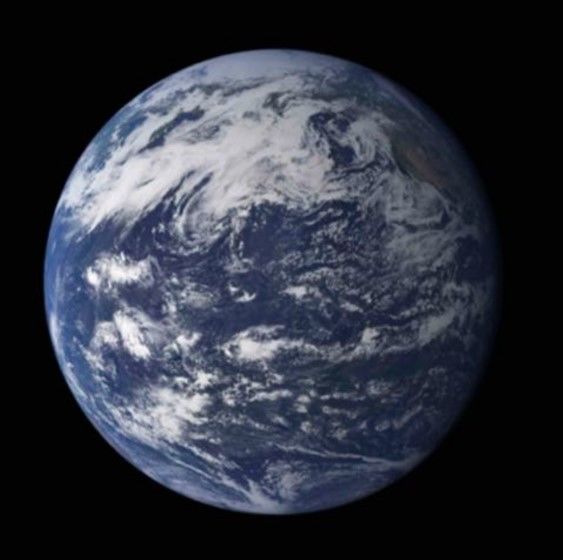
                                           Credit: NASA, Robert Simmon & Marit Jentoft-Nilsen,
                                           MODIS data, 2 October2010
Reality Check: Where Are We?
Carbon Emissions and the Shared Socioeconomic Pathways

Source: CDIAC; Le Quéré et al 2018;
Global Carbon Budget 2018                 Source: Riahi et al. 2016; Rogelj et al.
                                            2018; IIASA SSP Database; IAMC;
                                              Global Carbon Budget 2018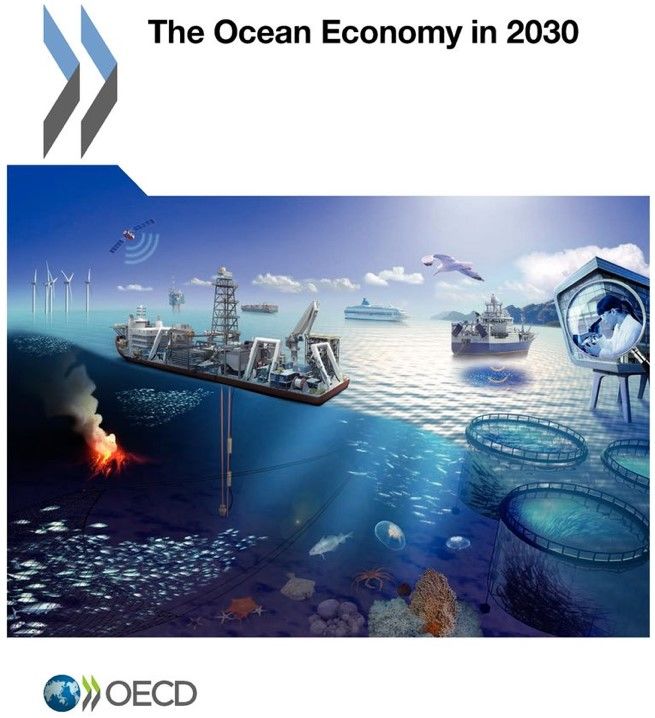
Ocean: hot, sour and breathless!
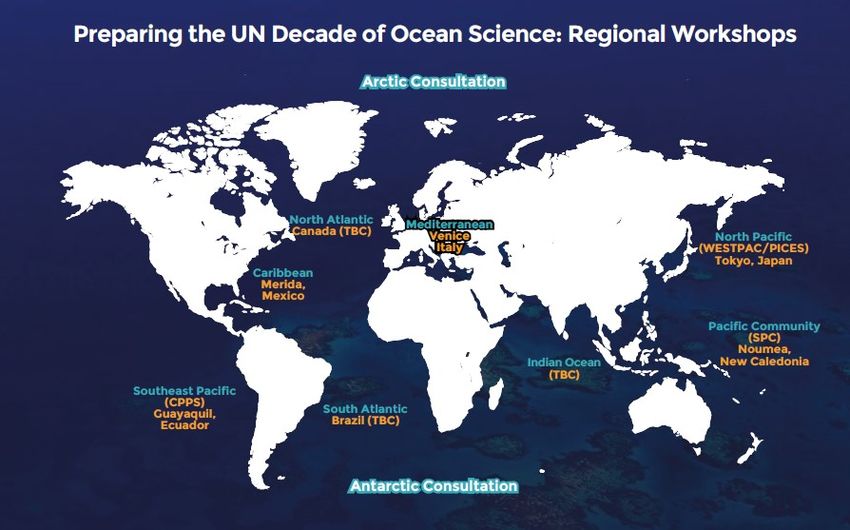
Omnibus Resolution for Oceans and the law of the sea
           (A/RES/72/73) of 6 December 2017

1. Proclaimed the UN Decade of Ocean Science for Sustainable
Development 2021-2030, within existing structures and available
resources, and called upon the IOC to prepare an implementation
plan for the Decade in consultation with …(everyone).
2. Requested the IOC provide information on the development of
the implementation plan and regularly consult with, and report …
3. Invited the UN SG to inform the UNGA about the
implementation of the Decade through his report on oceans and
the law of the sea based on information provided by IOC…
4. Invited UN-Oceans and its participants to collaborate …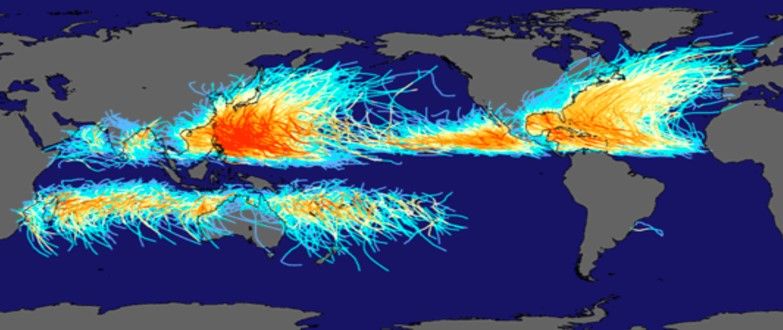
Input to ICP-20 and Decade
      UN-Oceans + Azerbaijan, EU, Indonesia, IHO, ICCAT, ICES, NEAFC, NPAFC, Sri Lanka, ECLAC, USA

Interim        Executive
Planning =>    Planning
Group          Group
 =>

               ROADMAP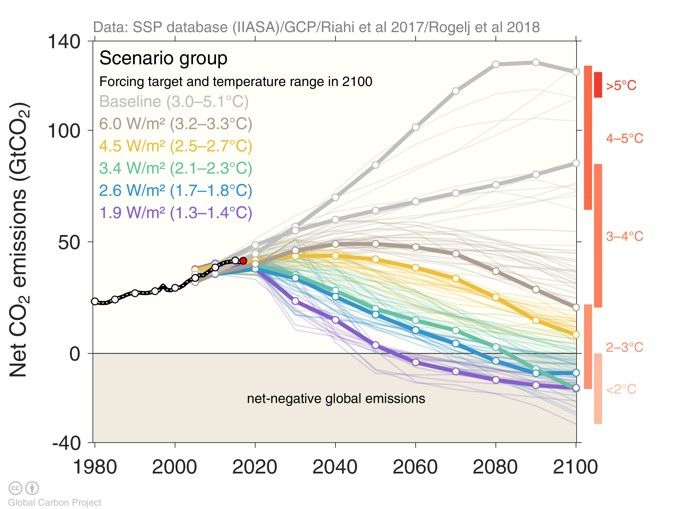
Process: timeline and milestones
                     2019                                2020
                            REGIONAL/THEMATIC
 Global Meeting (CPH)                                     Global Meeting (2020)
                               WORKSHOPS
 Multistakeholders          Multistakeholders            Multistakeholders
Outputs:                     Regional Regional           Outputs:
                             Workshop         Regional                                  DECADE
- Research priority                  Workshop Workshop   - Consolidation of        IMPLEMENTATION
                                 1        2
  areas                                          3         results from various
                               Thematic                    consultations                PLAN 1.0        2nd UN
- Knowledge/policy                      Thematic
                             consultation
                                                         - Structured              •   Science Plan     Ocean
  gaps                             1 consultation
- Participants/Stake-                       2              Implementation plan     •   Work              Con-
                                                                                       programme       ference,
  holders engagement        Outputs:                       and governance                               Lisbon
- Mapping of existing       - Contextual                   arrangements                2021-2023
  building blocks             enrichment of R&D          - Development of              (Phase I)
                              areas                        operational plans       •   CD Plan
- Crosscutting issues
  (CD, Technology,          - CD needs                   - Formalize               •   Governance      UNGA

  Data, Partnerships)       - Follow up                    partnerships                arrangement
- Financing pathways          arrangements               - Address cross-cutting   •   M&E
                            - Partnerships                                         •   Communication
                                                           issues
                                                                                                       IOC GB
                 Stakeholders engagement
 EPG/UN+         Synthesis from GPM/regional meetings/thematic consultations
                 Science plan scoping + Drafting of Implementation Plan,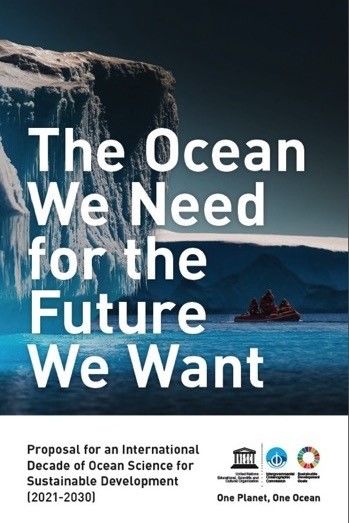
Decade 1st Global Planning Meeting, Copenhagen, 13-15 May 2019
Process: timeline and milestones
                     2019                                2020
                            REGIONAL/THEMATIC
 Global Meeting (CPH)                                     Global Meeting (2020)
                               WORKSHOPS
 Multistakeholders          Multistakeholders            Multistakeholders
Outputs:                     Regional Regional           Outputs:
                             Workshop         Regional                                  DECADE
- Research priority                  Workshop Workshop   - Consolidation of        IMPLEMENTATION
                                 1        2
  areas                                          3         results from various
                               Thematic                    consultations                PLAN 1.0        2nd UN
- Knowledge/policy                      Thematic
                             consultation
                                                         - Structured              •   Science Plan     Ocean
  gaps                             1 consultation
- Participants/Stake-                       2              Implementation plan     •   Work              Con-
                                                                                       programme       ference,
  holders engagement        Outputs:                       and governance                               Lisbon
- Mapping of existing       - Contextual                   arrangements                2021-2023
  building blocks             enrichment of R&D          - Development of              (Phase I)
                              areas                        operational plans       •   CD Plan
- Crosscutting issues
  (CD, Technology,          - CD needs                   - Formalize               •   Governance      UNGA

  Data, Partnerships)       - Follow up                    partnerships                arrangement
- Financing pathways          arrangements               - Address cross-cutting   •   M&E
                            - Partnerships                                         •   Communication
                                                           issues
                                                                                                       IOC GB
                 Stakeholders engagement
 EPG/UN+         Synthesis from GPM/regional meetings/thematic consultations
                 Science plan scoping + Drafting of Implementation Plan,
Ocean in the main UN Frameworks

                                     PSMA

                              CCRP
Desirable Change of Paradigms in Ocean Science Orgqnization
Value Chain
1. Clarity!
2. Fragmentation -> Consolidation:
e.g., SDG 14 Targets and Aichi Targets,
need to implement ALL Conventions,
MSP or ICZM or EBSAs or MPAs or LMEs;
3. From “symptomatic” approach
to more acting on roots of problems
4. Address the funding source dilemma:
research projects => reduced sustainability
5. From agencies’ competition to cooperation
6. Incentivize Value Chain of Oceanography
7. From project orientation to designing a SystemSustainability of ocean and meteorological observing networks
WMO Convention (1947)
Article 2, The purposes of the World
Meteorological Organization: Funding sustainability
Ocean Meteo
(a) … Cooperation in the establishment of Observing Networks
of networks of stations …; Solved today, no problems
28% 68%
(b) … rapid exchange …; foreseen in the future
(c) … standardization …o; Solved today, but problems
52% 27%
(d) application of meteorology ... foreseen in 2-3 years
No funding today, but plans
7% 3%
Article 9, Execution of Congress decisions: for funding in the near future
a) All Members shall do their utmost to No funding today, no plans for
9% 2%
implement the decisions of Congress; funding in the near future
(b) If, however, … Other 4%Develop Global
Resilience Ocean Change
to Climate Science and
Capacity
Variability
Tropical CyclonesOcean (“Blue”) Economy
2010: US$ 1.5 Tn
2030: US$ 3 Tn
(2016)Parallel with climate debate after the UNFCCC COP in 2008
New Social Contract for Climate Science
A commitment on the part of all scientists to
devote their energies and talents to the most
pressing problems of the day
2021 – 2030:
New Social Contract for Ocean Science
New Ocean Narrative:
“Ocean too big to be ignored”Where we are and where we would like to be • Science largely competent for • Science providing solutions problem diagnostic and motivation for action • Observing system for climate • Ocean data system for and emerging data service past, present, and future • Major knowledge gaps, • Ocean literate and weak ocean literacy well-informed decisions • Funding base mostly via • Clear value chain leading to national research agencies (except EC) resourcing and commitment • Hugely uneven capacity, especially • CD/ transfer of technology: developing countries/SIDS no one remains behind
Decade Approach: Consolidation/Integration,
                Proactive Design, and Expanding Uptake
                                              •   Mapping, digital atlas
Science breakthroughs needed:                 •   Observing system
                             Solutions +      •   Ecosystem knowledge for service
              Missions       Motivation       •   Data and information
 Resources + Projects                         •   Multi-Hazard warning systems
 Requirements                                 •   Ocean in Earth System science
                                              •   CD, education, ocean literacy
 Some societal applications                   •   ???

                                           Aquaculture /

               Climate services
Potential Foundational Missions/Projects (not in any order)
1. Complete mapping of ocean including seabed
2. Deep ocean observations and research
3. Genetic image of the ocean – eDNA
4. Guided adaptation of ocean ecosystems, e.g. selective breeding for corals
(warming, pH, O2, pollution, turbidity, light, invasive species, …)
5. Ocean prediction – also for life in the ocean and fisheries
6. Ocean Science for Climate Services – huge untapped potential
7. Ocean economics, knowledge value chain
8. Science for governance, coastal zones, MSP, coastal cities
9. Polar oceans & their observing system
10. … you name it …Architecture: four potential starting pillars of the Decade (?)
Georeferenced Atlas Observations -> Prediction
(New Generation Map) Ocean Data/Info System (Portal)
of the Ocean Assessment of knowledge
(IHO, OBIS, ISA, Ocean Atlases,…?) (ODIS, leading projects, WCRP, …)
Societal applications, economy
Science - policy interface
Coordination + Communication
Work at UN, regional, national level
CD, Ocean Literacy, Education
Accelerators, techno-hubs, UN, IOC, 2nd Ocean Conference
GEF/WB, economic valuationTake home message • “Ocean is so big that it can no longer be ignored.” • Ocean science has an existentially-important societal contract. • A meaningful, ambitious, transformative implementation plan for the Decade will make ocean science able to deliver, for all. • Despite the scale of undertaking is huge, the Plan is shaping! Nelson Mandela: “it seems impossible until it is done.” • Major changes will be needed in our approaches to: • Map the Ocean • Create a new generation user-tailored adjustable data system • Stimulate growth of science-based ocean management and sustainable blue economy • Strengthen governance of ocean science • Ocean science has to grow from a curiosity – driven discipline to a combination of fundamental research and a resourceful system of services to humanity. • This transformation is possible and we are starting to understand how to get there based on what exists and what is becoming feasible.
You can also read


