DURRELL ENDANGERED SPECIES MANAGEMENT GRADUATE CERTIFICATE - DESMAN 13 SEPTEMBER - 3 DECEMBER 2021, JERSEY
←
→
Page content transcription
If your browser does not render page correctly, please read the page content below
DURRE LL E NDANGERED
SPE CIES MANAGEMENT
G RADU AT E C ER TI FI C ATE
DE SM A N 13 S E P T E M B E R - 3 D E CE MBE R 2 0 2 1 , J E RS E Y
DURREL L END ANG E R E D S P E CIE S M A N A G E M E N T GR A DU AT E C ER T I F I C AT E (DESM A N ) J E R S E Y 2 0 2 1

CO U RS E OV ERV I EW                                             W H O IS IT FO R ?
The 12-week DESMAN course, run in Jersey                          The course is suitable for candidates already
annually, is Durrell’s flagship Jersey-based training             showing great potential to become future
programme for conservationists from around the                    conservation leaders. The DESMAN course
world. Each year, around a dozen conservation                     is recognised as a Graduate Certificate
workers travel here to study and gain latest skills               and is intended for participants who have
to maximise their effectiveness at managing                       usually attained at least their first degree or
or participating in conservation projects in                      have comparable experience of biodiversity
their home country, or whilst working for their                   conservation in the workplace.
respective organisations. The training provides
a broad range of current conservation theory,                     To be eligible you must:
practical specific skills in endangered species                   1. be employed in the field of conservation or
management, and a range of transferable                               in teaching conservation-related topics at
skills in conservation management, leadership                         graduate or postgraduate level, or working
communication and fundraising.                                        towards such employment

  QU A L IF IC AT I O N S G AI NE D                               2.    if employed, have the support of your
                                                                        employer and confirmation that, should you
  DESMAN is a well-respected qualification                              be selected, you will be returning to your
  recognised internationally by potential                               place of employment after training
  employers, NGO’s and associations.
  The course is officially validated as a                         3.    be sufficiently fluent in English to follow
  ‘Graduate Certificate’ by the University of                           technical presentations, read scientific
  Kent.                                                                 papers, and write short proposals
  There is also an additional optional
  ‘Leadership Certificate’ accredited by the                      Please note that this is an intensive course with
  Chartered Management Institute.                                 a considerable workload.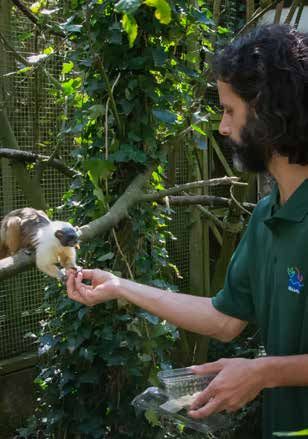
DURREL L END ANG E R E D S P E CIE S M A N A G E M E N T GR A DU AT E C ER T I F I C AT E (DESM A N ) J E R S E Y 2 0 2 1

WH AT IS THE C OURSE                                              CO UR S E LE A R N IN G
CO NTE N T?                                                       O B JE CTIV E S
The taught component of the course includes the                   By the end of the course you will have learnt
following main topics:                                            useful skills such as:
•    biodiversity and drivers of species decline                     ü population monitoring techniques
•    conservation planning and priority setting                      ü radio tracking
•    the role of zoos and captive breeding                           ü practical GIS and spatial analysis
•    principles of animal husbandry                               The course also covers the principles of:
•    conservation medicine and wildlife disease                      ü research design
•    small population biology and genetics                           ü data management and statistical analysis for
                                                                       conservation
•    in-situ conservation techniques
                                                                  You will also get the opportunity to:
•    management and leadership skills
                                                                     ü work with the animal and veterinary
•    facilitation and team skills
                                                                       departments and keepers at Jersey Zoo
•    GIS for conservation managers
                                                                     ü learn practical aspects of care and
•    captive and field research skills                                 maintenance of animals in a captive
                                                                       environment
•    education and community conservation
                                                                  We also put considerable weight on the
•    fundraising and financial management
                                                                  importance of transferable ‘human skills’ as
                                                                  these are all vital to conservation success. In this
                                                                  context you will learn about:
                                                                     ü working with people
                                                                     ü understanding their needs and motivations,
                                                                       and trying to alter perceptions, attitudes and
                                                                       behaviours
                                                                     ü management, leadership, running effective
                                                                       teams
                                                                     ü communication skills
                                                                     ü facilitating workshops with multiple
                                                                       stakeholder groups

                                                                    DESMAN
                                                                    changed my
                                                                    life, not only
                                                                    professionally but
                                                                    also personally
                                                                    DESMAN c o u rs e par t ic ipan t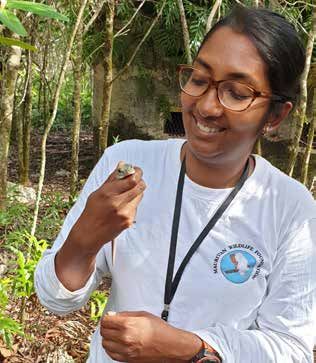
DURREL L END ANG E R E D S P E CIE S M A N A G E M E N T GR A DU AT E C ER T I F I C AT E (DESM A N ) J E R S E Y 2 0 2 1

C O UR S E                                                        C OURSE
O UT LI N E                                                       A SSESSMEN T
The main topics covered will include the                          You will be assessed through the following:
following (approximate time allocated is shown in
                                                                  •     Written examinations on data manipulation
brackets):
                                                                        and conservation knowledge
•    Understanding biodiversity (3 days)
                                                                  •     Written summary of skills development task
•    Species conservation prioritisation and the
                                                                  •     Practical work assessment
     IUCN Red List (2 days)
                                                                  •     Written project proposal and presentation
•    Action planning and planning species
     recovery projects (2 days)                                   •     Written scientific abstract

•    Dealing with threats to biodiversity – invasive              •     Scientific research poster design
     species, climate change, human-wildlife

                                                                  C OURSE
     conflict, wildlife trade (3 days)
•    Conservation genetics (½ day)
•    The role of captive animal management in
     species conservation (2 days)
                                                                  LEA DERS
•    Animal welfare and conservation (½ day)                      In addition to Durrell’s own expert staff, you will
•    Key aspects of animal husbandry (1 day)                      be taught by a wide variety of highly respected
                                                                  international experts brought in to give greater
•    Conservation medicine (2 days)                               insight into specialist topics. Over forty people
•    Reintroduction (½ day)                                       help to deliver the training on this course.

•    Population monitoring techniques (2 days)
•    Community conservation and ecotourism
     (1 day)
•    Conservation education (2 days)
•    Facilitation and communication skills for
     conservation (5 days)
•    GIS skills for conservation (5 days)
•    An introduction to R for ecologists (½ day)
•    Leadership and team development skills for
     conservation (4 days)
•    Research design, statistical analysis, data
     management and scientific writing (4 days)
•    Project management for conservation (5 day)
•    Fundraising and grant-writing skills (1 day)
•    Basic project accounting and budgeting
     (½ day)
                                                                  DESMAN was the
•    Public relations and using social media for                  best experience
                                                                  of my life
     conservation communication (½ day)
•    Skills development task (your chance to
     spend time learning a specific topic of                      DESMAN c o u rs e par t ic ipan t
     interest) (3 days)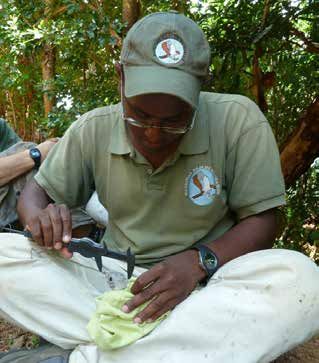
DURREL L END ANG E R E D S P E CIE S M A N A G E M E N T GR A DU AT E C ER T I F I C AT E (DESM A N ) J E R S E Y 2 0 2 1

O UR A L U M N I
We keep in touch with and continue to support our graduates through our graduate network. There are
countless examples of graduates who have returned to their own country inspired by their training
experience in Jersey and have gone on to make incredible achievements in biodiversity conservation.
Here are just a few examples:

L AURY CULLEN (1992)                        KANCHANA WEERAKOON                          RAMESH CHAND (2010)
Research Coordinator                        (1999)                                      Director of Kula Eco Park.
at Instituto de Pesquisas                   Founder and leader of two                   Leads the successful captive
Ecológicas. Specialises in                  community conservation                      breeding project for the critically
leading landscape restoration               organisations in Sri Lanka.                 endangered Monuriki Island
and sustainable community                   Provides grass roots                        crested iguana, with the
agroforestry work in Brazil’s               environmental and conservation              reintroduction phase
Atlantic Rainforest.                        awareness to children and                   commencing shortly.
                                            young adults.

A L U M N I S T O R I E S : W HE R E ARE TH E Y NO W?
ANNA CHOULER
I studied DESMAN in 2017. I was one of the few participants that
didn’t have a job on arrival, after struggling to find work I hoped this
course would help me to gain that extra bit of knowledge to get the
perfect job.

I learnt a lot on the DESMAN course, the communications and
facilitations course was really great at helping me deal with
challenging work situations, as well as meetings and interviews.
Having Durrell experts on hand from a wide variety of fields was
really great and everyone was more than happy to help.

Upon finishing my course I managed to get a job as Project Assistant
for Coast Care. Coast Care is a HLF funded project run in partnership
with Northumberland Wildlife Trust, Northumberland Coast AONB
and The Seahouses Development Fund. I work with volunteers to
help conserve the natural beauty of the Northumberland Coast. It
is the perfect job for me as I get to enjoy land based activities such
as wildlife surveys and land maintenance, as well as enjoying the
beach with litter picks.

Thanks to everyone at Durrell for giving me that extra experience.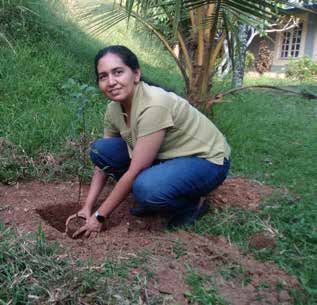
DURREL L END ANG E R E D S P E CIE S M A N A G E M E N T GR A DU AT E C ER T I F I C AT E (DESM A N ) J E R S E Y 2 0 2 1

A L U M N I S T O R I E S : W HE R E ARE TH E Y NO W?                                         CONTINUED

                                                                    STEPHAN MELLIER
                                                                    I have worked for the Mauritian Wildlife
                                                                    Foundation for more than six years now. I have
                                                                    had the opportunity to explore different project
                                                                    eg: Pink Pigeon, Kestrel project and being an
                                                                    assistant warden on Round Island, the Reptile
                                                                    project and I’m now doing eco-tourism.

                                                                    I had the opportunity to undertake DESMAN in
                                                                    2016. It was a 3 month intensive course where
                                                                    I acquired knowledge that has helped me a
                                                                    lot now in my work. But the most memorable
                                                                    thing for me from the course was meeting and
                                                                    learning alongside different students from other
                                                                    countries and I was amazed at their contribution
                                                                    to conservation in their respective countries.

A L U M N I S T O R I E S : R E P O R T S F R O M TH E F IE LD
                                                                    MUKHLISIN ABDULL AH
                                                                    “I was born on the island of Sumatra where we
                                                                    have a great tropical rainforest. We also have
                                                                    several key species that live together in one
                                                                    habitat including rhinos, elephants, tigers and
                                                                    orangutans. One thing that makes me feel
                                                                    useful in my life is when I can do a little to ensure
                                                                    that our species wealth can be sustainable for
                                                                    future generations. I worked with reintroduction
                                                                    orangutans for almost 9 years, always feeling
                                                                    happy when I saw orangutans that were
                                                                    previously hunted and maintained by humans
                                                                    after we released them back to nature to
                                                                    survive and breed.

                                                                    I am very interested in increasing my capacity,
                                                                    and Durrell has given me the opportunity to take
                                                                    part in the DESMAN 2019 course. It has been an
                                                                    amazing experience and a lot of the knowledge
                                                                    and skills that I have gained here are very useful
                                                                    for me to apply where I work when I return to
                                                                    Sumatra. Besides that, I now have a relationship
                                                                    and shared experiences with friends from
                                                                    different countries who work in conservation. I
                                                                    have confidence that if we can work together
                                                                    to support each other in the conservation
                                                                    program, there will be more animals that we
                                                                    can save from extinction.”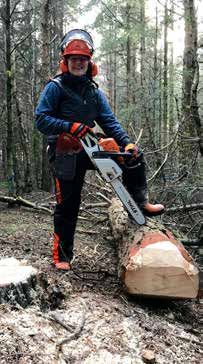
DURREL L END ANG E R E D S P E CIE S M A N A G E M E N T GR A DU AT E C ER T I F I C AT E (DESM A N ) J E R S E Y 2 0 2 1

A L U M N I S T O R I E S : R E P O R T S F R O M TH E F IE LD                                   CONTINUED

DHANU MUNASINGHE
“I am Dhanushri from the beautiful island of
Sri Lanka! After my undergraduate studies
in Singapore, I volunteered with several
environmental organisations to maintain my
passion for conservation and wildlife. However,
it was my four-year volunteer experience at
Wildlife Reserves Singapore (Singapore Zoo)
that reignited my interest to make a mid-career
switch from the oil & gas industry to wildlife
conservation.

Currently, I am part of a team that manages
the knowledge management and capacity
building of conservation-related UNDP Global
Environment Facility (GEF) Small Grants
Programme (SGP) projects in the Colombo
wetlands of Sri Lanka (which is a RAMSAR
accredited wetland city). As cities undergo
rapid development and more people move
into cities for better opportunities, urban
environments and wildlife face many threats.
This is especially so in wetland cities like Colombo
where environmental degradation and climate                     against us conservationists, it is important to be
change affect all inhabitants alike. My work                    adaptable and skilled at managing conservation
involves collaborating with various grantees as                 projects effectively. The DESMAN 2019 course was a
they implement their conservation projects in Sri               life changing experience and a great achievement
Lanka, meeting beneficiary communities, and                     for me personally and professionally because I am
bringing together experts and other stakeholders                still in the early stages of my conservation career. I
to help achieve the GEF SGP targets in the focal                gained a lot of confidence, knowledge, tools and a
areas of biodiversity, climate change and land                  broad range of practical skills in conservation from
degradation.                                                    the passionate staff at Durrell and other experts in
                                                                the field. The course also helped me develop my
 Having focused my postgraduate research on                     skills in leadership, communication and facilitation.
the transnational wildlife trade of vulnerable                  Participating in this course with fourteen other
species of fauna and the relevance of the                       amazing conservationists from around the world
CITES Convention in Sri Lanka, I am currently                   was another valuable learning experience. All this
interning with the Wildlife Conservation Society                and the networks I developed here will help me
to investigate other trends in wildlife trade in the            immensely in my ambitions.”
region. With limited resources and many odds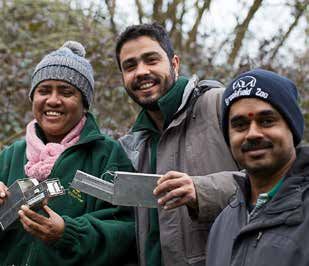
DURREL L END ANG E R E D S P E CIE S M A N A G E M E N T GR A DU AT E C ER T I F I C AT E (DESM A N ) J E R S E Y 2 0 2 1

A L U M N I S T O R I E S : C O UR S E F E E DBACK
                                                                    JOKO GUNTOR O
                                                                    Hi everyone, I’m Joko. I graduated from
                                                                    Indonesia Islamic University with a degree
                                                                    in Financial Management, and completed
                                                                    another degree in Social Development and
                                                                    Policy at Gadjah Mada University in Indonesia.

                                                                    From 2007 to 2010, I worked for the Sumatran
                                                                    Orangutan Conservation Programme (SOCP).
                                                                    Then in 2011, I established the Satucita
                                                                    Foundation, a local foundation in Sumatra,
                                                                    which aims to conserve freshwater turtles and
                                                                    tortoises of Sumatra. Currently, our efforts focus
                                                                    on conserving the critically endangered painted
                                                                    terrapin (Batagur borneoensis) and conducting
                                                                    field surveys on other species. In 2016, I was
                                                                    selected as the Disney Conservation Hero and
                                                                    was nominated for the Kalpataru Award by
                                                                    Indonesia’s Ministry of Forestry.

                                                                    The DESMAN 2018 course has given me a
                                                                    broad range of new knowledge and skills
                                                                    that are crucial for conservation leaders and
                                                                    practitioners. They include skills and knowledge
                                                                    in population monitoring, GIS, facilitation,
                                                                    communication, leadership, diseases and health
                                                                    screening. Although I have already used some
                                                                    of these skills and knowledge in my work, there is
                                                                    always room for improvement!

                                                                    After returning to Indonesia, my mission
                                                                    is to apply what I have learned from
                                                                    the #DESMAN2018 course to improve the
                                                                    conservation impact of the Satucita Foundation
                                                                    and its programmes.

                                                                    INDI AKURUGODA
                                                                    “(Through DESMAN 2018) I have learnt the ways
                                                                    in which to mix the methods of natural sciences
                                                                    with social sciences to achieve conservation
                                                                    success, especially at the local community
                                                                    level. The policymakers will not agree with social
                                                                    science thinking, but if we can mix it with natural
                                                                    science theories and show them the results, it will
                                                                    be much easier to get their attention towards
                                                                    conservation.”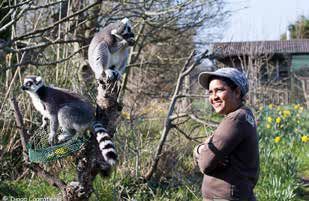
DURREL L END ANG E R E D S P E CIE S M A N A G E M E N T GR A DU AT E C ER T I F I C AT E (DESM A N ) J E R S E Y 2 0 2 1

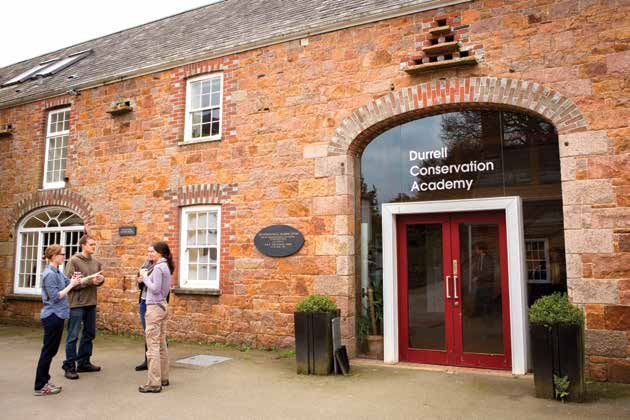
VENU E A N D A CCO MMODAT ION
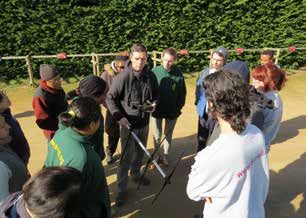
The course will be held at Durrell Conservation                   required to bring species back from imminent
Academy in Jersey, Channel Islands. Durrell                       demise. Since this time the academy has
Wildlife Conservation Trust (Durrell) was established             taught around 6,000 people (both conservation
by the world renowned naturalist and author                       practitioners and conservation students) from 151
Gerald Durrell in 1963 with the primary aim of                    countries. Our facilities include a 54 seat purpose
saving species from extinction. We now run 46                     built lecture theatre, two libraries, a computer lab
projects in 14 countries worldwide and have                       and a classroom. There is 24 hour access to our
played a pivotal role in the recovery efforts for                 computers and free Wi-Fi is available throughout.
several species. Durrell Conservation Academy                     Most course participants choose to stay at our
is located at the Trust’s headquarters, Jersey                    YHA accredited hostel, which is immediately
Zoo. In 1984 Gerald Durrell formally established                  adjacent to Durrell Conservation Academy.
the International Training Centre (now known                      You will stay in shared rooms in our hostel-style
as Durrell Conservation Academy) on Jersey as                     residence right next to the Zoo. The residence
a form of “mini university” designed to equip                     includes a TV lounge and dining room, where
conservationists from across the world with the                   meals are served for course participants.
animal management and critical thinking skills
DURREL L END ANG E R E D S P E CIE S M A N A G E M E N T GR A DU AT E C ER T I F I C AT E (DESM A N ) J E R S E Y 2 0 2 1

C O ST A N D                                                      H O W T O A PPLY
BO O K I N G                                                      EMAIL your application form and CV to:

I N F O R M ATI O N                                               academy@durrell.org

                                                                  Please outline what you hope to gain from the
The total cost including all course fees, course                  course and if applying for a scholarship you must
materials, fieldtrip costs, university validation fees,           include: an institutional letter of support from a
on-site accommodation, and all meals is £9,800.                   senior member of staff (Director or equivalent),
This also includes a weekly cash stipend of £20                   plus two references which should provide further
given to participants. NOT INCLUDED is travel to/                 information about your suitability for the course.
from Jersey or any Visa requirements.
                                                                  Please note: To be eligible you must meet the
If you do not have sufficient money to cover the                  criteria previously outlined under WHO IS THE
above fee you will be required to state clearly                   COURSE FOR.
upon application how much you can cover and
where you expect to find the remaining funds.
                                                                  C L OSI NG DAT E: F RI DAY 14 MAY 2021

We have a limited number of partial scholarships
available to offer. Further information about these               FOR FUR THER INFORMATION, OR TO
is provided during the selection process.                         REQUEST AN APPLICATION FORM
                                                                  PLEASE EMAIL ACADEMY@DURRELL.OR G

                                                           D UR R EL L W I L D L I F E C ON SERVAT I ON T R UST
                                                           Durrell Conservation Academy, Les Augrès Manor,
                                                           La Profonde Rue, Trinity, Jersey, JE3 5BP

                                                           T +44 (0)1534 860037
                                                           E academy@durrell.org
                                                           W www.durrell.org/training

                                                           SAVING SPECIES FR OM EXTINCTION
You can also read


