E-LEARNING READINESS AMONG IN A LEADING MALAYSIAN HIGHER EDUCATION INSTITUTION
←
→
Page content transcription
If your browser does not render page correctly, please read the page content below
Malaysian Journal of Learning and Instruction: Vol. 15 (No. 2) Dec 2018: 227-256   227

      E-LEARNING READINESS AMONG
   STUDENTS OF DIVERSE BACKGROUNDS
     IN A LEADING MALAYSIAN HIGHER
          EDUCATION INSTITUTION
  1
   Donnie Adams, Bambang Sumintono, Ahmed Mohamed &
                   Nur Syafika Mohamad Noor
    Institute of Educational Leadership, Faculty of Education
                  University of Malaya, Malaysia

           1
            Corresponding author: donnieadams@um.edu.my

Received: 27 March 2018 Revised : 8 November 2018 Accepted: 21 November 2018

                                     ABSTRACT

Purpose: Blended learning is rapidly emerging as a domain for
practice and research. Across disciplines and contexts, at individual
instructor and institution levels, educators are experimenting with
the blended learning model of instruction. The current generation
of learners have been referred to as ‘digital natives’ in reflection of
their apparent ease and familiarity with digital technology. However,
questions remain about how ready students are for a blended learning
model of instruction. The purpose of the study was to investigate
students’ readiness for a blended learning model of instruction in a
leading Malaysian higher education institution.

Methodology: The study employed a non-experimental quantitative
research design. Data were gathered from a sample of 235
undergraduate and 131 postgraduate students using the Blended
Learning Readiness Engagement Questionnaire (BLREQ). The data
was analysed using the WINSTEPS Rasch model measurement
software to determine the validity and reliability of the instrument.
Differential Item Functioning (DIF) analysis was also used to
identify responses based on students’ demographic profiles.

Findings: Findings identified that students were ready for blended
learning. Further analysis indicated that there were differences
in students’ readiness for blended learning based on gender, age,
ethnicity, field of study, and level of education.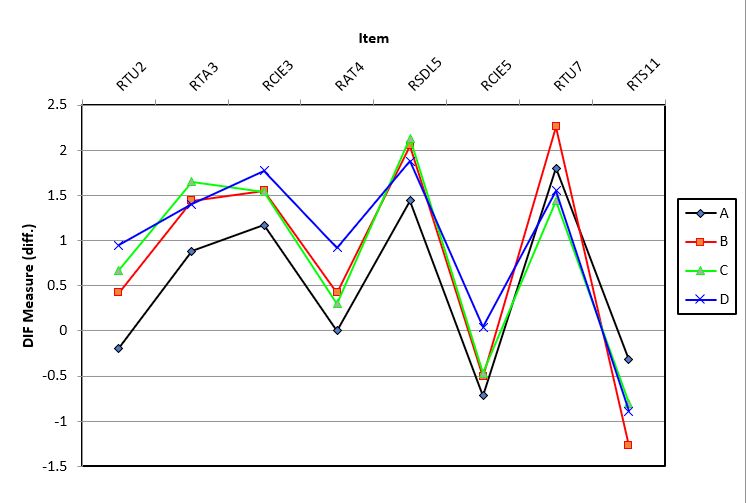
228     Malaysian Journal of Learning and Instruction: Vol. 15 (No. 2) Dec 2018: 227-256

Significance: This study provides insights on students’ readiness
towards blended learning, particularly in the Malaysian context,
discusses implications for blended learning practices in higher
education institutions, and offers recommendations for future
research.

Keywords: Blended learning, E-learning, gender differences,
student diversity, higher education institution.

                             INTRODUCTION

The past decade has seen the world of tertiary education evolve
with the rapid development in internet technologies, and revolution
in computer softwares (Tayebinik & Puteh, 2012). This has
revolutionised the way learning and teaching is enacted, particularly
in distance education. Emerging concepts such as online learning
or e-learning, which are largely used in the higher education arena,
have led to a flurry of comparative studies done on e-learning and
face-to-face learning environments (Northey et al., 2015; Southard,
Meddaug & Harris, 2015), students’ learning outcomes (Bernard
et al., 2014; González-Gómez et al., 2016; Ryan et al., 2016), and
e-learning’s strengths and weaknesses (Wang, 2010).

E-learning environments do present some disadvantages, such as
inhibiting face-to-face communication and socialising among the
learners, resulting in the emergence of a new learning environment,
termed blended learning (Tayebinik & Puteh, 2012). Blended
learning combines concepts from both e-learning and the face-to-face
learning environment (Azizan, 2010). As a result, the application of
blended instruction among lecturers in higher education institutions
has quickly gathered pace as they believe varied delivery methods
would enhance students’ learning experiences and their learning
outcomes (Lim & Morris, 2009).

However, despite its possibilities, the main question remains how
ready students are for a blended learning model of instruction.
Students struggle to adapt to the change from traditional classrooms
to virtual classrooms (Sanchez-Gordon & Luján-Mora, 2014), higher
education institutions lack the neccessary facilities and amenities,
such as high-speed internet connections (Panyajamorn et al., 2018),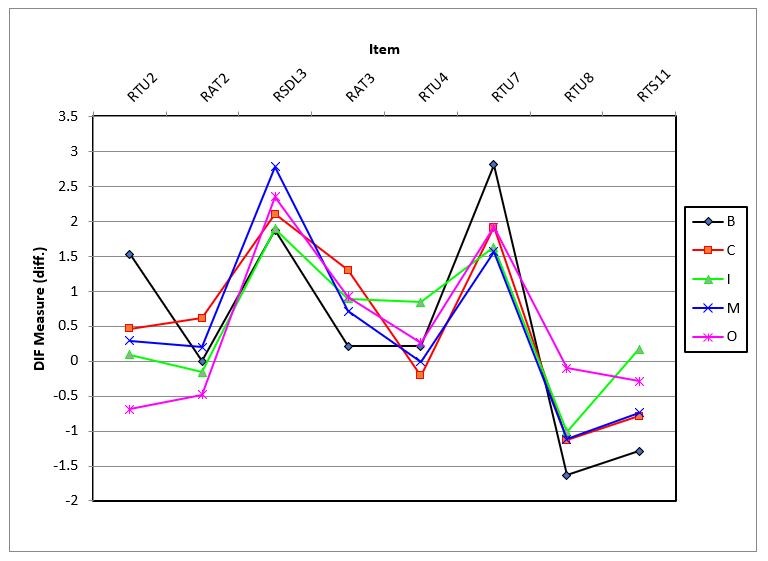
Malaysian Journal of Learning and Instruction: Vol. 15 (No. 2) Dec 2018: 227-256   229
and students lack computer literacy skills and motivation (Garrison
& Anderson, 2003).

                           LITERATURE REVIEW

E-Learning

Electronic learning, or commonly known as e-learning, is among
the earliest applications of web-based technology (Azhari & Ming,
2015). E-learning is defined as the delivery of learning using
purely Internet and digital technology (Al-Busaidi, 2013). It uses a
computer and software programs for its learning process, and was
first designed for working adult students who were unable to receive
formal education as full-time students (Moore, Dickson-Deane &
Galyen, 2011).

Today, the functionality of e-learning has expanded to include all
types of students, regardless of whether they’re studying full time,
part time, or distance learners in higher education institutions
(Azhari & Ming, 2015). Since 2012, Massive Open Online Courses
(MOOCs) have been said to be the new form of e-learning for
millions of people, with a growing number of universities and
private organisations offering them worldwide (Margaryan,
Bianco & Littlejohn, 2015). MOOCs are now endorsed as a major
advancement in higher education.

In the Malaysian context, higher education institutions began
implementing e-learning in the late 1990s (Hussin, Bunyarit &
Hussein, 2009). At the time, there were execution issues such as
the lack of trained lecturers, facilities and infrastructures, students’
preparedness, and students’ resistance to adopt e-learning and the
Learning Management System (LMS) tools (Azhari & Ming, 2015).
Nonetheless, its demand continued to rise due to its capablity to
reach global audiences, and its unique functionality, accessibility
and flexibility in the long run (Azhari & Ming, 2015).

However, there are persistent concerns about the quality of e-learning
relative to a face-to-face learning environment (Panyajamorn et al.,
2018). Paechter and Maier (2010), in their study, found that Austrian
students still preferred face-to-face learning for communication
230 Malaysian Journal of Learning and Instruction: Vol. 15 (No. 2) Dec 2018: 227-256 purposes, and the preservation of interpersonal relations. Another study by Orton-Johnson (2009) in the UK found that students did not accept online materials, and preferred traditional text materials as the medium for their education. On the contrary, in Bernard et al.’s (2014) meta-study, students in blended programmes achieved better results than students in traditional classrooms. Similar results were found in other studies, for example, Northey et al. (2015), Ryan et al. (2016), Southard, Meddaug and Harris (2015), and González-Gómez et al. (2016). In Malaysia, Lau and Shaikh (2012) found that students’ computer and internet efficacy, and personal characteristics such as gender, ethnicity, course year level and financial aid status resulted in a significant difference in students’ e-learning readiness. Blended Learning in Higher Education Institutions As defined earlier, blended learning combines both online learning and face-to-face instruction (Graham, 2013). Research on blended learning has increased over the past decade, with much of the work focused in tertiary education contexts (Halverson et al., 2012) due to its transformative potential in education (Graham & Robison, 2007). Consequently, it is claimed that blended learning is “likely to emerge as a predominant model of the future—and to become far more common than either [online or face-to-face instruction] alone” (Watson, 2008, p. 3). In line with these educational developments, one of the main initiatives of the Malaysian Ministry of Education under the Malaysian Education Blueprint 2015-2025 (Higher Education) is the use of Blended Learning (BL) as a conduit for transforming existing pedagogy. “Blended learning models will become a staple pedagogical approach in all HLIs [Higher Learning Institutions]. Key initiatives include: Making online learning an integral component of higher education and lifelong learning, requiring up to 70% of programmes to use blended learning models” (Malaysian Education Blueprint 2015-2025 (Higher Education): E-16). Lending their support to the Ministry’s initiatives, Malaysian higher education institutions are now required to integrate e-learning systems, or better known as Learning Management Systems (LMS),
Malaysian Journal of Learning and Instruction: Vol. 15 (No. 2) Dec 2018: 227-256   231
in their courses and face-to-face instruction, creating a ‘blended
learning’ environment for their students (Tayebinik & Puteh, 2012).
The LMS software is a popular approach for planning, delivering,
and managing blended learning models of instruction in higher
education institutions (Martinez & Jagannathan, 2012). LMS, such
as Moodle and Blackboard, provide tools to enable communications
between lecturers and students online, track student activities, such
as assignment submissions, discussion management, group work,
and other administrative tools (Pellas & Kazanidis, 2015). Embi
et al. (2011) reported that the most widely used LMS components
in all Malaysian higher education institutions are communications,
followed by course delivery, productivity, content development, and
administration. However, only a few higher education institutions
had LMS features that encouraged students’ involvement, such as
group work, and portfolio.

Initial research into blended learning focused on defining the term,
and identifying the benefits and challenges it offers. As the research
field matured, the focus of research moved to student learning
outcomes, the interaction in these environments, and student
perceptions and experiences (Drysdale et al., 2013). Drysdale et al.
(2013) suggested that research on the readiness for blended learning
from the students’ point of view is a way to evaluate the success
and effectiveness of blended learning. Baldwin-Evans (2006), in the
same vein, supported the idea that, prior to even considering the
full implementation of the blended learning model of instruction,
assessing students’ readiness was of utmost importance.

Students’ Readiness for Blended Learning

Many researchers have reported on the benefits and advantages
of blended learning (Heidi & Neo, 2015; Doiron & Asselin, 2011;
Azizan, 2010). However, there are a few notable concerns as the
venture into blended learning intensifies. Students might struggle in
adapting to this initiative as they now must lead their own learning
process (Vaughan, 2007). Other students might find it difficult to
adjust to the online course structure (Tayebinik & Puteh, 2012).

In a study by MacKeogh (2003), only 12% of students opted for
e-learning, while 20% of the students preferred the traditional form
of learning. These results indicate that, even though students were
232     Malaysian Journal of Learning and Instruction: Vol. 15 (No. 2) Dec 2018: 227-256

advocates of technology, many of them were unwilling to forgo the
face-to-face learning experience. In another study, Howard (2009)
found that students in e-learning modules missed the face-to-face
interaction with their lecturers and other coursemates. Starenko
et al. (2007) found that students faced a great challenge working
with each other in an online environment. On the contrary, findings
by Lopez-Perez et al. (2011) found that tertiary students seemed
to prefer online learning as a complement to traditional modes of
classroom teaching.
While blended learning creates flexible learning for students, it’s
unclear in the literature on which aspects enable them to experience
maximum benefits. Different factors have been studied extensively
to determine students’ online learning experience (Shahnaz &
Hussain, 2016). For instance, Yukselturk and Bulut (2007) focused
on gender, age, motivational beliefs, and self-regulated learning.
Rhee et al. (2007) focused on technological readiness. Abbas et al.
(2011) explored the roles of technical infrastructure, organisational
factors (organisational rules and culture), and social readiness factors
(governmental rules, and administrative instructions).

Students’ readiness is another powerful factor in implementing
online learning successfully (Rasouli, Rahbania & Attaran, 2016;
Mosadegh, Kharazi & Bazargan, 2011). Readiness can be studied
by assessing students’ knowledge (George et al., 2014), technology
skills (Seraji & Yar Mohammadi, 2010; George et al., 2014; Rasouli,
Rahbania & Attaran, 2016), technology availability (Anene, Imam
& Odumuh, 2014; Rasouli, Rahbania & Attaran, 2016; Seraji, 2010),
self-directed learning (Chu & Tsai, 2009; Kaur, 2014), computer and
internet efficacy (Seraji, 2013; Kumar, 2017), and attitude (Hussein,
2010; George et al., 2014; El-Gayar, Moran & Hawkes, 2011;
Kumar, 2017) in e-learning.

While much is now known about online learning, there is still a lack
of research and rich descriptions on students’ readiness towards a
blended learning environment. The combination of both e-learning
and the face-to-face learning environments may result in student
disengagement in the blended learning model of instruction. Park
(2009) suggested that higher education institutions need to assess
their students’ readiness for blended learning for them to successfully
embrace the blended learning environment. Harris et al. (2009)
further reiterated this importance by highlighting the perspectives
of students as the most vital component. By reviewing the literature,
Malaysian Journal of Learning and Instruction: Vol. 15 (No. 2) Dec 2018: 227-256   233
students’ readiness for blended learning can be categorised into
six main factors: a) technology skills; b) technology usage; c)
technology availability; d) self-directed learning; e) computer and
internet efficacy, and f) students’ attitude towards blended learning.
Therefore, this study aimed to investigate students’ readiness for
blended learning, and specifically assess any significant differences
between students’ gender, age, ethnicity, field of study, and level of
education, and their readiness for blended learning.

                          RESEARCH QUESTIONS

Following the discussion on e-learning, blended learning in higher
education institutions, and students’ readiness for blended learning,
two research questions guide this paper:

(1)     What is the level of students’ readiness for blended learning in a
        leading Malaysian higher education institution?
(2)     Are there any significant differences in students’ readiness for
        blended learning based on gender, age, ethnicity, field of study, and
        level of education?

                                METHODOLOGY

Participants

The research used a quantitative approach, where students’ blended
learning readiness was treated as a variable that can be measured by
a questionnaire. This study employed a cross-sectional quantitative
survey method. A sample of 235 undergraduate (64.21 %) and
131 postgraduate (35.79 %) students from various fields of study
were selected from a public higher education institution in Kuala
Lumpur, Malaysia. Convenience sampling technique was used,
where respondents were administered hard copy questionnaires by
the researchers personally, as well as an online survey administered
via the university’s student mailing list. The study was conducted in
November 2017. With regards to ethical consideration, the students’
consent to take part in this study was sought first before they
filled in the questionnaire. Participation was strictly voluntary and
anonymous. The demographic profile of the respondents is indicated
in Table 1.
234 Malaysian Journal of Learning and Instruction: Vol. 15 (No. 2) Dec 2018: 227-256
Table 1.
Demographic Profile of Respondents (N=366)
Demographics Respondents Percentage (%)
Gender
Male 156 42.62
Female 210 57.38
Age
19 years and below 88 24.04
20-29 years 176 48.09
30-39 years 59 16.12
40-49 years 34 9.29
50-59 years 8 2.19
Over 59 years 1 0.27
Ethnicity
Malay 181 49.45
Chinese 95 25.96
Indian 36 9.84
Bumiputera 16 4.37
International 38 10.38
Level of Education
Undergraduate 235 64.21
Postgraduate 131 35.79
Field of study
Social sciences 186 50.82
Sciences 43 11.75
Engineering 50 13.66
Medicine 87 23.77
Instrumentation
A Blended Learning Readiness Engagement Questionnaire
(BLREQ) was developed to gauge students’ readiness for blended
learning in a public higher education institution in Kuala Lumpur,
Malaysia. The BLREQ contained five basic demographic questions
(i.e. age, gender, ethnicity, field of study, and level of education),
and 41 items in six dimensions which addressed various aspects of
students’ readiness for blended learning. The six dimensions, alongMalaysian Journal of Learning and Instruction: Vol. 15 (No. 2) Dec 2018: 227-256 235 with the respective number of items in the questionnaire are as follows: technology skills (11 items), technology usage (8 items), technology availability (4 items), self-directed learning (6 items), computer and internet efficacy (8 items), and attitude (4 items). A 4-point Likert-type scale ranging from strongly disagree (1) to strongly agree (4) was provided as response options for all the items. Only one response was allowed per item. Prior to the actual data collection, a small-scale pilot test was conducted with 30 students in a public higher education institution in Kuala Lumpur, Malaysia to ensure the suitability of wordings, formatting, and layout. These 30 students were excluded from the main study. A Rasch measurement model software named WINSTEPS version 3.73 was used to determine the validity and reliability of the instrument. Through its calibration of item difficulties and person abilities, the WINSTEPS software mathematically transformed raw ordinal data (Likert-type data), based on frequency of response which appeared as probability, to become logit (log odd unit) via the logarithm function, which assesses the overall fit of the instrument as well as person fit (Linacre, 2012; Bond & Fox, 2015). Table 2 displays the internal reliability scores of the instrument (source Appendix 3). These scores refer to the fit statistics or the reliability indices reported in logit measures that determine the overall quality of the BLREQ, and the psychometric properties of the instrument. Unidimensionality and Rating Scale Analysis The BLREQ instrument had a good unidimensionality measure (Appendix 1), where index of raw variance was above the standard of 40% (Fisher, 2007). This means that the instrument can effectively measure blended learning readiness. Rating scale analysis (Appendix 2) informed that the four rating scale given to respondents, from strongly agree to strongly disagree, was easily understood with a threshold rating scale of 1.4 to 5.0 (Fisher, 2007). Person Reliability and Item Reliability According to Table 2, the ‘real’ Person Reliability index (0.94) indicates that the consistency of person responses was ‘very good’ (Sumintono & Widhiarso, 2014). This implies that the
236       Malaysian Journal of Learning and Instruction: Vol. 15 (No. 2) Dec 2018: 227-256

scale discriminates very well between persons. The same logic
of interpretation applies to the Item Reliability measures of 0.99,
which is also classified as ‘very good’ (ibid). This suggests that
the probability of persons responding to items were likely to be
high. High Item Reliability estimates also suggest that the items
defined the latent variable very well (Bond & Fox, 2015). As such,
the BLREQ may be regarded as a reliable instrument for use with
different groups of respondents.

Cronbach Alpha

The value of the Cronbach Alpha coefficient (0.97), according to
the Rasch Model computation, described the interaction between
the 366 persons and the 41 items. The reliability score of 0.97 is
classified as ‘very good’, as described under the instrument quality
criteria in Sumintono and Widhiarso (2014). This score suggests that
there was a high level of interaction between the persons and items.
An instrument having very good psychometric internal consistency
is considered a highly reliable instrument.

Person and Item Separation Index

Person Separation index is an estimate of how well the BLREQ can
distinguish between ‘Person abilities’ in terms of the latent trait.
The bigger the separation index, the more likely the respondents
will respond correctly to the items. On the other hand, the Item
Separation index indicates how wide spread the items are in defining
both the easy and difficult items (Boone et al., 2014). The wider the
spread, the better the fit. In this study, the Person Separation index
(4.00), and the Item Separation index (9.01), as shown in Table 2
below, clearly indicate the BLREQ’s good spread across the range
of respondents and items. These criteria endorse the BLREQ as a
fit and reliable instrument for identifying students’ readiness for
blended learning.

Table 2

Reliability of Person and Item

           Mean Logit (SD) Separation                Reliability      Alpha Cronbach
Person          2.04 (1.67)             4.00             0.94                 0.97
Item            0.00 (0.99)             9.01             0.99
Malaysian Journal of Learning and Instruction: Vol. 15 (No. 2) Dec 2018: 227-256 237
Data Analysis
For data analysis, SPSS version 25, and a Rasch model measurement
software, WINSTEPS version 3.73, were utilised in this study.
To examine students’ readiness for blended learning, descriptive
statistics, including mean and standard deviation scores, were
utilised. The mean score was in the form of logit scale rather than
Likert-scale, which was transformed from the raw data score.
Therefore, in terms of items, the bigger the logit score, the better
students’ readiness for blended learning.
Additionally, Differential Item Functioning (DIF) analysis was used
to identify responses based on students’ demographic profile (i.e.
age, gender, ethnicity, field of study, and level of education). DIF
analysis informs on the different types of responses based on the
grouping of demographic characteristics, and therefore is the most
suitable method of analysis for the study’s objectives.
RESULTS
Students’ Readiness for Blended Learning
Firstly, students’ readiness for blended learning was analysed. Overall
findings indicated that students were ready for the blended learning
model of instruction as the overall mean score of +2.32 logit (SD
= 1.79) was higher than zero logit. According to Table 3, among
the six dimensions of readiness for blended learning, students rated
highest on their technology skills, with a mean score of M = 3.63,
SD = 2.36, but lowest on self-directed learning, with mean score of
M = 1.25, SD = 1.55. The rest of the results on students’ readiness
for blended learning are summarised in Table 3.
Table 3
Results of Students’ Readiness for Blended Learning
Mean Std. Deviation
Readiness for Blended Learning (overall) 2.32 1.79
Technology Skills 3.63 2.36
(continued)238 Malaysian Journal of Learning and Instruction: Vol. 15 (No. 2) Dec 2018: 227-256
Mean Std. Deviation
Attitude 2.59 2.32
Technology Availability 2.47 1.80
Computer and Internet Efficacy 2.38 1.93
Technology Usage 2.16 1.65
Self-directed Learning 1.25 1.55
Differences Between Students’ Demographic Factors and
Readiness for Blended Learning
Next, the differences between students’ age, gender, ethnicity, field
of study, and level of education, and their readiness for blended
learning were analysed using Differential Item Functioning (DIF)
analysis. The analysis for each of the five demographic factors
mentioned is described below.
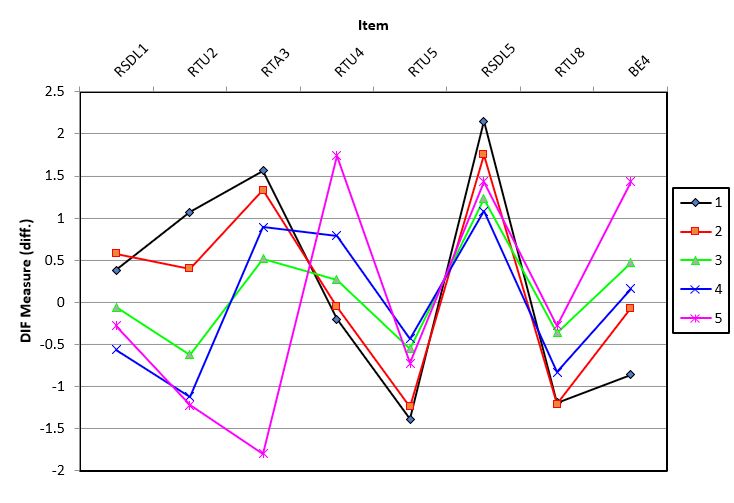
Note: 1 = 19 years and below, 2 = 20-29 years, 3 = 30-39 years, 4 = 40-49
years, 5 = 50-59 years
Figure 1. Person DIF plot based on Age.
Figure 1 shows the DIF plot according to the respondents’ age. In
terms of students’ age, eight items were identified to have significant
differences according to a student’s age group. For item RSDL1
(I am a highly independent learner), it was found that students
aged 30 years old and above were more independent learners thanMalaysian Journal of Learning and Instruction: Vol. 15 (No. 2) Dec 2018: 227-256 239
students aged 29 years old and below. Similarly, the result for item
RTU2 (I often use e-mail to communicate) indicated that students
aged 30 years old and above more predominantly used e-mails for
communication purposes compared to students aged 29 years old
and below. However, item RTA3 (I have speakers for courses with
video presentations) results indicated that students who were 50 to 59
years old were more likely to use speakers for their online learning.
Findings for item RTU4 (I often use social networking sites to share
information e.g. Facebook, Twitter, Instagram, Snapchat) were
rather obvious, as students 50 to 59 years old seldom used social
networking sites compared to younger students. Meanwhile, the
results for item RTU5 (I often use instant messaging e.g. WhatsApp,
Viber, WeChat, Line, Telegram) indicated that students under 29
years old use instant messaging more frequently than students of
other age groups. Interestingly, the same age-group students felt
that other online activities, as indicated in item RSDL5 (I am not
distracted by other online activities when learning online e.g.
Facebook, Gaming, Internet surfing), did not interfere with their
online learning. Students aged 29 years and below also used gadgets
more frequently to communicate, as indicated in item RTU8 (I often
use mobile technologies e.g. Smartphone, Tablet to communicate).
Lastly, for item BE4 (I do my assignments and submit it on time
online), students under 20 years of age were more likely to complete
and submit their assignments on time online compared to students
aged 50 years and above.
Note: F = Female, M = Male
Figure 2. Person DIF plot based on Gender.240 Malaysian Journal of Learning and Instruction: Vol. 15 (No. 2) Dec 2018: 227-256
The Figure 2 illustrates the results of the DIF items based on gender.
From the results, there were five items identified to have significant
differences according to students’ gender. For item RTY3 (I often use
office software e.g. M.S. Word, PowerPoint, Excel), female students
were more likely to use Microsoft Office software, and they also
perceived themselves to be more skillful in it (RTS9: I know how
to use Presentation software e.g. M.S. PowerPoint) compared to
male students. Similarly, results for item RTU 8 (I often use mobile
technologies e.g. Smartphone, Tablet to communicate) indicated that
female students used mobile gadgets more frequently to communicate
compared to male students. As for classroom instruction, item
RSDL3 (I do not need direct lectures to understand materials), male
students preferred lectures to understand learning materials better
compared to their female counterparts. However, for item RCIE3
(I feel confident in posting questions in online discussions), male
students were more confident in asking questions during online
discussions compared to their female counterparts.
Note:Note: B = Bumiputera,
B = Bumiputera, C = Chinese, I =CIndian,
= Chinese,
M = Malay,IO== International
Indian, M = Malay, O =
Figure 3. Person DIF plot based on Ethnicity
International
There were eight items that had DIF based on ethnicity. The first one is RTU2 (I often use e-mail to
3. Person
Figurewhere
communicate) DIF
it was found plot based
that Bumiputera onfrom
students Ethnicity.
Sabah and Sarawak were less likely
to use e-mail to communicate compared to international students who used it more often. In terms of
There were
participation eightlearning
in blended items that had
instruction DIF
(RAT2: I ambased
interestedon ethnicity.
to participate The learning
in blended first one
is RTU2Chinese
activities), (I often usewere
students e-mail to likely
the less communicate) where toit was
to participate compared studentsfound
of otherthat
Bumiputera
ethnicities. Resultsstudents
also showed from Sabah students
that international and Sarawak were less
enjoyed participating likely
in blended to use
learning
e-mail
instruction.toMalay
communicate
students tended compared
to prefer directto international
lectures more compared students
to studentswho used
of other
ethnicities, as per item RSDL3 (I do not need direct lectures to understand materials). Interestingly,
Bumiputera students found blended learning tools easy to use, as seen for Item RAT3 (I find using
blended learning technologies simple). Chinese students tended to use social media to share
information more compared to all other ethnicities (RTU4: I often use social networking sites to shareMalaysian Journal of Learning and Instruction: Vol. 15 (No. 2) Dec 2018: 227-256 241
it more often. In terms of participation in blended learning instruction
(RAT2: I am interested to participate in blended learning activities),
Chinese students were the less likely to participate compared to
students of other ethnicities. Results also showed that international
students enjoyed participating in blended learning instruction. Malay
students tended to prefer direct lectures more compared to students
of other ethnicities, as per item RSDL3 (I do not need direct lectures
to understand materials). Interestingly, Bumiputera students found
blended learning tools easy to use, as seen for Item RAT3 (I find
using blended learning technologies simple). Chinese students
tended to use social media to share information more compared to
all other ethnicities (RTU4: I often use social networking sites to
share information e.g. Facebook, Twitter, Instagram, Snapchat).
Bumiputera students from Sabah and Sarawak rarely used online
learning software (RTU7: I often use learning management systems
e.g. Blackboard, Moodle), but they were more likely to use their
gadgets (RTU8: I often use mobile technologies e.g. Smartphone,
Tablet to communicate) compared to students of other ethnicities.
Finally, Indian students, for RTS11 (I know how to open several
applications at the same time and move easily between them), found
it more difficult to work simultaneously with multiple applications
compared to the others. The results for all the DIF items according
to ethnicity are summarised in Figure 3.
Note: A = Social Sciences, B = Sciences, C = Engineering, D = Medicine
Figure 4. Person DIF plot based on Field of Study.242 Malaysian Journal of Learning and Instruction: Vol. 15 (No. 2) Dec 2018: 227-256
Referring to Figure 4, there were eight items that had DIF based on
students’ field of study. In terms of using e-mail to communicate
(RTU2: I often use e-mail to communicate), the social science
students used it more frequently compared to other students, and
preferred speakers for their courses with video presentations as in
item RTA3 (I have speakers for courses with video presentations).
Social science students were also more confident when they posted
questions in online discussions (RCIE3: I feel confident in posting
questions in online discussions). As for RAT4 (I would recommend
blended learning as one of the alternatives for the traditional
teaching-learning approaches), social science students tended to
agree, but medical students tended to disagree. Interestingly, social
science students were more focused during online learning, as shown
for item RSDL5 (I am not distracted by other online activities when
learning online e.g. Facebook, Gaming, Internet surfing), compared
to students in other fields of study. When responding to RCIE5 (I feel
confident in performing the basic functions of Presentation software
e.g. MS PowerPoint), medical students were found to be slightly
less confident, whereas social science students felt that they were
more confident. Findings also showed that engineering students
students were found to be slightly less confident, whereas social science students felt that they were
used the LMS system more frequently compared to students in
more confident. Findings also showed that engineering students used the LMS system more
other fields of study, as in the results for item RTU7 (I often use
frequently compared to students in other fields of study, as in the results for item RTU7 (I often use
learning management systems e.g. Blackboard, Moodle). When dealing simultaneously with multiple
learning management systems e.g. Blackboard, Moodle). When
applications (RTS11: I know how to open several applications at the same time and move easily
dealing simultaneously with multiple applications (RTS11: I know
between them), science students did not have much problem doing so compared to students in other
how to open
fields of study.
several applications at the same time and move easily
between them), science students did not have much problem doing
so compared to students in other fields of study.
Note: P = Postgraduate, U = Undergraduate
Note: P = Postgraduate, U = Undergraduate
Figure 5. Person DIF plot based on Level of Education.
Figure 5. Person DIF plot based on Level of Education
According to students’ level of education, eight items recorded a DIF, shown in Figure 5 above.
Interestingly, basic functions of the computer and laptop (RTS1: I know the basic functions of
computer/laptop and its peripherals like the printer, speaker, keyboard, mouse etc.) were understood
more easily by postgraduate students compared to the undergraduates. When asked about their
perception of themselves as an independent learner (RSDL1: I am a highly independent learner),Malaysian Journal of Learning and Instruction: Vol. 15 (No. 2) Dec 2018: 227-256 243
According to students’ level of education, eight items recorded a DIF,
shown in Figure 5. Interestingly, basic functions of the computer and
laptop (RTS1: I know the basic functions of computer/laptop and
its peripherals like the printer, speaker, keyboard, mouse etc.) were
understood more easily by postgraduate students compared to the
undergraduates. When asked about their perception of themselves as
an independent learner (RSDL1: I am a highly independent learner),
postgraduate students felt that they were more independent compared
to undergraduate students. Postgraduate students also used e-mail
(RTU2: I often use e-mail to communicate), and MS Office software
(RTY3: I often use office software e.g. M.S. Word, PowerPoint,
Excel) more often compared to undergraduate students. Regarding
responses to RTU7 (I often use learning management systems e.g.
Blackboard, Moodle), both groups rarely used these systems, while
for RTU8 (I often use mobile technologies e.g. Smartphone, Tablet
to communicate.), undergraduate students used mobile technologies
slightly more compared to postgraduate students. As for RTS11 (I
know how to open several applications at the same time and move
easily between them), undergraduate students could perform this
better than postgraduate students. Finally, undergraduate students
used online platforms to complete their assignments and submit them
on time better than postgraduate students (BE4: I do my assignments
and submit it on time online).
DISCUSSION
This study aimed to investigate what the level of students’ readiness
for blended learning was, and specifically assess any significant
differences in students’ readiness for blended learning based on
gender, age, ethnicity, field of study, and level of education. The
outcomes of the findings showed that students at this particular higher
education institution were ready for e-learning, and had the required
technological skills. An explanation for the students possessing the
much-needed technological skills could be due to prior training on
information technology, and exposure to technological innovations
which made them tech-savvy. However, in the areas of technology
usage, technology availability, computer and internet efficacy, and
attitude, students required a few improvements. Students had a
low level of readiness in self-directed learning compared to other
dimensions, indicating that some work needs to be done within the
area of self-directed learning in order to make students ready for244 Malaysian Journal of Learning and Instruction: Vol. 15 (No. 2) Dec 2018: 227-256 e-learning. The low rating on self-directed learning could be due to the reason that students, in the context of a Malaysian higher education institute, were not comfortable with e-learning, and preferred traditional learning (Win & Wynn, 2015). Findings in this study corroborated with the results of another study, where students in a higher education institution rated average for self-directed learning, aside from technology availability and skills (Rasouli, Rahbania & Attaran, 2016). This indicates that universities should draw elaborate plans to enhance students’ readiness in terms of indicators such as technology usage, technology availability, computer and internet efficacy, self-directed learning, and attitude. In an e-learning environment, students need access to technological tools, software and the internet, which enables them to be interested in engaging in the blended learning model of instruction. This view was supported by Aboderin (2015), who revealed that the barriers impinging on the implementation of blended learning in developing countries were internet connectivity, computer and software equipment. The DIF analysis showed that there were differences in demographic variables on students’ e-learning readiness. In terms of age, mature students felt more independent compared to other age groups, such as those below 29 years. Older students tended to use e-mail more often, and were more likely to use speakers, whereas younger students preferred headsets to listen to audio or sound while watching videos. Students below 29 years of age were much more connected to social media for instant messaging, and used mobile technologies or gadgets compared to students between the ages of 30 to 59 years old. The results of this study revealed that learners of all the age groups did not experience disturbances by other online activities while they engaged in online learning. Generally, younger students were more comfortable with mobile technologies compared to older students, as they are from a technology savvy generation. In terms of gender, findings showed significant difference in five items. These items indicated that females used mobile technologies and gadgets, more often than males. This could be due to a higher use of social networks among female students than male (Thorell, Fridorff-Jens, Lassen, Lange & Kayser, 2015). Female students also used Office software more often, especially when they perceived themselves to be more skillful in using Microsoft PowerPoint than males. Similarly, Ikolo and Okiy (2012) stated that more females used Microsoft Word than males among clinical medical students.
Malaysian Journal of Learning and Instruction: Vol. 15 (No. 2) Dec 2018: 227-256   245
Previous findings also reported that males significantly differred
from females on the effectiveness of e-learning (Islam, Abdul
Rahim, Liang & Momtaz, 2011). Results of another study revealed
a significant mean difference in learning preferences based on
students’ gender (Lau & Shaikh, 2012). On the other hand, a study
conducted outside of Malaysia showed that male students were more
comfortable with technology, and preferred technology for learning
(Naresh, Reddy & Pricilda, 2016). However, a contrasting finding
showed that there was no significant difference between male and
female students in their readiness for e-learning (Rasouli, Rahbania
& Attaran, 2016). With regards to instruction, unlike female students,
male students preferred direct lecture; however, male students were
more confident in asking questions during online discussions. This
can be due to the fact that male students have more confidence in
using technology for learning than female students (Yau & Cheng,
2012). Additionally, male students may have a more positive belief
on relying on technology for interactive learning purposes, and are
more familiar with advanced tools. Some similar studies reported
that male students were more excited to participate in online
activities compared to female students (Win & Wynn, 2015), while
other studies showed that there was no significant difference between
gender, and computer self-efficacy, technical skills, and attitude
towards computers (Lau & Shaikh, 2012). Females using mobile
gadgets and Microsoft Office more often than males indicated that
they have a positive attitude and high motivation to use technology
(Yau & Cheng, 2012).

In terms of ethnicity, findings of this study revealed that international
students participated more actively in blended learning activities,
whereas Chinese students were the least likely of all the ethnicities.
This finding is supported by other studies reporting the significant
difference in learning preference and attitude towards computers
based on ethnicity (Lau & Shaikh, 2012). International students
also used e-mail more often to communicate. However, Bumiputera
students from Sabah and Sarawak were less likely to use e-mail to
communicate. Additionally, students from Sabah and Sarawak used
online learning software rarely although they used their gadgets
more often. Chinese students tended to use social media to share
information more compared to other ethnic groups, and Indian
students used it the least. Moreover, Indian students also found it
more difficult to use multiple applications or multi-window screens
simultaneously in a blended learning environment. These findings
246     Malaysian Journal of Learning and Instruction: Vol. 15 (No. 2) Dec 2018: 227-256

contrast with the findings of Islam et al. (2011), who claimed that
race did not have any influence on e-learning effectiveness.

In terms of the field of study, social science students preferred using
e-mail to communicate, while medical students preferred it the least.
Social science students were also more confident when they posted
questions in online discussions, and they recommended blended
learning as one of the alternatives for the traditional approach to
instruction. Interestingly, social science students were also more
focused during online learning. Unfortunately, medical students were
slightly less confident in using presentation software like PowerPoint
compared to the social science students. Nevertheless, this finding
does not mean that medical students lack confidence as a different
study indicated that they have extremely good familiarity and skills
with MS PowerPoint (Robabi & Arbabisarjou, 2015). When dealing
with a multi-window screen situation, science students did not face
any problems compared to other groups of students. In contrast,
social science students had the poorest technical skills to deal with
a multi-window screen situation. A study showed similar findings
where science students were more comfortable using technology for
learning while arts students did not prefer this method of learning
(Rasouli, Rahbania & Attaran, 2016). Science students using different
types of technological devices during their practical experiments,
and the inclusion of students studying information technology in
the category could possibly be the reason for science students being
more comfortable with using technology compared to those in the
social sciences. Yet, there were studies which reported that courses
or fields of study did not have a significant difference in students’
readiness (Rasouli, Rahbania & Attaran, 2016).

In terms of level of education, postgraduate students easily
understood the basic functions of a computer and laptop, and they
were more independent learners compared to undergraduate students.
Postgraduate students also used e-mail often to communicate, and
they were the group of students who always used MS Office software.
Interestingly, they preferred blended learning as an alternative
to the typical teaching and learning approach more compared to
undergraduate students. It can be interpreted here that postgraduate
students have a higher computer literacy in understanding and
utilising information technology, and they are more mature and
independent learners.
Malaysian Journal of Learning and Instruction: Vol. 15 (No. 2) Dec 2018: 227-256   247
These findings were similar to some findings that reported
that postgraduate students had a higher level of readiness than
undergraduate students (Rasouli, Rahbania & Attaran, 2016), and
students with a higher level of education tended to be more computer
literate and ready to use technology in their learning (Islam et al.,
2011). However, further findings in this study showed that both
postgraduate and undergraduate students rarely used online learning,
but undergraduate students used it more compared to postgraduate
students. The researchers assume that the findings are very much
relevant to the implementation of blended learning across different
courses as more undergraduate programmes offer blended learning
courses than postgraduate programmes. This inference is supported
by Salim et al. (2018), where in a medicine postgraduate course,
implementation of blended learning is scarce, and most of the
implementations are at the undergraduate level. More importantly,
undergraduate students were more likely to have a better experience
with different types of online learning activities (Farley et al.,
2015).

                                   CONCLUSION

The implementation of blended learning became inevitable in the
teaching and learning process of universities, where one would
“redefine higher education institutions as being learning centered,
and facilitate a higher learning experience” (Garrison & Kanuka,
2004, p. 104). However, the e-learning readiness of students must be
taken into consideration in the movement towards a blended learning
model of instruction. It would be unwise for universities to impose
a blended learning environment on students without first identifying
their readiness and needs.

The findings of this study revealed a moderate level of e-learning
readiness, which suggests the importance of making students aware
of the technology in e-learning, and the availability of technological
resources. The DIF analysis showed that there was a significant
difference based on demographic variables such as age, gender,
ethnicity, field of study, and level of education towards students’
readiness for e-learning.

However, this study has its limitations as well. Firstly, the study
concentrated only on one public higher education institution in
Kuala Lumpur, Malaysia. Therefore, future studies should include
248 Malaysian Journal of Learning and Instruction: Vol. 15 (No. 2) Dec 2018: 227-256
public higher education institutions, while also considering both the
students’ and lecturers’ perspectives. Secondly, the current study
is limited to a quantitative cross-sectional research design, where
data were collected from 235 undergraduate and 131 postgraduate
students from various fields of study. As such, future studies could
involve larger sample sizes to ensure the data are presentable and
generalisable. Furthermore, interviews are needed to explore further
the possible reasons to explain such findings.
In consideration of these findings, higher education institutions
should have a re-prioritisation of fund allocations towards identifying
students’ characteristics, and their readiness for a blended learning
environment. Future blended learning research may look more
specifically into how pedagogy and course designs affect students’
current engagement in a blended learning model of instruction.
Besides that, what specific blended learning strategies are most
effective for different subjects or fields of study, and the various
learner types would be valuable areas for exploration. In addition,
support systems and training programmes need to be in place to
ease the transitional process from traditional methods to a blended
learning model of instruction (Rasouli, Rahbania & Attaran, 2016).
Instructors must know how to be facilitators of learning, assessors
of student competencies, and advocates of self-explored learning
(Kumar, 2017).
ACKNOWLEDGEMENT
This research was funded by the Bantuan Kecil Penyelidikan (BKP)
(BK031-2017) grant under the University of Malaya.
REFERENCES
Abbas K, Masoud AM, Ali K. (2011). The role of readiness factors
in Elearning outcomes: An empirical study. Computers &
Education, 57(3):1919-1929.
Aboderin, O. S. (2015). The challenges and prospects of e-learning
in National Open University of Nigeria. Journal of Education
and Learning, 9(3), 207-216.
Al-Busaidi, K. A. (2013). An empirical investigation linking
learners’ adoption of blended learning to their intention of
full e-learning. Behaviour & Information Technology, 32(11),
1168-1176.Malaysian Journal of Learning and Instruction: Vol. 15 (No. 2) Dec 2018: 227-256 249
Alkhanak, S.A.K., & Azmi, I.A.G. (2011). Information technology
usage and attitudes towards online resources – Students
perspective. African Journal of Business Management, 5(7),
2582-2589.
Anene, J., Imam, H., & Odumuh, T. (2014). Problem and prospect of
e-learning in Nigerian universities. International Journal of
Technology and Inclusive Education, 3(2), 320-327
Azhari, F. A., & Ming, L. C. (2015). Review of e-learning practice
at the tertiary education level in Malaysia. Indian Journal of
Pharmaceutical Education and Research, 49(4), 248-257.
Azizan, F.Z. (2010). Blended learning in higher education institution
in Malaysia. Proceedings of Regional Conference on
Knowledge Integration in ICT, Selangor, 454-466.
Baldwin-Evans, K. (2006). Key steps to implementing a successful
blended learning strategy. Industrial and Commercial
Training, 38(3), 156-163.
Bernard, M. B., Borokhovski, E., Schmid, R. F., Tamim, R. M., &
Abrami, Ph. C., (2014). A meta-analysis of blended learning
and technology use in higher education: from the general
to the applied. Journal of Computing in Higher Education,
26(1), 87-122.
Bond, T.G., & Fox, C.M. (2015). Applying the Rasch Model,
Fundamentals Measurement in the Human Sciences (3rd
edition). New York: Routledge.
Boone, W.J., Staver, J.R., & Yale, M.S. (2014). Rasch Analysis in
the Human Sciences. Dordrecht: Springer.
Chu, R., & Tsai, C. C. (2009). Self-directed learning readiness,
Internet self-efficacy and preferences towards constructivist
Internet-based learning environments among higher-aged
adults. Journal of Computer Assisted Learning, 25(5), 489-
501.
Doiron, R., & Asselin, M. (2011). Exploring a new learning landscape
in tertiary education. New Library World, 112(5/6), 222-235.
Drysdale, J. S., Graham, C. R., Spring, K. J., & Halverson, L. R.
(2013). An analysis of research trends in dissertations and
theses studying blended learning. The Internet and Higher
Education, 17, 90-100.
El-Gayar, O., Moran, M., & Hawkes, M. (2011). Students’Acceptance
of tablet PCs and implications for educational institutions.
Educational Technology & Society, 14(2), 58–70.
Embi, M. A., Abdul Wahab, Z., Sulaiman, A. H., Atan, H., Ismail,
M., & Mohd Nordin, N. (2011). e-Learning in Malaysian
higher education institutions: Status, trends & challenges.250 Malaysian Journal of Learning and Instruction: Vol. 15 (No. 2) Dec 2018: 227-256
Kuala Lumpur, Malaysia: Department of Higher Education, Ministry
of Higher Education Malaysia.
Farley, H, Murphy, A, Johnson, C, Carter, B, Lane, M, Midgley, W,
Hafeez-Baig, A, Dekeyser, S and Koronios, A. (2015). How
do students use their mobile devices to support learning? A
case study from an Australian Regional University. Journal of
Interactive Media in Education, 14(1), 1–13.
Fisher, W.P. Jr. (2007). Rating scale instrument quality criteria.
Rasch Measurement Transactions, 21(1), 1095.
Garrison, D. R., & Anderson, T. (2003). E-learning in the 21st
century: A framework for research and practice. London and
New York: RoutledgeFalmer
Garrison, D. R., & Kanuka, H. (2004). Blended learning: Uncovering
its transformative potential in higher education. Internet and
Higher Education, 7(2), 95−105.
George, P. P., Papachristou, N., Belisario, J. M., Wang, W., Wark, P.
A., Cotic, Z., ... & Musulanov, E. M. (2014). Online eLearning
for undergraduates in health professions: A systematic
review of the impact on knowledge, skills, attitudes and
satisfaction. Journal of Global Health, 4(1), 1-17.
González-Gómez, D., Jeong, J. S., Rodríguez, D. A., & Cañada-
Cañada, F. (2016). Performance and perception in the
flipped learning model: an initial approach to evaluate the
effectiveness of a new teaching methodology in a general
science classroom. Journal of Science and Education
Technology, 25(3), 450-459.
Graham, C. R. (2013). Emerging practice and research in blended
learning. In M. G. Moore (Ed.), Handbook of distance
education (pp. 333–350). (3rd ed.). New York, NY:
Routledge.
Graham, C. R., & Robison, R. (2007). Realizing the transformational
potential of blended learning: Comparing cases of transforming
blends and enhancing blends in higher education. In A.
G. Picciano & C. D. Dziuban (Eds.), Blended learning:
Research perspectives. (pp. 83–110). Needham, MA: Sloan
Consortium.
Halverson, L. R., Graham, C. R., Spring, K. J., & Drysdale, J. S.
(2012). An analysis of high impact scholarship and publication
trends in blended learning. Distance Education, 33(3), 381–
413.
Harris, P., Connolly, J., & Feeney, L. (2009). Blended learning:
Overview and recommendations for successful implementation.
Industrial and Commercial Training, 41(3), 155-163.
Heidi, Y. J. T., & Neo, M. (2015). Exploring the use of authentic
learning strategies in designing blended learning environments.Malaysian Journal of Learning and Instruction: Vol. 15 (No. 2) Dec 2018: 227-256 251
Journal of Science and Technology Policy Management, 6(2),
127.
Howard, S.B. (2009). The benefits of face-to-face interaction in
the online freshman composition course. Journal of Online
Learning and Teaching, 5(4), 685-697.
Hussein, I. (2010). Measuring students’ e-readiness for e-learning at
Egyptian faculties of tourism and hotels. The 6th International
Scientific Conference on E-Learning and Software for
Education. Bucharest, Romania, 2010.
Hussin H, Bunyarit F, & Hussein R. (2009). Instructional design
and e-learning: Examining learners’ perspective in Malaysian
institutions of higher learning. Campus-Wide Information
System, 26(1), 4-19.
Ikolo, V. E., & Okiy, R. B. (2012). Gender differences in computer
literacy among clinical medical students in selected Southern
Nigerian Universities. Library Philosophy and Practice
(e-journal). 745.
Islam, M. A., Abdul Rahim, N. A., Liang, T. C., & Momtaz, H. (2011).
Effect of demographic factors on e-learning effectiveness
in a higher learning institution in Malaysia. International
Education Studies, 4(1), 112-121.
Kaur, N. (2014). Teacher-Led Initiatives in Supporting Learner
Empowerment among Malay Tertiary Learners. Malaysian
Journal of Learning and Instruction, 11, 101-126.
Kumar, A. (2017). E-learning and blended learning in orthodontic
education. APOS Trends in Orthodontics, 7(4), 188.
Lau, C. Y., & Shaikh, J. M. (2012). The impacts of personal qualities
on online learning readiness at Curtin Sarawak Malaysia
(CSM). Educational Research and Reviews, 7(20), 430-444.
Lim, D. H., & Morris, M. L. (2009), Learner and Instructional
Factors Influencing Learning Outcomes within a Blended
Learning Environment. Educational Technology & Society,
12 (4), 282–293.
Linarce, J.M. (2012). A user’s guide to Winsteps Ministeps Rasch-
model computer programs [version 3.74.0], Chicago IL:
Winstep.com.
Lopez-Perez, V.M., Perez-Lopez, C.M., & Rodriguez-Ariza, L.
(2011). Blended learning in higher education: Students’
perceptions and their relation to outcomes. Computers &
Education, 56(3), 818-826.
MacKeogh, K. (2003), Student Perceptions of the use of ICTs in
European Education: Report of a Survey, Dublin City
University,Dublin. Retrieved from: /www.oscail.ie/academic/
picture.php.You can also read


