E-learning Reviewing of draft IPCC Assessment Reports
←
→
Page content transcription
If your browser does not render page correctly, please read the page content below
E-learning
Reviewing of draft IPCC Assessment Reports
          Tuesday 5 June 2018 1-2 pm CEST / 11-12 am GMT

                        ClimateContact-Consultancy

             Webinar 1: How does the IPCC Work?
Moderator:                Presenters:                Prof. Jean-Pascal
Karen Morris, SSN         Leo Meyer, CC-C            van Ypersele, UCLouvain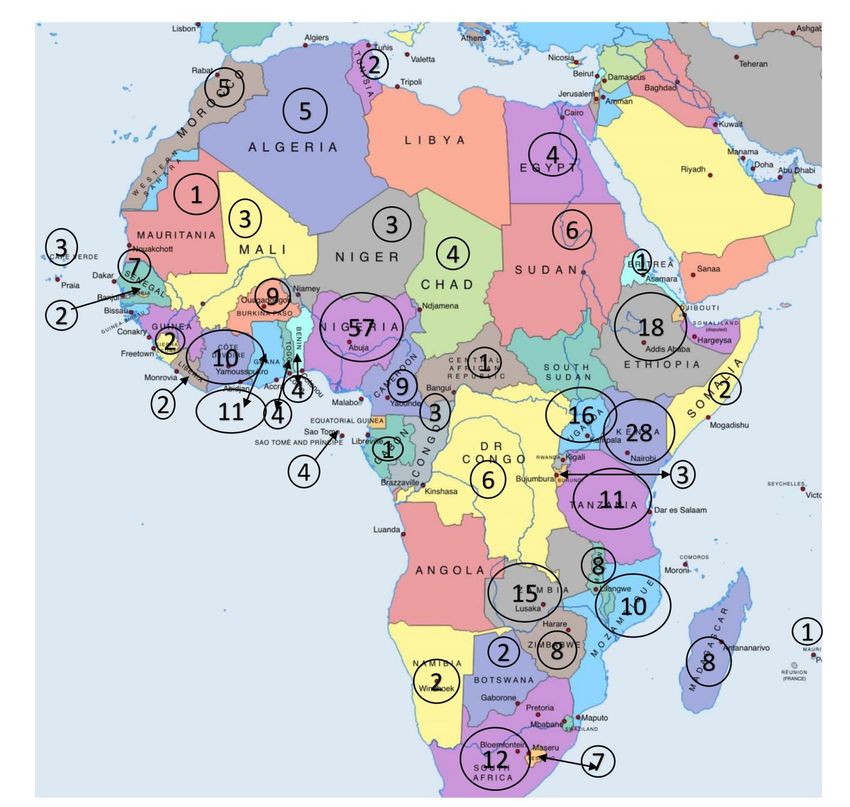
Expert Review First Order Draft (FOD) Aug-Sept
                     2017, Special Report on Global Warming of 1.5°C

                  How well were different regions represented in the FOD Expert Review?

ClimateContact-
Consultancy

                    •   489 Expert reviewers from 61 countries
                    •   Almost 13,000 review comments
                    •   5% from Africa

                                                                       Copied from IPCC WG I
                                                                       TSU (2017)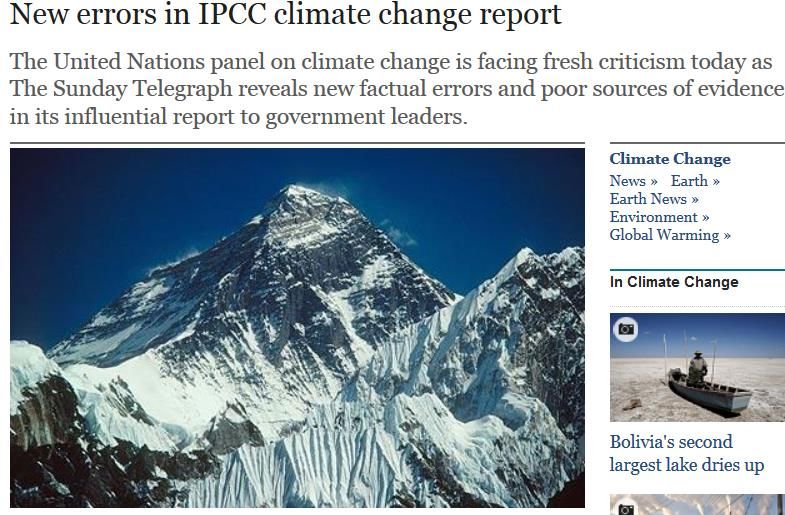
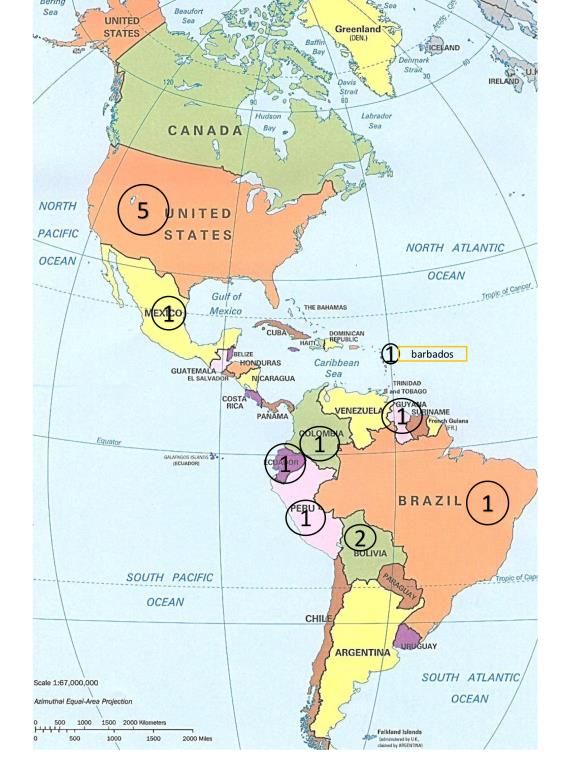
Course Registrations Africa (based on citizenship)

ClimateContact-
Consultancy
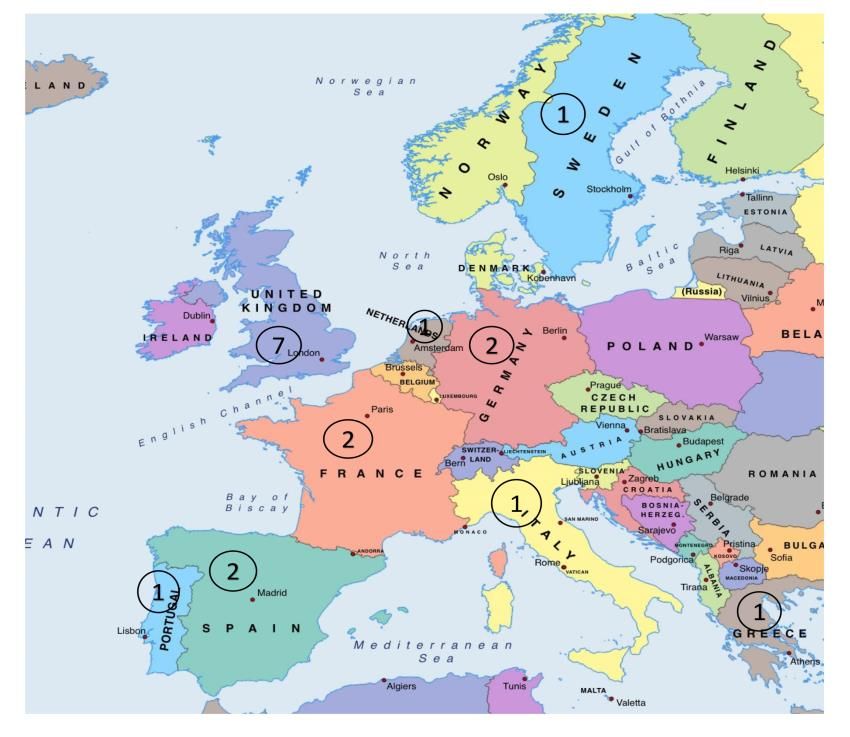
Course Registrations other continents (citizenship)

ClimateContact-
Consultancy
Introducing the Course and Timeline
                  •   5 June: Webinar 1 - How does the IPCC work? General introduction,
                      process

ClimateContact-
                  •   7 June: Webinar 2 - How to conduct an IPCC review (texts, graphs,
Consultancy
                      mechanics)
                  •   5 – 15 June: Possibility to email questions on webinars 1 and 2 to
                      info@southsouthnorth.org
                  •   19 June: Webinar 3 - questions and answers on previous Webinars;
                      reviewing uncertainties and robustness of IPCC statements; specific
                      issues for Africa
                  •   19- 22 June: Register for one-to-one feedback on draft review comments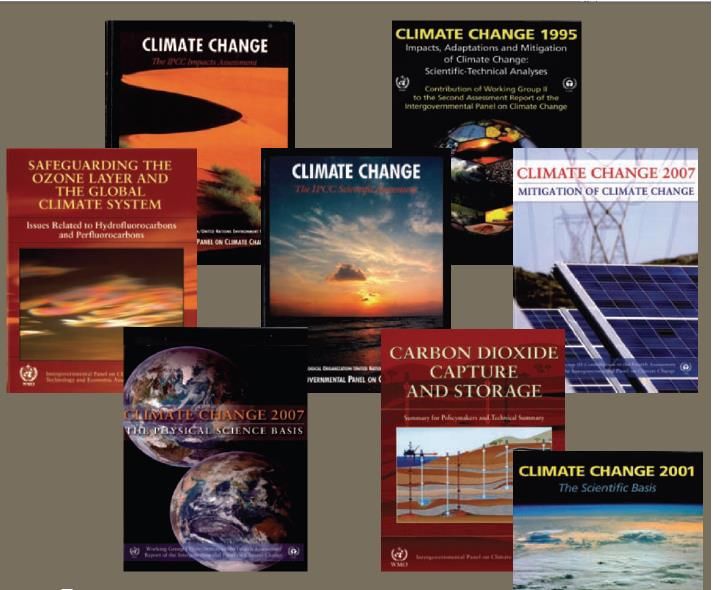
IPCC: Intergovernmental Panel on
                   Climate Change

                  • Installed by UN through World Meteorological Organization
ClimateContact-
Consultancy        (WMO) and United Nations Environmental Programme
                   (UNEP, now known as ‘UN Environment’) in 1988
                  • Organises every 5-7 years a scientific
                                                        assessment of
                   published literature on climate change, its impacts, and its
                   response options
                  • By teams of scientists from all continents
                  • Primarily to inform the policymakers of the UN member
                   states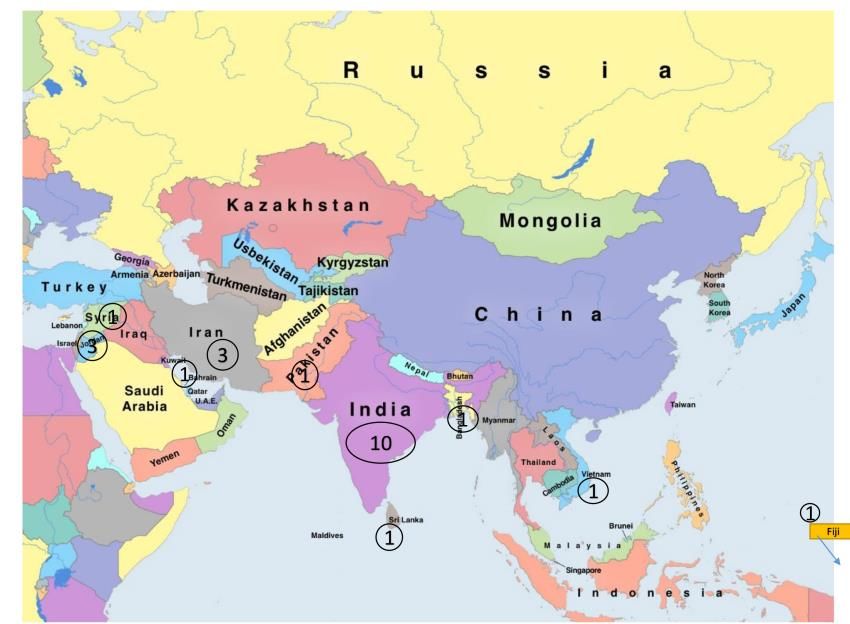
The Role of the IPCC is …
                  “… to assess on a comprehensive, objective, open and
                  transparent basis the scientific, technical and socio-
ClimateContact-
Consultancy
                  economic information relevant to understanding the
                  scientific basis of risk of human-induced climate change, its
                  potential impacts and options for adaptation and mitigation.”

                  “IPCC reports should be neutral with respect to policy,
                  although they may need to deal objectively with scientific,
                  technical and socio-economic factors relevant to the
                  application of particular policies.”

                  Principles Governing IPCC Work, paragraph 2
                  Source: http://www.ipcc.ch/pdf/ipcc-principles/ipcc-principles.pdf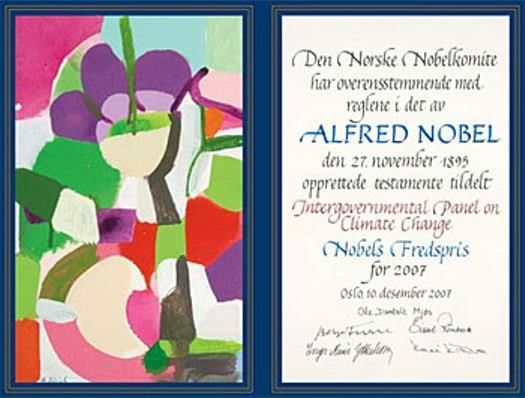
What IPCC is not – Common Misunderstandings

                  •   IPCC does not do research for itself – it evaluates the
ClimateContact-
                      key messages from scientific literature
                  •
Consultancy

                      IPCC does not recommend what policymakers, civil
                      society or private sector should do
                  •   IPCC does not pay its authors; the Chair of IPCC is not
                      their boss
                  •   Individuals are not ‘members’ of the IPCC; only
                      governments are members
Governance of the IPCC
                  •   Major decisions of the IPCC are taken by its members
                      in plenary meetings: government representatives of
                      195 UN member states
ClimateContact-
Consultancy
                       •    Elects Chair and Vice-Chairs and other members
                            of the Bureau
                       •    Determines which reports to make
                       •    Decides about their scope and outline
                       •    Adopts the end product and approves its
                            summary
                       •    Determines the procedures used to produce the
                            reports
                  •   Work is managed by three Working Groups and a Task
                      Force each with their own Co-Chairs and secretariats
                      (Technical Support Units, TSU)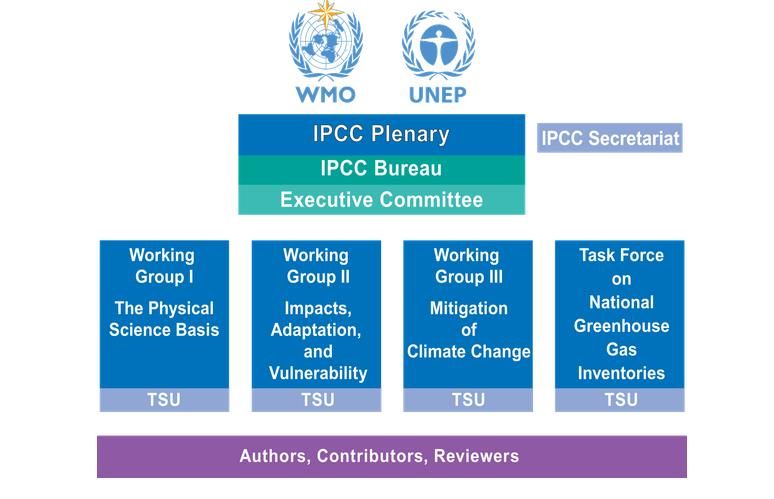
IPCC Structure

ClimateContact-
Consultancy
IPCC Main Products: ‘Assessment Reports’

                                                   Assessment
                                                   Reports: full
                                                   assessment for
ClimateContact-
Consultancy                                        each of the IPCC
                                                   Working Groups

                                                   Special Reports:
                                                   assessment of a
                                                   specific theme
Other IPCC Activities and Achievements
Methodology Reports providing practical guidelines for
the preparation of national greenhouse gas inventories
ClimateContact-
Consultancy
Task Group on Data Support for Climate Change Assessment (TG-Data):
facilitates distribution and application of climate change related data and
scenarios)
Organizing expert meetings and workshops to facilitate
discussion on topics relevant to the Assessment processWhat is a ‘Scientific Assessment’ IPCC-style (1)?
• It addresses topics identified through a scoping process
ClimateContact-
Consultancy
and agreed by the Plenary
• It draws key conclusions from the full span of available
(mostly peer- reviewed) scientific literature
• It is written by a diverse group of qualified authors from
all regions of the world– taking different views into
account
• When appropriate, its findings are labelled with
uncertainty qualifiersWhat is a ‘Scientific Assessment’ IPCC-style (2)?
‘Policy relevant but not policy prescriptive”
ClimateContact-
Consultancy
‘Deals objectively with science’Scoping
Publication
of report
IPCC
approves
outline
WG/IPCC
accepts/approves
report and SPM
Governments, organizations
nominate experts
How IPCC
Final distribution
Bureaux select Authors
reports are and Government
Review of SPM
produced
Authors Authors
prepare 1st - prepare
order FINAL
DRAFT DRAFT
Authors
prepare 2nd -
Expert Review order Government and
DRAFT Expert Review
Peer reviewed and internationally available scientific technical and socio-economic
literature, manuscripts made available for IPCC review and selected non-peer
reviewed literature produced by other relevant institutions including industrySummary for Policymakers (SPM)
• A report is accepted by the Panel as a whole, after
it has approved its Summary for Policymakers
ClimateContact-
Consultancy • Government representatives have to approve the
SPM line by line!
• Proposals for changes have to be endorsed by the
authors
• Full consensus on each and every detail is needed
before approval, as there is no vote
• The option exists for a country to have a ‘footnote’
if it disagrees with the consensusThe Fifth Assessment Report (2013-2014)
Working Group I Working Group II Working Group
report: report: III report:
The Physical Impacts, Adaptation Mitigation of
Science Basis and Vulnerability Climate Change
Synthesis
ReportThe IPCC- and its Interactions with Society (1)
• Delivers the main scientific basis for the UNFCCC process and climate
strategies and policies of many nations, companies, and civil society
ClimateContact-
Consultancy
• UNFCCC decides how the IPCC guidelines have to be used for
national greenhouse gas inventories
• The IPCC has been rewarded with the Nobel Peace Prize in 2007
together with Al Gore….The IPCC - and its interaction with Society (2)
• …. but was also attacked, including by unjustified accusations of some of its
authors in 2009: they were accused of manipulating temperature data. Several
external enquiries proved these accusations to be baseless
ClimateContact-
Consultancy
• …and heavily criticized in 2010 due to
an error in one of the reports (about the
speed of melting of Himalaya glaciers)
• … The 2010 crisis has led to the improvement of the IPCC processes and
procedures, including:
• More precise rules for using literature sources
• Enhanced role for Review Editors
• Better communication
• Protocol for adequate dealing with alleged errorsIPCC Provides Strong Basis for Global Climate Policy
• First Assessment 1990: Rio Framework Convention
on Climate Change 1992 (UNFCCC)
ClimateContact-
Consultancy
• Second Assessment 1995: Kyoto Protocol 1997
• Third Assessment 2001: Ratification Kyoto in 2005 ; Adaptation and
Mitigation work streams under UNFCCC
• Fourth Assessment 2007: Copenhagen Accord 2009 (2 degrees
limit)
• Fifth Assessment 2014: Paris Agreement 2015 (‘well below
2 degrees/1.5°C’)
• (Sixth Assessment 2022: Global Stocktake in 2023)Timeline for the Forthcoming AR6 Reports
March 2018
Conference on
Cities
October 2018 September 2019 April 2021 October 2021 April 2022
Oceans Climate Change The IPCC
Global The Physical
and cryosphere Impacts, Synthesis Report
warming of Science Basis Adaptation and
1.5 oC
Vulnerability
Talanoa Land Use Mitigation Global Stocktake
Dialogue of 2023
UNFCCC Climate Change UNFCCC
August 2019 July 2021
2019 Refinement
May 2019
* Dates are subject to a changeThe Review Process: Key to Quality and
Relevance of an IPCC Report
• (Zero-Order Draft: intern for authors only)
•
ClimateContact-
Consultancy
First Order Draft: Expert review , 8 weeks
• Second Order Draft and First Draft of Summary for Policy Makers
(SPM): simultaneous Government and Expert review, 8 weeks
• Final Draft: Government Review of the final draft SPM
• Authors must respond to all review comments –files made public
after publication of the report
• Review Editors have to sign off the comment and response files
before the SPM approval SessionOngoing and Upcoming Reviews of IPCC Special Reports
Special Report on Oceans and Cryosphere in a
changing climate (SROCC); Expert review First
Order Draft
ClimateContact- 4 May – 29 June 2018
Consultancy
Special Report on Global Warming
of 1.5°C (SR1.5); Final Government
Review (for Governments only)
4 June – 29 July 2018
Special Report on Climate Change
and Land (SRCCL); Expert Review
First Order Draft
11 June – 5 August 2018Disclaimers
• Future Climate for Africa (FCFA) can not be held
liable for any action or decision taken by the IPCC;
ClimateContact-
Consultancy conversely, the IPCC can not be held liable for the
content of this course- that is the responsibility of
FCFA and the presenters.
• Participants can not derive any rights from this
course with regard to the handling of review
comments by the IPCC author teams.Thank you for your attention!
ClimateContact-
Consultancy
• Now: Q&As follow (15 minutes)
• Later: you may wish to send other questions by 15 June to
info@southsouthnorth.org; these will be handled at the
Webinar on 19 June.
• Next webinar: How to conduct an IPCC review,
7 June 2018 1-2 pm CEST/11 am -12 pm GMT.
• Third webinar will include: reviewing uncertainties and
robustness of IPCC statements; specific issues for Africa,
19 June 2018 1-2 pm CEST/11 am -12 pm GMT.You can also read


