EAP Summer School 2021: Our Presenters
←
→
Page content transcription
If your browser does not render page correctly, please read the page content below
EAP Summer School 2021:
                   Our Presenters
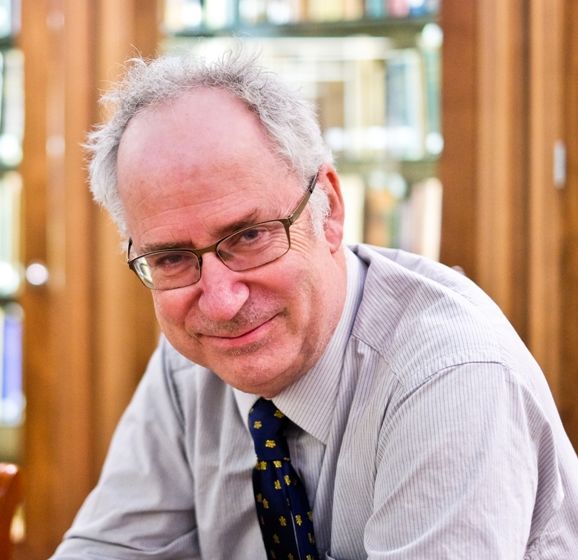
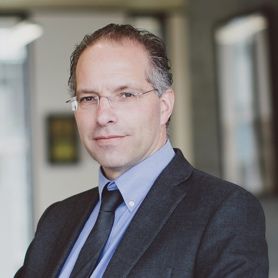
                                            Patrick is an associate professor in the Department of
                                            Sociology and manages the research group on
                                            Political Sociology, within the Amsterdam Institute
                                            of Social Science Research. He is currently the Chair
                                            of the research network on Sociology of Risk and
                                            Uncertainty (RN22) within the European
                                            Sociological Association and the editor of Health,
                                            Risk & Society.

                                            He has also worked on or coordinated a number of
                                            projects funded by, or carried out in cooperation
Dr Patrick Brown                            with, organisations such as the Royal College of
Associate Professor                         Physicians, the European Commission, the UK
Department of Sociology                     Government (Department of Work and Pensions) and
University of Amsterdam                     the European Medicines Agency, looking at various
                                            aspects of client-experiences, trust and engagement
                                            of patients and professionals, and the implications of
                                            these for policy-making.

                                            He recently finished a book On Vulnerability
                                            (Routledge 2021) and is currently working with
                                            colleagues at Århus, Leiden and Vienna on
                                            the REACTOR project, financed by DFF
                                            (Independent Research Fund Denmark).

                                            Nicola’s core substantive research interest is health
                                            care practice and the everyday work of professionals,
                                            para-professionals, complementary and lay
                                            healthcare workers, particularly those working in
                                            community and primary care settings.

                                            Her research cuts across the sociology of health and
                                            illness, embodied sociology, the sociology of work
                                            and professions, and health policy and
                                            implementation. Her contribution in these fields has
Dr Nicola Gale                              been to explicate the different kinds of ‘work’
Health Services Management Centre           involved in forms of healthcare and the implications
Reader in Health Sociology and Policy       of this for the wider health system and health policy.
College Director of Postgraduate Research
University of Birmingham                    Currently, she is working on a number of writing and
                                            empirical projects that explore the intersections of
                                            public health (management of epidemiological risk)
                                            and primary care (responsive care) mentalities in the
                                            fields of prevention and community wellbeing. She is
                                            currently developing this through a collaboration
                                            with Dr Patrick Brown (University of Amsterdam)
                                            and others to explore and research the concept of
                                            ‘risk work’. They recently edited a special edition of
                                            Health, Risk and Society on this topic.

                                                                                                     1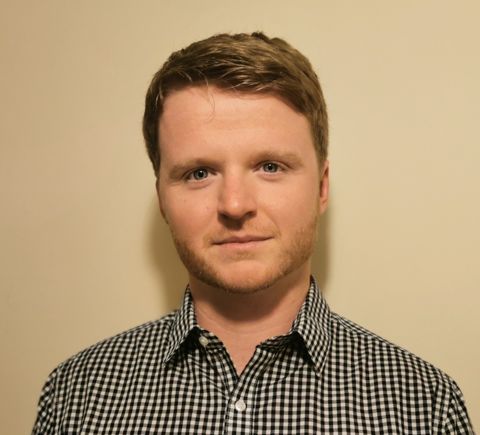
Alex is an experienced barrister, writer and
                                              educator. His practice is focused on mental capacity
                                              law (broadly defined) in which he is able to provide
                                              specialist advice and representation. He also writes
                                              extensively in the field, editing and contributing to
                                              leading textbooks and (amongst many other
                                              publications) the 39 Essex Chambers Mental
                                              Capacity Law Newsletter, the ‘bible’ for solicitors
                                              (and others) working in the area. Alex is a Wellcome
                                              Trust Research Fellow and a Visiting Professor at the
Alex Ruck Keene                               Dickson Poon School of Law at King’s College
39 Essex Chambers                             London. He served as consultant to the Law
Visiting Professor                            Commission in their review of the deprivation of
Dickson Poon School of Law                    liberty safeguards and as legal counsel to the
King’s College London                         Wessely Review of the Mental Health Act.

                                              Hazel Kemshall is currently Professor of Community
                                              and Criminal Justice at De Montfort University. She
                                              has research interests in risk assessment and
                                              management of offenders, effective work in multi-
                                              agency public protection, and implementing effective
                                              practice with high risk offenders. She has completed
                                              research for the Economic and Social Research
                                              Council, the Home Office, Ministry of Justice, the
Professor Hazel Kemshall                      Scottish Government, and the Risk Management
Professor of Community and Criminal Justice   Authority.
De Montfort University
                                              She has numerous publications on risk, including
                                              'Understanding Risk in Criminal Justice' (2003, Open
                                              University Press). She has completed three
                                              evaluations of multi-agency public protection panels
                                              for the Home Office (2001, 2005, 2007), and has
                                              researched polygraph use with sex offenders, and
                                              evaluated the public disclosure pilots in England and
                                              Wales.

                                              She is the author of Understanding the Community
                                              Management of High Risk Offenders (2008) and co-
                                              author of Working with Risk: Skills for
                                              Contemporary Social Work (2013).

                                              Campbell Killick has a background in social work
                                              and training in the areas of disability, mental health
                                              and adult safeguarding. He is currently lecturing in
                                              social work at Ulster University in Northern Ireland
                                              where he contributes to undergraduate and post
                                              qualifying courses. Campbell is course director on
                                              the MSc in Professional Development in Social
                                              Work which supports practitioners and service users
                                              to complete literature reviews, research projects and
                                              dissemination activities.

Dr Campbell Killick                           Campbell’s research interests include assessment and
Lecturer in Social Work                       decision making in adult and children’s services. He
School of Applied Social and Policy Science   has published research findings in relation to adult
Institute for Research in Social Sciences     safeguarding, professional decision making and
Ulster University                             assessment. Campbell has recently co-authored
                                              Assessment, Risk and Decision Making in Social
                                              Work: An Introduction part of the Sage Transforming
                                              Social Work Practice Series.

                                                                                                       2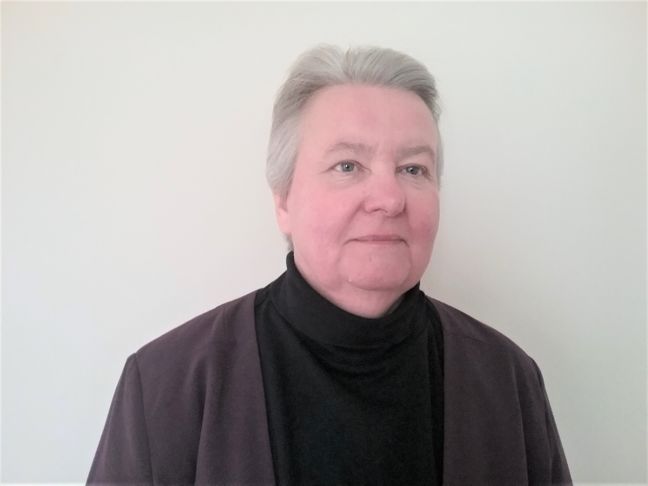
Scott is currently a Senior Investigator in the
                                                     Department of Bioethics at the Clinical Center,
                                                     National Institutes of Health. Prior to coming to the
                                                     NIH, he was professor of psychiatry and co-director
                                                     of the Center for Bioethics and Social Sciences in
                                                     Medicine, University of Michigan. He is an adjunct
                                                     professor of psychiatry at the University of Michigan
                                                     and an adjunct professor of neurology at the
                                                     University of Rochester.

Scott Y.H. Kim, M.D., Ph.D.                          Scott is a psychiatrist and a philosopher. Clinically,
Senior Investigator                                  he has worked as a consultation psychiatrist in
Department of Bioethics                              general hospitals and as an outpatient general
NIH Clinical Center                                  psychiatrist. His philosophical background is in
                                                     Kant’s moral philosophy. But most of his work has
                                                     been in bioethics; more information can be found
                                                     at scottkimbioethics.org.

                                                     Sarah graduated from the University of Cambridge
                                                     with a master's degree in Mathematics in 1996, and
                                                     from the University of Durham with a PhD in
                                                     Hypercomplex Hyperbolic Geometry in 2003. She
                                                     currently is a Visiting Researcher in the Department
                                                     of Biostatistics and Health Informatics, Institute of
                                                     Psychiatry, Psychology and Neuroscience, King's
                                                     College London. Her main research interests include
                                                     risk related discourses and practices in secure and
                                                     forensic psychiatric services, the quality of practice
                                                     in the First Tier Tribunals for mental health and the
Dr Sarah Markham                                     development and application of digital technologies
Visiting Researcher                                  to deliberation in Health Technology Assessment.
Department of Biostatistics & Health Informatics
Institute of Psychiatry, Psychology & Neuroscience
(IoPPN)
King’s College London

                                                     Wayne is Professor of Philosophy at the University
                                                     of Essex, where he is a member of the Essex Human
                                                     Rights Centre and Director of the Essex Autonomy
                                                     Project, a research and public policy initiative
                                                     focusing on the ideal of self-determination
                                                     (autonomy) in the context of care (health care, social
                                                     care, eldercare, psychiatric care, etc.). He also holds
                                                     an honorary research position with the South London
                                                     and Maudsley NHS Foundation Trust. He is the
Professor Wayne Martin                               author of numerous research articles and reports
University of Essex                                  focusing on issues concerning decision-making and
Director: Essex Autonomy Project                     mental capacity in the context of mental health care,
                                                     and has been involved in policy formation both in the
                                                     UK and abroad. From 2014-16 he led a team that
                                                     supported the UK Ministry of Justice in preparation
                                                     for the review by the United Nations of UK
                                                     compliance with the United Nations Convention on
                                                     the Rights of Persons with Disabilities. In 2018 he
                                                     served on the Equality and Human Rights topic
                                                     group for the Wessely Review of the Mental Health
                                                     Act.

                                                                                                              3
Danny is a PhD student at the University of Essex,
                                                     where he is supervised by Professor Wayne Martin.
                                                     His thesis is titled “Making Sense of Nonadherence
                                                     to Psychiatric Treatments”. His research is broadly
                                                     situated in the philosophy of psychiatry, but he is
                                                     interested in using resources from a broad range of
                                                     traditions and other disciplines including economics
                                                     and law. He has also conducted research on risk and
                                                     mental capacity with a particular focus on the use of
Daniel Shipsides, PhD Candidate                      “sliding scales”. Recently, Danny worked for the
University of Essex
                                                     Open Innovation Team, a cross-government unit that
                                                     brings together academics and policy-makers to
                                                     develop evidence-based policy.

                                                     George is a Psychiatrist and Professor Emeritus of
                                                     Psychiatry and Society at the IoPPN, King’s College
                                                     London. His research focuses on strategies for
                                                     reducing compulsion and coercion in psychiatric
                                                     care. A key interest is mental health law reform,
                                                     particularly the development of non-discriminatory,
                                                     generic legislation which would apply to all persons,
                                                     regardless of the cause of the underlying disturbance
                                                     of treatment decision-making. Past posts have
                                                     included Dean of the Institute of Psychiatry, King’s
Prof George Szmukler                                 College London (2001-2006); Medical Director of
Institute of Psychiatry, Psychology & Neuroscience   the Bethlem and Maudsley NHS Trust (1997-1999),
King’s College London                                then joint Medical Director of the South London and
                                                     Maudsley NHS Trust (1999-2001); Visiting
                                                     Professor in the Department of Sociology at the
                                                     London School of Economics (2005-2014);
                                                     Associate Director of the NIHR Mental Health
                                                     Research Network, with lead responsibility for
                                                     Patient and Public Involvement in research (2007-
                                                     2015). His most recent book, Men in White Coats,
                                                     discusses involuntary treatment in the context of
                                                     human rights.

                                                     Simon Wessely studied medicine and history of art at
                                                     Trinity Hall, Cambridge, and finished his medical
                                                     training at University College Oxford, graduating in
                                                     1981. He obtained his medical membership in
                                                     Newcastle, before moving to London to train in
                                                     psychiatry at the Maudsley. He has a Master’s and
                                                     Doctorate in epidemiology. He is a Foundation Senior
                                                     Investigator of the National Institute for Health
                                                     Research, and past President of the Royal College of
                                                     Psychiatrists and the Royal Society of Medicine. In
Professor Sir Simon Wessely                          2017 he was asked by the then Prime Minister to chair
Professor of Psychological Medicine and Regius       the Independent Review into the Mental Health Act,
Professor of Psychiatry at King’s College London     which was accepted by the government and is now the
Consultant Liaison Psychiatrist at King’s College    basis of the 2021 White Paper.
and the Maudsley Hospitals.
                                                     He has over 800 original publications, with an
                                                     emphasis on the boundaries of medicine and
                                                     psychiatry, unexplained symptoms and syndromes,
                                                     population reactions to adversity, military health,
                                                     epidemiology and others. He founded the King’s
                                                     Centre for Military Health Research, which is now the
                                                     main source of information on the health and well-

                                                                                                             4
being of the UK Armed Forces past and present and
                                has been Civilian Consultant Advisor in Psychiatry to
                                the British Army since 2001.

                                He also has a long-standing interest in how both
                                ordinary people and organisations react to adversity.
                                Since 2013 he has been the Director of the Public
                                Health England/NIHR Health Protection Research
                                Unit into Emergency Preparedness and Response.
                                This has meant a heavy involvement in our COVID-
                                19 research response, I addition to which he is also PI
                                on the MRC/ESRC funded NHS Check, a major study
                                of the impact of the pandemic on NHS staff health and
                                well being.

                                Jens Zinn studied Sociology, Social Psychology and
                                Political Science at the University of Saarland and
                                the University of Bielefeld (Germany). He worked at
                                the Collaborative Research Center Status Passages
                                and Risks in the Life Course in Bremen (1995-99),
                                the Collaborative Research Centre Reflexive
                                Modernization in Munich (1999-02) and in the
                                ESRC priority network Social Contexts and
                                Responses to Risk at the University of Kent (2003-
                                08).

                                Jens joined the University of Melbourne in 2009 as
                                T.R. Ashworth Associate Professor in Sociology. He
Professor Jens Zinn             has founded a number of international research
Social and Political Sciences   networks on the Sociology of Risk and Uncertainty
University of Melbourne         (SoRU) within the European Sociological
                                Association (2005) and the International Sociological
                                Association (2006). In 2015 he was awarded the
                                prestigious Friedrich Wilhelm Bessel award by the
                                Alexander von Humboldt Foundation.

                                In his most recent research, he has advanced
                                theorizing on risk taking (2020: Understanding Risk-
                                taking, Palgrave) and he has explored discourse
                                semantic changes of risk in a historical perspective
                                (2020: The UK at risk, Palgrave; 2018: Risk in the
                                New York Times, Palgrave).

                                                                                       5



You can also read


