Early Childhood Education - RTI International
←
→
Page content transcription
If your browser does not render page correctly, please read the page content below
www.rti.org/idg
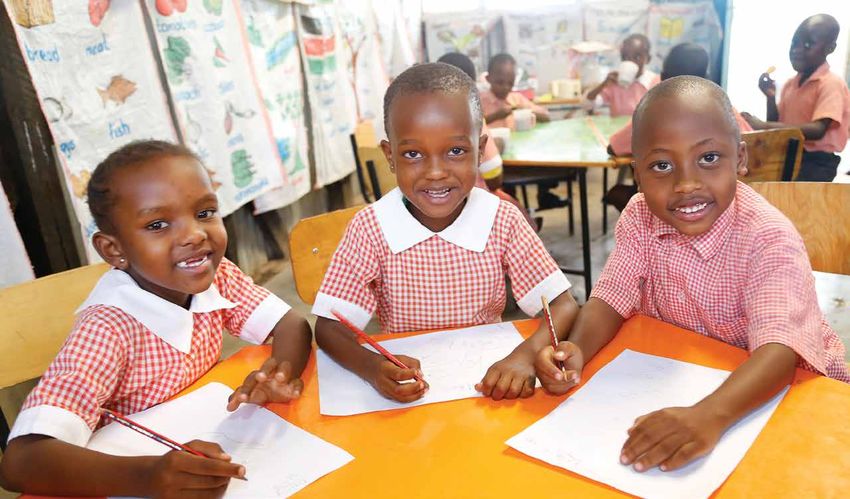
© RTI Michael Khateli

                        Early Childhood Education
                                The early years of a child’s life set the stage for healthy development and positive long-term
                                outcomes. Yet, an estimated 250 million children worldwide do not get a healthy start because of
                                poor nutrition, lack of early stimulation, and risk factors associated with poverty. RTI partners with
                                governments to increase investments in early childhood education and maximize opportunities for
                                young children to achieve their developmental potential, with far-reaching positive implications for
                                current and future generations.

                        Our expertise in the early-learning aspects of early            with children with disabilities and refugee children,
                        childhood development (ECD) informs interventions that          we are committed to improving the lives of vulnerable
                        help children build a solid cognitive foundation to support     populations.
                        success in early primary education.                           • Child development assessment. We develop innovative
                        • Pre-primary and early primary education. We work with         assessment tools that tell us about children’s development
                          ministries of education around the world to develop           and early learning from birth through age eight, and
                          teaching and learning materials and to train teachers         beyond. Our instruments help education leaders and
                          of young children. We promote developmentally                 policy makers evaluate programs, acquire and employ
                          appropriate practices while respecting local definitions      data for decision making, and improve education for the
                          of quality, and we build the capacity of policy makers        youngest learners and most vulnerable populations.
                          and educators to effectively advocate for increased
                          investment in pre-primary education.
                                                                                      Project and Research Highlights
                                                                                      CAMBODIA. All Children Reading-Cambodia Activity and
                        • Research. We conduct rigorous, policy-relevant
                                                                                      All Children Learning Activity, U.S. Agency for International
                          studies of early care and education programs as well as
                                                                                      Development (USAID) (2017–2021 and 2018–2021). These two
                          investigating cognitive abilities of young children—both
                                                                                      concurrent projects have the goal of improving early grade
                          inside and outside of formal education settings. Our
                                                                                      reading and learning skills of children from kindergarten to
                          research in executive function, language, and social-
                                                                                      grade 3. This includes creating supplemental materials for
                          emotional learning helps advance the understanding of
                                                                                      kindergarten classrooms, such as storybooks, for use with
                          factors affecting learning. Through our research efforts
                                                                                      children with and without disabilities.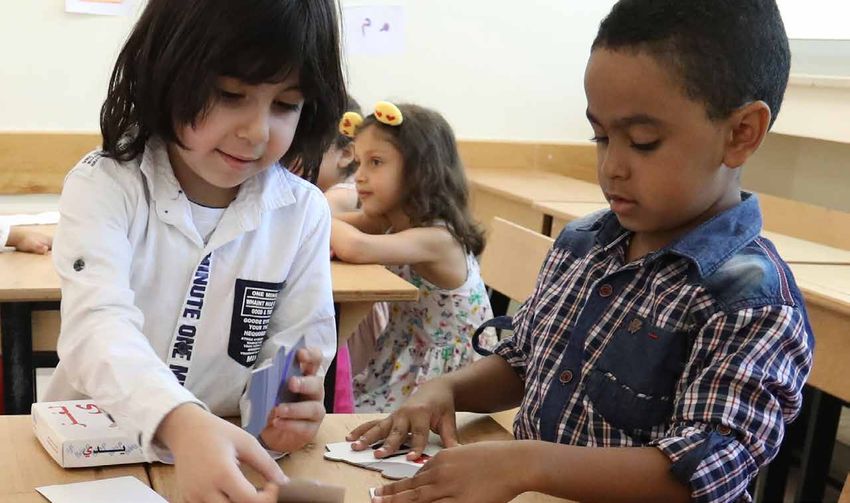
© RTI USAID RAMP (Jordan)
                                                                                     JORDAN. USAID Early Grade Reading and Mathematics
                    Why Invest in Early Childhood Education?                         Initiative, USAID (2015–2019). RTI is working with the
                 Recent estimates show that 39 percent of                            Ministry of Education to support reading and math
                 children in developing countries under the                          in kindergarten through grade 3. In addition, RTI is
                 age of five are at risk of not reaching their                       supporting Ministry efforts to expand access to high-
developmental potential.* Investing in early childhood                               quality kindergarten through two additional activities. An
education can lead to significant social and economic gains.                         accelerated school-readiness program for children who have
Unsurprisingly, interventions that lead to positive outcomes
                                                                                     not had access to kindergarten educates both the children
in the first 2,000 days of a child’s life have very high returns
                                                                                     and their parents so that children transition successfully to
on investment for society. According to Nobel laureate
economist James Heckman (https://heckmanequation.org/
                                                                                     school and parents engage in learning activities at home.
the-heckman-equation), early interventions such as providing                         RTI is also partnering with the Ministry of Education and
proper nutrition for infants to support brain development                            the Ministry of Social Development to map the provision
have a significantly higher return on investment than later                          of kindergarten and analyze the gaps in coverage, especially
interventions such as job training programs for adults.                              among marginalized and refugee populations. This analysis
                                                                                     has led to policy recommendations for achieving universal
Investment in early education is crucial to achieve the
Sustainable Development Goals (SDGs). In 2015, for the first
                                                                                     kindergarten enrollment, including options to leverage the
time, the SDGs made ECD a central theme. Millions of young                           private sector through public–private collaboration.
children in developing countries are not meeting SDG targets
                                                                                     KENYA. The Tayari Early Childhood Development and
related to ECD, including achieving developmental milestones
                                                                                     Education Programme, Children’s Investment Fund Foundation
and participating in organized learning before primary school.
In addition to these education-related goals for ECD, nutrition,
                                                                                     (2014–2019). The goal of the Tayari program was to
child survival, and child protection goals have also been                            increase the school readiness of pre-primary children
established, illustrating the multisectoral nature of ECD.                           in Kenya, including sufficient cognitive, physical, social,
* Lu, C., Black, M. M., & Richter, L. M. (2016). Risk of poor development in young
                                                                                     and emotional well-being. As of 2019, Tayari had reached
  children in low-income and middle-income countries: An estimation and              145,000 children in 1,500 early childhood centers in
  analysis at the global, regional, and country level. The Lancet Global Health,     selected counties in Kenya. Tayari’s activities included
  4(12), e916–e922.
                                                                                     developing learning materials for pupils and teachers,
                                                                                     training teachers and giving them instructional support,
© RTI Michael Khateli

                        and using technology for tracking child development              literacy skills of pre-primary students. Each teacher received
                        outcomes. Additionally, Tayari aimed to reduce illness-          24 books for reading aloud and an accompanying teachers’
                        related school absenteeism by promoting improved hygiene         guide. An impact evaluation showed that the intervention
                        practices, water treatment, and health record-keeping in         had a significant positive effect on children’s emergent
                        schools.                                                         literacy and executive function skills.

                        LIBERIA. Read Liberia Activity, USAID (2017–2022). This          TANZANIA. Early Learning Partnership System Research,
                        five-year education project is helping to improve outcomes       World Bank (2017–2018). RTI performed a situational
                        in public kindergartens in six targeted counties, as well as     analysis of pre-primary education, with a goal of informing
                        early grade reading skills for students in grades 1 and 2. The   policy making in Tanzania and contributing to the global
                        kindergarten pilot will reach 2,700 students from 60 schools,    body of research on pre-primary education systems. The
                        with the goal of improving oral vocabulary for emergent          initial situational analysis concentrated on five elements
                        literacy. In addition to two trainings per year and ongoing      of the subsector: teacher workforce, financing, the role
                        coaching support, teachers receive daily structured lessons      of parents in early learning, nonstate provision of pre-
                        to aid in delivering instruction in language and emergent        primary education, and the political–economic context.
                        literacy. Additionally, students receive an activity book that   Following the situational analysis, RTI collaborated with
                        aligns with the daily activities in the teachers’ guide.         the Government of Tanzania to develop a systems research
                                                                                         agenda.
                        TANZANIA. Tusome Pamoja, USAID (2016–2021). The USAID
                        Tusome Pamoja Program, or “Let’s Read Together,” provides        TANZANIA. Measuring Early Learning Quality and Outcomes
                        sector support to the national pre-primary and primary           (MELQO), United Nations Children’s Fund (2016–2017). RTI
                        education program through intensive, targeted assistance         implemented MELQO, an assessment measuring school
                        in Zanzibar and four mainland regions. Tusome Pamoja             readiness and classroom quality, in mainland Tanzania
                        aims to improve emergent academic skills for roughly 1.4         and Zanzibar with a nationally representative sample to
                        million children through improved instructional practice,        provide a snapshot of pre-primary learning outcomes and
                        system strengthening, and community engagement. The pre-         quality. This assessment enabled the government to better
                        primary program, piloted in Mtwara region, emphasized the        understand the quality of the pre-primary classroom and
                        use of storybooks and dialogic reading strategies to support     school environment, and children’s school readiness skills at
                        the development of foundational oral language and emergent       the start of grade 1. The government has used the findings
©hadynya
                                                                                                                                                                                         © RTI
to inform pre-primary sector planning, and as a baseline
measure for future growth in early learning and quality of                                         Executive Function
school environments.                                                                               Executive function (EF) refers to cognitive processes and
                                                                                                   abilities that are important for organizing information,
UGANDA. Repetition/Early Years National Study, U.K.                                                planning, solving problems, sustaining attention, and
Department for International Development (DFID) (2017–2018).                                       orchestrating thought and action in support of goal-
In 2016, RTI designed and self-funded a pilot study in                                             directed behavior. EF skills are central to a child’s ability to
two districts in Uganda to investigate whether access to                                           learn how to learn.
pre-primary education affects enrollment and repetition.                                           RTI has developed an innovative, tablet-administered tool
Parents and teachers were interviewed about children’s                                             to measure executive function in young children. EF Touch
access to pre-primary education programs, pre-primary                                              is made up of a battery of tasks that measure inhibitory
attendance, and grade 1 repetition. Results of this study                                          control, working memory, and cognitive flexibility. It is
                                                                                                   unique in that its platform within RTI’s Tangerine® software
suggested that children who attended pre-primary were less
                                                                                                   enables easy-to-use and scalable assessment, even within
likely to repeat grade 1. Based on these results, Ugandan
                                                                                                   low- and middle-income countries (LMICs).
policy makers requested national-scale research to help
                                                                                                   EF Touch was originally piloted in Nairobi, Kenya,
them understand the causes of early primary repetition and
                                                                                                   successfully demonstrating its feasibility to measure these
its relationship to pre-primary education access. In response
                                                                                                   skills in young children in an LMIC. It was incorporated
to this interest from policy makers, DFID funded a national
                                                                                                   into a longitudinal study within the Tayari Early Childhood
study to examine the issue of repetition at a larger scale.                                        Development and Education Programme in Kenya, to collect
Data were collected from teacher and parent interviews and                                         data from 1,300 children; and also was included in the
student records in 10 subregions throughout Uganda. This                                           baseline assessment for the impact evaluation of the USAID
national study confirmed the pilot findings that very high                                         Read Liberia kindergarten activities.
(unreported) repetition feeds overenrollment in grade 1,
and that this high repetition rate stems partly from a lack of
access to preprimary education.                                                                 More Information
                                                                                                Katherine M. King, Director                          www.rti.org/idg
                                                                                                Early Childhood Development                          http://SharEd.rti.org
                                                                                                International Education                              Follow @RTI_INTL_DEV
                                                                                                kmking@rti.org                                       Follow @RTI_EdWork

                                                                                                                                                                      RTI 11712 R 0319

RTI International is an independent, nonprofit research institute dedicated to improving the human condition. Clients rely on us to answer questions that
demand an objective and multidisciplinary approach—one that integrates expertise across the social and laboratory sciences, engineering, and international
development. We believe in the promise of science, and we are inspired every day to deliver on that promise for the good of people, communities, and
businesses around the world. For more information, visit www.rti.org.
RTI International is a registered trademark and a trade name of Research Triangle Institute. The RTI logo is a registered trademark of Research Triangle Institute.
You can also read


