EDUCATION & SKILLS OECD work on
←
→
Page content transcription
If your browser does not render page correctly, please read the page content below

OECD work on
EDUCATION & SKILLS
Directorate for Education and Skills
Education and Skills
           at the OECD

The OECD’s work on education helps individuals and nations to identify
   and develop the knowledge and skills that drive better jobs and
    better lives, generate prosperity and promote social inclusion.
Foreword
                                       At the OECD we believe that educating people up to and beyond whatever
                                       technology demands is the foundation for better jobs and better lives. And
                                       giving more people better opportunities drives social participation and is the
                                       cornerstone for more inclusive and resilient economies. Education gets to the
                                       origins of inequity in our societies and can therefore help us avoid picking up
                                       expensive consequences of inequality.

                                       We encourage countries to compare their experiences and learn from each
                                       other, and we accompany them in the difficult process of policy implementation.
                                        Our global metrics help countries see what is possible in education and set
                                       meaningful aspirations in terms of measurable goals achieved by the world’s
                                       education leaders. Our PISA surveys show how much school systems vary in
                                       their progress towards equipping all learners with the critical thinking, creative
  Andreas Schleicher                   problem-solving and collaborative skills that are so crucial at a time when the
                                       kinds of things that are easy to teach and easy to test have also
  Director for Education and Skills,   become easy to digitise and automate. Through TALIS, we seek to strengthen
  and Special Advisor on Education     the teaching profession and devise ways to bring together the people, the
  Policy to the Secretary-General      spaces, the technology and time more innovatively to educate learners for their
                                       future, rather than our past. And our Survey of Adult Skills (PIAAC) shows how
                                       the skills of adults match what life and work expect from them.

                                       Together, we can help every learner, every parent, every teacher and every
                                       policy maker see that only the sky is the limit to improving education – and that
                                       improving education is the key to a better and fairer society.

                                                                                                                            3
© OECD 2021
What the OECD does
    The Organisation for Economic           to better prepare the world of       improving economic performance
    Co-operation and Development            tomorrow.                            and creating jobs to fostering
    (OECD) is an international                                                   strong education and fighting
                                            Together with governments,           international tax evasion, we
    organisation that works to build
                                            policy makers and citizens, we       provide a unique forum and
    better policies for better lives. Our
                                            work on establishing                 knowledge hub for data and
    goal is to shape policies that foster
                                            evidence-based international         analysis, exchange of experiences,
    prosperity, equality, opportunity
                                            standards and finding solutions      best-practice sharing, and advice
    and well-being for all. We draw on
                                            to a range of social, economic and   on public policies and international
    60 years of experience and insights
                                            environmental challenges. From       standard-setting.of tomorrow.
4
                                                                                                                © OECD 2021
Fairer, future-ready learning that is resilient and effective
      Working with OECD member and partner                  Today, the educational potential of many
      countries, the OECD Directorate for Education and     people, adults and children alike, is jeopardised
      Skills carries out policy reviews and                 by economic crisis, climate change and
      large-scale cross-country surveys, gathering data     increasingly diverse and unequal societies.
      on everything from public spending on education       In a knowledge-driven economy, the macro-social
      and teacher digital skills to the difference          cost of wasted talent is high with society paying
      between how girls perform compared to boys            the future price of social welfare, health, and
      in science, all in the service of better education    protection systems, and compromised social and
      policies. Our comparative data and analyses help      political participation. In identifying educational
      education systems efficiently deliver fairer,         disadvantage, we help governments establish
      future-ready learning to people of all ages and       compensatory mechanisms for those at risk of
      from all walks of life so they can become             falling behind. Digital technology looks to make
      resilient, fulfilled and productive members of        equity in education even more reachable. Allied
      society and the world. This begins with learning      with what we humans uniquely bring to teaching
      in the earliest years and grows through a lifetime    and learning, digital innovation can radically
      of reskilling and upskilling to attain better jobs.   transform education.
      Effective learning is learning that is lifelong and
      life-wide. This means a whole-of-student              In activating the values of inventiveness,
      approach, underpinned by cognitive development,       diversity, equity, well-being and cognitive
      social and emotional learning, well-being and         excellence in students’ learning, we are helping
      resilience.                                            governments lay the bedrock for cohesive
                                                            societies that are resilient, outward-looking, fair
      Whether because of background or circumstance,        and prosperous. Societies whose institutions are
      not all students enjoy the same holistic learning     supported by their citizens’ trust, grounded in
      opportunities, or can equally benefit from them.      knowledge, critical thinking and agency.

                                                                                                                  5
© OECD 2021
Future-ready classrooms
                        Radically transforming learning
                        through digital technology
    » Empower people and learning systems to embrace digital
      technologies by supporting countries with digitalisation in
      education and the use of smart data for learning and teaching.
      This can improve access to learning for people of all ages;
      transform teaching and learning practices; expand
      individualised and adaptive instruction; complement work-based
      learning in vocational education and training; reduce instructional
      costs; facilitate the provision of alternative credentials; support
      the professional learning of educators; and improve
      decision-making in education
    » Reframe the education narrative to build better complementarity
      between human and technological capabilities; foster a culture of
      lifelong and life-wide learning; and strengthen equity in
      educational opportunity as a foundation for more inclusive
      societies
    » Lead a global effort to benchmark AI and human capabilities to
      better align curriculum and instructional design with more
      equitable learning opportunities and the future of work
    » Integrate insights from neuroscience, brain research and cognitive
      psychology into policy and teaching practice

6
                                                              © OECD 2021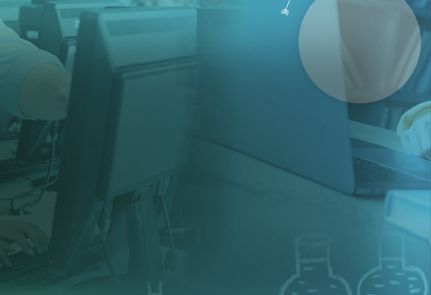
Fairer Learning
                      Levelling the playing field starts
                      before school
» Build an international evidence base on early learning and child
  well-being to help countries develop quality early childhood
  education and care
» Collect data and analyse the unequal distribution of social
  outcomes and benefits of education to support investment in
  inequality-reducing early childhood education and care
» Equip all students with foundation skills and competences that
  will help their entry into the labour market
» Implement digitally-enabled individualised and adaptive
  instruction to reach people of all ages and backgrounds;
  especially, students who have fallen behind due to the pandemic
» Promote a growth mindset, which especially benefits
  disadvantaged students
» Narrow the digital gap by supporting digital infrastructure
  developments and resources for students and schools
» Promote policy of classrooms mixing students of diverse
  socio-economic backgrounds
» Facilitate and take stock of opportunities made possible by
  alternative credentials outside institutional frameworks so that
  higher education can better accommodate the needs of
  non-traditional learners
                                                                     7
© OECD 2021
Building Resilience
                         Fusing cognitive development
                         with well-being in lifelong,
                         life-wide learning

     » Build an international evidence base on early learning and
       child well-being to help countries develop quality early
       childhood education and care
     » Promote a growth mindset to strengthen learners’ sense of
       collective belonging
     » Integrate global competence learning into education to
       empower students for a complex, interconnected world
     » Establish diverse educational pathways and quality career
       guidance to support student transitions across levels of
       education and into the labour market
     » Understand how education can bring about collective
       behavioural change enabling people to strike
       a different balance between current needs and the future
       well-being of the planet
     » Remedy the loss of important social developmental
       experiences for learners due to COVID-19-necessitated
       school closures

88
                                                          © OECD 2021
€          Economics of education
                   £      Effective, efficient education
    $
                          for more fulfilled and
                          productive lives

  » Respond to rapid changes in skill demand in the labour market
  » Focus on reskilling and upskilling of those whose working lives
    have been affected by the impact of COVID-19
  » Mainstream flexible, modularised, cost-effective ways of
    learning, using adaptive and personalised digital education
    tools to complement work-based learning in VET
  » Revise the analytical framework on economic returns to
    education in light of the shifting relationship between
    credentials and economic outcomes
  » Build the nexus between tax revenue and educational
    outcomes to help countries find better ways to share the costs
    and benefits of education between individuals, enterprises
    and societies
  » Encourage uptake of digital tools, particularly artificial
    intelligence, to improve administrative decision-making
    and boost productivity in education

                                                                      9
© OECD 2021
Our surveys
       The best way for education systems to improve is          citizens’ education and move closer to the
       to learn what works from each other. The OECD             education target of the 2030 United Nations
       Directorate for Education and Skills deploys              Sustainable Development Goals.
       large-scale surveys and reviews, designing
       common methodological and analytical                      The OECD Directorate for Education and Skills is
       frameworks for utmost comparability of empirical          constantly strengthening and innovating its
       evidence from different education systems.                surveys to advance methodologies, streamline
       The OECD collects data about nearly all aspects of        country participation and reflect emerging
       countries’ education systems from key policies,           education priorities in a better and timelier way.
       teacher practises, adult proficiency, and early           It is also multiplying the ways in which countries
       childhood learning and well-being to how                  can dialogue and learn from each other in
       15-year-olds perform in mathematics and what              formulating policy.
       their attitudes are about global issues like climate
                                                                 All this is more urgent than ever as countries
       change. We continuously pioneer innovative new
                                                                 grapple with the COVID-19 pandemic, its after
       research instruments, analysing data using
                                                                 effects, and, in a greater context, the volatility
       AI-powered supervised statistical learning, for
                                                                 climate change brings with it. The OECD was the
       instance, and balancing the findings against those
                                                                 first international organisation to launch a rapid
       in the existing literature in the field. The comparison
                                                                 assessment of education policy responses to
       of country results tells us with increasingly
                                                                 COVID-19. It has been helping schools manage
       fine-grained precision what produces effective and
                                                                 disruptions and is working with UNESCO, UNICEF
       equitable learning, and well-being. Sharing these
                                                                 and the World Bank to deliver recurrent
       findings and insights builds a collective knowledge
                                                                 comparative data on the pandemic to help guide
       bank, which countries draw on to improve their
                                                                 education policies for recovery.

 10
10
                                                                                                          © OECD 2021
                                                                                                            © OECD 2021
11
© OECD
© OECD 2021
2021The International Early Learning and Child Well-Being Study
The International Early Learning and Child Well-Being Study (IELS) is the world’s first assessment of early
learning and child well-being. Pioneering a holistic view that encompasses cognitive, social and emotional
development, this cross-country survey integrates the perspectives of 5-year-old children, teachers,
parents and the system in the analysis. It provides comparative information that helps countries design
inclusive learning policies that start our youngest citizens on the path to becoming productive and fulfilled
members of society.
OECD Survey on Social and Emotional Skills
The OECD Survey on Social and Emotional Skills is the first international survey that identifies and
assesses the conditions and practices that shape the social and emotional skills of 10- and 15-year-old
students in a comparable way. Complementary to literacy and numeracy, socio-emotional competencies
involve managing emotions and self-perception, and engaging with others. Research shows that both
cognitive, and social and emotional skills improve people’s life outcomes, benefitting society as a whole.
The study draws on a well-known framework that assesses a broad and balanced set of 15 skills, selected
based on their policy relevance, validity, reliability and comparability in diverse populations and settings.
PISA
The triennial Programme for International Student Assessment (PISA) studies the extent to which
15-year-old students nearing the end of compulsory education have acquired the key knowledge and
skills that are essential for full participation in modern societies. PISA assessments cover core cognitive
competencies in reading, science and mathematics, and focuses on different themes in each cycle.
These range from financial literacy, global competence, digital literacy and student well-being to
vocational skills and behavioural change around the climate agenda. PISA covers over 90 countries.
12
12
© OECD 2021
© OECD 2021Survey of Adult Skills
The Survey of Adult Skills, a product of the OECD Programme for the International Assessment of Adult
Competencies (PIAAC), measures adults’ proficiency in literacy, numeracy and the ability to solve problems
in technology-rich environments. These are the fundamental skills adults use in the workplace, at home
and in their communities. Analysis of data gives participating countries a good indication of the strengths
and weaknesses in their labour force. It also shows where their education and training systems have room
for improvement in areas such as the development of alternative lifelong learning outside institutional
frameworks.
The OECD Teaching and Learning International Survey
The OECD Teaching and Learning International Survey (TALIS) gathers information about today’s teachers
that helps countries build a high-quality teaching force. It was the forerunner in collecting data on working
conditions and learning environments at schools from teachers and school leaders, and will now include
a first assessment of teacher pedagogical knowledge. TALIS Starting Strong, the first international survey
of the Early Childhood Education and Care (ECEC) workforce, documents the backgrounds, education and
training of staff and leaders across countries, as well as their pedagogical and professional practices.
13
© OECD
© OECD 2021
2021Our tools
Education at a Glance
Education at a Glance is the authoritative source for information on the state of education around the
world. It provides what is increasingly real-time data on the structure, finances and performance of ed-
ucation systems across OECD countries and a number of partner economies. The 2020 edition includes a
focus on vocational education and training, notably, the labour market and social outcomes of vocational
graduates.
The Education Policy Outlook
The Education Policy Outlook is an analytical observatory that monitors the evolution of policy priorities
and developments from early childhood to adult education, mainly among OECD education systems. This
provides a comparative understanding of how policies are evolving, and how they can be best implemented
or improved over time. In view of supporting countries adjust policies and shift practices in the
post-COVID-19 world, the Education Policy Outlook is developing and disseminating an actionable
Framework for Resilience and Responsiveness in education policy.
PISA Global Crisis Module
The OECD Directorate for Education and Skills has made its crisis survey module available as a global public
good. It develops ongoing real-time evidence on the resilience and responsiveness of school systems; the
preparedness of students and schools for future disruptions of teaching and learning; and, in the context
of the COVID-19 pandemic, student learning and well-being during school shutdowns. This survey delivers
recurrent comparative data on education policy responses to COVID-19, particularly the implementation of
contingency measures and alternative learning strategies. Comparative survey findings have helped
education systems learn best practices in managing disruptions in schooling. It serves as a springboard to
crafting policy responses that build on the agile innovations and new stakeholder collaborations brought
forth by the pandemic.
14
14
© OECD 2021
© OECD 2021Global Teaching Insights
The Directorate has made available and is continuously adding to a substantial online collection of videos
showcasing different teaching practices in classrooms from around the world. These direct observational
videos are an invaluable teacher resource for classroom management, social-emotional support and
instructional practices.
Education GPS
An intuitively organised digital platform that integrates all of the directorate’s work, providing easy access
to all policy relevant analysis, by country or topic, and internationally comparable data on education
policies, practices, opportunities and outcomes.
PISA for schools
The PISA-based Test for Schools is a voluntary assessment based on PISA. Like PISA, it measures
15-year-old students’ abilities to think critically, solve problems and communicate effectively. The student
questionnaire collects information on students’ attitudes towards learning, their school’s learning
environment, their socio-economic background and their social and emotional skills. The project
contributes to improving student learning and well-being by empowering teachers and school leaders
through global connections and international benchmarking based on a common scale provided by PISA.
The data collected in each school report provides a solid evidence base for schools seeking to improve
teaching and learning for all students.
15
© OECD
© OECD 2021
2021Assisting countries with policy development
and implementation
framework and methodology developed with advice
The Directorate for Education and Skills helps
from a group of national experts.
countries answer important questions facing education
policy makers and practitioners alike: how to identify Through tailored implementation support the
and develop the right skills and turn them into better directorate offers countries assistance in implementing
jobs and better lives; how best to allocate resources in policy, from curriculum reform to helping schools
education to support social and economic become effective learning organisations. It also brings
development; and how to offer everyone the chance countries and stakeholders together in a variety of fora
to make the most of their abilities at every age and to exchange ideas, an important step in the policy
stage of life. OECD and partner countries look to the making process.
directorate’s expertise to review their education and
skills systems, and assist them in developing and The directorate is mobilising all these facets of its
implementing policies to improve them. We conduct policy review, design and implementation expertise
reviews ranging from those on individual national to help governments manage the COVID-19 crisis and
education policy to comparative educational policy plan for its aftermath. During the pandemic-induced
and thematic peer-analysis. We review and school closures, the directorate tracked contingency
support the development of higher education systems measures and alternative learning strategies, and
with analysis on resource use and labour market developed a survey on how the pandemic was
relevance. All of these provide in-depth analyses and affecting the early childhood sector. It presented this
advice that draw on OECD data resources, national constantly evolving data at policy and peer-learning
policy documents and research, and field-based sessions to help countries align their crisis policy and
interviewing by OECD review teams. Comparative strengthen stakeholder collaboration and systemic
thematics, covering areas such as ECEC in a digital resilience. The directorate also released a handbook on
world, diversity, equity and inclusion in education, COVID-19 policy responses and fast-tracked research
teacher policy and transitions in upper secondary and development funding for rapid research evidence
education, are based on a common conceptual on emerging needs during the pandemic and the
recovery.
16
16
© OECD 2021Pivoting to tomorrow
What knowledge, skills, attitudes and values will
students need in a swiftly evolving world?
The OECD Directorate for Education and Skills
develops long-term “leading-edge” thinking that
looks beyond the current state of education to
what it can become. These multiple-scenario
analyses nourish our ground-breaking Education
2030 work on curriculum. They inform international
debate and inspire policy processes to shape the
future of education.
The one certainty about the future of education is
that it will be a digital one though we cannot know
to what degree. In staying ahead of the EdTech
curve, the directorate advises countries on the
fast-changing potential of digital tools like robotics,
blockchain and artificial intelligence, and how they
can be integrated and used to equitably boost
teaching, learning and administrative performance.
The digitalisation of education is just one of the
many strategic foresight areas the OECD’s Centre
for Educational Research and Innovation (CERI)
focuses on. Its exploration of best practices flagged
by international comparisons helps countries move
towards the frontiers of education.
17
© OECD 2021Our partners
operates with and alongside many other agencies and
The OECD develops analysis and best practices organisations in the education space such as the
together with its 38 member countries and with European Commission, UNESCO, the World Bank,
over 50 partner countries and economies. Several key UNICEF, leading NGOs, social entrepreneurs and the
partners have comprehensive relations with the OECD. private sector. Our education policy tools, instruments,
The directorate has also gone beyond partner countries evidence and dialogue platforms help achieve and
and economies by extending participation in the PISA measure progress towards the United Nations
triennial assessment of 15-year-olds to include Sustainable Development Goal for inclusive, equitable
lower- and middle-income countries. The OECD also and quality education by 2030.
18
18
© OECD 2021How we are governed
The work of the Directorate for Education and
Skills is overseen by four bodies, each with its
own mandate, membership, and programme of
work and budget, to help deliver work under
the overall governance of the OECD Council: the
Education Policy Committee, which also provides
strategic oversight of our work; the Centre for
Educational Research and Innovation Governing
Board (CERI); the Programme for International
Student Assessment Governing Board (PISA);
and the Programme for Teaching and Learning
International Survey Governing Board (TALIS).
The Board of Participating Countries for the
Programme for the International Assessment of
Adult Competencies (PIAAC) is overseen by both
the Education Policy Committee and the
Employment, Labour and Social Affairs
Committee.
19
© OECD 2021This work is published under the responsibility of the Secretary-General of the OECD. The opinions expressed and arguments employed herein do not necessarily reflect the official views of the member countries of the OECD. This document, as well as any data and map included herein, are without prejudice to the status of or sovereignty over any territory, to the delimitation of international frontiers and boundaries and to the name of any territory, city or area. Photo credits: Cover: © Monkey Business Images/Shutterstock; © insta_photos/Shutterstock; © Pressmaster/Shutterstock. © insta_photos/Shutterstock; © Foxy burrow/Shutterstock; © Lucky Business/Shutterstock; © Rawpixel.com/Shutterstock; © LightField Studios/Shutterstock; © Rawpixel.com/Shutterstock; © Pressmaster/Shutterstock; © Jacob Lund/Shutterstock; © Gorodenkof/Shutterstockf; © Maud Bernos/OECD; Michael Dean/OECD You can copy, download or print OECD content for your own use, and you can include excerpts from OECD publications, databases and multimedia products in your own documents, presentations, blogs, websites and teaching materials, provided that suitable acknowledgment of OECD as source and copyright owner is given. All requests for commercial use and translation rights should be submitted to rights@oecd.org.
OECD Directorate for Education and Skills https://www.oecd.org/education/
Programme for International Student Assessment (PISA) www.pisa.oecd.org
Centre for Educational Research and Innovation (CERI) www.oecd.org/edu/ceri
Education GPS (interactive data visualisation website) http://gpseducation.oecd.org
Education 2030 www.oecd.org/education/2030
Education at a Glance: OECD Indicators www.oecd.org/education/education-at-a-glance
Survey of Adult Skills (PIAAC) www.oecd.org/skills/piaac
Teaching and Learning International Survey (TALIS) www.oecd.org/education/talis
Global Teaching Insights www.oecd.org/education/school/global-teaching-insights.htm
www.oecd.org/education/lessons-for-education-from-covid-19
Lessons for education from COVID-19
-0a530888-en.htm
@OECDEduSkills OECD Education and skills @oecd_education_skillsYou can also read


