Effectiveness and Safety of Using Chatbots to Improve Mental Health: Systematic Review and Meta-Analysis
←
→
Page content transcription
If your browser does not render page correctly, please read the page content below
JOURNAL OF MEDICAL INTERNET RESEARCH                                                                                                Abd-Alrazaq et al

     Original Paper

     Effectiveness and Safety of Using Chatbots to Improve Mental
     Health: Systematic Review and Meta-Analysis

     Alaa Ali Abd-Alrazaq1, PhD; Asma Rababeh2, MSc; Mohannad Alajlani3, PhD; Bridgette M Bewick4, PhD; Mowafa
     Househ1, PhD
     1
      College of Science and Engineering, Hamad Bin Khalifa University, Doha, Qatar
     2
      Jordan Health Aid Society International, Amman, Jordan
     3
      Institute of Digital Healthcare, University of Warwick, Warwick, United Kingdom
     4
      Leeds Institute of Health Sciences, School of Medicine, University of Leeds, Leeds, United Kingdom

     Corresponding Author:
     Mowafa Househ, PhD
     College of Science and Engineering
     Hamad Bin Khalifa University
     Liberal Arts and Sciences Building, Education City
     Ar Rayyan
     Doha
     Qatar
     Phone: 974 55708549
     Email: mhouseh@hbku.edu.qa

     Abstract
     Background: The global shortage of mental health workers has prompted the utilization of technological advancements, such
     as chatbots, to meet the needs of people with mental health conditions. Chatbots are systems that are able to converse and interact
     with human users using spoken, written, and visual language. While numerous studies have assessed the effectiveness and safety
     of using chatbots in mental health, no reviews have pooled the results of those studies.
     Objective: This study aimed to assess the effectiveness and safety of using chatbots to improve mental health through summarizing
     and pooling the results of previous studies.
     Methods: A systematic review was carried out to achieve this objective. The search sources were 7 bibliographic databases
     (eg, MEDLINE, EMBASE, PsycINFO), the search engine “Google Scholar,” and backward and forward reference list checking
     of the included studies and relevant reviews. Two reviewers independently selected the studies, extracted data from the included
     studies, and assessed the risk of bias. Data extracted from studies were synthesized using narrative and statistical methods, as
     appropriate.
     Results: Of 1048 citations retrieved, we identified 12 studies examining the effect of using chatbots on 8 outcomes. Weak
     evidence demonstrated that chatbots were effective in improving depression, distress, stress, and acrophobia. In contrast, according
     to similar evidence, there was no statistically significant effect of using chatbots on subjective psychological wellbeing. Results
     were conflicting regarding the effect of chatbots on the severity of anxiety and positive and negative affect. Only two studies
     assessed the safety of chatbots and concluded that they are safe in mental health, as no adverse events or harms were reported.
     Conclusions: Chatbots have the potential to improve mental health. However, the evidence in this review was not sufficient to
     definitely conclude this due to lack of evidence that their effect is clinically important, a lack of studies assessing each outcome,
     high risk of bias in those studies, and conflicting results for some outcomes. Further studies are required to draw solid conclusions
     about the effectiveness and safety of chatbots.
     Trial Registration:          PROSPERO International Prospective Register of Systematic Reviews CRD42019141219;
     https://www.crd.york.ac.uk/prospero/display_record.php?ID=CRD42019141219

     (J Med Internet Res 2020;22(7):e16021) doi: 10.2196/16021

     KEYWORDS
     chatbots; conversational agents; mental health; mental disorders; depression; anxiety; effectiveness; safety

     http://www.jmir.org/2020/7/e16021/                                                                    J Med Internet Res 2020 | vol. 22 | iss. 7 | e16021 | p. 1
                                                                                                                         (page number not for citation purposes)
XSL• FO
RenderX
JOURNAL OF MEDICAL INTERNET RESEARCH                                                                                         Abd-Alrazaq et al

                                                                           findings to inform policy and practice. Previously conducted
     Introduction                                                          reviews [5,18,19] did not assess the effectiveness and safety of
     Background                                                            chatbots in mental health. Accordingly, the current systematic
                                                                           review aimed to assess the effectiveness and safety of using
     Mental illness is a growing public health concern worldwide           chatbots in mental health through summarizing and pooling the
     [1]. One in 4 adults and 1 in 10 children are likely to be affected   results of previous studies. The review question is “what is the
     by mental health problems annually [2]. Mental illness has a          effectiveness and safety of using chatbots for improving mental
     significant impact on the lives of millions of people and a           health?”
     profound impact on the community and economy. Mental
     disorders impair quality of life and are considered one of the        Methods
     most common causes of disability [3]. Mental disorders are
     predicted to cost $16 trillion globally between 2011 and 2030         Overview
     due to lost labor and capital output [4].
                                                                           A systematic review of the literature was conducted to
     There is a shortage of mental health human resources, poor            accomplish the objective. This review is reported in line with
     funding, and mental health illiteracy globally [5,6]. This lack       the Preferred Reporting Items for Systematic Reviews and
     of resources is especially evident in low-income and                  Meta-Analyses statement (Multimedia Appendix 1) [20]. The
     middle-income countries where there are 0.1 psychiatrists per         protocol for this systematic review is registered at PROSPERO
     1,000,000 people [7], compared to 90 psychiatrists per 1,000,000      (number CRD42019141219).
     people in high-income countries [8]. According to the World
     Health Organization, mental health services reach 15% and 45%
                                                                           Search Strategy
     of those in need in developing and developed countries,               Search Sources
     respectively [9]. This could be a major factor contributing to
                                                                           The following bibliographic databases were searched in this
     the increase in suicidal behavior in recent decades [10].
                                                                           review: MEDLINE, EMBASE, PsycINFO, IEEE Xplore, ACM
     The demand for better mental health services has increased, and       Digital Library, Scopus, and Cochrane Central Register of
     meeting these demands has become increasingly difficult and           Controlled Trials. The search engine “Google Scholar” was also
     costly due to a lack of resources [4]. Therefore, new solutions       searched. As Google Scholar retrieved a large number of studies
     are needed to compensate for the deficiency of resources and          ordered by their relevance to the search topic, we screened the
     promote patient self-care [4]. Distance can impede the reach of       first 100 hits (10 pages). The search started on the June 8, 2019
     traditional mental health services to populations in remote areas     and finished on June 11, 2019. We carried out backward
     in both high-income and low-income countries.                         reference list checking, where reference lists of the included
     Technology-based treatment, such as mobile apps, can overcome         studies and reviews were screened for further studies of
     most of these barriers and engage hard-to-reach populations           relevance to the review. In addition, we conducted forward
     [11]. A World Health Organization survey of 15,000 apps               reference list checking, where we used the “cited by” function
     revealed that 29% focus on mental health diagnosis or support         available in Google Scholar to identify studies that cited the
     [10].                                                                 included studies.
     One technology that offers a partial solution to the lack of          Search Terms
     capacity within the global mental health workforce is mobile          Search terms in this review were related to population (eg,
     apps. They have the potential to improve the quality and              mental disorder, mood disorder, and anxiety disorder) and
     accessibility of mental health [12]. Chatbots are one of the main     intervention (eg, conversational agent, chatbot, chatterbot, and
     mobile apps used for mental health [13]. Chatbots, also known         virtual agent). The search terms were derived from previous
     as conversational agents, conversational bots, and chatterbots,       reviews and informatics experts interested in mental health
     are computer programs able to converse and interact with human        issues [13]. Further, search terms related to mental disorders
     users [5,14]. Chatbots use spoken, written, and visual languages      were derived from the Medical Subject Headings index in
     [5,14]. The use of chatbots has grown tremendously over the           MEDLINE. The search strings utilized for searching each
     last decade and has become pervasive in fields such as mental         bibliographic database are shown in Multimedia Appendix 2.
     health [13]. It is expected that chatbots will make a positive
     contribution to addressing the shortfall of mental health care        Study Eligibility Criteria
     [15]. Chatbots can facilitate interactions with those who are         The population of interest was individuals who use chatbots for
     reluctant to seek mental health advice due to stigmatization [5]      their mental health, but not physicians or caregivers who use
     and allow more conversational flexibility [16].                       chatbots for their patients. Eligible interventions were chatbots
                                                                           operating as standalone software or via a web browser. Chatbots
     Research Problem and Aim
                                                                           that were integrated into robotics, serious games, SMS, or
     Adoption of new technology, especially those heavily related          telephone systems were excluded. The current review also
     to artificial intelligence and machine learning, relies on first      excluded chatbots that relied on human-operator generated
     ascertaining the levels of safety and effectiveness [17]. There       dialogue. There were no restrictions regarding the type of
     has been a steady rise in the number of studies assessing the         dialogue initiative (ie use, system, mixed) and input and output
     effectiveness and safety of using chatbots for mental health [5].     modality (ie spoken, visual, written). There were no limitations
     There is a need to critically evaluate and statistically combine      related to the comparator (eg, information, waiting list, usual

     http://www.jmir.org/2020/7/e16021/                                                             J Med Internet Res 2020 | vol. 22 | iss. 7 | e16021 | p. 2
                                                                                                                  (page number not for citation purposes)
XSL• FO
RenderX
JOURNAL OF MEDICAL INTERNET RESEARCH Abd-Alrazaq et al
care). This review focused on any outcome related to synthesize the data. Findings of studies were grouped and
effectiveness (eg, severity or frequency of any mental disorders synthesized according to the measured outcome.
and psychological wellbeing) or safety (eg, adverse events,
Statistical analysis was carried out using Review Manager
deaths, admissions to psychiatric settings) of chatbots. Regarding
(RevMan 5.3). As all extracted data were continuous, the effect
the study design, we included only randomized controlled trials
of each trial and the overall effect were measured using either
(RCTs) and quasiexperiments. The review included
the mean difference (MD) or the standardized mean difference
peer-reviewed articles, dissertations, conference proceedings,
(SMD). To be more precise, when the outcome was measured
and reports. The review excluded reviews, conference abstracts,
using the same method between studies, the MD was utilized.
proposals, and editorials. Only studies written in English were
The SMD was used when, between studies, the outcome was
included in the review. There were no restrictions regarding
assessed using different measurement tools. A random-effects
study setting, year of publication, and country of publication.
model was used for combining results because there was clinical
Study Selection heterogeneity between studies in terms of population (eg, clinical
Two steps were followed for selecting studies. First, the titles versus nonclinical samples), intervention (eg, rule-based versus
and abstracts of all retrieved studies were screened artificial intelligence chatbots), and comparator (eg, treatment
independently by two reviewers (AA, MA). Second, the full as usual versus information).
texts of studies included from the first step were read When there was a statistically significant difference between
independently by the same reviewers. Any disagreements groups, we assessed how this difference was clinically
between the reviewers were resolved by discussion or by important. A minimal clinically important difference refers to
consulting a third reviewer (MH). Cohen κ [21] was calculated the smallest change in a measured outcome that a patient would
to assess interrater agreement between reviewers, which was deem as worthy and significant and which mandates a change
0.85 and 0.89 in the first and second step of the selection in a patient’s treatment [25]. Boundaries of a minimal clinically
process, respectively, indicating a very good level of agreement important difference for each outcome were calculated as ±0.5
[22]. times the SD of the control arms of the studies at baseline.
Data Extraction Clinical heterogeneity of the meta-analyzed trials was assessed
Before extracting data, we developed a data extraction form by checking their participants, interventions, comparators, and
and piloted it using three included studies to conduct a measured outcomes. Statistical heterogeneity was assessed by
systematic and precise extraction of data (Multimedia Appendix calculating the statistical significance of heterogeneity
3). Two reviewers (AA, MA) independently extracted data from (chi-square P value) and I2. A chi-square P value >.05 indicates
the included studies, and disagreements were resolved by that the studies are homogenous [26]. I2 was used to quantify
discussion or by consulting the third reviewer (MH). Interrater the heterogeneity of studies, where I2 of 0%-40%, 30%-60%,
agreement between the reviewers was very good (Cohen κ=0.84) 50%-90%, and 75%-100% represents unimportant, moderate,
[22]. substantial, and considerable heterogeneity, respectively [26].
Assessment of Risk of Bias When the evidence was synthesized statistically, the overall
Two Cochrane tools were used to assess the risk of bias in the quality of that evidence was assessed using the Grading of
included studies. Risk of bias in RCTs was assessed using the Recommendations Assessment, Development and Evaluation
Risk of Bias 2 (RoB 2) tool [23], and risk of bias in [17]. Two reviewers (AA & AR) assessed the quality of the
quasi-experiments was examined using the Risk Of Bias In evidence, and disagreements were resolved by discussion or by
Non-randomized Studies – of Interventions (ROBINS-I) tool consulting the third reviewer (MH). There was considerable
[24]. The results of the risk of bias are presented as a graph interrater agreement between the reviewers (Cohen κ= 0.86)
showing the reviewers’ judgments about each “risk of bias” [22].
domain. Further, they are presented as a figure showing the
reviewers’ judgments about each “risk of bias” domain for each Results
included study. Two reviewers (AA, AR) independently assessed
the risk of bias, and disagreements were resolved by discussion Search Results
or by consulting the third reviewer (MH). Interrater agreement The search retrieved 1048 citations (Figure 1). After removing
between the reviewers was good (Cohen κ=0.75) [22]. 413 duplicates, 635 unique titles and abstracts remained. By
Data Synthesis screening those titles and abstracts, 552 citations were excluded.
Of the remaining 83 studies, 9 studies were included after
Data extracted from studies were synthesized using narrative reading the full text. Two additional studies were identified
and statistical methods. The statistical approach was used when from forward reference list checking, and one study was
there was more than one RCT for a certain outcome and the identified by backward reference list checking. Overall, 12
study reported enough data for the analysis. Where statistical studies were included in the narrative synthesis, but only 4 of
findings were not available, a narrative approach was used to those studies were meta-analyzed.
http://www.jmir.org/2020/7/e16021/ J Med Internet Res 2020 | vol. 22 | iss. 7 | e16021 | p. 3
(page number not for citation purposes)
XSL• FO
RenderXJOURNAL OF MEDICAL INTERNET RESEARCH Abd-Alrazaq et al
Figure 1. Flow chart of the study selection process.
participants. The age of participants was reported in 10 studies;
Description of Included Studies the mean age of participants in those studies was 31.3 years.
As shown in Table 1, half of the studies (6/12) were RCTs, The sex of participants was reported in 9 studies; the mean
while the other half were quasiexperimental. Two-thirds of percentage of male participants in those studies was 35%. Half
studies (8/12) were journal articles. Studies were conducted in of the studies (6/12) recruited nonclinical samples. Participants
more than 11 countries. Studies were published between 2015 were recruited from either community (6/12), educational (4/12),
and 2018. The majority of studies was published in 2018 (7/12). or clinical (3/12) settings. The characteristics of each included
The sample size wasJOURNAL OF MEDICAL INTERNET RESEARCH Abd-Alrazaq et al
Table 1. Characteristics of the included studies (n=12).
Characteristics Number of studies
Study design
Quasiexperiment 6
Randomized controlled trial 6
Type of publication
Journal article 8
Conference proceedings 3
Thesis 1
Country
United States 4
Japan 1
Sweden 1
Turkey 1
Australia 1
United Kingdom 1
China 1
Romania, Spain, and Scotland 1
Global population 1
Year of publication
2018 7
2017 2
2016 1
2015 2
Sample size
200 1
Age (years), mean (range)a 31.3 (22-45)
Sex (male), %b 35
Sample type
Clinical sample 6
Nonclinical sample 6
Settingc
Community 6
Educational 4
Clinical 3
Intervention purpose
Therapy 10
Self-management 2
Intervention platform
Web-based 6
Standalone software 6
http://www.jmir.org/2020/7/e16021/ J Med Internet Res 2020 | vol. 22 | iss. 7 | e16021 | p. 5
(page number not for citation purposes)
XSL• FO
RenderXJOURNAL OF MEDICAL INTERNET RESEARCH Abd-Alrazaq et al
Characteristics Number of studies
Intervention response generation
Rule-based 8
Artificial intelligence 4
Intervention dialogue initiative
Chatbot 9
Both 3
Intervention input modality
Written 9
Spoken 2
Written and spoken 1
Intervention output modality
Written 6
Written, spoken, and visual 3
Spoken and visual 2
Written and visual 1
Embodiment
Yes 6
No 6
Targeted disordersd
Depression 7
Anxiety 4
Any mental disorder 3
Acrophobia 1
Stress 1
Comparator
Pretest vs posttest
No intervention 4
Education 3
High users vs low users 1
Measured outcomese
Severity of depression 6
Psychological wellbeing 3
Severity of anxiety 3
Positive and negative affect 2
Distress 2
Stress 2
Safety 2
Severity of acrophobia 1
Measuresf
PHQ-9g 4
GAD-7h 2
http://www.jmir.org/2020/7/e16021/ J Med Internet Res 2020 | vol. 22 | iss. 7 | e16021 | p. 6
(page number not for citation purposes)
XSL• FO
RenderXJOURNAL OF MEDICAL INTERNET RESEARCH Abd-Alrazaq et al
Characteristics Number of studies
PANASi 2
j
K10 2
PSS-10k 2
AQl 1
HAD-Sm 1
n
OASIS 1
WHO-5-Jo 1
HIQp 1
BDI-2q 1
Adverse events 2
r
Follow-up period
2 weeks 6
4 weeks 6
6 weeks 1
12 weeks 1
a
Mean age was reported in 10 studies.
b
Sex was reported in 9 studies.
c
Numbers do not add up as one study recruited the sample from more than one setting.
d
Numbers do not add up as 4 chatbots focused on both depression and anxiety.
e
Numbers do not add up as most studies assessed more than one outcome.
f
Numbers do not add up as some studies used more than one tool to assess a single outcome and several studies have more than one outcome.
g
PHQ-9: Patient Health Questionnaire.
h
GAD-7: Generalized Anxiety Disorder scale.
i
PANAS: Positive and Negative Affect Schedule.
j
K10: Kessler Psychological Distress Scale.
k
PSS-10: Perceived Stress Scale.
l
AQ: Acrophobia Questionnaire.
m
HAD-S: Hospital Anxiety and Depression Scale.
n
OASIS: Overall Anxiety Severity and Impairment Scale.
o
WHO-5-J: World Health Organization-5 Well-Being Index.
p
HIQ: Heights Interpretation Questionnaire.
q
BDI-2: Beck Depression Inventory II.
r
Numbers do not add up as two studies assessed outcomes at 2 different points of time.
The included studies investigated the effect of 11 different on the screen (6/12); a combination of written, spoken (via
chatbots. In most studies (10/12) chatbots were used for speakers), and visual languages (via embodiment) (3/12); a
delivering therapy (Table 1). Chatbots were implemented using combination of spoken and visual languages (2/12); and a
standalone software (6/12, 50%) and in web-based platforms combination of written and visual languages (1/12). In half of
(6/12, 50%). Chatbot responses were based on predefined rules the studies, chatbots contained virtual representations (eg,
or decision trees (rule-based) in two-thirds of studies (8/12). avatar). Chatbots in 58% of the studies targeted depression
Chatbots in the remaining one-third of studies (4/12) utilized (7/12). Multimedia Appendix 5 shows the characteristics of the
machine learning and natural language processing (artificial intervention in each study.
intelligence) to understand users’ replies and generate responses.
There was no comparator in the 4 one-arm quasiexperiments;
Chatbots led and controlled the conversation in 75% (9/12) of
these quasiexperimental studies assessed outcomes before and
the studies. Users could interact with the chatbots using only
after the intervention (Table 1). In 4 additional studies, an
written language via keyboards and mouse (9/12), only spoken
intervention was not provided to the control group. In 3
language via microphones (2/12), or a combination of written
additional studies, chatbots were compared with providing
and spoken languages (1/12). Chatbots used the following
information or education. In the remaining study, the comparison
modalities to interact with users: only written language via text
http://www.jmir.org/2020/7/e16021/ J Med Internet Res 2020 | vol. 22 | iss. 7 | e16021 | p. 7
(page number not for citation purposes)
XSL• FO
RenderXJOURNAL OF MEDICAL INTERNET RESEARCH Abd-Alrazaq et al
was between high users (more engaged app users) and low users studies were assessed as high risk in at least one domain, while
(less engaged app users). The most common outcome assessed the remaining study had some concerns in two domains.
by the included studies was severity of depression (6/12). The Multimedia Appendix 7 shows the reviewers’ judgments about
Patient Health Questionnaire (PHQ-9) was the most used each “risk of bias” domain for each included RCT.
outcome measure in the included studies (4/12). The follow-up
There was moderate risk of bias due to confounding in all
periods were 2 weeks (6/12), 4 weeks (6/12), 6 weeks (1/12),
quasiexperimental studies (Figure 3). This judgment was based
and 12 weeks (1/12). Characteristics of the comparators and
on a potential for confounding of the effect of intervention in
measured outcomes in each included study are presented in
all studies, and it was not clear whether authors in all studies
Multimedia Appendix 6.
used an appropriate analysis method to control for all
Risk of Bias in the Included Studies confounding domains. The selection of participants was not
Most of the RCTs (5/6) used an appropriate random allocation based on participant characteristics observed after the start of
sequence, concealed that allocation sequence, and had the intervention in 5 studies, and the start of follow-up and start
comparable groups. These studies were rated as having a low of intervention coincided for most participants in all studies.
risk of bias in the randomization process (Figure 2). Although Accordingly, the “risk of bias due to selection of participant”
participants, carers, and people delivering the interventions were domain was judged as low in the 5 studies (Figure 3). Although
aware of the assigned intervention during the trial in most all studies clearly defined the intervention groups at the start of
studies (this may be normal due to the nature of the the intervention, it was not clear whether classification of
intervention), there were no deviations from the intended intervention status could be affected by knowledge of the
intervention because of the experimental context in all studies. outcome in 3 studies. Therefore, the risk of bias in the
Given the lack of deviation and using an appropriate analysis classification of the interventions was rated as high in those 3
to estimate the effect of assignment to the intervention, a risk studies. Further, the risk of bias in this domain was judged as
of bias due to deviations from the intended interventions was serious in one study, as the classification of the intervention
considered low for all studies (Figure 2). The domain of missing status could be affected by knowledge of the outcome in that
outcome data was judged as having a low risk of bias in 4 studies study.
while it was rated as having a high risk of bias in the remaining Given that there were no deviations from the intended
2 studies due to a high attrition rate, lack of analysis methods intervention beyond what would be expected in usual practice
used to correct for bias, and presence of differences between in all studies, the risk of bias from the deviations from the
intervention groups in the proportions of missing outcome data. intended interventions was considered low in all studies (Figure
Although the methods of measuring the outcomes were 3). The risk of bias due to missing outcome data was judged as
appropriate and they were comparable between intervention low in 3 studies while it was rated as moderate in the remaining
groups (in terms of tools, thresholds, and timing), the risk of 3 studies due to availability of less than 95% of the participants’
bias in the measurement of the outcome was high in 5 studies data. The risk of bias in the measurement of the outcomes was
(Figure 2). This is attributed to the fact that assessors of the serious in all studies (Figure 3); assessors of the outcome were
outcome were aware of the intervention received by study aware of the intervention received by study participants, and
participants and this knowledge could affect the outcome this could affect the assessment of outcomes. In 5 studies, there
assessment in those 5 studies. Five studies were judged to raise was moderate risk of bias in the selection of the reported results
some concerns in the selection of the reported result (Figure 2). (Figure 3); this is because there were insufficient details about
This judgment was due to a discrepancy between studies and the analyses used in the study. While the overall risk of bias
their protocols in planned outcome measurements and analyses, was rated as critical in 1 study, it was judged as moderate and
unavailability of their protocols, or insufficient details in their serious in 3 and 2 studies, respectively. Multimedia Appendix
protocols regarding outcome measurements and analyses. The 8 shows the reviewers’ judgments about each “risk of bias”
overall risk of bias was rated as high for all studies because 5 domain for each included quasiexperiment.
http://www.jmir.org/2020/7/e16021/ J Med Internet Res 2020 | vol. 22 | iss. 7 | e16021 | p. 8
(page number not for citation purposes)
XSL• FO
RenderXJOURNAL OF MEDICAL INTERNET RESEARCH Abd-Alrazaq et al
Figure 2. Risk of bias graph for randomized controlled trials, showing the review authors’ judgments about each risk of bias item.
Figure 3. Risk of bias graph for quasiexperiements, showing the review authors’ judgments about each risk of bias item.
studies were conducted in the United States [28-30,32], and
Results of Studies each of the 2 remaining studies was conducted in multiple
Depression countries [27,31]. The severity of depression was measured
using PHQ-9 [28,29,31,32], Beck Depression Inventory II [27],
Half of the included studies (6/12) examined the effect of using
and Hospital Anxiety and Depression Scale [30].
chatbots on the severity of depression [27-32]. Of these 6
studies, 4 studies were RCTs [27-30], and the remaining 2 We meta-analyzed the results of only 4 RCTs. However, the
studies were pretest-posttest quasiexperiments [31,32]. Four results of the 2 quasiexperiments were synthesized narratively
http://www.jmir.org/2020/7/e16021/ J Med Internet Res 2020 | vol. 22 | iss. 7 | e16021 | p. 9
(page number not for citation purposes)
XSL• FO
RenderXJOURNAL OF MEDICAL INTERNET RESEARCH Abd-Alrazaq et al
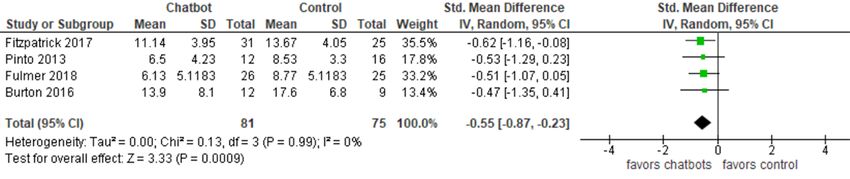
because such a study design has a greater risk of bias than RCTs, (P=.99; I2= 0%). The quality of the evidence was low because
and some data required for the meta-analysis was missing from it was downgraded by 2 levels for a high risk of bias
1 of the 2 studies. The meta-analysis showed a statistically (Multimedia Appendix 9).
significant difference (PJOURNAL OF MEDICAL INTERNET RESEARCH Abd-Alrazaq et al
45.14) and waiting list (mean 45.07) groups. Further, when symptoms resulting from using the chatbot during the study
analyzing data from only the participants who adhered to the [30]. Similarly, Freeman et al [38] concluded that the chatbot
intervention, there was no statistically significant difference was safe because no serious adverse events (eg, suicide attempts,
(P=.72) between the chatbot and waiting list groups on death, serious violent incidents) or discomfort caused by the
subjective psychological wellbeing after treatment (mean 45.07 chatbot were reported.
versus 45.85) [33]. The second study demonstrated a slight
improvement in subjective psychological wellbeing after using Discussion
chatbots, but this improvement was not statistically significant
(P=.06) [34]. Similarly, the third study found no statistically Principal Findings
significant difference (P=.32) between the chatbot and control This study systematically reviewed the evidence regarding the
groups on subjective psychological wellbeing after treatment effectiveness and safety of using chatbots to improve mental
[35]. health. We identified 12 studies examining the effect of using
Psychological Distress chatbots on 8 outcomes. For the first outcome (depression),
low-quality evidence from 4 RCTs showed a statistically
The influence of using chatbots on psychological distress was significant difference favoring chatbots over treatment as usual
examined by 2 studies, conducted in Japan and Australia [35,36]. or information on the severity of depression, but this difference
Distress was measured using the Kessler Psychological Distress was not clinically important. Two quasiexperiments concluded
Scale. While 1 study was a one-group quasiexperiment [36], that the level of depression decreased after using chatbots. As
the other study was a two-group quasiexperiment [35]. evidence from the 2 studies was synthesized narratively, we
Therefore, a narrative approach was used to analyze their results. could not identify whether this decrease in depression was
According to Suganuma et al [35], there was a statistically clinically important. Findings in the 2 studies may be affected
significant difference (P=.005) favoring chatbot use (mean by serious bias in the measurement of outcomes. Given that no
21.65) over no intervention (mean 23.97) on distress levels after reviews assessed the effectiveness of chatbots in mental health,
treatment. Further, there was a statistically significant the results were compared with other reviews regarding similar
improvement in distress level among the chatbot group after interventions (ie, internet-based psychotherapeutic
treatment (mean 21.65) compared with before treatment (mean interventions). The overall effect on depression in this review
23.58). Likewise, the other study found a statistically significant (–0.55) was comparable to other reviews. Specifically, while
decrease (PJOURNAL OF MEDICAL INTERNET RESEARCH Abd-Alrazaq et al
Findings regarding the effect of chatbots on positive and reported according to the Preferred Reporting Items for
negative affect were conflicting. While one study concluded Systematic Reviews and Meta-Analyses statement [20].
that chatbots improved the positive and negative affect at the Accordingly, this enabled us to produce a high-quality review.
2-week follow-up [29], another study did not find any significant
In this review, the most popular databases in health and
influence of chatbots at the 2-week follow-up [28]. Although
information technology were used to run the most sensitive
the 2 studies were very homogenous in terms of study design,
search possible. The review minimized the risk of publication
sample characteristics, comparator characteristics, and outcome
bias as much as possible through searching Google Scholar and
measures, they were different in the type of chatbots and data
conducting backward and forward reference list checking to
analysis, and these differences may have led to contradictory
identify grey literature. The search was not restricted to a certain
findings. Specifically, the chatbot in the first study [29] was
type of chatbots, comparators, outcomes, year of publication,
more advanced than the one in the second study [28]; it
nor country of publication, and this makes the review more
depended on artificial intelligence and machine learning to
comprehensive.
generate responses to users, and this makes it more humanlike
and lets users feel more socially connected [5]. With regards to To reduce selection bias, two reviewers independently selected
the second difference, while the first study assessed the effect studies, extracted data, and assessed the risk of bias in the
of the chatbot on positive and negative affect together [29], the included studies and quality of the evidence. Agreement between
other study examined the effect of the chatbot on positive affect reviewers was very good, except for the assessment of the risk
and negative affect separately [28]. of bias (which was good). When possible, findings of the
included studies were meta-analyzed; thereby, we were able to
A narrative synthesis of 3 studies showed no statistically
increase the power of the studies and improve the estimates of
significant difference between chatbots and control group on
the likely size of effect of chatbots on a variety of mental health
subjective psychological wellbeing. The justification for the
outcomes.
nonsignificant difference is the use of a nonclinical sample in
the 3 studies. In other words, as participants already had good Limitations
psychological wellbeing, the effect of using chatbots may be The intervention of interest in this review was restricted to
less likely to be significant. chatbots that work within standalone software or via a web
According to the 2 studies synthesized in a narrative approach, browser (but not robotics, serious games, SMS, nor telephones).
chatbots significantly decreased the levels of distress. Both Further, we excluded studies that contained chatbots controlled
studies had a high risk of bias; therefore, this finding should be by human operators. Accordingly, this review cannot comment
interpreted with caution. Studies in a similar context reported on the effectiveness of chatbots that involve human-generated
findings comparable to our findings. To be more precise, an content or those that use alternative modes of delivery. It was
RCT concluded that online chat counselling significantly necessary to apply those restrictions because these features are
improved psychological distress over time [45]. not part of ordinary chatbots. For this reason, 3 previous reviews
about chatbots applied these restrictions [5,13,19].
In this review, chatbots significantly decreased stress levels
over time. Unfortunately, we cannot draw a definitive conclusion Owing to practical constraints, the search was restricted to
regarding the effect of chatbots due to the high risk of bias in English studies. Therefore, it is likely that we missed some
the evidence. non-English studies. The overall risk of bias was high in most
of the included studies. The quality of evidence in the
Chatbots were effective in decreasing the severity of acrophobia meta-analyses ranged from very low to low. Accordingly, the
according to one RCT. The effect size of chatbots on acrophobia high risk of bias and low quality of evidence may reduce the
in this RCT [38] was substantially higher than the total effect validity of the findings and their generalizability.
size of therapist-assisted exposure treatment on phobias reported
by a meta-analysis (2.0 versus 1.1) [46]. This indicates that Ideally, the difference between pre-intervention and
chatbots may be equivalent to, if not better, exposure treatment post-intervention data for each group should be used in a
delivered by a therapist in treating phobias. meta-analysis [47]. However, we used only post-intervention
data in each group for the meta-analysis because studies did not
Of the 2 RCTs measuring the safety of chatbots, both concluded report enough data (eg, change in SD or SE of the mean between
that chatbots are safe for use in mental health, as no adverse the pre-intervention and post-intervention for each group). In
events or harm were reported when chatbots were used to treat this review, it was possible to meta-analyze pre-intervention
users with depression and acrophobia. However, this evidence and post-intervention data from one-group trials (ie, did not
is not sufficient to conclude that chatbots are safe, given the include comparison groups). However, such analysis was not
high risk of bias in the 2 studies. carried out in this review as such trials are very vulnerable to
Strengths and Limitations several threats of internal validity, such as maturation threat,
instrumentation threat, regression threat, and history threat
Strengths [41,48].
This study is the first review of the literature that assessed the
effectiveness and safety of chatbots in mental health. The
findings are of importance for users, providers, policymakers,
and researchers. This review was developed, executed, and
http://www.jmir.org/2020/7/e16021/ J Med Internet Res 2020 | vol. 22 | iss. 7 | e16021 | p. 12
(page number not for citation purposes)
XSL• FO
RenderXJOURNAL OF MEDICAL INTERNET RESEARCH Abd-Alrazaq et al
Practical and Research Implications high-level studies (ie, RCTs), there is a need for authors to be
more consistent in their reporting of trial outcomes. For example,
Practical Implications in our review, many studies failed to report basic descriptive
Although this review found that chatbots may improve statistics such as mean, SD, and sample size. Ensuring studies
depression, distress, stress, and acrophobia, definitive adhere to accepted guidelines for reporting RCTs (eg,
conclusions regarding those results could not be drawn due to CONSORT-EHEALTH [50]) would be of considerable benefit
the high risk of bias in the included studies, low quality of to the field.
evidence, lack of studies assessing each outcome, small sample
In the current review, the comparators in all two-group trials
size in the included studies, and contradictions in results of
were either no intervention or education. For those outcomes
some included studies. For this reason, results should be viewed
that hold promise (eg, depression, distress, and acrophobia), we
with caution by users, health care providers, caregivers,
encourage researchers to compare chatbots with other active
policymakers, and chatbot developers.
interventions such as asynchronous electronic interventions or
Given the weak and conflicting evidence found in this review, other types of chatbots (eg, rule-based chatbots versus artificial
users should not use chatbots as a replacement for mental health intelligence chatbots or embodied chatbots versus non-embodied
professionals. Instead, health professionals should consider chatbots).
offering chatbots as an adjunct to already available interventions
According to a scoping review conducted by Abd-alrazaq et al
to encourage individuals to seek medical advice where
[13], chatbots are used for many mental disorders, such as
appropriate and as a signpost to available support and treatment.
autism, post-traumatic stress disorder, substance use disorders,
Most chatbots in this review were implemented in developed schizophrenia, and dementia. The current review did not find
counties. People in developing countries may be more in need any study assessing the effectiveness or safety of chatbots used
of chatbots than those in developed countries given that for these disorders. This highlights a pressing need to examine
developing countries have a greater shortage of mental health the effectiveness and safety of chatbots targeting patients with
professionals than developed countries (0.1 per 1,000,000 people autism, post-traumatic stress disorder, substance use disorders,
vs 9 per 100,000 people) [7,8]. System developers should schizophrenia, and dementia.
consider implementing more chatbots in developing countries.
As this review focused on the effectiveness and safety of
Two-thirds of the chatbots in this review used predefined rules chatbots, we excluded many studies that assessed the usability
and decision trees to generate their responses, while the and acceptance of chatbots in mental health. Given that usability
remaining chatbots used artificial intelligence. In contrast to and acceptance of technology are considered important factors
rule-based chatbots, artificial intelligence chatbots can generate for their successful implementation, the evidence regarding
responses to complicated queries and enable users to control those outcomes should be summarized through systematic
the conversation [13]. Artificial intelligence chatbots can exhibit reviews.
more empathetic behaviors and humanlike filler language than
The current review identified heterogeneity in the tools used to
rule-based chatbots [19]. This may make artificial intelligence
measure the same outcomes and in the research design. For
chatbots more effective in building rapport with users, thereby
instance, severity of depression was measured using PHQ-9,
improving their mental health [42]. It could be argued that
Beck Depression Inventory II, or Hospital Anxiety and
artificial intelligence chatbots are more prone to errors than
Depression Scale. Further, while some studies assessed
rule-based chatbots, but these errors can be minimized and
outcomes before and after interventions, other studies examined
diminished by extensive training and greater use [49].
them only after interventions. The field would benefit from
Accordingly, we recommend developers concentrate efforts
future studies using a common set of outcome measures to ease
around artificial intelligence chatbots to improve the
comparison and interpretation of results between studies. Only
effectiveness.
one study assessed the long-term effectiveness and safety of
Research Implications chatbots, where participants were followed for 12 weeks. The
This review showed that there is a lack of evidence assessing effectiveness and safety outcomes of chatbots may be different
the effectiveness and safety of chatbots. Accordingly, we when considering long-term, relative to short-term, findings; it
encourage researchers to conduct more studies in this area. is essential to assess long-term outcomes.
Further, they should undertake more studies in developing Conclusion
countries and recruit large, clinical samples given the lack of
Although the included studies showed that chatbots may be safe
such evidence, as found in the current review.
and improve depression, distress, stress, and acrophobia,
The overall risk of bias was high in most included studies mainly definitive conclusions regarding the effectiveness and safety of
due to issues in the measurement of the outcomes, selection of chatbots could not be drawn in this review for several reasons.
the reported result, and confounding. Future studies should First, the statistically significant difference between chatbots
follow recommended guidelines or tools (eg, RoB 2 and and other interventions on the severity of depression was not
ROBINS-I) when conducting and reporting their studies in order clinically important. Second, the risk of bias was high in most
to avoid such biases. included studies, and the quality of the meta-analyzed evidence
ranged from very low to low. Third, the evidence for each
Due to poor reporting practices, we were unable to include many
outcome came from only a few studies that also had small
studies in the meta-analysis. As well as encouraging more
http://www.jmir.org/2020/7/e16021/ J Med Internet Res 2020 | vol. 22 | iss. 7 | e16021 | p. 13
(page number not for citation purposes)
XSL• FO
RenderXJOURNAL OF MEDICAL INTERNET RESEARCH Abd-Alrazaq et al
sample sizes. Fourth, studies showed conflicting results for reported in this review. Health care providers should consider
some outcomes (ie, anxiety and positive and negative affect). offering chatbots as an adjunct to already available interventions.
Researchers should avoid shortcomings in the study designs
Acknowledgments
The publication of this article was funded by the Qatar National Library. This study was a part of a project funded by the Qatar
National Research Fund (NPRP12S-0303-190204). The project title is “A Personalized and Intelligent Digital Mental Health
Platform for Qatar and the Arab world”.
Conflicts of Interest
None declared.
Multimedia Appendix 1
PRISMA checklist.
[DOC File , 66 KB-Multimedia Appendix 1]
Multimedia Appendix 2
Search strings utilized for searching each bibliographic database.
[DOCX File , 28 KB-Multimedia Appendix 2]
Multimedia Appendix 3
Data extraction form.
[DOCX File , 18 KB-Multimedia Appendix 3]
Multimedia Appendix 4
Characteristics of each included study.
[DOCX File , 19 KB-Multimedia Appendix 4]
Multimedia Appendix 5
Characteristics of the intervention in each study.
[DOCX File , 18 KB-Multimedia Appendix 5]
Multimedia Appendix 6
Characteristics of comparators and measured outcomes in each included study.
[DOCX File , 19 KB-Multimedia Appendix 6]
Multimedia Appendix 7
Reviewers’ judgements about each “risk of bias” domain for each included RCT.
[DOCX File , 24 KB-Multimedia Appendix 7]
Multimedia Appendix 8
Reviewers’ judgements about each “risk of bias” domain for each included quasi-experiment.
[DOCX File , 69 KB-Multimedia Appendix 8]
Multimedia Appendix 9
GRADE evidence profile.
[DOCX File , 15 KB-Multimedia Appendix 9]
References
1. Mental Health Foundation. Fundamental Facts About Mental Health 2016. London: Mental Health Foundation; 2016. URL:
https://www.mentalhealth.org.uk/sites/default/files/fundamental-facts-about-mental-health-2016.pdf [accessed 2020-06-08]
http://www.jmir.org/2020/7/e16021/ J Med Internet Res 2020 | vol. 22 | iss. 7 | e16021 | p. 14
(page number not for citation purposes)
XSL• FO
RenderXJOURNAL OF MEDICAL INTERNET RESEARCH Abd-Alrazaq et al
2. Mental Health Foundation. Fundamental Facts About Mental Health 2015. London: Mental Health Foundation; 2015. URL:
https://www.mentalhealth.org.uk/sites/default/files/fundamental-facts-15.pdf [accessed 2020-06-08]
3. Whiteford HA, Ferrari AJ, Degenhardt L, Feigin V, Vos T. The global burden of mental, neurological and substance use
disorders: an analysis from the Global Burden of Disease Study 2010. PLoS One 2015 Feb;10(2):e0116820 [FREE Full
text] [doi: 10.1371/journal.pone.0116820] [Medline: 25658103]
4. Jones SP, Patel V, Saxena S, Radcliffe N, Ali Al-Marri S, Darzi A. How Google's 'ten Things We Know To Be True' could
guide the development of mental health mobile apps. Health Aff (Millwood) 2014 Sep;33(9):1603-1611. [doi:
10.1377/hlthaff.2014.0380] [Medline: 25201665]
5. Vaidyam AN, Wisniewski H, Halamka JD, Kashavan MS, Torous JB. Chatbots and Conversational Agents in Mental
Health: A Review of the Psychiatric Landscape. Can J Psychiatry 2019 Jul;64(7):456-464. [doi: 10.1177/0706743719828977]
[Medline: 30897957]
6. Wainberg ML, Lu FG, Riba MB. Global Mental Health. Acad Psychiatry 2016 Aug 3;40(4):647-649 [FREE Full text] [doi:
10.1007/s40596-016-0577-0] [Medline: 27259490]
7. Oladeji BD, Gureje O. Brain drain: a challenge to global mental health. BJPsych Int 2016 Aug 02;13(3):61-63 [FREE Full
text] [doi: 10.1192/s2056474000001240] [Medline: 29093905]
8. Murray CJL, Vos T, Lozano R, Naghavi M, Flaxman AD, Michaud C, et al. Disability-adjusted life years (DALYs) for
291 diseases and injuries in 21 regions, 1990–2010: a systematic analysis for the Global Burden of Disease Study 2010.
The Lancet 2012 Dec;380(9859):2197-2223. [doi: 10.1016/S0140-6736(12)61689-4]
9. Hester RD. Lack of access to mental health services contributing to the high suicide rates among veterans. Int J Ment Health
Syst 2017 Aug 18;11(1):47 [FREE Full text] [doi: 10.1186/s13033-017-0154-2] [Medline: 28828036]
10. Anthes E. Mental health: There's an app for that. Nature 2016 Apr 07;532(7597):20-23. [doi: 10.1038/532020a] [Medline:
27078548]
11. Schueller SM, Glover AC, Rufa AK, Dowdle CL, Gross GD, Karnik NS, et al. A Mobile Phone-Based Intervention to
Improve Mental Health Among Homeless Young Adults: Pilot Feasibility Trial. JMIR Mhealth Uhealth 2019 Jul
02;7(7):e12347 [FREE Full text] [doi: 10.2196/12347] [Medline: 31267980]
12. Chandrashekar P. Do mental health mobile apps work: evidence and recommendations for designing high-efficacy mental
health mobile apps. Mhealth 2018;4:6 [FREE Full text] [doi: 10.21037/mhealth.2018.03.02] [Medline: 29682510]
13. Abd-Alrazaq AA, Alajlani M, Alalwan A, Bewick B, Gardner P, Househ M. An overview of the features of chatbots in
mental health: A scoping review. Int J Med Inform 2019 Dec;132:103978 [FREE Full text] [doi:
10.1016/j.ijmedinf.2019.103978] [Medline: 31622850]
14. Kumar V, Keerthana A. Sanative Chatbot For Health Seekers. IJECS 2016 Mar 29:16022-16025. [doi: 10.18535/ijecs/v5i3.28]
15. Palanica A, Flaschner P, Thommandram A, Li M, Fossat Y. Physicians' Perceptions of Chatbots in Health Care:
Cross-Sectional Web-Based Survey. J Med Internet Res 2019 Apr 05;21(4):e12887 [FREE Full text] [doi: 10.2196/12887]
[Medline: 30950796]
16. Radziwill N, Benton M. Evaluating quality of chatbots and intelligent conversational agents. arXiv preprint arXiv
2017:170404579.
17. Schunemann H, Oxman A, Vist G, Higgins J, Deeks J, Glasziou P. Chapter 12: Interpreting results and drawing conclusions.
In: Higgins J, Green S. editors. Cochrane handbook for systematic reviews of interventions Sussex, UK: John Wiley &
Sons; 2008:359-387.
18. Laranjo L, Dunn AG, Tong HL, Kocaballi AB, Chen J, Bashir R, et al. Conversational agents in healthcare: a systematic
review. J Am Med Inform Assoc 2018 Sep 01;25(9):1248-1258 [FREE Full text] [doi: 10.1093/jamia/ocy072] [Medline:
30010941]
19. Provoost S, Lau HM, Ruwaard J, Riper H. Embodied Conversational Agents in Clinical Psychology: A Scoping Review.
J Med Internet Res 2017 May 09;19(5):e151 [FREE Full text] [doi: 10.2196/jmir.6553] [Medline: 28487267]
20. Liberati A, Altman DG, Tetzlaff J, Mulrow C, Gøtzsche PC, Ioannidis JPA, et al. The PRISMA statement for reporting
systematic reviews and meta-analyses of studies that evaluate healthcare interventions: explanation and elaboration. BMJ
2009 Jul 21;339(jul21 1):b2700-b2700 [FREE Full text] [doi: 10.1136/bmj.b2700] [Medline: 19622552]
21. Higgins J, Deeks J. Chapter 7: selecting studies and collecting data. In: J. Higgins, Green S. editors. Cochrane Handbook
for Systematic Reviews of Interventions. ed. Sussex, UK: John Wiley & Sons; 2008:151-185.
22. Altman D. Practical statistics for medical research. 1 ed: CRC press; 1990:0412276305.
23. Higgins JP, Sterne JA, Savovic J, Page MJ, Hróbjartsson A, Boutron I, et al. Appraising the risk of bias in randomized
trials using the Cochrane Risk of Bias Tool. Cochrane Database of Systematic Reviews 2016;10(Suppl 1):1.
24. Sterne JA, Hernán MA, Reeves BC, Savović J, Berkman ND, Viswanathan M, et al. ROBINS-I: a tool for assessing risk
of bias in non-randomised studies of interventions. BMJ 2016 Oct 12:i4919. [doi: 10.1136/bmj.i4919]
25. Copay A, Subach B, Glassman S, Polly D, Schuler T. Understanding the minimum clinically important difference: a review
of concepts and methods. Spine J 2007;7(5):541-546 [FREE Full text] [doi: 10.1016/j.spinee.2007.01.008] [Medline:
17448732]
26. Deeks J, Higgins J, Altman D. Chapter 9: Analysing data and undertaking meta-analyses. In: Higgins J, Green S. editors.
Cochrane handbook for systematic reviews of interventions. Sussex, UK: John Wiley & Sons; 2008:A-96.
http://www.jmir.org/2020/7/e16021/ J Med Internet Res 2020 | vol. 22 | iss. 7 | e16021 | p. 15
(page number not for citation purposes)
XSL• FO
RenderXJOURNAL OF MEDICAL INTERNET RESEARCH Abd-Alrazaq et al
27. Burton C, Szentagotai Tatar A, McKinstry B, Matheson C, Matu S, Moldovan R, Help4Mood Consortium. Pilot randomised
controlled trial of Help4Mood, an embodied virtual agent-based system to support treatment of depression. J Telemed
Telecare 2016 Sep;22(6):348-355. [doi: 10.1177/1357633X15609793] [Medline: 26453910]
28. Fitzpatrick KK, Darcy A, Vierhile M. Delivering Cognitive Behavior Therapy to Young Adults With Symptoms of Depression
and Anxiety Using a Fully Automated Conversational Agent (Woebot): A Randomized Controlled Trial. JMIR Ment Health
2017 Jun 06;4(2):e19 [FREE Full text] [doi: 10.2196/mental.7785] [Medline: 28588005]
29. Fulmer R, Joerin A, Gentile B, Lakerink L, Rauws M. Using Psychological Artificial Intelligence (Tess) to Relieve Symptoms
of Depression and Anxiety: Randomized Controlled Trial. JMIR Ment Health 2018 Dec 13;5(4):e64 [FREE Full text] [doi:
10.2196/mental.9782] [Medline: 30545815]
30. Pinto MD, Greenblatt AM, Hickman RL, Rice HM, Thomas TL, Clochesy JM. Assessing the Critical Parameters of
eSMART-MH: A Promising Avatar-Based Digital Therapeutic Intervention to Reduce Depressive Symptoms. Perspect
Psychiatr Care 2016 Jul;52(3):157-168. [doi: 10.1111/ppc.12112] [Medline: 25800698]
31. Inkster B, Sarda S, Subramanian V. An Empathy-Driven, Conversational Artificial Intelligence Agent (Wysa) for Digital
Mental Well-Being: Real-World Data Evaluation Mixed-Methods Study. JMIR Mhealth Uhealth 2018 Nov 23;6(11):e12106
[FREE Full text] [doi: 10.2196/12106] [Medline: 30470676]
32. Schroeder J, Wilkes C, Rowan K, Toledo A, Paradiso A, Czerwinski M. Pocket Skills: A Conversational Mobile Web App
To Support Dialectical Behavioral Therapy. Canada: ACM; 2018 Presented at: Proceedings of the 2018 CHI Conference
on Human Factors in Computing Systems; April 21–26, 2018; Montreal, QC, Canada p. A. [doi: 10.1145/3173574.3173972]
33. Ly KH, Ly A, Andersson G. A fully automated conversational agent for promoting mental well-being: A pilot RCT using
mixed methods. Internet Interv 2017 Dec;10:39-46 [FREE Full text] [doi: 10.1016/j.invent.2017.10.002] [Medline: 30135751]
34. Demirci H. User experience over time with conversational agents case study of woebot on supporting subjective well-being.
Ankara, Turkey: Middle East Technical University; 2018.
35. Suganuma S, Sakamoto D, Shimoyama H. An Embodied Conversational Agent for Unguided Internet-Based Cognitive
Behavior Therapy in Preventative Mental Health: Feasibility and Acceptability Pilot Trial. JMIR Ment Health 2018 Jul
31;5(3):e10454 [FREE Full text] [doi: 10.2196/10454] [Medline: 30064969]
36. Luerssen M, Hawke T. Virtual Agents as a Service: Applications in Healthcare. Australia: ACM; 2018 Presented at:
Proceedings of the 18th International Conference on Intelligent Virtual Agents; November 5-8, 2018; Sydney, NSW,
Australia p. 1-12. [doi: 10.1145/3267851.3267858]
37. Huang J, Li Q, Xue Y, Cheng T, Xu S, Jia J. Teenchat: a chatterbot system for sensing and releasing adolescents' stress.
In: editors. 2015 Presented at: International Conference on Health Information Science; May 28-30, 2015; Melbourne,
Australia p. 133-145.
38. Freeman D, Haselton P, Freeman J, Spanlang B, Kishore S, Albery E, et al. Automated psychological therapy using
immersive virtual reality for treatment of fear of heights: a single-blind, parallel-group, randomised controlled trial. The
Lancet Psychiatry 2018 Aug;5(8):625-632. [doi: 10.1016/S2215-0366(18)30226-8] [Medline: 2018]
39. Andersson G, Cuijpers P. Internet-based and other computerized psychological treatments for adult depression: a
meta-analysis. Cogn Behav Ther 2009 Dec;38(4):196-205. [doi: 10.1080/16506070903318960] [Medline: 20183695]
40. Barak A, Hen L, Boniel-Nissim M, Shapira N. A Comprehensive Review and a Meta-Analysis of the Effectiveness of
Internet-Based Psychotherapeutic Interventions. Journal of Technology in Human Services 2008 Jul 03;26(2-4):109-160.
[doi: 10.1080/15228830802094429]
41. Bhattacherjee A. Social science research: Principles, methods, and practices. University of South Florida: Creative Commons
Attribution; 2012.
42. Lucas GM, Rizzo A, Gratch J, Scherer S, Stratou G, Boberg J, et al. Reporting Mental Health Symptoms: Breaking Down
Barriers to Care with Virtual Human Interviewers. Front. Robot. AI 2017 Oct 12;4:1. [doi: 10.3389/frobt.2017.00051]
43. Martínez-Miranda J, Bresó A, García-Gómez J. Look on the bright side: a model of cognitive change in virtual agents. In:
editors. 2014 Presented at: International Conference on Intelligent Virtual Agents; August 27-29, 2014; Boston, MA, USA
p. 285-294. [doi: 10.1007/978-3-319-09767-1_37]
44. Firth J, Torous J, Nicholas J, Carney R, Rosenbaum S, Sarris J. Can smartphone mental health interventions reduce symptoms
of anxiety? A meta-analysis of randomized controlled trials. J Affect Disord 2017 Aug 15;218:15-22 [FREE Full text] [doi:
10.1016/j.jad.2017.04.046] [Medline: 28456072]
45. Dowling M, Rickwood D. A naturalistic study of the effects of synchronous online chat counselling on young people's
psychological distress, life satisfaction and hope. Couns. Psychother. Res 2015 Jul 14;15(4):274-283. [doi:
10.1002/capr.12037]
46. Wolitzky-Taylor KB, Horowitz JD, Powers MB, Telch MJ. Psychological approaches in the treatment of specific phobias:
a meta-analysis. Clin Psychol Rev 2008 Jul;28(6):1021-1037. [doi: 10.1016/j.cpr.2008.02.007] [Medline: 18410984]
47. Littell J, Corcoran J, Pillai V. Systematic reviews and meta-analysis. London, UK: Oxford University Press; 2008.
48. Shadish W, Cook T, Campbell D. Experimental and quasi-experimental designs for generalized causal inference. Boston,
United States: Cengage Learning; 2002:9780395615560.
http://www.jmir.org/2020/7/e16021/ J Med Internet Res 2020 | vol. 22 | iss. 7 | e16021 | p. 16
(page number not for citation purposes)
XSL• FO
RenderXYou can also read


