Enrolment Handbook - St Stephen's Catholic College
←
→
Page content transcription
If your browser does not render page correctly, please read the page content below
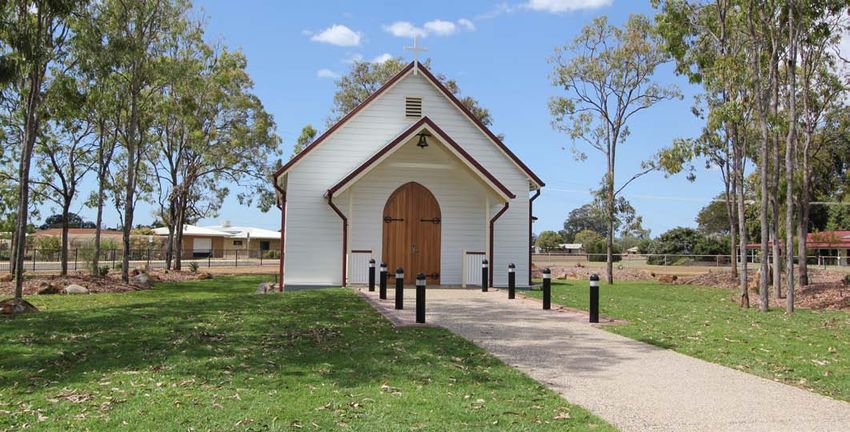
Enrolment Handbook
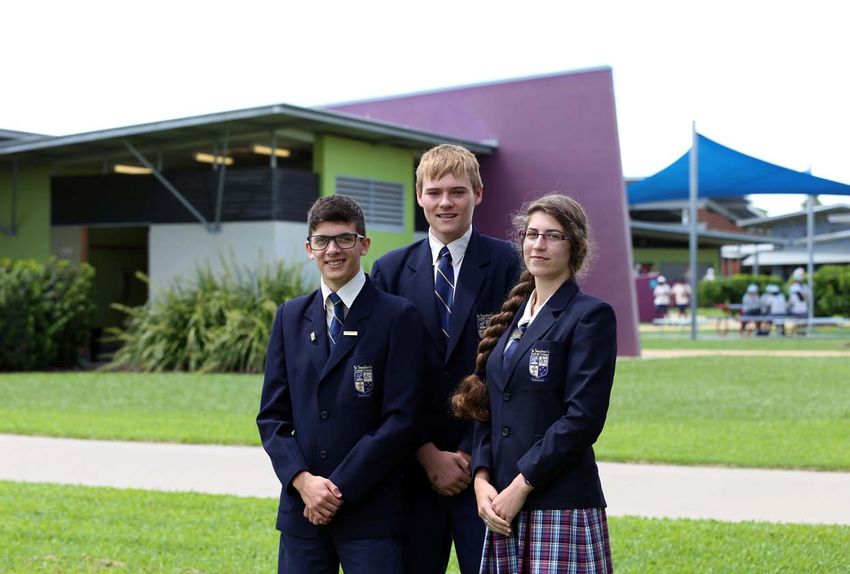
Contents                      From the Principal

From the Principal										3
Mission Statement										4
History of the College									5
                                                   Dear Parents,
College Crest and Motto									              6
Enrolment Policy and Procedure							7             St Stephen’s Catholic College is a Catholic co-educational secondary college offering a quality, educational
                                                   experience for students from Years 7 to 12 on the Tablelands. Established in 2006 under the auspices of
College Uniform and Grooming								8              the Catholic Diocese of Cairns, St Stephen’s focuses on providing excellent opportunities for young people
College Expectations									                 11   to achieve their personal best.

College Curriculum										                  12   The College endeavours to deliver a holistic curriculum which allows students to develop academically,
                                                   socially, emotionally, spiritually and physically. Students are encouraged to be life-long learners who will
Pastoral Care Policy									                 15   use their talents to create a better world consistent with the Gospel values. A sense of community is an
Facilities											                         20   integral part of our College whereby students are welcomed, valued and encouraged to experience success
                                                   in some area of school life. Sporting and other team-building activities foster positive relationships among
Bus and Travel 										                     21   students, parents and teachers by providing opportunities for growth.
Fees and Levies										                     22
                                                   Therefore, parents who are seeking a quality Catholic secondary education for their child are encouraged
Code of Conduct for Technology Policy						   23   to consider St Stephen’s as an option. Families will not be disadvantaged because of genuine financial
                                                   difficulties.
Parents and Friends Association							        24
                                                   Yours sincerely,

                                                   Ida Pinese
                                                   Principal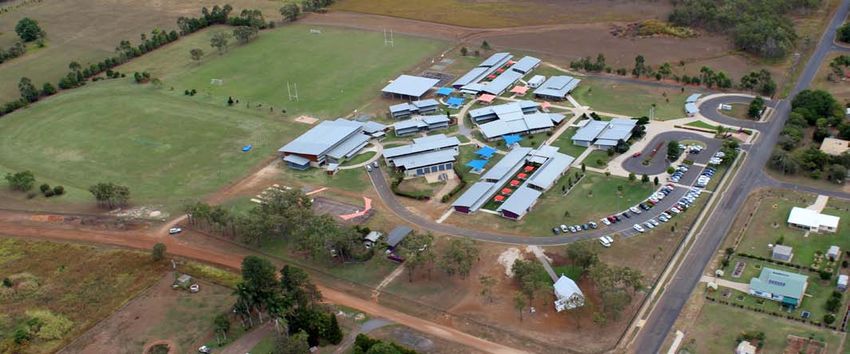
History of the College
                                                                                         Catholic Education in Mareeba dates back to 1909 when
                                                                                         four Sisters of Mercy arrived to open Good Counsel primary
                                                                                         school. This name was retained until the early 1950s when
                                                                                         the school was renamed St Thomas’ after the patron saint of
                                                                                         the parish, St Thomas of Villanova.

                                                                                         Enrolments at St Thomas’ grew steadily over the decades
                                                                                         that followed, and the community began to consider the
                                                                                         possibility of a Catholic high school. Towards the end of the
                                                                                         1980s, the search for a suitable site began, and in 1991, the
                                                                                         land on which St Stephen’s Catholic College now stands was
                                                                                         purchased.

                                                                                         In June 1998, a report compiled by Herron Todd White recommended the opening of a Catholic secondary

                   Mission Statement
                                                                                         school in Mareeba. A process of public consultation followed, and a Catholic Education Services report
                                                                                         in September 2000 concluded that the Diocese could begin evaluating the new school proposal. During
                                                                                         2001 and 2002, a further study was undertaken to explore the possibility of a co-institutional arrangement
                                                                                         with Education Queensland for the provision of secondary education in Mareeba. The results of this
    St Stephen’s Catholic College is a community which strives to create a sense of
                                                                                         investigation were inconclusive, and the Diocese and Education Queensland decided not to pursue the
                                         family.
                                                                                         matter.
    The College fosters a harmonious, safe and nurturing learning environment that
                                                                                         With the demise of the co-institutional project, the Diocesan Education Board of Governance gave its
         supports students in developing respect, responsibility and confidence.
                                                                                         approval for the establishment of a Catholic secondary college in Mareeba, and a planning application was
                                                                                         submitted to the Office of Non-State Schooling in October 2002. Shortly afterwards, an application for a
    Students are encouraged to become independent, life-long learners capable of
                                                                                         change of land use was submitted to the Mareeba Shire Council, and an application for capital funding was
          adapting to a rapidly changing and increasingly technological world.
                                                                                         forwarded to the State Government.
    We seek to develop compassionate, whole people who are morally autonomous
                                                                                         By the end of 2004, all the necessary approvals had been gained. In February 2005, an interim College
                      and have an awareness of God’s presence.
                                                                                         Board was formed with Mr David Anthony as chair. The following month, Mr Gerard Simon was appointed
                                                                                         as the Foundation Principal, and in April, the school was named St Stephen’s Catholic College. Construction
    Students are encouraged to build successful relationships, communicate effectively
                                                                                         work began on the site in June to be ready for the first intake of year 8 students in January 2006.
                           and achieve their personal best.

4                 www.sscc.qld.edu.au                                                                                          www.sscc.qld.edu.au                                             5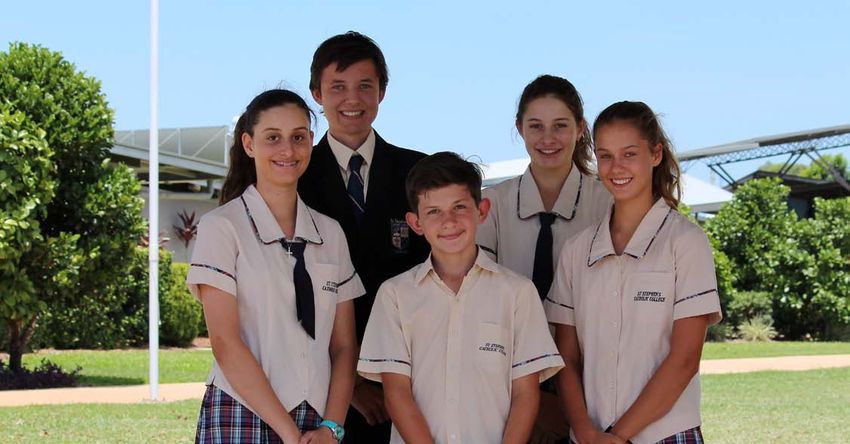
College Crest and Motto                                                                             Enrolment Policy and Procedure
                                                                                                                St Stephen’s Catholic College is a family of faith which is committed to working in partnership with students
                                                                                                                and parents.

                                                                                                                Conditions:
                                                                                                                • Parents of those students accepted into the college family are expected to understand, accept and
                                                                                                                   support the Catholic Ethos of the college.
                                                                                                                • Evangelisation through witness and example will occur.
                                                                                                                • There is an inclusive enrolment policy to cater for students with medical conditions and / or disabilities.
                                                                                                                • A large percentage of the college community will be Catholic to enable the growth of all in the Catholic
                                                                                                                   faith.
                                                                                                                • Parents should be fully conversant with the Mission Statement of the college.
                                                                                                                • The Enrolment Handbook reminds parents at enrolment that the right of the student to have a place in
                                                                                                                   our college confers an equal right on the college authority to receive the financial support of parents
                                                                                                                   by way of payment of fees.
                                                                                                                • No student will be deprived of a Catholic Education because of the genuine financial difficulties of his
                                                                                                                   or her family.
                                                                                                                • All students will participate in the Religious Education, Liturgical, Retreat/Camps, Community and
The beige and royal blue college crest contains four panels displaying symbols significant to the life and         Activities programmes of the college.
mission of St Stephen’s Catholic College.                                                                       • Parents will be involved in the life of the college (eg. School Board, Parents and Friends Association,
                                                                                                                   tuckshop, other voluntary work etc).
The palm branch and stones are symbolic of the calling and challenge to follow St Stephen in being people       • Enrolment of a student at a Catholic primary school does not guarantee enrolment at St Stephen’s
of deep faith who are signs of the presence of Christ. We are reminded of the importance of being faithful         Catholic College, and enrolment in compulsory education to Year 10 does not guarantee enrolment
to our beliefs and making Christ real in our Tablelands community, particularly amongst the poor.                  into Senior Education. Continued enrolment depends on the student meeting the expectations of the
                                                                                                                   college derived from the Mission Statement.
The emblem of the Order of St Augustine is a flaming heart pierced by an arrow on the background of an          • New and continuing enrolments are at the discretion of the Principal.
open book. The open book suggests a dedication to intellectual search and study, both divine and earthly.       • Students will abide by the Pastoral Care Policy and Dress Code of the college.
The ‘flaming heart’ is indicative of Augustine’s great personal charity; his love of God and others and
reminds us of the importance of being charitable and loving. The arrow piercing the heart and the book          Process to follow:
represents the Spirit of God piercing our minds and hearts and calling us to continue growing in faith, hope    1.     Read the information contained in the Enrolment Handbook.
and love.                                                                                                       2.     Complete the application for enrolment form
                                                                                                                3.     Attach copies of the following documents to the application: (bring to interview)
The Mercy Cross challenges us to a deeper awareness of the Cross in God’s plan of redemption. The               		             a.     Original or certified copy of birth certificate
presence of the Cross also reminds us of God’s love for each of us and his forgiveness. Without the cross          		          b.     Recent reports and Naplan results
the real crown cannot come.                                                                                        		          c.     Baptism certificate (if available)
                                                                                                                   		          d.     Documentation for verified students, learning support needs and custodial matters
The Southern Cross, a symbol of hope and a direction in the night sky for those who journey, is a significant   4.     Contact the Enrolment Officer to organise an enrolment interview.
national symbol found on our Australian Flag. This symbol unites us with other Australians and is regarded
as a symbol of freedom from oppression and search for justice.                                                  NOTE: The student seeking enrolment must accompany his/her parents to the interview.

The symbols combine to create a college crest that is a powerful sign of our mission as a Catholic School to
first and foremost be people of hope and vision who reveal the love and reality of God our Father to the        Application for Enrolment Fee – (per student)
Tablelands community. We are called to use our education and giftedness to further the reality of God in        • $100 enrolment fee payable once only at interview time (non-refundable).
our world.
                                                                                                                Enrolment Confirmation Fee – (per student)
The College Motto, “Trust in the Lord,” prays the words so prominent throughout the New Testament and           • $200 per student which is credited against term one School Fees.
spoken by many Christians through the ages. To ‘Trust in the Lord’ is to put God above all things and let       • This confirmation fee is non-refundable in the event the previous offer of acceptance is rescinded by
go of what is not important. To Trust in the Lord is to recognise that St Stephen was faithful to the Lord to      the parent / guardian, regardless of unforeseen circumstances.
the point of his own death. To Trust in the Lord is to believe in the ultimate reign of God and be prepared
to work towards this.

6                                      www.sscc.qld.edu.au                                                                                             www.sscc.qld.edu.au                                              7
Uniform and Grooming                                                                       Hair: Students are expected to have a natural single colour or shade. Hairstyles are to be compatible with
                                                                                                               the uniform and not of a radical style. Hair is to be kept neat and tidy. Girls with hair longer than shoulder
                                                                                                               length should have their hair tied back using white, beige or navy blue hair restraints. Long hair is to be
The college formal and sports uniform is to be worn with pride by students of St Stephen’s Catholic College.
                                                                                                               restrained and not to fall across the face. Boys’ hair must be above the collar, tidy and worn off the face;
The uniform has been chosen by the college community to be practical and attractive in order to enhance
                                                                                                               hair ties/restraints are not permitted. Undercuts are not to be visible. Students are not permitted to have
the dignity of each individual. This uniform is a sign that a student is a member of the St Stephen’s
                                                                                                               shorter than a ‘number 2’ clip. Boys must be clean-shaven.
community, and the appropriate wearing of the uniform demonstrates pride in our college, respect for
self and respect for others.
                                                                                                               Jewellery: Girls may wear up to two plain sleepers, silver or gold, or studs less than 5 mm in diameter
All aspects of uniform (except shoes) are to be purchased from the retail store holding our uniform.
                                                                                                               (may contain a small birthstone) in each ear; a plain fine metal neck chain with a Christian religious medal
                                                                                                               or crucifix attached; a watch (smart watches prohibited); one small signet or small plain ring and a medic
Formal Uniform: GIRLS (Years 7 to 9)                   Formal Uniform: BOYS (Years 7 to 9)                     alert. Other visible body jewellery, including piercings covered by band aids, is not acceptable. Boys may
Blouse: Light beige tailored cut with deep hem and     Shirt: Light beige polyester cotton out-style shirt.    wear one small sleeper or stud and comply with other aspects as described above.
points at front. Piping on sleeves and collar.         Piping on cuff.
Skirt: Tartan knee length skirt with inverted single   Shorts: Navy blue dress shorts worn with a navy         Hat Policy: Students are expected to wear the navy blue hat to and from school each day. The hat must be
pleat on both front and back. Skirt should be          blue or black belt.                                     worn during morning tea and lunch breaks.
purchased with hem line just below the knee. As
students grow, the hem line must be adjusted.                                                                  Other Uniform Aspects:
Socks: Beige, standard school-length short socks.  Socks: Navy blue, standard school length short              • Make-up and nail polish are not permitted.
                                                   socks.                                                      • Any alteration to the standard school uniform must be accompanied with a written explanation from
Shoes: Black, polished, lace-up, leather, low cut Shoes: Black polished lace up leather low cut                   a parent/guardian that should be provided to the home form teacher.
school shoes. No colouring or buckles. Heel height school shoes. No colouring or buckles. Heel height
including sole should be between 2-3 centimetres. including sole should be between 2–3 centimetres.            Note: Any changes made to uniform and grooming will be at the Principal’s discretion.
Jumper: Royal blue college jumper.                 Jumper: Royal blue college jumper.
                                                                                                               Uniform supplier:
Hat: Navy blue with college name.                  Hat: Navy blue with college name.                                                                                                              JEWELLERY
                                                                                                               Tina’s Fashions
                                    Senior Uniform: (Yrs 10 to 12)                                             10A Herberton Street, Mareeba, Q 4880
As above with the following changes:               As above with the following changes:
Short tie buttoned under shirt collar to be worn Light beige, polyester-cotton senior shirt (piping on
                                                                                                               Ph: 40924096                                                               YES                       NO
with above blouse.                                 cuff) worn tucked in with navy blue dress shorts or                                SHOES
                                                   dress trousers and a navy blue or black belt.

                                                       Long navy blue socks with two beige stripes must                    YES                         NO
                                                       be worn with navy blue dress shorts.
                                                                                                                                                                                    Plain studs
                                                       OR Navy blue, standard school-length short socks                                                                              (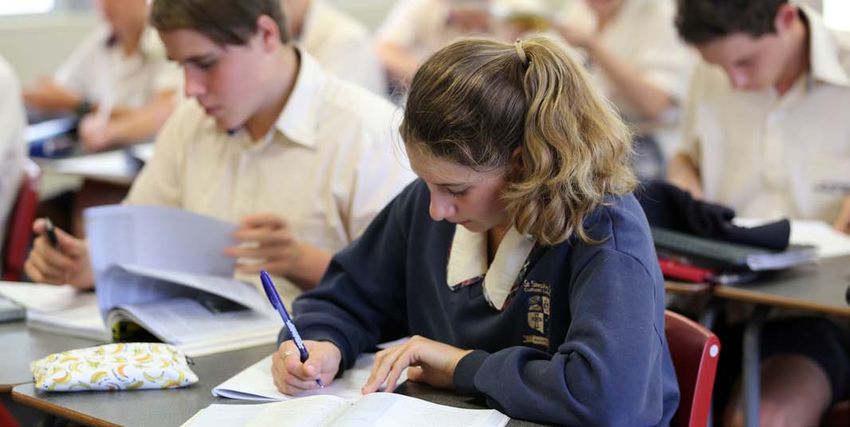
College Expectations College Curriculum
St Stephen’s Catholic College endeavours to deliver a holistic curriculum which allows students to develop
In accepting enrolment at St Stephen’s Catholic College students agree:
academically, socially, emotionally, spiritually and physically. While years 7 to 10 follow the Australian
• To respect the religious ethos of St Stephen’s Catholic College and the college’s Mission Statement and Curriculum, the senior school offers both academic and vocational pathways. Students are expected to
to be willing to participate in the Religious Education programme. achieve their personal best and to rise to the challenges inherent in the curriculum we offer.
• To show respect to all members of St Stephen’s Catholic College –staff, students and visitors.
Years 7 – 10 Curriculum Overview
• To carry out schoolwork by trying to do work both in class and at home as expected by teachers.
Students will do this without disrupting and distracting the teacher and other students.
YEAR 7 YEAR 8 YEAR 9 YEAR 10
• To wear the correct full college uniform with pride. Semester Semester Semester Semester Semester Semester Semester
LEARNING AREA Semester 2
1 1 2 1 2 1 2
• To respect St Stephen’s College’s right to determine appropriate discipline measures and to be aware
Religious Education a a a a a a a a
that this may involve after school and Saturday morning detention.
English a a a a a a a a
• To be punctual and prepared for lessons.
Mathematics a a a a a a a a
• To respect St Stephen’s Catholic College regulations that illicit drugs, tobacco and alcohol are not to be Science a a a a a a a a
brought to, and not used at college, or during activities associated with college life. Health & Physical Education a a a a a a a a
• To be involved in retreats/camp, excursions, sporting carnivals, religious observances and other events Social Sciences and
Humanities
which are specified for all students.
Either Semester 1
• History Either Semester 1 or 2 Either Semester 1 or 2 Either Semester 1 or 2
• To abide by the college’s mobile phone policy. or 2
Either Semester 1
• To abide by the college’s Code of Conduct Policy for Technology. • Geography Either Semester 1 or 2 Either Semester 1 or 2
or 2
Either Semester 1 or 2
• To care for textbooks issued by the college as a part of the Textbook Hire Scheme. One unit on term One unit on term
• Economics & Business Elective Units Elective Units
rotation rotation
• In agreeing to the above, students are aware that these expectations apply to all college activities and One unit on term One unit on term
• Civics & Citizenship Elective Units Elective Units
when travelling to and from school. rotation rotation
Languages
• To follow this procedure for the collection of students by parents during the school day:
• French Elective units r
• Parents are to report to reception One nominated unit on One nominated unit
• Italian Elective units r
• Students are to report to Student Services term rotation on term rotation
• Japanese Elective units Elective course
• Students sign out before meeting parents at entrance to reception Technologies
Two units on term One unit on term
• Digital Elective units Elective course
rotation rotation
One unit on term Two units on term
• Design Elective units Elective course
rotation rotation
The Arts
One unit on term One unit on term
• Media Art Elective units r
rotation rotation
One unit on term One unit on term
• Visual Art Elective units Elective course
rotation rotation
One unit on term One unit on term
• Music Elective units Elective course
rotation rotation
One unit on term One unit on term
• Drama Elective units Elective course
rotation rotation
Subject units are studied for a semester, whereas subject courses are designed to be implemented over a year.
10 www.sscc.qld.edu.au www.sscc.qld.edu.au 11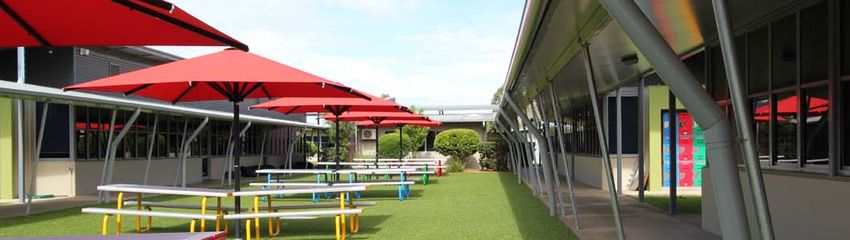
Year 11 - 12 Curriculum Overview                                                                             Reporting
The subjects students choose to study will depend on a number of factors including personal career plans,
tertiary course pre-requisites and interest.                                                                 •   Formal reports stating levels of achievement or competences achieved are issued at the end of each
                                                                                                                 semester.
Generally, students will select 7 subjects as follows:                                                       •   An interim report is issued at the end of term one
1. Religion and Ethics OR Study of Religion                                                                  •   Parent-teacher interviews are held at beginning of term two and three
2. English OR English Communication                                                                          •   Parents are encouraged to contact their child’s Pastoral Middle Leader for details of their child’s
3. Mathematics—A, B, or Prevocational Mathematics                                                                performance.
4. Three (3) other subjects. For students who are OP eligible, it is strongly recommended that six (6)
   authority subjects are chosen.
                                                                                                             Student Diversity
Students will choose authority or authority registered subjects, or stand alone VET certificates.
• Authority Subjects: count towards an OP (overall position from 1 to 25)                                    •   Learning support officers assist in classrooms and in the Student Diversity Centre.
• Authority Registered Subjects: more practical or vocational in nature; do not count towards an OP but      •   After school tutorials are available for students needing extra support (learning support staff) on a
   have the same credit value as authority subjects for the Queensland Certificate of Education (QCE)            needs basis.
• Stand alone VET certificates are either core or preparatory for QCE purposes

             Authority Subjects        Authority Registered Subjects       Stand Alone Certificate Courses
                                                                                                             Enrichment Opportunities
Accounting                         English Communication               Certificate I in Engineering          With the appointment of a Gifted and Talented Middle Leader, the college offers a diverse range of
Biology                            Hospitality                         Certificate II in Furniture Making    enrichment opportunities which may include:
Business Management                Prevocational Mathematics
Chemistry                          Recreation                                                                •   Participation in National and State competitions over the core learning areas of Science, English,
Drama                              Religion and Ethics                                                           Mathematics, History/Geography.
Engineering Technology             Science in Practice
                                                                                                             •   Digital showcase participation at local and district level.
                                                                                                             •   Extracurricular activities such as instrumental music, the combined schools band, college choir and
English                            Visual Arts in Practice
                                                                                                                 liturgy band
Geography                                                                                                    •   Public speaking competitions at district level and beyond
Graphics                                                                                                     •   Readers’ Cup
Information Technology Systems                                                                               •   Year 9 Mathematics Camp
Japanese                                                                                                     •   Year 8 Mathematics Quiz at district and regional level
                                                                                                             •   Participation in OPTIMINDS
Legal Studies
                                                                                                             •   Chess
Mathematics A
Mathematics B
Mathematics C
Modern History
Physical Education
Physics
Study of Religion
Visual Art

12                                   www.sscc.qld.edu.au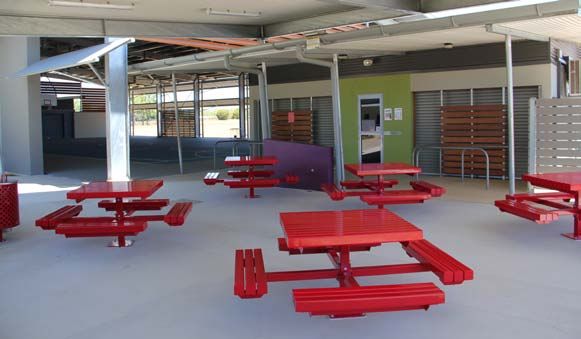
Pastoral Care                                                                                           Pastoral Care Policy
Creating a safe and caring environment is a priority. Students who can grow and learn in an environment                                                   Mission Statement
where they feel safe and experience good relationships have a greater opportunity to achieve their best                    St Stephen’s Catholic College is a community which strives to create a sense of family.
results. St Stephen’s Catholic College adopts pastoral structures which endeavour to create a favourable            The College fosters a harmonious, safe and nurturing learning environment that supports students in
environment.                                                                                                                                 developing respect, responsibility and confidence.
                                                                                                                    Students are encouraged to become independent, life-long learners capable of adapting to a rapidly
Students will be allocated home forms based on the four pastoral houses: Augustine (gold), Deacon (red),                                      changing and increasingly technological world.
McAuley (blue) and Muluridji (green). Each pastoral house will have two student leaders elected from the                We seek to develop compassionate, whole people who are morally autonomous and have an
senior cohort. In addition, each year level will be under the care of a Pastoral Middle Leader and Home                                                awareness of God’s presence.
Form teachers.                                                                                                      Students are encouraged to build successful relationships, communicate effectively and achieve their
                                                                                                                                                                personal best.
All students are placed into Home Form and meet daily with an assigned Home Form Teacher. The daily
Home Form period, at the commencement of school, is a time to allow for completion of administrative
duties, to receive daily notices and to commence the day with prayer. Home Form teachers are expected                                            Executive Summary of the Policy
to take a special interest in the members of their home form group, monitor the student record book and
pay close attention to the holistic development of the young people under their care.                           Guided by the Gospel, pastoral care at St Stephen’s incorporates a range of attitudes, procedures and
                                                                                                                responses which ultimately foster:
Each year group is overseen by the Pastoral Middle Leader who facilitates year group meetings, oversees
the pastoral needs of a particular group and co-ordinates camps, retreats and special activities involving      •     recognition of the dignity of each person
the year group under his/her care. When necessary, the Pastoral Middle Leader will communicate with             •     care and concern for the well-being of all members of the college community
parents through the Student Record Book or by other forms of contact. Parents with concerns regarding           •     maintenance of positive relationships between members of the college community
their child’s academic progress are encouraged to contact their child’s subject teacher or make contact         •     recognition of the right for all to learn in a supportive environment
with their child’s Pastoral Middle Leader.                                                                      •     restorative approaches when relationships are diminished

                                                                                                                St Stephen’s encourages, wherever possible, that resolution of concerns be reached at the most basic/
Camps and Retreats                                                                                              local level. As each situation is unique the policy offers a guide as to appropriate people with roles of
                                                                                                                responsibility while possible strategies for management are assessed individually for each situation.
Each year level traditionally participates in an annual school camp / retreat or alternative team-building
activities. These activities enable students to meet new challenges, to foster relationships with their peers   Short form of the Policy: With the Gospel for our guide, we are to be in the right place, at the right time,
and to develop spiritually. There is an expectation that all students participate in these activities (unless   doing the right thing.
removed at the Principal’s discretion).
                                                                                                                                                                  Policy
Student Representative Council                                                                                  St Stephen’s Catholic College is a community of parents, students and staff that models values and beliefs
                                                                                                                formulated with the ideals presented in the Gospels. The uniqueness and dignity of each individual is
The Student Representative Council is a forum for student input into college decision-making that relates       to be respected. Members of the college community are encouraged to be inner-directed, responsible,
to students’ issues. Representatives from each year level have the opportunity to be advocates for their        compassionate and just.
peers and to take on a leadership role.
                                                                                                                Essential components of Pastoral Care at St Stephen’s
                                                                                                                As members of St Stephen’s Catholic College, our actions must reflect the Gospel values of our Mission
                                                                                                                Statement and our college culture. All members of the college community are expected to have:
Social Justice Committee
The mandate of this committee is to initiate fund-raising and other community activities to assist those in     •     Respect for self
need. The executive is drawn from the senior cohort.                                                            •     Respect for others
                                                                                                                •     Respect for Christian principles
                                                                                                                •     Respect for individual and community property
                                                                                                                •     Respect for authority
                                                                                                                •     Respect for an appropriate academic and social environment
                                                                                                                •     Respect for the good name of St Stephen’s Catholic College

14                                     www.sscc.qld.edu.au                                                                                             www.sscc.qld.edu.au                                             15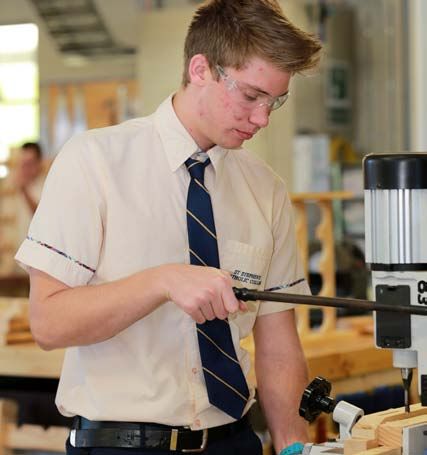
Principles underpinning the parent-staff partnership                                                               Promoting positive engagement consists of:
Relationships between staff and parents/guardians of St Stephen’s will be guided by the following principles:      • Effective communication with stakeholders about students’ interaction within the college
                                                                                                                   • Recognition of students’ outstanding conduct in the many areas of college life
•    Parents are the primary educators of their children                                                           • Empowering students to develop respect, responsibility and confidence in their interactions with
•    Parents are to be supported in their role as primary educators                                                   others, to be morally autonomous and to build successful relationships
•    Parents entrust their children to St Stephen’s
•    Parents are welcome to be involved in the education of their children                                         Consequences
•    Parents are welcome to participate in the life of the college                                                 The college reserves the right to determine appropriate consequences to ensure that the spirit of its
•    Parents will receive caring, professional and effective communication and reporting at appropriate            Mission Statement is upheld.
     times
•    Parents will support the college by re-enforcing acceptable behaviours with students                          When students’ behaviour breaches college expectations, two things will ordinarily occur:
•    Students will be adequately prepared for each school day
•    Students will arrive at school and depart from school at the appropriate times, unless otherwise              1. A meeting to discuss the breach, the implications for that and any consequences that may need to
     negotiated via the appropriate channels                                                                          follow. Guided by the principles of restorative justice, this meeting will aim to bring about:
•    The college will be supported in its spiritual, social and academic goals                                                • listening to each person’s perspective
•    The college will receive parental input on aspects of college life, expressions of concern and notification              • recognition that the actions/behaviour in question caused harm to another student/s
     when events may impact their child’s school routines in a timely and respectful manner via the                           • an effort to restore the relationship
     appropriate channels                                                                                          2.     The student accepts a consequence for the breach
•    Parents will be available for communication with college staff when required
                                                                                                                   Consequences for minor and once-off breaches of college expectations will be managed first by the
                                                                                                                   teacher involved, possibly supported by the Pastoral Leader if required. These consequences may in-
Principles underpinning the student-staff relationships                                                            clude detentions during Recess 2 (supervised by the teacher involved), beautification brigade or other
Relationships between staff and students of St. Stephen’s will be guided by the following principles:              logical consequences as appropriate. The teacher will be responsible for contacting parents, ordinarily
                                                                                                                   via the student’s SRB, to notify them of the student’s behaviour and the action taken to resolve it.
Students will:                                                                                                     For repeated or serious behaviour concerns the teacher may refer the matter to the Pastoral Leader. At
• be co-operative and contribute to an effective learning environment                                              this level of management, parents would be contacted and may be requested to attend a meeting to dis-
• work to the best of their ability and be receptive to teachers’ guidance                                         cuss the matter and any further action to be taken. He/she might recommend an after-school detention
• care for and share school equipment                                                                              to the College Leader – Pastoral Care.
• assist in the maintenance of a clean, tidy and safe environment
• participate in discussions and conversations with respect for others                                             If the concern is not able to be resolved at the level of the Pastoral Leader, or is of a more serious nature,
• be familiar with college expectations and their associated consequences                                          the support of the College Leader – Pastoral Care could be sought. At this level, the parents would nor-
• abide by college expectations                                                                                    mally be required to meet with the College Leader Pastoral Care and the Pastoral Leader to discuss the
• be punctual, correctly dressed and uphold the good name of the college                                           matter and the necessary action to be taken. By this stage, parents will be advised that should resolution
                                                                                                                   not be reached, the matter will be referred to the Principal whose decision will be final. Possible conse-
The college will:                                                                                                  quences that the College Leader Pastoral Care might deem appropriate at this level include after-school
• maintain a safe and clean Christian school environment                                                           or Saturday morning detentions. As with all levels of management, the first goal is for resolution and
• uphold equality in the educational opportunities it offers                                                       restoration to right relationships of all parties involved.
• ensure appropriate access to school facilities
• support students to express their opinion and be listened to                                                     Suspension
• guide and form students in acceptable behaviour                                                                  Suspension is always the decision of the Principal (or other, if delegated). It is considered to be a failure
• receive input from students regarding college life via the Student Representative Council                        to resolve the concern/s. It acknowledges that there is a question about the ability of the student to
                                                                                                                   maintain college expectations and/or right-relationships with others; the process is underpinned with
Students should be able to feel proud of themselves and their school.                                              hope, however, that with reflection on the seriousness of the situation the student might still yet choose
The college places great importance on forming respectful young men and women.                                     to seek restoration.

                                                                                                                   Expulsion
                                                                                                                   Expulsion is a process managed by the Principal in consultation with CES. It is undertaken by the Principal
                                                                                                                   for serious matters which may affect the safety of others or be for a student’s continuous inability to
                                                                                                                   embrace the Mission Statement.

16                                      www.sscc.qld.edu.au                                                                                               www.sscc.qld.edu.au                                               17
Flow Chart: Pastoral Care Concerns
18
For pastoral (personal / social / behavioural) areas of concern:
Student
Year Level College Leader
Parent Principal
Pastoral Leader Pastoral Care
Staff member
Students/Parents: Students/Parents: Students/Parents: Ordinarily, matters are referred
Reasonable attempts have Consult the Pastoral Leader if Communication with the CLPC to the Principal by the CLPC. If
been made to manage the all earlier avenues have been if all earlier avenues have been the matter is of a most serious
matter appropriately. exhausted and no resolution exhausted and no resolution nature, however, (eg: student
has been reached. has been reached. protection or matters that
Teachers: might require suspension or
Strategies to manage the Teachers: Pastoral Leaders: expulsion), the Principal may
concern have been employed, Referral to the Pastoral Leader Referral to the CLPC if all be engaged directly.
including: if all earlier avenues have been earlier avenues have been
• A number of requests for exhausted and no resolution exhausted and no resolution Otherwise, if avenues outlined
compliance has been reached. has been reached. earlier have failed to bring
• Clarification of about a satisfactory resolution,
expectations Pastoral Leaders: then the Principal may be
www.sscc.qld.edu.au
• Logical consequences Concerns received by the engaged.
• Recess detention or litter Pastoral Leader will be
duty followed up by communication
• Phone (or other) with the parents and a
communication with mediation session between
parents to discuss ongoing the student and teacher (if
concern applicable). Action taken will
be at the Pastoral Leader’s
discretion after considering the
individual circumstances, this
policy and advice (if applicable)
from the CLPC.
system.
• Visual Art
• Hospitality
Specialist Areas include:
• Trade Training Centre
students to develop organisational skills.
• Language and four science laboratories
• Performing Arts Centre (Music and Drama)
Facilities
www.sscc.qld.edu.au
cricket pitch and indoor /outdoor netball and basketball facilities and two handball courts.
display areas and a physical structure that promotes both individual and collaborative learning styles.
19
five days per week. The college endeavours to maintain a policy of ‘healthy foods’ for students and staff.
combination confidential. Such a procedure maintains security for student belongings and encourages
The students purchase their lunch and morning tea through the self-serve school tuckshop which operates
All students are issued a locker in which they store their personal belongings. Students carry their books
There is access to computers via three computer laboratories and lap-top and iPad use through a booking
for two lessons. Students are required to purchase a combination lock (through the college) and keep their
All areas of the College are bright, appropriately furnished and have data and wireless connections, good
Students have access to a 400 metre running track and sports area, a rugby league and a soccer field, aBus and Travel Fees and Levies
Students wishing to catch a school bus to attend St Stephen’s Catholic College, are encouraged to confirm The prime purpose of all fees and levies is to raise funds that will be used to provide quality educational
details of their travel with the proprietor who manages their school service. outcomes and experiences. Parents, through their commitment to St Stephen’s Catholic College, have a
responsibility and obligation to pay college fees and levies by the due date. Students seeking a Catholic
Any student who travels over 4.8 kms to school by bus is funded by the State Government to attend the education are not excluded from attending St Stephen’s because of financial hardship. Families who
nearer of either the State High School or St Stephen’s Catholic College. There will be a fare attached to experience genuine difficulty meeting fee and levy payments are asked to contact the college Principal to
travel from Mareeba State High School to St Stephen’s. Students travelling between 1.6 kms - 3.2 kms can make special arrangements.
expect to pay approximately $2.50 each way. Parents of children in Non-Government schools receive a
subsidy from the Non-Government Schools Transport Assistance Scheme (NGSTAS) so their children can Tuition Fees: Tuition fees are an annual fee that is generally charged quarterly. Tuition Fees are set for all
access Non-Government schools. Families from outside Mareeba are required to pay $33 per week for bus Catholic schools and colleges in the Diocese by Catholic Education Services, Diocese of Cairns. Discounts
travel. This amount is billed to families by the college and then reimbursed to the various bus companies. on tuition fees are provided to families when there are two or more students enrolled in Diocesan Catholic
The remainder of student bus fares are paid by the NGSTAS. schools. Refer to your enrolment package for fee schedule details. These tuition fees contribute to most
educational costs including tuition, teaching materials, library resources, internet access, levies to copyright
Students travelling from Atherton, Tolga, Dimbulah, Mossman, Julatten, Kuranda or Speewah by bus will associations etc.
receive an account for bus fares as part of their term school fee account.
Learning Area Levies: Learning area (or subject levies) are charged quarterly to cover the costs of
Please note that it is quite common in other centres that students change buses when travelling to and consumables, photocopying, materials used by students and teaching materials specific to particular
from school. In some cases students will be required to change buses at Mareeba State High School or at learning areas. These levies are per child and may vary slightly for each year level. The learning area levy
St Thomas’. Students who come from the Atherton side of town will be dropped directly at the college. for Years 7, 8 and 9 in 2017 will be $300 and $360 for Years 10, 11 and 12.
Please contact your bus proprietor if you require more information.
Building Levy: The building levy is an annual levy charged quarterly to families for children attending St
Stephen’s Catholic College. As a family levy this fee is $520 per family, regardless of how many children
Names of Bus Drivers and their contact details: attend St Stephen’s Catholic College.
G & A Buses Mareeba Area/Ellery Rd Phone: 40927125
Anna Ravanello Aerodrome/ Jennings Rd Mobile: 0427 932 288 General Purpose Levy: The general purpose levy is charged to offset the costs of students’ involvement in
Rob McCarthy Atherton/Tolga/Rangeview Phone: 4092 6462 pastoral activities, bus travel to special activities and sports, student record book (school diary), feast day
Mobile: 0417 787 301 celebrations, the issuing of student IDs, participation in subject competitions, school camps, excursions
Michael Baksaj Dimbulah Phone: 4092 4390 and attendance at Arts Councils. With larger activities such as camps, retreats and social outings the levy
Mobile: 0447 737 554 offsets these costs and families may be required to make a smaller contribution to cover the costs of such
Michael Baksaj Paddy’s Green and Springs Road Phone: 4092 4390 activities. The general purpose levy for 2017 is $530.
Mobile: 0447 737 554
Frank & Silvano Ruggeri Kuranda, Speewah, Koah Frank: 0417 613 406 Technology Levy: This levy contributes towards the increasing technology costs of providing broadband
Emerald End Rd, Hastie Rd, Amaroo, Ceola Drive Silvano: 0437 455 888 connectivity, wireless connectivity and the increased costing for technical support. All year 7 – 12 students
Michael Panetta Mossman, Julatten Home: 4092 4110 w/h utilise technology within the College. The levy is $160 per student.
Fax: 4092 4112
Mobile: 0459 132 246
Parents and Friends Levy: The Parents and Friends levy is $40. This levy is invested back into the college
Robert Bambino & Erminio Mt Molloy, Bilwon, Chewko Road Robert: 0429 451 861 infrastructure under the guidance of the sitting P&F Executive. Recent purchases have included upgrading
Bambino Erminio: 0447 462 765
the college instrumental program, lighting for evening events and large trees to provide shade for students.
Brystar A+K Nastasi Residents of Springmount to meet Dimbulah bus run Phone: 4092 2203 Lock for Student Locker: A once only charge of $30 is charged to all students who receive a prescribed
lock useable for their years at St Stephen’s. Any replacement is paid for by the student. Only prescribed
Tiffany Bambino Mutchilba to Dimbulah Phone: 4093 1040
Mobile: 0400 058 761
combination locks which are master-keyed by the College may be used.
Coral Coaches Connection from Mossman / Julatten Phone: 4098 2800
Payment options: Accounts are issued quarterly and are due within 14 days of the date of issue. Payment
Emerson Bus Company Connection from Ravenshoe/ Malanda/ Millaa Millaa/ Phone: 4096 5262
can be made by monthly or fortnightly instalments, including credit card and direct debit options. Please
Yungaburra to Atherton contact Mr Hadyn Flynn, the Business Manager, to arrange a payment plan.
Up-Front Payment: Families who elect to pay the full year’s fees and levies during the first term of school
will receive a 5% discount on all fees and levies.
20 www.sscc.qld.edu.au www.sscc.qld.edu.au 21Technology Code of Conduct Parents and Friends Association
Acceptable use of computer and internet resources St Stephen’s Catholic College Parents and Friends Association was formed in 2006 when the College was
Cairns Catholic Education first opened. This organisation is an integral part of our school community and provides a formal structure
Computer and Internet resources have become of critical importance to schools in facilitating and for parents and others interested in the welfare of the students to plan and organise activities for the
supporting learning and teaching. Technology resources are provided to students for educational purposes benefit of the school, and the ongoing development of students. Membership of the Parents and Friends
only. Association is an excellent way to become more involved in the school community and to get to know
other parents, something which can often be more difficult at high school.
The use of digital devices and points of access to email and Internet services is provided to students
in order to support their educational and administrative needs. These digital devices and services are In particular the St Stephen’s Catholic College Parents and Friends Association:
educational tools and must be used in a responsible manner. There are constant advances and changes in • provides an avenue of support and information to aid the involvement of parents/carers in their
the use of technology (including for example software, apps, information sharing, social media platforms, children’s education and the school community
new devices etc. and this list is not exhaustive). Therefore students must seek advice and clarification from • promotes the development of collaboration between parents/carers and school staff
the school as soon as possible when engaging with new or unfamiliar technology. Acceptable use is guided • promotes the principles of Catholic education and a distinctive Christian community/environment in
by the following principles. the school
• provides an opportunity to participate at school community, Archdiocesan, State and National levels.
• Students must behave in an ethical manner when using digital devices, whether school owned or
student provided devices (Bring Your Own Devices “BYOD”) to access resources, communicate and It recognises and values the role that parents and carers play in the education of their children and aims to
interact with others. strengthen the partnership between family, school, Parish and the wider community.
• Online behaviour should at all times demonstrate a Christ-centred respect for the dignity of each
person. Membership
• It is never acceptable to use digital devices to harass, bully or humiliate others. Every parent or carer of a child in the school is a paying member of the P&F automatically, by virtue of
the P&F levy, which is paid as part of school fees. In addition, membership is open to staff of the school,
This agreement informs parents and students of our school’s expectations when students are using the members of the Parish Community, and other “friends” - grandparents, aunts and uncles, past students,
devices and services provided whether provided by the school or BYOD, and when using their personal neighbours and other members of the local community.
equipment to communicate to or about members of the wider school community. Students whose actions
contradict this will be subject to the school’s Pastoral Care processes. This may include the Meetings
withdrawal of access to services. Unacceptable material will be supplied to the Police or other relevant Meetings are advertised in the school calendar and in the newsletter. Meetings are held on the second
agency at the discretion of the school or Catholic Education Services (CES) Cairns. Tuesday of most months, commencing at 5.30 pm at St Stephen’s. The meetings are attended by the
The school reserves the right to capture, store and review all online activity and content created or Principal and/or an Assistant Principal. Parents’ attendance is encouraged and welcomed at these meetings,
accessed via school provided services. Such material is the property of the school and CES Cairns. providing an opportunity for them to have ready access to up to date information about the college, and
to allow them to make a contribution to the decisions being considered for:
School devices or BYOD may be taken or accessed where there is a reasonable belief that: • allocation of available funds
• There has been or may be a breach of the school rules. • requests for financial assistance
• There may be a threat of harm to a student or others or system security. • fundraising activities
• how the P&F can best benefit all students.
Students will cooperate with a directive from the school in providing access to the BYOD.
How are decisions made?
Interaction with school staff on social media sites is only to occur in the context of a formal learning The P&F is a democratic organisation. Most decisions are made by the vote of membership at the monthly
exercise. meetings. An agenda is published prior to each meeting so that members are aware of the issues to be
discussed and decided. The elected Executive Committee Members decide some minor expenditure and
urgent issues, where it is not practical to take these issues to a meeting.
22 www.sscc.qld.edu.au www.sscc.qld.edu.au 23NOTES NOTES ............................................................................................................................................................................................... ............................................................................................................................................................................................... ............................................................................................................................................................................................... ............................................................................................................................................................................................... ............................................................................................................................................................................................... ............................................................................................................................................................................................... ............................................................................................................................................................................................... ............................................................................................................................................................................................... ............................................................................................................................................................................................... ............................................................................................................................................................................................... ............................................................................................................................................................................................... ............................................................................................................................................................................................... ............................................................................................................................................................................................... ............................................................................................................................................................................................... ............................................................................................................................................................................................... ............................................................................................................................................................................................... .............................................................................................................................................................................................. .............................................................................................................................................................................................. .............................................................................................................................................................................................. .............................................................................................................................................................................................. .............................................................................................................................................................................................. .............................................................................................................................................................................................. ............................................................................................................................................................................................... ............................................................................................................................................................................................... .............................................................................................................................................................................................. .............................................................................................................................................................................................. ............................................................................................................................................................................................... ............................................................................................................................................................................................... ............................................................................................................................................................................................... ............................................................................................................................................................................................... ............................................................................................................................................................................................... ............................................................................................................................................................................................... .............................................................................................................................................................................................. .............................................................................................................................................................................................. .............................................................................................................................................................................................. .............................................................................................................................................................................................. .............................................................................................................................................................................................. .............................................................................................................................................................................................. .............................................................................................................................................................................................. .............................................................................................................................................................................................. .............................................................................................................................................................................................. .............................................................................................................................................................................................. .............................................................................................................................................................................................. ..............................................................................................................................................................................................
NOTES                                                                                                                                                                                             NOTES

...............................................................................................................................................................................................   ...............................................................................................................................................................................................

...............................................................................................................................................................................................   ...............................................................................................................................................................................................

...............................................................................................................................................................................................   ...............................................................................................................................................................................................

...............................................................................................................................................................................................   ...............................................................................................................................................................................................

...............................................................................................................................................................................................   ...............................................................................................................................................................................................

...............................................................................................................................................................................................   ...............................................................................................................................................................................................

...............................................................................................................................................................................................   ...............................................................................................................................................................................................

...............................................................................................................................................................................................   ...............................................................................................................................................................................................

..............................................................................................................................................................................................    ..............................................................................................................................................................................................

..............................................................................................................................................................................................    ..............................................................................................................................................................................................

..............................................................................................................................................................................................    ..............................................................................................................................................................................................

...............................................................................................................................................................................................   ...............................................................................................................................................................................................

..............................................................................................................................................................................................    ..............................................................................................................................................................................................

...............................................................................................................................................................................................   ...............................................................................................................................................................................................

...............................................................................................................................................................................................   ...............................................................................................................................................................................................

...............................................................................................................................................................................................   ...............................................................................................................................................................................................

..............................................................................................................................................................................................    ..............................................................................................................................................................................................

..............................................................................................................................................................................................    ..............................................................................................................................................................................................

..............................................................................................................................................................................................    ..............................................................................................................................................................................................

..............................................................................................................................................................................................    ..............................................................................................................................................................................................

..............................................................................................................................................................................................    ..............................................................................................................................................................................................

..............................................................................................................................................................................................    ..............................................................................................................................................................................................
Lot 3, McIver Road Mareeba
PO Box 624 Mareeba Qld 4880

   Phone: (07) 4086 2500
Email: office@sscc.qld.edu.au
   www.sscc.qld.edu.au

        FOLLOW US ON FACEBOOK
You can also read


