Europäische Erwachsenenbildung in Zeiten der Pandemie - Uwe Gartenschlaeger
←
→
Page content transcription
If your browser does not render page correctly, please read the page content below
Europäische Erwachsenenbildung in
       Zeiten der Pandemie
        Uwe Gartenschlaeger
             Mai 2021
Spotlights: COVID-19 in Europe

Austria: “The COVID-19 crisis has been the definite challenge of the last year. It has
brought many providers closer to bankruptcy. It has also revealed that digital learning
and access to adult education is less accessible for people who are socially and
geographically disadvantaged.”
Italy: COVID-19 was a wake-up call for many adult education providers as it made them
realize that the tools in formal education are limited when social distancing is necessary.
Organizations experimented using digital tools. Some experiments were successful,
especially when they were offered free of charge and were accessible to everyone.
Greece: The crisis had deteriorating financial consequences for civil society. Planned
Mobilities had to be postponed and many adult learning partners in Greece lost their
jobs, hindering learners' participation.
Slowakia: In the last year, many organizations left the umbrella organization The
Association of Adult Education Institutions in Slovakia (AIVD) in Slovakia, because of the
COVID-19 crisis. AIVD faced several challenges in the last year and their funding situation
deteriorated.
Armenia: One of the challenges for the upcoming year will be raising public awareness of
the COVID-19 situation and supporting providers to deliver their courses.
COVID-10: Trends
• Decline in number of participants

• Extreme decline of Mobilities

• Financial challenges of providers up to bankruptcy (especially in Eastern and
  Southern Europe)

• Move into digital spaces
    – Need for adaption of providers, associations and trainers
    – Need of new methods and tools
    – “Digital Gap”
    – Need for changes in framework (e.g. funding schemes)
    – Long-term: the new role of community learning

• Growing importance of health education, enlightenment and citizenship education
  (e.g. combatting fake news)

• ALE low on the agenda, esp. on national level
DARP
  Deutscher
 Aufbau- und
 Resilienzplan
Mit dem schrittweisen
Aufbau einer nationalen
Bildungsplattform
soll ein datenseitig
geschützter und
qualitätsgesicherter
Raum für alle
Bildungsbereiche
geschaffen werden

Mit der gemeinsamen
Initiative von Bund und
Ländern zur Bildung von
Kompetenzzentren für
digitales und digital
gestütztes Unterrichten
(„Lehrerbildung und
Schulentwicklung
digital“ (Arbeitstitel))
soll das digitale Lehren
und Lernen gestärkt
werden.

                           Deutschland ist hier keine Ausnahme!
Europe: Trends and Initiatives
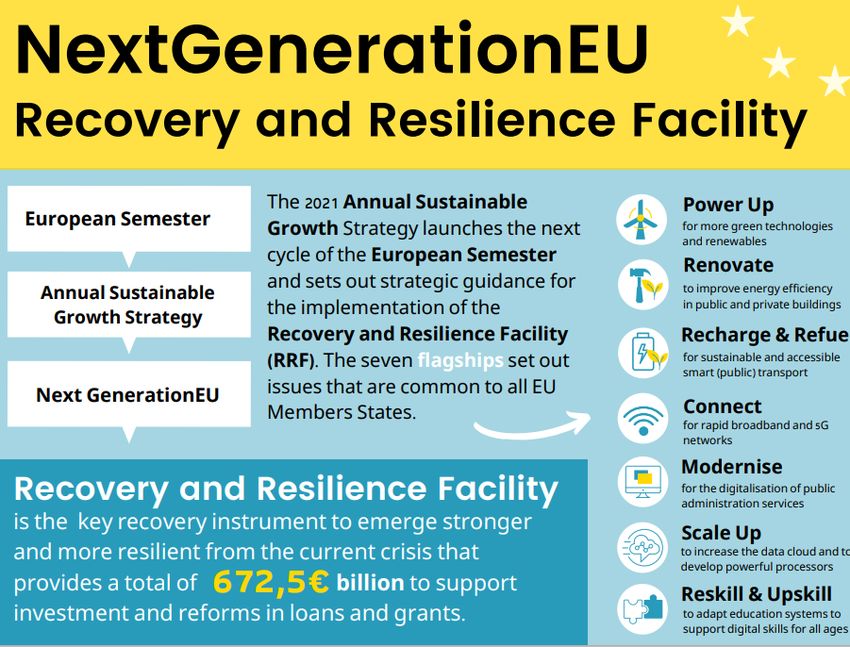
• Growing recognition for ALE (RRF, EAAL, Life Skills in der Skills Agenda,
  Upskilling Pathways)

• Two trends: Digitalization and “Greening Europe”

• “Ageing Europe” and the consequences

Internal:
• We-are-ale: developing a new identity

• Re-thinking education and ALE
The ALE Campaign is a five year global campaign to increase the
visibility of adult learning and education worldwide, and to empower
civil society to speak with one voice to advance the rights of all
youth and adults to quality education and lifelong learning.

For the first time, civil society organizations committed to ALE have
come together to adopt a shared global definition of adult learning
and education. Practitioners, learners and civil society representatives
from five continents will speak with one voice proclaiming
                             we are ALE!

11.05.21                                                                   7
8
Films, logo, other campaign material and definition see
                             www.we-are-ale.org

           Endorse the #weareALE campaign on www.we-are-ale.org
                        and stay tuned on social media!

 @weareALE                 @weareALE              @weareale2025

11.05.21                                                             9
The need for transformative
        education

                       11.5.2021
Follow us • Website: www.eaea.org • FACEBOOK: „EAEA“ • TWITTER: „EAEA2020“ • NEWSLETTER
VIELEN DANK! J
You can also read


