Evaluation of the Improving Social
Connectedness of Older Australians
project pilot:
Informing future policy considerations

Released March 2022
←
→
Page content transcription
If your browser does not render page correctly, please read the page content below
Evaluation of the Improving Social Connectedness of Older Australians project pilot: Informing future policy considerations Released March 2022
Cristina Thompson

                                                                                        Darcy Morris

                                                                                             Sonia Bird

Suggested citation:
Thompson C, Morris D and Bird S (2022) Evaluation of the Improving Social Connectedness of Older
Australians project pilot: Informing future policy considerations. Centre for Health Service Development,
Australian Health Services Research Institute, University of Wollongong.

Acknowledgements:
This report is based on work conducted by the Centre for Health Service Development, a multidisciplinary
research centre of the Australian Health Services Research Institute based at the University of Wollongong.
The authors acknowledge all individuals who contributed to the various phases of this evaluation. We wish to
particularly thank the members of the project teams from the Nepean Blue Mountains Primary Health
Network and Perth South Primary Health Network including the Chorus and Befriend organisations, for their
ongoing support and commitment to implementation and evaluation.
We also extend our thanks to all individuals who offered their time and expertise through participating in
interviews, surveys and other data collection processes to inform the evaluation of the Improving Social
Connectedness of Older Australians (ISCOA) project pilot.
Finally, we appreciate the collegiality displayed by staff from the Australian College of Mental Health Nurses
and the Australian Primary Health Care Nurses Association. We wish to recognise the advice and assistance
provided by personnel from the MBS Policy and Older Australians Section, Mental Health Access Branch,
Mental Health Division of the funding body, the Australian Government Department of Health.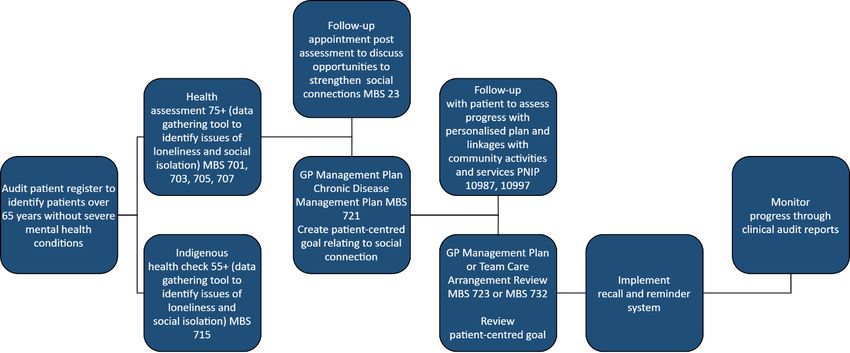
Contents
Glossary of key terms and abbreviations ...............................................................................................................2
Executive summary.................................................................................................................................................1
1      Introduction ....................................................................................................................................................2
    1.1        Policy issue..............................................................................................................................................2
    1.2        Purpose of this report.............................................................................................................................2
    1.3        Project overview .....................................................................................................................................3
2      High-level comparison of key evaluation findings..........................................................................................4
    2.1        Consumer outcomes and experience .....................................................................................................4
    2.2        Provider, community and system outcomes ..........................................................................................4
    2.3        Key lessons from the evaluation ............................................................................................................5
3      National policy environment ..........................................................................................................................8
    3.1        Policy context .........................................................................................................................................8
    3.2        Levels of mental health care ..................................................................................................................8
    3.3        Mental health impacts of the COVID-19 pandemic................................................................................9
4      Shaping models of care for older Australians in the future .........................................................................10
    4.1        Snapshot of current evidence...............................................................................................................10
    4.2        Framing loneliness and social isolation interventions..........................................................................11
    4.3        Addressing loneliness and social isolation through existing infrastructure .........................................12
    4.4        Future interventions .............................................................................................................................13
    4.5        Engaging older people in evaluation ....................................................................................................14
5      Conclusion and recommendations ...............................................................................................................16
References ............................................................................................................................................................17

Evaluation of the Improving Social Connectedness of Older Australians project pilot: Informing future policy
considerations
Glossary of key terms and abbreviations
Term Definition
Consumer In accordance with the conditions of funding, this term is used to
refer to older people aged 75 years and over and Aboriginal and
Torres Strait Islander peoples aged 65 years and over that
participated in the pilot
CHSP Commonwealth Home Support Programme
Community Connector Member of the general community who has undergone a short
training program to engage in a conversation with potentially
lonely and socially isolated older people for the purposes of
assisting them with community information or referral to a health
connector
Community Connector Touchpoints Connection points where members of the general community can
access the web-based directory of community activities and
services for older people developed for the project pilot
GPNs General Practice Nurses
GPs General Practitioners
Health Connector A new role established through the pilot where general practice
nurses assess and respond to lonely and socially isolated older
people referred to them in their health connector role
HealthPathways An online health information portal for GPs, to be used at the
point of care; it provides information on how to assess and
manage medical conditions, and how to refer patients to local
specialists and/or services
ISCOA Improving Social Connectedness of Older Australians
LGA Local Government Area
Loneliness A subjective experience that occurs when an individual feels they
have inadequate social relationships and contact with people; it
may be emotional loneliness, when people miss the
companionship of one particular person, or social loneliness,
when people perceive that they lack a wider social network (de
Jong-Gierveld 1989, 1998)
Mental Health Outcome Measures Assess whether a change has occurred for a consumer as a result
of mental health care and a range of clinician-rated and
consumer-rated measures are used (Australian Mental Health
Outcomes and Classification Network 2021)
MyHealthConnector A web-based directory of socially relevant local supports and
services in the community
NBM PHN Nepean Blue Mountains Primary Health Network
PS PHN Perth South Primary Health Network
RAS Regional Assessment Services
Social Connectedness Comes from the sum of a person’s individual relationships and a
sense of belonging. It is crucial to overall health and wellbeing. An
age-friendly community assists older adults to maintain social
Evaluation of the Improving Social Connectedness of Older Australians project pilot: Informing future policy
considerationsTerm Definition
connectedness while deepening existing relationships (Emlet &
Moceri 2012)
Social Isolation An objective state measured by the numbers and/or frequency of
social contact (Victor et al. 2001)
Wellbeing A multi-dimensional concept incorporating physical and emotional
needs, connectedness to others, the ability to exert influence over
one’s environment and safety from harm (Australian Government
Productivity Commission 2011)
Evaluation of the Improving Social Connectedness of Older Australians project pilot: Informing future policy
considerationsExecutive summary
This report draws on findings and lessons learned through the Australian Government funded evaluation
of the Improving Social Connectedness of Older Australians (ISCOA) pilot. It summarises what has worked
in the context of the evaluation to help inform the Government’s future models of care and interventions
for lonely and socially isolated older Australians.
The pilot commenced in January 2019 and concluded in June 2021. However during this period, project
activities were suspended for approximately six months due to the impact of COVID-19. There were also
several natural disasters that occurred during this time.
Two Primary Health Networks (PHNs) effectively implemented the pilot. Perth South (PS) PHN
commissioned an external community-managed organisation to deliver the pilot and Nepean Blue
Mountains (NBM) PHN directly employed a project officer and commissioned particular project
components.
Each PHN implemented an individual-level strategy to directly assist lonely and socially isolated older
people. This was supported by a complementary suite of asset-based community development strategies.
Findings from this pilot are context dependent, however, useful insights have been learned. Program
reach was smaller than anticipated (a total of 90 consumers received individual-level support across the
two PHNs). All participants reported health-related limitations, especially pain and mobility deficits, with
39% (NBM PHN) and 61% (PS PHN) lonely at initial assessment. Evidence suggests that interventions that
reduce loneliness could prevent or reduce depression in older adults (Lee et al. 2021).
Expansion of the target population for future related initiatives to younger old people should be
considered. It may be more useful to refer to a ‘life stage or transition point’ rather than a specific age
group. For example, retirement is a life stage when older people may be looking to strengthen existing
and create new social connections.
Major barriers for older people in forming social connections arise from the restrictions of reduced
physical mobility and chronic health issues, difficulties accessing appropriate transport, digital exclusion,
reduced self-confidence and self-efficacy, financial concerns about the cost of activities, limited mental
health literacy and the enduring stigma surrounding mental illness, loneliness and social isolation.
Models of care and future interventions should view older people as important contributors to the social
capital of our communities, engage them in co-design, use a strengths-based personalised response, and
incorporate principles of reciprocity where older people are able to ‘give something back’. The
effectiveness of referral networks is dependent on the intervention or program integrating with existing
local measures and service providers.
The Australian Government supports existing service platforms relevant to older people: general practice
which is assisted by PHNs, and the national network of My Aged Care Regional Assessment Services (RAS).
This infrastructure provides potentially cost-effective mechanisms for the early identification and
assessment of lonely and socially isolated older people and their referral to existing community assets and
activities including low-intensity mental health supports.
For this to be effective, many older people will require facilitated support to engage with these activities
and services. Health connectors, community connectors and community-builder roles were trialled in this
pilot and offer an inexpensive and flexible means to enhance the capacity of communities to respond to
loneliness, social isolation and other critical issues such as the COVID-19 pandemic.
Further research is needed to quantify potential benefits of related initiatives, learn more about effective
implementation and assess policy options.
Evaluation of the Improving Social Connectedness of Older Australians project pilot: Informing future policy considerations 11 Introduction 1.1 Policy issue Loneliness and social isolation present a serious public health issue for older people, with compelling evidence about the physical and mental health impact of these phenomena. The Australian population is ageing and living longer (Australian Bureau of Statistics 2019). The prevalence of loneliness and social isolation is rising, and risks for older people have been exacerbated by the COVID-19 pandemic (Ogrin et al. 2021; Smith & Lim 2020). Being older is a strong predictor of loneliness; evidence from the United Kingdom (UK) indicates people aged over 80 are more than twice as likely to suffer severe loneliness when compared to younger age groups (Griffiths 2017). Loneliness is a fluid experience: it can come and go over a short time, or persist in the longer term becoming chronic (Goodman et al. 2015). There are serious health consequences for older people, particularly those experiencing chronic loneliness (Armitage & Nellums 2020; Brooke & Jackson 2020). These effects increase the risk of death more than other known public health problems such as smoking and obesity (Holt-Lunstad et al. 2015). The association between loneliness and social isolation and poor mental health is well established (Donovan & Blazer 2020). This is a reciprocal relationship as those with mental health issues are more likely to be lonely and socially isolated; in turn, those who are lonely and socially isolated are more likely to develop anxiety and depression (Schwartz & Litwin 2019). Loneliness and social isolation are amenable to intervention and there is growing evidence about effective interventions. Developed countries are investing in policy and strategies to address this issue. Prior to the COVID-19 pandemic, approximately one in five older Australians were socially isolated (Beer et al. 2016), noting that estimates of the prevalence of social isolation and loneliness vary (Smith & Lim 2020). Low levels of digital inclusion experienced by older people (due to factors including affordability and digital confidence) create a barrier to social engagement, increasing the risks of social isolation and loneliness (Thomas et al. 2020). Changes in the proportion of people experiencing loneliness and social isolation have been observed at different points of the COVID-19 pandemic (Australian Institute of Health and Welfare 2021a). The disproportionate impact of social restrictions on older people raises concerns about reduced social connections for this population group, and the negative effect of such restrictions on mental wellbeing for older Australians has also been shown (Siette et al. 2021). Policy makers, primary health practitioners and local government commissioners should consider social isolation and loneliness as important upstream factors impacting on morbidity and mortality due to their effects on cardiovascular and mental health. Prevention strategies should therefore be developed across the public and voluntary sectors, integrating an asset-based approach (Leigh-Hunt et al. 2017). 1.2 Purpose of this report The evaluation of the ISCOA pilot has provided valuable insights about the delivery of a multi-component intervention to address loneliness and social isolation that was adapted for implementation in the Australian setting. The purpose of this report is to distil potential implications for policy arising from the evaluation findings that may assist in supporting lonely and socially isolated older people in the future. It focuses on findings and lessons that can help inform future models of care and interventions to support the mental health of older people. This report draws from a comprehensive evaluation of the initiative that was conducted in two PHNs, NBM PHN and PS PHN from January 2019 to June 2021. The project pilot objectives were to: increase social connectedness; reduce social isolation and loneliness; and Evaluation of the Improving Social Connectedness of Older Australians project pilot: Informing future policy considerations 2
improve mental health outcomes of older Australians (Australian Government Department of Health
2018). 1
The report briefly explains the project, the policy context, what worked and provides considerations to help
inform future policy development.
1.3 Project overview
The ISCOA project was initially conceived as a two-year pilot adapting applicable models and frameworks to
inform interventions to increase the social connectedness of older Australians. The target population was
people aged 75 years and over and Aboriginal and Torres Strait Islander peoples aged 65 years and over, who
were at risk of the mental and physical health impacts of social isolation and/or loneliness. Implementation
commenced in two PHNs in July 2019. The progress of the pilot was significantly disrupted by the COVID-19
pandemic with project delivery suspended for approximately six months from April – September 2020. The
project was originally scheduled to end in December 2020, however, an extension was granted until June
2021.
A multi-component model based on evidence from the established programs of Age UK and the Campaign to
End Loneliness (2016) was implemented. It comprised two arms: an individual-level strategy and an asset-
based community development strategy. Underpinning these strategies was coordinated action aimed at
building and strengthening networks between primary health, aged and social care service providers.
The design of the intervention was influenced by several key assumptions. Many older Australians have a
trusted relationship with their General Practitioner (GP) and General Practice Nurse (GPN). As older people
become less mobile and develop chronic health issues, seeking support for their health care from their GP
occurs more frequently (Royal Australian College of General Practitioners 2020). General practice currently
provides health assessments to people aged 75 years and over and Aboriginal and Torres Strait Islander
peoples aged 55 years and over. Ageing can create demand for home support and assistance with activities of
daily living to enable frailer older people to remain living independently in their own home. Service needs are
determined through My Aged Care RAS that provide a face-to-face assessment undertaken by a trained Home
Support Assessor to identify an older person’s aged care service needs. These needs are met by referral to
services available through the Commonwealth Home Support Programme (CHSP). GPs, GPNs and Home
Support Assessors undertake assessments of older people’s health and/or social care needs as part of usual
care and are well positioned to identify lonely and socially isolated older people.
This pilot trialled these two access routes, that is, general practice and RAS as referral sources. Older people
identified at risk of loneliness and social isolation met with a health connector based in general practice (NBM
PHN) or community-based link worker/project coordinator (PS PHN) who also worked closely with a RAS
provider. A conversational interview was provided by the health connector or project coordinator to more
comprehensively assess the older person’s social connections. A personalised plan was collaboratively
developed with the older person with varying levels of support provided to participate in activities to
strengthen social connections.
The community-based strategy used the principles of asset-based community development to enhance
community connections and assets and engage services and agencies to work together to address social
isolation and loneliness. In practice, this included community co-design workshops, community engagement
in project governance, development of an online directory of community services, and several other
community development activities to build upon community assets and increase community awareness of
both the impact of social isolation and loneliness for older people and the project.
1Australian Government Department of Health 2018, Evaluation of the Improving Social Connectedness of Older Australians project pilot - Schedule 5A
Form of Request for Quotation - Health/18-19/04684, Australian Government Department of Health, Canberra, Australia.
Evaluation of the Improving Social Connectedness of Older Australians project pilot: Informing future policy
considerations 32 High-level comparison of key evaluation findings
Implementation was led by PS PHN in the Mandurah Local Government Area (LGA) (in Western Australia) and
the NBM PHN in the Hawkesbury LGA (in New South Wales). Each locality provided a significantly different
context for implementation, which should be recognised when reviewing key evaluation findings.
2.1 Consumer outcomes and experience
The pilot’s reach was significantly disrupted by the COVID-19 pandemic and the five natural disasters declared
within NBM PHN. While the number of older people participating in the intervention was small, for most the
impact of the project was positive and significant. Consumers valued being treated with empathy and respect,
a personalised response, and facilitated support to engage in activities.
Table 1 Summary of key consumer outcomes and experience
Outcome Mandurah Hawkesbury
# participants 44 participated, 36 completed 46 participated, 40 completed
Participant Mean age 81.5 years, 73% female, 59% Mean age 82 years, 84% female, 51% lived
characteristics lived alone, 57% widowed alone, 65% widowed
Participation 27 referred but declined to participate, 3 52 referred (from 3 practices) but did not
did not attend activities, 17 received participate, 22 did not attend activities, 9
assistance with transport required assistance with transport
Baseline All had limitations, especially pain, mobility All had limitations, especially pain, mobility
health status and anxiety / depression, 61% were lonely and anxiety / depression, 39% were lonely
Health From baseline to follow-up there were From baseline to follow-up there were no
outcomes statistically significant improvements in statistically significant improvements in
self-rated health (mean 66 increased to 81), health-related quality of life (HRQOL), self-
loneliness (61% decreased to 23%) and rated health or loneliness
psychological distress improved
Consumer 16 respondents – 94% felt less lonely and 16 respondents – 81% felt less lonely and
experience more socially connected, 88% reported more socially connected, 75% reported
improved wellbeing, all had a positive improved wellbeing, at least 94% were
experience, were satisfied, would more willing to join activities or groups, had
recommend the project and thought it a positive experience, were satisfied, would
should continue for others; interviews (n = recommend the project and thought it
7) strongly supported these findings should continue for others
2.2 Provider, community and system outcomes
Engagement with general practice needs to be driven by those with primary health care expertise, which in
this intervention were the PHNs. Key community stakeholders overall had a positive perception of the project
and felt the activities implemented were appropriate in addressing the pilot objectives. Relationships were
developed (or strengthened) between project teams and a range of community organisations and groups.
Evaluation of the Improving Social Connectedness of Older Australians project pilot: Informing future policy
considerations 4Collaboration with local councils in each implementation site was particularly important as local government
is well positioned to support sustainability of project components.
Table 2 Summary of key provider, community and system outcomes
Outcome Mandurah Hawkesbury
GP 5 practices identified for engagement 7 practices commissioned, 11 health
engagement connectors (GPNs) completed training
Referrals Referral pathways developed (including Referral pathways developed (including
incorporation in HealthPathways) incorporation in HealthPathways)
Co-design Community reference group convened for 3 co-design community workshops (100+
12 months, Collaborative Approaches participants), advisory committee and
Workshop facilitated (30+ community working groups sustained throughout
stakeholders) project
Community Asset-based community development Asset-based community development
engagement through community-builder, range of through project officer with 74 community
community events held (e.g. Celebrate connectors trained, 9 community connector
Seniors Expo), several new groups and touchpoints established, range of
activities initiated in response to community community events held (e.g. Seniors Week
identified service gaps 2021)
Asset Comprehensive asset mapping, used Comprehensive asset mapping, online
mapping / internally, Genie online platform trial MyHealthConnector directory developed
directory continuing (570+ groups / organisations, 4,500 users
over 12 months)
Stakeholder 5 survey respondents indicated positive 11 survey respondents – 94% agreed with all
experience perception of project; stakeholder statements, indicating an overwhelmingly
interviewees (n=20) indicated overall positive perception of project; stakeholder
support for the initiative interviewees (n=27) indicated overall
support for the initiative
This was an ambitious and complex multi-component intervention implemented efficiently during the most
testing of times, a global pandemic. Overall, the evaluation concluded with a high degree of confidence that
each component of the pilot, as implemented at the two implementation sites, made an important
contribution to achieving the objectives of the project.
2.3 Key lessons from the evaluation
The key lessons that policy makers can take from the evaluation follow.
2.3.1 Context
COVID-19 was a significant disrupter – but also focused attention on the issue of social isolation and older
people.
Evaluation of the Improving Social Connectedness of Older Australians project pilot: Informing future policy
considerations 5 At the time of writing this report there is a receptive context for change, in part due to greater community
empathy for lonely and socially isolated older people that has arisen during the pandemic. It is an
opportune time to build on the work of the project pilot.
The health connector initiative has shown that integration of interventions implemented into the
workflow of the general practice and MBS billing arrangements is necessary and achievable.
2.3.2 Identifying and engaging older people
General practice and My Aged Care RAS are able to identify lonely and socially isolated people, however,
personnel within these services require additional training, support and resources to be effective in this
role and to optimise their capacity to appropriately identify, refer and/or respond.
Older people have differing levels of self-confidence and self-efficacy. Guided self-help (i.e. facilitated
support) is essential for a significant proportion of older people, particularly those aged 75 years and over.
Personalised conversations enable a tailored response to meet individual needs, abilities and interests.
Aboriginal and Torres Strait Islander peoples require a culturally appropriate intervention that emphasises
strengthening kinship.
For older people there is stigma associated with admitting to loneliness and social isolation and mental
illness and limited awareness of the contemporary range of mental health supports. The use of positive
language such as ‘strengthening social connections’ rather than referring to reducing loneliness and social
isolation is preferred by older people and considered less stigmatising.
In regional and rural areas, emergency service providers such as police and rural fire services can be of
great assistance in identifying socially isolated older people because of their role in disaster response.
2.3.3 Design
Use of evidence, clear objectives and an understanding of the theory of change underpinning
interventions is crucial so that the proposed strategies are appropriate in addressing loneliness and social
isolation. Rapid cycle planning that is iterative may aid in responding to unexpected events.
There is no one-size-fits-all solution – initiatives need to be tailored not only to individuals but also to
communities to effectively use and leverage off existing resources.
As loneliness and social isolation are complex issues, flexible, multi-component initiatives are required.
Place-based approaches appear to be well suited to an integrated health, aged and social care response.
Initiatives should include ‘younger’ older people (e.g. ≥ 55 or ≥ 65) to extend their reach and potential
benefit. Targeting certain life stages or transitions (e.g. retirement) may be a more useful approach than
focusing on specific age groups.
For some older people, particularly those with mobility and chronic health issues, they may need to be at
a stage in life when they have the energy and capacity to try new activities.
Early involvement of consumers and community stakeholders through co-design is important as initiatives
are more likely to be sustained when high levels of community ownership are evident.
Promoting multi-component interventions that address the social determinants of health as a
complement to existing health care is likely to assist with GP engagement.
2.3.4 Implementation
Effectively addressing loneliness and social isolation of older people requires an intersectoral approach
that draws upon health, aged and social care service providers.
Evaluation of the Improving Social Connectedness of Older Australians project pilot: Informing future policy
considerations 6 Collaborative partnerships are vital, and local government is a critical partner because of its role in the
provision of basic community infrastructure and services used by older people.
General practice is an important setting to support the mental health of older people, PHNs are
experienced in working with general practice and can leverage off established relationships.
Focus should be on general practices that are ‘receptive’ to the intervention and engagement is likely to
be enhanced through modest remuneration, support with training in areas such as motivational
interviewing, and assistance with integrating the intervention strategies into usual workflow.
Service providers that routinely work with older people, such as providers of My Aged Care RAS, are likely
to have a workforce that is experienced in engaging with older people and establishing rapport.
The mapping of community assets is fundamental to increasing the awareness of health and social care
service providers of the rich range of existing community groups and services already available within the
local community.
Clear and wide-ranging referral pathways are necessary so that older people, other community members
and service providers understand how best to refer and support lonely and socially isolated older people.
PHNs require flexibility in the implementation of loneliness and social isolation interventions for older
people so that differences in community infrastructure can be accommodated. This may be facilitated by
permitting blended approaches that allow in-house project coordination supported by commissioning of
external expertise as necessary. Hybrid models should include recognition of the true costs borne by
PHNs.
Interagency relationships take time to develop and are based on trust, mutual respect and reciprocal
support. These existing community networks can make an important contribution to interventions
designed for older people, but some basic funding may be needed to facilitate this engagement.
2.3.5 Evaluation
Where possible, it is more efficient to use existing routinely collected data for monitoring and evaluation
to minimise the burden upon project participants. This requires data-sharing agreements with general
practice and may necessitate some compromise as to the available data items.
Data linkage, while challenging, provides opportunities to obtain highly valuable information about
medium to longer-term health outcomes of older program participants.
As many older people may not have the capacity to participate in online data collection activities,
innovative qualitative and quantitative approaches to gathering information about their experience and
perspectives is essential to ensure they can contribute to evaluation findings.
If available, appropriate validated scales should be used to measure outcomes that align with the primary
aim of the intervention.
Evaluation of the Improving Social Connectedness of Older Australians project pilot: Informing future policy
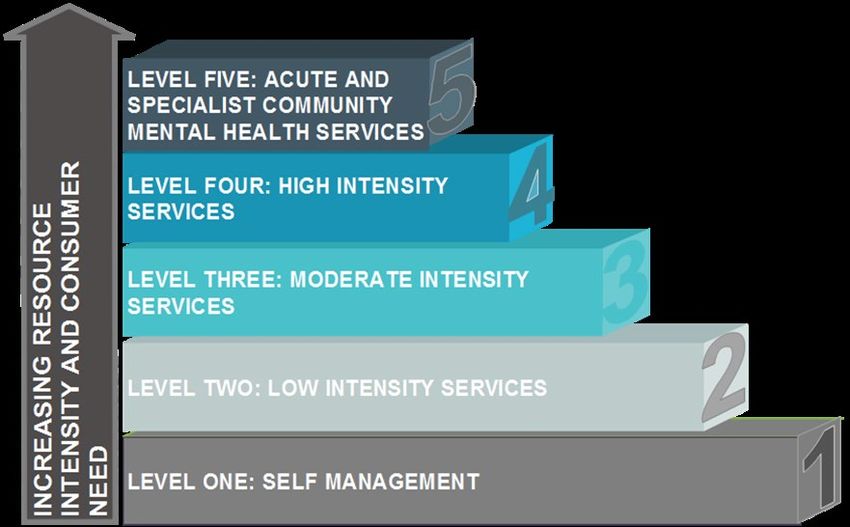
considerations 73 National policy environment 3.1 Policy context This project pilot was funded through the ‘Better Ageing’ initiative of the 2018-19 More Choices for a Longer Life Budget Package (Australian Government Department of Health 2018a). The pilot took place in a policy context in which a range of broader mental health supports are available to older Australians. This includes funding since 2018-19 to PHNs to commission psychological treatment services targeting the mental health needs of older people living in residential aged care facilities through the ‘Improved Access to Psychological Services in Residential Aged Care Facilities’ initiative. In addition, in response to the impacts of the COVID-19 pandemic, in 2020-21 the Australian Government funded PHNs to commission mental health nurses and equivalent workforces to provide additional support to older Australians experiencing loneliness and/or isolation and who have or are at risk of mental health conditions until 31 December 2021. Furthermore, from 10 December 2020 to 31 December 2022 individual Medicare subsidised psychological support under the Better Access to Psychiatrists, Psychologists and GPs through the MBS initiative has been expanded to aged care residents (Australian Government Department of Health 2018c). Reports from a number of major inquiries addressing older Australians’ mental health were also released during the pilot’s implementation period. The Productivity Commission’s Inquiry into Mental Health was handed to the Australian Government on 30 June 2020 (Australian Government Productivity Commission n.d.) and identified a range of issues relevant to the mental health of older people including the increased risk of mental ill-health arising from loneliness and social isolation and the importance of access to appropriate mental health supports (Australian Government Productivity Commission 2020). The final report of the Royal Commission into Aged Care Quality and Safety (Royal Commission) was tabled in the Australian Parliament on 1 March 2021 (Royal Commission into Aged Care Quality and Safety 2021). Particularly relevant recommendations include Recommendation 33 – Implementing a social supports category in the aged care program, Recommendation 59 – Increased access to Older Persons Mental Health Services, and Recommendation 61 – Short-term changes to the MBS to improve access to medical and allied health services. On 11 May 2021, the Australian Government published its response to the Royal Commission’s report, accepting or accepting in-principle all recommendations. The Hon Greg Hunt MP, Minister for Health and Aged Care, also advised in a media release that the 2021-22 Budget measures announced in response to the Royal Commission signal a once in a generation reform, including a $17.7 billion investment in an aged care reform package. 3.2 Levels of mental health care PHNs work with their communities to improve access to primary and specialist mental health care. Fundamental to the joint regional planning and commissioning of mental health services is a stepped care approach. This means that a person presenting to the health system is matched to the least intensive level of care that most suits their current treatment need, considering the balance between intended benefits and potential risks (Australian Government Department of Health 2020b, p. 10). A schematic representation of levels of care is included in Figure 1 (Australian Government Department of Health 2019, p. 8). Planning mental health services, according to this stepped care approach, relies on “stratification of the population into different ‘needs groups’, ranging from whole of population needs for mental health promotion and prevention, through to those with severe, persistent and complex conditions” (Australian Government Department of Health 2019, p. 8). Evaluation of the Improving Social Connectedness of Older Australians project pilot: Informing future policy considerations 8
Figure 1      Schematic representation of levels of mental health care

3.3 Mental health impacts of the COVID-19 pandemic
The potential impact of the COVID-19 pandemic on the mental health of all Australians, including older
people, was recognised with the endorsement by National Cabinet of the National Mental Health and
Wellbeing Pandemic Response Plan in May 2020 (Australian Institute of Health and Welfare 2021b). This plan
identified the particular vulnerability of older people to the coronavirus and the disproportionate impact on
older people of physical distancing measures with loss of support leading to increased social isolation. Many
older people had no access to online services and a fear of leaving their home to access services face-to-face
(Australian Government Department of Health 2021b). These factors were anticipated to impact upon the
wellbeing and mental health of older people (United Nations 2020). Other impacts reported include those
arising from “reduced access to essential medicines and supplies occurring because of global disruption to
supply chains and reduced access to usual healthcare” (Richardson et al. 2020, p. 2).

Evaluation of the Improving Social Connectedness of Older Australians project pilot: Informing future policy
considerations                                                                                                 9
4 Shaping models of care for older Australians in the future
4.1 Snapshot of current evidence
Many of the findings reported through the pilot evaluation are supported by literature. A brief summary of
this evidence is provided below.
4.1.1 Service models, interventions and strategies
Loneliness and social isolation is a personal experience and consequently individualised person-centred
responses are essential – one size will not fit all (Fakoya et al. 2020).
Initiatives described in the literature largely include one-to-one interventions, group activities or
community engagement approaches (Skingley 2013).
Interventions aiming to tackle loneliness and social isolation typically address three main areas: enabling
individuals to maintain existing relationships, facilitating the creation of new connections, and using
psychological therapies to help the individual reassess the way they think about their relationships
(Jopling 2015).
Multi-component strategies are less researched but show promise based on implementation experience
with other complex health and social issues (Ogrin et al. 2021).
Place-based approaches appropriately implemented provide an effective mechanism for engaging the
local community and strengthening collaborative efforts to strengthen social connections (Crew 2020).
Addressing loneliness, social isolation and social connectedness of older people requires intersectoral
action between health, aged and social care sectors (Ogrin et al. 2021).
There is good evidence about the effectiveness of self-help treatments for depression and anxiety,
particularly with therapist support (Boulton et al. 2021).
Telehealth interventions have been shown to improve psychological outcomes for older adults, including
decreasing anxiety and depressive symptoms (Kruse et al. 2020).
Low intensity interventions have been found to produce positive outcomes when patients are highly
motivated, a coach or therapist guides the use of the materials, and several low intensity interventions
are used simultaneously (Joice et al. 2010).
Strategies to connect with older Australians require establishment of two-way forms of engaging, rather
than only offering help or creating one-way forms of engagement (Maisey 2020).
4.1.2 Barriers to engaging older people
Older people who are socially isolated are by definition hard to reach. Understanding the characteristics
of people who are most at risk can help with targeting these groups. For example, living alone, health
problems and disability (including cognitive impairment), sensory impairment such as hearing loss, and
major life events such as loss of a spouse have all been identified as risk factors for loneliness and social
isolation (Findlay 2003; Grenade & Boldy 2008).
Different ways of identifying, assessing and responding to loneliness and social isolation are needed for
particular sub-groups of older people including those with:
- significant chronic health issues
- mobility impairment
- cognitive impairment
- serious mental health issues
Evaluation of the Improving Social Connectedness of Older Australians project pilot: Informing future policy
considerations 10- diverse cultural needs (Jopling 2015).
Older people are reluctant to identify as being lonely or socially isolated often because of the stigma
associated with this unless they believe they have the need and capacity to strengthen their social
connections (Cattan et al. 2003; Cattan et al. 2005).
Older people who are experiencing chronic loneliness may need specialist mental health support (Age UK
2018).
People aged 65 years and over remain Australia’s least digitally included age group with an Australian
Digital Inclusion Index (ADII) of 49.7 compared with the national average of 63.0. The ADII measures three
key dimensions of digital inclusion: access, affordability, and digital ability (Thomas et al. 2020).
4.2 Framing loneliness and social isolation interventions
Within Australia, there is socio-demographic and health data which in conjunction with internationally robust
research evidence confirms that loneliness and social isolation in older people is a significant health issue that
governments must address. How this issue and policy responses to it are ‘framed’ have important implications
and will influence possible solutions. For example, at a broader societal level loneliness and social isolation
may be seen as a public health issue and responded to with primary, secondary and tertiary health promotion
strategies. However, if it is framed as a mental health issue affecting individuals then this may drive a
therapeutic approach through the use of a stepped care mental health model which may or may not involve
other community and social care services.
PS PHN framed the pilot as a mental health promotion and prevention initiative, because the focus of the
initiative was the ‘social connectedness of older Australians’ which is not a mental disorder, and in and of
itself may not necessarily lead to one (although it can contribute). The initiative was perceived as more of a
social support program that wasn’t necessarily mental health treatment specific. Challenges arose in the
context of broader PHN guidance documentation relating to low intensity services. Funding guidelines were
perceived to suggest a treatment orientation and for treatment to occur there needs to be a diagnosable
condition or an assessment that the individual is at risk of one (Australian Government Department of Health
2019).
Several stakeholders framed the project as a social prescribing initiative, citing that the health and community
connectors in NBM PHN and project coordinators in PS PHN were effectively acting as ‘link workers’ through
linking older people to non-medical services and activities. PHN teams were reluctant to describe the
individual-level intervention strategy in this way as they correctly recognised that there is currently no policy
guidance for PHNs in relation to social prescribing and no Australian Government policy position on the use of
MBS items for social prescribing. The interest in social prescribing has been growing, with the Royal Australian
College of General Practitioners and Consumers Health Forum of Australia co-hosting a Social Prescribing
roundtable in November 2019. Their report of this event highlighted the trend in several countries of
implementing policies to integrate health and social care and noted:
We foresee a future where social prescribing supports better connections between our systems of care and
better connections between people in our communities. (Royal Australian College of General Practitioners
and Consumers Health Forum of Australia 2020, p. 8)
Several recommendations for policy makers were included, such as the need for:
…an analysis of which professions are best placed to fulfil the link worker role in Australia, adjusting for
different levels of complexity. (Royal Australian College of General Practitioners and Consumers Health
Forum of Australia 2020, p. 8)
The UK National Health Service views social prescribing as a key component of universal personalised care
and, through their Long Term Plan, NHS England has committed to building a social prescribing workforce
(National Health Service 2019, n.d.). The plan states:
Evaluation of the Improving Social Connectedness of Older Australians project pilot: Informing future policy
considerations 11Over 1,000 trained social prescribing link workers will be in place by the end of 2020/21 rising further by 2023/24, with the aim that over 900,000 people are able to be referred to social prescribing schemes by then. (National Health Service 2019, p. 25) Within Australia (Ending Loneliness Together 2020), New Zealand (Let's End Loneliness 2021; Loneliness NZ 2021), Canada (Hamilton Seniors Isolation Impact Plan 2016; HelpAge Canada 2021) and the UK (Campaign to End Loneliness 2021), there is increasing interest at government and community levels in the impact of loneliness and social isolation. This has been exacerbated by the COVID-19 pandemic and is now firmly on the policy agenda of many nations (The Commonwealth Fund 2021). The UK was one of the first governments to appoint a Minister for Loneliness (GOV.UK 2018), with Japan recently establishing a Minister for Loneliness and Isolation (Kawaguchi 2021). 4.3 Addressing loneliness and social isolation through existing infrastructure The pilot demonstrated that commissioning into general practice might be a helpful policy approach into the future. The Australian Government has access to two important networks that can help with systematically identifying, assessing and supporting lonely and socially isolated older people: the integrated infrastructure of PHNs and general practices, and the RAS that provide entry to the My Aged Care service gateway (Australian Government Department of Health 2021c). The first step in intervening to reduce the mental and physical health impacts of loneliness and social isolation is to identify older people at risk. GPs and My Aged Care RAS are well positioned to identify at risk older people through existing assessment processes, for example the health assessment for people aged 75 years and older and the CHSP service assessment process. The assessment process for CHSP services already allows for identification of social support needs, however, variability in access to services may often mean that there is no appropriate means to assist lonely older people. Regional assessors could refer these at risk older people to either appropriately resourced general practices who, through a health connector role, could holistically assess physical and mental health needs or directly refer patients requiring facilitated support to a community connector or link worker that supports several general practices. These community connectors can then support older people to become more socially connected, utilising existing community assets. There are several MBS items that may be able to support the health connector role within general practice (refer to Figure 2). A network of community connectors could support a range of primary care initiatives, as currently occurs in the UK and was demonstrated particularly in response to the COVID-19 pandemic (Giebel et al. 2020). In addition, there are existing Departmental initiatives (e.g. Aged Care Navigator initiative) and government programs (e.g. Village Hubs) that could be leveraged to support older people, particularly for those who face additional barriers or are vulnerable and require face-to-face engagement, with repeated interactions over time (Australian Healthcare Associates 2020). Considering workload demands and time constraints experienced by mental health nurses (Foster et al. 2021), upskilling a network of GPNs and community-based workers to help support older people at risk of or experiencing social isolation or loneliness is a viable alternative. Such an approach has the potential to provide a personalised response close to home that includes options for facilitated support and guided self-help. Social prescribing has been identified as an effective mechanism for addressing the social determinants of health and may provide a useful demand management strategy to assist general practice to cope with the demands of an ageing population (Cordis Bright 2019). Evaluation of the Improving Social Connectedness of Older Australians project pilot: Informing future policy considerations 12
Figure 2     Using existing MBS items to support the health connector role

For GPs and other service providers, including information about appropriate referral pathways to better
manage loneliness and social isolation and appropriate interventions through an online health information
platform like HealthPathways or a community information repository is an important way to assist them to
work together with patients, at the point of care. Education and training of administrative and general
practice staff about common risk factors may also help in identifying older patients in need of assistance. For
many older people as they age, there is an increased reliance on their GP as a trusted source of advice (NBM
PHN 2020; University of Southampton n.d.). The sensitive issue of loneliness and social isolation is clearly
more likely to be discussed when rapport and trust has been established.

4.4 Future interventions
Future interventions should recognise the contribution that older people bring to the social capital of their
communities. They have much to offer to the design and delivery of interventions that are developed to
support their mental wellbeing. Using a strengths-based approach supports this view and aligns with current
national mental health policy. Older people are not a homogeneous group and different strategies to reduce
loneliness and social isolation and improve social connections will be needed that are appropriate for the
target population and focus of the intervention. For example, less mobile older people with multiple chronic
conditions who are unable to easily leave their home may require a significantly different approach to
building social connections than older persons with a history of mental illness and maladaptive social
cognition (Cacioppo et al. 2015). Loneliness and social isolation may be perceived quite differently in
population sub-groups such as Aboriginal and Torres Strait Islander peoples, those from culturally and
linguistically diverse groups and people from LGBTQI+ communities. Their perspectives may be shaped by
historical experiences of alienation and/or discrimination and consequently interventions that are appropriate
given this lived experience may need to be developed.
Throughout the evaluation, the major barriers to improving social connections for older people were
frequently attributed to difficulties accessing appropriate transport, reduced mobility and impacts from
chronic health conditions, limited digital skills and resources and issues that can be broadly described as
mental health literacy. Future projects need to include the capacity to support older people unable to
participate in interventions because of these barriers. Despite innovative programs being available to enhance
the digital literacy of seniors, there will remain significant numbers of older people who will need ongoing
help to adapt to new forms of service delivery that require an online presence or use of mechanisms such as
telehealth. Older adults’ relatively poor mental health literacy (Chesser et al. 2016; Piper et al. 2018) should

Evaluation of the Improving Social Connectedness of Older Australians project pilot: Informing future policy
considerations                                                                                               13
also be considered in the development of models of care, particularly in terms of their awareness of the
impacts of loneliness and social isolation.
A whole of community effort is likely to be most effective and community connectors could support other
primary health and social care workers, such as health connectors, in providing evidence-based programs for
particular groups of older people. Through a place-based approach, the existing assets of the local community
can be used for older people wishing to form new social connections. General practices with health
connectors could be supported by a cluster of community connectors who provide facilitated support to older
people, so they are able to attend activities. They may also link older people with mobility issues to activities
that can be provided in their own home for example, telephone befriending services.
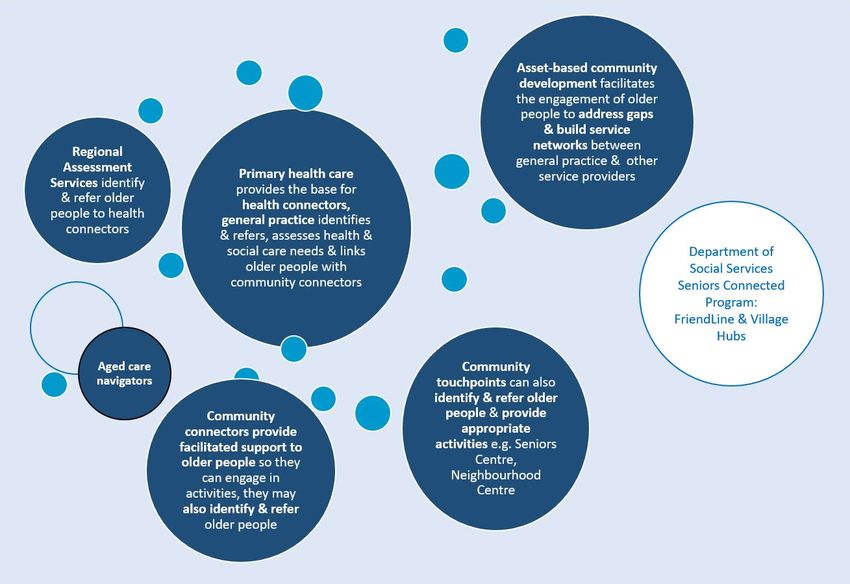
The components of an integrated model of care to strengthen social connections of older Australians is
presented in Figure 3.
Figure 3     Components of an integrated model of care to strengthen older Australian’s social connections

4.5 Engaging older people in evaluation
The engagement of evaluators at the project initiation stage facilitates a collaborative and evidence-based
approach to the development, implementation and evaluation of interventions. This was a strength of the
pilot. Involving older people in evaluation during the social disruptions that arose was extremely difficult as
they quite rightly recognised their vulnerability to COVID-19.
Evaluation plans had to be continuously reassessed as the context for implementation shifted in response to
the COVID-19 pandemic and other environmental disruptions. For example, the planned time series analysis
of the participating practices to monitor changes in the provision of health assessments, mental health
treatment plans etc., for older people was confounded by the COVID-19 pandemic as ‘usual practice’ and
implementation in the targeted practices was severely disrupted by lockdowns and the introduction of

Evaluation of the Improving Social Connectedness of Older Australians project pilot: Informing future policy
considerations                                                                                               14
alternative consultation processes such as telehealth. Consequently, the time series was unable to be used as
originally intended.
Project teams on occasion reported that the evaluation data they were asked to collect from older people was
a disincentive to participation for older people. There is always a balancing act between achieving relevant
evaluation data collection and reducing data collection burden, particularly in pilot evaluations. This led to
renewed efforts by the evaluators to streamline data collection and minimise the inconvenience for both
project teams and participants. Discussions are needed early in program planning to ascertain the availability
and appropriateness of existing administrative datasets to support evaluation efforts.
A gap in data collection was unfortunately the voice of the consumer. A series of qualitative data collection
activities were planned that brought older people together in groups to explore their experience. When
restrictions on public gatherings prevented this, surveys were introduced with 16 responses secured from
each implementation site, noting that this represented approximately 40% of consumers who completed the
intervention. A large proportion of older people are reluctant to complete web-based surveys or use
videoconferencing platforms. Despite repeated requests for interviews, at one site no consumer was
prepared to participate in an interview. In the other implementation site, seven consumers participated in a
telephone interview, and this provided rich and valuable project insights about consumer experience. To
supplement data collected from consumers, project teams were asked to provide consumer or patient stories
to illustrate their perception of the impact of the project for older participants.
In pilot studies where the design of the intervention and process of implementation are both being tested,
economic analyses such as cost-effectiveness analysis may not be appropriate. An alternative method is a cost
consequence analysis (CCA) which may be useful in pilot studies, or as a pre-cursor to a future cost-
effectiveness analysis. A CCA was completed which showed relatively moderate investment resulted in a
considerable range of outputs and short-term impacts and outcomes at each site, however, if more extensive
trialling of an enhanced intervention was to occur, it would be appropriate to conduct a more comprehensive
economic evaluation (Centre for Epidemiology and Evidence 2017).

Evaluation of the Improving Social Connectedness of Older Australians project pilot: Informing future policy
considerations                                                                                               15
You can also read


