"WE'RE NOT INVINCIBLE" - FROM SMOKO BREAKS TO GP VISITS - YEAR IN REVIEW 2018 - Andrology Australia
←
→
Page content transcription
If your browser does not render page correctly, please read the page content below

YEAR IN REVIEW
2018

“WE’RE NOT
INVINCIBLE”
page 8

          HORMONES AND HEALTH
          Thinking about the bigger picture
                               page 14

FROM SMOKO
BREAKS TO GP VISITS
Andrology Australia talks prompt Lismore men
to act on their health
page 26
YEAR IN REVIEW 2018
                         Minister's foreword
                                                                                Features :
    It is with much pleasure that I am writing the foreword for
  Andrology Australia’s 2018 Annual Review. In 2018, I proposed                 - 05 - Building a leading organisation for
       the development of a new strategy for men’s health, the                         men’s health
     National Men’s Health Strategy 2020 -2030, to build on the
        National Male Health Policy released in 2010. Andrology                 - 05 - Spreading the message
   Australia led the research and development of the strategy,
 working in conjunction with experts from all sectors of health.                - 06 - From evidence to engagement
    The resultant strategy is one that will act as a blueprint to
   ensure every man and boy in Australia is supported to live a                 - 08 - “We’re not invincible”
                                long, healthy and fulfilling life.
                                                                                - 10 - Research &
Throughout the year, Andrology Australia continued to drive an evidence-               publications
based approach to men’s health with high-quality education and training
   programs for health professionals and the provision of information to
                           men on a range of reproductive health issues.        -12 - Advisors

     Andrology Australia’s campaign in Men’s Health Week based on the           -14 - Hormones and health
     theme “it’s healthy to talk” was particularly successful in engaging             Thinking about the bigger picture
    and encouraging men to have a conversation about their health and
                                     wellbeing with someone they trust.         -16 - Supporting Primary Healthcare
   With a collaborative model that brings together the very best people
        and organisations from across the country, it is easy to see why        -18 - Developing the workforce
Andrology Australia’s information is linked to and sought out by so many              in men’s health
                                                           organisations.
                                                                                -20 - Ongoing education
Recognised internationally, Andrology Australia brings awareness to the
                                                                                      for health professionals
                                public about male reproductive health.

    We can all be proud of the achievements of Andrology Australia and it       -22 - Conferences and presentations
   is for this reason I congratulate the Board, staff and the high calibre of
            collaborators that are the essence of this quality organisation.    -24 - Engaging with the community

                 Congratulations on a highly successful 2018.                   -26 - From smoko breaks to GP visits

                                                                                -28 - Communicating with our audiences

                                                                                -30 - Who we work with

                                                                                -32 - Who we are

                                                                                -37 - Financial summary/expenditure

                                                                                                                              Health for
                                                    The Hon Greg Hunt MP
                                                      Minister for Health
                                                                                                                              the modern man
                                                                                                                                      Page 4
                                                                                                                                               3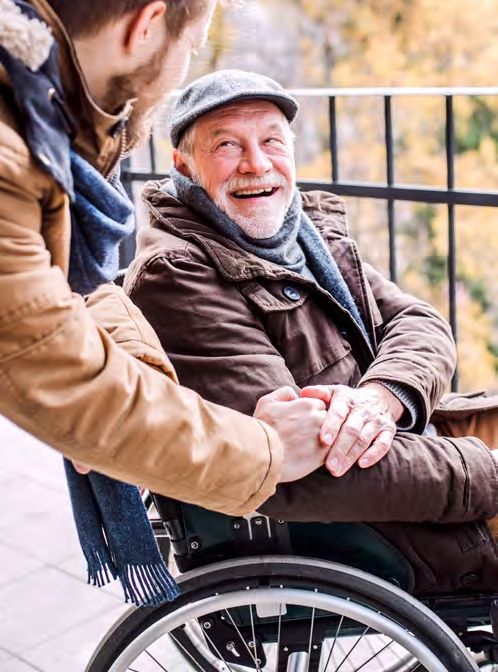
Building a leading organisation
for men’s health
On behalf of the Advisory Board, I am pleased to present the Andrology
Australia 2018 Annual Review. We are defined by how we respond in
challenging times and Andrology Australia is proud to have hit the ground
running in 2018 after a tumultuous few years of funding uncertainty.
The Board has spent much time and reproductive and sexual health. We are
effort rebuilding and strengthening the committed to supporting the developing
organisation to secure its position as men’s health sector to provide advice
a leader in the male health sector for and information to Australian men in a
many years to come. Our vision is far genuinely engaging manner.
from simple; but in our mission to make
it a reality, the promotion of health On behalf of the Board, I thank the
and wellbeing in all aspects of life for Australian Government Department
Australian men and boys is an absolute of Health for its commitment to men’s
priority. On the back of this, we are health in Australia, our staff for their
looking forward to delivering in 2019 dedication and hard work, and our many
many of the exciting new initiatives that talented partners, affiliates and advisors
began in 2018. for their ongoing support.
The Board and staff are focussed on
a culture that has a foundation in an
evidence-based approach to male
Mr David Crawford AO,
Chairman
Spreading the message
This year, we focused on re-establishing ourselves as a respected authority
on male reproductive and sexual health in Australia. I am proud of what
we have achieved and we look to 2019 with renewed energy and focus.
Key highlights :
Men’s Health Week Our Information
In June, we descended on Lismore in Our dedicated team completed an
NSW to promote the ‘It’s Healthy to extensive review and refresh of our suite
Talk’ campaign during Men’s Health of fact sheets, information guides and
Week. We reached one in ten local men clinical summary guides. Over 41,000 men
through a diverse range of grassroots and health professionals across Australia
health promotion activities and local downloaded or ordered resources in 2018,
collaborations. We also partnered with highlighting yet again the pressing need
the Australian Men’s Shed Association, for information on men’s health.
connecting with nearly 1000 Men’s Sheds
to disseminate important men’s health In addition to this, more than 1.3 million
messages. pages were viewed on the Andrology
OUR VISION Our vision
Australia website.
National Men’s Health Strategy
2010-2020 The success of 2018 was made possible
AND MISSION
by researchers, specialists, clinicians
A healthier life for all men and boys. In the second half of 2018, we played and experts from across Australia, our
an integral role in the research dedicated staff and the support of the
and development of the Australian Australian Government Department of
Government Department of Health Health.
Our mission
National Men’s Health Strategy 2020-2030.
We collaborated with some of Australia’s While there is still much work to be done
finest health experts to undertake an in men’s health, we are all the stronger for
evidence review of the National Male the many friends and partners that share
Promote health and wellbeing in all aspects of life by promoting Health policy 2010, thus informing the our vision for all men and boys to have a
an evidence based approach that encompasses andrology and current strategy. The National Men’s healthier life.
associated chronic & related health issues Simon von Saldern, Health Strategy 2020-2030 will be
CEO launched in March 2019.
5
From evidence
to engagement
                                                                                                                  740 RESOURCE
                                                                                                                  ORDERS
                                                                                                                  provided free of charge
                                                                                                                  to health professionals,
                                                                                                                  clinics and organisations
                                                                                                                  (52%), events (35%), and
                                                                                                                  individuals (13%)

Our suite of resources
We maintain a suite of over 53      THE KNOWLEDGE                                                                 7,612 CLINICAL
evidence-based information
resources, including:
                                    TRANSLATION EFFORT                                                            SUMMARY GUIDES
                                                                                                                  requested by health
• 3 5 fact sheets on male                                                                                        professionals
   reproductive and sexual          Making sense of scientific evidence through a range of formats ensures that
   health conditions                a broader audience has access to high-quality and unbiased information.
• 5 information guides on          Knowledge translation is essentially the art of translating research into
   Erectile Dysfunction, Prostate   actionable information accessible to those most affected.
   Enlargement, Male Infertility,
   Androgen Deficiency and          Knowledge translation underpins all of our activities. We examine the
   Testicular Cancer                scientific evidence about men’s health and bring it to a broader audience     9,697
                                    through a range of online and print communication channels. In this way we
• 13 clinical summary guides
                                    ensure that Australians have access to high quality, current and unbiased     FACT SHEETS
    for health professionals
                                    information.                                                                  downloaded from
• 3 accredited online                                                                                            the website
   education modules for health     All of our resources are developed through an extensive process of
   professionals                    analysis, development, expert review and editing. Our Scientific and
                                    Clinical committee (see page 36) and our advisors comprise experts from
Resource highlights
                                    endocrinology, urology and primary health (see page 12). They contribute
what we achieved                    their time and expertise free of charge to review and update existing         Information guides on
in 2018                             resources and support the development of new resources.                       erectile dysfunction, male
• R
   eviewed almost three                                                                                          infertility, androgen deficiency,
  quarters of our fact sheets
                                    We also partner with other health information providers to ensure their
                                    men’s health information is evidence-based and current.                       testicular cancer and prostate
• R
   eviewed our entire range                                                                                      enlargement requested by
  of clinical summary guides        Our information and educational resources continue to remain current and
                                                                                                                  health professionals, clinics and
                                    evidence-based, unbiased and reflect best practice due to the generous pro
• P
   roduced a new fact sheet,                                                                                     individuals
                                    bono assistance we receive from medical specialists, general practitioners,
  ‘Sperm Health & Having a
  Family’                           and allied health professionals from around Australia.
                                                                                                                  18,648
• R
   eleased updated editions of
  our Erectile Dysfunction and                                                                                    HARD COPY
  Testicular Cancer guides, and
  the ‘Your Sperm and How to
  Look After Them’ booklet                                                                                        6,003
                                    "As a urologist, I use many of the Andrology Australia
• U
   pdated the full series of
                                    booklets on a regular basis for patient education and
                                                                                                                  DOWNLOADED
  clinical summary guides
                                    to supplement the consultation discussions."

                                                                   - DAVID ELDER, UROLOGIST (ADELAIDE, SA)

                                                                                                                                               7
We’re not
              Greg Smith, Founder of Men Care Too,                              I’ve been using Andrology Australia resources at our social
                                                                                functions and at events like Men’s Health Week. What I like
              takes the lid off some of the health                              about them is that they are focused specifically on men, and

 invincible
                                                                                are written in a language that blokes can understand and
              issues that affect the 1.2million men                             can relate to.
              around Australia who provide unpaid
              care or support to someone with
              an illness or disability*. Andrology
              Australia supports his work by
              providing resources and information to
              help men look after their own health.

              Many carers don’t see themselves as carers. I’ve been in a
              caring role for twenty years, but I only recognised myself as
              a carer around ten years ago. There can be a bit of stigma for
              men and they typically don’t know what services or supports
              are around.                                                       The GP question checklist is particularly useful. We handed
                                                                                them out to blokes in Men’s Sheds during Men’s Health Week.
              Another big issue is not knowing how to talk about the            Some of these blokes might not have been to the GP for a
              caring role with mates. A lot of carers with a partner or child   while, or don’t believe they need to go to the GP. Looking
              with a disability or illness need to keep working to keep their   at the list might help them think, “Maybe I should go to
              income coming in. Say a guy is in the construction industry       my doctor and ask about some of these things”. The fold
              and he has an autistic child, it can be hard to talk about some   out contact list that you can put in your pocket is perfect
              of the challenges he faces. He might not have the right words     because guys can keep it with them.
              or the confidence to say what he needs to say.
                                                                                I package the resources into brown paper bags. I call them
              Often you are so focused on caring for your loved one that        ‘’blokes’ bags’’ and hand it to men and women who come to
              you put your own needs to the side. Many times you lose           events. Women can help put the information in front of guys.
              connections with your community. At Men Care Too, we              I tell them to hang onto the bags because they never know
              organise social occasions for carers and former carers so         when they’re going to need numbers to call.
              that they can meet others who are in the same situation. For
              example, recently we organised a get together down at the         Service providers and health care professionals need to
              Sydney Cricket Ground. Often, we have a bit of an icebreaker      think outside the box when it comes to engaging with men
              first, then we do an activity, then we move onto the food – and   and carers. It might be that they provide clinics outside
              that’s where we start having more meaningful conversations.       of working hours, or offer quick basic health checks in
                                                                                workplaces, at sporting events and at hardware stores. Many
                                                                                carers might not make an appointment to see their GP during
                                                                                working hours. Services need to gauge where men are at and
                                                                                provide more male-friendly services. I also think GPs should
                                                                                be supported and resourced to play a key role in identifying
                                                                                and supporting carers. They can help carers put the time and
                                                                                effort into their own wellbeing.

                                                                                My message to men is, ‘’We’re not invincible’’. We need to be
                                                                                more mindful of our bodies, particularly as we age. Like a car,
                                                                                our bodies get wear and tear and so it’s important to look
                                                                                after them. There’s no need to be embarrassed or put things
                                                                                off. We need to be proactive and not delay getting help. This is
                                                                                particularly important for men in a caring role – if you’re not
                                                                                well yourself, you can’t properly look after the people you love.

              We get the message out about our activities by connecting
              with Men’s Sheds and other organisations who help promote
              the work we do. Men Care Too helps men in the central coast
              of NSW, but the issues are the same for men across Australia.
              As carers, we need more opportunities for social connection
              and we need more information about how to look after our
              own health.

                                                                                *2015 Survey of Ageing, Disability and Carers Australia
8                                                                                                                                               9
Not only do we review the evidence base, we also directly contribute
     by undertaking original research, publishing best practice reports and
     presenting at professional conferences.

     To help people access new research we publish monthly research reviews to
     our website and contribute quarterly articles to the Australian Doctor Group
     websites. Written by our Advisors, they provide timely research updates for
     health professionals, as well as easily digestible summaries of current and
     relevant research to an increasingly well-informed general public.

      Coaching to support men in making                  Testosterone therapy to prevent type
      informed choices about prostate                    2 diabetes mellitus in at-risk men
      cancer screening: A qualitative study              (T4DM): Design and implementation of
      Patient Education and Counselling Volume: 101      a double-blind randomized controlled
      Ilic, D., Murphy, K., Collins, V. and Holden, C.   trial
      May 2018                                           Diabetes, Obesity and Metabolism

                                                         Wittert, G., Atlantis, E., Allan, C., Bracken, K.,
                                                         Conway, A., Daniel, M., Gebski, V., Grossman, M.,
                                                         Hague, W., Handelsman, D. J., Inder, W., Jenkins, A.,
      Cutting through the confusion around               Keech, A., McLachlan, R., Robledo, K., Stuckey, B.
      changes to PSA testing                             and Yeap, B. B.
      How to Treat – Australian Doctor Group             December 2018
      Vela, I.
      30 May 2018
                                                         GP survey on attitudes and behaviour
                                                         related to men’s preconception health
      Why men need to exercise more                      Kirsten Hogg PhD
                                                         (in collaboration with Your Fertility)
      Medical Observer – Australian Doctor Group
                                                         Study conducted and finished in 2018.
      Smith, B.
                                                         To be published in 2019.
      30 July 2018

                                                         Communications Framework
      Treating chronic testis pain                       Report 2018
      How to Treat – Australian Doctor Group
                                                         Dr Nicolette Hodyll PhD
      Chung, E.
                                                         Study conducted and finished in 2018.
      4 October 2018                                     To be published in 2019.

      How to juggle testosterone therapy
      when supply is short
      How to Treat – Australian Doctor Group
      Watts, A.
      27 November 2018

10                                                                                                           11
Advisors
        Our panel of Advisors provide guidance on the key      Associate Professor Carolyn Allan   Associate Professor Roger Cook   Professor Dragan Ilic              Associate Professor Peter Royce
           issues relating to community and professional       >> Endocrinologist                  >> Psychologist                  >> Medical Education Researcher    >> Urologist
       education, information development and research.
            They ensure the information provided reflects
       current best practice approaches and is supported       Professor John Aitken               Professor David de Kretser AC    Dr Phillip Katelaris               Mr Graeme Southwick OAM
                                 by good quality evidence.     >> Reproductive Biologist           >> Endocrinologist               >> Urologist                       >> Plastic Surgeon
     We would like to acknowledge and thank our Advisors
           for their on-going support and contributions in
                                                               Dr Emma Beardsley                   Professor Peter Ebeling          Dr Darren Katz                     Professor Gary Wittert
        2018, whether they review information or support
       us in their community, their invaluable services are    >> Medical Oncologist               >> Endocrinologist               >> Urologist                       >> Endocrinologist
                                a large part of our success.

                                                               Dr Andrew Beveridge                 Mr David Elder                   Mr Adam Landau                     Dr Ie-Wen Sim
                                                               >> General Practitioner             >> Urologist                     >> Urologist                       >> Endocrinologist

                                                               Dr Gideon Blecher                   Professor Mark Frydenberg        Associate Professor Doug Lording   Professor James Smith
                                                               >> Urologist                        >> Urologist                     >> Endocrinologist                 >> Men’s and Indigenous Health
                                                                                                                                                                          Researcher

                                                               Associate Professor Nick Brook      Professor Frank Gardiner         Dr Michael Lowy
                                                               >> Urologist                        >> Urologist                     >> Sexual Health Physician         Dr Ian Vela
                                                                                                                                                                       >> Urologist

                                                               Dr Geoff Broomhall                  Dr Michael Gillman               Professor Marita McCabe
                                                               >> General Practitioner             >> General Practitioner          >> Health and Ageing Researcher    Dr Anna Watts
                                                                                                                                                                       >> Endocrinologist

                                                               Dr Peter Burke                      Dr Mathis Grossman               Professor Robert McLachlan AM
                                                               >> General Practitioner             >> Endocrinologist               (Andrology Australia Medical       Associate Professor
                                                                                                                                    Director)                          Sanjiva Wijesinha
                                                                                                                                    >> Endocrinologist                 >> General Practitioner
                                                               Professor Suzanne Chambers          Associate Professor Jeremy
                                                               >> Health Psychologist – Oncology   Grummet
                                                                                                   >> Urologist                     Dr Anthony Morrow                  Dr Addie Wootten
                                                                                                                                    >> Consultant Endocrinologist      >> Clinical Psychologist
                                                               Associate Professor Eric Chung
                                                               >> Urologist                        Professor David Handelsman AO
                                                                                                   >> Endocrinologist               Professor Moira O’Bryan
                                                                                                                                    >> Reproductive Biologist
                                                               Professor Judith Clements
                                                               >> Prostate Cancer Researcher       Professor John Hutson AO
                                                                                                   >> Paediatric Surgeon            Emeritus Professor Doreen
                                                                                                                                    Rosenthal
                                                               Professor Ann Conway                                                 >> Sexual Health Researcher
                                                               >> Endocrinologist

12                                                                                                                                                                                                       13
Hormones                                       My clinical practice and                           whereas testicular examinations aren’t that
                                                                                                       routinely done. Conditions like Klinefelter

     and health
                                                                                                       syndrome, which are easy to pick up, can thus
                                                    research focus on the                              go undiagnosed. Men can present at very late
                                                                                                       stage with progressed disease, and we see
                                                    broader health concerns                            complications like fractures that might have
                                                                                                       been avoided with earlier diagnosis.
                                                    of men as impacted by
                                                                                                       For GPs, there can be uncertainty around the
                                                    their hormones.                                    area of male hormone replacement. When
                                                                                                       men approach them requesting testosterone
                                                    When I first started practicing as a consultant    treatment, they need to be able to advise
                                                    at Austin Health in 2006, we didn’t have           them about the pros and cons. The studies

         – Thinking
                                                    any specific andrology services. Since then,       in this area have been small to date, and not
                                                    we’ve built up a dedicated men’s health            always conclusive. I’m pleased to be involved
                                                    clinic, where we now see some thirty to            in a larger study for which we are currently
                                                    fifty men each week. We are interested in all

         about the
                                                                                                       recruiting, called the T4DM. This will look into
                                                    areas of androgen deficiency from organic          whether testosterone treatment combined
                                                    hypogonadism, to age-related decline in            with lifestyle change can prevent type 2
                                                    testosterone, to prostate cancer.                  diabetes in men.

         bigger picture                             My research focuses on the areas of age-
                                                    related drop in testosterone and the health
                                                                                                       I believe one challenge in the men’s health
                                                                                                       area is getting men to see a GP from a
                                                    outcomes on conditions like diabetes, on bone      prophylactic point of view. They need to
                                                    health and in weight management. I’m also          be encouraged to have regular testicular
         Mathis Grossmann is a Professor of         looking at the effect of androgen deprivation      examinations. Men also need education
                                                    on the prostate. Recently for example, I’ve        on how they can control their weight and
         Medicine at The University of Melbourne,   been involved in studies on the effects of         manage cholesterol and blood sugar, which
         a Consultant Endocrinologist with the      testosterone treatment in dieting obese            in turn can affect testosterone levels. For men
                                                    men, and on the bone health of patients with       with prostate cancer, who are living for longer
         Department of Endocrinology at Austin      prostate cancer who are receiving androgen         periods of time, it’s also important that they
                                                    deprivation therapy.                               are getting regular general health checks
         Health and an Andrology Australia                                                             to ensure better quality of life. These are all
         Advisor. He outlines how hormones          Testosterone regulates tissues such                important issues that have bigger health
                                                    as muscles, bones and fat. With men’s              implications for men, and more broadly, affect
         affect men’s health more broadly, and      testosterone declining up to 40% over              our health system as our population ages.
                                                    their lifetime, its effect on bone fractures,
         the role that organisations such as        cardiovascular health and diabetes is of
         Andrology Australia play in encouraging    interest and has broader health and economic
                                                    burden implications.
         men to get help early.
                                                    As an advisor to Andrology Australia, I’ve
                                                    been regularly approached to comment
                                                    on particular issues around my areas of             Mathis Grossmann
                                                    expertise. In 2018, I presented 'Cardiovascular     Professor of Medicine at
                                                    risk and testosterone: Fact vs. fiction' at GP      The University of Melbourne
                                                    HealthEd conferences in Melbourne, Adelaide
                                                    and Sydney. It was great to be able to reach
                                                    such a huge audience, and the feedback has
                                                    been favourable.

                                                    I think it’s important for organisations such as
                                                    Andrology Australia to raise awareness around
                                                    men’s health issues. Commonly, men avoid
                                                    seeing the doctor, and often see their body
                                                    as a machine that will keep working – they
                                                    don’t need to fix it. Women for example might
14                                                  get a regular pelvic examination by their GP,                                                     15
Supporting                                                                                                  “Very useful resources and learning
                                                                                                            activities! Improves my clinical

  Primary
                                                                                                            knowledge and confidence in
                                                                                                            managing patients’ health and
                                                                                                            (works) towards better outcomes.”

Healthcare
                                                                                                            “This was an excellent ALM!
                                                                                                            Fantastic for a new female GP who
                                                                                                            does not see many older men, and
                                                                                                            particularly not about their sexual
                                                                                                            health issues. I am now much more
                                                                                                            confident in my knowledge and
The future of men’s health                                                                                  ability to explore and manage all
                                                                                                            conditions discussed.”
We’ve been passionate about supporting men’s health since our inception
in 2001. Our vision of ‘a healthier life for all men and boys’ is backed by
our commitment to increasing reproductive and sexual health knowledge
for patients and their families. Using a broad range of strategies, we’ve
disseminated the most current evidence-based information and resources
in a multitude of accessible formats.

 Professional education is an Andrology Australia      Our commitment to sharing evidence-based
 strategic keystone. As public interest in men’s       information to ensure a robust health sector for
 health increases, healthcare services and             men and boys was also evident through our input
 professionals need the knowledge and skills           into Medical Benefit Scheme reviews, and the
 to meet men’s information needs. Our training         authoring of specific health strategies on issues
 modules for GP’s, Health Educators, and Practice      that affect men and boys.
 Nurses work to support this.
                                                       I would like to take this opportunity to thank our
 In 2018 we were pleased to see a year-on-             expert advisors who invest their valuable time
 year increase of 41% in health professionals          and expertise so that we can continue to improve
 completing our training modules, with excellent       men’s health both now and in the future.
 feedback from a range of GPs, specialists
 and nurses. Over 90% of participants stated that
 their learning needs had been ‘entirely met’
 and 71% committed to reviewing their current
 clinical practice.

 In addition to health professional training, we
 presented a range of men’s health topics at
 25 conferences across Australia. In this way,
 we directly engaged with over 3,500 health
 professionals, most of whom were GPs.

 As part of our commitment ensuring Australian
 men have evidence-based, easy-to-understand
 information, we have a suite of over 53 digital and
 hard copy resources. With the help of our expert
 advisors, we reviewed nearly the entirety of our
 resources, from fact sheets to clinical summary
 guides, and produced a new fact sheet, ‘Sperm           Professor Robert McLachlan AM
 Health & Having a Family’.                              Andrology Australia
                                                         Medical Director

16                                                                                                                                                17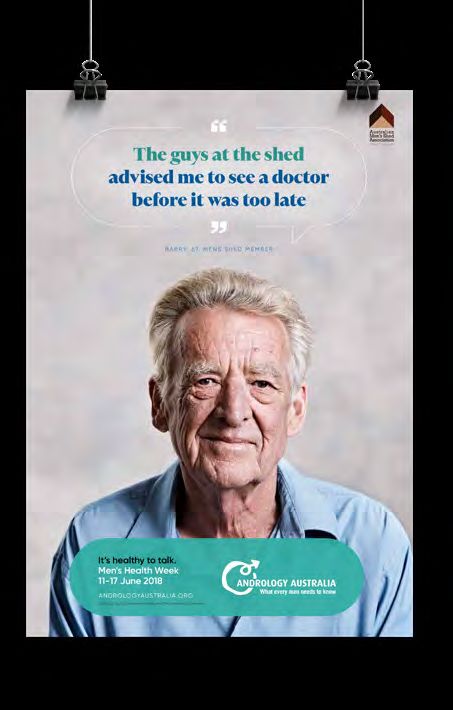
En O
Developing do ur
THE WORKFORCE cri 20
no 18
IN MEN’S HEALTH
log
ist
As a part of our role to develop the medical workforce in men’s health, we support two
s
Endocrinologists each year to undertake comprehensive training in male reproductive health.
Trainees undertake a research project and reviews in andrology, and gain valuable exposure to
leading endocrinologists, clinical research and practice in male reproductive health. In turn, they
support us by presenting on our behalf at professional conferences, assisting in the review of our
resource suite, and contributing articles to professional publications.
Our 2018 Endocrinologists were Dr Anna Watts and Dr Nandini Shankara Narayana.
I first became interested in reproductive Along with the opportunities given to me I did my undergraduate medical training in India international meetings, which I might not have
endocrinology when I heard a lecture in through the training, I’ve been able to give and junior medical officer training in the U.K., otherwise had.
2012 by Endocrinologist Associate Professor back. In 2018, I presented at the Melbourne before moving to Australia where I attained
I’ve been involved with Andrology Australia since
Carolyn Allan. She was so passionate and GPCE on testosterone treatment in ageing the F.R.A.C.P, specialising in endocrinology. I’m
starting my PhD in 2016. The organisation is a
knowledgeable and I thought, ‘’That’s what I males, where I spoke about androgen therapy, now completing myPhD at ANZAC Research
fantastic resource for health care professionals
want to do!’’ Later, I heard Andrology Australia’s and where we are with it now. People were very Institute at the University of Sydney under
and patients. I use Andrology Australia
Medical Director, Professor Robert McLachlan engaged and it gave a good indication of what the supervision of Professor Handelsman. My
resources in my clinical practice, particularly
speak at a meeting in Sydney and that GP’s concerns were, and where the gaps might Dr Nandini thesis work falls under the broader umbrella of
Dr Anna Watts the orchidometer, which is a simple instrument
confirmed it – I was hooked. be. They were wanting reassurance so as to be andrology and reproductive endocrinology.
able take a strong clinical position on this issue.
Shankara that can estimate the size of the testes. We took
As part of this traineeship, I had the opportunity Narayana Reproductive endocrinology is a branch of this to the GP conference, and they loved it as a
In addition to the talks, I’ve also been involved
to do endocrinology clinical training under medicine that explores the role of male and tool. I have found the clinical summary guides
in Andrology Australia research reviews and
Professor McLachlan’s supervision. It’s very female hormones in reproduction. In women and booklets very useful in day to day clinical
prepared articles on testosterone replacement
rare to have opportunities to be able to this involves hormones associated with puberty, andrology practice.
therapies for GPs.
look at reproductive endocrinology in all its menstruation, pregnancy and menopause; in
I’m glad to be able to contribute to Andrology
guises, including male and female infertility, I’m very interested in working in andrology men it looks at puberty, testosterone and testes-
Australia authoring papers on their behalf, and
transgender medicine, and androgen down the track. This training opportunity related fertility issues in reproduction.
to present at conferences such as the Sydney
deprivation therapy in prostate cancer has given me invaluable exposure to other
During my PhD years, I’ve been involved GPCE in 2018. There, I spoke on the physiology of
treatment. I sat with Professor McLachlan clinicians working in the area, experience in
in various research projects, including co- hypogonadism, its clinical features, and on when
in his private rooms and I can tell you that a presenting and public speaking, and meeting
investigating the effect of non-prescribed to treat, and when not to treat. My presentation
year of listening to his stories and anecdotes, people working in public health and fertility.
testosterone use on male reproductive and provided an overview with case examples. The
and learning from his extensive clinical and It’s been amazing for me both personally
cardiac functions. Recently I’ve reported talk was interactive and very well received.
research experience, has been invaluable. It’s and professionally.
on sperm cryostorage in men undergoing
really opened my eyes up to how to assess I have had patients asking me in my clinic
treatments such as chemo/radiotherapy that
a man who is presenting with infertility, or as to how to examine their testes. We need
can impair fertility, feasibility of cryostorage
with hypogonadism and the corresponding widely-available patient education on how to
especially in adolescents, and regional
treatment and monitoring options. Without self-examine. Men aren’t usually forthcoming in
availability of this service in NSW. I have also
this sort of hands on training, I would unlikely asking for help. This is still a taboo area. There
reported on progesterone (a female hormone)
be exposed to such cases. needs to be more information out there in the
assay, a study comparing two laboratory assay
public sphere about this issue.
As part of the training, I also had a chance to methods. My other projects in progress include
spend a day at the Monash IVF embryology in genetics of congenital hypogonadotrophic I’m very excited about continuing my research
laboratory with embryologist, Sandra Holden. hypogonadism, disorders of sexual in andrology areas, particularly genetics, as this
There I observed semen analysis and egg differentiation, safety of androgen use in women area has been little explored. I would like also
collection, as well as embryo development and and use of androgens in IVF. like to continue supporting Andrology Australia
transfer. My experiences over the past year as well as grow my work in a clinical capacity. I
As part of the opportunity with Andrology
have really helped me explore the andrology feel really at home in this space.
Australia, I was able to get a very ‘’real world’’
aspect of infertility for couples.
experience by observing practices of Professor
I’ve now completed my training in Handelsman, Dr. Ann Conway and Dr.Veena
endocrinology, and am working in a public Jayadev. It’s also informed my PhD by supporting
outpatient clinic at Ballarat Hospital as well as my research and helping me ground it in
at the Monash Health Gender Clinic. practice. It will give me the opportunity to
present to learned audiences at national and
18 19On going
education
When health professionals were surveyed
after completing our ALMS, we found that:
for health professionals
Professional education has always Education
been an integral part of our work. As
Currently, we provide three interactive online
community awareness of men’s health Active Learning Modules (ALMs), accredited
increases there may be a higher demand by the Royal Australian College of General
for appropriate health services, and GPs Practitioners (RACGP) and Australian College of 87% reported that 80% believed that 72% felt that their 71% committed 63% committed
need to be equipped with the necessary Rural and Remote Medicine (ACRRM). These help their learning the content was knowledge and to reviewing their to implementing
skills to meet this demand. Our GP health professionals to diagnose and manage needs were met relevant to their skill level had current clinical the recommended
various male reproductive and sexual health practice increased practice changes in their
education initiatives aim to change practice
conditions.
medical practice, leading to improved
patient care in male reproductive health. The ALMs offer a straightforward way for
healthcare professionals to complete learning
activities at their own convenience, which is
particularly valuable to rural and remote GPs
who may have difficulty accessing education
about these topics. We also saw a year-on-year increase of 41%
in health professionals completing our
training modules.
Course title Course description Course Type RACGP ACRRM
QI&CPD Points PDP Points
Young Men's Four case studies Online ALM 40 Category 30 PRPD “I am now much more aware that there is “Excellent format. Well thought out case
Health: addressing male points a need for Men’s Health Promotion - even scenarios. Good repetition to reinforce
(6 hours) though some male community members key points with revision questions
Reproductive infertility, testicular
health disorders in cancer, Klinefelter's may be reluctant, my job is to encourage scattered throughout cases. Well done!”
young adult males syndrome, premature them to start putting their health as an
ejaculation and important part of their daily living.” -
prostatitis.
- “Very helpful. Wish I had done this
earlier in my training.”
Older Men's Three case studies Online ALM 40 Category 30 PRPD “An excellent ALM, I hope to see more
Health: addressing androgen (6 hours) points ALMs developed through Andrology -
Reproductive deficiency in the Australia.”
health disorders in older male, erectile “These modules are terrific, very well
middle-aged and dysfunction, reproductive - set-out and clear, with realistic case
older adult males disorders and associated scenarios and progression. Summaries
co-morbid disease and “Excellent learning activity, I will for GPs are also a fantastic resource -
prostate disease. recommend it to colleagues.” thank you!”
Engaging Provides knowledge, Online ALM 40 Category 30 PRPD
- -
Aboriginal and skills and communication (6 hours) points “Amazing free resource - this information “This was an excellent course - I should
Torres Strait strategies to assist is essential to GP practice. Thank you for have done this ages ago! Overall I felt
Islander males in GPs and other health providing such a learning opportunity!” this activity extremely helpful to my
different primary professionals to better practice.”
health care engage Aboriginal and
settings Torres Strait Islander men
in the primary health care
20 212018
Presentations:
Invited Speaker Endocrine Society of Australia (ESA) HealthEd GP Education Day GPCE
MSD Fertility Update Location: Adelaide, SA Location: Adelaide, SA Location: Melbourne, Vic
Location: Brisbane, QLD Date: 19 August 2018 Date: 15 September 2018 Date: 9 – 11 November 2018
Date: 1 March 2018 Presentation: Senior plenary: planned paternity: Presentation: Cardiovascular risk and Presentation: Androgen therapy – where are
Presentation: The other half of the equation – Fatherhood when – and only when – desired testosterone: Fact vs. fiction we now?
Male factor fertility update
Endocrine Society of Australia (ESA) HealthEd GP Education Day National Men’s Health Gathering (Australian
8th Emirates Diabetes and Endocrine Location: Adelaide, SA Location: Melbourne, Vic Men’s Health Forum)
Congress Date: 19 August 2018 Date: 20 October 2018 Location: Sydney, NSW
Location: Dubai Presentation: ESA Workshop: Male infertility: Presentation: Cardiovascular risk and Date: 12 – 14 November 2018
Date: 3 March 2018 Evaluation and management overview testosterone: Fact vs. fiction Presentation: How do men look after their
Presentation: Practical guide on prescribing health - successfully or not
testosterone Society for Reproductive Biology (SRB) HealthEd GP Education Day
Presentation: Testosterone: To treat or not to Location: Adelaide, SA Location: Brisbane, QLD Corporate Presentation
treat. Session 13: Endocrine Location:
Date: 20 August 2018 Date: 27 October 2018
Presentation: Significant advances in male Presentation: Cardiovascular risk and Date: 30 November 2018
Public Health Prevention Conference (Public reproduction…an amazing 50 years testosterone: Fact vs. fiction Presentation: Testicular Cancer and Prostate
Health Association of Australia) Cancer
Location: Sydney, NSW
HealthEd GP Education Day National Testosterone Leadership Summit
Date: 2 – 4 May 2018
Location: Sydney, NSW Location: Melbourne, Vic
Presentation: Working in partnership: insights
Date: 25 August 2018 Date: 28 October 2018
from leading reproductive health organisations
Presentation: Cardiovascular risk and Presentation: Endocrinology of Klinefelter’s
Presentation: Coaching to support informed
testosterone: Fact vs. fiction syndrome
choices about prostate cancer screening: a
qualitative study
AVN National Nursing Forum ‘Threatened fertility in pre-pubertal males’
Location: Gold Coast, QLD (Australasian Paediatric Endocrine Group
GPCE
education dinner)
Location: Sydney, NSW Date: 28 August 2018
Location: Brisbane, QLD
Date: 18 – 20 May 2018 Presentation: Sexual health and diabetes
Date: 31 October 2018
Presentation: Vasectomy in General Practice
Presentation: Testicular development and
Presentation: Androgen therapy – where are myPHN Conference management of related disorders
we now? Location: Mackay, QLD
Presentation: Androgen therapy – where are Date: 1 – 2 September 2018
we now? HealthEd GP Education Day
Presentation: Ten myths and misconceptions in Location: Perth, WA
male reproductive health
Date: 3 November 2018
Monash Health and Wellbeing
Presentation: Cardiovascular risk and
Location: Melbourne, Vic Scientists in Reproductive Technology SIRT testosterone: Fact vs. fiction
Date: June 2019 Location: Melbourne, Vic
Presentation: Prostate cancer screening Date: 8 September 2018
Presentation: Fertility outcomes for ICSI-
conceived males
22 23Engaging
with the community 7,500 MHW promotional
e-newsletters sent
543,000 people reached
Our mission is to enhance the reproductive health of males across the entire country. via social media
While we try to reach Australian men through the mainstream and social media,
when it comes to health there is often no substitute for talking with men in person.
2,621 postcards sent to
individuals, PHN's, local
Men’s Health Week 2018 governments and libraries
We have long supported International Men’s
Health Week (MHW) and since 2005, using
MHW as a driver for men’s health promotion
850,000+ people reached
and education across Australia. via 32 print and online
news mentions and 2 ABC
MHW aims to increase the awareness of
men’s health and encourage Government radio interviews
and institutions to develop health policies
and services that meet men’s specific health
needs. The week also provides us with an 300+ people
opportunity to support the organisations participated in live
already servicing men’s health needs by
providing our resources for events and ‘toolbox’ talks in Lismore
presentations at a grassroots level.
For MHW 2018, we developed a targeted 42,000 MHW
campaign for the NSW town of Lismore. The
‘whole of community’ approach allowed
brochures distributed
the campaign to reach one in ten Lismore
men via a diverse range of local activities
targeting workplaces, sporting events, gyms “The promotional material was very 4,000 MHW
and other public spaces. informative and the posters helped posters displayed
We also partnered with the Australian Men’s create a visual display within the library.
Shed Association to provide a targeted The handouts were eye catching and well
promotion to Men’s Sheds across Australia
4,000 Commonwealth
received by the general public.”
(nearly 1,000 Sheds), including a direct mail Department of Health staff
out of men’s health information. received MHW messages
Feedback from organisers of MHW activities “The MHW resources helped spread a
indicated that our resources were rated message to men in my local community
highly, with many organisers commending and encourage healthy conversations -
750 online downloads
the resources for their quality and usefulness
Thank you!” of MHW resource kits via
in promoting men’s health messages.
the Andrology Australia
website
“Good initiative for promoting men's
health in GP setting.”
“The men appreciated them, stated there
is no information for them usually.”
24 25From smoko breaks
to GP visits
Andrology Australia talks prompt Lismore men to act on their health
Wayne Randell is the Production Manager at You hear about these blokes that just drop dead on
Lismore’s Hurford Hardwood, where he manages the spot. If I hadn’t gone to my doctor at the time that
over 40 staff and oversees product production. I did, I might have been one of those blokes. While I’m
During Men's Health Week, Andrology Australia ran
men’s health talks at his workplace during workers’
now waiting on a heart operation, at least I’m still
walking, still living, still enjoying life.
‘’If you’ve got a bit of a
‘smoko’ break. Along with other speakers, Wayne
shared his story about his health concerns. As a When Andrology Australia came to speak to us over a health issue, just get it
result of the talks, several of his co-workers visited few smoko breaks, my boss asked me to be involved.
their GP and are being monitored for conditions that I was happy to talk about my own experience and checked out so you can
might have been left untreated. encourage my co-workers to get help if they had a
problem. Andrology Australia talked to us about
the mechanisms for seeking help, and that it was
find out what’s causing
okay to get help – it didn’t make you any less manly.
We put posters around the site. It certainly made
it. That way you have
blokes more aware, and a few of them went and got
medical checks afterwards. And as it happened, they
peace of mind.”
did have issues, and they had to have treatment for
them. Their wives had been nagging at them to go
to a doctor – but it took other blokes talking with
them for them to act. They’re on medication now, and
they’re still here, so that’s a win for us. If talks like this
prompt even one person to get help, it’s a winner for
everyone concerned.
We're pretty good at ignoring things, us men.
Women are better at getting to a doctor. Us
blokes have got a “She’ll be right mate’’ type of
During Men’s Health Week a few years ago, I was attitude, thinking that what’s wrong will go away.
listening to radio promotions as I drove to work each It’s especially true for men over 50. But what I’ve
morning, and on my way home. I’m not the sort of realised through my experience is that we’re not
person who has major illnesses– maybe it’s all the indestructible. You can’t be too careful with blood
beer I drink! – so I hadn’t been to a doctor for a fair pressure and heart issues – sometimes there are
few years. But I’d had some health concerns for a long no symptoms. It’s pretty hard to function without a
time. The promotion made me realise that what I was heart – you can do without a finger or a toe, but you
experiencing wasn’t normal. By the end of that week don’t want to mess with heart issues. It’s like a like
thought, ‘’It’s time I got myself checked out.” taking the petrol tank out of the engine.
When I got to the doctor, it turned out I had blood I have a pretty close relationship with my workers,
pressure, which I wasn’t aware of. After tests, I found and I want to make sure that they’re healthy. Now I
out I also had heart issues. always tell them, ‘’If you’ve got a bit of a health issue,
just get it checked out so you can find out what’s
causing it. That way you have peace of mind.”
27Communicating
with our audiences
In 2011 we launched our social media presence with the aim of reaching wider
audiences with health awareness messages and to direct more users to the
quality, evidence-based resources on our website.
Since then, our social media presence has steadily increased in followership
with at least 50% of our audience on each platform being male.
There have been increasing levels of engagement with our newsletter, with a
total of 266,152 newsletters disseminated via post and email.
W e b s i t e u s e s tat i s t i c s
Over 220,000
The website remains a popular source of e-newsletters sent ,
information and the year-on-year increase in with a 22.6% open rate
users and page views highlights the importance of
making evidence-based men’s health information Facebook content reached
accessible online. over 20,200 people 61% male
In 2018 we saw an increase in users to almost - 44% 25-35 years old
830,000 (uplift of 13%), with the health condition
Tweets reached over 92,000
topic webpages viewed over 530,000 times.
50% male
YouTube videos viewed
34,100 times
- 73% male
- 87% 18-24 years old
We’re passionate about user experience - Most viewed video
and increasing health information accessibility. ‘What is Klinefelter’s syndrome?’
Accordingly, we’re redeveloping our website to
better reach men with clear and engaging messages. Vimeo videos viewed
3,688 times
OUR NEW WEBSITE WILL BE LAUNCHED IN 2019 46,152 print newsletters
disseminated
29Who we work with:
COLLABORATIONS REFERENCE
AND PARTNERSHIPS GROUPS
Strategic partnerships are important for us to extend our reach and build on Our reference groups provide valuable
complementary work being done by other organisations. This approach avoids feedback, helping guide and direct the
duplication of effort and ensures the best quality information is made available to development, implementation and
health professionals and the public. Such partnerships enhance knowledge sharing review of our programs and activities.
and build capacity for the improvement of men’s health across Australia.
Australian Men’s Health Forum (AMHF) by speaking at professional conferences, assisting Primary Health Care Nurse Reference General Practitioner Reference Group Aboriginal and Torres Strait Islander
In 2018, AMHF delivered the National Men’s Health in the review of our resource suite, and contributing Group (PHCNRG) (GPRG) Reference Group
Gathering conference. To do this they partnered with articles to professional publications. Each year this
organisations and stakeholders such as those of us who arrangement results in another trained endocrinologist, Key objectives: Key objectives: Key objectives:
work in men’s health. providing expertise in male reproductive health. - Support the review and development - Support the review and development - Inform the areas of priority for
of training activities for primary of training activities for GPs program and activity development to
We also worked with AMHF for the benefit and success Jean Hailes – For Women’s Health healthcare nurses - Act as key advocates of men’s health improve the education and awareness
of the 2018 Men’s Health Week campaign. - Act as key advocates of men’s health in the GP sector by promoting training of Aboriginal and Torres Strait Islander
We have had a long-standing and valuable partnership
in the nursing sector by promoting opportunities and available resources male health
with Jean Hailes for Women’s Health. This is based on
training opportunities and available - Support the implementation of male
a shared commitment to translating and developing
resources health campaigns in general practice Dr Mick Adams
Australian Men’s Shed Association evidence-based health information. In 2018, we worked
- Support the implementation of male Senior Research Fellow, Kurongkurl
collaboratively on the National Men’s Health Strategy
Our partnership the Australian Men’s Shed Association health campaigns in primary care Dr Geoff Broomhall Katitjin – Edith Cowan University
2020 – 2030 and the National Women’s Health Strategy
begun in 2008. Over the past decade it has allowed us to General Practitioner
2020 – 2030.
connect with the thousands of Australian men engaged Ms Dell Lovett Mr Karl Briscoe
in the Men’s Shed network. Primary Health Care Nurse Dr Peter Burke CEO, Natsihwah (ACT)
General Practitioner
In 2018, we continued to work together to develop and Men’s Health Information and Research Centre Ms Ruth Mursa Mr Jack Bulman
provide key health messages, using the Men’s Health (MHIRC) – Western Sydney University Nurse Practitioner Dr Rob King CEO, Mibbinbah Men’s Group (QLD)
Week campaign as a key promotional platform. General Practitioner & Associate Lecturer, University of
Since its inception in 1998 MHIRC has promoted Professor Tony O’Brien (chair) Technology Sydney
boy’s and men’s health, working from a strong social School of Nursing and Midwifery, The Dr Andrew Smith
determinants of health perspective. This has involved University of Newcastle General Practitioner Mr Craig Dukes (retired June 2018)
ANZAC Research Institute launching and running Men’s Health Week for the last CEO, Australian Indigenous Doctors’
11 years, in which we have been a strong partner. Ms Julie Towmey Associate Professor Alan Wright Association
ANZAC Research Institute provided professional
Primary Health Care Nurse (chair)
training in andrology through our annual
General Practitioner Dr Keith Gleeson
‘Endocrinologist in Training’ opportunity. This
Your Fertility General Practitioner & Andrology
invaluable partnership has resulted in numerous
Australia Advisory Board Director
trained endocrinologists, which has increased the
workforce capacity in the field of andrology. Trainees As part of the Fertility Coalition, we make a significant
contribution to Your Fertility. The importance of men’s Associate Professor Chris Lawrence
supported us by speaking at professional conferences,
health for couples planning to have a baby is not widely University of Technology Sydney
assisting in the review of our resource suite, and
contributing articles to professional publications. promoted and the focus on men in the activities of
Your Fertility is a unique and defining feature of the Dr Kristopher Rallah-Baker (Nov 2018)
Hudson Institute of Medical Research program. In 2018, we worked closely with Your Fertility Chair, Australian Indigenous Doctors’
to develop and execute the GP Needs Analysis Survey Association
The Hudson Institute of Medical Research offer an and the ‘Sperm Health & Having a Family’ fact sheet, as
annual ‘Endocrinologist in Training’ opportunity that well as collaboratively promoting the annual Fertility Associate Professor Mark Wenitong
provides endocrinology specialist trainees with skills Week campaign. (chair)
in the field of andrology. These specialists support us Public Health Medical Advisor,
Apunipima – Cape York Health Council
(QLD)
30 31Who we are
Advisory Board
Mr David Crawford AO Professor David de Kretser AC Ms Chris Enright Professor RA ‘Frank’ Gardiner AM Associate Professor Doug Lording Dr Keith Gleeson
Role: Chairman Role: Director Emeritus Role: Advisory Board Director Role: Advisory Board Director Role: Advisory Board Director Role: Advisory Board Director
Appointed: 2013 Appointed: 2011 Appointed: 2017 Appointed: 2005 Appointed: 2000 Appointed: 2017
Background and experience: David Background and experience: David Background and experience: Chris Background and experience: Background and experience: Background and experience: Keith
has extensive experience in roles is a passionate advocate for the is a public health professional who Frank is a renowned urologist and Doug is an Endocrinologist and is a Biripi/Daingutti GP and works in
of Chairman, Director and Partner. need to undertake preventative works to address issues of health academic in the field of prostate Andrologist in private practice at private practice at Biripi Aboriginal
He was awarded Officer of the action to improve male health inequity, with a particular interest cancer. He has been instrumental Cabrini Hospital in Melbourne, Medical Corporation in Taree,
Order of Australia (AO) in 2009 in and through this belief, founded in innovating the approach of in supporting the development Victoria. He has a 35-year interest in NSW. In 2015, Keith co-published
acknowledgement of his services to Andrology Australia in 2000. David men’s health for better individual of a strong research culture in sexual medicine and testosterone a monograph titled “Engaging
business, sport and the community served as the inaugural Director outcomes. Chris holds a Master prostate cancer in Australia and in use in men, and is a national expert Aboriginal and Torres Strait Islander
through contributions to arts and from 2000 to 2006, where he then of Health and Human Services developing collaborative research in erectile dysfunction. Communities in Prostate Cancer”
educational organisations. went on to hold the position of the Management and an MBA from programs between clinicians, which was released by the Prostate
28th Governor of Victoria until 2011. Deakin University in Melbourne. molecular and behavioural Cancer Foundation of Australia.
He was awarded Companion of the She has fifteen years’ experience scientists. Frank has over 130 peer-
Other roles: Chairman of Lend Order of Australia (AC) in 2006. in delivering major public health reviewed manuscripts in Urology
Lease Corporation Limited (resigned campaigns and drove Cancer and Urological Research, and in 2012 Other roles: Member of the
November 2018), Chairman of South Council Victoria’s men’s cancer was awarded Member of the Order General Practice Training Advisory
32, Chairman of Australian Airports David now continues to serve on the prevention work for many years. of Australia (AM). Committee, member of the Regional
Corporation Limited. Advisory Board and Management Vocational Training Scheme
Group of Andrology Australia. – Indigenous Health Training
Chris has been based in the not for His academic base continues to be Reference Group, member of the
Previously, Partner and National profit sector since 2005 and aligns at the Centre for Clinical Research General Practice Rural Incentive
Chairman of KPMG, Director of Other roles: Professor of Anatomy with a social model of health. She at the Royal Brisbane and Women’s Committee, member of the
BHP Billiton Limited, Chairman of at Monash University, founding has co-authored papers published Hospital. Andrology Australia Aboriginal and
Foster’s Group Limited, Chairman of Director of the Monash Institute of in the Australian Journal of Public Torres Strait Islander Reference
National Foods Limited, Chairman Medical Research, Associate Dean Health and Australian Family Group.
of The Australian Ballet, Director of for Biotechnology Development, Physician. Other roles: Adjunct Professor at
Westpac Banking Corporation. Executive Council President of the Edith Cowan University, WA.
International Society of Andrology, Previously, Chair of the Indigenous
senior Fellow of endocrinology at Other roles: Head of Education & General Practice of Registrars
the University of Washington, 28th Knowledge Exchange at Jean Hailes Network, advisory board member
Governor of Victoria. for Women’s Health of the former Hunter New England
Area Health Advisory Committee,
advisory board member of General
Practice Rural Incentive Program,
advisory board member of the
National Aboriginal Faculty of the
RACGP, board of the AIDA.
32 33Management
group
members
Associate Professor Kevin Professor David Handelsman AO Professor Robert McLachlan AM Mr Simon von Saldern Professor David de Kretser AC
McGeechan Role: Advisory Board Director Role: Medical Director Role: Director & CEO See ‘Advisory Board’.
Role: Advisory Board Director Appointed: 2000 Appointed: 2000 Appointed: 2017
Appointed: 2017
Associate Professor Doug Lording
Background and experience: Background and experience: Background and experience: Background and experience: See ‘Advisory Board’.
Kevin is a Senior Lecturer in David is Australia’s first Professor Rob has been an integral part Simon’s diverse experience ranges
Biostatistics at the School of Public of Reproductive Endocrinology of Andrology Australia since its from strategy and planning to
Health, University of Sydney and and Andrology and has long held inception in 2000 and has held communication and stakeholder
Professor Robert McLachlan AM (Andrology Australia
an active researcher in sexual an interest in all aspects of male the role of Medical Director since engagement, sales and marketing,
2006, as well as Acting CEO from financial risk and compliance Medical Director)
and reproductive health. He is reproductive health, medicine and
currently involved in funded biology. August 2015 to September 2017. management. See ‘Advisory Board’.
projects on the use of long-acting Rob specialise in the area of male
reversible contraception and issues reproductive medicine and has
Other roles: Director of the made significant contributions Previously, General Manager of
surrounding diagnosis. In 2013 Professor Gail Risbridger (Resigned 2018)
ANZAC Research Institute, Head to the research in endocrinology, Development and Business Services
he oversaw the production of the
of Department of Andrology at infertility and andrology. at Musculoskeletal Australia Gail is Deputy Dean (Special Projects) and Head, Prostate and Breast
statistical report ‘Reproductive and
Concord Hospital. (formerly, MOVE – Muscle, Bone and Cancer research program in the Department of Anatomy and
Sexual Health in Australia’.
Joint Health). Development Biology at Monash University.
In 2016, he was made a Member
Other roles: Consultant Statistician of the Order of Australia for
for Family Planning NSW. services to medicine in the field of
endocrinology, particularly in men’s
Associate Professor Peter Royce (Resigned 2018)
reproductive health, and to medical Peter is the Directory of Urology and Senior Consultant Urologic
research. Surgeon at the Alfred Hospital, Senior Consultant Urologic Surgeon
at Cabrini Hospital, and Adjunct Clinical Associate Professor for the
Department of Surgery at Monash University.
Other roles: NHMRC Principal
Research Fellow at the Hudson
Institute of Medical Research,
Deputy Director of Endocrinology Associate Professor Ben Smith
at the Monash Medical Centre, Ben holds over 20 years’ experience in the design and evaluation
consultant to the World Health of disease prevention and health promotion strategies, and has
Organisation on male infertility an extensive history of research into health behaviours and their
regulation. determinants. He is based at the School of Public Health and
Preventative Medicine at Monash University.
Previously, former president of the
Fertility Society of Australia, former
Secretary of the International Mr Simon von Saldern
Society of Andrology. See ‘Advisory Board’.
35You can also read


