FABIAN REVIEW - Fabian Society
←
→
Page content transcription
If your browser does not render page correctly, please read the page content below
FABIAN REVIEW
                  The quarterly magazine of the Fabian Society
                          Spring 2021 / fabians.org.uk / £4.95

             NITED VOICE
            U

   A modern relationship: Angela Rayner MP, Christopher Massey, Gloria Mills,
Kate Dearden and more on the unions and Labour p10 / Scottish Labour’s new leader
    Anas Sarwar on the fight ahead p17 / Sadiq Khan on his capital values p20
Contents

                                               FABIAN REVIEW
                                                    Volume 133—No.1

                                                                        Leader
                                         Andrew Harrop           4      Making the case

                                                                        Shortcuts
                                        Paula Surridge           5      Never say never
                                     Kehinde Andrews             5      Blood money
                                  Stephen Kinnock MP             6      Power grab
                                          Heidi Chow             7      Small doses
                                        Rupa Huq MP              8      Sound of the suburbs
                                   Uma Kambhampati               9      Aiming high

                                                      Cover story
                           Christopher Massey 10 Make or break
          Marley Morris, Shelly Asquith, Gloria 13–15 Unity is strength
            Mills, David Coats & Kate Dearden
                            Angela Rayner MP 16 One voice

                                                                        Interviews
                                          Vanesha Singh         17      Dividing Lines
                                            Sadiq Khan          20      Q&A

                                                                        Essay
                                              Marc Stears       22      Local heroes

                                                                        Feature
                                            Bryan Gould         25      People person
                                             Ruth Lister        26      Poor lore
                                          Rayhan Haque          28      Leaving no-one behind
                                           Asheem Singh         30      The road from ruin

                                                                        Books
                                        Angharad Smith          32      Bold move

                                                                        Fabian Society section
                                          Martin Edobor         33      Rising to the challenge
                                                                34      Fabian members’ survey
                                                                35      Listings & quiz

fabian review                                              fabian society              Events and Membership             Research
Fabian Review is the quarterly journal of the Fabian       61 Petty France             Events and marketing manager,     Research director, Luke Raikes
Society. Like all publications of the Fabian Society,      London SW1H 9EU             Katie Curtis                      Researcher, Josh Abey
it represents not the collective view of the society,      020 7227 4900 (main)        Membership officer,               Researcher, Ben Cooper
but only the views of the individual writers. The          020 7976 7153 (fax)         Shehana Udat
responsibility of the society is limited to approving      info@fabians.org.uk                                           Finance and Operations
its publications as worthy of consideration within         www.fabians.org.uk          Editorial                         Finance and operations
the Labour movement.                                                                   Editorial director, Kate Murray   manager, John Rafferty
                                                           General secretary,          Assistant editor, Vanesha Singh
Editor, Kate Murray
                                                           Andrew Harrop                                                 Scotland
Cover illustration, John Vogl
                                                                                                                         National manager,
Printed by DG3, London E14 9TE
                                                                                                                         Katherine Sangster
Design designbysoapbox.com
ISSN 1356 1812
info@fabians.org.uk

                                                        3 / Volume 133—No. 1
Leader

                                                                                                                                © John Vogl
                                      Making the case
                     Labour faces a big test in next month’s elections and needs to set
                   out its vision for the months and years beyond, writes Andrew Harrop

A
         year has passed      since Keir Starmer’s election           Labour has spent a year starting to deal with its nega-
          as Labour leader and the party is preparing             tives: addressing the reasons people had for not voting
          to face its first electoral test. The contours of       for the party, be that Corbyn, Brexit or antisemitism.
May’s contests reflect the fallout of a miserable decade          Now as the worst of the pandemic starts to recede, the
for the party. Labour will dominate in most big cit-              party needs to set out positively what Starmer’s Labour
ies. But Scottish Labour starts from a distant third, the         is for, and what it is against.
party’s position in many former industrial strongholds is             Elections are always referendums on the
uncertain, and Labour does not run the town hall in too           party in power and Labour must do more to prove
many places where it needs an MP to win back power.               that the Conservatives are manifestly unfit for office.
   This month the Fabian Society launches a new                   In the 1990s Labour prospered by highlighting how
programme focused on the 150 constituencies Labour                the Tories were tired, sleazy and a menace to the public
must gain to govern. Crucially, only a minority of these          realm. All the ingredients are there to make this case
targets are the ex-industrial ‘Red Wall’ seats that were          again. People must go into the next election asking
lost in 2019, often after having drifted away from Labour         themselves whether our fragile public services are
for years. Many more are classic bellwether marginals             safe in Tory hands, and whether Conservative politicians
or constituencies Labour has barely ever won, but which           are governing in the nation’s interests or their own.
have been trending towards the party in recent times.             But Keir Starmer also needs to offer a powerful, resonant
   The seats Labour needs to take are very diverse which          account of why he wants to be prime minister and how
is why the party must be a truly national, big tent political     a Labour government will change the country. That
force. But their centre of mass lies in middle Britain –          story should be one of security for all and of a future
neither rich nor poor, young nor old, strongly for remain         better than the past. Far-reaching plans for economic
or leave: constituencies in every corner of the country, but      reform should be presented in terms of reducing risks
overwhelmingly in towns and smaller cities not Labour’s           and building secure livelihoods, not unsettling rupture
current urban core.                                               and radicalism.
   The party’s problem is not that it has lost touch with             And Labour must paint a vision of how a purposeful
a small slice of socially conservative, ‘left behind’ voters      state, working in partnership with business, workers
in places with symbolic ties to Labour. It is that it must        and local leaders, can chart a path for Britain out of
rebuild a connection with the millions in the middle:             a decade of stagnation. The party needs to explain how
those who are neither suffering nor prospering, liberal           it will shape the future not react to it – using the power
nor authoritarian. The party must win a hearing from              of government to green the economy, create productive
people who barely think about politics and vote based             jobs, harness technology for good and equalise power
on a politician’s character and ability to connect.               and opportunity.
   This is the context in which Keir Starmer is rebuilding            In each of these areas Labour needs to stake out
Labour’s fortunes and it is the yardstick against which his       ambitious positions which chime with the common
success must be measured. Criticism that is unconnected           sense of middle Britain, and where even shape-shifting
to this electoral project is disingenuous and comes from          Tories like Johnson and Sunak cannot follow. It won’t
people who want the party to fail not succeed.                    be easy, but Labour’s destiny is in its own hands. F

                                                        4 / Fabian Review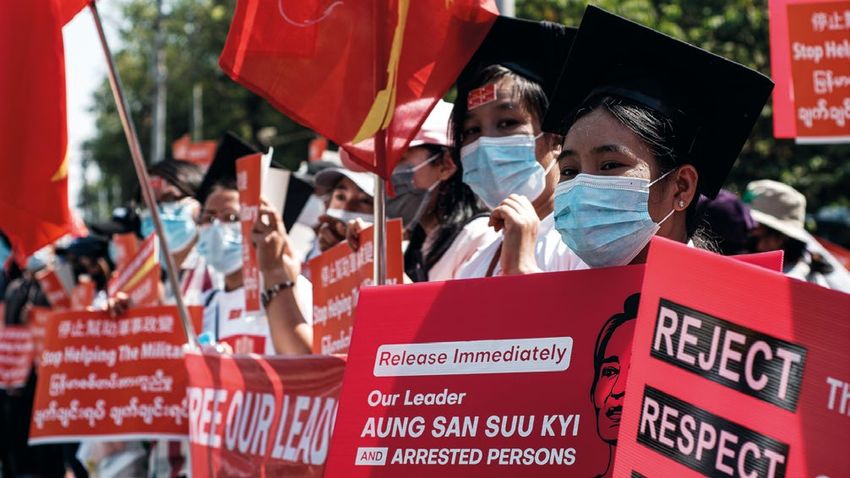
Shortcuts
                                                                                                                        We may hazard a guess at how those
                                                                                                                     coming to voting age now might have been
                                                                                                                     shaped by events, but what of those born
                                                                                                                     tomorrow and able to shape our politics
                                                                                                                     within the next two decades? On the current
                                                                                                                     evidence, it seems unlikely that there will be
                                                                                                                     any significant ‘rejoin’ movement within the
                                                                                                                     British public in the medium term.
NEVER SAY NEVER                                                                                                         Deeply embedded political identities –
                                                                                                                     as evidence suggests leave and remain have
Rejoining the EU is still a distant                                                                                  become – do not change rapidly when left
ambition— Paula Surridge                                                                                             unattended. However, they can be mobilised
                                                                                                                     by political leaders – especially if the land-
                                                                                                                     scape should shift so that it becomes more
The divide between leave and remain has                                                                              politically advantageous to build on these
dominated our political discourse since 2016.                                                                        identities. So when we think about whether
But with Brexit now ‘done’ these categories                                                                          the UK will ever rejoin the EU, it is impos-
may gradually lose their potency as a way                                                                            sible to rule it out entirely. As we all know,
                                                  © duncan c/Flickr

of describing attitudes to the EU. It will no                                                                        even a week is a long time in politics. F
longer make sense for polling companies to
ask people how they would vote in a rerun                                                                            Paula Surridge is a senior lecturer at the University
of the 2016 referendum, or the hypothetical                                                                          of Bristol’s School of Sociology, Politics and
‘second referendum’ that caused so many                                                                              International Studies and deputy director at UK
headaches for the left in recent election                                                                            in a Changing Europe
campaigns. In the future, the question will                       stable. Very few people on either side give
not be leave or remain, but stay out or rejoin.                   a different answer now from the one they
   YouGov polled just this question                               gave in 2016 – and this is also true of the
recently. In a referendum to rejoin the EU,                       rejoin/stay outside question. This may
the headline figures suggest that 42 per cent                     change, and many on the remain side
of the British public would vote to rejoin,                       continue to hope (if not expect) that the
40 per cent would vote to stay outside,                           reality of Brexit will lead those who voted for
7 per cent would not vote and 11 per cent                         it to change their positions, despite evidence
were uncertain.                                                   that this has not so far occurred. The second
   Based on the headline figures, it may                          process is that of generational replacement
not seem unreasonable to think that public                        within the electorate. Those eligible to vote      BLOOD MONEY
opinion, at some point in the future, will                        for the first time in 2024 were aged 10 in
be firmly behind rejoining the EU. But the                        2016; their formative political experiences        The logic of empire still governs
picture is more complex than this. While                          will be shaped by the Covid crisis in ways         our politics –– Kehinde Andrews
we must always be wary of over-interpreting                       we cannot yet predict.
the sub-groups in a poll, only two parts of                           One element that must be considered
Britain had a majority in favour of rejoining:                    here is the role of elite discourse, and           It took Tory MP Richard Drax four years
London and Scotland. This gives a hint                            political actors, in shaping the debate. It took   to declare he owned Drax Hall Plantation
as to the issue with extrapolating from                           the Referendum party (formed in 1997 to            in Barbados, which he inherited after his
headline figures – even leaving aside the                         campaign for a referendum on leaving the           father’s death in 2017. The fact that the
issue of whether Scotland might have its                          EU) 20 years to see its position become            ownership of the £150m estate was only
own referendum on its membership of the                           a reality, and while the Rejoin EU party has       disclosed through a press investigation
UK long before one on the EU. Currently,                          the advantage of an issue already being on         speaks to the hidden nature of the wealth
opinion very strongly relates to how people                       the agenda, it also faces a set of parties keen    from slavery. It was all so long ago that we
voted in 2016. We will need to watch closely                      to put this issue behind them. Of the parties      imagine it could not possibly be relevant
to see if this relationship weakens over time.                    who contested the 2019 general election            today. But the story of Drax Hall tells us
   Two processes are at play in understand-                       on a pro-EU platform, only the SNP are             how nothing could be further from the truth:
ing how the aggregate level of support for                        currently adopting a ‘rejoin’ position – albeit    the legacy of slavery – and the logic of white
rejoining the EU might change. The first                          in a very different context and one which,         supremacy that made it possible – still
is whether people change their minds in                           were the ultimate goal of Scottish independ-       shapes the world today.
the future. For all that has happened in the                      ence achieved, would make rejoining the                Drax Hall is a 250-acre site where
political sphere since 2016, people’s views                       EU less likely in the rest of Britain where        enslaved Africans were forced to labour
on leave or remain have been remarkably                           the vote to leave was stronger.                    from 1640 to 1836, generating untold wealth.

                                                                                5 / Volume 133—No. 1
Shortcuts

It was not the only plantation owned by the       corporations and the descendants of the                While Aung San Suu Kyi’s failure to stand
Drax family, whose trade in human flesh           slave-owning classes.                              up for the Rohingya people has been deeply
in the Caribbean consumed an estimated               The only difference today is that we enjoy      troubling, the fact remains that her party
30,000 lives, according to historian Hilary       an economy built on white supremacy and            secured a landslide victory in Myanmar’s
Beckles. After slavery was abolished, the         pretend it is not racist. That is the key to the   November 2020 election. It is clear that
Drax family received the equivalent of £3m        new age of empire, and what makes it more          Myanmar’s young democracy must be
in compensation for losing the free labour        insidious: racial oppression continues whilst      respected and protected. Elected politicians
of the 297 Africans still toiling in the family   we convince ourselves it is an experience we       should not be languishing in prison cells.
business. They were among the 47,000              have left in the past.                                 Since the coup began, we have seen
recipients of the government handouts that           If we are serious about combatting racial       images of the police using rubber bullets,
essentially purchased the freedom of the          injustice, then we first need to recognise that    tear gas, water cannons and then more
enslaved. In total, the equivalent of £17bn       same logic of empire remains the governing         recently live ammunition resulting in the
was paid in order to abolish slavery in 1834.     principle today – and that Black life can          deaths of – at the time of writing – more
    Drax is certainly not alone in coming         never matter in a system based on the              than 20 pro-democracy protestors. A truly
from a family which benefited from the            disposability of Black bodies. F                   tragic tale.
proceeds of slavery. Numerous members of                                                                 How has it come to this? For decades,
parliament at the time benefited from slave       Kehinde Andrews is professor of black studies      the power-hungry Myanmar military has
owner compensation. The most notable was          at Birmingham City University and author           oppressed and persecuted the Burmese peo-
William Gladstone, whose father took the          of The New Age of Empire                           ple, committing countless atrocities—most
single largest payment, equivalent to £80m                                                           notably against the Rohingya, for which
today, for 2,500 thousand Africans he held                                                           it currently stands accused of genocide
in bondage. It was also revealed that both                                                           in the International Court of Justice (ICJ).
David and Samantha Cameron’s family
benefited from this pot of blood money.
    The total amount paid out in slave owner                                                          The government must lead by
compensation represented 5 per cent of
GDP and 40 per cent of the government’s                                                              example by imposing sanctions
income, forcing it to take out a loan so                                                              on the Myanmar military and
large from the Bank of England that it was                                                                its business interests
only paid back in 2015. Somehow, Her              POWER GRAB
Majesty’s Treasury thought that we would
all be delighted to know that living British      We need a stronger response
citizens helped pay to end the slave trade        to Myanmar’s military coup ––                          The failure of the international com-
as they gleefully informed us in a 2018                                                              munity to stand shoulder-to-shoulder with
#FridayFact tweet. It actually made me
                                                  Stephen Kinnock MP                                 the Rohingya may have given the military
physically sick to consider that I have been                                                         the confidence to enact this coup, based
paying off compensation to slave owners,          Democracy around the world is in retreat.          on the assumption that the international
along with several generations of my family       Under the cloak of the Covid-19 pandemic,          backlash will be negligible and lethargic.
that descended from the enslaved. While           authoritarian actors are seizing opportunities     It appears this was combined with what
people like Richard Drax have been living         to gain or strengthen their grip on power,         experts view as ‘tacit support’ from China,
the good life, the enslaved never received        emboldened by a disunited West which has           with which Myanmar has strong economic
a penny.                                          become more fractured, in no small part due        links via the Belt and Road Initiative – but
    As if that was not obscene enough, Drax       to weaknesses in US and UK foreign policy.         whose civilian government is said to have
Hall still functions as a sugar plantation            International law is being treated with        been concerned about Myanmar becoming
where workers are reported to be paid less        contempt and human rights are being                victim to so-called debt-trap diplomacy.
than half the average wage in Barbados.           violated. The Chinese government, with             China’s main news agency described the
This should be the only reminder we need          its behaviour towards the Uyghur Muslims,          coup as merely a ‘cabinet reshuffle’ and
that not as much has changed as we would          Hong Kong and Taiwan, offers the most              the Chinese government simply ‘noted’
like to think. The wealth from slavery is still   high-profile set of hugely concerning viola-       the event without condemning it.
very much with us, along with the ongoing         tions. But perhaps the most shocking assault           The UK and the wider international
poverty in the Caribbean and continued            on democracy so far this year has been the         community must act swiftly and effectively
struggles for justice for Black communities       coup undertaken by the Burmese military            to prove the military wrong on this.
in the UK.                                        on 1 February, and with it the political               The government must lead by example
    Wealthy white landowners are still mak-       arrests of democratically elected leaders          by imposing sanctions on the Myanmar
ing a killing exploiting the labour of Black      including Aung San Suu Kyi, followed by            military and all of its business interests.
and Brown people across the globe. Be it          police brutality towards protestors.               Labour strongly supports the Magnitsky
cocoa farmers in Ghana, tobacco cultivators           Let us be clear: this military coup is         sanctions against officials in Myanmar,
in Malawi, or Indonesian workers toiling          a flagrant breach of Myanmar’s constitution        but we know that these sanctions are
on oil palm plantations, millions of people       and must be condemned in the strongest             designed predominantly for countries
live in very similar conditions to those of       possible terms. The army’s claims of voter         where senior officials have economic
their relatives 100 years ago. Meanwhile the      fraud are utterly spurious. This is a naked        interests in the UK, which is not the
fruits of their labour are enjoyed by Western     power grab.                                        case for these Burmese generals.

                                                                   6 / Fabian Review
Shortcuts
whole of the UK is vaccinated will not
help the unfolding global crisis in vaccine
inequality which the chief of the World
Health Organization has described as
© MgHla (aka) Htin Linn Aye via Wikimedia Commons
‘a catastrophic moral failure’. So far, more
than 75 per cent of global vaccinations have
been administered in just 10 countries,
while around 130 countries are yet to
administer a single dose. Some studies
show that low-income countries are set
to wait up to 2024 before they achieve
widespread vaccination.
The government’s UK-first policy is not
just dangerous but self-defeating. Ensuring
there are enough vaccines for everyone,
everywhere is crucial to avert an even higher
death toll. Academic research shows that
we could prevent 61 per cent of deaths
globally if vaccines are distributed fairly,
compared to 33 per cent if rich countries
I wrote to the minister for Asia, Nigel the rule of law and universal rights and hoard vaccines. Implementing national
Adams MP, in September asking him to freedoms. For the first time since 2001, vaccine programmes in rich countries alone
ensure UK businesses are not trading with democratic governments are outnumbered is not enough: leaving the virus to spread
the Burmese military due to its persecution by authoritarian regimes. What is taking unabated in large parts of the world allows
of the Rohingya, but only now – following place in Myanmar serves to remind us of the it to mutate, potentially rendering the
the coup – has the foreign secretary agreed daunting scale and nature of the challenge effective vaccines of today, useless tomor-
with the trade secretary to conduct a review. we face. F row. It is also economically short-sighted.
This follows a pattern. From managing the The International Chamber of Commerce
pandemic at home to standing up for the Stephen Kinnock is Labour MP for Aberavon and estimates that leaving developing countries
UK’s values and interests internationally, the shadow minister for Asia and the Pacific without vaccines will cost rich countries
Conservative government has been too slow $4.3tn in lost income in 2021.
to act at every turn. We need faster, more So how did we end up with this vac-
impactful action. The government must also cine apartheid?
look at the possibility of sanctioning the Rich countries bought up supplies
military’s business interests and financial in advance because they recognised there
backers, extensive lists of which have been would not be enough for all. And in the
provided by Justice for Myanmar. face of scarcity, it is those with the deepest
The UK government should use its pockets that get to hoard. Giving away
international influence seek to extend the excess doses could provide some immediate
arms embargo against Myanmar so that it relief to other countries but the real ques-
is as close as possible to global in its scale SMALL DOSES tion we need to ask, is why are we facing
and scope. Clearly, Russia and China will be scarcity and how can we ensure there is
unlikely to participate, but we must still seek Wealthy countries must end enough for all?
to build the broadest possible coalition. vaccine apartheid –– Heidi Chow Pharmaceutical companies can pat-
Now must surely be the time for the ent their products which means only
UK to formally join the Netherlands and they can sell their vaccine or treatment,
Canada in formally supporting the Gambia At the G7 leaders’ meeting in February, essentially preventing competition for
in its case of genocide brought against Boris Johnson pledged to donate UK’s a minimum of 20 years. They also defend
Myanmar at the ICJ. The ICJ’s ruling on surplus vaccine supplies to poorer countries. their monopolies by keeping their tech-
23 January 2021 made clear that Myanmar It was an attempt to look like a benevolent nological know-how under wraps – only
must prevent genocide, preserve evidence internationalist, but was actually just a fig they know the recipe for their vaccines.
and submit reports and evidence periodically leaf to mask the shameless hoarding of But monopolies are the opposite of what
about its treatment of the Rohingya. Now vaccine supplies. Wealthy countries like the we need in a pandemic. No one company
that Myanmar’s first report to the ICJ has UK, US and the EU raced ahead with secur- can satisfy global demand.
been submitted, the Foreign Office should ing vaccines last year and will have enough Instead of restricting production
be asking for the report to be made public doses to vaccinate their entire populations to a handful of companies, we should
so that the international community can nearly three times over by the end of 2021. be mobilising as many manufacturers
scrutinise the contents. Meanwhile, nearly 70 low-income countries as possible. One way to do this, is to
What is abundantly clear is that the will only be able to vaccinate one in get companies to share their techno-
people of Myanmar need a stronger 10 people this year. logical know-how and patent rights
response, and they need it now. Labour Giving away surplus doses at some with other companies. The World Health
will always stand up for democracy, unspecified point in the future once the Organization launched a mechanism last
7 / Volume 133—No. 1
Shortcuts

                 year – the Covid-19 Technology Access             Every country should have access to             housesharing types in professional jobs,
                 Pool – to facilitate this. The UK has still    the vaccine and treatments to combat this          so overheated had the London property
                 not joined but Dr Anthony Fauci, director      virus. It is about the right to health for every   market become.
                 of the US National Institute of Allergy        person, but it is also an economic and public          Suburbs have historically had a bad deal.
                 and Infectious Diseases, openly supports       health imperative for all. Countries in the        Inner cities traditionally attracted investment
                 the pool, giving hope that the Biden           global south need equitable access not just        from Labour, for instance through the City
                 administration may participate. Meanwhile,     charity. So instead of asking whether the          Challenge programme, and rural areas had
                 pharmaceutical companies have condemned        UK should give away its doses, the real            the support of groups like the Countryside
                 the scheme, with the head of Pfizer dismiss-   issue is how we ensure there are enough            Alliance, but suburbs had few friends. The
                 ing it as ‘nonsense.’                          supplies for all. The world can only produce       Tory victory in 2019 has left suburbs even
                    So how do we get companies to cooper-       sufficient doses if governments back these         further behind, as another type of place
                 ate? Since the vaccines that have been         systemic changes. F                                has started to have money splashed at it:
                 approved have all benefited from billions                                                         the ’Red Wall’ towns. The recent £3.6bn
                 of pounds in public funding (as shown by       Heidi Chow is senior campaigns and policy          fund investing in towns has not spread its
                 data from global health think tank Policy      manager at Global Justice Now                      largesse to suburbs like the one I represent.
                 Cures Research), governments should be                                                            Levelling up has been for the benefit
                 using their leverage to mandate companies                                                         of retaining Conservative electoral gains.
                 to join the pool. Publicly funded vaccines                                                            Our unloved suburbs need championing.
                 should not be locked up by monopolies                                                             Step forward the suburbs taskforce, an off-
                 and exploited for profiteering.                                                                   shoot of the all-party parliamentary group
                    Ultimately, voluntary sharing of                                                               for London housing and planning.
                 know-how and patent rights is dependent                                                               The suburban taskforce’s remit is to
                 on the good-will of companies to do the                                                           make recommendations to futureproof
                 right thing – and when they do not, govern-                                                       our suburbs. Our gaggle of cross-party
                 ments need to step in.                                                                            parliamentarians initially met to get the
                    At the World Trade Organization, the        SOUND OF THE SUBURBS                               ball rolling when news of a mystery disease
                 Indian and South African governments                                                              was starting to filter through from China
                 proposed to suspend the global rules on pat-   Our suburbs have been overlooked                   and then Italy. As the housing minister
                 ents. The proposal would cover all Covid-19    for too long— Rupa Huq MP                          Christopher Pincher MP astutely pointed
                 health products and last until widespread                                                         out at the time, coronavirus saw us heading
                 vaccination is in place. If approved, this                                                        towards a period of isolation but paradoxi-
                 would break up monopolies on Covid-19          Suburbia: often mischaracterised in the            cally it was an isolation in which communi-
                 vaccines and treatments, allowing as many      popular imagination as a place of net              ties might be strengthened. Three lockdowns
                 suppliers as possible to maximise global       curtains, in out-of-the way districts, where       later, suburban society has changed in ways
                 supply. While 100 countries support the        people live humdrum lives. A land of people        previously unimaginable, with working
                 proposal, just a handful of rich countries     washing their cars on Sundays. Placid places       from home for white collar staff, flourishing
                 are opposing it, including the UK.             at the end of the line, celebrated in song by      mutual aid groups, and a new appreciation
                    Instead, the UK government is pin-          everyone from the Beatles to Blur.                 of space all affecting the way our suburban
                 ning its hopes of fairer distribution on           Yet the suburbs, an optimistic creation        communities live.
                 Covax – the global vaccine purchasing          which soared as Victorian values gave way              Small businesses in our suburbs –
                 scheme – which is struggling to access         to the Edwardian housebuilding boom, are           although suffering from the impact of
                 doses because of the artificial scarcity       now facing pressures from all directions.          lockdown – have stepped in to fill in the
                 created by pharmaceutical monopolies               I first started writing about suburbia         gaps where state provision has sometimes
                 and a lack of funding.                         when Labour was last in power, arguing             failed. In my borough, there have been
                                                                that the suburbs were suffering new pres-          restaurants providing school meals when
                                                                sures because of a changing demographic            our cash-strapped council was struggling.
                                                                and infrastructure fraying at the edges.               Also notable in the suburbs in the time
                                                                Where there was once said to be ‘white             of coronavirus, and indeed elsewhere, has
                                                                flight’ to the suburbs from the inner cities,      been the groundswell of popular opinion
                                                                some of these areas on the outskirts were          over the future of our communities. A prime
                                                                facing different kinds of change – both            example is low traffic neighbourhoods,
                                                                gentrification and an increasingly ethnically      which have fiercely divided opinion.
                                                                diverse population.                                Wherever you stand on that issue, there is
                                                                    After I was elected to parliament in           little doubt that the debate has reinvigorated
                                                                2015, I had an unparalleled opportunity            local democracy and showed how people
                                                                and unique licence to fight for the suburbs.       are keen to have a stake in decisions about
© NIAID/Flickr

                                                                I wanted to draw attention to the generation       where they live.
                                                                of 30-somethings unable to get on the                  Our suburbs taskforce received some
                                                                property ladder, faced with housesharing           50 submissions from the public, local gov-
                                                                well into their adult life. The suburban semis     ernment, academia and other organisations,
                 Dr Anthony Fauci receiving                     of Ealing and Acton, conceived as family           demonstrating that there is significant inter-
                 the Moderna Covid-19 vaccine                   dwellings, were now populated by urban             est in promoting a suburban renaissance.

                                                                                8 / Fabian Review
Shortcuts

   The responses showed that, with                likely to have been underperforming; and            there has been an unequal burden from the
affordable homes increasingly out of reach,       one in eight Britons feel Black people are          pandemic across ethnic groups. Without this,
housing is one of the key issues in our           more likely to be unemployed or have lower          there will be no public support for policies
suburbs. But although there is support for        incomes because they lack motivation or             that target BAME groups, as can be seen by
increasing housing density, people want it        willpower. Until these attitudes change,            the study on Unequal Britain.
to be done carefully. They want to preserve       the inequality gap will be hard to close.              To close the inequality gap, policymakers
the character of their area and to ensure that       An unequal society is a less resilient           also have much learn from the period after
good infrastructure, including sustainable        one, and the BAME experience during the             the second world war: its parallels to today’s
transport options and vibrant community           pandemic bears this out.                            situation are clear.
facilities, is in place to support new develop-      Looking at the data then, it is clear               The post-war period saw the creation
ment. As we move onto the next phase of           the Bangladeshi community has suffered              of new welfare constituencies at a time of
the taskforce’s work, we aim to ensure that       the most financial insecurity during lock-          significant economic destruction to help
suburbs can thrive.                               down. At large, BAME adults have been more          those most in need, such as ‘disabled war
   All too often, the voice of the suburbs has    concentrated in sectors shut down during            veterans’, ‘surviving dependents of killed
been ignored. It is time for the suburbanists,    the pandemic: 50 per cent of Bangladeshi            servicemen’ and ‘war refugees’. Like the
not just the urbanists, to play their part in     men and 32 per cent of Pakistani men were           war, Covid-19 has left many dependents
shaping the future of our country. F              employed in industries forced to close,             without support and many individuals
                                                  compared to 12 per cent of white British men.       suffering from long-Covid disabled, but the
Rupa Huq is Labour MP for Ealing Central and      And British natives who are BAME have               communities worst affected economically
Acton and co-chair of the suburbs taskforce       been 1.7 times less likely than white British       by Covid-19 are overwhelmingly single-
                                                  workers to enjoy employment protection              earner families – with BAME households
                                                  like the furlough scheme, and were 3.1 times        18 per cent more likely than white British
                                                  more likely to be laid off during lockdown.         households to have a single earner. It will
                                                     A higher proportion of Black African,            be equally important to divert resources
                                                                                                      towards these groups that have been most
                                                         It is vital the public                       affected by the pandemic.
                                                                                                         Sufficiently supporting single-earner
                                                         recognise there has                          families would require income transfers of
                                                       been an unequal burden                         the kind that were previously made to war
                                                                                                      veterans. Data from the International Labour
                                                         from the pandemic
AIMING HIGH                                                                                           Organization indicates that many European
                                                                                                      countries spent between 10 and 35 per cent
We need a post-war approach                       Black Caribbean and Indian adults have              of total social expenditure on civilian and
to target inequality––                            also been disproportionately represented in         military victims of war in the immediate
                                                  high-risk occupations, such as frontline and        post-war years. Yet given the public sector
Uma Kambhampati                                   key workers on low-paid jobs, many of whom          debt, this welfare expenditure needs to be
                                                  have been insufficiently protected with PPE         carefully funded.
The UK entered the pandemic with signifi-         throughout the pandemic. Data shows that               During the first and second world wars the
cant and rising inequalities, reinforced by       the UK’s Black African community has been           country faced increasing military expenditure,
recent austerity policies. Our death toll from    most exposed to the virus through employ-           but the acceptance that this burden should be
Covid-19 reflects these disparities, and we       ment. Plus BAME adults are more likely to           equally shared led to higher taxes on the rich.
are already seeing the unequal experience         be employed as sales and retail assistants,         To help fund today’s much-needed increased
of the pandemic worsening them.                   bus drivers and chefs, where exposure is high.      expenditure, we need a combination of
    The UK is highly unequal on class and         This disparity is reflected in BAME deaths:         time-limited higher taxes for those in the top
race terms. Before the pandemic, 80 per cent      for every three deaths per 100,000 for the          brackets, along with the sale of government
of white British working-age adults were          white British population, there will be five        debt (in the form of bonds to rich individuals
in employment, while this figure was closer       for the Indian community, and approximately         who potentially have significantly higher
to 60 per cent for Pakistani and Bangladeshi      six for other BAME communities. Black               savings and few assets to invest in). This
groups. Not surprisingly, therefore, fewer        Caribbean deaths in hospital are more than          might, perhaps, be more acceptable to voters
than 2 per cent of white British households       double that of white British deaths.                than just increasing taxes on the rich.
lived in houses with more residents than              There have been many calls for more                In the absence of such investments in
rooms, whereas this figure increased across       investment in the NHS and for better pay            our future, the UK will remain extremely
all Black, Asian and minority ethnic (BAME)       for key workers. Both are likely to help            vulnerable to future crises. The post-war
communities, and was up to 30 per cent            BAME communities. However, we need                  period saw Britain rebuilding the economy
for Bangladeshi households. Unequal               a clearer and more strategic response to            towards higher growth and greater equality.
Britain, a 2021 study looking into inequality     the problem, based on the evidence.                 There seems no reason why we could not
in the context of Covid-19, found that less           The first, and probably most crucial act, is    aim for this once again, with new challenges,
than half of Britons accept that these differ-    a clear acknowledgement of the costs borne          new growth sectors and a more innovative
ences might arise because of discrimination.      by these communities during the pandemic,           approach to government finances.F
    According to the same study, nearly           and a celebration of their contribution in
half of the public believe that those who         enabling Britain to navigate its way through        Uma Kambhampati is professor of economics
lost their jobs during the pandemic were          the crisis. It is vital that the public recognise   at the University of Reading

                                                                9 / Volume 133—No. 1
Make or break
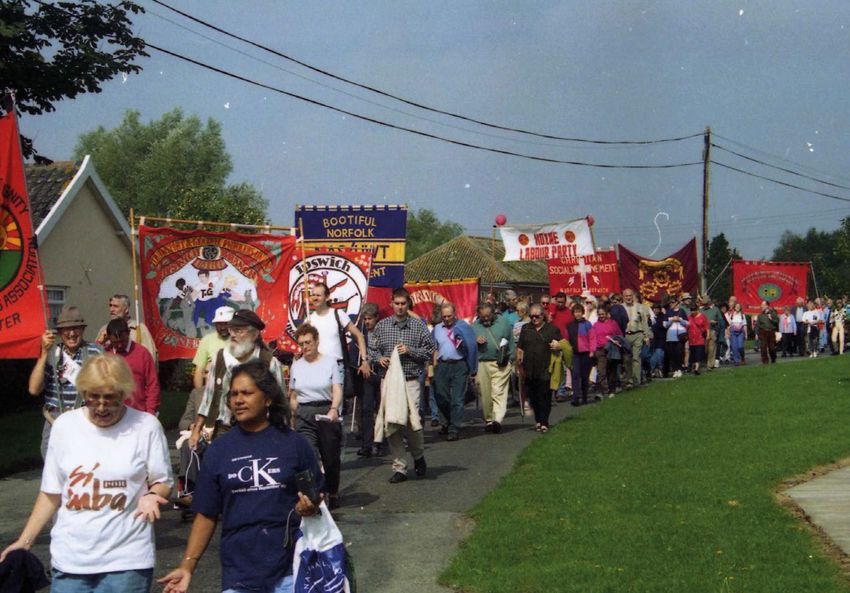
     The relationship between Labour and the unions has been crucial
     since the party was first founded. But is this historic alliance now
       under threat as never before? Christopher Massey takes a look

                                                                  Christopher Massey is a senior lecturer in
                                                                  history and politics at Teesside University and
                                                                  the author of The Modernisation of the Labour
                                                                  Party, 1979–1997. He is also a Labour councillor

T
       he labour party     and the trade union movement are that the parliamentary party controlled policy whilst the
        intrinsically linked. In 1899, a Trades Union Congress unions served as a ‘praetorian guard’, protecting the leader-
        resolution began a chain of events that led to the ship from outside threats. In the lifetime of these govern-
establishment of the Labour Representation Committee ments, a ‘triumvirate’ of Arthur Deakin from the Transport
in 1900 and the Labour party in 1906. Undoubtedly, the and General Workers Union (TGWU), Will Lawther of the
Labour party was a child of the unions, but, in recent years, National Union of Mineworkers, and Tom Williamson of
has the child outgrown its parents?                             the National Union of General and Municipal Workers
    The unions have provided stability, finance, and an ac- afforded Clement Attlee incredible stability. Their steward-
tivist base since Labour’s foundation. Thus, for much of the ship saw the Labour party conference vote against the
party’s first century, there was broad acceptance of trade leadership’s position on only one occasion between 1949
union domination within Labour’s structures. The unions and 1960.
controlled 90 per cent of the party conference vote until 1993;    The party-union relationship began to change after the
a de facto majority at the National Executive Committee election of Frank Cousins as the leader of the TGWU in
(NEC) until 1997; and at least one-third of the ‘electoral 1956. This was the start of a swing to the left within the
college’ vote, which selected party leaders between 1981 to union movement. Cousins challenged the party’s par-
2014. However, the New Labour years saw the relationship liamentary leadership on policy issues, particularly over
with the unions markedly change, with                                             defence, thus abandoning the unions’
the party’s former masters playing an                                             usual supportive, backstage role. The
increasingly minor role.                          The party has been at           shift to the left in Britain’s biggest union
    The link between Labour and its trade          itsv strongest when            was consolidated on Cousin’s retire-
union affiliates has often provoked con-                                          ment in 1969 with the election of Jack
troversy. Labour historian Lewis Minkin
                                                  the trade unions have           Jones. Along with Hugh Scanlon, of
described this as a ‘contentious alliance.’        played a supportive,           the Amalgamated Engineering Union,
Yet, the unions have largely served in the             backstage role             Jones led left-wing opposition to the
vanguard of the party for much of its his-                                        1966–70 Labour government’s prices
tory, providing a supportive base for the                                         and incomes policy.
leadership. However, the election of Keir Starmer in April         Tensions remained in the 1970s when Jones’ successor
2020 has seen a return of hostile relations not witnessed at the TGWU, Moss Evans, alongside David Basnett of the
since the 1970s. During his first year at the helm, over half General and Municipal Workers’ Union, and Alan Fisher
of Labour’s affiliated trade unions have publicly attacked of the National Union of Public Employees (NUPE) led
either his policies or leadership. Consequently, as the party the unions into a major conflict over pay policy. The strike
shifts direction under Starmer, what is the future of the action taken during the Winter of Discontent, including
historic union-party link?                                      the closure of hospitals and schools, was part of the most
                                                                determined act ever taken by trade unions against a Labour
Lessons from previous Labour governments                        government. These events contributed to Labour’s loss in
Throughout Labour’s history the party has been at its 1979, its constitutional changes between 1979 and 1981,
strongest when the trade unions have played a supportive, and the election of Michael Foot as party leader in 1980.
backstage role away from public vision. During the first           A fightback of the party leadership and the ‘traditional
majority Labour governments of 1945 to 1951, the party’s right’ trade unions in the early 1980s began to return the
relationship with the unions was based on the principle unions to their supportive role. Through secret meetings

                                                       10 / Fabian Review
Cover story
© LSE Library/Wikimedia Commons
and campaigns, by 1981 the St. Ermins Group of right the Conservative trade union laws. Throughout the lifetime
unions recaptured control of Labour’s NEC from the left for of the New Labour period, Blair found himself in battles
the first time since 1973. This fightback continued with the with the trade unions over the Employment Relations
election of Neil Kinnock in 1983. The new leader established Act, pensions, the Private Finance Initiative, and founda-
a stable internal majority from 1986 through the additional tion hospitals.
support of ‘soft’ left unions, the TGWU and NUPE. In 2004, two smaller unions left the Labour fold; the Fire
The election of Tony Blair as party leader in 1994 began Brigades Union (FBU), which disaffiliated, and the National
a new chapter in Labour’s relationship with the unions. Union of Rail, Maritime and Transport Workers (RMT),
Blair inherited a positive relationship with a supportive which was expelled. However, none of these events boiled
union movement; however the new leader was determined over into widespread industrial unrest (or significant inter-
to avoid a repeat of the breakdown in relations which had nal conflicts) as they had in 1979, suggesting that Blair’s
catalysed the demise of the last Labour government in 1979. reforms and the desire for a Labour government after
Blair wanted to create a ‘new’ Labour party and avoid what 18 years in opposition held the party together.
he considered to be the painstaking and time-consuming Despite speculation about an impending ‘divorce’, the
tribal rituals on which the party had built its relationship union-party link survived the New Labour years and played
with the unions. Independently of this process, the unions an increasingly prominent role from 2010. Ed Miliband be-
also shifted into a less confrontational role. This was articu- came Labour leader through the votes of the trade unions
lated by the TUC general secretary John Monks from 1993 in the electoral college. This led to accusations of Miliband
as part of his ‘new unionism’. being in the pockets of the unions and the ‘Red Ed’ label.
The New Labour era fundamentally altered the balance Yet, by 2014, Gabriel Pogrund and Patrick Maguire have
of the party-union relationship. Building on John Smith’s written that Miliband began to see the unions as a ‘drag
one member, one vote (OMOV) reforms, Blair cut the bloc anchor’. In this year, following highly publicised controver-
vote of the unions at party conference from 70 per cent sies with selections in Falkirk, the Collins Review scrapped
(since 1993) to 50 per cent in 1995. In 1997, under the Labour’s electoral college for leadership elections and with
Partnership in Power reforms the unions also shifted into it the unions’ 33 per cent share of the vote. From this point
the minority at the NEC, controlling only 40.6 per cent of Labour operated true one member, one vote.
the seats, compared with 62 per cent before the changes. Jeremy Corbyn’s election to the leadership rejuvenated
Blair was determined to create public distance between the link and provided left-wing unions with the type of
the unions and the party, announcing to the TUC in 1999: leader they had long dreamed of. In the 2015 leadership
“You run the unions. We run the government.” Despite contest, Corbyn gained support from six of the 11 trade
monumental pledges to introduce a new trade union act unions to nominate a candidate, including the two larg-
and the minimum wage, he consistently refused to reverse est affiliates, Unite and UNISON. Significant numbers of
11 / Volume 133—No. 1Cover story
affiliated members, the vast majority of whom are trade un- party membership in November but continued to have the
ionists, voted for Corbyn to be leader in 2015 (57.6 per cent) parliamentary whip withheld by Starmer. The leader’s deci-
and 2016 (at 60 per cent). Yet, affiliate members comprised sion was lambasted by the general secretaries of the CWU,
only 16.9 per cent and 24 per cent of the total vote at these Unite and TSSA. The BFAWU went a step further, signaling
elections, highlighting the decline in union influence since plans to consult their members on the union’s continued
the Collins Review. affiliation to the Labour party, whilst the CWU accused
Throughout the Corbyn years, an alliance of unions and Starmer of leading the party into ‘civil war’.
party members, in defiance of occasional parliamentary Across the first year of his tenure, Starmer has been
opposition, safeguarded his leadership. Len McCluskey, able to build a fragile majority within Labour’s internal
the leader of Unite, became Corbyn’s loudest backer. In structures despite the opposition of several unions. The
addition, the leader’s office featured several former union support of UNISON, the GMB and USDAW has been vital,
employees: Andrew Murray and Anneliese Midgley from alongside his removal of Corbyn allies on the NEC and
Unite, Andrew Fisher from the Public and Commercial the fightback of Labour ‘moderates’ within local parties, to
Services Union (PCS), and Kevin Slocombe from the securing control of the internal party structures. Attempts
Communication Worker’s Union (CWU) – whilst Labour’s were made in February 2021 to unite the party and the un-
general secretary from 2018, Jennie Formby, was also a for- ions around a new campaign, linked to Covid-19, featuring
mer Unite official. all 12 of Labour’s affiliated unions named the ‘Recovery and
Corbyn also forged closer ties with left-wing unions out- Rebuild: Power in the Workplace’ taskforce. Indeed, due to
side of the party, including Matt Wrack of the FBU – which the health, societal and workplace impacts of Covid-19, the
reaffiliated to the party in 2015 – as well as the RMT and link between Labour and the unions has never felt more
PCS, which endorsed Corbyn in 2018 but stopped short necessary. However, contests to replace the top officials of
of affiliating. Britain’s largest three unions could make or break Starmer’s
The Labour leader could also count on Manuel Cortes tenure. The election of Christine McAnea as UNISON’s
of the Transport Salaried Staffs’ Association (TSSA), Mark new leader removed one threat, but forthcoming elections
Serwotka of the unaffiliated PCS, and Dave Ward of the within Unite and the GMB could tip the balance of power
CWU within his inner circle. In addition, Mick Whelan, of the within Labour’s internal structures.
Associated Society of Locomotive Engineers and Firemen The unions continue to play a crucial role within the
(ASLEF), and Ronnie Draper of the Bakers, Food and Allied Labour party but their relationship with Starmer has
Workers Union (BFAWU) provided unwavering support. become increasingly strained. The union-party alliance
Thus, despite changes to the relationship between remains key to both internal and external party unity.
Labour and its affiliated trade unions, the party-union link Internally, at present, the unions control 50 per cent of
was still able to provide stability. However, new challenges Labour’s conference vote, 33 per cent of the NEC seats and
have emerged for Starmer since his election in 2020. around 14.7 per cent of the National Policy Forum’s member-
ship. In addition, the unions continue to be a major funder
The challenge ahead: Where next for Starmer? of the party, contributing 30 per cent of Labour’s income in
Labour’s new leader appears passionate about the union 2016, though down from 75 per cent in 1992. The support of
link, pledging to “work shoulder to shoulder with the three out of the four largest union affiliates, alongside other
trade unions” during his election campaign, but the unions allies, has enabled Starmer to capture an internal majority
are increasingly divided along the same lines as Labour in the face of left-wing opposition. However, externally, the
members between ‘left’ and ‘moderate’. Whilst Starmer relationship between the party and half of Labour’s affiliated
has been able to count on the loyal support of three of the unions has broken down. Such public spats threaten both
four largest trade union affiliates, UNISON, GMB and the the future of the historic alliance and Labour’s chances of
Union of Shop, Distributive and Allied Workers (USDAW), victory at the next election.
the opposition of Unite and several smaller unions on the Following Labour’s 2019 defeat, the party is some
left are increasingly prickly thorns in his side. distance from power. The millions of additional voters
In August 2020, McCluskey claimed that Labour’s that Labour requires for victory at the next election cannot
decision to pay damages to former staff members, who come solely from its union base. A new, broader, coalition
had spoken out on a BBC Panorama documentary about is required. Starmer’s initial months appear to be laying
anti-semitism, was ‘an abuse of members’ money.’ Unite such foundations, despite vocal opposition from some
made further headlines in October 2020 when it an- left unions. The voters which Labour needs to capture will
nounced a 10 per cent cut to the affiliation fee it pays to the likely be those who observe workplace relations from the
Labour party. In the following month, the FBU and CWU sidelines, outside of union membership.
were reported to be considering similarly sized cuts to their The unions still have a vital part to play within the
contributions. Unite also campaigned against Starmer’s party but must return to their backstage role for Labour to
initial support for the Conservative’s ‘spycops’ bill. be successful. In 2017, an Ipsos MORI survey recorded that
Labour’s decision to suspend Jeremy Corbyn in October 49 per cent of the public believed Labour was too close to
last year, after his comments on the Equality and Human the unions. Consequently, the unions must take action
Rights Commission Report, posed the biggest threat to to reinvigorate the party internally, ensuring that Labour
the party-union link for a generation. Seven of Labour’s looks outwards to engage the interest of new voters. In this
12 affiliated unions openly criticised the party’s decision way unions can return to their historic, supportive role and
to suspend their former leader. Crucially, for Starmer, provide a reliable ally to a party that will need all the friends
UNISON, GMB, and USDAW did not. Corbyn returned to it can find in the years ahead. F
12 / Fabian ReviewUnity is strength
Amid the biggest health and jobs crisis in generations,
how can trade unions best protect workers, and what
should their relationship with Labour look like? The
Fabian Review asks the experts
CAUSE FOR CONCERN PLAYING IT SAFE
Trade unions have an important role to We need better health and safety protections
play in fighting the erosion of workers’ for workers—Shelly Asquith
rights post-Brexit —Marley Morris
The Covid crisis has exposed the flaws in Britain’s health
The question of whether the government will weaken and safety infrastructure, some more clearly than others.
workers’ rights post-Brexit has been a matter of fierce An insufficient sick pay system, an austerity-hit regulator,
debate since the UK voted to leave the EU. This issue has and a ruling class more interested in protecting profits than
dogged the Brexit process over the course of the negotia- people. Those who have continued working outside the
tions and provoked ongoing concern from trade unions home have faced far greater risks, be it climbing infection
and their members. rates or dwindling PPE supply.
There is no doubt that one of the UK’s principal For workers hidden out of view, the hazards are
objectives in the recent negotiations was to secure an often intensified. This is true for those in retail supply
agreement which gave it as free a hand chains. The rate of Covid death among working women
as possible in setting its own employ- is highest for those in sewing machinist roles: four
ment laws. Chief negotiator David times higher than the average, according to ONS
Frost repeatedly fought against data. In food manufacturing, Covid outbreaks have
the EU’s efforts to maintain been rife. A low-paid workforce plus no protection
a ‘level playing field’ for trade when required to self-isolate has been a recipe for
on issues such as workers’ rights. Covid transmission.
And while the UK did in TUC research demonstrates that the presence of
the end agree to a ‘level playing a recognised trade union results in more effec-
field’, the final text was far weaker tive Covid management. Employers are more
than the EU had originally intended. likely to have conducted a risk assessment
Rather than the UK and the EU signing up and implemented safety measures when there
to a blanket agreement to maintain current is a union safety representative. We know our
labour standards, they only agreed to not reps have taken on hundreds of thousands of
weaken protections if this would affect trade additional hours to perform their duties and
or investment flows. As a result, the UK now keep colleagues safe, often in their own time.
has more scope to water down EU labour rules While our movement continues to focus on
than expected. recruitment and organisation in these sectors, we need
But amongst both leavers and remainers there is still policy change to best protect workers.
broad public support for high labour standards. Trade It is time for extended rights for union safety reps, so that
unions thus have a particularly important role to play in we not only have the right to investigate hazards within our
holding the government to account for its commitments own workplace, but in the workplaces in the supply chain of
to maintain workers’ rights after Brexit. After all, in the our employer, where we also have members.
last few weeks, the government was forced to swiftly We also need liability on businesses for the working
backtrack on a post-Brexit plan to review employment law conditions along their supply chain. For too long, online
after a widespread backlash from politicians and unions. clothing retailers and supermarkets have washed their
The political appetite for wholesale deregulation is hands of exploitation in the factories that make their
therefore limited. But this does not rule out the slow products. They must be made to take responsibility. These
erosion of rights over time – or the failure to keep pace are foundational workplace concerns that should be at the
with new EU rules as they are introduced in Brussels. heart of any future party plans to strengthen industrial
It is this risk of erosion – rather than straightforward strategy and labour rights. Holding bosses to account and
repeal – which unions will no doubt be closely monitoring building union power is the natural cause for the party
in the months ahead. F of labour. F
Marley Morris is associate director for immigration, trade and Shelly Asquith is health, safety and wellbeing officer at the Trades
EU relations at the Institute for Public Policy Research (IPPR) Union Congress
13 / Volume 133—No. 1Cover story
CLOSING THE GAPS COLLECTIVE RENEWAL
We need to close the gender, ethnicity Back in 2005, in a Fabian pamphlet called
and disability pay gaps— Gloria Mills Raising Lazarus, David Coats said unions needed
to reform to reverse their declining fortunes.
Equality must be at the heart of everything the Labour Now he sees fresh potential for their role.
party and trade unions do. At UNISON, we strive to make
equality a reality for everyone – at work, at home and in According to Beatrice and Sydney Webb in their classic
society in general. That is done through tireless campaign- Industrial Democracy, there are three elements that
ing to get a new deal for working people and make sure constitute the trade union method – collective bargaining,
everyone has access to the same opportunities. mutual insurance and legislative enactment. Despite the
To spearhead change, trade unions must ensure high passage of time, the Webbs’ schema still offers real insights
membership numbers and collective bargaining power to and enables us to understand the challenges and opportu-
approach inequality disputes from a position of strength. nities facing British trade unions today.
Employers and the government can be held to account in Collective bargaining in the UK is in a straitened
different ways. Often, we can achieve a lot through simple condition. In 1979, half of all employees were members
negotiation but sometimes the pressure must be ratcheted of a trade union and four in every five workers had their
up with industrial action, strikes or a legal battle in the pay and conditions determined by a collective agreement.
highest court in the land. Labour must support the trade Now, fewer than one in four employees is a trade union
unions when doing so. member (23.4 per cent) and collective bargaining covers
One important legal case was UNISON’s victory in a similar proportion of the workforce. In the private sector
the Supreme Court in 2017, which reversed the govern- fewer than one in seven workers (13.2 per cent) is a trade
ment’s decision to impose fees for employment tribunals. union member and most workers have never had any con-
The removal of the restrictive charge ensured the nection with organised labour. The phenomenon of trade
tribunal system could be open to everyone, regardless union decline is widespread across the developed world
of income. but the UK is an outlier in western and northern Europe,
Unions have a long history of remoulding the having witnessed a catastrophic fall in collective bargain-
political landscape to make it fairer. We have an ing coverage, which remains much higher elsewhere –
important influence on the Labour party because many 56 per cent of the workforce in Germany, 80 per cent in
of our members contribute to a political fund, which Italy, 82 per cent in Denmark, 90 per cent in Sweden. It
enables them to engage with the party. In turn, this helps is hardly surprising, perhaps, that the UK has a persistent
Labour match some of the donations the Conservatives problem of low pay or that wage growth has been
receive from wealthy business owners. It also gives disconnected from productivity growth for all workers
us influence in the development of policies, which of with median earnings or less since the middle 1990s.
course helps in reducing social and economic The mutual insurance functions of the trade unions
inequalities which have worsened after have been largely subsumed in the welfare state since the
a decade of Tory austerity, compounded post-war Labour government’s implementation of a com-
by the pandemic. prehensive social security settlement. But as all Fabians
We worked closely with the last know, the system is now bedevilled by complex means
Labour government to introduce the tests which have undermined the insurance principle.
Equality Act and implement the na- Trade unions could make real progress in cementing their
tional minimum wage. Now unions social and economic role by identifying the risks to which
have to develop a progressive workers are exposed today and arguing for a new con-
agenda with Labour to sensus to tackle these profound problems. The Beveridge
rebuild the UK’s eco- report was the outcome of a prolonged campaign for
nomic resilience, deliver a robust system of social insurance in which trade unions
sustainable growth and had played a central part – and unions continued to ad-
reduce socio-economic dress these issues as priorities through to the 1970s, when
inequalities. What is the introduction of the state earnings-related pension was
needed is a new deal for agreed by the TUC and the Wilson government.
working people, invest- While the Webbs placed much emphasis on legislative
ment in public services enactment, trade unions were historically ambivalent
and manufacturing, and about the role of the law in the employment relationship
opportunities to boost and in industrial relations more generally. As Lord
employment through growth Wedderburn observed in 1986: “Most workers want
in green and digital jobs. Together we need to close the nothing more of the law than that it should leave them
gender, ethnicity and disability pay and pension gaps. alone. A secure job is preferable to a claim to a redundancy
Equality has always been unions’ beating heart. We payment; a grievance settled in the plant or the office is
must continue to campaign for it alongside the Labour better than going to a court or an industrial tribunal.”
party, while speaking out against Conservative policies Certainly, unions came to believe that there had to be
we see as unfair and immoral. F a floor under wages for unorganised workers, that health
and safety standards should be fixed by law and that all
Gloria Mills is national secretary for equality at UNISON forms of discrimination should be outlawed by statute.
14 / Fabian ReviewYou can also read


