CONFERENCE PROGRAM October 21-24 2018 - Rail Volution
←
→
Page content transcription
If your browser does not render page correctly, please read the page content below
CONFERENCE
                                                                   PROGRAM

                                                                   October 21–24
                                                                       2018

Wyndham Grand Pittsburgh Downtown | Pittsburgh, Pennsylvania | railvolution.org
Table of Contents

             Rail~Volution Sponsors                       Center Spread
             Welcome to Pittsburgh                                           1
             Maps (Downtown Pittsburgh & Hotel)                           2–3
             Things to Know                                               4–5
             Conference at a Glance                                       6–9
             The Network Makes the Conference                              10
             Thank You to our Partners                                     11
             Design Your Conference                                     12–13
             Networking Opportunities                                      14
             New Rail~Volutionaries                                        15

Read This!
             Transit as a River of Culture                              16–19
             A Rail~Volution Essay by Antonia Malchik

             Plenary Speakers                                           20–23
             Conference Schedule of Events                                 25
                     Saturday, October 20                                  25
                     Sunday, October 21                                 26–29
                     Monday, October 22                                 30–47
                     Tuesday, October 23                                48–61
                     Wednesday, October 24                              62–67
             Regional Day & Mobility Showcase                           66–67
             Mobile Workshops                                           68–69
             Sponsor Directory                                          70–72
             Exhibitor Directory                                           73
             About Rail~Volution                                        74–75
             Acknowledgments                                            76–78
             Rail~Volution 2019 Vancouver, BC                              79

                         /railvolution   @railvolution   Railvolution     RailvolutionOfficial   Railvolution.org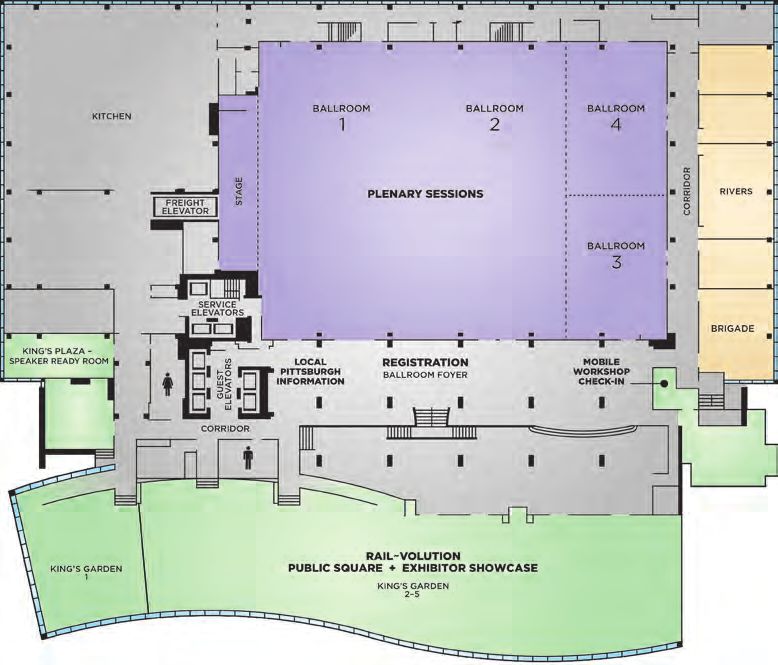
Dear Friends:
On behalf of Allegheny County, the City of Pittsburgh and the Port Authority of Allegheny County,
we welcome you to Rail~Volution 2018. We are thrilled that our region was chosen as a
destination for the conference and look forward to participating in this event. This is a vibrant
and growing region, with a diverse and thriving economy. We are certain that you will enjoy
spending time here and exploring here during the conference.

During your stay, you’ll also see why this region consistently ranks as one of the best places
to live and visit in the country. Our vibrant, welcoming community boasts wonderful people,
strong cultural institutions, beautiful terrain, entertaining attractions, an emerging food scene,
successful sports teams, affordable shopping and amazing accommodations. We’re home
to America’s first bus rapid transit system and one of North America’s first light rail systems.
Walking, running and bicycling are cornerstones of our riverfront redevelopment, with a
particular focus on multimodal transportation planning.

Like many regions, we are not without challenges. We’re fortunate that we have a region
that works cooperatively to address concerns and needs, and transportation is no exception.
For the first time in over 30 years, we are managing growth, trying to predict the needs of our
community so we may invest accordingly, and planning for the needs of a shifting population
that wants multiple transportation options. We do so understanding that there are continued
needs in many of our municipalities that must be balanced with the needs emerging as a
result of growth in our economy.

Again, we are delighted to have you here. We welcome the opportunity to learn from you
and to share our own experiences with the participants of Rail~Volution.

Sincerely,

                                  Be Social       #railvolution #rvpgh
                                                                                                     1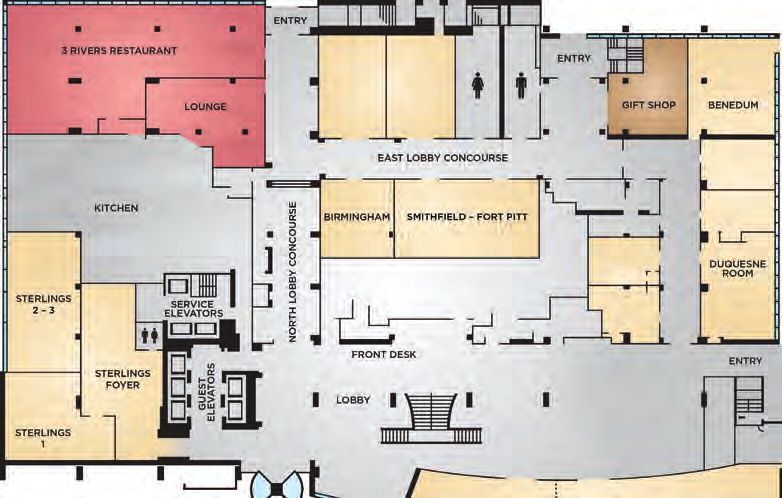
MAP

       Downtown Pittsburgh Map

                   North Side Station

             Stage AE

                                                                                                                                 The Pennsylvanian
                    Wyndham Grand Pittsburgh Downtown
                                                                 Gateway Station

                                                 28X Stops

                                                                                                                   T Lightrail

Esri, HERE, Garmin, OpenStreetMap contributors, and the GIS user community

                                                                                      Esri, HERE, Garmin, © OpenStreetMap contributors, and the GIS user community
                                        0              0.25               0.5                                      1
                                                                                        0                 0.25         Miles      0.5                           1
                                                                                                                                                                 Miles
          Legend                                                   Downtown Travel Options
               The Pennsylvanian                                             Bike Routes                                       T Light Rail
                                                                             Busways                                           28X Airport Flyer
               Wyndham Grand Pittsburgh Downtown
                                                                             Monongahela Incline                               Healthy Ride Station Locations
               Stage AE
                                                                             Protected Bike Lane

                               /railvolution     @railvolution         Railvolution         RailvolutionOfficial         Railvolution.org
      2
FOYER
                                                                                                                         MAP

                                                                                        STERLINGS
                                                                                            1

            Wyndham Grand Pittsburgh Downtown
Legend

     HealthyRideStationLocationAugust2018

ExplorePAtrails_Trails201703

BIKING                                                                                 LOBBY
                                                                                    Finding       LEVEL
                                                                                            Your Way
     1                                                                              The conference will use rooms
     Busways_FixedGuideway                                                          on the Lobby and Ballroom
     Line
                                                                                    levels of the Wyndham hotel.
     Mon Incline
     Protected Bike Lane
                                                                                    Lobby Level
     T Light Rail
 )
 "   Mon Incline Stations                                                           Meeting Rooms:
 "   T Stations
                                                                                      • Benedum
'    East Busway Penn Station
                                                                                      • Birmingham
 (   28X Airport Flyer Stops by Wyndham
     28X Airport Flyer
                                                                                      • Commonwealth
                                                                                      • Duquesne
                                                                                      • Smithfield – Fort Pitt
                                                                                      • Sterlings

              Lobby Level

                                                                                    Ballroom Level
                                                                                    •R
                                                                                      egistration
                                                                                    •R
                                                                                      ail~Volution Public Square
                                                                                      & Exhibitor Showcase

                                                                                    • P lenary Sessions
                                                                                    •M
                                                                                      obile Workshop Check-in

                                                                                    • L ocal Host/Pittsburgh Information
                                                                                    Meeting Rooms:
                                                                                      • Ballroom
                                                                                      • Brigade
                                                                                      • Rivers
                                                                                      • King’s Garden
                                                                                    Hang out at the Public Square
                                                                                    anytime during the conference
                                                                                    to meet people, relax and talk.
                                                                                    The Plenary Ballroom is also
                                                                                    available – except during Plenary
                                                                                    sessions, of course!

                                Ballroom Level

                                                 Be Social   #railvolution #rvpgh
                                                                                                                         3
THINGS TO KNOW
2018 Everything You Need to
Navigate Rail~Volution
Things to Know Thank You Rail~Volution
•R
egistration is on the Ballroom Sponsors
level. See Conference at a Glance The annual Rail~Volution conference
for hours. wouldn’t be possible without our
engaged and generous sponsors.
• Badges are required at all sessions,
Conference registration covers less
receptions, networking events
than half of overall conference expenses.
and meals.
Wonder who to thank? Check the center
• Mobile Workshop check-in is on spread for the sponsors who make
Conference Wi-Fi the Ballroom level. Please arrive Rail~Volution happen.
Sponsored
SponsoredbybyNelson\Nygaard
Nelson\Nygaard 15 minutes before your scheduled
tour. Stop by the Registration desk New to Rail~Volution?
Available throughout the to find out about joining a Mobile
conference meeting spaces. Dive right in Monday morning at
Workshop (separate fees required).
Rail~Volution 101. Learn how to get
NETWORK KEY: Wyndham-Meeting • Breakfast and Monday’s box lunch the most out of Rail~Volution 2018.
USERNAME: railvolution will be served in the Rail~Volution Hear from leaders across the spectrum
PASSWORD: nelsonnygaard Public Square on the Ballroom level. who are building livable communities.
Continue your networking at events
• Self-guided tour maps are available
throughout the conference, including
at the Pittsburgh Local Host table
those organized by the New
on the Ballroom level and on the
Rail~Volutionaries.
Rail~Volution mobile app.
• Transit passes for travel on buses, rail and inclines are available at Registration.
Thank you, Port Authority of Allegheny County!
• The speaker prep room, located in King’s Plaza on the Ballroom Level, is available
Connect and Share Monday, Tuesday and Wednesday for speakers and presenters to meet and preview
There’s so much to know! Follow us presentations. Visit the Prezi booth in the Public Square for presentation tips.
and connect with conference attendees
on Twitter, Facebook, Instagram and
LinkedIn. Be part of the conversation
on the conference social wall, New in 2018
live in the Public Square.
New formats: Monday’s “Tech Tank Innovation Challenge” judges
#Railvolution #rvpgh new technologies on their ability to enhance livability. On Tuesday,
share your own views and experience during “TOD by the Numbers.”
Twitter & Instagram: @Railvolution
New partnerships: At our pre-conference workshop we’ve
partnered with EcoDistricts to explore the EcoDistrict Protocol.
On Tuesday and Wednesday, MOD Sandbox grantees will meet
with the Shared Use Mobility Center and Federal Transit
Administration. (Due to space limitations, these sessions
require registration and approval to attend).
/railvolution @railvolution Railvolution RailvolutionOfficial Railvolution.org
4THINGS TO KNOW
Regional Day and Mobility Showcase Download the
Intrigued by Pittsburgh’s innovation and access to opportunity? Stick around Rail~Volution
Wednesday afternoon (2:00 pm – 5:00 pm) for Regional Day to see what’s in Mobile App
store for the future. ($20 fee. Details at Registration desk, the mobile app or
railvolution.org.) The Mobility Showcase, (Wednesday 3:00 pm – 8:00 pm) Sponsored by Via
rounds out the conference with mobility options that are challenging the way
we build communities. Also open to the public. Search “railvolution” in the Apple
App Store or Google Play Store.
Accessibility Web Access:
bit.ly/RailvolutionApp2018
With rare exceptions, venues for Rail~Volution are accessible, with signs
for ramps and accessible elevators. For additional assistance, check with Log on with the e-mail you used
the conference Registration desk. to register for the conference.
Tap “Pittsburgh” (Featured Event)
Rail~Volution 2018 Scholarship Winners on the opening screen to access
Rail~Volution National Scholarships ensure our network of conference conference information.
attendees includes community activists, nonprofit staffers, elected officials
Update your profile: Tap your
with constrained budgets, and transportation advocates. Scholarship funds
initials on the menu screen.
come from Rail~Volution, previous local host communities and individual
Use the gear wheel to adjust
donors. Thanks to their generosity, 32 people from around the country
your settings.
are able to attend Rail~Volution 2018. Please consider making
a tax-deductible contribution to the scholarship fund. Use the menu to navigate
Local scholarships for Rail~Volution 2018 enabled more than 20 community these options:
advocates, students and nonprofit representatives from around Pittsburgh • S chedule: Tap the star to save
to attend the conference. Thank you to our sponsors Delta Development to Favorites. Take notes.
Group, Desmone Architects, Richard King Mellon Foundation and The Heinz Create an optional alert.
Endowments. Rail~Volution also coordinates a Homestay Host program.
Local residents who provide lodging for out-of-town attendees receive a free
•P
eople: See who’s here. Mark
your favorites. Add notes.
conference registration. Thanks to the seven homestay hosts in Pittsburgh!
Add to your contacts.
• S peakers: See who’s speaking
Your Feedback Might Be Your [Free] and when. Mark your favorites.
Ticket to Rail~Volution 2019 Add notes.
Help us make the conference better and strengthen our network. On the
• Favorites and Notes: All your
mobile app, rate individual sessions, activities and speakers. At the end
Favorites and Notes are
of this year’s conference, fill out a conference evaluation survey and
gathered here. Export
enter to win a free registration to Rail~Volution September 8–11, 2019
notes later.
in Vancouver, British Columbia.
•M
aps
• S ponsors and Exhibitors
Connect and network with other
attendees. Message other
Continuing Education Credits attendees and @mention them
in your posts. Connect via
Rail~Volution is an AICP Certified Maintenance (CM) provider for the Twitter and LinkedIn via people
American Planning Association’s AICP CM Program. All conference profiles. Save contacts. Also,
events that are accredited by the individual membership organizations share photos and comments to
are reflected using this notation: AICP CM 1.5. the Activity Stream and cross
post to social media by logging
If you have any questions or concerns about reporting credits, please onto your Twitter or LinkedIn
contact the APA CM Customer Service Team: aicpcm@planning.org account via the app.
or 202.872.0611 or visit www.planning.org
Questions? Stop by the
Registration desk.
Be Social #railvolution #rvpgh
5RAIL~VOLUTION 2018 CONFERENCE AT A GLANCE
Saturday Monday
October 20, 2018 October 22, 2018
3:00 pm – 6:00 pm Registration Open 7:00 am – 6:00 pm Registration Open
Ballroom Level Ballroom Level
7:00 am – 8:00 am Continental Breakfast
Pre-Conference & Networking Events
Public Square
1:00 pm – 4:30 pm Beauty of The ‘Burgh Bike Tour *
7:00 pm – 10:00 pm New Rail~Volutionaries Welcome Event 8:00 am – 9:30 am Opening Plenary
Ballroom 1 – 2
Sunday 9:30 am – 10:00 am
Refreshment Break
Public Square
October 21, 2018
Monday in the Public Square
7:00 am – 6:00 pm Registration Open
7:00 am – 6:30 pm Exhibitor Booths
Ballroom Level
11:30 am – noon Talking Headways Podcast - Live
Pre-Conference & Networking Events
Noon – 6:30 pm Dioramas - Complete Streets
8:00 am – 4:00 pm Fallingwater: Frank Lloyd Wright * and Empty Lots
in Southwestern PA
Noon – 1:30 pm &
10:00 am – 1:30 pm Beauty of The ‘Burgh Bike Tour * 4:00 pm – 5:00 pm Consultant’s Corner
5:00 pm – 6:00 pm Rail~Volution’s LGBTQ Community 5:00 pm – 6:30 pm Author Book Signing in the
& Friends: Welcome! Public Square
5:00 pm – 6:30 pm Mentorship Speed Networking
Learning Opportunities at the Exhibitor Reception
9:00 am – 5:00 pm Moving On With Ecodistrict Planning * 5:00 pm – 6:30 pm Exhibitor Reception
3:00 pm – 5:00 pm Value Capture Now and Around
the Corner - The Federal Session Mobile Workshops
#5 10:00 am – 2:00 pm Suburban Last Mile Shuttles:
Mobile Workshops Workers + Jobs
#1 8:00 am – 4:00 pm Steel Valley Cycle: The Great #7 10:00 am – 1:30 pm Mobility Optimization Along
Allegheny Passage Smart Spines
#2 Noon – 4:00 pm Brownfield Redevelopment: #8 10:00 am – 12:30 pm A View From the Top: Preservation
Four Sites, Four Stories and Mixed-Use
#3 1:00 pm – 4:00 pm Public Stairs: Climbing Through #6 10:30 am – 3:30 pm PA Trolley Museum: Discovering
History to Today TOD’s First Wave
#4 2:00 pm – 4:00 pm History, Architecture, and Development: #9 12:30 pm – 4:00 pm Three Rivers Heritage Trail:
A Walk Through Downtown A Community Initiative
#10 1:00 pm – 4:00 pm East Busway TOD: Pittsburgh’s
6:00 pm - 9:00 pm Welcome Reception Booming East End
The Pennsylvanian
#11 1:00 pm – 4:30 pm Park-and-Ride Conversion: Joint
Development, LRT and TOD
#12 2:00 pm – 4:00 pm History, Architecture, and
Development: A Walk
Through Downtown
Port Authority of Allegheny County
Separate registration required for all Mobile Workshops
and events noted with asterisk*
/railvolution @railvolution Railvolution RailvolutionOfficial Railvolution.org
6CONFERENCE AT A GLANCE RAIL~VOLUTION 2018
Morning Workshops (10:00 am – 11:30 am) Afternoon Workshops (2:00 pm – 3:30 pm)
•R
ail~Volution 101 (10:00 am – noon) • “ Tech Tank” Innovation Challenge - Part 1
• L and Use Planning for a World of Autonomous •A
nswering Your First- and Last-Mile Challenges with
and Connected Vehicles Microtransit
•M
anaging Disruption and Reducing Chaos • T he New Mobility Paradigm: Decisions for the People
•R
e-Emerging Cities: TOD as a Catalyst •A
Car-Light Life: Analyzing TOD and Access to Transit
•P
assport to Innovation: Inter/National TOD •D
evelopers Roundtable: The Big Questions
•D
eveloper Insights: Reducing Barriers • T ransit Design: Understanding the Customer Journey
to Bring Mixed-Use TODs to Life
•V
alue Capture P3: Panacea, Possibility or Problem?
•P
lanning for a Mega-Event
•N
ew Streetcars in Legacy Cities
•S
ystem Redesign: Can Metrics Really Influence Decisions?
• L os Angeles Equity Platform Network
•C
onstrained Yet Complete: Integrating Bikeway
•P
lacemaking & Gentrification: It’s Complicated
and Transit Networks
•N
ew Directions: Modern Streetcars in the Past,
Present and Future 3:30 pm – 4:00 pm Refreshment Break
Public Square
•H
ealing our Communities Through Creative Investments
•W
hen Transit and Housing Affordability Collide One Hour Workshops (4:00 pm - 5:00 pm)
•S
mart Cities: Partnerships for Mobility
11:30 am – 12:30 pm Box Lunch Pickup and Technology
Public Square
•R
eal Estate Development: The Basics
• T he Black and Yellow Brick Road: Navigating
Lunchtime Opportunities (Noon – 1:30 pm) New Mobility
•N
ext-Level Advocates: Policy Change through Messaging •M
ove this Bus! Allocating Space and
and Building Coalitions Time to Transit
• T OD Managers Forum •R
einventing Existing Transit Systems
•N
ew Books for Rail~Volutionaries •W
ayfinding: Tying Transit Service into
•M
eet the YIMBYs and YIOBYs the Community
•E
quitable Development Tools and Strategies •E
nd Human Trafficking: Let’s Do Our Part
•S
treetcar Coalition Meeting •H
acking the Single-Family Neighborhood,
One ADU at a Time
New Rail~Volutionaries Present: Idea Exchanges: •E
quity In Action: Policies and Practices
• Idea Exchange: Managing the Decline in Transit Ridership at Different Scales
• Idea Exchange: Engaging Catan • T OD in Minority Communities: Lessons and Strategies
• Idea Exchange: Creating Resilient Communities With Transit
1:30 pm – 2:00 pm Break
Public Square
Exhibitor Reception
5:00 pm – 6:30 pm
entorship speed networking
•M
at Exhibitor Reception
(5:00 pm – 6:30 pm)
7RAIL~VOLUTION 2018 CONFERENCE AT A GLANCE
Tuesday Morning Workshops (10:00 am – 11:30 am)
•C
urb Management: Future Battleground
October 23, 2018 For Autonomous Vehicles?
• Big Data Geeks: Better Decision-Making
7:00 am – 6:00 pm Registration Open and Shared Mobility
Ballroom Level
• Lessons x 3: TOD Planning at the Corridor Scale
7:00 am – 8:00 am Continental Breakfast
• Point-Counterpoint: TOD by the Numbers
Public Square
•N
ew Mobility Options: Delivering Where Fixed Route Cannot?
8:00 am – 9:30 am Plenary 2 • T ransit Funding: Success in a Red State
Ballroom 1 & 2
•M
aking the Case for Transit
9:30 am – 10:00 am Refreshment Break •B
end, Don’t Break: Making BRT Projects Work
Public Square • Designing Stations So Good Things Happen
•E
quitable Engagement: How Do We Get There?
Tuesday in the Public Square
•A
ligning Resources for Equitable TOD
7:00 am – 4:00 pm Exhibitor Booths
• F are or Not? The Current State of Low-Income
7:00 am – 1:30 pm Dioramas - Complete Streets Fare Programs
and Empty Lots
11:30 am – noon Talking Headways Podcast - Live 11:30 am – 1:30 pm Downtime
11:30 am – noon Book Signing with Jarrett Walker Lunch on Your Own
Noon – 1:30 pm Consultant’s Corner
Noon – 1:30 pm New Rail~Volutionaries
Walking Tour: Eclectic Northside
Mobile Workshops
#13 10:00 am – 12:30 pm North Shore: Entertainment, Noon – 2:00 pm Refreshment Break
LRT and Placemaking Public Square
#15 10:00 am – 2:00 pm Historic Bridges: Modes and
Neighborhoods MOD Sandbox Innovation and Knowledge
#14 10:30 am – 3:00 pm Edge Cities: P3, TOD and Accelerator
Roundabouts Priority for these sessions goes to MOD Sandbox grantees.
#16 10:30 am – 12:30 pm The 11 Fineview: Serving Isolated 1:30 pm – 2:00 pm MOD Sandbox: Welcome & Introduction
Neighborhoods
2:00 pm – 3:30 pm MOD Sandbox: Panel Discussion
#17 10:30 am – 2:30 pm Trolley Towns of Yesterday
4:00 pm – 5:30 pm MOD Sandbox: Panel Presentations
to LRT Towns of Today
#18 1:00 pm – 4:00 pm Healthy Ride: Bike Share
at the First and Last Mile
#19 1:00 pm – 4:00 pm Planning for BRT: The Uptown
EcoInnovation District
#20 1:30 pm – 4:00 pm The East and West Busways:
BRT Before it was Cool
Port Authority of Allegheny County
Separate registration required for all Mobile Workshops
and events noted with asterisk*
/railvolution @railvolution Railvolution RailvolutionOfficial Railvolution.org
8CONFERENCE AT A GLANCE RAIL~VOLUTION 2018
Afternoon Workshops (2:00 pm – 3:30 pm)
•M
icrotransit: The Fight Against Congestion
Wednesday
October 24, 2018
• Community Health and Wellness: Partnering for Innovation
• Fostering Employment-Based TOD
7:00 am – Noon Registration Open
•R
etail Apocalypse? Redevelopment, Reuse Ballroom Level
and Resilient TOD
7:00 am – 8:00 am Rail~Volution’s PK Slam
• T OD, Eh: The Canadian Experience Recovery Run
•B
eyond the Weather: Enhancing Mobility with Resilience 8:00 am – 9:30 am Continental Breakfast
Public Square
•R
idership Down! New Approaches for Tackling
Ridership Declines
MOD Sandbox Innovation and Knowledge
•H
SR and Intercity Rail: Lessons from Across the Sea
Accelerator
• People First: Engaging with Marginalized Communities Priority for these sessions goes to MOD Sandbox grantees.
•K
eeping Affordable Housing Affordable: Creative 8:30 am – 11:30 am MOD Sandbox Innovation and
Tools from the Field Knowledge Accelerator: Break Out
•E
ffective ETOD: A Community Perspective 1:45 pm – 3:15 pm MOD Sandbox Grantee: Only Meeting
3:30 pm – 4:00 pm Refreshment Break Morning Workshops (9:30 am – 11:00 am)
Public Square
•W
WBRD? Unconventional Approaches to Mobility
•6
4 Stories: TOD in Metro Vancouver’s Living Laboratory
Afternoon Workshops (4:00 pm – 5:30 pm)
•R
emaking San Jose’s Central Station with the Titan of Tech
• F uture-Proofing Urban Transportation Infrastructure
• T ransit Corridors: Getting Creative with Implementation
• Engagement, Equity and TOD Performance: Go Higher!
•B
RT: Get Your Kicks Near Route 66
• TOD and Parking: Never Easy
•C
ommunities Fight Back: Anti-Displacement in Action
• T rail-Based Economic Development: More than Fun
•E
ast Liberty – Pittsburgh: The ETOD Experience
• T he Exploding Donut: Strategic Partnerships
for Seattle’s Transit Book •E
TOD: Approaches to Incentives from All Over
•P
roactive Mobility Management in the •G
et Real: Managing Expectations for TOD
Era of New Mobility Choices
•D
esigning BRT to Better Serve Customers 11:30 am – 1:30 pm Closing Plenary
Ballroom 1 & 2
• Is the Open House Dead?
•H
omelessness: Partnering to Address
• “ Tech Tank” Innovation Challenge - Part 2
the Needs of the People
Regional Day: Turning Momentum
Rail~Volution into Transformation *
PK Slam at 2:00 pm – 5:00 pm
Stage AE 5:00 pm – 6:00 pm Regional Day Happy Hour
8:00 pm – 10:00 pm
3:00 pm – 8:00 pm Mobility Showcase
9THE NETWORK MAKES THE CONFERENCE
The Network and the Conference
Each year at the Rail~Volution conference more than 1,200
people from 300 communities come together to share ideas, Confer
enc
als eS
breakthroughs, frustrations and inspiration. From emerging os po
op ns
r Pr or
s&
mobility options to re-emerging cities, explore what’s e
k
Ex
ea
hi
Sp
happening at the intersection of transit and community
bi
to
rs
development. Our annual conference is one product
of our Rail~Volution network of national partners,
o m m i t te e
people who submit speaker proposals, the local
N at i o n a l
host committee, the New Rail~Volutionaries,
st C
conference sponsors and exhibitors –
Par
Ho
tne
and attendees like you.
al
c
rs
Lo
There’s no better place to challenge the ways
Ne
we build community around transit for people. w Ra ies
il~Volutionar
HATS OFF TO THE PITTSBURGH LOCAL HOST COMMITTEE. THANK YOU!
Our Local Host Committee Defines the Regional Story
Rail~Volution weaves together national and international best practices with unique strengths, characteristics and lessons learned
at the local level. The local host committee helps this happen by defining the regional story, gathering local leaders, and providing
insight and context for new projects. The local host committee plans Mobile Workshops and Pre-Conference Events, produces the
Welcome Reception, and coordinates a half-day regional session on the last day of the conference. They do it all for you!
Special thank you to the Pittsburgh Local Host Committee
/railvolution @railvolution Railvolution RailvolutionOfficial Railvolution.org
10THANK YOU TO OUR PARTNERS
Our National Partners Who Are They?
Rail~Volution’s Partners are
Guide Rail~Volution organizations, companies and
agencies representing public,
private and nonprofit sector
As a mission-driven organization, Rail~Volution draws its strength from the interests. From planning,
energy and commitment of our Partners. Working in an advisory capacity to the architecture and engineering
organization, Partners are the heart of our network and the generous benefactors firms to cities, MPOs and
who make our work possible. transit agencies and community
development and advocacy
organizations, our Partners
share our core beliefs. They
are genuinely passionate
about livability, equitable
development and transit.
What Do They Do?
Partners appoint members to
our National Steering Committee
(see pages 76–77). Together with
our staff, they set the themes for
the annual conference. Divided
into work groups, they plan the
conference, drawing on proposals
from an open “call for speakers”
process that starts early each
year. Exploring a wide range of
topics, the work groups create
75+ workshop sessions with
dynamic, diverse speakers.
As Rail~Volution continues to
evolve, our Partners guide the
planning and development of
our ACT2 place-based program
and the Information Exchange
program of online resources,
including the Rail~Volution
podcast. In addition to committing
their time and energy, partner
organizations make a significant
financial contribution to support
Rail~Volution, one that is vital
to our organization.
Interested in Becoming
a Partner?
Contact Dan Bartholomay,
CEO, Rail~Voltion.
Be Social #railvolution #rvpgh
11DESIGN YOUR CONFERENCE
Special Learning Opportunities
This year, we’ve partnered to bring you special learning opportunities. For full details please see the conference Schedule of Events.
MOD Sandbox
COMMONWEALTH 1 Moving On With COMMONWEALTH 2 Innovation and
Ecodistrict Planning
AICP CM 8.0 AICP CM 1.5
Knowledge Accelerator
The EcoDistricts Protocol is a guide to help city-makers Join the Shared-Use Mobility Center and the US Federal
take a collaborative, holistic, neighborhood-scale approach Transit Administration for a workshop supporting FTA’s
to community design. Learn about it in this workshop Mobility on Demand (MOD) Sandbox program. Spread
provided by evolveEA, EcoDistricts and Rail~Volution over two days, this event will bring together practitioners
Pittsburgh. Registration is open to Rail~Volution conference from the public and private sectors to accelerate the
attendees and the general public. Contact Christine Mondor learning process around MOD for Sandbox grantees
at christine@evolveea.com for more information. (Note: The as well as agencies, cities and providers interested
walking tour includes areas of the community that may not in innovative mobility solutions that complement and
comply with ADA access guidelines). expand the reach of traditional transit. (Note: Priority
Fee: $70 (Includes lunch) (Preregistration required). for these sessions goes to MOD Sandbox grantees).
Sunday, October 21 Tuesday, October 23
9:00 am – noon: EcoDistricts presentation
1:30 pm - 2:00 pm: Welcome to the MOD Sandbox
Noon – 1:30 pm: Lunch in the borough of Millvale Innovation and Knowledge Accelerator
1:30 pm – 3:30 pm: Walking tour of Millvale 2:00 pm - 3:30 pm: How is Your MOD Partnership Going?
3:30 pm – 4:30 pm: Tour of Lawrenceville neighborhood 4:00 pm - 5:30 pm: Making MOD Happen Through
Payment Integration
Wednesday, October 24
8:30 am - 11:30 am: MOD Business Models (AICP CM 3.0)
1:45 pm – 3:15 pm: Sandbox Grantee-Only Meeting
Heather Mull
/railvolution @railvolution Railvolution RailvolutionOfficial Railvolution.org
12DESIGN YOUR CONFERENCE
Build your network, expand your skill set and look at your work in a new way.
Design Your Conference
Get out of your comfort zone and make new connections. Cross-sector collaboration is essential to getting
the biggest outcomes from transit, related mobility investments and community development. Take advantage
of all that Rail~Volution has to offer.
Plenary: Sessions Monday, Tuesday and Wednesday. Come together with attendees in one place for
plenaries that set the stage and feed the passion for the movement to build livable, connected communities.
Running late? Tune in to the audio livestream from The Overhead Wire via Mixlr: mixlr.com/theoverheadwire
Mobile Workshops: Sunday through Tuesday. Explore livability up-close, with decision-makers and real-life
examples. Preregistration required.
Workshops: Choose from 75+ workshops Monday, Tuesday and Wednesday. Join special learning opportunities.
Attend Regional Day. New this year: Monday’s Tech Tank Innovation Challenge judges new technologies on their
ability to enhance livability. On Tuesday, share your own views and experience during TOD by the Numbers.
Affinity Groups: Join meetings of the Streetcar Coalition and TOD Managers over lunch on Monday. Interested
in real estate and development? Connect at the Developers Roundtable on Monday afternoon. Explore more at
Real Estate: The Basics on Monday and Retail Apocalypse on Tuesday.
Networking Events: Expand your professional network at events, including several organized by the New
Rail~Volutionaries. In the Public Square, join in activities and check out exhibits throughout the conference.
A Guide to Rail~Volution Workshops
The Rail~Volution National Steering Committee produces our workshops. This year, five broad themes drive the content:
Innovations in Mobility, Shaping Transit for Community Needs, Transforming Communities through Transit-Oriented
Development, Diversity of Places and Making Transit Great Again.
On the daily Conference Schedule of Events, look for indicators of the mode, discipline, topic, and level of expertise
for each workshop. Mix it up and try something new!
MODE DISCIPLINE TOPIC EXPERTISE
• Bikes • Advocacy • Community Development • Fundamental
• Bikes and Pedestrians • Communications • Community Engagement • Intermediate
• Buses (includes BRT) • Design • Economic Development • Advanced
• Emerging Modes • Finance • Equity/Economic
• Multimodal • Planning Opportunity
• Rail (includes LRT, • Policy • Implementation
streetcar and HSR) • TOD • Parking
• Revitalization
• Streets
• Sustainability/
Green/Resilience
• Technology
• Wellness
Be Social #railvolution #rvpgh
13NETWORKING OPPORTUNITIES
Networking Opportunities
Greet. Mingle. Tour. Talk.
Rail~Volution provides the opportunities. You provide the conversation.
Details of each event can be found in the daily Schedule of Events section of the program.
Beauty of The ‘Burgh Bike Tour
Dive into the history of Pittsburgh, through the stories of
people who shaped the city into the beauty it is today. Rail~Volution Public Square
OPTION 1: Saturday, October 20, 1:00 pm – 4:30 pm Don’t miss the activities in the Public Square,
OPTION 2: Sunday, October 21, 10:00 am – 1:30 pm your gathering place for the conference. Open all
day Monday and Tuesday and at breakfast Wednesday.
MODE: Bicycle FEE: $40 (Preregistration required).
Located in King’s Garden on the Ballroom level, the
Public Square is home to:
Fallingwater: Frank Lloyd Wright Exhibitor Showcase: Peruse exhibits during
in Southwestern PA breakfast and breaks. Get down to details at lunchtime
Depart downtown Pittsburgh for the day – much like with a Consultant’s Corner presentation.
Fallingwater’s original owners did 80 years ago – and
visit one of the most unique houses in the world. Make a Diorama: What would you do with an empty
TIME: October 21, 8:00 am – 4:00 pm lot or a busy city street? Create your own plans!
MODE: Charter bus
Podcasts: Join Jeff Wood and his guests for the
FEE: $100 (Includes lunch) (Preregistration required). Talking Headways podcast, Monday and Tuesday
mornings at 11:30 am at the Consultant’s Corner.
Rail~Volution LGBTQ Community Books: Browse Pittsburgh’s White Whale Bookstore
& Friends: Welcome! for the latest on urban planning, architecture, engineering,
transportation and community development.
Get a head start on Sunday night’s Welcome Reception
with a party at Ten Penny Table and Tap. Cash bar. Exhibitor Reception: Monday, 5:00 pm – 6:30 pm.
TIME: Sunday, October 21, 5:00 pm – 6:00 pm Meet the firms and organizations making a difference
ADDRESS: Ten Penny, 960 Penn Ave, Pittsburgh, PA 15222 in the livability movement. Enjoy exhibits, conversation,
hors d’oeuvres and beverages in a relaxed environment.
WEBSITE: tenpennypgh.com Cash bar.
Welcome Reception at
The Pennsylvanian
Walk, ride or take the bus to this year’s opening party
Rail~Volution 2018 Exhibitors
at The Pennsylvanian, one of Pittsburgh’s most
architecturally significant buildings. 4ward Planning, Inc. JSR Micro, Inc.
TIME: Sunday, October 21, 6:00 pm – 9:00 pm Alstom Pivot 3
ADDRESS: The Pennsylvanian, 1100 Liberty Ave,
Bombardier, Inc. Prezi
Pittsburgh, PA 15222
Brookville Siemens
Civil & Environmental Sportworks
Consultants, Inc. Urban Footprint
Epic Metals
/railvolution @railvolution Railvolution RailvolutionOfficial Railvolution.org
14NEW RAIL~VOLUTIONARIES
New Rail~Volutionaries
Sponsored by HNTB, LTK Engineering & Stantec
The New Rail~Volutionaries, a national networking group, organizes several elements of the annual conference. These workshops
and events engage new and emerging professionals in the movement to build livable communities with transit, related mobility
investments and community development. Thanks to the New Rail~Volutionaries working group for organizing the following
activities – and a special shout-out to the New Rail~Volutionaries chair: Cole Hiniker, Multimodal Transportation Planning
Manager, Metropolitan Council, Saint Paul, MN. Interested in joining the New Rail~Volutionaries working group? Talk to
Cole or other group members at the conference (see Acknowledgments on page 77).
New Rail~Volutionaries Welcome Event New Rail~Volutionaries Walking
Tour: Eclectic Northside
If you’re new to Rail~Volution – or just looking to meet
people – the New Rail~Volutionaries have something Visit Northside, one of Pittsburgh’s oldest areas.
for you. Limited to 25 participants.
TIME: Saturday, October 20, 7:00 pm – 10:00 pm TIME: Tuesday, October 23, Noon – 1:30 pm
ADDRESS: Bakersfield, 940 Penn Ave, Pittsburgh, PA 15222
WEBSITE: bakersfieldtacos.com
Rail~Volution PK Slam at Stage AE
Rail~Volution 101 This is the one everyone talks about! A Tuesday
night tradition and one of the liveliest, most pointed
and funny evenings you’ll ever enjoy at a conference.
Attend this session Monday morning to find out Take the train (one stop, from Gateway to North Side
how to make the most of Rail~Volution 2018. station) or walk or bike across the river via the Three
TIME: Monday, October 22, 10:00 am – noon Rivers Heritage Trail and the Fort Duquesne Bridge
to the North Shore and Rail~Volution’s 2018 PK Slam.
TIME: Tuesday, October 23, 8:00 pm – 10:00 pm
LOCATION: Stage AE, 400 North Shore Drive,
Idea Exchanges Pittsburgh, PA 15212
Grab Monday’s box lunch and join us for Idea
Exchanges facilitated by the New Rail~Volutionaries.
TIME: Monday, October 22, noon – 1:30 pm
PK Slam Recovery Run
Join other Rail~Volution attendees for a 5K group
run to recover from PK Slam festivities. Plenty of
Mentorship Speed Networking options to fit your pace. Meet in the lobby.
at the Exhibitor Reception TIME: Wednesday, October 24, 7:00 am – 8:00 am
Leadership development on the clock! Establish
a mentoring relationship with an industry expert Brian Donovan
or emerging leader – speed-dating style!
(Note: Priority seating goes to those who signed
up when they registered for the conference).
TIME: Monday, October 22, 5:00 pm – 6:30 pm
Be Social #railvolution #rvpgh
15KNOW YOUR
TRANSIT AS ACONFERENCE
RIVER OF CULTURE
Transit as a River of Culture
Reclaiming the Story of Transit-Oriented Development
by Antonia Malchik
The sole public-private plaza of St. Paul’s Little Mekong district, located at the Western Ave. light rail station,
is so small that it’s easy to walk past without noticing. It’s barely one-tenth of an acre set back from a sidewalk
and near a restaurant. An intricate mural winding out from a stainless steel water pump decorates the pavement,
which is set with a few tables and chairs and bordered by a grove of rustling young aspen trees. The mural, like
the plaza, is easy to overlook at first. It represents the Mekong River, spilling down from the Tanggula Mountains
in Tibet, through Thailand, Laos and Vietnam – countries where many of the residents of this quiet, unassuming
district came from and whose cultures still inform the area’s food, art and sense of community.
Little Mekong is in Frogtown, a multiethnic area along University Avenue in St. Paul, Minnesota, with deeply rooted
Hmong and other Southeast Asian communities among even older and more deeply rooted African American
neighborhoods. It’s an area that has good reason to be suspicious of big transportation projects. Little Mekong
sits on the edge of Rondo, a historic African American community whose homes, businesses and civic gathering
places were devastated by the building of I-94 in the 1960s.
But this time, according to some community organizers, it was a big transportation project that brought the
community together. The coming of the Green Line, the Twin Cities’ second light rail line, along University Avenue
ended up revealing strengths and assets that had been hidden for decades.
This result couldn’t have been achieved without intense, determined community involvement and public officials
who were open to changing course. When plans for the Green Line light rail first came to the state legislature’s
attention in 2006, it was slated to have stops every half-mile along most of the route, but only every mile in
Frogtown, an arrangement tailor-made to pass by an area that had already seen decades of disinvestment.
At the time, Kathy Mouacheupao worked for Local Initiatives Support Corporation, an organization that connects
underserved communities with public and private funding. She explains that the Green Line was meant to
be an express to serve both downtowns, the cores of Minneapolis and St. Paul. “So our question was…”
she says, “’To serve whom?’”
Coordinating Culture
Transportation projects of the past have often considered communities as an accident of place and time, rather
than an organic structure central to human societies. But done right, transit-oriented development can nurture
communities, strengthening an area’s history and culture without washing away the people and unique
characteristics that have kept these same qualities alive.
Jonathan Sage-Martinson, a community and economic development consultant, left the St. Paul mayor’s office
in 2008 to join the Central Corridor Funders Collaborative, a central point for nonprofits and philanthropic
organizations to pool grants then funneled to initiatives along the Green Line. He says that questions like
Mouacheupao’s were at the core of the Collaborative’s work. While housing and business displacement were
the Collaborative’s prime issues, their efforts went deeper: “What do we need to do,” Sage-Martinson says
the Collaborative asked, “in addition to affordable housing, to make sure there’s not displacement, and that
people can recognize their neighborhood at the end of it?”
The Funders Collaborative’s role in achieving these two goals was as a kind of go-between for donors who
wanted to help, and organizations that needed the funding. They financially backed several initiatives that
were key to the Green Line’s success, including the Stops for Us campaign, which succeeded in getting
three light rail stops added in the Frogtown area; and Mouacheupao’s work at LISC supporting longstanding
arts and culture organizations.
Mouacheupao was instrumental in locating and fostering cultural connectivity along the eleven miles of the
Green Line. In 2013, through LISC, she started giving grants to arts and culture organizations that existed
before construction started, and building relationships among these organizations. “Some people had never
even been in one another’s neighborhoods,” she says. “We knew we wouldn’t have the funding forever,
so a peer network would be essential going forward.”
16TRANSIT
KNOWAS AYOUR
RIVERCONFERENCE
OF CULTURE
Her vision was to discover how all the communities along the Green Line were interconnected, and how
they could build and maintain their own knowledge-sharing resources. The light rail had the potential
to help shape that community, to be a connector rather than a divider.
Connecting Culture
For that vision to come into fruition, though, those cultural areas first had to be connected physically.
The number and placement of stops along the Green Line were dictated according to the FTA’s Cost-
Effectiveness Index, which was then based on travel time rather than ridership. The CEI determined
the light rail would stop every mile in Frogtown and every half-mile elsewhere.
The Aurora/St. Anthony Neighborhood Development Corporation – a community development organization
active in Rondo and Frogtown since 1981 – launched a three-year advocacy campaign called Stops for Us,
demanding that the Green Line add stops to better serve low-income and immigrant communities. Activists
with Stops for Us, and other city and county stakeholders with an interest in the light rail’s impact and
development – 25 people, all told, financed by the Central Corridor Funders Collaborative – were able to
attend that year’s Rail~Volution conference. Serendipitously, one of those attendees ran into Peter Rogoff,
then undersecretary of the Federal Transportation Administration, in line at Starbucks. Rogoff sent
representatives out to take a look at the project, and in the end the FTA changed several federal cost
measures, including the CEI model. The Met Council was then able to provide funding for three more stops
along the line, including Western Avenue, where the Little Mekong plaza was eventually built. The city also
got on board, providing a $4 million dollar mitigation fund to support small businesses affected during
construction of the Green Line to use for marketing and promotion after its completion.
The money funneled to Green Line initiatives through the Central Corridor Funders Collaborative is part
of what Mouacheupao sees as a new strategy for small communities and traditionally underserved
neighborhoods facing large-scale projects: planning for the long-term future, rather than reacting.
Community leaders and transit planners can’t focus simply on placemaking or, say, affordable housing.
The plans must be full-spectrum. “If you just focus on the place, the people get pushed out; if you just
focus on the people, they want to move somewhere else.”
Defining Culture
In the case of the Green Line, considerations like these opened up space for the area now known
as Little Mekong to claim a distinctive identity for the first time.
The name “Little Mekong” is newly minted, a way for the area’s Southeast Asian residents and business
owners to define their neighborhood within the historically diverse Frogtown area. “Little Mekong” was
the outcome of an entire year’s worth of conversations within the community led by the Asian Economic
Development Association, formed by local resident Va-Megn Thoj in direct response to the light rail
proposal and its potential impacts. Displacement and destruction were the biggest worries for residents
and businesses, but Thoj realized that fear and resistance to the project couldn’t be their only responses.
The light rail would happen no matter what, and he wanted the community to have a say in its development.
With AEDA, he spent a full year figuring out not just what the community feared from the light rail, but what
kind of vision they had for their own future after its completion.
The public-private plaza was part of AEDA’s “naming and claiming” placemaking efforts, a step in realizing
that new identity. For decades, the space where Little Mekong’s plaza now sits was an abandoned meat
market. It was a “no-place,” one of those buildings that lurks for decades, deterring visitors and stunting
any vision of how the space could be different.
Kao Lee Thao, a local artist, was hired to design a mural representative of the area and its cultural history.
After St. Paul used money from its 8-80 Vitality Fund to demolish the meat market and provide development
money for the plaza, Thao, with extensive input from the area’s residents, designed the final mural of the
Mekong River winding through the vast territory of Southeast Asia. It was wonderful, she says, to be able
to give back in such a meaningful way to the community where she’d grown up. A location that people
once shunned is now one where they feel invited to linger.
There were many other forces and organizers at work during construction of the Green Line. What they all
had in common was a commitment to long-term, hyperlocal engagement that gave residents and business
owners a feeling of ownership and pride in their community. They articulated a vision for their shared
future that said cohesive, connected communities matter.
17KNOW YOUR
TRANSIT AS ACONFERENCE
RIVER OF CULTURE
The Little Mekong plaza is now central to the annual summer Night Market, a vibrant arts, crafts and food event
reflective of night markets common in countries like Thailand. Tens of thousands of people attend the Little
Mekong Night Market, traveling in from the Twin Cities’ suburbs to enjoy an area that was once considered
rundown and unsafe. The Green Line, originally feared, plays an integral role in its success. Parking in the
area is limited, so the Night Market’s organizers promote taking light rail. Metro Transit, a sponsor of the
event, provides free passes.
While Frogtown still has a long way to go in building and envisioning its future, the difficulties faced by the Green
Line’s construction allowed space for communities like Little Mekong to define themselves and discover their
collective strength. The plaza has become home to an intertwined story of resilience, activism, placemaking –
of how a community in touch with itself, its identity and its values can adapt in the face of structural upheaval.
Sustaining Culture
Like Little Mekong, Fruitvale Transit Village, located in Oakland, California, along International Boulevard,
has also seen tremendous interest in its cultural heritage, in particular its annual Dia de los Muertos event.
“We activate this space for arts and culture all the time,” says Dana Kleinhesselink of the local nonprofit The
Unity Council. The Day of the Dead celebration is the largest in the Bay Area, possibly the second biggest in
California. Seventy thousand people attended Fruitvale’s 22nd Dia de los Muertos in 2017. It’s marketed as
a “BART-able” event, accessible by public transit.
“It’s huge,” says Kleinhesselink, with lots of local nonprofits, artisans and food booths. In addition, The Unity
Council commissions 30 local artists to decorate altars throughout the celebration, some as large as 20 feet
by 20 feet. Cultivating a sense of ownership in a neighborhood’s identity and future happens through events
like these and what Little Mekong’s Va-Megn Thoj calls the “inherent assets” of the community: arts, culture
and food. These cultural assets have the capacity to tap into both what makes a community unique and what
makes it feel like home.
Finding and preserving inherent assets is an indispensable part of Fruitvale’s fight against displacement.
And it is a fight. “Oakland is ground zero for displacement threat,” said Oakland Mayor Libby Schaaf at the
2017 Rail~Volution conference. “We have the fastest rising cost of housing relative to income of any city in
America. So how do we protect against that?”
As with St. Paul and Frogtown, the answer is complex and multifaceted, requiring dedication and hard work,
often over decades. The story of Fruitvale Village goes back to 1964, when Arabella Martinez founded an
organization now called The Unity Council. Seeing the lack of city services in Oakland’s largely Hispanic
Fruitvale neighborhood, she wanted a community-based organization that could mobilize Latino voices and
influence in the community. “Arabella was very savvy about where the money is and how it’s impacting the
community,” says Kleinhesselink. “She said that the people who have the power are the people who own
the buildings. We need to own the buildings.” By 1974, The Unity Council owned a 100-unit low-income
senior housing building and another 20-unit building. Those developments were the beginning of The Unity
Council’s involvement in affordable housing, but not the end.
When Bay Area Rapid Transit released its plans for a remodeled station in the Fruitvale area in the early
1990s, it was explicit in its aim to protect commuters from the so-called dangerous neighborhood. The
station and new parking garage were to be built in a way that blocked the Fruitvale neighborhood’s access
to the major thoroughfare, International Boulevard. It denied residents easy access to the BART station,
while characterizing the area as a place to be avoided. (The station also was the location of the 2009 tragic
shooting of Oscar Grant III, whose story formed the basis of the award-winning movie, Fruitvale Station.)
Rather than simply protest BART’s plans as detrimental to the Fruitvale community, Martinez made clear
that she understood development was needed, but that it could be done in ways that would lift and benefit
the local community rather than metaphorically paving it over. Her vision, Fruitvale Transit Village, came to
life because she worked with the California Department of Transportation to set aside transit money for
affordable housing. BART, says Kleinhesselink, wouldn’t have been able to get that money itself. Martinez
was able to leverage her knowledge of government functionality (she’d worked for a time in President
Carter’s White House) to figure out how to get the system to work for long-neglected Fruitvale, rather
than against it.
18TRANSIT
KNOWAS AYOUR
RIVERCONFERENCE
OF CULTURE
The original Fruitvale Village is a mixed-use development, with 47 one- and two-bedroom apartments. Ten are affordable, defined
as “affordable for residents earning 35-80 percent of the area’s median income.” The main building is home to the area’s Head
Start program, as well as a career center and a library. A 1,500-square-foot Google office connects to Google’s Code Next initiative,
where the tech company collaborates with MIT and The Unity Council to introduce Black and Hispanic eighth-graders to computer
coding early.
Fruitvale Village, though, is not an overnight success story. That first development, says Chris Iglesias, current CEO of The Unity
Council, took a lot out of the organization. It was 15 years before Fruitvale Village reached 100 percent occupancy, significantly
delaying later phases of the project. It continues to struggle with financing. Until Iglesias came on board in 2012, the Council
was suffering from lack of loans and further investment, in part due to the 2008 recession. During that time, the previous CEO
continued conversations with developers on the next two phases of planned affordable housing, a process that Iglesias managed
to spearhead and push forward when he came on board. The Unity Council finally broke ground on Phase II of its project in March
2018, currently constructing 94 affordable housing units, and is in pre-development on Phase III, with 188 units. Both sit within
the circle of land surrounding the Fruitvale BART station and are part of The Unity Council’s vision of dense, mixed-use, transit-
accessible development.
Every unit is sorely needed. The waitlists for affordable housing in the Bay Area are practically stagnant; Iglesias points out that
their own staff are struggling to stay in the area. They’ve had nonprofits from San Francisco looking into office space at Fruitvale
Village because they simply can’t afford to stay where they are. But The Unity Council’s efforts are having an impact. Four times
as many Fruitvale residents as other Oakland residents use transit to get to work, translating into significant savings: Bay Area
households with good access to transit only use 9 percent of their income on transportation, compared to 27 percent spent
by households without. A group from UCLA’s Latino Policy and Politics Initiative found that, over 15 years, Fruitvale had increased
local residents’ educational achievements (fewer people without a high school diploma, for example) as well as their
socioeconomic standing, at the same time maintaining the original ethnic and racial diversity of the area.
Iglesias, who spent years working for BART and another twenty years working for the city of San Francisco, says that BART
once had nothing to do with housing. Now “if BART has an opportunity to help us create more housing, they’re going to do it,”
and Fruitvale is their model for TOD all over the Bay Area.
The lesson from Fruitvale Village is that equitable change takes a lot of time and a lot of genuine community engagement.
It needs an enormous amount of social capital. That kind of equity isn’t built overnight. Scot Spencer, an associate director
at the Annie E. Casey Foundation and member of Rail~Volution’s board, says this process is absolutely essential for transit
development. “A lot of community engagement involves us coming in, finding out what the community wants, and then going
away and doing what we were going to do anyway,” says Spencer. “If people don’t feel like you’ve heard them, they wonder
why they bothered. This is where community trust grows or falls.”
But once that trust comes to fruition, transit-oriented development that focuses first and foremost on impacted communities
clearly has the potential to mitigate some of the worst effects of recessions and growing inequality.
Culture and Communities
Effectively meeting the needs of traditionally underserved communities requires the multi-pronged approach that has been
successful in the projects described here as well as others across the country: Fine-grained, hyperlocal and authentic
community engagement; an understanding of how government and funding work; taking stock of inherent assets, particularly in
arts and culture; collaborative funding; and elected officials who care about the long-term health and vitality of their communities.
The questions faced by stakeholders looking into TOD and displacement go to the heart of many communities’ struggles today –
and it’s not just about affordable housing. How does each community define itself, and how can it use that self-knowledge to cope
with inevitable change? How can transit organizations and developers honor that connection? The answers will be unique to every
community, but the questions are replicable everywhere. They require everyone involved to understand placemaking is a shared
project laden with the vision of who we are and who we want to be.
A transit project brings change to every place. Like a river, it opens up motion and connections to places and people we might
never have met. Success, at its core, asks us to get to know each neighborhood. It asks what new, better or faster connections
mean for our communities large and small. “We want to be able to recognize our neighborhood and community, even if change
comes,” says Va-Megn Thoj about the ongoing work building his neighborhood’s prosperity and resilience in tandem with the
Twin Cities’ Green Line. Populations will shift and the places we love will change, but a community that knows itself, that grapples
with questions of shared values and home and what a neighborhood should be able to do for its people, will be best placed to
adapt to these upheavals. Transit’s potential as a connector and supporter for all of our communities is only just beginning.
Antonia Malchik is a freelance writer. Her book, A Walking Life, will be published in May 2019.
© Antonia Malchik 2018. All rights reserved. First published by Rail~Volution (www.railvolution.org).
19You can also read


