RACA 2017 - Human Development Education Science, Technology and Innovation Youth - AU Education
←
→
Page content transcription
If your browser does not render page correctly, please read the page content below

Human Development
             Education
Science, Technology and Innovation
               Youth

   RACA
         Report of Annual
       Continental Activities
              - 2017 -

           African Union Commission
           Department of Human Resources,
               Science and Technology
2
Education
 Science, Technology & Innovation
               Youth

Department of Human Resources, Science and Technology

         Annual Activity Report of
            HRST Department

                  - Year 2017 -

                                           African Union Commission

                                                                 i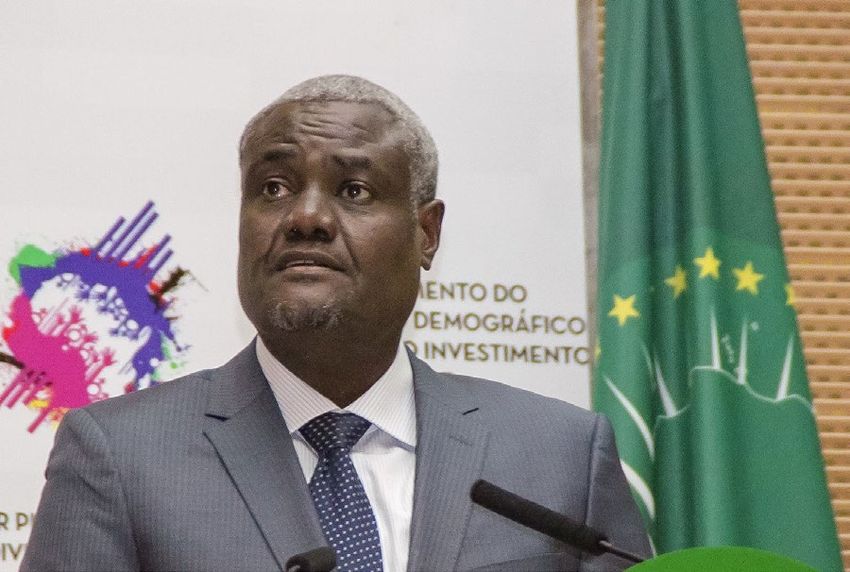
ii
In this issue
Education 												 4

Pan African University 											 15

African Union - International Centre for the Education of Girls and Women in Africa (AU/CIEFFA)			   18

Science and Technology											22

The African Scientific, Technical and Research Commission							                                     29

The African Observatory of Science, Technology and Innovation(AOSTI)					                            32

Youth Division 												33

Summary of Country Activities 										44

Summary of Regional Economic Communities’ activities							79

Summary of Partners’ activities 										82

                                                                                                          iii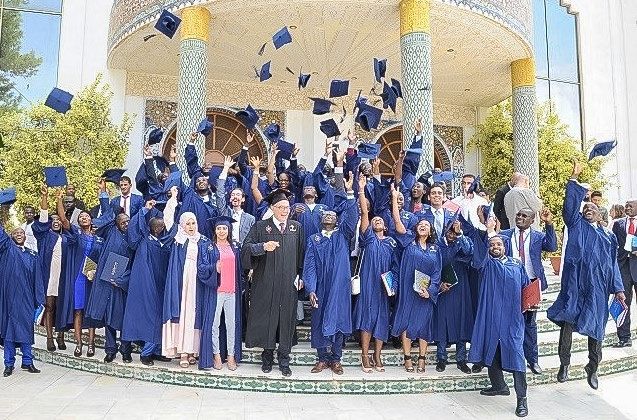
List of Acronymns
                                      AAU- Association of African                EU-AU -European Union mission to
This report is a publication of the   Universities                               the African Union
Human Resources, Science And          ACP- African, Caribbean and Pacific        GMES - Global Monitoring for
Technology Department of the          Group States                               Environment & Security
African Union Commission.             AfDB -African Development Bank             GRC-Global Research Council
                                      ALC -African Leadership Conferences        HLPs -PAU High Level Panel
African Union Headquarters            AMCEN -African Ministerial                 HRST -Human Resources, Science
P.O. Box 3243. Roosvelt Street        Conference on the Environment              and Technology
(Old Airport Area) W21K19             AMCOST- African Ministerial                IPED -Pan-African Centre of Education
Addis Ababa Ethiopia                  Conference on Science                      for Development
Tel: (251) 11 551 77 00.              and Technology                             JICA -Japan International
Fax:(251) 11 551 78 44                AOSTI -African Observatory of Science,     Cooperation Agency
                                      Technology and Innovation,                 MNAUSS -Mwalimu Nyerere African
                                      AQRM -Africa Quality Rating                Union Scholarship Scheme
                                      Mechanism                                  NEPAD- New Partnership for
                                      ASRIC –African Scientific Research and     Africa’s Development
                                      Innovation Council                         PACTED -Pan African Conference on
                                      AUC -African Union Commission              Teacher Development
                                      AU-YVC -African Union Youth                PAU - Pan African University
                                      Volunteer Corps                            RECs -Regional
                                      AYC -African Youth Charter                 Economic Communities
                                      BMZ- Federal Ministry for Economic         STISA -Science, Technology and
                                      Cooperation and Development of the         Innovation Strategy for Africa
                                      Federal Republic of Germany.               STRC -Scientific Technical and
                                      CIEFFA - International Centre for Girls’   Research Commission
                                      and Women’s education in Africa            TVET -Technical & Vocational
                                      COMEDAF -Conference of Ministers of        Education and Training
                                      education of the African Union             UNESCO -United Nations Educational,
                                      COMY- Conference of the African            Scientific and Cultural Organization
                                      Union Ministers in Charge of Youth
                                      CPA -Consolidated Plan of Action

iv 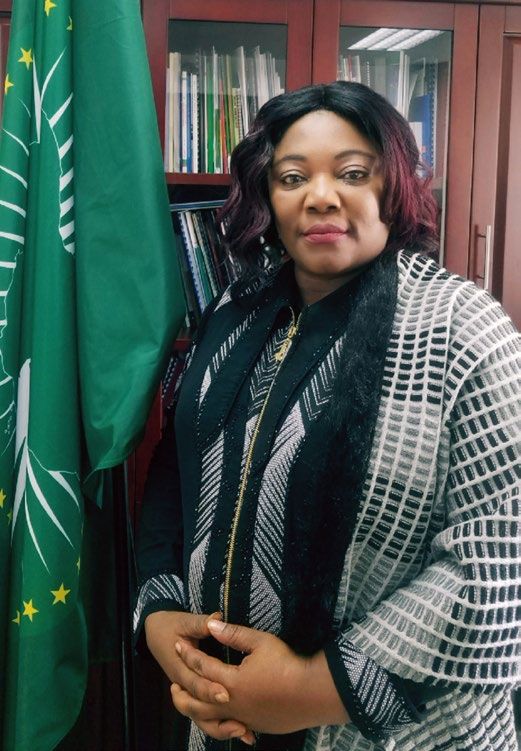
Harnessing the Demographic Dividend through
                                    Investments in Youth
‘’If the majority of the youth demographic comprises of girls, then we must accept that women
and girls are the critical voice and primary actors for building the foundations of a prosperous
Africa that is at peace with itself.’’

                                                                                  H.E. Mr. Moussa Faki Mahamat
                                                                    Chairperson of the African Union Commission

  Chairperson of the African Union Commission, H.E. Mr. Moussa Faki Mahamat

                                                                                                                  v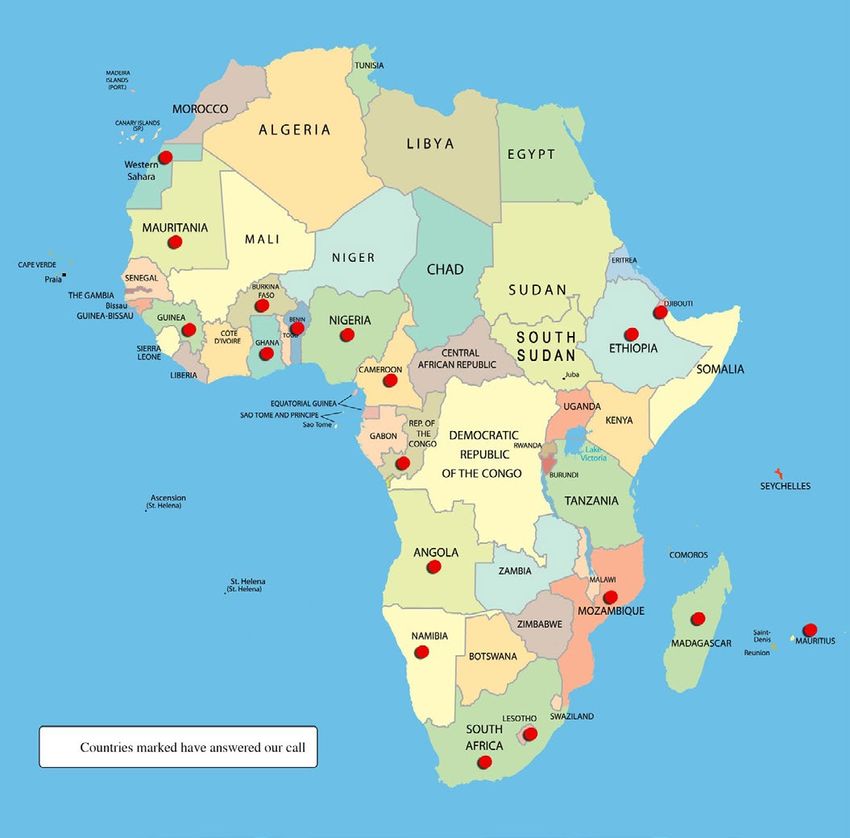
vi
Foreword

                                                              In this regard the Commission elaborated three distinct
                                                              strategies for: Education; The Continental Education
                                                              Strategy for Africa (CESA-16-25); Technical and Vocational
                                                              Education and Training; and Science, Technology and
                                                              Innovation Strategy for Africa (STISA -2024), to drive
                                                              human capital development, youth empowerment,
                                                              productivity and economic growth. These strategies
                                                              enable us to break down barriers that create a fragmented
                                                              system on the continent through strengthening
                                                              coordination and addressing weak levels of investment
                                                              in (1) Education, (2) Youth and Capacity Development
                                                              and (3) Science, Technology and Innovation. We need
                                                              to reach out to key stakeholders across our countries,
                                                              across sectors and policy spectrum to promote a multi-
                                                              disciplinary approach that creates new value chains,
                                                              adds value to our natural resources and accelerates the
                                                              diffusion of breakthrough innovations into industries and
                                                              society.

                                                              This report outlines the activities we have carried out
                                                              during the year 2017 focusing on Education, Youth and
                                                              Science, Technology and Innovation in the continent. I
                                                              urge Member States, RECs and partner organisations
                                                              to publish their work in this report. RACA can give you
                                                              visibility and Member States can learn from best practices.

                                                              Let me seize this opportunity to acknowledge and
                                                              appreciate the work done by my predecessor H.E. Dr.
                                                              Martial De-Paul Ikounga, the former Commissioner for
                                                              Human Resources, Science and Technology.
            Professor SARAH MBI ENOW ANYANG AGBOR
                                                              I wish you a very successful and productive New Year
I am humbled to have been appointed as the African            2018. Let us remember it is the year of anti-corruption.
Union Commissioner for Human Resources, Science and           Let us reaffirm our commitment to supporting the
Technology, by the Heads of State and Government during       realization of Agenda 2063 and “The Africa We Want”. The
the Twenty-Ninth Ordinary Session (July 2017 Summit) to       Future of this continent, our continent lies in our hands.
lead this crucial continental portfolio.

The development of our continent is anchored on our
                                                              Sincerely,
people centred and long-term AU Agenda 2063, which
is “both a Vision for Africa and a Call to Action to all      H.E. Prof. Sarah Anyang Agbor
segments of our society, the Member States, Regional
Economic Communities, regional institutions, private sector   Commissioner for Human Resources, Science
and our development partners to work together to build        and Technology
a prosperous and united Africa based on shared values
and a common destiny”. The Agenda 2063 enables us to
systematically address our socio-economic challenges
including the Sustainable Development Goals that require
collective action. In addressing these challenges, the
Commission considers (1) Education, (2) Youth and
Capacity Development and (3) Science, Technology
and Innovation as among the key enablers and tools
for the implementation of our agenda, delivering on the
aspirations of the African citizens and creation of long-
term economic benefits for the continent and beyond.

                                                                                                                     1
2017 AU Assembly and Executive Council Decisions

AU Assembly                                        Executive Council                                 Date             Sector

Assembly AU/Dec.625 (XXVIII) Decision on          EX.CL/Dec.957(XXX) Decision on Promotion and         January 2017   Youth
Promotion and Protection of African Investment in Protection of African Investments to sustain invest-
the Youth                                         ment in the Youth

Assembly/AU/Dec.661 (XXIX) Decision on the                                                           July 2017        Youth
Establishment of the African Youth Fund

Assembly/AU/Dec. 654 (XXIX) Decision on the     EX.CL/Dec.980(XXXI) Decision on the Election of      July 2017        HRST
Appointment of two members of the African Union Two Members of the African Union Commission
Commission

Assembly/AU/Decl.4 (XXIX) Algiers Declaration on                                                     July 2017        Youth
investment in employment and social security for
harnessing the Demographic dividend

                                                    Ministerial Conference - 2017

Conference                                                                 Date                              Venue

2nd Specialized Technical Committee Meeting on Education, Science          21 – 23 October 2017              CAIRO, EGYPT
and Technology

2
Departmental Organogram
Office of the Commissioner
Office of the Director
Dr Mahama Ouedraogo
Head, Science and Technology Division
Dr Beatrice Njenga Ms Prudence Nonkululeko Prof. Belay Kassa
Head, Education Division Head , Human Resources and Youth Interim Deputy Rector
Science & Technology Division
Education Division Human Resources & Youth Pan African
Development Division University
(PAU)
Prof. Philippe Dr. Eng. Ahmed Hamdy Dr Rita Bissoonauth Coordinator
Kuhutama MAWOKO Executive Secretary Coordinator
Director
Scientific Technical and African Union- International
African Observatory for Science, Pan-African Institute for
Research Centre for Girls and
Technology and Innovation Education for
Women’s Education in Africa
3
Commission (STRC) Development (IPED)
(AOSTI) (AU/CIEFFA)EDUCATION DIVISION
Education Division
The Education Division is mandated to spearhead the development and harmonization of education policies and programmes
on the continent, towards achievement of the AU vision of prosperity, peace and integration as articulated in Agenda 2063. Its
activities are geared towards ensuring quality transformative education and lifelong learning accessible to all as a human right; and
development and retention of African intellectual capital and human resources through revitalized, quality, relevant, harmonized
education systems as well as through intra African networking. These facilitate the contribution of education and research to African
renaissance and empowerment of its people to generate Africa-led solutions to challenges in every sector; and to influence the
global agenda and the work of education development agencies in Africa.
Continental Education Strategy for Africa for all especially the young girls in line with the African
(CESA 16-25) Union’s Continental Education Strategy for Africa (CESA
16-25) and Agenda 2063. It was attended by more
The Continental Education Strategy for Africa (CESA
than 500 participants including 100 young delegates, 13
16-25) was adopted by the January 2016 Summit. CESA
ministers of Education and Gender, Heads of key partner
is informed by Agenda 2063, as well as by the outcome
institutions and the First Lady of Zambia. The African
of an evaluation of the Second Decade, evaluation of the
Union Commission’s delegation led by H.E. Prof. Sarah
UNESCO brokered Education for All, and pan African multi-
Anyang Agbor, Commissioner for HRST was composed of
stakeholder discussions. Implementation of the CESA is
Dr. Beatrice Njenga, Head of the Education Division, Mr.
being coordinated through the platform of a Coalition of
Abraham Asha Herano, Mr. Kokou Sename Djagadou, Ms.
Partners and Stakeholders working in education in Africa,
Woudase Abebe, Mr. Caseley Olabode Stephens and Mr.
as called for by the AU Summit. Thematic clusters of the
Sebastien Eude Bokossa Kaltani from Women Gender and
partners and experts have been established, around the
Development Directorate.
CESA Strategic Objectives and key issues. These include
Teacher Development; Women and Girls Education; EMIS;
Safe Schools and Peace Education; School Feeding; Higher
Education; TVET- among others. Each Cluster has a
coordinating Partner that helps to manage implementation
and reporting of partner agencies, and submit progress
reports to be published in the RACA every year.
Towards gender Equality in Education: Positioning
youth to champion Africa’s education agenda
The African Union Commission (AUC), the Government
of Zambia, the Forum of African Women Educationalists
(FAWE), the Association for the Development of Education
in Africa, UNESCO, Plan International, UNWOMEN, UNICEF
and Microsoft Philanthropies co-convened from August
23rd to 24th 2017 in Lusaka, Zambia for The inaugural
Regional Partnerships to Advance Education in
Conference on Girls’ Education in Africa. Africa
ADEA’s 2017 Triennale, which was held from 14th - 17th
The Conference organised under the theme of
March, 2017, in Dakar, Senegal, focused on “Revitalizing
Girls’ Education in Africa seeks to strengthen youth
education towards the 2030 Global Agenda and Africa’s
leadership and engagement in promoting education
Agenda 2063”.
UNESCO, as chair of the West and Central Africa Regional
Coordination Group on SDG4-Education 2030 (RCG4-
WCA), facilitated a side event, devoted to the theme of
“Regional Partnership in Support of Education 2030
and CESA 16-25”, which brought together sixty (60)
participants, including high-level representatives from the
AU, ADEA, the Global Partnership for Education (GPE), and
regional and continental partner institutions from East and
Southern Africa.
The side event provided a platform to discuss synergies
between the CESA and SDG4-Education 2030 and their
4 EDUCATION DIVISION
HIGHER EDUCATION
NYERERE SCHOLARSHIP PROGRAMME
This year 2017 the Call of Nyerere Scholarship applications
was made specifically for PhD Programmes in Education
Sciences, in order to contribute to the quality of education
in Africa. Twenty one candidates were shortlisted for
scholarship award in 2017. A total of 166 students from
34 African countries have been awarded scholarships to
study in universities across the continent. The distribution
of awarded scholarships is shown below.
implementation in sub-Saharan Africa (SSA). Additionally,
the participants exchanged knowledge of existing
education coordination mechanisms in SSA and proposed
ways to strengthen collaboration between them.
One of the major outcomes of the Triennale was a
reiteration of the call to establish and African Education
Fund. The African Union Summit in January 2017 had
called for the establishment of an African Education Fund
to ensure reliable financing for implementation of the Plan
of Action for the Second Decade of Education For Africa
2006-2015.
2ND Specialized Technical Committee Meeting on
Education, Science and Technology (STC-EST 2)
The 2ND Specialized Technical Committee Meeting on In August 2017, monitoring missions were undertaken
Education, Science and Technology (STC-EST 2) held in in two universities in Kampala: Makerere University
Cairo Egypt from 21st to 23rd October 2017 called on and Kampala International University to assess the
Member States and Regional Economic Communities to implementation of Nyerere Scholarship and other AU
popularise and organise local launching of the Continental higher education initiatives at institutional level.
Education Strategy for Africa as Africa’s domestication of
the global SDG 4 and Education 2030. The STC also called The missions were undertaken by Dr. Yohannes
on Member States to support the work of the Commission, Woldetensae and Ms. Olga Alexandrovna Kebede. The
and to assign the responsibility of Focal Agency for CESA purpose of the mission was to ensure a close follow-up
to National UNESCO Commissions in order to promote of the Nyerere scholarship scheme and discuss with host
alignment of the local, continental and global frameworks. universities’ concerned officials on the implementation
Member States were also urged to participate in Cluster status of Nyerere Scholarship, including logistics of tuition
activities and organise experience sharing events for fees disbursements and academic supervision of students.
Member States to learn from best practices in major areas The monitoring mission helped also to meet face to face
of CESA. with Scholarship students and confirm their academic
status, and validate their existence. Supervisors of the
The STC also took decisions on strengthening TVET, students were also engaged.
School Feeding, a culture of reading, promoting African
writers and African content in education curricula. Member Short guided campus tours were made in both universities.
states were requested to utilise the UNESCO General The mission team observed that the implementation of
History of Africa manuals in schools and colleges. The Intra-Africa mobility programmes and Harmonisation/
Ministers also called for the establishment of an African Tuning are not embedded within the universities. The
Teachers’ prize, to recognise and celebrate committed senior management is not fully aware of the initiatives.
teachers, while promoting and raising the status of The team validated the provided degree copies of the
Teaching as a profession. recently graduated 4 students from Kampala International
5EDUCATION DIVISION
University from University records. scholarship students by the Education Division scholarship
unit. Consequently, 13 African students began their classes
The same team also undertook missions to Tanzania from in October 2017.
20 – 21 December 2017, visiting the University of Dar es
Salaam and the Open University of Tanzania to discuss A concept note has been developed to initiate short-term
the Nyerere Scholarship and other African Union higher training programme that will be managed jointly by the
education initiatives. Korea International Cooperation Agency (KOICA) and
the AUC-HRST. It is envisaged to offer per year 3 short-
The Nyerere Programme is an umbrella for implementing term trainings, each with duration of 2-3 weeks, for
other scholarship initiatives. Accordingly, a Chinese about 20 – 25 persons per training session. The training
Scholarship call was made in 2017 that is tenable at programme will be implemented by 2018. Similarly, a
Universities in China. Following shortlisting of successful Project Proposal for Africa-Korea Scholarship Programme
candidates by the respective Chinese host universities, was submitted for consideration within the framework of
admission letters were forwarded to the selected Africa-Korea Cooperation.
INTRA-AFRICA ACADEMIC MOBILITY SCHEME
A new Call for Proposal of Intra-Africa academic mobility
Mobility distribution by gender
was published end of January 2017 with fund of 10 million
Euro. Sixty nine eligible applications from 39 African Type of mobility Female Male Total
countries were received. The Evaluation Committee
Master Students 254 530 784
selected seven partnerships involving 35 higher education
institutions for funding. Up to now, 29 university Doctoral Candidates 63 301 364
partnerships involving 95 African higher education Staff 63 149 212
institutions are engaged in this academic mobility
TOTAL 380 980 1360
programme. So far, 1360 African individuals (784 Master
Students, 364 Doctoral Candidates and 212 staff) from Percentage Participation 27.9% 72.1%
44 Member States have benefited from the Intra-Africa
Academic Mobility Scheme.
Mobility distribution by age group
Type of mobility Age Group Total
18-25 26-35 36-45 46-55 >55
Master Students 203 514 58 9 784
Doctoral Candidates 14 237 85 26 2 364
Staff 2 52 90 44 24 212
TOTAL 219 803 233 79 26 1360
6 EDUCATION DIVISION
was also presented for initial consideration and useful
HARMONIZATION / TUNING
comments received from discussions on similar systems
In implementing the second phase of Tuning/ in other regions. Following consecutive stakeholders’
Harmonisation project, the development of learning consultation and review, the draft proposal will be an
outcomes and competencies has been finalised for eight input for developing an African Credit Transfer System.
subject areas in Medicine, Teacher Education, Mechanical
Engineering, Agriculture, Civil Engineering, Economics, ADDIS CONVENTION FOR RECOGNITION OF
Geology and Higher Education Management. Student ACADEMIC QUALIFICATIONS
workload surveys have been conducted in 105 African
The AU Commission is working jointly with UNESCO to
universities that have been used as input for developing
expedite the ratification and implementation of the Addis
an African credit transfer system. A General Meeting of
Convention on the Recognition of Studies, Certificates,
“Tuning Africa II Project” was held in November 2017
Diplomas, Degrees and Other Academic Qualifications in
that was attended by curricula experts from over 100
Higher Education in African States. The Addis Convention
universities and members of Project Advisory Group from
is an important instrument for achieving the African
regional and continental organizations. A book has been
Union’s vision of integration as articulated in Agenda
produced for each subject area. Certificates of Tuning were
2063, where intra-Africa mobility and skills portability
given to all participating higher education institutions.
are necessary for integration, requiring that Member
States mutually recognise qualifications from their
various institutions of higher learning. A booklet has been
published in 4 languages by the AUC Education Division
to create awareness about the Addis Convention and its
usefulness among all stakeholders.
From 2 to 4 May 2017, thirteen Eastern African
Member States gathered in Djibouti to participate in a
Conference on Higher Education, Policy and Research.
The conference, jointly organized by UNESCO and the
government of Djibouti, brought together ministries
At the last Tuning Africa Project Meeting, Dr. Beatrice
Njenga, Head of Education Division, AUC delivered
an opening speech and made a presentation on
harmonisation and tuning in implementation of the African
Union policy frameworks and Agenda 2063.
A session on Credit Transfer System from a global
perspective in plenary was chaired by Dr. Yohannes
Woldetensae, Senior Expert Education Division, AUC.
The practices of Europe, Latin America and Russia were
presented.
A draft proposal for continental credit transfer system
of higher education, universities, tertiary education
institutions, and representatives from the African Union,
United Nations entities, the National Commissions as well
as youth representatives. The conference was opened by
the President of Djibouti H. E. Ismail Omar Guelleh.
Dr. Yohannes Woldetensae, delivered a statement on “Role
of Higher Education and Research in AU Agenda 2063 and
Continental Education Strategy for Africa”. Member States’
representatives agreed to advance the ratification and
implementation of the Addis Ababa Convention.
7EDUCATION DIVISION
Following intensive advocacy in various forums, several components of the PAQAF tools that will help higher
Member States have reaffirmed their commitment to education institutions in Africa to align, harmonise
expedite ratification campaign in their respective countries and improve quality, and spoke about the mission and
involving the relevant national structures and authorities. functions of a Continental Accreditation Agency.
It is expected that at least 10 African States will ratify the
Convention by the end of 2018.
AFRICAN QUALITY RATING MECHANISM (AQRM)
A Technical Meeting was organised from 28th to 29th
March 2017 in Accra, Ghana to prepare African Quality
Rating Mechanism (AQRM) Institutional Evaluations. The
organisation of site visits for evaluation teams, the role
of experts in verifying institutions survey questionnaires,
and the modalities for report writing were discussed in the
technical meeting.
In 2017, fifteen institutional evaluations (10 public
universities; 4 private universities; and 1 ODL university)
were carried out utilizing the AQRM as a key evaluation
tool. The self-rating of the institutions were validated by RUFORUM’S STRATEGIC BUSINESS PLAN MID-
international external reviewers through site visits to the TERM REVIEW MEETING
respective universities. The AQRM is now available for full-
scale implementation, coordinated by the Association of Dr. Yohannes Woldetensae participated at the Regional
African Universities, while an online tool for the AQRM that Universities Forum for Capacity Building in Agriculture
would enable universities to submit institutional data and (RUFORUM) Strategic Business Plan Mid-Term Review
self-ratings electronically is being developed. Meeting, to provide the AU perspectives and contribute
its input in updating the operational plan. The meeting
PAN-AFRICAN QUALITY ASSURANCE AND was held from 21 - 22 April 2017 in Kampala, Uganda
to discuss with key stakeholders and make contributions
to update a five-year operation plan 2018-2023. The
RUFORUM expressed its willingness to further strengthen
its collaboration with AUC and contribute its part to
advance the implementation of Agenda 2063.
AAU GOLDEN JUBILEE AND LAUNCHING
OFHIGHER EDUCATION CLUSTER
The Higher Education Cluster for the implementation
of the Continental Education Strategy for Africa (CESA
2016-25) was officially launched in June 2017 at the
culmination of the Association of African Universities
Dr. Yohannes Woldetensae, provided the perspectives on AQRM including its (AAU) General Conference and Golden Jubilee celebration
purpose and methodology for institutional evaluation. in Accra, Ghana. Dr. Beatrice Njenga made goodwill
remarks about the partnership between AAU and the
ACCREDITATION FRAMEWORK (PAQAF)
AUC; and a presentation on the continental vision Agenda
In implementing the Pan-African Quality Assurance and 2063 and the CESA. Dr. Yohannes Woldetensae made a
Accreditation Framework (PAQAF), a technical working presentation on AUC’s programmes and frameworks in
group has been established to develop an African higher education.
Standards Guidelines for Quality Assurance (ASG-QA) in
The Higher Education Cluster will be implemented
partnership with the EU. The ASQ-QA is aimed to support
under the leadership of the AUC Education Division and
higher education institutions and quality assurance
coordination of the Association of African Universities,
agencies in Africa in implementing good practices for
with facilitation support from the International Network
quality assurance. A consultation workshop was held
for Higher Education in Africa. The objectives of the
in Addis Ababa from 16 - 17 November to discuss the
Cluster include providing a continental platform for policy
draft document with key stakeholders. Dr. Yohannes
dialogue and interaction among key stakeholders to
Woldetensae provided an overview of the different
8 EDUCATION DIVISION
advocate and collaboratively implement the AU higher continent. The outcome of the workshop was mutual
education initiatives. learning of lessons from countries that have improved the
efficiency in quantitative and qualitative aspects of teacher
INTERNATIONAL CONFERENCE ON QUALITY deployment within their systems. Dr Njenga participated
ASSURANCE IN HIGHER EDUCATION IN AFRICA and made a presentation on the place of the Teacher in
The International Conference on Quality Assurance in Agenda 2063, and CESA 16-25, and the recommendations
Higher Education in Africa (ICQAHEA) with the theme: of the AU Study on Teacher Training, Working and Living
“Quality Higher Education, Harmonisation and Attainment Conditions in Member States. She also mentioned the
of Sustainable Development Goals (SDGs) in Africa” was proposed use of the African Virtual and E-University to
held from 19 – 21 September 2017 in Accra, Ghana. The increase the numbers of trained teachers. The Teacher
Conference reviewed ongoing and emerging initiatives in Study was very well received and participants commended
quality assurance and regional harmonization and identify the recommendations thereof as their implementation will
the gaps to be filled in order to enable higher education go a long way to enhance effectiveness and efficiency
institutions to fully contribute to the achievement of the in management of teaching corps; promote the status
SDGs. Dr. Yohannes Woldetensae made presentations of the Teacher and enhance teacher motivation and
covering implementation of PAQAF, AQRM and the Addis professionalization, while also ensuring quality teaching
Convention. The African Quality Assurance Network and learning.
(AfriQAN) General Assembly conducted elections for the Dr Njenga also attended the AFTRA Teaching and
Board of AfriQAN. Prof. Mbatchi, Secretary-General of learning Conference in Africa, supported by Dr Marguerite
CAMES was elected as the president of the Board. O’Conor, the Teacher Study consultant who is a leading
Mathematics educator. A range of educators from
TEACHER DEVELOPMENT
academia, government departments, schools and civil
The teacher is essential in achieving the goals of society met and engaged on teacher standardisation,
literacy, as well as the skills and education revolution regulation and profesionalisation. As a result of the
called for under Agenda 2063 as the key to unlocking engagements, a number of teacher regulatory agencies
Africa’s potential for prosperity, and for harnessing the and authorities in Africa are a new set of partners for
Demographic Dividend. Africa is short of over two million the AUC and AFTRA, the organization that brings them
teachers in the education system; even as a significant together will play an important role in the CESA Teacher
number are under- qualified and untrained, with Development Cluster, for spearheading matters of quality,
disproportionate shortages in STEM subjects and certain professionalism and standards at academic, policy and
geographic areas. The Commission has been working practitioner levels.
with several key international partner agencies, including
the UNESCO International Institute for Capacity Building The STC-EST 2 session held in Cairo in October 2017
in Africa (IICBA); the African Federation of Teacher commended the AUC for the report of the Study on
Associations (AFTRA), Education International (EI) and Teacher Training, Working and Living Conditions in
the Centre for Strengthening Mathematics Education in Member States and agreed with all the recommendations
Africa (CEMASTEA), International Teachers’ Task Force of the Study. These include developing a continental
(ITTF) among others. teacher mobility protocol and establishing a Teachers
without Borders Corps. They also called for the
The Division co-organised with IICBA several events establishment of an AU Teachers Prize.
in 2017, including review of the Study on Teacher
Motivation in January, celebration of the World Teachers’ 18th to 21st September 2017, Prof Callistus Ogol
Day (September); a Seminar of Teachers and Quality in represented the Commission in the 10th Policy Dialogue
Education (December); a training workshop on innovative Forum of the International Task Force on Teachers for
pedagogies to enable teachers to promote peace building Education 2030, held in Lomé, Togo. Over 350 individuals
and prevent violent extremism through education. participated in the forum including policy makers,
researchers, teacher educators, teachers, development
The Head of Education Division, Dr Beatrice Njenga sits partners and civil society organizations. The purpose of
on the IICBA Governing Board, which had two meetings the conference was, among others, to debate and share
in 2017. Member ship of the board helps to ensure that experiences on “he professionalization of teaching”; and to
IICBA work is aligned to the Agenda 2063 and CESA enhance collaboration and partnership among Task Force
16-25, while promoting the productive partnership with members, and reinforce social dialogue among teacher
IICBA. stakeholders at global, regional and national levels. Dr.
Ogol’s presence ensured promotion of the leadership role
In May UNESCO, organized a workshop to take stock of
of the AUC in education development. The AU Study on
teacher allocation within education systems across the
9EDUCATION DIVISION
the planning, implementation, monitoring, strategies and
programs. Creating mobile online education and training
platforms, and capitalizing on existing and successful
ICT-driven initiatives that enhance access including the
Pan-African Virtual and E-University;
The Cluster was launched and is coordinated by the
Global E-Schools and Communities Initiative (GESCI) with
tremendous support from the @Edu Sustainable Education
organization. The African Digital School Initiative was
launched in 80 high schools in Kenya.
The Cluster organised a learning mission to Portugal was
titled “National ICT in Education policies and strategies to
Teachers Training Working and Living Conditions in Africa achieve development goals and implement the Continental
was presented by Dr Marguerite O’Conor, and it was very Education Strategy for Africa: Leadership and partnership
well received and commended. in designing and implementing national initiatives”,
The Forum recommended that the African Union co-organized by AUC, Millenium@EDU, GESCI, JP-IK
Commission should develop a continental reference was held on 27th and 28th April 2017 in Porto, Portugal.
framework on professional qualifications and standards Participants included Directors of ICT of Ministries in
of practice for teachers, to be domesticated by charge of secondary education from Benin, Botswana,
countries for teacher professionalism. This is in line with Côte d’Ivoire, DRC, Equatorial Guinea, Ethiopia, Guinea
recommendations of the AU Teacher Study, and will be Conakry, Kenya, Lesotho, Mauritius, Morocco, Rwanda,
done in 2018. South Sudan, Tanzania, Uganda, Zambia. It also included
private companies such as JP-IK, Microsoft and Intel. Dr
STEM EDUCATION Njenga participated.
The scientific literacy needed for agenda 2063; the Outcomes of the meeting include practical understanding
21st century skills for employability, innovation and of the implications of leadership and partnership on
entrepreneurship; the life skills required for lifelong designing and implementing national ICT in education
learning and responsible citizenship for sustainable initiatives; shared understanding of the importance of
development- all call for enhanced STEM education policy coherence and cross-sector coordination in ICT in
for all. However, the teaching and learning of STEM is education strategy/programmes development; awareness
undermined by inadequacies in teacher preparation and of the critical dimension of public-private partnerships
in the teaching and learning materials and pedagogies; as and robust programme management to ensure effective
well as non- popularity of these subjects. implementation; and knowledge of the role of school
leadership and teachers in successful implementation of
The STEM Cluster was launched, to be coordinated by the
ICT in Education initiatives.
African Institute for Mathematical Sciences, the African
Academy of Sciences, and the Centre for Strengthening In October, a learning and networking event was
Science and Math Education (CEMASTEA). Another organised by the ICT Cluster, funded by Millenium@
key partner for the AUC in this area is the Association EDU in New York, bringing together several Member
for the Development of Education in Africa (ADEA), States, private companies working in ICT in Education,
whose Inter-Country Quality Node in STEM has been UN agencies, private innovators, as well as GESCI and
absorbed into the CESA STEM Cluster. This will help the AUC. Commissioner for HRST and Head of Education
alignment and coordination of partner agency work, for Division participated.
more effectiveness.
PEACE AND EDUCATION
ICT IN EDUCATION
CESA (16-25) includes two strategic objectives that
The ICT in Education Cluster has the mandate to address the issues of safe schools, peace in education and
contribute to harnessing the capacity of ICT to improve conflict prevention. Peace and Education Cluster includes
access, quality and management of education and the issue of protecting education from militarization,
training system through, among others, formulating to facilitate the provision of continuous education at
policies for ICT integration in education and training; all times and under all circumstances in Africa. It also
building ICT capacities of learners and teachers to take covers the issue of peace education to build cultures of
full advantage of the potentials of technologies; and of peaceful co-existence and prevent violent extremism.
education managers and administrators on use of ICTs in The phenomenon of attacks on schools contributes to
10 EDUCATION DIVISION
drop-outs and underperformance of students. The Ethiopian Government commemoration of the second
edition of the African Day of School Feeding at a national
The Peace and Education Cluster was launched in level in 2017, was held at Kokbe Tsebah Primary School
November 2017, with Save the Children International in Addis Ababa. About one hundred guests and partners
as Coordinating agency. The Cluster cuts across several attended including the First Lady of Ethiopia, the Minister
AUC departments and encourages the endorsement of Education, State Minister of Agriculture and Natural
and implementation of the tenets of the Safe Schools Resources, Deputy Minister for Basic Education, WFP Head
Declaration and other related instruments which of Programmes, representatives of USAID, and UNICEF. A
Member States have already ratified. We need to delegation of the African Union was also represented at
establish safe school requirements such as appropriate the event held under the theme: “Home Grown School
standards for infrastructure, school environments and Feeding: Investment in Youth and Children for Harnessing
school management. The Division participated in two the Demographic Dividend.” In his opening speech,
major events in 2017: the Safe Schools Conference in the Minister of Education stressed that Ethiopia shall be
Buenos Aires in March 2017; and the breakfast dialogue implementing national school feeding programmes in all
co-organised by Save the Children International with schools as part of the newly developed National School
support from Norway and Argentina Embassies in Addis Health Nutrition Strategy. He added that ‘the national
Ababa in June. school feeding programme will not be limited only to
schools where students are vulnerable to malnutrition and
SCHOOL FEEDING food shortage, but also will be applicable to all primary
Performance of children in school, and their retention and schools.’
ability to complete school are affected by many factors
related to poverty, and hunger is one such factor. The
multiple benefits of school feeding extend beyond the
school, including agriculture, nutrition, health, and social
development. Home Grown School Feeding has been
shown to encourage families to consistently send their
children to school, reducing child labour, early pregnancy
and early marriage.
The Heads of State and Government of the African Union
in January 2016 took the Decision Assembly/AU/Dec.589
(XXVI) instituting 1st March as the African Day of School
Feeding along with other key recommendations. The AUC
has since established a multi-agency Committee which Family Photo for 2nd African Day of School Feeding, Congo Brazzaville,
March 01photo credit-AUC
met twice in 2017; and completed a Study on School
Feeding covering practices and lessons from Member Remarks were also made by Dr. Yohannes Woldetensae,
States. The Study was sponsored by WFP Centre Against representing the AUC. The First Lady who is also
Hunger. This year more Member States celebrated the the Ambassador for the Nutrition and School meals
Africa Day of School Feeding. The AUC participated in Programme in Ethiopia concluded the event by assuring
the continental event held in Congo Republic Brazzavile those in attendance of Ethiopia’s commitment to embrace
and the national event held in Ethiopia. Zimbabwe has the African of this initiative.
offered to host the continental celebration in 2018, and a
preparartion committee has already been established. The continental celebration of the 2nd Africa Day
of School Feeding (ADSF) was held in Republic of
Congo under theme of: “Home Grown School Feeding:
Investment in Youth and Children for Harnessing the
Demographic Dividends”. It was held under the patronage
of the Minister of State, Minister of Construction, Urban
Planning, Town and Environment, Mr. Claude Alphonse
SILOU, representing the Prime Minister. The opening
ceremony attended by ministers, deputies, directors of
organisations, and several stakeholders.
The Ministers all thanked the Republic of Congo, WFP
and the African Union for organizing the meeting and
presented their experiences. Technical Panel presentations
11EDUCATION DIVISION
strengthening the implementation of the findings of
were made by different agencies, including the AUC. The
ceremony included a visit to the school of Ignié marked by the study and AU Decision 589 XXVI;
the sharing of a meal with the children. • Encouraged Member States to develop implementa-
tion plans based on the findings of the study, including
The 3rd Continental Consultation of the AU and WFP on
strengthening local resourcing of school feeding;
Home Grown School Feeding
• Encouraged member states to consider HGSF not as a
The AU in collaboration with the WFP and the Government mere spending but as a long-term investment in chil-
of Kenya, held the Third Continental Consultation on dren and youth and identify cost effective and more
HGSF in Nairobi, Kenya on 29 -31May 2017. The objective
innovative local financing;
of the meeting was to promote national school feeding
programmes across the continent as a key instrument for • Invited more partners and agencies to support
enhancing access, retention and performance in education the HGSF.
in line with implementation of CESA16-25 and the decision
of the Heads of States to institute 1st March as the day of
school feeding in Africa.
The meeting was attended by 90 participants including
Ministers, Deputy Ministers and representatives from
African Union Member States, Senior Officials and others.
H.E. Dr. Martial De-Paul Ikounga, and the Commissioner
for HRST at the time, presided over the opening
ceremony. Delivering the keynote address, Hon. Dr. Fred
Okeng’o Matiang’i, the Cabinet Secretary of the Ministry of
Education of Kenya used the occasion to thank the WFP,
and affirmed that from 2018 the Kenyan government
intends to fully finance its Home Grown School Feeding
Programme on its own budget. The outcomes of the
AU-EU Structured Dialogue with Students and Alumni
conference include validation of the School Feeding Study;
in Africa, 16-17th October 2017 Abidjan, Cote D’Ivoire
launching of the School Feeding Cluster with WFP as
Coordinating agency and the Cluster TOR and road map. The Structured Dialogue of Students and Alumni in Africa
was held from 16-17th October, 2017 in Abidjan Cote
The STC-EST 2 took a decision on school feeding
d’Ivoire and was attended by Students and Alumni of the
as follows:
Erasmus+ scholarships programme in Africa, Education
The Ministers: experts in Africa, and representatives of the African Union
and the European Union. The AUC was represented by Dr
• Endorsed the Report and Recommendations of the Beatrice Njenga and Mr Mich-Seth Owusu.
School Feeding Study;
Dr. Beatrice Njenga, Head of Education Division at the
• Called for allocation of budget for inter-ministerial
African Union Commission delivered a key note address
Home-Grown School Feeding management unit for where she expressed appreciation to the government of
Cote d’Ivoire for hosting the dialogue. She stated that
investing in the youth
is the best investment
that we can make
towards the future.
She delivered five
key points for the
place of Alumni in
contributing to Africa’s
aspirations. These
included: Positioning
for relevance and
impact, Building
The 3rd Continental Consultation of the AU and WFP on Home Grown School Feeding, May 2017 Photo credit -AUC capacity to influence,
12 EDUCATION DIVISION
The meeting was attended by a delegation from AUC
led by Dr Beatrice Njenga, the Head of Education
Division, and attended by Ministers, Department Heads,
University presidents, and other officials. On her key note
speech she stressed that The African Union adopted the
Continental Education Strategy for Africa 2016-‘25 as a
regional operationalization framework for SDG number 4:
to “ensure inclusive and equitable quality education and
promote lifelong learning opportunities for all.” .
She further stressed Africa is committed to undertake
massive and bold industrialization as indicated under
the Agenda 2063, and have the Action Plan for the
Accelerated Industrial Development of Africa (AIDA)
Fill knowledge and skills gap, Sense of mission and
published in 2007.
responsibility and Knowledge sharing.
Finally the symposium has concluded stressing the link
Parallel workshop sessions were held to deliberate on
between two sectors under the Africa-China cooperation
Challenges for Students and Alumni in Africa; Common
so as transform African economies and create shared
challenges for Students in the learning environment; How
growth, decent jobs and economic opportunities for all.
to channel young people’s skills; Entrepreneurship and
active citizenship into local needs.
Thriving innovative social ventures led by youth as an
avenue to channel their energies productively were also
a focus of the meeting. Mr. Obin Guiako, the Executive
Director of Baby Lab was invited to share about his social
enterprise which was inculcating innovation and skills
into primary school children in underserved communities
in Cote d’Ivoire through recycling digital waste as tools
for creativity.
INTERNATIONAL SYMPOSIUM ON CHINA-AFRICA
EDUCATION EXCHANGE AND INDUSTRIAL
CAPACITY COOPERATION
As part of an initiative for a further step in implementing EDUCATION MANAGEMENT INFORMATION
the Memorandum of Understanding signed between SYSTEMS (EMIS)
Tianjin University of Technology (TUTE) and AUC on 10
EMIS is perhaps the most strategic tool for ensuring
November 2015, the HRST department has co-organized
quality education development, and the attainment
a conference with the aim of integrating African
of the education and skills revolution. This is because
perspectives on Africa-China cooperation in education/
EMIS activities entail the measurement framework for
skills development and industrial capacity transfer.
monitoring and evaluation of education systems, providing
information for policy analysis to enable knowledge based
planning, management and development of education.
It requires that Member States capacity for collecting
and managing education data be enhanced in order to
generate accurate, timely and meaningful data; and to be
able to interpret and use it strategically.
Recruitment of staff for the Education Observatory at
IPED in Kinshasa has begun, and an implementation
strategy developed. Software and other tools for data
collection, rescue and analysis have been developed. The
CESA monitoring and implementation framework has been
adopted through discussions with major stakeholders, and
Dr Beatrice Njenga, Head of the Education division, HRST, AUC making
the Education Planning Cluster has been launched.
opening Remarks, photo taken by TUTE, 24 November 2017
13EDUCATION DIVISION
2063 and is a domestication of the Global
Education Agenda 2030 and SDG4”.
The Education Planning Cluster which
is to have oversight on all other CESA
clusters and the Peace and Education
Cluster were launched on the, 1st
December 2017. The draft concept
note and terms of reference as well as
membership structure, available positions
in the coordination of the clusters, as
well as draft work plans were presented
IPED has a debt of 3 million USD owed to former staff; to participants for their inputs and were endorsed.
and the hosting agreement with the government of DRC ADEA will be the Coordinating agency for the Education
needs to be reviewed before the situation is conducive for Planning Cluster
work.
The workshop was attended by representatives of the
The Association for the Development of Education in Bureau of the STC-EST2, and from SADC, ECCAS and
Africa (ADEA) in collaboration with the Association of ECOWAS; several AUC departments, AU CIEFFA, AAU,
African Universities (AAU) organized a technical workshop ADEA, Save the Children International, Global Partnership
on Higher Education Management Information Systems for Education, UNESCO, UIS and UNICEF.
(HEMIS) benchmarking from 29 - 30 June 2017 in Accra,
Ghana. Participants discussed on group sessions the Africa Virtual and E-University Project
content of a framework-tool for HEMIS. A committee was Working Document
established to finalize the framework-tool. The Department of Human Resources Science and
Participants emphasized the need to identify HEMIS Technology, Education Division held a meeting to
indicators that would be used to monitor the comprehensively review, enrich and complete the draft
implementation of the Continental Education Strategy for Africa Virtual and E-University Project Working Document
Africa and Agenda 2063 with respect to higher education from 23rd to 26th November 2017 in Addis Ababa,
activities. Ethiopia. The Project Working Document shall provide
guidance and create an enabling environment for the
WORKSHOP TO VALIDATE CESA 16-25 implementation of this Agenda 2063 flagship. The revised
INDICATORS FRAMEWORK draft was then presented to The Pan African University
Council during their ordinary session meeting held on
The Division co-organised with ADEA and Save the 26th November in Addis Ababa, Ethiopia for adoption. The
Children International, a workshop from 27th November to Council recommended that the University be renamed Pan
1st December 2017 to validate the Continental Education African University Virtual and E-Institute in consistence
Strategy for Africa 2016–2025 (CESA 16-25) Indicators with the nomenclature of the other PAU Institutes.
Framework and Launch of CESA Clusters on Education
Planning and Peace and Education. 15th Conference for Mathematics, Science and
Technology Education in Africa (COMESTEDA 15)
During the four days of the workshop, participants
deliberated and made inputs to several proposed From the 14th to 16th November 2017, Prof Callistus
Indicators for monitoring the implementation of CESA Ogol attended the 15th Conference for Mathematics,
Strategic objectives. Also, they agreed on the reporting Science and Technology Education in Africa (COMESTEDA
template to be used for reporting on CESA – The CESA 15) held in Livingstone, Zambia. The Conference was
Reporting template. organised by CEMASTEA, a key partner of the AUC and
member of the coordinating team for the CESA STEM
Dr. Beatrice K. Njenga, Head of Education Division
Cluster. The theme of the Conference was Teacher
and Officer in Charge of the Human Resource, Science
Professional Development for Africa: Competencies and
and Technology Department in her opening remarks
skills in Stem Learning Environment. COMESTEDA 15 was
highlighted that the CESA Indicators Framework provides
organized to bring researchers and scholars from member
Africa with a credible mechanism for monitoring and
countries to present and discuss their research findings
following up on implementation progress of CESA 16-25.
on competencies and skills in STEM learning Environment.
She added that it leans on the African Union’s Agenda
The presentations in the conference focused on four
14 EDUCATION DIVISION
thematic strands, as follows:
• Strand 1: Teacher Professional Development in Africa:
Towards lifelong learning practices;
• Strand 2: Teacher, Learning and Curriculum: Best
Practices in STEM Education;
• Strand 3: STEM culture and Learning Environment
• Strand 4: Resources for Teaching and Learning STEM
Pan African University
The Pan African University consists of the The Pan African University continues to play its core roles
following Institutes: of training African elites in the fields of Basic Sciences
and Innovation, Engineering, Life and earth Sciences,
• The Institute for Basic Sciences, Technology and
Environment, Water, Energy and Climate Change as well
Innovation (PAUSTI), hosted by the Jomo Kenyatta
as humanities, governance and regional integration.
University of Agriculture and Technology in Kenya
(Eastern Africa); In the 2016/17 academic year, the main activities of the
PAU focused on Students Admissions and Enrolments,
• The Institute for Life and Earth Sciences (includ-
development of new study Programs (MSc and PhD),
ing Health and Agriculture (PAULESI), hosted by the
Recruitment of long term academic staff, popularization
University of Ibadan in Nigeria (Western Africa); of the PAU Programs, development of policy and strategic
• The Institute for Governance, Humanities and Social documents, the formation of a PAU Alumni Association,
Sciences (PAUGHSS), hosted by the University of the finalization of the Host Agreements for the PAU
Yaounde II in Cameroon (Central Africa); Rectorate (in Cameroon) and the operationalization of
• The Institute for Water and Energy Sciences (including PAU Institute for Space Sciences (in South Africa).
Climate Change (PAUWES), hosted by the University I. Students Admissions and Enrolments
of Tlemcen in Algeria (Northern Africa); and
In 2017, PAU admitted 458 (139 females and 319 males)
• The Institute for Space Sciences (PAUSS), to be
news students. The following table shows the number of
Coordinated by the Cape Peninsula University of admitted students by institute:
Technology (CPUT) plus 7 other South African
Universities (Southern Africa).
Newly Selected PAU Students by Institutes (2017/2018 Academic Year)
Institute MSc/MA PhD. Total
Female Male Female Male
PAUGHSS 44 24 17 12 97
PAULESI 75 27 16 10 128
PAUSTI 90 28 34 12 164
PAUWES 43 26 - - 69
TOTAL 252 105 67 34 458
15EDUCATION DIVISION
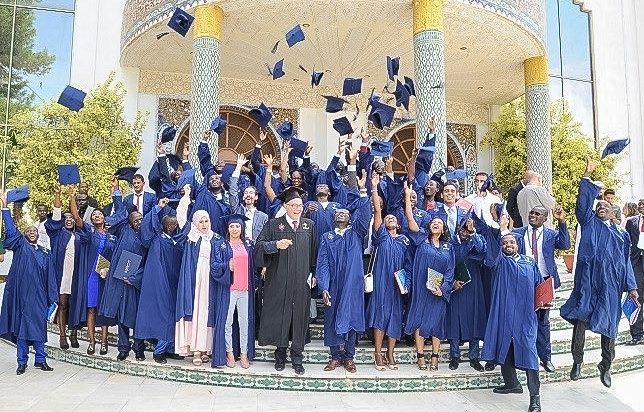
II. Graduation of Students
In the 2017/2017 academic year a total of 212 students (141 males and 71 females) graduates from the Pan African
University Institutes. The following table shows the number of graduates by Institute and dates of graduation.
The Pan African University Graduates from the Pan African University Institutes
contributes to the attainment of (2016/2017 Academic Year)
Aspiration 1 of the Agenda 2063 Institute Number of Graduates. Date of Graduation
“A prosperous Africa, based in
Female Male Total
inclusive growth and sustainable
development”. So far, the PAU PAUGHSS 34 25 59 20 January 2017
graduated364 students (258 males PAULESI 42 22 64 16 November 2016
and 106 females) with MSc. Degrees PAUSTI 29 13 42 27 June 2017
from the PAU Institutes. The PAUWES 36 11 47 28 September 2017
breakdown is as follows:
TOTAL 141 71 212
III. Curriculum Development Graduates from the Pan African University
Institutes (2016/2017 Academic Year)
In the 2016/2017 academic year PAU offered training
programs in 37 fields of specialization (22 MSc./MA and Institute Number of Graduates.
15 PhD). In its continuous attempt to review existing
Female Male Total
curricula and develop new ones (to ensure that the
curricula are relevant and aligned to the requirements PAUGHSS 70 40 110
of the labour market as well as the human resources PAULESI 60 24 84
required for the public, private NGO sectors), PAU PAUSTI 77 20 97
developed 7 new programs of study (6 MSc./MA and PAUWES 51 22 73
1 PhD). While the 6 MSc. Programs are to be launched
TOTAL 258 106 364
in the 2017/2018 academic year, the PhD program in
translation will be launched in the 2018/2019 academic
year.
16 EDUCATION DIVISION
Newly Developed Programs by Institute
and Area of Specialization
Institute Degree Area of Specialization
PAUGHSS PhD Translation
PAULESI MSc. • Photochemistry and Medicinal Plant
• Veterinary Medicine (Avian Medicine option)
• Veterinary Medicine (Vaccines Production and Management option); and
• Sports Development and Policy Management Studies.
PAULESI MSc. • Mechanical Engineering; and
• Mechatronics Engineering.
the outcomes of the shortlisting exercise were presented
during the meeting of the PAU Senate, interviews of
shortlisted candidates were carried out between 20 and
24 November 2017. It is expected to on-board selected
candidates in 2018.
V. Pan African University Institute for Space
Sciences
The preparations are far advanced for the launch of the
Pan African University Institute for Space Sciences in
South Africa in the near future. More precisely, the draft
Host Agreement is currently being finalised by the AU
Commission and the South African counterpart. Officials
IV. Recruitment of long term Academic Staff
and experts from relevant Ministries (Department Of
The recruitment of the permanent academic staff for Higher Education and Training and the Department
the PAU Institutes is a priority area in order to ensure a of Science and Technology) have been working
smooth running of the teaching and research activities. very closely with the experts of the African Union
In an effort to recruit long term academic staff for the Commission to finalize the necessary administrative
PAU institutes, two calls were launched between August and legal requirements to make the Space Science
2015 and February 2016 inviting suitable and qualified Institute operational.
professionals for 74 academic positions. The calls
The joint roadmap developed to operationalize the Space
received a total of 260 applications in response for the
Science Institute puts a timeline for signing the Host
first call, and 247 following the second call. The PAU
Agreement in by the end of 2017 and the launching of
later coordinated the establishment of committees of
the Institute in the first quarter of 2018. The first group of
experts in areas of Higher Education and experts in the
students will be admitted in January 2019.
fields advertised with the support of the Directorate for
Administration and Human Resource Management to VI. Preparation of PAU Policy Documents
screen, shortlist and interview candidates in 2017. While
The PAU has been engaged in the preparation of various
policy documents that will guide its future development
and operation. Towards this end, consultants have
been engaged and are in the process of developing the
following policies:
• The Pan African University‘s Strategic Plan;
• The PAU Communication strategy for the 2017-2020
( is developed, validated in a stakeholders‘ workshop
and will be published soon);
• The PAU Financial Management and
Operational Manual;
• PAU Staff Rules and Regulations, Salary Schemes and
17You can also read


