71st Call for Papers & Registration of Interest - Iaf
←
→
Page content transcription
If your browser does not render page correctly, please read the page content below

71      st
             INTERNATIONAL
ASTRONAUTICAL CONGRESS

12–16 October 2020 | Dubai, United Arab Emirates

                            Call for Papers
                            & Registration
                                 of Interest

                      Inspire, Innovate & Discover
                        for the Benefit of Mankind
                                     IAC2020.ORG
Contents
                                          1.   Message from the International Astronautical Federation (IAF)   2
                                          2.   Message from the Local Organizing Committee                     2
                                          3.   Message from the IPC Co-Chairs                                  3
                                          4.   Messages from the Partner Organizations                         4
                                          5.   International Astronautical Federation (IAF)                    5
                                          6.   International Academy of Astronautics (IAA)                     10
                                          7.   International Institute of Space Law (IISL)                     11
                                          9.   Message from the IAF Vice President for Technical Activities    12
                                          9.   IAC 2020 Technical Sessions Deadlines Calendar                  49
                                          10. Preliminary IAC 2020 at a Glance                                 50
                                          11. Instructions to Authors                                          51

Connecting @ll Space People               12. Space in the United Arab Emirates                                52

           www.iafastro.org

   IAF Alliance Programme Partners 2019

                                                                                   1
71 IAC         st
International Astronautical Congress
12–16 October 2020, Dubai

         1. Message from the International Astronautical Federation (IAF)                                                                                 3. Message from the International Programme Committee (IPC)
         Greetings!                                                                                                                                       Co-Chairs
         It is our great pleasure to invite you to the 71st International Astronautical Congress (IAC) to take place in Dubai, United Arab Emirates       On behalf of the International Programme Committee, it is a great pleasure to invite you to submit an abstract for the 71st International
         from 12 – 16 October 2020.                                                                                                                       Astronautical Congress IAC 2020 that will be held in Dubai, United Arab Emirates. The IAC is an initiative to bring scientists, practitioners,
                                                                                                                                                          engineers and leaders of space industry and agencies together in a single platform to discuss recent research breakthroughs, technical
         For the very first time, the IAC will open its doors to the global space community in the United Arab Emirates, the first Arab country to
                                                                                                                                                          advances, existing opportunities and emerging space technologies. Such platform will provide the participants with a holistic and up-
         host the IAC since its establishment in 1950. The United Arab Emirates’ interest in astronomy and space sciences dates back to the 1970’s,
                                                                                                                                                          to-date view of science, engineering and space technology fields and offer an access to space knowledge for professionals and experts
         when His Highness Sheikh Zayed bin Sultan Al Nahyan met with the NASA team responsible for the Apollo moon landing. This encounter
                                                                                                                                                          from around the world. IAC 2020 presents an opportunity to highlight the evolutionary role of international partnerships in exploration,
         sparked a national focus on space that began almost three decades ago, eventually leading to the birth of a national space sector.
                                                                                                                                                          research, and development. It is a time to envision the discoveries to be made and knowledge to be gained to move forward together.
         The IAC 2020 Host Organization – the Mohammed Bin Rashid Space Center (MBRSC) – member of the IAF since 2012, was established                    Participating in the IAC 2020 will enrich the youth’s knowledge in space science and technology. It will act as an accelerator for STEM
         by the Dubai Government to serve as one of the main pillars to drive the establishment of the knowledge economy and sustainable                  education, and will be a source of enormous pride and inspiration for the ambitious younger generations. As IAC 2020 comes to Dubai,
         development in the UAE.                                                                                                                          along with more than 5,000 leading figures in the international space industry from 70 countries, a platform will be developed that
                                                                                                                                                          further cements space as one of the seven key sectors for the UAE. The year 2020 will be a significant milestone in the UAE’s history as
         With the theme “Inspire, Innovate & Discover for the Benefit of Mankind”, the IAC 2020 looks forward to making a contribution to
                                                                                                                                                          it will witness accommodating EXPO 2020 in Dubai, and the launch of the Emirates Mars Mission – Hope Probe, synchronized with the
         humanity and to science by strengthening and enhancing cooperation between all countries in the space sector.
                                                                                                                                                          hosting of the International Astronautical Congress (IAC), the largest specialized gathering in the space sector worldwide.
         We are convinced that thanks to the dedicated work of all parties involved and the participation of each and every one of you, the
         71st IAC will be of remarkable significance for the space sector.                                                                                We hope you take the opportunity to contribute one or more of the 180 technical sessions to present your research and network with
                                                                                                                                                          colleagues working within your domain. All abstracts will be peer reviewed, and a limited number of papers will be selected as oral or
         We look forward to welcoming you in Dubai in October 2020!
                                                                                                                                                          interactive presentations. We are looking forward to receiving your contribution to be presented at IAC 2020 in Dubai.

                            Jean-Yves Le Gall                                                Pascale Ehrenfreund                                          The IAC in Dubai is your gateway to be in touch with new actors, pioneers, experts and leaders of space industry and agencies. Together in
                            President,                                                       President Elect,                                             a single platform, research breakthroughs, technical advances, existing opportunities and emerging space technologies will be discussed,
                            International Astronautical Federation (IAF),                    International Astronautical Federation (IAF),                hoping to construct perpetual relationships and again meet in Paris, the following year during IAC 2021.
                            France                                                           France

                                                                                                                                                                            Saeed Al Mansoori                                                     Jean-Paul Berthias
                                                                                                                                                                            IPC Co-Chair,                                                         IPC Co-Chair,
                                                                                                                                                                            Mohammed Bin Rashid Space Centre (MBRSC),                             Centre National d'�tudes Spatiales (CNES),

         2. Message from the Local Organizing Committee                                                                                                                     United Arab Emirates                                                  France

         The International Astronautical Congress (IAC) — the world’s largest space conference — is coming to Dubai for the very first time
         from 12 - 16 October 2020. It is with great pleasure that we invite you to be a part of it by submitting your abstracts for the 71st edition
         of the IAC.
         Your participation at the IAC 2020 will have a two-pronged effect. First, the IAC is an ideal, unrivalled platform to communicate and
         showcase your latest research, innovations and vision to the global space community. Each year, the Congress attracts high profile
         representatives from several quarters of the global space sector, including top space agency officials, policymakers, scientists, and
         experts in the space and technology sector.
         Second, this is your chance to inspire the next generation, to architect the further development and expansion of the space sector’s
         growing ecosystem. In fact, the IAC 2020 could be your opportunity to contribute in breakthroughs that revolutionise the future of space
         exploration.
         The IAC is designed to inculcate information sharing into its structure, to facilitate the exchange of insights and ideas, to foster the
         creation of new partnerships and collaborations. And we are looking forward to bringing you and your vision into the fold.
         The IAC 2020 comes to the UAE at a fortuitous juncture: it will follow closely on the heels of the launch of the Emirates Mars Mission
         (Hope Probe), the Arab’s first space exploration craft to Mars. It will also mark the anniversary of the return of the first Emirati astronaut
         from the International Space Station, and the second anniversary of the launch of KhalifaSat — the first Earth-observation satellite to
         be produced wholly by Emiratis. These achievements are symbolic of the beginning of a new era in the region; the IAC 2020 will be an
         opportunity to shed light on how space science and technology can contribute to a nation’s progress.
         We invite you to join us at the IAC 2020 and help us in making this an unparalleled experience.

                            H.E. Yousuf Hamad Al                            Salem Humaid Al Marri                          Adnan Al Rais
                            Shaibani                                        Chair,                                         Co-Chair,
                            Higher Committee Chair,                         IAC 2020 Local Organizing                      IAC 2020 Local Organizing
                            IAC 2020 Local Organizing                       Committee,                                     Committee,
                            Committee,                                      United Arab Emirates                           United Arab Emirates
                            United Arab Emirates

                                                                                2                                                                                                                                               3
71 IAC st
International Astronautical Congress
12–16 October 2020, Dubai
4. Messages from the Partner Organizations 5. International Astronautical Federation (IAF)
Message from the International Academy of Astronautics Founded in 1951, the International Astronautical Federation is the encourages the development of space for peaceful purposes and
world’s leading space advocacy body. The IAF has more than 360 supports the dissemination of scientific and technical information
members from 68 countries, including all leading space agencies, related to space.
The International Academy of Astronautics (IAA) is pleased to invite you to attend the IAA Academy Day open meeting on Sunday companies, societies, associations and institutes worldwide.
and the various IAA symposia throughout the week. In addition to organizing around 20 conferences a year, worldwide, the Academy International Astronautical
Following its theme - “A space-faring world cooperating for
is organizing 13 symposia at next year’s IAC in Dubai, UAE, representing about one third of the IAC technical program, and will co- the benefit of humanity” and its motto "Connecting @ll Space Federation
host some interesting sessions with the IAF and the IISL. On the occasion of the Academy Day, newly elected Academicians will be People" - the Federation advances knowledge about space and 100 Avenue de Suffren
introduced and the major IAA Awards will be given. fosters the development and application of space assets by 75015 Paris, France
advancing global cooperation.
Tel: +33 1 45 67 42 60
As organizer of the annual International Astronautical Congress Website: www.iafastro.org
Peter Jankowitsch (IAC), and other meetings on specific subjects, the IAF actively
President,
International Academy of Astronautics (IAA)
Members of IAF Bureau 2018 – 2019
PRESIDENT INCOMING PRESIDENT GENERAL COUNSEL
Jean-Yves Le Gall Pascale Ehrenfreund Lesley Jane Smith
President, Chair of Executive Board, Professor,
Centre National d’Études Spatiales German Aerospace Center (DLR), Leuphana University Lüneburg,
(CNES), Austria United Kingdom
France
INCOMING GENERAL COUNSEL HONORARY SECRETARY VP: AGENCY,
Message from the International Institute of Space Law Sergio Marchisio Geir Hovmork
PARLIAMENTARIAN AND
MINISTERIAL RELATIONS
Full Professor of International Law, Director Industry,
Sapienza University of Rome, Norwegian Space Agency, Johann-Dietrich Woerner
On behalf of the International Institute of Space Law, I am pleased to invite you to attend our 63rd Colloquium on the Law of Outer Space Italy Norway Director General,
in Dubai, United Arab Emirates. This year’s Colloquium consists of seven exciting sessions and explores a range of highly relevant issues European Space Agency (ESA),
including space law and cyber law, settlements on the Moon and Mars, and the interface between remote sensing technology applications Germany
and the law. Relevant legal questions raised by current public and private space activities will be addressed and debated by the world’s
VP: COMMUNICATIONS, VP: DEVELOPING COUNTRIES VP: EDUCATION AND
finest space lawyers as well as students and young professionals. IISL will also co-host a session with the IAA. The 35th IAA-IISL ‘Scientific- PUBLICATIONS AND GLOBAL AND EMERGING NATIONS WORKFORCE DEVELOPMENT
Legal Roundtable’ will provide an opportunity for lawyers, scientists and engineers to address digitalization in an interdisciplinary setting. CONFERENCES
Valanathan Munsami Minoo Rathnasabapathy
These are all issues, to which, we believe, IISL can and should contribute to. No other Institution has this global inclusive reach and such Pascale Ehrenfreund Chief Executive Officer, Research Engineer,
a top-level experienced expert membership paired with bright young scholars, which guarantees relevant contributions. Chair of Executive Board, South African National Space Space Enabled Research Group, MIT,
German Aerospace Center (DLR), Agency (SANSA), United States
The World Finals of the 29th Manfred Lachs Space Law Moot Court Competition will take place in Dubai, welcoming university students Austria South Africa
from Africa, the Asia Pacific, Europe and North America, and we are proud and honoured that they will, as always, be judged by sitting
members of the International Court of Justice. VP: FINANCIAL MATTERS AND VP: GLOBAL MEMBERSHIP VP: HONOURS AND AWARDS
IAC EVOLUTION DEVELOPMENT
Seishiro Kibe
The IISL is proud to be an integral part of the Congress and its Technical Programme and to further the discourse between disciplines so Clayton Mowry Mohammed Nasser Al Ahbabi Advisor,
fundamental to our shared ways forward in this new era of the use of space. UNISPACE+50 again impressively demonstrated that space VP, Global Sales, Marketing & Director General, Japan Aerospace Exploration Agency
Customer Experience, UAE Space Agency (UAESA), (JAXA),
is a Province of all humankind. This is a clear signal for organizations like IISL to provide global, inclusive perspectives. Blue Origin, United Arab Emirates Japan
United States
We are greatly looking forward to welcoming you in Dubai!
VP: INDUSTRY RELATIONS VP: INTERNATIONAL VP: SCIENCE & ACADEMIC
RELATIONS AND OUTREACH RELATIONS AND GOBAL
Bruce Chesley NETWORKING FORUM
Kai-Uwe Schrogl Senior Director of Strategy, Sergey Krikalev
Space and Missile Systems, Executive Director for Piloted Gabriella Arrigo
President, The Boeing Company, Spaceflights, Head of International Relations,
International Institute of Space Law (IISL) United States State Space Corporation Italian Space Agency (ASI),
ROSCOSMOS, Italy
Russian Federation
VP: SOCIETIES AND MUSEUMS VP: TECHNICAL ACTIVITIES IAA PRESIDENT
Baohua Yang S. Somanath Peter Jankowitsch
Vice President, Director of Vikram Sarabhai Former Ambassador and Minister of
Chinese Society of Astronautics (CSA) Space Centre (VSSC), Foreign Affairs,
and China Aerospace Science and Indian Space Research Austria
Technology Corporation (CAST), Organisation (ISRO),
China India
IISL PRESIDENT IAF EXECUTIVE DIRECTOR SPECIAL ADVISOR TO
THE IAF PRESIDENT
Kai-Uwe Schrogl Christian Feichtinger (DIVERSITY INITIATIVES)
European Space Agency (ESA), IAF Secretariat,
Germany Austria Mary Snitch
Senior Staff, Global S&T
Organizations,
Lockheed Martin,
United States
4 5
71 IAC st
International Astronautical Congress
12–16 October 2020, Dubai
IAF Secretariat Denel Spaceteq South Africa Indian Space Research Organization (ISRO) India
Department of Space Studies, University of North Dakota United States Indonesian National Institute of Aeronautics and Space Indonesia
Christian Feichtinger, Executive Director Martina Fabbiani, Projects Manager Michel Arnaud, IPC Co-Chairs Advisor (Volunteer) (LAPAN)
Deutsche Gesellschaft für Luft-und Raumfahrt, Lilienthal- Germany
Giulia Maria Berardi, Deputy Executive Director Evelina Hedman, Creative Services & Elena Feichtinger, Projects Manager and Special Infostellar Japan
Oberth e.V. (DGLR)
Silvia Antolino, Senior Communications Manager Projects Manager Advisor (Volunteer) Deutsches Zentrum für Luft- und Raumfahrt e.V. (DLR) Germany Institut Français d'Histoire de l'Espace France
Isabella Marchisio, Senior Projects Manager Alessandra D’Argenio, Projects Assistant Martin Feichtinger, Administrative & Project Support
Dnipropetrovsk National University Ukraine Institut Supérieur de l'Aéronautique et de l'Espace (ISAE) France
Myriam Morabet, Senior Projects Manager Stefano Pascali, Projects Assistant Nico Schoemig, Intern
Emma Boisdur, Projects Manager Giulia Angeletti, Secretary/Accountant Carina Viehboeck, Intern Dniprotekhservice, SPF, LLC Ukraine Institute of Space Technology (IST) Pakistan
DTU Space Denmark Instituto de Aeronáutica e Espaço (IAE) Brazil
Ecole Polytechnique Fédérale de Lausanne (EPFL) Switzerland Instituto de Geofisica, Universidad Nacional Autonoma de Mexico
IAF Member Organizations 2019 Ecuadorian Civilian Space Agency (EXA) Ecuador
Mexico
Instituto Geográfico Agustín Codazzi (IGAC) Colombia
Embry-Riddle Aeronautical University United States
A9C Capital Bahrain beSpace GmbH Germany Instituto Nacional de Pesquisas Espaciais (INPE) Brazil
EMXYS (Embedded Instruments and Systems S.L) Spain
Access e.V. Germany Black Engine Aerospace UG (haftungsbeschränkt) Germany Instituto Nacional de Tecnica Aeroespacial (INTA) Spain
Engineers Australia Australia
Adriatic Aerospace Association Croatia Blue Origin LLC United States Instituto Tecnológico de Costa Rica (TEC) Costa Rica
Enterprise Estonia Estonia
Advanced Instrumentation and Technology Centre (AITC) Australia Brazilian Space Agency (AEB) Brazil Intelligent Materials and Systems Lab, University of Tartu Estonia
EOS Data Analytics Inc. United States
Aerojet Rocketdyne United States Bryce Space and Technology United States International Association for the Advancement of Space Safety The Netherlands
EUMETSAT Germany
Aerospace Research Institute Iran Bulgarian Aerospace Agency Bulgaria International Institute of Space Commerce Isle of Man
EURISY France
Aexa Aerospace LLC United States California Polytechnic State University United States International Lunar Observatory Association United States
Euro Space Center Belgium
Agence Spatiale Algérienne (ASAL) Algeria Canadian Aeronautics & Space Institute (CASI) Canada International Space Center - Space Park Israel Ashkelon Israel
Euroconsult France
Agencia Espacial Mexicana (AEM) Mexico Canadian Space Agency Canada International Space University (ISU) France
European Conference for Aero-Space Sciences (EUCASS) Belgium
Agrupacion Astronautica Espanola Spain Canadian Space Commerce Association (CSCA) Canada Internationaler Förderkreis für Raumfahrt – Hermann Oberth – Germany
European GNSS Agency (GSA) Czech Republic Wernher von Braun e.V.
Airbus Defence and Space GmbH Germany Canadian Space Society Canada Intersputnik International Organization of Space Russian Federation
European Organization for Nuclear Research (CERN) Switzerland
Airbus Defence and Space Netherlands B.V. The Netherlands Center for Innovation in Aerospace Technology (CINAE) Spain Communications
European Space Agency (ESA) France Invap S.E. Argentina
Airbus Defence and Space SA Spain Center for Planetary Science and Exploration, Western Canada
University European Space Policy Institute (ESPI) Austria Iranian Space Agency Iran
Airbus Defence and Space SAS France
Center of Space Exploration, Ministry of Education (COSE) China European Test Services (ETS) B.V. The Netherlands ispace, inc Japan
Airbus Ltd. United Kingdom
Central American Association for Aeronautics and Space Costa Rica Eurospace France Israel Aerospace Industries. Ltd. Israel
Alma Mater Studiorum - University of Bologna Italy (ACAE)
Central Research Institute for Machine Building (FGUP Russian Federation Faculty of Aviation and Space Sciences, Necmettin Erbakan Turkey Israel Space Agency Israel
American Astronautical Society (AAS) United States University
TSNIIMASH) Istanbul Technical University Turkey
American Institute of Aeronautics and Astronautics (AIAA) United States Centre for Mechanical and Aerospace Science and Portugal Federal Aviation Administration Office of Commercial Space United States
Technologies (C-MAST) Transportation (FAA/AST) Italian Space Agency (ASI) Italy
Andøya Space Center Norway Finnish Astronautical Society Finland
Centre National de la Cartographie et de la Teledetection Tunisia Japan Aerospace Exploration Agency (JAXA) Japan
ArianeGroup SAS France (CNCT) Firefly Aerospace Inc. United States
Centre National d'Etudes Spatiales (CNES) France Japan Manned Space Systems Corporation (JAMSS) Japan
Arianespace France Flinders University Australia
Centre Royal de Teledetection Spatiale Morocco Japan Society for Aeronautics and Space Sciences (JSASS) Japan
Asher Space Research Institute (ASRI) Israel Fraunhofer Alliance Space Germany
Centro de Investigacion y Difusion Aeronautico Espacial Uruguay Japanese Rocket Society Japan
Association Aéronautique & Astronautique de France (3AF) France (CIDA-E) Friedrich-Schiller-Universität Jena Germany
Joanneum Research Austria
Association Dedicated to Development in Astronautics Romania China Head Aerospace Technology Co. China Future Space Leaders Foundation United States
(A.D.D.A) JSC Glavkosmos Russian Federation
Chinese Society of Astronautics (CSA) China G.A.U.S.S. Srl Italy
Association of Space Explorers (ASE) United States JSC NPO Energomash Russian Federation
CIRA Italian Aerospace Research Centre Italy General Organization of Remote Sensing (GORS) Syria
Associazione Italiana di Aeronautica e Astronautica (AIDAA) Italy JSC SRC Progress Russian Federation
Colombian Space Agency Colombia Geo-Informatics and Space Technology Development Agency Thailand
Astronautic Technology SDN BHD Malaysia KBRwyle United States
Comision Nacional de Actividades Espaciales (CONAE) Argentina (GISTDA)
Astronautical Society of India India German Aerospace Industries Association (BDLI) Germany Kenya National Space Secretariat Kenya
Commission d'Astronautique de l'Academie Roumaine Romania
Astrosat Ltd United Kingdom GIFAS France Khrunichev State Research & Production Space Center Russian Federation
Cosmoexport Aerospace Research Agency Russian Federation
Astroscale Holdings Inc. Japan GKN Aerospace Engine Systems Sweden King Abdulaziz City for Science & Technology (KACST) Saudi Arabia
Croatian Astronautical and Rocket Federation (HARS) Croatia
ATUCOM - Tunisian Association for Communication and Space Tunisia Global Student Commercial Space Society (GSCSS) United States Kongsberg Satellite Services AS Norway
Sciences CSIRO Astronomy & Space Science Australia
Auspace Pty Ltd Australia GMV Aerospace & Defence SAU Spain Korea Aerospace Industries, Ltd Korea, Republic of
CSL (Centre Spatial de Liège) Belgium
Australian Space Agency, Department of Innovation, Industry Australia GomSpace Aps Denmark Korea Aerospace Research Institute (KARI) Korea, Republic of
Curtin University Australia
& Science Graz University of Technology (TU Graz) Austria Korea Association for Space Technology Promotion (KASP) Korea, Republic of
Austrian Research Promotion Agency (FFG) Austria CVA (Community of Ariane Cities) France
Gumush Aerospace & Defense Turkey Korea Astronomy and Space Science Institute Korea, Republic of
AUSTROSPACE Austria Cyprus Astronautical Society Cyprus
HE Space Germany Kyiv Politechnic Institute (NTUU "KPI") Ukraine
Axiom Space LLC United States Cyprus Space Exploration Organisation (CSEO) Cyprus
Hermann-Oberth-Raumfahrt Museum e.V. Germany Kyushu Institute of Technology Japan
Azercosmos Azerbaijan Czech Space Alliance Czech Republic
Hermes Engineering Bulgaria LandSpace Technology Corporation Ltd. China
Bauman Moscow State Technical University Russian Federation Czech Space Office Czech Republic
High Technology Unit (UAT) Faculty of Engineering - UNAM Mexico Lavochkin Science and Production Association Russian Federation
bavAIRia e.V. Germany Danish Aerospace Company ApS Denmark
Hungarian Astronautical Society (MANT) Hungary Law Offices of Sterns and Tennen United States
Beihang University China Danish Astronautical Society Denmark
IABG Industrieanlagen - Betriebsgesellschaft mbH Germany Lithuanian Space Association (LSA) Lithuania
Beijing SpaceD Aerospace Application and Science Education China Dassault Aviation France
Co. Ltd. IHI Aerospace Co, Ltd. Japan Lockheed Martin Corporation United States
Deimos Space S.L. Spain
Beijing Sunwise Space Technology Ltd. China Incomspace Mexico Mars Planet Italy
Delft University of Technology The Netherlands
Belgian Federal Science Policy Office (BELSPO) Belgium
6 7
71 IAC st
International Astronautical Congress
12–16 October 2020, Dubai
Max-Planck-Institute for Ornithology Germany Rafael Advanced Defense Systems Ltd. Israel Starsem France Turkish Aerospace Industries Turkey
McGill Institute for Aerospace Engineering (MIAE) Canada Ramirez de Arellano y Abogados, S.C. Law Firm Mexico State Enterprise Production Association Kyivprylad Ukraine U.S. Geological Survey United States
MDA Corporation Canada RHEATECH LTD UK State Space Agency of Ukraine (SSAU) Ukraine UAE Space Agency United Arab
Emirates
MEDES - IMPS France RMIT University, Australia Australia Stellenbosch University South Africa
UK Space Agency United Kingdom
Microcosm, Inc. United States Rocket Research Institute, Inc. United States STM (Savunma Teknolojileri Muhenislik ve Ticaret A.S.) Turkey
Universiti Teknologi Mara (UITM) Malaysia
Mitsubishi Electric Corporation Japan Romanian Space Agency (ROSA) Romania Surrey Satellite Technology Ltd (SSTL) United Kingdom
University of Adelaide Australia
Mitsubishi Heavy Industries, Ltd. Japan ROSCOSMOS Russian Federation Swedish Society for Aeronautics and Astronautics Sweden
University of Alabama in Huntsville United States
Mohammed Bin Rashid Space Centre (MBRSC) United Arab Rovsing A/S Denmark Swiss Space Office (SSO) Swizerland
University of Colorado, Colorado Center for Astrodynamics United States
Emirates
RUAG Space Sweden SwissSpace Association Switzerland Research
Moon Village Association (MVA) Austria
University of Naples "Federico II" Italy
Russian Academy of Sciences Russian Federation Tallinn University of Technology Estonia
Moscow Aviation Institute Russian Federation
University of South Australia Australia
S.P. Korolev Rocket and Space Corporation Energia Russian Federation TAMSAT - The Society of Amateur Satellite Technologies of Turkey
MT Aerospace AG Germany
Turkey University of the Western Cape South Africa
Safran Aircraft Engines France
MX Space A.C. Mexico Tartu Observatory Estonia
University of Vigo Spain
Samara National Research University (Samara University) Russian Federation
National Aeronautics and Space Administration (NASA) United States Techno System Developments S.R.L. Italy
University POLITEHNICA of Bucharest - Research Center for Romania
Sapienza University of Rome Italy
National Aerospace Agency (NASA) of Azerbaijan Republic Azerbaijan Technology and Engineering Center for Space Utilization, China Aeronautics and Space
Satrec Initiative Korea, Republic of Chinese Academy of Sciences University Wuerzburg Germany
National Institute of Information and Communications Japan
Teledyne Brown Engineering United States
Technology (NICT) Secure World Foundation United States UNSW Australia Australia
National Oceanic and Atmospheric Administration (NOAA) United States Telespazio S.p.A. Italy
SEMECCEL Cité de l'Espace France Valispace Germany
Malaysian Space Agency (MYSA) Malaysia Telespazio VEGA UK LTD United Kingdom
SENER Ingenieria y Sistemas, S.A. Spain Victorian Space Science Education Centre Australia
National Space Centre Ireland Tesat-Spacecom GmbH & Co. KG Germany
Sergio Arboleda University Colombia Vieira de Almeida & Associados Portugal
National Space Research and Development Agency (NASRDA) Nigeria Thales Alenia Space France France
SES Luxemburg Vietnam National Space Center (VNSC) Vietnam
NEC Corporation Japan Thales Alenia Space Italia Italy
Shaanxi Engineering Laboratory for Microsatellites China Virgin Galactic L.L.C United States
Neptec Design Group Canada The Aerospace Corporation United States
Shamakhy Astrophysical Observatory Azerbaijan Viterbi School of Engineering, USC United States
Netherlands Aerospace Centre (NLR) The Netherlands The Boeing Company United States
Shoal Group Australia VITO nv Belgium
Netherlands Space Office (NSO) The Netherlands The British Interplanetary Society United Kingdom
Sierra Nevada Corporation United States Von Karman Institute for Fluid Dynamics Belgium
Netherlands Space Society (NVR) The Netherlands The Chinese Aeronautical and Astronautical Society located Taiwan, China
SIMEON Technologies France WEPA - Technologies GmbH Germany
in Taipei
New Zealand Space Agency New Zealand
Singapore Space and Technology Association (SSTA) Singapore The Federal University of Technology, Akure (FUTA) Nigeria WFB - Wirtschaftsförderung Bremen Germany
NGC Aerospace Ltd. Canada
Sirius XM Radio United States The Fisher Institute for Air and Space Strategic Studies Israel Wildcard Mavericks Ltd United Kingdom
Nigerian Meteorological Agency Nigeria
Sitael Spa Italy The Johns Hopkins University Applied Physics Laboratory United States Women in Aerospace Europe (WIA-E) The Netherlands
Norsk Astronautisk Forening Norway
Sky and Space Global (UK) Ltd United Kingdom The Korean Society for Aeronautical and Space Sciences Korea, Republic of World Space Week Association United States
Northrop Grumman Corporation United States
SODERN France The National Aerospace Educational Centre of Youth Ukraine Xovian Research & Technologies Pvt. Ltd India
Norwegian Space Agency (NOSA) Norway
Solar MEMS Technologies S.L. Spain The Ohio State University College of Engineering United States Youth Network for Reform, Inc (YONER - LIBERIA) Liberia
Novespace France
Soletop Co., Ltd Korea, Republic of The Planetary Society United States Yuzhnoye State Design Office Ukraine
Office National d’Etudes et de Recherches Aérospatiales France
South African National Space Agency (SANSA) South Africa The Sergei Korolev Space Museum Ukraine ZARM Fab GmbH Germany
(ONERA)
OHB Italia SpA Italy South African Space Association (SASA) South Africa The University of Sydney Australia Zero2infinity Spain
OHB System AG - Munich Germany Space Canada Corporation Canada TNO The Netherlands Zhuhai Orbita Aerospace Science & Technology Co. Ltd China
OHB System AG-Bremen Germany Space Center Houston United States Tsinghua University China
Orbital Access Ltd UK Space Commercial Services Holdings (Pty) Ltd South Africa TÜBITAK Turkey
Pakistan Space and Upper Atmosphere Research Commission Pakistan Space Cooperative Inc. United States
Paraguayan Space Agency Paraguay Space Environment Research Centre Ltd. (SERC) Australia
Peoples's Friendship University of Russia Russian Federation Space Flight Laboratory (SFL) Canada
PJSC "Elmiz" Ukraine Space Foundation United States
Planet Labs Germany GmbH Germany Space Generation Advisory Council (SGAC) Austria
Polish Academy of Sciences Poland Space Industry Association of Australia Australia
Polish Astronautical Society (Polsa) Poland Space Policy Institute, George Washington University United States
Polish Space Agency Poland Space Systems/Loral United States
Politecnico di Milano Italy Space Tech Expo - Smarter Shows Ltd United Kingdom
Politecnico di Torino Italy Space Trust United Kingdom
PRATIAN LLC Puerto Rico SpaceExcess LLC United States
PricewaterhouseCoopers Advisory (PwC) France SpaceForest Poland
Proespaço-The Portuguese Association of Space Industries Portugal SpaceLand Africa Mauritius
Project Management Institute United States SpaceNed The Netherlands
PTScientists Germany Spacety China
Purple Mountain Observatory (PMO) China SpaceX United States
QinetiQ Space nv Belgium SSC Sweden
8 9
71 IAC st
International Astronautical Congress
12–16 October 2020, Dubai
6. International Academy of Astronautics (IAA) 7. International Institute of Space Law (IISL)
The International Academy of Astronautics is a community of The Academy organizes about 20 conferences and regional Founded in 1960, the International Institute of Space Law (IISL) The IISL is an officially recognized observer at sessions of the
leading experts committed to expanding the frontiers of space, meetings per year focused on the development and promotion is an independent non-governmental organization dedicated to United Nations Committee on the Peaceful Uses of Outer
the newest realm of human activity. To foster the development of all space activities and covering all continents including space fostering the development of space law. The membership of the Space, and its Scientific & Technical and Legal Subcommittees.
of astronautics, the Academy undertakes a number of developing countries. In addition, the Academy activity also Institute is composed of individuals and institutions from more In cooperation with the European Centre for Space Law (ECSL),
activities, including the recognition of outstanding contributors includes, in cooperation with the International Astronautical than fourty countries, elected on the basis of their contributions the IISL organizes an annual space law symposium for the
through elections and awards. It also facilitates professional Federation and the International Institute of Space Law, the to the field of space law or other social sciences related to space delegates and staff attending the sessions of the UNCOPUOS
communication, develops and promotes new ideas and initiatives, traditional contribution to the International Astronautical activities. Additionally, prospective membership is open to Legal Subcommittee. In addition the Institute organizes a variety
engages the public and fosters a sense of community among the Congress (IAC), where the Academy organizes 13 symposia. students and young professionals with a demonstrated interest of conferences on space law throughout the year in locations all
members. The IAA is a unique independent non-governmental in space law. over the world. It publishes an annual volume of IISL Proceedings
The Academy also continues to enjoy its participation in
organization established in 1960 and recognized by the United with papers and reports of all these activities during the year.
the COSPAR Assemblies and the International Society for Since 1992, the IISL has organized the annual Manfred Lachs
Nations in 1996.
Photogrammetry and Remote Sensing (ISPRS) congress. Although Space Law Moot Court Competition. The competition is based
It is an honorary society with an action agenda. With 1177 the IAA has many connections to these and other similar on a hypothetical space law case, and is written by IISL members.
elected members and corresponding members from 91 nations, organizations, it is distinctive as the only International Academy Approximately sixty student teams from universities in Africa,
the International Academy of Astronautics works closely with of elected members in the broad area of astronautics and space. the Asia Pacific, Europe, and North America participate. The
space agencies, industry, the academic community and the competition is an important part of the organization ’s outreach
national science and engineering academies to determine needs Email: info@iislweb.org
programme, and is its principal mechanism for engaging future
and objectives and to help shape policy and forge cooperation by Address: 6 rue Galilée, 75016 Paris Website: www.iislweb.org
generations of space law experts. The regional champions
means of studies, position papers, conferences and publications. Mailing address: P.O. Box 1268-16 Facebook: https://www.facebook.com/
compete in the World Finals, which take place at the IAC and are
The IAA has published more than 70 studies to date and is engaged – 75766 Paris Cedex 16 – France spacelaw
judged each year by judges of the International Court of Justice.
in the preparation of 40 others. The Academy also publishes four Phone: 33 (0)1 47 23 82 15 Twitter: https://twitter.com/iisl_space
This unique feature makes the Manfred Lachs Moot Court one of
book series and the journal Acta Astronautica ranked 4th in the Email: sgeneral@iaamail.org
the most prestigious moot court competitions in the world.
world and containing each year about 3500 refereed papers. Website: www.iaaweb.org
IISL Board of Directors 2018 - 2019
PRESIDENT SECRETARY GENERAL
Peter Jankowitsch Jean-Michel Contant PRESIDENT
Austria France Kai-Uwe Schrogl
Germany
VICE PRESIDENT VICE PRESIDENT
IAA Board of Trustees 2019 - 2021 K.R. Sridhara Murthi Setsuko Aoki
India Japan
PRESIDENT VICE-PRESIDENT AWARDS & MEMBERSHIP SECRETARY GENERAL
Peter Jankowitsch (Austria) Chrysoula Kourtidou-Papadeli (Greece) Jean-Michel Contant (France)
VICE-PRESIDENT SCIENTIFIC ACTIVITIES VICE-PRESIDENT FINANCE LEGAL COUNSEL
Anatoly Perminov (Russian Federation) John Schumacher (United States) Leslie Tennen (United States)
EXECUTIVE SECRETARY TREASURER
VICE-PRESIDENT PUBLICATIONS & COMMUNICATION PAST-PRESIDENT
Diane Howard Dennis J. Burnett
Marius-Ioan Piso (Romania) Madhavan Nair (India)
United States United States
Trustees Section 1, Basic Sciences
Ralph McNutt Jr. (United States, Chairman) Filippo Graziani (Italy) Antonio Viviani (Italy) Lev Zelenyi (Russian Federation)
Athena Coustenis (France) Rumi Nakamura (Japan) Wang Jinnian (China)
Trustees Section 2, Engineering Sciences
Weimin Bao James Chilton (United States) Junichiro Kawaguchi (Japan) Nikolay Sevastianov (Russian Federation) Members of the Board
(China, Chairman) Simonetta Di Pippo (Italy) Joseph Landon (United States) Kailasavadivoo Sivan (India)
P.J. Blount (United States) Armel Kerrest (France)
Frans G. von der Dunk (The Netherlands) Sergio Marchisio (Italy)
Trustees Section 3, Life Sciences Marco Ferrazzani (Italy) Martha Mejia-Kaiser (Mexico/Germany)
Dumitru-Dorin Prunariu (Romania, Jeffrey Davis (United States) Elena Fomina (Russia) Chiaki Mukai (Japan) Steven Freeland (Australia) Elina Morozova (Russian Federation)
Chairman ) Du Jichen (China) Gerd Gruppe (Germany) Thais Russomano (Brazil) Joanne Irene Gabrynowicz (United States) Lesley Jane Smith (United Kingdom)
Stephan Hobe (Germany) Milton ‘Skip’ Smith (United States)
Trustees Section 4, Social Sciences Mahulena Hofmann (Czech Republic) Maureen Williams (Argentina)
Shigeki Kinai (Japan, Chairman ) Daniel Neuenschwander (Switzerland) Seidu Oneilo Mohammed (Nigeria)) Wu Meirong (China) Corinne Jorgenson (France/United States) Zhenjun Zhang (China)
Jose R. Braga Coelho (Brazil) Efim Malitikov (Russian Federation) Yuriy Urlichich (Russian Federation)
10 11
71 IAC st
International Astronautical Congress
12–16 October 2020, Dubai
8. Message from the IAF Vice President for Technical Activities IAC 2020 Technical Sessions
The International Programme Committee is pleased to invite you to submit an abstract for consideration for the 71st International
Category
Astronautical Congress to be held in Dubai, United Arab Emirates from 12 to 16 October 2020. The Congress is organized by the
SCIENCE AND EXPLORATION
International Astronautical Federation (IAF), hosted by the Mohammed Bin Rashid Space Centre (MBRSC), and will be supported by the Systems sustaining missions, including life, microgravity, space exploration, space debris and SETI
International Academy of Astronautics (IAA), the International Institute of Space Law (IISL) and the Space Generation Advisory Council A1 IAF/IAA SPACE LIFE SCIENCES SYMPOSIUM
(SGAC) who contribute to the IAC through their particular events and symposia. A2 IAF MICROGRAVITY SCIENCES AND PROCESSES SYMPOSIUM
A3 IAF SPACE EXPLORATION SYMPOSIUM
A4 49TH IAA SYMPOSIUM ON THE SEARCH FOR EXTRATERRESTRIAL INTELLIGENCE (SETI) – THE NEXT STEPS
Join the global space community at this exciting international gathering – and play an active role in the Technical Programme by
A5 23RD IAA SYMPOSIUM ON HUMAN EXPLORATION OF THE SOLAR SYSTEM
presenting your recent work. Submitted abstracts can be considered for oral presentations (as 'Short Talks' in the Symposia) and for A6 18TH IAA SYMPOSIUM ON SPACE DEBRIS
interactive presentations. A7 IAF SYMPOSIUM ON FUTURE SPACE ASTRONOMY AND SPACE PHYSICS MISSIONS
The theme of the Congress – “Inspire, Innovate & Discover for the Benefit of Mankind” – has been formulated broadly to enable the Category coordinated by Maria Antonietta Perino, Thales Alenia Space Italia, Italy
programme to cover a wide variety of established fields and current trends across space. This is reflected in the abstract topics, which
can be viewed in this first announcement of the Call for Abstracts. A1 IAF/IAA SPACE LIFE SCIENCES SYMPOSIUM
This symposium jointly organized by the International Academy of Astronautics (IAA) and the International Astronautical Federation (IAF) addresses all aspects of space life
sciences research and practice in human and robotic spaceflight, from Low Earth Orbit (LEO) to the universe beyond, and from the Big Bang to the lives of future explorers on
This “Call for Abstracts” is a precursor to a subsequent submission of a final paper, which may be presented at the 71st IAC. Authors are other planets of our solar system.
invited to submit an abstract regarding an original, unpublished paper that has not been submitted in any other forum. Abstracts must Coordinators
fit into one of the following IAC categories: Science and Exploration; Applications and Operations; Technology; Infrastructure; Space Peter Graef Oleg Orlov
and Society. Abstracts must be written in English and the length shall not exceed 400 words. Tables or drawings are not allowed in the Deutsches Zentrum für Luft- und Raumfahrt e.V. (DLR) SSC RF-Institute of Biomedical Problems RAS — RUSSIAN
— GERMANY FEDERATION
abstract. Submit your abstract through the online IAF portal at www.iafastro.net no later than 11:59 PM CEST on 28 February 2020.
A1.1 Behaviour, Performance and Psychosocial Issues in Space
This session considers psychosocial, interpersonal, cultural, cognitive, sleep, circadian rhythm and human factors issues and countermeasures related to human spaceflight and
Submitted abstracts will be evaluated by the Session Chairs on the basis of technical quality and relevance to the session topics. Selected space exploration.
abstracts may be chosen for oral or interactive presentation. Any such choice is not an indication of quality of the submitted abstract. Co-Chairs Rapporteur
Their evaluation will be submitted to the International Programme Committee, which will make the final decision during the IAF Spring Nick Kanas Gro M. Sandal Vadim Gushin
Meetings to be held in March 2020 in Paris, France. Please note that any relevance to the Congress main theme will be considered as an University of California, San Francisco (UCSF) University of Bergen — NORWAY Institute of Biomedical Problems (IBMP), Russian Academy
— UNITED STATES of Sciences (RAS) — RUSSIAN FEDERATION
advantage. Accepted abstracts will be displayed on the Congress website and published in the IAC Congress Proceedings.
A1.2 Human Physiology in Space
This session focuses on physiological effects of short- and long-duration spaceflight, and how this affects general health. Research into mitigation (countermeasures) of space
We look forward to receiving your abstracts for IAC 2020 and please check the IAF website regularly to get the latest updates on the effects are also included.
Technical Programme! Co-Chairs
Inessa Kozlovskaya Jens Jordan
State Scientific Center of the Russian Federation, Institute of Aerospace Medicine (DLR) — GERMANY
Institute of Biomedical Problems of the Russian
Academy of Sciences — RUSSIAN FEDERATION
S. Somanath
Rapporteur Rapporteur
Vice President, Technical Activities Elena Fomina Alain Maillet
International Astronautical Federation (IAF) State Scientific Center of Russian Federation, Institute MEDES - IMPS — FRANCE
of Biomedical Problems, Russian Academy of Sciences
— RUSSIAN FEDERATION
A1.3 Medical Care for Humans in Space
This session focuses on medical care for astronauts including operational medicine aspects, countermeasure development and applications, as well as needs for future care
for astronauts during long term, stays in space and missions to and on the Moon and Mars. A further focus will lie on medical care for passengers and operators of commercial
suborbital and orbital space flights.
Co-Chairs
Satoshi Iwase Oleg Orlov
Aichi Medical University — JAPAN SSC RF-Institute of Biomedical Problems RAS — RUSSIAN
FEDERATION
Rapporteur Rapporteur
Ulrich Kuebler Hasan Birol Cotuk
Airbus DS GmbH — GERMANY — TURKEY
A1.4 Medicine in Space and Extreme Environments
Over the last decades numerous space missions and experiments have taken place. The use of microgravity as a tool to study new fundamentals of life revealed a substantial
number of new scientific insights and surprises. Space is the most famous extreme environment but different extreme environments also exist on Earth, such as high altitudes,
confined and isolated environments like Antarctica and Arctica or even submarines. Results from research in these environments can be successfully applied for the benefits of
human beings both in space and on Earth. This session will cover the latest scientific results and technological achievements from medical-physiological or psychological research
in extreme environments for the benefit on Earth.
Co-Chairs
Oleg Orlov Hanns-Christian Gunga
SSC RF-Institute of Biomedical Problems RAS — Charité Universitätsmedizin Berlin — GERMANY
RUSSIAN FEDERATION
Rapporteur Rapporteur
Jeffrey R. Davis Alexander Chouker
Exploring 4 Solutions — UNITED STATES UNIVERSITY OF MUNICH — GERMANY
12 13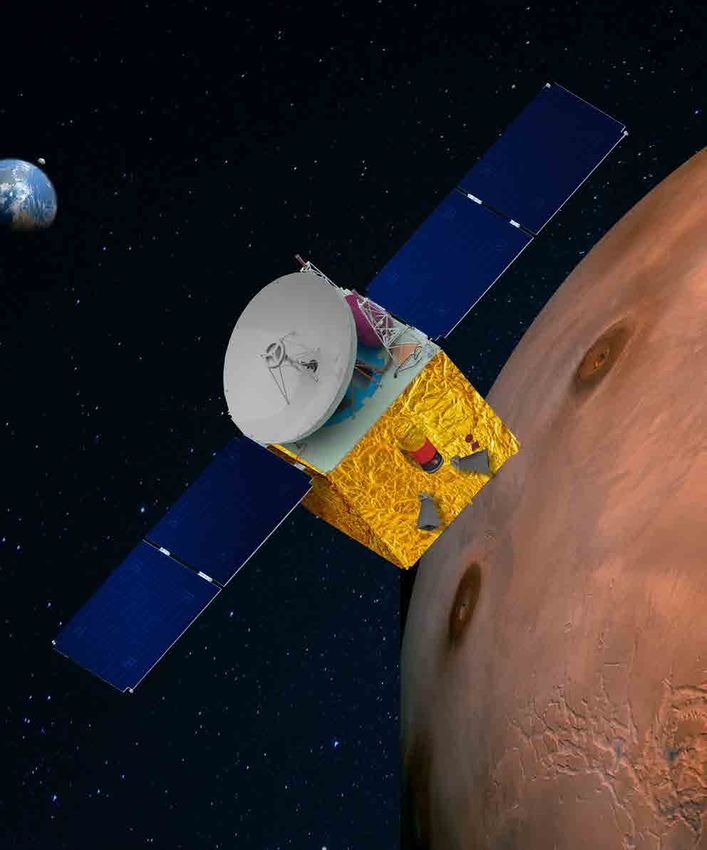
71 IAC st
International Astronautical Congress
12–16 October 2020, Dubai
A1.5 Radiation Fields, Effects and Risks in Human Space Missions A2.5 Facilities and Operations of Microgravity Experiments
The major topics of this session are the characterization of the radiation environment by theoretical modeling and experimental data, radiation effects on physical and biological This session is devoted to new diagnosis developments, new instruments definition and concepts for the future, ground and flight operation (telescience, robotics, hardware &
systems, countermeasures to radiation and radiation risk assessment. software).
Co-Chairs Rapporteur Co-Chairs Rapporteur
Guenther Reitz Lawrence Pinsky Premkumar Saganti Rainer Willnecker Gabriel Pont Satoshi Matsumoto
Deutsches Zentrum für Luft- und Raumfahrt e.V. (DLR) University of Houston — UNITED STATES Prairie View A&M University — UNITED STATES Deutsches Zentrum für Luft- und Raumfahrt e.V. (DLR) Centre National d’Etudes Spatiales (CNES) — FRANCE Japan Aerospace Exploration Agency (JAXA) — JAPAN
— GERMANY — GERMANY
A1.6 Astrobiology and Exploration A2.6 Microgravity Sciences on board ISS and beyond
Space exploration planning now includes ambitious goals like human missions to the Moon and Mars, and sophisticated robotic exploration of targets relevant for astrobiology This session focusses on the presentation of scientific and operational results obtained from microgravity sciences research conducted on large orbital platforms, in particular
such as the Mars subsurface and the primary ocean worlds Europa, Enceladus, and Titan. Astrobiology is, therefore, becoming a space flight science, ready for direct the ISS. Papers on planned or newly developed research topics and experiment scenarios are also invited. The session is not limited to the usage of the ISS but comprises the
measurements of habitability and the presence of life off Earth in many places. The session invites papers related to astrobiology, biomarkers, life detection, and planetary preparation scenarios for further long term flight opportunities beyond the low earth orbit such as Deep Space Gateway.
protection.
Co-Chairs
Co-Chairs Rapporteur
Stefan Van Vaerenbergh Angelika Diefenbach
Petra Rettberg Nicolas Walter Stefan Leuko Université Libre de Bruxelles — BELGIUM Deutsches Zentrum für Luft- und Raumfahrt e.V. (DLR)
Deutsches Zentrum für Luft- und Raumfahrt e.V. (DLR) European Science Foundation— FRANCE DLR (German Aerospace Center) — GERMANY — GERMANY
— GERMANY
A2.7 Life and Physical Sciences under reduced Gravity
A1.7 Life Support, Habitats and EVA Systems This session focusses on the presentation of scientific and operational results obtained from life and physical sciences research conducted on large orbital platforms, in particular
This session will address strategies, solutions and technologies in providing for human requirements during future deep space and planetary/lunar surface exploration. the ISS. Papers on planned or newly developed research topics and experiment scenarios are also invited. The session is not limited to the usage of the ISS but comprises the
preparation scenarios for further long term flight opportunities beyond the low earth orbit such as Deep Space Gateway.
Co-Chairs Rapporteur
Klaus Slenzka Khalid Badri Hong Liu Co-Chairs
OHB System AG-Bremen — GERMANY Mohammed Bin Rashid Space Centre (MBRSC) — UNITED Beihang University — CHINA Satoshi Matsumoto Angelika Diefenbach Cora Thiel
ARAB EMIRATES Japan Aerospace Exploration Agency (JAXA) — JAPAN Deutsches Zentrum für Luft- und Raumfahrt e.V. (DLR) — University of Zurich — SWITZERLAND
GERMANY
A1.8 Biology in Space
This session focuses on all aspects of biology and biological systems related to gravity in ground-based and space flight experiments as well as on topics not covered by other Peter Graef
sessions of this symposium. Deutsches Zentrum für Luft- und Raumfahrt e.V. (DLR)
— GERMANY
Co-Chairs Rapporteur
Cora S. Thiel Fengyuan Zhuang Jancy McPhee A2.IP Interactive Presentations - IAF MICROGRAVITY SCIENCES AND PROCESSES SYMPOSIUM
University of Zurich — SWITZERLAND Beihang University — CHINA The Aerospace Corporation — UNITED STATES This session offers a unique opportunity to deliver your key messages in an interactive presentation on any of the subjects of Microgravity Sciences and Processes addressed in
the classic Sessions. The presentation will be displayed on a digital screen in a dedicated location and available for view by all Congress attendees for the entire Congress week.
A1.IP Interactive Presentations - IAF/IAA SPACE LIFE SCIENCES SYMPOSIUM In addition, one afternoon is dedicated exclusively for the attendees to view the Interactive Presentations, and the author will be assigned a specific ten minute slot to personally
This session offers a unique opportunity to deliver your key messages in an interactive presentation on any of the subjects of Space Life Sciences addressed in the classic Sessions. present the topic and interact with the attendees present. The Interactive Presentation may take advantage of all electronic display capabilities, such as: PowerPoint charts,
The presentation will be displayed on a digital screen in a dedicated location and available for view by all Congress attendees for the entire Congress week. In addition, one embedded hot links, pictures, audio and video clips etc. An award will also be presented to the author of the best Interactive Presentation in the A Category at a special ceremony.
afternoon is dedicated exclusively for the attendees to view the Interactive Presentations, and the author will be assigned a specific eight minute slot to personally present the An Abstract that follows the standard format must be submitted by the deadline for standard IAC abstracts.
topic and interact with the attendees present. The Interactive Presentation may take advantage of all electronic display capabilities, such as: PowerPoint charts, embedded hot Co-Chairs
links, pictures, audio and video clips, etc. An award will also be presented to the author of the best Interactive Presentation in the A Category at a special ceremony. An Abstract
that follows the standard format must be submitted by the deadline for standard IAC abstracts. Gabriel Pont Qi KANG
Centre National d’Etudes Spatiales (CNES) — FRANCE National Microgravity Laboratory, Institute of Mechanics,
Co-Chairs
Chinese Academy of Sciences — CHINA
Cora Thiel Klaus Slenzka
University of Zurich — SWITZERLAND OHB System AG-Bremen — GERMANY
A3 IAF SPACE EXPLORATION SYMPOSIUM
This symposium, organized by the International Astronautical Federation (IAF), covers the current and future robotic missions and material plans for initiatives in the exploration
A2 IAF MICROGRAVITY SCIENCES AND PROCESSES SYMPOSIUM of the Solar System.
The objective of the Microgravity Science and Processes Symposium, organized by the International Astronautical Federation (IAF), is to highlight and discuss the state of the art
in microgravity (reduced-gravity) physical sciences and processes, as well as to prepare for future orbital infrastructure. Session topics cover all microgravity science disciplines Coordinators
(material science, fluid physics, combustion science, fundamental physics), current results and research perspectives, together with relevant technology developments. Christian Sallaberger Bernard Foing
Canadensys Aerospace Corporation — CANADA ESA/ESTEC, ILEWG & VU Amsterdam — THE
Coordinator Vice-Coordinator
NETHERLANDS
Gabriel Pont Valentina Shevtsova
Centre National d’Etudes Spatiales (CNES) — FRANCE Université Libre de Bruxelles — BELGIUM A3.1 Space Exploration Overview
This Session covers Space Exploration strategies and architectures, as well as technology roadmaps. Papers of both national and international perspectives are invited, as are
A2.1 Gravity and Fundamental Physics papers dealing with the emerging area of commercial space exploration activities.
This session is devoted to the search for new fields of research in condensed matter physics and gravitational physics including cryogenic fluids, critical fluids, equivalence
principle, atomic clock and plasma crystals. Co-Chairs
Christian Sallaberger Kathy Laurini
Co-Chairs Rapporteur
Canadensys Aerospace Corporation — CANADA — UNITED STATES
Hanns Selig Antonio Viviani Qi Kang
GERADTS GMBH — GERMANY Università degli Studi della Campania "Luigi Vanvitelli" — National Microgravity Laboratory, Institute of Mechanics, Rapporteurs
ITALY Chinese Academy of Sciences — CHINA Keyur Patel Norbert Frischauf
National Aeronautics and Space Administration TU GRAZ – AUSTRIA
A2.2 Fluid and Materials Sciences (NASA), Jet Propulsion Laboratory — UNITED STATES
The main focus of the session is on perspective research fields in fluid and materials sciences, multi-phase and chemically reacting flows including theoretical modeling, numerical
simulations, and results of pathfinder laboratory and space experiments. A3.2A Moon Exploration – Part 1
Co-Chairs Rapporteur This session will address current and future lunar missions. The session will address orbital missions, robotic surface missions, as well as life sciences on the Moon, resource
utilisation and preparatory activities for future solar system exploration.
Nickolay N. Smirnov Satoshi Matsumoto Thomas Driebe
Moscow Lomonosov State University — RUSSIAN Japan Aerospace Exploration Agency (JAXA) — JAPAN DLR (German Aerospace Center) — GERMANY Co-Chairs
FEDERATION Bernard Foing David Korsmeyer
ESA/ESTEC, ILEWG & VU Amsterdam — THE National Aeronautics and Space Administration (NASA) —
A2.3 Microgravity Experiments from Sub-Orbital to Orbital Platforms NETHERLANDS UNITED STATES
This session presents recent results of microgravity experiments from all disciplines using different microgravity platforms, including drop towers, parabolic aircrafts, sounding
rockets and capsules. Rapporteur
Co-Chairs Rapporteur Nadeem Ghafoor Sylvie Espinasse
Canadensys Aerospace Corporation — CANADA European Space Agency (ESA) — THE NETHERLANDS
Raffaele Savino Rainer Willnecker Peter Hofmann
University of Naples "Federico II" — ITALY Deutsches Zentrum für Luft- und Raumfahrt e.V. (DLR) — OHB System AG - Munich — GERMANY A3.2B Moon Exploration – Part 2
GERMANY This session will address current and future lunar missions. The session will address orbital missions, robotic surface missions, as well as life sciences on the Moon, resource
utilisation and preparatory activities for future solar system exploration.
A2.4 Science Results from Ground Based Research
This session is focused on the results of ground based preparatory experiments from all disciplines. Co-Chairs
Co-Chairs Rapporteur Bernard Foing David Korsmeyer
ESA/ESTEC, ILEWG & VU Amsterdam — THE National Aeronautics and Space Administration (NASA) —
Valentina Shevtsova Antonio Viviani Nickolay N. Smirnov NETHERLANDS UNITED STATES
Université Libre de Bruxelles — BELGIUM Università degli Studi della Campania "Luigi Vanvitelli" — Moscow Lomonosov State University — RUSSIAN
ITALY FEDERATION Rapporteurs
Pierre-Alexis Joumel Nadeem Ghafoor
Airbus Defence and Space — Germany Canadensys Aerospace Corporation — CANADA
14 15
71 IAC st
International Astronautical Congress
12–16 October 2020, Dubai
A3.2C Moon Exploration – Part 3 A4 49TH IAA SYMPOSIUM ON THE SEARCH FOR EXTRATERRESTRIAL INTELLIGENCE (SETI) – THE NEXT STEPS
This session will address current and future lunar missions. The session will address orbital missions, robotic surface missions, as well as life sciences on the Moon, resource This symposium, organized by the International Academy of Astronautics (IAA), deals with the scientific, technical and interdisciplinary aspects of the Search for Extra-Terrestrial
utilisation and preparatory activities for future solar system exploration. Intelligence (SETI) including a discussion of all kinds of contacts. The technical side is not limited to the microwave window, but includes also optical and any kinds of radiation.
The interdisciplinary aspects include all societal implications, risk communication and philosophical considerations of any kind of discovery or contact.
Co-Chairs
Bernard Foing David Korsmeyer Coordinator
ESA/ESTEC, ILEWG & VU Amsterdam — THE National Aeronautics and Space Administration (NASA) — Claudio Maccone
NETHERLANDS UNITED STATES International Academy of Astronautics (IAA) and
Rapporteurs Istituto Nazionale di Astrofisica (INAF) — ITALY
Sylvie Espinasse Nadeem Ghafoor A4.1 SETI 1: SETI Science and Technology
European Space Agency (ESA) — THE NETHERLANDS Canadensys Aerospace Corporation — CANADA All technical aspects involved in the search for extraterrestrial intelligence, including current and future search strategies.
A3.3A Mars Exploration – Missions Current and Future Co-Chairs Rapporteur
The planet Mars is being explored now and in the coming years with multiple robotic missions from a variety of nations. This session will cover current results from ongoing Mars Michael Albert Garrett Bill Diamond Andrew Siemion
missions and the designs for proposed Mars missions. University of Manchester — UNITED KINGDOM SETI Institute — UNITED STATES University of California — UNITED STATES
Co-Chairs
A4.2 SETI 2: SETI and Society
Vincenzo Giorgio Pierre W. Bousquet All aspects concerning the societal implications of extraterrestrial intelligence are considered, including public reaction to a discovery, risk communication and the possible
Thales Alenia Space Italia — ITALY Centre National d’Etudes Spatiales (CNES) — FRANCE impacts on society.
Rapporteurs Co-Chairs Rapporteur
Cheryl Reed Amalia Ercoli Finzi John Elliott Michael A.G. Michaud J. Emilio Enriquez
The Johns Hopkins University Applied Physics Politecnico di Milano — ITALY Leeds Beckett University — UNITED KINGDOM International Academy of Astronautics — UNITED STATES UC Berkeley / Radboud University Nijmegen —
Laboratory — UNITED STATES UNITED STATES
A3.3B Mars Exploration – Science, Instruments and Technologies A4.IP Interactive Presentations - 49th IAA SYMPOSIUM ON THE SEARCH FOR EXTRATERRESTRIAL INTELLIGENCE (SETI) – The Next Steps
The planet Mars is being explored now and in the coming years with multiple robotic missions from a variety of nations. This session will cover science, instruments and This session offers a unique opportunity to deliver your key messages in an interactive presentation on any of the subjects of SETI addressed in the classic Sessions. The
technologies for Mars missions including expected experiments. Papers on any aspects of the search for evidence or extinct Martian life, and forward and backward presentation will be displayed on a digital screen in a dedicated location and available for view by all Congress attendees for the entire Congress week. In addition, one afternoon
contamination are particularly welcome. is dedicated exclusively for the attendees to view the Interactive Presentations, and the author will be assigned a specific ten minute slot to personally present the topic and
interact with the attendees present. The Interactive Presentation may take advantage of all electronic display capabilities, such as: PowerPoint charts, embedded hot links,
Co-Chairs
pictures, audio and video clips etc. An award will also be presented to the author of the best Interactive Presentation in the A Category at a special ceremony. An Abstract that
Vincenzo Giorgio Pierre W. Bousquet follows the standard format must be submitted by the deadline for standard IAC abstracts.
Thales Alenia Space Italia — ITALY Centre National d’Etudes Spatiales (CNES) — FRANCE
Co-Chair
Rapporteurs
Claudio Maccone
Cheryl Reed Amalia Ercoli Finzi International Academy of Astronautics (IAA) and
The Johns Hopkins University Applied Physics Politecnico di Milano — ITALY Istituto Nazionale di Astrofisica (INAF) — ITALY
Laboratory — UNITED STATES
A3.4A Small Bodies Missions and Technologies (Part 1) A5 23RD IAA SYMPOSIUM ON HUMAN EXPLORATION OF THE SOLAR SYSTEM
This session will present the missions and technological aspects related to the exploration of small bodies including a search for pre-biotic signatures. This symposium, organized by the International Academy of Astronautics (IAA), covers the strategic plans, architectural concepts and technology development for future human
exploration of the Moon, Mars, Lagrangian Points and NEO’s.
Co-Chairs
Susan McKenna-Lawlor Stephan Ulamec Coordinators
Space Technology (Ireland) Ltd. — IRELAND Deutsches Zentrum für Luft- und Raumfahrt e.V. (DLR) — Christian Sallaberger Maria Antonietta Perino
GERMANY Canadensys Aerospace Corporation — CANADA Thales Alenia Space Italia — ITALY
Rapporteurs
A5.1 Human Exploration of the Moon and Cislunar Space
Norbert Frischauf Marc D. Rayman This session will examine the scenarios and infrastructure required to support human exploration of the Moon and Cislunar space. Papers are invited to discuss technology
TU GRAZ – AUSTRIA NASA Jet Propulsion Laboratory — UNITED STATES roadmaps as well as interfaces to allow international cooperation.
A3.4B Small Bodies Missions and Technologies (Part 2) Co-Chairs Rapporteur
This session will present the missions and technological aspects related to the exploration of small bodies including a search for pre-biotic signatures. Nadeem Ghafoor Michael Raftery Marc Haese
Canadensys Aerospace Corporation — CANADA Boeing Defense Space & Security — UNITED STATES DLR, German Aerospace Center — GERMANY
Co-Chairs
Stephan Ulamec Susan McKenna-Lawlor A5.2 Human Exploration of Mars
Deutsches Zentrum für Luft- und Raumfahrt e.V. (DLR) Space Technology (Ireland) Ltd. — IRELAND This session will examine the scenarios and infrastructure required to support human exploration of Mars and the moons of Mars. Papers are invited to discuss technology
— GERMANY roadmaps as well as interfaces to allow international cooperation.
Rapporteurs Co-Chairs Rapporteur
Marc D. Rayman Norbert Frischauf Maria Antonietta Perino Kathy Laurini Norbert Frischauf
NASA Jet Propulsion Laboratory — UNITED STATES TU GRAZ – AUSTRIA Thales Alenia Space Italia — ITALY — UNITED STATES TU GRAZ – AUSTRIA
A3.5 Solar System Exploration including Ocean Worlds A5.3 Human and Robotic Partnerships in Exploration - Joint session of the IAF Human Spaceflight and IAF Exploration Symposia
This session covers robotic missions for Solar System exploration (inner and outer planets and their satellites, and space plasma physics) except the Earth, Moon, Mars, and small B3.6 This session seeks papers on new systems and technologies for current human spaceflight and exploration programmes, and the role of human and robotic partnerships in areas
bodies covered in other sessions of this symposium. Special emphasis on papers addressing missions to so-called Ocean Worlds (Enceladus, Europa, Titan) is sought. Papers such as onboard robotic assistants, habitat / infrastructure construction support, human mobility support systems (e.g. EVA mobility aids, rovers); and robotic precursor activities
covering both new mission concepts as well as the associated specific technologies are invited. to human spaceflights for test, validation, and demonstration of systems. This session also welcomes papers considering how the roles of humans, machines and intelligent
systems are likely to evolve in the coming years and the corresponding impact on complex mission design, implementation, and operations.
Co-Chairs
Co-Chairs Rapporteur
Mariella Graziano Junichiro Kawaguchi Christian Sallaberger Mark Hempsell Juergen Schlutz
GMV Aerospace & Defence SAU — SPAIN Japan Aerospace Exploration Agency (JAXA) — JAPAN Canadensys Aerospace Corporation — CANADA The British Interplanetary Society — UNITED KINGDOM Deutsches Zentrum für Luft- und Raumfahrt e.V. (DLR) —
Rapporteurs GERMANY
Charles E. Cockrell Jr Alain Ouellet A5.4 Space Transportation Solutions for Deep Space Missions
National Aeronautics and Space Administration (NASA) Canadian Space Agency — CANADA This session will explore space transportation capabilities, existing or under study, for human deep space exploration missions, new science, programme architectures, technology
— UNITED STATES
D2.8
demonstrations as well as the issues of scientific and political motivations and international cooperation. The session will also deal with worldwide needs, requirements and
potential missions enabled by deep space transportation system.
A3.IP Interactive Presentations - IAF SPACE EXPLORATION SYMPOSIUM
This session offers a unique opportunity to deliver your key messages in an interactive presentation on any of the subjects of Space Exploration addressed in the classic Sessions. Co-Chairs Rapporteur
The presentation will be displayed on a digital screen in a dedicated location and available for view by all Congress attendees for the entire Congress week. In addition, one K. Bruce Morris Josef Wiedemann Gerhard Schwehm
afternoon is dedicated exclusively for the attendees to view the Interactive Presentations, and the author will be assigned a specific ten minute slot to personally present the topic RUAG Space — SWEDEN DLR (German Aerospace Center) — GERMANY European Space Agency (ESA) (retired) — THE
and interact with the attendees present. The Interactive Presentation may take advantage of all electronic display capabilities, such as: PowerPoint charts, embedded hot links, NETHERLANDS
pictures, audio and video clips etc. An award will also be presented to the author of the best Interactive Presentation in the A Category at a special ceremony. An Abstract that
follows the standard format must be submitted by the deadline for standard IAC abstracts. A5.IP Interactive Presentations - 23rd IAA SYMPOSIUM ON HUMAN EXPLORATION OF THE SOLAR SYSTEM
Co-Chairs This session offers a unique opportunity to deliver your key messages in an interactive presentation on any of the subjects of Human Exploration of the Solar System addressed
in the classic Sessions. The presentation will be displayed on a digital screen in a dedicated location and available for view by all Congress attendees for the entire Congress week.
Christian Sallaberger Bernard Foing In addition, one afternoon is dedicated exclusively for the attendees to view the Interactive Presentations, and the author will be assigned a specific ten minute slot to personally
Canadensys Aerospace Corporation — CANADA ESA/ESTEC, ILEWG & VU Amsterdam — THE present the topic and interact with the attendees present. The Interactive Presentation may take advantage of all electronic display capabilities, such as: PowerPoint charts,
NETHERLANDS embedded hot links, pictures, audio and video clips etc. An award will also be presented to the author of the best Interactive Presentation in the A Category at a special ceremony.
An Abstract that follows the standard format must be submitted by the deadline for standard IAC abstracts.
16 17You can also read


