FALL 2018 - Canadian Institute of Management
←
→
Page content transcription
If your browser does not render page correctly, please read the page content below
FALL 2018

Photo by Peter Sansone

In this issue…                             CHAIR’S MESSAGE

3     The Power of Reciprocity in                                  Phil Russo
                                                                   FCPA, FCGA, C.Mgr., P.Mgr., FICIA, O.M.C.
      Internships
                                                                   Chair, CIM Toronto Chapter

5     CIM Toronto Chapter Board
                                                                   Dear CIM Members,

6     Use and Users of Financial                                 I would like to personally thank our immedi-
      Statements                                                 ate past Chair, Mr. Afoloabi Oguntade, for
                                           his many contributions and outstanding service to the Toronto
8     The Pause that Refreshes!            Chapter. Due to business reasons, Afolabi stepped down this
                                           summer. He served the chapter for many years in various roles
                                           and I wish him the very best.
9     Non-Practicing Patent Assertion
      Entities or “Patent Trolls” – What   The Toronto Chapter Board elected myself as interim Chair. It is
      are They?                            once again my pleasure to serve our membership and I look for-
                                           ward to working with everyone.
11 Is Your Happiness at Risk?
                                           The CIM Leadership Symposium & National AGM will take place
                                           from October 19-20, 2018 in Winnipeg. The Symposium will fea-
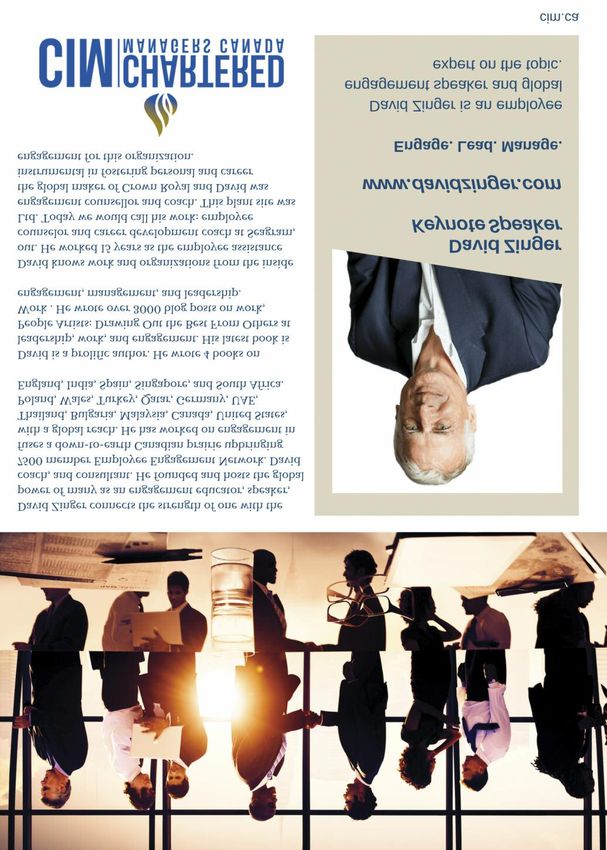
12 Avoid Tax Clawbacks                     ture a keynote from David Zinger. Please see full details in this
                                           issue. Hope to see you there!
14 Achieve Beyond Your Potential
                                           CIM Chartered Managers is excited to announce they have en-
                                           tered into a collaboration with the University of London where
15 An Effective Board of Directors –
                                           our members will benefit from the most prestigious, flexible and
   Key to an Organization’s Success
                                           affordable MBA degree available anywhere! More information
                                           can be found in this issue, or visit cim.ca/mba for details.
18 The Choice is Yours – How to be-
   come an Accountant                      The GoodLife Health and Wellness Leadership Summit will take
                                           place on November 22nd at the Metro Toronto Convention Cen-
                                           tre from 9am to 4pm. This event will feature several interesting
21 CIM National Leadership
                                           guest speakers & presentation topics. Please see information in
   Symposium & AGM Information
                                           this issue for complete details and a Special Registration offer.

26 The Art of Leadership Conference        Please mark December 4th in your calendar for our Holiday
                                           Social which will take place at the Chelsea Hotel Toronto and
                                           feature Keynote Speaker Dr. Matthew Jelavic.
29 CIM Toronto Holiday Social &
   Guest Speaker Registration
                                           If you have not already done so, kindly forward your membership
                                           dues payment to the CIM National office in order to retain your
19 CIM Partners                            professional membership.

                                           Please continuously refer to the CIM Chartered Managers
                                           Canada website for upcoming events – https://www.cim.ca/news-
                                           events/upcoming-events

                                           Founded in 1942 as a not-for-profit corporation, CIM Chartered Managers
                                           Canada has provided education and professional certification to over 80,000
                                           managers. (www.cim.ca)

THE TORONTO MANAGER
Fall 2018 Edition - Page 2
The Power of Reciprocity                                       many years ago when I, too, was a student, an intern at a
                                                               family therapy clinic. I told him about how I froze in the
                                                               middle of a family therapy session when the father in the
in Internships                                                 session broke down and started to cry. I was totally para-
                                                               lyzed. I had never witnessed another man expressing grief
                                                               before and I did not know what to do.
                      Veronica Hislop
                                                               My supervisor at the time, an esteemed Psychiatrist, took
                                                               me under his wing and simply had a discussion with me as
                      An internship is basically a training
                                                               to what I was experiencing at the time and took the time
                      program designed for students to
                                                               to explore with me what I could have done differently in
                      help them polish their skills and give
                                                               the situation. I learned about the true meaning of empa-
                      them a taste of the real-world, with-
                                                               thy and compassion that day, a valuable lesson that has
                      out too much pressure.
                                                               stayed with me throughout my career. Had he criticized
                                                               me, or chastised me, my experience of the situation and
Internships allow a young person to develop their skills,
                                                               the learning from it might have been quite different.
gain insight in a real working environment by being ex-
                                                               What you say does matter. How you say it does matter.
posed to real-world demands and responsibilities. While in
                                                               And how you teach it matters, too.
this environment the young person gets the opportunity to
improve their communication skills, while at the same time
                                                               My supervisor at the time created a climate for me as an
boost their self-confidence.
                                                               intern where I could learn and grow.
We often think of an internship from an intern’s point of
                                                               As I spoke fondly of my internship experience I talked
view and forget about the employer or person supervising
                                                               about the opportunity I had been given to learn (often
the intern and the responsibility they have to the intern
                                                               through trial and error) and make mistakes, with a supervi-
and the learning in leadership that they also get.
                                                               sor who believed in my potential. The hands-on experi-
                                                               ence that I gained through that experience ultimately
Recently I had a discussion with a colleague who was not
                                                               helped me succeed in my career. As I zealously spoke
very happy with his intern; in fact he was quite critical of
                                                               about this experience, my colleague began to embrace a
him. It wasn’t until that he was reminded of his role and
                                                               different perspective.
responsibility to the young person as being someone to
help bridge the gap between academia and the real world                                              continued on page 4
that he began to see the relationship differently.
As we talked over lunch he began to embrace the idea
that certain aspects of employment can really only be
learned through work experience and not necessarily in
the classroom.

He talked about a fear of reprisal from the intern and his
need to protect his passwords and property, as he was
about to dismiss said intern with a negative appraisal. It
seemed quite clear to me that he had totally missed the
point of the internship altogether.

The student gains, but the employer or supervisor gains
too.

Once he had totally finished his tirade, I asked one simple
question:

What is your role and responsibility to this intern?

He paused, and thought intensely and responded:
“I don’t know … I mean, I gave him a job, didn’t I?”

I then told him the story of my own internship experience

                                                                      THE TORONTO MANAGER | Fall 2018 Edition - Page 3
The Toronto Manager                                  The Power of Reciprocity in
is published by the Toronto Chapter of the           Internships (Cont’d)
Canadian Institute of Management
2800 14th. Avenue - Suite 210
Markham, Ontario L3R 0E4                             Letting go of his litany of complaints about his intern, he
Telephone: 416-491-2897                              began to tune into his role and responsibility as a supervi-
Fax: 416-491-1670                                    sor. The words guide train, mentor, coach, and supervise
Email: cimtoronto@associationconcepts.ca             came back into his dialogue. He began to embrace the
Website: www.cim.ca                                  concept of leadership. He began to reframe his view of
                                                     the intern’s behavior and began to see that rather than
CIM Vision Statement                                 standing back and being critical of his actions, his role was
To be a strong, progressive professional             to inspire, guide, model and demonstrate the awesome-
association that supports Canada’s professional      ness he wished to see in his student.
managers.
                                                     Rather than being critical of his interns’ actions and behav-
CIM Mission Statement                                iors, he needed to see them as teachable moments and
To be the voice of Canada’s professional             learning opportunities in which he could help the young
managers by advancing interest in                    person to not only grow in their current job but to develop
management excellence through education,             confidence in their abilities as well.
certification and professional development.
                                                     “What kind of a leader are you anyway?” I asked.
AIMS AND OBJECTIVES                                  The question sat between us, as he prattled on about
• Provide a National Voice on issues affecting the   something else.
  management process in Canada
• Serve as The Authority on Canadian management
                                                     “What kind of a leader am I?” He repeated the question a
  developments
• Increase Awareness of management as a profes-      few minutes later and deliberated for quite some time.
  sion                                               Recognizing this as a pivotal moment I gave him the space
• Develop and maintain educational programs con-     to answer.
  sistent with the aspirations of our Membership
• To provide certification to managers across        “You know I haven’t really thought about it,” he replied,
  Canada and Internationally                         moments later.

ANNUAL DUES REMINDER                                 A seed had not so much been planted as it had been
If you have not already done so please forward       reawakened. Although he never gave me an answer, I
your membership dues payment to the CIM              could see that the question had provoked some serious
Head office in Barrie in order to retain your        thought.
professional membership.
                                                     I left him with this quote:
Canadian Institute of Management
                                                         “Leaders who mentor the leadership potential in others
311 – 80 Bradford Street,
                                                         not only magnify the effectiveness in others, they mag-
Barrie, ON, L4N 6S7
                                                         nify the effectiveness in themselves too.” (Veronica His-
Fax : 705-725-8196
                                                         lop, 2018)
E-mail : office@cim.ca
                                                     Internships, although very common in today’s workforce,
Head Office Staff
                                                     can also be quite ambiguous: Employers can see interns as
Coordinator of Educational Services and
Professional Development                             free or cheap labour, (as did my colleague, who initially
Arlene Atkinson                                      seemed to want to treat his intern as an unpaid employee).
arlene.education@cim.ca                              With this attitude there is often room for exploitation.
Direct Line : 519-245-7535                           When roles and responsibilities on both sides are unclear
                                                     the potential for this increases.
Coordinator of Communications and
Membership Services                                  In the world of student and mentor there should be no
Jennifer Tracy                                       room for exploitation; the only way to avoid ambiguity and
Jennifer.membership@cim.ca
                                                     exploitation is for the supervisor to not only be cognizant
Direct Line : 705-725-8926
                                                     of their leadership role and style, but to be totally aware of

THE TORONTO MANAGER
Fall 2018 Edition - Page 4
Leaders who mentor the leadership potential in others
                 not only magnify the effectiveness in others, they
                   magnify the effectiveness in themselves too.
                                                                                  – Veronica Hislop, 2018

the responsibility that they have towards the intern.              employer/supervisor is willing to embrace their role of
                                                                   leadership.
Let’s not forgot that as a supervisor of an intern we have an
important part to play in helping to shape their career and        With well over 20 years experience working as a therapist,
the employment of a young person’s future. What we do              and trauma counsellor, Veronica now works with female
as mentors can support their growth or seriously derail it.        entrepreneurs and women in business, helping them to
A poor internship can make or break an intern’s future ca-         manage their stress, prioritize their needs and set healthy
reer. This is why what happened between Monika Lewinsky            boundaries in their inter – personal relationships.
and Bill Clinton many years ago was so wrong on many
levels.                                                            Her presentations, workshops, group coaching and 1-1
                                                                   programs help women to get out of their own way so that
As a final note, we cannot forget that an internship is a          they can show up clear, grounded and focus on creating
two-way process. Both parties the student and the em-              the massive success in their business that they desire.
ployer/supervisor gain from this experience. The learning
for the intern in terms of exposure to the work force is           ***********************************************************
quite clear. However, companies and businesses benefit             To find out more about Veronica connect here:
greatly from this experience as well. Interns can provide          www.empowered-solutions.ca
an extra set of hands that can often help a company to fin-        LINKEDIN          www.linkedin.com/in/vhislop/
                                                                   FACEBOOK          https://tinyurl.com/yad64gak
ish their projects.
                                                                   PINTEREST         https://www.pinterest.com/veronicahislop/
                                                                   TWITTERhttps://twitter.com/vhislop1
Beyond that, internships can help an employer/supervisor           YOUTUBE           https://tinyurl.com/yc88ng22
to upgrade their leadership skills and take them to a
higher standard. The intern learns, but more importantly           Assess and Address your stress with her FREE Power Stress Busting
                                                                   Tool Kit - see link.
the employer/supervisor learns too, thereby creating a
                                                                   http://www.prnd2l.co/stresscaretoolkit/
win/win all around. This can only happen if the

    CIM Toronto Chapter Board
    CHAPTER CHAIR                                                    MARKETING COMMITTEE CHAIR
    Phil Russo, FCPA, FCGA, C.Mgr., P.Mgr., FICIA, O.M.C.            Joseph Mohanthas, RPA, CIM, P.Mgr., ICIA

    CHAPTER TREASURER                                                MEMBERSHIP COMMITTEE CHAIR
    Thong Minh Tran, C.I.M., P.Mgr., C.Mgr., FIPFM, FICIA, LIFA.     Kirkley Elliott, CIM, P.Mgr.

    P.Mgr. COMMITTEE CHAIR                                           CHAPTER ADVISORS
    Peter Boos, MCE, B.A., FCIP, FRM, P.Mgr., C.Mgr., C.I.M.         Paul Markle, C.I.M., P.Mgr.
                                                                     Peter Horlock, C.I.M., P.Mgr., PE.
    EDUCATION COMMITTEE CHAIR
    Stan Ioffe, C.I.M.                                               ADMINISTRATOR
                                                                     Beth Mckenzie
    NEWSLETTER COMMITTEE CHAIR
    Wesley Spence, C.I.M.

                                                                           THE TORONTO MANAGER | Fall 2018 Edition - Page 5
Use and Users of Financial                                           investment; income and gain (income in the form of dividends
                                                                     and gain in terms of the share price rising). The investor
                                                                     group would also be interested in profitability and its trend
Statements                                                           over a period of time.

                                                                     If the investor takes a short-term view, then current dividends
                        Dr. Philip E. Dunn                           are of interest; a long-term view would concern future earn-
                        FAIA (Hon) FCMI Chartered MCIPD              ings. A guide to the future can to some extent be seen in
                        Cert Ed (Leeds) ICIA (Hon)                   company reports with the Chairman’s statement; although
                                                                     these are based on current performance, company forward
                        To meet their basic objective, Financial     strategy is often included.
                        Statements must be useful and the in-
                        formation relevant and reliable and a        Employees
                        faithful representation.                     It is encouraging to note that some companies produce a
                                                                     separate employees’ report. Employees and their representa-
 Information will have relevance if it influences the decisions      tives require information on business performance for two
of the users. Irrelevant information has no use. Relevance and       principal reasons:
reliability or faithful representation are primary characteristics
relating to content, together with the threshold quality and             •   Wage and salary negotiation; and
materiality. The primary characteristics relating to presenta-           •   Assessment of current and forward employment op-
tion include comparability, clarity and understandability. Such              portunities
Financial Statements are based on Accounting Standards is-
sued by the FRC, the Financial Reporting Council, UK GAAP            They would be interested in both the current financial stability
and their Financial Reporting Standards (FRSs) or those issued       and the long-term financial viability of the business and would
by the IASB, the International Accounting Standards Board,           need information in a clear, simple and understandable form.
the International Financial Reporting Standards (IAS/IFRSs)          I have seen some employee reports that include a value-
                                                                     added approach rather than a profit and loss account review
The IASB’s (International Accounting Standards Board) The            of performance.
Conceptual Framework for Financial Reporting (issued 2015)
and the UK GAAP Statement of Principles identify the major           Lenders
user groups of financial reports.
                                                                     This is often referred to as the loan creditor group. It would
    •   Potential investors/shareholders;                            include the long- medium and short-term lenders of money.
                                                                     The concern of the existing and/or potential loan creditor is
    •   Employees;
                                                                     whether they will get their money back.
    •   Lenders;
    •   Suppliers;                                                   A short-term loan creditor will immediately consider cash
    •   Other trade creditors;                                       flow. The Statement of Cash Flow, a section within Financial
    •   Customers;                                                   Reporting Standard, FRS 102 (UK GAAP); and for those com-
    •   Government; and                                              panies using International Financial Reporting Standards the
                                                                     Statement of Cash Flows, IAS7, will be of particular interest
    •   The public.
                                                                     here. The banks make up much of this grouping and would
                                                                     also have an interest in the net realisable value (NRV) of the
 Of these the IASB’s Conceptual Framework indentifies Poten-
                                                                     assets.
tial and Existing Investors, Lenders and other Creditors as the
Primary Users. The others being interested parties to whom
                                                                     Medium- and long-term creditor groups will review the future
general purpose financial reports are directed and may also
                                                                     cash flow potential of the business. They would have an inter-
find such financial reports useful.
                                                                     est in current and future profitability and growth prospects of
                                                                     the entity. A further consideration would be on the priority of
So, what are the needs of these groups and how would they
                                                                     claims on the business’ resources.
use the published statements?
                                                                     Suppliers
Potential Investors/Shareholders
                                                                     This group comprises the trade creditors- an important ele-
This group would comprise both existing and potential share-
                                                                     ment in the supply of a business’ working capital. They would
holders and would consider whether to invest or disinvest in
                                                                     be interested in the financial stability of the business in terms
the business. Equity investors consider two elements to their

THE TORONTO MANAGER | Fall 2018 Edition - Page 6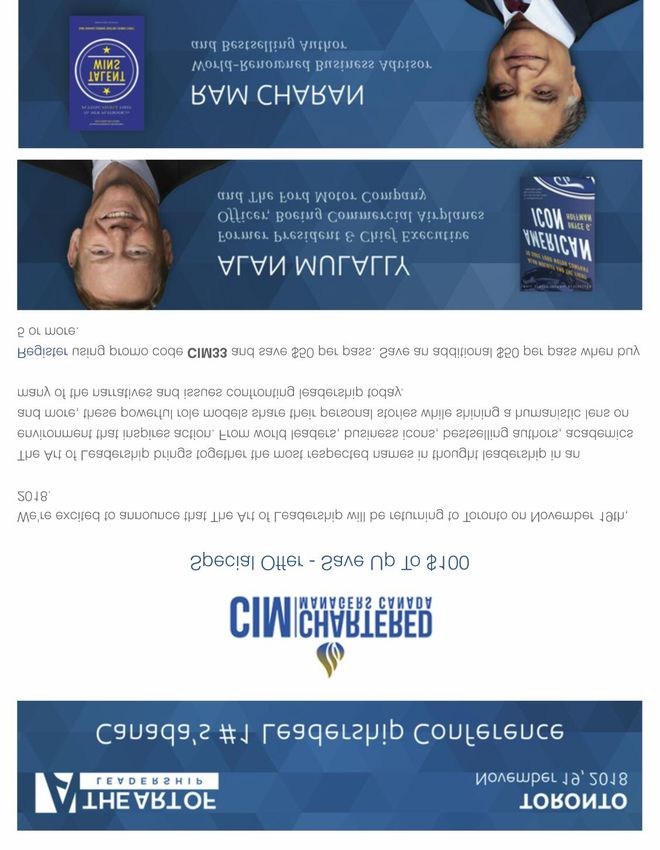
of cash flow and its ability to meet its short-term liabilities.
Suppliers would consider current and future cash flow, to-
gether with current and future profitability.

An interest in the company’s future strategy is also likely, as
they would need to consider how they, as suppliers fit with
the strategy; other trade creditors would have similar needs.

Customers
This group will be interested in the business’ short- and long-
term financial stability and its potential to supply high- quality
goods and services with, where appropriate sound after sales
service. They may also have interest in the environmental pol-
icy of the business.

Government
Government departments require published financial informa-
tion for the purposes of company taxation and VAT. The gov-          The Public
ernment is a decision-maker and its forward economic plans           Businesses do not exist in isolation; they are part of society at
are influenced by the performance of all businesses within           large and as such generate much public interest, so the public
various sectors in the economy. Current financial reports will       are often referred to as ‘stakeholders’.
be used as a base in its economic models for assessing future
performance.                                                         At local and national level, factors such as employment and
                                                                     the environment are often key interests. Some of these issues
                                                                     may be included in a business’ financial and long-term strat-
                                                                     egy.

                                                                     Above we have referred to business in the form of compa-
                                                                     nies. However we should be aware that public sector bodies –
                                                                     such as Local Authorities and NHS trusts, together with non-
                                                                     profit-organisations and charities- publish financial statements
                                                                     that are also relevant to a wide range of user groups

                                                                     ***********************************************************
                                                                     Dr. Philip E. Dunn, FAIA MCMI Chartered MCIPD Cert Ed (Leeds)
                                                                     (Hon) FICIA

                                                                             L-R: Creator of Captain Canuck Richard Comely with Phil Russo

                                                                            THE TORONTO MANAGER | Fall 2018 Edition - Page 7
The Pause that Refreshes!                                          The first “15”…
                                                                   Try this tonight: take 15 seconds before falling asleep to
“30 second stress relief habit”                                    review all of your accomplishments, actions, and the good
                                                                   things that happened during the past day. Put the rest out
                                                                   of your mind so you can focus on what feels good when
                       Marlene George                              the image, sound, smell, or warmth eases the tension from
                                                                   your scalp, face, neck, shoulders, arms, hands, fingers,
                       For many of us Fall feels like a new        chest, abdomen, hips, legs, feet, toes.
                       beginning even though the changing
                       leaves indicate the end of the year is      Inhale one very deep breath, pause for a second or two,
                       approaching. As children our year           and then exhale it until your lungs feel empty. The inhale
                       began with the start of school that         should always be shorter than the exhale since inhaling
                       usually happened in the Fall when           oxygen inspires you to action, while exhaling carbon diox-
                       we entered a new grade, and a new           ide rids your body of toxins and relaxation is an inevitable
beginning at a higher level. It’s a habit whose feeling            by-product of cleansing healing.
lingers well into adulthood.
                                                                   Pleasant dreams will fill your sleep time.
Rather than wait for the calendar’s pages to flip to another
year, take advantage of the optimism of your feelings to-          The next “15”…
ward the beginning of another school year, a new start.
With that in mind, beginning tonight, make tomorrow the            As soon as your eyes open the next day, take another 15
first day of your best year ever.                                  seconds to review your intentions, plans, and yes, goals for
                                                                   the day. Envision yourself accomplishing your responsibili-

     To change your life for the better,
                                                                   ties to yourself and others with a smile given and returned

    all it takes is the creation of one new
                                                                   with everyone you contact or communicate with during
                                                                   your management cycle and the rest of your professional

                  positive habit.
                                                                   day. When you create this vision, really see it, enjoy it, and
                                                                   anticipate it working out in the best possible way.

Stress relief is always a positive in today’s busy business        Repeat the breathing exercise to create mindfulness
world. Experts agree, if we practice a new action for 30           around your positive intentions for the rest of your day.
days in a row, it becomes a habit. And this habit benefits
the total person: our mind, body, spirit---personally and          We have days like that personally and professionally, and
professionally.                                                    the more we treasure them, the more often they will occur.
                                                                   Ok, there are some days that don’t work out as well. On
For maximum performance at the work place and at home              those days when you didn’t get it all done, or actually any
allow your body periods of rest between periods of ac-             of it done, because of distractions, interruptions, priorities;
complishment. Whenever time provides the opportunity to            it’s on those days your feelings will determine the long-
change activities from the extremes of work and rest; from         term effects of your good intentions that stopped short of
the workweek to the weekend, take the time to appreciate           fulfillment. On those days, during the 15 seconds before
this day’s efforts and then to anticipate tomorrow’s accom-        sleep as you mentally review your day and physically relax
plishments. The following exercise is a habit to increase          your body, allow your spirit to choose to feel happy about
the relief from stress as well as easing the transition from       those events that did work out well---even if it’s as minor as
performance pressure to total relaxation with gratitude.           enjoying a glass of cool, clean water, or smelling some
                                                                   fresh baking bread, or seeing a smile on a child or a
It’s in those moments when our physical and spiritual self         stranger. Those simple pleasures will get you through the
unite with our mental self in the pure pleasure of gratitude       night of refreshing sleep and allow you to greet the next
and grace. If you focus on the goodness in your life, your         day with a happy smile of optimism.
positive feelings will lift your spirit and clarify your mind on
the excitement of possibilities available to you in the fu-        ***********************************************************
                                                                   Contact Marlene George: (905)-796-0101
ture.
                                                                   mgeorge@marlenegeorge.com
                                                                   www.marlenegeorge.com
It’s an easy transition from giving thanks today to fulfilling
our dreams tomorrow.

THE TORONTO MANAGER | Fall 2018 Edition - Page 8
Non-Practicing Patent                                             large-scale business model actually is an exponentially
                                                                  more robust and volumized variation of the bottom-feeder.
Assertion Entities or “Patent                                     Often funded by large and highly respectable corporate
                                                                  clients, the NPE creates a truly staggering portfolio of
Trolls” – What are They?                                          thousands of patents from all over the world covering a
                                                                  veritable encyclopedia of technological innovation. The
                                                                  NPE often styles itself as an intellectual-property asset
                                                                  manager but its ultimate functionality rests upon its sus-
                      RICHARD GASPARINI                           tained ability to trade in and monetize intellectual property
                      BA, JD, LLM, MBA, PHD(C), C.I.M., C.MGR.,   on a global scale. Like the bottom-feeder, the patent ag-
                      FCMI-CMGR, FRSA, AFSALS                     gregator may dangle the threat of litigation against a
                                                                  backdrop of polite license negotiations, but litigation actu-
                      Investopedia defines non-practicing         ally is seen as a last resort and perhaps not even then.
                      patent assertion entities [hereinafter
                      referred to as “NPEs”] or, to use a
                      colourful metaphor, patent “trolls” as:

    [p]eople or companies that misuse patents as a busi-
    ness strategy. A patent troll obtains the patents being
    sold at auctions by bankrupt companies attempting to
    liquidate their assets, or by doing just enough research
    to prove they had the idea first. They can then launch
    lawsuits against infringing companies, or simply hold
    the patent without planning to practise the idea in an
    attempt to keep other companies’ productivity at a
    standstill.1

Apparently, there is a measure of diversification within the
trolling enterprise. There are at least three types. Each one
approaches the business of patent trolling from a different,
albeit profit-driven, perspective. These are: (1) lottery-
ticket trolls, (2) bottom-feeder trolls, and (3) patent aggre-
                                                                  What are the common objections levelled
gator trolls.2 The first type is absolutely convinced that it     against NPEs?
has patented a reinvention of the wheel. It does not actu-
ally manufacture a tangible product based upon the inven-         The negative comments levelled against NPEs are so nu-
tion. Instead, it lurks in the background, waiting for a          merous (and often venomous) that only a very small sam-
techno-giant to desire or infringe upon the patent, and this      pling of them can be mentioned. Former U.S. President
carries the potential for a settlement or litigation bonanza.     Obama, referred to by some as the “patent troll slayer,”
                                                                  recently introduced a bill and issued several executive or-
The second and most common3 type of troll in intellectual         ders aimed at eliminating the most common criticisms of
property compares to an “ambulance-chaser” litigation             NPEs. It is the “I’m going to sue you unless you pay me to
lawyer who always guarantees a settlement against the             go away” mentality associated with patent trolling.5 The
patent infringer. This troll postures by threatening and          criticism is that such a mindset encourages useless, expen-
even initiating litigation, but the real goal is a negotiated     sive and time-consuming litigation which, in turn, redirects
settlement at all costs. Lemley and Melamed suggest that:         the entrepreneurial focus away from where it should be on
                                                                  technological innovation and development.
while no individual patent suit in this model makes a lot of
money, the model can be lucrative because patent holders          A second, frequent criticism is that “patent trolls do not
can sue lots of defendants on the same patent, forcing            themselves invent anything, but buy patents from others
multiple settlements, and because there are lots of patents       and, because they do not even care whether the patents
to be had for very little money as long as quality is unim-       they buy are any good, they impose substantial costs on
portant.4                                                         innovative companies without contributing anything to the
                                                                  world”.6 It is perhaps a romanticized scenario, but con-
The third, and by far the most sophisticated, elegant, and        sider a solitary, debt-leveraged innovator. He or she has
complex type of troll, is the “patent aggregator.” This           brilliant patentable ideas but is compelled to funnel

                                                                         THE TORONTO MANAGER | Fall 2018 Edition - Page 9
poor-quality patents accepted for registration by Patent
                                                                 Offices all over the world. Robert Stoll, former Commis-
                                                                 sioner of Patents in the United States, contends that “(t)he
                                                                 most effective way to remove overly broad and poor-qual-
                                                                 ity patents and to reduce predatory activity is to ensure
                                                                 that bad patents don’t issue in the first place. Trolls don’t
                                                                 issue their own patents!”10 This observation hints at the
                                                                 need for a closer look at both the law and policy in any
                                                                 country where patent trolling of any kind flourishes.

                                                                 Political scientist Stephen Haber produced some very in-
                                                                 teresting and well-documented research in this area. His
                                                                 research team suggested that, by playing an intermediary
                                                                 role between the solitary inventor and the giant manufac-
                                                                 turer, “much-maligned patent trolls actually offer inventors
                                                                 protection from potential bankruptcy and may help spur
                                                                 technological innovations”11 by offering liquidity in the
strained dwindling credit resources away from technologi-        highly-leveraged financial environment in which many
cal development to either purchase a licence from or de-         small practicing entities operate.
fend himself or herself against an NPE. The circumstances
                                                                 In short, the answer to the question is not binary, but rather
are stressful and the relationship between innovator and
                                                                 depends on a judgment call depending upon one’s point of
NPE is woefully asymmetrical. It is not difficult to under-
                                                                 view, sense of business ethics, and profit-making motives.
stand why some might characterize this sort of transaction
as exploitative and predatory.7
                                                                 ***********************************************************
                                                                 Mr. Gasparini is a former Vice-President of the Alzheimer's Society
A third, common criticism is that “patent assertions by          of Canada (National) and Counsel to the Ottawa local chapter. He is
trolls cannot be resolved or deterred by the prospect of         a Chartered Manager (C. Mgr.) certified in management by the
counter-assertions or business dealings because, by defini-      Canadian Institute of Management. He is also a Fellow of the Char-
tion, the only business of trolls is to monetize their patents   tered Management Institute (U.K.), a Fellow of the Royal Society of
and that, for this reason, patent assertions by trolls are       Arts and an Associate Fellow of the Society for Advanced Legal
more costly than those by practicing entities.”8 Lemley and      Studies at the University of London, (U.K.).
Melamed explain this situation by pointing out that the          He has taught at George Brown College, the Chang School of Ryer-
unassailable monetization of a NPE’s patent assertion inex-      son University (Toronto) and he currently teaches business law at York
orably leads to a cash payout by the practicing entity. In       University (Toronto) and is the Academic Program Manager of the
the majority of instances, there are no other viable means       Paralegal Certificate Program at Seneca College (Newnham Cam-
                                                                 pus, Toronto).
of resolution: the NPE will accept nothing but a monetary
settlement. On the other hand, patent assertions by and
against competing practicing entities can lead to an im-
                                                                 1
plicit recognition of the other’s patent vulnerabilities and       Investopedia (website), undated:
to non-monetary cross-licensing as the appropriate inter-        http://www.investopedia.com/terms/p/patent-troll.asp
                                                                 2
                                                                   Mark A. Lemley and A. Douglas Melamed, Missing the Forest for the
ests-based (rather than rights-based) resolution.9 There is      Trolls, 113 Columbia Law Review 2117, pp. 2126, et. seq.
an undeniable sense of commercial equanimity and de-             3
                                                                   Colleen Chien, PowerPoint: Patent Assertion Entities (2012) [hereinafter
cency about a negotiated solution of this sort which does        Chien, Patent Assertion Entities], available at
appear to stand out as quintessentially “fair.”                  http://ssrn.com/abstract=2187314 (on file with the Columbia Law Re-
                                                                 view), quoted by Lemley and Melamed, ibid.
                                                                 4
                                                                   Ibid.
Do NPEs perform a justifiable role in the                        5
                                                                   David Kravets, History Will Remember Obama as the Great Slayer of
                                                                 Patent Trolls, Wired (website), March 20, 2014.
licensing and enforcement of patent                              6
                                                                   Supra, fn.2, p. 2128.
                                                                 7
rights in the modern marketplace?                                  Generally discussed by Ray Fisman, The Troll Toll: How “Patent Assertion
                                                                 Entities” Stifle Innovation. (It’s Even Worse than You Think.), The Dismal
                                                                 Science The search for better economic policy (website), April 9 2012.
Patent trolling does not exist in a vacuum. It happens in        8
                                                                   Supra, fn. 2, p. 2129, et. seq.
the marketplace because of a commercial and legal envi-          9
                                                                   Ibid.
ronment which breathes life into trolling, whatever the par-     10
                                                                    Robert Stoll, Patent Trolls: Friend or Foe? WIPO Magazine (website),
ticular business model. Patent trolling is not a cause, but      February, 2014.
                                                                 11
                                                                    Clifton B. Parker quoting Stephen Haber in Patent Trolls Serve Valuable
rather it is a systemic effect. Some argue that patent
                                                                 Role In Innovation, Stanford Expert Says, Stanford University News (web-
trolling would not exist if there were not an abundance of       site), February 23, 2015.

THE TORONTO MANAGER | Fall 2018 Edition - Page 10
Is Your Happiness at Risk? to bed and when you wake up of what you are grateful for.
“We tend to forget that happiness doesn’t come as a
result of getting something we don’t have, but rather of
Irene Becker recognizing and appreciating what we do have.”
– Frederick Keonig
The World Health Organization con- Tip Six ‰ Smile because science tells us that the simple
act of smiling will elevate your mood.
firms that anxiety and depression will
be the major cause of disability in “Sometimes your joy is the source of your smile, but
the world by 2020. Science substan- sometimes your smile can be the source of your joy.”
tiates that happiness is critical to – Thich Nhat Hanh
Tip Seven ‰ Beware of the abyss. The longer you stare
ideation, health, wellness, and
longevity. Appreciating the value of
at the darkness, the more it will overwhelm you. Look for
true happiness and learning to cultivate happiness in good
the good, no matter how hard it is to do so.
times and bad is critical and doable.
“When one door of happiness closes, another opens, but
Here are my top ten tips for happiness recovery accom- often we look so long at the closed door that we do not
panied by some of my favorite quotes on this important see the one that has been opened for us.” – Helen Keller
Tip Eight ‰ Be kind because there is not enough kind-
topic! Pick one tip and integrate it into your day for the
next 7 days. Light your fire with positivity and smile!
ness in the world and one small drop can make a huge rip-
Tip One ‰ Find the light and share it with someone
ple in your life and the lives of others.
else. Step out of sadness by helping another person. Try “No act of kindness, no matter how small, is ever
it, because it is scientifically proven to work! wasted.” – Aesop
"If you want happiness for a lifetime-help someone Tip Nine ‰ Learn to change your thinking by taking
else.” – Chinese Proverb very small, consistent steps to think in ways that will help
Tip Two ‰ Happiness is contagious. Share a joke or
build happiness and success. Work with your coach to find
the right small steps that work for you and actualize/inte-
funny story with someone who will appreciate it. Our mir-
grate them into your life/work.
ror neurons help us pick up the emotions of others. Say
cheese and spread some smiles around! “Very little is needed to make a happy life; it is all within
yourself, in your way of thinking.”
“Happiness never decreases by being shared.” – Buddha
– Marcus Aurelius Antonious
Tip Three ‰ Apply love. Spend five minutes a day
Tip Ten ‰ Choose life and remember that it is happen-
thinking about how you love yourself. Yes, think of all
ing for you, not to you. Understand and appreciate your
the qualities that make you special, because each human
true power by moving past the abyss, through the struggle
being is gifted with attributes that are truly lovable. If you
or pain by holding on to the faith, hope, courage, integrity,
had a dysfunctional childhood, learning to re-parent your-
and humanity that no one can ever take from you.
self, learning to comfort the child within, to love him/her
can be pivotal. If you are going through a difficult experi- “The most beautiful people we have known are those who
ence or challenge the need to love yourself, have known defeat, known suffering, known struggle,
appreciate yourself is critical. known loss, and have found their way out of the depths.
These persons have an appreciation, a sensitivity and an
“Don’t rely on someone else for your happiness and self-
understanding of life that fills them with compassion, gen-
worth. Only you can be responsible for that. If you can’t
tleness, and a deep loving concern. Beautiful people do
love and respect yourself – no one else will be able to
not just happen.” – Elizabeth Kubler-Ross
make that happen. – Stacey Charter
Tip Four ‰ Take time out each day for blank time; time ***********************************************************
when you DO NOT worry, time when you are just at peace ©Irene Becker, 2018 Executive Coach and 3Q Pioneer Irene is a
change agent who has helped executives, managers and profession-
and at one with the universe.
als achieve breakthrough results in leadership, emotional intelli-
“Don’t underestimate the value of Doing Nothing, gence, critical thinking communication, engagement, business
of just going along, listening to all the things you can’t development in high stress, high change environments. Her recent
hear, and not bothering.” – Winnie the Pooh mentorship and certification with the number 3 Executive Coach in
the world, John Mattone, has added his unique Intelligent Leader-
Tip Five ‰ Adopt an attitude of gratitude. Keep a grati- ship methodology to her exemplary skill set. Irene is an award-win-
tude journal or simply make a mental note before you go ning writer with a social media following of 60,000+
THE TORONTO MANAGER | Fall 2018 Edition - Page 11Avoid Tax Clawbacks younger spouse, base your withdrawals on their age –
this will produce a smaller minimum withdrawal.
• Invest in Tax Free Savings Account (TFSA's). Invest-
Mary Ann J. Lara, ments held within Tax-Free Savings Accounts (TFSA)
CPA, CGA, CFP
generate tax-free investment income. TFSA with-
drawals are not taxable, so do not result in clawbacks.
Seniors receive a variety of benefits
• Seek non-registered investments that offer preferen-
and tax credits from the federal gov-
tial tax treatment. Only 50% of realized capital gains
ernment that are not available to
are included in income, and equity investments often
others, however some benefits are
distribute less investment income than fixed income in-
income-tested and can result in claw-
vestments. Less net income results in less of your in-
backs.
come-tested benefits being subject to clawbacks. You
can avoid clawbacks, reduce your tax burden and pre-
Old Age Security (OAS) payments and the Age Credit
serve your wealth. But don’t run afoul of complex tax
are two examples of benefits which can be clawed back
rules by using inappropriate strategies for you situa-
without proper income planning. OAS is a monthly benefit
tion. Talk to your professional advisor first.
available to most Canadians age 65 or older. You will be
required to repay 15% of the amount by which your net in-
***********************************************************
come for 2017 – inclusive of your OAS benefit – exceeds This column, written and published by Investors Group Financial
$74,788. When your net income exceeds $121,071, your Services Inc. (in Québec – a Financial Services Firm), and Investors
entire OAS benefit is clawed back. July 2017 to June 2018 Group Securities Inc. (in Québec, a firm in Financial Planning) pres-
payments are based on 2016 net income, while July 2018 ents general information only and is not a solicitation to buy or sell
to June 2019 payments will be based on 2017 net income. any investments. Contact your own professional advisor for specific
advice about your circumstances. For more information on this topic
Age Credit is a non-refundable tax credit available to please contact Mary Ann J. Lara, CPA, CGA, CFP. e-mail at
Canadians age 65 or older at the end of the year. For maryann,lara@investorsgroup.com
2017, the maximum amount you can claim for the Age
Credit is $7,225. This amount is reduced by 15% of your
net income in excess of $36,430 and is reduced to $0
when your taxable income reaches $84,597. The value of
the credit is calculated using the lowest federal tax rate of
15% multiplied by the amount claimed.
You can avoid OAS and Age Credit clawbacks by keeping
your net income to the absolute minimum required to meet
your needs. Here are some strategies for doing just that:
Call for Article
• Pension income splitting. You can allocate up to 50%
Submissions
of “eligible pension income” – including payments
from your Registered Pension Plan (RPP) (at any age)
and Registered Retirement Income Fund (RRIF) (at/after
age 65) to your lower earning spouse, which usually re-
duces your family’s overall tax bill and clawbacks. We’d love to hear from you!
• Reduce the amount of income received as Canadian If you have something that would be of
source dividends, since these amounts are “grossed interest to the membership, we
up” for the purposes of determining net income (al- would be happy to consider it
though there is a dividend tax credit which will reduce for a future issue of the
the amount of tax paid, it does not reduce the amount Toronto Manager
of net income);
contact:
• Withdraw the minimum from your Registered Retire- Beth McKenzie at
ment Income Fund (RRIF) Withdrawals from invest- cimtoronto@associationconcepts.ca
ments held within a RRIF are fully taxable, so consider
withdrawing only the minimum each year. If you have a
THE TORONTO MANAGER | Fall 2018 Edition - Page 12!
!"#$%$&'()"*+(#,$-.$/-'0-'$123$0"
!"#$%$&'()"*+(#,$-.$/-'0-'$123$0"4*""$"'#
!"#$%$&'()"*+(#,$-.$/-'0-'$123$0"4*""$"
!"#$%$&'()"*+(#,$-.$/-'0-'$123$0"4*""$"'
!"#$%$&'()"*+(#,$-.$/-'0-'$123$0"4*""
!"#$%$&'()"*+(#,$-.$/-'0-'$123$0"4*"
!"#$%$&'()"*+(#,$-.$/-'0-'$123$0"4*""$
!"#$%$&'()"*+(#,$-.$/-'0-'$123$0"4*
!"#$%$&'()"*+(#,$-.$/-'0-'$
!"#$%$&'()"*+(#,$-.$/-'0-
!"#$%$&'()"*+(#,$-.$/-'0-'$123$
!"#$%$&'()"*+(#,$-.$/-'0-'$1
!"#$%$&'()"*+(#,$-.$/-'0-'$123$0"4
!"#$%$&'()"*+(#,$-.$/-'0-'$123$0"4*""$"'#(*
!"#$%$&'()"*+(#,$-.$/-'0-'$123$0"4*""$"'#(
!"#$%$&'()"*+(#,$-.$/-'0-'$123$0
!"#$%$&'()"*+(#,$-.$/-'0-'$123
!"#$%$&'()"*+(#,$-.$/-'0-'$12
!"#$%$&'()"*+(#,$-.$/-'0-'$123$0"4*""$"'#(*"5
!"#$%$&'()"*+(#,$-.$/-'0-'$123$0"4*""$"'#(*"5,
!"#$%$&'()"*+(#,$-.$/-'0-'$123$0"4*""$"'#(*"
!"#$%$&'()"*+(#,$-.$/-'0-'$123$0"4*""$"'#(*"5,$-'5(
!"#$%$&'()"*+(#,$-.$/-'0-'$123$0"4*""$"'#(*"5,$-'5
!"#$%$&'()"*+(#,$-.$/-'0-'$123$0"4*""$"'#(*"5,$-
!"#$%$&'()"*+(#,$-.$/-'0-'$123$0"4*""$"'#(*"5,$-'
!"#$%$&'()"*+(#,$-.$/-'0-'$123$0"4*""$"'#(*"5,$
!"#$%$&'()"*+(#,$-.$/-'0-'$123$0"4*""$"'#(*"5,$-'5('"$
!"#$%$&'()"*+(#,$-.$/-'0-'$123$0"4*""$"'#(*"5,$-'5('
!"#$%$&'()"*+(#,$-.$/-'0-'
!"#$%$&'()"*+(#,$-.$/-'0
!"#$%$&'()"*+(#,$-.$/-
!"#$%$&'()"*+(#,$-.$/-'
!"#$%$&'()"*+(#,$-.$/
!"#$%$&'()"*+(#,$-.$/-'0-'$123$0"4*""$"'#(*"5,$-'5('"$%'0$
!"#$%$&'()"*+(#,$-.$/-'0-'$123$0"4*""$"'#(*"5,$-'5('"$%'0
!"#$%$&'()"*+(#,$-.$/-'0-'$123$0"4*""$"'#(*"5,$-'5('"$%'
!"#$%$&'()"*+(#,$-.$/-'0-'$123$0"4*""$"'#(*"5,$-'5('"$%
!"#$%$&'()"*+(#,$-.$/-'0-'$123$0"4*""$"'#(*"5,$-'5('"
!"#$%$&'()"*+(#,$-.$/-'0-'$123$0"4*""$"'#(*"5,$-'5('"$%'0$-6#%('
!"#$%$&'()"*+(#,$-.$/-'0-'$123$0"4*""$"'#(*"5,$-'5('"$%'0$-6#%('$
!"#$%$&'()"*+(#,$-.$
!"#$%$&'()"*+(#,$-
!"#$%$&'()"*+(#,$-.$/-'0-'$123$0"4*""$"'#(*"5,$-'5('"$%'0$-6#%
!"#$%$&'()"*+(#,$-.$/-'0-'$123$0"4*""$"'#(*"5,$-'5('"$%'0$-6#
!"#$%$&'()"*+(#,$-.$/-'0-'$123$0"4*""$"'#(*"5,$-'5('"$%'0$-
!"#$%$&'()"*+(#,$-.$/-'0-'$123$0"4*""$"'#(*"5,$-'5('"$%'0$-6
!"#$%$&'()"*+(#,$-.$/-'0-'$123$0"4*""$"'#(*"5,$-'5('"$%'0$-6#%(
!
!"#
!"#$
!"#$%$&'
!"#$%$&
!"#$%$
!"#$%
!"#$%$&'()"*+(#,$-.
!"#$%$&'()
!"#$%$&'(
!"#$%$&'()"*
!"#$%$&'()"*+(#,$
!"#$%$&'()"*+(#,
!"#$%$&'()"*+(#
!"#$%$&'()"*+(
!"#$%$&'()"*+
!"#$%$&'()"
"
,,-7*$89
,-7*$8
,-7*$
,-7*
,-7
,-7*$8914
,-7*$891
,-7*$8914*
,-7*$8914*9$:
,-7*$8914*9$
,-7*$8914*9
,-7*$8914*9$:;
,-7*$8914*9$:;"
,-7*$8914*9$:;"'$
,-7*$8914*9$:;"'
,-7*$8914*9$:;"'$Achieve Beyond Your Steve Jobs had goals that set him on fire. His visions were
as huge as a cinema screen. He was relentless in pursuing
those goals which resulted in products like the iPod,
Potential iPhone, iTunes. He created what others couldn’t envision.
If you want to achieve beyond your potential, dare to
dream big because tiny aspirations do not trigger action.
Gloria Pierre
3. Make It Happen
When you dream big, visualize the end result as huge as a
There are people who are never sat- billboard. That’s what Roger Bannister did. He expected
isfied with what they have gold but came in 4th in the 1500 meter run in the 1952
achieved.They are constantly looking Olympics in Helsinki. He considered giving up running
for more opportunities and hunger- after that humiliation but two months later, he set out to
ing for more challenges. They are al- redeem himself. He had a new goal – to be the first man to
ways innovating, re-inventing and pushing themselves run a mile in under 4 minutes. With a focused plan and in-
beyond their limitations. These people have achieved be- tense training, he ran the mile in 3 minutes, 59 seconds.
yond what others thought was possible, people like Jane He did what others thought was impossible. That’s achiev-
Goodall, Steve Jobs and Sir Roger Bannister. ing beyond your potential.
If you examine the lives of people like
these, you’ll find these 3 traits: they are in-
tensely passionate about what they do,
they dream big and they make it happen.
1. Passion
“… they are intensely
Being very good at something does not passionate about what they
mean you have a passion for it. You don’t do, they dream big and they
become a painter just because you can
cover a wall with paint without making a
make it happen.”
mess. You become a painter because you
can transform the space with paint. If you
have passion but not ability, do what Jane
Goodall did. She was intensely passionate
about monkeys but realized she didn’t
know much. So she set out to learn as much
as she can from different sources. Then she had the oppor-
tunity to go to an island in Lake Victoria in Kenya to live in
isolation and study monkeys. What she was willing to give The path to achieving beyond your potential is rife with
up to live in isolation with obstacles and naysayers. Accept that achievements won’t
monkeys couldn’t compare to living her passion. occur overnight. Know what you are willing to sacrifice.
Develop a plan and patience and make your goals happen
Your area of interest must align with your passion if you - no matter what. Just like Jane Goodall, Steve Jobs and
want to achieve beyond your potential. Sir Roger Bannister.
***********************************************************
2. Dream Big Gloria Pierre of Clearly Speaking presents, speaks and writes about
workplace topics, accent reduction, networking and communication.
People who dream big have goals that light them up like a She can be reached at info@clearlyspeaking.ca. See
full moon instead of fading quickly like candle in the wind. www.clearlyspeaking.ca for more information.
It is so vivid that they can touch it, taste it, see it and smell
it. It is passion if it dictates your waking hours and disturbs
your sleeping hours.
THE TORONTO MANAGER | Fall 2018 Edition - Page 14An Effective Board of Why Boards Fail
Leadership is fundamental to the success of a business and
Directors – Key to an successful leadership comes
from the top. You know that old saying, "the fish rots from
Organization’s Success the head"? When it comes to a
board of directors, never were truer words spoken. Boards
often fail their organizations due to
a number of factors but the principal ones are:
Lal Balkaran
MBA, FCPA, FCGA, FCMA, CGMA, CIA • Poorly qualified board members;
• Boardroom infighting;
• Lack of vision;
• A poorly developed strategic plan;
General • Poor decision-making;
There is a critical role for a board of • Lack of training and development;
directors to play to ensure an organization’s success. Not • No oversight over governance, risk, and control;
long ago, the primary role of the board was largely advi- • Dominant board members; and
sory. As various scandals and business failures occurred • Lack of a board charter and manual.
over the last several decades that eroded hundreds of bil-
lions of dollars of market capitalization, that role morphed Nortel Networks was once a global powerhouse and North
to include more monitoring and oversight functions. Legis- America’s largest telecom gear manufacturer which ac-
lation, new rules from regulatory bodies, and decisions counted for two-thirds of the Toronto Stock Exchange
from courts underscored that transition, and boards turned value at its peak in the late 1990s only to collapse in 2009
more independent in their makeup. The pace of that evo- into bankruptcy. To begin with, the majority of the com-
lution gained momentum after the fall of companies like pany’s board members were not knowledgeable of the
Enron, WorldCom, and Adelphia, and the 2008 financial telecommunications equipment industry, unlike its com-
crisis has made directors hyper-aware of their oversight du- petitor at Cisco where almost 90% of its directors knew the
ties. telecommunications landscape.
To a large extent in many instances, there appears to be a Square Pegs
problem with the composition and mandate of the board.
Great talent can be brought in to an organization and add
In fact, over 41% of corporate failures were due to an inef-
great value, but all too often board members are not
fective board of directors. At the heart of the problem,
being appointed based on the right criteria. E.g., is some-
there is a tendency to reward potential candidates with a
one with an MBA in basket weaving fit to be the chairman
seat on the board without scrutinising whether they are the
right people for the job. continued on page 16
One school of thought has determined that the four cor-
nerstones of effective corporate governance in an organi-
zation are the board, executive management, the
internal auditors (or elements of an internal audit
effort), and the external auditors. When all four corner-
stones work in harmony with healthy interdependence, in-
ternal controls are strong, reporting is accurate, ethics are
maintained, oversight is effective, risks are mitigated, and
investments are protected.
An effective board is the last line of defense for all stake-
holders. This small but mighty peer group is responsible
for overseeing the management of an organization, so if
one thing is flawed – if just one director's behaviour is dis-
ruptive or toxic – it can be the difference between per-
formance and non-performance throughout the entire
organization. Lal Balkaran addresses the IIA Canada 2018 National Conference in Montreal.
THE TORONTO MANAGER | Fall 2018 Edition - Page 15Great talent can be brought in to an organization and
add great value, but all too often board members are not
being appointed based on the right criteria.
of the board of a nuclear power company or is a pharma- 3. Skills – the relevant expertise that a director brings to
ceutical boss the best candidate for the chairmanship of a their role –financial or nonfinancial. In the case of non-
bank? And even if he is the right man for the job, how can financial, directors must understand the fundamentals
his board be judged on performance without some formal of the business, its corporate culture, processes, ac-
review or assessment? Without the board being assessed, counting, and finance including the difference be-
it’s difficult to understand how they can then make a tween an operating and a capital budget.
judgement about the performance of a management
4. Commitment – a commitment to seeing the business
team.
succeeds.
The board cannot expect senior management to improve 5. Risks – a good understanding of the key risks facing
its game, especially in these economically challenging the industry and the mechanisms in place to managing
times, without first asking itself some searching questions. these risks.
6. Value-for-money efforts – economical use of re-
Criteria for selecting board members sources, including the least cost of labour, material and
capital; efficiency of operations (no slack, wastage, du-
As a result, the following seven factors should be seriously
plication of effort); and effectiveness (achievement of
considered when looking for candidates to become board
objectives).
members.
7. Charter and manual – the existence, maintenance and
1. Knowledge – a good knowledge of the history, cul- compliance with a board charter and a board manual
ture, nature, key metrics and operations of the busi- that address the board’s mandate, responsibility, stan-
ness including jargons used in the industry. Getting dard of performance, and code ethics.
hold of a “Glossary of Terms” used from authoritative
sources is a good start. The above factors are the minimum that a potential candi-
2. Organizational structure understanding – a good date should have in order to perform as an effective board
knowledge of the structure of the organization, busi- member. Training and development should be undertaken
ness units, stakeholders, and levels of authority and re- in any area where a candidate falls short.
sponsibility.
THE TORONTO MANAGER | Fall 2018 Edition - Page 16You can also read


