FALL/WINTER 2017 - Newark Museum
←
→
Page content transcription
If your browser does not render page correctly, please read the page content below
A M AGA Z I N E FO R M E M B E R S O F T H E N E WA R K M U S E U M   FALL/WINTER 2017

newarkmuseum.org | i
DANA
Fall / Winter 2017

                                                                                                                                          John Cotton Dana
                                                                                                                                          Founding Director
 ISSN 2472-9701                           The Newark Museum, a not-for-profit
 © Copyright 2017                         museum of art and science, receives
 Newark Museum                            operating support from the City of Newark,
 49 Washington Street
 Newark, NJ 07102-3176
                                          the State of New Jersey, the New Jersey
                                          State Council on the Arts/Department of
                                                                                        TABLE OF CONTENTS:
                                          State—a partner agency of the National
 DANA is published by the Newark          Endowment for the Arts, the New Jersey
 Museum Association as a benefit of       Cultural Trust, the Prudential Foundation,
 Museum membership.                       the Geraldine R. Dodge Foundation,
 It can also be viewed at                 the Victoria Foundation, the Wallace
 newarkmuseum.org/membership              Foundation, the and other corporations,
                                          foundations and individuals. Funds for
 Ulysses G. Dietz                         acquisitions and activities other than
 Chief Curator,                           operations are provided by members
                                                                                              1    Message from the Chief Curator
 Curator of Decorative Arts &             and other contributors.
 Interim Co-Director
                                                                                              2    Arts of Global Africa
 Deborah Kasindorf
 Deputy Director,                         Gallery Hours
 Institutional Advancement &              Wednesday through Sunday,                           4    Repertoire - Molly Hatch's Magnum Opus
 Interim Co-Director                      noon–5 pm
                                          Closed Monday and Tuesday
 U. Michael Schumacher                                                                        5    A New Home for the
 Director of Marketing                    except for (Dr. Martin Luther King Jr. Day,
                                          January 1, July 4, Thanksgiving Day,                     Ancient Mediterranean Collection
 Design: Alex Dreyfuss                    and December 25.)
 Printing: Hanover Printing of NJ. Inc.
                                          Barrier-free entrance and on-site                   6    Membership
 Comments can be sent to:                 parking available for a fee.
 editor@newarkmuseum.org
                                          Museum Admission                                    8    Development
 To receive the latest information
 on Museum events and programs,           Adults: $15; Children, Seniors, Veterans
 sign up for our monthly eBlast at        and Students with valid ID: $8;
                                          Members and Newark Residents: FREE
                                                                                              10 Education
 newarkmuseum.org/email-signup

 Newark Museum Association                Not yet a member? 973.596.6699
 Clifford Blanchard, Co-Chair
                                                                                              13   Impact
                                          General Information: 973.596.6550
 Christine C. Gilfillan, Co-Chair         Group Reservations: 973.596.6690
 Jacob S. Buurma, Vice President
 Robert H. Doherty, Vice President
                                          TTY: 711                                            14   John Cotton Dana Society
 Stephanie Glickman, Vice President
 Kathy Grier, Vice President              For information about exhibitions,
 Peter B. Sayre, Treasurer                programs and events, as well as for                 15   Behind the Scenes
                                          directions and parking information,
 Executive Committee Members              visit us at newarkmuseum.org.
 Shahid Malik                                                                                 16   Upcoming Exhibition
 Ronald M. Ollie

 City of Newark                                                                               17   New Aquisitions
 Ras J. Baraka, Mayor

 Municipal Council
 Mildred C. Crump, President
 Augusto Amador, East Ward
 John S. James, South Ward
 Carlos M. Gonzalez, At-Large
 Anibal Ramos Jr., North Ward
 Gayle Chaneyfield Jenkins,
 Central Ward
 Joseph McCallum, West Ward
 Eddie Osborne, At-Large
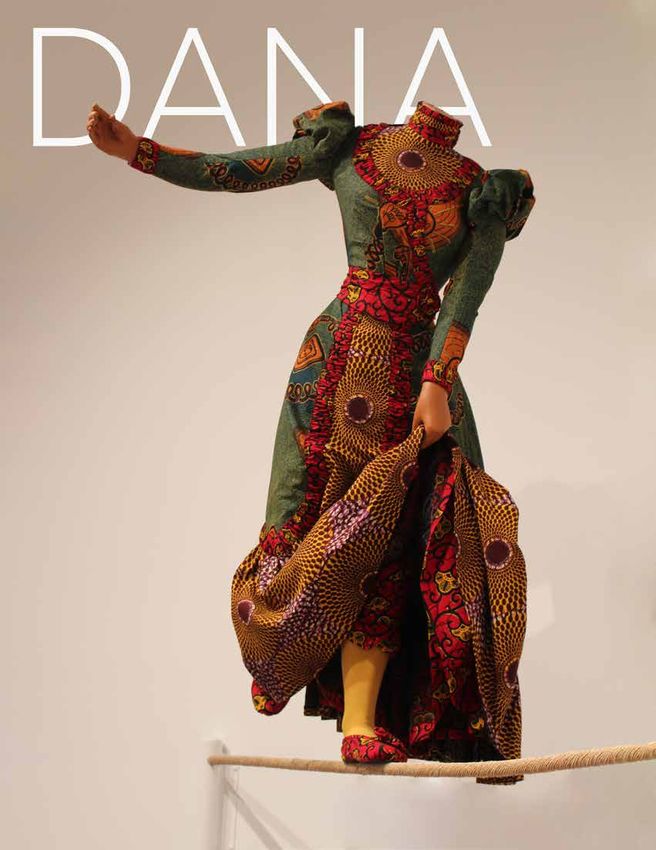
 Luis A. Quintana, At-Large               Cover image:
                                          Lady Walking a Tightrope, 2006.
                                                                                        DANA magazine is made possible by a generous grant from
                                          Yinka Shonibare, MBE. Mixed media,
                                          67 x 122 x 43.25 in. Purchase 2007
                                          Helen McMahon Brady Cutting Fund 2007.5a
 ii | DANA Fall/Winter 2017
MESSAGE FROM THE CHIEF CURATOR
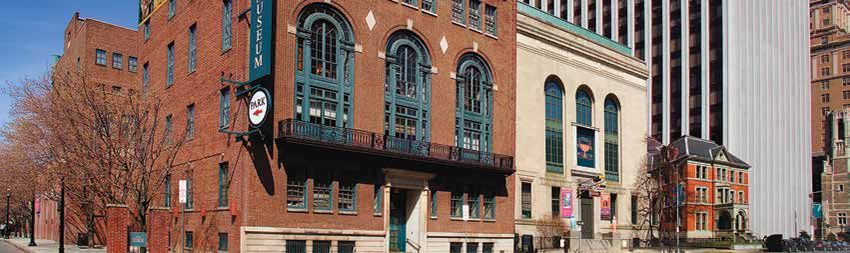
Welcome! A New Year, A New Way In.                             the bustling main entrance. New
                                                               permanent first-floor galleries
We will celebrate the New Year at the Newark Museum with       have been designed, and the
the much-anticipated reopening of the historic 1926 Louis      main building’s second floor has
Bamberger Entrance in early 2018. The dramatically reno-       been transformed into a state-
vated entrance is more than just a new way to enter the        of-the-art exhibition space. The
Museum; it represents a new way to see one of America’s        Native American collections
great cultural institutions.                                   moved to the North Wing last
                                                               year with the installation of
Chicago architect Jarvis Hunt was chosen by Newark             Native Artists of North America. In December of this year,
department store magnate Louis Bamberger in 1923 to            two new galleries will open adjacent to the rechristened
design the city’s new museum building. Entirely funded by      Dorothy Eweson Gallery: Arts of Global Africa, celebrating the
Mr. Bamberger, the Newark Museum’s new home was to             centennial of the Museum’s incomparable African collections;
be a very different kind of place than America’s other great   and Art of the Ancient Mediterranean: Egypt, Greece and
urban museums. It was purposely set right on the street, in    Rome, which showcases the art of everyday life in the ancient
the heart of downtown, rather than isolated from the city      western world.
center in one of Newark’s great Olmsted-designed parks. It
was easily accessible to all of Newark’s citizens on foot or   The new Bamberger Entrance has two parts. One is the
by public transportation and was open on weekends when         restored historic entrance, with the great bronze plaques by
Newark’s thousands of factory and office workers had free      John Flanagan greeting visitors as they climb the granite
time. The Museum was to be filled with interesting things,     stairs through the Museum’s massive bronze doors. The
and its exhibitions would be both accessible to and useful     other focus is the new ADA-compliant ramp that makes a
for the city’s diverse population.                             stately progress up and around the north side of the
                                                               Museum’s façade, entering the building through a suite of
The marble-floored entrance of the 1926 Bamberger              spaces devoted to visitor services. To top it all off, the dual
building was always both a lobby and an exhibition hall.       entrances welcome visitors into the Dorothy Eweson Gallery,
By the time of the Michael Graves Master Plan renovation       with its dazzling mural Gateway by Odili Donald Odita.
of the 1980s, this was no longer an ideal configuration,
due to changing realities of climate control and exhibition    All of us at the Museum hope you will join us in 2018 to
security. Twenty years ago, the Washington Street entrance     celebrate a new beginning at New Jersey’s greatest museum.
was closed, and all visitors began to arrive through the
Museum’s much smaller south wing entrance, originally          Ulysses Grant Dietz
designed as a lobby for the Billy Johnson Auditorium.          Chief Curator and Curator of Decorative Arts

The Bamberger Entrance is only one of several important        Generous funding for this special capital initiative provided by:
physical changes launched recently. The African and Native
American collections have been aligned with the rest of the    The MCJ Amelior Foundation
permanent collection galleries. Also, the Museum has long      Sagner Family Foundation
needed a major changing exhibition space, separated from

                                                                                                               newarkmuseum.org | 1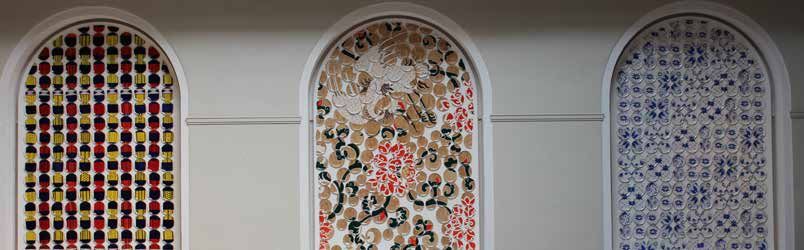
FEATURED INSTALLATION

ARTS OF
GLOBAL AFRICA
GALLERY REOPENS AS ONE OF
TWO FLAGSHIP INSTALLATIONS.
In 1917, exactly a century ago, the Newark Museum acquired      trade and signals his upward mobility. Acquired by the
its first object from Africa—a small, elegant Zulu beadwork     Museum in 1977, Man with a Bicycle later captured the
apron from South Africa. From these modest beginnings,          attention of writer James Baldwin, who enthused in 1987:
the collection has grown to encompass nearly 6,000 works
from across the African continent and its global diaspora.      "This is something. This has got to be contemporary!
This fall, to mark the collection’s centennial, the Museum      He’s really going to town! It’s very jaunty, very
unveils a long-awaited reinstallation of the Arts of Global     authoritative. His errand might prove impossible,
Africa accompanied by the publication of its first-ever         whatever it is. He’s one place on his way to another
collections catalogue. Together, they offer an expansive and
                                                                place. He is challenging something—or something
dynamic vision of African creative expression that embraces
the continent and acknowledges its global ties, past and
                                                                has challenged him. He’s grounded in immediate
present.                                                        reality by the bicycle."

Our brand new gallery opens in the Museum’s fully               For Baldwin, the work is significant because it offers an
renovated flagship space on the first floor and presents        African perspective on modern life in which a bicycle is not
nearly fifty works, both historic and contemporary, from        necessarily a symbol of the West, as much as a reflection of
throughout Africa and its diaspora. In its new location         African culture. It challenges those of us outside the conti-
just off the main lobby, the Arts of Global Africa will have    nent to rethink our ideas about Africa and African art.
greater visibility and will connect more strongly to our
other art collections in the North Wing galleries. Those        It seems fitting, then, that Man with a Bicycle serves as
interested in digging deeper into the collection will enjoy     a point of entry to the representation of the arts of global
the accompanying catalogue. It highlights one hundred           Africa at the Newark Museum as the first work to greet
objects from the collections, from the ancient Egyptian         visitors entering the new gallery (and as the cover image on
coffin lid of Henet-Met (a centerpiece of our new antiquities   our catalogue). Like our jaunty man with his bike, the works
gallery) to a 2014 video installation by Berlin-based artist    presented in our gallery showcase the great diversity of the
Theo Eshetu (a highlight in the new African gallery). More      Museum’s collection and illustrate the cultural complexity
than forty scholars from around the world have contributed      of the continent. We think they offer a very different vision
to this publication, writing individual entries as well as      of “African art” than what is normally considered. The range
essays focusing on the collection’s distinctive strengths—
North African art, textiles, art of the Yoruba, modern and      New installation features classic pieces such as an Epa headdress
contemporary art.                                               from Nigeria and a newly commissioned work by Simone Leigh.

During the course of planning and developing this project,
one work from the collection was a special source of
inspiration: a sculpture of a man with his bicycle. Made
sometime in the mid-twentieth century by a Yoruba artist
working in southwestern Nigeria, it may represent a mer-
chant en route to market. The man bears scarification
marks on his face and wears Western-style dress. The
bicycle, introduced to the region in the 1920s, facilitates

2 | DANA Fall/Winter 2017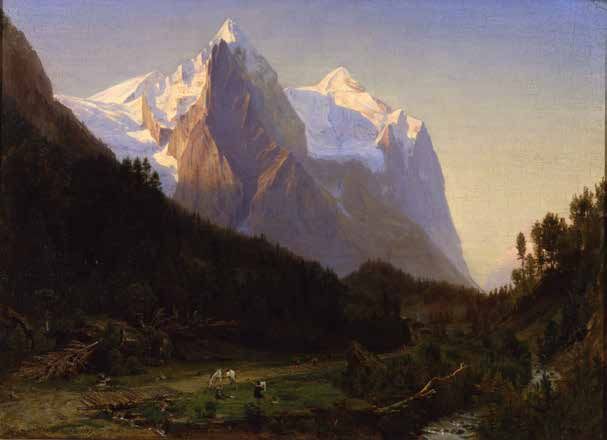
of works on view include Ethiopian religious icons, gold rega-
lia from Ghana, North African jewelry, South African bead-
work, and studio portrait photography. They are presented
in thematic sections that focus on the visual expression of
spiritual beliefs, the relationship between art and leadership,
and the human body as artistic canvas and source of inspi-
ration.

The last section of the gallery is devoted to contemporary
arts of global Africa, a special strength of the Museum’s
collection. The works on view broadly explore the theme
of migration—of people, objects, materials, or ideas. They
include Newark Museum visitor favorites, such as the
shimmering metal wall sculpture by acclaimed artist El
Anatsui, made from discarded liquor bottle tops. New
acquisitions include photographs by New Jersey-born,
Johannesburg-based artist Ayana Jackson in which she uses
self-portraiture to reimagine the life of Sarah Forbes
Bonetta, a Yoruba woman presented as a gift to Queen
Victoria in the nineteenth century. Elsewhere in this gallery
are major works by Theo Eshetu, Lalla Essaydi, Serge
Nitegeka, Herve Youmbi, and Simone Leigh.

Nearly a decade in the making, the project has been devel-
oped with the input of an advisory group of internationally                                                         Arts of Global Africa, on view in the
recognized academics, curators, and educators convened                                                              Brady Gallery, first floor, main building
as part of the Museum’s intensive and thorough planning
phase. The reinstallation and related catalogue have received                                                       Major support provided by:
extraordinary support, including $1 million from the Andrew                                                         Dickinson Family Foundation; The Andrew W. Mellon
W. Mellon Foundation, a $500,000 Challenge Grant from                                                               Foundation; National Endowment for the Humanities;
the National Endowment for the Humanities, as well as an                                                            Sagner Family Foundation; and Victoria Foundation.
additional $1.5 million in private donations.
                                                                                                                    Additional support provided by:
                                                                                                                    The Charles E. and Edna T. Brundage Charitable
Christa Clarke, Ph.D.                                                                                               Foundation; Mitzi and Warren Eisenberg; Gelfand Family
Senior Curator, Arts of Global Africa                                                                               Foundation; R. Hutter Family Fund; Dorothy D. Lewis;
                                                                                                                    Arlene and Len Lieberman; Judith and Lester Z. Lieberman;
                                                                                                                    Cynthia and Andrew H. Richards; Joseph L. Buckley, Esq.;
                                                                                                                    Gulton Foundation, Inc.; Margaret and Anthony Richards;
                                                                                                                    Sills Cummis & Gross P.C.; and other friends and patrons of
                                                                                                                    the Newark Museum.

Many Came Back, (detail) 2005. El Anatsui. Aluminum (liquor bottle tops) and copper wire, 84 x 115 in. Purchase 2005 The Members' Fund 2005.34
Man with Bicycle, mid-20th c. Unrecorded Yoruba artist; Nigeria. Polychrome wood, 36 x 12 x 28 in. Purchase 1977 Wallace M. Scudder Bequest Fund and The Members' Fund 77.285a,b

                                                                                                                                                                                   newarkmuseum.org | 3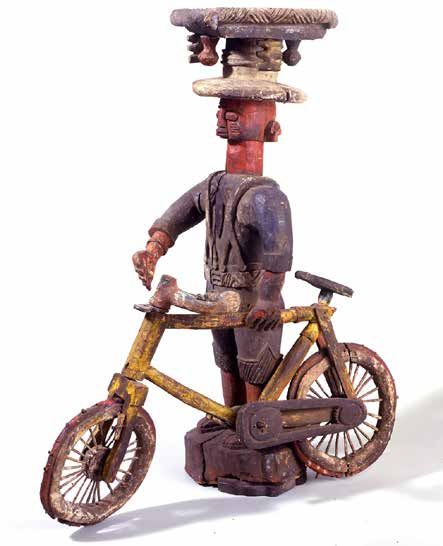
FEATURED EXHIBITION

REPERTOIRE                                  MOLLY HATCH’S MAGNUM OPUS

Two years ago, I approached Molly Hatch about doing a           inspired by a textile from the Museum’s three great geographi-
project for the Newark Museum. Molly, the daughter of a         cal collecting areas: Africa, America, and Asia.
painter and a dairy farmer, bridges contemporary design,
ceramics, and painting in a way that resonates perfectly        Africa is represented by Dyula Woven, inspired by a rare Dyula
with the Newark Museum and its 108-year-old mission.            wrapper from the Ivory Coast. Made in the early twentieth
                                                                century, it was collected by the Museum’s founding director,
Decorated ceramics have been a part of human culture            John Cotton Dana, in 1928. For the American niche, Molly
for thousands of years. But it was the last quarter of the      chose an iconic blue-and-white coverlet of wool and cotton
nineteenth century that saw the emergence of ceramic            from the 1840s. Titled Bergen Jacquard, it honors the impor-
decoration as an art form in the United States. Both under-     tant New Jersey roots of the Museum’s enormous Decorative
glaze painting and enamel decoration were skills plied by       Arts collection. The third niche, Qianlong Silk, is based on an
professional china painters and by amateurs, both male          eighteenth-century Chinese velvet throne carpet, with stylized
and female.                                                     peonies and a dancing crane.

The Newark Museum has been displaying ceramics as art           Each of the three niches presents an image pixilated in under-
since 1910, and it seemed fitting to cap my thirty-seven-year   glaze slip decoration across approximately 186 factory-made
career here with a grand ceramic gesture by a rising young      white earthenware plates, totaling nearly five hundred plates
American artist. Molly and                                      in all. The design of the textiles is broken up and transfor-
I talked over the course of                                     med as the plates’ concave, shiny surfaces reflect light back
several months, and she                                         into the court. Entirely new, Repertoire evokes the pervasive
presented me with the                                           presence of art in everyday life through ceramics and textiles
notion of using her ceramic                                     across human history and civilization.
installation to celebrate
another universal cultural                                      Ulysses Grant Dietz
art form in Newark’s                                            Chief Curator and Curator of Decorative Arts
collections: textiles.
Accordingly, having studied                                     On view in the Charles W. Engelhard Court,
the Museum’s vast and                                           first floor, main building
diverse textile holdings,
Molly settled on the idea                                       Visit our website to watch a video of the installation process:
of a massive, three-part                                        newarkmuseum.org
installation entitled
Repertoire. The three north                                     Made possible by:
niches in the Charles W.                                        Barbara and William Weldon
Engelhard Court will each                                       Raymond and Mary Courtien
hold a different artwork                                        Newark Museum Volunteer Organization

4 | DANA Fall/Winter 2017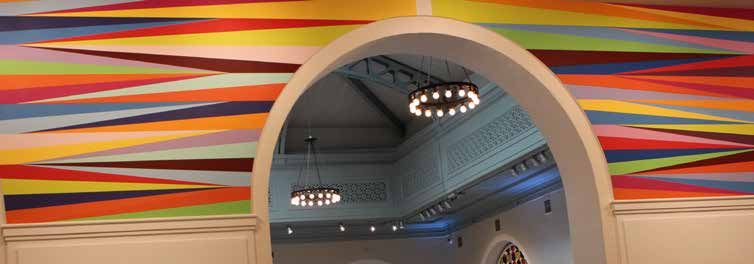
A NEW HOME FOR THE ANCIENT                                                contracted with Dr. Fitzgerald
                                                                          to create a new interpretive
MEDITERRANEAN COLLECTION                                                  installation showcasing the
                                                                          art of everyday life in Egypt,
                                                                          Greece, and Rome.
After twenty-eight years, the Ancient Mediterranean
collection needed a new home. The ongoing renovation of                   The purpose of the installation
the 1926 Bamberger Entrance necessitated using the space                  is to document the diverse yet
formerly allocated to the Egyptian, Roman, and Greek                      interconnected nation-states
holdings for essential visitor services. We took this as an               that rose and fell on the waves
                                                                          of the ancient Mediterranean
opportunity to bring new relevance and visibility to one                  Sea. In the newly designed
of my favorite collections. Tucked away in its little suite of            gallery, everyday objects tell
galleries in the northeast corner of the Bamberger building,              the stories of three distinct
the antiquities collection had become overlooked by much                  cultures—Egyptian, Greek, and
                                                                          Roman—defined by maritime
of the Museum’s audience. Comprising nearly 4,500 objects
                                                                          connections among Africa,         Painted pottery amphora for oil or wine. Athens, Greece,
                                                                                                            ca. 530 BC. Eugene Schaefer Collection,
from the ancient world, Newark’s antiquities collection is                Europe, the Near East, and        Gift of Mrs. Eugene Schaefer, 1950 50.277

substantial and is most celebrated for its holdings of ancient            Asia. While each culture had its own distinctive values and
glass—one of the finest such collections in the country.                  artistic traditions, all developed in conversation with one
Moreover, the Museum’s Education department relies on                     another over hundreds of years in an early version of a global
                                                                          economy. The groups of objects illuminate the role of
the Ancient Mediterranean gallery as part of its work with
                                                                          glassmaking, sculpture, funerary art, metalwork, and ceramics
curriculum-based school programs.                                         in homes and temples across the greater Mediterranean.

We made the decision to relocate the collection—Art of the
                                                                          That these objects have survived over thousands of years
Ancient Mediterranean: Egypt, Greece & Rome—to the current
                                                                          is remarkable. That they are still meaningful to our lives
South Gallery, which will
not only afford it greater                                                today is nothing short of a miracle.
visibility, but will make it
the starting point for the                                                One of the core themes of the installation is the impor-
Museum’s permanent                                                        tance and meaning of materials, from luxury goods made for
collection galleries. Telling                                             members of the aristocracy, to more commonplace objects
the story of art in everyday                                              that were part of daily life across empires. With the idea of
life in the ancient world,                                                empire goes that of multiculturalism and evolving cultural
the Ancient Mediterranean                                                 influences. As different civilizations expanded and contracted
gallery will offer a preamble                                             across the geography
to the newly installed Art of                                             of the Mediterranean
Global Africa gallery across                                              world, aspects of their
the Charles W. Engelhard       Pomegranate-shaped glass vessel.
                                                                          distinctive cultures
Court. From there the
                               Egypt, 12th century BC
                               Eugene Schaefer Collection,                moved along with
                               Gift of Mrs. Eugene Schaefer, 1950
gallery will guide visitors to 50.1249                                    commerce and waves
the rest of the permanent                                                 of migration across
                               The above work is currently on view in
collections in the Museum’s the reinstalled African gallery, which also   the lands of the          Carved marble fish platter and sauce bottle. Roman, first century.
                                                                                                    Purchase 1994 Sophronia Anderson Bequest Fund and The Members'

North Wing.                    includes works from antiquity.             Egyptians, the Greeks, Fund 94.48a-c
                                                                          and the Romans.
Armed with an enthusiastic recommendation from fellow
curator Dr. Christa Clarke, the Museum contacted Dr. Clare                Ulysses Grant Dietz
Fitzgerald, senior manager of education programs at the                   Chief Curator and Curator of Decorative Arts
Michael C. Carlos Museum at Emory University in Atlanta.
Dr. Fitzgerald is not only an expert in the field, but puts her           Art of the Ancient Mediterranean: Egypt, Greece & Rome
knowledge to daily practice as an educator with the                       On view in the South Gallery, first floor, main building.
Carlos Museum’s renowned antiquities holdings. The Museum
                                                                                                                                            newarkmuseum.org | 5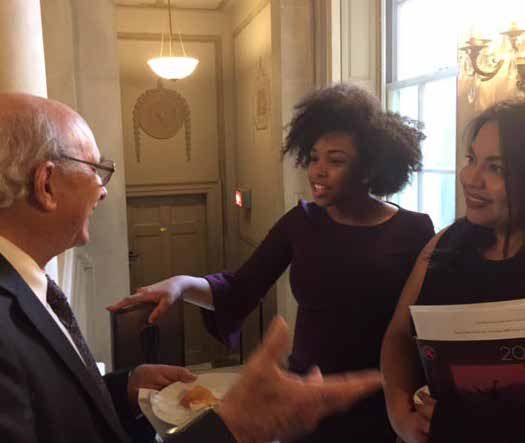
MEMBERSHIP
GIVE THE GIFT OF A
MUSEUM MEMBERSHIP
IT'S THE PERFECT SIZE, COLOR, AND STYLE
Make art a priority in someone’s life this season. Now is the perfect
time to join the Newark Museum. Members enjoy unlimited FREE
admission to our galleries, including the newly reinstalled Arts of
Global Africa, Art of the Ancient Mediterranean, and the newly com-
missioned Gateway by Odili Donald Odita. Members also receive
a discount in the Museum Shop, FREE admission to Museum-related Family Gallery Workshops, adult lectures, courses and
workshops that are designed to educate, inspire, and nurture creativity. A Newark Museum membership promises a year filled
with delightful experiences and savings! Join before December 31st at the patron level or above and receive two extra parking
passes as our gift to you!

FREE MEMBERSHIP FOR                                         MEMBERS MORNINGS
NEWARK RESIDENTS                                            SAVE THE DATE
The Museum has been a public treasure in the city           SATURDAY, JANUARY 27, 2018, 10 AM–NOON
of Newark for more than a hundred years. Today, we          Join us for an exclusive tour of our newly renovated galleries:
continue our mission to educate and inspire Newark          Arts of Global Africa and Art of Ancient Mediterranean: Egypt,
residents by providing free admission and access to our     Greece & Rome. Following the tour, Members will enjoy a light
collections and educational programs. Whether you have      breakfast and conversation. Space is limited.
been here recently to view our impressive collections, or   Please visit newarkmuseum.org to RSVP
have not visited since you were a child, we invite you to
make the Newark Museum your Museum today.                   ALSO, BE ON THE LOOKOUT FOR OUR SPRING 2018
To become a member,                                         MEMBERS MORNINGS!
contact us at:
membership@                                                 Several times throughout the year, Members are invited for
newarkmuseum.org                                            gallery talks and activities with our curators, docents, and
or call Leland Byrd,                                        Museum staff. This spring, we will be exploring our upcoming
Membership Associate,                                       shows, The Rockies and the Alps: Bierstadt, Calame, and the
at 973.596.6686.                                            Romance of the Mountains and Dramatic Threads: Textiles of
                                                            Asia. Plus exciting tours and activities featuring works from our
                                                            permanent collection! Details to come.

SAVE THE DATE
NEWARK MUSEUM ASSOCIATION
ANNUAL MEETING OF MEMBERS

Tuesday, February 20, 2018 | 6-8 pm

Featured speaker:
Tricia Laughlin Bloom, Curator of American Art
Topic: The Rockies and the Alps: Bierstadt, Calame,
and the Romance of the Mountains

See page 16 for exhibition details.

6 | DANA Fall/Winter 2017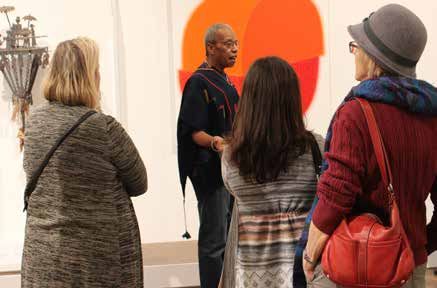
NEWARK MUSEUM MEMBERS TRAVEL

Our 2018 travel year looks great! Whether you are interested in an international adventure, a domestic jaunt or a day’s
escapade, the Newark Museum has an exciting, educational, and just plain fun trip for you. Join other Museum members
on an unforgettable trip not offered elsewhere. Discover something different and make new memories.

HERE’S A SAMPLING OF SOME UNIQUE TRAVEL OPPORTUNITIES:
International Destinations
Changing Tides of History: Cruising the Baltic Sea | June 11-19, 2018
This trip takes you to Sweden, Estonia, St. Petersburg, Finland, and Denmark, and includes hearing from historic speakers
Lech Walesa, former President of Poland, and Sergei Khrushchev, son of former Soviet Premier Nikita Khrushchev.

Domestic Excursions
American Civil War North + South Legacy Cruise | June 24-July 2, 2018
Cruise the American Queen from New Orleans to Memphis, personally escorted by the great-great-grandsons of US President
Ulysses S. Grant and CSA President Jefferson Davis: Ulysses Grant Dietz and Bertram Hayes-Davis.

For a complete listing of the trips offered, visit the Members Travel section of the Museum’s website:
www.newarkmuseum.org/members-travel

You can also get more information or register for a trip by contacting:
Merle Lomrantz, Director of Member Travel Services
mlomrantz@newarkmuseum.org
973.596.6643

                                                                                                           newarkmuseum.org | 7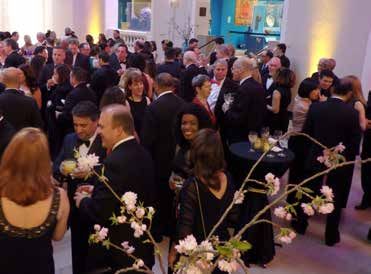
DEVELOPMENT

  NEW GRANTS                                                                                      NEWARK BLACK FILM
  ENHANCE ACCESSIBILITY                                                                           FESTIVAL ATTRACTS NEW
  TO ARTS OF ASIA COLLECTION                                                                      CORPORATE PARTNERSHIP

  Two new grants are helping the Museum make the Asian art                                        The Newark Museum was proud to partner with
  collection more accessible to scholars and public audiences.                                    Hennessy V.S.O.P. Privilège for the 43rd Newark Black
  Thanks to the support of the Overseas Korean Cultural Heritage                                  Film Festival. As the festival’s Official Spirit sponsor,
  Foundation, the Museum will be able to improve the storage of the                               Hennessy joined presenting sponsor Bank of America
  Korean art collection, protecting important works from damage and                               and Official Airline sponsor United in engaging
                                                              deterioration. Funding will also    thousands of film aficionados through compelling
                                                              enable the Museum to place          screenings of African and African-American cinema.
                                                              images and information about        Hennessy hosted a VIP reception prior to the screening
                                                              six hundred objects from the        of Steps on July 12, 2017, which featured participation
                                                              collection into the E-Museum        by the film’s writer and director Eddie Harris,
                                                              database, which can be accessed     government officials, artists, scholars, and supporters
                                                              online by the public. Through       of the Museum. The Newark Museum relies upon the
                                                              a grant from the Metropolitan       support of the corporate community to help further its
                                                              Center for Far Eastern Art          exhibition and education mission to serve hundreds of
                                                              Studies, the Museum’s Research      thousands of visitors each year. To learn more about
                                                              Library and Archives will acquire   corporate partnership opportunities, contact the
                                                              approximately seventy books         development office at 973.596.6571.
                                                              in the field of Japanese art and
                                                              culture, enhancing the mission
 Imperial Helmet and Armor, 1905, Joseon Dynasty              of the Newark Museum by
 Wool, fur, jade, amber, gilt bronze, silver, enamel, lacquer
 Gift of the Estate of Mrs. Edward Henry Harriman, 1934       making   information on the
 34.229A-F
                                                              fine arts and decorative arts
  available to researchers, curators, scholars, and students from
                                                                                                                   Official Airline
  throughout the region. Museum members and the general public
  will also have access to these rich resources for their own educational
  purposes. The Museum is grateful for the generous support of these
  institutions.
SAVETHEDATE

              2018 NEWARK MUSEUM LEGACY GALA | SATURDAY, MAY 12, 2018
              Please plan to join us for an elegant evening celebrating our
              spectacular global collections. The Legacy Gala provides crucial
              funding for the outstanding exhibitions and education programs
              the Museum presents each year.

              Honoring:
              Ellen Lambert
              Louis Bamberger Medal for Meritorious Service

              United Airlines
              Distinguished Community Partner Award

              For more information, please call the development office at 973.596.6579.

 8 | DANA Fall/Winter 2017
WHY I
GIVE
People like YOU, our Newark Museum supporters,
make great things possible.
What better way to celebrate our generous and dedicated members than
to have them recall in their own words why this museum matters to them?
“All the time that I have spent at the Newark Museum in the galle-
ries with friends, fellow docents, and curators has had a profound im- What inspires you
pact on the contemporary work I collect, in both dramatic and subtle to give back to the
ways. As a painter and a printmaker, I have a deep connection to the
Newark Museum’s rich collections and top-notch exhibitions. The in- Newark Museum?
fluence on my own work and collecting has meant a great deal to me.”
- Judy Targan (South Orange, NJ) Tell us your story.
Founder’s Society member, artist, collector
Share your favorite memory, a
"There are so many ways to give to the Newark Museum that every one memorable experience in the
of us can have that distinct pleasure. My immediate family has always galleries, or your reasons for
been in the field of education so we never really had extra money to supporting the Newark Museum.
donate to the museum; but we gave in other ways—mostly time and
work, inspiration and, of course, bragging. I was thrilled to organize a Contact us at
volunteer organization at the Museum and be its founding president. I can’t msaliola@newarkmuseum.org or
believe that was so many years ago, so many thousands and thousands of call 973.596.6491. We look forward to
volunteer hours ago." hearing from you!
- Verdenal Hoag Johnson (Dover, NH)
Annual Fund donor, trustee emerita, member @NewarkMuseum
#WhyIGive
“It brings me such joy to support the Newark Museum’s Explorers
Program. To know that I am helping New Jersey teenagers gain valuable
work skills and access to world-class art means a great deal to me. They
are our future leaders and I am so proud of their accomplishments.”
- Rochelle Karp (Summit, NJ)
Docent, education supporter
"Our juniors, seniors and their teachers loved being at the Museum for
their day of reflection. The space was perfect and everyone was so warm
and welcoming. It was a great day for us.”
- Sister June Favata, Saint Vincent Academy (Newark, NJ)
Supporter and student group leader
newarkmuseum.org | 9EDUCATION
VITALITY ARTS
What makes you feel most
alive? Exploring unfamiliar art
and ideas? Learning creative
skills? Meeting new people?
Discovering abilities you didn’t
know you had?
As mind-body research reveals ever more about
the ways we grow and develop throughout
life, we’re coming to understand that all those
experiences combine to help create the feeling
of vitality—the capacity to develop and thrive,
to be lively and engaged, no matter our age or
background.
That’s the idea that underlies the Vitality Arts
programs taking place at the Newark Museum. Over the course of
the year, eight-week courses for adults ages fifty-five and up are “It was an adventure. You discover things
challenging older adults to explore, create, and share artwork in
ways that are novel, complex, and socially engaging. The Newark you did not know about yourself, things you
Museum is one of only fifteen arts organizations around the country
selected to participate in offering arts courses through the Seeding can do. When I looked at the instructor’s
Vitality Arts initiative of Aroha Philanthropies. Together with this work, I said, 'This man is a genius!' And now,
partner, the Museum is helping to demonstrate how arts learning
inspired by and connected to the vibrant and diverse works in the I’m doing some of that.”
Museum’s galleries can bring joy, connection, improved health, and
well-being to older adults.
The program launched and message in the sculptural work of Willie Cole and Uram Choe.
in spring 2017, with two The spring series culminated in an exuberant exhibition reception,
classes studying the art packed with family and friends. These images and quotations offer
of collage under master a glimpse of their work and the insight they developed during the
collage artist Mansa course.
Mussa. Beginning with
the simplest of torn- This fall, four more courses got underway, linking the galleries and
paper processes inspired artworks with an expanded range of media and expression: Collage
by the work of Romare with Mansa Mussa, Poetry in the Galleries with Robert Carnevale,
Bearden, the students Textile Arts with Paulette Thomas, and 3D Printed Jewelry with
worked their way up to Keary Rosen.
digital photographic
collage, autobiographical
box collages, and
“I found it visionary. I found myself, when
embellished sculptural 3D forms. With Mussa, students visited I took it home, still thinking about what I
the galleries to expand their thinking about the possibilities of
ornamenting a substrate, using and juxtaposing materials in could do to enhance it, make it better, do it
unexpected ways. Students explored the textural variety in the more heartfully.”
Arts of Africa gallery—from porcupine quills to pressed snuff tins
to hammered metals—and focused on the link between material
Supported by
10 | DANA Fall/Winter 2017PROFESSIONAL DEVELOPMENT The unique diversity of the Museum’s collections provides a
FOR EDUCATORS AT THE forum to experiment with ideas and make connections between
NEWARK MUSEUM different curricular disciplines, different cultures, and different
time periods. Our professional development programs model
best practices in inquiry-based learning by creating hands-
on workshops that highlight ways to inspire and fuel curiosity.
Our Teacher Programs model best practices and instructional
techniques that foster collaboration and twenty-first century skills.
The Newark Museum is a great place for teachers from different
schools to connect and share; they learn about the Museum, but
they also learn from one another. In addition to the Professional
Development sessions, Late Thursdays offer great opportunities
to socialize and learn, and Exhibition Openings, Second Sundays,
and other special events are designed to inspire, recharge and
energize our educational colleagues
.
For the 2017-2018 school year, the Newark Museum will host four
free Educator Evenings that highlight upcoming exhibits and
The Newark Museum partners with educators to develop
use the collection and themes to explore ways that teachers can
programs that use works of art, scientific specimens, and
connect their curricula to authentic objects.
historical artifacts to reinforce exploration, observation,
inquiry, critical thinking, imagination and creativity.
From free Educators’ Evenings, to specially designed
professional development sessions for individual
districts and schools, each event includes gallery tours,
hands-on activities, resource materials with curriculum
connections, and light refreshments.
All education programs at the Newark Museum focus
on immersive, experiential, and self-directed hands-
on learning. Our professional development programs
for school teachers and administrators are designed
to be fun, while providing opportunities to learn about
the Museum and to experiment with new strategies for
engaging students.
The success of the Newark Museum’s educational
and culturally relevant programs is based on:
• Sharing the resources of the Newark Museum as
a way to build relationships with PreK-12 teachers, school • Arts of Global Africa
administrators, and family workers Thursday, November 30, 4–7 pm (Grades Middle-High School)
• Understanding the needs of classroom teachers to better • Art of the Ancient Mediterranean
serve their students and the community Thursday, January 25, 4–7 pm (All grades)
• Increasing teachers’ comfort level with using authentic • Early Childhood Best Practices
objects and art as primary sources Thursday, February 22, 4–7 pm (Pre-K-2nd grade)
• Encouraging teachers to be better facilitators using inquiry- • Rockies and Alps
based, STEAM-based and project-based learning Thursday, March 29, 4–7 pm (All grades)
Events for educators demonstrate the ways that encounters with Supported in part by:
the Museum’s authentic objects serve to deepen engagement
with discipline-based content. The teachers practice deep
looking exercises, open-ended questioning and hands-on
activities—all strategies that they can use to foster inquiry and
project-based learning in their classrooms.
newarkmuseum.org | 11EDUCATION
COLLECTIONS COME ALIVE
We invite you to experience the Museum’s collections and galleries in a new light.
From weekly yoga classes to monthly Late Thursdays to captivating courses and workshops, evening programs encourage new
perspectives on the Newark Museum and provide opportunities to mix and mingle as you discover and create.
Since 2015, we have partnered with Newark Yoga Movement to offer free weekly classes
in the galleries. After hours, the Museum’s exhibitions offer a mixture of inspiration and
tranquility and provide unique opportunities for focus and mindfulness. Participants
have practiced downward dog, tree, and warrior poses surrounded by exhibitions such
as Gabrielle Dawes’ The Shape of Light, Wondrous Worlds: Art & Islam and the caves
of Dynamic Earth: Revealing Nature's Secrets. Starting January third we will offer yoga
classes every Wednesday from 6:00 p.m. to 6:45 p.m.
On the third Thursday of every month, the Museum’s Late Thursdays programs,
supported by Prudential Foundation, invite adult visitors to join us for a dynamic mix
of art, music, entertainment, food, and drink. These creative social events focus on a
particular exhibition or theme and include a mix of activities that deepen engagement
with the Museum’s collections in unexpected ways. Pop-up gallery performances of
art-inspired spoken word and poetry stimulate reflection and conversation, while musical
interludes and original dances create new contexts for understanding art from different
places and time periods. Artist-led projects foster individual creativity and promote all
Late Thursday Performance
kinds of social interaction as participant “makers” motivate and support each other’s
efforts in the Museum’s MakerSPACE.
In October, a special Late Thursday program offered visitors the opportunity to explore the role that the arts and the Newark
Museum played in strengthening community at the time of the 1967 Rebellion, and reminded all to consider the ongoing
importance of these institutions today. Archival works of art in the Museum’s collection as well as newly created media
pieces allowed for a powerful conversation between visitors of different generations and different experiences. In November,
“The Art of the Bling” celebrated Jewelry: From Pearls to Platinum to Plastic, complete with live burlesque performances of
songs about gems and jewels, edible jewelry creation, and a workshop on creating found-art body ornaments. December’s
Late Thursday, “Light it Up” is just in time for the winter solstice. It features a global mash-up of holiday-themed activities,
performances, and art from the Museum’s collection—including the elegant Victorian decorations of the Ballantine House
as well as traditions from Asia, Africa, and the Americas to celebrate all things sparkly, shiny, and bright. On January 18, Late
Thursday will celebrate the newly reinstalled Arts of Global Africa with dancers, drummers, hair crown artists, and even a
lesson in tightrope walking inspired by Yinka Shonibare’s Lady Walking a Tightrope.
Currently in progress, the “Beer Making Workshop” at the Museum
on Wednesday evenings has been an “effervescent success.”
Inspired by the Ballantine family business, budding brewers are
learning the process and the history of a once-thriving Newark
industry and will go home with two six-packs of their own creation.
New courses will be announced in the spring.
Watch for more evening courses and workshops!
If you are not already on our mailing list, sign up today at
newarkmuseum.org/email-signup.
Beer Making Workshop
12 | DANA Fall/Winter 2017IMPACT
NEWARK MUSEUM EXPLORERS WIN
NATION’S HIGHEST ARTS & CULTURE
AWARD
The Newark Museum Explorers Program is a proud recipient of the 2017 National Arts and
Humanities Youth Program (NAHYP) award, the nation’s highest honor for after-school and
out-of-school arts and humanities programs that foster creativity and achievement among
American students. 2017 AWARD
Newark Museum Explorers
Newark Museum
Representing a partnership with the National Endowment for the Arts, the National
Endowment for the Humanities, and the Institute of Museum and Library Services, the
NAHYP award recognizes the country’s finest youth development initiatives for engaging
students in the arts and the humanities to increase academic accomplishment, graduation
rates, and college enrollment. The twelve award winners were chosen from a pool of three
hundred fifty nominations and fifty finalists.
"These twelve creative youth development programs
represent the best of the best," said Pam Breaux, president
and chief executive officer of the National Assembly of State
Arts Agencies (NASAA). "They are living proof of the power of
the arts and the humanities to build the skills young people
need to succeed in school and in life."
Samantha Joseph, 17, was selected as the youth speaker for
the NAHYP award, and in her speech she reflected upon her
experiences as a Newark Explorer. “The Newark Museum is
a place that welcomes every person. The diversity that I’ve
experienced walking through the galleries and working in
different areas of the Museum has opened me up so much,”
she said.
The Explorers Program is a three-year, year-round experience
serving thirty to thirty-five students in grades 10 through 12
annually. Explorers participate in a variety of learning activities Gurden B. Wattles, former trustee, speaks with senior explorer,
including student-led projects involving different aspects Samantha Joseph (center), Explorers Program Coordinator Jessica
of running a museum, field trips, and personalized college Nuñez (right) following the award presentation. Ms. Joseph was
guidance. selected to be the Youth Program Speaker at the awards ceremony.
Over the past several years, one hundred percent of Explorers have graduated high school and gone on to attend four-year
colleges or universities, including Wellesley College, Penn State University, Cornell University, and Parsons School of Design.
Two Explorers from the Class of 2017 received full scholarships: Arif Uddin will be majoring in Engineering Science at NJIT
and Inique Bristol will major in Computer Science at Rutgers Major support for the Newark Museum’s Explorers Program has
University. been provided by:
PSEG Foundation; The Walton Family Foundation; The New York
Community Trust, Wattles Family Charitable Fund; The Provident
In addition to the national recognition that comes with this Bank Foundation; the AT&T Foundation; United Airlines; and the
prestigious award, the Explorers Program will receive $10,000 Laura J. Niles Foundation.
to support its programming and engage more young people
from the community. Additional generous support has been provided by:
The Victoria Foundation; the Prudential Foundation; the
Charles E. and Edna T. Brundage Charitable Scientific and Wild
Learn more about the Museum and the Explorers at Life Conservation Foundation; The Eleanor Upton Charitable
www.newarkmuseum.org/explorers Foundation; the Aviation Development Council; and Rochelle
and Ronald Karp.
newarkmuseum.org | 13JOHN COTTON DANA SOCIETY
The John Cotton Dana Society honors those who make gifts by will to the Newark Museum.
Have you made a gift to the Newark Museum in your will? Would you like to name the Museum as a beneficiary of a
retirement plan, life insurance policy, or donor advised fund?
Society honorees receive exclusive benefits, including invitations to special events and donor recognition. Most
importantly, you will know your gift makes possible programs that will teach and inspire future generations of visitors.
For more information, visit www.newark.org/planned-giving or contact Newark Museum’s Director of Individual Giving,
Michele Saliola, at msaliola@newarkmuseum.org, 973.596.6491.
IN MEMORIAM
We are honored to have benefited from the generosity, leadership, and advocacy of these dedicated Museum supporters.
JEROME W. GOTTESMAN
1930-2017
Newark Museum trustee 2001-2017
Member of the Building Committee
VERDENAL HOAG JOHNSON
1924-2017
Newark Museum trustee 1996-2002
Granddaughter of Chester R. Hoag, one of the Museum's founders
THEODORE GUSTAV KOVEN
1934-2017
Newark Museum trustee 1992-2015
Member of the Executive and Building Committees
PATRICIA J. WESSEL
1933–2017
2007 Emma Fantone Award Recipient
Museum docent 1988-2017.
We wish to thank members of the Newark Museum community for their generous and throughtful tribute gifts in honor of
Jerry, Verdi, Ted, and Pat.
Sponsored by the John Cotton Dana Society
14 | DANA Fall/Winter 2017BEHIND THE SCENES
NEW MURAL BY ODILI DONALD ODITA
GREETS VISITORS AT MAIN ENTRANCE
“COLOR IN ITSELF HAS THE POSSIBILITY Gateway takes its inspiration from the history of the Newark
Museum and its global collections, especially the Tibetan
OF MIRRORING THE COMPLEXITY OF Buddhist Altar. Describing his project, the artist relates:
THE WORLD AS MUCH AS IT HAS THE
It is my intention to recall the spiritual and celebratory
POTENTIAL FOR BEING DISTINCT.” color of the Tibetan Buddhist Altar when making
my wall painting in the lobby space. Furthermore,
- ODILI DONALD ODITA I want to reconcile the complexity of the Museum’s
collection in my considered use of pattern-fields that
To accompany the opening of our new gallery devoted
recall Africa, which will be applied to a Post-Modernist
to the arts of global Africa, the Newark Museum has
lobby surface that utilizes classic Renaissance styling
commissioned a major site-specific mural by abstract
through its expansive archways. In this respect, the
painter Odili Donald Odita. Born in Nigeria and raised
Museum becomes the culminating source material and
in the American Midwest, Odita’s abstract paintings
inspiration point for my wall painting. As I understand
use color, pattern, and design to explore memory
it, the purpose and reason for this museum is similar to
and history. His mural, entitled Gateway, frames the
the purpose I will put into my painting installation: to
Museum’s new grand lobby and visitor center.
create an open path, or an access way, to the wealth of
information and artifacts that exist within its walls.
Gateway invites visitors to see this public place as an entry
to the Museum’s global collections and a hub for multiple
vantage points to come together. A fitting welcome to the
Newark Museum, this new entry space is truly a gateway for
community engagement, as well as shared and individual
experiences, gained through the Museum’s dynamic
collections, exhibitions, and events.
Christa Clarke Ph.D., Senior Curator, Arts of Global Africa
Gateway, on view in The Dorothy Eweson Gallery,
first floor, main building
Christa Clarke surveys the installation with artist
Odili Donald Odita prior to its completion.
newarkmuseum.org | 15UPCOMING EXHIBITION
THE ROCKIES
AND THE ALPS:
BIERSTADT,
CALAME, AND
THE ROMANCE
OF THE
MOUNTAINS
Inspired by the sublime beauty
of the Rocky Mountains
and the Sierra Nevadas in
the western United States
and the Alps in Europe,
historical landscape artists
made extraordinary efforts to
explore and document these
exciting natural spaces in
great detail. Images of soaring
peaks, glaciers, and torrents
became increasingly popular
in American and European
Worthington Whittredge, The Wetterhorn, 1858.
art of the mid-nineteenth Oil on canvas, 39 ½ x 54 in. Newark Museum, Gift of Mr. and Mrs. Katzenbach, 1965 65.143
century, when photographers,
scientists, and armchair travelers were awakening to the country. With thematic galleries highlighting literature,
the wonders of alpine culture. Artists’ interests in alpine natural science, technology, and tourism, the exhibition
landscapes coincided with the rise of tourism and scientific illuminates important connections between the international
exploration, as improved transportation and mass culture— explorations of nineteenth-century artists and the invention of
travel literature, prints, and photographs—made mountains photography, as well as the proliferation of landscape imagery
and glaciers increasingly accessible. This richly researched as part of mass culture. The exhibition is accompanied by a
exhibition brings together dazzling depictions of the Rockies 176-page catalogue (available in the Museum Shop in spring
and the Alps and examines the fascinating connections 2018) that is also beautifully illustrated with one hundred color
linking a diverse and accomplished group of artists who plates, original essays by co-curators Katherine Manthorne
visited and recorded these geographically distant ranges. and Tricia Laughlin Bloom, and additional contributions by
Patricia Mainardi and James Saslow.
Two key figures highlighted in the show are Swiss painter
Alexandre Calame (1810–1864), one of the leading alpine Major support for this exhibition provided by:
artists of his generation, and Albert Bierstadt (1830–1902), PSN Family Charitable Trust
whose impressive canvases provided many Americans with Beverly K. Nadler
their first glimpse of the Rockies and the Western frontier. The National Endowment for the Arts
The exhibition also includes a distinguished collection of George Robb, Ph.D.
mountain painting by predecessors and contemporaries of Barbara Brous
Bierstadt and Calame, including J.M.W. Turner, John Ruskin, Eleonore Kessler Cohen and Max Insel Cohen
Hudson River School painters Thomas Cole, Worthington Raymond and Mary Courtien
Whittredge, and John F. Kensett, and photographers Ellen and Don Greenfield
Carleton Watkins and Eadweard Muybridge. Ruth L. Hutter
Judy Lieberman
Offering a uniquely international perspective on the rise of
alpine painting, The Rockies and the Alps brings together Additional support provided by The Marie and Joe Melone
approximately seventy rarely exhibited works assembled Exhibition Fund for American Art.
from the Newark Museum’s permanent collection and from
distinguished private collections and museums around
16 | DANA Fall/Winter 2017NEW ACQUISITIONS
this type have survived. Portuguese jewelry has often endured
TWO NEW MASTERPIECES because it was given to convents, and thus wasn’t broken up,
ENTER MUSEUM COLLECTION which was the fate of much early European jewelry. Necklaces
like this one were symbols both of personal status and of the
Two splendid works purchased by the Museum this spring colonial power of the country. They are the model for every
have not only added objects that exist in no other luxurious gemstone necklace that has followed over the last
American museum, but also offer unique insights into two hundred years.
global art and trade in centuries past. An opulent necklace,
made in Portugal in the eighteenth century, demonstrates The spectacular and rare carved and lacquered headboard
the great skill of Lisbon’s jewelers as well as Portugal’s displays virtuoso Burmese woodworking and lacquer tech-
global reach in terms of precious materials. From the niques. The hybrid imagery showcases elements copied from
other side of the world, made in Myanmar in the sixteenth European Renaissance prints and the ornamental vocabulary
century is a glittering headboard for a bed that showcases of Burmese decorative arts. Commissioned almost exclu-
the best of Burmese carving and lacquerware as well as sively for the Portuguese elite, surviving works in present day
the cosmopolitan taste of the Portuguese elite during the Myanmar (Burma) are yet to be discovered. The front displays
golden age of the Portuguese empire. Both pieces will be a triangular golden mass that is densely packed with figures
of special interest to New Jersey’s vibrant Portuguese and and motifs that invoke marital bliss through symbols of
Brazilian communities, many of whom are located in the triumph and abundance. At the center is a figure of Victory,
Ironbound section of Newark. holding a wreath and palm frond, standing beneath a tasse-
led floral canopy. Flanking her heels, two roundels showcase
profiles of a bride and groom. The flanges on the lower half
of the headboard are later baroque, rococo, or even Victorian
additions and feature birds perched upon flowers.
Unknown Portuguese artist, probably Lisbon, 1750
Silver, topaz, 3¾ x 6 ¼ x 3/8 in. Purchase 2017
Collections Exchange Fund 2017.6
The necklace was produced by an unidentified jeweler, Burmo-Portuguese Headboard with Marriage and Renaissance Motifs (detail)
Myanmar (Burma) for the Portuguese Market, Kingdom of Pegu ca. 1550–1600
most likely in Lisbon, and was inspired by the designs for Lacquered and gilded wood, 37 ½ x 67 ¾ x 1 ½ in. Purchase 2017
court jewelry that were coming out of Paris in the 1750s.
This rare survivor is set with tawny topaz gemstones from On the back, golden floral and avian motifs enliven the rich,
mines in Brazil, which was colonized by Portugal in the dark lacquer. A pair of parrots perch with their wings spread
sixteenth century. Such jewels are distinctly Portuguese wide. Two kirtimukha heads appear in the lower band amid
because of the use of topaz and because each stone was more floral sprays.
cut to fit precisely in the oval and pear-shaped settings.
The graduated teardrops of the smaller mounts feature While Goa and Macau are the best-known former colonies of
free-swinging larger gemstones in their centers. The large the Portuguese empire in Asia, the Portuguese were also key
central girandole motif, anchored by a stylized bowknot, to the success of establishing the Burmese-ruled Toungoo
would have originally been matched by a pair of earrings Dynasty that reunited Burma in 1531 and remained in power
and possibly a large brooch. The closed-back silver mounts until 1571. As Europeans began to commission works to suit
have been given internal backings of colored silver foil, their tastes from artists and artisans in Asia, prints were
which enhance both the sparkle and the color of the sometimes sent to Asian workshops to serve as potential
stones. design sources.
In the eighteenth century, necklaces were worn around the The only two closely related examples of such Burmo-
front half of the neck only, with long ribbons tied in elabo- Portuguese lacquer known in the world today are both in
rate bows at the back. Relatively few European jewels of Portugal. This is the only such headboard in North America.
newarkmuseum.org | 17Nonprofit
49 Washington Street Organization
Newark, NJ 07102-3176 U.S.. Postage
PAID
Newark, NJ
Permit No. 2803
STYLE ANDAND
STYLE STATUS IN IN
STATUS STERLING:
STERLING:AMERICAN SILVER
AMERICAN SILVER INAT
THETHE NEWARK
NEWARK MUSEUM
MUSEUM
REPERTOIRE
REPERTOIREBY MOLLYHATCH
BY MOLLY HATCH
HOT, HOTTER,
HOT, HOTTER,HOTTEST:
HOTTEST: 300 YEARSOF
300 YEARS ofNJ
NJCERAMICS
CERAMICS
18 | DANA Fall/Winter 2017
AMERICAN CRAFT: A NEWARK MUSEUM SAMPLERYou can also read


