Family ties flawless In terrassa - leading light CIdeyeg - Heidelberger Druckmaschinen AG
←
→
Page content transcription
If your browser does not render page correctly, please read the page content below
heidelberg news
      The Customer Magazine
      Since 1930 ∙ No. 280 ∙ 2017

     leading
      light
    Interview with
CEO Rainer Hundsdörfer

   family
    ties
       Cideyeg
     in Terrassa
   flawless
Zero tolerance for errors
  in packaging printing
2
heidelberg news 280
contents
12
Long-standing ties –
some customers
have been using
the Cideyeg
print shop for more
than 50 years.
28
Hub of activity –
Moscow the key
focus for Cityprint.
38
The Amazon of the
printing industry –
Heidelberg has big
plans for the future.
48
A second chance –
upcycling rather
than recycling.
3
2017
Contents 36 Smart, streamlined solutions
The Speedmaster XL 75 and Speedmaster XL 75
Anicolor 2 are revolutionizing plastic card printing,
with unusual applications improving cost-efficiency
and protection against counterfeiting.
38 “We want to become a leading light once again”
Heidelberg CEO Rainer Hundsdörfer on the prestige
of mechanical engineering, the transformation to a
digital company and home sweet home.
44 A cut above the rest
In 1906, no one would have thought it possible
that Maschinenfabrik Adolf Mohr would become
at the limit the market leader for cutters. A look back over
111 years of history.
12 A family firm
No one wants to leave family business Cideyeg.
Some customers and employees have been loyal
to the print shop for 50 years.
panorama
48 Everything improves in the next life
20 A clean sheet Upcycling transforms materials that have
Prinect software and waste management been discarded or are surplus to requirements
solutions from Heidelberg deliver absolute into everyday items such as furniture,
perfection in packaging printing. fashion, decorative objects and sometimes
even entire homes.
22 Facts and figures are key to success
If anyone knows about process automation,
it’s Anthony Thirlby. In an interview, he explains
Prinect’s role in the success of print projects.
25 Pimp my press
A whole new press isn’t always necessary.
Most functions can be retrofitted and then
marketed to profitable effect – even some
time after the original purchase.
26 In the eye of the digital storm
columns
Generation Y has completely different values 04 Snapshot
from its predecessors, so manufacturers of branded 06 Intro
goods need a rethink – and they’re not alone. 07 Kick-off
41 Masterpiece
42 Tips & Tricks
to perfection 46
47
Focus Innovation
A Question for Heidelberg
28 Good times and bad 54 Competition / Playlist
Cityprint in Moscow is just as flexible 55 At work / Imprint
in tackling challenges as it is resolute in
its focus on the capital.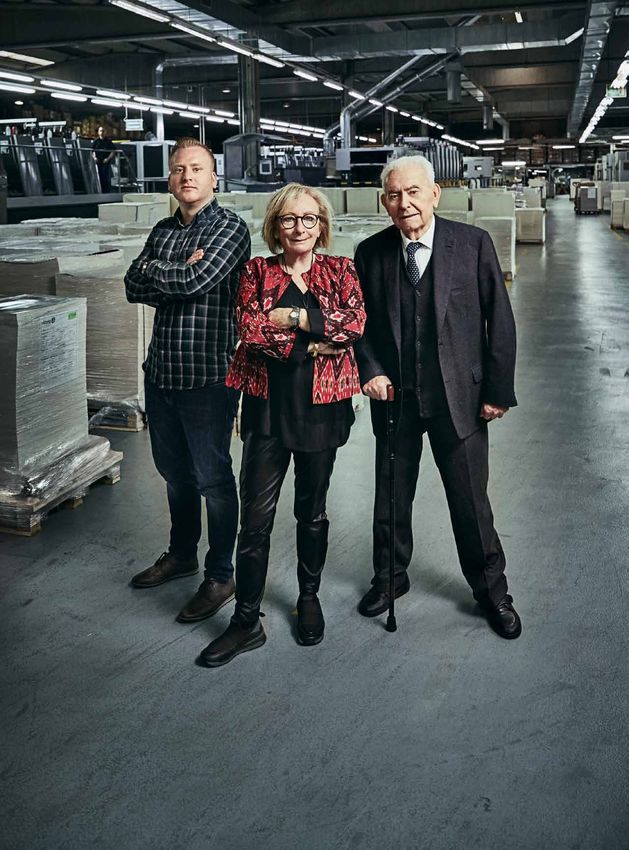
4

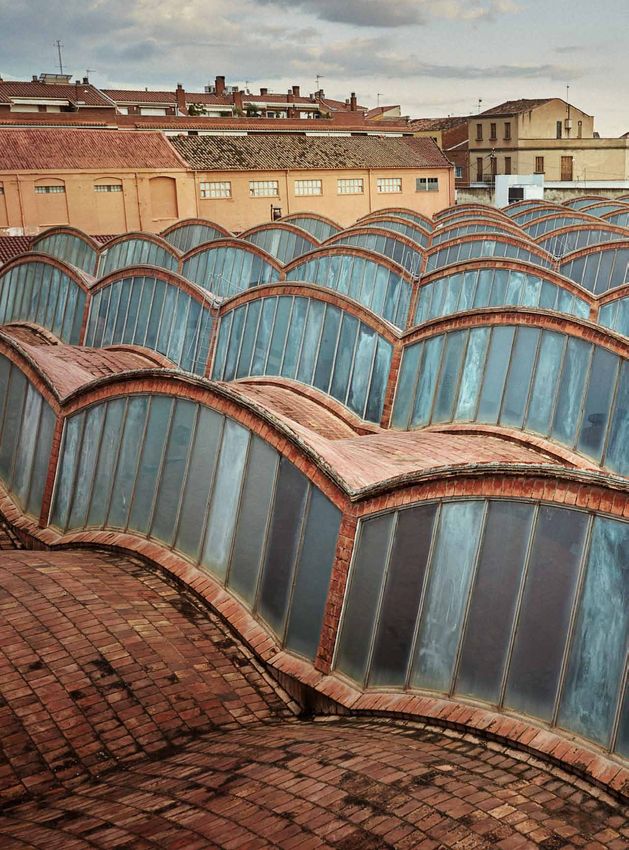
5 snapshot standing the test of time In 1907, Catalan architect Lluís Muncunill created the Vapor mill for textile com- pany Aymerich, Amat i Jover in Terrassa. Named after the steam engines that powered the looms inside, the mill was one of the highlights of modern industrial architec- ture at the time. Close by, in the 1960s, Salvador Vilanova laid the foundations for the Cideyeg print shop which, unlike the textile industry, is still located here (see page 12). The textile mill was shut down in 1978 and now houses the mNACTEC Museum of Science and Technology of Catalonia. Rest your ear against one of the windows in the 161 shell-shaped half arches and, with a bit of luck, you’ll still hear the clatter of the old industrial equipment. P. S. Write to us at heidelberg.news@heidelberg.com to let us know how you like the HN. We look forward to receiving your comments, whether positive or negative.
6
heidelberg news 280
intro
good to
know
everything out
4.9
of the ordinary
Packaging producer Multi Packaging Solutions (MPS) in Scotland, part of
the Westrock Group, is the ideal partner for going that extra mile. Heidelberg
recently installed the first Speedmaster XL 106 with 18 units at the print
shop in East Kilbride, south of Glasgow. With 11 printing units, three coat-
ing units, four drying units and a FoilStar inline cold foil system, it is the
most versatile press that Heidelberg has ever manufactured for packaging percent – the projected
printing. MPS produces high-end packaging with exceptional finishing in
premium quality for designers and manufacturers of branded goods from annual growth rate
all over the world, and demand is rising. With the new Speedmaster XL 106
– which has been installed next to a press with 17 printing units – the com- for the label market in
pany can now “handle even more processes inline and with absolute quality
control,” says Tim Whitfield, EVP European Branded Consumer at MPS. 2018 according to mar-
One of the applications for the new press, which prints at a top
speed of 18,000 sheets per hour, is whisky folding cartons with printing ket research institute
on the reverse, cold foil finishing and double coating. “We make packaging
for everything from premium spirits to high-end gourmet confectionery. Freedonia. Global sales
Manufacturers of branded goods can now enhance their packaging with
even more colors, foils, matt, high-gloss or pearly luster surfaces and will increase from
spot or full-area finishing,” says David Rae, Print Champion at MPS East
Kilbride. To ensure zero-error production and top color quality, the new around 108 billion to
Speedmaster XL 106 at MPS is equipped with the Prinect Inspection
Control 2 and Image Control 3 quality and color measuring systems. more than 114 billion
“We’ve tested Image Control 3 extensively and have also been able to
incorporate our requirements,” explains Rae. “As a result, for the first U. S. dollars (96 billion
time we have the option of measuring and controlling opaque white using
a completely standard quality control strip. At our suggestion, Heidelberg
euros). Paper is still
has made this function even more reliable. The target color values can
now be saved and accessed much more easily and the whole system
the most popular label
has become a lot more user-friendly.”
printing material, but
the demand for plas-
tics, recycled products
and other materials
such as metal foils
is growing.
Source: http://etiketten-labels.com/dossiers/
Packaging producer Multi Packaging Solutions globale-trends-fuer-den-etikettendruck
has installed the world’s first Speedmaster XL 106
with 18 units at its Scottish site in East Kilbride.
7
kick-off
sign of the times
By moving the research and development center
from Heidelberg to Wiesloch, we’re bringing together what
belongs together – and also setting a record.
By Frank Kropp
w
e deliver more than 40 percent of our presses
with “special contents” developed specifically
for our customers, so what could be more
logical than bringing production and research
individual and group work, areas for flexible
work practices, an atrium as a central meet-
ing point and even outdoor workstations
with WLAN and their very own power supply.
together? That’s one of the reasons why our This means we are well placed to achieve op-
research and development center will be timum work results and also to attract and
leaving Heidelberg and gradually relocating retain qualified specialists in the future. It’s
to Wiesloch over the coming months. Hall 10 no coincidence that we’re taking some tips
in Wiesloch measures some 430,000 square from successful role models such as Google,
feet (40,000 sq. m) and is ideal for our new Apple and Tesla, because one of the biggest
innovation center. An office area of some challenges in the years ahead is establishing
270,000 square feet (around 25,000 sq. m) how digitization will affect our lives and our
with adjacent laboratory and test area will work and what Industry 4.0 means to us all.
also be created. Since the beginning of the The tasks of research and development center
year, what is probably Europe’s largest creative staff will include using new ways of thinking
office has been taking shape in the immediate and working to find answers to these very
vicinity of the Print Media Center Packaging questions. The proximity to production, but
and Print Media Center Commercial. By the above all the proximity to our customers, plays
end of 2018, more than 900 people will be an essential role in this regard. Their wishes
working at this innovation center. Engineers, and requirements create the basis for our
developers, programmers and staff from development work, which is ultimately man-
numerous other disciplines based here will ifested in machines and software solutions.
frank kropp
provide new ideas, better solutions and more And so we come full circle.
is Head of the
intelligent technology for our products. To Research & Develop-
allow sufficient space for creativity, the new ment department
research and development center incorpo- at Heidelberger
rates many aspects of the workplace of the Druckmaschinen AG.
future – bright rooms, a large number of
areas for communication, possibilities for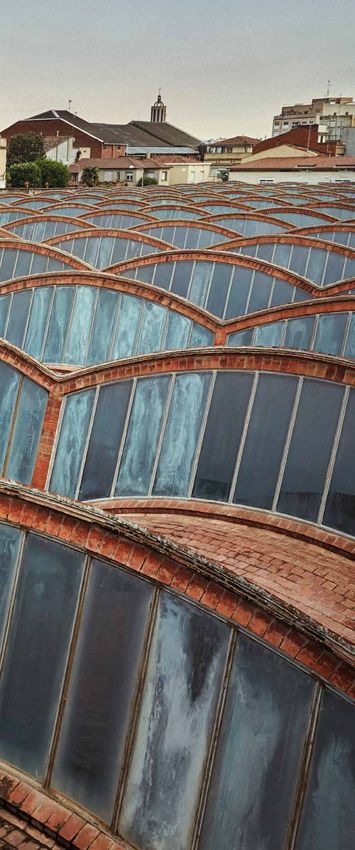
8 heidelberg news 280 intro printing from another age A small village on the edge of a forest, directly on the Kall river in Germany, is home to the Papierfabrik Zerkall paper mill, which is in a brick building. Mould-made paper has been manufactured here for more than 110 years. Zerkall is one of the last six companies in Eu- rope that still use cylinder moulds for produc- tion. This is a leisurely process, with around 880 to 1,100 pounds (400 to 500 kilos) of pa- per being produced in 2.5 hours – a fraction of the production at a modern paper mill. How- ever, the results are very special, with a gently fraying deckle edge. When the sheet is held up against the light, it becomes brighter – that is to say, thinner – toward the edge. This quality feature cannot be added later. Letterheads, cards, envelopes and custom-made products are of correspondingly high quality and, what’s more, unique. As well as international artists who use this mould made paper for their print- work, a number of sheets can also be found in the safe of the German president. The Basic Law for the Federal Republic of Germany was print- ed on mould made paper from Zerkall and signed in 1949. It is only taken out for the inauguration of the German president or chancellor. Zerkall A project devised in conjunction with Römerturm Feinstpapier and V8 Verlag shows that mould made paper can even be used for offset printing of photobooks. The 192-page photo story book “Zerkall. Die unzeitgemässe Geschichte der Eifeler Büttenpapier fabrik Zerkall Renker & Söhne” (Zerkall Renker & Söhne: the story of a paper mill from another age) with 95 color photographs was produced on a Speedmaster CD 102 from Heidelberg. It can be ordered directly from Römerturm for 48 euros. www.roemerturm.de
taking waste
elimination
to a new level
Rogue sheets are a thing of the past with the
waste ejection system of the Speedmaster XL 106,
which automatically removes defective sheets
even during production, and does so with total
precision and exactly in line with the printer’s
quality requirements.
w
fully integrated into the coating unit and thus
provides perfect protection against dust and
splashing water.
When OK sheet production starts, the
system automatically produces a digital ref-
erence sheet and compares every sheet inline
with it. The system is thus able to detect the
smallest of errors such as hickeys, missing
hether setting up a press, washing blankets or print, streaks, smudging and scumming in real
changing plates, waste is not always avoidable. time. If necessary, it activates the waste drum,
In packaging printing in particular, where which reliably removes the defective sheet
even the tiniest of errors are unacceptable, from production in a gripper.
defective sheets need to be detected precise- Printers are also free to define further pa-
ly and filtered out reliably. The waste ejection rameters for each print job – for example, to
system from Heidelberg helps print shops ensure a sheet is removed automatically in faultless
with a fully automated process. Based on the the event of a pulling error. This is particu- This is how the waste ejection
principle of eliminating errors where they larly useful for disposing of waste immedi- system of the Speedmaster XL 106
arise, the Speedmaster XL 106 removes waste ately. “The flexible handling reduces operator works:
during production at up to 18,000 sheets an workload and increases cost-efficiency,” says
hour. “Waste is removed with absolute preci- Koppey. However, for expensive materials, the Two high-resolution color
sion and at any speed, regardless of the mate- Speedmaster XL 106 can also be configured to cameras in the coating unit spot
rial,” explains Axel Koppey, Product Manager mark defective sheets using a tape inserter. even the tiniest print errors.
for the Speedmaster XL 106 at Heidelberg. Individual repeats are not then removed till
“The entire process is more efficient and the they are in the folding carton gluing machine, Each sheet is compared with the
results are of higher quality.” This is because for example. reference sheet.
defective sheets do not even make it to post- The waste ejection system thus supports a
press. Manual removal – where a defective Heidelberg performance promise in the form The system automatically ejects
sheet sometimes ends up with the OK sheets of zero-error production (see also page 20). defective sheets.
or in the die cutter, despite being marked as “The automatic monitoring and ejection
waste – is a thing of the past. streamlines the production chain and reduc-
The Prinect Inspection Control 2 system es manual intervention. Packaging printers www.heidelberg.com/XL106
with two high-resolution color cameras en- can thus deliver A1 quality with less outlay
sures early detection of print errors. It is and avoid complaints,” concludes Koppey.
10
heidelberg news 280
intro
Heidelberg search is on for
a world champion
up to date Supporting the next generation. In October, the world’s
best printers will be competing against each other in Abu
Dhabi. In the WorldSkills 2017 competition, participants
from 77 countries will be demonstrating their skills in
more than 40 occupations, including print engi-
neering. At the end of last year, Florian Kraus
from AZ Druck und Datentechnik in Kempten,
Germany, qualified to take part. At the German
championships at the Heidelberg Print Media
Center, Kraus had to complete a special print
job on a five-color Speedmaster SX 52 press
with coating unit within two hours and achieved
digital is better the best result. The panel of judges assessed
Technical documentation. Software manufacturer color mixing, the quality of the end result and
Docufy has been part of the Heidelberg family the time taken. To enable the WorldSkills partic-
since May 1. Docufy solutions optimize the pro- ipants to demonstrate their skills using the latest
cesses for producing technical documentation technology, Heidelberg is providing a number
and make it available digitally to all business areas of Speedmaster SX 52 presses in the offset cat-
along the value-added chain. Following integra- egory and a Versafire in the digital category
tion into the complete portfolio of Heidelberg in Abu Dhabi.
Digital Platforms, industrial customers can look
forward to end-to-end process support in product Printing engineer Florian Kraus is
lifecycle management. representing Germany at WorldSkills 2017.
award-winning
Multiple honors for H eidelberg. The Primefire 106 digital printing presented by the largest industry association in the graphic arts
system and Prinect Press Center XL 2 digital press control station have industry, Printing Industries of America. These are the 37th and
been honored with the iF Design Award 2017. International Forum 38th awards for outstanding and innovative products that Heidelberg
Design from Hanover presents the award for particularly outstanding has been honored with. No other manufacturer in the industry
design innovations. The Prinect Press Center XL 2 with Wallscreen XL has received more.
and Intellistart 2 and the Gallus Labelfire 340 digital label printing www.heidelberg.com/primefire
system also won the InterTech Technology Award 2017. This award is www.heidelberg.com/labelfireat the limit
Exclusive to Heidelberg –
the Promatrix 106 CSB from MK.
perfect combination
Postpress. The partnership between Heidelberg and
MK Masterworks is just two years old but is already prov- “Every customer
ing to be extremely successful. Last year, Heidelberg re-
ported its highest sales of die cutters to date. As well as is made to feel at
the two tried-and-tested Promatrix 160 CS die cutters for
industrial use and the Easymatrix 106 CS for commercial home here.”
printing, several new models will soon be extending the
montserrat vilanova
product range. The first of these is the Promatrix 106 CSB president of cideyeg s. a., spain
die cutter with inline stripping station, an ideal addition
to the Speedmaster model series in the 27.56 × 39.37 inch page 12
(70 × 100 cm) format all the way to the Speedmaster XL 106.
A range of hot foil embossing machines and folding carton
gluing machines from MK are also available. The latest
model, the Diana Easy 85/115, was designed by the
MK team in Germany and is being produced in Nove Mesto,
Slovakia. Its very attractive price makes the Diana Easy
particularly appealing to print shops looking to replace
older equipment.
www.heidelberg.com/postpress
a growing force
in coatings
Consumables. Heidelberg has taken over Fujifilm’s
coatings and printing chemicals operations for the EMEA
region. This transaction is a further logical step in becom- Page 20
ing the leading supplier of consumables in the printing Perfect packaging printing –
industry following the acquisition of UK coating manufac- zero waste zero waste thanks to
turer Hi-Tech Coatings in 2008 and the buyout of BluePrint technology from Heidelberg
in 2014. With the Fujifilm takeover, Heidelberg is roughly
trebling its previous sales of printing chemicals and Page 23
achieving a market share of around 10 percent in Europe. Boosting productivity with facts –
Heidelberg is one of the world’s top five suppliers in the interview with Anthony Thirlby
coatings sector.
www.heidelberg.com/consumables Page 25
Upgrade rather than scrap –
a press makeover12
a family firm
Cideyeg, based in Terrassa in Catalonia, has been
printing packaging for more than 50 years. Throughout
this time, this family business has enjoyed the loyalty
of countless customers. Even though a number of things
have changed over the years, the passion for the business
has continued from generation to generation.13
heidelberg news 280
at the limit
From the outside, it
is impossible to tell from
the rather plain building
that the company occupy
ing it creates complex
packaging and designs.
i
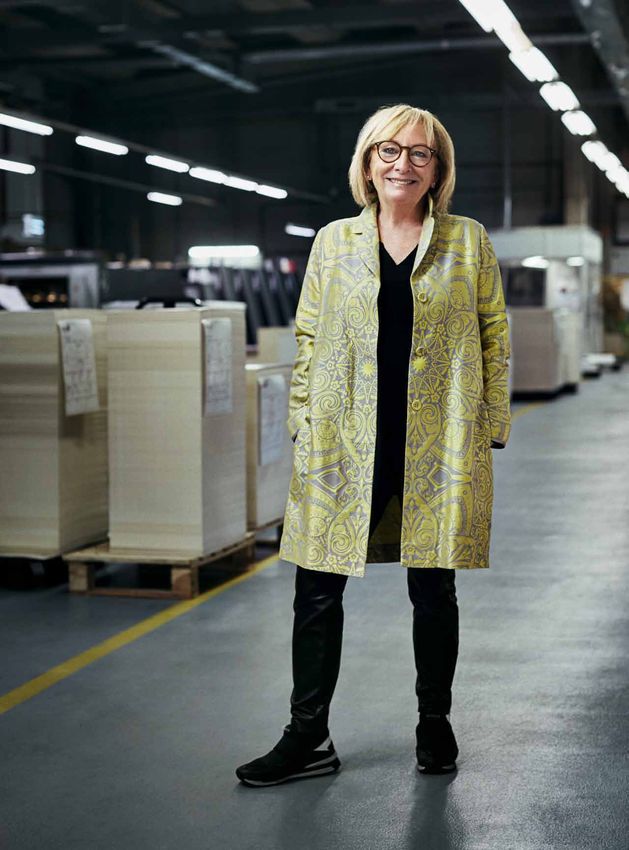
f the dining table in Montserrat Vilanova’s
house could talk, it would certainly have many
interesting tales to tell. This is where her fa-
ther Salvador laid the foundations for the
The company was always a subject of conver-
sation at mealtimes in the Vilanova family
and this has remained so right up to the pres-
ent. “The thing about a family business,” says
family-run Cideyeg print shop. Salvador set Montserrat, President of Cideyeg, “is that you
up on his own at the end of the 1960s and can’t go home at night and leave your work in
began producing packaging with an old press the office. Instead, you carry on talking, mak-
from his former employer. ing plans or sometimes even arguing. That’s
It was around this same dining table that all par for the course, and I can’t imagine
the family met when the flourishing textile anything different.”
industry in Terrassa in Spain, around 20 miles From the outset, the company has special-
(32 km) from Barcelona, came under increas- ized in printing packaging – initially for tex-
ing pressure during the years of industrial tiles, followed a few years ago by high-quality
upheaval. It disappeared from the city almost consumables, such as perfumes, cosmetics and
completely at the end of the 1980s, taking with spirits. But it also prints and die cuts packag-
it a great many of the up-and-coming print ing for cigarette paper, plasters and bandages.
shop’s large assignments. “Holding your own on a multinational14
market as a family business isn’t always or make suggestions about how printing, die
easy,” admits Montserrat. “But most of our cutting or folding can be made more effi-
customers appreciate the personal relation- cient,” says López. The exact mixtures are then
ship. In some cases, they’ve had the same con- created in the print shop’s own color labora-
tacts for a number of years and know they tory and can also be reproduced at any time.
can rely on them. Nowadays, it’s no longer so The light simulator gives customers an im-
easy to find this relationship of trust.” pression of how their product will look under
various light sources: “Our customers thus
know precisely what impact the packaging
solutions will have in the artificial light of a supermar-
that work ket, in a sunny shop window or in the glow
of a lightbulb in the end customer’s kitchen.”
Many of Cideyeg’s customers stay faithful After all, in many cases packaging is elabo-
to the company over the long term. Several rately designed and plays just as important
of them have been on its books for more than a role in purchase decisions as the contents.
50 years, not least because they benefit from
consulting that adds value and personal sup-
port. “There’s often a very wide gap between management from
dreams and reality, particularly for packag- the heart
ing,” explains Managing Director José López.
“Many customers come to us with ideas or The print shop itself provides a complete con-
designs for packaging that cannot be put trast to this elaborate design. From the out-
into practice or are very difficult and re- side, it is impossible to tell from the plain
quire a large budget. Our job is then to find building in the Terrassa industrial park that
practical or more cost-effective solutions that the company that occupies it creates complex
look just as good and fulfill their purpose packaging and designs. And inside, too, every-
equally well.” thing is geared more toward efficiency than
This works so effectively that the specialists aesthetics. The graphics department – where
from Cideyeg are now involved in many jobs employees in white lab coats check customers’
at a very early stage of the design process. “This designs and prepare them for printing –
allows us to directly flag potential difficulties seems almost clinical, for example. Only a few
personal items can be seen on the desks of
administrative staff, too. On the other hand,
the shelves and cabinets are crammed with
packaging. Whether elaborately designed,
subtle, coated, film-laminated, embossed with
corporate logos or adorned with glittering
stars, they hint at the potential that awaits
“i manage
customers in the neighboring pressroom.
Managing Director José López is respon-
the company sible primarily for the technical side, while
more from the President Montserrat Vilanova takes care of
heart and by “family” matters or the feel-good factor. “I
actually studied educational science,” she
drawing on my explains, “so I manage the company more
experience of from the heart and by drawing on my experi-
everyday life.” ence of everyday life.” That’s probably also
why the more than 120 employees feel so at
montserrat vilanova home here. Staff turnover? It barely exists.
president
cideyeg People who join Cideyeg generally stay on.15
heidelberg news 280
at the limit
Cideyeg’s 120-plus employees
ensure customer satisfaction –
and a family atmosphere.16
“as a family busi-
ness, we don’t
have the same op-
portunities as
multinational
companies. that’s
why we had to
take a different
approach to
diversifying.”
josé lópez
managing director
cideyeg
Personal contact and customized consulting –
the two ingredients in Cideyeg’s recipe for success.17
heidelberg news 280
at the limit
Many employees also have family mem- here,” says Montserrat. José López has also
bers employed at the company, and the boss- been pursuing exactly this approach in the
es attach great importance to the views and printing industry for 40 years, so he has long
opinions of the workforce. been part of the family – professionally at any
rate. “We had numerous discussions, and in
the end I asked Montserrat directly: ‘Do you
the family want your company to go forward?’” he says,
grows adding with a laugh: “Then she said ‘yes’.”
He thus took charge of the technical side
Important decisions are nonetheless still of- at Cideyeg and restructured the packaging
ten made at the family’s dining table. Even operations. “As a family business, we don’t
though founder Salavador Vilanova is now have the same opportunities as multinational
more than 85 years old, when it comes to his companies to cross-subsidize prices and ab-
company, he is still actively involved in deci- sorb investment costs,” says José. “That’s why
sion-making. For instance, four years ago saw we had to take a different approach to diver-
lengthy discussions on whether they should sifying.” Cideyeg made targeted investments
appoint a new managing director in the form in presses and postpress machines, including
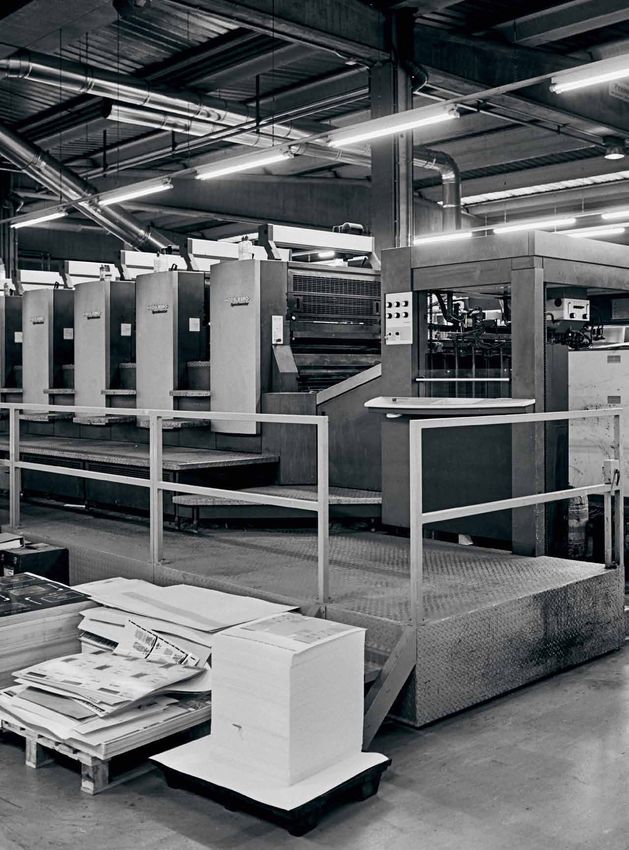
of José López to help shape the company’s a seven-color Speedmaster XL 106, and thus
future. The family had already called on help opened up new opportunities for its custom-
from external managers on several occasions ers in unusual and high-quality packaging
and was disappointed in each case. “Specialist that isn’t so easy to find on the market.
know-how is one thing, and José, too, brought
with him extensive experience. But to my
mind, collaboration needs to work on a human personality
level,” says Montserrat. counts
This approach is also applied to dealings
with customers, with personal support and The focus moved toward packaging for lux-
appreciation part of Cideyeg’s recipe for suc- ury products such as spirits and perfumes,
cess. “Every customer is made to feel at home augmented by packaging for the mass mar-
ket, including the food industry. And the plan
worked – although the company never per-
formed badly, sales experienced double-digit
growth thanks to the strategic shift. Cideyeg
became one of the five largest suppliers of
packaging printing in Spain.
“Yet as well as the technical possibilities,
“it wasn’t till personal contact still plays an essential role,”
our many chats say José and Montserrat. “I’m continuing what
and stories my father started, and my son will also keep
up this tradition.” Just like his mother, 25-year-
that i realized old Josep Figueras – who everyone simply calls
what the Pepo – was raised in the industry, so to speak.
company means “I practically grew up here. Some employees
have known me since I was little,” he says.
for my grand Yet it was never a foregone conclusion that
father and he would manage the company some day.
for us, too.” “My two older sisters have nothing to do with
the printing industry. They’re more likely
josep figueras to get annoyed if get-togethers are once again
marketing
cideyeg dominated by talking shop,” he says with18
Cideyeg has no concerns
regarding staff turnover. The
company’s employees tend
to stay for a very long time.19
heidelberg news 280
at the limit
a smile. He went to boarding school, how everything works.” Following his mar-
where his grandfather visited him every keting and communications studies, he
week, familiarizing him with the business in joined the Cideyeg sales team. And now each
their conversations. “It was only then that Monday he feels like a child again when he
I understood that my grandfather sometimes goes into the office and is greeted by the un-
goes to the office late in the evening because mistakable smell of ink. He cannot imagine
he then also sees employees from the night working anywhere else. The Cideyeg story
shift and can talk to them personally,” says is far from over.
Pepo. “It wasn’t till our many chats and stories
that I realized what the company means for
him and for us, too.”
While his friends went to the beach during Cideyeg S. A.
Avinguda del Vallès, 1
vacations, Pepo swept the pressroom to earn
08228 Terrassa, Barcelona
some pocket money. “I really did do a lot
of sweeping,” he says, grinning. “But I also www.cideyeg.es
did a lot of looking around and thus learned
industrial evolution
While several million tourists travel to the Catalan capital Barcelona each year, relatively few
find themselves in Terrassa, less than 20 miles northwest of Spain’s second largest city.
Yet it has a population of just under 250,000 and is hard to miss, despite not being blessed
with such an abundance of sights as its big neighbor. However, its more recent history is
certainly worth telling. Together with the neighboring city of Sabadell, Terrassa grew to become
an international textile metropolis at the start of the Industrial Revolution in the 19th century.
The likelihood of a ladies’ stocking coming from the Catalan region remained high right up till
the 1970s. But then the textile industry collapsed, with consumers preferring cheap products
from Asia. Within an extremely short time, the once flourishing sector was in tatters, and most
companies vanished from the market or moved their production operations to the Far East.
What remain are the industrial ruins of once impressive art nouveau buildings that are now
used as museums, exhibition halls and offices – and a number of chimneys that reach into
the sky as monuments to the history of various parts of the city.20
heidelberg news 280
at the limit
t
hree seconds is all it takes for a
supermarket customer to decide
what to buy, so international
branded companies that invest a
great deal of money in advertis-
ing and product presentation are
a clean
completely unforgiving. If they
spot the tiniest flaw on a folding
carton or label, they return the
pallets to the print shop.
sheet
To prevent this from happen-
ing, production must be fault-
less. With increasingly complex
jobs needing to be completed
ever faster, this is a real chal-
lenge. Kilian Renschler, Head of No customer excuses errors – and certainly
Packaging Product Management not in the demanding world of packaging printing.
at Heidelberg, has the solution:
“The higher the degree of auto- But how do you keep quality high without also
mation and the more integrat- increasing costs? The answer lies in a combination
ed the inspection measures, the
closer the print shop gets to the
of fixed standards and variable parameters.
target of zero errors.” Prinect pro-
vides the necessary digital tools21
for this. Companies can use this plied. Sensors scan each sheet for tors can even check the values on postpress? This offline inspection
workflow and assistance systems mechanical defects. After print- the monitor of the Prinect Press system has an incredibly sharp
such as Intellistart to link their ing, four high-resolution cameras Center XL 2. This ensures that eye that even reliably spots de-
presses and color measuring/in- immediately behind the jetting each and every repeat meets re- fects on coated surfaces, films
spection systems into intelligent unit have the task of inspecting quirements, especially in the case and holograms.
control loops and share data be- a quality control strip. If they of narrow tolerances.
tween all production steps. The detect a defective sheet, this is As soon as production of OK
objective is an intelligently net- ejected in the delivery and – this sheets is up and running, Prinect
worked production environment is the crucial feature – replaced Inspection Control 2 also takes
that automatically checks target automatically. “Perfect Stack” over quality assurance. The inline
values for each process step. technology thus forms perfect inspection system detects the ti-
piles of OK sheets. niest flaw at maximum printing
Prinect enables all processes speed. Two high-resolution color
to be automated – from product cameras check each sheet for
development (creating the struc- material/pulling errors, hick-
tural design) and prepress (pro- eys, ink splashes and scumming.
cessing individual repeats) to All systems generate reports
sheet assembly. The control units documenting quality.
either rectify errors automatically intelligent
or notify users, who can then in- waste management
The inspection quality for the
tervene manually. This eliminates
pile of OK sheets and follow-up
all the mistakes that occur during actions if defects are detected can
eliminating sources hectic day-to-day operations. The be defined on the Prinect Press
of errors same applies to presetting data Center XL 2. The focus for each job
Prinect enables workflow-managed for press and postpress – it is gen- is on economic considerations.
production in conjunction with auto-
mated and standardized processes.
This prevents an inconsistent approach
and incorrect entries – the most
common sources of errors in the The result is always the same –
printing process. packaging that looks immaculate
detecting and correcting and meets all the legal require-
errors in real time ments. “Standardized zero-error
Prinect links equipment and quality production strengthens print
measuring systems into intelligent
Pharmaceutical and consumer shops’ market position as reli-
control loops. The components
goods giants keep a very close eye involved monitor the production
able partners of brand owners,”
on brand presentation to make parameters, detect quality deviations stresses Renschler.
sure it is exactly the same wheth- in real time and immediately trigger
er in Miami, Moscow or Mumbai. corrective actions.
identical print image
For suppliers, that means ensur-
any time, any place
ing an identical print image Prinect provides a central data
across a number of sites and pro- latform for job and color data and
p
duction processes. This can only also the job settings for initial prod To ensure production is both free
be achieved with a standardized uction – for identical results whatever of errors and highly cost-effec-
database. When an order is re- the location or printing method. tive, the press operator defines
ceived, the job data is recorded in the tolerances for reporting er-
Prinect. This provides the one and rors during setup. Products for
only basis for all subsequent pro- less exacting customers, for ex-
cesses from prepress to finished erated and passed on automati- ample, can be assigned higher
product, such as generating the cally. Push to Stop thus becomes tolerance values than packaging
presetting data for press and post- the norm for users. Operators for high-end customers. It is also
press in an automated process. A navigate their way through the possible to define what to do in
precise description of the house production process and the end the event of imperfect sheets.
and brand colors is also available result is autonomous production. Should they be removed immedi-
in a central color database. When performing offset pro- ately or marked by inserting an
The Primefire 106 accesses this duction on Speedmaster presses, identifying strip? Or should only
data to ensure production meets color measuring and control sys- the defective repeat be disposed
customers’ exact requirements tems ensure precise, even color- of – in the case of an expensive www.heidelberg.com/ZDP
and rule out possible defects in ing throughout the run. If Prinect material, for example – and safely
the substrate before the ink is ap- Image Control 3 is used, opera- removed by diana eye prior to22 heidelberg news 280 at the limit
23
facts and
figures are key
to success
To ensure a press operates at full capacity, industrial
processes are needed – along with precise data analysis.
Virtually no one knows this better than Anthony Thirlby,
Head of Prinect at Heidelberg. In this interview, the process
automation expert reveals how facts and figures increase
efficiency and what role software plays in this process.
m
r. Thirlby, first things first – why should a print
shop use Prinect?
Quite simply because companies can
double their output or halve their costs. It
smart print shop. What’s exciting is that,
thanks to Prinect software, machines and
processes have now become so intelligent
that the upstream process can be fully
automated all the way into postpress.
Can you explain that?
Prinect acts as a central business
intelligence platform. By gathering all the
information along the value-added chain,
Prinect reveals all the true factors that
allows full end-to-end process control and influence profitability and productivity. It
transparency. This means your business can shows me where I have production stop-
leverage its full potential around productivity pages and why, for example, a job change
and profitability through your Heidelberg takes 20 minutes. Prinect provides manage-
output devices from CTP, Press and Post Press, ment with tools in the form of business
ensuring lowest operating cost at all times. intelligence functionality to analyze KPIs
and therefore supports fact-based business
Hardly anyone else in the industry knows about decisions in relation to investments, pricing
maximum machine performance better than and product portfolio, for instance. This
you. What’s your advice for print shops looking makes it easier for companies to derive
to improve? benefit from their data.
Referred to as The key to greater performance lies
“The Master of in the upstream processes. The crucial fac- So Prinect covers two levels – operating
Speed” by British
tor is how fast a job reaches the machine. workflows and commercial costing?
industry portal
Print Business,
At ESP, where I was Managing Director, we Yes, both levels are closely related to
Anthony Thirlby systematically collated and evaluated all each other. The more efficient production is,
is in charge of the available production and business data the lower the costs. As a result, I can either
the Prinect sector to establish lean, automated workflows. win more orders by offering my products
at Heidelberg. That’s why I know the journey that many at a competitive price or keep my margins
customers face in their transition to a stable by reducing operating costs and24
heidelberg news 280
at the limit
where there are several machines, decides
50%
which is the most cost-efficient for producing
the job.
Many print shops still base these decisions
The reduction in costs print shops can
on their gut instinct – or on their machine’s
achieve with the help of an end-to-end
workflow based on Prinect. investment volume.
That’s right. But machines are in-
creasingly losing their significance in
“By gathering all the information terms of profitability and business success.
along the value-added chain, The numbers involved are more important.
Prinect reveals all the true factors Every purchaser of a Speedmaster XL 106
that influence profitability and initially has the same technical startup con-
ditions. The press’s profitability is then
productivity.”
determined by the user’s know-how – for
anthony thirlby instance, how I’m able to streamline pro-
head of prinect
heidelberger druckmaschinen ag duction processes and increase throughput,
or what products and prices will win orders
and from which customers. Prinect gives
me this visualization into my business and
overview and transparency into the market.
So Prinect helps double output. How does the
software help me at a strategic level?
It boosts your sales. A lot of companies
ask themselves why on average only one
increasing throughput. Added to this is in every five quotes results in an actual job.
the fact that by networking workflows with Instead of a doubtful gut feeling, Prinect
each other, Prinect creates a high-perfor- provides answers based on facts. It shows
mance and consistent production flow, which product requirements – for example
which therefore reduces management’s concerning delivery times and quality stan-
workload. Instead of spending a great deal dards – various customers have, and what
of time channeling orders through the sales
and production process as cost-effectively
price they are prepared to pay. It also shows
which product and market segments a com-
master
as possible, it can focus on strategic tasks. pany’s own strengths lie in, in order to allow of speed
an appropriate business focus. Finally, it
In what practical ways does Prinect help print also helps identify opportunities for growth
shops perform better? from current trends at an early stage so
The business intelligence platform that companies can actively develop new
minimizes the process variables and makes strategies or business models and invest
many of the manual interventions in the in relevant equipment.
production process obsolete. For example,
many companies change the sheet format
on the same press up to six times a day. This
Anthony Thirlby has been in charge
can cause approximately two hours of
of the Prinect sector at Heidelberg
downtime per day and increased make-ready since May 2016. Prior to that, he
time in postpress, due to change of imposi- was among other things Managing
tion, grip etc. Prinect enables an all-round Director at ESP Colour in Swindon
view of all processes, from receipt of enqui- near London, where he made a
ry to shipped goods from postpress. Process name for himself internationally as
parameters such as sheet size and color an expert in automation and pro-
cess optimization. In nine years at
configuration can thus be optimized for all
ESP, he drove forward the compa-
planned products to ensure fewer modifi ny’s digitization process, doubling
cations when changing over. Standardized unit sales. It is said that no one
settings allow the business to define be else understands how to optimize
forehand how a job is processed, without business processes in the printing
human intervention. But Prinect doesn’t www.heidelberg/prinect industry quite like he does.
just control the production chain – it also
calculates the costs, operating returns and,25
l
pimp
my
ife would be a lot easier if you could see into
press investment volume needs to be kept low when
When you buy a new car,
the future. Determining future customer purchasing a new press. Once an order for an
needs would then be no problem – nor would you need to agree all upgrade has been placed, it is processed very
arriving at the press equipment required. Un- extras before making the quickly. Upgrading generally takes around
fortunately, the reality looks quite different. four to six weeks from technical clarification
If requirements change or cost pressures in- purchase. Heidelberg to the first print run.
crease, print shops often have only limited presses are much more “Tuning” is also worthwhile if a print
options to adapt. shop’s business model changes or new custom-
Heidelberg presses, on the other hand,
flexible in this regard – ers need to be won. “Our Top Speed Package,
support flexible configuration – and not just even years later, for example, enhances the maximum print
when ordering, but also years later in some you keep on being speed,” explains Rossmannek. Older models
cases. “Demand for automation is currently can thus also be made to deliver even better
increasing, particularly on the Asian mar- offered more. performance. The major benefit for custom-
ket,” says Dennis Rossmannek, product man- ers upgrading lies in the ability to plan invest-
ager with responsibility for retrofitting at ments. The various packages have fixed prices,
Heidelberg. This is due to rising personnel which makes it easy to calculate return on
costs, stricter environmental protection stan- investment in advance. However, the service
dards and growing quality requirements extends well beyond integrating hardware,
from customers. “Features such as blanket particularly for more complex additional
washup systems and color measuring systems functions: “Consulting is then very intensive.
have so far been rare in this area, but demand Solutions generally evolve during the process
is increasing.” of dialog,” says Rossmannek.
Virtually anything is possible
This is where Rossmannek and his team come
in. Working closely with the customer, they
determine the precise needs and explore the
options for upgrading the relevant presses. “In
principle we can upgrade virtually all func-
tions that are also available in a new press,”
says Rossmannek. Whether an upgrade is
worth it depends heavily on the individual
circumstances. However, Rossmannek argues
that an upgrade almost always makes sense
for washup systems in particular. “Customers
need to carry out washing relatively often dur-
ing the day. Doing this manually is very time-
consuming. Automating the process makes
it around ten times faster, which means the
upgrade often pays for itself after just half
a year or even less.” The Inpress Control color
measuring system, which enables significant
cuts in the time for measuring and adjusting
the ink, is also a popular upgrade.
Upgrading more high-tech equipment
such as a UV dryer, on the other hand, is only
worth it in a small number of cases. Yet an
upgrade may be an option, for instance if the26
heidelberg news 280
at the limit
in the eye
of the
digital storm
Far from being just empty words
to millennials, responsibility,
sustainability and social commitment
are key criteria when it comes
to trusting a brand. Major suppliers 1
have long been aware of this.
flexibility at the touch of a button
With Prinect workflow, Heidelberg makes it possible to
combine traditional print business with on-demand printing.
s
All processes can be managed and controlled centrally.
Reducing the number of access points and thus potential
sources of error boosts efficiency. And at the end of the
day, this means less waste, enhanced resource efficiency
and higher returns.
lowly but surely, a new target group of consumers is emerging who will have
a huge impact on the economy in the years ahead. Born between 1980 and
2000, the millennials of Generation Y are now taking up decision-making
positions. This is a normal development in principle, but the young gener-
ation has different requirements. Sustainability and social responsibility
are fundamental decision-making criteria for millennials when it comes to
selecting a supplier. According to a survey by the Unilever Group, a third
of customers worldwide consider these values to be particularly important.
This represents a market potential of around 1.1 trillion U. S. dollars (around
960 billion euros).
Large companies such as Ikea, Unilever, Patagonia and many others
have long recognized the potential of investing in sustainable projects – and
also leverage potential savings in their own production. The printing industry
is sitting up and taking notice, too. According to an analysis by Heidelberg,
digital print shops are extremely interested in sustainability. The analysis 2
revealed that more than half of all Versafire customers in Germany alone
have a relevant certificate or are looking to acquire a quality seal. On a the packaging world takes action
global level, 60 to 80 percent of the companies surveyed (depending on The packaging market is tackling the new requirements
segment) indicated a high level of interest in sustainability. in the same way, giving top priority to sustainability and
Ensuring environmental protection and sustainability is no simple task, responsibility throughout the supply chain. The Primefire 106
though, especially in conjunction with high flexibility and personalization. digital press is one machine that caters fully to these aspects.
This is something of a predicament, because the market is demanding ever The seven-color press delivers top quality from the very
shorter lead times and customized solutions. Digital presses and postpress first sheet and its consumables all comply with strict
equipment from Heidelberg are the ideal response and enable press shops Swiss Ordinance requirements. This gives print shops the
to provide their customers with the best possible service on a long-term best possible basis for offering flexible packaging
basis – for all generations. printing with optimum results.3
to the point in perfection
Commercial printing customers are increasingly request-
ing high-quality brochures in short runs. The Versafire
printing system’s inline finishing helps print shops supply
the precise quantities required while also ensuring
optimum quality – with no ifs or buts. What’s more, the
consumables are easy to reuse – a high proportion of
the toner cartridge material is recyclable.
“Ultimately, the
crisis had a cleansing
effect. We focused
on our core skills and
4 developed a strategy
personality counts that put our quality
Character is all-important – and that also applies to
print products. It’s a proven fact that consumers are more center stage.”
reluctant to part with things to which they have
alexander evseev
a personal connection. The on-demand options of the founder and director of
Omnifire systems even enable top-quality printing and cityprint, russia
customization of free-form 3D objects. Add a sustainable
printing process and an end product that impresses page 28
long-term and you have a perfect recipe for success.
5
not only the contents count
Products are important and so is correct packaging,
but the label also has to be right. It should be
customized and, ideally, produced quickly and flexibly.
The Labelfire 340 from Gallus is a digital solution to
the needs of label printing customers. From file to Page 36
finished label, eight-color UV inkjet printing and inline Better safe than sorry – plastic card
finishing mean virtually no intermediate steps are printing with the Speedmaster XL 75
required. This results in less waste, more efficient
processes and faster delivery. Page 38
Digital transformation – how
Heidelberg is preparing for the future
More info at
www.heidelberg.com/digital-eco Page 44
A 111-year success story –
Polar-Mohr28
heidelberg news 280
to perfection
good times and bad
It would be a downright lie to claim Cityprint in Moscow had never faced
challenges. The print shop has experienced difficulties on several occasions
and has emerged stronger from each crisis. Its recipe for success? If you’re
going to do something, do it right!29 Moscow is Russia’s political and business hub. Some 90 percent of Cityprint’s orders come from customers based in the capital, but the proportion from else- where in Russia is set to rise in the future.
30 heidelberg news 280 to perfection i f you had to describe Alexander Evseev, founder and di- rector of Cityprint in Moscow, in just one word, it would probably be flexible. Because flexibility has always been a defining characteristic of his life and this remains the case. “Cityprint is celebrating its 25th anniversary this year – quite a long time for a Russian company,” says Evseev with a laugh. “You don’t survive that long unless you’re adaptable,” he adds. And adaptable is an under- statement for the way Cityprint has developed. When Evseev set up the company with a partner in 1992, it was not a print shop. “Back then, we were a traditional communication agency and simply placed print jobs with suppliers,” he explains. The liberalization of the economy and the introduc- tion of market forces in Russia created a big demand for advertising products at the time. The problem was that the main print product suppliers were a handful of large former Soviet printers, who were neither prepared for the transformation nor able to keep up. Cityprint and other service providers therefore restricted themselves to processing customer orders with these printers on a commission basis. It was a highly lucrative business but was not without its risks. “There was absolutely no reli- ability in terms of deadline compliance or the quality of print products,” explains Evseev. So after two years of acting simply as a middleman, Cityprint decided to move into the printing business itself to be able to ensure continuity for its customers. Quality doesn’t sell itself The first single-color offset press acquired in 1994 pro- duced forms, business cards and envelopes. This was fol- lowed just two years later by the first Heidelberg GTO 52-1 at Cityprint. “It was only then that we gradually went from being amateurs to professionals,” admits Evseev. The company grew very quickly over the next ten years. The workforce increased from 25 to just under 90 and several new Speedmaster presses arrived in the pressroom,
31 Cityprint’s goal is an ambitious one – to be Russia’s top supplier of multi-page print prod- ucts. The single-minded pursuit of this goal, effi- cient pressroom organi- zation and a strong team currently comprising 88 staff are helping to achieve this. Annual sales are expected to exceed 1 billion rubles (around 17 million U. S. dollars) in four years’ time.
32
heidelberg news 280
to perfection
“many customers
today have only
a tenuous link
with the printing
industry. there-
fore we’re more
like consultants
than pure service
providers.”
alexander evseev
director and founder of
cityprint in moscow
Cityprint’s strategic
rientation also extends
o
to print shops in Europe.
Its innovative practices
help it meet optimiza-
tion targets and ensure
high quality.33
printing everything from brochures and magazines
to catalogs and business stationery. “There was still no
clear strategy, though,” reveals Evseev.
“Instead, we adopted the approach of taking things as
they come,” he adds. Back then, Cityprint’s simple sales
pitch was offering good quality at a good price. “But there
was no one actively offering our customers advice or ex-
plaining the benefits of enhanced quality to them,” says
Evseev. The company soon paid the price when sales col-
lapsed as a result of the 2008 economic crisis. Cityprint
only just avoided bankruptcy, with internal management
wrangles exacerbating the situation.
Rising like a phoenix from the ashes
“Ultimately, though, this crisis had a cleansing effect. We
focused on our core skills and also developed a strategy
that put our quality center stage,” continues Evseev. Quite
simply, the strategy was to be the best. Among other things,
this resulted in the arrival of a Speedmaster XL 106-8-P
LE UV, which was the only press of this kind on the Russian
market when it was installed two years ago. Sales are
expected to rise to 1 billion rubles (around 17 million U. S.
dollars) by 2021. Accordingly, Cityprint’s motto is now
“Hi-Im-Press” (printing to impress).
This is no easy task given that the law in Russia requires
state companies and businesses in which the state holds
an interest – that is to say the vast majority of large com-
panies – to put purchases out to tender. This results in a
fierce price war, which in most cases stands in stark con-
trast to the goal of high-quality products. “Despite this,
we’ve succeeded in creating a circle of customers who ap-
preciate our products and are prepared to give us all their
printing assignments,” says Evseev proudly. For example,
Cityprint has printed particularly complex series of books
with runs of 50, 500 and 5,000 for Kirill I, Patriarch of
the Russian Orthodox Church. Recipients have included
Russian President Vladimir Putin and former French
President François Hollande.
Highly centralized
Some 80 percent of orders come from regular customers,
with Cityprint generating around half its annual sales
of approximately 400 million rubles (just under 7 million
U. S. dollars/around 6 million euros) from business with
large Russian and foreign companies from a variety of
sectors, including Gazprom, Kaspersky Lab, Volvo, Scania
and the Hubert Burda Media Group. Most of them come
from the same region, though – Moscow. “There’s a sig-
nificant imbalance between central Russia and the rest
of the country. Some 85 percent of the print volume that
is of relevance to us originates from the capital and the
immediate surroundings,” reveals Evseev. Consequently,
Cityprint focuses its marketing activities for premium
magazines, books and catalogs almost exclusively on the
country’s political and business hub.
When it comes to quality and process strategy, on the
other hand, Evseev considers internationality to be ex-
tremely important. “ISO 9001 certification is nothing
special in Europe, but we’re one of the few print shopsYou can also read


