February 10, 2021 - CREDAI Bengal Homes
←
→
Page content transcription
If your browser does not render page correctly, please read the page content below

February 10, 2021

CREDAI Bengal Daily News Update | 10.02.21

                              WEST BENGAL NEWS

 Newspaper/Online The Times of India ( online )
 Date             February 09, 2021
                  https://content.magicbricks.com/property-news/kolkata-real-estate-
 Link             news/west-bengal-will-soon-streamline-its-land-policy-for-
                  industry/119090.html

     West Bengal will soon streamline its land policy for industry
More than 6,000 acres in West Bengal will now be a click away for potential investors.

All land parcels under different industry development bodies — West Bengal Industrial
Development Corporation (WBIDC), West Bengal Industrial Infrastructure Development
Corporation (WBIIDC), and West Bengal Small Industries Development Corporation (WBSIDC)
— would be brought under a common allotment method and have the same regulation and
utilisation                                                                       policy.

This was disclosed by WBIDC Chairman Rajiva Sinha at Business Conclave and Synergie,
organised in association with Ficci, on February 8. Sinha pointed out that all land parcels for
industry would now be called industrial parks. "Now, under WBIDC, it is an industrial park but
under WBIIDC it is a growth centre while under WBSIDC, it is called industrial estate," he said.

According to Sinha, lease conditions and product line change would all become uniform. "Land
availability  will     be    in     one    click,     including   the     rate,"  he    said.

He also pointed out that rate valuation was going on in some parks. He admitted a backlog as far
as land was concerned and said it would work on that. "There is delay in mutation and land
conversion,     which        we       shall    now       take    care     of,"     he      said.

Sinha further told industrialists present at the meeting about regularizing units in vested land.
Incidentally, the industry development bodies have land in Purulia, Bankura, Burdwan, East and
West Midnapore, North and South 24 Parganas, Nadia and Kolkata, and North Bengal. The
biggest chunk of land is in Raghunathpur, Purulia of about 3,100 acres.

The state budget presented by CM Mamata Banerjee earlier this week unveiled special industrial
corridors being planned from Dankuni to Asansol via Burdwan-Durgapur on one side, and
Barjora-Bankura to Raghunathpur in Purulia district on the other side.

The first industrial township in the state would be built on 2,483 acres of WBIDC land in
Raghunathpur.

Sinha also assured industry about online trade licence. "It is already available. Only in gram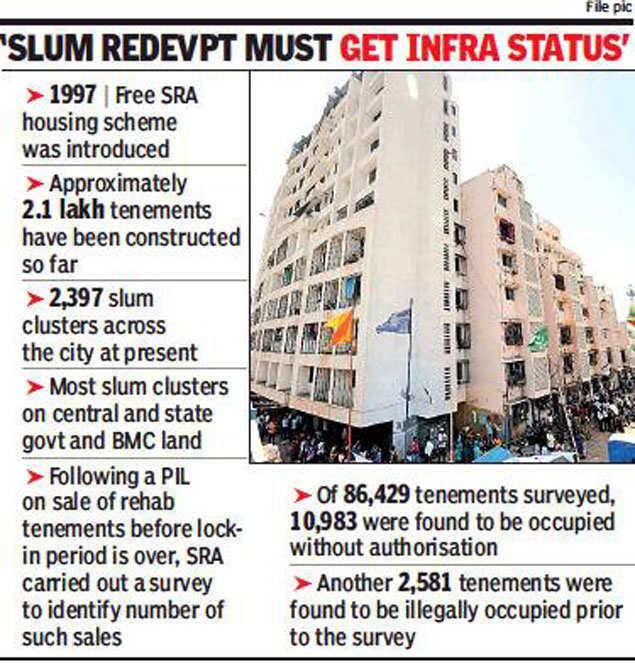
panchayat, there is a problem. But we have already introduced this in 100-150 gram panchayats.
Others too will be trained for this," he said.

Besides Sinha, MSME Secretary Rajesh Pandey, Industry Secretary Vandana Yadav and Ficci
eastern region Chairman Rudra Chatterjee were present at the meeting. Pandey said the Bengal
incentive scheme had been extended for another five years and 66 services had been brought
under Shilpa Saathi.

________________________________________________________________________
OTHER NEWS

 Newspaper/Online The Times of India ( online )
 Date             February 09, 2021
                  https://content.magicbricks.com/property-news/mumbai-real-estate-
 Link             news-industry-news/consent-of-two-thirds-of-buyers-must-for-changes-
                  in-building-plan-maharera/119083.html

Consent of two-thirds of buyers must for changes in building plan:
                           MahaRERA
The Maharashtra Real Estate Regulatory Authority (MahaRERA) has restrained a builder from
making any changes to a sanctioned plan without following the provisions laid down under
Section 14 of the Real Estate (Regulation and Development) Act (RERA) which requires prior
consent            of             two-thirds           of          the            buyers.

After issuing the order, MahaRERA member B D Kapadnis on January 28, directed the builder
to pay the complainant 9% simple interest on the Rs 1 crore that was paid in April 2014 till
handing over the possession of seven shops in a redevelopment project at D N Nagar in Andheri
(W).

The complainant, S R Prasad, had booked seven shops for a marine institute in the project and
had paid a little over Rs 1 crore or almost 40% of the price and was promised possession by
March 31, 2014, said his lawyer Nilesh Gala.

Complaining that the builder was 'unilaterally' trying to modify the plan sanctioned by the BMC,
which is in violation of Section 14 of RERA, Prasad sought orders to prevent any changes to
plans, fixtures and fittings, and amenities. With possession delayed, Prasad also sought interest
on his investment, which the RERA provides for at a rate which is 2% higher than that of State
Bank                                            of                                          India.

But the builder said the delay was for reasons beyond his control. The aviation authority, he said,
had     refused     to    give    height     clearance    beyond      56min      August      2013.

The builder said that in 2006, Mhada gave approval for reconstruction of the housing society with
320 members and the commencement certificate was received the next year. Five buildings were
demolished, said the builder's lawyer Vidya Nair, and while one building was vacated, two others
weren't.

The builder said as the shops could not be constructed, in 2015, the society approached the
Bombay High Court to seek enforcement of their development agreement.

In October 2015, the HC referred the society-builder dispute to an arbitrator. The two parties
agreed to get a new plan for 104 members after housing 216 others in the six buildings already
constructed on the plot. The builder said that he had to pay Rs 80 crore as premium to amend the
plans for the two buildings that were not vacated. "The project became commercially unviable due to the delay," but the builder said he was ready to construct, if funds were available. He even offered to refund the money received for the shops or give two additional shops instead. Section 14 of RERA casts a liability on the promoter to complete the project as per the sanctioned plans and not make any alterations to the plan of an apartment or shop without the buyer's consent. The builder cannot also modify the sanctioned plans for the building and common areas without written consent of two-third of allottees, other than the promoter, said the MahaRERA order that was issued last month. ________________________________________________________________________
Newspaper/Online ET Realty ( online )
 Date             February 10, 2021
                  https://realty.economictimes.indiatimes.com/news/industry/builders-
 Link             across-gujarat-to-halt-construction-for-a-day-over-raw-material-price-
                  hike/80780521

   Builders across Gujarat to halt construction for a day over raw
                        material price hike
The protest has also been supported by members of Gujarat Institute of Housing and Estate
Developers (GIHED)-CREDAI, Gujarat Contractors’ Association (GCA) and Association
of Consulting Civil Engineers, Ahmedabad centre and other developer bodies.

A slew of developers across Gujarat will keep their construction sites shut, suspending operations
for a day on February 12. The decision has been taken by Builders’ Association of India (BAI) to
protest        the       artificial      hike         in       raw           material      prices.

“The prices of steel, cement and diesel have skyrocketed, which are of key use on construction
sites. There is an unbearable price rise in these commodities making construction activity a
challenge. As a mark of protest, builders would put up banners citing the hike in price of raw
materials and also keep construction activity at sites suspended,” mentions a statement issued by
BAI.

The protest has also been supported by members of Gujarat Institute of Housing and Estate
Developers (GIHED)-CREDAI, Gujarat Contractors’ Association (GCA) and Association of
Consulting Civil Engineers, Ahmedabad centre and other developer bodies. The protest and
demonstration      will    be     held   as     part    of      a      nationwide   call.

Developers have termed the rise in prices of steel and cement as unjustified and artificial. BAI
has sought that a Cement and Steel Regulatory Authority is formed to address price concerns
cropping up from time to time.

________________________________________________________________
Newspaper/Online ET Realty ( online )
Date February 10, 2021
Link https://realty.economictimes.indiatimes.com/news/residential/every-
eighth-beneficiary-sold-free-flat-during-10-year-lock-in-sra/80780490
Every eighth beneficiary sold free flat during 10-year lock-in: SRA
The survey to identify unauthorised occupants has been ongoing over 5 years. A PIL was
also filed in HC in 2019 as the issue pertains to “eligible” slum dwellers who have been given
flats in the redeveloped SRA buildings, free of cost.
One out of every eight slumdwellers who has been given a free flat under the Slum Rehabilitation
Scheme (SRS) has sold the place and moved out, found the SRA so far in its survey being carried
out on Bombay HC’s orders. Of the 86,429 tenements surveyed, 10,983 were found to be
occupied by unauthorised occupants.
The survey to identify unauthorised occupants has been ongoing over 5 years. A PIL was also
filed in HC in 2019 as the issue pertains to “eligible” slum dwellers who have been given flats in
the redeveloped SRA buildings, free of cost. According to SRA rules, they cannot transfer (sell)
or create third-party rights for at least 10 years.
Over 13,000 SRA tenements under illegal occupation
One in every eight slumdwellers who has been given a free flat under the Slum Rehabilitation
Scheme has sold and moved out, the SRA has found in its survey.
“Prior to this survey, the authority had found another 2,581 tenements to be illegally occupied
and had already forwarded these to the competent authority for eviction,” said Satish Lokhande,
chief executive officer, SRA. In all, so far, 13,564 tenements are illegally occupied.
Shanty redevelopment must aim to provide decent and liveable housing conditions to the
poor. However, safeguards need to be introduced to prevent the unscrupulous from gaming
the system. The transfer of ownership rights within the lock-in period is usually carried out
by invoking the power of attorney. Hence the Authority should not grant power of attorney
in case of free tenements given to slum dwellers till the lock-in period is over.TimesViewLokhande said following the high court directive, a meeting was held in March last year to complete the process of eviction of all the unauthorised occupants before the onset of the monsoon season. “However, due to the lockdown (on account of the Covid-19 pandemic), no action could be taken,” he said, adding that further process will now be started. Architect and activist Nitin Killawala said the policy of free rehabilitation was wrong. He said in Mumbai where slums occupy large swathes of land, an illegal 10-by-10-square-foot hutment at Nehru Nagar, Juhu, can cost Rs 16-18 lakh. “This means a hut can cost as much as Rs 16,000-Rs 18,000 per square foot. Most slums are in prime locations. Unless all slum dwellers have an opportunity to own a house at a price less than the cost of an existing illegal house in a slum, this problem cannot be resolved,” he said. Sitaram Shelar of Paani Haq Samiti that works amongst the non-recognised slums said it was wrong to assume that slum dwellers are being given free housing. “The slum dweller has invested in purchasing the hut. It is because the government wants the land that it is offering a free tenement as an incentive. Unfortunately, these rehabilitation buildings are nothing but vertical slums. The slum dweller aspires for decent housing and so sells this flat to buy a decent house in distant suburbs like Virar and Kalyan,” he said. Killawala said slum redevelopment must be given the status of infrastructure and slum dwellers must be given access to formal banking. “Today the entire scheme benefits the slum lord and the developer and not the slum dweller or the city. A classic example is Andheri-Malad Link Road that was created about a decade ago but already has huge encroachments alongside it,” he said. ________________________________________________________________
Newspaper/Online ET Realty ( online )
 Date             February 09, 2021
                  https://realty.economictimes.indiatimes.com/news/regulatory/rajya-
 Link             sabha-passes-bill-to-regularise-unauthorised-colonies-in-
                  delhi/80770137

Rajya Sabha passes bill to regularise unauthorised colonies in Delhi
The bill replaces the National Capital Territory of Delhi Laws (Special Provisions) Second
(Amendment) Ordinance, 2020 which was promulgated by President Ram Nath Kovind on
December 30, 2020.

The Upper House of Parliament on Tuesday passed the National Capital Territory of Delhi Laws
(Special Provisions) Second (Amendment) Bill, 2021 to regularise unauthorised colonies in
Delhi. The bill replaces the National Capital Territory of Delhi Laws (Special Provisions) Second
(Amendment) Ordinance, 2020 which was promulgated by President Ram Nath Kovind on
December                                           30,                                      2020.

"1.35 crore people of Delhi, those living in unauthorised colonies, they will get their ownership
right," Minister of State (Independent Charge) of Housing and Urban Affairs Hardeep Singh
Puri said in Rajya Sabha. He said that tenders have been floated for "Jahan Jhuggi Wahan
Makaan".

"Delhi will not only benefit from the improvement in living condition of 1.35 crore people but
the Central Vista project will also make Delhi one of the finest cities in the world," Puri said. The
ordinance amended the National Capital Territory of Delhi Laws (Special Provisions) Second
Act, 2011. The 2011 Act was valid till December 31, 2020. The ordinance extended the deadline
to                          December                             31,                            2023.

The 2011 Act provided for the regularisation of the unauthorised colonies that existed in the
national capital as on March 31, 2002 and where construction took place till June 1, 2014.

________________________________________________________________
Newspaper/Online ET Realty ( online )
Date February 09, 2021
Link https://realty.economictimes.indiatimes.com/news/regulatory/nagpur-
stamp-duty-collection-dips-in-january-after-rate-hike/80760979
Nagpur: Stamp duty collection dips in January after rate hike
The duty is paid on registration of sale deeds after purchase of real estate and it is borne by
the buyer. A fall in collection means reduction in realty transactions.
Stamp duty collection has taken a dip as the rate is being rolled back to the normal level by slowly
withdrawing the post Covid incentive.
The duty is paid on registration of sale deeds after purchase of real estate and it is borne by the
buyer. A fall in collection means reduction in realty transactions.
In a bid to help the real estate sector that was hit badly by the pandemic, the state government
reduced stamp duty rate to 3% from 6% in September last year. It was applicable till December
31.
The plan was to slowly rollback the cut. From January 1 to March 31, the rate is 4%. Regular rate
of 6% will be charged from April this year.
Stamp duty collections had improved soon after the cut. The property registration in September
doubled to 6,500 deeds as against 3,000-odd in August last year. The stamp duty collection.
however, improved only by Rs5 crore reaching Rs40 crore.
The number of deeds getting registered increased steadily with moderate improvement in amount
collected as duty too.
There was a sharp increase in December last year when the 3% duty was applicable. More than
14,000 deeds were registered bringing in Rs172 crore as stamp duty. This was an increase of 43%
and 66% in terms of deeds registered and duty paid, respectively.
There was a quick decline in January when the 4% stamp duty rate came into effect. The number
of deeds getting registered came down to 10,000 with Rs57 crore of stamp duty collections. As
against a growth of 66% in December, the January collections fell by 66%.
Figures for February are yet to be compiled.
There was a similar trend in the Nagpur rural. The collection had reached a high at Rs36 crore in
December. This was more than double than the earlier month’s collection. In January the
collection fell to Rs16 crore.
In the meantime, the state government increased the targets which were eased considering the
pandemic.From Rs430 crore it was taken to Rs700 crore for Nagpur urban in December. Sources say it is exceptional to hike the target in middle of the year. This was done considering the higher collections when rates were down so that government’s requirement for funds could be met too. The collections that had exceeded the earlier target now lag by 33% of the new estimates. The revised target for 2020 is lower by Rs80 crore as compared to that for 2019. In Nagpur rural, over 83% of the revised targets have been met. Builders say this means that tax collection is better when the rates are low. A similar hike is expected in March, the last month for 4% rate following which it may fall. Gaurav Agrawala from the Confederation of Real Estate Developers’ Associations of India (Credai), Nagpur branch said, “The low rates had spurred activity. Even the government stands to gain in the form of GST if construction activity gets a push.” ________________________________________________________________
www.credaibengalhomes.com on Social Media

Millionaires all across the world still say that the best investment you can make
today is in real estate. So what are you waiting for? #CREDAIBengalHomes is
the ideal place to start https://www.credaibengalhomes.com/
You can also read


