Fifty Years of Surrey Championship Cricket - History, Memories, Facts and Figures - Pitchero
←
→
Page content transcription
If your browser does not render page correctly, please read the page content below

Fifty Years of
Surrey Championship Cricket

History, Memories, Facts and Figures
 •   How it all started
 •   How the League has grown
 •   A League Chairman’s season
 •   How it might look in 2043?
 •   Top performances across fifty years
HAVE YOUR EVENT AT

THE KIA OVAL

      0207 820 5670
   enquiries@kiaoval.com
    events.kiaoval.com
Surrey Championship History 1968 - 2018

    1968           2018
                                                   Fifty Years of Surrey                                                                                                                   1968           2018

                                                  Championship Cricket
                                                         April 2018
         ANNIVERSARY                                                                                                                                                                             ANNIVERSARY
    50TH                                                                                                                                                                                    50TH

                                                                                      PRESIDENT
                                                                                    Roland Walton
                                  Surrey Championship 50th Anniversary 1968 - 2018
                                                                                         Contents
Diary of Anniversary Activities and Special Events.  .  .  .  .  .  .  .  .  .  .  .  .  .  .  .  .  .  .  .  . 4
Foreword by Peter Murphy (Chairman).  .  .  .  .  .  .  .  .  .  .  .  .  .  .  .  .  .  .  .  .  .  .  .  .  .  .  .  .  .  .  .  .  . 5
The Surrey Championship – Micky Stewart .  .  .  .  .  .  .  .  .  .  .  .  .  .  .  .  .  .  .  .  .  .  .  .  .  .  .  .  .  . 6
Message from Richard Thompson .  .  .  .  .  .  .  .  .  .  .  .  .  .  .  .  .  .  .  .  .  .  .  .  .  .  .  .  .  .  .  .  .  .  .  .  .  .  . 7
The Beginning - Memories . . . . . . . . . . . . . . . . . . . . . . . . . . . . . . . . . . . . . . . . . . . . . . . . .9
President of Surrey Championship .  .  .  .  .  .  .  .  .  .  .  .  .  .  .  .  .  .  .  .  .  .  .  .  .  .  .  .  .  .  .  .  .  .  .  .  . 10
Reflections and Observations on the 1968 Season .  .  .  .  .  .  .  .  .  .  .  .  .  .  .  .  .  .  .  .  . 16
SCCCA - Final 1968 tables.  .  .  .  .  .  .  .  .  .  .  .  .  .  .  .  .  .  .  .  .  .  .  .  .  .  .  .  .  .  .  .  .  .  .  .  .  .  .  .  .  .  .  .  .  .  .  .  . 19
The First Match - Saturday May 4th 1968 .  .  .  .  .  .  .  .  .  .  .  .  .  .  .  .  .  .  .  .  .  .  .  .  .  .  .  .  .  .  .  . 20
Ten Years of League Cricket (1968 - 1977) .  .  .  .  .  .  .  .  .  .  .  .  .  .  .  .  .  .  .  .  .  .  .  .  .  .  .  .  .  .  .  . 21
The First Twenty Years - some personal memories. .  .  .  .  .  .  .  .  .  .  .  .  .  .  .  .  .  .  .  . 24
Message from Martin Bicknell. .  .  .  .  .  .  .  .  .  .  .  .  .  .  .  .  .  .  .  .  .  .  .  .  .  .  .  .  .  .  .  .  .  .  .  .  .  .  .  .  . 27
The History of the Surrey Championship 1968 to 1989.  .  .  .  .  .  .  .  .  .  .  .  .  .  .  .  .  .  . 28
The Umpires Panel.  .  .  .  .  .  .  .  .  .  .  .  .  .  .  .  .  .  .  .  .  .  .  .  .  .  .  .  .  .  .  .  .  .  .  .  .  .  .  .  .  .  .  .  .  .  .  .  .  .  .  .  .  .  . 31
The Second 25 Years. .  .  .  .  .  .  .  .  .  .  .  .  .  .  .  .  .  .  .  .  .  .  .  .  .  .  .  .  .  .  .  .  .  .  .  .  .  .  .  .  .  .  .  .  .  .  .  .  .  .  .  . 32
Restructuring and The Premier League 1994 - 2005.  .  .  .  .  .  .  .  .  .  .  .  .  .  .  .  .  .  .  .  .  . 36
The Evolution of the Surrey Championship .  .  .  .  .  .  .  .  .  .  .  .  .  .  .  .  .  .  .  .  .  .  .  .  .  .  .  . 38
Today’s ECB Perspective of League Cricket .  .  .  .  .  .  .  .  .  .  .  .  .  .  .  .  .  .  .  .  .  .  .  .  .  .  .  . 39
Normandy - From Grass Roots to the Top .  .  .  .  .  .  .  .  .  .  .  .  .  .  .  .  .  .  .  .  .  .  .  .  .  .  .  .  .  . 40
Diary of a League Chairman’s Season .  .  .  .  .  .  .  .  .  .  .  .  .  .  .  .  .  .  .  .  .  .  .  .  .  .  .  .  .  .  .  .  .  .  . 43
Surrey Championship Competition.  .  .  .  .  .  .  .  .  .  .  .  .  .  .  .  .  .  .  .  .  .  .  .  .  .  .  .  .  .  .  .  .  .  .  .  .  . 46
Expansion and where are they now?. .  .  .  .  .  .  .  .  .  .  .  .  .  .  .  .  .  .  .  .  .  .  .  .  .  .  .  .  .  .  .  .  .  .  . 47
Old Grounds …..….. and New! .  .  .  .  .  .  .  .  .  .  .  .  .  .  .  .  .  .  .  .  .  .  .  .  .  .  .  .  .  .  .  .  .  .  .  .  .  .  .  .  .  .  .  . 51
Sponsors of the Surrey Championship.  .  .  .  .  .  .  .  .  .  .  .  .  .  .  .  .  .  .  .  .  .  .  .  .  .  .  .  .  .  .  .  . 55
What might the League be like in 25 years? .  .  .  .  .  .  .  .  .  .  .  .  .  .  .  .  .  .  .  .  .  .  .  .  .  .  .  .  . 56
Surrey Championship Capped Surrey Players. .  .  .  .  .  .  .  .  .  .  .  .  .  .  .  .  .  .  .  .  .  .  .  .  . 58
History .  .  .  .  .  .  .  .  .  .  .  .  .  .  .  .  .  .  .  .  .  .  .  .  .  .  .  .  .  .  .  .  .  .  .  .  .  .  .  .  .  .  .  .  .  .  .  .  .  .  .  .  .  .  .  .  .  .  .  .  .  .  .  .  .  . 59
    History of the Surrey Championship (in brief) .  .  .  .  .  .  .  .  .  .  .  .  .  .  .  .  .  .  .  .  .  .  .  .  .  .  .  .  .  .  .  .  .  . 59
    Surrey Championship - Fifty Years Tables.  .  .  .  .  .  .  .  .  .  .  .  .  .  .  .  .  .  .  .  .  .  .  .  .  .  .  .  .  .  .  .  .  .  .  .  . 61
    Surrey Championship - Officers 1968 - 2018.  .  .  .  .  .  .  .  .  .  .  .  .  .  .  .  .  .  .  .  .  .  .  .  .  .  .  .  .  .  .  .  .  .  . 62
    Competition Records - 1st XI .  .  .  .  .  .  .  .  .  .  .  .  .  .  .  .  .  .  .  .  .  .  .  .  .  .  .  .  .  .  .  .  .  .  .  .  .  .  .  .  .  .  .  .  .  . 64
    Surrey Championship Previous Winners.  .  .  .  .  .  .  .  .  .  .  .  .  .  .  .  .  .  .  .  .  .  .  .  .  .  .  .  .  .  .  .  .  .  .  .  .  . 67

                 Editor - Chris Evans; Advertising and other assistance - Roland Walton and Graham Brown
                           Published by The Surrey Championship - www.surreychampionship.com
                                                Printed by - Jellyfish Solutions

                                                                                                                                                                                                                  3
Surrey Championship History 1968 - 2018

      Diary of Anniversary Activities and Special Events

                                    Friday 13th April
                Tea Party invitation to 17 Founder Clubs at the Kia Oval
                      Day 1 Surrey CCC v Cambridge University

                                   Saturday 5th May
                  Sutton v Banstead - Feature match at Sutton C.C.
              Two of the four original clubs from 1968 still in top division

                                 Friday 18th May
            Surrey CCC - Surrey Championship Capped Players Day
    Surrey CCC is inviting/hosting Chairs and capped players who graduated
                         via Surrey Championship clubs
           Royal London One Day Cup Surrey CCC v Somerset CCC.

                                  Saturday 26th May
            East Molesey v Sunbury - Feature match at East Molesey C.C.
             Two of the four original clubs from 1968 still in top division

                              Thursday 7th June
            Australian Aboriginal XI v Surrey Championship XI T20
                             played at the Kia Oval
    150th Aboriginal anniversary and 50th Championship anniversary match

                                     Sunday 8th July
                       Surrey Championship Anniversary matches
                     Exclusive use of Kia Oval from 11.00am - 6.00pm

                                  Saturday 1st September
                         BBQ for VIPs/guests at Reigate Priory C.C.
                          Final League match. End league season

                            Saturday 15th September
              Surrey Championship XI v Travelbag XI at Wimbledon C.C.

                               Friday 19th October
                Surrey Championship 50th Anniversary Awards Dinner
                              England Suite Kia Oval

Please keep an eye on the Surrey Championship web site for changes and
updates to this diary. For further information and for full details of each of the
above events, please refer to the web site under the 50th Anniversary page or
contact Roland Walton - rolandwalton@hotmail.com

4
Surrey Championship History 1968 - 2018

              Foreword by Peter Murphy (Chairman)
                                      All history is bunk according to Henry Ford, while Karl
                                   Marx considered all history to be the history of class
                                   struggle. Anyone who agrees with Henry Ford probably
                                   won’t be reading this Anniversary Book while if you are of
                                   a Marxist persuasion you might but you won’t find much
                                   about the class struggle to sustain your world view. What
                                   the early history of the Surrey Championship is really
                                   about is the willingness of some quite courageous souls
                                   to challenge conventional thinking about club cricket and
                                   to change the direction – dramatically – in which the club
                                   game in the South East of England was travelling, or
                                   perhaps just drifting along. Not exactly the class struggle
                                   but certainly a revolution.
                                      The modern cricketer will find it difficult to conceive
                                   of the strongly rooted opposition to league cricket which
                                   existed in our part of England 50 years ago, to the extent
that clubs which dared to embrace it had genuine fears of excommunication from the
cricketing family then represented by the Club Cricket Conference. With no leagues to
arrange clubs’ Saturday fixtures, and fewer cup competitions to occupy clubs on Sundays,
the inability of clubs to have access to the Conference fixture bureau to fill gaps in their
programme or to replace cry-offs would threaten their viability. Two of the articles in this
publication throw light on how fiercely contested was the right of clubs to set up their
own competition. However, once the seventeen founder clubs had defied the diehards and
instituted the league the floodgates were opened. Soon leagues were flourishing all around
London and by the late 1970s the Club Cricket Conference itself was organising a midweek
cup competition for league representative XIs.
    One of the great benefits of publishing this book is that it helps to ensure that the names
of those with the drive and determination to see the project through are preserved for
posterity. If one gives pride of place to Raman Subba Row, it is not because he was more
committed than any number of others but rather that a test match player of distinction and
an administrator at the top end of the game had maintained his connections with club cricket
and had the vision to realise that the club game could be on an irreversible downward path
if radical decisions were not taken.
    I challenged current League Statistician Martyn Holloway-Neville to make an estimate
of how many different players might have made an appearance in the Championship over
the whole 50 years of its existence. It’s impossible to make more than an estimate but
we reckon it’s certainly in excess of 20,000. Not bad for a competition starting with two
divisions of seventeen.
    I must not neglect the opportunity to commend the work of Roland Walton, who has
led the planning work for the Anniversary year with typical energy and thoroughness, and
Chris Evans for his excellent work in editing this commemorative booklet. The various
articles here take the reader forward from the pioneering years to the present day. It is
not a comprehensive historical record (although we are fortunate to have some excellent
statistics thanks to the devotion of successive league statisticians and groundwork laid by
the legendary Chris Fuke). The editor has rightly concentrated on seeking contributors who
were there at the times they are describing and can offer personal views and memories.
They have done an excellent job. I hope everyone will find at least something of interest.
    Enjoy reading the book and, above all, enjoy the 2018 season.
                                                                                                   5
Surrey Championship History 1968 - 2018

             The Surrey Championship – Micky Stewart
    Firstly, my congratulations to all those in the Surrey Championship who have participated,
both on and off the field, on reaching fifty years, and a big well done to all those who have
made it possible from year to year.
    When being asked to pen these few words, I realised that my aged memory required
considerable help to recall how it all began, so I contacted my good friend Norman Parks of
Beddington C.C.
    Norman described how back in the 1960s the call for league cricket from Surrey club
cricketers was getting stronger and stronger and following a discussion he had with Raman
Subba Row at a club dinner, initial meetings were arranged with a cross section of clubs.
Further meetings were held with more clubs which resulted in the first ball being bowled in
the Surrey Championship two years later, in 1968.
    I understand that all this happened in spite of strong objections from a few of the leading
Surrey clubs and the Club Cricket Conference. However over time, things settled down and
as a result fifty years will be celebrated this year, 2018.
    For the younger reader of this piece, I will describe
my own experience of Surrey club cricket before the
introduction of the Championship. It was with West
Surrey C.C. having been introduced by my father. It was
a wandering club at the time and fielded two teams on
Saturdays and Sundays – reading this today it is difficult
to believe, I know!! I made my debut two weeks before
my 14th birthday in September 1946!! How about that!! It
was against Barclays Bank, Norbury and I didn’t trouble
the scorers.
    The following week, the last match of the season was
at East Grinstead C.C against a side that included an
opening bowler who had played for Sussex and a young
Jim Parks. I chalked up something in the teens, it was a
great experience for me.
    I continued to play for West Surrey whenever I could,
particularly in September when the Surrey first-class
season was over. Year after year I played for Alleyn’s School on Saturdays and West Surrey
on Sundays. I have gone into detail of my own experience of Surrey Club Cricket before the
Championship because it was so many years ago.
    However, getting married and moving to New Malden led to my membership of Malden
Wanderers who had been a major club for decades with fine players. My two sons, Neil and
Alec, joined as Colts and graduated through the age groups to the first team as teenagers.
They both made major contributions to the club, with Neil captaining the side from a young
age and eventually leading it to the Championship in 1989. Both of them owe a huge amount
to Malden Wanderers for the success and enjoyment they have had from the game.
    Since my retirement, I will watch a Surrey Championship match on various grounds and
initially some clubs were surprised to see me. To some I had to explain that I have only ever
seen cricket as one game, no matter be it first-class or a club 4th XI match. It is a game to
enjoy and, most important of all, to respect regardless of the fierce competition it contains
these days.
    I wish the Surrey Championship every success for the next fifty years.
                                                   Micky Stewart - Surrey C.C.C. 1954 - 1972
6
Surrey Championship History 1968 - 2018

                   Message from Richard Thompson
  What is the purpose of The Surrey Championship?
  • Provide a league where the best club cricketers in the county play
     against each other?
  • Develop the next generation of Surrey CCC players from the youngest
     age?
  • Ensure week in, week out; players of all abilities through the different
     XIs are getting to play competitive club cricket that tests and
     challenges them?
  • Provide the hub for local communities throughout the summer
     months?
  From the South Circular to the Sussex and Hampshire county boundaries; the Surrey Championship
  has done all of this brilliantly for the past fifty years.

       SURREY CCC HAVE AGREED A FUNDING DEAL WITH THE TRAVELBAG SURREY
        CHAMPIONSHIP THAT WILL SEE THE CLUB MAKE SIGNIFICANT FINANCIAL
             CONTRIBUTIONS TO THE LEAGUE OVER THE NEXT THREE YEARS.
 The Club and the Championship have signed an agreement cementing the following three principles:
    •	To put the best interests of players first
    •	The right format is the format that gets most people playing
    •	To provide strong leadership that will benefit cricket across the whole county/region
 Under the agreement, the Club will provide significant funding over a three-year period starting
 this season, with the money being used to increase participation at Championship clubs all over
 the county.
 As part of the deal, the Surrey Championship will embark on a drive to expand participation first
 within Fourth XIs and then Third XIs by experimenting with different formats of cricket offered at
 these levels.

    I am delighted that the County Club has been able to step up and support the Championship in
this way. We believe this is a first partnership between league and county anywhere in the country.
I don’t think it will be the last.
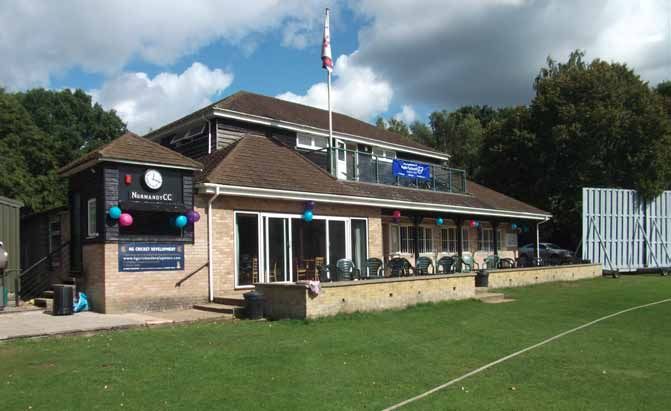
    Cricket has shaped my life. I am the third generation of my family to play for Carshalton CC and
then Maori Oxshott CC. I have played in the Surrey Cricket league, the Surrey County League and the
Championship. Different grounds, clubs, formats and players provided the best blend of club cricket
anywhere in the country. The friends I made have remained for life. That is the magic of cricket.
    The importance of cricket to ‘own’ the summer is so important. The strength of clubs like Spencer
CC at one end of the county, to Normandy CC at the other, demonstrates the diversity and importance
of the burgeoning colts and girls sections. We are very fortunate and Surrey CCC is very grateful for
the members of those clubs and so many others for their tireless work.
    I want Surrey CCC’s influence and support to grow throughout the county. We depend and need
a strong Surrey Championship to provide that bedrock, which it has done so well for the past fifty
years. To the thousands of volunteers since 1968, the County owes and continues to owe a great
debt of gratitude. Surrey CCC can never thank those committees, volunteers, coaches, umpires,
scorers and players enough for their contribution to the success of cricket in Surrey.
    In the spirit of partnership, The Oval needs a strong Championship delivering the myriad of
different objectives above.
    The Surrey family has now grown closer; I hope our bond will become even stronger. I feel the
best years of the Surrey Championship remain ahead of it. Surrey CCC will continue to be your
friend and partner as you convert this fifty to be a worthy centurion in the years ahead.
                                                    Richard W Thompson, Chairman, Surrey CCC

                                                                                                       7
Surrey Championship History 1968 - 2018

                               The Beginning - Memories
                                          by Norman Parks
   On the 20 May 1966, Raman Subba Row and myself sat next to each other at the Old Whitgitians
cricket dinner. We discussed the possibility of starting League Cricket in Surrey.
   As our ideas were similar, we decided to invite four captains of four of the strongest sides to a
meeting at Raman’s house.They reported favourably that League Cricket was possible. See actual
minutes from this “SURREY CRICKET CLUBS CHAMPIONSHIP” on page 11.
   We then invited a number of clubs to a meeting at the Old Whitgiftians club house. Raman was in
the Chair and we put our ideas to the meeting and answered a great many questions. All appeared
to be going swimmingly when Teddy Hart, the President of Wimbledon, got up at the back of the
hall and proceeded to lambast us ‘How dare we try and change a game that had been running
successfully for over one hundred years. League Cricket belongs in the North and that is where it
should stay.’ He went on in a similar vein and then stormed out of the meeting in high fury.
   Raman wisely called a halt and said “go to the bar discuss amongst yourselves if you want
League Cricket or not and be back in your seats in twenty minutes to vote”.
   We waited apprehensively, wondering if Teddy Hart had dished us.They came back and the vote
was for League Cricket!
   See actual minutes of another early meeting which also took place at Old Whitgiftians titled
“SURREY CRICKET CLUBS’ MEETING” on page 13. These minutes clearly demonstrate the
wide range of views around at the time, the politics involved and the emotions expressed by those
present.
   Shortly after the vote at the Old Whits Pavilion to go for League Cricket, Raman and myself had a
meeting with Frank Dolman, the President of the Club Cricket Conference (C.C.C.), a most delightful
man, and the secretary of the C.C.C., a Major Woods.

                      The Original SCCCA Committee (1968) and Subsequent Chairmen
                                     The Oval Friday 7th January 1983
     CHARLES           JIM BOOTH        BRIAN MORTON          JOHN COPE              NICK BUSK         DEREK NEWTON
   WOODHOUSE        Chairman 1978/80     Chairman 1983       Secretary 1966        Press Sec. 1966     Chairman 1971-73
  Chairman 1981/82
            VIC HUCKNELL RAMAN SUBBA ROW NORMAN PARKS                  ALAN RICHARDS           FRED MUNRO
           Exec. Comm. 1966   Chairman 1966-68   Exec. Comm. 1966        Fix. Sec. 1966        Treasurer 1966
                                                  Chairman 1969/70                            Chairman 1974-76

                                                                                                                          9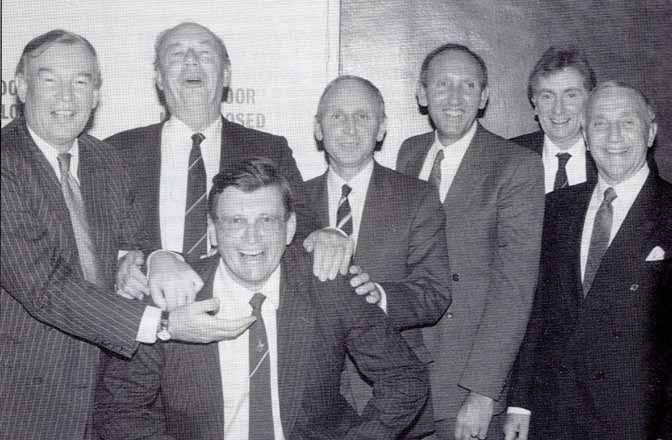
Surrey Championship History 1968 - 2018

    As we sat down at the table, Major Woods said “there will be no league cricket in Surrey except
over my dead body”. We were tempted to go that route! The upshot of the meeting was that the
C.C.C. would ban any club that joined the league.
    You may say, so what, but the C.C.C. had stopped any chance of forming leagues in the 1920s,
the 1930s and immediately after World War II and there had been some powerful figures trying to
get leagues going, such as Percy Fender, Captain of Surrey in the 1920s and Monty Garland-Wells,
Captain of Surrey in 1939.
    The C.C.C. ran some strong representative sides against the Navy, Sandhurst and the prime
fixture, that against the touring Side, but what really counted was their Fixture Bureau, on which a
number of clubs relied for their lower sides and those clubs said they could not join the League if
they were to be banned. All this was now hitting the National Press, most of whom were against us.
However, two stood out for us and they were Reg Hayter of Hayters and Michael Williams of the
Telegraph.
    We were going ahead whatever the C.C.C. decided and as it happened they changed their minds
without any further approach from us.
    When we went to the C.C.C. meeting, we had gone with the idea of two Divisions but because
of the opposition we decided to go for one Division only, get that going, and consider additional
Divisions when we were up and running.
    The first Committee meeting was held in the Old Whitgiftians Clubhouse on Monday 28th
November 1966. No photo of the original Committee exists but at a get-together in 1983, some of
the founder members of the original Committee posed with other more recent officers.
    We were up and running for the 1968 Season, which was one of the wettest on record. With just
the one league, everyone knew everybody else and because we were generally disapproved of, the
camaraderie between the Clubs was great. We felt we stood against the world!

                     President of Surrey Championship
                                          Roland Walton
      Fifty years of Surrey Championship cricket is amazing, especially for those of us
  who can remember the beginning in 1968. This commemorative booklet chronicles
  the journey to present day (and a little beyond) and I trust that all readers will find
  it interesting, stimulating and motivational, for the journey to continue.
      My thanks in helping to promote, shape and produce the anniversary collection
  and programme go to my dedicated Project team of Commemorative Booklet
  Editor, Chris Evans, former Chairman and President, Graham Brown, Surrey
  CCC for their massive encouragement and support, all the Hosts, Contributors,
  Sponsors and members of today’s Surrey Championship Executive Committee
  without whom so many Clubs and their members will not have been able to share
  this excitement of our fiftieth year.
                                             Roland Walton - President Surrey Championship

10
Surrey Championship History 1968 - 2018
SURREY CRICKET CLUBS CHAMPIONSHIP
On Thursday 2nd June 1966 the Captains of the following Clubs –
Beddington, N. Parks, Malden Wanderers, J. Cope, Old Whitgiftians, A.
Squires and Spencer, E. Sullivan, met with R. Subba Row to examine the
possibilities in introducing a championship for certain Clubs within
the County.
The following decisions were taken:
1. It was agreed in principle that the establishment of such a
Championship would bring a note of urgency into those Clubs who
participated in it and would serve to strengthen them.
2. It was further agreed that such a championship would also help the
County Club to find future players – particularly important if the
structure of County Cricket were to change.
3. The Meeting stressed the importance of the control of any
Championship being with the Member Clubs, so that they could ensure
that the cricket would continue to be played in the same spirit.
4. Subject to the approval of the Committees of the four Clubs a
meeting would be arranged to which representatives of the Clubs
listed below would be invited, so that they in their turn could
report to their own Committees.
5. It was decided that if sufficient of these Committees were in favour
of the plan, a start should be made, if possible, in 1968.
6. It was agreed to consider the following points relative to the
Championship:
a. That the Championship period should start on the 4th Saturday
of the Season and continue – including both Bank Holiday Mondays
until the last Saturday in August. This provides for 17 days.
b. That 18 Clubs within the County as listed here should play each
other once only each season.
Addiscombe Epsom Old Whitgiftians
Banstead East Molesey Purley
Bank of England Esher Spencer
B.B.C. Guildford Streatham
Beddington Malden Wanderers Sutton
Barclays Bank Mitcham Wimbledon
c. That each Club should agree with its opponents the hours of play,
provided that this is not less than 5¾ hours.
d. That a 2nd XI Division and possibly a 3rd XI Division should be
arranged for the same clubs.
e. That a scoring system based on nil points for a draw and nil points
for a loss be adopted to eliminate any element of negative play.
f. That initially there should be one Championship only and
therefore no promotion or relegation.
g. That each Club would continue to provide its own Umpire and one
new ball per match.
7. It was agreed that it would be necessary to form an Association of
the participating Clubs and to elect officials in accordance with the
rules of that Association.
8. Provisional Programme:
Early June 4 Captains meeting
Early July 4 Clubs Committee Meeting
Late July 18 Clubs Representatives Meeting
August 18 Clubs Committee Meetings
Early September General Meeting
Since this Meeting it has been suggested that Dulwich and Westminster
Bank should be invited to join the Championship. If this were agreed it
would be necessary to amend slightly the proposed plan.
11“Relax on sun-drenched beaches,
dine at award-winning restaurants
and take in some world class shows
on your trip to Sydney.”
Sarah Lockwood Travel Expert, Travelbag London
Speak to a Travelbag Expert
about tailor-made Sydney and
New South Wales holidays
Visit your local Travelbag
shop
call 0203 139 7096 or visit travelbag.co.ukSurrey Championship History 1968 - 2018
SURREY CRICKET CLUBS’ MEETING
Minutes of Meeting held on Friday 23rd September 1966 at Old
Whitgiftians’ Sports Ground.
Those present: Mr. R. Subba Row (In the Chair.)
Messrs. M.Burrows, R.Houghton (Addiscombe), S.Baker, D.Peterken
(Banstead), C.Parry, D.Scrivens (Bank of England), R.Norville (B.B.C.),
N.Parks (Beddington), J.Busk (Cheam), P.Rice, S.Brown (Dulwich),
A.Hoole, R.Green, F.Munro (Epsom), M.Boyle, I.Moir (East Molesey),
E.Woolgar, J.Humphries (Guildford), M.Alexander (Honor Oak), J.Cope
H.Edney (Malden Wanderers), V.Hucknell (Mitcham), D.Newton (Old
Emanuel), A.Squires (Old Whitgiftians), A.Richards, R.Ellis (Purley),
L.Stubbs, R.Peach (South Hampstead) R.Tarrant, F.Milson (Spencer),
N.Cadburn, A.Brockett (Streatham), J.Walter, D.Sayer, K.Ohlson,
H.Thomas (Sutton), R.Howard, R.Kelly (Westminster Bank), W.Burton,
N.Evans (Wimbledon)
From the Chair R.Subba Row welcomed the gathering and expressed his
thanks for the interest shown. He outlined a proposal made by four
Clubs, Beddington, Malden Wanderers, Old Whitgiftians and Spencer, that
a form of Championship for Surrey Clubs would be worth consideration.
A circular outlining the suggestions made by the Captains of the
four Clubs had been sent to all the Clubs present prior to the Meeting.
It was thought that such a Championship would add bite to the Cricket
played and would serve to strengthen them by attracting young players
to the game. A secondary consideration was that it may benefit the
County in finding suitable players. The Chairman, however, stressed
the importance that the control of this sort of Competition should be
with the member Clubs. It was not the desire of the Proposers that
the spirit of the game should be impaired. To begin the evening the
Chairman asked for discussion on the subject of Competitive Cricket and
its application to the Clubs represented.
Mr.Hucknell outlined the system that was carried out in the Yorkshire
League, in which he had taken part, and made the point that the rules
would have to be very rigid, and that there could be no half measures
in the setting up of a League Competition.
Mr.Busk replied that these remarks were contrary to the tone set
by the Chairman and that he was sure that it was not the desire of
the Clubs to become ‘baby farms’ of the County. We are talking about
benefitting our own Clubs.
Mr.Walters said that neither he nor his Club would wish to be guided
by professional players or Clubs.
Mr.Hucknell pointed out that he was not advocating the introduction
of professionals, but was merely pointing out the system in the
Yorkshire League.
Replying to this Mr.Busk said that at this time he would have thought that
the half measures were just the situation that the Clubs would require.
Mr.Woolgar added that with all the good will in the World the game
would change, it would drift from situation to situation.
Mr.Cadburn said that he thought that Competitive Cricket was open to
abuse, and although a player may not actually be paid, such things as
the waiving of subscriptions was a possibility.
The Chairman said that this would become a matter for Club
administration.
Mr. Munro raised the position of what he called the ‘Institutional
Sides’ i.e. the Bank sides, who he thought were more open to the
introduction of professional players through employment.
Mr.Howard strongly countered this suggestion by saying that his Club,
Westminster Bank were not altogether in favour of the League, and his
Club would certainly not acquire such players through employment.
13Surrey Championship History 1968 - 2018 At this point Mr.Moir said that he thought too much detail was being discussed. He urged that the League be formed and then let it develop. Too much detail at this stage would only prove a stumbling block. Mr.Cadburn said that he thought that many of the games had enough edge at the moment and that a League would only encourage worse declarations. He added that he thought that there was some merit in a draw and that the points system should provide for a draw. His agreement with the proposal depended upon the amount of control exercised. The control must be very tight. Mr.Alexander said that no Committee would wield sufficient power there was bound to be abuse at certain times. From the Chair Mr Subba Row agreed that the control of the League was one of the most important issues. Mr.Hoole wanted to know definitely what was to be gained from a League. Mr.Parks said that he thought that it would appeal to young players especially if it were the focus of publicity. Mr.Hoole replied that he did not think that there was much of a problem attracting youngsters. Mr.Busk added that it was not the type of Cricket that was keeping young players out of Club cricket it was the Club Subscriptions. Mr.Edney urged that the measure of support at the meeting be established. He said that Malden Wanderers were interested in principal and he would like to see which other Clubs had the same feeling. When the answer to this had been found, further details could be discussed. Mr.Burton agreed that the measure of support should be established, but failed to see the point of a League. Mr.Edney replied that it could become a source of revenue if the Clubs concerned attracted enough of a following. Mr.Cadburn said that while it may increase the financial and numerical standing of the Clubs concerned, it would considerably weaken the Clubs not included. Mr.Woolgar said that he thought that the structure of the League would eventually expand to include other Clubs. Mr.Newton agreed that the League would strengthen those concerned, but it was also important to consider those left out. He suggested that each year the bottom two Clubs be replaced by two other Clubs, who would be invited by the League. The two Clubs leaving could take over the fixture lists of the incoming Clubs. Mr.Munro said, in reply that this was far too large a gamble for the Clubs to take and that it would not be acceptable to the Clubs involved. Mr.Newton added that it could hardly be expected that the Clubs on the outer fringe would back the idea. The Clubs on the outside must have an horizon. Discussions into various League structures followed. Mr.Hucknell quoted the Yorkshire League which had 102 teams in it. The top four played off at the end of the season. Mr.Munro put forward the suggestion that in order to disrupt the existing fixtures less, games may be played on Saturdays or Sundays. Mr.Burton asked if the C.C.C. would allow the League to go ahead. Mr.Alexander said that he thought that this was doubtful. Mr.Milson said that however high the motives in the foundation of the League it would inevitably develop along Northern lines and the friendly rivalry and the character of the game would disappear. Officials’ attitudes would change; there was a great deal to be said against the scheme. Mr.Moir said that while this was so, it may be that in five years’ time the people playing may want these changes. 14
Surrey Championship History 1968 - 2018

    Mr.Humphries drew attention to the fact that Guildford have been
playing in a five team League for this season, and that this had brought
results where before there had been none.
    Mr.Munro returned to the question of fixtures. This could be partly
avoided if two Leagues of fifteen teams each were set up and the League
fixtures were drawn from there. Clubs inside and outside must be
considered. He urged to go about the formation in easy stages.
    Mr.Woolgar suggested that if a Club played 10 out of 20 Clubs, the 10
should count as League fixtures.
    This suggestion was considered to be too close to the organisation
of the Evening Standard League, and Mr. Moir thought that the only
satisfactory League was one where all the Clubs played each other.
    It was decided to vote as to whether individuals present were in
favour of their Clubs taking part in Competitive Cricket in some form
or other. One vote was allowed per Club.
    The following Clubs voted in favour of Participation in Competitive
Cricket.
          Addiscombe         Old Emanuel            Streatham
          Beddington         Westminster Bank       Cheam
          Guildford          B.B.C.                 Honor Oak
          Mitcham            East Molesey           Dulwich
          Purley             Malden Wanderers
          Sutton             Old Whitgiftians
The following Clubs were against.
          Banstead           Wimbledon              Spencer
          Epsom              Bank of England
    It was agreed that the Clubs present who were not included in the
suggested list of Clubs on the circular were to vote on the assumption
that they would be included if such a League should be started. The
votes of these Clubs were cast with this in mind.
    With the voting being 16 to 5 in favour it was agreed to form a
Committee to draw up proposals as to the form the League should take.
The proposals would then be forwarded to Clubs for them to submit to
their Committees.
    The following Committee was formed.
          Mr.R.Subba Row. (Chairman) Old Whitgiftians
          Mr.A.Richards.             Purley.
          Mr.F.Munro.                Epsom.
          Mr.V.Hucknell.             Mitcham.
          Mr.N.Busk.                 Cheam.
          Mr.N.Parks.                Beddington.
          Mr.J.Cope.                 Malden Wanderers.
   The Meeting closed with a vote of thanks to the Chair.

      Keep up-to-speed with the news and results from
         the Surrey Championship via the websites
    www.surreychampionship.com and surreychampionship.play-cricket.com
            follow us on twitter.com/surreychamp
              and on facebook.com/surreychamp

                                                                                    15
Surrey Championship History 1968 - 2018
Reflections and Observations on the 1968 Season
by Pat Batty
The early Surrey Cricket Clubs Championship committee was keen to ensure that the progression
from friendly cricket to competition cricket was gradual with a view that a tightening up of conditions
and rules could be applied during the course of the following years, as the Championship developed.
In other words, it was decided to encourage clubs to play their fixtures in what was their normal
way i.e. start times to be as the home side wished (unless the visiting side said this was almost
impossible because of Saturday work commitments by a large number of their side) and finishing
times to be agreed on the day (legislation minimal). There were no controls on the number of overs
per hour or even twenty overs in the last hour in those days!
One of the big obstacles in the foundation of the organisation was the Club Cricket Conference
(C.C.C.). The diplomatic title of the CHAMPIONSHIP was chosen rather than LEAGUE as the word
League at that time appeared to be a dirty word, implying underhand methods!
A lot of clubs sat on the fence by not committing to “league” cricket as they were frightened of
being barred from the C.C.C. Others joined the Championship as they thought that they might be left
behind in the fixtures possibilities i.e. they could have been left with weaker fixture lists. However,
clubs such as Beddington, Mitcham, Spencer, Malden Wanderers and Old Whitgiftians were very
strong with the progressive idea of “league cricket” and its ideals.
The season was abnormally wet, with a total of 43 recorded abandoned matches overall, which was
an average of five matches per club. The teams starting their matches at 11:30am appeared to be better
off as hours could be adjusted somewhat to account for the weather and in some cases they may have
completed a match before a late downpour or simply had more hours of play. Sutton generally played
their home matches commencing at 11:30am; from memory Old Whitgiftians and Purley did likewise.
Matches changed after the formation of the Championship. Before the “league”, about 90% of the
teams winning the toss batted first. Once the “league” started, 85% appeared to put the opposition
in regardless of the conditions. There were exceptions, as Old Emanuel, Beddington and Malden
Wanderers generally liked to bat first. Sides batting first generally seemed to delay declarations
longer than in pre-league matches, trying to make sure that they did not lose. There was no cut-off
point in the number of overs you could bat for in the early Championship matches. Field placing
became more negative, with teams starting off with extra covers and mid wickets even against the
new ball (only one ball per match). Field setting only appeared to be more ambitious when a side
bowled second and were very much on top, almost with no chance of losing. “Dangling the carrot” in
the first innings was seldom used as a tactic.
In reply to a target some of the weaker sides (by their previous standing in club cricket) “shut up shop”
after losing three or four wickets and seemed content to play for a draw, which was equal points (one) no
matter what the scoring rate was (no winning or losing draws). A lot of “spoiler” cricket took place. The use
of spin bowling became less – unless a side had quality slows, defensive seam bowling was very much
the norm. Most sides had at least three tight bowlers, especially on the prevailing wet wickets.
Lower order batsmen developed a greater determination to save matches than in pre-league
cricket. There was far less of the “open” attitude portrayed by some sides in previous years when
going down in style. The “walking” element of “sportsmanship” became less in the first “league”
season. There were always a number of non-walkers around pre-league but not very many, perhaps
one or two in each side on average. I think this increased to 50-50 in 1968 (and became progressively
worse over the following years and it is rare to see a “walker” these days!).
The 1968 League Table on page 19 lists abandoned games but these were probably only the
completely washed out or cancelled matches. The draw column included games “abandoned as a
draw” where weather intervened. From a glance at the table, it is difficult to tell who actually suffered
most from the weather.
Each club provided their own umpire and scorer. The standard of umpiring was probably better
than in the initial years of the panel umpires but the panel was definitely the way forward and ultimately
improved to a high standard in subsequent years.
The new “league” introduced some “weaker” clubs into the main stream of club fixture lists as
16Surrey Championship History 1968 - 2018
the leading clubs (by repute) had had very strong fixtures before the Championship, which included
sides from Kent, Middlesex and Sussex. Therefore some clubs now had a slightly weaker fixture
list overall, whereas others benefitted as a result of playing stronger clubs. Over a period of time,
associations with the sides from other counties were phased in by some clubs on Sundays.
Once “league” cricket settled down, the overall standard became very good, with much more
thought put into tactics on the field, practice and fitness. Players did not take a day off for a minor
reason (Mitcham, Beddington, Spencer for example never did this). The likes of Purley, Guildford
and Old Whitgiftians were a bit hit and miss, it depended on what time of the season you played
them. At full strength, they were a match for anyone, especially during the summer term holiday (i.e.
universities and schools coming down).
Some clubs had perhaps only seven or eight quality players (regarded as 1st XI standard) but
managed to achieve better results than two or three of the usually higher regarded teams. This can
happen in cricket but in 1968, in particular, it depended on who you were “rained off” against. For
the subsequent years, clubs generally strengthened and were better throughout the order in batting
and the bowling in depth got even better. Availability of players became more regular and consistent.
Personal summary of the seventeen teams in the 1968 season
Sutton – Obviously Sutton did well to win the league and they were a very competent side.
They were a quite well balanced team and they got the breaks weather-wise but they made their
opportunities count. Bamber and Bishop were the main pace bowlers, Sayers was a good slow bowler
and a useful batsman and David Thompson, Rasor and Philippe were the batsmen. A moderate side
well captained by a nice guy John Walters.
Guildford – A good all-round side. Neller was a good seamer, more of the stock variety. They had
a useful off-spinner Tinson and another seamer Mick Marsh. Richard Johnson, Dick Humphrey (also
an excellent wicket keeper) and Charles Woodhouse were the main batters, plus Mickey Rooke. A
good balanced side who played good cricket.
Banstead – A strong batting side. Not a lot of bowling but Derek Pratt was the main bowler and
with his brother, Ron, both were bowling useful off-spin and excellent batsmen. They had a good
seamer who played minor county cricket, Morley, and another good quickie by the name of Guy
Pearce. I think Morton and Corcoran were there also as batters, with Morton keeping, of course. One
of the best batting sides in 1968.
Old Emanuel – A side with a good team spirit, skippered by Derek Newton. Vic Dodds was
their main batter with that fine all-rounder Dicky Austin, a left arm swing bowler, McMillan, a very
good quickish seamer and Peter Sawyer was a tight slow bowler who chipped in with some useful
runs. At the end of the 1972 season, Vic Dodds was the leading run scorer, with 2,421 runs in
the Championship. Their attacking cricket, good declarations and their willingness to chase totals
brought them some positive results. Always fought hard defending low totals, which was quite often!
Old Whitgiftians – A strong batting side. Raman Subba Row, Mike Wilkinson, David Straw and
Alan Squires were the main batters. Not so much in the way of quick bowling; Squires was a great
trier and Leserve were the main operators, Bob Horn, Raman Subba Row the main spinners, the
stock bowling of Roy N Lewis, Tosh and John Ellingham, completed a workmanlike attack. Mike
Arscott was brilliant in the field. Bob Horn was a good bowler, slow medium and very accurate, did
not spin it a lot, no googly just a top spinner with bounce. At the end of the 1972 season, he had taken
148 wickets in the Championship. Another well balanced side, excellent in the batting department,
very good slow bowlers, moderate in the seam area, just lacking a fast type bowler to burst through
the tail but overall played very positive cricket.
Purley – A good-wicket batting side with useful spinners. Purley possessed some excellent players
but they were not always available at the same time! Brown (father of the former Surrey pro) usually
attacked the bowling from the start, backed up by the solid McKinnon and the hard hitting York and
Webb in the middle order. Webb was a superb seamer to back up his batting, Christie would bowl
accurate tireless spells at medium quick and the three off spinners, Fenton, Adam and Tim Johnson,
were match winners on their day. A more regular availability would have seen them even better placed.
Sunbury – A useful all-round side. A good batting side skippered by the powerful attacking
batsman Ross Smith. Les Wood was a solid opener, the dashing McDonald would often turn a game,
17Surrey Championship History 1968 - 2018
as would Raj Sood at No. 3; he scored a century at Lords in the National KO when Sunbury won the
final in 1974. Left arm slow bowler Arthur Hughes could be a real match winner; he was a top class
performer. A keen competitive side, very well skippered by Ross Smith.
Epsom – A very tight bowling side led in this department by inswing bowler Fred Munro and the
class off-spin bowling of Tony Stockley. Bob Green was a stylish opener and useful seamer and John
Ledger was a solid dependable opener and a good stock bowler of the off-spinning variety. They had
some good youngsters coming through; Mike Wigley, Roy Ridgeway and Bill Bellinger all did good
work in the middle order and in the field. At the end of the 1972 season, Tony Stockley had taken 184
wickets in the Championship. Any side containing Fred Munro and Tony Stockley was always going to
be aggressive, noisy and attacking in the field; which was certainly to their benefit when “defending” a
low total.
Beddington – A very experienced batting side who possessed many vintage players from their
powerhouse days of the 1950s and early 1960s. Unfortunately the side almost to a man had just gone
past their peak. As a batting side, they possessed an experienced core with Tony Brown, Norman
Parks and Neville Griffin who were still consistent but the attack had lost its sting. Ken Kasey and Griffin
did some good work in the seam department and Maurice Reeves was still a useful off-spinner. Tony
Brown did a bit of tight stock bowling. Mick Garner was a useful batsman but mainly he was a brilliant
fielder. Ron Dolby was a steady batsman and a keen fielder. League cricket probably started a couple
of years too late for them as they had to rebuild.
Streatham – A strange side with ever-changing personnel; hardly ever fielded the same side
twice. Ross Etheridge was an excellent class batsman, Scott-Brown, very stylish and proficient
against all bowlers except the quicks, he stayed very much leg side against these. Nick Potter and
Mike Donnelly were their seamers; both very useful. Mike Pace was a solid opener and a good stock
bowler but there was not much in the way of slow bowling, although they had a legger called Bruce
Hayward who got quite a few wickets. He was very ordinary, didn’t spin it much, plenty of air, no
googly, just an undisguised off-spinner. Barry Hart played a season split between the 1st XI and 2nd
XI. A moderate, unflamboyant side who looked for any excuse to play for a draw.
Addiscombe – An average side who beat Mitcham in the first league match! Mike Burrows was
at No. 3 and an off-spinner; he was a good all-rounder. Austin Agard could be a match winner with
the bat, Houghton and Dring had class and Brian Messon was difficult to get out and was a very
consistent run-getter and useful keeper. A competent all round side, workmanlike and played to their
strengths, especially at home (the small pavilion boundary!).
Dulwich – One of the lesser sides on paper. Stan Brown was a consistent batsman and Rossier one
of the best batsmen in club cricket. Peter Rice was only just making his way then. They had a superb
seam bowler by the name of Carpenter, who could bowl for long spells, and a guy called Bill Higginson,
a stylish batsman and a seam bowler who was on the M.C.C. staff; he looked class. Meakins was a
useful off-spinner. Destined to struggle for a few years, which they did until the Aussies arrived!
Spencer – A very talented side but not willing to make opportunities to force a win slightly against
the odds. Inclined to bat too long or call off the “chase” too early. Good batsmen in Juster, Tarrant,
Marsh and Gayton, an outstanding all-rounder in Neil Small and a really good fast bowler by the
name of Cummins. Radford did a useful job as a slow left-arm spinner and Jim Booth proved his
worth as a medium pace bowler and a stubborn batsman. On paper the best side in the League but
they needed a bold and more imaginative captain. Spencer finished second in the “ten year” League
table produced in 1978 without once winning the title in any of these years.
Cheam – A fairly ordinary side with not much in the way of flair. Coysh was a consistent all-
rounder, a seamer and a No. 3 batsman. Harold Smith was a bold hitter and Mike Osborn was a
classy batsman. David Morgan was on the way to being an excellent slow bowler (got better in the
subsequent years) and a guy called Doug Ryder was a fine wicket keeper. John Holmes was an
excellent fast bowler and useful batsman. Not a well-balanced side as they depended on six players.
East Molesey – Looked to be an average side with some experience but perhaps slightly past
their better years. The batting was solid but without flair. Moir, Campbell and Boyle were the main
run-getters. Bishop was a lively seamer and Woods a good legger. This side probably performed as
well as could be expected.
18Surrey Championship History 1968 - 2018
Mitcham – This team was unable to live up to its own expectation and possibly those anticipated
by their opponents. Hard hit by injuries, with four or five players missing for most of the season, they
were always competitive but missing their usual firepower in attack. Swaby played in only the last two
matches, Marriott was missing until July and Peacock missed around 50% of the season. Newcomer,
left-arm spinner Winston Stafford did well and for the most part was the one danger bowler. The batting
was inconsistent, with only Brian Ward showing his normal form. Peter Johnson in his first season
struggled on the slow wet pitches. A better side than their final position indicated. At the end of the 1972
season, Denis Marriot had 186 wickets and Peter Johnson had 2,386 runs in the Championship.
Malden Wanderers – On paper, they looked to be a good well-balanced side but in this season
of bad weather, results were not always a fair reflection. The two left-arm slow bowlers, Cope and
Walters, were excellent. Edney and Elliott were a good pair of opening bowlers and Reid, Tredwell
and Mason reliable batsmen. They were a good well-balanced side and, by repute, a side very
capable of beating many of the other teams under normal circumstances.
SCCCA - Final 1968 tables
Final First XI Table 1968
Played Won Lost Drawn Tied Aban Points
Sutton 16 6 1 4 0 5 45
Guildford 16 6 2 4 0 4 44
Banstead 16 5 0 6 0 5 41
Old Emanuel 16 5 1 5 0 5 40
Old Whitgiftians 16 4 2 3 0 7 34
Purley 16 4 3 4 0 5 33
Sunbury 16 4 3 4 0 5 33
Epsom 16 4 5 3 0 4 31
Beddington 16 3 2 4 0 7 29
Streatham 16 3 5 3 0 5 26
Addiscombe 16 3 5 4 0 4 26
Dulwich 16 2 4 5 0 5 22
Spencer 16 2 4 5 0 5 22
Cheam 16 2 5 6 0 3 21
East Molesey 16 1 3 7 0 5 18
Mitcham 16 0 4 7 0 5 12
Malden Wanderers 16 0 5 4 0 7 11
Final Second XI Table 1968
Played Won Lost Drawn Tied Aban Points
Purley 16 8 1 1 0 6 55
Guildford 16 7 0 3 0 6 51
Beddington 16 6 3 2 0 5 43
East Molesey 16 6 4 2 0 4 42
Old Whitgiftians 16 5 3 2 0 6 38
Spencer 16 5 4 2 0 5 37
Mitcham 16 4 4 3 0 5 32
Sutton 16 4 5 1 0 6 31
Addiscombe 16 4 5 2 0 5 31
Sunbury 16 4 5 2 0 5 31
Epsom 16 3 2 3 0 8 29
Malden Wanderers 16 3 5 2 1 5 28
Dulwich 16 3 4 4 0 5 27
Streatham 16 1 5 4 1 5 18
Cheam 16 1 4 4 0 7 17
Banstead 16 1 5 5 0 5 16
Old Emanuel 16 0 6 4 0 6 10
Points awarded: Win 6, Draw 1, Tie 3, Abandoned 1
19Surrey Championship History 1968 - 2018
The First Match - Saturday May 4th 1968
by Paul Hooper
1968 – The Surrey Championship – A Cricketing Opportunity
A damp encounter against Addiscombe C.C. at Sandilands launches the Sutton C.C. campaign
from 11:30am on the first day of the new Surrey Championship competition.
The team players for this historic occasion were as follows:-
Sutton C.C. Addiscombe C.C.
1. John Pollock 1. Paul Hooper
2. Doug Sayers 2. John Weale
3. Ian Philippe 3. Mike Burrows
4. David Thompson 4. Ron Houghton
5. John Walter 5. Terry Kent
6. Paul Rasor 6. Brian Burt
7. Mike Parker 7. Mike Every
8. Ian Russell 8. David Hooper
9. John Bamber 9. Peter Williams
10. John Bishop 10. Keith McInstrie
11. Philip Saunders 11. Laurie Keelan
Sutton 223-9 declared Addiscombe 33-4
Rain stopped play!
Sutton C.C. went on to be the first winner of the new Surrey Championship pennant!
Sutton Cricket Club 1st XI - Winners Surrey Championship 1968
Back row: H. Bishop, M. Parker, I. Russell, P. Rasor, I. Philippe, P. Saunders, F. Vernon, G. Gray
Front row: J. Bamber, D. Sayers, J. Walter, D. Thompson, J. Pollock
20Surrey Championship History 1968 - 2018
Ten Years of League Cricket (1968 - 1977)
A Review by Pat Batty
This article was written by Pat Batty and originally published in the 1978 Year Book. The article
has not been amended or updated and is printed “as was”. All text in the present tense is therefore
referring to the year 1978; this must be borne in mind when reading the article – Editor.
A decade is a fair and reasonable period of time in which to accurately assess the Championship,
its successes and its shortcomings.
Since the formation of the Championship in 1968, many other leagues have sprung up in London
and the southern counties in various grades of club cricket and it is with much credit that we can
modestly and rightly say we set both the pattern and, we trust, the example.
Cricket generally has obviously changed considerably over the past ten years and this is
particularly so in connection with our own competition. The obvious element of tighter and more
accurate bowling, more intelligent and restrictive field placing besides a general highering of the
standard of fielding with particular emphasis on close catching, and also greater depth of batting,
would now appear to be the pattern at 1st XI level.
Attitudes have altered and the competitive spirit has increased. Selection policies appear to be
more democratic resulting in players competing for their places, rather than in some cases selection
being a reward for past services or for being a nice fellow who has room for three in his car!
On the debit side, as in the county game, the flair seems to have gone somewhat from the batting.
The match winners who can turn a game in a matter of minutes are now conspicuous by their
absence. Likewise, the lack of spinners of any real class or for that matter the limited opportunity
given to the average slow bowler, is very noticeable. Also declarations have become progressively
much later and give cause for a lot of concern.
Unfortunately, gamesmanship has crept into our cricket and unfair pressure is now often put on
the umpire and in many cases sheer bad manners exist and are continually displayed; the umpire’s
decision being openly criticised.
Umpiring at club level may or may not be at a higher standard than it was pre-league; the dearth
of good players coming back into the game after their playing days are over is obvious but there is
no excuse for some of the bad behaviour that has recently existed. This clearly shows a weakness
of character with regard to some captains and a misplacing of priorities, with a win-at-all-costs motive
coming to the fore.
However in the main, the cricket played throughout has been of a good quality and high standard
and one can definitely say that, overall, the cricket has generally been more positive. The sense of
purpose and determination in most sides has been obvious; one has only to play in the so-called
friendly or non-league matches to notice the “flat” atmosphere and lack of bite.
Examination of the “ten year league table on page 23”, first published in the 1978 Year Book,
shows that Mitcham, Guildford and Spencer are fairly well ahead of the rest of the field. In terms of
main honours, the two leading clubs are undoubtedly Mitcham, who won the Championship three times
between 1970 and 1973, and Dulwich, who performed the feat three times in succession from 1974.
Mitcham have always portrayed a single-minded professional approach and competitive spirit and
lead the table ahead of the usually well-balanced Guildford side who clinched the title in 1972. Dulwich’s
success is very much a rags-to-riches affair becoming transformed by an influx of overseas players.
Spencer appear in third position having won the most matches (60), compared to 59 by both
Guildford and Mitcham. Their only disappointment is that, of the ‘top six’, they are the only team
not to win the major honour. Epsom who won the title in 1969 and Malden Wanderers in 1977
have both had mixed fortunes but, in the main, were somewhere within shouting distance when the
championship has been decided.
The common element existing between the ‘top six’ clubs is obviously the excellence of their
bowling. Mitcham, Dulwich and Spencer could be a match for anyone; Guildford could always hold
their own whilst Epsom were always liable to bowl a side out for a low total, particularly at Epsom!
Malden always possessed a good combination of slow bowlers.
21Surrey Championship History 1968 - 2018
Beddington, in company with Guildford and Malden are to the fore as a batting side. Similarly, Old
Whitgiftians have usually been well equipped in this department. Unfortunately, like Beddington, their
bowling has been a long way behind the batting in quality.
Purley have included some fine cricketers in their ranks but until recently the sharp competitive
edge, which separates the top bracket from the “also rans”, has been missing. A side never lacking in
spirit has been Old Emanuel. They have reaped the benefit of keeping faith with their young players
and are now gaining just reward. Another ‘half-way’ side is Addiscombe who have pushed hard for
the main honours on at least two occasions.
East Molesey and Streatham have had their moments of glory but neither have really been well
enough equipped to make serious challenges; Cheam, fall into a similar category. Sunbury with their
array of talent are surprisingly lowly placed in fifteenth position. They have always possessed a good and
attractive batting side but for some unaccountable reason when the early batting has failed, the slide has
often continued down the order. They did extremely well to win the National Knockout Cup in 1974; this
was an outstanding achievement and did much to enhance the name of the Surrey Championship.
Banstead have had batsmen to compare with the best but have been very thin in the bowling
department throughout. Sutton, the winners of the Championship in the dismally wet inaugural year,
languish more or less at the bottom of the table; technically only newcomers Ashford and Honor
Oak are below them having played only 106 games in their six year association with the league,
compared to 172 matches by all the other clubs. Both clubs took a little time to adjust at first but the
Oak are now proving to be among the top flight of clubs with a good combination of cricketers.
In the second eleven competition five clubs have remarkable records and are well ahead of the
field. Beddington lead the way with an outstanding haul of 499 points which includes 72 wins and
three Championships followed by Purley, with 484 points and 66 wins and Mitcham, 479 points and
67 wins. These records would place them ahead of their counterparts in the premier competition.
Streatham, who have won 60 matches and Old Whitgiftians 63, fall into fourth and fifth places
respectively. Purley and Streatham have achieved two Championships, whilst Cheam, Old
Whitgiftians and Mitcham have gained one apiece.
Sunbury have the honour to have gained the first success within the 3rd XI competition, started in
1977 but the next few years are going to be crucial as much more organisation particularly regarding
umpires and scorers is required, to make this venture a worthwhile success.
Unfortunately the Championship Colts section, after showing promise early on, now appears to
have died, at least temporarily. The need for administrators with available time, particularly in the
school holiday period, is essential. Hopefully this problem will be resolved in the not too distant future.
On the credit side, a Championship side has won the Surrey (Decca Cup) Knockout competition
every year since its inception in 1969 and the Year Book, which came into being in 1973, is the envy
of all around and is certainly a great ‘advert’ for the Surrey Championship. In this connection the
Championship has been very fortunate to have the services and expertise of Ken Bolitho and the
instantly available facts and figures from our statistician Chris Fuke, who also performs marvels with
the league tables and press liaison. Although many people have assisted in various capacities with
the ‘book’, Charles Woodhouse of Guildford and Mike Haigh of Cheam have played important roles
as Editors and have done much to improve the book with each publication.
Representative cricket has caused problems. Initially the Surrey Championship again showed the
way by compiling interesting and ambitious fixture lists, but in the main, has somewhat been let down
by the non-availability of star players and at other times, the last minute cry-off. It seems, as is often
the case, that the lesser players will always make themselves available whatever the hour of call-up,
whilst the ‘big names’ have played hard to get or have been plain unreliable. With the quality of the
players appearing in the Championship, we should be a match for any league in the country. Again,
perhaps this is something that will satisfactorily be resolved in the immediate future. We have been
pleased to see so many ex-County players taking part in the league and the way the majority of them
have conducted themselves. It is particularly satisfying for many of us to have played in the company
of former and current Test players, the likes of Raman Subba Row, Russell Endean, Graeme Pollock,
Geoff Howarth and David Hookes. Of course we hope the list will continue over the next decade and
that a few English players will emerge to this status, as products of the Championship.
22You can also read


