FIGHTING FOR TERRITORY HEARTS - Northern Territory election: policy priorities 2020-2021 - FROM THE NATIONAL HEART FOUNDATION OF AUSTRALIA - The ...
←
→
Page content transcription
If your browser does not render page correctly, please read the page content below
Northern Territory election: policy priorities 2020-2021

FIGHTING FOR
TERRITORY HEARTS

        FROM THE NATIONAL HEART FOUNDATION OF AUSTRALIA
Our future will be determined by
                                                                                                        the decisions we make today.
                                                                                                        Imelda Lynch, CEO SA/NT
                                                                                                        National Heart Foundation of Australia

                                                       Heart disease remains our biggest killer.
                                                       We strongly urge the Northern Territory Government to invest in strengthening heart disease prevention and
                                                       treatment measures. As we move on from COVID-19, preventive health will be even more important to assist
                                                       our community to be more resilient, both physically and mentally. That is why the Heart Foundation has
                                                       thirteen priority policy proposals for the next Northern Territory Government to implement.
                                                       In recent years we have seen attempts by the Northern Territory Government to improve the heart health
                                                       of our community, with the development of the Tobacco Action Plan and reinstatement of the Northern
                                                       Territory Tobacco Control Action Committee, strengthening of our Tobacco Control Act and funding of
                                                       remote cardiac services through the Specialist Outreach NT program.
                                                       However, there is much progress to be made.
                                                       Reducing smoking rates is a vitally important strategy to reduce the significant burden of disease that
                                                       tobacco use wields and to improve the health of the community. As you would know, the Northern Territory
                                                       has won the Dirty Ashtray award 4 years in a row.
                                                       We call on the government to get the community walking, and to support healthier food and drink choices.
                                                       We call on the government to provide local cardiothoracic surgery and reduce the costs and emotional
                                                       stress of patients having major surgery away from families and friends.
                                                       Investment in heart health is an investment in longer, happier and more productive lives.
                                                       I look forward to working with you on these priority actions and fighting for Territory hearts.
NATI O NA L H E ART FO U N DATI O N O F AU STR ALI A

                                                       Imelda Lynch, CEO SA/NT
                                                       National Heart Foundation of Australia

2                                                      NORTHERN TERRITORY STATE ELECTION 2020 - FIGHTING FOR TERRITORY HEARTS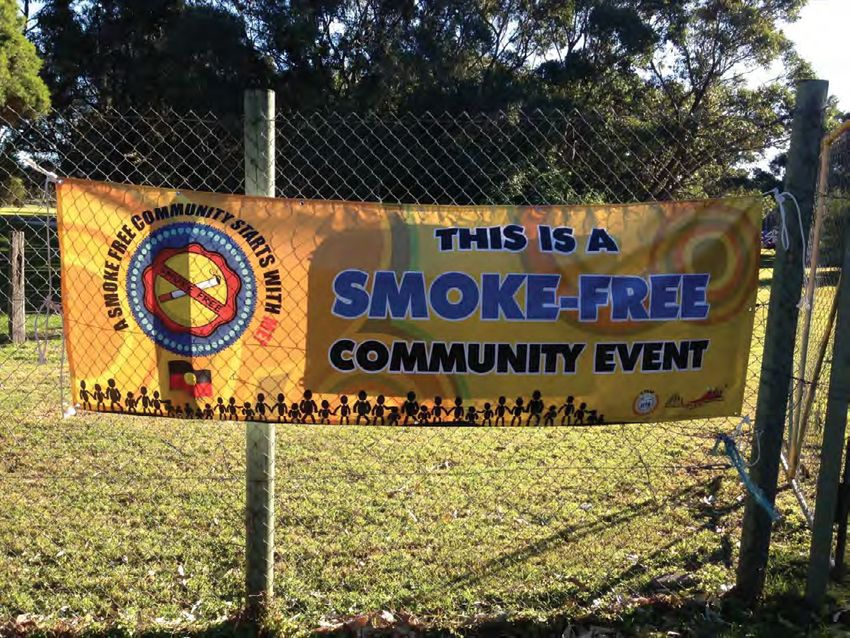
A TIME FOR ACTION

We call on the next Northern Territory government to take strong leadership
actions to reduce heart disease.

 POLICY PROPOSAL

 Reduce smoking to prevent heart disease and other chronic disease

 1. Boost investment in evidence-based tobacco control mass media campaigns
 2. Ban smoking and vaping from school grounds
 3. Focus on priority groups
 4. Stop advertising: Tobacco price boards be prohibited from retail outlets
 5. Reduce number of outlets selling tobacco
 6. Reduce tobacco company influence
 7. Strengthen licensing schemes
 8. Enable enforcement: Review the current law enforcement procedures to determine ways
    these could be strengthened

 Supported by:

                                                                                                    Australian Council on Smoking and Health

 Support Territorians to make heart healthy choices

 9. Get more people walking more often and invest in a Walking Strategy
 10. Restrict unhealthy food and drink advertising and sponsorship

 Reduce health inequity and save lives through improved cardiac care

 11. End the rheumatic heart disease burden on our Indigenous peoples

 12. Access to cardiac services – provide cardiothoracic surgery in NT
 13. Expand cardiac rehabilitation programs
                                                                                                                                               NATI O NA L H E ART FO U N DATI O N O F AU STR ALI A

                                                    NORTHERN TERRITORY STATE ELECTION 2020 - FIGHTING FOR TERRITORY HEARTS                                                                  3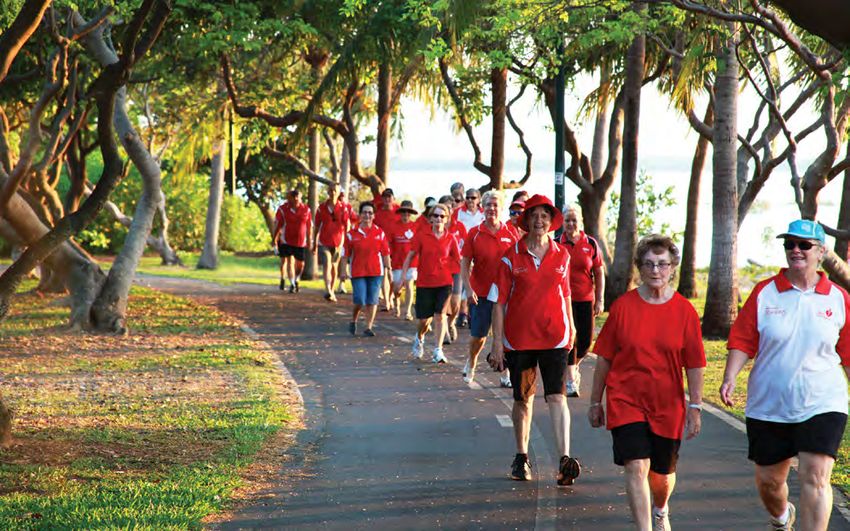
NATI O NA L H E ART FO U N DATI O N O F AU STR ALI A

4                                                      NORTHERN TERRITORY STATE ELECTION 2020 - FIGHTING FOR TERRITORY HEARTS
REDUCE SMOKING TO                                          The NT Government must do more than just
                                                           produce local posters and pamphlets.
PREVENT HEART DISEASE                                      The Heart Foundation calls on the government to
                                                           fund evidence-based anti-tobacco mass media
                                                           campaigns including TV advertising.
Tobacco use remains the leading cause of
preventable death in Australia. There is no safe
level of smoking.1 Disappointingly, in the Northern
Territory, 20% of people over 15 years of age are          2. Remove dedicated smoking
smokers.2
                                                              areas on all school facilities in the
                                                              Northern Territory.
1. Boost investment in evidence-based
   tobacco control mass
                                                           Smoke-free environments de-normalise smoking,
   media campaigns                                         reduce the number of cigarettes consumed by
                                                           those who continue to smoke, and support people
                                                           who are making attempts to quit smoking.
The NT government, like other governments in
Australia, has fallen back in the crucial area of          In the NT, schools must be smoke-free, but staff can
public education through tv-led public education           vote to have a designated staff smoking area on
campaigns that we know are effective in                    school grounds. In 2019, 54 NT schools allowed
increasing quit attempts by smokers and reducing           staff to smoke in these areas, up from 32 in 2018.
the prevalence of smoking.                                 The Department of Education does not collect
                                                           information about how adequately students
Now more than ever we need to support people to
                                                           and other staff are protected from secondhand
quit smoking.
                                                           smoke in these designated areas. Now that many
To continue to protect vulnerable members of               public spaces in the NT are entirely smoke-free it
the community (older Australians, Indigenous               is no longer appropriate for schools to have these
Australians, people with respiratory illnesses             exempted smoking areas.
and chronic diseases) we believe there is now a
                                                           The Heart Foundation supports a phased
moment in the public conversation to highlight the
                                                           approach to ensure that staff are supported to quit,
heightened risk to smokers and vapers catching
                                                           and that collaborative solutions are found, that do
and spreading COVID-19, and that now is an
                                                           not just move the problem elsewhere.
opportune time to quit.

                                                                                                                               NATI O NA L H E ART FO U N DATI O N O F AU STR ALI A

                                                      NORTHERN TERRITORY STATE ELECTION 2020 - FIGHTING FOR TERRITORY HEARTS                                                5
REDUCE SMOKING TO                                                        4. Tobacco price boards be prohibited
                                                       PREVENT HEART DISEASE                                                       from retail outlets.

                                                                                                                                Retailers communicate directly with customers
                                                                                                                                about the tobacco products they sell. The tobacco
                                                       3. Priority groups                                                       industry engages with retailers as one of the
                                                       a) Social marketing campaigns and                                        few remaining marketing strategies available to
                                                          cessation programs developed in                                       promote smoking given current restrictions on
                                                                                                                                advertising and the plain packaging of tobacco
                                                          partnership with Aboriginal health sector.
                                                                                                                                products. Incentives from the tobacco industry
                                                       b) Support long-term tobacco cessation                                   for retailers to promote the purchase of tobacco
                                                          programs targeting vulnerable                                         products should be prohibited.
                                                          communities.                                                          Price boards used by retailers are an effective form
                                                                                                                                of advertising and marketing of tobacco products.3
                                                                                                                                They must be prohibited.
                                                       Given the strong consumer base they provide, it
                                                       is not surprising that Aboriginal and Torres Strait
                                                       Islander peoples have been targeted by tobacco
                                                       industry marketing practices, along with other                           5. Vending machines for tobacco
                                                       vulnerable and disadvantaged populations.
                                                                                                                                   products are completely banned
                                                       The tobacco industry profits from Indigenous
                                                                                                                                   including mobile and temporary
                                                       tobacco-related illness and death.
                                                                                                                                   outlets.
                                                       There needs to be longer term funding
                                                       commitments for community-based programs
                                                       targeting vulnerable communities who smoke.                              The availability and promotion of tobacco serves
                                                       This will provide greater certainty for Aboriginal                       to “normalise’ both tobacco products and tobacco
                                                       community-controlled health organisations                                use, which in turn contributes to youth smoking
                                                       (ACCHOs) who train specialist staff to deliver the                       uptake and continued smoking among current
                                                       programs and ensures consistency in program                              smokers.
                                                       delivery and opportunity for progress and
                                                                                                                                There is good evidence that the presentation of
                                                       reporting.
                                                                                                                                tobacco products at point of sale and for sale in
                                                                                                                                vending machines prompt unplanned purchases
                                                                                                                                and, undermine attempts to quit smoking.
                                                                                                                                Vending machines should be prohibited. Given
                                                                                                                                the harm caused by tobacco, it is inappropriate
                                                                                                                                for tobacco products to be more available than
                                                                                                                                bread or milk.5
NATI O NA L H E ART FO U N DATI O N O F AU STR ALI A

                                                                                                                                This should be extended to ‘pop up” tents at
                                                                                                                                festivals and events and from mobile and
                                                                                                                                temporary outlets.

                                                            The availability and promotion of
                                                            tobacco serves to “normalise’ both
                                                            tobacco products and tobacco use

6                                                      NORTHERN TERRITORY STATE ELECTION 2020 - FIGHTING FOR TERRITORY HEARTS
REDUCE SMOKING TO
PREVENT HEART DISEASE

6. Reduce tobacco company
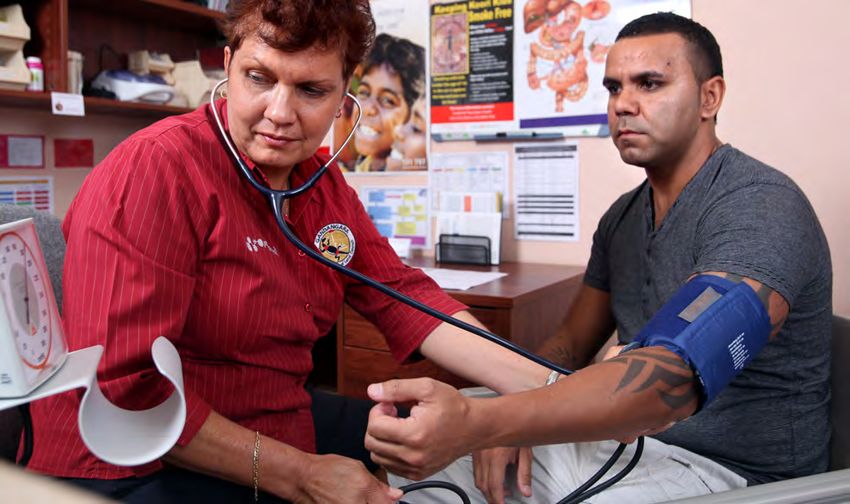
                                                               As with all cardiologists, I see the damage
   influence:                                                  that smoking causes to people’s heart
  c) Prohibit political donations from the                     health every day.
     tobacco industry and “front groups”
                                                               Smoking continues to be a significant
     in the Northern Territory.
                                                               cause of heart disease, stroke and other
  d) Prohibit health and research organisations                illnesses. We know that smoking kills two-
     from accepting funds from the tobacco                     thirds of long-term smokers.
     industry and organisations associated
     with the tobacco industry if they receive                 That’s why we need to continue to do
     NT government funding                                     everything we can to assist smokers to
                                                               quit and prevent our young people from
                                                               taking it up.
The Tobacco Industry uses political donations for
better access and a more favourable response
from political parties. This is just one of many            Dr Marcus Ilton, Cardiologist
strategies the tobacco industry has employed over
decades in an effort to derail or weaken tobacco
control policies.
The function of tobacco industry donations is
to: buy immediate influence, build long term
relationships, exploit a flawed political system, to
favour exchange, and to limit the public’s right to
know about corporate influence on policy-makers.6
A front group is an organisation that purports to
represent one agenda while in reality it serves
some other party or interest whose sponsorship is
hidden on rarely mentioned. The tobacco industry
has a long history of using front groups such as the
Philip Morris-funded Foundation for a Smoke Free
World (FSFW) whose tactics include approaching
ACCHOs to be potential partners.
The tobacco industry’s role in purporting to support
                                                                                                                                NATI O NA L H E ART FO U N DATI O N O F AU STR ALI A

health research, while also profiting from selling
commercial tobacco products, creates a conflict
of interest. Therefore, tobacco industry funding
of ‘health’ research either directly or indirectly,
including via third parties, should be vigorously
resisted. This is underscored by the Framework
Convention on Tobacco Control, which states the
Parties are “deeply concerned about the high
levels of smoking and other forms of tobacco
consumption by indigenous peoples” and urges
that tobacco industry influence be resisted.7

                                                       NORTHERN TERRITORY STATE ELECTION 2020 - FIGHTING FOR TERRITORY HEARTS                                                7
REDUCE SMOKING TO                                                        8. Review the current law enforcement
                                                                                                                                   procedures to determine ways these
                                                       PREVENT HEART DISEASE                                                       could be strengthened.

                                                                                                                                Tobacco legislation is purely tokenistic if
                                                       7. Strengthen licensing:                                                 not enforced. There is limited scope for law
                                                                                                                                enforcement around tobacco legislation due to
                                                          e) Put a cap on the number of tobacco retail
                                                                                                                                only one authorised officer in the Territory. While the
                                                             licences available
                                                                                                                                laws are not in place to derive revenue from the
                                                          f) Introduce a wholesaler licencing scheme                            community, there must be a mechanism to deter
                                                          g) Strengthen the monitoring and enforcement                          people from breaking the law, as well as educating
                                                             of retailer laws.                                                  the community about the laws to empower
                                                                                                                                ownership.

                                                       The Territory should be aiming to reduce the number
                                                       of retail outlets selling cigarettes and ensure that
                                                       those remaining, sell only to people legally able to                        Smoking causes havoc in our communities.
                                                       purchase tobacco products.                                                  It is a scourge. When you look at the
                                                       There are few provisions to limit the ability of any                        numbers involved, it is far more insidious
                                                       potential retailer to obtain a licence in NT. Provided                      than many of the other problems that get
                                                       the appropriate form is completed and any fees                              the headlines in relation to Indigenous
                                                       paid, the licence is generally granted.                                     Australia.
                                                       The Territory has 441 retail outlets for an adult
                                                       population of around 245,000 with 20% of these
                                                                                                                                Tom Calma, Aboriginal and Torres Strait Islander
                                                       daily smokers. This equates to one tobacco outlet
                                                       for every 167 smokers, often making tobacco easier                       Social Justice Commissioner and Chair of the Close
                                                       to buy than fruit and vegetables.                                        the Gap Steering Committee for Indigenous Health
                                                                                                                                Equality, 2009
                                                       The licence fee is currently $242 for one year which
                                                       is not high enough to recover the full costs of
                                                       administering, educating and enforcing the retailer
                                                       laws. In Tasmania, for example, the cost of a
                                                       tobacco license fee is $1200.
                                                       A wholesaler licensing scheme would provide
                                                       authorities with information as to where tobacco
                                                       products are supplied and provide crucial data at
                                                       a relatively low administration cost to government.8
                                                       A comprehensive and visible monitoring and
NATI O NA L H E ART FO U N DATI O N O F AU STR ALI A

                                                       enforcement scheme needs to accompany these
                                                       penalty changes, to provide a realistic threat of a
                                                       compliance check.

8                                                      NORTHERN TERRITORY STATE ELECTION 2020 - FIGHTING FOR TERRITORY HEARTS
SUPPORT TERRITORIANS                                         As the COVID-19 pandemic has clearly
                                                             demonstrated, the liveability and walkability
TO MAKE HEART HEALTHY                                        of our local neighbourhoods matters for our
CHOICES                                                      overall health and wellbeing. More than ever it
                                                             is important for people to be able to get out into
                                                             open spaces easily, to walk, ride and play; while
                                                             continuing to practice social distancing when
                                                             needed.
9. Get more people walking more often
                                                             But we need coordination and connectivity to
   and invest in a Walking Strategy
                                                             bring together existing programs and initiatives,
                                                             increase knowledge and improve our streets to
A staggering 83% of adults, and 80% of children              make our communities more ‘walkable’.
do not meet recommended physical activity                    Additional initiatives to reduce speed limits to make
levels.9                                                     high pedestrian areas safer, trialling temporary
Physical inactivity accounted for 2.6% of the total          road closures for pedestrian access only
burden of disease and injuries in Australia in 201110        events, funding walking programs such as Heart
and leads to overweight and obesity, other chronic           Foundation Walking; and campaigns to support
conditions and poor mental wellbeing.                        vulnerable groups to walk such as mothers or
                                                             migrants who are isolated, seniors, and Indigenous
Walking is the most equitable means of improving             peoples and people with a disability.
our population health by increasing physical
activity.                                                    The Heart Foundation calls on the government to
                                                             develop and implement a Walking Strategy and
Our vision is one where people of all ages and               Action Plan that highlights walking as a critical
genders, feel safe and comfortable to walk, and              form of recreation and transport.
choose to walk to their destinations, for recreation
and, for their health.

      Walking is the most equitable means
      of improving our population health
      by increasing physical activity.

                                                                                                                                 N ATI O N AL H E A RT FO U NDATI O N O F AU ST RA LI A

                                                        NORTHERN TERRITORY STATE ELECTION 2020 - FIGHTING FOR TERRITORY HEARTS                                                  9
SUPPORT TERRITORIANS
                                                        TO MAKE HEART HEALTHY
                                                        CHOICES

                                                        10. Restrict unhealthy food and drink
                                                            advertising

                                                        Currently, more than 38% of the daily energy
                                                        intake of Territorians is from unhealthy food, while
                                                        fewer than 7% of our children are eating enough
                                                        vegetables.11
                                                        The Heart Foundation strongly supports the
                                                        Northern Territory Government in regulating food
                                                        and beverage advertising particularly directed
                                                        to children, who are vulnerable to commercial
                                                        exploitation. Regulations need to provide them with
                                                        a high level of protection.
                                                        The Heart Foundation calls on the government to
                                                        ban food and beverage advertising specifically
                                                        directed to children under 16 years of age in
                                                        public spaces that are state government owned
                                                                                                                                 Currently, more than 38% of the
                                                        and managed, such as transport stops, and other
                                                        outdoor advertising space.                                               daily energy intake of Territorians
                                                                                                                                 is from unhealthy food
                                                        This strategy will be a positive first step to help
                                                        minimise children’s exposure to unhealthy food
                                                        advertising.
 NATI O NA L H E ART FO U N DATI O N O F AU STR ALI A

10                                                      NORTHERN TERRITORY STATE ELECTION 2020 - FIGHTING FOR TERRITORY HEARTS
REDUCE HEALTH INEQUITY The NT has the highest incidence of ARF in
Australia. Data shows that the NT has twice as
AND SAVE LIVES THROUGH many people affected by ARF as Western Australia
IMPROVED CARDIAC CARE and four times as many as Queensland and South
Australia.
In 2014–2018, the rate of new RHD diagnoses
in Indigenous Australians was greatest in the
11. End the rheumatic heart disease NT (141 per 100,000)12
burden on our Indigenous peoples The cost of inaction is immense. It is estimated that
at least $344 million will need to be spent across
Australia on the clinical management of people
Acute rheumatic fever (ARF) is an illness caused who currently have ARF and RHD and on those
by reaction to a bacterial infection. Rheumatic who develop ARF and RHD by 20315.
heart disease (RHD) is permanent damage to the
heart following ARF. Aboriginal and Torres Strait The Heart Foundation calls on the government to
Islander Australians, especially children, have Continue to address the social and
among the highest levels of RHD in the world. It is a environmental determinants of health that
particular problem in remote regions. contribute to the burden of RHD.
RHD is largely preventable and its eradication Develop the capacity and capability of the
should be a public health priority. Prevention is community and Aboriginal and Torres Strait
enabled by good health and hygiene as well as Islander workforce to manage care.
early diagnosis and treatment of the infection with
Properly resource health departments to
antibiotics.
manage ARF and RHD patients appropriately
Any attempt to close the gap in health outcomes taking into account cultural capability
between Indigenous and non-indigenous
Seek further Federal funding to keep pace with
Australians must make eliminating RHD a priority.
the number of patients requiring treatment
End RHD.
NATI O NA L H E ART FO U N DATI O N O F AU STR ALI A
The NT has the highest
incidence of ARF in Australia.
NORTHERN TERRITORY STATE ELECTION 2020 - FIGHTING FOR TERRITORY HEARTS 11REDUCE HEALTH INEQUITY 13. Expand cardiac rehabilitation
programs
AND SAVE LIVES THROUGH
IMPROVED CARDIAC CARE
Northern Territory has the highest number of heart
attack hospitalisations in Australia.
Cardiac rehabilitation is a coordinated program
12. Access to cardiac services – delivered over several weeks, educating the
provide cardiothoracic surgery in NT patient around lifestyle modification and includes
physical activity, nutrition, stress management,
medication management and advice.13
Northern Territory does not offer a cardiothoracic It is a vital step in a patient’s recovery after a heart
surgical service for the community. There is attack to attend cardiac rehabilitation. This has
significant emotional stress associated with heart been shown to reduce hospital readmissions by
disease and this is compounded by having major up to 56% and deaths by 30%.14 It also results in
surgery away from family and friends and Country. improvements in exercise capacity, quality of
Between 2-3 patients are currently transferred to life and psychological well-being, and is now
Adelaide for cardiothoracic surgery per week at recommended in international guidelines.
a cost of $35,000 per patient along with another In South Australia the successful Country Access
1-2 high risk patients per fortnight for percutaneous to Cardiac Health (CATCH) program shows
coronary angioplasty. All of these patients could 70% uptake and continues to have a very high
be managed in Darwin if cardiac surgery was completion rate (up to 97%), improving patient risk
available. factors and mortality rates.15 This has meant that in
The Heart Foundation calls on the government to South Australia, regional areas are receiving a level
reconsider the in-house cardiac surgery model that of best practice care better than their metropolitan
was accepted by the Government in 2018. counterparts.
The CATCH program improves coordination of
cardiac rehabilitation by providing a central
referral service for all Country SA patients. The
CATCH telephone cardiac rehabilitation service
provides an alternative to face to face cardiac
rehabilitation.
The Heart Foundation calls on the government
to investigate extending the SA CATCH program
throughout the Northern Territory.
NATI O NA L H E ART FO U N DATI O N O F AU STR ALI A
It is a vital step in a patient’s
recovery after a heart attack to
attend cardiac rehabilitation.
12 NORTHERN TERRITORY STATE ELECTION 2020 - FIGHTING FOR TERRITORY HEARTSREFERENCES
1 Schane R, Ling P, Glantz S. Health effects of light and intermittent smoking: A review. Circulation. 2010;121: 1518–1522.
2 ABS, 2019. National Health Survey: First results, 2017-18.
3 Wood LJ, Pereira G, Middleton N, Foster S. Socioeconomic area disparities in tobacco retail outlet density: A
Western Australian analysis. The Medical journal of Australia. 2013;198(9):489-91.
4 Paul CL, Mee KJ, Judd TM, Walsh RA, Tang A, Penman A, et al. Anywhere, anytime: retail access to tobacco in New
South Wales and its potential impact on consumption and quitting. Social science & medicine. 2010;71(4):799-806.
5 Wood LJ, Pereira G, Middleton N, Foster S. Socioeconomic area disparities in tobacco retail outlet density: A
Western Australian analysis. The Medical journal of Australia. 2013;198(9):489-91.
6 Kypri, K, McCambridge, J, Robertson, N, Martino, F, Daube, M, Adams, P. and Miller, P. 2018. ‘If someone donates
$1000, they support you. If they donate $100 000, they have bought you’. Drug and Alcohol Review. 28(3): pp. 226-
233.
7 Waa, A. et al 2019 Foundation for a Smoke-Free World and healthy Indigenous futures: an oxymoron?
8 Commonwealth dept of health and ageing. 2002, Licensing of Tobacco Retailers and Wholesalers Desirability and
Best Practice Arrangements.
9 Australian Bureau of Statistics 2018. National Health Survey: First results 2017-18
10 AIHW. 2017. Impact of physical inactivity as a risk factor for chronic conditions: Australian Burden of Disease Study
11 ABS, 2019. National Health Survey: First Results, 2017-18
12 AIHW, 2020. Acute rheumatic fever and rheumatic heart disease in Australia, 2014–2018
13 De Gruyter, et al. 2016. Economic and social impact of increasing uptake of cardiac rehabilitation services. Heart,
Lung and Circulation
14 De Gruyter, et al. 2016. Economic and social impact of increasing uptake of cardiac rehabilitation services. Heart,
Lung and Circulation
15 Government of SA. COUNTRY HEALTH SA LOCAL HEALTH NETWORK 2018-19 Annual Report
NATI O NA L H E ART FO U N DATI O N O F AU STR ALI A
NORTHERN TERRITORY STATE ELECTION 2020 - FIGHTING FOR TERRITORY HEARTS 13For heart health information and support, call our Helpline on 13 11 12 or visit heartfoundation.org.au For further information contact: Tuesday Udell, Senior Policy Advisor SA/NT Tuesday.udell@heartfoundation.org.au © 2020 National Heart Foundation of Australia, ABN 98 008 419 761 (Heart Foundation) Terms of use: This material has been developed for information and educational purposes only. It does not constitute medical advice. Please consult your health care provider if you have, or suspect you have, a health problem. The information contained in this material has been independently researched and developed by the Heart Foundation and is based on the available scientific evidence at the time of writing. It is not an endorsement of any organisation, product or service. The Heart Foundation and its employees do not accept any liability, including for any loss or damage, resulting from the reliance on the content, or in regards to its accuracy, currency and completeness. Any use of Heart Foundation material by another person or organisation is done at the user’s own risk. This work, except as identified below, is licensed by the Heart Foundation under a Creative Commons Attribution – Non commercial – No Derivative Works (CC BY-NC-ND) 4.0 Australia licence. To view a copy of this licence, visit: http:// creativecommons.org.au/. You are free to copy and communicate this publication (however in no way commercialise the material), in accordance with the rules of attribution set out at https://creativecommons.org.au/learn/howto/. Third party material that is not licenced under a Creative Commons licence may be referenced within this document. All content not licensed under a Creative Commons licence is all rights reserved. Please contact the relevant third-party copyright owner if you wish to use this material. The Heart Foundation acknowledges the Traditional Owners and custodians of Country throughout Australia and their continuing connection to land, waters and community. We pay our respect to them and their cultures, and Elders past, present and future. HH-SCPE-007.1.0620
You can also read


