FOSTERING HEALTHY MASCULINITY IN CHALLENGING TIMES - STAYING AT HOME WITH OUR SONS - Promundo
←
→
Page content transcription
If your browser does not render page correctly, please read the page content below

STAYING AT HOME WITH OUR SONS

      RESULTS FROM A NATIONAL SURVEY OF PARENTS IN THE US

FOSTERING HEALTHY MASCULINITY
    IN CHALLENGING TIMES
                            MAY 2020

                                                            1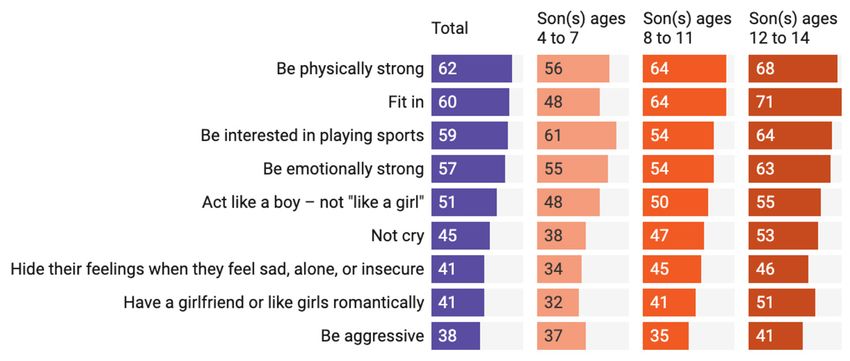
This report was authored by Gary Barker, Brian Heilman, and Michael
                                  Reichert, of Promundo-US, with input from Alexa Hassink and Tolu
                                  Lawrence, Promundo-US; Céline Bonnaire, Carly Newman and
                                  Matthieu Arrault, the Kering Foundation; and Tresa Undem,
                                  PerryUndem. This report was developed based upon research led by
                                  PerryUndem. The research was financially supported by the Kering
ACKNOWLEDGMENTS.                  Foundation and the Oak Foundation; it is the first in a series of new
                                  research and resources from the Global Boyhood Initiative, a project of
                                  Promundo and the Kering Foundation.

                                  Suggested Citation: Barker, G., Heilman, B., & Reichert, M.
                                  (2020). Staying at Home With our Sons: Fostering Healthy Masculinity
                                  in Challenging Times. Promundo-US and the Kering Foundation.

            In partnership with
                                                                                                            2
• Preface 4
TABLE OF CONTENTS. • Background 7
• About the Report 8
• Key Findings 9
• Recommendations 23
3Ideas about gender – social norms for how boys, girls, and all children should be –
are among the first things children learn. Frequently they keep our children from
being their best, authentic selves and undermine the development of critically
important human capacities. Boys around the world are often affected by
restrictive ideas about manhood that encourage them to repress their emotions –
which has the potential to cut them off from their most important relationships;
PREFACE: PRESENT these ideas about manhood often overemphasize competition and achievement,
encourage boys to sacrifice their health, and to take risks that endanger
CHALLENGES, HISTORIC themselves and others. Some boys and young men are also raised believing that
violence – against themselves, against other men, and against women – is normal.
OPPORTUNITIES. But a new conversation about how we raise our sons is being heard among
parents, as well as among educators, coaches, and policymakers. Even prior to the
Gary Barker, President and CEO, Promundo worldwide COVID-19 pandemic, the #MeToo movement – both a social media
Céline Bonnaire, Executive Director, the Kering phenomenon and broader grassroots initiative – brought necessary and
Foundation unprecedented questions about men’s behavior toward women and girls.
Around the world, individual women, feminist organizations, and male allies have
been demanding an end to harassment and gender-based discrimination and
men’s violence against women: the good news is that parents and others who raise
boys are joining this conversation. An earnest search has begun for how to nurture
boys who are part of creating a just world for all, especially women and girls, and
who embrace more caring, nonviolent ideas about manhood.
4This new conversation about boyhood and manhood is twofold: it is about calling
all men and boys in to being healthy, connected, responsible members of the
human community, for their own sake and for the well-being of those around them,
as it continues to call men out if they abuse, harass, use violence or don’t live up to
gender equality.
This moment presents the opportunity to have a new conversation about how we
raise our boys: among parents, educators, coaches, and policy-makers.
The global COVID-19 pandemic has caused all of us to feel increased fear,
resulting from health risks, social isolation, and economic insecurity. Children and
adults in all parts of the world have experienced losses, disappointments, and
heightened stressors. And due to stay-at-home orders globally – and school and
childcare closures – many parents are spending more time with their children now
than before.
While many families are coping in healthy ways, a well-documented global spike in
men’s violence against women in the home underscores the lack of adequate
polices and resources to end violence, the large number of men who fall back on
dominance and control over women in times of crisis, as well as the limitations in
our systems of protection for women survivors. We know from global research that
experiencing or witnessing violence as children, is one of the strongest predictors
that boys will use violence against female partners as adults, and that girls will
grow up to experience violence in intimate relationships with male partners. It is
urgent that we work to break this cycle of violence and part of that involves talking
to boys.
5COVID-19 also calls us to pay attention to how gender, and ideas about manhood,
can hinder health. Men are slightly more likely to die of COVID-19 in the US and
globally, for a mix of biological and social reasons. Specific groups of low-income
men and women are particularly at risk of COVID-19 in many settings. COVID-19
shines a light on the fact that women are bearing the majority of the responsibility
for taking care of their families – and providing care in general; and it amplifies
other inequalities, including economic, racial, and gender disparities. Thus,
COVID-19 requires all of us to care, and to understand how we can work together
to build equitable health and social support systems and to promote gender
equality and healthy manhood.
In the midst of the COVID-19 crisis, while parents are facing enormous stresses and
doing their best to keep it together, there is an opportunity. All of us, parents and
others, can promote healthy masculinity by taking this moment to encourage boys
to be emotionally connected, to seek help when they need it, to be nonviolent in
all their relationships, and to be part of the cause of gender equality. Promundo
and the Kering Foundation are committed to supporting this conversation to
promote and achieve healthy manhood.
6BACKGROUND:
HOW THE MAN BOX SHAPES BOYS
This survey of parents builds on a previous national survey with • About half of young men say they’ve received the message
young men carried out by Promundo and Axe, Unilever’s leading that, “A gay guy is not a "real man.”
male grooming brand. The study, The Man Box: A Study on • Nearly one-third of young men said that their girlfriends or
Being a Young Man in the US, UK, and Mexico, was followed by female partners told them that a “real man” must use violence to
surveys conducted in Jamaica and Australia (among young men defend his reputation.
ages 18-30). It explored messages young men are receiving • Between 1/3 and 1/5 of young men reported having verbally
about what it means to be a man, and which of those messages harassed a woman or girl in the street, workplace,
they are internalizing. Results from the US, UK, and Mexico school/university, or internet in the last month.
found:
Importantly, we found that young men who held more restrictive
• At least 57 percent of young men have been told that a “real views about manhood – that is, who lived in the “Man Box,” this
man” behaves a certain way. The majority of young men cluster of harmful ideas of what it means to be a man – were
reported that their parents taught them to act strong and hide more unhappy, depressed and anxious, more likely to have
feelings of nervousness or fear – in other words, to “tough it considered suicide, to binge drink, to harass and to bully, than
out.” young men who had less restrictive views of manhood.
• More than half of young men say they received the message
that a man who doesn’t fight back when others push him around Indeed, the overwhelming conclusion from this research as well
is weak, and about 40 percent of them personally agreed with as research by Plan International USA, by the American
that idea. Psychological Association, and by many others is that the Man
• More than half of young men said they have been told by Box significantly damages the development of boys, shaping
society that a real man can’t say no to sex. their own identities as well as how they relate to others.
7This report summarizes the findings of a study exploring what parents
in the United States (US) want for their sons, their views toward gender
norms and pressures, alongside findings from discussions with boys on
the topic of masculinity. This report provides new insights on how
parents can support healthier and more connected, resilient behavior
in their sons.
In the fall of 2019 and early 2020, Promundo and the Kering
ABOUT THE REPORT: Foundation commissioned PerryUndem to conduct survey research and
WHAT OUR RESEARCH interviews with parents and with boys themselves on the topic of
REVEALS ABOUT BOYS’ masculinity and pressures to live up to certain gender and cultural
norms. This research included:
LIVES.
• In-depth interviews with 16 boys ages 8-16 in California and
Pennsylvania. The interviews included boys from middle- and lower-
income families, of diverse ethnicities, and of diverse political
leanings; and
• A nationally representative survey with parents of boys ages 4-14 in
the US, conducted among 801 parents (mothers and fathers) from
January 2 through 12, 2020 using YouGov’s online panel.
8Four clear headlines emerged from these data, each of which has
important implications for our children and the next generation of
men:
1. When asked what they value most in their sons, parents put
strength and living up to traditional ideas about masculinity at the
top of the list.
KEY FINDINGS FROM 2. Parents recognize that boys are under pressure to adhere to
THE RESEARCH. masculine stereotypes.
3. Parents and boys themselves say that expectations around how to
behave get even more restrictive for boys as they get older.
4. Parents see that their sons don’t feel comfortable showing that
they are scared or expressing love.
9Strength, grit, and resilience are valuable
characteristics for all of us, especially in the midst of a
global pandemic. But what makes us strong? From the
time they are toddlers, boys are frequently told that
strength means never to cry, not to show fear or
weakness, and to solve their problems alone.
Such stoic performances masquerade as strength and
1 When asked what they value most often go hand-in-hand later in life with displays of
in their sons, parents put strength physical domination, threats and violence, and
and living up to traditional ideas sometimes depressive symptoms. The truth about
resilience and the capacity to stand one’s ground in the
about masculinity at the top of the face of adversity and stress is that individuals are
list. strongest when they are connected to others. Boys fare
better when parents, and teachers and others, provide
a “relational anchor” that helps boys resist reacting in
anger, or turning their fear inward in self-harming ways.
10Figure 1: Percentage of parents who chose this characteristic as “very important” or
“somewhat important” for their boys.
n = 399
Very important Somewhat important
When we asked parents how important they Be emotionally strong 56 38
think it is for their boys to have certain
characteristics, emotional strength was far Be physically strong 17 44
and away at the top of the list.
Fit in 12 46
Fifty-six percent of respondents said that this
Act like a boy – not “like a girl” 25 31
was very important, and another thirty-eight
percent said that it was somewhat important, Be interested in playing sports 15 33
making it the most common response from the
list provided. See Figure 1. Have a girlfriend or like girls romantically 19 27
Not cry 7 22
Be aggressive 9 17
Hide feelings when sad, alone, or insecure 10 15
11Our evidence suggests that parents often define
emotional strength as fitting into the Man Box. A
glance at the next five most common responses
But what does emotional strength mean to parents? suggests parents are preoccupied with their boys
“fitting in”: Many parents say it is very important for
Is it the rugged, stoic, go-it-alone man who denies their boys to not “act like a girl.”
feeling any vulnerability or ever needing help?
They also agree that boys should like girls romantically
Or is it strength that includes healthy emotional (suggesting a fear that their sons would be anything
expression, connectedness, solidarity, being willing to other than heterosexual) and be interested in sports.
ask for help when he needs it, and the ability to As highlighted in Promundo’s The Man Box study,
empathize and show vulnerability? emphasizing these conformist views of manhood rather
than healthy masculinity based on equality, empathy,
connectedness, and respect wreaks a terrible cost on
our sons, on women and girls, and on our society.
12Figure 2: Percentage of parents who chose certain traits when
asked, “If you had to choose, which of these things are most
important for your son to learn (choose up to 5).”
n = 399
The reality is that boys and girls can be Be honest 61
physically strong and emotionally vulnerable, Respect others 56
athletic and honest, confident and caring,
Be responsible 53
empathic and determined, and many parents
seem to value all of these traits. Be hardworking 44
Be emotionally healthy 35
Indeed, as seen in Figure 2, a positive insight
Be confident 35
from this research is that when parents had
the opportunity to choose up to five qualities Be caring 33
they feel are most important for their sons, Be themselves 31
they overwhelmingly showed they wanted
Be independent 30
their sons to be both tough and athletic and
caring, respectful, honest, and responsible. Be physically healthy 29
Be creative 15
Be brave 14
Talk about their feelings 14
Be physically strong 7
13Parents’ preferences for honesty, respect, and
emotional health for their sons demonstrate that,
despite the persistence of harmful ideas about Parents want their sons to carve out a place in the
masculinity, what parents really want for their sons world where they are true to themselves and good
is a new definition of strength, and of manhood, to others. So, what gets in the way?
that is more flexible, connected, and respectful of
others, particularly women and girls.
14The majority of parents recognize the social pressures
their sons face to be physically strong, show interest in
sports, and “fit in” (Figure 3). Some 41 percent said
2 Parents recognize that boys are their sons face some pressure or a lot of pressure to
under pressure to adhere to have a girlfriend or like girls romantically, which speaks
to the idea that a “real man” must be attractive and
masculine stereotypes. admired for his physical attraction, and should be
heterosexual. Similarly, 45 percent said their sons face
pressure not to cry.
15Figure 3: Percentage responses of parents to the prompt,
“Sometimes boys can feel pressure from friends, teachers,
sports, or society. How much pressure, if any, do you think
In other words, parents recognize the unhealthy your boy(s) feels to:”
n = 402
expectations placed on boys – even as they may be
actively or inadvertently reinforcing them (see Figure 1:
25 percent of parents said that it was “very important” A lot Some
for their sons to act ‘like a boy’).
Be physically strong 24 38
Indeed, what parents say they want for their sons is Be interested in playing sports 26 34
often aligned with what parents see that peers,
Fit in 25 35
teachers, and society expect of boys. Part of this
alignment may be due to parents wanting to protect Be emotionally strong 23 34
their sons – they know the bullying and ridiculing their
sons face when they don’t conform to traditional ideas Act like a boy – not “like a girl” 25 25
about manhood. This emphasizes how much it takes all Not cry 20 25
of us – coaches, teachers, media-makers, policymakers,
and parents – to promote healthy masculinity. Have a girlfriend or like girls romantically 20 21
Hide feelings when sad, alone, or insecure 15 26
Be aggressive 13 25
16Our interviews with boys suggest that boys today have
freer, healthier ideas about manhood than previous
generations: Many boys reported that being a man is
about being kind, helpful, nice, respectful, and
emotionally open. However, boys also said that when
they hit early adolescence, around 10-12 years old,
they feel more pressure to fit into masculine
stereotypes, or the Man Box. They say their parents,
teachers, coaches, as well as their male peers, bear
down on them to conform: They are judged,
evaluated, criticized, bullied, and humiliated much
3 Parents and boys themselves say more than at younger ages, if they stray outside of the
Man Box.
that expectations around how to
behave get even more restrictive for Said one 15-year-old boy:
boys as they get older.
“If you show feelings, it makes you look weak and
vulnerable. People will take that vulnerability and use it
against you.”
Boys told us they are particularly hesitant to show fear
and insecurity because they worry they will be ridiculed
– or bullied – by male peers. Many boys told us they
have no place or person to whom they can unload their
upsets, doubts, and worries. And many boys shared
that they feel they cannot talk to their male friends
about emotional issues at all.
17Parents too are aware that certain stereotypical expectations around masculinity – the Man Box,
mentioned earlier – become tighter as their sons reach adolescence.
Older boys experience more pressure, parents say, to be strong, to fit in, to not act like a girl, to not cry,
and to hide their feelings.
Figure 4: Percentage responses of parents with sons in different age groups to the
same prompt, “Sometimes boys can feel pressure from friends, teachers, sports, or
society. How much pressure, if any, do you think your boy(s) feels to:” (combined
responses of “some pressure” and “a lot of pressure”)
n = 402
18The survey asked parents which feelings they perceive
boys are most comfortable and least comfortable
expressing. Unsurprisingly, the vast majority said boys
have no problem expressing confidence, excitement,
or happiness. But fully two-thirds acknowledge that
boys don’t feel comfortable letting on when they are
4 Parents see that their sons don’t scared, sad, lonely, or unsure of themselves. Two-thirds
also said that boys feel comfortable expressing anger.
feel comfortable showing that they
are scared or expressing love. Significantly, nearly half of parents said boys don’t feel
comfortable talking about love.
This is especially worrisome for how boys are made to
feel ashamed of feelings of affection and attraction –
romantic or platonic.
19Figure 5: Percentage of parents responses to the prompt, “In general, do
you think boys in our society feel comfortable talking about their emotions
when they feel…”
Casting love as a “soft” emotion, unbefitting n = 801
a “real” man, puts boys in a terrible Yes, they feel comfortable No, they don’t feel comfortable
developmental bind, pressuring them to
forswear the urgings of their own hearts and Insecure or weak 28 72
fostering the notion that sex and intimacy are Embarrassed 30 70
a space for conquest and performance rather
than connection and caring. Lonely 31 69
Scared 34 66
One 11-year-old boy said:
Sad 36 64
“It’s absolutely not [okay to share feelings of Love 54 46
love]. If it’s a person, no. If it’s a thing, yes.”
Angry 63 37
Confident 84 16
Excited 85 15
Happy 87 13
20OPPORTUNITIES FOR SUPPORTING SONS AND
PROMOTING HEALTHY MANHOOD
When facing personal problems, young men (18-30 years Fathers or male caregivers, for their part, often believe
old) in the Man Box study said their fathers are the last they have to “teach” their sons to be “real” men at the
person they turn to for help. expense of being compassionate, honest, and vulnerable
with them.
In that study, young men reported they are more likely to
seek help from the Internet or from no one than to turn Boys often see how uncomfortable their fathers or other
to their fathers. Many try to turn to their mothers when adult men around them are with their own feelings, fears,
they feel sad or depressed, but both mothers and fathers and painful experiences and how quick their fathers are
can inadvertently communicate to their sons that it is to want their sons to “man up.” Mothers also often face
more important to “tough it up” than to express the a cultural pressure not to allow boys to be “weak” or turn
need for help and connection. them into “mama’s boys.”
The interviews with younger boys for this study also The reality is that all our children need to see all
found the same – boys are more likely to see their caregivers modeling connection, empathy, nonviolence,
mothers as their emotional support, not their fathers. and healthy manhood.
21Here is the good news: Parents are aware of the challenges
presented by masculine stereotypes – this is a critical first
step for positive change.
22Parents can’t, by themselves, change deeply-held ideas about gender that are found
in schools, the media, the workplace, in our public policies, and in many other
realms. But where parents can make a huge difference is in what they say to their
sons – and in the behaviors they model – as parents are the primary influence in
their children's earliest years. A few suggestions include:
1
Talk openly about your own fears, uncertainties, and disappointments, making it
clear that you believe everyone has the right to be honest about how they are
feeling. Adults can model how to share difficult feelings, in healthy ways,
communicating permission to a boy to reveal what’s true for him. The power of
honesty will not be lost on any child who is watching.
RECOMMENDATIONS: 2
Take advantage of the time at home to talk. Many parents and families are doing
their best to balance competing responsibilities with their children at home and are
Seven Things Parents and Caregivers experiencing additional stress and tension. It is important to recognize that children
Can Do to Build Healthy Masculinity may also feel uncertain and vulnerable; adults can recognize and validate children’s
feelings, and encourage them to share. The conversation doesn’t have to be a
formal lecture; in fact, it shouldn’t be. Instead, find a time to talk while doing
something else. If watching a TV show, playing a game, or watching a movie
together, a parent might ask: “Do you ever worry about that?” Or simply: “How are
you feeling with all this?”
3
Acknowledge the particular challenges boys feel about being vulnerable, and the
courage it takes for them to be open. Parents may even find that it is helpful to
introduce the concept of the Man Box directly, or to find another way to help boys
understand how a message or pressure they’re receiving may be a harmful
stereotype, and not reflect how they are expected to act at home. Help to call out
and break free from harmful, gender-related pressures together as a family.
234
Reinforce that it’s okay to need help and to ask for it. You can model this behavior in
your own friendships and intimate relationships in ways that will give the child
permission to follow suit. If they can’t see it in action, it’s less likely they can ask for
help themselves. In those important moments a child does open up to you, be sure
to practice the remarkably important skill of listening without judging, creating the
space and environment they most need to feel safe.
5
Seek help for yourself. Airlines tell us every time we fly to adjust our own mask
before adjusting the masks of others. For our physical health and our mental health,
this is useful advice. Tensions naturally flare during crises, but tension does not have
to lead to fights and violence. Economic and health stresses can bring closeness and
mutual interdependence or they can serve as triggers for relationship breakdowns
and even domestic violence. Stress must not be an excuse for any man’s use of
violence against a partner, or any parent’s use of violence against a child.
6
Take the threat seriously and demonstrate that it is wise to seek medical care
whenever our health is adversely affected. One of the reasons men face higher
death rates from COVID-19 and other health issues is that they are less likely to seek
health services when they need them, to reach out to get tested, or to follow
recommended health care protocols. It is important for boys to see adult men taking
risks seriously and recognizing the need to seek health services in response to health
issues, big and small.
7
Keep in mind that you are not alone. Know where you can turn for help on issues
related to healthy masculinities, childhood mental health issues, and even family
violence. Find more advice as well, on how to raise boys to break free from gender
stereotypes, and tips for involved fatherhood.
24You can also read


