Planning for the Next Normal at School - Keeping students, staff, teachers, and families safe and healthy Playbook version 3.0
←
→
Page content transcription
If your browser does not render page correctly, please read the page content below

IMPORTANT INFORMATION: COVID 19 UPDATE

Planning for the Next Normal at School                                     Playbook version 3.0
Keeping students, staff, teachers, and families safe and healthy                     Updated July 23, 2021

1    kp.org/thrivingschools                                                •••
                                                                           ff~ KAISERPERMANENTE®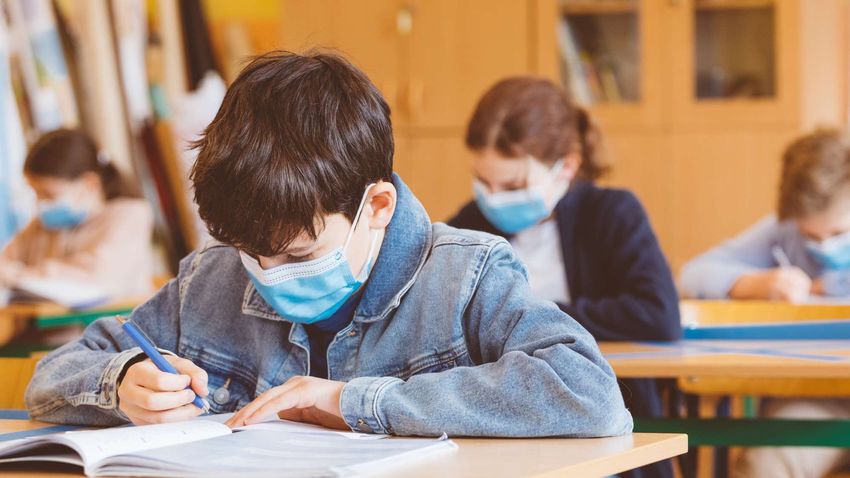
Introduction and purpose
     The COVID-19 pandemic laid bare how much children and families depend on schools, not
     just as sites for quality education and supervision, but also as community anchors for social
     interaction, emotional support, nutritious meals, and health care.

     Schools have consistently faced disproportionate resource allocation depending on how
     affluent their neighborhoods are, and these challenges have only been exacerbated by
     COVID-19. School communities are facing unprecedented financial, emotional, and
     psychological turmoil. We have an opportunity and a responsibility to address these issues
     head-on as we support schools in preparing for the next normal — to ensure that teachers
     can do their best teaching and students can do their best learning.

     At Kaiser Permanente, we’re committed to serving as a valuable partner for health in schools,
     either in person or through continued virtual learning. We’ve curated the best thinking and
     guidance from national experts, and we’re dedicated to helping you meet the unique health
     needs of your schools and communities.

2     kp.org/thrivingschools
Contributing partners
We are grateful to the following organizations for informing the Planning for the Next Normal at School playbook:
SHAPE
~f
Isl~
SOCIETY
ffCTI
ON HEACTHIERttt FutureEd HEALTHY SCHOOLS OF 1£ALTH
AND PHYSICAL
..•.
.
EDUCATORS•
GENERATION
GlOJIGlTOWN UH1YlJISITY
CAMPAIGN health. moves. minds .
.,
•
·a~-~~
,,,
~
A s
nnec1on ~
Attendance
Works
AdvllndngStudentSu«ess8yRedudngChronlcAbsence
•-
cairn
n,,,....,
~Iii!
.... ~·™
Heealthy
Eenvironments
Changelab Solutions Health Resources in Action Aend
Advancing P11blic Healtl, a11dMedical Research R.esponse to
r.rauma in
s.chools
..,.
,.1. NASBE
"'
....\.} National Network
MENTALHEALTH acional Association of
National "''111111111111
of Public Health Institutes
COLORADO Associationof OEAChoice Trust
StateBoardsof Education SchoolNurses .... ~NprWII_._.. .. _..
~ ..., ____ for_ _,
1f
PLAYWORKS - I
. SANFORD
PROGRAMS-
Na1ional University System
~Ii>
Lffi
walkingclassroom·
walk. listen. learn. YaleCenterfor EmotionalIntelligence
3 kp.org/thrivingschools •••
ff~ KAISERPERMANENTE®
Framework overview
    Health dimensions to support healthy learning in your schools
    COVID-19 had significant impacts on physical, mental, and social health. Kaiser Permanente has developed this framework to
    help you think about and address the various health dimensions for students, staff, teachers, and families as you embark on the
    “next normal” at school.
    In this playbook, you’ll find guidance for healthy in-person learning environments:

                                                                                      it
    Mental health              COVID-19                   Social drivers              Physical activity,        Staff and teacher         Family
    and well-being             prevention                 of health                   physical                  well-being                well-being
    Understand how to          Make changes that help     Manage nonmedical           education, and            Address health            Strengthen
    assess and improve         create a safe teaching     health needs and provide    health education          considerations specific   communication
    social-emotional health.   and learning               resources to address                                  to adults working in      between families and
                                                                                      Implement strategies to
                               environment when           food security, economic                               your schools.             school staff to ensure
                                                                                      safely provide physical
                               school buildings reopen.   opportunity, housing,                                                           everyone remains
                                                                                      and health education
                                                          transportation, and more.                                                       safe and healthy.
                                                                                      and activities.

    This playbook prioritizes considerations of policy, equity, family and community engagement, which can all contribute to a safe
    and healthy learning strategy.

4        kp.org/thrivingschools                                                                                                     •••
                                                                                                                                    ff~ KAISERPERMANENTE®
Enhancing mental
     health and well-being
 As we settle into learning in the new
 normal, students, staff, teachers, and
 families need ways to process and
 respond to the impact of this pandemic.

 Content developed in
 partnership with:

        ALLIANCE   FOR A
       HEALTHIER
       GENERATION

CID
 5     kp.org/thrivingschools
Introduction | ENHANCING MENTAL HEALTH AND WELL-BEING
    COVID-19 had a significant impact on the mental health and well-being of students, educators, and
    families. Disruptions in social connections, increased stress, and reduced access to learning supports,
    meals and safe environments all contribute to poor social-emotional health. Because of this, mental
    health and well-being should be a top priority for school leaders. With the right preparation, a healthy,
    supportive school environment for students, teachers and staff is attainable and sustainable.

    This Planning for the Next Normal at School checklist focuses on Mental Health and Well-being,
    including:

    •   Guidance on the mental health challenges your students might be facing

    •   Recommendations on how to address the mental health and well-being of staff and teachers

    •   A framework to support the mental health of your students, staff, and teachers

    Use these 5 starter plays to lay the groundwork for supportive school spaces for students, staff, teachers
    and families.

6       kp.org/thrivingschools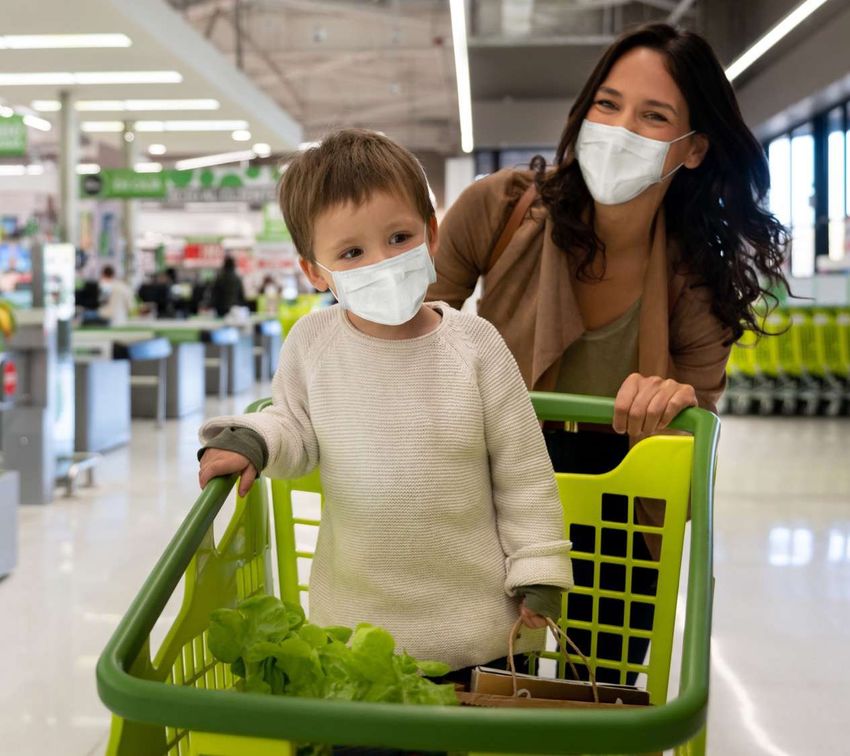
5 starter plays for enhancing mental health
     and well-being

     1. Community-                       2. Trauma-informed             3. Open discussions              4. Social-emotional               5. Mental health
     building activities                 training                       on environmental                 skill building                    support services
     •   Conduct daily morning           •   Provide staff and
                                                                        stressors                        •   Build in time during the      •   Create a process to identify
         meetings.                           teachers with              •   Build in time to practice        day for connecting and            students who are struggling
                                             professional learning                                           building relationships.           with mental health.
     •   Find time for staff, student,
                                             opportunities.
                                                                            new routines (for example,
         and family check-ins.                                              teaching handwashing,        •   Introduce coping strategies   •   Ensure all staff understand how
     •   Identify opportunities
                                         •   Review and revise school       no-touch practices, and          that students can apply to        to refer students for additional
                                             policies and procedures        virtual high-fives).             those experiences.                resources and support.
         for peer learning
                                             to be more trauma-         •
         (for example,
                                             informed.
                                                                            Build in time during the     •   Integrate practices that      •   Create easy pathways for
         lessons designed                                                   day to allow students            promote social-emotional          accessing mental health
         to provide ways for             •   Create opportunities           to express and process           skills (for example,              resources (such as regular
         students to learn                   for staff to observe           emotions.                        “mindful minutes” in              classroom visits by mental
         and work together).                 each other and             •   Engage in curricular             between activities).              health staff or passes
                                             provide feedback.                                                                                 to access counseling).
                                                                            opportunities that promote   •   Provide a calming space
                                                                            equity, diversity, and           or set of strategies for      •   Create a process for families
                                                                            inclusion.                       students to de-stress.            and school staff to collaborate
                                                                                                                                               on and share student support
                                                                                                                                               plans and resources.

                                                                                                                                           •••
CID
 7         kp.org/thrivingschools                                                                                                          ff~ KAISER
                                                                                                                                                    PERMANENTE®
Additional district and school administrator resources

    The resources below can help schools and districts strengthen and
    expand their approach to supporting mental health and well-being.

    •   Kaiser Permanente                                                    •   National Conference of State Legislators
        – Resilience in School Environments: Understanding and                   – Boosting Social and Emotional Development In and Out of School
          Practice (RISE UP) virtual workshop for teachers, staff,
          and administrators                                                 •   ChangeLab Solutions
        – Ready, Set, RISE: Building Resilient School Communities
                                                                                 – Blueprint for Changemakers — Achieving Health Equity Through Law & Policy

    •   Alliance for a Healthier Generation                                  •   School Based Health Alliance
        – Me Moments Hub                                                         – Tips and Tools for Leveraging Trauma-informed Care Techniques to Reduce
                                                                                   Stress for Students, Teachers and Providers
        – Building a Caring School Community
                                                                                 – Building Trauma-Sensitive Environments
    •   Collaborative for Academic, Social, and Emotional Learning (CASEL)
        – SEL in Homes and Communities
        – CASEL Resource Center for School Districts
        – CASEL Resource Center for Schools

8        kp.org/thrivingschools                                                                                             t•••
                                                                                                                              1~ KAISER
                                                                                                                                      PERMANENTE®
Enhancing your
COVID-19 prevention
strategy
As schools reopen and continue
learning, developing a COVID-19
prevention strategy is essential to
keeping your students, staff, teachers,
and families healthy and safe.

Content developed in
partnership with:

    HEALTHY SCHOOLS
    CAMPAIGN

9   kp.org/thrivingschools
Introduction | ENHANCING YOUR COVID-19 PREVENTION STRATEGY
     Districts and schools — as well as the staff, teachers, and students who attend them —play a critical role
     in COVID-19 prevention. Guidance from the Centers for Disease Control and Prevention (CDC) provides
     recommendations for schools across the country to operate safely through consistent use of prevention
     strategies. Key to the successful implementation of these strategies is the development and
     implementation of plans that involve teachers, staff, and families. By engaging these key individuals in
     your decision-making related to developing your prevention plan, you’ll help promote better health across
     your school environments.

     This playbook is intended to serve as a companion guide that builds upon, and doesn’t duplicate,
     the guidance offered by the CDC and other departments of public health for reopening schools and
     providing in-person instruction safely.

     This Planning for the Next Normal at School checklist focuses on Covid-19 Prevention Strategies,
     including:

     •   Insights on the social and economic challenges brought about by COVID-19

     •   Recommendations on how to enhance a COVID-19 prevention strategy

     •   A framework to help mitigate the spread of the coronavirus

     These 5 starter plays to build on CDC guidance and implement an enhanced prevention strategy that’s
     continually supported by students, staff, teachers, and families.

10        kp.org/thrivingschools
5 starter plays for enhancing your COVID-19
prevention strategy
1. Provide staff and 2. Take advantage of 3. Engage students’ 4. Work with community 5. Destigmatize COVID-19
teachers with training your staff’s expertise families to help develop partners and agencies to
opportunities in health and wellness and implement your develop and implement
• Uphold your students’
civil rights by preventing
prevention strategy your prevention strategy
• Train staff and teachers on • Plan and implement bullying, harassment,
policies and procedures and COVID-19 prevention • Seek family input in your • Designate a point of contact and racist behavior.
how to discuss them with
students and families.
strategies in partnership
with school staff, such as
school’s reopening and on school staff to be a liaison • Implement absenteeism
operating plans and conduct with local public health strategies to ensure students
• Educate yourself, and then your nurses and other
specialized instructional
surveys and virtual town agencies and ensure up-to-
and families feel supported
staff, about COVID-19 halls to collect ongoing date COVID-19 information
support personnel (SISP) and engaged in the school
transmission, symptoms, and feedback. is available to share.
health and physical community.
effects on local communities. • Inform families about when • Work with local public
• Speak with staff and teachers
education teachers, and
custodial staff.
to send their children to health agencies, health • Implement strategies that
about employee sanitation and school, safety protocols, care providers, and recognize the different lived
train them on how to establish • Develop plans for and who to contact with community-based experiences of families and
physical space in classrooms supporting populations at questions or concerns. organizations to provide how COVID-19 has affected
high risk for COVID-19.
and hallways. • Communicate what’s resources and support. their lives.
• Use data on attendance, student • Work with facility and required for students to • Engage with local and state • Disseminate information on
engagement, student health maintenance staff to make return to school, like well- decision-making authorities
sure proper air ventilation, COVID vaccines for families
records, and public health data child visits, immunizations, to share successes and
filtration, and cleaning and and school staff.
to identify student support screenings, and testing. challenges that can inform
disinfecting procedures
opportunities.
are in place.
• Share resources to help future policymaking.
• Establish a process for raising families speak with their • Partner with culturally
questions and sharing feedback children about COVID-19 specific organizations
about COVID-19 policy changes. and inform them about to develop outreach
available school programs materials for families.
and services.
11 kp.org/thrivingschools •••
ff~ KAISERPERMANENTE®Additional district and school administrator resources
• Guidance for Schools and Child Care Programs (Centers for Disease • COVID-19 Planning Considerations: Guidance for School Reentry (American
Control and Prevention): Guidance and resources on how to plan, Academy of Pediatrics): Guidance on reopening schools after COVID-19,
prepare and respond to COVID-19. including considerations for instructional time, physical and mental health, special
populations, and more.
• ED COVID-19 Handbook: Strategies for Safely Reopening
Elementary and Secondary Schools (Volume 1) (U.S. Department of • COVID-19 Resource Hub (American Federation of Teachers): A curated list of
Education): The first volume of a series intended to support the COVID-19 resources.
education community as schools reopen and in implementing CDC’s
Operational Strategy for K-12 Schools Through Phased Prevention • California COVID-19 Toolkit (State of California): Includes videos and other tools
by addressing common challenges and providing practical examples. in multiple languages about state and local resources available to support the
health, safety, and well-being of all Californians.
• ED COVID-19 Handbook: Roadmap to Reopening Safely and
Meeting All Students’ Needs (Volume 2) (U.S. Department of • Coronavirus Disease 2019 Resources (National Association of School Nurses): A
Education): The second volume of a series intended to support the variety of valuable resources from the CDC and other groups for school nurses.
education community as schools reopen. This handbook offers initial
strategies for providing equitable and adequate education • COVID-19 Resources (School-Based Health Alliance): A curated list of
opportunities that address the impact of COVID-19 on students, COVID-19 resources.
educators and staff.
• Safer Schools and Campuses Best Practices Clearinghouse (U.S.
Department of Education): The clearinghouse provides resources for
communities, schools, educators, and families to support reopening
for in-person learning and support the needs of all students,
particularly historically underserved students and those who have
been impacted greatest by the pandemic.
12 kp.org/thrivingschools t•••
1~ KAISER
PERMANENTE®Affecting the social
drivers of health
Understanding the social drivers that
impact the health of your students,
staff, teachers, and families will play
a crucial role in supporting your
community this school year.
Content developed in
partnership with:
ALLIANCE FOR A
HEALTHIER
GENERATION
13 kp.org/thrivingschoolsIntroduction | AFFECTING THE SOCIAL DRIVERS OF HEALTH
Social drivers of health are the conditions in which people are born, grow, live, learn, work Social drivers of health
and age. The COVID-19 pandemic reinforced how difficult it is for many community are the conditions in
members to get what they need to be healthy. Disruptions in housing, food security,
which people are:
economic stability and healthcare access increased during the pandemic. This is
particularly true for communities of color, where existing disparities widened due to the • Born
impact of structural racism on living conditions, economic factors and health access.
• Grow
School systems can serve as a safe and trusted partner to connect students, staff, and • Live
families to resources, ensuring they have enough food to eat, safe places to live, and
connections to other community services. By identifying and addressing social drivers of • Learn
health for students and families, schools can help their communities rebuild with even • Work
greater strength, resiliency, and unity.
• Age
This Planning for the Next Normal at School checklist focuses on Covid-19’s effect on the
social drivers of health, including:
• Identification and understanding of the social drivers of health in your school community
• Cultivation of a network of support so your students, staff, teachers and families can
connect to vital resources
Use these 5 starter plays to lay the groundwork for supportive school spaces for students,
staff, teachers and families.
14 kp.org/thrivingschools5 starter plays for affecting the social drivers of health
1. Begin to address the 2. Connect your community to 3. Work with local health and 4. Connect families 5. Connect families and
impact of institutional resources for food security human services agencies to or staff experiencing staff to programs and
racism on education support families enrolling in homelessness to housing organizations that
and health • Widely distribute food access Medicaid or CHIP resources support financial security
information to families.
• Seek out partners in equity, • Consider working directly with • Check to see if your state is • Identify local opportunities • Encourage families to take
diversity, and inclusion to a local food pantry. eligible for Medicaid for students and families the benefits.gov survey to find
provide resources and training reimbursement for school- experiencing homelessness government benefits they may
for all school staff.
• Help ensure that eligible families based health services. and housing instability, like be eligible to receive.
receive Pandemic EBT.
• Build authentic relationships • Educate families about who your local HUD office, the • Work with job development,
with formal and informal
• Work with local health and human qualifies for Medicaid’s free local Public Housing skills training, and employment
services agencies to support or low-cost medical benefits: Authority, or an affordable
leaders of color from your programs, such as the U.S.
applications for SNAP and WIC. eligible adults with a low housing locator.
community. Department of Labor and
• Coordinate applications for free income, children, pregnant • Create opportunities for your Goodwill Industries.
or reduced-cost meals or women, people who are 65
universal meal programs. or over, and people with
McKinney-Vento liaison to
educate parents, staff,
• Co-host interview skill building,
disabilities. ESOL classes, or other workshops
• Identify resources for families and students. to support families and staff in
who may be ineligible for federal • Inform families that if income achieving living-wage employment.
assistance due to immigration is too high for Medicaid,
status or other factors. a child may still qualify for the
Children’s Health Insurance
Program (CHIP). It covers
medical and dental care for
uninsured children and teens
up to age 19.
15 kp.org/thrivingschools •••
ff~ KAISERPERMANENTE®Additional district and school administrator resources
• Advancing Health Equity: Addressing the Role of Structural Racism
• McKinney-Vento Act
• Blueprint for Changemakers: Achieving health equity through law & policy
• School-Based Health Alliance
– Youth Safety Net Project
– A Conversation on Racial Inequalities and the Youth Perspective
– Addressing Challenges for Youth Experiencing Homelessness During COVID
• American Academy of Pediatrics
– The EveryONE Project Toolkit
16 kp.org/thrivingschools t•••
1~ KAISER
PERMANENTE®Implementing
physical activity,
physical education,
and health education
With schools in session, continuing
physical activity, physical education,
and health education will be
essential in providing a well-rounded
program.
Content developed in
partnership with:
SHAPE SOCIETY
OF HEALTH
Amer .IC AND PHYSICAL
EDUCATORS®
17 kp.org/thrivingschoolsIntroduction | IMPLEMENTING PHYSICAL ACTIVITY, PHYSICAL EDUCATION, AND
HEALTH EDUCATION
As school communities prepare for a new school year, education leaders are tasked with supporting
students’ mental, social, emotional, and physical health and the impact of the COVID-19 pandemic on
their health and well-being. While educational environments shift towards a focus on recovery, physical
activity, physical education, and health education must remain vital components to a well-rounded
education and a student’s whole health.
Physical activity, physical education, and health education should continue to hold a place in any models
of learning that school leaders build as they rethink their educational environment. With the right context
and guidance, school staff and teachers can provide students with the physical activity and physical
education they need to stay active and healthy in our next normal. The need for students to develop the
skills necessary to engage in healthy behaviors, which are taught through comprehensive health
education, also takes on a whole new meaning as school’s work to recover from this global health crisis.
This Planning for the Next Normal at School checklist focuses on physical activity, physical education, and
health education, including:
• Guidance on the physical activity, physical education, and health education challenges your students
might be facing
• Recommendations on how to provide physical activity, physical education, and health education for all
students, families, and staff
Use these 5 starter plays to lay the groundwork for developing a safer physical activity, physical education,
and health education program.
18 kp.org/thrivingschools5 starter plays for implementing physical activity, physical
education, and health education
i$ [I]
1. Require physical 2. Make necessary 3. Provide 4. Offer recess for all 5. Offer physical activity
education and health adaptations to professional grade levels throughout the school day
education instruction instruction development • Utilize multiple locations for • Provide all teachers with guidance,
recess throughout the school resources, and examples of classroom-
• Ensure inclusion of health • Focus on reconnecting with • Train HE and PE teachers in
and outside to allow maximum based physical activities that can be
education (HE) and physical students, building relationships, equity, racial justice trauma-
opportunities for recess periods used to safely increase student
education (PE) instruction time and setting expectations for the informed practices, social and engagement, build community within the
for all students.
in the master school schedule. school year as both teachers and emotional learning, and other classroom, and reestablish rapport
Don’t allow waivers for either. students return to in-person schoolwide priorities. • Ensure sufficient adult between students and teachers.
learning. supervision by trained recess
• PE and HE teachers should • Train HE and PE teachers in best
supervisors. • Increase the emphasis on incorporating
conduct student surveys to • Ensure proper cleaning and practices, curriculum, appropriate
physical activity during transitions, the
understand students’ experiences disinfecting protocols are followed instruction, and student • Ensure regular inspection of beginning
during COVID-19 and to design when using physical activity assessment in health education play structures or play of the school day, and the closing of the
equitable and appropriate learning equipment or other classroom and physical education. equipment for safety and school day.
experiences that build meaningful materials. cleanliness and provide
relationships with students and • Ensure that HE and PE teachers
adequate equipment for all • Provide students and caregivers with
families. • Use a skills-based framework for receive sufficient support,
students to participate. daily activities to stay physically active
health education instruction with a funding, and professional
and mentally healthy at home.
• Include students with disabilities focus on health decisions, health development to make necessary • All teachers should incorporate
in both in-person and virtual information, and coping skills. adaptations to their curriculums. physical activity within their • Don’t withhold physical activity breaks or
PE instruction. Adapt teaching class time to allow breaks from require physical activities as disciplinary
strategies, equipment, • Provide opportunities for • Train all teachers on the benefits
seat and screen time. actions for students.
environments, and assessments meaningful physical activity by of integrating physical activity into
to meet the needs of all students. utilizing the assets of your class periods and throughout the
community, offering student school day.
choice, and providing
modifications as needed.
19 kp.org/thrivingschools •••
ff~ KAISERPERMANENTE®Additional district and school administrator resources
• SHAPE America • Springboard for Active Schools
– School Reentry Considerations: K-12 Physical Education, Health – Strategies for Classroom Physical Activity
Education, and Physical Activity
• Collaborative for Academic, Social, and Emotional Learning (CASEL)
– Essential Components of Physical Education – An Initial Guide to Leveraging the Power of Social and Emotional
Learning
– Essential Components of Health Education
• Playworks
– Physical Education Program Checklist – The Playworks School Reopening Workbook
– Health Education Program Checklist
– Strategies for Recess
– Appropriate Practices in School-Based Health Education
• Global Recess Alliance
– Statement on Recess
20 kp.org/thrivingschools t•••
1~ KAISER
PERMANENTE®Enhancing teacher
and staff well-being
Supporting your staff’s well-being
is an essential component to your
strategy.
Content developed in
partnership with:
ALLIANCE FOR A
HEALTHIER
GENERATION
21 kp.org/thrivingschoolsIntroduction | ENHANCING TEACHER AND STAFF WELL-BEING
Staff and teachers play a critical role in the lives of our nation’s youth. For school and district staff to do
their best work, it’s important to support their health and well-being — and to do it in a way that honors
their unique identities, promotes diversity of thought, and encourages collaboration.
The COVID-19 pandemic has further compounded many challenges of today’s educational system both
directly and indirectly. In many ways, COVID-19 heaped more stress on an already stressed workforce.
In a recent study, one out of four teachers said the planned to leave the profession after the 2020-2021
school year, and 57% reported being seriously concerned about burnout. And since school climate and
teaching effectiveness are key drivers of student learning, it’s critical to start the school year by
considering the working conditions within your school environment and prioritize staff and teacher
well-being.
This Planning for the Next Normal at School checklist focuses on Staff and Teacher Well-being, including:
• Guidance on how to support staff and teachers with the various stressors in today’s environment.
• Recommendations on how to provide a foundation of support for individuals and groups.
• A framework to help ensure your staff and teachers have the training and resources they need to
maintain and support their own well-being.
Use these five starter plays to lay the groundwork for a well-being strategy that prioritizes the health of
your staff and teachers.
22 kp.org/thrivingschools5 starter plays for enhancing teacher and staff well-being
1. Promote equity and 2. Prepare staff 3. Foster collective 4. Empower 5. Provide resources
collaboration • Provide opportunities for resilience personal well-being • Promote district-sponsored
• Collaborate with staff, job-specific changes • Build in time during • Provide learning health offerings.
based on what has been
teachers, and local
learned since the onset
meetings for staff, opportunities on • Review and revise your
bargaining units on your parents, and caregivers burnout and stress human resource policies.
plans and work duties to of COVID-19. to reconnect. reduction.
ease anxiety and • Create a caring • Connect employees to
uncertainty.
• Provide opportunities for • Allow staff and community and financial-
community that helps collaboration and shared teachers to schedule planning resources.
• Provide professional staff and teachers
express emotions,
decision-making about breaks to care for
learning on COVID-19’s employee well-being. their well-being.
collaborate on solutions,
impact on your school,
and process their • Engage staff and • Set clear and realistic
particularly equity, racial teachers during expectations for
justice, and health access. experiences.
the workday with in-person and virtual
• Gather, review, and • Develop clear and well-being activities. working hours.
consistent messages
address feedback on
to use throughout your • Promote healthy
the effectiveness of work routines.
school community.
your plans.
23 kp.org/thrivingschools •••
ff~ KAISERPERMANENTE®Additional district and school administrator resources
• Kaiser Permanente • Education Week
– Thriving Schools – Teachers Are More Likely to Experience Depression Symptoms Than
– Thrive at Work Other Adults
• Alliance for a Healthier Generation • WestEd
– Filling Your Cup: Comprehensive Self-Care Strategies – Self-Care Strategies for Educators During the Coronavirus Crisis:
– RISE Foundational Professional Development Supporting Personal Social and Emotional Well-Being
• Kaiser Permanente and Alliance for a Healthier Generation • Collaborative for Academic, Social, and Emotional Learning (CASEL)
– Reset for Readiness Spring ‘21 Webinar Series: – CASEL: SEL Guidance for Reopening (see section about adults)
o Fostering Individual and Collective Well-Being Through
Boundaries
• School-Based Health Alliance
– Race, Equity and Inclusion in School-Based Health Care – School-
o Modeling the Path to Self-Regulation for Students Through Me
Based Health Alliance
Moments
– Tips and Tools for Leveraging Trauma-informed Care Techniques to
Reduce Stress for Students, Teachers and Providers – School-Based
Health Alliance
24 kp.org/thrivingschools t•••
1~ KAISER
PERMANENTE®Supporting family
well-being
Consistent communication between
families and school staff is important
for building trusted relationships and
ensuring that everyone remains safe
and healthy.
Content developed in
partnership with:
FOR
HEALTHY
HIDSC:>
25 kp.org/thrivingschoolsIntroduction | SUPPORTING FAMILY WELL-BEING
As families and schools move into the recovery phase of the COVID-19 pandemic, transitioning
to in-person learning poses new and significant challenges.
Whether you are a parent, guardian, or caregiver to school-age children, you play a critical role
in their health.
Communicating with school leaders and staff is important while navigating the unknowns of this
transition. This checklist will help you strengthen communication and relationships with school
staff and work together to make sure your children are safe and healthy as schools return to
in-person learning.
26 kp.org/thrivingschools5 starter plays for supporting family well-being
1. Connect with teachers 2. Support mental 3. Keep your family 4. Find support for 5. Make time for
and staff well-being safe fundamental needs physical activity
• Acknowledge the shared struggle • Talk with your kids about • Talk to your kids about • COVID-19 has made it hard • Advocate for your school to
and challenge that this year has school as well as their COVID-19 and their safety. for many families to meet include physical activity in the
been – everyone has been doing emotional well-being. basic needs. Take this school day.
a ton and we all have the best
• Participate in forums about
survey to see if you qualify
interests of our kids at heart.
• Find out how your school is reopening and setting
for assistance.
• Try these fun activities after
supporting mental health priorities for the new year, school and on the weekends to
• Find out what your school is and collaborate with them as you’re able. Your voice • Communicate your supplement your school’s
doing to ensure student health on student mental health matters. employment, housing, food, physical education program.
support plans. or other needs to school
and safety and engage with • Prepare for safely
staff or other parents.
families. • Share these additional restarting school with this
Having a support system is
• Talk with school staff about your resources on resilience helpful checklist.
key.
needs and how they can with them.
communicate effectively with you. • Give yourself a break
• Talk with other parents and
caregivers – share
(even if it’s just 5 minutes)!
• Share concerns with staff in a resources with them and
spirit of collaboration. invite them to share their
needs with school staff too.
• If you don’t feel comfortable
sharing your questions and
concerns with school leaders, talk
with a trusted teacher, staff
member or family liaison
27 kp.org/thrivingschools •••
ff~ KAISERPERMANENTE®This playbook is provided for informational purposes and should not be considered
comprehensive or definitive instructions for safely reopening your school or school district.
As the environment continues to quickly evolve, we encourage you to stay up to date with
the guidance from the Centers for Disease Control and Prevention (CDC), your local
department of health, and any relevant national and local regulations.
Kaiser Permanente does not necessarily endorse the services mentioned. Any organizations
listed are for easy identification only.
28 kp.org/thrivingschools •••
ff~ KAISERPERMANENTE®You can also read


