FOSTERING SOCIALLY-CONSCIOUS CLINICIANS - Larner ...
←
→
Page content transcription
If your browser does not render page correctly, please read the page content below
FOSTERING
                                    SOCIALLY-
                                    CONSCIOUS
                                    CLINICIANS
                                      Addressing Health Inequity
                                      Through the Vermont
                                      Integrated Curriculum.
                                      By Michelle Bookless

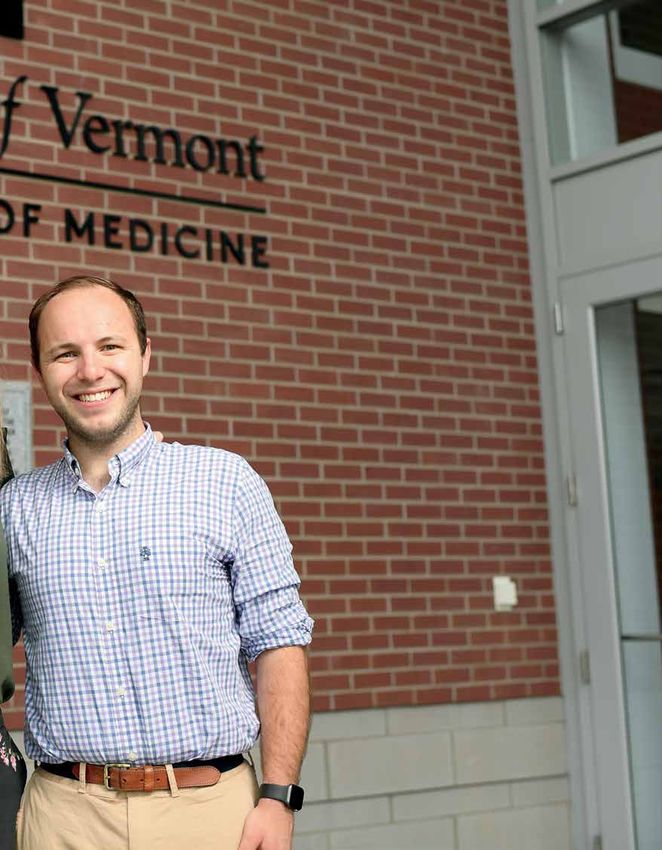
                                      (From left to right) Larner
                                      College of Medicine students
                                      Erik Zhang, Krisandra Kneer,
                                      and Tyler Harkness

20   VERMONT MEDICINE SUMMER 2021                                    UVM L ARNER COLLEGE OF MEDICINE   21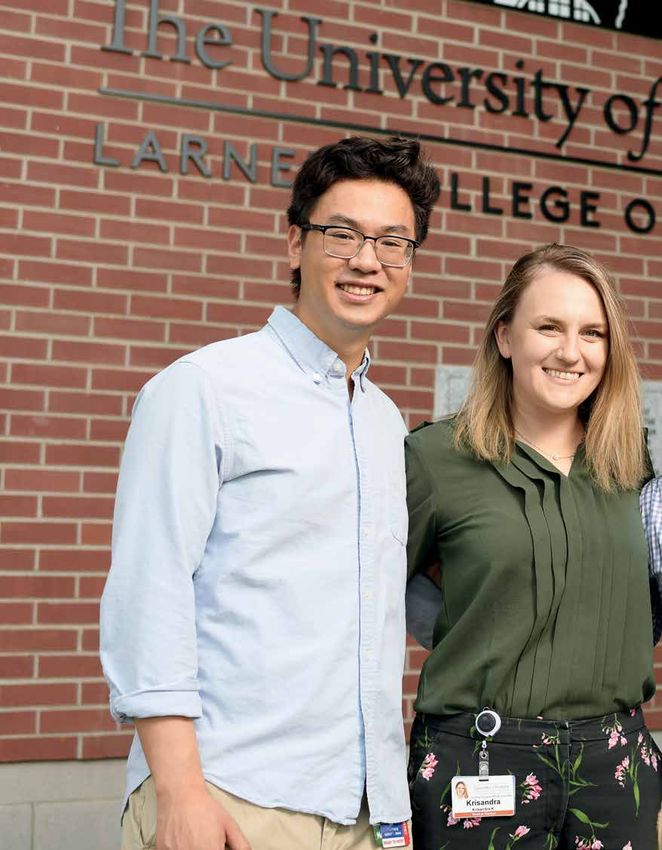
S
cientific advancements such as genome sequencing, [including] the Social Medicine Theme of the Week…” first year; “Advocacy and Social Justice” is
mRNA vaccines and point-of-care ultrasound have Although progress has been made, there’s much more to be addressed during the second year; and during
saved countless lives. But new technologies are only accomplished. In the report, the students identified “several major their third year, students engage in the final
as successful as the practitioners who use them. contributors to the successful design of the novel SMC at Larner,” module—“The Medical Culture and Resilience.”
In order to reduce the incidence of disease and but concluded, “This work is not done…As Audre Lorde once said, In the first three modules, students explore
improve health outcomes, particularly in historically ‘revolution is not a one-time event.” topics like self-identity, the burden of
underserved populations, the clinicians and systems that deliver Here are some of the contributors to date: individual trauma, and the concept of implicit
patient care must also evolve.
In an article published in May 2021 by the Association of
bias. As they enter the second year, Berns and
course professors focus primarily on advocacy,
“WHAT IS A
PROFESSIONALISM, COMMUNICATION,
American Medical Colleges, titled “Medical Schools Overhaul
Curricula to Fight Inequities,” Stacy Weiner notes that if
AND REFLECTION
asking the students to consider questions such
as “What is a physician’s role as an advocate—
PHYSICIAN’S
medical schools succeed in weaving health equity inextricably
throughout their curricula, “the physician of the future will
Since 2002, Larner’s Professionalism, Communication, and
Reflection (PCR) course has served as an opportunity for pre-
for their patients, their colleagues, and their
communities?” and “Why should or shouldn’t
ROLE AS AN
look very different.” clinical medical students to reflect on their medical school
experiences. The groups offer a non-judgmental environment with
social justice be taught in medical school?” ADVOCATE—FOR
THEIR PATIENTS,
During their third year, the final PCR
In 2017, Samuel Epstein, M.D., Christina Dawson, M.D., Reed a small group of peers. By taking time for these reflections, says module challenges students to find their
THEIR COLLEAGUES,
Hausser, M.D., Elizabeth Lynch, M.D., and Raghav Goyal, M.D., PCR Course Director and Associate Professor of Family Medicine meaning in medicine. They learn how to
began medical school as members of the Larner College of Stephen Berns, M.D., “students learn how to develop skills in approach situations of moral distress and
Medicine Class of 2021. Now, they are part of the generation of
physicians Weiner referenced in her article. During their four
active listening, vulnerability, and how to seek support.”
Over the years, PCR has evolved with invaluable guidance
investigate the “hidden curriculum,” which
encompasses the “implicit messages about
AND THEIR
years at Larner, they worked with faculty to incorporate social
medicine and health equity education throughout Larner’s
from former course directors such as Yvette Pigeon, Ed.D., Dana
Walrath, Ph.D., Lee Rosen, Ph.D., and Shaden Eldakar-Hein, M.D.
values, norms and attitudes” that students
learn outside of the classroom, says Berns.
COMMUNITIES?”
Vermont Integrated Curriculum. These curricular elements are It was Eldakar-Hein who worked with Goyal, Epstein, Dawson, As he continues to evolve PCR, Berns – STEPHEN BERNS, M.D.
now being formalized as the Social Medicine Curriculum (SMC). Brach, and Finnie to initially link social determinants of health says he’s committed to increased training
A report by Larner faculty and medical students, recently topics more clearly with PCR sessions. Now, this work is in the for faculty. “A lot of medical school faculty
published in BMC Medical Education, details the burgeoning midst of its next evolutionary leap with Berns at the helm. around the country have recognized their
SMC at Larner and its three core components: “(1) a strong series In January 2020, Berns became PCR course director, and in own shortcomings in the areas of social justice
of related conversations regarding social medicine topics the middle of a pandemic that brought the broken pieces of the and health equity. We’re hearing them say, ‘This isn’t an area I MEDICAL ETHICS
delivered in the weekly first-year, small group longitudinal American health care system into full view, he seized on the theme got trained on when I was in medical school,’ and ‘I want to learn Undoing historical injustices hinges in part on open, honest
discussion course [PCR]; (2) social medicine content embedded in of structural change and began to reconfigure PCR once again. more,’” he says. “I appreciate that Larner faculty are open, eager, discussion about the historical and cultural roots of injustice, says
foundational science courses [including sixteen] ethics sessions…; PCR is now delivered in five modules. “Becoming a Physician,” and curious to learn.” Timothy Lahey, M.D, M.M.Sc., professor of medicine and director
and (3) cross-curricular integration of social medicine content… “Humanity,” and “Society and Medicine” are taught during the
ENVISIONING
THE FIRE NEXT TIME MEDICAL APARTHEID
BY JAMES BALDWIN BY HARRIET A. WASHINGTON
A MORE
The Social Justice Coalition challenge our perceptions, we are able Review by Erik Zhang ’24 Review by Simran Kalsi ’24
(SJC) Book Club began as to envision a more just and equitable
“Do I really want to be integrated In Medical Apartheid, medical ethicist Harriet
a small group of medical world,” says Richard Brach ‘22. “This,
into a burning house?” author James A. Washington describes how an extensive
EQUITABLE
students in the Class of 2021 in turn, informs our work in continuing
Baldwin demands in this reflection history of abusive medical practices against
meeting to discuss historic to name and combat the racism and
on his experience with organized Black Americans contributes to skepticism
and current injustices in health care structural violence around us.”
WORLD:
religion, the individual and collective and distrust of the medical establishment.
and medicine spurred by texts such
Through thoughtfully curated discussion Black American experience, and In explicit detail, Washington describes the
as Witches, Midwives, and Nurses by
guides and a combination of large group the nature of justice and injustice. Caught between his persistence of racism in health care from James Marion Sims’
Barbara Ehrenreich, Susan Sontag’s
discussions and small break-out rooms, own non-violent vision for Black liberation and a growing mistreatment of Black women in the 1800s to modern day clinical
THE SOCIAL JUSTICE Illness as a Metaphor, Coal by Audre
club members share ideas and take a militant Black Power movement, Baldwin wrestles with trials and surgical technology through which Black Americans are
Lorde, and Mary Beard’s Women and
COALITION BOOK CLUB Power. After a brief hiatus, the book
deep dive into each book. In the future, the paradoxical position of strength and weakness held by still harmed. Washington highlights the intersectionality of race,
members hope to incorporate additional the Black community in the context of white supremacy. gender, and socioeconomic status. As readers, we must reckon
club resumed last summer (virtually via
forms of media such as documentaries, with contextualizing our current medical practices built upon a
Zoom), as the COVID-19 pandemic and Providing a unique perspective into the thoughts and
poems, and podcasts onto their foundation of “scientific racism.”
the death of George Floyd highlighted experiences of one of America’s greatest writers and
“bookshelf.” All faculty, staff, medical,
the continued racial disparities and orators, The Fire Next Time serves as a key introduction For current and future health care professionals and researchers,
graduate students, and alumni of the
health inequities in the U.S. This time, for readers who are interested in understanding the Medical Apartheid is essential reading to begin to understand
College are welcome to join.
the group welcomed faculty, staff, and dynamics fueling liberation movements of the mid- the history of the current racial health gap in the U.S. From this
graduate students. Its goal? “Through Here are a few of the books the club twentieth century. foundation, we can continue to educate ourselves and take action
the reading and discussion of texts that has discussed. to rebuild trust.
22 VERMONT MEDICINE SUMMER 2021 UVM L ARNER COLLEGE OF MEDICINE 23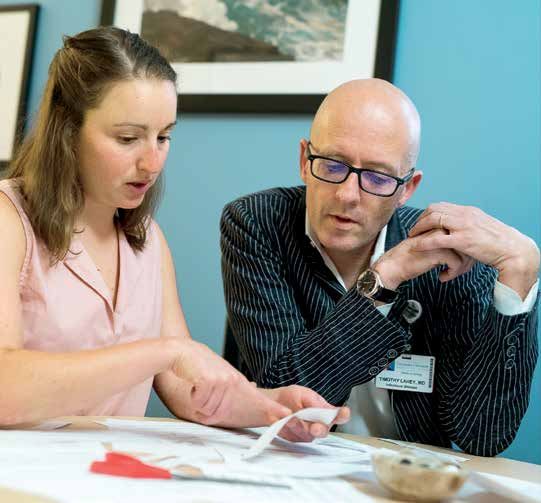
concrete plan that in fact yields it.” SOCIAL MEDICINE THEME OF THE WEEK clinical foundational science courses and PCR. Examples include
Lahey seeks to foster open discussion “The Genetic Basis of Race,” presented during the Foundations of
“Our current system is excellently equipped to deal with a
about the social determinants of health and Clinical Sciences course, when students learn about genetics and
faceless collection of symptoms,” says Erik Zhang ’24, “but once
other ethics topics through 16 ethics sessions “Housing and Water,” during the Attacks and Defenses course, in
we begin layering in the interacting components of race, gender,
woven throughout the first-year Foundations which students learn about toxicology.
mental health, language, and weight, to name a few of the big
of Clinical Science course. These sessions Although SMTW has helped raise student awareness of social
categories, in addition to the connotations and stigmas carried
complement multiple other ways medical determinants of health and their impact on health outcomes,
by each one, we lose the ability to appropriately address the
students can learn about social justice at the team has created a survey to gauge the level of success so far
issues being presented.”
Larner, from the student-run Social Medicine and guide further improvements to the
It’s this understanding that motivated five
Theme of the Week to social justice-related curriculum. According to the paper that
Larner students to create the Social Justice
sessions throughout the pre-clinical Goyal, Dawson, Epstein, Brach, and Finnie
“IF PEOPLE ARE FEELING curriculum.
Coalition in 2017. This group helped to drive
creation of the formalized social medicine
SMTW WEAVES published, future goals include further
UNDER-FIRE, UNDER-
The weekly ethics sessions consist of
pre-reading and a quiz, followed by in-
curriculum, which was piloted during the DISCUSSIONS integration of SMTW into pre-clinical and
clinical training, faculty training, and
OF SOCIAL
2018-19 academic year. After its founding by
class discussion. Lahey frequently links assessment through student reflection and
APPRECIATED, AND SLEEP- Epstein, Dawson, Hausser, Goyal and Lynch,
DETERMINANTS OF
the sessions to current events, encouraging patient outcomes.
the social medicine curriculum continued to
DEPRIVED, WE KNOW THAT students to apply their understanding of
evolve with involvement from Class of 2022
“Today’s system dedicates huge
THEY ARE MUCH MORE
medical ethics to an ever-changing world. For
instance, during the height of the COVID-19
medical students Richard Brach, Sheridan HEALTH THROUGHOUT amounts of money, resources, and brain
power to cutting-edge technology and
ALL COURSES.
Finnie, and Nikkole Turgeon, Class of 2023’s
LIKELY TO DO SOMETHING
pandemic in the United States, Lahey added medications, often at the expense of
Krisandra Kneer, and most recently, Class of
a session on resilience. ground-level, socially-minded patient
2024’s Erik Zhang and Tyler Harkness.
UNETHICAL.” “I wanted the students to see how
resilience relates intimately to ethics,”
Within the social medicine curriculum,
care,” says Harkness. “Things are
changing, especially at Larner, but there needs to be a more
– TIMOTHY LAHEY, M.D, M.M.SC. the student-driven Social Medicine Theme of the Week (SMTW)
he says. “If people are feeling under fire, deliberate shift in mindset for the ‘physicians of tomorrow.’”
weaves discussions of social determinants of health throughout all
under-appreciated, and sleep-deprived, we
courses. SMTW themes are based on the seven learning objectives
know that they are much more likely to do
of the social medicine curriculum, including topics like appraisal
of clinical ethics at UVM Medical Center. Giving medical students something unethical.”
of the intersection of social determinants with marginalized
the opportunity to have those conversations early and often Medical ethics is tightly tied to health equity work, says Lahey.
populations’ histories, perspectives, and experiences; synthesis of
fosters an awareness that stands to help change the system. “Ethics helps equity work have nuance by showing the full set READ BLOG POSTS WRITTEN BY MEMBERS OF THE SOCIAL JUSTICE
the United States’ role in the “global health narrative;” and tools
“Understanding the social determinants of health and the of complex values that inform and even transcend justice. That COALITION AND A RESEARCH PAPER ABOUT THE COLLEGE’S SOCIAL
and strategies to advocate for lasting social change. JUSTICE CURRICULUM PUBLISHED IN BMC MEDICAL EDUCATION:
incentives and history that inform them can help us identify real guards against the human temptation to approach any value,
Themes align with relevant content taught during the pre- MED.UVM.EDU/VTMEDICINE/WEB-EXTRAS
tools for change,” he says. “That can convert a will to fairness into a including the value of fairness, too simplistically,” he says.
PATHOLOGIES OF POWER: HEALING RESISTANCE: WHERE DO WE GO FROM HERE: RED AT THE BONE
HEALTH, HUMAN RIGHTS, AND A RADICALLY DIFFERENT CHAOS OR COMMUNITY? BY JACQUELINE WOODSON
THE NEW WAR ON THE POOR RESPONSE TO HARM BY DR. MARTIN LUTHER KING JR. Reviewed by Erik Zhang ’24
BY PAUL FARMER BY KAZU HAGA Review by Mahima Poreddy ’24 Jacqueline Woodson’s multigenerational
Review by Richard Brach ’22 Reviewed by Nikkole Turgeon ’22 Dr. Martin Luther King Jr. dreamt of saga, Red at the Bone, is filled to the
“creative dissenters” across different brim with poignant moments evoking
Paul Farmer’s Pathologies of Power: Healing Resistance details author
races who strive for racial equity and both hope and despair. An ensemble of
Health, Human Rights, and the New War Kazu Haga’s life and training in the
abolish poverty. Where Do We Go From characters commands an empathetic
on the Poor draws connections between nonviolent legacy of Dr. Martin Luther
Here: Chaos or Community expresses Dr. response from any reader. Built on a
today’s unprecedented levels of wealth and the exploitation King Jr. Haga encourages the reader to envision a path
King’s revolutionary opposition against wealth inequality, the scaffolding of a shared historical trauma, Woodson opens
of the poor. While wealthy countries revel in the advances of towards the “Beloved Community” Dr. King described
Vietnam War, and capitalism. His writing also explores the an inquiry into the most salient questions of class, gender,
modern science and globalization, the global poor suffer from by explaining the Six Principles of Nonviolence and how
challenges of being a Black man: “To be a Negro in America is race, queerness, and institutions.
human rights violations and die from preventable diseases readers can take steps to incorporate them into their lives.
that cost less than $2 per day to treat. Farmer labels our often to hope against hope. It means fighting daily a double Readers will find in Red at the Bone a deep exploration
This book should be required reading for everyone as it battle—a battle against pathology within and a battle against
ignorance “a stain on the conscience of modern medicine and of the many facets of the Black American experience
provides context and a framework for Kingian principles, oppression without.” Where Do We Go From Here offers a
science,” and emphasizes the importance of addressing the accessible only through fiction, unavailable through
which have historically been whitewashed and often potent reminder of how ideas like alleviating poverty through
structural violence around us. testimony and educational material alone.
eliminated from traditional teaching about Dr. King. providing a universal basic income have been discussed and
This book is an essential read for responsible healthcare studied for decades.
professionals and should be required reading for anyone
interested in global health and health equity. For all those who strive for racial and health equity, the words
of Dr. King that are often ignored by the mainstream media
serve as a guide for anti-racist work today.
24 VERMONT MEDICINE SUMMER 2021 UVM L ARNER COLLEGE OF MEDICINE 25
You can also read


