FRAGILE COMMUNITIES' CURRICULUM AND SELECTION IN IRELAND - Interface
←
→
Page content transcription
If your browser does not render page correctly, please read the page content below

Co-funded by the
                             Erasmus+ Programme
                             of the European Union

Innovation and Entrepreneurship
     Innovation                 for Fragile
                 and Entrepreneurship       Communities
                                       for Fragile      in Europe
                                                   Communities in Europe

         FRAGILE COMMUNITIES’
            FRAGILE            SITUATION
                    COMMUNITIES’   CURRICULUM
            AND SELECTION IN IRELAND
                  FOR COMMUNITY   COACHES
                        NATIONAL REPORT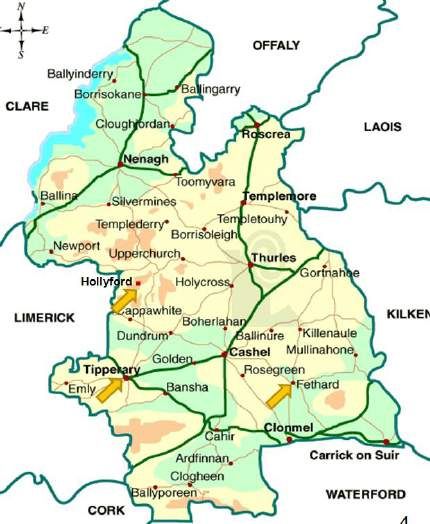
INNOVATION AND ENTREPRENEURSHIP

FOR FRAGILE COMMUNITIES IN EUROPE

   FRAGILE COMMUNITIES’ SITUATION AND
           SELECTION IN IRELAND
                               NATIONAL REPORT

                          Project No. 2017-1-IS01-KA204-026516

        This project has been funded with support from the European Commission.

The present publication reflects the views of the author only, and the Commission cannot be
  held responsible for any use which may be made of the information contained therein.
INTERFACE – Fragile communities’ situation and selection in Ireland, National Report
PREFACE
The first step in the implementation of the INTERFACE project comprises the selection of the
fragile communities, most suitable to be covered by project activities, in order to achieve a
substantial and long-lasting effect for these communities in partner countries. This National
Report presents the results of the fragile communities’ selection process in Ireland and includes
an overview of the situation of the selected fragile communities, together with a description of
the final fragile communities’ selection process and its outputs. The Report follows the generic
structure, proposed by the IO1 ‘Competence Gap Analysis’ leader – Tora Consult, in order to
allow for comparability of reported information and outcomes across INTERFACE partner
countries, and includes the following chapters:
Chapter 1: Fragile communities’ situation;
Chapter 2: Final selection of the INTERFACE fragile communities – the selection process
and its results.
In preparing this material, a variety of sources have been used, incl. statistical data, reports and
reviews, together with the results obtained during the fragile communities’ selection process
and the own insights/experiences of the authors. The Tipperary County Council Project Team
would like to acknowledge the contribution of colleagues in the Council’s Community
Development function in the selection of fragile communities.
Tipperary County Council
January 2018
Tipperary County Council – January 2018 2
INTERFACE – Fragile communities’ situation and selection in Ireland, National Report

TABLE OF CONTENTS

EXECUTIVE SUMMARY ............................................................................................................................ 4
1. FRAGILE COMMUNITIES’ SITUATION IN IRELAND ...................................................................................... 5
   1.1. Location and infrastructure .................................................................................................. 6
   1.2. Demographic characteristics .............................................................................................. 10
   1.3. Local economy and labour market ..................................................................................... 12
   1.4. Community support initiatives and grant funding ............................................................ 15
2. FINAL SELECTION OF THE INTERFACE FRAGILE COMMUNITIES IN IRELAND – THE SELECTION PROCESS AND ITS
RESULTS ............................................................................................................................................. 16

   2.1. Communities’ fragility mitigating factors assessment ...................................................... 16
   2.2. Personal characteristics of attitudes assessment survey respondents ............................ 16
   2.3. Perceived community problems and ways to address them ............................................ 17
CONCLUDING REMARKS ........................................................................................................................ 19
ANNEXES ........................................................................................................................................... 20
   Annex A. Fragile communities’ mitigating factors assessment grid ........................................ 20
   Annex B. Fragile community members’ attitudes assessment – summary of responses ....... 22
BIBLIOGRAPHICAL REFERENCES .............................................................................................................. 26

                                             Tipperary County Council – January 2018                                                                       3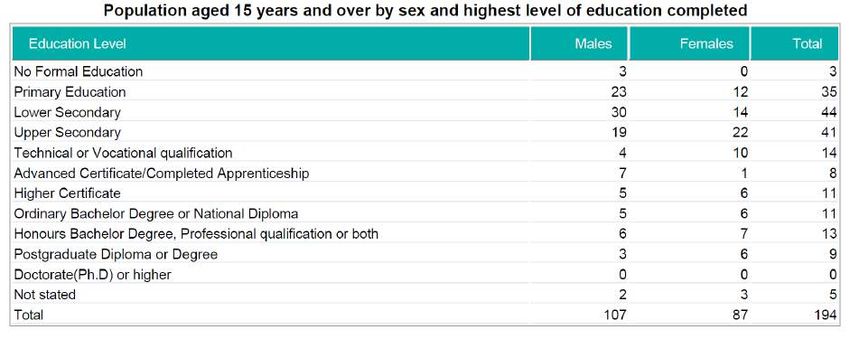
INTERFACE – Fragile communities’ situation and selection in Ireland, National Report

EXECUTIVE SUMMARY

The Report presents and explains the process of selecting a number of “fragile” communities to
participate in the activities of INTERFACE project in County Tipperary. The three communities
selected are Tipperary Town (area covered by Three Drives Family Resource Centre), Fethard
Town and Hollyford.

Section 1 of the Report presents information about the initial identification of ten communities
at project application submission stage. It then outlines concise information about the location,
infrastructure, demographic characteristics, local economy and labour market in the three
selected communities, as well as recent support initiatives that are available to these
communities.
As the project’s overall methodology determines the “objective identification” of “fragile”
communities, it was supplemented, in Section 2 of the Report, by considering, for each of the
communities, a number of “fragility mitigating factors”, i.e. factors the importance of which, if
appropriately appreciated and effectively combined with interventions, such as those to be
advanced by the INTERFACE project, may “mitigate” fragility conditions and potentially reverse
observed trends.

The factors distinguishing the selected communities from the other communities include,
potential of the natural resources not being sufficiently utilised and they have growth potential
in economic and social sectors.

For these three selected communities, a small scale survey was conducted using a standardised
questionnaire for all the partner countries and partners. The survey aimed to collect initial
perceptions from local stakeholders (persons associated with the local community/group) on
the type of issues that the community faces, their severity and on ways to address them.

Despite its small scale, the survey provided some interesting findings, of relevance for
subsequent project phases. Such finding are, for example, that no respondent was satisfied with
the overall situation in their community; a majority rate the “general level of pro-activity in
their community” as “rather high” or “high”; the categories considered most problematic for
communities are “regional and local development policy” and “access to financial support for
private and public projects”; the “skills” that respondents believe would be most beneficial to
the community are analytical thinking, leadership and resourcefulness; and all respondents
declared an interest to actively participate in any initiative directed towards boosting such skills
within their community.

                               Tipperary County Council – January 2018                                 4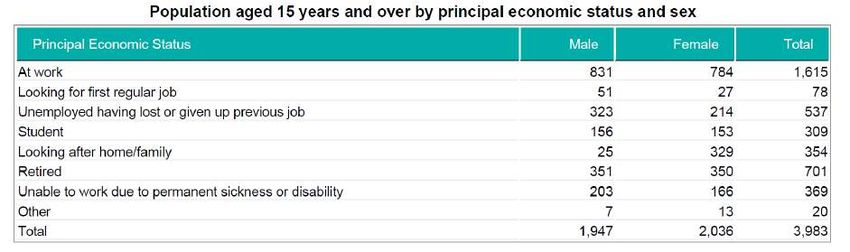
INTERFACE – Fragile communities’ situation and selection in Ireland, National Report

1. FRAGILE COMMUNITIES’ SITUATION IN IRELAND

The first Local Economic and Community Plan (LECP) 2015-2020 for County Tipperary was
adopted by Tipperary County Council (TCC) in January 2016. The key objective of the LECP is to
promote a more integrated and targeted approach to addressing the strategic social,
community and economic issues facing the County of Tipperary in a way that meets the priority
needs of the community. It sets out, for the period to 2020, objectives and actions needed to
promote and support the economic development and the local and community development of
the county, both directly by the County Council itself and in partnership with other economic
and community development stakeholders.

For the purposes of the submission of the INTERFACE project proposal in early 2017, each
partner identified ten provisional “fragile communities” that would be considered in relation to
participating in project activity. The LECP (and particularly Section 3) was used as the basis for
identifying these as indicators used in the LECP included Central Statistics Office Census of
Population 2011 data (demographic; economic; social; etc); Pobal’s Deprivation Index 2011;
Central Statistics Office Live Register Employment/Unemployment figures; and Central Statistics
Office Income figures.

Provisional List of ten “Fragile Communities” identified at project application stage for
participation in “INTERFACE” Project

                No.       County              Municipal District       Fragile Community    Type1
                 1        Tipperary           Templemore-Thurles       Roscrea              Urban
                 2        Tipperary           Templemore-Thurles       Littleton            Rural
                 3        Tipperary           Nenagh                   Nenagh Town          Urban
                 4        Tipperary           Nenagh                   Templederry          Rural
                 5        Tipperary           Cashel-Tipperary         Tipperary Town       Urban
                 6        Tipperary           Cashel-Tipperary         Hollyford            Rural
                 7        Tipperary           Carrick-on-Suir          Fethard Town         Urban
                 8        Tipperary           Carrick-on-Suir          Slieve Ardagh area   Rural
                 9        Tipperary           Clonmel                  Cahir Town           Urban
                10        Tipperary           Clonmel                  Ardfinnan/Clogheen   Rural

The three communities now identified to participate in the project in County Tipperary are
Tipperary Town (area covered by Three Drives Family Resource Centre), Fethard Town and
Hollyford.

1
    Urban is >1,500 population; Rural is
INTERFACE – Fragile communities’ situation and selection in Ireland, National Report

1.1. Location and infrastructure
This chapter of the Report provides concise information about the location, infrastructure,
demographic characteristics, local economy and labour market in the three selected
communities, as well as recent support initiatives that are available to these communities.

The three communities selected are Tipperary Town, Fethard Town and Hollyford. The following
map illustrates their geographic location in County Tipperary.

                             Map: County Tipperary and location of communities selected

Community                Tipperary Town2                            Fethard Town3                      Hollyford4
Connectivity      and Tipperary town is                         Fethard is situated at          Hollyford is a small
access to markets     serviced by the N24                       the intersection of a           village located in the
                      Waterford-Limerick                        number of regional              foothills of the Slieve
                      National      Primary                     roads, principally the          Felim Mountains in
                      Road Route which                          the R689 road linking           the west of the
                      runs through the                          Urlingford to Clonmel,          county. It is situated
                      centre of the town                        the largest town in             on the regional road,
                      and by the National                       County      Tipperary,          R497. Hollyford is a
                      Secondary        Road                     which passes through            traditional        rural
                      Route N74 Cashel-                         the main street of the          village,          being

2
  Information from the Tipperary Town & Environs Development Plan 2013
3
  Information from the South Tipperary County Development Plan 2009 (as varied), including the Settlement Plan for Fethard
4
  Ibid and Settlement Plan for Hollyford

                                     Tipperary County Council – January 2018                                                 6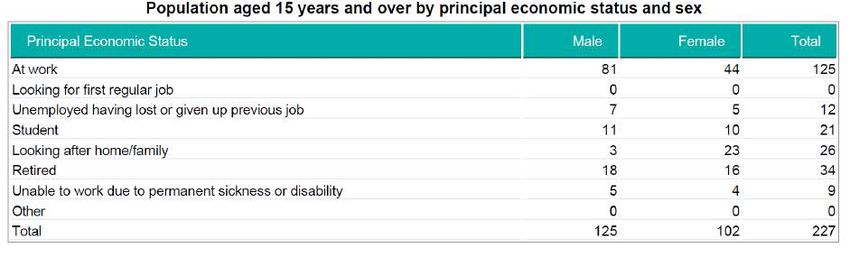
INTERFACE – Fragile communities’ situation and selection in Ireland, National Report

                        Tipperary Town which         town. Fethard lies 16      primarily residential
                        runs        eastwards        km from Cashel Town,       in character, and
                        towards Cashel. The          at which point the M8      functioning    as    a
                        town is located on the       Dublin-Cork                service centre for the
                        Waterford- Limerick          motorway can be            local      agricultural
                        Rail Line and the train      accessed. Fethard can      hinterland. For the
                        station is located to        provide many of the        most part, the towns
                        the south of the town.       service requirements       of Thurles, Tipperary
                        However, the number          for its population,        Town and Cashel
                        of trains running is         though these can be        provide the service
                        very low. The town is        augmented by the           requirements for the
                        also located 4 km to         nearby county town         local population.
                        the north-west of            of Clonmel.
                        Limerick Junction rail
                        station,         which
                        provides strategic rail
                        access to the Cork-
                        Dublin and
                        Limerick- Dublin rail
                        lines.
Availability       and A significant public          The town has one           Hollyford      has       a
quality of       public Health     Centre     is     primary             and    primary           school
services                located within the           secondary school. A        located to the west of
                        town. The town has a         community day care         the village. The school
                        number of primary            centre,          which     is a co-educational
                        and three secondary          provides day care          facility serving a large
                        schools.           The       services            and    rural catchment. The
                        Knockanrawley                recreational facilities,   village does not have
                        Resource        Centre       operates from the Fr.      a secondary school,
                        provides     childcare,      Tirry Centre. A Youth      however there are
                        family        therapy,       Centre is located in       post             primary
                        education          and       the           recently     education       facilities
                        training           and       renovated     Convent      located less than
                        community                    Hall. There is a           10km away. There is
                        development services.        childcare       facility   no childcare/crèche
                        The Moore Haven              located in the town.       facilities       located
                        Centre is a Centre for       Since 2011 there has       either within or close
                        adults in the mild to        been              little   to       the      village
                        moderate range of            construction of new        boundaries. The local
                        intellectual disability      houses in the town         community centre is
                        and provides a day           despite the upwards        also located within
                        Centre      and        a     growth     trend      in   the village centre.
                        residential    service.      population.

                               Tipperary County Council – January 2018                                       7
INTERFACE – Fragile communities’ situation and selection in Ireland, National Report
Childcare facilities are
available from a
number of registered
providers. The
primary issue arising
in relation to housing
is the lack of private
and executive housing
in the town and the
imbalance between
social and private
housing.
Regional The IDA (Industrial Fethard is identified The village is serviced
infrastructure Development Agency) as a Service Centre in by a Municipal Waste
facilities Park is located to the the Council’s County Water Treatment
south east of the Development Plan System, however, the
town centre. which “are robust water supply may
Sufficient water and settlements that have require upgrade
wastewater facilities a capacity to works to service the
exist. There is a three- accommodate new perceived needs of
phase electricity residential growth, the village. The
supply available employment and largest employer in
throughout the town. enterprise and other the village is the
A number of public appropriate uses.... timber/saw mills,
and private employers These towns and which are situated on
are present in the villages perform the northern
town; however, important roles as approach road, and
unemployment is an retail and service linked to the
issue. A by-pass of the providers in their local extensive pattern of
town has long ben economy and are forestry in the
considered necessary targeted for locality.
to alleviate traffic continued growth”.
congestion. A fibre- Recent upgrade works
optic Metropolitan to the water and
Area Network (MAN) wastewater facilities
is available have improved their
throughout the town operation. Fethard
which can facilitate plays a key role in the
the roll-out of high worldwide equine
speed broadband industry through the
access. operations of
Coolmore Stud and
much of the local
Tipperary County Council – January 2018 8INTERFACE – Fragile communities’ situation and selection in Ireland, National Report
economic activity is
stimulated by
activities of the Stud.
The recently restored
Town Hall which now
accommodates the
Tholsel Visitor Centre
and Horse Experience
has added to this.
Natural resources The riverside location Fethard is Hollyford is a
of Tipperary Town, characterised by its picturesque village,
the proximity of the medieval history and with the presence of
Glen of Aherlow, the form, and its enduring the Multeen River
Galtees, Tipperary association with the which flows through
Hills, golfing facilities equine industry. The the village, providing
at Ballykisteen and town is situated on a an attractive amenity.
Limerick Junction low hill adjoining the The river comprises
Racecourse in River Clashawley. The part of the Lower
addition to its rich town is deeply River Suir Special Area
cultural, built and characterised by its of Conservation. The
natural heritage and Norman history, its village is also close to
scenic views distinctive Norman the Multeen Way, a
combined result in form and in its almost section of the Beire
the town having complete circuit of Breifne Walk, which is
immense tourism upstanding medieval within 2 km of the
potential. The town Town Walls. The village centre. There
also offers excellent historic core of are opportunities in
sporting facilitates. Fethard remains the village to build on
medieval in its clutter the natural heritage
of castles, churches, assets and to further
lanes, plots and develop and enhance
features situated the amenity facilities.
Walls.
Tipperary County Council – January 2018 9INTERFACE – Fragile communities’ situation and selection in Ireland, National Report
1.2. Demographic characteristics5
Tipperary Town - In 2016, the population of the settlement of Tipperary Town was
4,979 people, with there being 53 more females than males. A breakdown of the age structure
is as follows:
Age Male Female Total
65 years 374 440 814
Dependents are defined by the Central Statistics Office as people outside the normal working
age of 15-64. Dependency ratios are used to give a useful indication of the age structure of a
population with young (0-14) and old (65+) shown as a percentage of the population of working
age (15-64). The age dependency ratio is important because it shows the ratio of economically
inactive compared to economically active. The total age dependency ratio for Tipperary Town is
59.99, which is above the State ratio (52.7).
The educational structure of the population in Tipperary Town is detailed in the following:
Fethard Town - In 2016, the population of the settlement of Fethard Town was 1,545 people;
there were 31 more females than males. A breakdown of the age structure is as follows:
Age Male Female Total
65 years 102 135 237
5
Figures and statistics in 1.2 and 1.3 are based upon the CSO Census of Population 2016, unless otherwise stated
Tipperary County Council – January 2018 10INTERFACE – Fragile communities’ situation and selection in Ireland, National Report
The total age dependency ratio for Fethard Town is 58.81, which is above the State ratio. The
educational structure of Fethard Town is as follows:
Hollyford6 - In 2016, the population of the electoral division of Curraheen, in which Hollyford is
located, was 288 people; in this community there were 14 more males than females. A
breakdown of the age structure is as follows:
Age Male Female Total
65 years 24 22 46
The total age dependency ratio for Hollyford is 60.00, which is above the State ratio. The
educational structure of Hollyford is as follows:
6
Figures and statistics are based on Curraheen electoral division, in which Hollyford is located
Tipperary County Council – January 2018 11INTERFACE – Fragile communities’ situation and selection in Ireland, National Report
The Pobal HP Deprivation Index measures the relative affluence or disadvantage of an area
using data compiled from various censuses. A scoring is given to the area based on a national
average of zero and ranging from approximately -35 (being the most disadvantaged) to +35
(being the most affluent). Curraheen (Holyford) is classified as marginally below average; within
Tipperary Town there are many small areas classified as very disadvantaged or disadvantaged;
Fethard Town comprises small areas classified as disadvantaged or marginally below average
1.3. Local economy and labour market
In Tipperary Town, 32.44% of the population were at work in 2016. Over 15% of the working
population were either unemployed or looking for a first regular job.
In Fethard, 43.23% of the working population were at work in 2016. Over 13% of the working
population were either unemployed or looking for a first regular job.
In Hollyford, 43.40% of the working population were at work in 2016.
Tipperary County Council – January 2018 12INTERFACE – Fragile communities’ situation and selection in Ireland, National Report
Community Tipperary Town Fethard Town Hollyford
Labour market In the 2016 census In 2016 male In 2016 male
situation male unemployment unemployment was unemployment was
was >55% in some up to >30% in some 7.95%; female
small areas; female small areas; female unemployment was
unemployment was unemployment was 10.20%.
up to 48%. up to 17%.
Local economy The town has a Employment is linked Mainly an agricultural
number of main deeply with the area (27% of persons
employers, both heritage of the town, in 2016 census
private industry and the surrounding described themselves
public organisations. agricultural as farmers). The
There are also many hinterlands and the largest employer in
smaller employers/ equine industry. The the village is the
businesses operating world renowned timber/saw mills
within the town and Coolmore Stud is linked to the
its environs. The located near to the extensive pattern of
economic recession town. Service sectors forestry in the
took its toll on to support the locality.
employment in the industry are strong in
town with reductions the locality. The town
in work forces and also supports some
closures. retailing and other
forms of industry (e.g.
food processing).
Growth potentials The strategic location To facilitate further There are
of the town in close growth of industrial/ opportunities to build
proximity to manufacturing on the natural
national transport enterprises, lands heritage assets and to
corridors, the large have been zoned for further develop and
catchment area and ‘enterprise and enhance the amenity
the availability of employment’. facilities.
Tipperary County Council – January 2018 13INTERFACE – Fragile communities’ situation and selection in Ireland, National Report
industrial floorspace Opportunities exist in
provide opportunities the tourism sector to
for growth to the capitalise on the
economy, heritage aspects of
employment and the town. New
innovation of the enterprise and
town. Lands have development in the
been zoned for town will be expected
industry use to to be developed in
facilitate this. There is synergy with, rather
a IDA (Industrial than compete with
Development Agency) the archaeological
Park located to the and architectural
south east of the character of the town.
town centre. The
town has immense
tourism related
potential, in view of
its location close to
rich cultural, built and
natural heritage and
scenic views.
All three of these communities (and elsewhere in the county) have access to the available
business support infrastructure of a number of agencies/organisations, which includes training,
mentoring, grant aid, networking, business planning and business growth services. Key county-
level agencies/organisations in this are:
The Tipperary Local Enterprise Office (LEO) provides a focal point as a One-Stop-Shop for
enterprises and for potential entrepreneurs in the county;
The Tipperary Economic Forum provides a mechanism to bring together the support
organisations across the county;
The Tipperary Education and Training Board (ETB) is a key stakeholder and support for
entrepreneurship in the county through its training programmes;
The two Development Companies7 in the county, through the EU-funded Rural
Development LEADER Programme, provides support for rural enterprise start-ups.
7
South Tipperary Development CLG and North Tipperary LEADER Partnership Limited
Tipperary County Council – January 2018 14INTERFACE – Fragile communities’ situation and selection in Ireland, National Report
1.4. Community support initiatives and grant funding
The two key local policy instruments whose priorities significantly cover and impact on the
selected communities are:
The County Development Plan, which details the overall strategy for proper planning and
sustainable development of Tipperary County. The objectives of the Plan are the key
determinant for the appropriate location and form of different types of developments.
The Plan’s core objective is to provide a strategic policy framework for guiding physical
development, promoting sustainable growth and improving the competitiveness of the
county;
The Local Economic and Development Plan (LECP) for County Tipperary 2015-2021,
whose purpose is to set out, for a 6 year period, the objectives and actions needed to
promote and support the economic, the local and community development of the
county, both by the County Council itself directly and in partnership with other relevant
stakeholders in the county. The LECP contains a number of high-level economic and
community priorities and associated strategic.
A wide number of publicly funded grant schemes are available, which the selected communities
could engage with, to sustainably develop projects/initiatives. Some of these grant schemes
provide small-scale grants, whilst others, much larger amounts can be obtained. The location of
a community (e.g. urban or rural) may be a determining factor as regards eligibility to these
schemes, some of which are as follows:
▪ LEADER Rural Development Programme;
▪ CLÁR Scheme (for disadvantaged rural areas);
▪ RAPID Scheme (for disadvantaged urban areas);
▪ Town and Village Renewal Scheme;
▪ Outdoor Recreation Scheme;
▪ Community Facilities Scheme;
▪ Scheme of Capital Grants for Community Facilities and Amenities;
▪ Community Enterprise.
Tipperary County Council – January 2018 15INTERFACE – Fragile communities’ situation and selection in Ireland, National Report
2. FINAL SELECTION OF THE INTERFACE FRAGILE COMMUNITIES IN IRELAND – THE
SELECTION PROCESS AND ITS RESULTS
This chapter presents the two stages of the final selection procedure, as it was implemented in
the respective INTERFACE partner country, the challenges faced and the actions undertaken to
address them, as well as the final list of fragile communities to take part in the project.
2.1. Communities’ fragility mitigating factors assessment
The three (3) communities selected, as a result of undertaking the assessment exercise, for
participation in the INTERFACE project activities are:
▪ Tipperary Town (and specifically the area with RAPID designation8 covered by the Three
Drives Family Resource Centre);
▪ Hollyford;
▪ Fethard Town.
This selection provides a mix of urban (Tipperary Town), peri-urban (Fethard) and rural
(Hollyford) areas and, in terms of the Council’s Settlement Hierarchy, comprises a District Town
(Tipperary Town) and 2 Service Centres (Fethard and Hollyford).
The factors distinguishing the selected communities from the other communities include,
potential of the natural resources not being sufficiently utilised and they have growth potential
in economic and social sectors.
2.2. Personal characteristics of attitudes assessment survey respondents
The nature of the INTERFACE activities in the communities to take part in the pilot project
“interventions” phase, will be determined, not only on the basis of statistically observed
economic and social under-performance of certain communities, but also by considering cases
in which specific “fragility mitigating factors” allow expectations that the interventions will have
better prospects of creating conditions for alleviating the observed situation (“pulling the
specific communities out of their fragility). Besides this, it is also considered necessary to
incorporate in the design and planning of interventions, some prior information on the extent to
which local stakeholders of various types, possess a good understanding of the issues in their
8
RAPID (Revitalising Areas by Planning, Investment and Development) is a focused Government initiative to target the most
disadvantaged urban areas and provincial towns in the country.
Tipperary County Council – January 2018 16INTERFACE – Fragile communities’ situation and selection in Ireland, National Report
locality, have made previous attempts to tackle these local issues and are, more importantly,
favorably disposed towards intended INTERFACE interventions.
The presentation and assessment of such “fragility mitigating factors” in the previous section,
was supplemented by a number of contacts, in each of the three selected communities. In
particular three such contacts were made in each community, on the basis of a structured
Questionnaire. The details of the findings of this “mini-survey” are presented in Annex B of the
Report, while in this and the subsequent Section 2.3 are presented first the personal
characteristics of the survey respondents and then their responses on perceived community
problems and ways to address them.
The nine survey respondents were all female, except for one male respondent. One-third was
aged 40-49 years; over 20% were aged 60+ years; 50-59 years; and 30-39 years respectively.
Over 50% of respondents are educated to university/post graduate level. Two-thirds are
affiliated to a voluntary organization; with one each to a development organisation, business
organisation and individual community member.
2.3. Perceived community problems and ways to address them
The number of responses, being small, does not allow for a robust analysis. However, certain
trends are discernible. The detailed distribution of responses is presented in Annex B. A
summary of them is the following:
No respondent was satisfied with the overall situation in their community (Question II.1).
A majority (55%) rate the “general level of pro-activity in their community” as “rather
high” or “high”; 45% rate it as “low” or “rather low” (Question II.2).
The categories considered most problematic for communities are “regional and local
development policy” and “access to financial support for private and public projects”
(both 7/9); “human resources – age structure, level of skills, etc.” (5/9); and
“infrastructure facilities” (4/9). The categories ranking lowest were “business sector
productivity” (3/9) and “Natural resources” (2/9). (Question II.3).
Two-thirds of the respondents are “aware of previous initiatives to address problematic
fields in the community” (Question II.4). Mostly these related to “regional and local
development policy” (Questions II.5), undertaken by various actors internal and external
to the community (Question II.6), in which two-thirds of the respondents (4/9) were
themselves involved.
Tipperary County Council – January 2018 17INTERFACE – Fragile communities’ situation and selection in Ireland, National Report
Nearly a full majority of respondents (8/9) confirmed that they would participate, if the
opportunity presented itself, “in an initiative which would potentially serve to address
one or more of the problematic fields” (Question: II.8).
The skills that respondents believe would be “most beneficial to the community” are
analytical thinking, leadership and resourcefulness (all 8/9); innovation and resilience
(both 7/9); and creativity (6/9) (Question II.9).
All respondents declared an interest to “actively participate in an initiative directed
towards boosting” such skills within their community (Question II.10), indicating by a
majority of over 75% that similar initiatives have not “already been implemented in their
community” (Question II.11).
The final question addressed what would be the community’s interest and support to
such an initiative. There was nearly universal consensus (8/9) that it would be “high” or
“very high”; interestingly though one respondent said it would be “rather low”.
(Question II.12).
Tipperary County Council – January 2018 18INTERFACE – Fragile communities’ situation and selection in Ireland, National Report
CONCLUDING REMARKS
Available statistics and other types of documentation of the prevailing socio-economic situation
at community level are sometimes not sufficient for reliably detecting the degree of their
“fragility” and, consequently, the direction and the urgency of interventions that might prevent
further worsening of such situations. For this reason, the methodology adopted by the
INTERFACE project is that of combining “objective/quantifiable” identification of relatively
“fragile” communities (based, at least, on available statistics), with local experts’ insights and
understanding of local strengths and weaknesses and of their determining factors. Furthermore,
to allow design and implementation of cost-effective interventions that may lead to the
improvement of communities, the same methodology argues for simultaneous consideration of
“objective fragility detection”, with assessment of “fragility mitigating factors” and “assessment
of stakeholders’ perceptions of problems and of ways to overcome them”. The latter will
provide indications that resource investment is more likely to produce positive results.
Furthermore, it may also in subsequent project phases, guide the design and planning of
interventions that are needed, not only consistent with the needs of local communities, but are
very likely to be facilitated by stakeholders’ support and active involvement.
Using the described “fragile communities’ selection” procedure laid down for INTERFACE project
partners, Tipperary County Council, the Irish INTERFACE partner, has selected three
communities, Tipperary Town (and specifically the area with RAPID designation covered by the
Three Drives Family Resource Centre); Hollyford; and Fethard Town, as the intervention areas
for subsequent project activities. It is considered that in these areas there is the presence, most
importantly, of persons in the communities with a level of interest for investigating and ready to
participate and support a new set of interventions.
Tipperary County Council – January 2018 19INTERFACE – Fragile communities’ situation and selection in Ireland, National Report
ANNEXES
Annex A. Fragile communities’ mitigating factors assessment grid
Partner country: TCC (TIPPERARY), IRELAND
Community No. 1 2 3 4 5 6 7 8 9 10
Criterion Criterion scoring (on a 1-5 scale)
1. The community has a strategic location in terms of 4 4 5 2 5 3 4 4 3 2
connectivity and access to big markets and high-quality
public services
2. The community has access to high-quality public services 3 3 5 2 4 2 4 4 3 2
and regional infrastructure facilities are favourable for
the development of the local/regional economy
3. Although in place, the natural resources’ potentials are 3 3 2 4 4 5 4 3 3 4
not being sufficiently utilised for the betterment of the
community
4. The age and educational structure of the human 3 3 2 2 5 3 4 2 4 4
resources in the community are relatively favourable, yet
the local economy cannot fully utilise them
5. So far, the grant funding, received by the community has 2 1 2 3 2 2 2 1 1 2
been limited, mainly due to the lack of initiative coming
from within the community itself
6. The community has growth potentials in specific 3 4 4 4 5 5 3 4 2 4
economic sectors, e.g. agriculture, tourism, etc., which so
far have not been sufficiently utilised
7. The business support infrastructure at local level (if any) 3 3 2 4 3 4 4 2 2 3
does not seem to operate effectively to the benefit of
local businesses
8. The improvement of the socioeconomic situation in this 5 5 2 4 5 4 3 5 3 3
and similar underdeveloped communities is among the
priorities of Development policies at regional and
national level
9. The local/regional administration is apt to supporting 5 5 5 5 5 5 5 5 5 5
activities, initiated by third parties or by community
members themselves in support of local development
10. The community’s situation is affected by external factors, 3 3 3 3 3 4 3 3 3 3
such as economic crisis, geopolitical situation, etc., with
little effort at local level to mitigate their adverse effects
Total score: 34 34 32 33 41 37 36 33 29 32
Tipperary County Council – January 2018 20INTERFACE – Fragile communities’ situation and selection in Ireland, National Report
List of communities:
9
No. Municipal District Fragile community Type
1 Templemore-Thurles Roscrea Urban
2 Templemore-Thurles Littleton Rural
3 Nenagh Nenagh Town Urban
4 Nenagh Templederry Rural
5 Cashel-Tipperary Tipperary Town Urban
6 Cashel-Tipperary Hollyford Rural
7 Carrick-on-Suir Fethard Town Urban
8 Carrick-on-Suir Slieve Ardagh area Rural
9 Clonmel Cahir Town Urban
10 Clonmel Ardfinnan/Clogheen Rural
9
Urban is > 1,500 population; Rural is < 1,500 population
Tipperary County Council – January 2018 21INTERFACE – Fragile communities’ situation and selection in Ireland, National Report
Annex B. Fragile community members’ attitudes assessment – summary of responses
Partner country: Ireland (TCC)
Community: Fethard Town Tipperary (Three Drives) Hollyford
Respondent 1 Respondent 2 Respondent 3 Respondent 1 Respondent 2 Respondent 3 Respondent 1 Respondent 2 Respondent 3
Survey question:
SECTION I. PERSONAL CHARACTERISTICS
I.2. Gender Female Female Female Female Female Female Male Female Female
I.3. Age 60+ 60+ 40-49 40-49 30-39 50-59 50-59 40-59 30-39
I.4. Education Secondary Post Grad. University University Secondary University Secondary Secondary University
Sch/VEC. School School School
I.5. Affiliation Voluntary Org Volunteer Org Volunteer Org Reg. Dev. Org. Ind. Comm. Voluntary Org Voluntary Org Voluntary Org Business Org.
member
SECTION II. COMMUNITY PROBLEMS AND WAYS TO ADDRESS THEM
II.1. Are you and No No No No No No No No No
those around you
satisfied with the
overall situation in
your community?
II.2. How would Rather high Rather high High Low Very low Low Rather high Rather low Rather high
you rate the
general level of
pro-activity in
your community
with regards to
issues of
community
importance?
Tipperary County Council – January 2018 22INTERFACE – Fragile communities’ situation and selection in Ireland, National Report
II.3. Which of the Infrastructure Infrastructure HR HR Access to HR Infrastructure Natural Natural
categories below facilities facilities Business Sector Access to financial Access to Access to resources resources
do you consider HR HR Regional and financial support financial financial Infrastructure Reg & local dev.
most problematic Access to Access to local dev policy support support support facilities policy
for your financial financial Business Sector Regional and Regional and Access to
community? support support Reg. and local local dev. pol. local dev. pol. financial
Business Sector Business Sector dev. pol. External factors support
Regional and Regional and External
local dev.pol. local dev.pol. factors
External factors External factors
II.4. Are you Yes Yes No Yes No Yes No Yes Yes
aware of any
initiative(s), which
has been
undertaken in
your community
to address one or
more of the
problematic fields
identified above?
II.5. If the answer Infrastructure Infrastructure N/A Regional and Business sector Natural Natural
to the previous facilities facilities local dev. pol. Resources Resources
question was Access to Access to Regional & local
affirmative, what financial financial dev. pol.
problematic support support
area(s) did the Regional and Regional and
initiative(s) local dev. pol. local dev. pol.
address?
II.6. Was the Internal Internal External Internal Internal Internal Internal
action(s) initiated Local Local Reg./Nat. Gov. Voluntary Org Voluntary Org Reg. Dev. Local admin
by actors from Administration Administration Reg. Dev. Organisation Voluntary Org
within the specific Reg Dev Org Reg Dev Org Organisation External External External External
region or outside Voluntary Org Voluntary Org Reg./Nat. Gov. Voluntary Org Voluntary Voluntary org
it and who External External Training Org. Org.
was/were the Reg Dev Org Reg Dev Org
main actor/s? Social Ent Social Ent
Tipperary County Council – January 2018 23INTERFACE – Fragile communities’ situation and selection in Ireland, National Report
II.7. Have you Yes Yes Yes Yes No Yes Yes No No
already been
involved in any
such initiative?
II.8. If you had the Yes Yes Yes Yes Yes Yes Yes No Yes
opportunity to
participate in an
initiative, which
would potentially
serve to address
one or more of
the problematic
fields identified
above, would you
take it?
II.9. Raising the Innovation Innovation Innovation Innovation Innovation Innovation Innovation Analytical Analytical
potential for Creativity Creativity Analytical Creativity Creativity Creativity Creativity thinking thinking
responsibly and Analytical Analytical thinking Analytical Analytical Analytical Resourcefulness Leadership Resourcefulness
autonomously thinking thinking Resourcefulness thinking thinking thinking Leadership Leadership
employing which Resourcefulness Resourcefulness Resilience Resourcefulness Resourcefulness Resourcefulness Resilience
of the following Leadership Leadership Leadership Leadership Leadership
skills do you Resilience Resilience Resilience Resilience Resilience
believe would be
beneficial for your
community?
Tipperary County Council – January 2018 24INTERFACE – Fragile communities’ situation and selection in Ireland, National Report
II.10. Would you Yes Yes Yes Yes Yes Yes Yes Yes Yes
or anyone you
know be
interested in
actively
participating in an
initiative, directed
towards boosting
the level of the
above skills within
your community?
II.11. Have any Yes Yes No No No No. No No No
initiatives of such
type already been
implemented in
your community?
II.12. If such an Rather high Rather high Rather high Rather high Rather high Rather high Rather low Rather high High
initiative is
undertaken in the
future, how would
you rate the
interest and
support it is likely
to receive in your
community?
Tipperary County Council – January 2018 25INTERFACE – Fragile communities’ situation and selection in Ireland, National Report
BIBLIOGRAPHICAL REFERENCES
Tipperary Local Community Development Committee, County Tipperary Local Economic and
Community Plan 2015-2020
Tipperary Local Community Development Committee, County Tipperary Local Community and
Social Inclusion Plan 2015-2020
Tipperary County Council, Tipperary Town and Environs Development Plan 2013
Tipperary County Council, Fethard Public Realm Plan 2008
Tipperary County Council, County Development Plans (as varied)
Tipperary County Council – January 2018 26Aitoliki Development Agency S.A.
Greece
Byggdastofnun
Icelandic Regional Development Institute
Iceland
CESIE
Italy
Haskolinn a Bifrost
Iceland
Tipperary County Council
Ireland
Tora Consult Ltd.
Bulgaria
The European Commission support for the production of this publication does not constitute an
endorsement of the contents which reflects the views only of the authors, and the Commission
cannot be held responsible for any use which may be made of the information contained therein.You can also read


