IMPLEMENTATION OF KOMPAK PROGRAM IN THE REGIONS - JOINT SUPERVISION MISSION REPORT
←
→
Page content transcription
If your browser does not render page correctly, please read the page content below
JOINT SUPERVISION
       MISSION REPORT
       IMPLEMENTATION OF
       KOMPAK PROGRAM
       IN THE REGIONS

       JULY 2017

KOMPAK is an Australia–Indonesia Government Partnership
managed by Abt Associates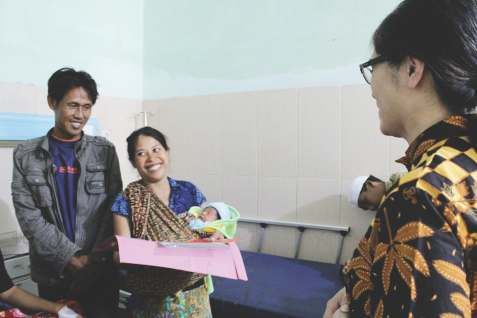
Joint Supervision Mission Report
Implementation of KOMPAK Program in the Regions
July 2017
Jalan Diponegoro No.72
Jakarta Indonesia, 10320
Tel +62 21 8067 5000
Fax +62 21 3190 3090
Email info@kompak.or.id
www.kompak.or.id
JOINT SUPERVISION
MISSION REPORT
IMPLEMENTATION OF
KOMPAK PROGRAM
IN THE REGIONS
JULY 2017
Turut Berpartisipasi dalam Kegiatan Misi Supervisi Bersama ̶
                        Pelaksanaan Program KOMPAK di Daerah:

Aryawan Soetiarso Poetro           Mahatmi P. Saronto                  Vivi Yulaswati
Direktur Otonomi Daerah         Direktur Tenaga Kerja dan        Direktur Penanggulangan
        Bappenas               Perluasan Kesempatan Kerja             Kemiskinan dan
                                        Bappenas                   Kesejahteraan Sosial
                                                                         Bappenas

      Samsul Widodo                Herbert H.O. Siagian              Michelle Lowe
 Kepala Biro Perencanaan          Asisten Deputi Urusan            Counsellor Bidang
     Kementerian Desa,             Pemberdayaan Desa,            Pembangunan Manusia,
   Pembangunan Daerah            Kementerian Koordinator           Kedutaan Australia
Tertinggal, dan Transmigrasi      Bidang Pembangunan
                                 Manusia dan Kebudayaan

  Nelson Simanjuntak                       Rukijo
       Kepala Pusat            Sekretaris Direktorat Jenderal
   Fasilitasi Kerjasama,         Perimbangan Keuangan,
Kementerian Dalam Negeri          Kementerian Keuangan
Table of Contents
Summary 4
Preface 6
Progress of Program Implementation: Observations, Lessons, and Recommendations 9
Lombok Utara District, NTB Province 10
Program Relevance, Engagement and Commitment 10
Progress and Outcome 11
Pangkajene and Kepulauan District, South Sulawesi Province 14
Program Relevance, Engagement and Commitment 14
Progress and Outcome 15
Lessons and Recommendations on Improving the Implementation of KOMPAK Program 18
Recommendation for New Priorities 21
Summary and Conclusion 23
Appendix 1. Term of Reference 26
Appendix 2. Lombok Utara District Mission Schedule 28
Appendix 3. Pangkajene and Kepulauan District Mission Schedule 31
Appendix 4. List of Participants 35SUMMARY
SUMMARY

The governance of the KOMPAK Program requires a joint supervision mission to monitor
program implementation, by the Government of Indonesia (represented by members of
the Technical Committee), the Australian Government (represented by officials/staff of
the Embassy), and the KOMPAK Management Team, to be conducted on a regular basis –
at least twice per year. This report summaries the supervision mission conducted in the
District of Lombok Utara (NTB Province) and the District of Pangkajene and Kepulauan
(South Sulawesi Province) during the period 5 to 7 June 2017.

This supervision mission assessed, progress achieved toward outcomes, indications of
good practices, and lessons learned for program implementation. The main focus of this
first supervision mission was on basic services.

The KOMPAK Program has an ultimate goal of enabling poor and vulnerable communities
to benefit from improved delivery of basic services and the designed to economic
opportunities. The strategic support of the KOMPAK Program is designed to systems
related to the governance of basic services, including encouraging multi-stakeholder and
multi-level collaboration to expand access and improve the quality of basic services.

KOMPAK support and work plan is respond to the needs and priorities of the regions.
Local governments have shown positive response, strong buy in and involvement in the
implementation of program support. The Supervision Mission Team appreciates the
excellent relationship and cooperation between local government and the KOMPAK team.

From the visits to these two regions, the Supervision Mission Team concluded that the
KOMPAK Program has made significant progress. The results of the activities are aligned
with the End-of-Facility Outcomes (EOFOs). Indications of service improvements in
service units, such as sub-district offices and community health centers, in both districts
are beginning to be seen.

    JOINT SUPERVISION MISSION REPORT
4   IMPLEMENTATION OF KOMPAK PROGRAM IN THE REGIONS
The program support initiatives for mainstreaming basic services in rural development
are becoming visible, with the increasing allocation of village budget for basic services.
The joint initiatives of program partner institutions and local governments encourage the
involvement of community groups, particularly vulnerable groups, to benefit from village-
level development, such as legal identity ownership and education assistance for people
with disabilities. Some of the pilot activity initiatives have also been replicated by local
governments using their own local budget (APBD) – for example, the initiative to
accelerate legal identity ownership outcomes in two districts, and the development of a
village information system (SID) in Lombok Utara. There are plans to develop
interconnectivity between SID and district level information system.
The Supervision Mission Team highlighted lessons learned to be considered when
designing program improvement strategies. Recommendations included: the need for
harmonisation of policy support at the central and regional levels; continuous capacity
building; systematic documentation of good practices, replication support by regions;
optimising provincial roles; and suggestions for improving the next supervision mission.
In addition, the Supervision Mission Team also recommended that the KOMPAK Program
consider new priority proposals submitted by the regions. These included support for:
improving governance in the education sector; accreditation of community health
centers (puskesmas), management of grievances and complaints related to services;
analysis of sub-district budgets related to the implementation of delegation of authority;
operationalisation of the 'Self-Sufficient Village' ('Desa Mandiri') concept (Pangkajene
and Kepulauan District); and the development of innovative basic service models in
accordance with the archipelagic context, which has its own challenging characteristics.
JOINT SUPERVISION MISSION REPORT
IMPLEMENTATION OF KOMPAK PROGRAM IN THE REGIONS 5PREFACE
Part of the National Medium-Term Development Plan (RPJMN) 2015–2019, and the
government's poverty eradication efforts are to improve and expand basic services for the
poor and vulnerable. An important focus of this work is the fulfilment of Minimum Service
Standards (SPM) for compulsory public services, including: legal identity; social
protection; health; education; and basic infrastructure. The KOMPAK Program supports
these efforts through strengthening systems and institutions by focusing on:
1 Improving efficiency and effectiveness of the governance of basic services
implementation.
2 Increasing access and quality in the expansion and improvement of basic
services for poor and vulnerable communities.
3 Strengthening participation of the community in the fulfilment of basic services
through empowerment.
The governance of the KOMPAK Program requires a joint supervision mission to monitor
program implementation, by the Government of Indonesia (represented by members of
the Technical Committee), the Australian Government (represented by officials/staff of
the Embassy), and the KOMPAK Management Team to be conducted on a regular basis – at
least twice per year. This report summaries the supervision mission conducted in the
District of Lombok Utara (NTB Province) and the District of Pangkajene and Kepulauan
(South Sulawesi Province) during the period 5 to 7 June 2017.
This supervision mission assessed progress achieved toward outcomes, indications of
good practices, and lessons learned for improving program implementations. The main
focus of this first supervision mission was on basic services.
JOINT SUPERVISION MISSION REPORT
6 IMPLEMENTATION OF KOMPAK PROGRAM IN THE REGIONSA summary of the activity's main agenda during the supervision mission is described in the following
matrix:
LOCATION MAIN AGENDA/TOPIC
Lombok Utara District (NTB)
District Level Meetings with the Bupati and heads of relevant local agencies (OPD)
regarding the relevance of KOMPAK's support to regional priorities,
implementation progress of KOMPAK's support, and feedback.
Pemenang Timur Administrative services, data services, and administration using the Village
Village Information System (SID); village planning related to increasing the allocation
of basic services in the Village Budget.
Pemenang Sub-district Integrated Administration Services (PATEN) integrated with the
Sub-district civil administration service.
Loloan Village § Improved services of legal identity and civil administration through
marriage confirmation (istbat nikah), integrated service, and community
participation.
§ Use of Village Information System (SID) for publications, administrative
services, and transparency of the village budget.
Bayan Sub-district Improved capacity of the sub-district apparatus as Village Government
Technical Facilitators (PTPD) for basic services and Sub-District Integrated
Administration Services (PATEN), which are integrated with the civil
administration service.
Tanjung General Process of birth registration service that is integrated with health services.
Hospital
JOINT SUPERVISION MISSION REPORT
IMPLEMENTATION OF KOMPAK PROGRAM IN THE REGIONS 7LOCATION MAIN AGENDA/TOPIC
Pangkajene and Kepulauan District (South Sulawesi)
District Level Meetings with the Bupati and heads of relevant local agencies regarding the
relevance of KOMPAK's support to regional priorities, implementation
progress of KOMPAK's support, and feedback.
Mattiro Kanja § Integrated services of civil and legal identity administration, including
Village marriage confirmation, processing the identity cards, birth registration,
and family cards.
§ Involvement of women and people with disabilities in the process of
development planning in villages.
Pemenang § Implementation of integrated services for population administration and
Sub-district legal identity, including marriage confirmation, and processing of birth
certificates, identity cards, and family cards.
§ Mainstreaming of basic services in village planning and budgeting,
including regulation support.
Sabutung § Community health centers (puskesmas) management training.
Community § Technical Facilitator for Village Government (PTPD) training.
Health Centre
(Puskesmas)
JOINT SUPERVISION MISSION REPORT
8 IMPLEMENTATION OF KOMPAK PROGRAM IN THE REGIONSPROGRESS OF PROGRAM IMPLEMENTATION:
OBSERVATIONS, LESSONS,
AND RECOMMENDATIONSLombok Utara District, NTB Province
As part of the
accelerated birth
registration, every
baby born in Tanjung
General Hospital,
Lombok Utara District,
will be given a birth
certificate immediately
after birth.
Program Relevance, Engagement and Commitment
KOMPAK's activities in Lombok Utara District started at the end of 2015. KOMPAK support was well
received by the Lombok Utara District Government, including the regional head and all related local
agencies. Support from KOMPAK was considered relevant to the district's (bupati's) vision and
mission, as well as regional priorities related to improving basic services. The Supervision Mission
Team observed a strong sense of commitment, ownership and involvement of local government in the
implementation of program support.
Institutionally, the coordination of cooperation and support of the KOMPAK Program is integrated
with existing institutions, namely the Regional Poverty Eradication Coordination Team (TKPKD) of
Lombok Utara District (Head of District Decree [SK] No. 38A/2017). The implementation of KOMPAK's
support is achieved through cross-sectoral forums, which are coordinated by the Regional Secretary
(Sekda) or Regional Development Planning Agency (Bappeda) and each respective local agency.
JOINT SUPERVISION MISSION REPORT
10 IMPLEMENTATION OF KOMPAK PROGRAM IN THE REGIONSProgress and Outcome
Summary: The work plan of KOMPAK in Lombok Utara District focuses on: kecamatan strengthening,
improving legal identity, civil registration processes strengthening village governance practices and
encouraging community participation in social accountability processes. Activities include:
fa c i l i tat i o n o f p o l i c y / re g u l at i o n
formulation, capacity building, training Increasing Ownership of Legal Identity in Poor Communities
and assistance, developing pilot
‘Our community has difficulties accessing help from the village
programs, and working with and government such as 10 habitable houses and 400 latrines for poor
leveraging resources from partner families because many of our residents do not have legal identities, i.e. ID
institutions. cards (KTP) and family card (KK),' said Kariadi, Head of Loloan Village.
Loloan Village is a village located at the end of Bayan Sub-district, Lombok
In general, direct observations and Utara District. In 2016, public awareness of legal identity was still low.
feedback suggest that KOMPAK's work This was indicated by the small number of people who registered their
marriage in the Population Services Office and Civil Registry. Without a
plan was well implemented, with marriage registration, parents could not order birth certificates. This
acceptance and full buy-in from the local could become more complicated if the parents divorced and remarried.
government. Overall, findings from The Nusa Tenggara Barat Child Protection Agency (LPA), a strategic
partner of KOMPAK, implemented a Village-Based Community Legal
KOMPAK's monitoring and evaluation
Identity Compliance Program through Revitalisation of Local Wisdom in
tools indicate that KOMPAK has made Lombok Utara District. This program has been running since July 2016
significant progress toward meeting and implemented in Loloan, Sambik Elen, Bayan, Anyar, and Akaar-Akar
Village in Bayan Sub-district. One of its activities is to conduct a marriage
shorter and intermediate term output
confirmation session (sidang istbat) with the purpose of allowing the
targets and progress toward longer term parents to obtain their marriage registration, so that their children's birth
goals and expected longer term certificates can then be processed.
outcomes. In November 2016, Loloan Village held a marriage registration session for
27 couples, which was self-financed by the communities. Upon realising
In a meeting with the Supervision Mission the importance of legal identity, the community voiced their opinion on
the importance of budgeting for marriage registration for those who
Team, the Lombok Utara District Head could not afford it. This opinion is supported by the head of village and
expressed his appreciation for the other village apparatus. 'This year, 2017, we are budgeting 37 million
support given so far. rupiah in the Village Budget to finance 50 couples to conduct a marriage
registration session. The funds came from the Village Fund,' added
Examples of specific activities and Kariadi.
progress towards outcomes are outlined By conducting village meetings, collection of required documents,
mobile services, integrated marriage registration services, and
below. adolescent capacity building for Minimum Age for Marriage (PUP), in
June 2017, the West Nusa Tenggara Child Protection Agency has reached
3,695 beneficiaries in Lombok Utara District.
'There were many children under 18 years old who did not have birth
u District Level
certificates. But now ownership of birth certificates can reach 99 percent.
This is also accomplished by cooperation with the neighbourhood units
Policy and regulation: The issuance of (RT), community units (RW), community figures, cadres, integrated
health services post (posyandu), school principals, and teachers who
various regulations (Head of District were involved in the legal identity working group. We thank you very
Regulation and Head of District Decree) much for the presence of KOMPAK,' Sundawati, Village Government
related to: Section Head, Bayan Sub-district.
§ The Head of District Decree on the
delegation of some authorities from
the Head of District to the Head of Sub-Districts. This decree focuses on supporting the cross-
sectoral coordination of education, health, and legal identity basic services in sub-districts (Head
of Lombok, Utara District Decree No. 232/25/Pem/2017). This example of good practice has also
been replicated in Lombok Timur District.
§ Head of District Regulation on Strengthening Village Governance. Fifteen Head of District
Regulations have been issued related to financial management, village authority, village
information system, procurement of goods and services in the village, and village financial
management.
JOINT SUPERVISION MISSION REPORT
IMPLEMENTATION OF KOMPAK PROGRAM IN THE REGIONS 11§ Head of District Regulation on the Acceleration of Birth Certificate Coverage.
§ Head of District Decree on the Determination of Sub-district as the Location of Sub-District
Integrated Administration Services (PATEN).
Minimum Service Standards: Minimum Service Standards were integrated into the Regional
Medium-Term Development Plan (RPJMD) of 2016–2021. Moreover, the Regional Secretary and OPD
leaders from the Education Office and Health Office, signed the Integrity Pact to integrate the
Minimum Service Standards into the OPD budget planning document.
Service unit innovation: Jaring PEKAT (birth registration through education, health, and
communities) is the institutionalisation of multi-stakeholder/cross-sectoral innovations to improve
legal identity and civil registration processes. Innovations include: integrated mobile services for legal
identity (e.g. marriage registration), integration of birth registration with services at health centers
and hospitals, and cooperation with non-governmental partner organisations (NTB Child Protection
Agency) for community-based legal identity services. The birth registration in the hospital is fast (30
minutes) and online. Another strategy is to apply Metode Jempolan (pick up the documents, process
them, and the result is immediately delivered). In Loloan Village, where this strategy is being applied,
more than 99 percent of children have birth certificates. This example of good practice has also been
replicated.
Progress Toward outcomes: As indicated by data from the Civil Administration Information System
(SIAK) of the MoHa, birth certificate coverage for children 0 to 18 years of age in Lombok Utara District
has increased tremendously. Birth certificate coverage rates have increased since the
implementation of the Jaring PEKAT program in May 2016 from 64 percent to 85 percent in May 2017.
This rate is the highest in the province (the average across NTB is 61 percent) and exceeds the national
target (80 percent) for 2017.
64% 85%
May 2016 May 2017
Image 1
Ownership of Birth Certificate for Children
Aged 0–18 Years Old in Lombok Utara District
u Sub-district Level
§ Capacity building.
§ Training for camats on leadership, basic services, and innovation.
§. Training of sub-district apparatus to become Village Government Technical Facilitators (PTPD) in
eight sub-districts supported by KOMPAK
JOINT SUPERVISION MISSION REPORT
12 IMPLEMENTATION OF KOMPAK PROGRAM IN THE REGIONS§. PTPD provides technical guidance and supervision of governance management and rural
development in villages, including mainstreaming of basic services in village planning and
budgeting. The PTPD have been involved in facilitating the mainstreaming of basic services in the
2017 village Development Planning Forums (Musrenbang) and evaluating 2017 village budget
planning.
§ Head of Sub-district Decree (SK) on Sub-district Integrated Administration Services (PATEN)
Team.
Service Reform: Improved services in the sub-district office through PATEN, including integration of
civil registry and legal identity.
Budget: Increased budget allocations for sub-districts to support the delegation of district's
authorities to the sub-district. With the issuance of the Decree on delegation of some authorities of
the head of district to the head of sub-district, four sub-districts received an additional budget of IDR
200 million each, and one sub-district received IDR 600 million.
Coordination: Strengthened multi-stakeholder and cross-sectoral coordination for the
implementation and monitoring of development activities in general, and basic services in particular.
This has begun with the involvement of village cadres from community groups, especially groups of
women, people with disabilities, and children of migrant workers.
u Village Level
Village Information System (SID): Program support for the development of SID has been replicated by
Lombok Utara District. A total of 33 villages already have online SID. Other villages have used
different SID components to streamline administrative processes such as the printing of documents.
Further strengthening is required for information management so that data and evidence can be used
to support village development and shared with higher levels of government. The interconnection
process with the districts is being prepared by the local government to be implemented in the 2018
fiscal year.
Village expenditure allocation for basic services: Village budget allocations for basic services has
increased significantly – from 14 percent in 2016 to 25 percent in 2017. Lombok Utara District plans to
adopt and replicate the good practice of mainstreaming these basic services for all villages in the 2018
fiscal year.
Budget transparency: The village budget summary has been published on billboards and on the
village information system website (http://www.loloan-lombokutara.desa.id/index.php/first).
JOINT SUPERVISION MISSION REPORT
IMPLEMENTATION OF KOMPAK PROGRAM IN THE REGIONS 13Pangkajene and Kepulauan District
South Sulawesi Province
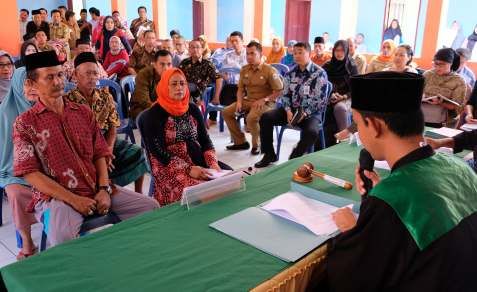
Marriage confirmation
session as part of the
integrated civil services
in Liukang Tuppabiring
Utara Sub-District.
Program Relevance, Engagement and Commitment
KOMPAK activities in Pangkajene and Kepulauan District is relatively new. The KOMPAK Program
started in South Sulawesi Province in early 2016, but it was limited to the frontline services pilots. The
presence of the 'full' KOMPAK program – with adequate work plan and budget, as well as relatively
complete personnel – began only in early 2017.
The support provided by the KOMPAK Program received excellent acceptance from the District
Government of Pangkajene and Kepulauan, including from the regional heads and all related local
agencies. The support from the program was felt to be very relevant to the vision and mission of the
head of district and regional priorities related to the efforts to improve basic services delivery.
Current program support, with a focus on developing mechanisms for archipelagic regions, is also
considered to be highly relevant to the overall regional characteristics, particularly the number of
small and scattered islands. The outcomes of the program support are expected to be used as models
of good practice that can be replicated in other islands regions.
The Supervision Mission Team perceived a strong sense of ownership and active involvement of the
related local government officials in the implementation of the program.
JOINT SUPERVISION MISSION REPORT
14 IMPLEMENTATION OF KOMPAK PROGRAM IN THE REGIONSInstitutionally, the implementation of Achieving Quality Health Services for
KOMPAK Program is coordinated by a Communities in the Archipelago
special team. The technical team was
established through the Decree of the 'It used to be difficult for us to go to the community health centres
Head of District with funding from the (puskesmas). No doctors want to stay on the island,' said Jumsiah,
resident of Mattiro Kanja Village, Liukang Tuppabiring Utara Sub-district,
local government budget. Formal and Pangkajene and Kepulauan (Pangkep) District. The Liukang Tuppabiring
regular coordination works well and Utara Puskesmas is located on Sabutung Island. The Head of Liukang
includes meetings with the whole team, Tuppabiring Utara Puskesmas, Ruslan, admitted that initially the
Puskesmas service was still passive because of lack of commitment from
as well as with each related local agency. the health service staff. 'We still positioned ourselves as workers not
The regional head is also directly officers. Workers work to earn wages, no spirit to serve the community,'
involved in coordinating the he said.
implementation of KOMPAK's program. In 2015, Liukang Tuppabiring Utara Sub-district became one of the areas
of KOMPAK's work in Pangkajene and Kepulauan District. KOMPAK's main
focus in this district is to help the local government improve coverage and
quality of basic services (education, health, and legal identity) in four sub-
Progress and Outcome districts in the islands. This is done through the development of a human
resources model and a performance-based management system.
Summary: : The KOMPAK work plan in KOMPAK, together with the local government, encourages the
Pangkajene and Kepulauan District improvement of services in Puskesmas. This effort occurs through basic
service management training, Puskesmas management training, and
focuses on: kecamatan strengthening,
Village Government Technical Facilitators' training. 'KOMPAK always
i m p ro v i n g l e ga l i d e n t i t y, c i v i l provides advice to realise the child-friendly Puskesmas and care about
registration processes and rates, the needs of vulnerable groups,' explained Ruslan. KOMPAK also
encourages collaboration between Puskesmas and the Mattiro Kanja
strengthening village governance
Village Government.
practices and encouraging community 'Currently Puskesmas service is much better,' said Muzakkir, Head of
participation in social accountability Mattiro Kanja Village. According to him, health services at Puskesmas are
processes. The types of activities that more open and easily accessible by the community. This has an impact on
improving community health.
KOMPAK supports include facilitation of
policy/regulation formulation
workshops, capacity building through Jan-Dec 2016 (12-month period)
training and assistance, support in the
Number of patient visits 1,032 people
form of pilot programs, working with Number of pregnant women visits 184 people
and leveraging resources from partner Number of inpatients 2 people
institutions. Average number of patients 3-5 people/day
In general, it can be said that KOMPAK's
work plan was well implemented, with Jan-Jun 2017* (6-month period)
acceptance and full buy-in from the
local government. Overall, activity Number of patient visits 1,421 people
results show significant progress toward Number of pregnant women visits 184 people
Number of inpatients 5 people
meeting shorter and intermediate
Average number of patients 10-40 people/day
targets and progress toward longer term
goals and outcomes.
* After KOMPAK together with the Health Office
actively provide assistance.
The progress achieved in the period
prior to this mission surpassed the Source: Head of the Community Health Centre in Liukang Tuppabiring Utara
progress that was made prior to the visit
by Bappenas and KOMPAK in November
2016.
In a meeting with the Supervision Mission Team, the Head of Pangkajene and Kepulauan District
expressed his appreciation for the KOMPAK’s support so far.
JOINT SUPERVISION MISSION REPORT
IMPLEMENTATION OF KOMPAK PROGRAM IN THE REGIONS 15u District Level
Policy and regulation: Facilitation and support for the development and revision of several
regulations (Head of District Regulation and Decree) related to:
§ Head of District Regulation on Village Development Planning.
§ Head of District Regulation on Strengthening of Village Governance (financial management,
village authority, procurement of goods and services in the village, village unit cost, Village
Information System, Village-Owned Enterprises [BUMDES] and efficient technology, and
acceleration of rural development).
§ Draft Head of District Regulation on the Enhancement of Early Initiation of Breastfeeding (IMD)
and Exclusive Breastmilk (ASI).
§ Draft Regional Regulation on Village Consultative Council (BPD).
Acceleration of legal identity: Program support for improving legal identity and civil administration
procedures and outcomes through integrated multi-sectoral mobile services in Liukang Tuppabiring
Utara Sub-district. The district government will replicate similar support for all sub-districts using
local budget (APBD) funds. This replication initiative is called the Complete Civil Administration
Movement (GERTAK) and has been planned for the 2018 fiscal year.
u Sub-district Level
Service improvement in puskesmas: The service in Sabutung Puskesmas, Liukang Tuppabiring Utara
Sub-district has shown significant progress. There was a Puskesmas that was known last year by the
public as the 'haunted' Puskesmas and was never visited by residents, and was not occupied by the
head of Puskesmas and staff. This Puskesmas has now turned into a Puskesmas with much better
service quality. This is marked by a more organised service schedule, physical conditions that are more
pleasing and visitor-friendly, and information boards showing the rights of patients and obligations of
the management of the Puskesmas. The head of the Puskesmas and other health workers now live in
the official residences located in the Puskesmas. This change is reflected in the increasing number of
visits to the Puskesmas, as well as outreach services to the islands around the Puskesmas.
Services reform at the office of sub-district head: Service improvements can also be seen at the
Liukang Tuppabiring Utara Sub-district office. Prior to KOMPAK's support for assistance and training of
the sub-district head, the sub-district office looked uncared for, and the community rarely came to the
office to obtain administrative services. Currently, the sub-district head's office looks more organised,
cleaner, and more professionally managed. One of the service types that can now be accessed by the
community is the integrated service of various legal identity documents, including marriage
certificates acquired through istbat nikah (marriage confirmation), birth certificates, electronic
identity, and family cards. As a follow-up of this integrated service, the Head of Liukang Tuppabiring
Utara Sub-district also had an idea for mobile integrated services by using a boat called PERAHU
PEKAT. This innovation was proposed by the head of sub-district as a result of a training on innovative
ways to strengthen sub-district basic services. The training was initiated by KOMPAK.
Declaration of shared commitment to basic services: The Head of Liukang Tuppabiring Utara Sub-
district and all village heads in his region agreed on a joint declaration: Memorandum of
Understanding and Shared Commitment to Mainstreaming of Basic Services in Planning and
JOINT SUPERVISION MISSION REPORT
16 IMPLEMENTATION OF KOMPAK PROGRAM IN THE REGIONSBudgeting. The Declaration basically confirms their commitment to the mainstreaming of basic
services in governance management and village development, and includes: development of village
information systems, including databases with the data team from villages and funded by the villages;
basic services implementation in accordance with the village authorities and cooperation with the
service units; mother and child health services; early childhood education (PAUD) implementation;
providing legal services for all residents; ensuring services for people with disabilities; providing
access to information on the use of village budget; and service enhancement of the sub-district's
office. The agreement will be the guidance for all parties to monitor the progress of the services.
u Village Level
Participation and social inclusion: Facilitated by the program partner institutions, at the community
level, we have begun to see the participation of women's groups and disability groups, particularly in
the process of village development. Both groups are beginning to recognise the importance of legal
identity ownership to access basic services such as health and education. In an integrated service
model conducted at the sub-district office, electronic identity card (e-KTP) services have been
provided to disability groups.
Village Fund budget allocation: In addition, part of the Village Fund budget has also been allocated for
women and disability groups. Data on the number of disability community groups and the needs of
disability groups has been included as a priority target in the Village Medium-Term Development Plan
and Village Budget 2017 in the village.
Disability group discussions and women's group discussions are held every three months to discuss
development issues in the village, including ensuring that the interests of the disabled and women
and the poor are represented in the village planning and budgeting. These regular discussions help the
group members to practise speaking and expressing opinions.
JOINT SUPERVISION MISSION REPORT
IMPLEMENTATION OF KOMPAK PROGRAM IN THE REGIONS 17LESSONS AND RECOMMENDATIONS
ON IMPROVING THE IMPLEMENTATION
OF THE KOMPAK PROGRAMThe importance of building relationships: Good relationships, trust, and effective facilitation by the
KOMPAK team at the provincial and district levels are important factors to ensure acceptance and
support for the program from the local government. The KOMPAK team and local government,
through the Provincial and District Technical Team, periodically discuss the progress and challenges of
program implementation, which are reported to the head of district. The Supervision Mission Team in
both regions expressed their appreciation for the excellent cooperation between the KOMPAK team
and each respective local government. They have high hopes that the relationships and trust that
have been established will be maintained.
The importance of harmonising policy support: Program support needs to be aligned at the central
and regional levels. Some activities in the regions require regulatory support at the central level,
whichmay still be in the finalisation stage. This includes regulatory support required for the
delegation of some of the head of district's authorities to the head of sub-district for basic services as
well as the role of the sub-district apparatus technical facilitators for strengthening village
governance.
Continuous capacity building: Capacity building activities need to be done continuously, as illustrated
below:
§ Village information system development needs to be followed by data/information
management enhancement and applications for the use of data and evidence for the planning
and budgeting.
§ Training for the heads of sub-districts and villages needs to be revised, so that training
corresponds to the latest policy developments and technical knowledge needs. Materials
should be diverse including soft skills, such as leadership and communication skills.
§ Training of the Village Government Technical Facilitators should involve service units and
village assistants needs with a focus on strengthening the facilitation capability of the village
apparatus to unpack and respond to basic service issues.
§ Delegation of authority to the head of sub-district, as well as the addition of budget allocation
to the sub-district should be followed by capacity building to exercise such authority and
budget.
§ Need for strengthening the capacity, including the role of technical guidance and supervision,
from provinces and districts in stages, to provide more effective support to sub-districts and
villages.
Capacity building of women's groups and groups with disabilities: Capacity building activities need
to be done continuously, as illustrated below:
JOINT SUPERVISION MISSION REPORT
IMPLEMENTATION OF KOMPAK PROGRAM IN THE REGIONS 19§ Capacity building of women's groups and groups with disabilities by using assistance from local
civil society organisations (CSOs).
§ Ensuring the mainstreaming of gender equality and social inclusion (GESI) in capacity building
training of service units and sub-district apparatus, through the involvement of women and
people with disabilities' groups as resource persons.
§ Involvement of the Village Consultative Council (BPD) in strengthening women and people with
disabilities' groups.
§ Sub-district forums led by the heads of sub-districts should involve representatives of women
and people with disabilities' groups in the coordination of basic services.
Documentation of good practices and replication by local government: KOMPAK support can be
used to replicate activities with other resources of the local government. Good practices have already
begun to appear and have been – or are planned to be – replicated by the local government with their
own resources (for example, acceleration of legal identity/civil administration, village information
system development, mainstreaming of basic services in villages). Such replication can take place
both within and between districts. The strategy of Lombok Utara District in accelerating the legal
identity outcome, for example, through a forum of experience exchange, was adopted by Bima
District, and Success in village information system development has inspired other districts in NTB
Province. Therefore, systematic documentation of good practices is required, so it can be easily
replicated by the regions using the Regional Budget or Special Allocation Funds (DAK).
Optimising the role of provinces: The coordination team at the provincial level has an important role
in program governance. Provinces can also play a role in facilitating the exchange of experiences,
including good practices, across districts – in addition to monitoring progress. In the NTB Province, for
example, there has been an inter-regional forum with the theme of legal identity/civil administration.
The role of the provincial team can still be further optimised to encourage the exchange of
experiences and replication of good practices for all areas in the region.
Feedback related to program governance and implementation of the supervision mission:
Members of the team have an unequal level of involvement in the program; was their first time
involved in KOMPAK. Meanwhile, types and volume of activities detailed are relatively significant.
Lessons from this mission suggest the following:
§ Better documentation of activities is needed. Ministries, especially those who are members of
the Technical Committee, need to obtain information on activity implementation.
§ For the implementation of the next supervision mission:
w Need explanation on the overall progress of the program for each region visited at the
beginning of the supervision mission.
w Need to increase the involvement of the program's Provincial Technical Team in the planning
and implementation of the supervision mission. It is suggested that there is a special meeting
of the supervision team with the Provincial Technical Team .
w More time should be given for the mission, especially visits at the district, sub-district, and
village levels.
JOINT SUPERVISION MISSION REPORT
20 IMPLEMENTATION OF KOMPAK PROGRAM IN THE REGIONSRECOMMENDATIONS FOR
NEW PRIORITIESBased on observations and discussions during the supervision mission, including suggestions from
local governments, the team recommended that KOMPAK provides support related to:
§ Education sector governance – specific support can be tailored to the context of the issues and
priorities of each region's plan.
§ Accreditation of Puskesmas, including the development of grievance/complaint handling
mechanisms to manage feedback from the community on the provision of services.
§ Analysis of the sub-district budget allocations to support the implementation of authority
delegation.
Special Recommendations for Pangkajene and Kepulauan District
l Operationalisation of the 'Self-Sufficient Village' (Desa Mandiri) approach, which is the
district's flagship program, particularly the priorities that are in line with KOMPAK's framework
in basic services and economic opportunities.
l Development of an innovative basic service model specifically for regions with archipelagic
characteristics (small islands that are dispersed with difficult accessibility), including mobile
health services, education, and legal identity.
Special Recommendations for Lombok Utara District
l It is necessary to explore the possibility of developing village enterprises to push the
acceleration of poverty reduction based on the local potential resources and tourism in
Lombok Utara District.
JOINT SUPERVISION MISSION REPORT
22 IMPLEMENTATION OF KOMPAK PROGRAM IN THE REGIONSSUMMARY AND CONCLUSION
There is high commitment and involvement of local government at district, sub- district, and village
levels for KOMPAK support in Lombok Utara District and Pangkajene and Kepulauan District. This is in
line with the vision and mission of the head of district, who is concerned about basic services, and thus
supports the acceleration of basic services improvement in the region. Constructive collaboration
takes place between the community and government to promote access improvement, quality, and
more accountable basic services. Based on results of the mission, several of the main areas of progress
include improved legal identity, which has resulted in increased birth certificate coverage for children
aged 0–18 years to approximately 85 percent. The integrated services initiative undertaken in Liukang
Tupabbiring Utara Sub-district (KOMPAK's assisted sub- district) has also been replicated in all sub-
districts in Pangkep District.
Improvement in service units can be seen from the improves quality of services at Sabutung
Puskesmas in Pangkep District, as well as the presence of health workers and Puskesmas staff. This has
had a positive impact on the increasing number of visits to Puskesmas, as well as outreach services to
the surrounding islands. Similarly, there have been improvements in the services at the sub-district
level, where changes can be seen in the services and institutional systems. At Liukang Tuppabiring
Utara Sub-district office, for example, the management of community services has become more
professional. The integrated sub-district services through PATEN in Lombok Utara District has also
eased public access to managing various legal identities directly at the sub-district office, without
having to go to the district capital.
Program support at the village level, ranging from strengthening of regulations on villages to
implementation of community participation interventions, has also driven system and institutional
improvements. Advocacy for vulnerable communities and marginalised groups has been initiated
with a forum for dialogue with people with disabilities (e.g. in Pangkep District).
Recommendations for the improvement of the KOMPAK program implementation and focus in the
future include:
     1     The need for harmonising regulation between central and regional levels, including
           regulations on delegation of authority from the district to sub-district, Village Government
           Technical Facilitators, and others.
     2     With lessons learned from KOMPAK's support, provincial governments can advocate for non-
           KOMPAK regions to replicate the good practices that have been undertaken in the assisted
           regions. The district governments of the assisted regions can also implement these good
           practices in the sub-districts and villages within their regions, by using the regional budget or
           other funds (e.g. non-physical Special Allocation Fund). Therefore, KOMPAK needs to
           document good practices.
     3     Strengthening the support for the Village Information System. It can be used as the basis of
           planning and budgeting, enhance the governance of basic services and economic
           development.
     4     Strengthening the support for governance in the education sector.
     5     Strengthening the support for Puskesmas accreditation, including the development of
           grievance/complaint handling mechanisms to manage feedback from the community about
           the provision of services.
     6     Review of the sub-district budget allocation to support the implementation of the delegation
           of authority.

         JOINT SUPERVISION MISSION REPORT
24       IMPLEMENTATION OF KOMPAK PROGRAM IN THE REGIONS
APPENDICES
Appendix 1
Term of Reference

Background
KOMPAK is an Australia–Indonesia Government partnership working to reduce poverty and address
inequality by supporting the Government of Indonesia (GoI) to improve basic services and economic
opportunities for the poor and vulnerable. As part of the monitoring and evaluation for KOMPAK
activity in the field, a KOMPAK program supervision mission will be held each six months by engaging
the representative of GoI and Government of Australia (GoA).

Objective
The main objectives of this mission are to:
     § Review the program outcome.

     § Identify good practices and lessons learned.

     § Identify implementation improvements.

     § Identify stories of change.

Scope and Method of Activity
Implementation of this mission will last for three to four days in each province.
     § On the first day, the team is leaving from Jakarta and continue with team distribution and
        preparation briefings on the activity description that will be observed and explored.
     § On the second day, the team is meeting with local governments and continued with field visits
        by each team at the sub-district level and the village level.
     § On the third day, each team each team is conducting group discussions, followed by mini-
        workshops to discuss the findings and lessons learned, as well as developing a follow-up plan
        and necessary improvements. The team is guided with key questions to ensure that the field
        implementation is in line with KOMPAK's intermediate outcomes (IOs), especially those related
        to basic services.
Whereas the supervision scope comprises:
     § Allocation of Special Allocation Fund (DAK) and Regional Incentive Fund (DID) for basic services.

     § Identification of good practice of the Village Fund for basic services.

     § Local innovation from the local government system and the procedure to identify the
        challenges in the basic services. Team understanding on local activity implementation, i.e. from
        the perspective of: (i) engagement and ownership of the local government; (ii) suitability of the
        implemented activities with KOMPAK's end-of-facility outcomes; and (iii) activity
        implementation in the region, including monitoring and evaluation mechanism.

       JOINT SUPERVISION MISSION REPORT
26     IMPLEMENTATION OF KOMPAK PROGRAM IN THE REGIONS
Activity Output
§ Report on the provincial outcome of the site visit, lessons learned, and stories of change.
§ After Event Report (AER) which summarises the mission activities and describes further
measures.
JOINT SUPERVISION MISSION REPORT
IMPLEMENTATION OF KOMPAK PROGRAM IN THE REGIONS 27Agenda
Day/date Activity Location
Monday, § Flight from Jakarta.
5 June 2017 Location 1:
§ Team distribution and preparation
South Sulawesi
briefing, including output and expected Province, Pangkajene
outcome. and Kepulauan District
Tuesday, § Discussion with local government.
6 June 2017 § Site visit.
Wednesday, Each team delivers the progress findings in
7 June 2017 the field, good practices, lessons learned, and Location 2:
improvement recommendations. NTB Province
Lombok Utara
District
Thursday, Return to Jakarta.
8 June 2017
JOINT SUPERVISION MISSION REPORT
28 IMPLEMENTATION OF KOMPAK PROGRAM IN THE REGIONSAppendix 2
North Lombok District Mission Schedule
Time Activity Activity Detail Note Location PIC
Day 1: Monday, 5 June 2017
11.00 - Fly Jakarta –
14.05 Lombok/Mataram
15.00 Hotel Check in
16.00 - Team briefing and Discussion about: Hotel Santika Outcome
18.00 continued with The objective of implementation Lead,
breaking the fast support mission, the expected KOMPAK
outcome, key questions on collecting NTB,
information in the field. KOMPAK
Detailed agenda including the Jakarta
protocol on meeting with the Head of
District and the technical team, visit to
the sub-district, service unit, and
society/village.
Activity description/intervention that
will be observed and explored.
Team Distribution.
Day 2: Tuesday, 6 June 2017
Visit to Lombok Utara District
08.00 - Trip to Lombok Utara District
09.00
09.00 - Courtesy call with Head § Elaboration of objective of visit, Office of Head KOMPAK
11.00 of District, Vice Head of agenda etc. of District NTB
District, Regional § Short presentation from Head of
Secretary, and District District and district technical team
Technical Team related to the condition of Lombok
Utara District and the outcome of
KOMPAK program support by the
Technical Team:
ü Strengthening sub-district for
basic services (Decree of Head of
District and sub-district budget
allocation).
ü Strengthening village governance
for basic services.
ü Integration of SPM to the RPJMD.
ü Acceleration of Legal Identity
Ownership.
ü The role of the District Technical
Team.
ü Future expectations for KOMPAK
Program.
JOINT SUPERVISION MISSION REPORT
IMPLEMENTATION OF KOMPAK PROGRAM IN THE REGIONS 29Time Activity Activity Detail Note Location PIC
11.00- Visit to Lombok Utara § Reviewing the simulation of online RSUD Tanjung
11.50 District General Hospital birth certificate (integration
(RSUD) between RSUD and Dukcapil), Bank
of Children's Names etc.
12.00- Site visit preparation § Dzuhur Prayer.
12.40 § Lunch for those who are not fasting
(lunch boxes are available).
12.40- Site visit § Visit to the Sub-district Office in the § Sub-district KOMPAK
16.00 Sub-district of Bayan (time allocation: of Bayan NTB
§ Team 1: Head to Sub- 20 minutes):
district of Bayan for ? Discussion with Head of Sub-
the office of Head of district and related staff on PATEN
Sub-district of Bayan service.
? V i s i t to L o l o a n ? Discussion with staff of sub-
Village (LPA) district on PTPD capacity building
for basic training.
§ Visit to Loloan Village: Short § Loloan
presentation from the Chief of Village Village
concerning the village's condition and
KOMPAK activity outcomes:
ü Legal identity outcome, marriage
Istbat (marriage confirmation),
process that happens in the
community.
ü Mentoring process for PTPD on
Village Budget (APBDESA) for basic
service.
ü Village Information System for
service, administration, and
transparency.
§ Visit to Sub-district of Pemenang § Sub-district
§ Tim 2 : Menuju office (time allocation: 20 minutes): of Pemenang
Kecamatan Pemenang Discussion with head of sub-district
ü Kantor kecamatan and staff in relation to head of sub-
Pemenang district capacity building activities for
ü Kunjungan ke desa basic services.
Pemenang Timur ü Observing PATEN service process.
§ Visit to Pemenang Timur village: § Pemenang
short presentation by the Chief of Timur
Village on the village's condition and Village
the outcome of KOMPAK program
support, such as:
ü PTPD mentoring process in Village
RKP planning, which resulted in
the increase of basic service
allocation in the Village Budget.
ü Legal Identity Outcome, Marriage
Istbat (Marriage Confirmation),
processes that happened in the
community.
ü Administrative service, data, and
transparency using the Village
Information System.
ü Other.
JOINT SUPERVISION MISSION REPORT
30 IMPLEMENTATION OF KOMPAK PROGRAM IN THE REGIONSTime Activity Activity Detail Note Location PIC
16.00- Return to Mataram
17.00
18.00- Break the fast All mission members Langko Rani
19.30 Restaurant
Day 3: Wednesday, 7 June 2017
Workshop on Field Findings and Recommendations
09.00- Group discussion by § Drafting the key findings and Hotel Santika KOMPAK
10.00 mission team recommendations for the KOMPAK Jakarta,
intervention improvement. KOMPAK
§ Presentation preparation. NTB
10.00- Mini workshop: § Program Implementation – progress Hotel Santika KOMPAK
12.00 Presentation on findings, of activity implementation: Jakarta,
discussion, and ü Quality and result of the KOMPAK
improvement implementation. NTB
recommendations ü Relevance to the local context.
ü Support from local government and
Participant: the potential of activity expansions.
ü Representative of ü Constraints (resources,
Technical Team implementation) and
Lombok Utara District recommendations.
ü Representative of § Involvement of stakeholders and role
Technical Team of KOMPAK:
Lombok Timur District ü Contribution and relationship with
ü Representative of the policy and programs of local
Provincial Technical government.
Team ü Involvement of local
ü Strategic Partner government.Mechanism and the
(SOMASI, LPA, IRE, role of provincial and district
PEKKA) technical teams.
ü Documentation and feedback to the
national level stakeholder
12.00- Break
13.00
13.00- Further Mini workshop: § Reflection:
16.00 Reflection ü Intervention to what's currently
running, lesson learned.
ü Future direction.
ü Implication to the priority of the
future work plan.
ü Wrap up – follow-up.
18.00- Break the fast All mission members Ayam Rani
19.30 Taliwang
Restaurant
Day 4 : Thursday, 8 June 2017
Morning Tim returns to Jakarta
JOINT SUPERVISION MISSION REPORT
IMPLEMENTATION OF KOMPAK PROGRAM IN THE REGIONS 31Appendix 3
Pangkajene and Kepulauan District Mission Schedule
Time Activity Activity Detail Note Location PIC
Day 1: Monday, 5 June 2017
11.00 - Fly Jakarta –
14.05 Makassar
15.00 Hotel Check in Hotel Aston
Makassar
16.30 - Team briefing and Discussions on: New Dinar Outcome
18.30 continued with · Mission objective, implementation Restaurant Lead,
breaking the fast support, expected outcome, key KOMPAK
questions on collecting information in NTB,
the field. KOMPAK
· Detailed agenda including protocol Jakarta
concerning meeting the head of
District (Bupati) and the technical
team, visit to the sub-district, service
units, and the community/village.
· Description of activity/intervention
that will be observed and explored.
· Team distribution.
Day 2: Tuesday, 6 June 2017
Visit to the District of Pangkep
08.00 - Trip to District of Pangkep
09.00
09.00 - Courtesy call with the § Explanation concerning visit Meeting room KOMPAK
11.00 Head of District, Vice objective, agenda etc. of the Head of South
Head of District, § Development and the outcome of the District/Vice Sulawesi
Regional Secretary, and KOMPAK program support in the H e a d o f
District Technical Team – District of Pangkep. District – Office
all team ü Discussion of Island-based Basic of the Head of
Service Model District
ü (Complete Civil Administration
Movement in District of Pangkep)
ü (Support and the Role of the
Technical Team of the District of
Pangkep)
ü Mentoring.
ü Expectation of local government
of KOMPAK support.
10.00 – Trip from the Head of
10.30 District Office to the
Maccini Baji Pier
JOINT SUPERVISION MISSION REPORT
32 IMPLEMENTATION OF KOMPAK PROGRAM IN THE REGIONSTime Activity Activity Detail Note Location PIC
10.30- Crossing to Sabutung Using boat with capacity of 20+. Each Maccini Baji KOMPAK
11.00 Island passenger uses a life vest based on the Labakkang Pier South
Capital of Sub-district of safety standard Sulawesi
Liukang Tuppabiring
Utara
11.00- Civil administrative § Concrete form of Complete Civil Maccini Baji KOMPAK
1200 integrated service (e-ID, Administration Movement. Labakkang Pier South
family card, birth § How is the process of e-ID record Sulawesi
certificate, marriage service, birth certificate, and family
confirmation) card?
§ How is the process of recording the
e-ID (e-KTP), birth certificate, and
family card?
§ Interview with the beneficiaries on
administrative integrated service.
§ Challenges and the dynamics.
§ The process that happens from the
beginning until the implementation
until there will be agreement on the
integrated service on the Island.
§ Follow-up from the design of the
Complete Civil Administration
Movement.
12.00 - Break/Dhuhur Prayer
13.00
13.00- Discussion in the § Discussion with the puskesmas Maccini Baji KOMPAK
15.00 Sabutung Puskemas and leaders and the staff. Labakkang Pier South
head of sub-district § Discussion with the puskesmas Sulawesi
office of Liukang leadership and staff 'before and
Tuppabiring Utara after' KOMPAK mentoring.
§ Discussion with the Head of Sub-
district and staff on the change that
h a p p e n s a f t e r KO M PA K ' s
intervention.
§ Explanation of Head of Sub-district
on the commitment that has been
established together with the
Village in the form of a MOU in
relation to: Basic Service
Mainstreaming in the Planning and
Budgeting of Head of District
regulation that will be reviewed and
improved:
1. Decree of the Head of District
(Bupati) on the Village Plan
Guideline (developing new one).
2. Regulation of the Head of District
on the Village Authority
(revision).
JOINT SUPERVISION MISSION REPORT
IMPLEMENTATION OF KOMPAK PROGRAM IN THE REGIONS 33You can also read


