FREE FLINT LEAD 2021 REPORT
←
→
Page content transcription
If your browser does not render page correctly, please read the page content below
FLINT
LEAD
FREE
DATA TRENDS & MULTI-SECTOR COLLABORATION

     2021 REPORT
FLINT LEAD FREE | 2021 REPORT

                                            TABLE OF CONTENTS
                                            Introduction................................................................................................. 3-5

                                            Lead in the Environment: Identification & Removal
                                                  • Water Lead Testing Results ................................................................ 6
                                                  • Pipe Replacement Program............................................................... 6
                                                  • Flint Service Line Data Sharing......................................................... 7
                                                  • Land Bank Demolitions....................................................................... 7
                                                  • Habitat Lead Interventions................................................................. 8
                                                  • Lead Safe Home Program................................................................... 9-12

                                                                                                                                                                     INTRODUCTION
                                                  • Workforce Development..................................................................... 12

                                            Lead Risk Screening
                                                  • The Flint Registry.................................................................................... 14
                                                  • OB/GYN Lead Risk Screening............................................................. 14-15
                                                  • Community Education ........................................................................ 15
                                                  • Blood Lead Level Surveillance........................................................... 16

                                            Economics and Next Steps
                                                  • Preliminary Economic Analysis......................................................... 19
                                                  • Challenges & New Opportunities.................................................... 19

                                            Conclusion..................................................................................................... 21

Photo by Ebony Stith/ Michigan State University

                                                                                                                                                                 1
FLINT LEAD FREE | 2021 REPORT FLINT LEAD FREE | 2021 REPORT
BACKGROUND ON FLINT LEAD FREE
Founded in 2017, Flint Lead Free is comprised of a di- Mission
verse group of public, private, and non-profit members,
stakeholders, and partners including residents, property To eliminate lead exposure in Flint, MI by 2022.
managers, housing organizations, legal services, com- Vision
munity organizations, foundations, and city/county/state
government with the mission to eliminate lead exposure Through tracking and reporting on environmental lead
in Flint by 2022. Flint Lead Free serves as a clearinghouse risks, blood lead levels, environmental assessments, and
of lead-related programming, education, and training for interventions and by providing a clearinghouse of lead-re-
a variety of audiences such as residents, outreach work- lated programming and education/training, Flint, MI will
ers, home visitors, construction workers, and Flint Registry be a model lead-free city through the collaboration of com-
staff. The program’s primary prevention and data-driven munity, agencies, and nonprofit groups.
focus seeks to identify lead risks and service gaps, strate-
gically align resources, and determine cost-effectiveness, Leadership & Flint Registry
return on investment, and translatability of local lead elim- A workgroup of the Flint Registry, Flint Lead Free is co-
ination. chaired by Jenny LaChance, associate director of MSU-Hur- Photo by Ebony Stith / Michigan State University
Primary prevention refers to the elimination of lead expo- ley Pediatric Public Health Initiative, and Lydia Starrs, Pro- Flint Lead Free Members Flint Lead Free Report
sure before a child is poisoned. Because there is no safe gram Officer at the Community Foundation of Greater Flint.
level of lead exposure and no available treatment, prima- Flint Lead Free is a multidisciplinary group of partners Flint Lead Free creates a periodic report that highlights
With grant support to Michigan State University from the from local, state, and national organizations. This diverse lead-related trends emphasizing primary prevention ef-
ry prevention is the recommended intervention and con- Centers for Disease Control and Prevention’s (CDC) Na-
tributes most significantly to lifetime savings on societal, group of partners convenes regularly for strategic con- forts currently underway in the City of Flint. As Flint grows
tional Center for Environmental Health (NCEH) and Lead versations related to efforts to eliminate lead exposure in local capacity to increase primary prevention efforts, Flint
healthcare, and education costs. Poisoning Prevention and Environmental Health Tracking Flint, share best practices, develop new partnerships and Lead Free tracks, monitors, and reports data from pro-
Flint is uniquely positioned to eliminate lead exposure Branch, the Flint Registry contributes to lead elimination initiatives, and provide feedback to the Flint Registry. grams and services to reflect both progress and challeng-
because of a confluence of programs that include lead efforts by enrolling individuals exposed to the lead-con- es and to drive programming.
service line removal, lead fixture replacement, primary taminated Flint water, screening for ongoing environmen-
tal lead exposure via a survey of environmental risks, and g Altarum It is our hope that this 2021 report will build on the last Flint
prevention and enhanced elevated blood lead level home
connecting individuals to lead-mitigating services. g Center for Community Progress Lead Free report released in 2018 (https://www.flintregis-
investigation and abatement, water testing, as well as
g City of Flint try.org/flint-lead-free/) and reflect the widespread com-
community-wide engagement and lead awareness.
g Community Foundation of Greater Flint munity efforts to reduce lead exposure, share progress
g Flint Registry made from new investments and strategic partnerships,
g Flint residents/parents demonstrate the positive impact of lead elimination, and
g Genesee County Habitat for Humanity highlight the amazing work of partners.
g Genesee County Health Department
g Genesee County Land Bank This report is not inclusive of all lead-related activities
g Genesee Health System currently taking place in Flint, and due to the time lag of
g Greater Flint Health Coalition, Elevated Blood Lead collecting complete data, predominantly reflects trended
Level Nurse Case Management Program information up to the end of 2019.
g Legal Services of Eastern Michigan
By continually engaging partners, Flint Lead Free is mak-
g Local Initiatives Support Corporation
ing intentional connections to strengthen collaboration,
g Michigan Department of Health and Human Services,
generate greater transparency, and increase access to ser-
Lead Safe Homes Program & Child Lead Poisoning
vices and information.
Prevention Program
g Michigan State University Institute for Health Policy
g Michigan State University and Hurley Children’s
Photo by Ebony Stith/ Michigan State University Hospital Pediatric Public Health Initiative
3 4
FLINT LEAD FREE | 2021 REPORT

                           Flint Lead in Water Levels
                           Recognizing no safe level of lead, the Environmental Protection Agency’s Maximum Contaminant Level Goal for lead in
                           water is set at a non-enforceable 0 ppb. The non-health-based action level for a water system is 15 ppb, and the action
                           level for bottled water as set by the Food and Drug Administration is 5 ppb.

                             Flint undergoes Lead and Copper Rule (LCR) compli-
                             ance testing during six-month intervals. Below figure
                             from Michigan Department of Environment, Great
                             Lakes, and Energy notes Flint’s LCR monitoring results
                             from 2016 to 2019. Beginning in 2019, LCR monitoring
                             was performed under the strengthened Michigan LCR
                             rule which requires a 5th liter sample to better detect
                             the potential contribution of lead release from lead
                             service lines. More information at www.michigan.gov/
                             flintwater and current LCR results at www.michigan.
                             gov/mileadsafe.

                           The data below reflect the total number of residential water        kit distribution, reduction in locations for test kit pick-up, and
                           tests with lead results equal to or above 10 parts per billion,     no ongoing communication campaign to encourage test-
                           consistent with the previous Flint Lead Free report. The results    ing water, the overall number of residential water tests have
                           are from resident sampling kits distributed by the City of Flint.   steadily dropped. All results are posted online by the Michigan

LEAD IN THE ENVIRONMENT:   With a dramatic reduction of resources dedicated to water test

                                                 Calendar Year         2013         2014
                                                                                               Department of Environment, Great Lakes, and Energy.

                                                                                                 2015          2016          2017        2018         2019

IDENTIFICATION & REMOVAL              Number tested                                               672         25,604         4,482       1,337         431

                                     Number ≥10 ppb                                                77          2,948         267           33           13

                                     Percent ≥10 ppb                                              11.5         11.5           6.0          2.4          3.0

                           Flint Lead Service Line Replacements                                excavations at replacement eligible homes and approximately
                                                                                               9,695 lead or galvanized steel service lines replaced. According
                           As a result of a 2017 settlement agreement, Flint began an effort   to the city, 172 residents have expressly declined to have their
                           to replace service lines damaged during the Flint water crisis.     service lines inspected or replaced, and 780 residents have
                           The mission of the program is to remove and replace lead and        not responded to the City’s request for permission to conduct
                           galvanized steel service lines. Per the settlement agreement,       a service line inspection or replacement. The City estimates
                           the pipe replacement program was to be completed by ear-            that about 4,400 service lines at replacement eligible homes
                           ly 2020. Flint residents must opt-in to the service line replace-   remain to be excavated. As the residential pipe replacement
                           ment program by completing a form and providing consent             concludes, the City of Flint and local crews are gearing up for
                           for contractors to inspect the line entering their home. Activity   the next phase which will assess approximately 1,500 commer-
                           is reported by the City of Flint in phases as crews steadily work   cial properties for lead or galvanized pipes, for replacement by
                           across the city to identify, remove, and replace lead and galva-    2024. Service line replacement data below are reported by cal-
                           nized service lines. Recent data reporting from the City of Flint   endar year, with some overlap in lines replaced during phases I
                           (as of August 13, 2020) shows a total of approximately 25,935       and II occurring over 2016 and 2017.
                                                             Calendar Year        2013         2014      2015         2016      2017        2018       2019
                                     Number of Service Lines Replaced                                                  644      5365        1615       1637

                                                                                                                                                              6
FLINT LEAD FREE | 2021 REPORT FLINT LEAD FREE | 2021 REPORT
Lead Service Line Data Sharing: Flint Service Line Map Genesee County Habitat for Humanity Home Repair when lead mitigation and abatement is required. When a res-
Lead Interventions ident applies for the Home Repair Program, Habitat reviews
As the City of Flint works to complete the pipe replacement project by the end of 2020, BlueConduit and the Natural Re- the applicant circumstances and makes recommendations
sources Defense Council (NRDC) released the Flint Service Line Map, an interactive tool that allows residents to examine Since 2015 Genesee County Habitat for Humanity (Habitat) for other programs they may qualify for, including the Lead
residential water service line materials and predictions across Flint. has been helping Flint families address dangerous condi- Safe Home Program. Once the lead inspection has been
tions in their homes via their Home Repair Program, ensuring completed, Habitat fills gaps by addressing housing issues
The information represented on the map stability and health through housing interventions. Repairs that cannot be corrected through Lead Safe Home Program
came from the City of Flint’s inspection of eligible include roof repair/replacement, structural damage, and writes specifications around these components—allow-
thousands of water pipes since 2016 and is porch repair, electric, plumbing, HVAC, handicap accessibili- ing Habitat to stretch available repair funding further, while
updated as the City reports new data. For ty, siding, exterior paint, weatherization, or energy efficiency. offering homeowners’ families the health and safety benefit
homes where the City has not verified the Depending on the needs of the household, numerous repair of lead remediation services. In partnership with United Way,
pipe material, the map displays the results program interventions can potentially bring about the iden- Habitat began distributing point of use (faucet), pitcher, and
of BlueConduit’s home-by-home predic- tification of lead hazards internally or externally. Lead safe shower filters and cartridges in response to the water crisis in
tive model, a mathematical model used in work practices require Habitat to complete repair projects in Flint. These filter distributions are part of a wider community
decision-making by legal teams, the City a way that protects the health of residents and Habitat is com- distribution of filter resources for Flint families to help protect
Council, and the City’s pipe replacement mitted to resolving the lead risk exposure through mitigation them from lead exposure in their water. The data table below
program to target homes at highest risk and abatement. A strong partner of the Lead Safe Home Pro- reflects lead mitigation interventions across a variety of hous-
for lead service lines. The publication of the gram (further described in this report), Habitat partners with ing programs provided by Habitat between 2015 and 2019.
map makes the model predictions for the them to identify opportunities to leverage funding resources
risk of lead pipes at each home with a ver-
ified water account available to the general Calendar Year 2015 2016 2017 2018 2019
public for the first time.
Homes Repaired in Partnership with MDHHS Lead 0 0 4 9 3
The map is about more than just communicating water pipe material information to the people of Flint; it is about mak- Safe Home Program
ing sure that that information is actionable. To that end, community feedback was integrated throughout the develop- Reverse Osmoses System 5 35 18 18 0
ment of the map to ensure that the map reflected the needs of Flint residents. The map was built to be user-friendly and
accessible to people with diverse abilities and needs. Ongoing collection of feedback and updates to the map website 3M Filter 0 0 157 0 0
ensures data is transparent and useful. As pipe replacement continues, the City of Flint is checking service line informa- Faucets 1 3 165 32 0
tion against the map and providing additional details to BlueConduit to update the map with the newest data. Faucet Filters 0 0 29 29 463
The Flint Service Line Map empowers residents with information about the status of the pipe replacement project at Faucet Cartridges 0 0 0 0 964
their address, what they can do to get their line material confirmed and/or replaced, and steps they can take to reduce Pitcher Filter 0 0 1198 0 51
lead exposure. The Flint Water Service Line map clearly communicates the water pipe materials to Flint residents, giving
Pitcher Cartridge 0 0 0 0 102
the people of Flint a powerful tool to help them advocate for safer drinking water infrastructure.
Shower Head 0 0 52 5 0
Genesee County Land Bank Authority Demolition Data
Shower Filter 0 0 4211 1927 0
In 2014 the Genesee County Land Bank Authority received Hardest Hit Funding to demolish more than 4,700 blighted Shower Filter Cartridge 0 0 2145 9146 6216
or abandoned properties in Flint and Genesee County. Flint housing stock is predominantly pre-1978 and while not a Water Heater (new) 1 9 59 18 0
requirement under the Lead Renovation, Repair, and Painting Rule, the Land Bank follows the recommended guidelines
for Flint homes identified for demolition to be removed using lead safe demo practices that mitigate lead exposure to Water Heater (flush) 0 0 10 0 0
workers, surrounding properties, and residents. The following table details, by fiscal year, the number of houses demol- Boiler (new) 0 0 1 0 0
ished in Flint. Porch Repair 4 10 8 8 3
Windows Replacement 16 240 20 103 45
Fiscal Year 2013 2014 2015 2016 2017 2018 2019 Doors Replacement 0 13 7 10 0
(October 1 thru September 30)
Siding Repair/Replacement 0 7 0 3 2
Number Demolished 496 296 132 352 546 556 1030
Fascia Repair/Replacement 0 6 2 3 2
Soffit Repair/Replacement 0 4 2 3 1
7 8
FLINT LEAD FREE | 2021 REPORT FLINT LEAD FREE | 2021 REPORT
Lead Safe Home Program Overview one variable with another. Summation of the count across
years provides the reader with a total number of activities
The Michigan Department of Health and Human Services (MDHHS) Lead Safe Home Program (LSHP) aids owner occupants
provided for the period. Summation of the count within a
and rental property owners in identifying lead-based paint, lead in soil or dust, and lead in water hazards within their home
year does not provide conclusive data as one household
and provides resources to remediate the identified hazards. In 2016, the Centers for Medicare & Medicaid Services approved
can receive multiple services in a given year.
a five-year Michigan State Plan Amendment (SPA) for a Title XXI state-designed Health Services Initiative for expanded lead
abatement activities in Flint. The SPA allows the MDHHS LSHP to expand eligibility and coverage for pregnant women and Environmental Investigations
children and focuses on abatement of all lead hazards in homes of Medicaid children and pregnant women.
The purpose of an Environmental Investigation (EI) is to
Community Education & Outreach determine the existence of a lead hazard at the subject
property and to determine the location, type, and sever-
Lead Safe Home Program Engagement through Genesee Health System Community Health Worker Project ity of existing or potential health hazards associated with
The Genesee Health System (GHS) is contracted through the MDHHS Healthy Homes Section to provide outreach services exposures to lead. A lead-based paint hazard is any condi- Photo courtesy of iStockphotos
through a network of Community Health Workers following a documented engagement protocol to Medicaid households in tion that causes exposure to lead from dust-lead hazards,
soil-lead hazards, lead-paint or lead in water. 5µg/dL, the number EIs completed identifying any type of
Flint, Michigan, eligible for Lead Safe Home Program (LSHP) Services through the Michigan Child Health Insurance Program lead hazard and the type of lead hazard identified. The types
Health Services Initiative. The purpose of this project is to maximize the number of children less than nineteen years of age and of hazard identified provide a breakdown of the number of
Between 2016-2017, the LSHP was completing EIs on res-
pregnant women and their unborn babies protected from lead poisoning, and the number of housing units where lead hazards homes identified with the specific lead hazard.
idential properties without an application for the LSHP.
are controlled through increased enrollment in the LSHP. The LSHP, through the Medical Services Administration, provides a list
Therefore, during this time, there were more EIs than ap-
monthly of Medicaid enrolled individuals residing in the city of Flint to GHS for outreach and engagement. In some cases, specific to homes occupied or visited by chil-
plications received. Beginning in 2017, a completed and
approved LSHP application is required for the EI service. dren with elevated blood lead levels, the environmental
GHS LSHP Outreach and Application Support investigator will identify additional hazards not specifically
The following data represents the number of households referred to Genesee Health System (GHS) for engagement into to the The data in the following table represent the number of EIs linked to the home structure itself. These hazards could in-
Lead Safe Home Program (LSHP) and number of LSHP applications generated by GHS for enrollment. For these applications, conducted in the city of Flint, the number of these EIs com- clude jewelry, cosmetics, spices, toys, furniture and hobbies
GHS had a direct hand in every step of the submission process, which drastically increased the completion success rate. pleted on a home housing a child with a blood lead level ≥ or jobs, and these data are not collected in aggregate form.
2017 2018 2019 Calendar Year 2013 2014 2015 2016 2017 2018 2019
Number of Individuals Successfully Contacted 2 1,299 645 1. Environmental Investigations completed 0 0 15 141 259 340 194
Number of Applications Provided by GHS 1
2 729 557 8 6
1a. Environmental Investigation completed on 0 0 13 117 62
Number of Applications Received by LSHP2 2 469 182 homes with Child with BLL ≥ 5µg/dL
Number of Medicaid households referred to GHS for engagement in LSHP * 1,891 1,340 2. Environmental Investigations identifying any 0 0 15 116 206 321 189
type of lead hazard (82%) (80%) (94%) (97%)
Application Completion Rate 100% 36% 28% (100%)
GHS total applications provided to residents which may or may not result in a completed and submitted application to LSHP
1
2a. Paint Hazard 1
0 0 14 111 199 294 176
Applications Received by LSHP refers to total applications received by all means of submission and referral
2
2b. Soil Hazard2 0 0 5 33 33 44 14
*Data not collected. 2c. Dust Hazard3 0 0 14 100 180 261 156
2d. Water Hazard4 0 0 2 19 97 102 40
Purpose of Tables Interpretation of Tables
1
A lead-based paint hazard is defined as any housing component identified by approved lead paint analysis as containing lead paint in deteriorated condition or
This set of tables provides information about activities con- The LSHP process is lengthy given its complexity and the designated as friction/impact surfaces.
ducted by the MDHHS-LSHP in the city of Flint by calendar period from application to completed abatement may span 2
A soil hazard is defined by Housing and Urban Development (HUD) as any bare soil area accessible to and frequented by children that test above standard protocol
year, through 2019, regardless of funding source. These one or more years. Depending on factors including when measures (below), including foundation drip line and child play areas: Dripline 1,200 ppm, Child Play Area 400 ppm
data represent lead identification and abatement activities it was received, applications may not move forward to en- 3
A dust hazard is defined a measurable sample of lead in house dust above the standard protocol measures: Floors ≥ 10 µg/ft2, Window Sills ≥ 100 µg/ft2, and Window
Troughs ≥ 100 µg/ft2
conducted on city of Flint homes in a historical manner. vironmental investigation or abatement until the following
LSHP cases are completed over a period of 12-18 months or subsequent years. Therefore, these tables should not be
4
A lead in water hazard is defined as a measurable sample of lead present in water from the faucets, plumbing materials or service lines within a home, above the
and these data points represent the activities that occurred used to demonstrate the progress of a case over one calen- standard protocol measure of 15 ppb.
during this snapshot in time. dar year. Data users should take caution when associating
9 10
FLINT LEAD FREE | 2021 REPORT                                                                                                   FLINT LEAD FREE | 2021 REPORT

LSHP Applications for City of Flint Households                                                                                  LSHP Abatements
Except for the years 2016-2017, prior to providing abatement services on a home, a property owner and/or occupant               The LSHP provides lead abatement activities on households in the city of Flint. These abatement activities are complet-
must first submit a LSHP application and that application must be received by the LSHP. This application collects data          ed to properly encapsulate, enclose, remove and/or replace identified lead hazards. An approved LSHP application is
necessary to determine eligibility of a household for the LSHP. If eligible, the LSHP then aids owner occupants and             required before abatement work can take place.
rental property owners in identifying lead hazards within their home and provides resources to remediate the identified
hazards.                                                                                                                        The data below represent the number of LSHP abatements complete and the number of LSHP abatements in progress
                                                                                                                                during the referenced year. LSHP abatements in progress is defined as those units where lead hazards have been iden-
The data in the following table represent the number of LSHP applications received, the number of LSHP applications             tified, a LSHP application received and approved, the project bid and awarded to a lead contractor, but work has not
approved and the number of LSHP applications ineligible. In some instances, the LSHP application could be received in           yet been completed. In many instances, the LSHP application could be received in a previous year and abatement not
a previous year and approved in the following year.                                                                             completed until the following year.

An application may be ineligible for services if that the household did not meet eligibility requirements as outlined in                                                         Calendar Year 2013 2014     2015     2016     2017      2018 2019
LSHP policy. A household is eligible for re-application if the ineligibility factor is resolved or changed. Reasons for inel-
igibility may include the household being over income or not enrolled in Medicaid, failure to complete application or            1. Abatements completed                                          0    5       7       43       51        112           153
provide necessary documentation after several attempts by LSHP staff, home in a condition which reflects inhabitability          2. Abatements in progress                                        0    0       0        3       57         47             44
or being structurally unsound or failure of applicant to return contact to LSHP staff for scheduling.

                                         Calendar Year       2013      2014       2015       2016   2017    2018     2019       Lead Workforce Development Data
 1. Applications received for city of Flint Homes              2        17         16         95    360      726      441       Lead Training, Accreditation and Workforce Development
 2. Applications approved for city of Flint Homes              0        11         14         82    283      350      287       The Michigan Department of Health and Human Services
 3. Applications ineligible for city of Flint Homes            2        6          2          13     77      376      154       (MDHHS), Healthy Homes Section is the EPA-authorized en-
                                                                                                                                tity for the state of Michigan to administer lead training, ac-
The data below represent the number of applications received from homes occupied by a child with a blood lead level             creditation and enforcement for lead training providers, lead
> 5µg/dL as well as individuals residing in a city of flint home where a LSHP has been submitted including number of            professionals and firms. Additionally, the Healthy Homes
children under 6 years of age, number of children under 6 years of age with a blood lead level > 5 µg/dL and number of          Section identifies gaps in lead and construction workforce
pregnant women.                                                                                                                 and develops initiatives to build capacity of workforce.

                                            Calendar Year          2013 2014 2015 2016 2017 2018 2019                           The data below represents the number of individuals, state-
                                                                                                                                wide, receiving accreditation in a lead discipline between Jan-
 1. Applications received for city of Flint Homes occu-            2          3         8      26    14       13      16        uary 1 and December 31 of the referenced calendar year, the
 pied by at least one child with BLL > 5u/dL                                                                                    number of individuals receiving training through the MDHHS
 2. Number of children under 6 years of age residing               2         15         21    114    179     361      277       lead training scholarship program between January 1 and De-
 in city of Flint homes with submitted LSHP applica-                                                                            cember 31 of the referenced calendar year and the number of
 tion                                                                                                                           firms receiving lead abatement accreditation between January
                                                                                                                                1 and December 31 of the referenced calendar year.
 3. Number of children 6 years to 17 years of age                  1          9         12     84    341     574      450
 residing in city of Flint homes with submitted LSHP                                                                                                             Calendar Year   2018    2019
 application
                                                                                                                                 1. Total individuals certified state-           1,724   1,775
 4. Number of children under 6 years of age with                   2          4         11     32    19       18      20         wide
 BLL > 5µg/dL residing in city of Flint homes with                                                                               2. Individuals trained through                  127      70
 submitted LSHP application
                                                                                                                                 MDHHS lead training scholarship
 5. Number of pregnant women residing in city of                   0          3         3      6      4        6      10         program statewide
 Flint homes with submitted LSHP application
                                                                                                                                 3. Lead Abatement firms certified               221     160
                                                                                                                                 statewide                                                                                            Photo courtesy of iStockphotos
                                                                                                                                *Note: Data are not available prior to 2018.

                                                                                                                           11                                                                                                                                12
FLINT LEAD FREE | 2021 REPORT
The Flint Registry
In January 2019, the Flint Registry launched widespread pub-
lic enrollment. The Flint Registry is a project that connects
people to services and programs to promote health and
wellness and helps understand how the Flint water crisis has
affected the Flint community. The Flint Registry is for those
who were exposed to lead-contaminated water. The Flint
Registry screens enrollees for ongoing environmental lead
exposure via a survey of environmental risks. Based on enroll-
ee responses, the Flint Registry may refer individuals to Lead
Safe Home Program and/or the City of Flint pipe re- place-
ment program. In 2019, the Flint Registry referred 440 partic-
ipants to the Lead Safe Home Program and 836 participants
to the City of Flint pipe replacement program. The Flint Reg- Photo by Mike Naddeo
istry continues to enroll and refer to these and many other
public health promoting services and programs.
Greater Flint Health Coalition – Genesee CHAP OB/GYN Primary Prevention Lead Risk Screening Program
The Greater Flint Health Coalition’s Genesee Community Health Access
LEAD RISK SCREENING
Program (CHAP) has developed and implemented an OB/GYN Primary
Prevention Lead Risk Screening intervention, with a goal to support
the creation of a lead safe environment before a baby is born. It is
anticipated this intervention will result in reduced rates of childhood Lead Risk S
creening To
lead poisoning and improve maternal and child health outcomes for
FOR PREGN
ANT & BREA ol STFEEDING
A risk quest WOMEN
participating mothers and families. Additional goals of the program
ionnaire sho
identified as uld be com
positive or un pleted for eac
sure, venou h pregnant
s blood lead or breastfee
Clients should ding woma
are to: lead risk fac
be asked at
tors (age and
each visit if the
renovation).
testing sho
y have moved
uld be perfor
. If the answe
n. If one risk
med and ref
erral made
factor is
to CHAP.
r is yes, screen
again for ho
Do you live usehold
Increase awareness regarding lead risks for pregnant women
in a home bui
• Yes
No
lt before 197
Unsure
8?
Do you hav
e any bullets
Increase identification and venous lead testing rates of
or bullet frag
• Do you live
in a home bui
currently bei
ng renovated
lt before 197
or repaired?
8 that is
in your bod
Yes
y?
No Unsure
ments/shrap
nel
pregnant woman identified with a positive environmental
Yes
No Unsure Do you eat
or chew on
Has there bee crushed pot non-food item
ter y, dirt, or s like clay,
risk factor
n any demolit been diagno paint chips?
within 400 ion of a hou sed with pic (Or has the
feet of your se or buildin a?) client
home in the g
Yes past 5 years? Yes
No
No Unsure
Provide early education, intervention and remediation of
Unsure
• Has anyone
in your hom
Do you use
not sold in
traditional me
dicine or ma
ke-up that is
a high lead e been recent a regular dru
lead hazards Yes
level?
No Unsure
ly told they have (Ex: Azarcon,
Yes
Greta, Kohl,
No
g store or are
Surma, Hen
homemade
na, etc.)
?
Ensure connection to a medical home
Unsure
• Have you bee
Yes
n told you had
No
a high lead leve
l in the past?
Do you use
spices bought
online or dire from outsid
Unsure e of the U.S
Provide needed Genesee CHAP social determinant of
ctly in anothe
• Has your wa
level was hig
ter been tes
ted for lead
and the lea
be found in
Middle East.)
spices from
r countr y? (Le
Mexico, Ind
ia, Asia and
the
.,
ad can often
h?
health (SDOH) services for pregnant women identified
d Yes
Yes No Unsure
No Unsure
Have you rec
through the program
Do you or any ently moved
one you live here from ano
hobbies tha with work in Yes ther countr
t involve lea a job or hav No Unsure y?
below)* d exposure? e
(See examp
Create a standardized, replicable lead assessment tool
les
• Yes
No Unsure
*Examples
of Lead-Relat
Genesee CHAP developed a locally relevant, evidence-based Guns (Firing ed Occupation
Range, Bullet s and Hobbie
Manufacturing Making, Poli s: Auto Rep
(Batteries, Gla ce Officer, or air (Radiato
Armed Forces) r or Body Wo
Glass, Electron ss, Ceramics, , Furniture Refi rk), Constru
Lead Risk Screening Tool for use in Flint/Genesee County pre-
ics, or Batteri Machinery, nishing, Jew ction, Dem
es), Remode Electrical, Pain elry Making olition, Ammu
ling or Renova t, Plastic,Lead , Lead Abatem nition/
Reference ting of Hom ), Painting (Art ent,
s: American es or Buildin istic or Com
Center for Dise College of gs, Smelting, mercial), Rec
Obs Stai ycling (Metal,
natal care settings. CHAP educated and built partnerships with
ase Control tetr ician and Gyn ned Glass Making
and Preventi
on (2010) Guid
ecologists
(Au , Ste el We lding
gust, 2012,
elin
es for the iden 533
) Lead Screenin
tification and g During Preg
managemen nancy and
Lactation. Mod
hospital and physician group partners, areas OB-GYN special-
Greater Flin t of lead exp
osure in preg ified from
t Health Coalition 519 nant and lact
ating women.
South Saginaw
Street • Suite 306 •
Flint, MI 485
ists, and the Maternal and Infant Health Program. Together,
02-1815 ph:
810 -953-CHAP
(2427) fx: 810
-853-6 826
these partners adopted the screening tool and intervention as has been im-
plemented.
14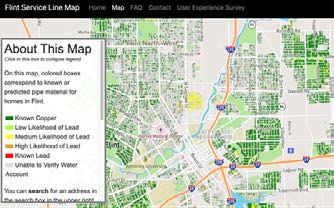
FLINT LEAD FREE | 2021 REPORT FLINT LEAD FREE | 2021 REPORT
When screened using the Lead Risk Screening Tool Blood Lead Testing & Results for those residing in should be tested at 1 and 2 years of age during well-child
(see Appendix A), if a pregnant woman answers Flint – 2013-2019 doctor visits. These are the ages when children developmen-
“yes” or “unsure” to any question, this then triggers tally have strong hand to mouth behaviors and are most at
a healthcare provider referral to Genesee CHAP for Child blood lead testing in the State of Michigan is report- risk for household lead exposure (paint, dust, etc.). High risk
lead education, connection to possible environmen- ed to the MDHHS Childhood Lead Poisoning Prevention is designated by the CDC and American Academy of Pediat-
tal lead remediation services, and other CHAP ser- Program (CLPPP). They are responsible for providing: rics and includes risk factors such as age of home, Medicaid
vices, including those that address the social deter- • Blood lead surveillance, data, and reports status, parental hobbies/occupation, etc. Blood lead testing
minants of health. CHAP community-based nurses for adults is done: 1) required by Michigan OSHA regulations
engage the referred pregnant women, refer to Mich- • Lead poisoning education and outreach (1910.1025(j)(1)(i) The employer shall institute a medical sur-
igan’s Lead Safe Home Program as appropriate, and veillance program for all employees who are or may be ex-
• Support to local health departments to provide
work to address any family SDOH needs. CHAP also posed at or above airborne concentration of lead of 30 micro-
provides feedback to referring providers regarding * Health services for children with elevated grams per cubic meter of air averaged over an 8-hour period.
the outcome of services delivered by CHAP nurses. blood lead levels for more than 30 days per year. for individuals with; 2) patient
or health care provider are concerned about possible expo-
Based on specific concerns or hazards identified, in- * Health services for children at risk of lead sure (i.e. hobby involving firearms); or 3) health care provider
terventions facilitated include the following: poisoning concerned that patient’s symptoms indicate possible lead
• Lead risk education • Funding to local health departments and/or alter- toxicity. Since the recommendation for blood testing is not
natives for Elevated Blood Lead Level (EBLL) nurse universal and must be determined by an algorithm of risk fac-
• Medical home connection tors or known/suspected exposure, blood lead testing rates
• Referral to MDHHS Lead Safe Home Program case management
are low and only capture a small segment of the population.
as appropriate, Since May 1, 2016, children in Genesee County with a Blood
• Addressing SDOH needs (e.g. food, transpor- Lead Level (BLL) at or greater than 4.5 µg/dL have been referred Blood lead testing only reflects recent and/or ongoing
tation, car seats, safe sleep, pack and plays, in- to the Children›s Healthcare Access Program EBLL Nurse Case exposure to lead. With a short detection window in blood
surance, WIC, MIHP services, and community Management program managed by the Greater Flint Health (half-life approx. 28 days), blood lead testing does not cap-
resources) that can help the expecting mother Coalition. The goal of EBLL Nurse Case Management Services is ture historic and/or cumulative lead exposure. In addition,
maintain a healthy pregnancy and ensure a safe to bring every child’s venous blood lead level below 4.5 micro- blood lead surveillance programs (performed at the rou-
environment for their soon-to-be delivered new- grams per deciliter (mg/dL) and prevent future EBLLs by over- tine ages of 1 and 2 years) do not adequately reflect lead
born. seeing the reduction or elimination of sources of lead (or po- in water exposure which burdens a younger and more de-
tential sources of lead) in the child’s environment. Nurse Case velopmentally vulnerable population.
2019 Flint Outcomes Photo credit: www.pexels.com Management services support the child’s continued health Of note, following the widespread recognition of the
and safety, connects them with environmental, social, and Flint water crisis, there was expanded testing for blood
From the start of the pilot program on July 1, 2019 through December 31, 2019, there were 166 total OB Lead Risk Screen-
medical services, and ensure coordination with their medical lead levels (see increase in number of children tested in
ing Referrals from Flint, of which 138 (83%) were for expecting mothers covered by Medicaid insurance. 86% of referral
home and Medicaid Health Plan (as applicable). 2016). Although more children were noted to have BLLs
reasons were fully resolved (i.e., reached and provided with lead education), while 13% were unable to be reached, and
only 1% declined services. The top reasons for referral were a “Yes” or “Unsure” response to questions about living in a home For adults, the Michigan Adult Blood Lead Epidemiolo- >4.5 and >10 µg/dL, the percent decreased because of the
built before 1978, living in a home built before 1978 that is currently being renovated or repaired, or water has been tested gy Surveillance (ABLES) program works with MDHHS by increased denominator.
for lead and the lead level was high. Note: An additional 73 referrals were received for women who lived or received their collecting the results of blood lead testing, confirming di- For the following three tables examining blood lead levels,
OB care in Genesee County, but who did not live in the city of Flint. agnoses, and investigating exposure circumstances. The Flint residence is defined as “Flint” when it is listed as the res-
ABLES program is housed in the Occupational and Envi- idence from the collected address. Each person is included
Community Education ronmental Medicine Division of Michigan State Universi- only once per year in annual counts. If a person had multi-
ty’s College of Human Medicine. ple tests in the year, the highest BLL from a venous test was
Genesee Health System conducted trainings in August and October 2018. Each five-hour training day had two parts: the
first was open to the community and focused on how to use filters correctly, how to communicate about filter use, infor- counted. If no venous test was performed, the highest BLL
mation about sources of lead and the Lead Safe Home Program, and other environmental hazards; the second served as a from a capillary blood draw was counted. If the type of test
Interpretation of Blood Lead Level Testing
train-the-trainer session to instruct Community Health Workers (CHWs) and other participants how to effectively commu- was unknown, the highest BLL obtained from an unknown
nicate gained knowledge and skills. Between the two trainings, 150 people were trained, 135 of whom were CHWs working Blood lead testing of children has been traditionally used as a sample type was counted. These data were obtained from
directly with Flint families, and several were from the Flint Registry. detector of environmental contamination. High risk children MDHHS Health Data warehouse, current as of 2020.
15 16
FLINT LEAD FREE | 2021 REPORT

Children who are less than 6 years residing in Flint, MI

              Calendar Year         2013         2014        2015        2016         2017        2018      2019**
 Estimated number of              9558          9119       9020        8784         8549        8543        8543
 children*
 Number tested                    3504          3500       3803        7394         3487        3340        3137
 Percent tested                   36.7%       38.4%        42.2%       84.2%       40.8%       39.1%        36.7%
 Number ≥4.5 µg/dL                 103          129         113         176          95          78           77
 Percent ≥4.5 µg/dL                2.9          3.7         3.0         2.4          2.7         2.3         2.5
 Number ≥10 µg/dL                   17           20         22           40          21          15           12
 Percent ≥10 µg/dL                 0.5          0.6         0.6         0.5          0.6         0.4         0.4
*Based on Annual Community Survey estimates from the US Census Bureau shared by MDHHS. **2019 estimates are not
available so 2018 estimate used.
Children who are 6-17 years residing in Flint

              Calendar Year       2013          2014       2015        2016         2017        2018        2019
 Number tested
 Number ≥4.5 µg/dL
                                   583
                                     *
                                                429
                                                 6
                                                           1168
                                                             7
                                                                       7947
                                                                         44
                                                                                    1802
                                                                                     15
                                                                                                1253
                                                                                                  7
                                                                                                             929
                                                                                                               6
                                                                                                                         ECONOMICS AND NEXT STEPS
 Percent ≥4.5 µg/dL                  *          1.4         0.6          0.6         0.8         0.6          0.6
 Number ≥10 µg/dL                    *           *           *           8            *           *            *
 Percent ≥10 µg/dL                   *           *           *           0.1          *           *            *
Adults residing in Flint

              Calendar Year       2013          2014       2015        2016         2017        2018        2019
 Number tested                     153          128         854        16902        3494        2827         2180
 Number ≥5 µg/dL                    17           13          23         262          60           26          18

 Percent ≥5 µg/dL                  11.1         10.2        2.7          1.6         1.7         0.9          0.8
 Number ≥10 µg/dL                   7            *           *           48          12           7            *
 Percent ≥10 µg/dL                 4.6           *           *           0.3         0.3         0.2           *
* Counts between one (1) and five (5) are not reported (replaced with * in the table above). Other counts are also not
reported if they can be used to calculate the suppressed counts. This is done to protect the privacy of people who had
a blood lead test.
For additional information on Flint adult blood lead results from 2010-2017, please see this report: https://oem.msu.
edu/images/annual_reports/2020/Flint_ABLES_Report.pdf.

                                                                                                                    17
FLINT LEAD FREE | 2021 REPORT
Preliminary Economic Analysis In 2018, the City of Flint and Flint Lead Free co-chair, partici-
pated in an interview conducted by the National Center for
From decreased economic productivity to added health Healthy Housing (NCHH) as part of their local research for a
care, education, and criminal justice expenses, the societal state-funded grant project called the Technical Assistance for
costs of preventable lead exposure are great. A report by Code Transformation and Innovation Collaborative (TACTIC).
Pew and Robert Wood Johnson Foundation noted an esti- The project involved a thorough review of local housing codes
mated cost benefit of $84 billion annually from eliminating and provided recommendations on how lead poisoning pre-
lead exposure in the United States. Preliminary econom- vention activities can be integrated into existing housing
ic analysis of Flint’s lead elimination efforts, using Alta- codes. In 2019, NCHH received funding from the state to assist
rum’s Value Prevention Tool and incorporating data from municipalities from the first TACTIC report as they explore ways
Flint, estimates the lead prevention activities will gener-
CONCLUSION
to prevent lead exposure through code transformation. NCHH
ate $53.3 million dollars in future economic benefits for and the City of Flint are actively planning next steps and will
children when considering the number of pipes replaced develop a process for implementing recommendations in the
and homes abated from 2016-2019. report with technical assistance from NCHH.
These benefits include the impacts of reduced lead expo- In 2019, Flint Lead Free member, Local Initiatives Support
sure for Flint children, and the resulted long-term impacts Corporation received a two-year grant to plan and imple-
on health, lifetime earnings, and longevity. The benefits ment Flint Healthy Homes, an intersectional partnership
are estimated conservatively, measuring the impacts for that works to address health and well-being upstream by
children currently under the age of six and benefits ex- addressing the social determinants of health at a systems
pected for future kids born into remediated homes over level, concerning housing, to achieve health equity and
the next 10 years. eliminate health disparities. With lead prevention and mit-
igation identified as an area of focus for the collaborative,
Challenges & New Opportunities Flint Healthy Homes will coordinate efforts to build com-
munity and partner knowledge and awareness, develop
While there is significant primary prevention activity tak- and implement a uniform citywide approach to healthy
ing place in Flint, there have been recent partnerships and housing through policy and practice change, and devel-
opportunities which continue to grow these efforts. This is op a competent, multi-disciplinary workforce to achieve
critical during a time when the worldwide COVID pandemic healthy environments for all Flint families. Flint Lead Free
has resulted in a decrease in BLL screening, a pause in many will be an active partner in the healthy housing efforts, en-
home inspections and abatements, and a delay in lead pipe suring data driven goals and strategies are incorporated in
replacements. all lead primary prevention activities and programs.
In 2018 the City of Flint received its first Housing and Ur- Over the next year, Flint Lead Free will continue to iden-
ban Development Lead-Based Paint Hazard and Healthy tify and engage relevant stakeholders to ensure all the
Housing Grant. The $2.2 million award will help build the appropriate voices are included in strategic conversations.
City’s capacity to address lead exposure in Flint homes, in- Flint Lead Free will continue to track and update primary
corporate healthy housing practices into city planning and prevention programs and services, lead elimination data,
development efforts, and provide lead inspection training and lead-related training opportunities. Future reports
and certification to city staff. In 2020, after changes in City also hope to include mapping to better visualize and tar-
of Flint administration, the Lead-Based Paint Hazard Control get lead elimination effort, as well as the updated eco-
project launched in partnership with Flint Local Initiatives nomic benefits of lead elimination. Flint Lead Free rec-
Support, Corporation and the Greater Flint Health Coalition. ognizes and will continue to work to overcome ongoing
During the last two years of the grant period the program is challenges to achieve lead elimination such as workforce
planning to address lead exposure in 70 homes, investing development and competitive compensation, awareness
up to $15,000 per home, in the City of Flint. Mitigation and of and trust in programs, wait time for abatement, sustain-
abatement efforts will support lead removal in windows, ability of resources, and the creation and enforcement of
doors, porch flooring, etc. stronger codes and regulations.
19FLINT LEAD FREE | 2021 REPORT
Conclusion Special Thank You
This Flint Lead Free report attempts to quantify lead-related Carin Speidel, Dan Albright, and Heidi Neumayer from Mich-
activity in Flint over time. Although data challenges exist, in- igan Department of Health and Human Services for coordi-
cluding a time lag for obtaining the numbers, the yearly trends nating information and data explanations.
reveal an unprecedented, coordinated and growing multi-sec-
tor effort to decrease children’s lead exposure burden. With an Kenneth Rosenman MD from Occupational and Environmen-
emphasis on primary prevention, sources of tal Medicine Division of Michigan State University’s College of
lead are being identified and eliminated be- Human Medicine for providing adult blood lead data.
fore children are unnecessarily exposed. And Billie Mitchell from the City of Flint for co-
as such, there is a quantifiable societal eco- ordinating lead service line replacement
nomic benefit. data and information and Lead Based
Despite these positive trends, the legacy
FLINT Paint Hazard program details.
LEAD
of lead lingers disproportionately in the Heather Shurter and Susan Schneberger
environments of our most vulnerable from the EBLL Case Management Program
FREE
children. Contrary to the science of lead’s at the Greater Flint Health Coalition for pro-
neurotoxicity, but in deference to the bot- viding Genesee CHAP & OB/GYN Primary
tom line of industries, the use of lead in DATA TR
Prevention Lead Risk Screening Program de-
tails and data.
ENDS &
MULTI-S
ECTOR
paint, plumbing, gasoline and other ap-
COLLAB
2021 REP ORATIO
N
ORT
plications was widespread and contin- Ian Robinson and Jared Webb from BlueC-
ued for decades. Resources need to be onduit, and Stacey Woods from National Re-
sustained and increased to continue to source Defense Council for Flint Service Line
advance Flint Lead Free’s efforts and Map information and background.
to share best practices with similarly
impacted communities. We look forward to continuing this Thomas Hutchinson and John Guynn from Gen-
positive and proactive work with our many partners. esee County Habitat Humanity for providing Home Repair
and filter program data and information.
The Flint Registry extends our appreciation to the members
of Flint Lead Free and the Report Subcommittee for their Christina Kelly and Lucille James from the Genesee County
feedback and support in the development of this report. Land Bank for providing Flint property demolition data.
Primary Authors Corwin Rhyan from Center for Value in Health Care at Altarum
for preliminary economic analysis.
• Mona Hanna-Attisha, MSU-Hurley Children’s Hos-
pital Pediatric Public Health Initiative Ebony Stith from MSU-Hurley Children’s Hospital Pediatric
• Jenny LaChance, MSU-Hurley Children’s Hospital Public Health Initiative for report graphic design, photogra-
Pediatric Public Health Initiative phy and production.
• Lydia Starrs, Community Foundation of Greater Flint Contact Information
Ebony Stith | Communications Manager
Funding Acknowledgements Flint Registry
200 East 1st Street, Flint, MI 48502
Michigan State University College of Human Medicine re-
stithebo@msu.edu
ceived funding for this work from the Centers for Disease
810-600-9147
Control and Prevention (CDC), Grant #NUE2EH001370.
Flintregistry.org
The Community Foundation of Greater Flint’s Health Systems
Navigator was funded by a four-year grant from the Kresge
Foundation.
21You can also read


