G20-T20 ROUNDTABLE DISCUSSION ON - T20 Japan 2019
←
→
Page content transcription
If your browser does not render page correctly, please read the page content below
G20-T20 ROUNDTABLE DISCUSSION ON
“Global Value Chains for Inclusive Development:
FDI, investment facilitation and linkage creation”

                28 May 2019 (Tuesday)
                     13:00-16:30
   United Nations University, (1F) Annex Space, Tokyo

Hosts: United Nations Industrial Development Organization
      (UNIDO) and German Development Institute /
     Deutsches Institut für Entwicklungspolitik (DIE)

             www.t20japan.org/events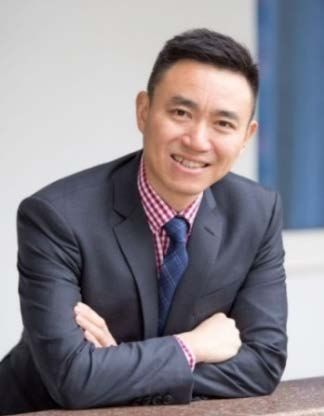
G20-T20 Roundtable Discussion on

                     “Global Value Chains for Inclusive Development:
                     FDI, investment facilitation and linkage creation”

Announcement

(This event is open to G20 and T20 participants or by special invitation)

Foreign direct investment (FDI) offers a useful entry point for integration into global value chains (GVCs).
It also offers a host of technology and financial resources that may bring tangible benefits to domestic firms
and industries, thereby increasing their productivity and capability. However, FDI attraction is not without
its challenges amid intensifying competition for foreign investments. Even for countries that successfully
attracted FDI positive development outcomes are not pre-ordained. The roundtable will discuss two major
topics – investment facilitation as well as linkages with foreign investors – to address ideas and options
available to policymakers, which may contribute to evidence-based policymaking at G20 at the broad level.

Information

Time and date: 28 May 2019 (Tuesday) 1 - 4:30 pm.

Venue: United Nations University, (1F) Annex Space, Tokyo

Hosts: United Nations Industrial Development Organization (UNIDO) and German Development Institute /
Deutsches Institut für Entwicklungspolitik (DIE)

Registration for the event is mandatory and available HERE

Agenda

The roundtable is planned as a half-day event with two sessions. The first session presents new
considerations in FDI attraction that warrant attention for policymakers and practitioners alike. It highlights
best practices in investment facilitation and promotion, presents some innovative and possibly replicable
programmes from around the world, and outlines key implementation issues that may help investment
promotion agencies (IPAs) enhance their capability to attract and retain FDI. Also, this session looks at the
potential benefits of an international framework on investment facilitation currently under discussion at the
WTO. The second session focuses on integration of domestic enterprises, most notably small and medium-
sized enterprises (SMEs), into the global production networks of multinational firms, which is often difficult
due to scale and capability constraints. The session examines the rationale for SME integration from the
perspective of long-term upgrading and the types of policies that are needed to link domestic firms to foreign
investment in a beneficial way over time.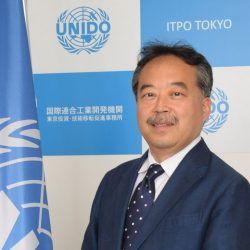
The tentative agenda is as follows:

1 - 1:30 pm              Opening remarks:
                         Mr. Taikan Oki, Senior Vice-Rector, United Nations University (UNU)
                         Mr. Yuko Yasunaga, Head, United Nations Industrial Development Organization
                         (UNIDO), Investment and Technology Promotion Office (ITPO) Japan

                         Keynote speech:
                         H.E. Ms. Fetlework Gebregziabher Abrha, Minister of Trade and Industry, Ethiopia

1:30 - 2:30 pm           Session 1: FDI Attraction and Facilitation
                         Moderator: Mr. Ferda Gelegen, UNIDO-ITPO Japan

                         Presentation: Mr. Axel Berger, German Development Institute / Deutsches Institut
                         für Entwicklungspolitik (GDI/DIE)

                         Discussants:
                         - Mr. Manjiao Chi, University of International Business and Economics (UIBE)
                         - Mr. Yuko Yasunaga, UNIDO-ITPO Japan
                         Comments by participants

2:30 - 3 pm              Coffee break

3 - 4:15 pm              Session 2: Linking Domestic Firms to Foreign Investors
                         Moderator: Mr. Ferda Gelegen, UNIDO-ITPO Japan

                         Presentation: Mr. Adnan Seric, UNIDO

                         Discussants:
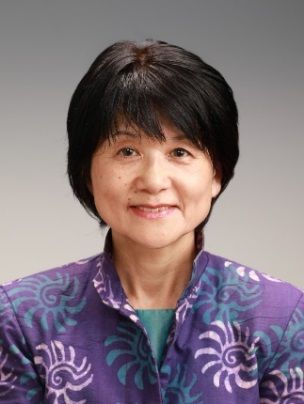
                         - Ms. Izumi Ohno, Japan International Cooperation Agency (JICA) Research
                         Institute
                         - Mr. Dongsoo Kang, Korea Development Institute (KDI)
                         - Mr. Fukunari Kimura, Economic Research Institute for ASEAN and East Asia
                         (ERIA)
                         - Mr. Yasuyuki Todo, Waseda University
                         Comments by participants

4:15 - 4:30 pm           Wrap-up discussion and closing remarks
* Agenda is subject to change.

This roundtable is a T20 Japan associated event.
Biographies

                     Taikan Oki
                     Senior Vice-Rector, United Nations University (UNU). Assistant Secretary-General,
                     United Nations (2016-). Professor, University of Tokyo

                    Mr. Oki has a long-standing academic career, mainly with the University of Tokyo
                    (UT), and is a winner of numerous environmental awards. A Ph.D. holder in
                    engineering from UT, with extensive expertise in global hydrology and the
                    sustainability of world water resources. He was the first Japanese fellow to the
                    American Geophysical Union’s Hydrology Section, and was a lead author for the 5th
Assessment Report of the Intergovernmental Panel for Climate Change.

                       Yuko Yasunaga
                       Head of the United Nations Industrial Development Organization, Investment and
                       Technology Promotion Office in Tokyo (UNIDO ITPO Tokyo)

                      Mr. Yasunaga has had an extensive career with Japan’s Ministry of Economy, Trade
                      and Industry (METI), with expertise in the areas of natural resources and industrial
                      science/technology development. From 2015 to 2017, he was Vice-President of
                      Japan’s National Institute of Advanced Industrial Science and Technology (AIST)
                      after working as Deputy Director-General responsible for the Ministry’s innovation
policy. Mr. Yasunaga holds a M.Eng. in Resource Development Engineering from the University of Tokyo,
a M.Sc. in Mineral Economics, from the Colorado School of Mines, USA, and a Ph.D., from the University
of Tokyo.

                       Fetlework Gebregziabher Abrha
                       Minister, Ministry of Trade and Industry (MOTI)

                       H.E. Ms. Abrha has served in various senior posts in the Federal Democratic
                       Republic of Ethiopia during her career, including Regional Bureau Head of Trade,
                       Industry and Urban Development, Director General of the Federal Finance
                       Intelligence and Head of Public Relations and Urban Sector. She holds a MSc from
                       the London School of Economics.
Ferda Gelegen
Deputy Head at the United Nations Industrial Development Organization,
Investment and Technology Promotion Office, Tokyo (UNIDO ITPO Tokyo) in
charge of Investment Promotion and Operations
Previously Mr. Gelegen managed various investment promotion projects
covering Central Asia, Middle East and North Africa and also India, Pakistan
and Turkey. Before joining UNIDO, he worked as a corporate accountant and as a consultant in Washington
D.C., and also as an economic advisor in Istanbul. Mr. Gelegen studied business administration and
economics at the George Washington University, Washington, D.C.
Axel Berger
Senior Researcher at the German Development Institute / Deutsches Institut für
Entwicklungspolitik (DIE), Programme Transformation of Economic and Social
System
Mr. Berger heads the G20 Policy Research Group at DIE and leads the T20 Task
Force on Trade, Investment and Tax in 2017 and 2018. He works on the design,
effects and diffusion patterns of international trade and investment agreements,
with a focus on emerging markets and developing countries. Other areas of
current research include the impact of free trade agreements on upgrading within global value chains and the
role of the G20 in global governance. He teaches international political economy at the University of Bonn
and regularly advises developing countries, development agencies and international organisations on trade
and investment matters. Mr. Berger holds a doctorate in political science from the University of Duisburg-
Essen and a Master’s degree from the Munich Ludwig-Maximilians-University in political science,
economics and modern history.
Manjiao Chi
Full professor and founding director, Center for International Economic Law and
Policy (CIELP), Law School, University of International Business and
Economics (UIBE), Beijing
Mr. Chi’s recent research and teaching focus on international trade and
investment law and policy, dispute settlement, global development and
cooperation. He regularly teaches and extensively publishes in these fields in both
English and Chinese. Among his many academic affiliations, he is headquarter
member, ILA Committee of Rule of Law and International Investment Law;
Advisor, UNESCAP; Steering Committee member, Academic Forum on ISDS; Executive Council member,
Chinese Society of International Law; and Scientific Advisory Board member, Centre for Global
Cooperation Research (GCR Center). Prior to joining UIBE, Mr. Chi was full professor and deputy director,
International Economic Law Institute, Law School, Xiamen University; Senior Fellow, GCR Center; and
Counsel-in-Residence (on Secondment), Department of Treaty and Law, Ministry of Commerce of China.
He holds BA, LLM and Ph.D in law degrees.Adnan Seric
Research manager at the Department of Policy Research and Statistics (PRS) of
the United Nations Industrial Development Organization (UNIDO)
Mr. Seric is currently leading the department’s work on global value chains and
foreign direct investments. Prior to joining PRS, Mr. Seric has been part of
UNIDO’s trade and investment team leading the design and implementation of
technical assistance programs in multiple countries, especially in the African,
Eastern Europe and Southeast Asia regions. His research has been published widely in peer-reviewed
journals, books, special reports, policy briefs, social media and blogs. Previously, he worked as an
economist at the Organisation for Economic Co-operation and Development (OECD) where he has
conducted policy research and provided advisory services on trade and investment related issues in the
Europe and Central Asia (ECA) region. Mr. Seric holds a Ph.D. in Economics from the University of St
Andrews, United Kingdom.
Izumi Ohno
Director of the Japan International Cooperation Agency (JICA) Research Institute
Ms. Ohno is specialized in international development policy, Japanese
development cooperation, business and development. Prior to joining the JICA
Research Institute in October 2018, she was Professor of the National Graduate
Institute for Policy Studies (GRIPS) and continues to serve as a visiting professor.
In 2014 she served as a member of the Advisory Panel to the Minister of Foreign
Affairs on the ODA Charter Review. She also worked at JICA, the World Bank,
and the Japan Bank for International Cooperation (JBIC). Ms. Ohno graduated
from the Tsuda College (Tokyo) and holds a MPA from the Woodrow Wilson School of Public and
International Affairs at the Princeton University in USA. Her publications include books on: From a Small
Factory in Japan to a Global Firm in Asia: SME’s Overseas Expansion Strategy & Policy Support
(ed.,Chuo-keizai Publishing Co., 2015); Eastern and Western Ideas for African Growth (edited with Kenichi
Ohno, Routledge, 2013); Introduction to BOP Business: Addressing Global Challenges through Partnership
(co-authored, Chuo-keizai Publishing Co., 2011).Dongsoo Kang
Executive Director, Research Bureau, Korea Development Institute (KDI)
Mr. Kang joined KDI as a fellow in 2000 after teaching at the State University of
New York in Binghamton in the United States. He has worked not only in KDI
but also in positions of other institutions including Economist at OECD and
Senior Advisor to the Deputy Prime Minister, Ministry of Strategy and Finance.
His research interests focus on financial economics, macroeconomics,
entrepreneurship policies, and Chinese economy. Mr. Kang received his Ph.D.
and M.A. in economics from University of Chicago in 1998 and 1993,
respectively, and his B.A. in international economics from Seoul National University in 1990.
Fukunari Kimura
Chief Economist at the Economic Research Institute for ASEAN and East Asia
(ERIA)
Mr. Kimura received his Bachelor of Laws from the Faculty of Law, University
of Tokyo in 1982. He then received Master of Science and PhD titles from the
Department of Economics, University of Wisconsin-Madison in 1990 and 1991,
respectively. He worked for the Department of Economics, State University of
New York at Albany as Assistant Professor in 1991-1994, and in the Faculty of
Economics of Keio University as Associate Professor in 1994-2000. Mr. Kimura has recently been active in
writing academic/semi-academic books and articles on international production networks and economic
integration in East Asia.
Yazuyuki Todo
Professor at the Faculty of Political Science and Economics, Waseda University
Mr. Todo has been a Professor at the Graduate School of Economics, Waseda
University since 2014, after serving as a Department Head at the Department of
International Studies, the University of Tokyo. He is also a Faculty Fellow at
Research Institute of Economy, Trade and Industry. He received a Ph.D. in
economics from Stanford University in 2000. His research fields are
international economics, development economics, and applied micro-
econometrics. He focuses on the role of social and economic network in economic growth and resilience,
using firm- and household-level data from various countries. He has published more than 50 academic
papers in refereed journals including the Journal of Industrial Economics, the Journal of Regional Science,
Ecological Economics, Research Policy, and World Development. He has also served a number of policy-
advising committees in the national and local governments, including the Frontier Subcommittee of the
National Policy Meeting of the Cabinet Office, the Committee for Japan’s Future under the Council on
Economic and Fiscal Policy of the Cabinet Office, and the Industrial Structure Council of the Ministry of
Economy, Industry and Trade, and T20 Japan 2019 under G20.You can also read


