Generation Adderall? Prescription Stimulant Use and Misuse in College Students
←
→
Page content transcription
If your browser does not render page correctly, please read the page content below
Generation Adderall?

Prescription Stimulant Use and Misuse in
             College Students

               Jennifer Creedon, MD
                Chief Resident , Psychiatry
                 Danny Towns, DO
                Chief Resident , Psychiatry
                 Aaron Krenkel, MD
                Psychiatrist: Reed College
                  Kara Powers, MD
           Psychiatrist, Lewis and Clark College
Disclosures

|   None of the presenters have anything to disclose

|   Disclaimer: All of the presenters believe that
    ADHD is a real neuropsychiatric disorder that
    affects a small percentage of the population.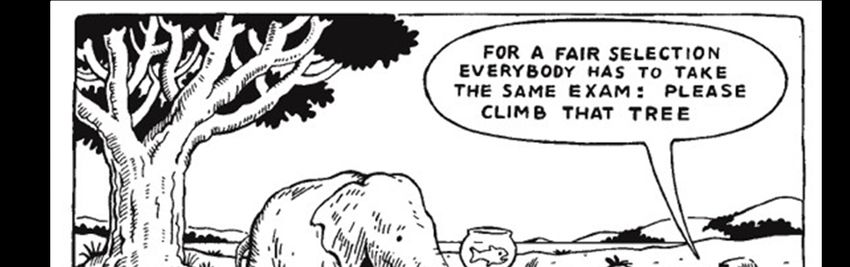
Objectives

|   Discuss the current rates of stimulant use and
    misuse in college populations
|   Define the concept of "neuroenhancement"
|   Discuss the pitfalls in diagnosis of ADHD
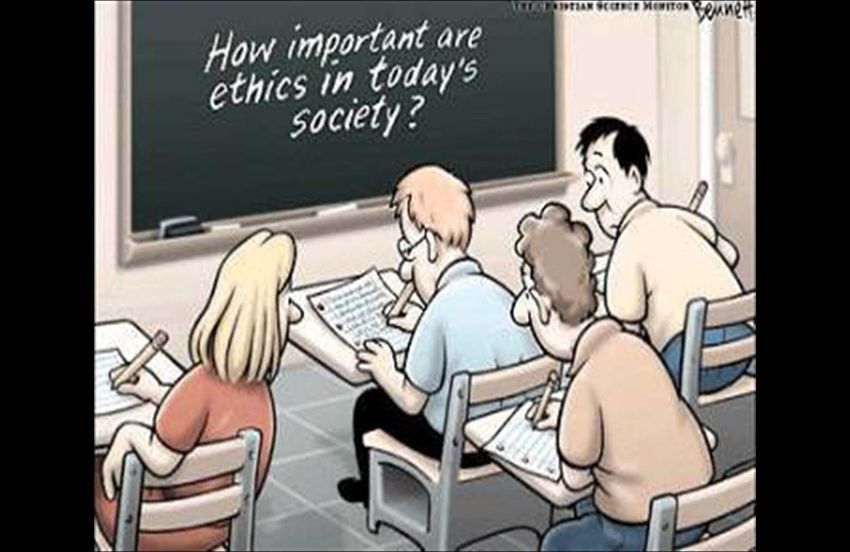
|   Describe ethical considerations and risks of the
    misuse of stimulant drugs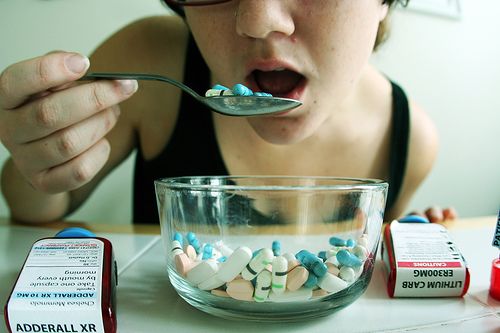
ADHD: Is there an “epidemic”?

|   NYT Article: “The Selling of Attention Deficit
    Disorder” Dec 2013
    y   Discussed concern over rapid increase in ADHD
        diagnoses and stimulant prescriptions
    y   Focused particularly on the role of pharmaceutical
        advertising
    y   From Dr. Keith Conners (creator of the Conners
        ADHD rating scale):
“The numbers make it look like an epidemic. Well, it’s not.
  It’s preposterous. This is a concoction to justify the
  giving out of medication at unprecedented and
  unjustifiable levels.”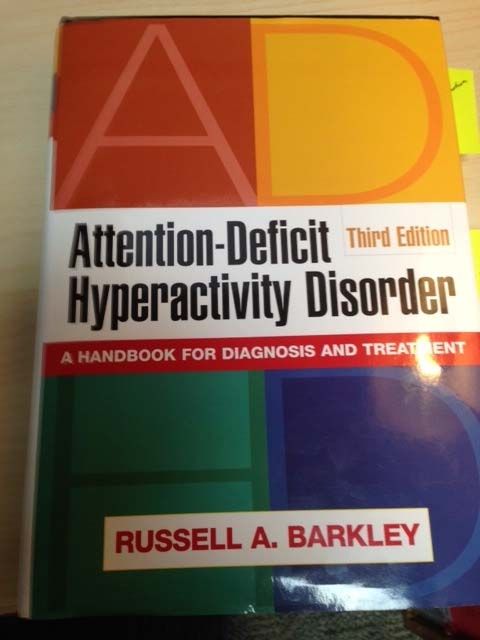
Epidemiology

|   Estimated natural prevalence of ADHD:
    y   3-5% of children
    y   2.5-4.4% of adults

|   But…
    y   Surveys indicate 11% of 4-17 year olds had been
        diagnosed with ADHD as of 2011
    y   Rates of diagnoses increased 5% per year between
        2003-2011
There’s a pill for that…

|   Sales of prescription stimulants have increased
    from $1.7 billion to $9 billion in the past decade

|   There were 16 million prescriptions written for
    adults ages 20-39 in 2012, triple the amount
    written in 2007
College students: the next generation?

•   Rates of ADHD in college students estimated at
    5% based on surveys of incoming freshmen
•   Rates of diagnosis during college difficult to
    determine, but is not inconsequential
•   Significant overlap between ADHD symptoms
    and normal traits
•   In one study of students self-referred for ADHD
    evaluation, 25-48% exaggerated symptoms
A Dangerous Trend?
| NYT Article: Drowned in a Stream of
Prescriptions (Feb 2013)
y Story of 24-year old Richard Fee, a honors college
graduate started on stimulants after a brief initial
assessment and diagnosis of ADHD after having
never had symptoms
y Details his 2-year history of escalating use, functional
decline, psychotic symptoms, and ultimate suicide
y From on of Richard’s prescribers: “He didn’t seem like
he was a drug person at all, but rather a person that
was misunderstood, really desirous of becoming a
physician. He was very slick and smooth. He
convinced me there was a benefit.”Misuse, abuse, and diversion
| Review article by Wilens in 2008 found:
y 5-35% of college age students reported non-
prescription use of prescription stimulants in the
past year
y 29% of college students with valid prescriptions
admitted to selling their medications
y 58% used for concentration, 43% for alertness, 45% to
get high
y 22% of students with stimulant prescriptions took
higher doses than prescribed; 10% of them to get high1/5
Not Just College…
| A 2010 study of a large public medical school
found that 10% of students reported non-
prescription use of prescription stimulants
| 70% of these students reported obtaining
medications from their peers
| Most common motivations for use were increased
alertness for studying and improved academic
performanceWho misuses stimulants?
| Hartung et al. 2013 study of students at 4 universities:
y Misusers more likely to stay awake, to study, and for
recreation
y Higher rates of other substance use
y Misusers endorsed more perfectionism, higher levels of
parental expectation, higher sensation seeking
y 81% of misusers without a prescription got meds from
friendsWho provides them?
| Desantis et al. 2013 study of 2,139 undergraduates:
y Of students with stimulant prescription, 52.5% had
given pills away, 39.2% had sold them
y Distribution was predicted by: gender (men>women),
sorority/fraternity membership, overestimation of
perceived stimulant use by others, use of ETOH, MJ,
hallucinogens, painkillers
y No significant differences across GPA or majors
| Students with stimulant prescriptions were more likely to
be approached to sell/give/trade their meds than those with
prescriptions for opiates, benzos, or sleeping pillsADHD DIAGNOSIS ON COLLEGE CAMPUSES
Different groups with overlap

• Those with clear ADHD.
• Those with some ADHD symptoms and disturbance in
  academic performance.
• Those who use stimulants as cognitive enhancers for
  studying/exams/writing papers/etc.
• Those who use stimulants recreationally.
History of same

• 1937 – NY Times article about
  “brain fuel.”
• 1939 death of Purdue
  University student on “brain
  drugs.”
• AMA approval of amphetamine
  medication in 1939 specifically
  excluded use of drug by healthy
  people.
Risk/benefit analysis of stimulant use

• Different for each of the four groups.
• Different for college students? Adults?
• Responsibility to other students not in our office.
• Short-term vs. long-term considerations.
Arguments against cognitive enhancers

• It’s cheating.
• They’re illegal.
• Indirect coercion.
• They are dangerous.
• What does it mean regarding learning?
• What is the value we are seeking? Does product change
  after stimulant use in this way?
Arguments for…

• Could prevention of neuroenhancement be enforced?
  Prohibition is likely to fail.
• Limiting autonomy?
• Should we limit people from working longer hours,
  being more focused, etc?
• Inequalities already exist.
• People use caffeine, nicotine, etc, already.
Arguments for…

• Cosmetic neurology vs. cosmetic surgery vs. vs. shift
  work treatments vs. sleep aids vs. sexual dysfunction
  treatments vs. general medical treatments.
• Could they actually be used to decrease inequalities?
• At least a working relationship with them would exist if
  we gave stimulants to them.
What do we do?

• Systems-based interventions to optimize performance,
  attention, reduce perceived need for non-medical
  stimulant use, and value learning?
• Could these same interventions decrease mood and
  anxiety disorders and substance misuse as well?
General Resources
Barkley, R. Attention-Deficit Hyperactivity: Third Edition. 2005.

DeSantis, A. et al. Illicit Use of Prescription ADHD Medications on a College Campus: A Multimethodological Approach.
    Journal of American College Health. 2008. 57:3, 315-324.

DeSantis A, Anthony K, Cohen E Illegal College ADHD Stimulant Distributors: Characteristics and Potential Areas of
    Intervention. Substance Use and Misuse. 2013

Gladwell, M. Man and Superman. New Yorker. September 9, 2013.

Hartung et al. Stimulant Medication Use in College Students: Comparison of AppropriateUsers, Misusers, and Nonusers.
    Psychology of Addictive Behaviors. 2013. Vol 27

McCabe, S. et al. Non-medical use of prescription stimulants among US college students: prevalence and correlates from a
    national survey. Society for the study of Addictions, 2005. 99, 96-106.

McCabe, S. et al. Trends and college-level characteristics associated with the non-medical use of prescription drugs among US
    college students from 1993 to 2001. Society for the Study of Addiction, 2007. 102, 455-465.

McCabe, S. et al. Medical Use, Illicit Use, and Diversion of Prescription Stimulant Medication. Journal of Psychoactive Drugs,
    2006. 38:1, 43-56.

Schwartz, A The Selling of Attention Deficit Disorder. The New York Times. Dec 14th, 2013

Schwarts, A Drowned in a Sea of Prescription. The New York Times. Feb 2nd 2013.

Talbot, M. Brain Gain. New Yorker. April 27, 2009.

Tuttle J, Scheurich N, Ranseen J. Prevalence of ADHD Diagnosis and NonmedicalPrescription Stimulant Use in Medical
     Students. Journal of Academic Psychiatry. May-June 2010.

Wilens, T. et al. Misuse and Diversion of Stimulants Prescribed for ADHD: A Systematic Review of the Literature. J. Am.
     Acad. Child Adolesc. Psychiatry, January 2008.
Ethics Resources Cakic, V. Smart drugs for cognitive enhancement: ethical and pragmatic considerations in the era of cosmetic neurology. Journal of Medical Ethics, 2009. 35, 611-615. Farah, M. et al. Neurocognitive enhancement: what can we do and what should we do? Nature Reviews – Neuroscience, May 2004. Forlini, C. Racine, E. Disagreements with implications: diverging discourses on the ethics of non-medical use of methylphenidate for performance enhancement. BMC Medical Ethics, July 2009. 10:9. Poulin, C. From attention-deficit/hyperactivity disorder to medical stimulant use to the diversion of prescribed stimulants to non-medical stimulant use: connecting the dots. Society for the Study of Addiction, 2007. 102, 740-751. Sahakian, B. et al. Neuroethical issues in cognitive enhancement. Journal of Psychopharmacology, 2011, 25:197. Vrecko, S. Just How Cognitive is “Cognitive Enhancement?” On the Significance of Emotions in University Students’ Experiences with Study Drugs. AJOB Neuroscience, 2013. 4:1, 4-12.
You can also read


