Good Shepherd Sunday - 25 April 2021
←
→
Page content transcription
If your browser does not render page correctly, please read the page content below
We are a beacon of God’s light and hope welcoming all to our table of love and diversity.

              Good Shepherd Sunday — 25 April 2021

UNFURLINGS III
Dive the gap between
content and discontent: deep
creative river.

The future is not
somewhere else but here and now:
sunlight, rain dancing.

Stop trying to prove
yourself; become a swallow
in flight; blur of joy.

Change in Syria
or the next Syria starts
here: with me, with you.

Into the rising
wind the kestrel bites her wings;
holds her head so still.

When it comes, as it
will, let the breeze of summer
warm you, all you need.
                                       Ian Adams, Unfurling (Norwich: Canterbury Press, 2014), p. 6

 ✜ READINGS FOR NEXT WEEK 2 MAY 2021
 Easter 5
 Acts 8:26-40; Psalm 22:26-32; 1 John 4:7-21; John 15:1-8
WELCOME

                                       Acknowledgement of Country
                              Nganyi kaaditj Noongar moort kyen kaadak nidja boodja.
         As we gather for worship, we acknowledge the Whadjuk Noongar people as the original custodians
                                of this land, and their ongoing relationship with it.
                            We acknowledge their leaders, past, present and emerging.

A very warm welcome to our service this morning, particularly if you are visiting
St Luke’s for the first time.
We hope you will join us for refreshments in the Alexandra Hall following today’s service and
please be most warmly welcome.
Children are welcome at all our services and there is a dedicated play area for younger children at
the front of the church with Worship Bulletins and pencils available. Children are invited to join
our Sunday School activities on the second Sunday of the month during school term time.
If you have any questions or particular needs, please speak to one of our friendly welcomers.
We invite you to share in a time of stillness and quiet before the service begins.

Our Parish Mission Statement
We are a beacon of God’s light and hope welcoming all to our table of love and diversity.

Donating to St Luke’s
As we move to a more cashless society, you are encouraged to give electronically. Our bank
account details are:
Name: Mosman Parish Council                     BSB: 706-001
Reference: Direct Giving                        Account Number: 3000 3046
Alternatively, you may wish to use our ‘Donation Point Tap’ at the rear of the church by using a
contactless enabled card, mobile or wearable to donate. If you prefer to give cash there is an
offertory bowl available.

 Community Garden                                        Op Shop
 The St Luke’s Community Garden is a means to bring      Our Op Shop is open Wednesday, Friday and
 together members of the local community through         Saturday 9:30am—1:00pm. We recycle quality
 the invigorating and connecting activity of gardening   donations of clothes for women, men and children;
 and is a demonstration site for organic, sustainable,   jewellery; homeware items; bric a brac; and books.
 eco-friendly urban living. The Community Garden is      Any excess donations are then sent to Clutterbugs
 open to anyone who would like to become a General       and other charity shops including The Salvation
 Member or a Bed Holder. More details at                 Army and Save The Children.
 www.stlukescommunitygarden.com.

PAGE 2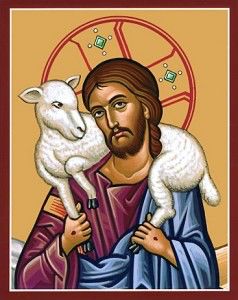
FROM THE RECTOR

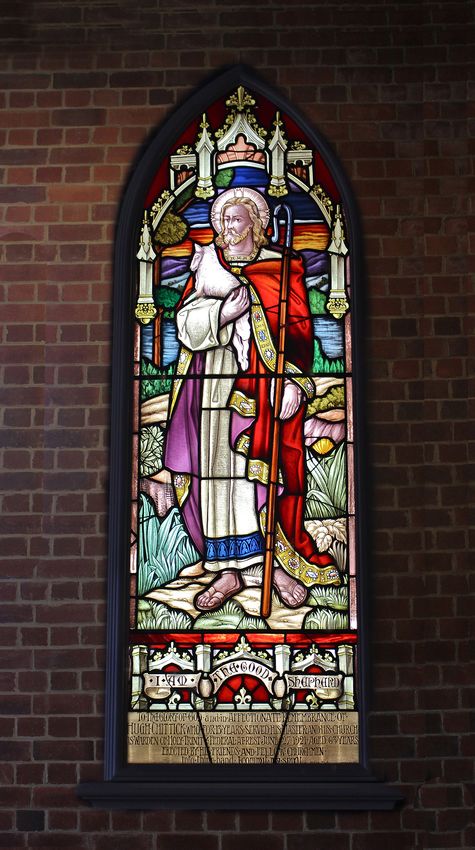
Though the imagery is not as prevalent is this particular cycle of readings, it is still Good
Shepherd Sunday, the Gospel reminds us. While we might wish to imagine the Good Shepherd as
the one in the famous parable—the one who upon finding the lost sheep lovingly hoists it over his
shoulders to bring it back to the other ninety-nine—this is not the shepherd Jesus speaks of
today. This Good Shepherd has to protect the flock from wolves, and lays down his life to do so.
In gathering the lost and searching for the scattered, Jesus does the work of his Father who
desires that all should be found, welcomed, loved, and cherished in the family of God.
Whilst many at the parish level consider the Good Shepherd to be the Rector, many of us have, in
a way, a small subset of the community under our care. We are in relationship with one another,
we care for each other pastorally, we provide hospitality to our visitors. Part of how we exercise
leadership in those roles should be as a pastor, as a Good Shepherd does. This can manifest in at
least two ways: by leading through service and by truly knowing those whom we serve.
If all we do is the minimum, if we say our words without thinking, if all we do at our desk is churn
out group emails, our ministry is hollow and is not true service. Allowing the Holy Spirit to
empower our actions and provide the words we say requires communion with our God; to
spiritually reflect on our roles and feed our spirits. As listeners, we must engage in active
listening, taking time to reflect and discern whether there is a question or concern ‘behind’ the
one expressed. That is, don’t just respond to what a specific complaint might be, but take a
moment to see what motivates the report, what factors into the person coming to you with the
issue at hand.
All of that is easier to do if, like the way Jesus describes himself in today’s Gospel, we too get to
know ‘our sheep.’ A name is not enough. More than what we do at church, organise social
gatherings from time to time. Encourage one another to live the Gospel by noticing each other’s
service with acknowledgement. Above all, be attentive to the needs of each person individually,
and rally around someone—in turn it will be each of us—who needs the loving support of the
Christian community. All of this is a small part of truly being a Good Shepherd here and now.
On this Good Shepherd Sunday, we also pray for The Oratory of the Good Shepherd (OGS), a
dispersed international religious community, within the Anglican Communion. Members of the
oratory are bound together by a common rule and discipline, which requires consecrated
celibacy, and are strengthened by prayer and fellowship; they do not normally live together in
community but meet regularly in chapter and retreat and report to one another on their keeping
of the rule. In Australia, Bishop Lindsay Urwin is currently the Superior General of the Oratory and
Bishop Ken Mason (dec) was a notable member.

Alleluia! Christ is risen.
                                                                                              PAGE 3
OUR SERVICE TODAY
Our service is in the yellow Easter service booklet.
Hymns are in the printed insert.
The psalm is on a printed insert.
Opening Hymn Our Father God who gave us birth
First Reading Acts 4:5-12
Psalm 23
Second Reading 1 John 3:16-24
Gradual Hymn Long ago you taught your people
Gospel John 10:11-18
Offertory Hymn Dominus Regit Me (The King of Love my Shepherd Is),
Closing Hymn June Nixon (1942–)
Recessional O Lord, through all our days
Grand Choeur in G Major, Théodore Salomé (1834-1896)
For Your Contemplation
✜ In the first reading we hear of “a crippled beggar who was healed in the name of Jesus.
What areas in your life are in need of healing at this moment?
✜ The psalm declares that the Lord “leads me beside still waters.” What still waters do you
need to be by at present?
✜ The First Letter of John affirms that Jesus lad down his life for us and asks us “How does
God’s love abide in anyone who has the world’s goods and sees a brother or sister in need
and yet refuses help?” How do you answer this?
✜ In the Gospel parable Jesus says, “the good shepherd lays down his life for the sheep.” Who
are the sheep that you are called to shepherd and how do you give of your life for them?
So I ask you to share my prayer, that ‘the mountain be cast
into the depths of the sea,’ the fear be lifted from all our
hearts and that we may develop the daring, viscerally moved,
shepherdly heart of love along with the creative projects such
a heart will enflame as we follow our Lord outside the camp.
James Allison, On Being Liked (London: Darton, Longman & Todd, 2003), p. 130.
PAGE 4PRAYERS
Daughter of Jerusalem, sing and shout for joy,
for the Lord has risen. Alleluia.
Anglican Communion
The Nippon Sei Ko Kai
Australia
The Diocese of Willochra: Bishop John Stead, Clergy and Laity.
Diocese
Diocese of Perth: Archbishop Kay Goldsworthy, Bishop Jeremy James and Bishop Kate Wilmot;
Esperance Anglican Community School: Jason Bartell, Executive Principal, staff and students;
Fiona Stanley Hospital: chaplains staff and patients; Parish of Floreat: Rev’d David Prescott
(Locum Tenens) and people.
Province: Bluff point, clergy and people; Augusta/Margaret River, clergy and people.
Partner Diocese, Eldoret: Kaptebee Secondary School, clergy and people.
Parishes Seeking Appointment of Clergy
Bassendean, Dianella, Floreat, Morley-Noranda, Scarborough, West Perth.
Partner Parish of St Luke’s Kaptubei, Eldoret
Vicar Rev’d Jonah Tabut and the Parish as they celebrate Easter.
Please Pray for
Alison, Barbara, Val, Maxine, Kim, the enduring COVID-19 pandemic, the sick, lonely, homeless,
refugees and asylum seekers.
Prayer of the Week
O God,
whose son Jesus is the good shepherd of your people:
help us when we hear his voice
to know him who calls us each by name,
and to follow where he leads;
who with you and the Holy Spirit
lives and reigns, one God, for ever and ever.. Amen.
Work makes time worthwhile. Time is all we have to make our lives
bright-coloured, warm, and rich…Good work that leaves the world
softer and fuller and better than even before is the stuff of which
human satisfaction and spiritual value are made.
Joan Chittister OSB
PAGE 5PARISH NOTICES ANZAC Day with the Chapel Choir of St George’s College Join the Chapel Choir of St George’s College this evening at 7:30pm as they present their first Fauré Requiem at the Chapel of St George’s College, cost $30. With Stewart Smith at the organ, the Choir will commemorate ANZAC Day through the beauty of Fauré’s most famous work. Resting in God: Christian Meditation Christian Meditation allows you to connect with the divine and nurture your soul. Thursday evenings 6:00-7:00pm at St David’s, 54 Simpson Street, Ardross; free. No experience is required. Contact Peregrin Campbell-Osgood via email at peregrin@applecross.perth.anglican.org. Doing Theology Together Thursday 29 April 8:30am-3:30pm Wollaston Manuscripts are the earliest surviving artefacts of the Christian religion, but what is their significance for today? Led by Dr Robert Myles (Lecturer New Testament, Murdoch University) and The Rev’d Dr Ric Barrett-Lennard (Locum Warden, Wollaston), this workshop will explore the theological implications of biblical manuscripts and the Egyptian papyri for interpreting the Bible and tradition. Participants will explore the textual criticism of the New Testament and its theological consequences, as well as be introduced to insights from the Egyptian papyri for Christian life and practice. To be held at Wollaston Conference Centre, cost $55 (includes Morning Tea and Lunch). More information Lee-Ann Bok 9425 7272. RIP The Reverend Max Pengelley Friday 30 April 2:00pm, St Anselm’s Kingsley The Reverend Max Pengelley died on 14 April 2021. Please keep Ruth, John, Gabriel and their family in your prayers. A Requiem Mass will be held on Friday 30 April 2021 at 2.00pm at St Anselm’s Anglican Church, Kingsley (19 Forest Hill Drive). ✠ Rest eternal grant to your servant, O Lord And may light perpetual shine upon him. Amen. Anglicare WA Wills Day Friday 7 May 10:00am-3:20pm, St Matthew’s Guildford With stress and anxiety prevailing over the last year, Anglicare WA is supporting our community to plan and create some certainty. Talking about your Will and connected topics is one that is often avoided. But planning and creating certainty through conversation and writing a legal Will is one of the best things you can do. Join Anglicare WA to write a legal Will with their pro-bono lawyers. Cost $70-140. More information from Romm Niblett 9263 2076. St Hilda’s OSA Bazaar and Open Day Saturday 8 May 10am—3pm The Girls High School and St Hilda’s Old Scholars Association Bazaar and Open Day will be held at the Bay View Terrace Campus on Saturday 8 May from 10:00am until 3:00pm. Enjoy the market stalls, ghost tours, and fun activities around the whole School. More details on 9285 4100 and at https://www.sthildas.wa.edu.au/community/125th-celebrations/. PAGE 6
TODAY’S REFLECTIONS

THE SHEPHERD’S AGAPÉ
                       Mid-Easter marks a change, in that the narrative of the resurrection breaks
                       off — to be resumed in Ascensiontide and Pentecost — and we hear
                       instead reflections on the whole meaning of the paschal event. So
                       traditionally Easter 4 in the West has been ‘Good Shepherd’ Sunday, and
                       we hear one part or another of John 10:1-30, where Jesus, laying down his
                       life for us, is likened to the shepherd who lies down at the entrance to the
                       sheepfold so that any wolf preying on the flock will have first to tackle
                       him. It is a great parable of the kind of love called agapé, which forgets
                       self in concern for the other. The shepherd theme is also taken up in the
blessing that can be used for the whole Easter season [The God of peace, who brought again
from the dead our Lord Jesus, the great shepherd of the sheep…, based on Heb 13:20-21].
Famously, the Swedish theologian Anders Nygren contrasted agapé and eros to the detriment of
the latter.
    The entire structure of…eros is egocentric…All that matters from first to last is the soul
    that is aflame with eros. The aim of [such] love is to gain possession of an object which is
    regarded as valuable…
                                                   Agapé and Eros (London: SPCK, 1953), pp. 179-180.
C. S. Lewis writes that he started his work along similar lines, expecting to extol ‘gift love’ at the
expense of ‘need love,’ but found the truth to be more complex. To regard eros as inherently
‘selfish’ and agapé as always altruistic is rather naïve.
     In some mysterious but quite indisputable fashion the lover desires the Beloved herself,
     not the pleasure she can give. No lover in the world ever sought the embraces of the
     woman he loved as the result of a calculation, however unconscious, that they would be
     more pleasurable than those of any other woman.
                                                          The Four Loves (London: Fount, 2002), p. 88.
This is one aspect of eros that, one hopes, is true of our love of God: that we love God not for his
superlative ‘cuddles’ so much as for who he is. Meanwhile agapé can be selfish, offering
generosity at a price, or gaining ego-strength from the dependence of the other, and so wanting
to keep them in their dependent state.
The contrast between these two loves is therefore not between the selfish and the unselfish, but
between a love that feels passionately self-emptied through need of the glory of the other, and a
love that feels com-passionately self-emptied in desire to offer what it has for a needy other. Both
tend toward loss of self, but the one because of what it senses the other has to give, and the
other because of what it senses the other needs to receive.

                                                                                               PAGE 7
The one loves a person for their spiritual and physical beauty, whereas the other is capable of
loving those who suffer from sickness, deformity and even wickedness. But both can
paradoxically become selfish, the one if it desires to possess the other and guard her jealousy
because of its sense of need, and the other if it gives not really for the sake of the other, but
because of a ‘need to be needed,’ in other words, to enlarge its sense of self through the other’s
dependency.
Because of the great inequality between the infinity of God and our finite and dependent selves,
our love for God will generally be eros more than agapé. It could even be said that God is the
primordial object of eros, since only God is overwhelmingly adorable and beautiful in the way that
eros requires. To feel eros for another human being is to see the image of God in them, to see
them as sharing something of the awesome sublimity of God.
Conversely, we can hardly feel agapé for God. Some spiritual traditions do encourage us to feel
compassion for the suffering Jesus, it is true, but if we remember Christ’s divinity, our
compassion for him as man will tend to be displaced by feelings of awe and amazement that
God should be suffering in this human way. God’s love for us, on the other hand will always
include agapé, but God’s pity for us can readily combine with eros, God’s marvelling at God’s own
creature, which takes God out of God in [pseudo-Dionysious] Denys’ ‘ecstasy.’ The good shepherd
of the parable (Luke 15:4-7) does seem to seek the sheep not just because of pity but also
because he delights in the sheep. It takes him out of the ‘selfish,’ pragmatic option to protect the
99 remaining sheep, and leads him to rejoice (v. 6) when the stray is found.
The good shepherd is the origin of the image of the pastor and pastoral care, reminding us that
those who lead God’s people must be motivated by a spirit of humble, self-sacrificing service. But
W. B Yeats noted that prolonged sacrifice may ‘make a stone of the heart’ (‘Easter 1916’). If the
pastor or other carer is to remain gentle and open, she will need to delight in those she serves,
and find a kind of beauty even in those who are physically or spiritually ugly on the surface.
Ross Thompson, Spirituality in Season: Growing through the Christian Year
(Norwich: Canterbury Press, 2008), pp. 137-38.
THE GOOD SHEPHERD
‘I am the Good Shepherd. I know my sheep and my sheep know me.’ In these words it is as if our
Lord were saying: ‘Those who love me, obey me.’ Certainly, those who do not love the truth
cannot yet know it.
My dear brothers and sisters, let us reflect upon how these words of our Lord imply a test of our
own. Ask yourselves first if you are indeed sheep of Jesus; and secondly, if you know him and
recognise the light of truth. We recognise truth not simply by faith but by love. You recognise
truth not by the assent of the intellect, but by the love you express in your deeds. As the apostle
John says: ‘Those who say that they love God, but disobey his commandments, are liars.’
Jesus goes on to add the following words: ‘My sheep hear my voice, and I know them, and they
follow me, and I will give them eternal life.’ A little earlier he said also: ‘If any enter by me, they will
PAGE 8be saved, and will go in and out and find pasture.’ That is to say, they will go in by faith, and go
out from faith to vision, from belief to contemplation, and will find pasture in the eternal banquet
God has prepared.
The Lord’s sheep will find the Lord’s pastures. Those who follow Christ with an undivided heart
will be nourished in pastures that are forever green. And what are such pastures if not the most
profound joy of feeding in the everlasting fields of paradise? For the pasture of the saints is to
see God face to face. When the vision of God never fades, the soul is filled with an abundance of
food for eternal life.
And so dear friends, let us seek these pastures and join the throng of the citizens of heaven. Let
their happiness and celebration be an invitation for us. Let our hearts grow warm; let our faith be
rekindled; let our desire for the things of heaven increase; for to love in this way is indeed to be on
the way.
We should allow no misfortune to distract us from this happiness and deep joy; for if you are
determined to reach the destination of your spiritual journey the roughness of the road will not
deter you. Nor should the delights of material prosperity in this life ever entice you astray; only
the foolish traveller, spotting a pleasant field on the way, forgets that he is en route to a greater
destination.
A Reading from a homily of Gregory the Great (540-604), in Robert Atwell, comp.
Celebrating the Seasons: Daily Spiritual Readings for the Christian Year
(Norwich: Canterbury Press, 2009), pp. 253-54.
CHANGED LIVES
Let’s be clear about this. There is no gospel to which the resurrection is then added. That’s not
even how the first disciples experienced it. For them the gospel without the resurrection was not
merely a gospel without a final chapter: it was no gospel at all. The resurrection is the event with
which the Christian faith begins. Certainly Jesus had been a great teacher. He had preached love
and forgiveness. He had healed the sick, spoken memorably of God; but he had left them with
paradox, perplexity and darkness — and in great disarray.
And there they would have stayed, with lots of lovely memories and a bad ending, had God not
raised Jesus from the dead. It was the resurrection that made sense of his whole life: it threw its
light backwards and made sense of the paradoxes, the suffering and the dying. Now it all came
together. Now the story was complete. Here was God at work refashioning his world and bringing
to birth a new creation.
‘If Christ has not been raised,’ writes St Paul, ‘then neither our preaching nor our faith has any
meaning.’ It would be empty: just words; just stale air. But if he is raised, if the Christ we have to
deal with is a living reality, a power within us and among us — if death is seen to be both an end
and a beginning, if in the risen Christ we are faced with the creative power of God — then in the
light of Easter everything looks different. Everything I believe about the meaning of life and death
is illuminated and changed.
PAGE 9‘Christ is in our midst’ is the greeting on Easter Day in the great Orthodox Church of Russia and
Eastern Europe. And the reply is: ‘He is and always will be.’ That is the faith that has enabled the
Church to endure years of persecution and oppression in Russia, Romania and Albania and
triumphantly survive.
And it is the evidence of changed lives that is the ultimate proof of the truth of Easter.
So is the resurrection a ‘then’ event or a ‘now’ event? Clearly it’s both. Unless it happened once in
history we can’t explain Christian worship, Christian preaching or Christian belief. But it is no
more just a ‘then’ event than your birth, your baptism and — if you are married — your marriage is
just a ‘then’ event. All these, like Easter, make us daily what we are, and are to be entered into and
celebrated in the day that is called today.
We gather on Easter Day as Easter people, to share in the Eucharist that we can only celebrate
because of Easter. From the earliest centuries the great central prayer, in which the bread is
taken, blessed and broken in order to be shared, has taken a very similar form. In it Christians
assert that it is right to thank God at all times and in all places for the events in the past that
have made us what we are now. For the life, death and resurrection of Jesus have lost nothing of
their power. And so we say: Thank you, God, for my creation, the day of my birth into this
amazing world. Thank you, God, for revealing yourself in Jesus Christ, for his life, death and
rising. Thank you for your guiding and sustaining Spirit.
And thank you for bringing me into the Easter experience — and so into the Church — at my
baptism so that I am for ever part of your new creation. And thank you for my share in the
Eucharist at which I receive the living bread so that I may one day know myself and everyone else
for what we truly are: the loved and valued children of God.
Michael Mayne, Alleluia is Our Song: Reflections on Easter and Pentecost,
(Norwich: Canterbury Press, 2018), pp. 19-20.
GOOD SHEPHERD SUNDAY
Good Shepherd Sunday is the Fourth Sunday of Easter in the liturgical calendar; that is, the
Sunday three weeks after Easter Sunday. The name derives from the Gospel readings on this day,
which are taken from the 10th chapter of John. In this reading Christ is described as the Good
Shepherd who, by dying on the Cross, lays down his life for his sheep. In Jesus we are gathered
to be one flock, one sheepfold; he lives for his sheep and lays down his life for them; he knows us,
and wants us to grow in knowing him.
A reflection on Good Shepherd Sunday by Thomas Aquinas (d. 1274), Priest, Teacher of the Faith:
I am the Good Shepherd. Surely it is fitting that Christ should be a shepherd, for just as a
flock is guided and fed by a shepherd so the faithful are fed by Christ with spiritual food
and with his own body and blood. The apostle said: You were once like sheep without a
shepherd, but now you have returned to the guardian and ruler of your souls. The prophet
has said: As a shepherd he pastures his flock.
PAGE 10Christ said that the shepherd enters through the gate and that he is himself the gate as
well as the shepherd. Then it is necessary that he enter through himself. By so doing, he
reveals himself, and through himself he knows the Father. But we enter through him
because through him we find happiness.
Take heed: no one else is the gate but Christ. Others reflect his light, but no one else is the
true light. John the Baptist was not the light, but he bore witness to the light. It is said of
Christ, however, he was the true light that enlightens every man. For this reason no one
says that he is the gate; this title is Christ's own. However, he has made others shepherds
and given that office to his members; for Peter was a shepherd, and so were the other
apostles and all good bishops after them. Scripture says: I shall give you shepherds
according to my own heart. Although the bishops of the Church, who are her sons, are all
shepherds, nevertheless Christ refers only to one person in saying: I am the Good
Shepherd, because he wants to emphasise the virtue of charity. Thus, no one can be a
good shepherd unless he is one with Christ in charity. Through this we become members
of the true shepherd.
The duty of a good shepherd is charity; therefore Christ said: The good shepherd gives his
life for his sheep. Know the difference between a good and a bad shepherd: the good
shepherd cares for the welfare of his flock, but the bad shepherd cares only for his own
welfare.
The Good Shepherd does not demand that shepherds lay down their lives for a real flock
of sheep. But every spiritual shepherd must endure the loss of his bodily life for the
salvation of the flock, since the spiritual good of the flock is more important than the
bodily life of the shepherd, when danger threatens the salvation of the flock. This is why
the Lord says: The good shepherd lays down his life, that is, his physical life, for his
sheep; this he does because of his authority and love. Both, in fact, are required: that they
should be ruled by him, and that he should love them. The first without the second is not
enough.
Christ stands out for us as the example of this teaching: if Christ laid down his life for us,
so we also ought to lay down our lives for our brothers.
In William Temple’s translation and commentary on John’s
Gospel he points out that the particular meaning of ‘good’ in this
context is ‘beautiful,’ so he writes John 10:11 as ‘I am the
shepherd, the beautiful one.’ In the time of Jesus, shepherds
would bring in their sheep to the fold for the night, and in the
morning each shepherd would call out his own sheep by name
and lead them to pasture. The good shepherd, the beautiful one,
was the one who knew his sheep intimately, by name. He knows
their particular needs, he knows their strengths and weaknesses.
He knows when they are present and when they are missing.
PAGE 11THIS WEEK IN THE PARISH
Monday 26 April Anzac Day Public Holiday
Wednesday 28 April Mark, Evangelist and Martyr
10:00am Eucharist
2:00pm Riversea Communion Service
5:00pm Evening Prayer
Thursday 29 April Catherine of Siena, spiritual teacher (d. 1380)
7:30am St Hilda’s Finance Committee
9:00am Morning Prayer
5:00pm Evening Prayer
Friday 30 April 9:00am Morning Prayer
3:00pm Parish Retreat departs St Luke’s
Saturday 1 May Parish Retreat, New Norcia
Sunday 2 May 7:30am Said Eucharist
9.30am Sung Eucharist
5:00pm Parish Retreat returns to St Luke’s
20 Monument Street, Mosman Park WA 6012 | +61 8 9384 0108
stlukemosmanpark@gmail.com | www.stlukemosmanpark.perth.anglican.org
Rector Fr Matthew Smedley | 0412 468 522
rectorstlukemosmanpark@gmail.com
Parish Office Administrator Amanda Mills-Ghani
Tuesday/Friday 9:00am–1:00pm, Wednesday 9:00am–5:00pm
Wardens Rod Dale, Bridget Faye AM, Gwen Speirs
Synod Representatives James Jegasothy, Andrew Reynolds
Parish Council Angela Beeton, Anna Goodes Adrian Momber, Kate Stanford
Organists Rosemary Cassidy, Don Cook
Op Shop Ruth Hogarth, Coordinator
PAGE 12 Wednesday, Friday, Saturday 9:30am–1:00pmYou can also read


