Graduate Diploma in Teaching (Primary) - PROGRAMME HANDBOOK 2021 - The University of ...
←
→
Page content transcription
If your browser does not render page correctly, please read the page content below
PROGRAMME HANDBOOK 2021
         Initial Teacher Education

         Graduate Diploma in
         Teaching (Primary)

     EPSOM CAMPUS
     Private Bag 92601
     Symonds Street Auckland 1150, NZ
     Gate 3, 74 Epsom Ave,
     Epsom Auckland

The University of Auckland
Faculty of Education and Social Work
www.education.auckland.ac.nz
0800 61 62 63
FACULTY OF EDUCATION AND SOCIAL WORK ACADEMIC ROLES

 Dean of Education and Social Work                      Associate Professor Mark Barrow

 Te Tumu                                                Associate Professor Te Kawehau Hoskins

 Head of Initial Teacher Education                      Associate Professor Fiona Ell

 Associate Dean, Academic                               Dr Barbara Staniforth

 Associate Dean, Academic Transition                    Dr Camilla Highfield

 Associate Dean, International (Strategic Engagement)   Associate Professor Marek Tesar

 Associate Dean, Pasifika                               Jacoba Matapo

 Associate Dean, Postgraduate                           Professor Gavin Brown

 Associate Dean, Research                               Professor Carol Mutch

 Associate Dean, Teaching and Learning                  Gail Ledger

 School                                                 Head of School
 Counselling, Human Services and Social Work            Associate Professor Allen Bartley

 Critical Studies in Education                          Professor John Morgan

 Curriculum and Pedagogy                                Associate Professor Katie Fitzpatrick

 Learning, Development and Professional Practice        Associate Professor Richard Hamilton
                                                        (to August 2021)

 Te Puna Wānanga                                        Dr Helene Connor

Page 2
CONTENTS
Faculty of Education and Social Work Academic Roles.................................................................. 2
Contents ...................................................................................................................................... 3
Programme Contacts ................................................................................................................... 5
Key Dates for 2021 ...................................................................................................................... 6
Introduction to the programme ................................................................................................... 8
Graduate Profile for the Graduate Diploma in Teaching (Primary) ...............................................10
Features of the Graduate Diploma in Teaching (Primary) ............................................................11
Regulations for the Degree of Graduate Diploma in Teaching (Primary) ......................................12
DELNA (Diagnostic English Language Needs Assessment) ..........................................................14
What is DELNA for? ........................................................................................................................ 14
Orientation Day ............................................................................................................................. 14
Students who need further language assessment: DELNA process ........................................................ 14
Timeframe .................................................................................................................................... 14
More information about the DELNA process ....................................................................................... 14
EDUCM 199 – Te Reo Māori Course .............................................................................................14
Overview of the Graduate Diploma in Teaching (Primary) Programme ........................................16
Semester One ............................................................................................................................... 16
Semester Two ............................................................................................................................... 16
Practicum/Placements ...............................................................................................................17
Students Withdrawing from Practicum .............................................................................................. 17
Leave during practicum .................................................................................................................. 17
Placement Restrictions with regard to Links with Family Members ......................................................... 17
Confidentiality during Practicum ...................................................................................................... 17
Students Seeking Practicum Placement with Babies or Young Children ................................................... 17
Location of Practicum ..................................................................................................................... 18
Two Day Practicum Placements: Wednesdays and Thursdays in Schools ................................................ 18
Block Practicum ............................................................................................................................. 18
Assessment of the EDPRAC 611 Course ............................................................................................ 18
Attendance and Professional Conduct during Practicum ....................................................................... 19
Assignment Process ...................................................................................................................20
Assignment Submission .................................................................................................................. 20
Electronic Submission of Assignments .............................................................................................. 20
Extensions .................................................................................................................................... 20
Penalties for Late work ................................................................................................................... 21
Return of Marked Assignments ........................................................................................................ 21
Special Consideration (Unavoidable Personal Circumstances) ............................................................... 21
Resubmission ................................................................................................................................ 21
Assessment and Grading Scale ........................................................................................................ 22
Support Systems for Students ....................................................................................................23
Te Tumu Herenga | Libraries & Learning Services : Essentials for using the Sylvia Ashton-Warner24
Library hours – Epsom Campus ....................................................................................................... 24
Short Term Loan ........................................................................................................................... 24
Study Space ................................................................................................................................. 24
Computers ................................................................................................................................... 25
Workshops ................................................................................................................................... 25
General University Information and Policies ...............................................................................26
Professional Requirements and Conduct .....................................................................................34
Attendance ................................................................................................................................... 34
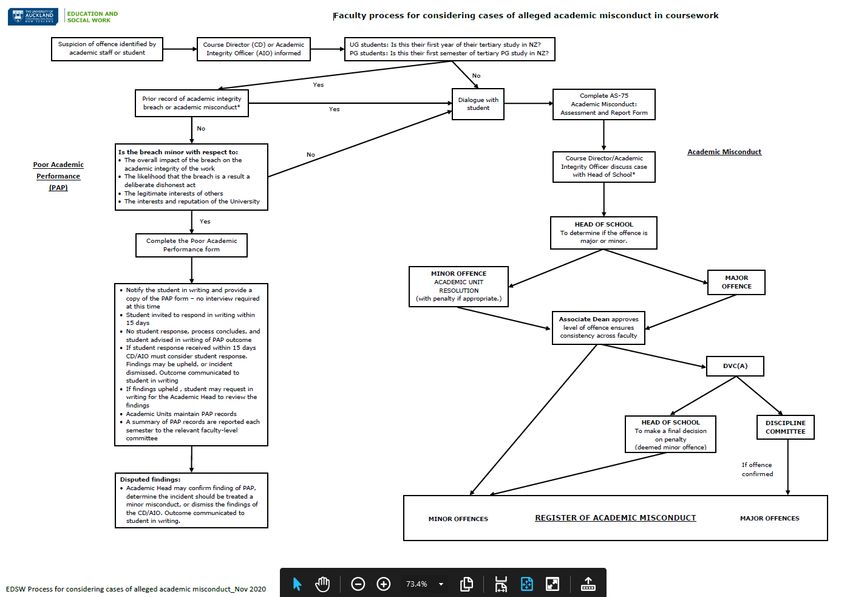
Cheating and Plagiarism ................................................................................................................. 34
Referencing .................................................................................................................................. 35
Professionalism and the use of social media ...................................................................................... 35
Jury Service.................................................................................................................................. 35
Page 3Teacher Registration ..................................................................................................................36 Criminal Convictions while undertaking, or during deferment from, the programme ................................ 36 Assessing The Standards ................................................................................................................ 36 Registration and Other End-of-Year Procedures .................................................................................. 36 Registration and Provisional Certification ........................................................................................... 36 International Students ................................................................................................................... 37 Student FeedBACK ......................................................................................................................38 Do students have to give feedback? ................................................................................................. 38 Make sure your feedback is constructive and effective ........................................................................ 38 Types of feedback ......................................................................................................................... 38 SET ............................................................................................................................................. 38 Learning and Teaching Survey ......................................................................................................... 38 Student representatives ................................................................................................................. 38 What happens to your feedback? ..................................................................................................... 39 Courses with low ratings ................................................................................................................. 39 APPENDIX ONE ...........................................................................................................................40 Page 4
PROGRAMME CONTACTS

Programme Leader Graduate Diploma in Teaching    Email: e.fitzpatrick@auckland.ac.nz
(Primary)
                                                 Extn: 48518     Office: H111
Dr Esther Fitzpatrick

Teacher Education Office Co-ordinator            Email: c.tennet@auckland.ac.nz
Chris Tennet                                     Extn: 48650     Office H201A

Practicum Manager                                Email: foed-practicumteam@auckland.ac.nz
Shima Mozafarian                                 Extn: 48781     Office: H202

Practicum Placement Co-ordinators                Email: foed-practicumteam@auckland.ac.nz
Selina Gukibau                                   Extn: 48452     Office: H202
Rachel Suh                                       Extn: 81951     Office: H202

Website www.education.auckland.ac.nz/gdprimary

                                                                                       Page 5
KEY DATES FOR 2021
S+ Week M T W Th F School Terms Week Primary
New Year's
1 1
Day
Day after
New Year's Summer School Lectures Begin Wed
2 Day
5-Jan 6-Jan 7-Jan 8-Jan 2 6 Jan
observed
School Holidays
3 11-Jan 12-Jan 13-Jan 14-Jan 15-Jan 3
4 18-Jan 19-Jan 20-Jan 21-Jan 22-Jan 4 Intro Day Mon 18 Jan and Block
Teaching
5 25-Jan 26-Jan 27-Jan 28-Jan 29-Jan 5 Block Teaching
Akld Ann
6 Day
2-Feb 3-Feb 4-Feb 5-Feb 6
Term 1
Waitangi Begins
7 Day
9-Feb 10-Feb 11-Feb 12-Feb 7
EDPRAC 611A Part 1
2 Feb - 19 Feb. School A
8 15-Feb 16-Feb 17-Feb 18-Feb 19-Feb 8
9 22-Feb 23-Feb 24-Feb 25-Feb 26-Feb 9 Block Teaching
10 1-Mar 2-Mar 3-Mar 4-Mar 5-Mar 10
11 8-Mar 9-Mar 10-Mar 11-Mar 12-Mar 11
12 15-Mar 16-Mar 17-Mar 18-Mar 19-Mar 12 Wed & Thus in Schools
13 22-Mar 23-Mar 24-Mar 25-Mar 26-Mar 13 Wed & Thus in Schools
Weds and Thurs in Sch. Mahi Tahi on
14 29-Mar 30-Mar 31-Mar 1-Apr Good Friday 14 Fri
Easter UoA
15 Monday holiday
7-Apr 8-Apr 9-Apr 15 Wed & Thus in Schools
End of Term
16 12-Apr 13-Apr 14-Apr 15-Apr 16-Apr 1 16 Wed & Thus in Schools
17 19-Apr 20-Apr 21-Apr 22-Apr 23-Apr 17
School
Mid-Semester Break 19-30 April
Holidays
ANZAC day
18 observed 27-Apr 28-Apr 29-Apr 30-Apr 18
Term 2
19 3-May 4-May 5-May 6-May 7-May Begins 19 Wed & Thus in Schools
20 10-May 11-May 12-May 13-May 14-May 20 Wed & Thus in Schools
Weds and Thurs in Sch. Mahi Tahi on
21 17-May 18-May 19-May 20-May 21-May 21 Fri
22 24-May 25-May 26-May 27-May 28-May 22 Wed & Thus in Schools
23 31-May 1-Jun 2-Jun 3-Jun 4-Jun 23
Queen's
24 Birthday
8-Jun 9-Jun 10-Jun 11-Jun 24 EDPRAC 611 Part 1 Cont…
31 May - 2 July School A
25 14-Jun 15-Jun 16-Jun 17-Jun 18-Jun 25
26 21-Jun 22-Jun 23-Jun 24-Jun 25-Jun 26
Page 627 28-Jun 29-Jun 30-Jun 1-Jul 2-Jul 27
28 5-Jul 6-Jul 7-Jul 8-Jul 9-Jul Term 2 Ends 28
29 12-Jul 13-Jul 14-Jul 15-Jul 16-Jul 29
School
Holidays
30 19-Jul 20-Jul 21-Jul 22-Jul 23-Jul 30
Term 3
31 26-Jul 27-Jul 28-Jul 29-Jul 30-Jul Begins 31 Semester 2 Lectures Begin 26 July
32 2-Aug 3-Aug 4-Aug 5-Aug 6-Aug 32 Wed & Thus in Schools
33 9-Aug 10-Aug 11-Aug 12-Aug 13-Aug 33 Wed & Thus in Schools
34 16-Aug 17-Aug 18-Aug 19-Aug 20-Aug 34 Wed & Thus in Schools
35 23-Aug 24-Aug 25-Aug 26-Aug 27-Aug 35 Wed & Thus in Schools
36 30-Aug 31-Aug 1-Sep 2-Sep 3-Sep 36 Study Week
37 6-Sep 7-Sep 8-Sep 9-Sep 10-Sep 37 Wed & Thus in Schools
Weds and Thurs in Sch. Mahi Tahi on
38 13-Sep 14-Sep 15-Sep 16-Sep 17-Sep 38 Fri
39 20-Sep 21-Sep 22-Sep 23-Sep 24-Sep 39 Wed & Thus in Schools
40 27-Sep 28-Sep 29-Sep 30-Sep 1-Oct Term 3 Ends 40 Wed & Thus in Schools
41 4-Oct 5-Oct 6-Oct 7-Oct 8-Oct 41
School
Mid Semester Break 4 Oct to 15 Oct
Holidays
42 11-Oct 12-Oct 13-Oct 14-Oct 15-Oct 42
Term 4
43 18-Oct 19-Oct 20-Oct 21-Oct 22-Oct Begins 43
44 Labour Day 26-Oct 27-Oct 28-Oct 29-Oct 44
EDPRAC 611B 18 Oct - 19 Nov.
School B
45 1-Nov 2-Nov 3-Nov 4-Nov 5-Nov 45
46 8-Nov 9-Nov 10-Nov 11-Nov 12-Nov 46
47 15-Nov 16-Nov 17-Nov 18-Nov 19-Nov 47
48 22-Nov 23-Nov 24-Nov 25-Nov 26-Nov 48
Capstone Event (Presentation of e-portfolio)
49 29-Nov 30-Nov 1-Dec 2-Dec 3-Dec 49
50 6-Dec 7-Dec 8-Dec 9-Dec 10-Dec 50
51 13-Dec 14-Dec 15-Dec 16-Dec 17-Dec 51
Term 4 Ends
52 20-Dec 21-Dec 22-Dec 23-Dec 24-Dec - Prim/Sec 52
Boxing Day
53 observed
28-Dec 29-Dec 30-Dec 31-Dec 53
54 3-Jan 4-Jan 5-Jan 6-Jan 7-Jan 54
Page 7INTRODUCTION TO THE PROGRAMME
Nau mai rā ki Te Kura Akoranga me Te Tauwhiro Tangata, otirā, ki Te Whare Wānanga o Tāmaki-
makaurau. Kia ora, talofa lava, mālō e lelei, kia orana, fakaalofa lahi atu, namaste, 你好 nĭ hăo,
salam alaikum, hola.
Welcome to the Faculty of Education and Social Work at the University of Auckland – and welcome to the
profession of teaching.
Teaching plays a critical role in our society. Everyone has an experience of being taught. We think we know
what teaching is because we have experienced it as learners, and maybe as parents or carers of learners. But
being a teacher, and teaching, is more complex than it seems from the ‘outside.’ That is why teacher
education is important. Your life experiences will be helpful to you in learning to be a teacher, but there are
many new things to learn as you take on the teacher role.
You will gain new skills and new knowledge – about both subject areas and about how to teach and work with
ākonga (the infants, toddlers, children, or young people you will work with). This new learning is underpinned
by attitudes, values, and dispositions that enable you to work respectfully and collaboratively with a wide
range of people. Central to this is willingness to work in partnership with Māori. You should expect your
teacher education journey to give you experiences that develop your teaching skills and to challenge many of
your assumptions about teaching and learning.
Our Programme Outcomes
Our teacher education programmes are designed to help you meet the required Standards for the
Teaching Profession and Code of Professional Responsibility, which are set by the Teaching Council of
Aotearoa New Zealand. Addressing these requirements also enables you to meet broader outcomes set
by the university for all its qualifications. These outcomes are expressed as a ‘Graduate Profile’ for each
qualification. Therefore the two sets of outcomes overlap. The Teaching Council Standards are specific to
teaching, while the university’s outcomes outline broader capabilities that studying a university
qualification develops. They both emphasise critical thinking, communication, problem solving, integrity,
and the centrality of Te Tiriti o Waitangi.
The Graduate Profile for your qualification is included on page 10 of this booklet, so you can understand
the broad aims of the programme. Our approach to the Teaching Standards is summarised below, and
then further explained in Appendix One. These Standards provide the organising themes of your
qualification, and you will be able to trace your progress towards them through your courses and your
practicum experiences in education settings.
The Teaching Standards at the University of Auckland
We have grouped the six Standards into three themes that summarise their intent: partner, design, and
inquire. These three key ways of working will shape your experience of learning to teach. Below are the
Teaching Council’s Standards for the Profession, organised by the three themes.
Partner
Graduating teachers need to be able to partner with families, learners, hāpu, and iwi, with significant
cultural and linguistic communities in their schools and with their colleagues to support the learning and
wellbeing of ākonga. To do this you will need to be open-minded, curious, respectful, and aware of your
own cultural positioning. You will also need to be excellent communicators, able to listen and to share
respectfully and adjust your communication to suit your partners. To be able to take up your role as
partners with Māori learners and their families you will need to understand Te Tiriti o Waitangi, its history
and its implications.
Standard 1: Te Tiriti o Waitangi partnership
Demonstrate commitment to tangata whenuatanga and Te Tiriti o Waitangi partnership in Aotearoa
New Zealand.
Standard 2: Professional relationships
Establish and maintain professional relationships and behaviours focused on the learning and
wellbeing of each learner.
Page 8Design
The use of the word ‘design’ implies deliberate choices. As a teacher, you choose what will be learned and
how. These decisions are about equity and access and are critical to improving learner outcomes. You will
design experiences to help students learn. You will also need to think about what you need to learn in
order to develop as a teacher.
Standard 3: Professional learning
Use inquiry, collaborative problem solving, and professional learning to improve professional
capability to impact on the learning and achievement of all learners.
Standard 4: Design for learning
Design learning based on curriculum and pedagogical knowledge, assessment information and an
understanding of each learner’s strengths, interests, needs, identities, languages, and cultures.
Inquire
The third element of our framework is ‘inquire.’ By this we mean that both teaching and promoting a
learning focused culture are driven and sustained by seeing teaching as inquiry. To progress learning and to
develop a culture focused on learning demands adaptive and responsive ways of working, which are central
to seeing teaching as inquiry. You will need to evaluate your impact on learning and on classroom culture to
enact both of these standards.
Standard 5: Teaching
Teach and respond to learners in a knowledgeable and adaptive way to progress their learning at
an appropriate depth and pace.
Standard 6: Learning-focused culture
Develop a culture that is focused on learning, and is characterised by respect, inclusion, empathy,
collaboration, and safety.
Each teacher education provider has to consider what the Teaching Standards mean in their context. The
list in Appendix One at the back of this booklet explains what the Standards mean in University of Auckland
teacher education qualifications. You can expect to learn these things in your time with us. This list is also
used to construct the assessments in your teacher education programme. Assessments can therefore
provide you with feedback on your progress towards the standards. At the end of your programme you will
draw together your experiences on practicum and in the university setting to demonstrate how you can
enact the standards and are ready to teach.
Page 9GRADUATE PROFILE FOR THE GRADUATE DIPLOMA IN TEACHING (PRIMARY)
At the completion of the Graduate Diploma in Teaching (Primary) graduates will have developed the following
capabilities:
Disciplinary Knowledge and Practice
• Able to draw on thinking, research and theory from a range of disciplines as they build increasingly deep
and insightful understandings about learning and teaching
• Able to draw on a range of knowledge bases for teaching, making informed, evidence-based decisions that
address valued outcomes.
Critical Thinking
• Able to identify and evaluate the premises, conditions and contexts of knowledge claims with a view to
critically appraising societal, school and classroom practices that reproduce inequity
• Able to critically engage with ideas, information, theory and evidence with a view to informing and
enhancing professional practice.
Solution Seeking
• Able to recognise and define problems of practice with regard to their significance and ethical implications,
employ an inquiry stance, draw on appropriate theory and fit-for-purpose techniques, to systematically
generate thoughtful solutions and outcomes.
Communication and Engagement
• Able to express information and ideas clearly, coherently, and professionally in a variety of forms, to
diverse audiences, for a range of purposes.
• Able to develop and refine the skills that enable them to build and sustain productive relationships with
ākonga, colleagues and communities
Independence and Integrity
• Able to monitor, control and regulate their thinking, behaviour and emotions as they work to achieve
personal and professional goals
• Able to make principled and ethical decisions that demonstrate a respect for academic and professional
ethics and scholarly activity.
Social and Environmental Responsibilities
• Able to recognise and understand their particular social and cultural location in relation to Te Ao Māori and
Te Tiriti o Waitangi
• Able to respond to and promote Māori world views, knowledge, ways of being and aspirations through
teaching practice
• Able to acknowledge and value difference, show respect for diversity and reflect critically on the principle
of inclusion in educational settings.
Page 10FEATURES OF THE GRADUATE DIPLOMA IN TEACHING (PRIMARY)
Experiencing the Graduate Diploma in Teaching (Primary) Programme
A pre-service teacher (PST) in the Primary programme will begin their initial teacher education (ITE)
programme in late January with a two-week intensive block of teaching where four of their seven courses will
start. Two of these courses – Te Ao Māori and Education and Society, are shared with Early Childhood
Education and Secondary Programmes. The Primary sector specific courses that begins in the January block
are Ako and the practicum course, Professional Practice: Primary. The Ako course is designed to help PSTs
know about how Primary age students learn and how to use responsive teaching approaches to promote
learning. This course continues on a weekly basis throughout Semester One.
Following the January two-week intensive block of teaching PSTs complete their first Professional Practice:
Primary three week block practicum (Practicum One) in School A. Practicum One provides an opportunity for
PSTs to observe how their Associate Teacher sets up a learning-focussed, and supportive classroom at the
beginning of the year. Following Practicum One PSTs continue to work alongside their School A Associate
Teacher every Wednesday and Thursday (excluding holidays) until the end of May. These regular days in
schools will provide an opportunity for PSTs to observe how classroom interactions change over time as
routines are established and classroom programmes implemented. PSTs will be supported to take increased
responsibility for planning and teaching throughout the semester. From the end of May PSTs conclude their
time in School A with a five week block Practicum (Practicum Two) where they take full responsibility for the
learning environment for 10 days.
The Professional Practice: Primary course continues in the second semester with PSTs spending each
Wednesday and Thursday in a new school (School B). PSTs will complete their final five week Practicum
(Practicum Three) in School B. The semester two series of Wednesdays and Thursdays in schools begins after
the inter-semester break in mid-July and continues for 10 weeks until the end of the school term in late
September. Over the course of the second semester PSTs will be supported to take increasing responsibility
for supported planning and teaching in School B. Practicum Three begins in mid-October and requires PSTs to
take full responsibility for the learning environment for 20 days.
Having experiences in two schools during the Professional Practice: Primary course will provide PSTs with an
opportunity to experience diverse school contexts over the course of their programme. Having regular
Wednesdays and Thursdays in schools culminating in a block practicum allows PSTs to develop relationships
with learners and develop their confidence as teachers. The regular Wednesdays and Thursdays in schools
also enables PSTs to make connections to learning from Te Ao Māori, Education and Society, and Ako courses.
The Primary Maths and Literacy courses, Maths and Literacy (1) (EDCURRIC 625) and Maths and Literacy (2)
(EDCURRIC 626) will enable PSTs to be fully ready to teach numeracy and literacy programmes in Primary
and Intermediate schools. Maths and Literacy (1) is taught in Semester One and Maths and Literacy (2) is
taught in Semester Two. Throughout their engagement in these courses PSTs will have the opportunity design
literacy and numeracy learning experiences and implement these during their MaTiS and block two and three
practicums.
The curriculum course, Designing the Wider Curriculum (EDCURRIC 627) will enable PSTs to be ready to teach
Health and Physical Education, The Arts, Technology, Science and Social Science in Primary and Intermediate
schools. Designing the Wider Curriculum is taught through both Semester One and Semester Two and
provides the opportunity for PSTs to design cross-curricular integrated learning experiences and implement
these during their MaTiS and block two and three practicums.
Page 11REGULATIONS FOR THE DEGREE OF GRADUATE DIPLOMA IN TEACHING
(PRIMARY)
The regulations for this graduate diploma are to be read in conjunction with all other relevant
statutes and regulations including the Academic Statutes and Regulations.
In order to satisfy the requirements of this graduate diploma, students are required to be in
various teaching environments which will bring them into contact with children. Only persons able
to meet the criteria for provisional registration of the Teaching Council of Aotearoa New Zealand
will be permitted to enrol in this graduate diploma.
Admission
1 In order to be admitted to this programme, a student must have:
a completed the requirements for:
(i) a degree from a New Zealand university or the equivalent as approved by Senate or its representative
or
(ii) a qualification recognised as equivalent by the Teaching Council of Aotearoa New Zealand and New
Zealand Qualifications Authority
and
b demonstrated the potential to meet the Teaching Council of Aotearoa New Zealand criteria for provisional
registration and certification.
Notes:
(i) Applicants will be required to consent to disclosure of criminal convictions and safety checks
required by the Children’s Act 2014.
(ii) Personal references and an interview will be required.
Duration and Total Points Value
2 A student enrolled for this graduate diploma must follow a programme of full-time study in an academic
year and pass courses with a total value of 150 points.
3 In exceptional circumstances, part-time enrolment may be permitted with approval of the Programme
Leader.
4 The requirements for this graduate diploma must be completed within 24 months of initial enrolment unless,
in exceptional circumstances, Senate or its representative extends this period.
Structure and Content
5 A student enrolled for this graduate diploma must complete the requirements as listed in the Graduate
Diploma in Teaching (Primary) Schedule.
6 The programme for each student requires the approval of the Dean of Faculty of Education and Social Work
prior to enrolment.
7 A student who has previously passed any course the same as, or similar to, those courses required for this
graduate diploma must substitute an alternative course(s) approved by the Programme Leader.
8 A student admitted to this programme must complete the University of Auckland Academic Integrity Course
as specified in the Enrolment and Programme Regulations, Academic Integrity, of the University Calendar.
Practicum Requirements
9 a In any course that has a practicum and non-practicum component, a student must pass both the
practicum and non-practicum component in order to have passed that course as a whole.
b Where a weakness occurs in the practicum component of EDPRAC 611, students will be required to enrol
in an extension course and pay tuition fees at the rate of 10 points for each two-month period or part
thereof. This provision will only apply when the student’s current enrolment in EDPRAC 611 has ended.
c Re-enrolment in EDPRAC 611 after failing that course requires the permission of the Dean of Faculty of
Education and Social Work or nominee.
d At the discretion of Senate or its representative, a student who does not pass EDPRAC 611 may be
declined permission to be readmitted to this diploma.
Page 12Language Requirements
10 a Students must pass EDUCM 199 – Te Reo Māori - in the first year of enrolment.
b Students must pass EDUCSW 199 – English Language Competency - in the first semester of enrolment.
Professional Requirements
11 a In order to complete the requirements for this graduate diploma, a student must be able to meet the
criteria for provisional registration of the Teaching Council of Aotearoa New Zealand.
b A student who ceases to be able to meet the criteria for provisional registration of the Teaching Council of
Aotearoa New Zealand must immediately notify the Dean of Faculty.
c If the Dean of Faculty has reason to believe that a student does not meet the criteria for provisional
registration of the Teaching Council of Aotearoa New Zealand the Dean shall advise the student and take
into account any written response from the student.
d If the Dean of Faculty is satisfied that the student is not able to meet the criteria for provisional
registration of the Teaching Council of Aotearoa New Zealand the Dean shall notify Senate or its
representative.
e On receipt of such advice, Senate or its representative may terminate the student’s enrolment and any
application to re-enrol may likewise be declined.
f A student whose enrolment is terminated under Regulation 11e may appeal from that decision to the
Council or its duly appointed delegate.
Suspension or Termination of Enrolment
12 a If the behaviour of a student in a teaching environment is found, after due and fair inquiry, to be
offensive, disruptive or likely to give rise to a risk of harm to the welfare of any person, the enrolment of
the student in the programme may be terminated by Senate or its representative and any application to
re-enrol may likewise be declined.
b A student who is subject to any such inquiry may be suspended by Senate or its representative from
lectures, classes and any teaching placement pending the outcome of the inquiry.
c A student whose enrolment is terminated under Regulation 12a may appeal from that decision to the
Council or its duly appointed delegate.
Reassignment
13 A student may apply to reassign courses passed for this graduate diploma to the Graduate Diploma in
Education.
Variations
14 In exceptional circumstances Senate or its representative may approve a personal programme which does
not conform to these regulations.
Amendment
15 These regulations and/or schedule have been amended with effect from 1 January 2021.
Page 13DELNA (DIAGNOSTIC ENGLISH LANGUAGE NEEDS ASSESSMENT)
What is DELNA for?
In professional programmes, students need well-developed academic English language skills to meet the
graduating standards of their particular programme. All undergraduate students at the Faculty of Education
and Social Work are required to complete the DELNA language requirements.
Orientation Day
All students are required to do a 20-minute DELNA screening on Orientation Day. The result will show if you
need to develop your knowledge of academic English OR if your level is already sufficient.
Students who need further language assessment: DELNA process
During the first two weeks after the DELNA screening, complete a DELNA diagnosis (2 hour pen and paper
assessment) and make an appointment with an adviser to discuss results and what ongoing English language
support you need. Advisers give individual plans (IP).
Timeframe
➢ Complete the DELNA screening during orientation
➢ Complete the DELNA Diagnosis assessment (if needed) within two weeks of your DELNA Screening
At the latest, you need to have completed the DELNA Diagnosis and seen a language adviser to get your
individual study plan by the mid-semester break in Semester 1 of your first year of study.
➢ In 2021, this is by 1st April.
More information about the DELNA process
Epsom Campus or City Campus for assessments
• Both the Screening and Diagnosis will be available at Epsom Campus until the end of the first semester
break (1st April). After this time, you will have to go to City Campus to take these assessments.
• Students’ individual plans (IP) are linked to online modules of the Academic Language Enrichment
programme on Canvas. Students complete the modules as soon as possible.
• Post DELNA: Students who receive the lowest scores in the DELNA Diagnosis will be required to complete
another assessment once they have accessed support. This is called a Post DELNA assessment.
• Students who have a diagnosed Learning Disability, and have had special conditions approved, can
make an appointment with Student Disability Services to access accommodations for DELNA.
• Regular meetings with an Academic Language adviser are necessary for success.
English Language Competency: EDUCSW 199 (A/B)
DELNA completion is linked to a zero point paper EDUCSW 199. Students will be required to pass EDUCSW
199 in order to graduate.
EDUCM 199 – TE REO MĀORI COURSE
This introductory reo Māori course provides opportunities to learn correct pronunciation and some basic
classroom language and is completed over semesters one and two.
The Teaching Council requires all teachers to practise and develop the use of te reo and tikanga Māori in order
to meet the standards for the teaching profession and to fulfil the Code of Professional Responsibility.
The course is self-paced and delivered through Canvas, meaning you can complete as quickly as you like. It
contains activities that will help you practise and build confidence before doing the assessments. Your result is
dependent on completion of the two assignments:
1. Deliver a pepeha with correct pronunciation (Semester One) and;
2. Read, with correct pronunciation, reo Māori words that are part of an English text (by the end of Semester
Two).
In order to submit the assignments, there are some module requirements you need to meet - usually a
minimum score in a short quiz in each module of the course.
Page 14Your course result will appear on your academic record as either CPL (complete) or DNC (did not complete).
Completion of the course is a requirement in order for the Graduate Diploma in Teaching qualification to be
conferred or awarded.
Page 15OVERVIEW OF THE GRADUATE DIPLOMA IN TEACHING (PRIMARY) PROGRAMME The Graduate Diploma in Teaching (Primary) qualification is an equivalent of 1.3 academic years delivered in one calendar year. It is made up of 150 points and is available as both full-time (one year) and part-time (two years) study. The programme has a strong curriculum focus and provides students with the opportunity to become well- grounded in all curriculum documents with an emphasis on developing strength in mathematics and language programmes. For all course pre-requisites please see the University of Auckland Calendar 2021 – www.calendar.auckland.ac.nz Listed below are the courses for 2021. Semester One Semester One will introduce you to Te Ao Māori and the New Zealand Curriculum Learning Areas of Technology, English, The Arts, Health, and Physical Education, Mathematics and Statistics, Science and Social Science. You will also complete 49-52 days, depending on the Term One start date, of Practicum in School A throughout Semester One as part of the EDPRAC 611A course. Links between theories of how people learn and your practicum experiences will be explored in EDPROFST 609. EDCURRIC 625 EDCURRIC 627A Curriculum: Maths and Literacy 1 Designing the Wider Curriculum EDPRAC 611A EDPROFST 609 Professional Practice: Primary Ako EDPROFM 600A EDUC 603A Te Ao Māori He tirohanga whakamua kia haere whakamuri Education and Society EDUCM 199 Te Reo Māori Semester Two In Semester Two will you will continue to consolidate your knowledge in Technology, English, The Arts, Health and Physical Education, Mathematics and Statistics, Science and Social Science. You will complete 42 days of Practicum in School B including a five week block at the end of the Semester Two followed by a Capstone Assessment Task. EDCURRIC 626 EDCURRIC 627B Curriculum: Maths and Literacy 2 Designing the Wider Curriculum EDPRAC 611B EDPROFM 600B Professional Practice: Primary Te Ao Māori He tirohanga whakamua kia haere whakamuri EDUC 603B Education and Society Page 16
PRACTICUM/PLACEMENTS

Practicum courses are at the heart of each candidate’s professional development.

Practicum courses are completed during full-time block and two day placements (Wednesday and Thursday) in
a school. There are three block placements during the year and student placements will be determined and
organised by the Practicum Office in conjunction with the EDPRAC 611 Course Director. Students are not to
arrange their own practicum placements. Please note that while we endeavour to place you at a school in
an area of your choice, it is the job of the Practicum Office, in conjunction with the Programme Leader to
assign you to a designated school. You may be required to travel to the majority of your placements. Any
changes to a placement must be negotiated with the Programme Leader.

If a student teacher is out of synchrony with their cohort due to deferral, withdrawal or being part-time,
practicum placements will be assigned on a case-by-case basis by the Programme Leader. Student teachers
will not be able to complete a practicum at the beginning or the end of the year as it is not appropriate to
accommodate this within the faculty and schools at these times of the year.

Students Withdrawing from Practicum
Students who suddenly need to withdraw from practicum before it commences must inform the Practicum
Office immediately so that schools can be notified as a matter of courtesy.

Leave during practicum
For leave during practicum placements please complete the online Request for Leave during Practicum Form.

Placement Restrictions with regard to Links with Family Members
Student teachers may not be placed for practicum where:
•   a member of their whanau/family attends as a pupil or as a staff member
•   the student teacher or their whanau are employed in any capacity
•   the student teacher or a member of their whanau has a personal relationship with any member of the
    school/centre staff or BOT/Management Committee
•   the student teacher has accepted an employment offer from the school.

Confidentiality during Practicum
The Privacy Act 1993 controls how agencies (i.e., individuals or organisations) collect, use, disclose, store and
give access to personal information. There are 12 Information Privacy Principles which set out rules and
exceptions to those rules. In schools/centres, as individuals and organisations, we must be informed about
and adhere to the requirements of the Privacy Act. However, for student teachers on Practicum, Principle 1 -
Purpose of Personal Information, Principle 4 - Manner of Collection of Personal Information, Principle 10 -
Limits on Use of Personal Information and Principle 11 - Limits on Disclosure of Personal Information are
particularly relevant.

Students should familiarise themselves with and adhere to school/centre policies that relate to confidentiality
and the Privacy Act. In particular the following should be noted:
•   Students wishing to photograph, audiotape, or videotape school/centre colleagues and staff, children or
    their work must ensure that the Associate Teacher is consulted in the first instance and that school/centre
    policy is strictly adhered to. Early childhood students must ensure that ethical procedures are followed as
    outlined in the practicum handbook.
•   Information gained about children, their family/whānau, staff, other student teachers while on practicum
    must be kept confidential in accordance with Principles 10 and 11 of the Privacy Act 1993.

Please note that this does not preclude disclosing information through the appropriate channel regarding any
concerns about the life or health of children (Principle 10d, (i) and (ii)) or; using the information in a form in
which the individual concerned is not identified (Principle 10f, (i)).
Students Seeking Practicum Placement with Babies or Young Children
It is not permissible to take babies and young children on practicum. Student teachers must either make their
own private arrangements for the care of their babies and young children during Practicum.

                                                                                                          Page 17
Location of Practicum
Practicum is located in the EDPRAC 611 course. The quality of learning for candidates is linked to the quality
of experiences for professional development that occurs in schools. To this end the practicum is delivered in a
consortium of schools during the programme. There will be a shared understanding of the developmental
progression of the programme between the schools, the candidate and University of Auckland, Faculty of
Education and Social Work staff.
This understanding will provide the opportunity for the candidates to take responsibility for their learning with
the support of staff at the University of Auckland, Faculty of Education and Social Work and school staff. The
practicum will provide candidates with the opportunity to synthesise the knowledge, understandings and
dispositions gained from all of the curriculum papers.
The candidates will complete three block placements:
1 x 3 weeks (Practicum One)
1 x 5 weeks (Practicum Two)
1 x 5 weeks (Practicum Three)
and a suite of two day placements each week for approximately 18 days in Semester One and 16 days in
Semester Two.
Two Day Practicum Placements: Wednesdays and Thursdays in Schools
Two day practicum placements focus on a student teacher’s professional development both in a
classroom/Innovative Learning Environment and at school-wide level. An inquiry approach to learning is
undertaken.
Block Practicum
In the Practicum Two l block placement candidates must take full responsibility for planning, learning and
teaching, and manage the learning environment for a minimum of two consecutive weeks. In the Practicum
Three block placement candidates must take full responsibility for planning, learning and teaching, and
manage the learning environment for a minimum of four consecutive weeks.
Assessment of the EDPRAC 611 Course
Practicum credits are awarded on successful achievement of Practicum requirements and learning outcomes.
Performance is usually jointly assessed and wherever possible a ‘triadic’ meeting of three parties (University
Professional Supervisor, Associate Teacher, Student Teacher) will be held for assessment purposes for Practica
2 and 3.
Where consensus is not achievable the University Professional Supervisor/Lecturer, in consultation with the
Programme Leader, has ultimate responsibility for the decision.
At the discretion of the Programme Leader a student who has narrowly failed to meet a small number of
performance criteria for a practicum course may be invited, at no extra cost to the student, to complete an
additional placement of no more than two weeks duration to demonstrate achievement of these criteria.
Where satisfactory achievement is not demonstrated no extension of this placement will be granted and the
student will have to apply to re-enrol in the entire course.
Results for Practicum courses, once confirmed by the University of Auckland, Faculty of Education and Social
Work, are expressed as:
Pass: This will be granted when the triadic assessment process indicates that all learning outcomes have
been achieved.
Credit Withheld/Not Achieved (NA): This may be indicated when some of the learning outcome
criteria are not achieved and the triadic assessment process indicates that the student teacher be given
the opportunity for completion during the next practicum placement. This will be approved by the
Programme Leader and organised by the Practicum Placement Co-ordinator in consultation with the
student teacher and the University Professional Supervisor. This provision is not available for the third
practicum.
Fail: This will be indicated when the triadic assessment process indicates that a full re-sit of the practicum
course is required. The Practicum Convenor will confirm this. Where a full re-sit of the practicum is
required, the student teacher must re-enrol through the Education Student Centre. Full tuition fees will
apply. Students failing Practicum 2 will be able, subject to approval, to re-sit this practicum during the
Practicum 3 timetabled in Semester 2. Students will then need to re-enrol for EDPRAC 611, in the
Page 18subsequent year through the Education Student Centre.
All students who fail some or all of the learning outcomes in a practicum will automatically be reviewed so
that support systems can be set in place for future success.
Note: Students who fail a practicum must apply to be given formal permission to resit the course.
Students should collect an Application to Repeat a Failed Course form from the Teacher Education Office
in H201A.
It is the candidate’s responsibility to ensure that all necessary practicum documentation is
completed and results delivered to the Practicum Office by the dates set.
The Faculty works with schools in a range of localities and works closely with normal and other primary
partner schools. The Practicum Office assigns each student teacher to practicum placements across a range of
learner age and community settings.
Please note:
A student teacher may not approach a school to organise his or her own placement. Student teachers may
only approach a school when a confirmed placement has been posted and the date for the Associate Teacher
contact has been advised.
Attendance and Professional Conduct during Practicum
For expectations and requirements please refer to the relevant Practicum Handbook.
Students must not withdraw from a practicum once their placement has commenced unless permission has
been given by the Programme Leader or designated nominee. Withdrawal from practicum without permission
will result in a course fail. If, for any reason, the school wishes to rescind your invitation and to terminate
your placement, this may also be grounds for failure in the practicum course.
Please note:
It is critical that you attend your practicum course lectures because Associate Teachers are too busy to
provide this support on practicum. Therefore those who do not attend course lectures may be withdrawn from
their practicum placement.
Page 19ASSIGNMENT PROCESS
Assignments are submitted either electronically, or via canvas, or in person.
Paper based and other non-electronic submissions will continue to be collected at the designated on-campus
locations. These should be submitted with the coversheet that will be available via the Cover Sheet link
located in the left hand navigation bar in your Canvas course site. The coversheets will be individualised with
a QR code that will be scanned on receipt.
All non-electronic assignments are handed in at the campus where you attend the course (unless your lecturer
advises otherwise).
Students must keep a copy of the written component of all assessment tasks submitted.
Assignments with non-electronic submission should be submitted at the campus where you attend the course,
unless your lecturer/Canvas site advises otherwise. Please see below for details of drop off locations and their
opening hours:
• Epsom Campus (except Flexi Learning: see below): A109A (The Assignment Centre located in the
Education and Social Work Student Centre is open Monday – Friday, from 9.30am – 4pm during
semester, and reduced hours during semester breaks).
Drop box located in Student Centre; after-hours drop box located beside the main entrance.
The Assignment Centre will send an automated email to students to confirm receipt of assignments for non-
electronic submission only.
Assignment Submission
Non-electronic submission of Assignments
Faculty students across all campuses will generate their own individual coversheets for each assignment,
which can be downloaded from Canvas. Every coversheet will contain a unique QR code which is scanned
upon submission and generates automated emails to confirm receipt and advise when an assignment is ready
to be picked up.
Find the answers to common questions about preparing and handing in your assignments where it has been
indicated the submission is to be on paper at via www.education.auckland.ac.nz/en/for/current-
students/assignments
If you still have questions please contact foedassignments@auckland.ac.nz.
Electronic Submission of Assignments
You will be notified at the beginning of your course that the submission of assignments is electronic. All
electronic submission of assignments must be uploaded to an assignment dropbox on Canvas, or Turnitin as
assigned by your lecturer. You will also be notified about how you will receive your marked assignment back.
Usually online submission means your marked script will be made available to you online. Information will be
provided as to how to upload your assignment and how to access your marked script online from the Course
Director. No coversheet is required for electronic submission.
The submission times of 12:30pm for undergraduate and 4:30pm for postgraduate level 7
coursework apply to submission of all assignments.
Extensions
Requests for extensions must be made to the Course Director (or nominee where applicable) in advance of the
due date. Applications must be accompanied by evidence of the need for an extension. Extensions will not be
granted for academic workload reasons (for example, a number of assignments due at the same time) but
may be considered in the case of temporary illness or injury, or for compassionate reasons. Extensions are
granted at the discretion of the Course Director (or nominee where applicable). For further information see
www.education.auckland.ac.nz/en/for/current-students/assignments.
Page 20Penalties for Late work
If you submit coursework after the notified deadline, or after the approved extension, you will have the marks
for that coursework adjusted as follows:
a. within one calendar week late – deduct 10% of the total value of the assessment (e.g., for an assignment
worth 40%, you score 32 but hands the work in a day late. You lose 4 marks – 10% of 40 – and is
awarded a final mark of 28)
b. one to two calendar weeks late – deduct 50% of the total value of the assessment
c. later than two calendar weeks but not after the handing back of other students’ work – 100% deduction.
Note: under Examination Regulations 1c and d students must complete “to the satisfaction of the examiners.”
This means that you will still need to hand in assignment work even if it is later than two calendar weeks after
the deadline.
Return of Marked Assignments
You can expect to have marked assignments and tests returned within three weeks from the due date. Online
assignments are usually returned online, while non-electronic assignments may be returned in class or via the
Assignment Centre. An automated email will be sent when these are ready to be collected. You must produce
your ID card to collect your assignment.
Special Consideration (Unavoidable Personal Circumstances)
If you face unavoidable personal circumstances that mean that you are unable to submit a component of
coursework, you may apply to the Programme Leader for special consideration. You must apply no later than
two weeks after the due date of the assignment.
The application is made on the form Special Consideration: Unavoidable Personal Circumstances and must be
supported by written evidence from a doctor or counsellor. The form can be found here:
https://cdn.auckland.ac.nz/assets/education/for/current-students/FoEd-96B-Special-Considerationnew.pdf
If the Programme Leader supports the application, the Course Director in consultation with the Head of School
may:
a. either, require the student to re-enrol in the course, or
b. where at least 50% of the coursework has been completed at a grade well above the minimum pass
standard, award an assessed grade for the course based on:
i. either the grade achieved for completed work (one grade lower would normally be awarded in
this case)
ii. or the allocation of a mark for the missing work derived from your ranking on the completed
work, or
c. ask you to submit the work by a revised deadline, or
d. submit a new task by a revised deadline.
Resubmission
With the exception of the two clauses below no provision should be made for resubmission of work for
remarking.
At the discretion of the Programme Leader, and in consultation with the Head of School, a student who, at the
end of the programme has failed no more than one non-practicum course with a D+ grade may be invited to
submit to the Programme Leader a supplementary piece of work that addresses the areas of concern in the
failed course. If the student meets the requirements of this supplementary work a grade of C- will be
awarded.
Page 21Assessment and Grading Scale
Assessment comprises examinations and coursework. Examinations are run centrally. Programme coursework
refers to all other assessments (assignments, seminars, practicum, tests etc.):
1. In courses that involve coursework and examinations students must complete both components to the
satisfaction of the examiners.
2. In courses that only include coursework students must complete to the satisfaction of the examiners such
oral, practical, written or other tests and assignments as have been prescribed for the completion of the
course.
3. In any course, students must complete all assignments.
4. In any course that has a practicum component, a student must pass all components in order to have
passed that course as a whole.
5. Course results are reported as grades. There are ten pass grades and three fail grades.
The development of assessment criteria for coursework should be adapted from the general university
expectations for grade-level performance set out below:
Grade Description Designation % range Grade
Points
Work of high to exceptionally high quality showing
A+ excellent knowledge and understanding of subject High first 90 - 100 9
matter and appreciation of issues; well formulated
A arguments based on strong and sustained evidence; Clear first 85 - 89 8
maps and diagrams, graphs and tables, etc included
where appropriate; relevant literature referenced;
A- high level of creative ability, originality and critical Bare first 80 - 84 7
thinking; excellent communication and presentation
skills.
Work showing good to strong grasp of subject matter
B+ and understanding of major issues though not High second 75 - 79 6
necessarily of the finer points; arguments clearly
B developed and based on convincing evidence; Clear second 70 - 74 5
relevant literature referenced; evidence of creative
ability, originality and critical thinking; good
B- Bare second 65 - 69 4
communication and presentation skills.
Work showing a knowledge of subject matter and
C+ Sound pass 60 - 64 3
appreciation of main issues though possibly with
some lapses and inadequacies; arguments developed
C and supported by some evidence and references; Pass 55 - 59 2
creative ability, originality and critical thinking
C- present but limited; adequate communication and Marginal pass 50 - 55 1
presentation skills.
D+ Work lacks breadth and depth. Work generally has Marginal fail 45 - 49 0
D gaps. Frequently work of this grade takes a simple
factual approach and understanding and coverage of
material is inadequate; does not attempt to interpret
the material; at the lower end, indicates a need for Clear fail 40 - 44 0
considerable effort to achieve improvement;
communication and presentation skills are poor.
D- Highly unsatisfactory. Work shows a lack of
knowledge about and understanding of the topic.
Inadequate in degree of relevance, sometimes Poor fail 0 - 39 0
completeness, sometimes both. Communication and
presentation skills are weak.
NA NA must be entered where a grade is not
(Not immediately available, but expected at a later date.
Available) The final grade must be submitted within the
deadlines for results submission.
DNS DNS (Did Not Sit) -must be entered if the student did
(Did Not not sit the exam.
Sit)
DNC DNC must be entered in the following circumstances:
(Did Not where a student has gained more than 50 percent in
Complete) a course but has not completed the approved
compulsory coursework and tests; where a student
has gained less than 50 percent in an internally
assessed course because of the failure to complete
coursework and test but the entry of a final grade
would inappropriately represent the reasons for
failure of the level achievement.
Page 22You can also read


