GREEK CULTURES, TRADITIONS AND PEOPLE - Paschalis Nikolaou - Fulbright Fellow Greece - Bluefield ...
←
→
Page content transcription
If your browser does not render page correctly, please read the page content below
GREEK CULTURES, TRADITIONS AND PEOPLE
        Paschalis Nikolaou – Fulbright Fellow Greece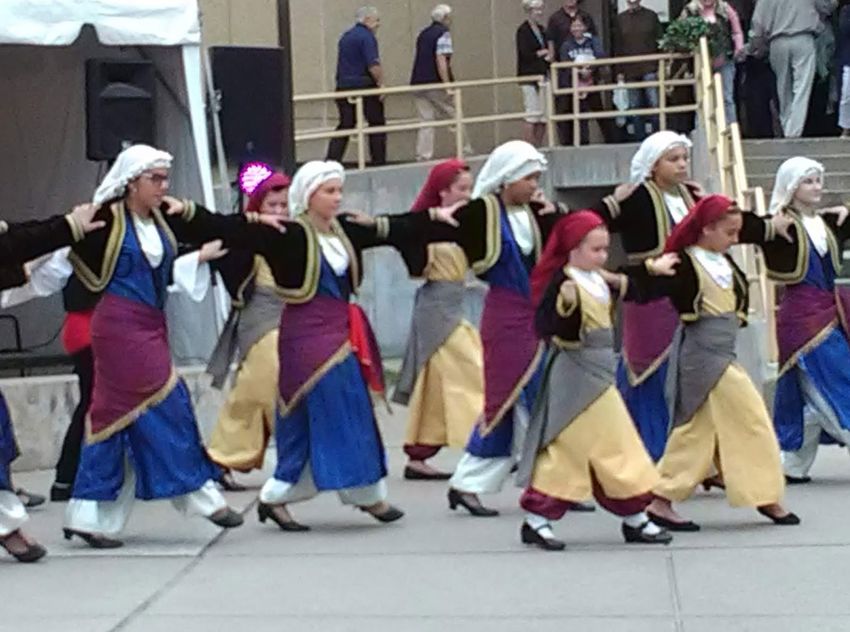
◦ What is ‘culture’?
 “Culture is the characteristics and knowledge of a particular group of
people, encompassing language, religion, cuisine, social habits, music
and arts […] The word "culture" derives from a French term, which in turn
derives from the Latin "colere," which means to tend to the earth and         Some
grow, or cultivation and nurture. […] The term "Western culture" has
come to define the culture of European countries as well as those that        definitions
have been heavily influenced by European immigration, such as the
United States […] Western culture has its roots in the Classical Period of    …when, to define, is to
the Greco-Roman era and the rise of Christianity in the 14th century.”        realise connections and
                                                                              significant overlap

◦ What do we mean by ‘tradition’?
◦ 1a: an inherited, established, or customary pattern of thought, action,
  or behavior (such as a religious practice or a social custom)
◦ b: a belief or story or a body of beliefs or stories relating to the past
  that are commonly accepted as historical though not verifiable …
◦ 2: the handing down of information, beliefs, and customs by word of
  mouth or by example from one generation to another without written
  instruction
◦ 3: cultural continuity in social attitudes, customs, and institutions
◦ 4: characteristic manner, method, or style in the best liberal tradition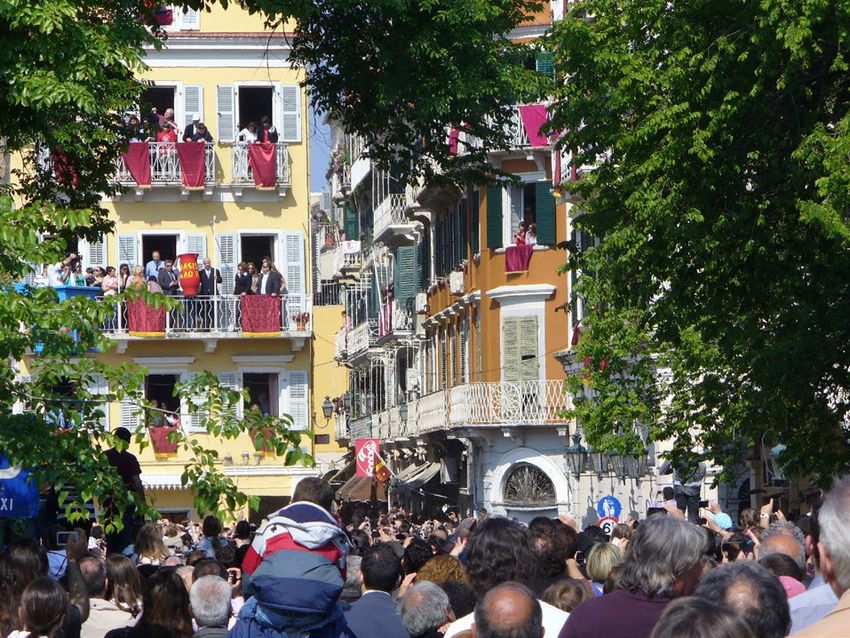
GREECE: ANCIENT AND MODERN
What we consider ancient Greece was one of the main classical                The Modern Greek State was founded in 1830, following the
civilizations, making important contributions to philosophy, mathematics,    revolutionary war against the Ottoman Turks, which started in
astronomy, and medicine. The Greeks were known for their sophisticated       1821 and is celebrated every year on March 25th; in 2021,
sculpture and architecture. At its peak under Alexander the Great, Ancient   Greece celebrates the bicentennial of this War of
Greece ruled much of Europe and Western Asia. Normally it is regarded as     Independence.
coming to an end when Greece fell to the Romans, in 146 BC. However,
major Greek (or “Hellenistic”) kingdoms lasted longer than this. A later
                                                                             Statement from the Department of State
successor was considered to be the Byzantine Empire, with its capital in     …and an even more important statement!
Constantinople (until it fell to the Ottomans in 1453). Ancient Greece
continues to influence modern cultures today.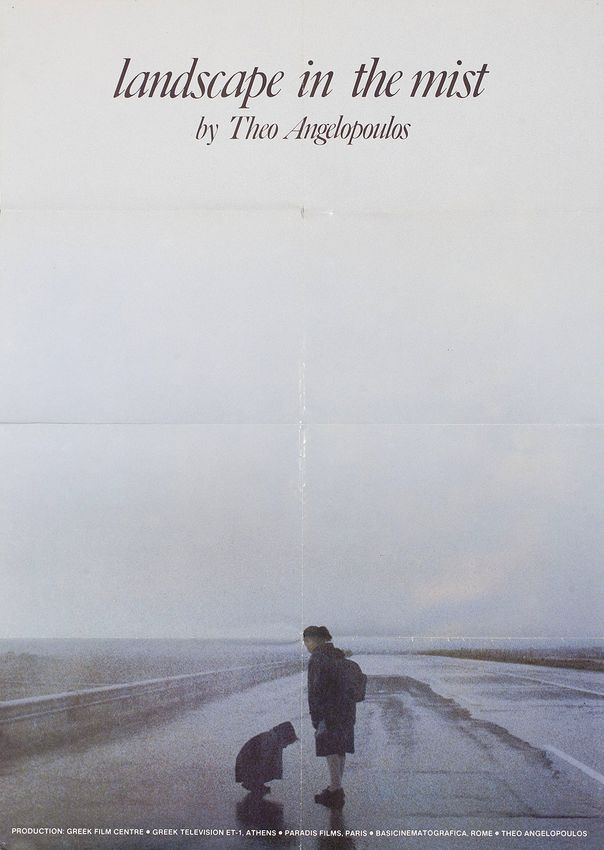
A CHANGING   Geographies and
             the reach of Greek

    MAP      civilization before
             the modern era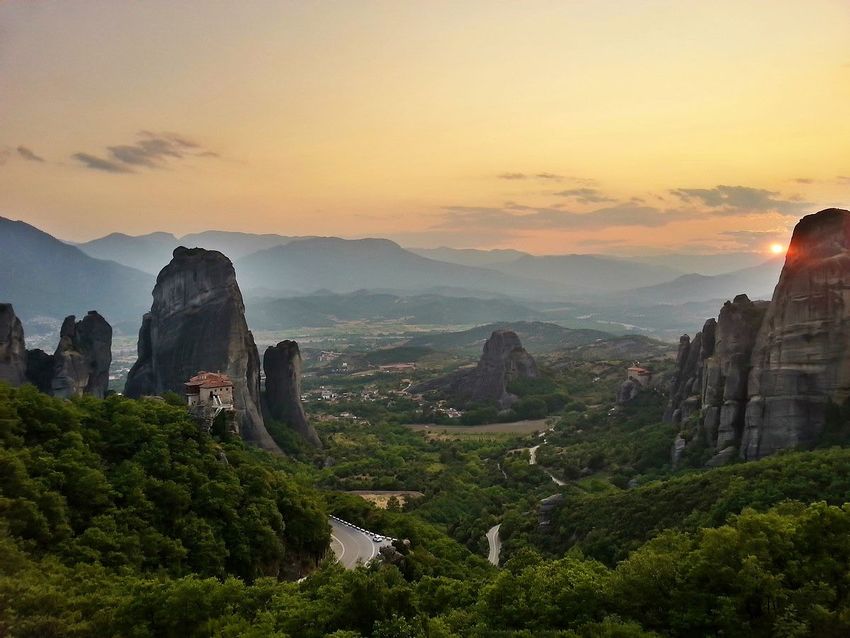
◦   The Bronze Age: 3000 B.C. - 1100 B.C. (2000 - 1700 B.C. Mycenean enter mainland Greece; 1700 - 1500 B.C. The height of
    Minoan Civilization is reached; 1200 B.C. The Trojan War, civil war, and the fall of the Mycenean.)
◦   The Dark Age: 1100 - 800 B.C. (1100 - 1000 B.C. Ionian Immigration to Asia Minor; 900 B.C. Dorian migration to the
    Aegean islands, Asia Minor (area around Rhodes), and through the Peloponnesus.)

                                                                                                                                   A very, very,
◦   Archaic Period - 800 B.C. - 500 B.C. (800 - 700 B.C. Monarchies begin to be replaced by Aristocratic Republics; 776
    B.C. Date of the first Olympic games.
◦   Classical Period: 500 - 400 B.C. (490 B.C. First Persian invasion of Greece, the Battle of Marathon; 480 B.C. Second Persian
    invasion of Greece, Spartans are defeated at Thermopylae, Athens is occupied by the Persians. The Persians are finally
    defeated at Salamis; 443 - 429 B.C. Pericles is leader of Athens during the Golden Age; 431 - 404 B.C. The Peloponnesian
    War
                                                                                                                                   very long
◦   Late Classical Period: 400 - 330 B.C. (395 - 340 B.C.Warfare between rival Greek leagues; 338 B.C. Philip of Macedonia
    leads the Greek City States; 336 - 323 B.C. Alexander the Great's reign begins.
                                                                                                                                   history
◦   Hellenistic Age: 330 - 30 B.C. (323 - 148 B.C. Greek City States remain relatively independent. Frequent warfare continues     Some historical frames
    between rival leagues; 200 - 196 B.C. First Roman victories over Greece; 146 B.C. Romans defeat the Achaean League,
    destroy Corinth.                                                                                                               and key events
◦   330 AD: Constantine founds the new capital of the Roman Empire on the existing site of the ancient Greek city
    Byzantium: Byzantium was renamed Constantinople; 395: The Roman Empire divides in half, with the Eastern Roman
    Empire based in Constantinople and the Western Roman Empire based in Rome/Ravenna.
◦   1071: Defeat at Manzikert to the Seljuk Turks. Permanent loss of most of Asia Minor.
◦   1054: The Great Schism: The Latin Roman Church and the Greek Orthodox Church excommunicate each other.
◦   1095: Emperor Alexius appeals to Urban II at Council of Piacenza for help against the Turks. The First Crusade is
    proclaimed at Council of Clermont.
◦   1204: Fourth Crusade captures Constantinople. The Latin Empire of Constantinople is formed as well as many Byzantine
    successor states. The capture of Constantinople in 1204 was a blow from which the Byzantines never fully recovered.
◦   1261: The successor state of Nicaea recaptures Constantinople and restores the Byzantine Empire.
◦   1453: Fall of Constantinople to the Ottomans
◦   1821-1829: Greek War for Independence
◦   1829-1932: First Hellenic Republic and 1833-1924 Kingdom of Greece
◦   1924-1935 Second Hellenic Republic and 1935-1967 Restoration of the Kingdom of Greece
◦   1945-1949: Civil War
◦   1967-1974: Military Dictarorship 1974-today: Third Hellenic Republic: The Cyprus Issue; Changing Political Landscape; The
    Years of the Financial Crisis; In the Present: LGBTQ+ Rights/#MeToo, Eastern Mediterranean Geopolitical Shifts, and
    Responses to the Pandemic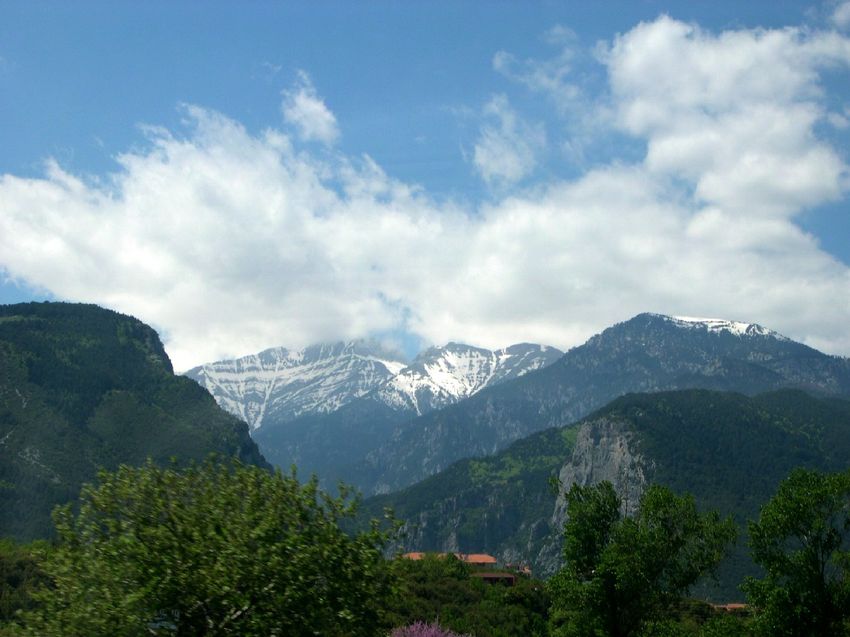
◦ The Lenaia was an annual Athenian festival with a dramatic
  competition. It took place in Athens and in Delphi in the month of
  Gamelion roughly corresponding to January. The festival was in honour
  of Dionysus Lenaios. ("Lenaia" probably comes from "lenos" 'wine-press'     Ancient
  or from "lenai", another name for the Maenads (the female worshippers
  of Dionysus)).                                                              Greek
◦ The Anthesteria was one of the four Athenian festivals in honor             Festivals
  of Dionysus. It was held each year from the 11th to the 13th of the month
  of Anthesterion, around the time of the January or February full moon. It
  celebrated the beginning of spring, particularly the maturing of the wine
  stored at the previous vintage, now ceremoniously opened. During the
  feast, social order was interrupted or inverted, the slaves being allowed
  to participate.
◦ In the Dionysia, the central events were theatrical performances of
  dramatic tragedies and, from 487 BC, comedies. It was the second-most
  important festival after the Panathenaia. The Dionysia actually consisted
  of two related festivals, the Rural Dionysia and the City Dionysia, which
  took place in different parts of the year.
◦ The Panathenaic Games were held every four years in Athens, from 566
  BC to the 3rd century AD. These Games incorporated religious festival,
  athletic competitions, and cultural events hosted within a stadium.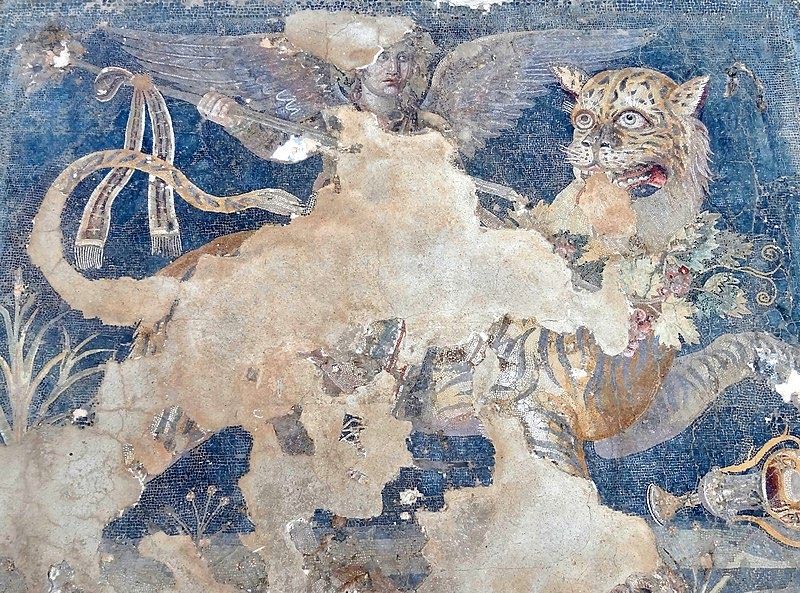
◦ Epiphany
◦ Apokries (Carnival)                                                                         Major Holidays
◦ Independence Day: The Greek National Anniversary and a major religious holiday
  with military parades in the larger towns and cities, celebrating Greece's victory in the
                                                                                              & Festivals
  war of Independence against the Turks who had occupied the country for 400 years.           Throughout Modern
  The 25th of March was actually the day Bishop Germanos of Patras raised the flag of         Greece
  national rebellion at the monastery of Agia Lavra in the northern Peleponisos. For
  Greece, the 25th of March is the equivalent to the 4th of July to Americans.
◦ Holy Week and Easter
◦ August 15th: The day of the Panagia (Virgin Mary)
  This is the second biggest religious holiday after Easter and on the island of Tinos this
  day is celebrated like on no other. Pilgrims by the thousands come here to crawl on
  their knees up the steps to the church that holds the holy Icon. But this day is also
  celebrated in almost every town and village in Greece especially those with a church
  dedicated to the Panagia (Virgin Mary).
◦ The 28th of October is Ochi Day, celebrating the Greek refusal to let Italy occupy the
  country during WWII. The Italians invaded and were driven back into Albania and
  nearly back to Italy. There are military parades in the major towns and cities.
◦ The 17th of November is the anniversary of the student uprising at the Polytechnic
  University in Athens in 1973. The demonstrations against the military dictatorship
  gained momentum and were crushed when tanks crashed the gates of the university
  killing many students. The holiday is celebrated with the annual march at the
  American Embassy. If you have business at the Embassy it is a good idea to save it for
  another day.
◦ When you go to a village ask one of the locals when the Panigiri for a particular
  church is and if it happens to be during your stay, join in the celebration.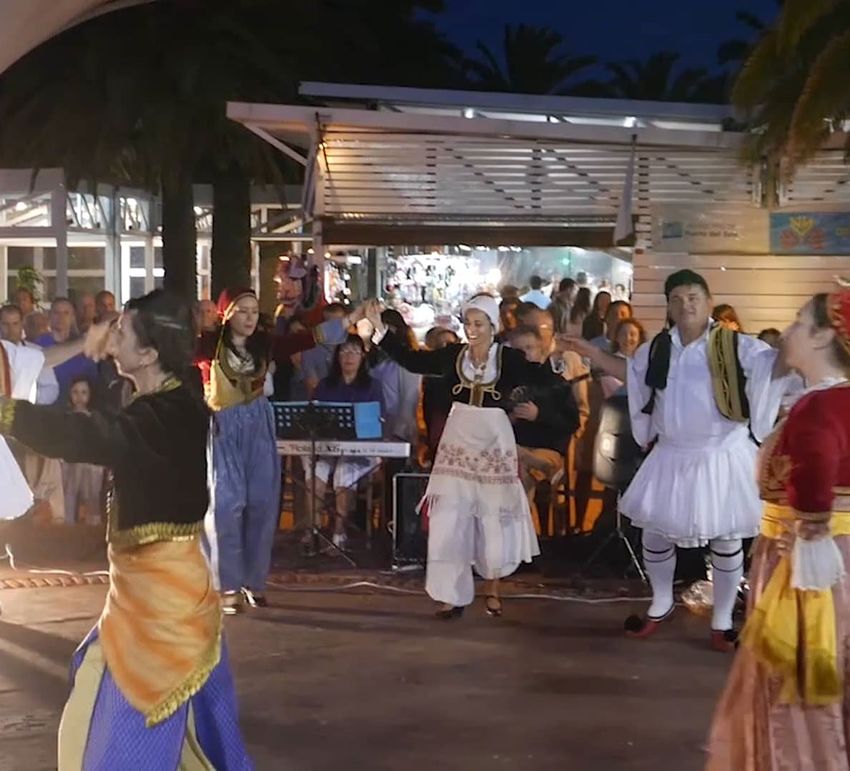
From the Parthenon to
Polykatoikies(…or, how rich
architecture can be when a
civilization spans millenia)

◦ Xenia hotels project: a nationwide
  hotel construction program initiated
  by the Hellenic Tourism
  Organisation to improve the country's
  tourism infrastructure in the 1960s and
  1970s. It constitutes one of the largest
  infrastructure projects in modern
  Greek history
◦ Modern landmarks
◦ Regions of Greece

                         THE
                      MAINLAND

                      A range of cultures and
                             climates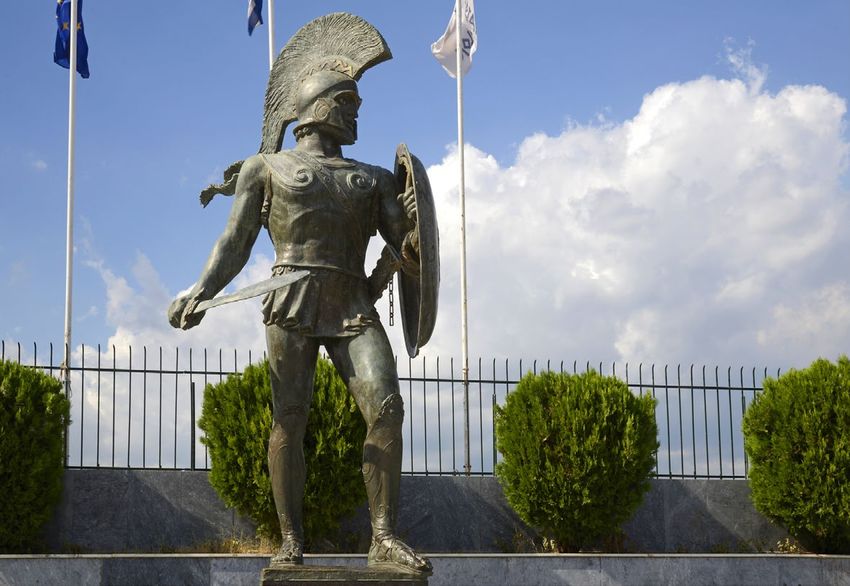
A country that is 80% mountainous

                                                          This Photo by Unknown Author is licensed under CC BY-SA

This Photo by Unknown Author is licensed under CC BY-SA
The Islands
…they come in different sizes (and large numbers)
◦ - over 6000 islands
◦ 227 inhabited
◦ The Greek Archipelago takes up 7,500 km of the country’s total
16,000 km coastline, offering a highly diversified landscape
◦ In the Aegean Sea: the northeastern islands, the islands of the
Argosaronic, the Sporades, the Cyclades, the Dodecanese (12 islands)
◦ In the Ionian Sea; we only have The Ionian Islands
Zakynthos, Ithaca, Corfu, Kefallonia, Lefkada, Paxi, and Kythira which is
situated opposite the southern Peloponnese (Laconia). These islands,
which are the biggest of the Ionian Sea, constitute the famous
Eptanissa (meaning seven islands; epta in Greek means seven).
This Photo by Unknown Author is licensed under CC BY-SAScenes from Painting: Domenikos Theotokopoulos (‘El Greco’, 1541- 1614) ‘View of Toledo’ (1599-1600)At the Metropolitan Museum of Art, NY In this, his greatest surviving landscape, El Greco portrays the city he lived and worked in for most of his life. The painting belongs to the tradition of emblematic city views, rather than a faithful documentary description. The view of the eastern section of Toledo from the north would have excluded the cathedral, which the artist therefore imaginatively moved to the left of the royal palace. Other buildings represented in the painting include the ancient Alcántara Bridge, and on the other side of the river Tagus, the Castle of San Servando.
SCENES
                                                              FROM
                                                            PAINTING:
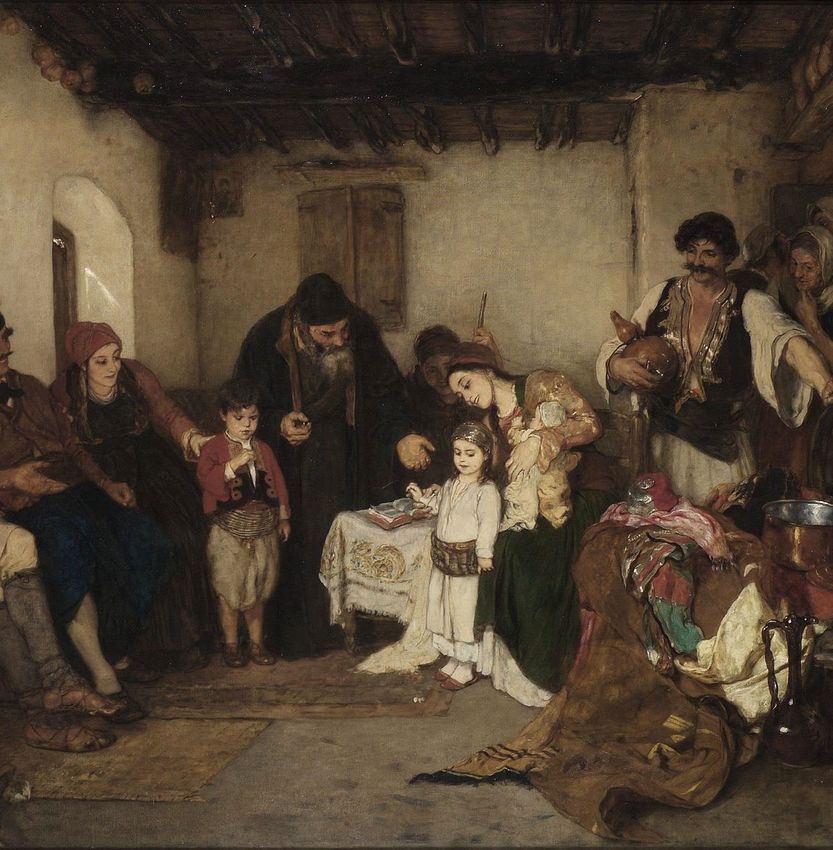
                                                            NIKOLAOS
                                                              GYZIS
                                                                        1842-1900
                                                          onone of Greece's most important
                                                          19th-century painters. He was most
                                                            famous for his work Eros and the
                                                           Painter, his first genre painting. He
                                                            was the major representative of
                                                          the so-called "Munich School", the
                                                              major 19th-century Greek art
                                                                        movement.

This Photo by Unknown Author is licensed under CC BY-SA
SCENES FROM PAINTING:
YANNIS MORALIS (1916-2009), he
Member of the generation of the 30s. In the 1970s, he moved from the
realistic depictions of the human form of his earlier works towards
a geometric stylisation, incorporating curves. Over the years, Moralis was
also involved with creating theatrical set and costume designs for
the Greek National Theatre and the Greek National Ballet; illustrating
poetic works by Odysseus Elytis and Giorgos Seferis; and decorating
architectural works such as the façade of the Athens Hilton, the Metro-
Station "Panepistimiou" and the Athens Central Station.
‘Angel’ (1960)
[Draft for frontispiece of Odysseus Elytis’ Six Plus
One Remorses for the Sky’]
Draft for Odysseus Elytis’ Six Pl
This Photo by Unknown Author is licensed under CC BY-NC-NDSCENES FROM
PAINTING:
ALEKOS FASIANOS
(1935 -)
‘Zeus’ (2003)
Very popular; some of his works are exhibited in public
places: two large murals entitled The Myth of My
Neighborhood, can be seen in Athens at the Metaxourgeio
metro station. Sculptures exist in front of the Orthodox
Church of St. Irene in Athens. A giant vertical mural can be
seen in the lobby of the Electra Metropolis Hotel.Installations
and Public
Art
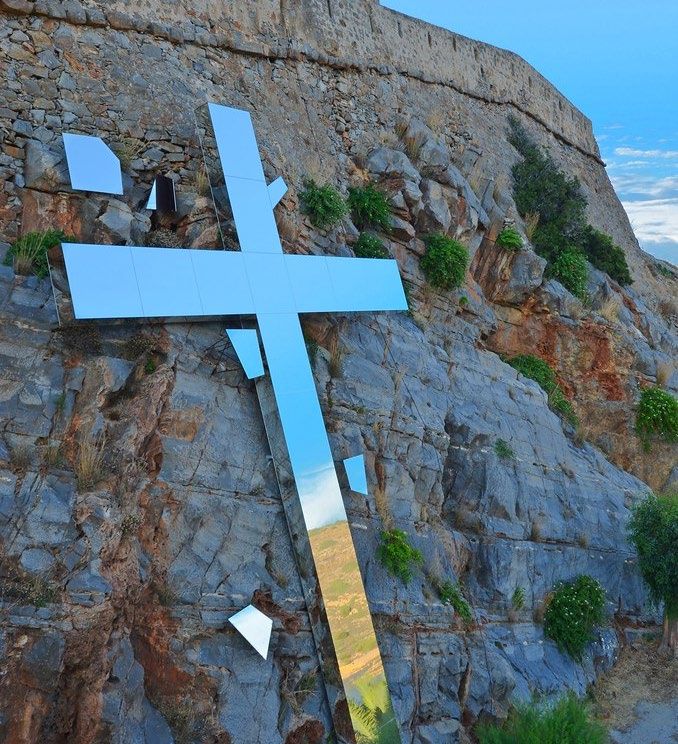
Costas Varotsos
‘Dromeas’ (1988)
This Photo by Unknown Author is licensed under CC BY-NC-NDCostas Tsoclis ‘You, the last leper’ (2012) (but see also: ◦ Anthony Gormley)
Performing Arts
◦ Traditional dances include the hasapiko,
kalamatiano, ikariotiko, pontic dances,
zervodexio and variations of these across
different regions
◦ Traditional instruments include the Byzantine
lyra, the bouzouki, the Cretan lyra, the baglamas
and mandolin.
A Diverse
                                           Musical
Dances: Skalkotas, cond. Mitropoulos       Culture

Mikis Theodorakis’s ‘Dance of the Kites’

Manos Hadzidakis’s ‘Gioconda’s Smile’

Eleni Karaindrou’s ‘By the Sea’            Greek Composers
The 2004 Olympics ◦ (or: how things may come together and a culture reflects upon itself) The Athens 2004 Ol marked the first time since the 1996 Summer Olympics that all countries with a National Olympic Committee were in attendance, and also saw the return of the Olympic Games to the city where they began. Having previously hosted the first modern Olympics in 1896. Athens became one of only four cities to have hosted the Summer Olympic Games on two occasions at the time (together with Paris, London and Los Angeles)
(Modern) Greek Cinema
       *and what was there before
Theo Angelopoulos        Yorgos Lanthimos
The 1950s and 1960s: A Golden Age of Greek Cinema
Theo Angelopoulos (1935-2012)
Yorgos Lanthimos (1973 – )
Eating as a
Greek:
where to
start?
◦ Cultural and
geographical variety
means that Greek
cuisine is varied and
expansive, considering
size of country, and
population.
◦ -- known everywhere:
FETA, YOGHURT,
MOUSSAKA, GYROS
◦ -- hidden magic:
MPOUGATSA, RAVANI,
HALVA, SAGANAKI
Destination:
     Corfu
◦ Corfu (Kerkyra), unlike the rest of
Greece, never fell under the Ottoman
oppression. Due to the successive
dominations of the Venetians, the
French and the British over the
centuries, the island has primarily
become part of the Western rather the
Levantine world. Their culture wielded
strong influence in the city: it was here
that the first Greek University (the Ionian
Academy), the first Philharmonic
Orchestra and the First School of Fine
Arts were founded.
◦ In the beautifully preserved Old
Town of Corfu, a UNESCO world
heritage site, Renaissance, Baroque
and Classical “repertoire” came to be
successfully applied to local artistic
traditions. Palaces, fortresses, austere
public buildings of the Venetian rule
uniquely blend with lines of drying
washing in tiny alleyways and small
secluded squares. Strolling through a
complex of narrow cobbled streets with
stairways and vaulted passages, the so-
called “kantounia”, will make you feel
as if you’ve travelled to Genoa or
Naples.
Also, in Corfu: The Ionian University (and the Dept of Foreign Languages, Translation and Interpreting ◦ part of the IONIAN UNIVERSITY (1984) & its School of History and Translation ◦ formerly Greece’s Centre for Translation and Interpreting (1977-1984) ◦ based in Corfu, northernmost of the ‘Eptanisa’ (seven islands) ◦ The only Department offering undergraduate degrees in translation and interpreting in Greece; includes several research groups ◦ four years of study; specialization in last two, e.g. technical and scientific or literary translation ◦ Modular MA in Translation
Major Greek Universities
There are 22 public universities in Greece, among them, the Aristotle University of Thessaloniki, the National and
Kapodistrian University of Athens, the Democritus University of Thrace, the University of Crete, the University of Ioannina, the
University of Patras and the University of the Aegean. There were also –until quite recently- also 15 Technological
Educational Institutes, which were first established in 1983. Concerning colleges, the constitution of Greece clearly states
that tertiary level education shall be exclusively provided by public universities.
You can also read


