Handbook for AHRI Accreditation 2020 - VET / TAFE Course - Australian HR Institute
←
→
Page content transcription
If your browser does not render page correctly, please read the page content below

AHRI Accreditation Handbook 2019 – VET/TAFE Courses

Handbook
for AHRI Accreditation 2020
VET / TAFE Course

                                                                     1|Page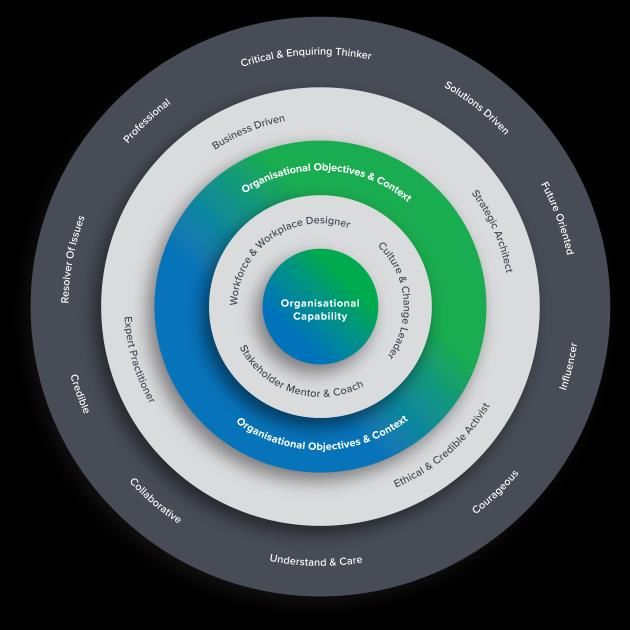
AHRI Accreditation Handbook 2019 – VET/TAFE Courses

Table of Contents

INTRODUCTION ................................................................................................................................................... 3
   AHRI MODEL OF EXCELLENCE ....................................................................................................................................... 4
   ACCREDITATION AIMS .................................................................................................................................................. 5
   CRITERIA FOR ASSESSMENT ........................................................................................................................................... 5
   COURSE ACCREDITATION APPLICATION FORM .................................................................................................................... 5
PART 1: COURSE INFORMATION.......................................................................................................................... 6
      AHRI accreditation criteria .................................................................................................................................. 6
      AHRI Model of Excellence competencies ............................................................................................................. 6
      AHRI competencies and the Business Services Training Package ....................................................................... 9
PART 2: COURSE REVIEW .................................................................................................................................. 10
     Advisory committees ......................................................................................................................................... 10
     The National Accreditation Committee............................................................................................................. 11
     Accreditation Process ........................................................................................................................................ 12
   2020 APPLICATION TIMELINE ...................................................................................................................................... 12
     Accreditation process outcomes ....................................................................................................................... 12
     Accreditation period.......................................................................................................................................... 13
     Confidentiality ................................................................................................................................................... 13
     Review Process .................................................................................................................................................. 13
     Notification of Course Changes ......................................................................................................................... 14
   AUSTRALIAN ACCREDITED COURSES TAUGHT OVERSEAS POLICY ......................................................................................... 14
   NOTIFICATION OF COURSE CHANGES ............................................................................................................................. 15
   AHRI COURSE ACCREDITATION EXTENSION POLICY .......................................................................................................... 15
     Use of AHRI accredited logo .............................................................................................................................. 16
APPENDICES ...................................................................................................................................................... 17
   APPENDIX 1 – STUDENT PRIZES .................................................................................................................................... 17
   APPENDIX 2 – AHRI CERTIFICATION AND MEMBERSHIP.................................................................................................... 18
     Certified HR Academic membership .................................................................................................................. 18
     Certified HR Practitioner membership .............................................................................................................. 18
     Professional membership .................................................................................................................................. 18
     Academic Member of AHRI ............................................................................................................................... 18
     Member of AHRI................................................................................................................................................ 19
     Fellow member of AHRI .................................................................................................................................... 19
     Graduate of AHRI .............................................................................................................................................. 19
   NON-PROFESSIONAL MEMBERSHIP ............................................................................................................................... 19
     Affiliate.............................................................................................................................................................. 19
     Student .............................................................................................................................................................. 19
   ORGANISATIONAL MEMBERSHIP................................................................................................................................... 19

                                                                                                                                                             2|Page
AHRI Accreditation Handbook 2019 – VET/TAFE Courses
Introduction
The Australian HR Institute (AHRI) is the professional body for Human Resources in Australia.
AHRI sets the industry standard for HR practitioners in Australia which is globally
benchmarked and mapped to both Singapore HR certification (Institute of HR Professionals)
and the UK chartered HR standard (Chartered Institute of Personnel and Development). AHRI
has reciprocal certification arrangements in place with the CIPD.
Professional membership with AHRI ensures that HR practitioners:
o Adhere to a robust professional code of conduct that is supported by governance
requirements and disciplinary procedures
o Are effectively supported in their continuing professional development (CPD) to
ensure currency of skills and knowledge is maintained.
AHRI provides a wide range of learning and development opportunities in HR, people
management and business skills. As a national body, AHRI provides education and
networking opportunities across Australia, including the delivery of the world-class AHRI
Convention. AHRI also commends excellence in HR and diversity and inclusion practices
across Australia through its highly regarded AHRI Awards.
AHRI's globally benchmarked Model of Excellence underpins all AHRI's professional
development products, events and programs. AHRI sets standards for HR practice through
both the AHRI Practising Certification program and industry accreditation of HR qualifications
at Australian universities. It also supports vocational standards in HR training by actively
contributing to Skills Service Organisations (SSOs) and Industry Reference Committees
(IRCs).
AHRI conducts independent research and liaises with both Australian and international
partners on matters of interest to Australian workers and workplaces. Through its expert
industry advisory panels.
As a member of the Asia Pacific Federation of Human Resource Management and the World
Federation of People Management Associations, AHRI belongs to a global network of HR
associations that enables the open sharing of research and issues affecting human resource
management worldwide.
AHRI is owned by its members and governed by a Board of Directors with a Council of State
Presidents that consists of elected councillors representing each Australian state and territory.
3|PageAHRI Accreditation Handbook 2020 – VET/TAFE Courses
AHRI Model of Excellence
Human resource management is comprised of several interrelated activities that combine to
drive business performance. With the goal of contributing to organisational capability HR
professionals and academics require knowledge in the competencies outlined in the AHRI
Model of Excellence:
• Business Driven
• Strategic Architect
• Ethical and Credible Activist
• Expert Practitioner
• Workplace and Workforce Designer
• Culture and Change Leader
• Stakeholder Mentor and Coach
Human resource management knowledge and capability underpin HR practice and influence
the professional behaviour of HR professionals and how they are perceived.
4|PageAHRI Accreditation Handbook 2020 – VET/TAFE Courses
The AHRI Model of Excellence (MoE) has evolved from the HR Management Model
developed by AHRI in 2003, incorporating latest research results from the HR Competency
Study conducted by RBL and the University of Michigan and drawing from the HR
Competency Model developed from this study by Professors Dave Ulrich and Wayne
Brockbank. AHRI participated in the fifth and sixth rounds of the study as a regional partner. In
2014 AHRI redeveloped the Model of Excellence through extensive research and consultation
with specialist AHRI member committees. Through this redevelopment an outer ring of
behaviours has been incorporated into the Model of Excellence. These behaviours have been
incorporated to reflect the individual attributes of an effective HR practitioner.
Accreditation Aims
There are several important interrelated aims for AHRI’s role in accreditation of HR courses
delivered in Australia, including:
• To develop and promote HR as a profession
• To provide industry feedback, knowledge and experience in curriculum development to
ensure continued professional relevance
• To develop co-operation, partnerships and alliances with educators in pursuing
common goals in relation to HR and the profession
• To develop and promote HR course development that enhances professional standing
and recognition of AHRI members
• To increase awareness and visibility of AHRI as the HR industry body.
Criteria for Assessment
AHRI recognises that each institution and course is unique. Furthermore, it acknowledges that
fundamentally, the academic quality and standards of courses related to professional
preparation are primarily secured by the internal quality assurance processes of the
institutions.
As the Australian HR professional association, it is important for AHRI to be involved with the
education of people entering the profession, as well as those already within the profession.
Through the application of the AHRI HR Model of Excellence the ongoing development of
curriculum in Australia will continue to reflect the changing requirements of Australian
business.
Course accreditation application form
The course accreditation application consists of two parts:
1. Course information
1.1 Determination of course particulars and academic requirements (number of
core and elective units of study)
1.2 Summary details of the subjects within the course
1.3 Audit by VET regulator – audit date and regulatory authority conducting audit
1.4 Student resources – links to course handbook and student guides
2. Course review
2.1 Formal evaluation and review processes
2.2 Curriculum/Advisory Committee Board meeting schedule
2.3 Details of Curriculum/Advisory Committee/Board meeting dates
2.4 Curriculum/Advisory Committee/Board members
5|PageAHRI Accreditation Handbook 2020 – VET/TAFE Courses
As part of the course accreditation application, the Curriculum/Advisory Committee/Board
minutes are also required to be provided as an appendix.
Further details regarding the major elements of the course application are provided in the
following sections of this document. Refer to the ‘Application Process’ section of this document
for a hyperlink to access the course accreditation application form.
Part 1: Course Information
AHRI relies on the fact that to be registered as a provider within the Australian vocational
education and training system, registered training organisations are required to meet criteria
set down within the VET Quality Framework, inclusive of the Standards for Registered Training
Organisations (RTOs) 2015. Part 1 of the application for accreditation consists of an overview
of the institution’s VET course including relevant institutional information that relates to VET
Quality Framework compliance.
AHRI accreditation criteria
The accreditation criteria are intended to be flexible to encourage Institutions to develop HR
courses in unique and innovative ways. As a consequence, the accreditation decision is a
matter of judgement rather than precise measurement.
AHRI accreditation is based upon the AHRI HR Model of Excellence (MoE) capabilities and
the extent to which the course reflects these competencies:
• Business Driven
• Strategic Architect
• Stakeholder Mentor and Coach
• Workforce and Workplace Designer
• Ethical and Credible Activist
• Expert Practitioner
• Culture and Change Leader.
For your reference, details of each of these competencies and the competency elements is
provided in the table below.
AHRI Model of Excellence competencies
MoE Competency Competency elements
Business Driven • Understands the operations, products and service
Understands the delivery priorities of the organisation
organisational context and • Understands the organisation’s operating environment,
objectives including financial, performance and stakeholder needs
• Drives competitive advantage and delivers quality
outcomes for clients through people
• Understands and anticipates the impact of the political
and legislative framework and government policy on the
organisation
• Understands and anticipates the impact of social,
technological, economic and demographic changes on
the organisation
• Responds appropriately to internal and external
influences and their likely impact on workforce risk,
6|PageAHRI Accreditation Handbook 2020 – VET/TAFE Courses
MoE Competency Competency elements
agility, governance, sustainability and organisational
performance
• Provides operational outcomes that are in the context of
and consistent with other organisational systems
• Understands and applies the language of the
organisation and its stakeholders
Strategic Architect • Interprets the internal and external political environment
Contributes to and manages the HR function within it to deliver an
organisational strategy effective HR strategy
translated into HR strategy • Challenges organisational outcomes and how they might
be achieved from a people perspective
• Develops and implements HR strategies that are valued
and ensures organisational strategies are achieved
• Embodies responses to economic, demographic,
technology trends in the HR strategy
• Understands the impact of business digitisation on HR
solutions
• Influences and communicates the alignment and
contribution of HR activities to organisation or
government objectives
• Takes action to ensure HR strategy and functions
improve organisational performance
• Manages and drives HR activities that are aligned to,
and contribute to, organisation or government objectives
• Designs and delivers solutions to workforce issues,
challenges and opportunities
• Applies effective and valued HR practices appropriate to
organisational context and outcomes required
• Measures and evaluates the impact of HR solutions on
organisational or government outcomes and adapts
strategies accordingly
Stakeholder Mentor and • Engages with industry, government, sector stakeholders
Coach to develop valued and effective HR solutions
Builds and fosters • Delivers valued and acted upon insights and solutions
relationships and that meet stakeholder needs
partnerships with key • Develops and maintains effective contacts, partnerships,
stakeholders in order to and networks, to deliver required HR solutions which
ensure organisational achieve organisational outcomes
capability • Establishes and maintains mechanisms for effective
support and capability development of stakeholders that
meet their people management requirements
• Coaches managers to develop the competence and
confidence required to perform their people management
responsibilities effectively
• Partners with stakeholders to ensure that HR solutions
are aligned with organisational context and objectives
• Fosters solution focused conversations and assists
leaders to make informed decisions about where to
prioritise and allocate their resources
Workforce and Workplace • Aligns the workforce profile to meet the needs of the
Designer organisation
• Designs a productive, sustainable and engaging
workplace that integrates work and life
7|PageAHRI Accreditation Handbook 2020 – VET/TAFE Courses
MoE Competency Competency elements
Designs a workplace that • Constructs and designs jobs which match the needs of
sustains a capable the organisation and individual employee capabilities,
workforce their aspirations and motivations
• Utilises workforce analytics to identify strategic and
operational workforce requirements
• Attracts, retains, develops, engages, supports and
rewards a talented and capable workforce reflective of
the organisation’s diverse community and service
delivery requirements and the work life integration needs
of employees
• Anticipates and responds to external and internal
political realities that require adjustment to the current
workplace and workforce
• Establishes organisational team and individual
performance frameworks and systems that ensure a
productive and engaged workforce
• Provides and facilitates a workplace that is motivating
and engaging
• Builds frameworks that enable the development of
workforce capacity and capabilities for future
requirements of the organisation
• Develops and enables the workforce to utilise new and
emerging technologies
Ethical and Credible • Uses knowledge to give candid insights to influence
Activist quality decision making
Influences through the • Advocates on behalf of the organisation and the sector in
provision of valued insights which it operates
resulting in the • Exercises sound judgement and demonstrates courage
achievement of individual when influencing decision making
and organisational • Has a track record of achieving positive people results
objectives for the organisation
• Actively listens and uses meaningful and appropriate
communication skills
• Displays high order personal values and leadership
including integrity, ethical behaviour and accountability
for people practices
• Advises and influences with integrity and self-awareness
to achieve organisational objectives
• Demonstrates personal and professional integrity at all
times consistent with the organisation’s codes of ethics
and/or codes of conduct
• Understands potential conflicts of interests and manages
them appropriate to make sound, rational and ethical
decisions
• Drives the application of expertise in advising and
influencing others in their decision making
• Be accountable for own decisions and actions of those of
the HR function
Expert Practitioner • Applies and continuously grows personal knowledge in
Builds, maintains and HR, industrial and employment relations, leadership and
applies HR knowledge other people management areas
• Challenges the status quo and develops insights on how
business and/or government decisions affect
organisational design, culture and business performance
8|PageAHRI Accreditation Handbook 2020 – VET/TAFE Courses
MoE Competency Competency elements
• Knows extent of internal capability and when to engage
specialist HR expertise/tools from HR or seek expertise
from other areas of the organisation
• Understands and anticipates emerging and current
global trends and technological changes and their impact
on the workforce and the workplace
• Understands how HR solutions can support business
digitisation
• Uses internal consultant skills to translate and adapt
theory into practice
• Understands and is familiar with organisational data,
financial indicators, performance indicators and other
measurements
• Provides insights, information and advice about people
management and the HR function’s role, services and
capabilities
• Develops and exercises political nous and uses
judgement when influencing decisions
• Demonstrates pragmatic and effective problem solving
ability in the provision of people management services
Culture and Change • Has an understanding of the components required for a
Leader productive and sustainable organisational culture
Fosters a productive and • Designs and delivers innovative HR solutions that create
sustainable organisational and foster a productive and sustainable organisational
culture culture
• Determines, communicates and implements
accountability frameworks of expected employee
behaviours
• Works with the executive to articulate vision for the
organisation and communicate the need for change
when required
• Works with executive to understand the optimal culture
for the organisation to achieve its objectives
• Translates culture and values into workforce and
workplace practices
• Manages and supports a collaborative, innovative and
values based culture
• Embeds a culture of coaching for performance and
productivity into the organisation
• Where required, develops the business case for change
and identifies and engages people who can make
change happen
• Monitors progress and success of change processes
and sustains change through HR solutions
• Communicates the outcomes of change to the
organisation and adapts applies the learning from
change experiences
AHRI competencies and the Business Services Training Package
The Business Services Training Package developed in 2006/07 was undertaken in association
with a National Project Reference Group of which AHRI was a member. Through this
relationship, the AHRI HR Model of Excellence capabilities have been embedded within the
structure of the following qualifications:
9|PageAHRI Accreditation Handbook 2020 – VET/TAFE Courses
• BSB41015 Certificate IV in Human Resources
• BSB50615 Diploma of Human Resource Management
• BSB60915 Advanced Diploma of Management (Human Resources)
Please note that AHRI accreditation is only undertaken against ‘core’ units of study, where a
graduating student can be guaranteed of having completed these units of study. While details
of elective units are noted, they are not used for the purposes of assessing accreditation
eligibility.
Part 2: Course Review
Advisory committees
The Standards for Registered Training Organisations (RTOs) 2015 requires RTOs to develop
training and assessment strategies in consultation with industry stakeholders (Clause 1.5 and
1.6) Assessment is required to meet training package and regulatory requirements and
industry experts should be involved in validation of the assessment (Clauses 1.8 -1.25)1).
Each RTO provides evidence that the training and assessment strategies it develops is clear
and based on data collected on industry and enterprise requirements through the use of
effective consultation processes.
A vital aspect of any course of study is the ongoing review, evaluation and continuous
improvement of the program. Part 3 of the accreditation application refers to the existence of a
Curriculum/Advisory Committee/Board whose role it is to provide ongoing support. It would be
anticipated that the Curriculum/Advisory Committee/Board would meet on a biannual basis.
As an indication of the desired make-up of this type of committee the AHRI National
Accreditation Committee has provided suggestions regarding the formation of the following
stakeholder groups:
• Senior industry representatives representing both the public and private sector with a
range of generalist and specialist HR experience
• AHRI professional member
• Senior academics with a combination of specialist and broader business focus
• Past and present students of the course of study
• Representation from a graduate recruiter etc.
• The size and mix of the committee should be reflective of the breadth of the education
program. In addition, the professional capabilities of the committee should be relevant
to the program and should be aligned to the ideal target market of the course of study.
For example, a tertiary HR course with a strong international focus may utilise an advisory
committee with the follow members:
Job role / title Organisation
Corporate Services Manager Public Sector Organisation
General Manager Private Sector Organisation
General Manager Private Sector Organisation
Director Government Department
Recruiter Recruitment Organisation
International Public Service
HR Manager
Organisation
Lecturer VET/TAFE
10 | P a g eAHRI Accreditation Handbook 2020 – VET/TAFE Courses
Lecturer VET/TAFE
Senior Lecturer VET/TAFE
Head, Discipline Management VET/TAFE
Convenor, Master HRM VET/TAFE
Chair, Division of Education Committee VET/TAFE
Vice-Chancellor, Division Education
VET/TAFE
Committee
Head of School, Business & Government,
VET/TAFE
Division Education Committee
Head of School, Information Sciences,
VET/TAFE
Division Education Committee
The National Accreditation Committee
The National Accreditation Committee (NAC) is a subcommittee of the National Certification
Council (NCC) and is responsible for the AHRI Model of Excellence (MoE) and course
accreditation. The Terms of Reference sets out the membership, responsibilities, authority and
operations of the NAC of AHRI.
Responsibilities
The NAC oversees the AHRI MoE which is the HR certification standard and ensures it is
contemporary and in line with HR best practice.
The NAC ensures the AHRI MoE standards are included in University and Vocational
Education programs by reviewing applications for course accreditation from tertiary and
vocational education providers and provides commentary on the Australian education
environment.
The NAC is responsible for assessing curriculum content, maintenance and delivery of HR
courses to ensure they meet the HR certification standard as outlined in the AHRI MoE.
Decision Making
The NAC, delegated by the Board is the awarding body of professional accreditation to tertiary
and vocational institutes subject to By-law 3.
Membership
Membership to NAC will consist of 11 members by AHRI Board invitation only and will be
formed by representation from:
• AHRI Non-Executive Director
• Academia HR Specialisation (4)
• VET (2)
• Private Sector
• Public Sector
• Not for Profit Sector
• CSP Representative/Councillor/Past Board Member/Past CSP
Please click here to view the current members.
11 | P a g eAHRI Accreditation Handbook 2020 – VET/TAFE Courses
Accreditation Process
• An application for each course for which the institution is seeking accreditation needs
to be complete (e.g. if you are seeking accreditation for 3 courses then 3 separate
applications would be required).
• Only applications utilising the 2020 application form will be accepted.
• Payment of course accreditation fees must be made after applications are uploaded to
the AHRI accreditation online portal via credit card. We accept Visa, MasterCard,
AMEX or Diners. Payments are not refundable after submission.
Accreditation application fees (incl. 10% GST) Certificate IV / Diploma /
*Pricing is based per course Advance Diploma
$600
Note: The course accreditation fee is set on a cost recovery basis. It designed to cover
administration, assessment and marketing costs. The fee is used to maintain the course
accreditation processes (e.g. course application processing, desk audits and NAC meetings)
and website information regarding course accreditation.
2020 Application Timeline
The AHRI course accreditation timeline is outlined below. Link to the overview of steps to
submit application(s) via portal.
• Submission(s) open date: 27 February 2020
• Submission(s) close date: 21 May 2020
• Desk Audit of applications is undertaken from 25 May 2020
• Desk Audit findings to be forwarded to applicants from 12 June 2020
• Responses to findings, if required are due by 2 July 2020
• National Accreditation Committee meet to review applications on 29 July 2020
• Application outcomes to be forwarded to applicants in September 2020
Accreditation process outcomes
The NAC assesses the course accreditation applications and reports on outcomes, with the
accreditation outcomes being: ‘Accredited’, ‘Accreditation Pending’ or ‘Accreditation
Premature’. Further information about outcomes is provided in the table below.
Status Definition Action
Upon confirmation of acceptance AHRI
adds the course to its register of
The NAC finds that based Accredited Courses and sends the
upon the application applicant an Accredited Course Logo. Use
Accredited
submitted that the course is of the logo is bound by conditions supplied
to be accredited. by AHRI to the qualifying institution, for the
qualifying accreditation period.
In the case of an applicant that is required
The NAC finds that further to provide further evidence, AHRI will
Accreditation evidence is required in order provide feedback indicating the gaps in
Pending to fully assess if the course is information provided, and a date by which
suitable for accreditation. this must be provided to the NAC for
reconsideration.
12 | P a g eAHRI Accreditation Handbook 2020 – VET/TAFE Courses
The NAC finds that the
In the case of an application being
application by an institution is
premature, AHRI will provide feedback
premature and that further
Accreditation indicating the gaps in information provided
more in depth consideration
Premature and guidance regarding the resubmission
must be given by the
of an application the following year.
institution prior to a future
application.
Note: Detailed information about AHRI course accreditation is available on the AHRI website.
Accreditation period
The period for accreditation of an AHRI accredited course is generally three (3) years. After
this period, the education provider will need to apply for reaccreditation of the course.
However, where a course is scheduled for significant impending change or is in teach-out
mode, the National Accreditation Committee may only approve accreditation of a course for a
12 month / one (1) year period.
As part of AHRI’s management of the course accreditation process, the education provider will
be notified by AHRI when a course is due for reaccreditation.
Confidentiality
Course accreditation applications and all supporting evidence are confidential between the
AHRI National Accreditation Committee and the tertiary institution.
Review Process
In the event that an Institution is dissatisfied with the outcome of the accreditation process, an
application for review may be lodged for the decision to be reviewed. The process is outlined
as follows:
1. The applicant notifies the AHRI accreditation team that they wish to appeal the
decision of the NAC by emailing courseaccreditation@ahri.com.au
2. The AHRI accreditation team, together with the NAC Chair, nominates a review panel
and sets a time and place for the review.
a. The review panel members must not be voting members of the NAC, excepting the
Chair.
b. The review panel will be chaired by an AHRI representative.
c. The applicant must forward any submissions and further evidence two weeks prior
to the meeting of the review panel. They may address the review panel during the
review meeting.
d. The review panel may request further information.
3. The review panel will examine:
a. The application and supporting documents
b. Desk audit summary
c. Any additional submissions from the applicant.
4. The review panel advises the NAC either that it upholds the decision, or that it
recommends that the decision be revisited.
5. A final decision will be provided to the applicant within 30 days of the review panel
meeting.
13 | P a g eAHRI Accreditation Handbook 2020 – VET/TAFE Courses
Notification of Course Changes
If the structure, curriculum or delivery mode of the accredited course changes with the
accreditation period, it is the responsibility of the education provider to notify AHRI within ten
(10) working days of the change so that the impact of the course changes can be assessed by
the National Accreditation Committee to determine whether:
(a) ongoing accreditation is appropriate;
(b) re-accreditation is required; and
(c) information in AHRI’s course register and on the AHRI website needs to be amended
accordingly.
The education provider is also required to advise where:
• the designated contact person (as indicated in the course accreditation application) has
changed
• the URL for the course information webpage has changed.
If this information has changed, it is the responsibility of the education provider to provide this
information to AHRI to ensure AHRI’s course register and website information remains correct
and current.
Please email courseaccreditation@ahri.com.au regarding these changes.
Australian Accredited Courses Taught Overseas Policy
Criteria
The key criteria for Australian educational institutions delivering HRM programs in offshore
contexts are that the structures and core subjects of each program are essentially equivalent
to those offered onshore.
The delivery of the course can include one (or a blend) of the following modes:
• Face-to-face learning
• Blended learning (on or off campus)
• Online
• Distance education
The accredited provider may not extend their AHRI course accreditation to their university
partnerships
The student may receive credit for studying the offshore course
Evidence
The providers are required to supply the following evidence with course accreditation
application submission(s):
• Course policy on provided courses taught offshore
• Course structure, content and student assessments
• Detailed information on any differences between onshore and offshore courses (eg.
Industrial relations content).
Should there be additional evidence, please attach the information on to the application for
consideration.
14 | P a g eAHRI Accreditation Handbook 2020 – VET/TAFE Courses
Process
The offshore course(s) will be considered at the AHRI National Accreditation Committee for
review and consideration in accordance with AHRI’s governance, by-law 3.
Notification of Course Changes
If the structure, curriculum or delivery mode of the accredited course changes with the
accreditation period, it is the responsibility of the education provider to notify AHRI within ten
(10) working days of the change so that the impact of the course changes can be assessed by
the National Accreditation Committee to determine whether:
(d) ongoing accreditation is appropriate;
(e) re-accreditation is required; and
(f) information in AHRI’s course register and on the AHRI website needs to be amended
accordingly.
The form to advise of these changes can be downloaded here and emailed to
courseaccreditation@ahri.com.au.
The education provider is also required to advise via covering letter AHRI within ten (10
working days) where:
• the designated contact person (as indicated in the course accreditation application) has
changed
• the URL for the course information webpage has changed.
If this information has changed, it is the responsibility of the education provider to provide this
information to AHRI to ensure AHRI’s course register and website information remains correct
and current.
AHRI Course Accreditation Extension Policy
Consideration Criteria
Extension of course accreditation can be considered in exceptional circumstances. Requests
for extension due to lack of forward planning for the timely review and submission of a course
for reaccreditation will not be considered.
Extension requests should be made at least 120 days before the course accreditation expires.
Requests made after course accreditation has expired will not be considered. The provider
may apply to extend its accreditation period for no more than twelve (12) months from the date
of expiry.
The NAC may consider extending the period of a provider’s period of accreditation of a course
of study for a range of reasons such as the revision of course structure or offerings by an
institution.
If an extension is required, the provider must make an application for accreditation at least 120
days before the end of the extended period.
Review process
Applications will be considered on a case-by-case basis.
15 | P a g eAHRI Accreditation Handbook 2020 – VET/TAFE Courses
Should the NAC grant the request for extension, AHRI will notify the applicant of the revised
course accreditation expiry date.
If the NAC rejects the request for extension, AHRI will notify the applicant of the reasons for
rejecting the request.
If AHRI, is unable to make an accreditation determination prior to the expiry of the extended
period, the provider’s accredited programs will hold the status of Accreditation Extension
Pending at the expiry of the extended period.
Use of AHRI accredited logo
Marketing the program accreditation
If a program is accredited, the VET/TAFE provider will receive access to the AHRI accredited
logo including the year(s) accredited, to use on their marketing material for the program in
accordance with respective guidelines. The accredited program will also be listed on the AHRI
Website.
Are there requirements that providers should be aware of when advertising the
accredited status of a program or using the AHRI logo?
Yes – AHRI have a number of set requirements with how the logo, trademarks and brand are
utilised. Contact AHRI at courseaccreditation@ahri.com.au for assistance on using the logo on
marketing materials.
Where do Professional Bodies publish accredited programs?
AHRI publishes an active list of accredited programs on the AHRI website. In efforts to provide
accurate information to members and potential members of AHRI about accredited programs
available, we require the assistance of higher education providers to maintain the listing via
timely submission of their accreditation application and notification of any changes outside this
submission period as soon as possible.
16 | P a g eAHRI Accreditation Handbook 2020 – VET/TAFE Courses
Appendices
Appendix 1 – Student prizes
In an effort to strengthen ties between AHRI and its accredited education providers, AHRI
provides student awards to students of AHRI accredited education programs.
All AHRI accredited education providers are entitled to one AHRI Student Award per
accredited program. Key elements of AHRI’s Student Award Policy are as follows:
• A maximum of one Student Award per accredited program per annum
o Accredited providers will determine their individual course awards (for example
Student of the Year) and the criteria for each award
• Accredited providers are to:
o notify AHRI in writing a minimum four weeks before any prize is to be awarded
o provide details of the accredited course, the name of the prize (e.g. Student of
the Year) and the recipient’s name
o details are to be provided via email to studentmember@ahri.com.au.
• All prizes will be comprised of either:
a. a one-year Graduate AHRI Membership if eligible or if still studying; OR
b. a one-year Student AHRI Membership
AND a 12-month subscription to HR Monthly, an AHRI certificate and a
congratulations letter from AHRI.
Should you have any specific questions about the AHRI Student Awards policy please contact
studentmember@ahri.com.au.
17 | P a g eAHRI Accreditation Handbook 2020 – VET/TAFE Courses
Appendix 2 – AHRI Certification and Membership
Certified HR Academic membership
AHRI Post nominals – CAHR or FCAHR
• The Academic Pathway offers experienced and senior academics an opportunity to
become a Certified Academic HR, in recognition of their professional contribution to HR
thinking and knowledge, through academic research and/or teaching.
Certified HR Practitioner membership
AHRI Post nominals – CPHR or FCPHR
• The AHRI Practising Certification Program is designed to assess the knowledge, skills
and behaviours required of HR professionals when applying advanced strategic HR
management.
You will be applying the 'toolkit' of HR competencies and behaviours that you have
learnt throughout the APC Program, in both theoretical and applied work-based
assessments and reflections recorded in your learning journal.
• The Senior Leaders Pathway offers senior HR practitioners and executives the
opportunity to attain HR certification through the submission of a retrospective case
study and an intensive interview process. This pathway recognises and takes into
consideration the extensive experience and skills that senior professionals already
have.
• The CIPD Reciprocity pathway is available to HR practitioners and academics who
have achieved the equivalent of Certified Practitioner and Academic status by attaining
the Chartered MCIPD, Chartered FCIPD, Academic MCIPD or Academic FCIPD
categories from the Chartered Institute of Personnel and Development in the United
Kingdom. AHRI Post nominals – CAHR or FCAHR / CPHR or FCPHR
• The IHRP mutual recognition pathway is available to HR practitioners who have
achieved the IHRP Certified Professional (IHRP-CP), IHRP Senior Professional (IHRP-
SP) or IHRP Master Professional (IHRP-MP) certification levels from IHRP in
Singapore. AHRI Post nominals – CPHR or FCPHR
Professional membership
Academic Member of AHRI
Post nominal – AMAHRI
• Academic membership recognises your professional contribution to the delivery and
expansion of HR thinking and knowledge, maintaining professionalism in practice and
commitment to self-development.
Eligible HR academics can apply to become a non-certified academic member
(AMAHRI) via the Academic Pathway.
18 | P a g eAHRI Accreditation Handbook 2020 – VET/TAFE Courses
Member of AHRI
Post nominal - MAHRI
• MAHRI membership is applicable for mid to senior HR professionals with 5+ years' HR
work experience OR relevant HR undergraduate qualification and 2+ years' HR work
experience
Fellow member of AHRI
Post nominal - FAHRI
• FAHRI membership is applicable for senior to executive HR professionals with 10+
years' HR work experience and 5+ years' experience in strategic management or
leadership role.
Graduate of AHRI
Post nominal - GAHRI
• Graduate membership is a professional-level membership offered to support recent HR
graduates in the first two years of their HR career.
Non-Professional Membership
Affiliate
• Affiliate membership is suitable for people working in HR who do not yet meet
professional membership requirements, OR people managers where HR is not their
primary function.
Student
• Student membership is a non-professional membership for full or part-time tertiary
level students studying HR, business, commerce or psychology. Students studying full-
time or part-time at a tertiary level or equivalent can access AHRI member resources to
support their studies and get a foot in the door with AHRI’s professional networking
opportunities.
This membership grade is designed for students that have not yet entered the
workforce and it is therefore not suitable for people who are currently working in HR.
Organisational Membership
Become an organisation member - Your HR team and managers within the wider business will
gain access to exclusive benefits including HR resources and special rates for events, in-
house corporate training and education across your business. Being an AHRI organisation
member also shows your clients and partners that your business is engaged with Australia’s
peak HR body.
19 | P a g eYou can also read


