HCR Multifamily Finance 9% RFP Summer 2021 - July 14, 2021 - Homes and ...
←
→
Page content transcription
If your browser does not render page correctly, please read the page content below
HCR Multifamily Finance 9% RFP
          Summer 2021

July 14, 2021

 1              hcr.ny.gov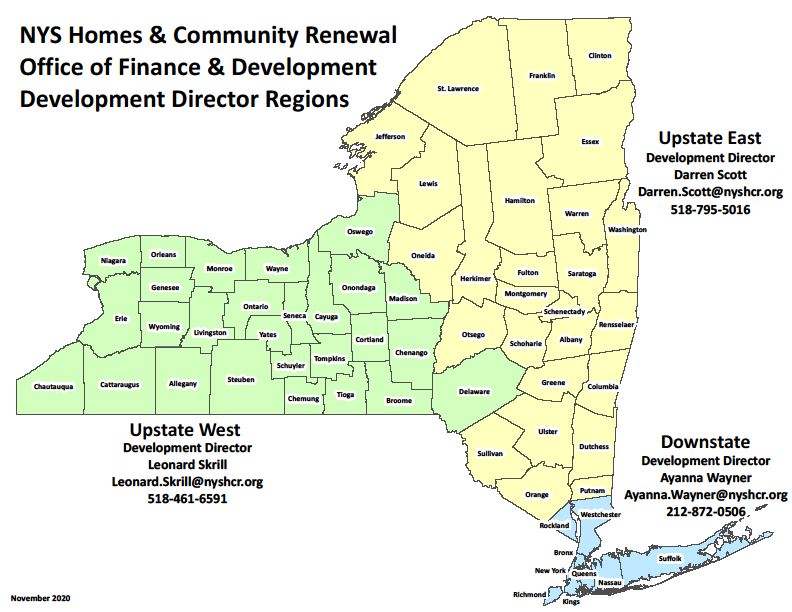
Agenda
What’s New?
9% LIHTC QAP updates
General Overview
Program Funds Available
Funding Round Schedule
Application Materials
Review Process
Technical Assistance
Housing Goals
Program Information
2 hcr.ny.govAgenda
Underwriting Guidance
Design Unit Guidance
HCR Fair and Equitable Housing Office
Affirmative Fair Housing Marketing Plan
Section 3
HCR Office of Economic Opportunity and Partnership Development
M/WBE
SDVOB
Section 8 Project-Based Voucher RFP
3 hcr.ny.govWhat’s New? New Design Guidelines HOME Funds available New 9% LIHTC QAP and SLIHC Regulation Benchmarking costs capped at $495 per building New Technical Assistance process Budget and plan of finance presentation to HCR must be consistent with submissions to other funding agencies Clean Energy Incentive for High Performing Projects - Demonstration Phase 1A Public Housing Preservation updates including expanded eligibility, increased per unit limits and 9% LIHTC Set-Aside Market studies must now include a PMA map shows only the existing regulated affordable housing projects in the PMA 4 hcr.ny.gov
9% LIHTC QAP
Updated definitions (Section 2040.2)
Cost certification - now includes syndication and other fees
Feasibility - defines feasibility review, including both financial and constructability aspects
Housing Opportunity Projects - adds definition
Persons with special needs – updates language with reference to certain populations
State Designated Building – now includes housing opportunity projects
Supportive housing – ties minimum percentage of supportive units to the RFP
Updated Applicant Notification Requirements (Section
2040.3(d)(5))
Material changes to a project (e.g., project scope, development team, financing, budget,
design, etc.)
Updated threshold/eligibility standards (Section 2040.3(e))
Approval process - expands minimum requirements to include those in other HCR-issued
documents such as the NOCA, RFP, design requirements, CPM, etc.
CEO notification – removes requirement to address local objections
Compliance with policies, requirements, laws and regulations - new
Qualified Contracts restriction - new
5 hcr.ny.gov9% LIHTC QAP
Updated scoring criteria (Section 2040.3(f))
Community impact/revitalization – Reduced from 15-10 points, moves 5 points to
Investment in Underserved Areas
Financial Leveraging – Reduced from 13 to 11 points
Sponsor Characteristics – Reduced from 10 to 9 points
Affordability – Increased from 5 to 8 points
Individuals with Children – Increased from 5 to 7 points
Persons with special needs – Service providers to have experience with population
served
Housing Opportunity – Increased from 3 to 5 points, removes outside of QCT
requirement and high-performing schools reference.
Investment in Underserved Areas – Establishes separate 5 point criterion
MWBE and SDVOB – Increased from 2 to 5 points
Historic Nature - Reduced from 3 to 2 points
Mixed Income – Reduced from 5 to 4 points
Marketing Plan/ Public Assistance – Removed 5 point criterion and redistributed points
No changes in point values to Green Building (5); Fully Accessible Units (5); Project
Readiness (10); Persons with Special Needs (5); Cost Effectiveness (5); Participation of
Not-For-Profit Organizations (4)
6 hcr.ny.govGeneral Overview –
What is the HCR Multifamily Finance 9% RFP?
Formerly known as Unified Funding, the HCR Multifamily Finance 9% RFP
is a competitive process used to award 9% LIHTC and subsidy financing to
sponsors proposing affordable and supportive multifamily housing projects
that address a wide range of needs identified as part of the state’s housing
goals.
The process of issuing an RFP twice per year, initiated in the Fall of 2019, is
intended to be more accessible to sponsors, improve the quality of projects
so they continue to align state housing goals, and streamline the review of
applications for HCR staff.
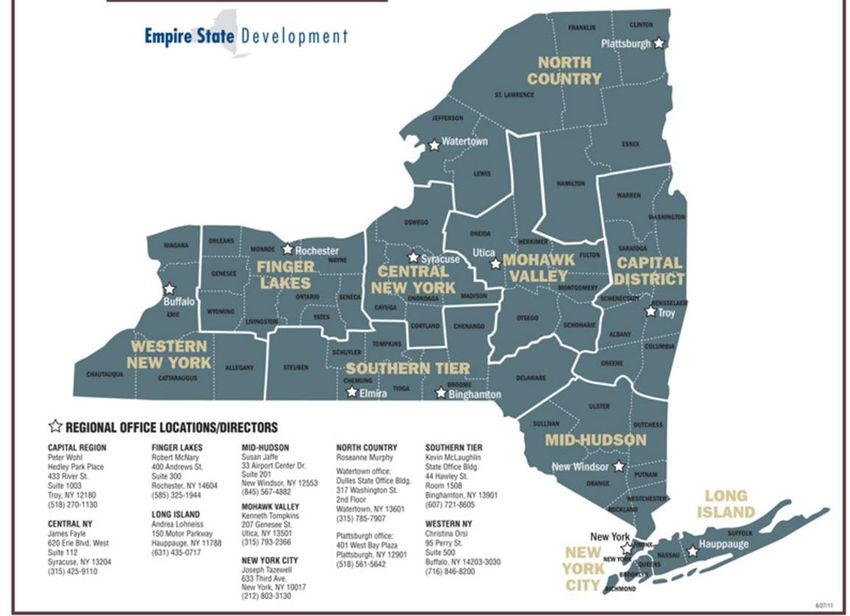
7 hcr.ny.govCompetitive Regions The regional competition is based on New York State’s 10 Economic Development Regions 8 hcr.ny.gov
Program Funds Available
9% Low-Income Housing Tax Credit (LIHTC)          $16 million

NYS Low-Income Housing Tax Credit (SLIHC)         $2 million

Low-Income Housing Trust Fund (HTF)               $40 million

Rural and Urban Community Investment Fund (CIF)   $4 million

Supportive Housing Opportunity Program (SHOP)     $23 million

Public Housing Preservation (PHP)                 $15 million

Middle Income Housing Program (MIHP)              $10 million

 9
                                    hcr.ny.gov
Program Funds Available
Housing Development Fund (HDF) $5 million
Federal Housing Trust Fund (FHTF) $13 million
Senior Housing (SENR) $6 million
HOME (HOME) $10 million
10
hcr.ny.govFunding Round Schedule July 1, 2021: Request for Proposals issued July 14, 2021: Webinar July 15, 2021, 3 pm EDT: Design Waivers due July 21, 2021: Notices of Funding Availability and Notice of Credit Availability published in NYS Register July 29, 2021, 3 pm EDT: Deadline to request TA session, Design Unit occupied rehabilitation package due, and/or credit fee deferral August 5, 2021, 3 pm EDT: Register email/users for drop box August 26, 2021, 11:59 pm EDT: Application Submission Deadline 11 hcr.ny.gov
Application/Reference Materials The RFP webpage (https://hcr.ny.gov/summer-2021-multifamily- finance-9-lihtc-rfp) contains: RFP and Term Sheets Application Components (Financing and Underwriting Applications) Questions and Answers (updated periodically) 9% LIHTC Qualified Allocation Plan As well as various reference materials, including, but not limited to: 2021 HCR Design Guidelines – June 2021 Green Building & Accessibility Scoring Criteria Clean Energy Incentives for High Performance Projects – Demonstration Phase 1A (New collaborative opportunity with NYSERDA) 12 hcr.ny.gov
Overview of Process Mandatory Pre-Application Technical Assistance within 12 months State Housing Goal requirement for all projects Completeness, Threshold and Eligibility Review Scoring Funding Awards Waitlist 13 hcr.ny.gov
Submission Requirements Application (Excel workbook) Underwriting model (Excel workbook) Exhibits consist of fillable Excel Workbooks. In some cases, there are associated pdf uploads. All Attachments consist of pdf uploads 14 hcr.ny.gov
Aspera Dropbox IMPORTANT: Applicants must register users/emails by August 5, 2021, 3 pm EDT by sending an email to msr@nyshcr.org HCR will send each user a “Dropbox Invitation” from “NYSMySend” with a unique URL that can not be shared Do NOT wait until the deadline to begin the upload process See the Aspera Dropbox Instructions at hcr.ny.gov/multifamily 15 hcr.ny.gov
Technical Assistance
Mandatory Pre-Application Technical Assistance within 12 months
In order to request a TA session, submit the following completed pre-
application documents:
TA Request Form
B-2 Project Narrative
D-1 Preliminary Plans (including site plans, building plans and building elevations)
Occupied Rehabilitation Package (for moderate rehab projects only)
G-2 – G-8 Occupied Project Information, including the Current Use of the Project
Site (for occupied rehab projects only)
Underwriting Model
E-3 and E-6 Phase I ESA and Site Suitability Narrative (for projects with site
suitability/contamination issues)
I-4 Program Eligibility Checklist
Send complete TA package to 9%RFP@nyshcr.org
See https://hcr.ny.gov/multifamily for full process description and
Exhibits/Attachments
16 hcr.ny.govDevelopment Director Regions 17 hcr.ny.gov
State Housing Goals
Projects REQUIRED to meet one or more of the following Goals:
Community Renewal and Revitalization Projects
Integrated Supportive Housing Projects
Public Housing Redevelopment Projects
Housing Opportunity Projects
Workforce Opportunity Projects
Projects Advancing State Revitalization and Economic
Development Initiatives
Senior Housing Projects
Preservation Projects
18 hcr.ny.govProgram Information
9% Low-Income Housing Tax Credit Program (LIHTC)
Will be utilizing new 9% LIHTC QAP (effective date 5/26/2021)
https://hcr.ny.gov/low-income-housing-tax-credit-programs
Must meet the meet the 2021 HCR Design Guidelines
For projects utilizing multiple sources of tax credit financing (e.g., LIHTC
and SLIHC), investor letters must separately quantify the value of each tax
credit resource. HCR requires that investors and syndicators assign an
independent value to each type of credit reflecting the actual market value
of the resource being proposed for purchase.
May request MIHP in conjunction with 9% LIHTC as specified in the 9%
LIHTC term sheet
19 hcr.ny.govProgram Information
9% LIHTC Set-Aside
ESSHI and Supportive Housing Projects (up to $3 million)
ESSHI Projects
Must have received a Conditional Award Notification through the Empire State Supportive Housing
Initiative, Inter-Agency Service and Operating Funding Opportunity RFP
At least 50% of units must serve persons with special needs
Must meet definition of supportive housing cited in Section 2040.2(v) of the 9% LIHTC QAP, provided
however that applicants may satisfy the capital financing requirement of that definition by requesting
SHOP and/or HOME funds pursuant to this RFP
Supportive Housing Projects
At least 50% of units must serve persons with special needs cited in Section 2040.2(q) of the 9%
LIHTC QAP
Must meet definition of supportive housing cited in Section 2040.2(v) of the 9% LIHTC QAP
Housing Opportunity Projects (up to $3 million)
Family projects which must be located in a HOP Census Tract
Must have an average unit size of at least 2 bedrooms
10% of units must be targeted to households at or below 30% AMI
20 hcr.ny.govProgram Information
9% LIHTC Set-Aside
NYCHA Seniors First (up to $15 million multi-year)
Must be targeted to 62+ seniors
Project must be 100% affordable
Restricted to Central Brooklyn with award of site control from NYCHA and HPD
Public Housing Redevelopment Projects (up to $2 million)
Must meet the Public Housing Redevelopment Project Housing Goal
Vital Brooklyn
21 hcr.ny.govProgram Information
NYS Low-Income Housing Tax Credit (SLIHC)
Will be utilizing new SLIHC Regulation (effective date 5/26/2021)
May not be used to finance senior units (62+) serving households above 60%
AMI
Must meet the 2021 HCR Design Guidelines.
For projects utilizing multiple sources of tax credit financing (e.g., LIHTC and
SLIHC), investor letters must separately quantify the value of each tax credit
resource. HCR requires that investors and syndicators assign an independent
value to each type of credit reflecting the actual market value of the resource
being proposed for purchase.
Per project maximum $500,000
SLIHC may not be used in projects utilizing 9% LIHTC Income Averaging Set-
Aside
Can be combined with MIHP for project units serving households above 90%
AMI up to 130% AMI as specified in the SLIHC term sheet
22 hcr.ny.govProgram Information
Low-Income Housing Trust Fund (HTF)
Must benefit households < 90% of AMI outside of NYC (in NYC < 80% of AMI)
HTF may not be used to finance senior units (62+) serving households > 60%
AMI
Can be combined with MIHP for project units above 90% AMI up to 130% AMI
(outside NYC) or above 80% AMI up to 130% AMI (in NYC) as specified in the
HTF term sheet
Cannot be combined with SENR, PHP or SHOP
Must meet the 2021 HCR Design Guidelines
Applicants requesting HTF must ensure use of the correct program name in
the Financing Application and the Underwriting Application
23 hcr.ny.govProgram Information
Supportive Housing Opportunity Program (SHOP)
Minimum of 30% of project units for supportive housing. For projects involving the
relocation of existing supportive units funded by state rental and operating subsidies, the
existing supportive housing units will be considered as “new” supportive housing units
for the purposes of calculating the total number of supportive units in the proposed
project.
Requires award of service and operating funds
Projects serving ID/DD populations must include either an ESSHI conditional award
letter which does not require OPWDD capital OR a current letter of support from
OPWDD issued after April 1, 2021
Cannot be used with SENR, HTF or PHP funds
PBVs can be accessed to fund non-ESSHI units in an ESSHI project. In New York City,
PBVs can be accessed for both ESSHI and non-ESSHI units. The ESSHI service and
operating award may not be used for rent subsidies, but only for services on ESSHI
units with PBVs.
24 hcr.ny.govProgram Information
Supportive Housing Opportunity Program (SHOP)
May request MIHP in conjunction with SHOP as specified in the SHOP term sheet
Up to 60% AMI or 80% AMI if utilizing 9% LIHTC Income Averaging
ESSHI Supportive unit rents must be underwritten to at least 50% AMI (may be higher
based on operating needs of project)
Must meet the 2021 HCR Design Guidelines
25 hcr.ny.govProgram Information
Public Housing Preservation Program (PHP)
Rehab and/or demolition and replacement through new construction of site-
specific multifamily rental housing owned by PHA’s
Increased per unit limits, including an additional $10,000 per unit if project
meets additional criteria
Up to 60% AMI or up to 80% AMI if utilizing 9% LIHTC Income Averaging
Cannot be combined with SENR, HTF, SHOP or MIHP
Requires CHAP letter or other written permission from HUD
Must meet the 2021 HCR Design Guidelines
26 hcr.ny.govProgram Information
Rural and Urban Community Investment Fund (CIF)
Non-residential only:
Available for new construction, adaptive reuse, or rehabilitation of a
retail, commercial, or community facility component of an HCR-
regulated affordable housing development that
Clearly serves the critical unmet needs of the tenants in the affordable housing
development; or
Clearly advances a Regional Economic Development Council or Downtown
Revitalization Initiative approved strategic investment plan.
In order to be deemed a component of an HCR-regulated affordable
housing development, it must be part of, or in close proximity to the
affordable housing development
27 hcr.ny.govProgram Information
Federal Housing Trust Fund (FHTF)
May be used for new construction, adaptive reuse or preservation
Financing for 30% AMI units within a mixed income project
Must meet the 2021 HCR Design Guidelines
See FHTF term sheet for environmental prohibitions
See Reference Materials and Related Resources for subsidy limits and rent
limits
Applicants requesting FHTF must ensure use of the correct program name
in the Financing Application and the Underwriting Application
28 hcr.ny.govProgram Information
Senior Housing Program (SENR)
Seniors aged 62+
Must include healthy aging programming and design features to allow
seniors to age in place in Attachment B-2 Project Narrative
Up to 60% AMI or 80% AMI if utilizing LIHTC Income Averaging Set-
Aside
Must meet 2021 HCR Design Guidelines
Cannot be combined with HTF, PHP, SHOP or MIHP
29 hcr.ny.govProgram Information
HOME
Supportive Housing Projects with at least 30% supportive units
(25% for projects with OPWDD units) to be developed by not-for-
profit organizations or Housing Opportunity Projects prioritized
Up to 60% AMI
Must meet 2021 HCR Design Guidelines
HOME may be combined with other HCR financing in a project,
however HOME must be the only source of HCR subsidy financing
in a unit. A unit may not include HOME and HTF, SHOP, PHP, SENR
or FHTF.
30 hcr.ny.govProgram Information
Housing Development Fund Program (HDF)
Subject to appropriation, HDF Program loan funds may be requested as
low-interest construction financing to eligible not-for-profit applicants
proposing 9% LIHTC, SLIHC, SENR, HTF, SHOP, PHP, HOME, CIF or
MIHP (proportional acquisition, hard costs and soft costs) as permanent
financing.
HDF may not be used to finance senior units (62+) serving households
above 60% AMI
Applicants considering HDF to bridge an HTF permanent loan should
discuss with HCR staff prior to application submission.
HDF loans may involve additional processing time due to additional state
agency approvals, including the Office of the State Comptroller.
31 hcr.ny.govUnderwriting
The Summer 2021 RFP Underwriting application model is available on the
HCR website.
Applications submitted on incorrect or outdated forms will not be
considered for funding.
UW model has only minor revisions since the last version to make it more user
friendly, address minor formula issues, and update for the 2021 HUD AMIs.
Be consistent with program requests on the Financing Application and
Underwriting Application. The amount of the program request must be the
same in both the Financing Application and the Underwriting Application, as
well as which programs are being requested.
32 hcr.ny.govUnderwriting Setting Rents for Summer 2021 projects Rent affordability automatically calculates off the 2021 AMIs in the UW model Rent levels should be set based on the 2021 AMIs Sponsors should be cautious about setting rents at the maximum AMI levels for income bands to be served by the project in the event that AMIs decrease after 2021. 33 hcr.ny.gov
Underwriting
Market Studies
Refer to Section 5.07 of the Capitals Program Manual for
specific market study and market analysis submission
requirements
LIHTC and/or SLIHC Projects in NYC
May submit a market analysis in lieu of a professional
market study
LIHTC and/or SLIHC Projects outside of NYC
Must submit a professional market study prepared by a firm
on the HCR Pre-Qualified market Analysts list
Market studies must include a Primary Market Area map
identifying existing affordable housing projects
34 hcr.ny.govUnderwriting
Market Studies
Resubmissions of Fall 2020 Applications Only
If no changes have been made to the number of units, unit
configuration, rent structure, and income targets, applicants may
submit a letter from the market analyst certifying that the findings of
the previous market study remain valid, in lieu of submitting a new
study.
If a resubmission of a Fall 2020 application has changes to rents,
income targets, number of units, and/or unit sizes, the analyst must
provide an updated capture rate analysis reflecting the changes,
along with a certification that all other information provided in the
prior study remains valid.
35 hcr.ny.govUnderwriting
Reserves
Capitalized Reserve Contributions- Operating Reserve
Projects with 9% LIHTC and/or SLIHC
> 60 units: three months of operating expenses and debt
service
< 60 units: six months of operating expenses and debt
service
Projects with subsidy only
No requirement to capitalize an operating reserve; may be
considered if there are eligible project sources to cover the
cost
36 hcr.ny.govUnderwriting
Reserves
Capitalized Reserve Contributions - Replacement
Reserve
initial capitalization equal to $1,000 per unit is required
for all preservation rehabilitation projects including 9%
LIHTC and/or SLIHC as a financing source.
no initial capitalization required for all other projects
financed with 9% LIHTC/SLIHC, or, for projects which do
not include 9% LIHTC/SLIHC as sources.
37 hcr.ny.govUnderwriting
Reserves
Annual Reserve Contributions - Operating Reserve
Projects with 9% LIHTC and/or SLIHC
No annual operating reserve contribution is required
Projects with subsidy only
3% of gross rents annually required in any year that the
reserve balance is less than 50% of gross rent
Contributions should be trended to increase by 2%
annually in the operating pro forma
38 hcr.ny.govUnderwriting
Reserves
Annual Reserve Contributions - Replacement Reserve
Projects with 9% LIHTC and/or SLIHC
$250 per unit for all new construction projects
$300 per unit for all rehab projects
Contributions must be trended to increase 3% annually in
operating pro forma
Projects with subsidy only
.5% of construction costs capped at $800 per unit for
family projects, and $400 per unit for senior projects.
Trended to increase 3% annually
39 hcr.ny.govUnderwriting
HCR Financing Terms
HCR Financing
Available as permanent financing only in this RFP, with exception of
HDF which is only available as construction period financing
30-year term loan minimum, up to 50 year maximum; refer to term
sheets for program specific requirements
.5% interest only, hard-pay debt, with the exception of Federal
Housing Trust Fund Program loans which will be 0% interest
HCR debt must be budgeted “above-the-line” in the operating
proforma
Payable ahead of all subordinate debt, including deferred developer
fee loans
40 hcr.ny.govUnderwriting
Technical Assistance
Refer to the Underwriting Model Worksheets and Section 5 of the
Capital Programs Manual for specific project underwriting criteria.
Underwriting technical assistance prior to application submission is
available on a limited basis where warranted, e.g., new applicants,
complex financing proposals, etc.
Use the Summer 2021 9% UW Application Excel workbook when
submitting exhibits for Underwriting Technical Assistance
Follow the Technical Assistance procedures outlined in the RFP
41 hcr.ny.govDesign Unit
Preservation Projects
Preapplication site visits for Moderate Rehabilitation
Preservation Projects will be conducted via remote procedures
See the “HCR Remote Site Visit Memo” at:
https://hcr.ny.gov/system/files/documents/2020/12/hcr-remote-site-
visit-memo.pdf
42 hcr.ny.govDesign Unit
Design Requirements
2021 HCR Design Guidelines released
Applicable for all projects funded under this RFP
Notable changes include requirements for broadband internet and EV
charging stations
Sustainability related recommendations added in the body of the Design
Guidelines
Appendix F (Green & Energy Building Requirements) adjusted to react
to sustainability goals of the Agency and NYS
Design Waiver Request Form
Waiver requests from the design criteria of the 2021 HCR Design
Guidelines should be submitted on this form.
This form is available online in the RFP Reference Materials and can
be submitted to Kristy Whitcher; kristy.whitcher@nyshcr.org
43 hcr.ny.govDesign Unit
Design Requirements
“Energy Efficiency, Green Building, Visitability & Accessibility
Submission Requirements & Scoring”
All requirements now referenced in the Design Guidelines
Mandatory Green Building Practices
Mandatory Energy Efficiency Practices
Mandatory Energy Efficiency Strategies
Visitability Requirements
Optional strategies for points awarded in the RFP are outlined in the
“Green Building & Accessibility Scoring Criteria” reference document
44 hcr.ny.govDesign Unit
Design Requirements – Appendix F
Mandatory Green Building and Energy Efficiency Practices
split into two categories:
Mandatory Green Building Practices
Mandatory Energy Efficiency Practices
Mandatory Green Building Practices
Clarification added for Limiting Lead Exposure regarding applicable
drinking water regulations
Mandatory Energy Efficiency Practices
Requirement added for all electric appliances
Requirement added for WaterSense Certified fixtures
Required flow rates for toilets and kitchen faucets update
45 hcr.ny.govDesign Unit
Design Requirements – Attachment D-6
Programs available for the Mandatory Energy Efficiency
Strategy and the Optional Green Building Program have been
updated
Minimum threshold requirement for projects choosing the NYSERDA
New Construction Housing Program as their Mandatory Energy
Efficiency Strategy is now Tier 2.
Clean Energy Incentives for High Performance Projects
Check box added for applicants to commit to this new incentive
Applicants interested in this incentive program will be required to
complete Exhibit D-6a in the application.
46 hcr.ny.govClean Energy Incentives for High Performance
Projects – Demonstration Phase 1A
Demonstration program/partnership between HCR and NYSERDA to incentivize
highly-efficient, all-electric new construction or substantial rehabilitation projects.
Up to $12,500/unit will be made available for selected projects committing to meet
HCR’s Stretch Sustainability Standards: highly-efficient, all-electric buildings.
Development team must commit to the enhanced design and partner with a
designated Technical Assistance Provider to assist with design, construction,
measurement and verification.
Funds are designed to cover the cost difference between a “base” design that
complies with HCR Design Guidelines and HCR’s Stretch Sustainability Standards.
Interested applicants should closely review the program description and further
instructions posted in the reference materials.
Budgets and scope of work submitted should not include the enhanced scope. If
awarded through the 9% RFP, projects selected for this demonstration program will
be informed and assigned a TA provider to assist in the design enhancements and
budget adjustments.
47 hcr.ny.govEnvironmental Site Suitability
Site Suitability Threshold Item (Under Programmatic section)
Site Contamination: Application must identify, characterize, and resolve site
contamination concerns. If the Phase I ESA identifies issues of concern and
those concerns have not been fully characterized and/or a remedial plan
has not been developed, the application must include at least a narrative
explanation and budget lines to resolve. If a portion of contingency would be
used to address potential contamination, state directly in explanation.
Application Attachment E-3.
Surrounding uses: Identify nearby facilities and infrastructure that may be
incompatible with the development of affordable housing and/or have the
potential to adversely affect the health and well-being of the current or
future tenants and provide a mitigation plan. Application Attachment E-6.
Suggestion for applicants – copy Attachment E-6 Instructions and respond to each
information request (a.i.-v, b.i-ii, & c).
FOLLOW THE APPLICATION AND TERM SHEET INSTRUCTIONS
48 hcr.ny.govAffirmative Fair Housing Marketing &
FEHO
HCR’s Fair and Equitable Housing Office (FEHO) ensures that the agency
and our awardees comply with the Fair Housing Act (“FHA”), the New York
State Human Rights Law (“NYSHRL”), and any applicable local fair housing
laws, policies and procedures.
No Rubber Stamp! FEHO attorneys review each Plan for compliance with
HCR Guidelines and Fair Housing Laws.
Questions re. Marketing Plans and Fair Housing?
https://hcr.ny.gov/marketing-plans-policies
feho@nyshcr.org
49 hcr.ny.govAffirmative Fair Housing Marketing &
FEHO
Each development must create and execute:
1. FEHO Short Form submitted prior to closing – includes any occupancy
preferences and fair housing claims/litigation
• ALL occupancy preferences must be approved by FEHO, including preferences for
those involved in artistic or literacy activities, and those projects which received QAP
scoring points for:
– Persons on public housing waiting lists
– Persons with Special Needs
• FEHO review also includes any local and workforce preferences
2. FEHO Long Form Affirmative Fair Housing Marketing Plan (“AFHMP”)
submitted prior to the commencement of marketing
• Submit completed AFHMP form 240 days (8 months) before occupancy.
• Marketing & application period must be 60 days after FEHO approval.
50 hcr.ny.govAffirmative Fair Housing Marketing &
FEHO
Special Areas of Interest in FEHO Review
Outreach and Marketing – Plan must demonstrate meaningful plan to
reach those Least Likely to Apply in the area.
Occupancy preferences – FEHO conducts an individualized analysis of
each preference requested. You must provide demographics and
supporting documentation to ensure the preference is not disparately
impacting protected groups.
VAWA – Cannot deny or terminate a tenant based on adverse factors
(like poor credit or rental history) directly related to the VAWA-covered
crime
Justice Involvement Assessment Policy – Very limited automatic bar
based on criminal background. Housing provider must conduct
individualized assessment in order to deny. Must use HCR worksheet.
Credit Policy – No automatic bar based on credit. Housing provider
must conduct individualized assessment and allow evidence of 12
months on-time rent payment instead of pulling credit report. Must use
HCR worksheet.
51 hcr.ny.govNYS Section 3 (FEHO)
Projects for which $200K+ of HUD funding (CDBG, HOME, Federal HTF)
is utilized must comply with Section 3 of the Federal Housing and
Community Development Act of 1968, which requires “to the greatest extent
feasible” that employment, training and contracting opportunities be given to
low-income people in the area of the project and those companies that are
hired or owned by them.
You, your contractors and their subcontractors are responsible for achieving
the hiring and contracting benchmark goals. You are responsible for
reporting their Section 3 compliance metrics.
New regulations issued – all project funded after November 2020 must
comply with new regs. Move to benchmark goals based on percentage of
labor hours involved in the project by you + subs.
Bi-annual reporting cycle – Report on whether you and your subs have met
their Section 3 goals or provide justification and documentation for why not.
Questions? Need technical assistance? Dinorah.Santiago@nyshcr.org
https://hcr.ny.gov/section-3-compliance
52 hcr.ny.govNYS Section 3 (FEHO)
What are Section 3 Benchmark Goals?
HUD established these benchmark hiring goals for Section 3 projects.
25% of total labor hours worked by Section 3 Workers,
YouthBuild Participant
Low or Very-Low Income in the Last 5 years
Employed by a Section 3 Business (51% owned/controlled by low-income persons or Section
8/public housing residents, or 75% of labor hours performed by Section 3 workers)
5% of total labor hours worked by Targeted Section 3 Workers.
YouthBuild Participant
Section 3 worker in the service area/neighborhood of the Project
Employed by a Section 3 Business.
These percentages are against the total number of labor hours worked by all
workers on a Section 3 Project.
NOTE: Section 3 requirements apply to the entire project regardless of whether
the project is fully or partially assisted under HUD programs that provide
housing and community development financial assistance.
53 hcr.ny.govM/WBE Participation Article 15A of the Executive Law promotes economic opportunities and equality of employment for minority group members and women in State (M/WBE) contracting activities. All state funded programs are subject to this law and must comply with HCR’s M/WBE participation requirements. HCR fully supports these efforts and its Office of Equal Opportunity and Partnership Development (OEOPD) is charged with analyzing agency expenditures, creating procurement strategies, tracking, monitoring and reporting progress as well as identify obstacles to help reach and/or exceed the 30 percent utilization rate. Preference in awards given to applications which include NYS-certified M/WBE as part of development team. Award decisions include consideration of applicant’s past and current performance, including M/WBE performance 54 hcr.ny.gov
Service-Disabled Veteran Owned
Business Act
The Service-Disabled Veteran Owned Business (SDVOB) program was signed
into law by Governor Cuomo on May 12, 2014. The law allows eligible Veteran
business owners to get certified as a New York State Service-Disabled Veteran-
Owned Business (SDVOB). OGS is the state agency responsible for
administration of the program.
All state funded programs are subject to this law and must comply with all HCR
(SDVOB) participation requirements.
HCR’s OEOPD is charged with monitoring compliance for its SDVOB program.
HCRs state wide requirement for the SDVOB program is 6%.
Please direct all questions to: econ.opportunity@nyshcr.org
55 hcr.ny.govLabor Standards
Davis-Bacon/Prevailing Wages
OEOPD is also charged with monitoring and compliance of all labor
standards issues.
Please direct all questions to:
LaborStandardsCompliance@nyshcr.org
56 hcr.ny.govSection 8 Project-Based Voucher RFP
PBV’s must be applied for separately from 9%
LIHTC RFP
Track 1 for new construction or substantial
rehabilitation projects
Section 8 PBV RFP and Webinar available at:
https://hcr.ny.gov/summer-2021-section-8-
project-based-vouchers-requests-proposals
57 hcr.ny.govFinal Thoughts Questions may be asked ONLY through email submission to 9%RFP@nyshcr.org. Questions and Answers will be posted and updated periodically. Please check the website daily. Don’t wait until the last minute to begin the application Continue to check www.hcr.ny.gov/multifamily Any updates to documents will be posted in the Record of Revisions. Good luck! 58 hcr.ny.gov
Questions & Answers
      9%RFP@nyshcr.org

59            hcr.ny.gov
www.hcr.ny.gov 60 hcr.ny.gov
You can also read


