HERCULES C-130 TACTICAL FIXED WING AIRLIFT CAPABILITY - MINISTRY OF DEFENCE - BIP ...
←
→
Page content transcription
If your browser does not render page correctly, please read the page content below
Ministry of Defence
Hercules C-130 Tactical Fixed Wing
Airlift Capability
REPORT BY THE COMPTROLLER AND AUDITOR GENERAL | HC 627 Session 2007-2008 | 27 June 2008
The National Audit Office scrutinises
public spending on behalf of
Parliament. The Comptroller and
Auditor General, Tim Burr, is an
Officer of the House of Commons.
He is the head of the National Audit
Office which employs some 850 staff.
He and the National Audit Office are
totally independent of Government.
He certifies the accounts of all
Government departments and a wide
range of other public sector bodies;
and he has statutory authority to report
to Parliament on the economy,
efficiency and effectiveness with
which departments and other bodies
have used their resources. Our work
saves the taxpayer millions of pounds
every year: at least £9 for every
£1 spent running the Office.
Ministry of Defence
                      Hercules C-130 Tactical Fixed Wing
                                        Airlift Capability

                                                                                Ordered by the
LONDON: The Stationery Office                                               House of Commons
£13.90                                                           to be printed on 23 June 2008

       REPORT BY THE COMPTROLLER AND AUDITOR GENERAL | HC 627 Session 2007-2008 | 27 June 2008
This report has been prepared under Section 6
of the National Audit Act 1983 for presentation
to the House of Commons in accordance with
Section 9 of the Act.

Tim Burr
Comptroller and Auditor General
National Audit Office
18 June 2008

The National Audit Office
study team consisted of:
Alison Terry, Marisa Chambers, Andy Weaver,
Andrew Makin, Martin Chong and
Matthew Hemsley, under the direction
of Tim Banfield

This report can be found on the National Audit
Office web site at www.nao.org.uk

For further information about the
National Audit Office please contact:
National Audit Office
Press Office
157-197 Buckingham Palace Road
Victoria
London
SW1W 9SP
Tel: 020 7798 7400
Email: enquiries@nao.gsi.gov.uk
© National Audit Office 2008
cONTENTS
sUMMAry                                                   4

PArt one
Introduction                                              9

PArt tWo
current performance                                     14

PArt tHree
managing future tactical fixed wing                      27
airlift availability and capability

APPenDices

1 methodology                                           34

2 The causal map                                        36

3 Loss of Four Hercules                                 38

4 maintenance case Studies                              39

5 International uses of Hercules                        42

GLossAry                                                 44

Photographs on front cover, contents and page 4 courtesy of © Crown Copyright/MOD. Reproduced with the permission of the
Controller of Her Majesty’s Stationery Office. Photograph on pages 9, 14 and 27 courtesy of Marcus Dimbleby. Photographs on page 33
courtesy of Lockhead Martin.
SummARy
    1       Transport aircraft are vital for both strategic and      2      Operating at a high tempo and in harsh
    tactical tasks to support national security objectives,          environmental conditions in Afghanistan and Iraq
    military exercises and training, and humanitarian aid.           is taking a toll on many parts of the aircraft and in
    Strategic tasks are predominantly the transport of people        particular on the underbelly and propellers. Four
    and equipment long distances from the United Kingdom             Hercules have been lost during current operations,
    worldwide while tactical tasks are usually short flights         the most recent in August 2007. Recuperation funds
    within theatre. The Ministry of Defence’s key tactical           from the Treasury have contributed towards the
    airlift assets are its 43 Hercules aircraft, although they are   purchase of two additional C-17 aircraft to increase the
    also used for some strategic tasks. It costs the Ministry        Department’s capacity for long range airlift rather than
    of Defence (the Department) £245 million annually to             replacement Hercules.
    operate and maintain the current Hercules fleet.

4     HERcuLES c-130 TAcTIcAL FIXED WING AIRLIFT cAPABILITy
summary
3 Over the next decade the Department faces a period Findings
of transition. It is consolidating all fixed wing air transport
aircraft on a single base at RAF Brize Norton. The Hercules Our main findings are as follows:
C-130K fleet will be retired, the specialist operations role
On meeting current operational requirements
will be transferred to the newer Hercules C-130J fleet and
the A400M will be introduced into service. 7 Most nations do not have sufficient airlift assets to
meet all their requirements and the United Kingdom is
4 This report examines the Department’s current no exception. The Department has put in place a number
performance in providing sufficient Hercules to support of processes to assign Hercules aircraft to best match the
the full range of airlift tasks; assesses the future risk to needs of Defence as a whole. It has brought together all
Hercules availability and capability and considers ways the parties with a role in providing or using Hercules
in which the Department can become more efficient in aircraft into pan-Departmental working groups to prioritise
its use of existing aircraft to increase its airlift capacity. tasks. Two groups, the Air Allocation Committee and the
Appendices 1 and 2 describe our methodology in full. Commitments Area Requirements and Availability of Air
Transport Team have successfully contributed to ensuring
that the highest priority, for aircraft to be deployed on
Overall conclusion operations, was met despite a declining fleet size.
5 The Department is meeting the requirement for
Hercules aircraft to be deployed in Afghanistan and Iraq, 8 This requirement for aircraft in Afghanistan and
despite a declining fleet size resulting from the retirement Iraq has been achieved even with an increasing need
of the Hercules C-130K aircraft and losses on operations. for maintenance and upgrade of equipment on the fleet.
This performance has been achieved through collaborative The Department has to balance operational imperatives
working and innovations to fleet planning, especially in with risk and, with the creation of the Capability Delivery
allocating tasks for the Hercules aircraft and prioritising Steering Group, has formalised the process for prioritising
the fitting of new equipment to increase availability. The upgrades to minimise the impact on availability and
current nature and scale of operations is reflected in the maintenance time. It has continually updated the fleet
increasing cost of running and maintaining the Hercules with equipment such as defensive aids. Once the
fleet. There are also difficulties with the provision of spares decision to upgrade the Hercules has been approved,
in the Hercules C-130J fleet. With the continued focus on the Department and industry have responded well to
operations, there has been a reduction in aircrew training fit the equipment to the first aircraft in a timely manner.
and non-operational airlift tasks in support of wider The Department has continued to fit these equipments
Defence activities. on to other Hercules and forecasts that the modifications
will be completed with the minimum of delay and impact
6 Going forward, there are significant risks for the on availability.
Department because demand for tactical fixed wing airlift
is likely to remain high in the near future. The specialist 9 Aircraft on operations in Afghanistan and Iraq are
operations role must be transferred to the Hercules C‑130J available to fly planned missions at least 85 per cent of
whose service life is being reduced by the intensity of the time, which is in excess of both the expected level
current operational flying. These factors will restrict the and that achieved in the United Kingdom, although the
Department’s ability to provide sufficient airlift to the flying is more severe and the environmental conditions are
Armed Forces. The problem is exacerbated by the late harsh. The Hercules was originally acquired for a tactical
delivery of the A400M aircraft which is intended to role but historically it has been used to transport people
replace the older Hercules C-130Ks when they retire in and equipment long distances from the United Kingdom.
2012. If availability of Hercules aircraft is reduced as Before 2003, flights averaged three hours in duration.
a result of these changes to the fleet, opportunities for Now they are predominantly used for short flights in
training will be limited, potentially eroding aircrew skills theatre, of just over one and a half hours long, and are
and restricting their ability to operate the Hercules in the performing more than double the number of take-offs and
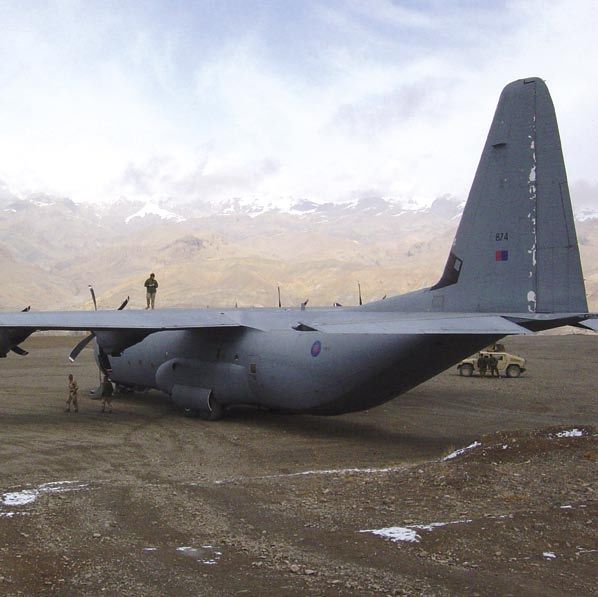
wide variety of operational situations that may occur in landings. Airstrips are often unpaved, making the aircraft
the future. Extra aircraft could be purchased, leased or more susceptible to damage from rocks and other debris,
chartered but cost and restrictions around their use may and the fleet is being used extensively to airdrop heavy
prevent this from being a realistic and affordable option. supplies, increasing the stresses on the airframe.
There are some low cost or cost neutral solutions which
the Department could undertake to improve availability of
the newer aircraft and increase training; but these may not
be sufficient to cover the likely shortfall.
Hercules C-130 Tactical Fixed Wing Airlift Capability summary
10 The Department has obtained over 3,000 flying 13 The total cost to the Department to operate and
hours from other nations’ spare airlift assets in exchange maintain the Hercules fleet has risen from £212 million in
for air-to-air refuelling services or strategic airlift. Where 2002-03 to £245 million in 2007-08. The increasing costs
feasible it has also purchased airlift from the commercial of maintenance and upgrade reflect the age of the aircraft;
market. These additional sources of airlift did not however the change from longer to shorter flying tasks and greater
prevent a decline in non-operational tasks and training numbers of sorties. Funds from Treasury reserves for fuel;
and exercises. cost of flying; upgraded equipment and maintenance
directly resulting from operating in Afghanistan and Iraq
11 The Department’s focus on operations in Afghanistan have increased significantly from £9.5 million in 2002-03
and Iraq has led to a decrease in availability of Hercules to £92.7 million in 2007-08.
for training and other air transport flights. On operations
in Afghanistan and Iraq aircrews are flying 60 hours On managing future risks to the availability and
per month on average, whereas pilots in the United capability of the fleet
Kingdom are typically flying fewer than 13 hours a 14 While the Department is meeting current operational
month. The Department is concentrating on training that requirements there are significant risks to the availability
is considered essential to prepare crews for flying on of the tactical fixed wing airlift capability in the future.
operations, so the amount of training for other conditions Delivering this capability involves more than managing
and manoeuvres is restricted. When the number of aircraft the existing Hercules aircraft and acquiring new ones.
available is fewer than expected it is the non-operational For example, training, personnel, infrastructure and
tasks and training and exercises that are cancelled. logistics also need to be put in place and associated risks
There has been a tenfold increase in the number of managed coherently.
training flights cancelled in 2007 compared to 2005.
Simulators for both aircraft variants have limitations, 15 Fatigue, which decreases the life span of the wings,
particularly because their software has not kept pace with is accumulating more rapidly on the aircraft than in
aircraft modifications, especially defensive aids, and they the past. The cost of recovering the wings has caused
are therefore not able to replicate flying the Hercules the Department to retire nine of the older Hercules
accurately. All these factors are contributing to the erosion C-130K aircraft early, with a further five being retired as
of the skills base and currency of the Hercules aircrews. intended at their extended out of service date of 2010.
These retirements have resulted in a planned gap in
12 Under the current system, RAF Lyneham determines capability. Nine will continue to fly, and of these, five will
how many Hercules it can make available (offer) for air have their wings replaced at a cost of £15.3 million to
transport tasks on a given day. This ‘offer’ is not always ensure that they have sufficient life to last until 2012.
driven by the number of aircraft required for planned
Defence activities. A high degree of certainty on the 16 The Department has enhanced its systems for
minimum number of available aircraft is important as monitoring the fatigue on the newer Hercules C-130J. The
it is not always possible to arrange the required cargo, full results will be available in 2013. Given the significant
crew, passengers and flight clearances for tasking at short stresses to which the aircraft are being subjected on
notice. Inevitably, there will always be some unexpected operations, initial indications suggest that the worst
variations but only on ten per cent of occasions does affected Hercules C-130Js may need their centre wings
the number of aircraft actually available to perform the replaced or refurbished from 2012 in order to reach their
agreed tasks for the day match exactly the number that planned out of service date of 2030. This requirement
was originally predicted to be available. The Department combined with other activities to upgrade the fleet will
often has more aircraft available than predicted, and is not further reduce availability around 2012. The Department
always able to make best use of these extra aircraft. will also need to identify an appropriate source of funding
for a re-winging programme.
Hercules C-130 Tactical Fixed Wing Airlift Capabilitysummary
17 The United Kingdom was the first customer for the Recommendations
Hercules C-130J. At the time of purchase of the aircraft
and their initial spares, there was no previous history of On maximising opportunities to increase tactical
spares usage and predictions assumed a single operating airlift capacity and capability
base and fewer flying hours. With real experience a Operational flying is high intensity, but crews are
of spares use, in different operational circumstances training on average fewer than 13 hours a month on
than originally assumed, spares estimates have proved aircraft when posted back to the United Kingdom.
inaccurate. The resultant shortages have not been allowed The Hercules simulators have not kept pace
to affect the aircraft deployed in Afghanistan and Iraq. with aircraft modifications, especially defensive
Under the Department’s plans it will cost less than aids and so they are not able to replicate flying
£8 million to rectify these problems. conditions accurately.
18 The first batch of the new A400M aircraft is unlikely n The Department should prioritise resources to
to be delivered to the United Kingdom before the end install the necessary software on the Hercules
of 2011. To mitigate this risk in part, the Department C-130J simulator at the cost of £4.25 million to
has extended the service life of the Hercules C-130K increase the hours crews spend training, reducing
until the end of 2012 at the cost of £41 million. A400M the erosion of the skill base, and increase its
is a collaborative European procurement managed by flexibility to divert aircraft to undertake additional
the Organisation for Joint Cooperation in Armaments. tasks. For example, by using the simulator
The Department does not have a direct contractual intensively the Department could provide an
relationship with Airbus Military and this limited influence additional 300 days of aircraft availability – the
makes it difficult for the Department to plan further equivalent of one aircraft per year for other purposes.
mitigation strategies effectively to help them sustain airlift
b On average a Hercules C-130J can be unavailable to
at current levels.
fly due to a lack of spare parts for 24 days a year.
19 Originally the Department’s strategy for n The Department has identified pinch points in
consolidating all fixed wing tactical aircraft at RAF Brize spares provision and it should take forward the
Norton involved relocating part of the Hercules fleet only, actions it has identified to resolve these problems.
keeping the remainder at RAF Lyneham. This would have It should now develop meaningful performance
created two main operating bases and caused significant data to provide assurance that there are no other
logistical difficulties. The entire Hercules fleet and all fundamental problems with the supply chain. If the
related support and RAF maintenance activity will now Department can improve the provision of spares
be moved to RAF Brize Norton. The Department has for the Hercules C-130J to the same levels as the
not yet quantified the impact on the Hercules Integrated Hercules C-130K, then the fleet would be available
Operational Support contract. For example, there may be for an extra 168 aircraft days in a year.
a lack of repair bays, insufficient parking space for aircraft
and aircraft may have to be towed some distance to the c The Department spent £130 million on chartering
repair hangars. additional airlift in 2007-08.
n It should ascertain how much of this charter
20 The Department is developing a comprehensive
work could have been undertaken by Hercules
and combined overview of the key issues which affect
aircraft and analyse whether it would be better
the delivery of military capability (training, equipment,
placed in using some of that money to increase
personnel, information, concepts and doctrine,
the availability of its own Hercules aircraft. For
organisation, infrastructure and logistics) for the Hercules
example, if the Department were to build an all-
fleet. It has created the Strategic Mobility – Capability
weather natural runway at RAF Keevil, Wiltshire,
Planning Group which aims to provide an overview along
instead of landing on a beach it could reduce the
the lines described above, but this Group is still in its
time aircraft need washing to remove salt water.
infancy. The Department must therefore ensure that its
This runway would cost approximately £2 million,
decisions in the short term are coherent if it is to make
but would save around £230,000 per annum and
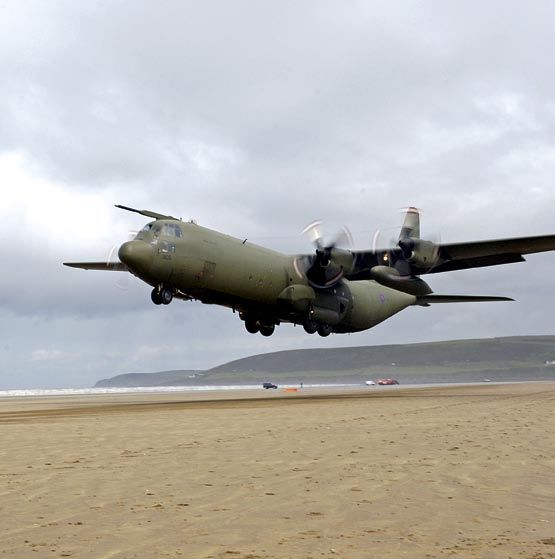
best use of its limited resources.
provide 41 extra days of Hercules availability to
undertake Defence tasks.
Hercules C-130 Tactical Fixed Wing Airlift Capability summary
d Repair and maintenance is taking up to 25 per cent On managing future risks to the availability and
longer on some parts of the Hercules fleet. capability of the fleet
A Departmental review has identified a shortfall
g Previously, there has not been a means of providing
in engineering staff. In response, an additional
comprehensive insight into the key issues, which
54 personnel are being provided to RAF Lyneham
affect both the Hercules aircraft and the personnel
with individuals drawn from less operationally-
who fly and support it, and the level and nature of
loaded units.
the risk the Department is managing.
n This re-deployment has been effective to date but
n This shortfall is now being addressed by the
is only a temporary solution and the Department
Strategic Mobility – Capability Planning Group,
needs to provide the levels of personnel
which is still in its infancy but tasked with
recommended in the review if it is to support
developing the requisite means for managing
current levels of flying. Aircraft will always need
the key issues. By having a single group actively
some additional maintenance beyond that routinely
considering training, equipment, personnel,
scheduled, but the RAF estimates that additional
information, concepts and doctrine, organisation,
engineering personnel could release an additional
infrastructure and logistics, the Department should
300 days of aircraft availability for other purposes.
improve the visibility of the risks, manage them
more coherently and identify opportunities to
e The Department is not able to make good use of
increase availability.
aircraft that become available ‘last minute’ because
there is insufficient time for crews, flight paths and
h Delays to the introduction of A400M aircraft could
cargos to be arranged.
prevent the Department sustaining current levels
n The Department should refine its system for of tactical airlift. One potential solution is to halt
tasking Hercules to allow users to take advantage the retirement of the remaining Hercules C-130Ks
of additional aircraft as they become fit to fly. As a in 2010 but there is a point at which measures to
result the Department could achieve efficiencies in extend the life of these aircraft, including major
its allocation process, by reducing the number of depth repair and re-winging, are not practical or
tasks which have to be re-assigned or cancelled, and economic. Other options include sourcing additional
satisfy more bids for Hercules flights. airlift by lease, purchase or charter or re-balancing
the way the fleet is used for example, maintaining
f Analysis of the rate of accumulation of fatigue on permanent bases overseas.
the Hercules C-130J fleet shows that some aircraft’s
n The Department should determine the costs and
wings may reach the end of their life as early
benefits of extending the life of the Hercules
as 2012.
C-130Ks compared to alternative solutions to
n The Department should complete its investigation cover this capability gap. Progress on the A400M
into the most cost-effective method for extending procurement should determine the trigger dates
the life of the Hercules C-130J wings. By assessing for the sourcing of funds and submission of a
the practicalities of changing the method of fleet business case to the Investment Approvals Board
management to mitigate accumulation of fatigue and so that the solution can be introduced within the
the feasibility, cost, funding and source for procuring necessary timescales. If the Department’s decision
new centre wings or refurbishing existing “J” wings, making and funding processes are sufficiently
the Department will be able to mitigate the risk to agile then these measures can be implemented
availability of Hercules C-130Js. without a significant reduction in the availability of
Hercules aircraft.
Hercules C-130 Tactical Fixed Wing Airlift CapabilityPART ONE Introduction
1.1 The Hercules is one element of the Department’s air The fleet
transport fleet. It makes up 60 per cent of the Department’s
current air transport assets. Figure 1 describes the various 1.3 The RAF has operated the aircraft for over 40 years
aircraft that provide fixed wing airlift. (see timeline at Figure 2 overleaf). Currently the fleet
is based at RAF Lyneham, although the aircraft and all
1.2 Since 1954, Lockheed Martin has built more than related support and maintenance activity will transfer to
2,200 Hercules aircraft, making it the most widely used RAF Brize Norton from 2011, and comprises two variants:
military transport aircraft. It is currently operated by more the “K” and newer “J” models. There are 19 Hercules C-
than 60 of the world’s air forces. The aircraft are used 130K aircraft which entered into service in 1967. They are
for a variety of purposes but primarily for movement crewed by two pilots, a navigator, a flight engineer and a
of personnel and freight. It is capable of carrying up to loadmaster. The 24 Hercules C-130Js entered service in
92 ground troops, 64 paratroopers, 74 stretcher cases or 1999, are crewed by two pilots and the loadmaster and
a variety of vehicles and freight up to 20 tons in weight compared to the Hercules C-130K, it is a more modern
over distances of up to 4,600 miles, at speeds in excess aircraft. The “J” incorporates a digital flight deck (removing
of 370 knots. The Hercules aircraft is frequently described the need for a navigator and a flight engineer), an
as the “workhorse” of the Royal Air Force, and carries integrated avionics system, new engines and propellers.
14 per cent of all air cargo and passengers transported by
the Department annually.
1 Types of fixed wing airlift
Aircraft type total fleet in 2007-08 ownership capability
c-17 Globemaster 5 (6th to be delivered 4 aircraft are leased and will Passengers and freight
in June 2008) be purchased outright in 2008.
One is owned
Hercules c-130K 19 Owned Passengers and freight
Hercules c-130J 24 Owned Passengers and freight
Tristar 9 Owned Passengers (3 aircraft),
Passengers and tanker (2 aircraft),
Passengers, freight and tanker
(4 aircraft)
Vc-10 16 Owned Passengers, freight and tanker
(10 aircraft),
Tanker, limited passengers
(6 aircraft)
total 73
Source: Ministry of Defence
HERcuLES c-130 TAcTIcAL FIXED WING AIRLIFT cAPABILITy 9part one
2 Key events in the operational history of the United Kingdom’s Hercules fleet
1967 1999 2000 2001 2002 2002-03
onwards Delivery of Hercules Initial Planned Deployment
Introduction the first C-130J in deployment retirement of to support
of Hercules service date to Afganistan a number of Operation
60 Hercules C-130J achieved Hercules TELIC
C-130Ks Continuing (delivery of C-130Ks,
support to first 12 reducing
the Balkans aircraft) K fleet size
to 26,
total fleet
size 51
1.4 Generally aircraft deployed in support of operations Stakeholders in the Hercules fleet
in Afghanistan and Iraq fulfil a predominantly tactical role
– transporting troops and equipment within theatre. These 1.5 Figure 3 on page 12 shows that there are a number
aircraft can be used for strategic transport to and from the of Departmental organisations and forums that have a role
United Kingdom where there is military need or spare in managing the Hercules fleet. Groups like the Capability
capacity. When predominantly UK-based, aircraft are used Delivery Steering Group and the Commitments Area
also for training and equipment testing. Requirements and Availability of Air Transport Team, both
established in 2007, have improved information sharing
within the Department and decisions are being made with
fuller knowledge of the issues and for the benefit of United
Kingdom Defence as a whole.
10 Hercules C-130 Tactical Fixed Wing Airlift Capabilitypart one
2005 2006 2007 2008 2010 2011 2012
Attrition – Attrition – loss of Attrition – loss Retirement of Retirement of Transfer of Hercules November
loss of one one Hercules of two Hercules five Hercules five Hercules C-130 fleet from Installation
Hercules C-130K, C-130s C130Ks, C130Ks, RAF Lyneham to of specialist
C-130K, fleet size 49 (1K, 1J) fleet size to fleet size to RAF Brize Norton and equipment –
fleet size 50 Commencement Retirement of be reduced be reduced consequent closure Project HERMES
of Hercules four Hercules to 38 to 33 of RAF Lyneham December
Integrated C130Ks. Fleet as the Hercules Retirement of
Operational size 19Ks and operating base remaining
Support 24Js, total 43 September Hercules C-130Ks
for depth Planned embodiment
maintenance of United Kingdom
Block Upgrade 7.0
December
Estimated in service
date for A400M
How the Hercules are maintained being paid for spare parts and repair. The contract was
signed in May 2006. Figure 5 on page 13 sets out the
1.6 Maintenance work on the Hercules fleet is divided responsibilities of each of the key players involved in the
between repair and basic maintenance work conducted partnering arrangement under this contract. Co-location
at RAF Lyneham – known as forward maintenance; and of the staff from the Department and industry, at Marshall
more substantial maintenance conducted at Marshall Aerospace’s site in Cambridge and at RAF Lyneham, has
Aerospace – known as depth maintenance (Figure 4 been central to enabling more effective team working to
on page 13). The current arrangements were put in place resolve issues.
in April 2006 when the Department, Marshall Aerospace,
Lockheed Martin and Rolls-Royce agreed the Hercules
Integrated Operational Support contract whereby industry
is paid to make aircraft available for use, as opposed to
Hercules C-130 Tactical Fixed Wing Airlift Capability 11part one
3 Stakeholders in the Hercules fleet
Providers and enablers Customers
Defence Equipment Capability
Directorate of Joint Capability
Directorate of Air Support
Air Logistics Programme Group
Strategic Mobility – Capability Planning Group
Strategic direction
Frontline Commands
Permanent Joint Headquarters
Operations
Planning and execution of operations
RAF Air Command 2 Group
Infrastructure, Personnel, owner of the asset
Defence Supply Chain Operations and Movements
Day to day tasking RAF Lyneham
Paratroopers
RAF Lyneham
Hercules Fleet Training and exercises
Forward Repair, data capture, logistics
Integrated Project Team
Logistical support, finance, administration
Marshall Aerospace
Lockheed Martin
Rolls-Royce Wider Defence
Depth repair, supply chain Non-operational tasks
Forums
Commitments Area Requirements and Availability
of Air Transport Team
Capability Delivery Steering Group
Hercules User Working Group
Prioritisation of tasks and/or enhancements
Joint User Group
Interoperability
Source: National Audit Office
12 Hercules C-130 Tactical Fixed Wing Airlift Capabilitypart one
4 Types of maintenance and repair
Forward Maintenance at RAF Lyneham
Type of work Base 1 for Hercules Primary/Primary Star for Preparation/recovery Wash
C-130Ks Hercules C-130Js
Description Basic scheduled Basic scheduled Maintenance required to Washes occur every
maintenance. Occurs every maintenance. Primary prepare an aircraft to be 70 days and on return
304 days or at 500 flying occurs every 274 days. deployed to theatre and from theatre. Required after
hours (whichever occurs first) Primary Star occurs every repair damage caused landing on a beach airstrip
548 days while in theatre on its return to remove salt water.
to the United Kingdom
Depth Maintenance at Marshall Aerospace
Type of work Minor/minor star1 Major2 Modifications Emergent work/repair
Description Intensive scheduled Intensive scheduled Capability enhancements. Additional work found to be
maintenance. Minor occurs maintenance. Occurs every Where feasible these occur required when the aircraft
every 20 months for Ks and 6 years for the K and 12 as part of scheduled major is stripped apart in its
3 years for the J. Minor star years for Js3 or minor maintenance scheduled standard depth
occurs every 3 years for the maintenance
K and 6 years for the J
Source: National Audit Office
NOTES
1 This is referred to as Base 2 and 3 for the Hercules C-130K.
2 This is referred to as Base 4 for the Hercules C-130K.
3 In 2007 the Department reviewed the maintenance scheduled for the Hercules C-130J which resulted in an extension of the times between ‘major’ depth
maintenance from nine years to 12 years.
5 The Hercules Integrated Operational Support Team
Marshall Aerospace Lockheed Martin Rolls-Royce Hercules Integrated Hercules Force
Prime Contractor Project Team Headquarters
RAF Lyneham
C-130K Design Authority C-130J Design Authority Engine technical Engineering, supply, Various Hercules C-130
support financial, administration “experts”, such as
and commercial engineers, planners and
Service integrator
specialists who provide logisticians, work together
and coordinator
logistic support to make aircraft available
Leads partnership for use
activities
Aircraft maintenance Inventory provisioning Engine repair and
overhaul, including
Propulsion Bay
C-130K consumable C-130J specific
management and
spares and those that are consumables
operations
shared with the J variant
(that is can be fitted to Engine spares
either aircraft) provisioning and supply
Repairable parts supply
and repair
Source: National Audit Office
Hercules C-130 Tactical Fixed Wing Airlift Capability 13PART TWO Current performance
2.1 It costs the Department around £980 million a Availability of the Hercules fleet
year to provide airlift. £245 million is spent on the
2.3 As Figure 6 shows, the Department has almost
Hercules fleet, which is a critical asset in supporting
always met its target for aircraft allocated to the frontline.
operations, national security objectives, military exercises
Recognising the fact that aircraft either on operations
and training, and humanitarian relief. The Hercules is
or at an RAF base will not always be serviceable (some
used extensively by the Armed Forces and demand for
will require repair because of faults arising or planned
aircraft usually exceeds supply. This Part of the report
operational maintenance), the Department expects that
examines the Department’s performance in providing
between 75 and 80 per cent of Hercules will be ready to
Hercules aircraft for military use and assesses the impact
fly on any given day. The number of aircraft capable of
of operations on its role and those involved in flying and
carrying out a planned mission varies widely from day to
supporting the aircraft. It shows that current operational
day, but the average has remained fairly constant, despite
needs are being met under testing conditions but the
a declining fleet size due to the retirement of the Hercules
Hercules fleet is being stretched. The Department has been
C-130K aircraft and losses on operations (Appendix 3).
innovative and is involving a broad range of stakeholders
to prioritise the use of the available fleet to meet the
demands made on it. Performance has been sustained Availability on operations
despite reducing numbers of aircraft and extensive
2.4 In spring 2007, the Department recognised that
maintenance and upgrade programmes. But operating at
the provision of sufficient Hercules to the frontline was
such a high tempo is already having a negative impact on
being adversely affected by the loss of three aircraft (a
the fleet and personnel.
fourth was lost in August 2007) and ongoing maintenance
and capability upgrade work. It therefore created the
Commitments Area Requirements and Availability of
Meeting operational requirements in Air Transport Team to manage the medium to long term
Afghanistan and Iraq prioritisation and use of the Hercules fleet. This forum has
2.2 In tasking the Hercules fleet, the Department has maximised the use of the RAF air transport and air-to-air
given the highest priority to the provision of airlift for refuelling fleets for the benefit of Defence as a whole
operations in Afghanistan and Iraq. As a result the quantity (Figure 7). The Department has replicated this good
of aircraft required for deployment overseas is always practice by forming a committee for Maritime aircraft.
delivered. When not deployed on operations the aircraft
are either undergoing maintenance, repair or upgrade, or
used for training and other military tasks such as freight
and passenger movement and equipment testing.
14 HERcuLES c-130 TAcTIcAL FIXED WING AIRLIFT cAPABILITypart two
6 Hercules C-130 fleet size and availability
Retirement of
Operations in Operations 4 C130ks
Number Afghanistan in Iraq Loss of 1 Loss of 1 and loss of Loss of
of Aircraft commence commence C130K C130K 1 C130J 1 C130K
70
60
50
40
30
20
10
0
2001 Q1 2002 Q1 2003 Q1 2004 Q1 2005 Q1 2006 Q1 2007
Date
Total Fleet Aircraft allocated to the front line1 Available Aircraft2 Target for frontline
Source: National Audit Office analysis of Departmental data
NOTES
1 This covers all aircraft that are either on operations or at an RAF base, including those that are undergoing either scheduled or unscheduled maintenance
or awaiting personnel or parts.
2 This includes all aircraft that are ready to fly on any given day.
7 The Commitments Area Requirements and Availability of Air Transport Team
Background An example of the Commitments Area Requirements and
Availability of Air Transport Team at work
n Based on two existing models for Battlefield Helicopters and
Land Environment Support and Fighting Systems; Meeting 1: 28 March 2007. The Commitments Area Requirements
and Availability of Air Transport Team identified an emerging
n Broad membership of senior stakeholders including the
requirement to deploy an additional Hercules in support of
Director of Equipment Capability of Expeditionary Logistics
operations in Afghanistan. After discussion within the forum, it
Support, the Integrated Project Team in Defence Equipment
emerged that a similar specialist operations requirement was also
and Support; Directorate of Special Forces, RAF Air
emerging, and that it might be possible, with suitable agreement
Command 2 Group; Defence Supply Chain Operations and
from each stakeholder group, to deploy one aircraft to meet
Movements and RAF Lyneham;
both requirements. The Commitments Area Requirements and
n Chaired by the Directorate of Joint Capability which helps to Availability of Air Transport Team instructed personnel from the
ensure that Defence needs as a whole are the key focus. two Directorates concerned to explore if a mutually beneficial
agreement could be reached.
Function Meeting 2: 17 July 2007. It did prove possible to deploy a single
n To arbitrate between the competing requirements for Hercules; aircraft to meet both requirements. However, it remained important
to determine whether or not the arrangements were satisfactory and
n To assess the impact of several factors on availability including that the operational needs were being met. At this point the aircraft
maintenance, the need to install capability enhancements, and had only been deployed for a few weeks, and so it was too early
conduct trials; to decide. Accordingly, the Commitments Area Requirements and
n To enhance awareness of air transport issues throughout Availability of Air Transport Team instructed the Directorate of Joint
the Department. Capability to review the situation at the end of July.
Meeting 3: 9 October 2007. Directorate of Joint Capability
reported that the situation had been reviewed and was
satisfactory. The coordination of requirements led to both users’
needs being met, while minimising the number of Hercules aircraft
and service personnel deployed.
Source: Ministry of Defence
Hercules C-130 Tactical Fixed Wing Airlift Capability 15part two
2.5 Our analysis also shows that the Department has 2.7 The Department has been a net provider of airlift
managed to increase the number of aircraft available for hours to the Movements Control Centre Europe which has
flying duties in Afghanistan and Iraq. Aircraft are more increased its airlift capacity and limited the scale of its
likely to be available for tasking while on operations than bill for charter aircraft. Ongoing operational demand has
when based in the United Kingdom. Between April 2007 meant that the United Kingdom now uses more hours than
and January 20081, 85 per cent of the Hercules C-130J it provides; in 2007 the Department used 3,407 ‘Hercules
(compared with 72 per cent in the United Kingdom) hours’ while providing just 3,162.
and 94 per cent (compared to 75 per cent in the United
Kingdom) of the Hercules C-130K were available to fly
planned missions while deployed on operations. These The impact of difficult environmental
differences reflect: and operational conditions
n the fact that the engineering complement is fully
staffed at 100 per cent of the requirement for
Changes to the role of the Hercules fleet
operations. Prioritising personnel in this way leads and how it is flown
to gaps in manpower in the United Kingdom. 2.8 Despite being procured for tactical airlift, historically
In addition, engineers based in the United Kingdom the Hercules fleet has been used predominantly in a
support a greater range of engineering activities, strategic role to transport people and equipment long
including the preparation and recovery of aircraft to distances to and from the United Kingdom, operating from
and from operations, and are required to undertake purpose built airfields. Operational needs in Afghanistan
other duties around the RAF base, such as guarding and Iraq mean that more recently the Hercules has
and training for operational deployment. been used more in a tactical role, operating over shorter
n the need to balance operational imperatives and distances between bases in theatre. Flying is also more
risk. Occasionally deployed aircraft may be deemed severe with steep take-offs and landings, night flying and
available to fly with a known minor fault if this is not airdrop operations. In 2007, 70 per cent of all flights were
considered to pose a risk to safety. For aircraft that short range transit tasks (under two hours in duration),
are not on operations, it is likely that the task is less instead of the planned 14 per cent when the aircraft were
urgent and the aircraft will be repaired first. procured. Long range flights of more than five hours were
undertaken on three per cent of occasions which is a
marked contrast to the originally anticipated 28 per cent.
Obtaining additional military airlift
2.6 In addition to its own aircraft, the Department 2.9 Our analysis of aircraft usage in Figures 8 and 9
has provided airlift by using other nations’ aircraft in shows that, although the range of the length of sorties has
return for air-to-air refuelling or strategic lift services. always been wide, the proportions are changing. Hence
The Movements Control Centre Europe co-ordinates the in 2000 nearly half of all sorties were longer than three
use of spare air and sea lift assets belonging to 15 nations hours, but in 2007 less than a quarter lasted this long. The
(the United Kingdom, Belgium, Canada, Denmark, France, Hercules has also been undertaking more airdrop tasks to
Germany, Hungary, Italy, Latvia, Netherlands, Norway, relieve the demands on Chinook helicopters; the Hercules
Slovenia, Spain, Sweden and Turkey). It is based on a fleet has dropped an average of 123 tonnes of stores
‘Hercules flying hour’ and member nations can be in per month since July 2007, whereas in the same period
credit or debit by up to 500 Hercules hours, as long as from July 2006 it had dropped just 21 tonnes per month.
they are in credit once every three years. For example,
by providing a C-17 for one hour to another nation the
Department can claim back seven hours of Hercules
flying time.
1 Data prior to April 2007 contained four aircraft awaiting retirement which would have made the sample less representative.
16 Hercules C-130 Tactical Fixed Wing Airlift Capabilitypart two
8 Sortie duration in 2000
Number of Sorties ‘000
10
8
6
4
2
0
0–1 1–2 2–3 3–4 4–5 5–6 6–7 7–8 >8
Length in hours
Tactical Air Transport Training and Exercises Other Tasks
Source: National Audit Office analysis of Departmental data
9 Sortie duration in 2007
Number of Sorties ‘000
10
8
6
4
2
0
0–1 1–2 2–3 3–4 4–5 5–6 6–7 7–8 >8
Length in hours
Tactical Air Transport Training and Exercises Other Tasks
Source: National Audit Office analysis of Departmental data
Hercules C-130 Tactical Fixed Wing Airlift Capability 17part two
2.10 The number of sorties flown has more than doubled. the contracts to support the Hercules fleet reflect
As Figure 10 shows, this corresponds to the Department’s the reduced average sortie lengths and the changed
increasing presence in Afghanistan and Iraq since late operational environment.
2001. The greater number of short sorties has nearly
halved the average sortie duration from nearly three hours Landing conditions
in the years prior to 2003, to just over one and a half
hours in 2007. 2.12 The environment in which the Hercules fleet is flying
has also changed in recent years. The percentage of all
2.11 The Department sets a target for the maximum landings on an unpaved strip has risen from four per cent
annual number of hours to be flown by the Hercules in 2003 to 14 per cent in 2007. This trend is particularly
fleet based on planned Defence activity. As Figure 11 noticeable in Afghanistan, as Figure 12 demonstrates.
demonstrates, the Hercules fleet has not achieved this Operating from unpaved strips means that the aircraft are
target since 2003, largely because of the Department’s more susceptible to damage as rocks are thrown up into
decision to use the Hercules fleet to fly shorter sorties on the landing gear, fuselage and propellers. Furthermore
operations. In summer 2007 the Department agreed a the unevenness of the surface can cause damage to
new realistic level of 30,160 hours and it will continue the landing gear itself. The paving of the strip at Camp
to reduce this target as aircraft are retired. Although Bastion in 2007 led to a small reduction, from a peak of
the Department has been slow in refining the target, 40 per cent, in the proportion of unpaved landings by the
end of the year.
10 Number of sorties and average sortie duration for the Hercules fleet
Number of sorties ‘000 Average Sortie (hr)
12 4
Afghanistan Operation TELIC
Operations deployment
9 3
6 2
3 1
0 0
2000 2001 2002 2003 2004 2005 2006 2007
Sorties Average sortie duration
Source: National Audit Office analysis of Departmental data
11 Maximum annual flying hours for the Hercules fleet
Year 2000 2001 2002 2003 2004 2005 2006 2007
Target flying hours 37,458 37,458 37,458 37,458 34,958 34,958 34,958 34,9581
Achieved flying hours 20,815 29,926 40,108 38,631 32,632 28,420 29,497 29,820
Source: National Audit Office analysis of Departmental data
NOTE
1 The Department has agreed a new level of flying hours of 30,160 in Summer 2007.
18 Hercules C-130 Tactical Fixed Wing Airlift Capabilitypart two
Depth repair and maintenance
12 The number of landings on paved and unpaved air
strips as part of operations in Afghanistan 2.13 The harsh environment and severity of flying
on operations is increasing maintenance work on the
Number of Landings Hercules fleet (Figure 13). The Hercules C-130K heavily
1800 deployed on operations requires 25 per cent more time
in maintenance and depth repair than its predominantly
UK-based counterpart. Surface damage as a result of
1350 operations is easily identified. However the amount of
deeper structural damage directly attributable to flying
in theatre is difficult to quantify because such damage is
900 also a function of the age of an aircraft. As the Hercules
C‑130Ks have been in-service for over 40 years, age may
be a greater determinant of the amount of unscheduled
450 repair which emerges when the airframe is stripped down.
0
2005 2006 2007
Unpaved Paved
Source: National Audit Office analysis of Departmental data
13 A Year in the Life – the number of days aircraft spent under each status across the Hercules fleet (see also
Appendix 4: maintenance case studies)
Status Hercules C-130K Hercules C-130K Hercules C-130J Hercules C-130J
heavily deployed on predominantly heavily deployed on predominantly
operations1 (days) UK-based (days) operations1 (days) UK-based (days)
Operations 106 0 143 11
Non-operations flying 32 151 57 167
Available but not flown 8 33 19 41
Scheduled maintenance 138 67 33 47
Other repair activity 50 60 43 56
Unscheduled maintenance 21 41 40 28
Awaiting spares 4 6 29 13
Not worked (awaiting resource/facilities) 6 7 1 2
Source: National Audit Office analysis of Departmental data
NOTE
1 Aircraft will be assigned non-operational tasks as well as roles on operations and so they will spend time in the United Kingdom.
Hercules C-130 Tactical Fixed Wing Airlift Capability 19part two
2.14 Currently the Hercules C-130J aircraft heavily of these enhancements, such as defensive aids, with its
deployed on operations do not require as much depth scheduled maintenance as much as possible to reduce the
repair and maintenance as the Hercules C-130Ks similarly number of times the aircraft is stripped and rebuilt and limit
deployed. However, analysis by the Department of the the total time in repair. Figure 15 illustrates how responsive
time taken to recover an aircraft that has returned from the Department has been when fitting new enhancements,
deployment in Afghanistan or Iraq shows that the average taking on average just over three months from approval to
turnaround time for this activity has increased from eight installation on the first aircraft.
days in May 2007 to 15 days in November 2007. This
increase indicates that the maintenance burden caused 2.16 Since 2007, the Capability Delivery Steering Group
by operations is rising. The Department’s long‑term has managed Urgent Operational Requirements, force
commitment in Afghanistan and continued presence protection, and flight safety modifications. It has broad
elsewhere in the Middle East will perpetuate this problem. membership from across the Department and focuses on
It intends to reduce the additional effort by including some prioritising the installation of the equipment. Operational
tasks normally undertaken in “recovery” into scheduled imperatives have to be balanced with risk, in particular to
maintenance at the RAF base. This will reduce the amount ensure the enhancements are fitted at the appropriate time
of strip and re-build activity in the United Kingdom. without adversely affecting the number of aircraft available
to fly. Prioritising the upgrades can be challenging, given
the number and wide range of enhancements which
Upgrading some of the fleet to meet the
are desired by the frontline operators, and military
demands of operations in Afghanistan judgement and experience are brought to bear. The Group
and Iraq produces a “Capability Requirements Table”, listing the
2.15 The Department has reacted quickly to upgrade equipments in priority order, which is used as a planning
some of the fleet to meet the demands of operations in tool for availability and maintenance. It considers how
Afghanistan and Iraq. Figure 14 shows how the Department to minimise the potential effect on availability and
has enhanced the capabilities of the existing Hercules maintenance of both longer-term funded programmes as
C130J fleet and created more aircraft that are able to be well as unfunded aspirations for upgrades.
used in theatre. The Department has combined the fitting
14 Fleet composition
Additional equipment has been installed on aircraft in the Hercules C-130J fleet since its introduction in 1999. Adding this equipment has
increased the capability of the aircraft. These capabilities cannot be specified as this information is classified.
Hercules C130-J Fleet 2000 Hercules C130-J Fleet end 2008
Common Equipment State
6 7 18
Total Fleet 24
Additional Capability 1
24 Additional Capability 2
Additional Capabilities 3, 4 and 6
Total Fleet 25 Additional Capability 5
Source: Ministry of Defence
20 Hercules C-130 Tactical Fixed Wing Airlift Capabilitypart two
15 Capability insertion
Capability Source of funding Date of decision Date of approval Date of first Number of months
Reference1 fit on aircraft between approval
and first fit
1 The Treasury2 December 2001 January 2002 February 2002 1
The Department3 April 2007 August 2007 November 2007 3
2 The Treasury December 2006 February 2007 October 2007 8
3 The Department July 2005 August 2005 August 2005 0
4 The Treasury March 2006 July 2006 November 2006 4
The Department April 2007 August 2007 January 2008 5
5 The Treasury July 2007 September 2007 December 2007 3
6 The Treasury May 2006 May 2006 July 2006 2
Source: National Audit Office analysis of Departmental data
NOTES
1 These capabilities cannot be specified as this information is classified.
2 Treasury funded upgrades are Urgent Operational Requirements for operations in Afghanistan and Iraq.
3 The Department funded upgrades are part of the ten year spending plan to improve the general capability and maintain aircraft currency.
The cost of operating the Hercules fleet 2.20 The Department is moving towards long-term
support contracts for many of its major equipments
2.17 As Figure 16 overleaf demonstrates, the total cost to
whereby it partners with industry to deliver a given
the Department to operate and maintain the fleet is rising.
level of equipment availability. In its assessment for the
The increasing costs of equipment and support reflect the
Hercules, the Department estimated that a partnered
age of the aircraft; the change in the nature of flying tasks
contract would provide £170 million savings on the cost
to sorties of shorter duration and the fact that the Hercules
of support over the remaining life of the fleet against
now undertake almost twice the number of sorties they
the ‘as is’ benchmark. On this basis the Department
did in 2002-03. As with any aircraft the Department
entered into the new arrangements for Hercules support.
has also had to pay for the upgrade of the equipment to
It measures the benefits of its partnering with industry
prevent it becoming obsolete (paragraph 2.16).
through Key Performance Indicators, including the
percentage of available aircraft and Priming Equipment
2.18 The costs of running and basing the fleet at RAF
Packs, which are intended to contain the parts that require
Lyneham have decreased since May 2006. This reduction
repair/replacement most frequently in the initial 30 days
is in part due to the Hercules Integrated Operational
of operation. To date industry has consistently met its
Support contract because the responsibility for some of
targets. The Hercules Integrated Operational Support
the more minor repair and maintenance activity, which
contract is a 24 year financial commitment, with a fixed
had previously been undertaken by Service personnel, has
price for 5 years; it accounted for £69 million of the total
been transferred to industry.
expenditure on equipment and support in 2007-08.
2.19 Prior to the signing of the Hercules Integrated
Operational Support contract in May 2006, the
Department had numerous agreements for spares and
repair. It did not have clear visibility of the total costs of
repairing, maintaining and upgrading the fleet because
it switched money between budget lines in order to
overcome short-term funding issues.
Hercules C-130 Tactical Fixed Wing Airlift Capability 21part two
16 The cost of operating and maintaining the Hercules fleet
2002-03 2003-04 2004-05 2005-06 2006-07 2007-08
(£ million) (£ million) (£ million) (£ million) (£ million) (£ million)
Defence Equipment and Support1 71.33 79.92 85.67 104.65 112.62 125.85
RAF Lyneham2 140.42 143.25 140.45 146.83 121.44 119.24
Total costs met by the Department 211.75 223.17 226.12 251.48 234.06 245.09
Number of aircraft 51 51 50 50 44 43
Cost per aircraft 4.15 4.38 4.52 5.03 5.32 5.7
Additional costs met through the 9.54 11.36 13.74 18.29 30.51 92.72
Conflict Prevention Fund3
Total operating and maintenance costs 221.29 234.53 239.86 269.77 264.57 337.81
Source: National Audit Office analysis of Departmental data
NOTES
1 Equipment and Support costs include deep repair and upgrades, simulators, avionics and defensive aids.
2 RAF Lyneham includes costs relating to personnel, infrastructure, fuel and forward support and logistics costs.
3 Recently re-named the Treasury’s Reserve for Operations and Peace Keeping.
2.21 The current scale of operations means the 2.23 The Airlift Allocation Committee always assigns a
Department’s request for resources from the Conflict number of Hercules aircraft to operations in Afghanistan
Prevention Fund (now known as the Treasury’s Reserve for and Iraq, routine depth maintenance and upgrade and
Operations and Peacekeeping) has increased significantly other long standing commitments like the garrison in the
from £9.54 million in 2002-03 to £92.72 million in Falkland Islands. With the remaining aircraft, Defence
2007-08. These funds contribute towards fuel, the cost Supply Chain Operations and Movements encourage
of flying, additional capability for operational tasks flexibility and where possible facilitate the achievement
and expenditure on maintenance on the Hercules fleet of more tasks by having various customers combine
directly resulting from operating in Afghanistan and their bids. The allocation of aircraft can be re-prioritised
Iraq. Over 60 per cent of the expenditure in 2007-08 by Defence Supply Chain Operations and Movements
was to upgrade the aircraft with equipment such as following the submission of “impact statements” from
defensive aids. the bidder which show the consequence of their demand
for aircraft not being met in full. Figure 17 outlines the
tasking process.
The impact of operational requirements
on other tasks and personnel 2.24 Meeting operational requirements is stretching the
Hercules fleet. Most nations do not have sufficient airlift
Tasking Hercules aircraft assets to meet all their requirements and the United
Kingdom is no exception. Where feasible Defence
2.22 There is a clear system of prioritisation, set by the
Supply Chain Operations and Movements go to the
Directorate of Joint Capability, for the tasking of all air
commercial market to charter airlift and expenditure has
transport aircraft. At the tri-Service Airlift Allocation
increased extensively over the last three years: rising from
Committee, chaired by Defence Supply Chain Operations
£22.9 million in 2004-05 and £23.7 million in 2005-06,
and Movements, the attendees consider the full range of
to £69.3 million in 2006-07 and £130 million in 2007-08.
demands for Hercules aircraft and then prioritise bids for
the benefit of Defence as a whole and to the best effect.
22 Hercules C-130 Tactical Fixed Wing Airlift CapabilityYou can also read


