HHS Public Access Author manuscript Int J Hyg Environ Health. Author manuscript; available in PMC 2022 June 01.
←
→
Page content transcription
If your browser does not render page correctly, please read the page content below
HHS Public Access
                                 Author manuscript
                                 Int J Hyg Environ Health. Author manuscript; available in PMC 2022 June 01.
Author Manuscript

                    Published in final edited form as:
                     Int J Hyg Environ Health. 2021 June ; 235: 113749. doi:10.1016/j.ijheh.2021.113749.

                    Harmonization of acronyms for volatile organic compound
                    metabolites using a standardized naming system
                    Denise S. Tevisa, Sharon R. Floresa, Brandon M. Kenwooda, Deepak Bhandaria,*, Peyton
                    Jacob 3rdb, Jia Liub, Pawel K. Lorkiewiczc, Daniel J. Conklinc, Stephen S. Hechtd, Maciej L.
                    Goniewicze, Benjamin C. Blounta, Víctor R. De Jesúsa
                    aTobaccoand Volatiles Branch, Division of Laboratory Sciences, National Center for
Author Manuscript

                    Environmental Health, U.S. Centers for Disease Control and Prevention, Atlanta, GA, USA
                    bDepartment  of Medicine, University of California San Francisco, Division of Cardiology, Clinical
                    Pharmacology Program, San Francisco General Hospital Medical Center, University of California
                    at San Francisco, San Francisco, CA, USA
                    cAmerican   Heart Association - Tobacco Regulation and Addiction Center, Superfund Research
                    Center, Diabetes and Obesity Center, Christina Lee Brown Envirome Institute, University of
                    Louisville, Louisville, KY, USA
                    dMasonic     Cancer Center, University of Minnesota, Minneapolis, MN, USA
                    eNicotine and Tobacco Product Assessment Resource, Department of Health Behavior, Division
                    of Cancer Prevention and Population Studies, Roswell Park Comprehensive Cancer Center,
                    Buffalo, NY, USA
Author Manuscript

                    Abstract
                         Increased interest in volatile organic compound (VOC) exposure has led to an increased need
                         for consistent, systematic, and informative naming of VOC metabolites. As analytical methods
                         have expanded to include many metabolites in a single assay, the number of acronyms in use
                         for a single metabolite has expanded in an unplanned and inconsistent manner due to a lack
                         of guidance or group consensus. Even though the measurement of VOC metabolites is a well-
                         established means to investigate exposure to VOCs, a formal attempt to harmonize acronyms
                         amongst investigators has not been published. The aim of this work is to establish a system of
                         acronym naming that provides consistency in current acronym usage and a foundation for creating
                         acronyms for future VOC metabolites.
Author Manuscript

                    *
                     Corresponding author. DBhandari@cdc.gov (D. Bhandari).
                    Publisher's Disclaimer: Disclaimers
                    Publisher's Disclaimer: The views and opinions expressed in this report are those of the authors and do not necessarily represent the
                    views, official policy or position of the US Department of Health and Human Services or any of its affiliated institutions or agencies or
                    the American Heart Association. Use of trade names is for identification purposes and does not imply endorsement by the US Centers
                    for Disease Control and Prevention, the Public Health Service, or the US Department of Health and Human Services.
                    Declaration of competing interest
                    None to declare.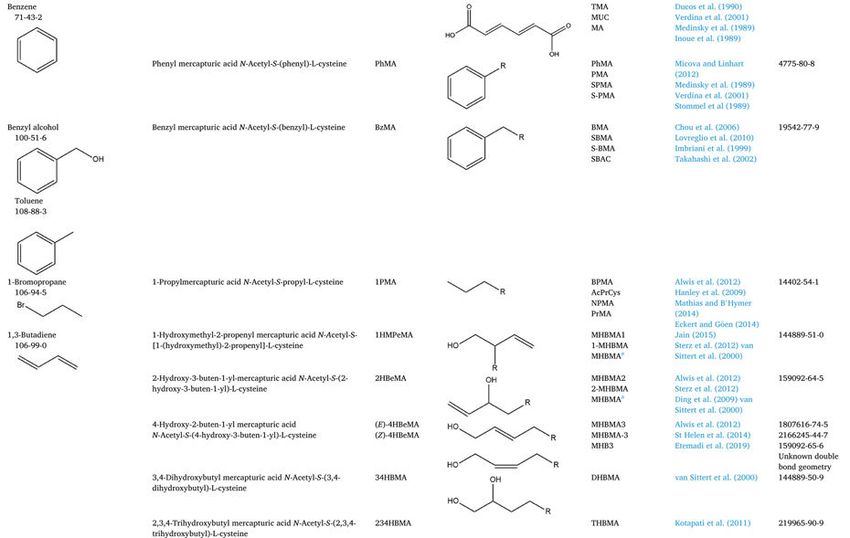
Tevis et al.                                                                                               Page 2

                        Keywords
Author Manuscript

                              Biomonitoring; Volatile organic compounds; Volatile organic compound metabolites; Mercapturic
                              acids; Naming systems; Acronyms

                        1.     Introduction
                                       Human exposure to volatile organic compounds (VOCs) is a major public health concern
                                       due to their association with adverse health effects such as cancer, birth defects, and
                                       neurological damage (Altmann et al., 1990; Lamplugh et al., 2019). Exposure to VOCs
                                       is often assessed by measuring the urinary metabolite of the parent VOC (Alwis et
                                       al., 2012; Bhandari et al., 2019; Carmella et al., 2007; Ding et al., 2009; Jacob et al.,
                                       2013; Lorkiewicz et al., 2019; St Helen et al., 2014). VOC exposure is of interest to
Author Manuscript

                                       a wide range of researchers and regulatory agencies, such as the U.S. Food and Drug
                                       Administration (FDA)(Husten and Deyton, 2013) and the Occupational Safety and Health
                                       Administration (OSHA)(Papp and Miller, 2000). Biomonitoring data produced by laboratory
                                       scientists is an important component for evaluating diverse sources of VOC exposure e.g.,
                                       occupational (Belloc-Santaliestra et al., 2015; Brouwer et al., 2005; Jo and Song, 2001;
                                       Zhong et al., 2019), environmental (Yeager et al., 2020), and tobacco (St Helen et al., 2020).
                                       Volatile organic compound metabolites have a diverse set of naming conventions that can
                                       create confusion among public health researchers and can impede clear communication
                                       of analytical results among public health agencies, researchers, and the public. Clear
                                       communication of these analytical results is critical for colleagues working in the same
                                       discipline and other disciplines such as health policy, public health communication, and
                                       epidemiology. Additionally, the lack of a clear naming convention can impede laboratories
Author Manuscript

                                       that measure VOC metabolites (VOCMs) from successful participation in proficiency testing
                                       challenges due to the absence of a common set of acronyms. Successful proficiency testing
                                       performance is important because it is typically an accreditation requirement.

                                       Advances in mass spectrometry techniques, like multiple reaction monitoring mass
                                       spectrometry, allows for the analysis of many metabolites at once. This technology, coupled
                                       with an increase in the number of detectable metabolites, an increase in the understanding
                                       of VOC metabolism and its usefulness for monitoring exposure to harmful VOCs, resulted
                                       in the creation of single methods that can measure as many as 28 VOCMs (Alwis et al.,
                                       2012; Pluym et al., 2015). As interest in these biomarkers of VOC exposure — VOCMs —
                                       increased and the techniques to measure them improved, the collection of acronyms used
                                       to describe them expanded. In the absence of a systematic method for creating acronyms or
                                       consensus on which acronyms to use, VOCM acronyms have grown organically.
Author Manuscript

                                       The lack of a uniform naming convention for VOCMs has led to inconsistent acronym
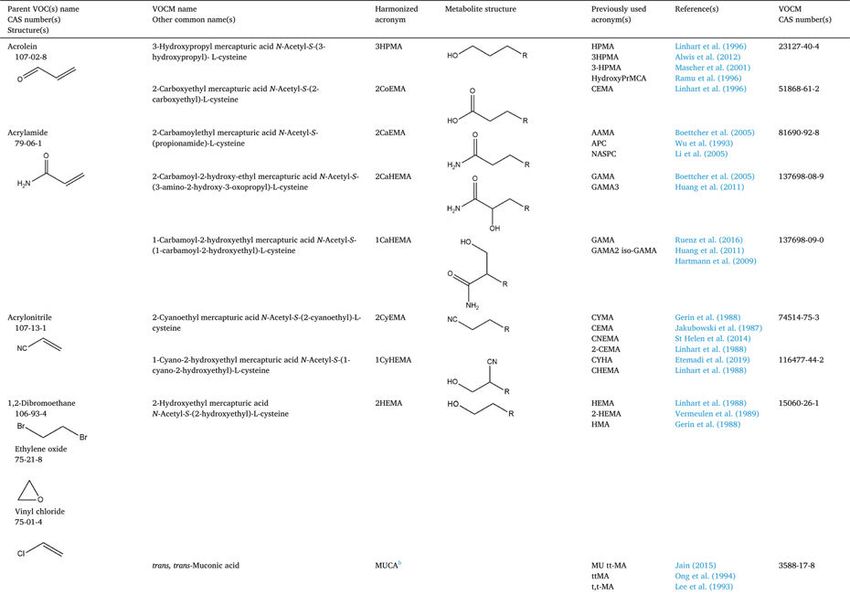
                                       use throughout the literature (Table 4). Specifically, a single VOCM may have multiple
                                       acronyms or a single acronym may be used for multiple VOC metabolites. This is
                                       particularly problematic for mercapturic acids (MA), which are N-acetyl-S-L-cysteine
                                       conjugates of VOCs (Fig. 1, Table 4) formed in humans via the glutathione-S-transferase
                                       pathway (Hanna and Anders, 2019). For example, 2-carboxyethyl mercapturic acid, an

                                        Int J Hyg Environ Health. Author manuscript; available in PMC 2022 June 01.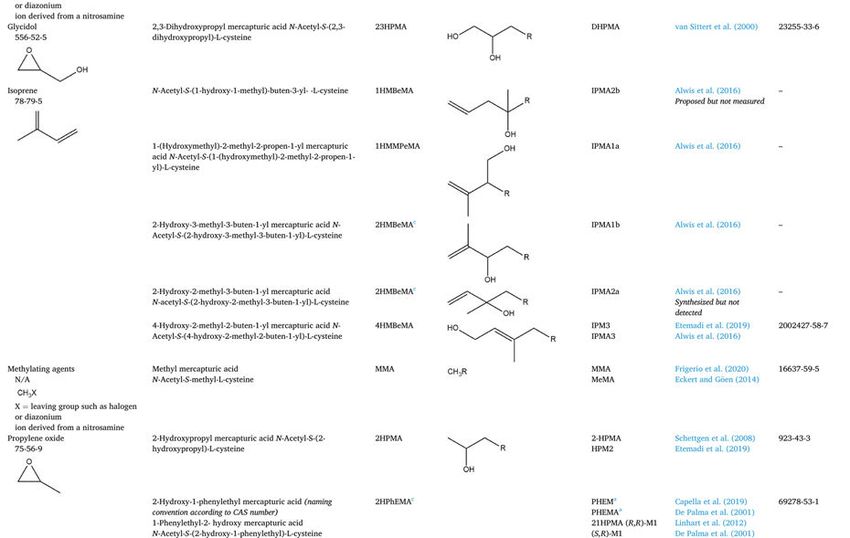
Tevis et al.                                                                                           Page 3

                                   acrolein metabolite (Linhart et al., 1996), and 2-cyanoethyl mercapturic acid, a metabolite of
Author Manuscript

                                   acrylonitrile (Jakubowski et al., 1987), are both commonly represented as CEMA (Gregg
                                   et al., 2013). Additionally, GAMA may refer to two different acrylamide metabolites:
                                   2-carbamoyl-2-hydroxyethyl mercapturic acid (Boettcher et al., 2005) and 1-carbamoyl-2-
                                   hydroxyethyl mercapturic acid (Ruenz et al., 2016). MHBMA, a metabolite of 1,3-
                                   butadiene, may refer to 2-hydroxy-3-buten-1-yl-mercapturic acid or to a mixture of that
                                   compound and 1-hydroxymethyl-2-propenyl mercapturic acid (Ding et al., 2009).

                                   Some current naming conventions also fail to distinguish isomers. For example, DPMA
                                   is a common abbreviation for the diphenyl mercapturic acids, but does not distinguish
                                   between the ortho, para, or meta isomers. Additionally, PHEM and PHEMA represent
                                   phenyl hydroxyethyl mercapturic acids, which are metabolites of styrene (Capella et al.,
                                   2019). However, phenyl hydroxyethyl mercapturic acid is a mixture of two isomers: N-
                                   acetyl-S-(1-phenyl-2-hydroxyethyl)-L-cysteine and N-acetyl-S-(2-phenyl-2-hydroxyethyl)-
Author Manuscript

                                   L-cysteine. When resolved chromatographically and quantitated separately, previous
                                   abbreviations included the stereocenter as part of the acronym, e.g., (S, R)-M1 for N-
                                   acetyl-S-(1-phenyl-2-hydroxyethyl)-L-cysteine and (S, R)-M2 for N-acetyl-S-(2-phenyl-2-
                                   hydroxyethyl)-L-cysteine (De Palma et al., 2001; Linhart et al., 1998). Furthermore,
                                   multiple isomers of metabolites of 1,3-butadiene (monohydroxy butenyl mercapturic acids
                                   MHBMA1, MHBMA2, MHBMA3 (St Helen et al., 2014; Sterz et al., 2012) and isoprene
                                   (isoprene mercapturic acids IPMA1, IPMA2, IPMA3 (Alwis et al., 2016) have been
                                   described. None of these numeric designations provide specific structural information.

                                   Conventional acronyms may also be derived from inconsistent sources. Some acronyms
                                   use the parent VOC name or other metabolic precursor while others derive from the
                                   metabolite chemical name. For example, acrylamide’s metabolites GAMA and AAMA
Author Manuscript

                                   refer to glycidamide and acrylamide mercapturic acid, respectively (Boettcher et al., 2005).
                                   BPMA, derived from bromopropane mercapturic acid, originates from the parent compound
                                   name rather than the metabolite chemical name, 1-propyl mercapturic acid (Cheever et
                                   al., 2009). When the acronym derives from the metabolite’s chemical name, mercapturic
                                   acid is almost universally shortened to MA. Typically, the mercapturic acid name is
                                   used in the literature in tandem with the N-acetyl-S-L-cysteine name, the latter following
                                   International Union of Pure and Applied Chemistry (IUPAC) rules. Examples of acronyms
                                   derived from the IUPAC name are not as common in the literature as using MA and
                                   include NANPC for N-acetyl-S-(4-nitrophenyl)-L-cysteine (4-nitrophenyl mercapturic acid,
                                   parent VOC 4-chloronitrobenzene) and NASPC for N-acetyl-S-(propionamide)-L-cysteine
                                   (2-carbamoylethyl mercapturic acid, parent VOC acrylamide) (Jones et al., 2007; Li et al.,
                                   2005).
Author Manuscript

                                   However, previous acronym harmonization efforts have used alternative (non-IUPAC)
                                   naming conventions to facilitate communication of chemicals with similar structures (Buck
                                   et al., 2011). This has included environmental contaminants and compounds with public
                                   health concern, such as brominated flame retardants (Bergman et al., 2012) and per- and
                                   poly-fluoroalkyl substances (Buck et al., 2011). Thus, acronym-based naming systems do
                                   not necessarily replace IUPAC naming conventions but serve as a tool for researchers and
                                   public health professionals to communicate their findings.

                                   Int J Hyg Environ Health. Author manuscript; available in PMC 2022 June 01.
Tevis et al. Page 4
Our goal was to create a VOCM abbreviation system that provides unique, systematic, and
Author Manuscript
structurally informative acronyms. We convened a group of subject matter experts to develop
a systematic naming convention, harmonize VOCM acronyms, and provide clear guidance
for creating harmonized acronyms and abbreviations for newly identified VOCMs.
2. Material and methods
2.1. Data collection
VOCMs included in this manuscript have parent VOCs in the FDA’s list of harmful or
potentially harmful constituents (Oldham et al., 2014) or are measured by a previously
published method (Alwis et al., 2012). While most of this work covers mercapturic acids,
other urinary VOCMs are also covered: hippuric acids (parent VOC xylene), carboxylic
acids (parent VOCs cyanide and carbon disulfide), glyoxylic acid and mandelic acid (parent
VOC styrene), and muconic acid (parent VOC benzene).
Author Manuscript
We conducted literature searches to identify mercapturic acids of the VOCs identified
above and compiled a table of acronyms used for each metabolite. VOCM acronyms that
appear at least once in the literature and are detectable in human urine were included.
A few metabolites that did not meet these two criteria were also included for illustrative
purposes. One isomer of the isoprene metabolites, IPMA2b, was proposed but not measured,
while another, IPMA2a, was measured but not detected in human urine (Table 4) (Alwis
et al., 2016). These metabolites are included to demonstrate how a single, non-unique
acronym may arise from metabolites with complex structures. MHBMA is included as an
example where stereochemistry may be included. The E stereoisomer of MHBMA is the less
predominant isomer in human urine but can be used to quantitate (Z)-MHBMA (unpublished
spike-recovery results). We cited the oldest appearance of each abbreviation in the literature
Author Manuscript
for those published multiple times. We used publicly available, free platforms like PubChem
and subscription services like SciFindern (American Chemical Society, Columbus, OH)
to compile and cross reference Chemical Abstracts Service registry numbers and confirm
accuracy of structures. Chemical structures in Fig. 1 and Table 4 were created using
ChemDraw (17.0 PerkinElmer, Waltham, MA). We noted instances where the same acronym
was used for metabolites of two different parent compounds, acronyms that referred to more
than one metabolite of the same parent compound, or acronyms that did not distinguish
between isomers of a metabolite. We also identified how acronyms in current use were
derived (e.g., based on the parent VOC or a common structure in the metabolites).
2.2. Creating harmonized VOCM acronyms
1. Identify and abbreviate the chemical group name in two letters to create a base
Author Manuscript
for the new acronym. For example, use MA for the mercapturic acid (N-acetyl-
S-L-cysteine, R moiety in Fig. 1 and Table 4) as the base name. In the same
manner, abbreviate the hippuric, carboxylic, and glyoxylic acids to HA, CA, and
GA, respectively. Use these two letters as the last two letters of the new acronym.
2. Identify the substituent abbreviation using the metabolite name and Table 3.
Int J Hyg Environ Health. Author manuscript; available in PMC 2022 June 01.Tevis et al. Page 5
3. Incorporate the number of the position of the first substituent. Avoid using “n”
Author Manuscript
for normal, instead use “1” for the position (e.g., for n-propyl mercapturic acid
use 1-propyl).
a. If different substituents are in the same first position (i.e., structural
moiety left of R in Fig. 1 and Table 4), use the abbreviation for the first
substituent and remove all other position numbers.
b. If two or more of the same substituents are present in the same first
position, use the numbers of the positions of multiples of the first
substituent.
4. Where stereochemistry is indicated, use the E/Z Sequence Rules (Blackwood et
al., 1968; Cahn et al., 1966) rather than trans/cis nomenclature. Use of E and Z
removes the potential for ambiguity that comes with using trans/cis designations
Author Manuscript
with tri- and tetra-substituted alkenes.
Examples of using these steps to obtain harmonized acronyms are found in Tables 1 and 2.
2.3. Exceptions to harmonized VOCM acronyms
We used non-systematic acronym naming for three non-mercapturic acids: trans, trans-
muconic acid, mandelic acid, and 2-thioxothiazolidine-4-carboxylic acid. The chemical
names of the first two metabolites do not follow the same form as the other metabolites.
Acronyms for these two chemicals have been inconsistent. For example, trans, trans-
muconic acid has been variously referred to as MU (Jain, 2015), MA (Inoue et al.,
1989), MUC (Medinsky et al., 1989), and tt-MA (Ducos et al., 1990), among others
(see Table 4). Mandelic acid has also been shortened to MA (Jain, 2015), which is
non-unique, and can be confused with trans, trans-muconic acid. We propose consensus
Author Manuscript
acronyms for these metabolites that are unique and still easy to interpret: trans, trans-
muconic acid (MUCA), mandelic acid (MADA). For the carbon disulfide metabolite 2-
thioxothiazolidine-4-carboxylic acid we propose the acronym currently in use, TTCA.
3. Results
We added many common substituents Table 3 to make it as comprehensive as possible. This
table may be updated in the future to list acronyms for newly identified VOC metabolites or
to add to the list of substituents. Table 4 provides a list of selected parent VOCs, previously
used VOCM acronyms, and the harmonized acronym created using the system described in
this work.
Author Manuscript
4. Discussion
Previous systems for creating VOCM acronyms ranged widely, including using the
parent VOC as the basis for the acronym (e.g., AAMA, for acrylamide mercapturic
acid), numbering isomers sequentially as they were described (e.g. IPMA1, IPMA2,
IPMA3), using a common structural feature of the metabolite not related to its name
(e.g. MHBMA), or using the metabolite chemical name (e.g. CEMA) without additional
structural information. When working with urinary biomarkers of a single VOC, non-
Int J Hyg Environ Health. Author manuscript; available in PMC 2022 June 01.Tevis et al. Page 6
systematic naming may not be noticeable. However, taken as a collection of related
Author Manuscript
acronyms, the inconsistencies are harder to ignore. For example, because the authors of
previous publications were aware of confusion with the acronym CEMA, commonly used
for 2-carboxyethyl mercapturic acid and 2-cyanoethyl mercapturic acid, they created a new
acronym, CNEMA (St Helen et al., 2014, 2019). They used CNEMA instead of CEMA to
create clarity by using the chemical designation for the cyano-group (CN).
The VOCM acronym system described here resolves the conflicts and confusion outlined
in the introduction by unifying the naming convention across VOCMs to provide structural
information derived from the chemical names of metabolites. CEMA and GAMA each refer
to more than one metabolite, but using harmonized acronyms resolves separate metabolites
as 2CyEMA and 2CoEMA, and 1CaHEMA and 2CaHEMA, respectively. Similarly, the
three isomers that comprise the monohydroxy butenyl mercapturic acids, MHBMA, are
differentiated as 1HMPeMA, 2HBeMA, and 4HBeMA, making it easier to identify the
Author Manuscript
specific metabolites in a mixture. Harmonized acronyms for the isomers of dimethylphenyl
mercapturic acids, phenyl hydroxyethyl mercapturic acids, and isoprene mercapturic acids
capture the structural differences among them.
This work provides a reference for laboratories to create and use VOCM acronyms
consistently, as acronyms used in publications can change slightly over time even when
authored by the same laboratory or institution. For example, the Tobacco and Volatiles
Branch at the U.S. Centers for Disease Control and Prevention (CDC) published an
analytical method using the acronyms IPMA3 and MHBMA3 (Alwis et al., 2016), but also
used IPM3 (Biren et al., 2020) and MHB3 (Etemadi et al., 2019) in publications reporting
on exposures as well as in those written with external collaborators. This discrepancy
resulted from the acronym-length limitation (no more than four numbers/characters)
Author Manuscript
imposed by large studies such as the National Health and Nutrition Examination Survey
(NHANES) and the Population Assessment of Tobacco and Health Study (PATH). If the
same restricted acronyms are used to report results to collaborators, they may also use
them in their manuscripts, perpetuating the use of non-systematic acronyms. Analytical
method publications do not have acronym length restrictions, thus the acronyms used in the
method publication were slightly longer. This subtle example is a reminder that study report
acronyms can influence publication acronyms. Thus, laboratory information systems may
need flexibility to use different acronym sets depending on which institution is receiving the
results. Unfortunately, due to the limitation on available acronyms and acronym size, and
changes made to acronyms before they are published (e.g., in published NHANES, IPM3
and HPMA become laboratory variables URXIPM3 and URXHPM, respectively (Centers
for Disease Control and Prevention (CDC et al., 2013–2014)).Currently, it is not possible to
Author Manuscript
use harmonized acronyms in large, national, studies like NHANES and PATH. Fortunately,
the chemical names and NHANES variables are provided in the data documentation.
This naming system is limited in how well it can provide reasonable acronyms for long-
chain or complex alkyls the more complexity, the longer the acronym. A second limitation is
that not all positional isomers produce unique acronyms, since the position of additional
substituents beyond the first one is dropped. For example, two possible metabolites
of isoprene, 2-hydroxy-3-methyl-3-buten-1-yl mercapturic acid and 2-hydroxy-2-methyl-3-
Int J Hyg Environ Health. Author manuscript; available in PMC 2022 June 01.Tevis et al. Page 7
buten-1-yl (proposed metabolite not detected in human urine (Alwis et al., 2016)) yield
Author Manuscript
the same acronym, 2HMBeMA, using this scheme. In another example, Chen et al. (2020)
recently described an analytical method that resolves two novel isomers previously ascribed
solely to 3-hydroxy-1-methylpropyl mercapturic acid (parent VOC crotonaldehyde): 3-
hydroxy-2-methylpropyl mercapturic acid and 3-hydroxy-3-methylpropyl mercapturic acid.
Again, this system yields the acronym 3HMPMA for all three isomers. The authors used
the acronyms HMPMA-1, HMPMA-2, and HMPMA-3, respectively. As we have previously
described, the addition of a number to the end of the acronym is not necessarily related
to the position of a particular substituent (e.g. IPMA1, IPMA2, and IPMA3). However,
Chen et al. (2020) used numbers at the end of the acronyms that corresponded to the
position of the methylpropyl substituent, a practice that provides a good solution for
isomers that create non-unique acronyms. While cysteine is a single enantiomer, generation
of new chiral centers in the metabolite could lead to diastereomers that might separate
Author Manuscript
chromatographically and cause confusion. We did not address R/S notation because its
biological relevance is unclear.
5. Conclusions
We developed a systematic and practical naming convention to produce harmonized VOCM
acronyms that are unique and structurally informative. These acronyms reduce confusion
that arises from the non-systematic acronyms currently in use and improve communication
between analytical chemists who produce VOCM data and health scientists who use it
to investigate VOC exposure. The system described in this work makes the transition to
harmonized acronyms easy, since the acronym derives from the chemical name and is
relatively simple to construct. This work offers useful guidance and clear justification for
laboratories to adopt the harmonized acronym system. Laboratories at CDC and elsewhere
Author Manuscript
have committed to using this acronym system for VOCMs. Papers using this system have
already been published (De Jesús et al., 2020; De Jesus et al., 2021; Nieto et al., In
Press). The National Center for Environmental Health at CDC is routinely involved in
projects examining VOCMs and plans to report results to external collaborators using these
harmonized acronyms.
Acknowledgements
Pawel K. Lorkiewicz and Daniel J. Conklin acknowledge National Institute on Drug Abuse grants: P42 ES023716,
P54 HL120163, P30 GM127607. Peyton Jacob acknowledges NIH grant P30 DA012393.
References
Author Manuscript
Altmann L, Böttger A, Wiegand H, 1990. Neurophysiological and psychophysical measurements
reveal effects of acute low-level organic solvent exposure in humans. Int. Arch. Occup. Environ.
Health 62, 493–499. [PubMed: 2289821]
Alwis KU, Blount BC, Britt AS, Patel D, Ashley DL, 2012. Simultaneous analysis of 28 urinary
VOC metabolites using ultra high performance liquid chromatography coupled with electrospray
ionization tandem mass spectrometry (UPLC-ESI/MSMS). Anal. Chim. Acta 750, 152–160.
[PubMed: 23062436]
Alwis KU, Bailey TL, Patel D, Wang L, Blount BC, 2016. Measuring urinary N-acetyl-S-(4-
hydroxy-2-methyl-2-buten-1-yl)-L-cysteine (IPMA3) as a potential biomarker of isoprene exposure.
Anal. Chim. Acta 941, 61–66. [PubMed: 27692379]
Int J Hyg Environ Health. Author manuscript; available in PMC 2022 June 01.Tevis et al. Page 8
Bagchi P, Geldner N, deCastro BR, De Jesus VR, Park SK, Blount BC, 2018. Crotonaldehyde
exposure in U.S. tobacco smokers and nonsmokers: NHANES 2005–2006 and 2011–2012. Environ.
Author Manuscript
Res 163, 1–9. [PubMed: 29407484]
Bartels MJ, 1994. Quantitation of the tetrachloroethylene metabolite N-acetyl-S-
(trichlorovinyl)cysteine in rat urine via negative ion chemical ionization gas chromatography/
tandem mass spectrometry. Biol. Mass Spectrom 23, 689–694. [PubMed: 7811758]
Belloc-Santaliestra M, van der Haar R, Molinero-Ruiz E, 2015. Occupational exposure assessment
of highway toll station workers to vehicle engine exhaust. J. Occup. Environ. Hyg 12, 51–61.
[PubMed: 25411914]
Bergman A, Rydén A, Law RJ, de Boer J, Covaci A, Alaee M, Birnbaum L, Petreas M, Rose M,
Sakai S, Van den Eede N, van der Veen I, 2012. A novel abbreviation standard for organobromine,
organochlorine and organophosphorus flame retardants and some characteristics of the chemicals.
Environ. Int 49, 57–82. [PubMed: 22982223]
Bhandari D, McCarthy D, Biren C, Movassaghi C, Blount BC, De Jesús VR, 2019. Development of
a UPLC-ESI-MS/MS method to measure urinary metabolites of selected VOCs: benzene, cyanide,
furfural, furfuryl alcohol, 5-hydroxymethylfurfural, and N-methyl-2-pyrrolidone. J Chromatogr B
Author Manuscript
Analyt Technol Biomed Life Sci 1126–1127, 121746.
Biren C, Zhang L, Bhandari D, Blount BC, De Jesus VR, 2020. Isoprene exposure in the United States
based on urinary IPM3: NHANES 2015–2016. Environ. Sci. Technol 54, 2370–2378. [PubMed:
31961658]
Blackwood JE, Gladys CL, Loening KL, Petrarca AE, Rush JE, 1968. Unambiguous specification of
stereoisomerism about a double bond. J. Am. Chem. Soc 90, 509–510.
Boettcher MI, Schettgen T, Kutting B, Pischetsrieder M, Angerer J, 2005. Mercapturic acids of
acrylamide and glycidamide as biomarkers of the internal exposure to acrylamide in the general
population. Mutat. Res 580, 167–176. [PubMed: 15668118]
Brouwer DH, de Pater NA, Zomer C, Lurvink MW, van Hemmen JJ, 2005. An experimental study
to investigate the feasibility to classify paints according to neurotoxicological risks: occupational
air requirement (OAR) and indoor use of alkyd paints. Ann. Occup. Hyg 49, 443–451. [PubMed:
15790614]
Buck RC, Franklin J, Berger U, Conder JM, Cousins IT, de Voogt P, Jensen AA, Kannan K, Mabury
SA, van Leeuwen SP, 2011. Perfluoroalkyl and polyfluoroalkyl substances in the environment:
Author Manuscript
terminology, classification, and origins. Integrated Environ. Assess. Manag 7, 513–541.
Cahn RS, Ingold C, Prelog V, 1966. Specification of Molecular Chirality 5, 385–415.
Capella KM, Roland K, Geldner N, Rey deCastro B, De Jesus VR, van Bemmel D, Blount BC,
2019. Ethylbenzene and styrene exposure in the United States based on urinary mandelic acid
and phenylglyoxylic acid: NHANES 2005–2006 and 2011–2012. Environ. Res 171, 101–110.
[PubMed: 30660916]
Carmella SG, Chen M, Zhang Y, Zhang S, Hatsukami DK, Hecht SS, 2007. Quantitation of acrolein-
derived (3-hydroxypropyl)mercapturic acid in human urine by liquid chromatography-atmospheric
pressure chemical ionization tandem mass spectrometry: effects of cigarette smoking. Chem. Res.
Toxicol 20, 986–990. [PubMed: 17559234]
Centers for Disease Control and Prevention (CDC), 2013–2014. National Center for Health Statistics
(NCHS), National Health and Nutrition Examination Survey Data. U.S. Department of Health and
Human Services, Hyattsville, MD.
Cheever KL, Marlow KL, B’Hymer C, Hanley KW, Lynch DW, 2009. Development of an HPLC-MS
Author Manuscript
procedure for the quantification of N-acetyl-S-(n-propyl)-l-cysteine, the major urinary metabolite
of 1-bromopropane in human urine. J Chromatogr B Analyt Technol Biomed Life Sci 877, 827–
832.
Chen M, Carmella SG, Li Y, Zhao Y, Hecht SS, 2020. Resolution and quantitation of mercapturic acids
derived from crotonaldehyde, methacrolein, and methyl vinyl ketone in the urine of smokers and
nonsmokers. Chem. Res. Toxicol 33, 669–677. [PubMed: 31957442]
Chou JS, Lin YC, Ma YC, Sheen JF, Shih TS, 2006. Measurement of benzylmercapturic acid in human
urine by liquid chromatography-electrospray ionization-tandem quadrupole mass spectrometry. J.
Anal. Toxicol 30, 306–312. [PubMed: 16839466]
Int J Hyg Environ Health. Author manuscript; available in PMC 2022 June 01.Tevis et al. Page 9
Commandeur JN, Vermeulen NP, 1990. Identification of N-acetyl(2,2-dichlorovinyl)-and N-acetyl(1,2-
dichlorovinyl)-L-cysteine as two regioisomeric mercapturic acids of trichloroethylene in the rat.
Author Manuscript
Chem. Res. Toxicol 3, 212–218. [PubMed: 1966701]
Conklin DJ, Ogunwale MA, Chen Y, Theis WS, Nantz MH, Fu XA, Chen LC, Riggs DW, Lorkiewicz
P, Bhatnagar A, Srivastava S, 2018. Electronic cigarette-generated aldehydes: the contribution of
e-liquid components to their formation and the use of urinary aldehyde metabolites as biomarkers
of exposure. Aerosol. Sci. Technol. : the journal of the American Association for Aerosol Research
52, 1219–1232.
De Jesús VR, Bhandari D, Zhang L, Reese C, Capella K, Tevis D, Zhu W, Del Valle-Pinero AY,
Lagaud G, Chang JT, van Bemmel D, Kimmel HL, Sharma E, Goniewicz ML, Hyland A, Blount
BC, 2020. Urinary biomarkers of exposure to volatile organic compounds from the population
assessment of tobacco and health study wave 1 (2013–2014). Int. J. Environ. Res. Publ. Health 17.
De Jesus VR, Zhang L, Bhandari D, Zhu W, Chang JT, Blount BC, 2021. Characterization of
acrylonitrile exposure in the United States based on urinary n-acetyl-S-(2-cyanoethyl)-L-cysteine
(2CYEMA): NHANES 2011–2016. J. Expo. Sci. Environ. Epidemiol 31, 377–385. [PubMed:
33424026]
Author Manuscript
De Palma G, Manini P, Mozzoni P, Andreoli R, Bergamaschi E, Cavazzini S, Franchini I, Mutti
A, 2001. Polymorphism of xenobiotic-metabolizing enzymes and excretion of styrene-specific
mercapturic acids. Chem. Res. Toxicol 14, 1393–1400. [PubMed: 11599931]
Ding YS, Blount BC, Valentin-Blasini L, Applewhite HS, Xia Y, Watson CH, Ashley DL, 2009.
Simultaneous determination of six mercapturic acid metabolites of volatile organic compounds in
human urine. Chem. Res. Toxicol 22, 1018–1025. [PubMed: 19522547]
Ducos P, Gaudin R, Robert A, Francin JM, Maire C, 1990. Improvement in HPLC analysis of
urinary trans, trans-muconic acid, a promising substitute for phenol in the assessment of benzene
exposure. Int. Arch. Occup. Environ. Health 62, 529–534. [PubMed: 2289826]
Eckert E, Göen T, 2014. Rapid determination of four short-chain alkyl mercapturic acids in human
urine by column-switching liquid chromatography–tandem mass spectrometry. J. Chromatogr. B
965, 54–60.
Etemadi A, Poustchi H, Chang CM, Blount BC, Calafat AM, Wang L, De Jesus VR, Pourshams A,
Shakeri R, Shiels MS, Inoue-Choi M, Ambrose BK, Christensen CH, Wang B, Murphy G, Ye X,
Bhandari D, Feng J, Xia B, Sosnoff CS, Kamangar F, Brennan P, Boffetta P, Dawsey SM, Abnet
Author Manuscript
CC, Malekzadeh R, Freedman ND, 2019. Urinary biomarkers of carcinogenic exposure among
cigarette, waterpipe, and smokeless tobacco users and never users of tobacco in the golestan cohort
study. Cancer Epidemiol. Biomark. Prev 28, 337–347.
Frigerio G, Mercadante R, Polledri E, Missineo P, Campo L, Fustinoni S, 2019. An LC-MS/MS
method to profile urinary mercapturic acids, metabolites of electrophilic intermediates of
occupational and environmental toxicants. J Chromatogr B Analyt Technol Biomed Life Sci 1117,
66–76.
Frigerio G, Mercadante R, Campo L, Polledri E, Boniardi L, Olgiati L, Missineo P, Fustinoni S, 2020.
Urinary biomonitoring of subjects with different smoking habits. Part I: profiling mercapturic
acids. Toxicol. Lett 327, 48–57. [PubMed: 32278717]
Gerin M, Tardif R, Brodeur J, 1988. Determination of Specific Urinary Thioethers Derived from
Acrylonitrile and Ethylene Oxide. IARC scientific publications, pp. 275–278. [PubMed: 3198210]
Gonzalez-Reche LM, Schettgen T, Angerer J, 2003. New approaches to the metabolism of xylenes:
verification of the formation of phenylmercapturic acid metabolites of xylenes. Arch. Toxicol 77,
80–85. [PubMed: 12590359]
Author Manuscript
Gregg EO, Minet E, McEwan M, 2013. Urinary Biomarkers of Smokers’ Exposure to Tobacco
Smoke Constituents in Tobacco Products Assessment: a Fit for Purpose Approach. Biomarkers :
Biochemical Indicators of Exposure, Response, and Susceptibility to Chemicals, vol. 18, pp. 467–
486.
Hanley KW, Petersen MR, Cheever KL, Luo L, 2009. N-acetyl-S-(n-propyl)-l-cysteine in urine from
workers exposed to 1-bromopropane in foam cushion spray adhesives. Ann. Occup. Hyg 53, 759–
769. [PubMed: 19706636]
Hanna PE, Anders MW, 2019. The mercapturic acid pathway. Crit. Rev. Toxicol 49, 819–929.
[PubMed: 31944156]
Int J Hyg Environ Health. Author manuscript; available in PMC 2022 June 01.Tevis et al. Page 10
Hartmann EC, Boettcher MI, Bolt HM, Drexler H, Angerer J, 2009. N-Acetyl-S-(1-carbamoyl-2-
hydroxy-ethyl)-L-cysteine (iso-GAMA) a further product of human metabolism of acrylamide:
Author Manuscript
comparison with the simultaneously excreted other mercaptuic acids. Arch. Toxicol 83, 731–734.
[PubMed: 18949457]
Haufroid V, Lison D, 2005. Mercapturic acids revisited as biomarkers of exposure to reactive
chemicals in occupational toxicology: a minireview. Int. Arch. Occup. Environ. Health 78, 343–
354. [PubMed: 15883816]
Huang YF, Wu KY, Liou SH, Uang SN, Chen CC, Shih WC, Lee SC, Huang CC, Chen ML, 2011.
Biological monitoring for occupational acrylamide exposure from acrylamide production workers.
Int. Arch. Occup. Environ. Health 84, 303–313. [PubMed: 20596721]
Husten CG, Deyton LR, 2013. Understanding the Tobacco Control Act: efforts by the US Food and
Drug Administration to make tobacco-related morbidity and mortality part of the USA’s past, not
its future. Lancet 381, 1570–1580. [PubMed: 23642698]
Ikeda M, Koizumi A, Miyasaka M, Watanabe T, 1982. Styrene exposure and biologic monitoring in
FRP boat production plants. Int. Arch. Occup. Environ. Health 49, 325–339. [PubMed: 7068244]
Imbriani M, Ghittori S, Cavalleri A, 1999. [Significance of urinary concentrations of S-benzyl-N-
Author Manuscript
acetylcysteine (S-BMA) in subjects exposed to toluene]. G Ital Med Lav Ergon 21, 329–333.
[PubMed: 10771747]
Inoue O, Seiji K, Nakatsuka H, Watanabe T, Yin SN, Li GL, Cai SX, Jin C, Ikeda M, 1989. Urinary
t, t-muconic acid as an indicator of exposure to benzene. Br. J. Ind. Med 46, 122–127. [PubMed:
2923822]
Irving RM, Pinkerton ME, Elfarra AA, 2013. Characterization of the chemical reactivity
and nephrotoxicity of N-acetyl-S-(1,2-dichlorovinyl)-L-cysteine sulfoxide, a potential reactive
metabolite of trichloroethylene. Toxicol. Appl. Pharmacol 267, 1–10. [PubMed: 23253325]
Jacob P 3rd, Abu Raddaha AH, Dempsey D, Havel C, Peng M, Yu L, Benowitz NL, 2013. Comparison
of nicotine and carcinogen exposure with water pipe and cigarette smoking. Cancer Epidemiol.
Biomark. Prev 22, 765–772.
Jain RB, 2015. Levels of selected urinary metabolites of volatile organic compounds among children
aged 6–11 years. Environ. Res 142, 461–470. [PubMed: 26257031]
Jakubowski M, Linhart I, Pielas G, Kopecky J, 1987. 2-Cyanoethylmercapturic acid (CEMA) in the
urine as a possible indicator of exposure to acrylonitrile. Br. J. Ind. Med 44, 834–840. [PubMed:
Author Manuscript
3689720]
Jo WK, Song KB, 2001. Exposure to volatile organic compounds for individuals with occupations
associated with potential exposure to motor vehicle exhaust and/or gasoline vapor emissions. Sci.
Total Environ 269, 25–37. [PubMed: 11305341]
Jones CR, Sepai O, Liu YY, Yan H, Sabbioni G, 2007. Urinary Metabolites and Health Effects
in Workers Exposed Chronically to Chloronitrobenzene. Biomarkers : Biochemical Indicators of
Exposure, Response, and Susceptibility to Chemicals, vol. 12, pp. 1–20.
Kotapati S, Matter BA, Grant AL, Tretyakova NY, 2011. Quantitative analysis of trihydroxybutyl
mercapturic acid, a urinary metabolite of 1,3-butadiene, in humans. Chem. Res. Toxicol 24, 1516–
1526. [PubMed: 21749114]
Lamplugh A, Harries M, Xiang F, Trinh J, Hecobian A, Montoya LD, 2019. Occupational exposure to
volatile organic compounds and health risks in Colorado nail salons. Environ. Pollut 249, 518–526.
[PubMed: 30933751]
Lash LH, Chiu WA, Guyton KZ, Rusyn I, 2014. Trichloroethylene biotransformation and its role in
Author Manuscript
mutagenicity, carcinogenicity and target organ toxicity. Mutation research. Reviews in mutation
research 762, 22–36. [PubMed: 25484616]
Lee BL, New AL, Kok PW, Ong HY, Shi CY, Ong CN, 1993. Urinary trans, trans-muconic acid
determined by liquid chromatography: application in biological monitoring of benzene exposure.
Clin. Chem 39, 1788–1792. [PubMed: 8375048]
Li C-M, Hu C-W, Wu K-Y, 2005. Quantification of Urinary N-Acetyl-S-(Propionamide)cysteine Using
an On-Line Clean-Up System Coupled with Liquid Chromatography/tandem Mass Spectrometry,
vol. 40, pp. 511–515.
Int J Hyg Environ Health. Author manuscript; available in PMC 2022 June 01.Tevis et al. Page 11
Linhart I, Smejkal J, Novak J, 1988. N-acetyl-S-(1-cyano-2-hydroxyethyl)-L-cysteine, a new urinary
metabolite of acrylonitrile and oxiranecarbonitrile. Arch. Toxicol 61, 484–488. [PubMed:
Author Manuscript
3190446]
Linhart I, Frantik E, Vodickova L, Vosmanska M, Smejkal J, Mitera J, 1996. Biotransformation
of acrolein in rat: excretion of mercapturic acids after inhalation and intraperitoneal injection.
Toxicol. Appl. Pharmacol 136, 155–160. [PubMed: 8560469]
Linhart I, Smejkal J, Mladkova I, 1998. Stereochemical aspects of styrene biotransformation. Toxicol.
Lett 94, 127–135. [PubMed: 9574809]
Linhart I, Mraz J, Dabrowska L, Malis M, Krouzelka J, Korinek M, 2012. Vinylphenylmercapturic
acids in human urine as biomarkers of styrene ring oxidation. Toxicol. Lett 213, 260–265.
[PubMed: 22750350]
Logue BA, Kirschten NP, Petrikovics I, Moser MA, Rockwood GA, Baskin SI, 2005. Determination
of the cyanide metabolite 2-aminothiazoline-4-carboxylic acid in urine and plasma by gas
chromatography-mass spectrometry. J Chromatogr B Analyt Technol Biomed Life Sci 819, 237–
244.
Lorkiewicz P, Riggs DW, Keith RJ, Conklin DJ, Xie Z, Sutaria S, Lynch B, Srivastava S, Bhatnagar
Author Manuscript
A, 2019. Comparison of urinary biomarkers of exposure in humans using electronic cigarettes,
combustible cigarettes, and smokeless tobacco. Nicotine Tob. Res. : official journal of the Society
for Research on Nicotine and Tobacco 21, 1228–1238.
Lovreglio P, Barbieri A, Carrieri M, Sabatini L, Fracasso ME, Doria D, Drago I, Basso A, D’Errico
MN, Bartolucci GB, Violante FS, Soleo L, 2010. Validity of new biomarkers of internal dose for
use in the biological monitoring of occupational and environmental exposure to low concentrations
of benzene and toluene. Int. Arch. Occup. Environ. Health 83, 341–356. [PubMed: 19830448]
Lundquist P, Kågedal B, Nilsson L, Rosling H, 1995. Analysis of the cyanide metabolite 2-
aminothiazoline-4-carboxylic acid in urine by high-performance liquid chromatography. Anal.
Biochem 228, 27–34. [PubMed: 8572284]
Luo YS, Cichocki JA, McDonald TJ, Rusyn I, 2017. Simultaneous detection of the tetrachloroethylene
metabolites S-(1,2,2-trichlorovinyl) glutathione, S-(1,2,2-trichlorovinyl)-L-cysteine, and N-acetyl-
S-(1,2,2-trichlorovinyl)-L-cysteine in multiple mouse tissues via ultra-high performance liquid
chromatography electrospray ionization tandem mass spectrometry. J. Toxicol. Environ. Health 80,
513–524.
Author Manuscript
Mascher DG, Mascher HJ, Scherer G, Schmid ER, 2001. High-performance liquid chromatographic-
tandem mass spectrometric determination of 3-hydroxypropyl-mercapturic acid in human urine. J.
Chromatogr. B Biomed. Sci. Appl 750, 163–169. [PubMed: 11204217]
Mathias PI, B’Hymer C, 2014. A survey of liquid chromatographic-mass spectrometric analysis
of mercapturic acid biomarkers in occupational and environmental exposure monitoring. J
Chromatogr B Analyt Technol Biomed Life Sci 964, 136–145.
Medinsky MA, Sabourin PJ, Henderson RF, Lucier G, Birnbaum LS, 1989. Differences in the
pathways for metabolism of benzene in rats and mice simulated by a physiological model.
Environ. Health Perspect 82, 43–49. [PubMed: 2792050]
Micova K, Linhart I, 2012. Reactions of benzene oxide, a reactive metabolite of benzene, with model
nucleophiles and DNA. Xenobiotica 42, 1028–1037. [PubMed: 22448774]
Movassaghi CS, McCarthy DP, Bhandari D, Blount BC, De Jesus VR, 2019. Multiple ion transition
summation of isotopologues for improved mass spectrometric detection of N-acetyl-S-(1,2-
dichlorovinyl)-L-cysteine. J. Am. Soc. Mass Spectrom 30, 1213–1219. [PubMed: 31012057]
Author Manuscript
Mraz J, Cross H, Gescher A, Threadgill MD, Flek J, 1989. Differences between rodents and humans
in the metabolic toxification of N,N-dimethylformamide. Toxicol. Appl. Pharmacol 98, 507–516.
[PubMed: 2718177]
Mutti A, Mazzucchi A, Rustichelli P, Frigeri G, Arfini G, Franchini I, 1984. Exposure-effect and
exposure-response relationships between occupational exposure to styrene and neuropsychological
functions. Am. J. Ind. Med 5, 275–286. [PubMed: 6720691]
Newman D, Abuladze N, Scholz K, Dekant W, Tsuprun V, Ryazantsev S, Bondar G, Sassani P, Kurtz
I, Pushkin A, 2007. Specificity of aminoacylase III-mediated deacetylation of mercapturic acids.
Drug Metab. Dispos.: the biological fate of chemicals 35, 43–50.
Int J Hyg Environ Health. Author manuscript; available in PMC 2022 June 01.Tevis et al. Page 12
Nieto A, Zhang L, Bhandari D, Zhu W, Blount BC, De Jesús VR, 2021. Exposure to 1,3-Butadiene in
the U.S. Population: National Health and Nutrition Examination Survey 2011–2016. Biomarkers :
Author Manuscript
biochemical indicators of exposure, response, and susceptibility to chemicals 1–13.
Ogata M, Taguchi T, 1986. Quantitative analysis of urinary glycine conjugates by high performance
liquid chromatography: excretion of hippuric acid and methylhippuric acids in the urine of subjects
exposed to vapours of toluene and xylenes. Int. Arch. Occup. Environ. Health 58, 121–129.
[PubMed: 3744566]
Oldham MJ, DeSoi DJ, Rimmer LT, Wagner KA, Morton MJ, 2014. Insights from analysis for harmful
and potentially harmful constituents (HPHCs) in tobacco products. Regul. Toxicol. Pharmacol. :
RTP (Regul. Toxicol. Pharmacol.) 70, 138–148. [PubMed: 24973503]
Ong CN, Lee BL, Shi CY, Ong HY, Lee HP, 1994. Elevated levels of benzene-related compounds in
the urine of cigarette smokers. Int. J. Canc 59, 177–180.
Papp EM, Miller AS, 2000. Screening and surveillance. OSHA’s medical surveillance provisions.
AAOHN J. : official journal of the American Association of Occupational Health Nurses 48, 59–
72.
Pluym N, Gilch G, Scherer G, Scherer M, 2015. Analysis of 18 urinary mercapturic acids by two
Author Manuscript
high-throughput multiplex-LC-MS/MS methods. Anal. Bioanal. Chem 407, 5463–5476. [PubMed:
25935678]
Ramu K, Perry CS, Ahmed T, Pakenham G, Kehrer JP, 1996. Studies on the basis for the toxicity of
acrolein mercapturates. Toxicol. Appl. Pharmacol 140, 487–498. [PubMed: 8887466]
Ruenz M, Bakuradze T, Eisenbrand G, Richling E, 2016. Monitoring urinary mercapturic acids as
biomarkers of human dietary exposure to acrylamide in combination with acrylamide uptake
assessment based on duplicate diets. Arch. Toxicol 90, 873–881. [PubMed: 25757395]
Scherer G, Urban M, Hagedorn HW, Feng S, Kinser RD, Sarkar M, Liang Q, Roethig HJ, 2007.
Determination of two mercapturic acids related to crotonaldehyde in human urine: influence of
smoking. Hum. Exp. Toxicol 26, 37–47. [PubMed: 17334178]
Schettgen T, Musiol A, Kraus T, 2008. Simultaneous determination of mercapturic acids derived from
ethylene oxide (HEMA), propylene oxide (2-HPMA), acrolein (3-HPMA), acrylamide (AAMA)
and N,N-dimethylformamide (AMCC) in human urine using liquid chromatography/tandem mass
spectrometry. Rapid Commun. Mass Spectrom. : RCM (Rapid Commun. Mass Spectrom.) 22,
2629–2638. [PubMed: 18666198]
Author Manuscript
Sperlingova I, Dabrowska L, Stransky V, Tichy M, 2004. A rapid HPLC method for the determination
of carboxylic acids in human urine using a monolithic column. Anal. Bioanal. Chem 378, 536–
543. [PubMed: 14598013]
St Helen G, Jacob P 3rd, Peng M, Dempsey DA, Hammond SK, Benowitz NL, 2014. Intake of toxic
and carcinogenic volatile organic compounds from secondhand smoke in motor vehicles. Cancer
Epidemiol. Biomark. Prev 23, 2774–2782.
St Helen G, Benowitz NL, Ko J, Jacob P, Gregorich SE, Pérez-Stable EJ, Murphy SE, Hecht SS,
Hatsukami DK, Donny EC, 2019. Differences in exposure to toxic and/or carcinogenic volatile
organic compounds between Black and White cigarette smokers. J. Expo. Sci. Environ. Epidemiol
(31), 211–223. [PubMed: 31406274]
St Helen G, Liakoni E, Nardone N, Addo N, Jacob P 3rd, Benowitz NL, 2020. Comparison of
Systemic Exposure to Toxic And/or Carcinogenic Volatile Organic Compounds (VOC) during
Vaping, Smoking, and Abstention, vol. 13. Cancer prevention research, Philadelphia, Pa, pp. 153–
162. [PubMed: 31554628]
Author Manuscript
Sterz K, Scherer G, Krumsiek J, Theis FJ, Ecker J, 2012. Identification and quantification of
1-hydroxybutene-2-yl mercapturic acid in human urine by UPLC-HILIC-MS/MS as a novel
biomarker for 1,3-butadiene exposure. Chem. Res. Toxicol 25, 1565–1567. [PubMed: 22817647]
Stommel P, Müller G, Stücker W, Verkoyen C, Schöbel S, Norpoth K, 1989. Determination of
S-phenylmercapturic acid in the urine—an improvement in the biological monitoring of benzene
exposure. Carcinogenisis 10.
Takahashi S, Uezono T, Akane A, Kimura K, 2002. Simple method of methylation for gas
chromatographic analysis of S-benzyl-N-acetylcysteine, a metabolite of toluene, in human urine. J.
Anal. Toxicol 26, 189–192. [PubMed: 12054357]
Int J Hyg Environ Health. Author manuscript; available in PMC 2022 June 01.Tevis et al. Page 13
Tsirulnikov K, Abuladze N, Koag MC, Newman D, Scholz K, Bondar G, Zhu Q, Avliyakulov NK,
Dekant W, Faull K, Kurtz I, Pushkin A, 2010. Transport of N-acetyl-S-(1,2-dichlorovinyl)-L-
Author Manuscript
cysteine, a metabolite of trichloroethylene, by mouse multidrug resistance associated protein 2
(Mrp2). Toxicol. Appl. Pharmacol 244, 218–225. [PubMed: 20060011]
van Doorn R, Delbressine LP, Leijdekkers CM, Vertin PG, Henderson PT, 1981. Identification and
determination of 2-thiothiazolidine-4-carboxylic acid in urine of workers exposed to carbon
disulfide. Arch. Toxicol 47, 51–58. [PubMed: 7283740]
van Sittert NJ, Megens HJ, Watson WP, Boogaard PJ, 2000. Biomarkers of exposure to 1,3-butadiene
as a basis for cancer risk assessment. Toxicol. Sci 56, 189–202. [PubMed: 10869468]
Verdina A, Galati R, Falasca G, Ghittori S, Imbriani M, Tomei F, Marcellini L, Zijno A, Vecchio VD,
2001. Metabolic polymorphisms and urinary biomarkers in subjects with low benzene exposure. J.
Toxicol. Environ. Health 64, 607–618.
Vermeulen NP, de Jong J, van Bergen EJ, van Welie RT, 1989. N-acetyl-S-(2-hydroxyethyl)-L-cysteine
as a potential tool in biological monitoring studies? A critical evaluation of possibilities and
limitations. Arch. Toxicol 63, 173–184. [PubMed: 2669681]
Wu YQ, Yu AR, Tang XY, Zhang J, Cui T, 1993. Determination of acrylamide metabolite, mercapturic
Author Manuscript
acid by high performance liquid chromatography. Biomed. Environ. Sci 6, 273–280. [PubMed:
8292272]
Yeager R, Riggs DW, DeJarnett N, Srivastava S, Lorkiewicz P, Xie Z, Krivokhizhina T, Keith RJ,
Srivastava S, Browning M, Zafar N, Krishnasamy S, DeFilippis A, Turner J, Rai SN, Bhatnagar A,
2020. Association between residential greenness and exposure to volatile organic compounds. Sci.
Total Environ 707, 135435. [PubMed: 31865083]
Zhong L, Batterman S, Milando CW, 2019. VOC sources and exposures in nail salons: a pilot study in
Michigan, USA. Int. Arch. Occup. Environ. Health 92, 141–153. [PubMed: 30276513]
Author Manuscript
Author Manuscript
Int J Hyg Environ Health. Author manuscript; available in PMC 2022 June 01.Tevis et al. Page 14
Author Manuscript
Author Manuscript
Fig. 1.
Author Manuscript
Mercapturic acid or N-Acetyl-S-L-cysteine moiety, R in Table 4.
Author Manuscript
Int J Hyg Environ Health. Author manuscript; available in PMC 2022 June 01.Tevis et al. Page 15
Table 1
Example of creating the harmonized acronym for 4-Hydroxy-2-buten-1-yl mercapturic acid (current acronyms
Author Manuscript
MHBMA or MHB3).
Example Step Action Acronym (s)
4-Hydroxy-2-buten-1-yl mercapturic acid N-Acetyl-S-(4-hydroxy-3- 1 4-Hydroxy-2-buten-1-yl mercapturic acid MA
buten-1-yl)-L-cysteine
2 4-Hydroxy, 2-buten-1-yl HBeMA
➝
H and Be
3 4-Hydroxy is first position in name 4HBeMA
4 Note whether the structure is E or Z (E)-4HBeMA
Author Manuscript
Author Manuscript
Author Manuscript
Int J Hyg Environ Health. Author manuscript; available in PMC 2022 June 01.Tevis et al. Page 16
Table 2
Example of creating the harmonized acronym for trichlorovinyl mercapturic acid (current acronyms TCVC,
Author Manuscript
TCVMA or NAcTCVC).
Example Step Action Acronym (s)
Trichlorovinyl mercapturic acid N-Acetyl-S-(1,2,2-trichloroethenyl)-L- 1 Trichlorovinyl mercapturic acid MA
cysteine
2 Trichlorovinyl CVMA
➝
C and V
3 1,2,2-Trichlorovinyl is first position in name 122CVMA
4 Note whether the structure is E or Z No “E or Z”
Author Manuscript
Author Manuscript
Author Manuscript
Int J Hyg Environ Health. Author manuscript; available in PMC 2022 June 01.Tevis et al. Page 17
Table 3
Harmonized abbreviations for substituents.
Author Manuscript
Substituent Abbreviation
Hydroxy H
Methyl M
Ethyl E
Propyl P
Propenyl Pe
Propynyl Py
Butyl B
Butenyl Be
Butynyl By
Carboxy Co
Author Manuscript
Methoxy Mo
Ethoxy Eo
Propoxy Po
Cyano Cy
Fluoro F
Chloro C
Bromo Br
Iodo I
Phenyl Ph
Benzyl Bz
Thiazoline T
Thiazolidine Tl
Author Manuscript
Thioxo To
Vinyl V
Nitro N
Amino A
Carbamoyl Ca
Naphthyl Np
Author Manuscript
Int J Hyg Environ Health. Author manuscript; available in PMC 2022 June 01.Tevis et al. Page 18
Author Manuscript
Author Manuscript
Table 4
Author Manuscript
Author Manuscript
Int J Hyg Environ Health. Author manuscript; available in PMC 2022 June 01.Tevis et al. Page 19
Author Manuscript
Author Manuscript
Harmonized VOCM acronyms with their parent VOCs, structures, and previously used acronyms.
Author Manuscript
Author Manuscript
Int J Hyg Environ Health. Author manuscript; available in PMC 2022 June 01.Acronym refers to more than one metabolite.
Tevis et al. Page 20
Author Manuscript
Non-unique acronym.
Consensus acronym.
b
a
c
Author Manuscript
Author Manuscript
Author Manuscript
Int J Hyg Environ Health. Author manuscript; available in PMC 2022 June 01.You can also read


