HHS Public Access Author manuscript Lancet. Author manuscript; available in PMC 2021 April 14.
←
→
Page content transcription
If your browser does not render page correctly, please read the page content below
HHS Public Access
                                 Author manuscript
                                 Lancet. Author manuscript; available in PMC 2021 April 14.
Author Manuscript

                    Published in final edited form as:
                     Lancet. 2021 April 03; 397(10281): 1265–1275. doi:10.1016/S0140-6736(21)00632-2.

                    The first and second waves of the COVID-19 pandemic in Africa:
                    a cross-sectional study
                    Stephanie J Salyer, Justin Maeda, Senga Sembuche, Yenew Kebede, Akhona Tshangela,
                    Mohamed Moussif, Chikwe Ihekweazu, Natalie Mayet, Ebba Abate, Ahmed Ogwell Ouma,
                    John Nkengasong
                    Africa Centres for Disease Control and Prevention, Addis Ababa, Ethiopia (S J Salyer DACVPM, J
Author Manuscript

                    Maeda MD, S Sembuche MSc, Y Kebede MD, A Tshangela MPH, A O Ouma MD, J Nkengasong
                    PhD); Division of Global Health Protection, Center for Global Health, US Centers for Disease
                    Control and Prevention, Atlanta, GA, USA (S J Salyer); Ministry of Health, Casablanca Airport,
                    Casablanca, Morocco (M Moussif MD); Nigeria Centre for Disease Control, Abuja, Nigeria (C
                    Ihekweazu FFPH); National Institute for Communicable Diseases, Division of the National Health
                    Laboratory Service, Johannesburg, South Africa (N Mayet MD); Ethiopian Public Health Institute,
                    Addis Ababa, Ethiopia (E Abate PhD)

                    Summary
                         Background—Although the first wave of the COVID-19 pandemic progressed more slowly in
                         Africa than the rest of the world, by December, 2020, the second wave appeared to be much more
                         aggressive with many more cases. To date, the pandemic situation in all 55 African Union (AU)
Author Manuscript

                         Member States has not been comprehensively reviewed. We aimed to evaluate reported COVID-19
                         epidemiology data to better understand the pandemic’s progression in Africa.

                         Methods—We did a cross-sectional analysis between Feb 14 and Dec 31, 2020, using COVID-19
                         epidemiological, testing, and mitigation strategy data reported by AU Member States to assess
                         trends and identify the response and mitigation efforts at the country, regional, and continent
                         levels. We did descriptive analyses on the variables of interest including cumulative and weekly
                         incidence rates, case fatality ratios (CFRs), tests per case ratios, growth rates, and public health
                         and social measures in place.
Author Manuscript

                    Correspondence to: Dr Stephanie J Salyer, Africa Centres for Disease Control and Prevention, Addis Ababa W21 K19, Ethiopia,
                    stephanies@africa-union.org.
                    Contributors
                    SJS and JM designed and coordinated the study. SJS, YK, and SS acquired data and did statistical analyses. SJS and JM wrote the
                    report. All authors provided critical conceptual input, analysed and interpreted data, and critically revised the report. SJS and SS
                    verified the data. All authors had full access to all the data in the study and had final responsibility for the decision to submit for
                    publication.
                    See Online for appendix
                    For data collected by Africa CDC see https://africacdc.org/covid-19/
                    Declaration of interests
                    We declare no competing interests.
                    Data sharing
                    All COVID-19 case, death, recovery, testing, and PHSM data collected by Africa CDC are posted daily on our website. To gain access
                    to a complete export of our dataset, please contact AfricaCDCEBS@africa-union.org to sign a data access agreement.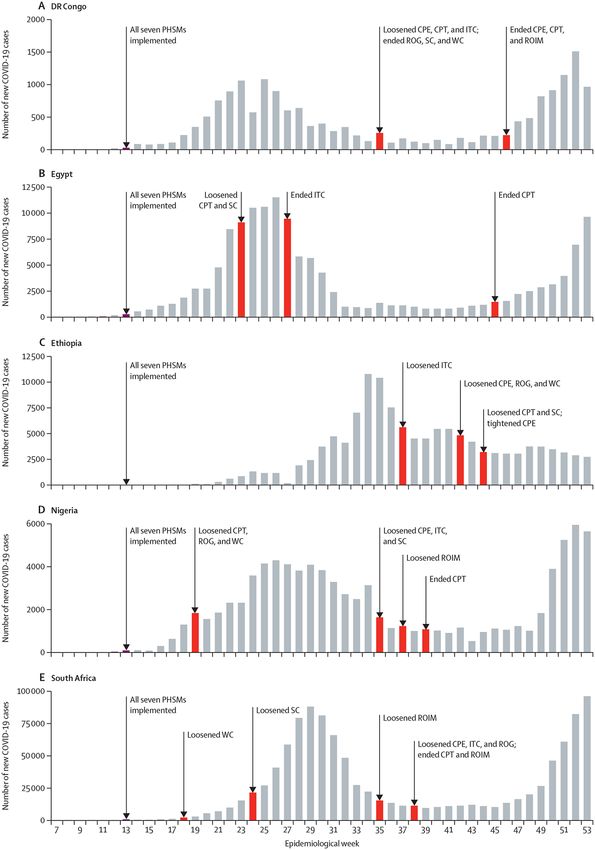
Salyer et al.                                                                                                  Page 2

                              Findings—As of Dec 31, 2020, African countries had reported 2 763 421 COVID-19 cases and
Author Manuscript

                              65 602 deaths, accounting for 3·4% of the 82 312 150 cases and 3·6% of the 1 798 994 deaths
                              reported globally. Nine of the 55 countries accounted for more than 82·6% (2 283 613) of reported
                              cases. 18 countries reported CFRs greater than the global CFR (2·2%). 17 countries reported test
                              per case ratios less than the recommended ten to 30 tests per case ratio range. At the peak of the
                              first wave in Africa in July, 2020, the mean daily number of new cases was 18 273. As of Dec 31,
                              2020, 40 (73%) countries had experienced or were experiencing their second wave of cases with
                              the continent reporting a mean of 23 790 daily new cases for epidemiological week 53. 48 (96%)
                              of 50 Member States had five or more stringent public health and social measures in place by
                              April 15, 2020, but this number had decreased to 36 (72%) as of Dec 31, 2020, despite an increase
                              in cases in the preceding month.

                              Interpretation—Our analysis showed that the African continent had a more severe second wave
                              of the COVID-19 pandemic than the first, and highlights the importance of examining multiple
Author Manuscript

                              epidemiological variables down to the regional and country levels over time. These country-
                              specific and regional results informed the implementation of continent-wide initiatives and
                              supported equitable distribution of supplies and technical assistance. Monitoring and analysis of
                              these data over time are essential for continued situational awareness, especially as Member States
                              attempt to balance controlling COVID-19 transmission with ensuring stable economies and
                              livelihoods.
                        Editorial note:
                              the Lancet Group takes a neutral position with respect to territorial claims in published maps and
                              institutional affiliations.

                        Introduction
Author Manuscript

                                        The first case of COVID-19 in Africa was reported in Egypt on Feb 14, 2020, just 14 days
                                        after WHO had declared the outbreak a public health emergency of international concern.1,2
                                        In an act of continental solidarity and leadership, the African Union (AU) Commission,
                                        through the Africa Centres for Disease Control and Prevention (Africa CDC), convened an
                                        emergency meeting of all ministers of health on Feb 22, 2020, to develop and endorse a Joint
                                        Continental Strategy for COVID-19 Outbreak.3 Since February, 2020, Africa CDC has
                                        rolled out six additional pandemic response initiatives across the continent targeting
                                        surveillance and testing; medical supply availability; public health and social measures
                                        (PHSMs); safe travel, livelihoods, and economies; pathogen genomics; and vaccine
                                        development and supply.4–6

                                        To successfully and equitably inform the implementation of the continental strategy and all
Author Manuscript

                                        of the associated initiatives across the continent, it was important to understand the regional
                                        and AU Member State-specific infection rates, mortality rates, testing capacity, ability to
                                        implement mitigation measures, and overall pandemic effect. Africa CDC has monitored the
                                        evolution of the pandemic across the globe since early January, 2020, through routine event-
                                        based surveillance. Within Africa, this information provided situational awareness and
                                        informed continental response efforts.

                                                Lancet. Author manuscript; available in PMC 2021 April 14.
Salyer et al. Page 3
Despite the spread of COVID-19 to almost all countries in Africa within 3 months, country-
Author Manuscript
reported case counts suggest that the pandemic has spread much slower on the continent
than in the rest of the world.7–9 To date, a comprehensive analysis of the heterogeneity of the
pandemic across all five AU regions and 55 Member States has not been done.9–16 Further,
many of the initial modelling projections, response recommendations, and pandemic
evolution discussions about COVID-19 in Africa have come wholly or partly from entities
outside of the continent trying to fit other global experiences to Africa, not fully appreciating
the diversity and differences across the continent.17–24
Africa is characterised by the heterogeneity in its demography, geography, economy, culture,
politics, language, social equity, and disease patterns.25 These differences are seen at the
regional, country, and subnational levels and extend into areas of social services, health
systems, and attainment of International Health Regulation capacity; these elements affect
each country’s response to the COVID-19 pandemic.26,27 The differences across Africa
Author Manuscript
show the importance of evaluations that go beyond an aggregated case number for the
continent, which can misrepresent the true situation within. We aimed to analyse
epidemiology, testing, and PHSM-related data reported from the five AU regions and all 55
AU Member States to further understand the COVID-19 situation across the continent.
Methods
Study design and data sources
Between Feb 14 and Dec 31, 2020, we did a cross-sectional observational analysis using
Africa CDC’s event-based surveillance aggregate epidemiology data and publicly available
data for PHSMs in place on the continent. As part of Africa CDC’s routine online event-
based surveillance activities, it began monitoring reports of newly confirmed COVID-19
Author Manuscript
cases globally in January, 2020. To assess the spread of COVID-19 within Africa, a team of
seven epidemiologists (including SJS and SS) screened both official (ie, national ministry of
health or other government websites, dashboards, situation reports, laboratory reports, press
releases, and Facebook and Twitter social media feeds) and unofficial (ie, media reports)
data sources two times per day. Any unofficial data sources were verified by direct
communication with Member States’ focal points or other official sources before inclusion
in the Africa CDC datasheet. We aggregated data for confirmed COVID-19 cases, deaths,
recoveries, and tests done for all 55 AU Member States. For PHSM data, we referenced the
Oxford COVID-19 Government Response Tracker dataset.28 We grouped data by the five
AU regions (Central, Eastern, Northern, Southern, and Western) to look for regional
differences and more easily align these countries to regional collaborating centre-related
response efforts. Not all Member States shared their case definitions with Africa CDC; thus
Author Manuscript
we assumed that all 55 AU Member States used the WHO COVID-19 case definitions when
reporting cases, deaths, and recoveries.29,30 Given International Health Regulation reporting
requirements for COVID-19 and the high data concordance seen when comparing Africa
CDC’s weekly COVID-19 outbreak briefs with WHO situation reports,8,31 we felt
comfortable in making this assumption regarding case definition. Data for testing were
further verified by direct reports from Member States to Africa CDC regarding the number
of molecular and antigen tests done. We reviewed the Oxford COVID-19 Government
Lancet. Author manuscript; available in PMC 2021 April 14.Salyer et al. Page 4
Response Tracker data for reports through the Partnership for Evidence-Based Response to
COVID-19 dashboard4 on the most stringent PHSMs (ie, affecting movement and
Author Manuscript
gatherings) put in place: closure of public transportation, restrictions on internal movement
between cities or subnational administrative units, restrictions on international travel for
foreign travellers, workplace closures, stay at home or shelter in place requirements, closures
for schools and universities, restrictions on the size of private gatherings, and cancellations
of public events. We also identified the dates when countries started, tightened, loosened, or
ended PHSMs in place and did a subanalysis for the most populous country in each region
(Nigeria, Ethiopia, Egypt, DR Congo, and South Africa) focusing on PHSM implementation
during each country’s initial wave of COVID-19 cases. PHSM data were available for all but
five AU Member States (Comoros, Equatorial Guinea, Guinea-Bissau, São Tomé and
Príncipe, and Sahrawi Arab Democratic Republic). For global epidemiology data
comparisons, official WHO daily situation reports and the WHO COVID-19 dashboard were
referenced.8
Author Manuscript
Statistical analysis
Descriptive analyses were done to establish cumulative cases, cumulative incidence (cases
per 100 000 population), weekly incidence (new cases reported over one epidemiological
week per 100 000 population), case fatality ratio (CFR; number of deaths reported per
number of cases reported × 100), testing ratio (number of tests per 1 million population), and
tests per case. Population estimates for 2019 were taken from the UN Population Fund.32
We used WHO’s recommended range of ten to 30 tests per reported COVID-19 case as a
measure for optimal testing coverage in the population.33 Number of active COVID-19 cases
was calculated by subtracting the total number of reported deaths and recoveries from the
cumulative total reported. To establish COVID-19 case growth rates in relation to weekly
Author Manuscript
incidence and PHSM implementation, we used the growth rate of the past 7 days compared
with the previous week. This calculation was done by taking the change in new cases from
the past 7 days (the current day to 6 days before) as compared with 7 days before this date
(days 7–13 before current date) and divided this change by the new cases from days 7–13
before. To establish the frequency and time period associated with an initial or subsequent
wave of cases that occurred in a Member State, we looked at both peak and trough weekly
incidence rates, weekly growth rate change, and epidemic curves of each country across the
study period. We defined an epidemic wave or phase as a rising number of COVID-19 cases
with a defined peak, followed by a decline in cases or trough period, in which transmission
had decreased. To establish the test per case ratio for the epidemic wave analysis, we divided
the number of tests reported from the current week, as well as the previous and subsequent
weeks, by the cases over the same 3-week period. We used 3 weeks of data to give a more
Author Manuscript
accurate depiction of this metric, as test reporting can be batched, which at times leads to
spurious results when looking at shorter time intervals. The mean number of cases per day
from wave start to peak was calculated by summing the total new cases reported from the
epidemiological week the wave started to the epidemiological week of the wave’s peak
divided by the total days over this same period. If the peak had not yet been reached by the
last date of our analysis (Dec 31, 2020), we calculated this rate from the wave start to Dec
31, 2020. We defined an epidemiological week using the international standard week
starting on Monday and ending on Sunday.
Lancet. Author manuscript; available in PMC 2021 April 14.Salyer et al. Page 5
Role of the funding source
Author Manuscript
There was no funding source for this study.
Results
As of Dec 31, 2020, 2 763 421 cases of COVID-19 were reported from the 55 AU Member
States (table 1), representing 3·4% of the 82 312 150 cases reported globally.8 31 (56%) of
55 countries detected their first cases between March 8–21, 2020. Sahrawi Arab Democratic
Republic was the last country to report its first case on July 24, 2020 (appendix p 1). The
proportion of cumulative cases and deaths varied across the five geographical AU regions:
43% of cases and 46% of deaths in the Southern region, 12% of cases and 9% of deaths in
the Eastern region, 34% of cases and 37% of deaths in the Northern region, 3% of cases and
2% of deaths in the Central region, and 9% of cases and 5% of deaths in the Western region.
The Southern region reported more cases than the other regions (table 1). Nine countries
Author Manuscript
accounted for 2 283 613 cases, 82·6% of the COVID-19 cases reported in Africa: South
Africa (38·3%), Morocco (15·9%), Tunisia (5·1%), Egypt (5·0%), Ethiopia (4·5%), Libya
(3·6%), Algeria (3·6%), Kenya (3·5%), and Nigeria (3·2%). The remaining 46 countries
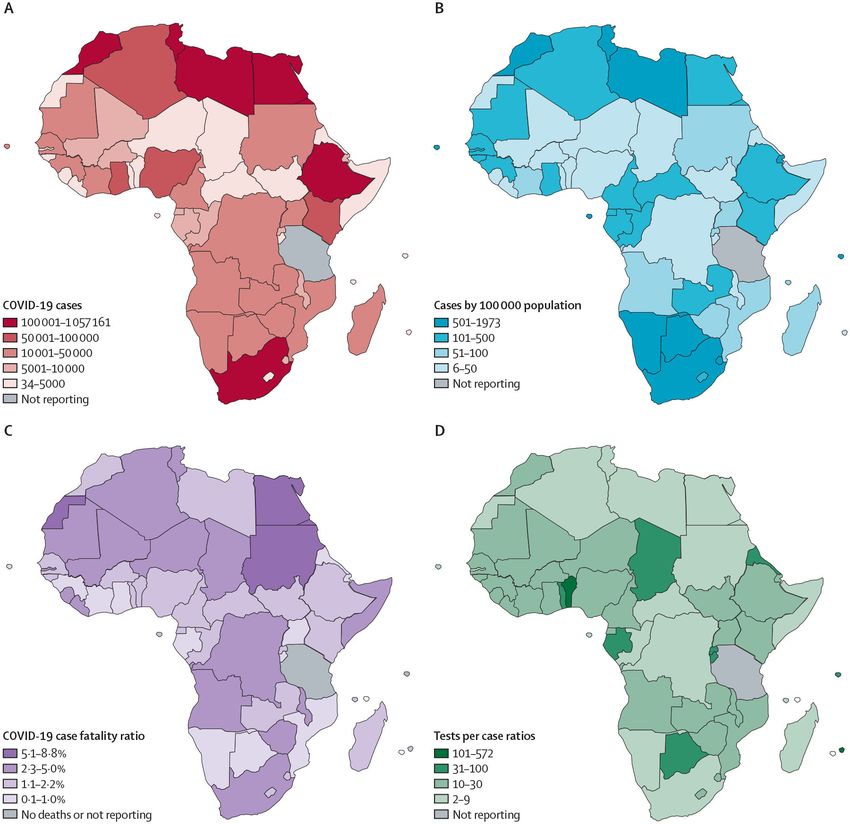
reported between 34 and 55 000 cases each (table 1, figure 1). Cabo Verde (1973·3), South
Africa (1819·6), Libya (1526·4), Morocco (1200·0), and Tunisia (1191·2) reported the
highest cumulative incidence of cases per 100 000 population. By region, the Southern
region had the highest incidence (640·5) per 100 000 population, primarily driven by the
high incidence in South Africa (table 1).
65 602 deaths were reported from 54 (96%) AU Member States, with most (77%) coming
from five countries: South Africa, Egypt, Morocco, Tunisia, and Algeria (table 1). The
continent has maintained a CFR of 2·4% since Aug 25, 2020. Of 53 (96%) countries actively
Author Manuscript
reporting and reporting more than 100 COVID-19 cases, 17 reported CFRs higher than the
continental and global CFR of 2·2%: Sudan (6·1%), Egypt (5·5%), Chad (4·9%), Liberia
(4·6%), Mali (3·8), Tunisia (3·4%), DR Congo (3·3%), The Gambia (3·3%), Niger (3·1%),
Malawi (2·9%), Sierra Leone (2·9%), Algeria (2·8%), Somalia (2·8%), South Africa (2·7%),
Zimbabwe (2·6%), Mauritania (2·3%), and Angola (2·3%). The Southern region reported the
most deaths (30 453 [46·4%]) and both the Northern and Southern regions reported the
highest regional CFRs (both 2·6%).
Regarding laboratory testing and testing ratios, as of Dec 31, 2020, more than 26 million
COVID-19 tests (19 956 tests per million population) were done by the 55 AU Member
States (table 1). Six countries (South Africa, Morocco, Ethiopia, Kenya, Egypt, and
Nigeria), representing four regions, accounted for more than 62% of all tests performed. By
Author Manuscript
the end of March, 2020, most countries (n=49; 89%) had the ability to test for SARS-CoV-2
by PCR; expanding to all 55 AU Member States by July, 2020 (appendix p 1). Since mid-
March, 2020, the continent has maintained a crude ratio of tests per case reported between
nine and 18. In December, 2020, the Northern region had the highest proportion of countries
(five [71%] of seven) that reported less than ten tests per case (figure 1). For the 40 countries
where testing data were available at the start of their first peak, 28 (70%) had adequate
testing capacity (test per case ratios >10, range 10·2–381·9). This figure decreased to 26%
(14 of 53 countries) during the peak of the first wave and 36% (four of 11 countries for
Lancet. Author manuscript; available in PMC 2021 April 14.Salyer et al. Page 6
which data were available) during the peak of the second wave, and increased to 85% (40 of
Author Manuscript
47) during the trough periods after the first wave and 75% (three of four countries for which
data were available) during the trough period after the second wave. Four (8%) of 53
countries (Algeria, Sahrawi Arab Democratic Republic, Somalia, and Sudan) reported test
per case ratios less than ten and CFRs greater than 2·2 during both the first wave peak and
trough (appendix p 2).
For active cases and recoveries, of the 2 763 421 reported cases as of Dec 31, 2020, 2 219
663 (80·3%) were reported as having recovered from COVID-19. Six countries (Central
African Republic, Cabo Verde, Côte d’Ivoire, Djibouti, Gabon, and Ghana) were all
reporting COVID-19 recovery rates equal to or greater than 98% (table 1). As of Dec 31,
2020, 478 156 people with confirmed COVID-19 were considered actively infected. Most
(54·2%) of the active cases were reported from South Africa (n=161 095) and Libya (n=98
418). The highest numbers of active cases per 100 000 population were reported in Libya
Author Manuscript
(n=1491), South Africa (n=277), Tunisia (n=257), Eswatini (n=150), and Namibia (n=141).
Between Feb 14 and Dec 31, 2020, PHSM reports were monitored using the Partnership for
Evidence-Based Response to COVID-19 dashboard4 and Oxford COVID-19 Government
Response Tracker.28 For the 50 Member States for which PHSM data were available, 36
(72%) reported implementing their first stringent PHSM a mean of 15 days (range 1–68)
before reporting their first COVID-19 case, whereas the remaining 14 Member States
reported implementing their first stringent PHSM a mean of 9 days (1–30) after their first
case. By April 15, 2020, 48 (96%) Member States reported having five or more stringent
PHSMs in place, with the most common being international travel controls (50 Member
States [100%]), school closures (49 Member States [98%]), cancelled public events (49
Member States [98%]), and restrictions on gatherings (48 Member States [96%]). By Dec
Author Manuscript
31, 2020, the number of Member States with five or more stringent PHSMs in place had
decreased to 36 (72%).
For the most populous countries in each region (DR Congo in the Central region, Ethiopia in
the Eastern region, Egypt in the Northern region, South Africa in the Southern region, and
Nigeria in the Western region), three had at least one or more stringent PHSMs in place
between 5 days and 12 days before their first case or cases were reported. All seven stringent
PHSMs were reported to be in place between March 24–30, 2020, for all five countries. The
weekly growth rate for the most populous country in each region 1 day before implementing
all seven stringent PHSMs was 366% (range 30 to 1000). The weekly growth rate after
implementing all seven stringent PHSMs for 14 days was 17% (−17 to 78). All countries
reported maintaining these seven stringent PHSMs through the peak of their first wave of
Author Manuscript
cases; however, three countries (Egypt, Nigeria, and South Africa) loosened two or more
PHSMs before the peak of their first wave (figure 2). The first PHSMs were loosened a
mean of 108 days (range 36 to 194) after they were put in place. Restrictions on public
transportation were the most commonly loosened PHSMs (three [60%] of five countries;
table 2). For these five countries, the weekly growth rate 14 days after easing of the first
PHSM was 10% (range −17 to 57).
Lancet. Author manuscript; available in PMC 2021 April 14.Salyer et al. Page 7
For wave analysis, at the continental level, the peak weekly incidence (97) of the first wave
Author Manuscript
occurred in mid-July, 2020, with a mean of 18 273 new cases being reported per day for
epidemiological week 29. By the end of December, 2020, the African continent had not yet
declared the peak of its second wave; however, the weekly incidence reported for
epidemiological week 53 was 129 and mean number of new daily cases was 23 790. As of
Dec 31, 2020, 14 (25%) of 55 countries had only experienced or were still experiencing their
first wave of cases, 40 (73%) had experienced or were still experiencing a second wave of
cases, and four (7%) had experienced or were still experiencing their third wave of cases. No
information was available to assess the pandemic progression for Tanzania. Of the 40
countries who had experienced or were starting to experience a second wave of cases, 24
(60%) reported a mean increase of 403% (range 10–4602) in the mean number of new cases
per day being reported from wave start to peak when comparing the first and the second
waves. Of the 38 countries that previously experienced or were experiencing a second wave
Author Manuscript
and reporting on PHSM implementation, 17 (45%) had a mean of two (range 1–6) less
PHSMs in place during the second wave than the first (appendix p 1).
Discussion
By the end of 2020, most of the African continent was experiencing a fast evolving second
wave of the COVID-19 pandemic, reporting a 30% increase in both the weekly incidence
and the mean daily new cases when comparing the peak of the first wave to epidemiological
week 53. Progression, response, and effect have varied greatly among the AU regions and
Member States reporting COVID-19 cases. Compared with other continents, it appears that
Africa has not experienced the pandemic at the same magnitude with respect to the overall
COVID-19 case and death counts.7,34 However, when the situation is examined for a few
African countries like Cabo Verde, South Africa, Libya, and Morocco, whose cumulative
Author Manuscript
incidence rates have been particularly high in comparison to other African countries, we
observed stark similarities to what other countries across the world are reporting.7,8
The late importation of cases and early implementation of PHSMs4 compared with other
continents bought time for some African countries to boost their detection and response
capacity.7 The continent went from three countries having COVID-19 diagnostic capacity at
the beginning of February, 2020, to 49 countries representing all five regions by the end of
March, 2020, and to all 55 AU Member States by July, 2020. Although the high availability
of diagnostic testing and a continental push to increase testing volumes in June, 2020,35 has
resulted in nearly achieving the WHO recommended tests per case ratio for the continent as
a whole, as of Dec 31, 2020, a third of countries (including most of the countries in the
Northern region) had reported less than ten tests per reported COVID-19 case identified,
Author Manuscript
suggesting a less than adequate distribution or use of tests within communities. Further, it is
noted that although most countries are able to maintain adequate testing capacity beyond the
peak infection, many struggle to maintain adequate testing volumes during the peak
outbreak periods. This finding supports the need to continue promoting laboratory capacity
building initiatives like the Partnership to Accelerate COVID-19 Testing35 and the use of
rapid antigen tests36 in specific countries and regions, while still ensuring the continent has
enough capacity in the face of the global shortage of testing reagents and extraction kits.
Lancet. Author manuscript; available in PMC 2021 April 14.Salyer et al. Page 8
The initial capacity building activities by Africa CDC and other partners focused on regional
Author Manuscript
training aimed at strengthening a countries’ surveillance capacity to quickly detect and
contain cases at points of entry and within the community.37 The high tests per reported case
ratios (>50) reported from several Member States in the Eastern (Ethiopia, Eritrea, Uganda,
and Rwanda) and Southern (Angola, Lesotho, and Zimbabwe) regions at the start of their
initial wave of cases could indicate a focus on points of entry surveillance as the countries
were likely to be testing more people at the borders and ports before entering the country.
Although it is recommended that countries transition from border screening to active case
finding in the community via contact tracing or other surveillance efforts once local
transmission occurs,38 countries might be reluctant to abandon aggressive border screening
efforts if they border or continue to receive travellers from countries that either report many
cases or are not transparent about reporting or tracking cases.39–41 To address these
concerns, cross-border COVID-19 management and data sharing efforts are underway for
the Eastern and Southern regions.42
Author Manuscript
Early PHSM implementation is assumed to have slowed the pandemic in Africa; however,
this analysis suggests that it is necessary to review multiple indicators down to the country
level to fully understand the situation.4,7 Despite facing a second wave of cases and new,
more transmissible variants of the virus,43,44 many countries had not implemented the same
degree of PHSMs as they had early on in the pandemic. Additionally, for some countries
where cases continue to increase despite maintaining most of their stringent PHSMs, other
factors like changes in population behaviour are likely to be present. Increasing reports of
PHSM adherence fatigue45,46 leaves the continent’s population at risk and highlights the
need to reinvigorate and update existing communication strategies. These data indicate that
Member States not only need to remain vigilant in collecting and analysing COVID-19 data
to inform PHSM adjustments in place, but they also need to monitor PHSM adherence and
Author Manuscript
ensure public health and case management capacities are sustained as cases rise.
Most of the countries reporting higher CFRs than the continental and global ratios also
simultaneously reported having decreased testing capacity. This result suggests that limited
surveillance and testing capacity might have played a role in the observed higher CFRs as
not all cases were identified. The Northern and Southern regions reported the highest
regional CFRs despite typically having better developed health systems than the rest of the
continent.47 The higher CFRs in the Northern region might also be explained by truly high
CFRs due to an older population and a higher prevalence of non-communicable diseases
(comorbidities), which can both contribute to poorer clinical outcomes.47
This study has some limitations. Although Africa CDC was able to collect basic
Author Manuscript
epidemiological data from Member States, absence of case-specific information regarding
age, gender, occupation (eg, health-care workers), comorbidities, and clinical outcomes for
all Member States limited our ability to provide regional or Africa-wide information
regarding these variables. Additionally, not all countries reported COVID-19 case and
testing data daily, which might have skewed growth rate calculations, CFRs, active cases,
and tests per case ratios. Further, our understanding of the dynamics for the spread of
COVID-19 was limited by the different testing approaches used to diagnose COVID-19.
Some countries started using rapid antigen tests on a limited basis to diagnose cases, which
Lancet. Author manuscript; available in PMC 2021 April 14.Salyer et al. Page 9
might have higher false negative results; and some countries included repeat tests in the
Author Manuscript
numbers they reported, which could lead to elevated testing numbers and tests per case
ratios. Additionally, some regional trends might have been affected by variance within the
region, which might misrepresent the situation seen across that region as a whole (eg, cases,
deaths, and tests in South Africa compared with other countries in the Southern region).
Although the intent of this analysis was to provide a high-level understanding of the
COVID-19 situation across the continent, future analyses could benefit from inclusion of
additional variables that measure the effect of COVID-19 within the Member States.
Despite the limitations, these regional and country-specific analyses have helped inform the
joint continental response efforts in the allocation of testing reagents and equipment,
deployment of response staff, and identification of areas requiring training. For example, in
countries without existing COVID-19 PCR capacity, the repurposing of existing GeneXpert
platforms for COVID-19 has improved testing capacity.48–50 In addition to supplying the
Author Manuscript
SARS-CoV-2 GeneXpert cartridges to these countries, Africa CDC and WHO also provided
traditional PCR equipment to address the poor capacity. As part of the Partnership to
Accelerate COVID-19 Testing initiative,35 a continental procurement platform, Africa
Medical Supply Platform, has been put in place to allow Member States to collectively
purchase commodities needed for their own response efforts. The recruitment and
deployment of community health workers, epidemiologists, risk communicators, and
laboratory staff for this initiative are being driven by the epidemic situation and capacity
needs of each Member State. As surveillance and testing efforts transitioned from border-
focused to communities, training opportunities and guidance materials were produced to
help meet the Member State demands. Further, collaborations like the Partnership for
Evidence-Based Response to COVID-19 are using these epidemiology, testing, and PHSM
data along with qualitative measures such as survey data to inform Member States’ response
Author Manuscript
efforts and improve risk communication regarding best practices that should be put in place.
4
In the face of a second and possibly third wave of cases, Africa CDC remains vigilant in
monitoring the COVID-19 outbreak on the continent. Although rapid PHSM implementation
probably contributed to the relatively low initial continental case numbers being reported,
several factors are likely to have led to a larger second wave of cases. Anecdotal evidence
from across the continent indicates mask wearing and physical distancing behaviours are
markedly decreasing, probably from adherence fatigue and economic necessity.
Additionally, new variants of concern—reported to be more transmissible,44 more deadly,51
and with the potential to escape existing immunity52,53—are circulating among Member
States and likely to be changing disease dynamics.
Author Manuscript
Efforts to better understand the true burden of COVID-19 and the outcomes associated with
new circulating SARS-CoV-2 variants and their effect on vaccine efficacy are needed, along
with campaigns to maintain population practices to prevent spread. Africa CDC is
supporting Member States with the implementation of seroprevalence surveys, excess
mortality surveillance, and genomic surveillance to better understand some of these
outstanding questions. We want to highlight the need to measure the effect of COVID-19
intervention measures on other communicable diseases such as malaria and tuberculosis,
Lancet. Author manuscript; available in PMC 2021 April 14.Salyer et al. Page 10
which are prevalent in many countries across Africa. Having a holistic, data-driven
Author Manuscript
understanding of the situation across, as well as within, the continent is imperative for
preventing transmission, severe illness, and death from COVID-19; informing vaccination
and other intervention strategies; and minimising the social and economic harms associated
with the pandemic.54
Supplementary Material
Refer to Web version on PubMed Central for supplementary material.
Acknowledgments
The authors alone are responsible for the views expressed in this Article and they do not necessarily represent the
decisions, policy, or views of Africa CDC, US Centers for Disease Control and Prevention, or any other institution
or organisation represented by the coauthors. We thank the Bill & Melinda Gates Foundation for their initial
Author Manuscript
contributions to the Africa CDC response efforts; the Africa CDC event-based surveillance COVID-19 team and the
Regional Collaborating Centres for their dedication and long hours verifying and compiling all the epidemiology
data across the African continent each day; the AU Member States for routinely sharing their situation reports and
working with the Africa CDC staff to verify media reports; and all the health-care workers across the continent who
contributed to mitigating the effects of COVID-19. Directors of the National Public Health Institutes (NM, CI, EA)
also wish to thank their institutions that participated.
References
1. Africanews. COVID-19: Egypt confirms first coronavirus case in Africa. Coronavirus outbreak
News. Al Jazeera 2020. https://www.aljazeera.com/news/2020/02/egypt-confirms-coronavirus-case-
africa-200214190840134.html (accessed June 14, 2020).
2. WHO. COVID-19 as a Public Health Emergency of International Concern (PHEIC) under the IHR.
World Health Organization: Geneva, 2020. https://extranet.who.int/sph/covid-19-public-health-
emergency-international-concern-pheic-under-ihr (accessed June 14, 2020).
3. Africa CDC. Africa Joint Continental Strategy for COVID-19 Outbreak. 2020. https://africacdc.org/
Author Manuscript
download/africa-joint-continental-strategy-for-covid-19-outbreak/ (accessed May 10, 2020).
4. PERC. Partnership for Evidence-Based Response for COVID-19 (PERC). 2020. https://
preventepidemics.org/covid19/perc/ (accessed Dec 28, 2020).
5. Africa CDC. COVID-19 Pandemic Response Initiatives. 2020. https://africacdc.org/download/
covid-19-pandemic-response-initiatives/ (accessed Dec 28, 2020).
6. Africa CDC. Africa Pathogen Genomics Initiative Factsheet. 2020. https://africacdc.org/download/
africa-pathogen-genomics-initiative-factsheet/ (accessed Dec 28, 2020).
7. Massinga Loembé M, Tshangela A, Salyer SJ, Varma JK, Ouma AEO, Nkengasong JN. COVID-19
in Africa: the spread and response. Nat Med 2020; 26: 999–1003. [PubMed: 32528154]
8. WHO. Coronavirus disease (COVID-19) situation reports and dashboard. World Health
Organization: Geneva, 2020. https://www.who.int/emergencies/diseases/novel-coronavirus-2019/
situation-reports (accessed Dec 28, 2020).
9. Umviligihozo G, Mupfumi L, Sonela N, et al. Sub-Saharan Africa preparedness and response to the
COVID-19 pandemic: a perspective of early career African scientists. Wellcome Open Res 2020; 5:
Author Manuscript
163. [PubMed: 32984549]
10. Martinez-Alvarez M, Jarde A, Usuf E, et al. COVID-19 pandemic in west Africa. Lancet Glob
Health 2020; 8: e631–32. [PubMed: 32246918]
11. Agyeman AA, Laar A, Ofori-Asenso R. Will COVID-19 be a litmus test for post-Ebola sub-
Saharan Africa? J Med Virol 2020; 92: 1373–75. [PubMed: 32196700]
12. Paintsil E COVID-19 threatens health systems in sub-Saharan Africa: the eye of the crocodile. J
Clin Invest 2020; 130: 2741–44. [PubMed: 32224550]
13. Lone SA, Ahmad A. COVID-19 pandemic—an African perspective. Emerg Microbes Infect 2020;
9: 1300–08. [PubMed: 32458760]
Lancet. Author manuscript; available in PMC 2021 April 14.Salyer et al. Page 11
14. Okeahalam C, Williams V, Otwombe K. Factors associated with COVID-19 infections and
mortality in Africa: a cross-sectional study using publicly available data. BMJ Open 2020; 10:
Author Manuscript
e042750.
15. Elhakim M, Tourab SB, Zouiten A. COVID-19 pandemic in Djibouti: epidemiology and the
response strategy followed to contain the virus during the first two months, 17 March to 16 May
2020. PLoS One 2020; 15: e0243698. [PubMed: 33351802]
16. Post L, Marogi E, Moss CB, et al. Middle East and North Africa SARS-CoV-2 surveillance: a
longitudinal trend analysis. J Med Internet Res 2021; 23: e25830. [PubMed: 33302252]
17. Gilbert M, Pullano G, Pinotti F, et al. Preparedness and vulnerability of African countries against
importations of COVID-19: a modelling study. Lancet 2020; 395: 871–77. [PubMed: 32087820]
18. Pearson CA, Van Schalkwyk C, Foss AM, O’Reilly KM, Pulliam JR. Projected early spread of
COVID-19 in Africa through 1 June 2020. Euro Surveill 2020; 25: 2000543.
19. Bekker L-G, Mizrahi V. COVID-19 research in Africa. Science 2020; 368: 919. [PubMed:
32467365]
20. Chersich MF, Gray G, Fairlie L, et al. COVID-19 in Africa: care and protection for frontline
healthcare workers. Glob Health 2020; 16: 46.
Author Manuscript
21. Zhao Z, Li X, Liu F, Zhu G, Ma C, Wang L. Prediction of the COVID-19 spread in African
countries and implications for prevention and control: a case study in South Africa, Egypt, Algeria,
Nigeria, Senegal and Kenya. Sci Total Environ 2020; 729: 138959. [PubMed: 32375067]
22. Quaresima V, Naldini MM, Cirillo DM. The prospects for the SARS-CoV-2 pandemic in Africa.
EMBO Mol Med 2020; 12: e12488. [PubMed: 32301279]
23. Evans MV, Garchitorena A, Rakotonanahary RJL, et al. Reconciling model predictions with low
reported cases of COVID-19 in Sub-Saharan Africa: insights from Madagascar. Glob Health
Action 2020; 13: 1816044. [PubMed: 33012269]
24. Seidu AA, Hagan JE Jr, Ameyaw EK, Ahinkorah BO, Schack T. The role of testing in the fight
against COVID-19: current happenings in Africa and the way forward. Int J Infect Dis 2020; 98:
237–40. [PubMed: 32619756]
25. Lwasa S Appreciating the heterogeneity in the unity of Africa: a socio-ecological perspective on
Africa’s geographies. Can Geogr 2019; 63: 594–602.
26. Corburn J, Vlahov D, Mberu B, et al. Slum health: arresting COVID-19 and improving well-being
Author Manuscript
in urban informal settlements. J Urban Health 2020; 97: 348–57. [PubMed: 32333243]
27. Renzaho AMN. The need for the right socio-economic and cultural fit in the COVID-19 response
in sub-Saharan Africa: examining demographic, economic political, health, and socio-cultural
differentials in COVID-19 morbidity and mortality. Int J Environ Res Public Health 2020; 17:
3445.
28. Blavatnik School of Government. Coronavirus Government Response Tracker. 2020. https://
www.bsg.ox.ac.uk/research/research-projects/coronavirus-government-response-tracker#data
(accessed Dec 28, 2020).
29. WHO. Criteria for releasing COVID-19 patients from isolation. World Health Organization:
Geneva, 2020. https://www.who.int/publications/i/item/criteria-for-releasing-covid-19-patients-
from-isolation (accessed July 17, 2020).
30. WHO. Global surveillance for COVID-19 caused by human infection with COVID-19 virus:
interim guidance. World Health Organization: Geneva, 2020. https://www.who.int/publications/i/
item/global-surveillance-for-covid-19-caused-by-human-infection-with-covid-19-virus-interim-
guidance (accessed July 17, 2020).
Author Manuscript
31. Africa CDC. Outbreak Brief 18: COVID-19 Pandemic – 19 May 2020. 2020. https://africacdc.org/
download/outbreak-brief-18-covid-19-pandemic-19-may-2020/ (accessed May 22, 2020).
32. United Nations Population Fund. World Population Dashboard. 2019. https://www.unfpa.org/data/
world-population-dashboard (accessed June 25, 2020).
33. WHO. COVID-19—virtual press conference—30 March 2020. World Health Organization:
Geneva, 2020. https://www.who.int/docs/default-source/coronaviruse/transcripts/who-audio-
emergencies-coronavirus-press-conference-full-30mar2020.pdf?sfvrsn=6b68bc4a_2 (accessed
June 15, 2020).
Lancet. Author manuscript; available in PMC 2021 April 14.Salyer et al. Page 12
34. Mbow M, Lell B, Jochems SP, et al. COVID-19 in Africa: dampening the storm? Science 2020;
369: 624–26. [PubMed: 32764055]
Author Manuscript
35. AU and Africa CDC launch partnership to accelerate COVID-19 testing: trace, test and track –
Africa CDC. https://africacdc.org/news-item/african-union-and-africa-centres-for-disease-control-
and-prevention-launch-partnership-to-accelerate-covid-19-testing-trace-test-and-track/ (accessed
June 15, 2020).
36. Africa CDC. Interim guidance on the use of rapid antigen tests for COVID-19 response – Africa
CDC. 2020. https://africacdc.org/download/interim-guidance-on-the-use-of-rapid-antigen-tests-
for-covid-19-response/ (accessed Jan 7, 2021).
37. WHO AFRO. WHO African Region COVID-19 Readiness Status. World Health Organization:
Geneva, 2020. https://app.powerbi.com/view?
r=eyJrIjoiNWY4NTQyNWMtZjllYS00MjA0LTg0MjYtMjRkNGE0ZmZiYmI5IiwidCI6ImY2MT
BjMGI3LWJkMjQtNGIzOS04MTBiLTNkYzI4MGFmYjU5MCIsImMiOjh9 (accessed June 15,
2020).
38. US CDC. Considerations for health screening for COVID-19 at points of entry. 2020. https://
www.cdc.gov/coronavirus/2019-ncov/global-covid-19/migration-border-health.html (accessed Aug
Author Manuscript
6, 2020).
39. Nakkazi E Obstacles to COVID-19 control in east Africa. Lancet Infect Dis 2020; 20: 660.
[PubMed: 32473138]
40. Huaxia. Namibia calls for strict monitoring of cross-border truck drivers amid COVID-19. Xinhua
2020. http://www.xinhuanet.com/english/2020-06/09/c_139126454.htm (accessed June 27, 2020).
41. Dube M. Botswana, with no COVID-19 cases, closes borders after death in Zimbabwe. Voice Am
2020. https://www.voanews.com/science-health/coronavirus-outbreak/botswana-no-covid-19-
cases-closes-borders-after-death-zimbabwe (accessed June 27, 2020).
42. Southern African Development Community. SADC guidelines on harmonization and facilitation of
cross-border transport operations across the region during the COVID-19 pandemic. 2020. https://
www.tralac.org/documents/resources/covid-19/regional/3782-sadc-guidelines-on-harmonisation-
and-facilitation-of-cross-border-transport-operations-across-the-region-during-the-covid-19-
pandemic-revision-23-june-2020/file.html (accessed Jan 8, 2021).
43. Africa CDC. Alert notification: new SARS-CoV-2 variant with multiple spike protein mutations.
2020. https://africacdc.org/download/alert-notification-new-sars-cov-2-variant-with-multiple-
Author Manuscript
spike-protein-mutations/ (accessed Jan 7, 2021).
44. Villoutreix BO, Calvez V, Marcelin AG, Khatib AM. In silico investigation of the new UK
(B.1.1.7) and South African (501y.v2) SARS-CoV-2 variants with a focus at the ace2–spike rbd
interface. Int J Mol Sci 2021; 22: 1–13.
45. PERC. Biweekly Report: 24 November–7 December. 2020. https://preventepidemics.org/wp-
content/uploads/2020/12/FINAL_PERC_BiWeekly_dec11.pdf (accessed Jan 7, 2021).
46. Ilesanmi OS, Bello AE, Afolabi AA. COVID-19 pandemic response fatigue in Africa: causes,
consequences, and counter-measures. Pan Afr Med J 2020; 37 (suppl 1): 37.
47. Sustainable Development Goals Fund. Health in Africa over the next 50 years. 2013. https://
www.sdgfund.org/health-africa-over-next-50-years (accessed June 26, 2020).
48. Kobia F, Gitaka J. COVID-19: Are Africa’s diagnostic challenges blunting response effectiveness?
AAS Open Res 2020; 3: 4. [PubMed: 32399515]
49. Chiang CY, El Sony A. Tackling the threat of COVID-19 in Africa: an urgent need for practical
planning. Int J Tuberc Lung Dis 2020; 24: 541–42. [PubMed: 32398210]
Author Manuscript
50. Cepheid Xpert Xpress SARS-CoV-2 has received FDA emergency use authorization. Cepheid
2020. http://cepheid.mediaroom.com/2020-09-29-Cepheid-Receives-Emergency-Use-
Authorization-For-SARS-CoV-2-Flu-A-Flu-B-and-RSV-Combination-Test (accessed June 14,
2020).
51. Davies NG, Jarvis CI, Edmunds WJ, Jewell NP, Diaz-Ordaz K, Keogh RH. Increased hazard of
death in community-tested cases of SARS-CoV-2 variant of concern 202012/01. medRxiv 2021;
published online Feb 3. 10.1101/2021.02.01.21250959 (preprint).
Lancet. Author manuscript; available in PMC 2021 April 14.Salyer et al. Page 13
52. Wibmer CK, Ayres F, Hermanus T, et al. SARS-CoV-2 501Y.V2 escapes neutralization by South
African COVID-19 donor plasma. Nat Med 2021; published online March 2. 10.1038/
Author Manuscript
s41591-021-01285-x.
53. Zucman N, Uhel F, Descamps D, Roux D, Ricard J-D. Severe reinfection with South African
SARS-CoV-2 variant 501Y.V2: a case report. Clin Infect Dis 2021; published online Feb 10.
10.1093/cid/ciab129.
54. Ataguba JE. COVID-19 pandemic, a war to be won: understanding its economic implications for
Africa. Appl Health Econ Health Policy 2020; 18: 325–28. [PubMed: 32249362]
Author Manuscript
Author Manuscript
Author Manuscript
Lancet. Author manuscript; available in PMC 2021 April 14.Salyer et al. Page 14
Research in context
Author Manuscript
Evidence before this study
We did a general literature review to look for reports of COVID-19 surveillance and
epidemiological studies in Africa. Several earlier studies sought to predict the
importation and evolution of COVID-19 in Africa. These predictions overestimated the
number of cases and falsely indicated that most of the initial transmission would be from
travellers coming from China and not Europe. However, few analyses have reviewed the
epidemiology across and within the African continent to inform these predictions.
Previous studies describing the epidemiology of COVID-19 in Africa have not included
data, shared only limited data, or have focused on a few specific countries or regions.
Added value of this study
Author Manuscript
Africa Centres for Disease Control and Prevention started monitoring the COVID-19
situation and aggregating event-based surveillance data reported by the African Union
Member States before the first reported cases on the continent. We used these COVID-19
epidemiology, testing, and public health and social measure data to provide the first
report of the epidemiological situation of the whole African continent, its five regions,
and 55 countries.
Implications of all the available evidence
This comprehensive cross-sectional analysis of the COVID-19 epidemic in Africa
provides a better understanding of the nature of the pandemic in Africa across and within
all regions and Member States. Understanding the heterogeneity of the pandemic within
the continent has further informed continental response efforts and promoted the
Author Manuscript
principles of equity in resource allocation.
Author Manuscript
Lancet. Author manuscript; available in PMC 2021 April 14.Salyer et al. Page 15
Author Manuscript
Author Manuscript
Author Manuscript
Figure 1: COVID-19 cases in Africa
African Union Member States reporting COVID-19 cases by cumulative cases (A),
incidence (B), estimated case fatality ratio (C), and tests per case ratio reported (D), as of
Dec 31, 2020.
Author Manuscript
Lancet. Author manuscript; available in PMC 2021 April 14.Salyer et al. Page 16
Author Manuscript
Author Manuscript
Author Manuscript
Figure 2: Daily COVID-19 cases and PHSMs in place
Number of new COVID-19 cases reported daily in relation to stringent PHSMs for DR
Congo (A), Egypt (B), Ethiopia (C), Nigeria (D), and South Africa (E), epidemiological
weeks 7–53 (Feb 15, 2020, to Jan 3, 2021). PHSMs=public health and social measures.
CPE=cancelled public events. CPT=closed public transport. ITC=international travel
controls. ROG=restrictions on gatherings. ROIM=restrictions on internal movement.
Author Manuscript
SC=school closures. WC=workplace closures.
Lancet. Author manuscript; available in PMC 2021 April 14.Author Manuscript Author Manuscript Author Manuscript Author Manuscript
Table 1:
COVID-19 cases, deaths, recoveries, and tests as of Dec 31, 2020
Cases Cases per 100 000 population Deaths Case fatality ratio Recoveries Tests Testing ratio* Tests per case ratio
Salyer et al.
Central 75 166 49·0 1483 2·0 68 198 1 585 477 10 336 21·1
Burundi 818 7·1 2 0·2 687 76 962 6635 94·1
Cameroon 26 277 103·9 448 1·7 24 892 781 009 30 870 29·7
Central African Republic 4963 103·4 63 1·3 4873 35 303 7355 7·1
Chad 2141 13·6 104 4·9 1704 68 217 4318 31·9
DR Congo 17 998 20·8 591 3·3 14 701 95 223 1098 5·3
Equatorial Guinea 5277 376·9 86 1·6 5136 76 864 54 903 14·6
Gabon 9571 455·8 64 0·7 9388 371 281 176 800 38·8
Republic of the Congo 7107 129·2 108 1·5 5846 73 120 13 295 10·3
São Tomé and Príncipe† 1014 507·0 17 1·7 971 7498 37 490 7·4
Eastern 325 472 83·7 6082 1·9 256 380 5 175 185 13 314 15·9
Comoros† 765 85·0 9 1·2 626 6227 6919 8·1
Djibouti 5831 583·1 61 1·0 5728 100 294 100 294 17·2
Eritrea† 1252 23·6 1 0·1 676 23 693 4470 18·9
Ethiopia 124 264 112·9 1923 1·5 112 096 1 800 236 16 351 14·5
Kenya 96 458 184·8 1670 1·7 78 737 1 046 667 20 051 10·9
Madagascar 17 714 65·6 261 1·5 17 228 100 305 3715 5·7
Mauritius† 527 40·5 10 1·9 496 301 345 231 804 571·8
Lancet. Author manuscript; available in PMC 2021 April 14.
Rwanda 8383 65·5 92 1·1 6542 730 136 57 042 87·1
Seychelles† 256 256·0 0 0·0 212 21 504 215 040 84·0
Somalia† 4714 30·2 130 2·8 3612 26 509 1699 5·6
South Sudan 3558 26·8 63 1·8 3131 105 002 7895 29·5
Sudan† 25 730 60·5 1576 6·1 15 240 158 804 3737 6·2
Tanzania‡ 509 0·8 21 4·1 178 3880 64 7·6
Uganda 35 511 77·7 265 0·7 11 878 750 583 16 424 21·1
Northern 932 564 456·7 24 323 2·6 776 895 7 002 858 34 294 7·5
Algeria† 99 610 233·3 2756 2·8 67 127 230 553 5399 2·3
Page 17Author Manuscript Author Manuscript Author Manuscript Author Manuscript
Cases Cases per 100 000 population Deaths Case fatality ratio Recoveries Tests Testing ratio* Tests per case ratio
Egypt† 138 062 136·4 7631 5·5 112 105 1 000 000 9881 7·2
Libya 100 744 1526·4 1478 1·5 73 252 549 138 83 203 5·5
Mauritania 14 364 305·6 337 2·3 11 380 145 381 30 932 10·1
Salyer et al.
Morocco 439 193 1200·0 7388 1·7 407 504 4 457 349 121 785 10·1
Tunisia 140 557 1191·2 4730 3·4 105 499 620 308 52 568 4·4
Sahrawi Arab Democratic Republic 34 5·7 3 8·8 28 129 215 3·8
Southern 1 185 617 640·5 30 453 2·6 971 679 8 968 128 48 450 7·6
Angola 17 553 55·2 405 2·3 11 044 305 810 9617 17·4
Botswana 14 805 616·9 42 0·3 12 136 544 167 226 736 36·8
Eswatini 9358 668·4 184 2·0 7073 92 315 65 939 9·9
Lesotho 3094 134·5 51 1·6 1480 33 109 14 395 10·7
Malawi 6471 32·8 189 2·9 5700 84 986 4314 13·1
Mozambique 18 642 59·4 166 0·9 16 663 271 947 8661 14·6
Namibia 23 941 920·8 196 0·8 20 076 209 155 80 444 8·7
South Africa 1 057 161 1819·6 28 469 2·7 867 597 6 609 208 113 756 6·3
Zambia 20 725 114·5 388 1·9 18 660 601 003 33 205 29·0
Zimbabwe 13 867 80·2 363 2·6 11 250 216 428 12 510 15·6
Western 244 602 63·0 3261 1·3 218 915 3 601 780 9278 14·7
Benin† 3251 27·6 44 1·4 3061 379 760 32 183 116·8
Burkina Faso 6707 32·1 85 1·3 5100 96 866 4634 14·4
Cabo Verde 11 840 1973·3 113 1·0 11 559 107 817 179 695 9·1
Lancet. Author manuscript; available in PMC 2021 April 14.
Côte d’Ivoire 22 490 88·2 137 0·6 21 934 258 506 10 137 11·5
The Gambia 3800 172·7 124 3·3 3669 30 329 13 786 8·0
Ghana 55 168 183·3 335 0·6 53 928 672 364 22 338 12·2
Guinea 13 738 102·5 81 0·6 13 153 304 347 22 712 22·2
Guinea Bissau 2447 122·4 45 1·8 2378 36 588 18 294 15·0
Liberia† 1800 36·0 83 4·6 1406 39 870 7974 22·2
Mali 7090 36·0 269 3·8 4650 141 653 7191 20·0
Niger 3323 14·3 102 3·1 1825 62 421 2691 18·8
Nigeria 87 564 43·6 1289 1·5 73 713 948 048 4717 10·8
Senegal 19 140 114·6 410 2·1 17 254 280 040 16 769 14·6
Page 18Author Manuscript Author Manuscript Author Manuscript Author Manuscript
Cases Cases per 100 000 population Deaths Case fatality ratio Recoveries Tests Testing ratio* Tests per case ratio
Sierra Leone† 2611 33·1 76 2·9 1892 65 275 8263 25·0
Togo 3633 44·3 68 1·9 3393 177 896 21 695 49·0
All countries
Salyer et al.
Total 2 763 421 209·4 65 602 2·4 2 292 067 26 333 428 19 956 9·5
*
Testing ratio was the number of molecular and antigen tests per 1 million population.
†
Countries where complete testing data were not available.
‡
Countries not reporting case or testing information for more than 2 weeks.
Lancet. Author manuscript; available in PMC 2021 April 14.
Page 19Author Manuscript Author Manuscript Author Manuscript Author Manuscript
Table 2:
Cumulative COVID-19 cases and growth rates associated with the implementation of stringent PHSMs in the most populous African Union Member State
of each region, 2020
Salyer et al.
Date of first Date of PHSM Date all Date first PHSM Number of cases Growth rate* (%)
COVID-19 first type seven PHSM type
case PHSM initiated PHSMs in loosened loosened
place
1 day 14 days 14 days 1 day 14 days 1 day 14 days
before after after first before after before first after first
seven seven PHSM seven seven PHSM PHSM
PHSMs PHSMs loosened PHSMs PHSMs loosened loosened
DR March 10 March 1 ITC March 24 Aug 27 CPT, ITC, 45 183 10 343 1000% 55% −3% 24%
Congo SC, WC,
ROG, CPE
Egypt Feb 14 March 15 SC March 25 June 7 CPT, SC 402 1450 55 233 50% 78% 67% 1%
Ethiopia March 13 March 1 ITC March 30 Sept 11 ITC 21 74 71 687 30% −8% 24% −17%
Nigeria March 27 March 18 WC, March 29 May 4 CPT, WC, 97 323 6175 275% −25% 99% −17%
ROG, ROG
CPE
South March 5 March 1 ITC March 26 May 1 WC 709 1934 13 524 476% −17% 26% 57%
Africa
Mean ·· ·· ·· ·· ·· ·· 255 793 31 392 366% 17% 43% 10%
PHSM=public health and social measure. CPT=close public transport. ITC=international travel controls. SC=school closures. WC=workplace closures. ROG=restrictions on gatherings. CPE=cancelled
public events.
*
Growth rates are calculated as the weekly growth rate from the previous week compared to the week before.
Lancet. Author manuscript; available in PMC 2021 April 14.
Page 20You can also read


