Hiring Your Dream Tech Team In Singapore - 2019 Guide To - EDB
←
→
Page content transcription
If your browser does not render page correctly, please read the page content below

2019 Guide To
Hiring Your Dream Tech
Team In Singapore

2019 Guide to hiring your dream tech team in Singapore | 02

Legal Disclaimer

Thank you for reading 2019 Guide to Hiring Your Dream Tech Team in Singapore (“this guide”).

The Contents of this guide are provided on an “as is” basis without warranties of any kind. To the fullest extent permitted by law, EDB does not
warrant and hereby disclaims any warranty:

as to the accuracy, correctness, reliability, currentness, timeliness, non-infringement, title, merchantability or fitness for any particular purpose of
the Contents of this guide;

that the Contents available through this guide or any functions associated therewith will be uninterrupted or error-free, or that defects will be
corrected or that this guide and the server is and will be free of all viruses and/or other harmful elements.

EDB shall also not be liable for any damage or loss of any kind, howsoever caused as a result (direct or indirect) of the use of the guide, including
but not limited to any damage or loss suffered as a result of reliance on the Contents contained in or available from this guide.

The Contents on this guide do not constitute financial or other professional advice. If financial or other professional advice is required, services of
a competent professional should be sought.

EDB reserves the right to update or modify this guide from time to time. EDB further reserves all rights to deny or restrict access to this guide to any
particular person, or to block access from a particular Internet address to this guide, at any time, without ascribing any reasons whatsoever.

EDB is not responsible for the contents of any linked site or any link contained in a linked site. The hypertext links provided herein are provided only
for convenience and the inclusion of any link does not imply endorsement by EDB of the referenced site.

2019 Guide to hiring your dream tech team in Singapore | 03

Table Of Contents

   Introduction                                                                                            04

   What You Need To Know About Manpower In Singapore                                                       05

          Locking Down Your First Key Hires In Singapore                                                   06

   		A Snapshot Of Our Education Ecosystem                                                                 06

   		             Our Universities Top Asia’s Rankings                                                     08

   		             Salary Overview For University Graduates                                                 09

   		             Training Your Employees                                                                  12

          Manpower Policies Employers Must Know                                                            13

   		Employment Act                                                                                        13

   		             Work Visas In Singapore                                                                  13

   		             Central Provident Fund For Singaporeans And Prs                                          14

   		Tripartism                                                                                            15

   Discovering Tech Talent In Singapore                                                                    16

          Where The Tech Talent Are                                                                        17

   		Why Global Talents Come Here                                                                          18

   		             How To Reach Tech Talents In Singapore                                                   20

   		             Tech Talent And Their Salaries                                                           21

          Talent Development For Tech Needs                                                                26

   		Top Tech Companies Train Talent In Singapore                                                          26

   		Immersion Programmes Provided By Companies                                                            27

   		             Joint Government Initative To Develop A Skilled ICM Workforce                            27

   Looking Into The Future                                                                                 28

          Hiring Trends & Challenges In Asia                                                               29

   Conclusion                                                                                              31

          Reach Out To EDB’s Partners                                                                      32

   Annex: Other Useful Resources                                                                           33

   		Goverment-Supported Programmes That Can Benefit Employers Incorporated In Singapore 34

   		             More About Work Passes                                                                   36

   		Acknowledgements                                                                                      37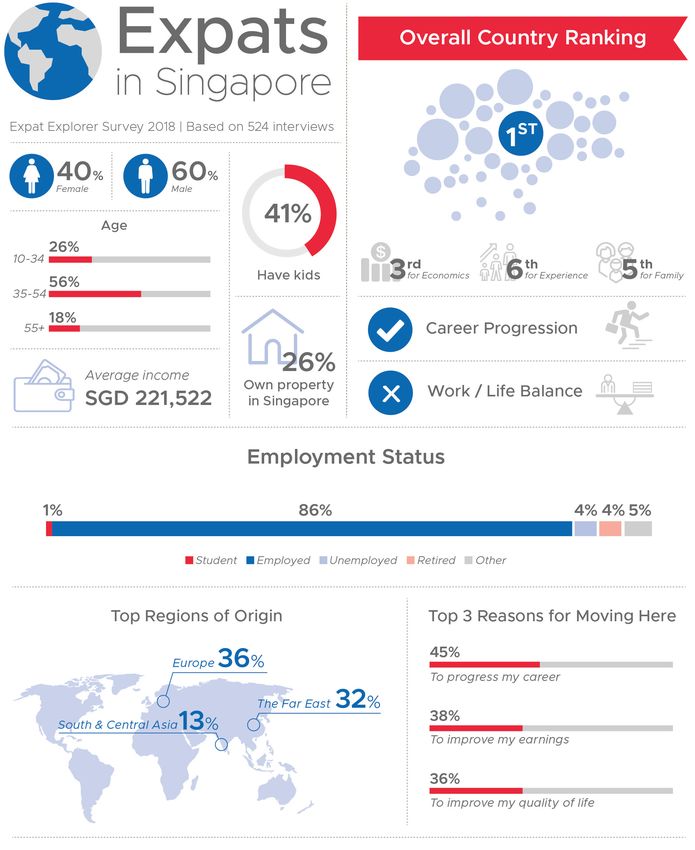
2019 Guide to hiring your dream tech team in Singapore | 04

Introduction

       For any business, getting the right talent is half the battle won. If you believe in the
       importance of your human resource, Singapore is an ideal location for your company.

       First, Singapore has a strong workforce ranked among the world’s best. The country
       topped the 2019 Global Talent Competitiveness Index in Asia-Pacific, ranking second
       globally after Switzerland, and before the United States, which was ranked third.

       In addition, Singapore is an ideal springboard into one of the fastest and most dynamic
       regional economies in the world, Southeast Asia (SEA). Given the region’s growing
       middle class and strong connection to China’s growth engine, SEA is a breeding ground
       of opportunities for businesses. Add Singapore’s top talent into the equation, and
       companies are set for scale and success.

       The first section of this guidebook developed by the Singapore Economic Development
       Board (EDB) provides an overview of the manpower landscape here, including our
       education system and manpower policies. Go straight to our second section if you want
       to read specifically about tech talent.

       About EDB
       A government agency under the Ministry of Trade and Industry, EDB is responsible for
       enhancing Singapore’s position as a global centre for business, innovation, and talent.
       We also work with other government agencies to ensure that your company is supported
       by a positive business environment and a strong workforce in Singapore.

       We look forward to partnering you in your journey and hope you will find this guide helpful.
What You Need
To Know About
Manpower In
Singapore

2019 Guide to hiring your dream tech team in Singapore | 06

Locking Down Your First
Key Hires In Singapore
                               Now that you have a solid business expansion plan and are ready to launch in Singapore,
                               a key stumbling block could be hiring suitable talent. Are the prospective talents tech-
                               ready? Can they code and work well with both machines and humans?

                               Before we get into how you can assemble your dream tech team in Singapore, let us first
                               take a look at the city-state’s manpower scene.¹

                                            •   Size of labour force - 3.7 million
                                            •   Employment rate (age 25 - 64) - 80.3%
                                            •   % of workforce with tertiary education - 56%
                                            •   PMETs as % of workforce - 57%

                               A SNAPSHOT OF OUR EDUCATION ECOSYSTEM
                               The Singapore Government invests significantly in education. In 2018, the budget
                               allocated for education was sustained at S$12.8 billion (US$9.47 billion), the third highest
                               expenditure after defence and infrastructure. Singapore’s host of post-secondary and
                               tertiary education institutes supplies a steady stream of graduates to the local workforce
                               every year. These education institutions also support the workforce’s lifelong learning
                               pursuits through modular and industry-relevant courses.

                               Singapore’s post-secondary and tertiary education institutes include:

                                            • 6 Local universities
                                            • 5 Polytechnics
                                            • 3 Institutes of Technical Education (ITEs)

                               Singapore’s Universities

                               • National University of Singapore (NUS): NUS is a comprehensive and research-
                                 intensive university with 17 faculties and schools, including two medical schools
                                 and a music conservatory. NUS’ offerings include the NUS Overseas Colleges –
                                 where students intern at global startups while studying at partner universities –
                                 and Roots & Wings, a life skills programme that equips students for the challenges
                                 in a fast-paced environment.
                               • Nanyang Technological University (NTU): A research-intensive university, NTU has
                                 colleges in the areas of engineering, science and business, among other disciplines.
                                 NTU also offers premier programmes such as its flagship Renaissance Engineering
                                 Programme where students spend the third year of their course at partner universities
                                 and do a professional attachment overseas.
                               • Singapore Management University (SMU): SMU is a specialised and research-
                                 intensive university, with six schools offering programmes in accountancy, business
                                 management, economics, information systems, law and social sciences. Its pedagogy
                                 features an interactive, collaborative and project-based approach to learning. It also

1 Ministry of Manpower, Labour Force in Singapore Advance Release 2018. Available at: https://www.mom.gov.sg/newsroom/press-releases/2018/1129-labour-
force-in-singapore-advance-release-2018
2019 Guide to hiring your dream tech team in Singapore | 07

  offers the SMU-X curriculum, where students take modules that allow them to work
  on real-world industry problems under the guidance of faculty and industry figures.
• Singapore University of Technology and Design (SUTD): Established in collaboration
  with the Massachusetts Institute of Technology and Zhejiang University, SUTD is a
  specialised and research-intensive university that focuses on design education in
  engineering and architecture.
• Singapore Institute of Technology (SIT): SIT is one of the universities pioneering the
  applied degree pathway, integrating learning, industry and community. It offers its
  own applied degrees, as well as degree programmes in partnership with reputable
  overseas universities. The Integrated Work Study Programme (IWSP) is a feature of
  all of SIT’s own applied degrees and allows students to have early exposure to industry.
• Singapore University of Social Sciences (SUSS): As one of the universities pioneering
  the applied degree pathway, SUSS provides an applied education experience for both
  fresh school leavers and adult learners in the domain of the social sciences, as well
  as in disciplines with a strong impact on human and community development.

Polytechnics

Singapore’s polytechnics offers full-time and part-time programmes leading to diplomas
in disciplines such as business, chemical and bio-sciences, communications, design,
digital media, engineering and manufacturing.

• Nanyang Polytechnic (NYP)                    • Singapore Polytechnic (SP)
• Ngee Ann Polytechnic (NP)                    • Temasek Polytechnic (TP)
• Republic Polytechnic (RP)

Institutes of Technical Education (ITEs)

Offers full-time and part-time courses leading to vocational certificates for a wide range
of industries.

• ITE College Central
• ITE College East
• ITE College West
2019 Guide to hiring your dream tech team in Singapore | 08

                                                                 OUR UNIVERSITIES TOP ASIA’S RANKINGS
                                                                 As a reflection of the quality of our education system, two of our
                                                                 local universities – the National University of Singapore (NUS) and
                                                                 the Nanyang Technological University (NTU) – are consistently
                                                                 ranked among the top 20 universities in Asia Pacific.

                                                                 In 2017, there were 18,537 first degree graduates from our
                                                                 six publicly-funded universities, according to the Singapore
                                                                 Department of Statistics’ Yearbook of Statistics Singapore, 2018².
                                                                 Engineering sciences typically formed the largest cohort of fresh
                                                                 university graduates³.

    QS World University Rankings - 2019: Asia                                                                                            Location

    1.      National University of Singapore                                                                                                Singapore

    2.      The University of Hong Kong                                                                                                    Hong Kong

    3.      Nanyang Technical University, Singapore                                                                                         Singapore

    3.      Tsinghua University                                                                                                                   China

    4.      Peking University                                                                                                                     China

    5.      Fudan University                                                                                                                      China

    6.      The Hong Kong University of Science and Technology                                                                             Hong Kong

    7.      KAIST- Korea Advanced Institute of Science and Technology                                                                    South Korea

    8.      The China University of Hong Kong                                                                                              Hong Kong

    9.      Seoul National University                                                                                                    South Korea

2 Department of Statistics Singapore, Education, language spoken and literacy. Available at: https://www.tablebuilder.singstat.gov.sg/publicfacing/
createDataTable.action?refId=15207
3 Data.gov.sg, Graduates From University First Degree Courses By Type Of Course. Available at: https://data.gov.sg/dataset/graduates-from-university-first-
degree-courses-by-type-of-course
2019 Guide to hiring your dream tech team in Singapore | 09
SALARY OVERVIEW FOR UNIVERSITY GRADUATES
To give you a better idea of the salary expectations of fresh graduates in Singapore, here
is a snapshot of the salaries commanded by university graduates in full-time employment,
in fields ranging from computing to humanities and social sciences.
Course Course Degree Abbreviation Universities Employment Median
Duration Cluster conducting Rate (%) Monthly
the courses Gross
Starting
Salary
(SG$)
4-year Computing Bachelor of Computing B.Comp.(H) NUS 90 4,100
(Honours)
Bachelor of Science B.Sc.(ISM.) SMU 91.3 4,000
(Information Systems
Management)
Bachelor of Engineering B.Eng.(Civil) NUS, NTU 94.2 3,400
(Civil Engineering)
Bachelor of Engineering B.Eng.(Comp.Sc.) NTU 86.7 3,850
(Computer Science)
Bachelor of Engineering B.Eng.(Comp. Eng.) NUS, NTU 85.7 3,744
(Computer Engineering)
Bachelor of Engineering B.Eng.(EEE) NUS, NTU 85.4 3,600
(Electrical Engineering);
Bachelor of Engineering
(Electrical & Electronic E
Bachelor of Engineering B.Eng.(Enviro) NUS, NTU 68.8 3,375
(Environmental
Engineering)
Bachelor of Engineering B.Eng.(ISE) NUS 89.9 3,875
(Industrial And Systems
Engineering)
Bachelor of Engineering B.Eng.(IEM) NTU 78.7 3,700
(Information Engineering
and Media)
Bachelor of Engineering B.Eng.(Matl. Eng.) NTU 75.6 3,375
(Materials Engineering)
Bachelor of Engineering B.Eng. NUS 86 3,388
(Materials Science & (Matl.SC. & Eng.)
Engineering)2019 Guide to hiring your dream tech team in Singapore | 10
Bachelor of Engineering B.Eng.(Mech.) NUS, NTU 77.4 3,450
(Mechanical Engineering)
Humanities, Bachelor of Arts (Chinese) B.A.Chinese (H) NTU 67.7 3,300
Social (Honours)
Sciences
and Others Bachelor of Arts B.A.Econs (H) NTU 75.5 3,240
(Economics) (Honours)
Bachelor of Arts (English) B.A.English (H) NTU 50.8 3,000
(Honours)
Bachelor of Arts (Honours) B.A.(H) NUS 66.7 3,360
Bachelor of Arts (History) B.A.Hist (H) NTU 68.4 3,200
(Honours)
Bachelor of Arts B.A.LMS. (H) NTU 60 3,100
(Linguistics and
Multilingual Studies)
(Honours)
Bachelor of Arts B.A.Psych (H) NTU 59.2 3,200
(Psychology) (Honours)
Bachelor of Arts (Public B.A.PPGA (H) NTU 66.7 3,395
Policy and Global Affairs)
(Honours)
Bachelor of Arts B.A.Soci (H) NTU 62.1 3,228
(Sociology) (Honours)
Bachelor of B.Comm.Studies NTU 62.2 3,000
Communication (H)
Studies (Honours)
Bachelor of Fine Arts B.F.A. NTU 54 2,800
(Arts, Design & Media)
Bachelor of Science B.Sc.(Proj & FM) NUS 81.7 3,000
(Project & Facilities
Management)
Bachelor of Science B.Sc.(RE) NTU 88.7 3,000
(Real Estate)
Bachelor of Science B.Sc.(Econ.) SMU 82.6 3,700
(Economics)
Bachelor of Social B.Soc.Sci. (H) NUS, SMU 75.2 3,300
Sciences (Honours); /B.Soc.Sc.
Bachelor of Social
Sciences
Bachelor of Sports B.Sports.Sci. NTU 48.6 3,450
Science and Management & Mgmnt
Science Bachelor of Science B.Sc.Phys. NTU 61.8 3,300
(Physics / Applied
Physics)2019 Guide to hiring your dream tech team in Singapore | 11
Bachelor of Science B.Sc.BS (H) NTU 62.6 3,200
(Biological Sciences)
(Honours)
Bachelor of Science B.Sc.BA NUS 97.6 4,000
(Business Analytics)
Bachelor of Science B.Sc.Chem NTU 51.1 3,100
(Chemistry & Biological /Bio Chem (H)
Chemistry) (Honours)
Bachelor of Science B.Sc.(H) NUS 69.3 3,300
(Honours)
Bachelor of Science B.Sc.Math Sci NTU 79.5 3,500
(Mathematical Sciences)
Bachelor of Science B.Sc.(Maec) NTU 83.1 3,400
(Mathematics &
Economics)
Bachelor of Science B.Sc.(Nursing) (H) NUS 89.8 3,500
(Nursing) (Honours)
Others Bachelor of Arts B.A.(Ed.) NTU 100 3,600
(Education) / Bachelor
of Arts with Diploma
in Education
Bachelor of Dental Surgery B.D.S. NUS 100 4,050
Bachelor of Science B.Sc.(Ed.) NTU 100 3,701
(Education) / Bachelor of
Science with Diploma in
Education
3-year Business Bachelor of Accountancy B.Acc (3 Yr) NTU 94.5 3,000
Bachelor of Business B.B.A.(Acc.) (3 Yr) NUS 94.4 3,025
Administration
(Accountancy)
Bachelor of Business B.B.A; B.Bus. (3 Yr) NUS, NTU 81.8 3,380
Administration; Bachelor
of Business
Humanities, Bachelor of Arts B.A. (3 Yr) NUS 61.9 3,000
Social
Sciences
and Others
Science Bachelor of Science B.Sc. (3 Yr) NUS 54.5 3,082
Bachelor of Science B.Sc.(Nursing) NUS 97.4 3,400
(Nursing) (3 Yr)
Source: MOM2019 Guide to hiring your dream tech team in Singapore | 12 TRAINING YOUR EMPLOYEES Singapore offers broad training initiatives that help workers pick up new skills to better adapt to future needs. Below are some initiatives that companies can tap on to meet their employees’ training needs. SkillsFuture SkillsFuture is a national movement to provide Singaporeans with opportunities to develop their potential to the fullest throughout their lives, regardless of their starting points. To find out more on how SkillsFuture can benefit your company, click here. Adapt and Grow The Adapt and Grow initiative was launched by Workforce Singapore (WSG) in 2016 to help the workforce adapt to changes in the manpower landscape and prepare them to transit into new job roles in growth sectors. Under this initiative, Singaporeans can tap on specific programmes in their employment journey to obtain the necessary knowledge, skills and competencies to take on new jobs in growth sectors. To find out how companies can tap on Adapt & Grow initiatives, click here.
2019 Guide to hiring your dream tech team in Singapore | 13

Manpower Policies
Employers Must Know
                Now that you are ready to build your team, here’s a broad overview of the
                legal considerations.

                EMPLOYMENT ACT
                The Employment Act is Singapore’s main labour law. It provides for the basic terms and
                working conditions for all types of employees, with some exceptions. Please refer to this
                link for more information on the Employment Act. More information on policies on leave,
                public holidays, hours of work, overtime and part-time employment can be found here.

                WORK VISAS IN SINGAPORE
                All foreigners who intend to work in Singapore must have a valid pass (commonly known
                as a work visa) before they start work. Employers should recognise which pass is suitable,
                if their employees are eligible, and how to apply. For more information, please read here.

  Passes                    Purpose

                            For semi-skilled foreign workers in the construction, manufacturing,
  Work Permit
                            marine, process or services sector

                            For mid-level skilled staff with a minimum salary value of at least
  S Pass
                            $$2,300 a month

  Employment                For managerial, executive or specialised workers with a minimum
  Pass                      salary value of at least S$3,600 a month

                            For eligible foreign entrepreneurs wanting to start and operate a new
  EntrePass
                            business in Singapore

                What is the Dependency Ratio Ceiling?

                The Dependency Ratio Ceiling (DRC) refers to the maximum proportion of foreigners
                on work permits and S passes that a company can hire. These ratios differ from sector
                to sector, and do not apply to employment pass (EP) holders whose numbers are not
                capped.

                For example, the DRC for the marine shipyard sector’s work permit holders is 77.8 per
                cent. This means up to 77.8 per cent of a marine company’s total workforce may consist
                of S Pass and work permit holders. To calculate the DRC, check out this handy Foreign
                Worker Quota Calculator to find out how the ratios affect your hiring decisions.
2019 Guide to hiring your dream tech team in Singapore | 14
While the DRC does not apply to EP holders, there are some conditions that
companies must adhere to before hiring these skilled foreign employees. For
instance, they must advertise the job vacancies on the national Jobs Bank
administered by Workforce Singapore (WSG) before submitting EP applications.
Please refer to this link for more information on the Fair Consideration Framework.
For more information, please read here.
CENTRAL PROVIDENT FUND
FOR SINGAPOREANS AND PRS
The Central Provident Fund (CPF) is a mandatory social security savings scheme funded
by contributions from employers and employees. Employers are required to pay both
the employer and employee’s share of CPF contributions every month, and are entitled
to recover the employee’s share from the employee’s wages. Find out more about CPF,
who is entitled to CPF contributions and what employers need to do here.2019 Guide to hiring your dream tech team in Singapore | 15 TRIPARTISM Tripartism in Singapore refers to the collaboration among unions, employers and the Government. The tripartite partners are the Ministry of Manpower (MOM), the National Trades Union Congress (NTUC) and Singapore National Employers Federation (SNEF). It is a key competitive advantage for Singapore and has helped boost Singapore’s economic competitiveness, promoted harmonious labour-management relations and contributed to Singapore’s overall progress. The tripartite committees and initiatives provide guidelines and recommendations on issues such as wages, fair employment and employing older workers. Please refer to this link for more information about Tripartism in Singapore. The Tripartite Standards are a new tripartite initiative which helps organisations with good practices distinguish themselves. They complement our laws, Tripartite Guidelines, and Advisories to increase the adoption of fair and progressive workplaces practices in Singapore. More information on Tripartite Standards can be found here. Fair Consideration Framework The Fair Consideration Framework (FCF) details fair hiring requirements for companies in Singapore, including advertising in the national Jobs Bank and scrutinising companies with suspect hiring practices. It is part of the Government’s overall effort to strengthen the Singaporean core in the workforce. It sets out clear expectations for companies to consider Singaporeans fairly for job opportunities. The FCF applies to all companies in Singapore and all companies must comply with the Tripartite Guidelines on Fair Employment Practices and have fair employment practices that are open, merit-based and non-discriminatory. Learn more on FCF here.
Discovering
Tech Talent
In Singapore
2019 Guide to hiring your dream tech team in Singapore | 17

Where The
Tech Talent Are
       From a port city, the island-state has transformed into a prosperous technology hub, or
       as former Hewlett Packard Enterprise CEO Meg Whitman coined it - a “miniature Silicon
       Valley” in the heart of Southeast Asia.

       Today, 80 of the top 100 tech firms in the world, including the likes of Google, Facebook
       and Alibaba, have a presence in Singapore. The city-state is also home to unicorns and
       fast-growing startups such as classifieds marketplace Carousell and Indonesian ride-
       sharing company Go-Jek.

       In Singapore, Facebook intends to open their first S$1.38 billion (US$1 billion) Asian data
       centre by 2020, and Google is on to their third data centre for their next billion users.
       Singapore-based unicorn Grab, a ride-hailing app, food delivery service and cashless
       payment solution provider, has operations across eight countries and 209 cities in
       Southeast Asia alone.

       All these developments translate to rising demand for tech talent in Singapore. The
       country is expected to employ more than 210,000 Infocomm Media (ICM) professionals
       by 2020.

           Singapore remains an attractive location for companies looking to establish
           local and regional hubs. According to a 2019 salary survey by professional
           recruitment consultancy Robert Walters, Singapore saw active recruitment for
           tech professionals across all sectors. Government investment in technology and
           the local startup ecosystem continued to fuel the growth of startups which, in
           turn, encouraged established firms and organisations to accelerate their digital
           transformation programmes. Companies are exploring emerging technologies
           such as artificial intelligence and machine learning, and are looking for data
           scientists and architects to manage their data.

           Source: Robert Walters
2019 Guide to hiring your dream tech team in Singapore | 18 WHY GLOBAL TALENTS COME HERE Job opportunities The demand for ICM professionals in Singapore is growing rapidly. A 2019 report by Glassdoor stated that there were more than 5,000 tech-related positions available in Singapore as of November 2018. Some of the biggest Silicon Valley giants including Amazon, Apple and Dell are hiring here. Beyond sales, marketing and business development functions, tech companies are also increasingly looking for software developers, data analysts and systems engineers. Top Jobs Open In Singapore’s Tech Sector Source: Glassdoor Economic Research . Based on unique online job postings as of November 10, 2018. 1. Software engineer 2. Project Manager 3. Solutions Architect 4. Sales Manager 5. Account Executive 6. Marketing Manager 7. Systems Engineer 8. Data Scientist 9. Business Development Manager 10. Programme Manager An ecosystem of top tech firms According to a 2018 report by real estate services and investment management company Colliers International, Singapore is the second most popular destination for technology firms wanting to establish and expand their operations in Asia. The Colliers International report attributed this largely to the Republic’s strong talent pool, low personal tax rate, safety and living quality, and strategic position as a well-connected financial and communications hub for Southeast Asia and Asia-Pacific operations. Separately, a 2018 study by real estate advisory firm Jones Lang LaSalle also ranked Singapore as the top foreign investment destination for Chinese tech giants Alibaba, Baidu and Tencent.
2019 Guide to hiring your dream tech team in Singapore | 19

               Singapore is the best for expats

               For the fourth year running, Singapore topped the Expat Explorer Survey in 2018
               to emerge as the best place in the world for expats to move to.

               The global survey conducted by HSBC surveyed 22,318 expats, including 524
               residing in Singapore, on their experiences, work, and family life.

Source: HSBC
2019 Guide to hiring your dream tech team in Singapore | 20
HOW TO REACH TECH TALENTS IN SINGAPORE
The rise of tech means more job channels dedicated to tech. Here are some
tech-dedicated recruitment channels your company can tap to reach these talent.
Global agencies • Morgan McKinley: The professional services recruitment consultancy
with a tech focus connects specialist talent with employers across industries and
disciplines. Tech is one of the firm’s focus areas in Singapore.
• Salt: Salt is a global digital recruitment agency specialising in
Creative, Marketing, Sales and Technology sectors.
International • LinkedIn: The world’s largest professional network with more than 562
job portals million users in more than 200 countries and territories worldwide.
• Glassdoor: The global job site has ratings and reviews of over 600,000
companies. It also provides personalised salary estimates based on each
jobseeker’s work experience and today’s job market.
• Indeed.com: Indeed has over 200 million unique visitors every month
and provides free access to search for jobs, post resumes, and research
companies.
Job portals with • JobStreet: Founded in Malaysia in 1997, it is one of Asia’s leading
an Asia focus employment marketplace and the top job portal in Singapore. The
platform hosts over 57,000 job openings.
• Tech in Asia Jobs: The job portal of Asia’s largest English language
technology-focused news site. The new and effective platform has
over 4,000 job listings from Asia’s tech companies.
• Startup Jobs Asia: With a strong focus on start-ups, the platform aims to
match companies with job seekers who will thrive in a growing business
environment. It focuses on jobs in Singapore and Asia.
Boutique agencies/ • Wantedly: The platform is aimed at allowing people and companies to
startups you might meet based on passions and values, rather than salary and benefits.
want to know • Glints Jobs: A platform targeted especially at young people in Asia, the
firm focuses on matching young adults to internship and permanent
employment opportunities.
• Kaishi: Initially set up to meet the recruitment demands of the early
stage investment and tech community in Singapore, Kaishi now has
clients across China, Europe and North America.2019 Guide to hiring your dream tech team in Singapore | 21
TECH TALENT AND THEIR SALARIES
Starting salaries of tech-ready graduates
For your convenience, we have put together the starting salaries of all tertiary graduates
relevant to tech.
Besides universities, polytechnics also provide continuing education and post-
employment professional development programmes and services. Today, polytechnic
graduates are valued as practice-oriented and knowledgeable professionals, much
sought after by various industries, including ICM.
Course Course Degree Abbreviation Universities Employment Median
Duration Cluster conducting Rate (%) Monthly
the courses Gross
Starting
Salary
(SG$)
4-year Computing Bachelor of Computing B.Comp.(H) NUS 90 4,100
University (Honours)
graduates
Bachelor of Science B.Sc.(ISM.) SMU 91.3 4,000
(Information Systems
Management)
Engineering Bachelor of Engineering B.Eng.(Comp.Sc.) NTU 86.7 3,850
(Computer Science)2019 Guide to hiring your dream tech team in Singapore | 22
Bachelor of Engineering B.Eng.(Comp. Eng.) NUS, NTU 85.7 3,744
(Computer Engineering)
Bachelor of Engineering B.Eng.(ISE) NUS 89.9 3,875
(Industrial And Systems
Engineering)
Bachelor of Engineering B.Eng.(IEM) NTU 78.7 3,700
(Information Engineering
and Media)
Fresh Built Business Process & Ind. Ops. Mgmnt RP, TP 54.9 2,100
Polytechnic Environment, Systems Engineering;
graduates Engineering Industrial and Operations
& Maritime Management
Computer Engineering; Comp. Elect. NYP, NP, TP 53.6 2,200
Electronics; Electronic &
Computer Engineering;
Electronics; Computer &
Commun
Digital & Precision Dig. & Precision NYP 85.1 2,200
Engineering Eng.
Multimedia & InfoComm Media. Tech. NYP 50.7 2,200
Technology; Telematics &
Media Technology
Information Business Applications; Bus. IT. RP, SP 41.7 2,155
& Digital Business Information
Technologies Systems; Business
Information Technology
Information Technology Info. Tech. NYP, NP, RP, SP, 54.5 2,200
TP
Post- Information Information Technology Info. Tech. NYP, NP, RP, 63.4 2,450
national & Digital SP, TP
service Technologies
Polytechnic
graduates
Note: In Singapore, all male citizens and second-generation permanent residents must undergo a period of
compulsory service, commonly known as National Service (NS), in the uniformed services. Male citizens and
permanent residents typically serve this before entering the workforce.
Beyond fresh graduates, these salaries may indicate the industry standard for tech-focused roles.
Source: MOM2019 Guide to hiring your dream tech team in Singapore | 23
How much does it cost to build a tech team in Singapore?
To help you estimate the hiring costs, we have put together some salary information
from recruitment firms the likes of Robert Walters and Morgan McKinley.
The first table looks at the salary of tech and transformation roles within commerce,
based on a 2019 salary survey of Greater China & Southeast Asia by Robert Walters.
The second and third tables look at per annum salaries for IT product and engineering
roles within technology, telecommunication, fintech, banking and financial services,
based on Morgan McKinley’s 2019 Singapore Salary Guide.
Tech & Transformation Roles, Commerce
Source: Robert Walters
Role Permanent Contract
Salary per annum Salary per month
S($) S($)
2018 2019 2018 2019
Management
Chief Information Director 300-600k 300-600k 25-40k 25-40k
IT Director 150-300k 150-300k 14-25k 14-25k
Projects and Change
Program Manager 180-280k 180-280k 15-25k 15-25k
Infrastructure Project Manager 80-200k 80-200k 8-18k 8-18k
Applications Project Manager 80-200k 80-200k 8-18k 8-18k
Service Delivery Manager 100-170k 100-170k 10-16k 10-16k
Business Analyst 65-150k 65-150k 6-15k 6-15k
Infrastructure
Head of Infrastructure 150-250k 150-250k 15-20k 15-20k
IT Manager 96-180k 96-180k 9-15k 9-15k
Technical Lead 90-170k 90-170k 10-15k 10-15k
Database Administrator 70-220k 70-220k 7-16k 7-16k
Solutions Architect 120-220k 120-220k 10-15k 10-15k
Cloud Engineer 70-150k 70-150k 8-12k 8-12k
Network/Systems Manager 90-170k 90-170k 9-13k 9-13k
Network/Systems Engineer 65-150k 70-160k 6-11k 6-11k
Systems Admin 65-150k 70-160k 6-11k 6-11k
Help Desk 65-150k 65-150k 6-11k 6-11k
Applications and Development
Chief Technology Officer 180-450k 180-450k 15-38k 15-38k
VP Engineering 180-220k 180-220k 15-18k 15-18k
Solutions Architect 144-250k 144-250k 12-25k 12-25k
Software Engineer 80-120k 100-140k 5-12k 7-15k
Development Manager 100-200k 100-200k 10-17k 10-17k
Developer 70-150k 80-160k 5-12k 7-15k
Application Support Analyst 60-140k 70-150k 5-12k 5.5-12.5k
Systems Analyst/Tester 70-130k 80-140k 5.5-11k 6.5-12k2019 Guide to hiring your dream tech team in Singapore | 24 IT Product & Engineering Salaries in Technology, Telecommunication and Fintech (Per Annum) Source: Morgan McKinley IT Product & Specialist Senior Manager/ VP/ Engineering Salaries Specialist Senior Director in Technology, Manager & Above Telecomunication and Fintech Software Engineering, 60k - 78k 78k - 126k 126k - 168k 160k+ Front End Software Engineering, 80k - 95k 95k - 114k 114k - 160k 160k+ Back End Software Engineering, 80k - 95k 95k - 114k 114k - 160k 160k+ Full Stack Mobile Engineering 60k - 75k 80k - 100k 100k - 140k 150k+ (Android/IOS) Quality Assurance/Testing 60k - 80k 80k - 120k 120k - 168k 168k+ UI/UX 50k - 80k 90k - 140k 120k - 180k 180k+ Product Management 60k - 90k 90k - 140k 120k - 200k 200k+ Business Intelligence/ 40k - 90k 90k - 170k 140k - 240k 240k+ Data Engineering Data Science/Artificial 40k - 90k 90k - 170k 140k - 240k 240k+ Intelligence
2019 Guide to hiring your dream tech team in Singapore | 25

IT Product & Engineering Salaries in Banking
& Financial Services (Per Annum)
Source: Morgan McKinley

  IT Product &                Analyst/    AVP                  VP                   Director/
  Engineering Salaries        Senior                                                Managing
  in Banking &                Analyst                                               Director
  Financial Services

  Software Engineering,       40k - 85k   85k - 150k           140k - 240k          240k+
  Front End

  Software Engineering,       40k - 90k   90k - 170k           140k - 240k          240k+
  Back End

  Software Engineering,       40k - 90k   90k - 170k           140k - 240k          240k+
  Full Stack

  Quality Assurance/Testing   40k - 90k   90k - 170k           140k - 240k          240k+

  UI/UX                       40k - 85k   85k - 150k           140k - 240k          240k+

  Business Intelligence/      40k - 90k   90k - 170k           140k - 240k          240k+
  Data Engineering

  Data Science/Artificial     40k - 90k   90k - 170k           140k - 240k          240k+
  Intelligence
2019 Guide to hiring your dream tech team in Singapore | 26

Talent Development
For Tech Needs

      In Singapore, the private and public sectors collaborate actively to create training
      opportunities and build a strong pipeline of tech talent for the industry. Read on for some
      examples of these partnerships!

      TOP TECH COMPANIES TRAIN TALENT IN SINGAPORE

      Google

      In 2014, Google launched a Squared Data and Analytics Programme with IMDA to train
      young professionals keen to enter the data and analytics sector. Google is now scaling
      the programme further by partnering with the Singapore Management University to
      increase the talent pool of data analysts.

      NVIDIA

      EDB-NVIDIA Future Talents programme will provide 30 postgraduate scholarships
      in AI over the next five years (until 2022) where students will receive mentorship by
      American tech company NVIDIA and work with companies on industry-specific problem
      statements. Temasek Polytechnic and NVIDIA have set up a technology centre to give
      students hands-on experience in industry AI projects.

      RSA x IBM Security Operations Centre

      Temasek Polytechnic has collaborated with cybersecurity firm RSA and tech giant IBM
      separately to provide knowledge and skills training to staff and students to equip them
      with the most advanced IT security and analysis capabilities.

      Accenture

      Multinational consulting firm Accenture opened up a one-year Emerging Technologist
      Development Programme (ETDP) to polytechnic graduates to train up software engineers.
2019 Guide to hiring your dream tech team in Singapore | 27
IMMERSION PROGRAMMES PROVIDED BY COMPANIES
ThoughtWorks
The new ThoughtWorks Immersion Programme supported by the EDB is a talent
development programme that provides intensive, hands-on training in agile software
development. Targeted at university graduates, entry-level software developers, and
mid-career switchers, this initiative is designed to give individuals who have a passion
for technology the opportunity to build successful, long-term careers in tech and software
development, even if they do not have the extensive experience and/or a background
in computer science. ThoughtWorks also hopes to encourage more women to look at
building careers in technology through this immersion programme.
Mentorship and coaching programme with placement:
• Agile Software Development and Best Engineering Practices
General Assembly
General Assembly helps people master new skills in design, marketing, technology, and
data — online or in campuses around the world. Over 45 per cent of General Assembly’s
part-time students receive tuition reimbursement from their employers.
Immersive training courses with placement:
• Web Development Immersive (WDI)
• User Experience Design Immersive (UXDI)
• Digital Marketing Immersive (DMI)
• Data Science Immersive (DSI)
JOINT GOVERNMENT INITATIVE TO
DEVELOP A SKILLED ICM WORKFORCE
TechSkills Accelerator (TeSA) is an initiative driven by Singapore’s Infocomm Media
Development Authority in partnership with other government agencies, industry partners
and hiring employers.
Under this initiative, training programmes are available to help fresh graduates or mid-
level professionals in the ICM or STEM disciplines deepen tech skills. For a list of these
training programmes, click here.
How does this benefit employers?
If you are seeking fresh and/or mid-career ICM professionals for your company, or looking
to develop existing employees with the relevant ICM skills, consider applying for this
government programme. You will:
• Receive funding support to implement the respective training programmes.
• Be able to employ ICM professionals who are undergoing or have undergone
training to meet the needs of your company.
• Be able to upskill and deepen the skills of existing employees who are
mid-level ICM professionals.Looking Into The Future
2019 Guide to hiring your dream tech team in Singapore | 29

Hiring Trends &
Challenges In Asia
                                Now that you have a better understanding of hiring in Singapore, it is useful to take
                                stock of hiring challenges and trends in Asia, and find out how Singapore is dealing
                                with these issues.

                                First of all, Asia is ageing. The proportion of people aged 60 and above is expected to
                                grow rapidly in the region. In Singapore, the number of seniors aged 65 and above will
                                double to more than 900,000 by 2030.

                                That said, better medical care and higher educational qualifications are giving older
                                Singaporeans a second wind, and opportunities to embark on new careers in their silver
                                years. Statistics from the Ministry of Manpower showed that the percentage of workers
                                aged 65 and above who are working or looking for a job rose to 26.8 per cent in 2017,
                                from 14.3 per cent in 2006. The potential for older workers to keep contributing is huge,
                                but it will require adjustments, not just from the government but also employers, to make
                                workplaces and job scopes more age-friendly.5

                                Gender diversity is another topic rapidly gaining prominence in Asia.

                                McKinsey’s 2018 report The Power of Parity: Advancing Women’s Equality in Southeast
                                Asia shows the Asia Pacific average gender parity score in work is 0.44, compared to a
                                global best of 0.73. Parity is set at a score of 1.

                                In a contribution published by Singapore’s Channel NewsAsia in Jan 2019, Dell’s Head
                                of Diversity & Inclusion in the Asia Pacific, China and Japan also noted that female
                                representation decreases up the corporate ladder specially in the tech industry.

                                In Singapore, the percentage of women in tech has hovered around 30 per cent since
                                2000, according to the Info-communications Media Development Authority. But in recent
                                years, more events, conferences and advocacy groups aimed at reducing the gender
                                imbalance in the tech sector has sprung up globally and locally. They include conference
                                Women in Tech, and advocacy groups Girls in Tech and Lean In. More companies are also
                                putting in place policies that help women balance their work and family commitments.

                                Here are some women in the tech sector making waves in Singapore.

      Jenny Lee, Managing Partner, GGV Capital

      The Singaporean based in Shanghai has gained the reputation of being an investor with a Midas touch,
      where everything she touches seemingly turns to gold. She has led GGV’s investments in hiSoft,
      21Vianet, SinoSun and YY – all of which have successfully listed on the stock exchange. When Lee fully
      exited social media firm YY last year, the deal had brought in a 15-times return. She was also involved in
      GGV’s deal with Xiaomi, which is one of the top five smartphone manufacturers in the world today.

5 National Population and Talent Division and the Ministry of Communications and Information.
2019 Guide to hiring your dream tech team in Singapore | 30 Ankiti Bose, Co-founder, Zilingo Singapore-based Zilingo is Southeast Asia’s largest fashion and lifestyle marketplace, providing buyers with access to millions of products, and free-of-cost access to analytics, speedy logistics and secure payments to merchants. The Indian entrepreneur, together with her business partner Dhruv Kapoor, raised US$226 million (S$307.1 million) Series D funding in 2019. Since they founded Zilingo in 2015, they have grown its revenue by 10 times. The number of merchants on its platform has swelled from 1,500 to 10,000. Gillian Tee, Co-founder, Homage Homage is an in-home caregiving solution founded in 2016 that combines care professionals with smart technology to manage and provide on-demand home caregiving to seniors, allowing them to age at home with grace, control and dignity. The Singaporean was intrigued by the way the United States is using technology to improve senior care, and decided to explore a similar model in Singapore. She has received grants from the Ministry of Health and DBS Foundation - a corporate foundation that supports social enterprises - and in 2017 raised S$1.2million (US$880,000) in funding. Alexis Horowitz-Burdick, Founder, Luxola The American who lives in Singapore founded e-commerce beauty site Luxola in 2011, which went from running out of a Club Street apartment with four staff and stocking only 18 brands to a 125-strong company offering more than 300 brands in 11 countries including Australia, Hong Kong and India. In 2015, French luxury goods conglomerate Moet Hennessy Louis Vuitton SE (LVMH) acquired the Singapore-based business, a deal which industry insiders speculate to be in the tens of millions. She is today the head of LEGO Ventures at LEGO Group.
Conclusion
2019 Guide to hiring your dream tech team in Singapore | 32

Reach Out To EDB’s Partners

       We hope you have found our guide useful.

       Through EDB’s role in facilitating local and regional economic development, we have
       built up a wealth of business insights and a comprehensive network of contacts that
       new companies setting up in Singapore can leverage.

       To read the latest trends and insights about the Asian business landscape, sign up here.

       To connect with EDB’s curated network of partners through our online service
       Connections Concierge, click here.
Annex: Other Useful Resources
2019 Guide to hiring your dream tech team in Singapore | 34

GOVERMENT-SUPPORTED PROGRAMMES THAT CAN
BENEFIT EMPLOYERS INCORPORATED IN SINGAPORE

 Scheme under       Purpose                                         Benefits to company
 SkillsFuture

 Earn and Learn     ELP is a work-learn programme that              1. Be able to groom and retain
 Programme (ELP)    gives fresh graduates from polytechnics            suitable talent with the relevant
                    and the Institute of Technical Education           skills and aptitude to meet the
                    (ITE) a head start in careers related to           needs of the company.
                    their discipline of study.
                                                                    2. Receive a grant of up to S$15,000
                    Participating employers can recruit local          per individual placed in the ELP
                    fresh talent, and prepare them to take up          to defray the costs of developing
                    suitable job roles.                                and providing structured on-job-
                                                                       training and to encourage them
                                                                       to set out career progression
                                                                       pathways.

 Schemes under     Purpose                                         Benefits to company
 Adapt and Grow

 Career Support    CSP is a salary support programme to            Receive salary support of up to
 Programme (CSP)   encourage employers to hire eligible            S$42,000 per employee, for up to
                   Singapore Citizen Professionals, Managers,      18 months.
                   Executives and Technicians (PMETs).

 Career Trial      The Career Trial allows employers to            1. Receive 30% of monthly salary
                   assess a jobseeker’s fit via a cost-free           support for up to 6 months,
                   short-term work stint before offering              capped at S$5,400 per hire, for
                   employment.                                        employers who hire unemployed
                                                                      Singaporean Citizens who have
                                                                      been actively looking for jobs for
                                                                      6 months or more.
                                                                   2. Get training allowance for
                                                                      jobseekers from S$7.50 - S$15/hr,
                                                                      up to 3 months. Eligible Singapore
                                                                      Citizen jobseekers will qualify
                                                                      for retention incentives if they
                                                                      stay in the same job for at least 3
                                                                      consecutive months.
2019 Guide to hiring your dream tech team in Singapore | 35
Professional PCPs are career conversion programmes 1. Facilitate recruitment of mid-career
Conversion targeted at Professionals, Managers, switchers to meet employers’
Programme (PCP) Executives and Technicians (PMETs), manpower needs
including mid-career switchers, to 2. Leverage structured industry-
undergo skills conversion and move into recognised training
new occupations or sectors that have 3. Minimise redundancies and reskill
good prospects and opportunities for experienced employees to take on
progression. It helps companies to attract new job roles
and re-skill local PMETs in growth and 4. Tap on Government funding
demand areas. through course fee grant and salary
support / training allowance
a. Support of up to 90 per cent
of monthly salary capped at
S$6,000/month
b. Support of up to 90 per cent
of course fee funding.
For more information on meeting your hiring and training needs, refer to this link.2019 Guide to hiring your dream tech team in Singapore | 36
MORE ABOUT WORK PASSES
For employees
Schemes Purpose Details Links
Work Permit For semi-skilled Please refer to • Guide on calculating
foreign workers in this link for more the quota balance
the construction, information on Work • Foreign Worker Quota
manufacturing, marine, Permits. Calculator
process or services • Requirements for
sector. Manufacturing Sector
• Requirements for
Services Sector
S Pass For mid-level skilled Please refer to • Guide on calculating
staff this link for more the quota balance
information on S • Foreign Worker Quota
Pass. Calculator
• Self Assessment Tool
Employment Pass For managerial, Please refer to • Self Assessment Tool
executive or specialised this link for more
workers information on
Employment Passes.
For entrepreneurs
Schemes Purpose Details
EntrePass For eligible foreign entrepreneurs wanting Please refer to this link for more
to start and operate a new business in information on EntrePass.
Singapore2019 Guide to hiring your dream tech team in Singapore | 37
For trainees
Schemes Purpose Details
Training For foreign students/professionals Please refer to this link for
Employment Pass undergoing training in Singapore more information on Training
Employment Passes.
Training Work For semi-skilled foreign trainees or Please refer to this link for more
Permit students undergoing technical training information on Training Work
Permits.
Work Holiday Pass For students and graduates aged 18-25 to Please refer to this link for more
work and holiday in Singapore information on Work Holiday
Passes.
ACKNOWLEDGEMENTS
We would also like to thank the following agencies for their valuable inputs to this guide:
Info-communications Media Development Authority of Singapore (IMDA)
Ministry of Education (MOE)
Ministry of Manpower (MOM)
Singapore Department of Statistics (DOS)
SkillsFuture Singapore (SSG)
Workforce Singapore (WSG)CONTACT US Singapore Economic Development Board 250 North Bridge Road #28-00 Raffles City Tower Singapore 179101 You may submit questions or comments via this link, or sign up here to receive the latest updates on the Asian business landscape.
You can also read


