History Topic of the Month - Empress Matilda: England's forgotten Queen - Pearson qualifications
←
→
Page content transcription
If your browser does not render page correctly, please read the page content below
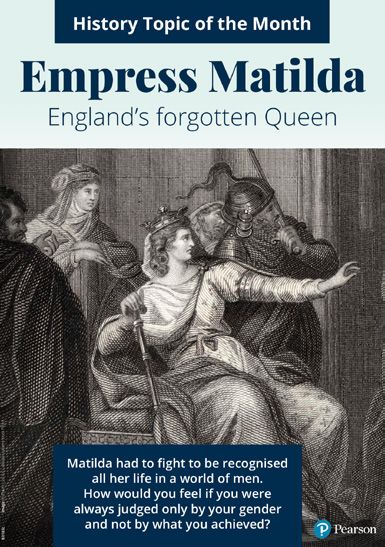
History Topic of the Month

Empress Matilda:
England’s forgotten Queen
If you ask people who the first female ruler of England was,
not many would say “Empress Matilda”. But in the twelfth
century, Henry I (son of William the Conqueror) named his
daughter, Matilda, his heir. It was the first time a woman had
ever been made the heir to the throne of England. It was also
the last time for nearly 400 years.
Perhaps this was because after Henry I’s death, the country
collapsed into a civil war that lasted nearly twenty years.
The war was fought between Matilda and Henry I’s nephew,
Stephen, who also claimed the throne. It was such a time of
chaos that historians later called it “The Anarchy”.
Matilda was a determined, intelligent and proud woman. If
she was a man, she would probably have been called one of               Contributer: © The Picture Art Collection /
the greatest princes of the age. Because she was a woman,               Alamy Stock Photo

some people didn’t trust her, and thought her strength was
                                                                        A portrait of the Empress Matilda
unnatural. She was forced to fight for everything she had.
                                                                        from a 15th century manuscript

                                           Matilda’s early life: Becoming Empress

                                           Matilda was the first child born of Henry I’s
                                           marriage (Henry I also had dozens of children
                                           outside of marriage). When Matilda was 12
                                           years old in 1114 she was married to Henry V of
                                           Germany. Despite her young age, she governed
                                           Germany in her husband’s absence. When Henry
                                           V was made the Holy Roman Emperor, Matilda
                                           claimed the title of Empress. Henry V died in 1125.
                                           The couple had no children, so Matilda returned
                                           to Normandy (part of her father’s lands).
  Contributer: © World History Archive /
  Alamy Stock Photo

                                              Note: There were not very many first names
  Henry I was the son of
  William the Conqueror.                      in medieval England! This story contains two
  He succeeded his brother                    Matildas, three Henrys and then most of the
  William II but had very few                 lords were called either Robert, Thomas,
  legitimate children.                        Geoffrey or William!

                                                    1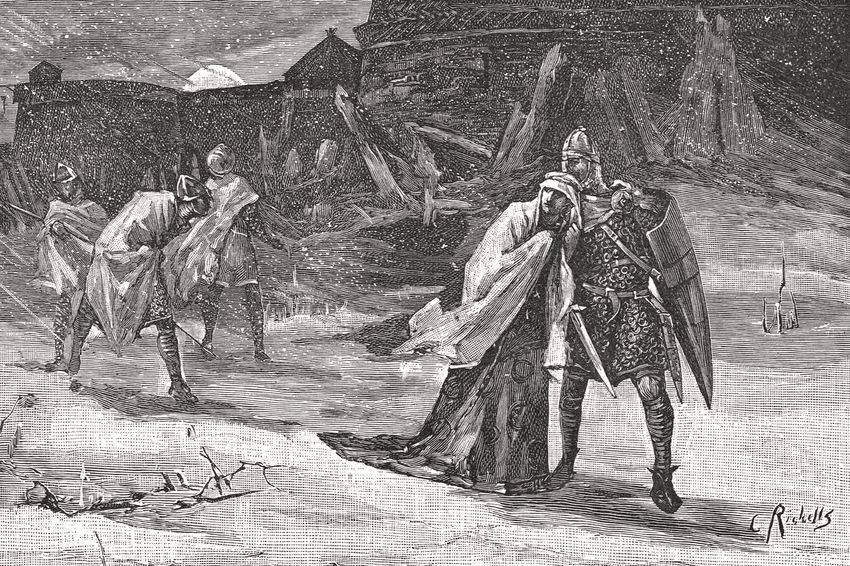
History Topic of the Month: Empress Matilda

              Disaster!

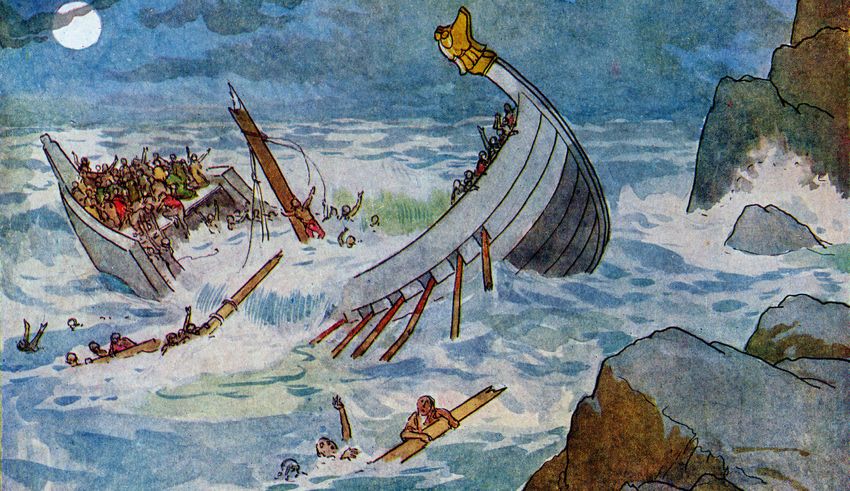
              Henry I had a son, Prince William. In November 1120 Prince
              William and 300 of his friends and servants boarded a ship,               England
              The White Ship, sailing from Normandy. Prince William
              hosted a drunken party onboard. Some of the guests
              were so drunk they had to leave the ship – Henry I’s
              nephew, Stephen of Blois, was one of these. Prince
                                                                                      Normandy
              William ordered The White Ship to sail for England at top
              speed in the middle of the night. In the dark, the ship hit
              a rock and sank. Only one person survived. Prince
              William and several important lords were drowned.
              Overnight, Henry I was left without a male heir.                           Anjou

                                                                                    Contributer: © Chronicle / Alamy Stock Photo

                                                                                    The realms of Henry I
                                                                                    and Matilda

Contributor: © Chronicle / Alamy Stock Photo

The sinking of the White Ship – in the English Channel near the Normandy coast off Barfleur, on 25th November 1120.
Those who drowned included Prince William, the only surviving legitimate son and heir of Henry I.

              Who will be the next King?

              Henry had many other male children. Unfortunately, none of them were legitimate – and the
              tradition in England was that only legitimate children could inherit. In 1126, Henry I decided
              he had no choice: the only legitimate child he had who could succeed him was Matilda. Over
              Christmas that year he made his lords swear an oath to support Matilda as Queen.

                                                           2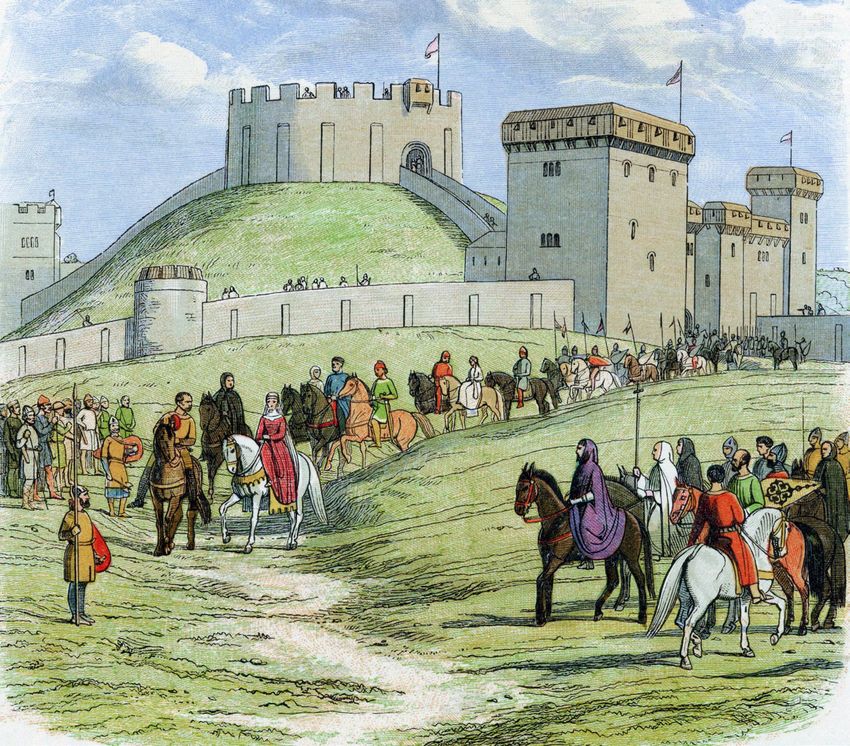
History Topic of the Month: Empress Matilda

            Married again

            To help Matilda’s claim, in 1128 Henry I arranged for her to marry Geoffrey,
            the 15-year-old Count of Anjou (Matilda was now 26). The couple had a
            difficult marriage, but Matilda gave birth to a son, another Henry, in 1133. She
            now had a male heir, which would help her claim to the English throne.
            Matilda and Geoffrey were worried that there was not enough support for
            her claim to the throne in England. They asked Henry I to give them control
            of his castles in Normandy, which would help make her claim to the throne
            stronger. But Henry was worried about losing Normandy and refused.

            Out with the old king, in with the new

            In December 1135 Henry I suddenly died. While his body was prepared
            for burial, his nephew, Stephen of Blois (the one who had left The White
            Ship before it sailed), rushed to London, arriving a week after the king had
            died. Stephen had sworn to support Matilda – but instead he seized power,
            claiming Henry I had left him the throne on his deathbed.
            It did not take long to persuade people that it was “more natural” that a
            man become king. Stephen was crowned on Boxing Day 1135. Matilda was
            furious – but was heavily pregnant and stuck in France. Matilda ordered
            Stephen’s lands in Normandy attacked.

                                                               Anarchy: Civil War breaks out

                                                               In 1138 Matilda’s powerful half-brother,
                                                               Robert Earl of Gloucester, declared he
                                                               would support Matilda’s claim. Revolts
                                                               broke out in Kent and the South
                                                               West. The Scots also announced they
                                                               would support Matilda, and invaded
                                                               North England. Matilda again attacked
                                                               Normandy.
                                                               Stephen’s armies beat the Scots
                                                               and fought the rebels in England.
                                                               Meanwhile, Robert of Gloucester
                                                               and Matilda prepared an army to
                                                               invade England.

Contributer: © World History Archive / Alamy Stock Photo

Empress Matilda and her forces march to Gloucester
in this Victorian engraving.

                                                           3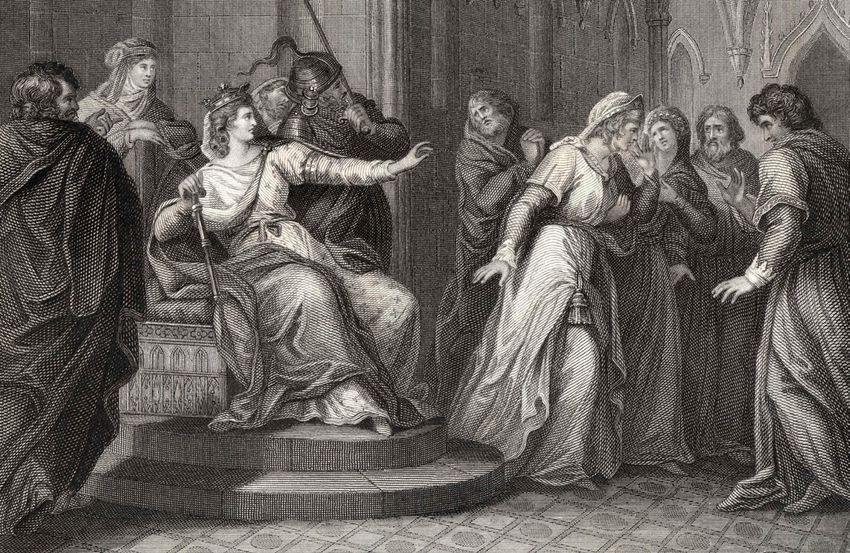
History Topic of the Month: Empress Matilda

            Matilda’s early victories
            In 1139 Matilda invaded England. She set up her court in Gloucester.
            By 1140, she controlled an area of England that stretched from
            Cornwall and Devon to Gloucester, Bristol, South Wales and Oxford.

                                                               In February 1141 Robert of Gloucester
                                                               defeated Stephen in the Battle of Lincoln
                                                               and took him prisoner. Stephen was
                                                               imprisoned in Bristol Castle. Matilda seized
                                                               the royal treasury and persuaded the
                                                               Church to support her. Many lords now
                                                               joined her side. In Easter, Matilda was
                                                               named “Lady of England”. With her army
                                                               she travelled to London to be officially
                                                               crowned Queen.
                                                               Unfortunately, London supported
                                                               Stephen. They saw Matilda as unwomanly
Contributer: © Niday Picture Library / Alamy Stock Photo       and arrogant and she was very unpopular
                                                               in the city. Matilda may have been proud
At the Battle of Lincoln, 1141 King Stephen was                – but so was nearly every male king that
taken prisoner by Matilda’s forces
                                                               came before her (and after her). In June
                                                               1141 London revolted against Matilda
                                                               and she was forced to flee to Oxford. She
                                                               never visited London again. It was the
                                                               closest she came to a coronation.
            Frustrations and defeats
            for Matilda
            Stephen’s wife (also, confusingly,
            called Matilda!) raised an army to free
            her husband. In September 1141
            they trapped Robert of Gloucester in
            Winchester. While trying to escape, his
            army was nearly destroyed and Robert
            was captured.
            Robert of Gloucester and King Stephen
            were then released in a prisoner of
            exchange – it is possible this was
            agreed without Matilda’s knowledge.
            The Church switched sides to support               Contributer: © Chronicle / Alamy Stock Photo

            Stephen and he was crowned again on
                                                               Empress Matilda refuses the pleas of Stephen’s
            Christmas Day 1141. Many lords who                 wife, Queen Matilda, to release her husband. Some
            had changed sides earlier, changed back            of Empress Matilda’s lords may later have decided to
            again to support Stephen.                          exchange Robert of Gloucester for King Stephen
                                                               without her agreement.

                                                           4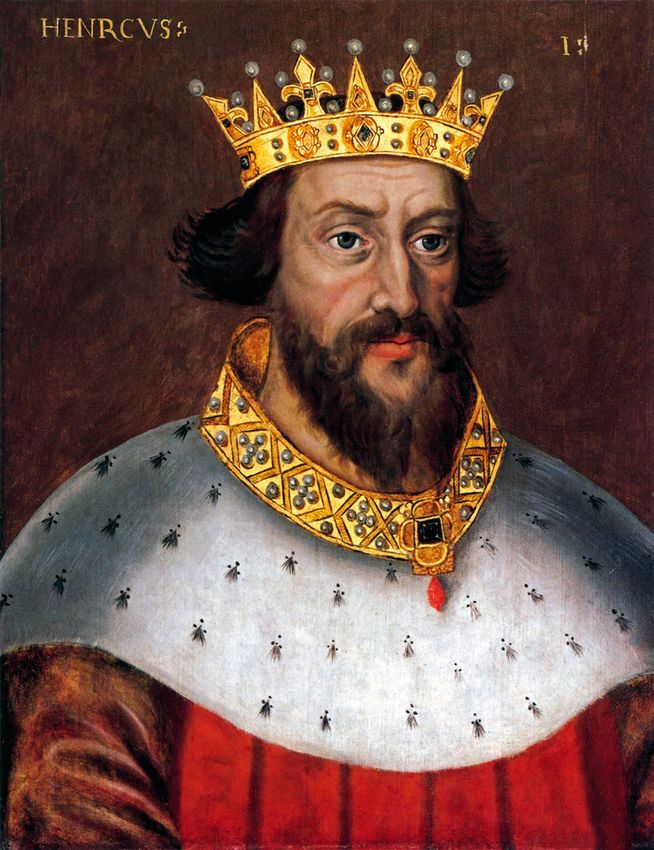
History Topic of the Month: Empress Matilda

            The Great Escape

            Matilda and her armies regrouped. Robert of Gloucester campaigned
            against Stephen’s castles in Normandy. While he was gone, Stephen attacked
            Matilda’s English lands in 1142.
                                                                         In summer 1142, Matilda
                                                                         was trapped in Oxford castle
                                                                         surrounded by Stephen’s
                                                                         army. Oxford Castle was
                                                                         almost impossible to capture
                                                                         and Stephen started a long
                                                                         siege. Just before Christmas,
                                                                         Matilda made a daring
                                                                         escape. With just a few loyal
                                                                         knights, she sneaked out
                                                                         of the castle at night and
                                                                         crossed a frozen river. They
                                                                         wore white as camouflage
                                                                         against the snow.

Contributer: © Historical Images Archive / Alamy Stock Photo

Matilda’s daring escape from Oxford Castle in December
1142 is shown in this Edwardian illustration.

            The war becomes a stalemate

            Matilda set up her new court in Salisbury. Her army nearly captured Stephen again at
            the Battle of Wilton in July 1143 but he escaped. Neither side was strong enough to
            completely beat the other.
            For much of the rest of the decade, although there were some battles, there was
            stalemate (today we’d call it a ‘cold war’). Robert of Gloucester died in 1147 and in
            1148 Matilda returned to Normandy.

            A new Henry ends the war

            When he grew older Matilda’s dynamic                                 Contributer: © rook76 / Shutterstock.com

            son Henry took control of his mother’s
                                                                                 Eleanor of Aquitaine was
            campaign. He was already Duke of
                                                                                 the wife of Henry II and
            Normandy and he was married to
                                                                                 another very influential
            the ambitious and brilliant Eleanor of
                                                                                 and powerful queen –
            Aquitaine, a woman as remarkable as                                  what can you find out
            Matilda. By 1153 Henry and his allies                                about her?
            controlled a third of England.

                                                               5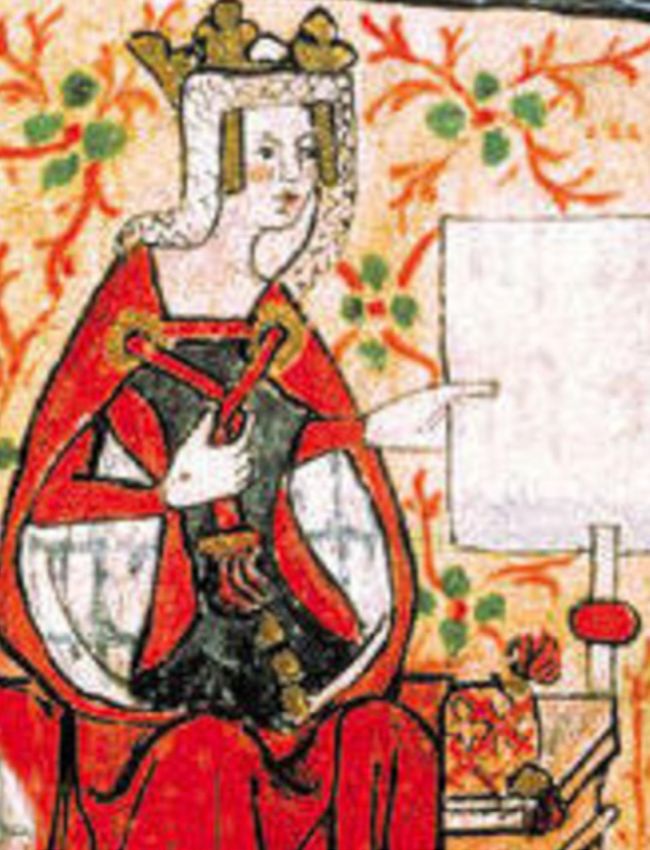
History Topic of the Month: Empress Matilda

  Stephen’s son, Prince Eustace, died in 1153 – now he no longer had an heir.
  That summer an agreement was made: Henry would become Stephen’s heir.
  Stephen may have only agreed to this until he had another son: but he then
  died suddenly of an illness in 1154. Matilda’s son Henry was crowned Henry II.

  What about Matilda?
  Matilda lived the rest of her life in Normandy, governing the area for her son, and was one
  of his closest advisors.
  Matilda was never to be crowned Queen of England. While many at the time called her
  a proud woman, she was probably no different from the hundreds of male lords at the
  time. In fact, if she was a man her determination and ambition would have been praised!
  Her fight to be crowned Queen of England shows what was possible for women at the
  time – but also the limits placed on them. People could accept a woman governing lands –
  but many of them still could not accept one ruling the whole country.

     Discussion points

     • Matilda had to fight to be recognised all her life in a
       world of men. How would you feel if you were always
        judged only by your gender and not by what you
        achieved?

     • How  do you think the people around her would have
       reacted to Matilda if she was a man?

     • For centuries The White Ship was one of the most
       famous disasters in British history, as famous as the
        Titanic is today. It was like Air Force One crashing.
        Can you imagine the impact if something like that
        happened today?

     • Stephen  nearly drowned on The White Ship. If he had
       died, do you think Matilda would have been able to
        claim the throne?

     • During  the Anarchy, the people of England thought
       they lived in a time “when Christ and his saints were
        asleep”. Civil war can see neighbours and even
        families fight each other. How would you feel if you
        were caught up in a war like that?                            About the author

     • Many  people fought and died for Matilda’s claim
       to the throne. What does this tell you about their
                                                                      Alistair Nunn, Pearson’s
                                                                      Product Manager for
        attitude to having Matilda as their Queen?                    Humanities Teaching and

     • Matilda had Stephen as her prisoner and she let him
       go. Do you think this was a mistake?
                                                                      Learning resources has
                                                                      a degree in History. He
                                                                      created this worksheet
     • Eleanor of Aquitaine was another remarkable woman
       – what can you find out about her?
                                            6
                                                                      using various sources
                                                                      included below.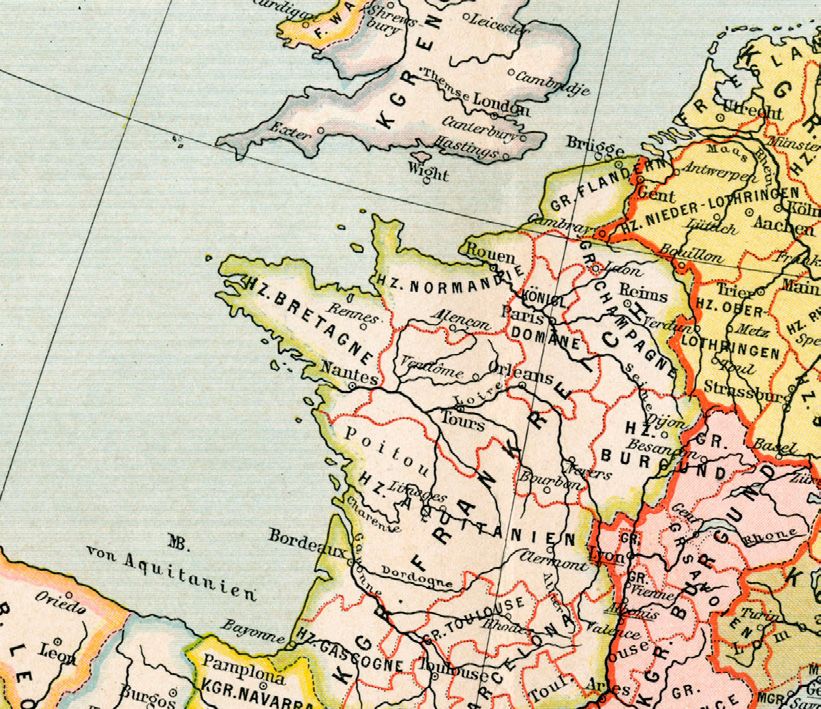
History Topic of the Month: Empress Matilda

                                                                                                            Bibliography

                                                                                                            Books
                                                                                                            Matilda: Empress, Queen, Warrior by Catherine Hanley

                                                                                                            She Wolves: The Women Who Ruled England Before Elizabeth I by
                                                                                                            Helen Castor

                                                                                                            The Anarchy: The Darkest Days of Medieval England by Teresa Cole

                                                                                                            Stephen and Matilda: The Civil War of 1139–1153 by Jim Bradbury

                                                                                                            The White Ship: Conquest, Anarchy and the Wrecking of Henry I’s
                                                                                                            Dream by Charles Spencer

                                                                                                                                    Websites

                                                                                                                                    Historic UK – Empress Maud
                                                                                                                                    History Extra – Empress Matilda, daughter of Henry I:
                                                                                                                                    a queen in a king’s world
                                                                                                                                    Reading Museum – Death and Anarchy: The White
                                                                                                                                    Ship Disaster
                                                                                                                                    History Extra – Your guide to the Anarchy, the bloody
                                                                                                                                    battle between Stephen and Matilda
                                                                                                                                    Sky History – 9 facts about ‘The Anarchy’: Englands dark
                                                                                                                                    period of lawlessness and war

                                                                                                                             Take a look at Pearson’s
                                                   PEUK B0183b Version 1.0 • March 2021 • DCL1: Public

                                                                                                                             Diversity and Inclusion
PEUK A2422 Version 1.0 • Oct 2020 • DCL1: Public

                                                                                                                             in History webpages for
                                                                                                                             more great content.

                                                                                                                                                       7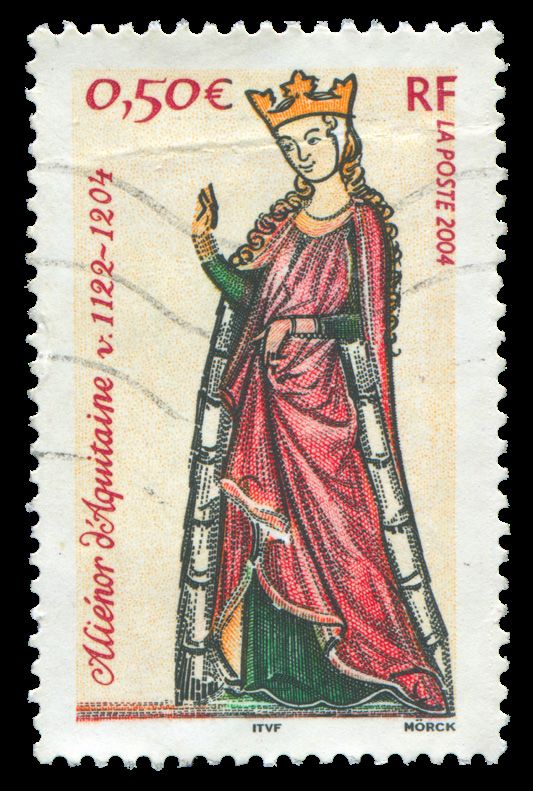
You can also read


