Investor Presentation June 8, 2021 - William Penn Bank
←
→
Page content transcription
If your browser does not render page correctly, please read the page content below
Investor Presentation
June 8, 2021
Safe Harbor Statement
•   THIS PRESENTATION CONTAINS FORWARD‐LOOKING STATEMENTS WITHIN THE MEANING OF THE PRIVATE SECURITIES LITIGATION REFORM ACT OF 1995
    REGARDING WILLIAM PENN BANCORPORATION’S EXPECTATIONS OR PREDICTIONS OF FUTURE FINANCIAL OR BUSINESS PERFORMANCE OR CONDITIONS.
    FORWARD‐LOOKING STATEMENTS ARE TYPICALLY IDENTIFIED BY WORDS SUCH AS “BELIEVE,” “EXPECT,” “ANTICIPATE,” “INTEND,” “TARGET,” “ESTIMATE,”
    “CONTINUE,” “POSITIONS,” “PROSPECTS” OR “POTENTIAL,” BY FUTURE CONDITIONAL VERBS “WILL,” “WOULD,” “SHOULD,” “COULD” OR SUCH AS “WILL”,
    “WOULD”, “SHOULD”, “COULD”, “MAY”, OR BY VARIATIONS OF SUCH WORDS OR BY SIMILAR EXPRESSIONS. THESE FORWARD‐LOOKING STATEMENTS ARE SUBJECT
    TO NUMEROUS ASSUMPTIONS, RISKS AND UNCERTAINTIES, WHICH CHANGE OVER TIME. FORWARD‐LOOKING STATEMENTS SPEAK ONLY AS OF THE DATE THEY ARE
    MADE AND WE ASSUME NO DUTY TO UPDATE FORWARD‐LOOKING STATEMENTS. ACTUAL RESULTS MAY DIFFER MATERIALLY FROM CURRENT PROJECTIONS.
•   IN ADDITION TO FACTORS PREVIOUSLY DISCLOSED IN WILLIAM PENN BANCORPORATION’S REPORTS FILED WITH THE U.S. SECURITIES AND EXCHANGE
    COMMISSION AND THOSE IDENTIFIED ELSEWHERE IN THIS PRESENTATION, THE FOLLOWING FACTORS AMONG OTHERS, COULD CAUSE ACTUAL RESULTS TO DIFFER
    MATERIALLY FROM FORWARD‐LOOKING STATEMENTS OR HISTORICAL PERFORMANCE: THE EFFECT OF THE COVID‐19 PANDEMIC INCLUDING ITS IMPACT ON OUR
    BORROWERS AND THEIR ABILITY TO REPAY THEIR LOANS, AND ON THE LOCAL AND NATIONAL ECONOMIES; CHANGES IN ASSET QUALITY AND CREDIT RISK; THE
    INABILITY TO SUSTAIN REVENUE AND EARNINGS GROWTH; OUR ABILITY TO CONTROL COSTS AND EXPENSES; CHANGES IN INTEREST RATES AND CAPITAL
    MARKETS; LOAN DELINQUENCY RATES; INFLATION; CUSTOMER ACCEPTANCE OF WILLIAM PENN BANK PRODUCTS AND SERVICES; CUSTOMER BORROWING,
    REPAYMENT, INVESTMENT AND DEPOSIT PRACTICES; CUSTOMER DISINTERMEDIATION; THE INTRODUCTION, WITHDRAWAL, SUCCESS AND TIMING OF BUSINESS
    INITIATIVES; COMPETITIVE CONDITIONS AND OUR ABILITY TO OFFER COMPETITIVE PRODUCTS AND PRICING; THE INABILITY TO REALIZE COST SAVINGS OR
    REVENUES OR TO IMPLEMENT INTEGRATION PLANS AND OTHER CONSEQUENCES ASSOCIATED WITH MERGERS, ACQUISITIONS AND DIVESTITURES; NATIONAL,
    REGIONAL AND LOCAL ECONOMIC CONDITIONS; AND THE IMPACT, EXTENT AND TIMING OF TECHNOLOGICAL CHANGES, CAPITAL MANAGEMENT ACTIVITIES, AND
    OTHER ACTIONS OF THE FEDERAL RESERVE BOARD AND OTHER LEGISLATIVE AND REGULATORY ACTIONS AND REFORMS. THESE FACTORS SHOULD BE CONSIDERED
    IN EVALUATING THE FORWARD‐LOOKING STATEMENTS AND UNDUE RELIANCE SHOULD NOT BE PLACED ON SUCH STATEMENTS.
•   THIS PRESENTATION ALSO INCLUDES INTERIM AND UNAUDITED FINANCIAL INFORMATION THAT IS SUBJECT TO FURTHER REVIEW BY WILLIAM PENN
    BANCORPORATION’S INDEPENDENT REGISTERED PUBLIC ACCOUNTING FIRM.

                                                                     1
Non‐GAAP Financial Measures
•   THIS PRESENTATION CONTAINS FINANCIAL INFORMATION PRESENTED IN ACCORDANCE WITH U.S. GENERALLY ACCEPTED ACCOUNTING PRINCIPLES (“GAAP”). THIS
    PRESENTATION ALSO CONTAINS NON‐GAAP INFORMATION THAT THE COMPANY’S MANAGEMENT USES IN ITS ANALYSIS OF THE COMPANY’S FINANCIAL RESULTS.
    SPECIFICALLY, THE COMPANY PROVIDES MEASURES BASED ON WHAT IT BELIEVES ARE ITS OPERATING EARNINGS ON A CONSISTENT BASIS, AND EXCLUDES
    MATERIAL NON‐ROUTINE OPERATING ITEMS WHICH AFFECT THE GAAP REPORTING OF RESULTS OF OPERATIONS. THE COMPANY’S MANAGEMENT BELIEVES THAT
    PROVIDING THIS INFORMATION TO ANALYSTS AND INVESTORS ALLOWS THEM TO BETTER UNDERSTAND AND EVALUATE THE COMPANY’S CORE FINANCIAL RESULTS
    FOR THE PERIODS PRESENTED. BECAUSE NON‐GAAP FINANCIAL MEASURES ARE NOT STANDARIZED, IT MAY NOT BE POSSIBLE TO COMPARE THESE FINANCIAL
    MEASURES WITH OTHER COMPANIES’ NON‐GAAP FINANCIAL MEASURES HAVING THE SAME OR SIMILAR NAMES.
•   THE COMPANY ALSO PROVIDES MEASUREMENTS AND RATIOS BASED ON TANGIBLE STOCKHOLDERS’ EQUITY. THESE MEASURES ARE COMMONLY UTILIZED BY
    REGULATORS AND MARKET ANALYSTS TO EVALUATE THE COMPANY’S FINANCIAL CONDITION AND, THEREFORE THE COMPANY’S MANAGEMENT TEAM BELIEVES
    THAT SUCH INFORMATION IS USEFUL TO INVESTORS.
•   A RECONCILIATION OF THE NON‐GAAP MEASURES USED IN THIS PRESENTATION TO THE MOST DIRECTLY COMPARABLE GAAP MEASURES IS PROVIDED IN THE
    APPENDIX TO THIS PRESENTATION.

                                                                     2
Executive Management Team
Our Executive Management Team includes experienced professionals with robust backgrounds in banking that have the expertise to take William
Penn Bank to the next level as a publicly‐traded community bank.

                 Kenneth J. Stephon, Chairman, President & Chief Executive Officer
                 Mr. Stephon has over 40 years of banking industry experience and previously served as President and Chief Executive Officer, as well as a director, of
                 Audubon Savings Bank from October 2013 until its merger with William Penn Bank on July 1, 2018. Mr. Stephon also serves as a director of the
                 Pennsylvania Association of Community Bankers and the Insured Financial Institutions of the Delaware Valley. Mr. Stephon held a wide range of executive
                 roles in the banking industry, including CEO at Liberty Savings Bank in Pottsville, PA and Clover Bank in Pennsauken, NJ.

                 Alan B. Turner, Executive Vice President & Chief Lending Officer
                 Mr. Turner previously served as the Senior Vice President and Regional Commercial Manager for OceanFirst Bank, successor to Two River Community
                 Bank, where he served as the Executive Vice President and Senior Loan Officer for 20 years. Mr. Turner began his banking career in 1987 with Chemical
                 Bank as a Credit and Loan Review Analyst.

                 Amy J. Hannigan, Executive Vice President & Director of Corporate Development
                 Ms. Hannigan previously served as Senior Vice President and Corporate Controller of WSFS Bank, following the acquisition of Beneficial Bank, where she
                 served as Senior Vice President and Chief Accounting Officer. Ms. Hannigan joined Beneficial Bank in 2007 following the acquisition of Farmers &
                 Mechanics Bank, where she served as the Vice President and Corporate Controller. Ms. Hannigan began her career with Coopers & Lybrand where she
                 served as an Audit Manager in the financial services industry.

                 Jonathan T. Logan, Executive Vice President & Chief Financial Officer
                 Mr. Logan previously served as Vice President and Corporate Controller of Beneficial Bank in Philadelphia, Pennsylvania from April 2011 to
                 March 2019. Mr. Logan began his career with Ernst Young where he served as an Audit Manager in the financial services industry.

                                                                                 3
Overview
William Penn Bank is a Pennsylvania‐chartered stock savings bank headquartered in Bristol, Pennsylvania, a suburb of Philadelphia. William Penn Bank has
provided community banking services to individuals and small‐ to medium‐sized businesses in the Delaware Valley area since 1870. William Penn Bank
currently conducts business through its thirteen branch offices located in Bucks and Philadelphia Counties in Pennsylvania and Burlington and Camden
Counties in New Jersey.

            • Completed an initial public offering and raised $10.3 million of capital
2008

            • Acquired Audubon Savings Bank, a savings association with $149 million in assets headquartered in Audubon, New Jersey
2018
            • Acquired Fidelity Savings and Loan Association of Bucks County, a savings bank with $86 million in assets headquartered in Bristol, PA
            • Acquired Washington Savings Bank, a savings bank with $159 million in assets headquartered in Philadelphia, PA
2020        • These acquisitions each resulted in a gain on bargain purchase (value received exceeded the consideration)

            • Completed a second‐step conversion from a mutual holding company to a stock holding company and raised $126.4 million of capital
2021
                                                                                4
Company Highlights
                   • Market capitalization of $172 million at June 4, 2021
Strong Franchise   • Strong core deposits
                   • Effective interest rate risk management

   Attractive      • Headquartered in Bucks County, PA which is ranked #3 of all counties in PA in
                     median household and per capita income
                   • Significant opportunities to grow market share
    Markets        • Lending market extends beyond our branch network

                   • Stock price $11.33 at June 4, 2021
   Valuation       • Tangible book value was $13.79 as of March 31, 2021
                   • Price to tangible book value 82% as of March 31, 2021

                                   5
Market Overview
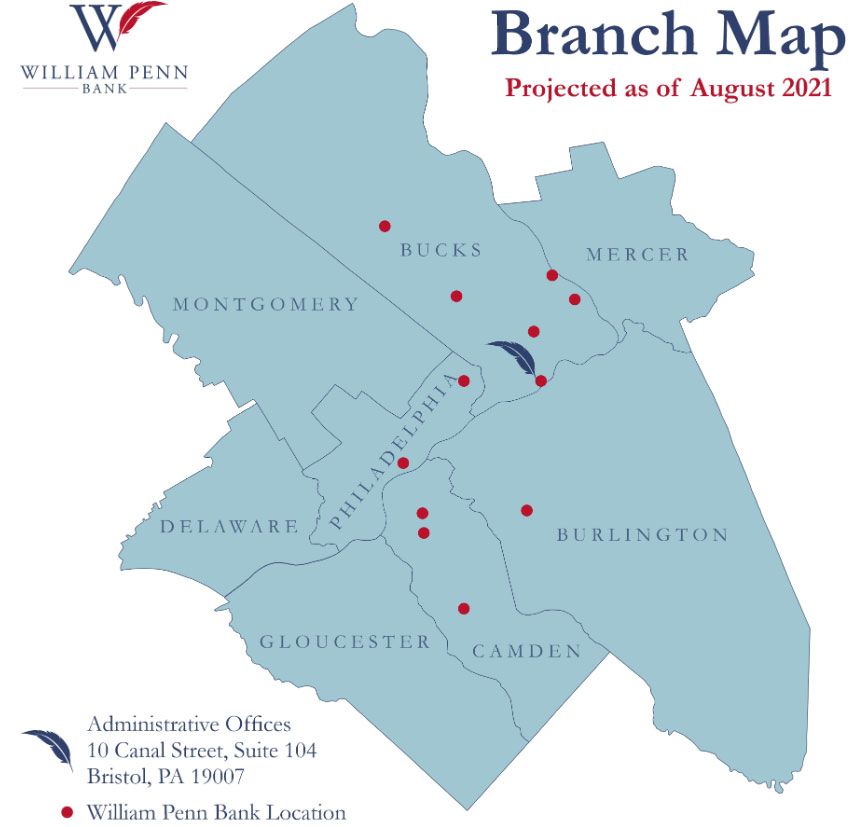
Corporate Headquarters                                     Bristol, PA

12 Branches                                                6 Bucks County, PA
                                                           2 Northeast Phila, PA
                                                           4 New Jersey
Market Cap (June 4 ,2021)                                  $172 million

Total Loans, net*                                          $476 million

Total Assets*                                              $817 million

Total Deposits*                                            $548 million
* Balances as of March 31, 2021

 Branch count and map exclude the Frankford and Bustleton branches that will be closed June 30, 2021 and include the
 Doylestown branch which is expected to open in August 2021.

                                                                                                                       6
Asset Growth

        ($ in thousands)                           Asset Growth
        $900,000
                                                                                      $817,427
        $800,000                                                           $736,452
        $700,000

        $600,000

        $500,000
                                                                $415,829
        $400,000
                           $314,074   $315,997   $301,109
        $300,000

        $200,000

        $100,000

               $‐
                           Jun‐16     Jun‐17     Jun‐18         Jun‐19     Jun‐20     Mar‐21

                                                            7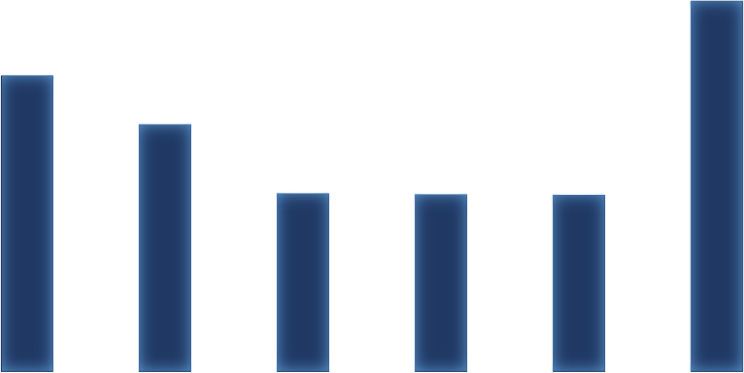
Strategic Priorities
                           • Focus on prudent capital management to right‐size our capital base
   Capital Management      • Capital to be deployed to support organic growth and cash dividends

                           • Focus on growing loan portfolio with emphasis on commercial lending
                           • Improve balance sheet mix
   Improve Profitability   • Disciplined pricing of loans and deposits
                           • Continued focus on operating efficiency and cost structure

                           • Maintain strong reserves
      Asset Quality        • Maintain low charge‐off levels

                           • Continued enhancement in technology platform to improve efficiency
                           • Continued focus on risk management and compliance functions
  Operations/Technology    • Enhancing mobile and online banking capabilities

                                            8
Capital Management
Tangible Equity/Tangible Assets
30.0%
25.8%
25.0%
($ in thousands) Total Consolidated Capital
20.6% $250,000
20.0%
17.2% $200,000
15.0%
12.4% 12.3% 12.3% $150,000
10.0% $215,040
$100,000
5.0% $50,000 $96,365 $95,506 $97,189
$61,895 $76,630
0.0% $‐
Jun‐18 Jun‐19 Jun‐20 Sep‐20 Dec‐20 Mar‐21 Jun‐18 Jun‐19 Jun‐20 Sep‐20 Dec‐20 Mar‐21
Capital deployment considerations include:
• Organic Growth
• Stock Repurchases
• Cash Dividends
• De Novo Branches
• Branch and Bank Acquisitions
9Loan Portfolio
($ in thousands) Portfolio as of 3/31/2021
$12,932 $14,015
$15,230
$43,999
$177,974
$90,791
$127,676
1‐4 Family 1‐4 Family Investor Loans
Commercial non‐residential Home equity and HELOCs
Construction ‐residential Multi‐family (five or more)
Other (land, commercial, and consumer)
The newly hired Chief Lending Officer will focus on growing the commercial real estate and commercial business loan portfolios. We
will continue to offer residential and consumer loans to meet the needs of our customers.
10Asset Quality Trends
($ in thousands) Deferrals
($ in thousands) Allowance for Loan Losses
$60,000
$49,800 $3,700 2.00%
$50,000 $3,585 $3,587 $3,599
$3,600
$3,519
$40,000 $3,500
1.26%
$3,400 1.26% 1.19%
$30,000 1.27% 1.20%
1.00%
$3,300
$20,000 $3,209
$3,200
$10,000 $5,953 $3,100
$2,900 $2,980
$608 $3,000 0.00%
$‐
Jun‐19 Jun‐20 Sep‐20 Dec‐20 Mar‐21
Jun‐20 Aug‐20 Oct‐20 Dec‐20 Mar‐21
Allowance $ Allowance/total loans % (excluding acquired loans)
• Loan deferrals declined to $608 thousand at March 31, 2021 compared to $49.8 million at June 30, 2020
• Reserve levels remain strong
11Deposits
Weighted Average Rate
Core Deposits to Total Deposits
75% 1.50%
1.21%
70%
0.93%
65% 1.00%
0.79% 0.76%
60%
0.55%
55% 0.50%
50%
Jun‐19 Jun‐20 Sep‐20 Dec‐20 Mar‐21
Core Deposits to Total Deposits 0.00%
Jun‐19 Jun‐20 Sep‐20 Dec‐20 Mar‐21
• We continue to intentionally run off high‐cost non‐relationship based deposits.
• Our weighted average rate on deposits totaled 0.55% at March 31, 2021 compared to 1.21% at
June 30, 2019.
12Appendix 13
Non‐GAAP Reconciliation
William Penn Bancorporation and Subsidiaries
Non-GAAP Reconciliation
(Dollars in thousands, except share and per share data)
                                                                                    March 31,      December 31,     September 30,    June 30,      June 30,
                                                                                     2021             2020              2020          2020          2019
Calculation of Tangible Equity to Tangible Assets:
Total Stockholders' Equity                                                      $      215,040 $         97,189 $         95,506 $       96,365        76,630
Less: Goodwill and other intangible assets                                               5,858            5,922            5,986          6,050         6,030
Total tangible equity (non-GAAP)                                                $      209,182 $         91,267 $         89,520 $       90,315        70,600

Total Assets                                                                    $      817,724 $        746,527 $        731,553 $     736,452       415,829
Less: Goodwill and other intangible assets                                               5,858            5,922            5,986         6,050         6,030
Total tangible assets (non-GAAP)                                                $      811,866 $        740,605 $        725,567 $     730,402       409,799

Equity to Assets (GAAP)                                                                  26.3%           13.0%             13.1%         13.1%         18.4%
Tangible equity to Tangible Assets (non-GAAP)                                            25.8%           12.3%             12.3%         12.4%         17.2%

Calculation of Tangible Book Value per Share:
Total Stockholders' Equity                                                      $      215,040
Less: Goodwill and other intangible assets                                               5,858
Total tangible equity (non-GAAP)                                                $      209,182

Total common shares outstanding (adjusted for 3.2585 exchange ratio)                 15,170,566

Book value per share (GAAP)                                                     $        14.17
Tangible book value per share (non-GAAP)                                        $        13.79

Calculation of the ratio of the allowance for loan losses to total loans,
excluding acquired loans:
Gross loans receivable                                                          $      479,329 $        498,392 $        501,215 $     512,124       329,226
Less: Loans acquired in a business combination                                         177,996          199,227          216,986       235,112        73,916
Gross loans receivable, excluding acquired loans (non-GAAP)                     $      301,333 $        299,165 $        284,229 $     277,012       255,310

Allowance for loan losses                                                       $        3,599 $          3,587 $          3,585 $        3,519         3,209

Allowance for loan losses to total loans (GAAP)                                          0.75%           0.72%             0.72%         0.69%         0.97%
Allowance for loan losses to total loans, excluding acquired loans (non-GAAP)            1.19%           1.20%             1.26%         1.27%         1.26%

Loans receivable, net                                                           $      475,730 $        494,805 $        497,630 $     508,605 $     326,017
Goodwill                                                                        $        4,858 $          4,858 $          4,858 $       4,858 $       4,858
Intangible assets                                                               $        1,000 $          1,064 $          1,128 $       1,192 $       1,172

                                                                                                            14
You can also read


