How to Import using the EU-Japan Economic Partnership Agreement (EPA) - EU-Japan Centre for Industrial Cooperation
←
→
Page content transcription
If your browser does not render page correctly, please read the page content below
How to Import using the EU-Japan Economic Partnership Agreement (EPA)
CONTENTS

 1.0        Introduction                                                                            1

 2.0        Trade Statistics: EU and Japan Trade                                                    2

 3.0        The EU-Japan EPA in a Nutshell                                                          3

 4.0        What can SMEs Importers expect when importing goods from Japan using the EPA?           4

    4.1        Case Study Example: Automotive Parts                                                 5

 5.0        How to check if EPA preferential tariffs apply to your product                           6

    5.1        Option 1: Use one of the European Commission’s Online Tools to access the EU Tariff   8
    5.2        Option 2: Use the EU-Japan EPA Text, Annex 2-a                                       9

 6.0        Requirements for imports to benefit from preferential tariffs using the EPA              10

    6.1        Meeting the Rules of Origin (RoO)                                                    11
    6.2        Assessing whether your product meets the RoO                                         12
    6.2.1      Case Study Example – RoO for apple juice from Japan                                  13
    6.3        The Claim of Preferential Tariff Treatment                                            14
    6.4        Transport from Japan to the EU                                                       17

 7.0        Other Import Requirements                                                               18

    7.1        General Requirements to import goods into the EU                                     18
    7.1.1      Import duties, VAT and Taxes                                                         19
    7.1.2      Import Documentation for Customs Clearance                                           20
    7.2        Specific Import Requirements                                                         21
    7.2.1      Case Study Example: Product requirements for vacuum cleaners from Japan              22

 8.0        Intellectual Property Rights                                                            23

 9.0        Information Sources                                                                     24

 How to Import using the EU-Japan Economic Partnership Agreement (EPA)                                   >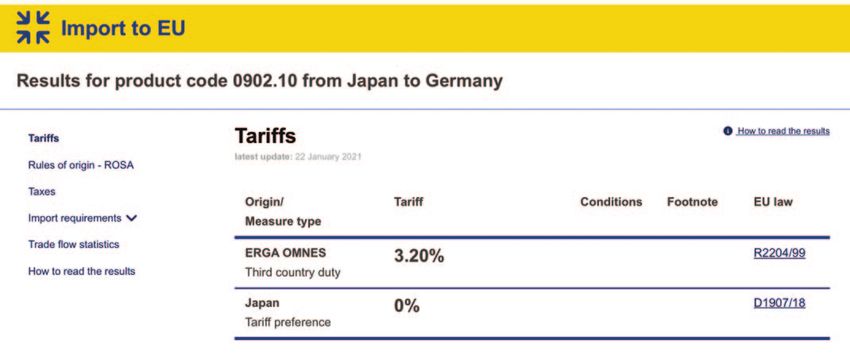
INTRODUCTION
This guide supports the requirement by the EU Japan
Economic Partnership Agreement (EPA) to provide Small and
Medium-sized Enterprises (SMEs) with the necessary information
to access and conduct trade overseas.

The aim of this guide is to provide a simple explanation of the
EU Japan Economic Partnership Agreement (EPA) in order to
enable SMEs to be aware, understand and take advantage of
the opportunities created by the EPA.

This guide will focus on the importation of Japanese goods by
SMEs in the EU using the EPA. The guide will provide information
on Customs duties, import requirements for goods including
customs procedures and other rules governing imports from
Japan to the EU.

  How to Import using the EU-Japan Economic Partnership Agreement (EPA)   1
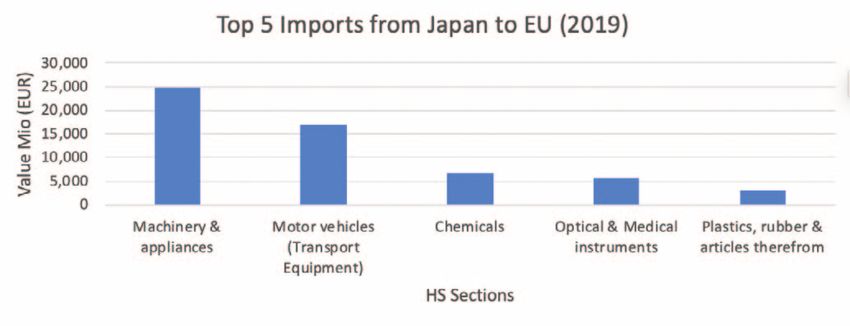
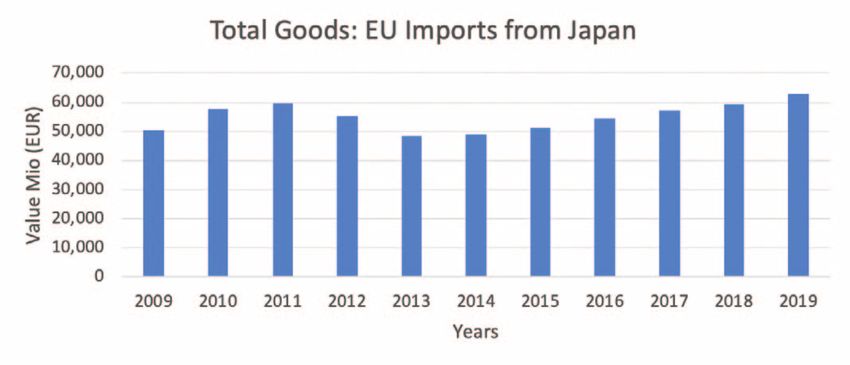
2.0 TRADE STATISTICS:
EU AND JAPAN TRADE
   Japan is:          u         the EU’s 2nd biggest trading partner in Asia after China
                      u         the EU’s 6th most important trading partner worldwide

  Europe is:          u         Japan’s 2nd biggest trading partner worldwide

                           https://webgate.ec.europa.eu/isdb_results/factsheets/country/details_japan_en.pdf

                           https://webgate.ec.europa.eu/isdb_results/factsheets/country/details_japan_en.pdf

 How to Import using the EU-Japan Economic Partnership Agreement (EPA)                                         2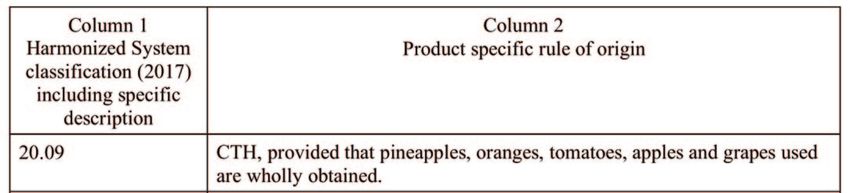
3.0 THE EU-JAPAN EPA
IN A NUTSHELL
The EU-Japan Economic Partnership Agreement (EPA) is a trade agreement that
was signed on July 17, 2018 and entered into force on February 1, 2019.

The EPA aims to reduce and remove barriers to trade and investments and
improve economic relations between the EU and Japan.

                 1
                                              The EPA covers 3 pillars
                                                                                                         3
                                                               2

                                                                                                     Rules
                                                                                             • Sustainable development
        Market Access                                                                     • Trade and Customs facilitation
 • Trade in goods • Trade in services                                                           • SMEs (transparency)
     • Government procurement                                                         • Intellectual Property Rights (IPR) and
                                                                                            Geographical Indications (GI)
                                             Regulatory Cooperation
                                           • Regulatory • Technical barriers to trade
                                        • Food safety, animal health and plant health
                                                        • Other sectors

The objectives of the EPA will be achieved through:

u     Reduction and elimination of the EU                          u        Open trade in services in the areas
      Customs tariffs - 99% of tariff lines will                              such as telecommunications, transport,
      be eliminated over time                                               distribution and financial services

u     Elimination of non-tariff related                             u        Creating opportunities for both
      obstacles to trade e.g. elimination of                                economies to invest in each other’s
      EU’s import restriction on Japanese                                   market
      wine
                                                                   u        Cooperation of the two economies to
u     Simplified import procedures and                                      address matters that affect SMEs such
      requirements related to the imports                                   as electronic commerce and Intellectual
      and exports of goods                                                  Property Rights

    How to Import using the EU-Japan Economic Partnership Agreement (EPA)                                                        3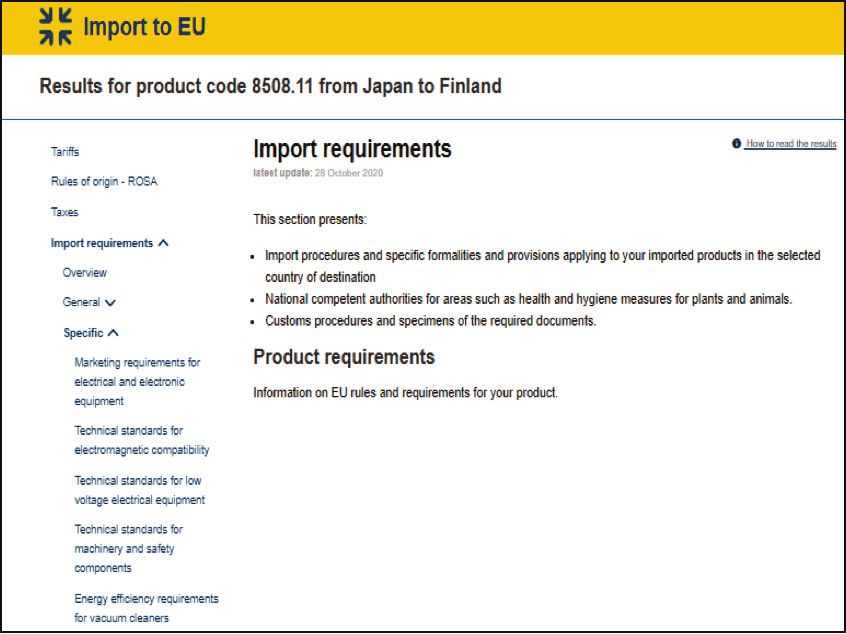
4.0 What can SMEs Importers expect
when importing goods from Japan
using the EPA?

                  Fair business                         Reduced or zero
                                                                                      Reduced import costs
                  environment                           Customs Tariffs

    E.g. Self-certification
    procedures to prove
      products meet the           Simplified import                                                    E.g. Elimination of
  Rule of Origin in order           procedures &                              Removal of some
                                                                                                       EUs import restriction
to benefit from reduced             requirements                               trade obstacles         on wine
            or zero tariffs

                                                           Protection of
                                                                                      Importation of genuine
                Greater access to                           Intellectual              Japanese products
                 Japan products                              Property
                                                               (IPR)

Examples of sectors that will benefit from the reduction and elimination of
Customs Tariffs

• Agriculture, forestry and fishery                                 • Pharmaceuticals
• Electronics                                                       • Medical devices
• Motor vehicles

      How to Import using the EU-Japan Economic Partnership Agreement (EPA)                                               4
4.1
Case Study Example: Automotive Parts
Customs tariffs were imposed on automotive parts imported from Japan, prior to the
implementation of the EPA. However, the EPA provides tariff elimination immediately for
some of these products and gradual tariff reductions or complete elimination of tariffs.
See examples shown in the table below:

Product                            Customs Tariff                  Immediate tariff     Gradual Reduction,
                                   prior to EPA                   elimination w.e.f   then zero tariff
                                                                  February 1, 2019    within 16 years

Rear view mirrors                               4%                          0%
Lead-acid batteries                             3.7%                        0%
Spark plugs                                     3.2%                        0%
Windscreen wipers                               2.7%                        0%
Seats for motor vehicles                        3.7%                        0%
Speed indicators                                2.6%                                  Reduced to 1.7% in
                                                                                      2020 and by 2024
                                                                                      tariff will be
                                                                                      eliminated
Rubber transmission belts                       6.5%                        0%

Instrument panel clocks                         3.7%                        0%

Non-tariff benefits for the Automotive Parts Sector

The EU and Japan shall accept products covered by a type approval certificate in the context
of specified UN Regulations, as being compliant with its domestic technical regulations and
conformity assessment procedures, without requiring any further testing, certification or
marketing.

Examples of automotive parts and the related UN Regulations as per Appendix 2-C-1 of
the EPA:

UN Regulation #                             Products

                25                          Headrests whether or not incorporated in vehicle seats
                98                          Motor vehicle headlamps equipped with gas-discharging
                                            light sources
                30                          Pneumatic tyres for motor vehicles
                43                          Safety glazing materials and their installation on vehicles
                27                          Advance warning triangles

    How to Import using the EU-Japan Economic Partnership Agreement (EPA)                                  5
5.0 How to check if EPA preferential tariffs
apply to your product
Preferential tariff treatment defines how and at what rate the Customs duty
is to be reduced or eliminated. To check preferential tariffs, the tariff code is
required. The tariff code determines the tariff liberalisation treatment which
can either be zero tariff, elimination or reduction of tariffs over specified time
periods.

                                                           Goods traded internationally are identified by
                                                           a tariff code, also known as commodity code,
                                                           tariff classification, product code or as in the
                                                           EU, the Combined Nomenclature (CN) code

                TARIFF                                                     Tariff codes are found in the Customs
                                                                           Tariff and are used to determine the
                 CODE                                                      Customs duty among other things

                                                           The Tariff code is based on the Harmonised
                                                           Commodity Description and Coding System
                                                           (HS). The first 6 digits of this code is called the
                                                           HS Code

                                      +                                              =
                                                             EPA                                   Preferential
           Tariff code                                    Liberisation                                  Tariff
                                                          Treatment                                 Treatment

   How to Import using the EU-Japan Economic Partnership Agreement (EPA)                                          6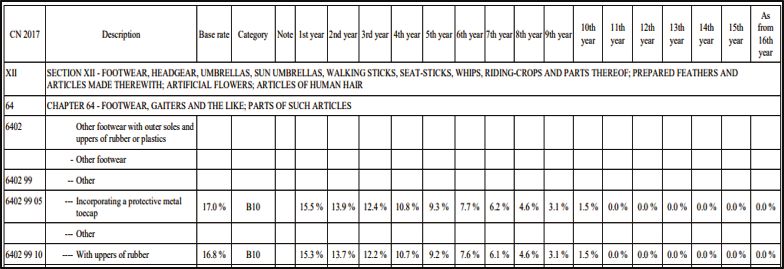
Example of a Tariff Code

                         010639 10 00
                        represents live
                           pigeons

                                        The tariff code in the EU consists of 6-14 digits

                                 Structure of the Tariff Code
      0         1          0         6          3          9         1        0        0 0 0 0 0 0

        HS                   HS                   HS         CN
                                                                                                Taric Code
      Chapter              Heading            Subheading Subheading

                             HS Code

                            CN Code

                                                          Taric Code

HS Chapter – The first 2 digits of the code                     01 represents Chapter 1 and concerns live animals

HS Heading – The first 4 digits of the code                     0106 concerns other live animals

HS Subheading/HS Code – The first 6 digits of the code          0106 39 specifies other birds. The HS Code is identical in the
                                                                EU and Japanese Customs Tariff

CN Code – 8-digit code specific to the EU used for tariff        0106 39 10 specifies live pigeons
and statistical purposes

Taric Code – The 9th and 10th digits used with the              Used to identify products that have special regulations when
CN code form the Taric code numbers. In exceptional             imported into the EU, such as duty suspensions and anti-
circumstances, an additional Taric code of 4 digits             dumping duties. lf the digits beyond the CN Code number are
may be used                                                     zeros, as in 01063910000000, then no special regulations
                                                                apply

     How to Import using the EU-Japan Economic Partnership Agreement (EPA)                                                       7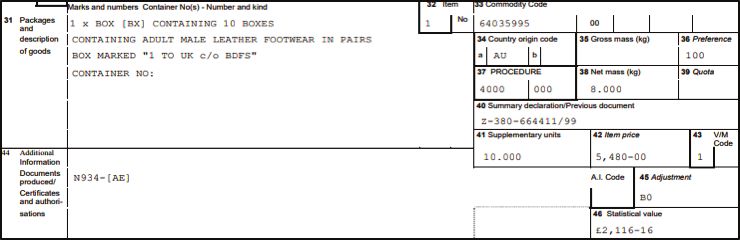
5.1 Option 1: Use one of the European
Commission’s Online Tools to access the
EU Tariff
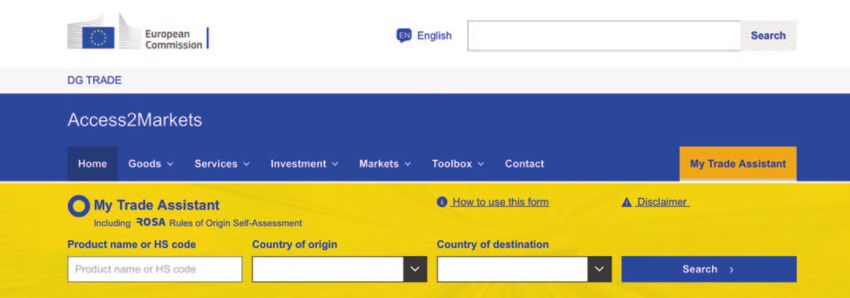
European Commission’s Access2Markets website: https://trade.ec.europa.eu/access-to-markets/

Step 1: Select My Trade Assistant and enter the country of origin, country of destination
and the Tariff Code

                                       Source: https://trade.ec.europa.eu/access-to-markets/en/content/

Step 2: Search and view results

                   Source: https://trade.ec.europa.eu/access-to-markets/en/results?product=090210&origin=JP&destination=DE

    How to Import using the EU-Japan Economic Partnership Agreement (EPA)                                                    8
5.2 Option 2:
Use the EU-Japan EPA Text, Annex 2-a
Obtain the tariff code for your product
• It gives information on the Customs duty , taxes and other conditions
applicable to your product
• You can consult the Customs Authority or a representative to get assistance
to obtain this code and tariff rate
• If the Tariff rate is already zero, then no need to use the EPA; if more than
zero, proceed to the next step
Locate the tariff code in the EPA EU Liberalisation Schedule
• The EPA Liberalisation Schedule lists the tariff code and corresponding
tariff treatment to be applied over a number of years
• See Annex 2-A, Part 2 of the EPA for the Liberalisation Schedule
Note the liberalisation treatment and corresponding
duty rate and the year in the EU Liberalisation Schedule
• Tariff treatment may be zero tariff, reduced tariffs or tariffs eliminated over
a number of years
• If your tariff code is not stated in the schedule, your product attracts zero
Customs tariff using the EPA
Example: The Customs duty for footwear will be gradually reduced and then completely eliminated in 2029
Source: http://trade.ec.europa.eu/doclib/docs/2018/august/tradoc_157229.pdf#page=49
How to Import using the EU-Japan Economic Partnership Agreement (EPA) 96.0 Requirements for imports
to benefit from preferential tariffs
using the EPA
Imported product must originate in Japan
The EPA sets out rules which are
known as “Rules of Origin” to
determine whether a product Product may not be altered during transport
“originates” in Japan.
A product that is shipped from
Japan does not mean the product
originates in Japan
Except for unloading, reloading,
splitting of consignments or
another specific operations while Proof of origin must be
remaining under Customs control provided to EU Customs
If proof of non-alteration of
the product is requested by EU
Customs, this requirement may
be given by any means including
transport documents to EU In order to claim preferential
Customs tariff treatment, the EU importer
must either have:
1. A Statement on Origin from
the exporter or producer in
Japan
2. EU Importer’s knowledge that
the product is originating
€2.1
BILLION EXPORT
AIRCRAFT AND ASSOCIATED EQUIPMENT
How to Import using the EU-Japan Economic Partnership Agreement (EPA) 106.1 Meeting the Rules of Origin (RoO)
The Basic RoO
Product wholly obtained or produced
• Mostly applies to agricultural products, fish, minerals, waste and scrap
• Products produced from wholly obtained products
• Japan must be the only country involved in the production or manufacture of the product
Products produced exclusively from materials originating in Japan
• Materials are wholly obtained or have fulfilled product specific rules to be deemed originating
Products produced using non-originating materials by satisfying
Product Specific Rules (PSRs) based on:
• A production process • A change in tariff classification • Value added rule
Common Product Specific Rules in the EPA
These rules are specific to a product or tariff line and are used to qualify the product as originating in Japan,
when non-originating materials are used in manufacturing or production
Change in Tariff Classification Value Added Rule Production Process
• Manufacturing process results • The value of all non-originating • A specific production process
in change in tariff classification materials used in the production is required
between the non-originating of a product cannot exceed a • Examples:
material and the final product certain amount, as a percentage • Mixing and blending
of the price of the final product • Distillation
• CC – change in the first 2 • Purification
digits of the tariff code • Biotechnological processing
• CTH – change in the first 4
digits of the tariff code
• CTSH – change in the first
6 digits of the tariff code
Other RoO points to note
• When manufacturing/processing takes place, do not consider the following to determine origin:
Neutral elements such as Accessories, spare parts,
fuel, tools or machines used tools and information
to produce your product materials if they are delivered
with your product
Packaging materials used Packing materials and
for retail sale containers for the shipments
How to Import using the EU-Japan Economic Partnership Agreement (EPA) 116.2 Assessing whether your product
meets the RoO
Was the product
Is the product Was the product
produced in
wholly obtained No produced exclusively No Japan using non-
or produced in using originating
originating imported
Japan? materials in Japan?
materials?
Yes Yes
Does the product
Yes Eligible to benefit meet the relevant
Yes
from the EPA? Product Specific
Rule (PSR)?
Yes No
Tolerance Rule: Allows the use of a small
percentage of non-originating materials
provided it does not exceed the percentage
specified in the PSRs Can the product
apply for the
Accumulation: Allows materials originating Tolerance rule or
in the EU and further processed or added accumulation?
to products originating in Japan, to be
considered originating in Japan
Where to find the Rules of Origin
u The EU-Japan EPA Text - Annex 3-A and Annex 3-B
or
u Use the Rules of Origin Self-Assessment Online Tool in
Access2Markets, see https://trade.ec.europa.eu/access-
to-markets/en/content/presenting-rosa
To locate the RoO applicable to your import, the tariff code is required
How to Import using the EU-Japan Economic Partnership Agreement (EPA) 126.2.1 Case Study Example:
RoO for apple juice from Japan
A Japanese exporter of apple juice (2009 71 20 90) uses non-originating sugar
(HS Heading 17.02) imported into Japan from a third country. All the remaining
materials used in the production of the apple juice originate in Japan.
To qualify as originating, the apple juice must fulfil one of the following:
Satisfy the Product
Specific Rule Be produced exclusively
from materials wholly
Be wholly obtained obtained in Japan
in Japan or the EU
RoO
for
Apple Juice
Product Specific Rule of Origin
Source: EU-Japan EPA Text, Annex 3-B. http://trade.ec.europa.eu/doclib/docs/2018/august/tradoc_157231.pdf#page=65
Applying the RoO
The PSR rule related to the HS Classification 20.09 applies since the apple juice is classified in 2009 71 20 90 and also
because non-originating sugar was used to produce the product.
CTH means “Change in Tariff Heading”. The Tariff Heading is the first 4 digits of the tariff code, which in this case is 20.09.
The rule requires all non-originating materials used to produce the apple juice to be classified in another 4-digit code
other than 20.09, provided the apples are wholly obtained. This rule is met because the sugar sourced overseas is
classified in the 4-digit code 17.02
The apple juice made with sugar sourced from overseas qualifies as originating in Japan.
How to Import using the EU-Japan Economic Partnership Agreement (EPA) 136.3 The Claim of Preferential Tariff Treatment
Preferential tariff treatment may be claimed in the EU based on the Japanese origin of a
product, by using a Statement on Origin by the Japanese exporter or the (EU) importer’s
(own) knowledge that the product is originating in Japan.
Statement on Origin Importer's Knowledge Record Keeping
• Text by which the exporter • Knowledge is based on Statement on Origin
or producer states the origin supporting documents or
status of a product records to be obtained from • Exporter or producer to keep
the exporter that are in the for 4 years
• The text is printed on an invoice importer’s possession • Importer to keep for 3 years
or any commercial document minimum
(packing list, proforma invoice)
Importer's Knowledge
• Applies to single shipments
of one or more products or • Importer to keep records for a
multiple shipments of identical minimum period of 3 years
products from the time the preference
is claimed
Statement on Origin
u The exporter may or may not decide to share information
with the importer regarding the originating status of a product.
However, this will not cause denial of preference by EU Customs,
unless the importer is not able to provide a statement on origin
for the products in question.
Importer’s Knowledge
u This option may be more suited for related parties, where
the exporter has no issues disclosing sensitive commercial
information to the importer.
How to Import using the EU-Japan Economic Partnership Agreement (EPA) 14Statement on Origin Sample Text
A – Wholly obtained or produced
B – Use of exclusive originating materials
C – Substantial Transformation Rule
- 1 Change in Tariff Classification
- 2 Value added rule
- 3 Production process rule
Validity is 12 months from the date made
- 4 Specific rule related to vehicles and parts
out for multiple shipments
D – Use of Accumulation
E – Use of Tolerances
Period: from ............. to .................. The exporter* of the products covered by this document
(Exporter Reference No .............. declares that, except where otherwise clearly indicated, these
products are of ............ preferential origin. Origin criteria used ........................
(Place and date ...................... (Printed name of the exporter) ..............................
13 digits Corporate Number May be omitted if the information is No need for signature
for Japanese exporters contained on the document itself.
*Exporter may also be the producer or trading company involved in the export of the product
Verification of the Proof of Origin
EU Customs may conduct verification of origin either at the time of the Customs
declaration, before or after release of the shipment. The results may lead to denial
or granting of the preferential treatment of the product.
The denial of preferential treatment is subject to specified time periods after the date
of request and depends on the type of proof submitted to Customs.
How to Import using the EU-Japan Economic Partnership Agreement (EPA) 15Verification based on Statement on Origin
EU Customs EU Customs
requests grants preferential YES
verification treatment
EU
Customs EU Customs
satisfied denies preferential NO
Importer receives with treatment
request response?
Request
additional info from
Japan Customs
Exporter receives
request
Japan Customs
receives request
Info provided to EU
Japan Customs YES EU Customs
Customs by importer
reply? satisfied?
or by exporter
NO
EU Customs
denies preferential
treatment
Verification based on the Importer’s Knowledge
EU Customs EU Customs
requests EU Customs YES grants preferential
verification satisfied? treatment
NO
YES
EU Customs
Importer provides Requests more Importer reply? YES satisfied with
YES
info to EU Customs info from importer additional info?
NO
NO NO
EU Customs EU Customs
requests more info denies preferential
from importer treatment
How to Import using the EU-Japan Economic Partnership Agreement (EPA) 166.4
Transport from Japan to the EU
When transporting originating products from Japan to the EU, you will need to consider the
incoterm, the best means of transport and the rules for transporting the products through
third countries (if applicable).
Choose Choose the best Arrange to ship to the EU
Incoterm transport option
• Determine whether you or • If the products are shipped
your supplier will share delivery, • Sea Transport through another country, while
transport and insurance costs in transit, further processing is
• Air Transport not allowed except operations to
• Determine who will be preserve the products in good
responsible for Japan Customs condition; storage and splitting
export formalities and of consignments, provided the
EU formalities products are kept under Customs
supervision
You can check https://trade.ec.europa.eu/access-to-markets/en/glossary/incoterms for more information on incoterms
Transport options from Japan to EU
Pros Pros
• Ideal for urgent, small & high value goods • Ideal for large volumes
= Faster than sea transportation • Lower cost than air transportation
Cons Cons
• Higher cost than sea transportation • Slower than air transportation
To get a quote and obtain further guidance on transport, you can employ the services of a Freight Forwarder
How to Import using the EU-Japan Economic Partnership Agreement (EPA) 177.0
Other Import Requirements
Your eligibility to benefit from the Preferential tariffs is subject to other import requirements.
7.1
General u
Requirements Register for
an EORI number
to import
goods into Pay relevant Get the right
tariff code for your
the EU
duty/VAT/Excise
product
u
General Import
Process
u
Check import
Declare your goods licence and other EU
to Customs product rules
u
Prepare the
sale & arrange
transport
to the EU
u
EORI – Economic Operator Registration Identification Transport – Consider using a freight forwarder to organise
number required to conduct business with EU Customs. logistics
It can be obtained by applying through your EU Customs
Authority Declaring your goods to Customs – You can use the
services of a Customs broker or Freight Forwarder if you
Tariff Code – You can ask your Customs Broker, Freight require assistance
Forwarder or contact your Customs Authority for
assistance; Consider obtaining a tariff ruling from Customs Paying for your shipment – Calculation is based on the
to ensure code will not be rejected upon entry of goods value of your goods, Customs tariff applied and origin of
your goods
Import License and EU Product rules (See Section 7.2)
How to Import using the EU-Japan Economic Partnership Agreement (EPA) 187.1.1
Import duties, VAT and Taxes
The EPA provides for the reduction and elimination of Customs duty. Other taxes apply
and vary based on the EU Member State.
Customs Duty for goods imported from Japan using the EPA
Calculation is dependent upon the Customs value, Customs tariff and origin of your goods
Customs value
X Customs duty
= Customs duty payable
Customs value is the price paid for the goods, the shipping cost and the insurance cost
Internal Taxes
Excise Tax Import Value Added Tax (VAT)
Imposed on selected Imposed on commercial
goods such as: imports and can be
Tobacco products claimed back as input
Alcoholic beverages tax if your company is a
Energy products VAT-registered business
Mineral oil
Calculation Calculation
Rate is based on quantity Ad valorem rate charged
and varies based on the on the Customs value,
EU country duty and excise (if any)
Total Customs duties, taxes and payable
u Customs duty payable + Excise duty payable + VAT Payable = Total duties and taxes payable
How to Import using the EU-Japan Economic Partnership Agreement (EPA) 197.1.2 Import Documentation for
Customs Clearance
Documents Description/Requirements
Commercial invoice Original along with at least one copy
Customs Value Applies to commercial shipments where the value of the imported goods
Declaration exceeds EUR 20 000
Transport Documents Depends on the means of transport: Bill of Lading; FIATA Bill of Lading;
Road Waybill (CMR); Air Waybill (AWB); Rail Waybill (CIM); ATA Carnet;
TIR Carnet
Freight Insurance The insurance invoice is required for Customs clearance only when the
relevant data do not appear in the commercial invoice indicating the
premium paid to insure the merchandise.
Packing List Commercial document that provides information on the imported items
and the packaging details of each shipment (weight, dimensions, handling
issues, etc.)
Single Administrative Common Import Declaration to declare goods to Customs.
Document (SAD) The SAD should be submitted by the importer or his/her representative
(Customs Broker/Freight Forwarder) by:
1. Using an approved computerised system linked to Customs authorities
2. Or lodging it with the designated Customs Office premises
Proof of Origin for Importer Knowledge/Statement on origin to be included in the SAD
EPA Imports
Import Licence Varies according to the product
Claiming Preferential Tariff using the Customs declaration (SAD)
300
Use the appropriate code if the claim for preference is based on:
A ‘statement on origin’ for a single shipment – U110
A ‘statement on origin’ for multiple shipments of identical products to cover a
12-month – U111
Importers knowledge (this must be declared with status code JP) – U112
SAD source: http://ec.europa.eu/taxation_customs/sites/taxation/files/resources/documents/sad_text_en.xls
Preferential duty will be applied based on information given in boxes 36 and 44 on the SAD
How to Import using the EU-Japan Economic Partnership Agreement (EPA) 207.2
Specific Import Requirements
Certain products are restricted or prohibited from entering the EU. Measures have been
implemented to protect human and animal health, the environment and consumer rights.
Import Restrictions
Main products: agricultural products, medicinal products, chemicals,
iron and steel products, cultural assets, textile products and clothing,
weapons, counterfeit or pirated goods, indecent articles/publications
/video recordings, endangered species, waste, some live animals and
products containing animal substances, plants and products containing
vegetable substances.
You will be required to obtain the requisite permits (see below), licences or official
approved notifications by applying to the competent authority in the EU country of import
before the arrival of such goods in the EU. Upon arrival in the EU, such products may
also be subject to inspections at the Border Control Inspection Posts.
You can check the EU TARIC Database to see if your product requires an import licence
as well as the relevant authority in the EU Member State.
Technical, Health and Safety Rules
• Technical regulations, standards and conformity assessment
procedures e.g design, labelling, packaging, functionality or
performance requirements
Technical
Requirements • To obtain requirements for your product, you can use EC My Trade
Assistant using the tariff code
• Sanitary and Phytosanitary (SPS) measures are to protect humans,
animals and plants from diseases and pests
• Live animals and products of animal origin, certain food of non-
Health, animal animal origin and plants and plant products (e.g. fruits, vegetables)
and plant health are subject to inspections in the EU and must be accompanied by
requirements certain official documents from Japan such as a phytosanitary or
health certificates
• To obtain the SPS requirements for your product from Japan,
please see https://ec.europa.eu/taxation_customs/business/
customs-controls/safety-health-environment-customs-controls/
sanitary-phytosanitary-requirements_en
How to Import using the EU-Japan Economic Partnership Agreement (EPA) 217.2.1 Case Study Example –
Product requirements for vacuum
cleaners from Japan
An SME in Finland is planning to import vacuum cleaners made in Japan. The vacuum
cleaners have a self-contained electric motor of a power of 500 watts and a dust bag.
The EU SME importer has noted that zero tariffs are applicable using the EPA and that the
product meets the RoO but discovers that various import requirements need to be met
in the EU. The tariff code for the product is 8508 11 0000.
Source: https://trade.ec.europa.eu/access-to-markets/en/results?product=850811&origin=JP&destination=FI
Technical requirements explained:
Importers should ensure the manufacturers in Japan comply with rules for entry in the EU such as:
• Technical documentation for the product which should conform with various requirements such as voltage etc
• EU Declaration of Conformity
• Affix CE Marking to product
• Provide traceability information to identify the manufacturer and product
How to Import using the EU-Japan Economic Partnership Agreement (EPA) 228.0 Intellectual Property Rights
The EPA promotes the production and trade of innovative and creative products between
the EU and Japan. To increase the benefits and trade of these products, the EU and Japan
will ensure that the protection of IPR is adequate, effective and not discriminatory, as well
as providing enforcement measures against infringements such as counterfeiting and
piracy. EU SME importers can therefore have confidence that they will be importing high
quality and genuine products from Japan.
Examples of Types of IPR covered by the EPA
Patents Trademarks
• The World Intellectual Property Organization (WIPO) • The WIPO states that "a trademark is a sign
states that "a patent is an exclusive right granted for an capable of distinguishing the goods or services
invention, which is a product or a process that provides, of one enterprise from those of other
in general, a new way of doing something, or offers a enterprises. Trademarks are protected by
new technical solution to a problem. To get a patent, intellectual property rights."
technical information about the invention must be
disclosed to the public in a patent application".
• The EPA provides common rules for trademarks,
• The EPA provides common rules for patents, including including prohibition of preparatory acts such as
an extension of the period of protection conferred by a manufacturing or importing labels and packages
patent on pharmaceutical products and agricultural indicating registered trademark without the
chemical products. consent of the trademark owner.
Geographical Indications (GI)
• A GI is a name that identifies that a product was
made in a specific geographical location and possess
the qualities and characteristics linked to that location.
• The EPA provides protection for 72 agricultural
products and 11 seishu/wine/spirits from Japan.
How to Import using the EU-Japan Economic Partnership Agreement (EPA) 239.0 Information Sources
General information and support for EU-Japan trade SMEs & the EPA:
https://ec.europa.eu/trade/policy/in-
focus/eu-japan-economic-partnership-
EU-Japan trade overview: agreement/smes-and-eu-japan/
https://ec.europa.eu/trade/policy/
countries-and-regions/countries/japan/
EU-Japan Centre EPA Helpdesk –
webinars, factsheets & answers:
EU-Japan Centre for Industrial https://www.eu-japan.eu/epa-helpdesk
Cooperation:
https://www.eu-japan.eu/summary-
activities
Meetings & documents from the EPA
committees:
Cooperation between the European https://trade.ec.europa.eu/doclib/press/
Commission’s DG GROW and METI index.cfm?id=2042
of Japan:
https://ec.europa.eu/growth/industry/
international-aspects/cooperation-
governments/eu-japan_en EU tariff changes under the EPA:
http://trade.ec.europa.eu/doclib/docs/
2018/august/tradoc_157229.pdf#page=10
“EU Business in Japan” portal for EU
SMEs – wide range of resources on all
aspects of business with Japan:
https://www.eubusinessinjapan.eu/ EPA Guidance – importer’s knowledge:
https://ec.europa.eu/taxation_customs/
sites/taxation/files/eu_japan_epa_guidance
List of Japan-related brokerage _importers_knowledge_en.pdf
(business speed-dating) events, trade
missions & conferences:
https://een.ec.europa.eu/events?f%5B0
%5D=field_eventstartdate%3Anext_year EPA Guidance – statement on origin
&f%5B1%5D=field_country%3A764 https://ec.europa.eu/taxation_customs/
sites/taxation/files/eu-japan-epa-guidance
-statements-on-origin.pdf
EU-Japan EPA information and support
Introduction to the EPA: EPA Guidance – statement on origin
https://ec.europa.eu/trade/policy/ for multiple shipments of identical
in-focus/eu-japan-economic-partnership- products:
agreement/ https://ec.europa.eu/taxation_customs/
sites/taxation/files/eu_japan_epa_guidance
_statement_on_origin_for_multiple_
Explanation of key EPA terminology: shipments_of_identical_products_en.pdf
https://trade.ec.europa.eu/access-to-
markets/en/content/eu-japan-economic-
partnership-agreement EPA Guidance – claim, verification and
denial of preference:
https://ec.europa.eu/taxation_customs/
The EPA in detail: sites/taxation/files/eu_japan_epa_
https://trade.ec.europa.eu/doclib/ guidance_claim_verification_denial_en.pdf
press/index.cfm?id=1684
How to Import using the EU-Japan Economic Partnership Agreement (EPA) 249.0 Information Sources
EU Access2Markets portal EU-Japan customs relations
Tariff, rules of origin, member-state taxes, import
procedures & product requirement information
EU-Japan customs relations &
cooperation:
For all products, countries of origin https://ec.europa.eu/taxation_customs/
and destination: business/international-affairs/international
https://trade.ec.europa.eu/access-to- -customs-cooperation-mutual-administrative
markets/en/content -assistance-agreements/japan_en
For all products originating in Japan, Other sources of information or support
and imported into Germany:
https://trade.ec.europa.eu/access-to-
markets/en/search?product=&origin= Enterprise Europe Network (EEN) –
JP&destination=DE change last two letters support network for SMEs with
of the link for another country international ambitions:
https://een.ec.europa.eu/
Rules of Origin Self-Assessment (ROSA):
https://trade.ec.europa.eu/access-to-
markets/en/content/presenting-rosa Database of trade fairs and exhibitions:
https://www.auma.de/en/exhibit/find-
your-exhibitions
Importing into the EU
Japanese database of trade fairs in
Europe:
Tips for first time importers: https://www.jetro.go.jp/en/database/
https://trade.ec.europa.eu/access-to- j-messe/country/europe/
markets/en/content/guide-import-goods
Useful email addresses / webforms
EU market and information by country:
https://trade.ec.europa.eu/access-to-
markets/en/content/eu-market-0 TAXUD-E5_EU_JAPAN_EPA@ec.europa.eu
for customs-related questions
https://www.eu-japan.eu/eu-japan-epa-helpdesk-
EU prohibitions and restrictions: information for EPA-related questions and issue-specific
https://ec.europa.eu/taxation_customs/ webinars and factsheets
sites/taxation/files/prohibition_restriction
_list_customs_en.pdf
TARIC database of all measures
relating to EU customs tariff,
commercial & agricultural legislation:
https://ec.europa.eu/taxation_customs/
business/calculation-customs-duties/
what-is-common-customs-tariff/taric_en
Weblinks and QR codes were operational as of December 2020. Please notify any problems to office@eu-japan.eu
How to Import using the EU-Japan Economic Partnership Agreement (EPA) 25The information contained in this report reflects the views of the authors, and not necessarily the views of the EU-Japan Centre for Industrial Cooperation. The EU-Japan Centre for Industrial Cooperation believes that the information is correct and accurate as of the date of publication, but declines any responsibility for it or its use. This report is not intended to provide legal or other advice. You use the information provided in this document at your discretion and responsibility. Reproduction is authorised for non-commercial purposes, provided that the EU-Japan Centre for Industrial Cooperation is acknowledged as the source. Edited by: S. Craig Gray, EU-Japan Centre for Industrial Cooperation, 52 rue Marie de Bourgogne, 1000 Brussels, office@eu-japan.eu © 2021 EU-Japan Centre for Industrial Cooperation EU-Japan Centre for Industrial Cooperation Office in Europe Rue Marie de Bourgogne 52, B-1000 Brussels Tel: +32 (0)2 282 00 40 Website: https://www.eu-japan.eu/
You can also read


