HUNGARY 2 019 Business Guide Facts & Figures - AHK Ungarn
←
→
Page content transcription
If your browser does not render page correctly, please read the page content below

Business Guide

HUNGARY
Facts & Figures

2019

In the interconnected
world, I need one
well-connected
bank.

                                                                       Business Guide

International network                                                  HUNGARY
As an international company you are confronted with different
challenges in every one of your markets.
At the same time, you have to act quickly and flexibly, in order not
to miss an opportunity. That’s why our approach is now „One
                                                                       Facts & Figures
Bank, One UniCredit”: All foreign branches and correspondent           2019
banks in 175 countries act as an efficient and perfectly matched
team that share one common goal - your success!

korszakalkotok.unicreditbank.hu
  Please don’t hesitate to contact us via phone or e-mail:
  Phone:             +36 1 301 12 85
  E-Mail:            uic-hungary@unicreditgroup.hu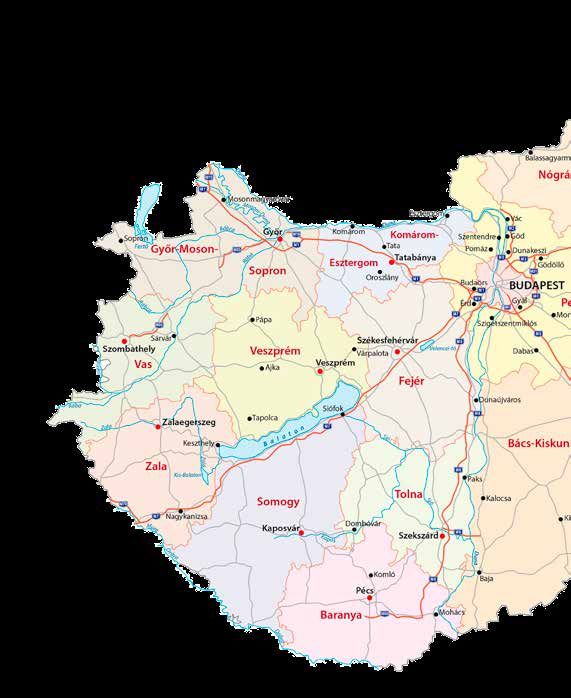
Imprint
                                                                                                                             PREFACE
© German-Hungarian Chamber of
Industry and Commerce (DUIHK)                                                                                            HUNGARY – AN ATTRACTIVE BUSINESS PARTNER
Budapest, 2019
                                                                                                                         For centuries, the Hungarian people, the country’s history, culture and
CEO:
                                                                                                                         economy have been an inseparable part of Central Europe. Today, it is a re-
Gabriel A. Brennauer
                                                                                                                         spected member of the European Union, with a strong and modern econo-
Editor, project manager:                                                                                                 my which is deeply integrated in international production and value chains.
Dirk Wölfer

Editorial and production team:                           As per Act LXXVI of 2017, DUIHK is subject to regulations
                                                                                                                         Our brochure provides an overview of relevant information for compa-
Tamás Kelemen, Julia Peter                               on organisations being supported from abroad.                   nies which intend to purchase, sell or invest in Hungary.

Copy date: June 26, 2019                                                                                                 Coverage includes information on key business related areas such as
                                                                                                                             the general economic profile,
References: References (e.g.              19) are listed in detail in the Appendix.                                          labour markets,
                                                                                                                             infrastructure,
                                                                                                                             taxes and the legal framework,
                                                                                                                             local market potential.
Legal notice:
All rights reserved. The texts, images, graphics and layout of and in this publication are protected by copyright. The
illicit use, reproduction or dissemination of the publication or any parts of it will be prosecuted in accordance with   This publication shall be a first-step navigator to Hungary. If you want to
the applicable criminal and civil laws.                                                                                  learn more about business opportunities in or with Hungary, our experts
Contents may be used free of charge upon providing the reference “Source: German-Hungarian Chamber of Indus-             will be happy to provide you with more in-depth information and a wide
try and Commerce (DUIHK)”.                                                                                               range of business-related services, a summary of which you may find at
The information contained in this publication has been obtained from reliable sources with due care and diligence.
                                                                                                                         the end of this brochure.
However, DUIHK does warrant completeness, accuracy or timeliness of the information. DUIHK accepts no liability
whatsoever for direct or indirect consequences or damages resulting from the use of the information provided.            Finally, we appreciate any suggestion on how to improve this publication –        Dirk Wölfer
Certain links in this publication refer to websites maintained by third parties over whom DUIHK has no control. DUI-
                                                                                                                         please feel free to contact us any time.                                          editor
HK accepts no liability whatsoever for the information contained in those websites.

                                                                                                                         DUIHK                                           Business Guide Hungary 2019   5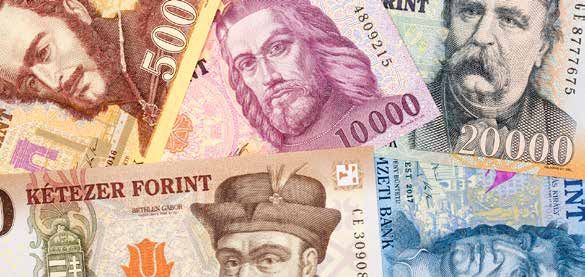
CONTENTS                                                                        32                                       45
                                                                                   PRICES, INTEREST RATES,                 TAXATION
8                                                                                  CURRENCY
                                                                                                                           Value Added Tax                        45
                                                                                   Inflation, interest rates          32   Corporate taxes                        46
LAND AND PEOPLE
                                                                                   Currency                           33   Local taxes                            47
Geography                                8                                         Currency-History                   34   Sectoral taxes                         48
Climate                                  9                                         Payment system                     34   Social security contributions          48
Population                               9                                                                                 Personal income tax                    48
Administration                          11
Political system                        11
Milestones of history                   12                                                                                 49
                                                                                                                           LEGAL ENVIRONMENT
                                              13
                                                                                                                           Corporate law                          49
                                                                                                                           Accounting                             50
                                              INFRASTRUCTURE
                                                                                                                           Jurisdiction and dispute settling      50
                                              Transport and logistics    13                                                Intellectual property                  51
                                              Road tolls                 15
                                              Telecommunications         16
                                              Energy                     16       35
                                              Research and development   17                                                52
                                              Hungarian ingenuity        18        FOREIGN TRADE
                                                                                                                           USEFUL INFORMATION
19
                                                                                  37                                       Travelling to and staying in Hungary
                                                                                                                           Working in Hungary
                                                                                                                                                                  52
                                                                                                                                                                  52
ECONOMIC PROFILE                                                                                                           Public holidays                        52
Business demography                     19
                                                                                   INVESTING IN HUNGARY
Economic growth                         20                                         Foreign Direct Investment (FDI)    37
Industry                                22
Tourism                                 23
                                                                                   Investment incentives              39
                                                                                                                           53
                                                                                                                           DUIHK BUSINESS SERVICES
24                                                                                 41
LABOUR MARKET
                                              31                                   SELLING IN HUNGARY                      54
Labour costs                            24                                         Retail market, purchasing power    41
Availability of skilled workforce       26    REGIONS                              Public procurement                 42   IMPORTANT ADDRESSES
Labour regulation,                      27                                         Fairs and exhibitions              43
collective bargaining                                                              Competition, consumer protection   44
Qualifications                          28                                         Payment behaviour                  44

           6    Business Guide Hungary 2019                              DUIHK   DUIHK                                        Standort Ungarn 2018    7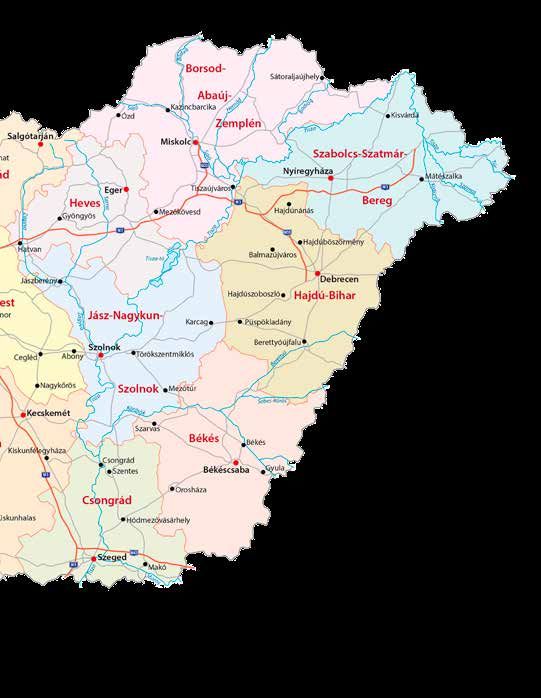
CLIMATE

                                                                                                   Average weather data for Budapest *

                                                                                                     °C                                                                                  mm
                                                                                                     30                                                                                  120
                                                                                                     25
                                                                                                                                                                                         100
                                                                                                     20
                                                                                                                                                                                         80
                                                                                                     15
                                                                                                     10                                                                                  60
                                                                                                      5

                               LAND AND PEOPLE
                                                                                                                                                                                         40
                                                                                                      0
                                                                                                                                                                                         20
                                                                                                     -5
                                                                                                    -10                                                                                  0
                                                                                                           Jan   Feb    Mar   Apr   May     Jun     Jul   Aug   Sep   Oct    Nov   Dec
                        With a population of about 10 million people and a national territory of
                        barely 100,000 km2, Hungary belongs to the small-to-medium-sized                    precipitation (mm)            max. temp.            min. temp.
                        countries of Europe.
                                                                                                   temperature: LH scale, precipitation: RH scale
                                                                                                   * Based on 1981-2010 data averages

                        GEOGRAPHY                                                                      2

       About 84             Area: 93,023 km²
 per cent of the            Major rivers:
territory has an            Danube (Hungarian: “Duna”) – length of the Hungarian section: 417 km
 altitude of less
     than 200 m
                            Tisza – 596 km                                                         POPULATION
                            Largest lake: Balaton – surface area: 596 km²
    above mean
                            Highest mountain: Kékes (Mátra mountains) – height: 1,014 m
       sea level.
                            Total length of state borders: 2,246 km                                INHABITANTS, HOUSEHOLDS

                                                                                                   At the beginning of 2019, Hungary had about 9,764 million inhabitants,
                        Neighbouring countries (length of common state borders):                   though the number has been consistently declining since the early 1980’s,
                                                                                                   when the population was larger by about one million. The average popu-
                           Slovakia                                                      679 km    lation density is 105 people/km². Outside Budapest it is only 87 people/km²,
                           Romania                                         453 km                  while in Budapest about 3,330 people live on one square kilometre.      3, 4
                           Austria                                356 km
                           Croatia                                355 km                           There are 4.1 million private households in Hungary; 1.36 million of them are
                           Serbia                        164 km                                    single-person households, and the average number of persons per house-
                           Ukraine                     137 km
                                                                                                   hold is 2.3.   5

                           Slovenia              102 km

                           1

                    8    Business Guide Hungary 2019                                       DUIHK   DUIHK                                                        Business Guide Hungary 2019    9
URBANISATION                                                                   ADMINISTRATION
     About 18% of the population lives in the capital, Budapest, another 52% in
     other cities and towns. The smallest village is Iborfia in Western Hungary,    There are 346 towns (including the capital) and 2,809 other municipal-
     with just eight residents.  6                                                  ities in Hungary.

                                                                                    Administrative units
     Cities with more than 100,000 habitants                                        2018
     2018                                                                                  Capital city Budapest (1.75 million inhabitants) with 23 urban districts
                                                              Miskolc   155,650            19 counties (“megye”)
                                                                                           174 rural districts (“járás”) (excluding the 23 urban districts of Budapest)
Győr   130,094                Budapest   1,749,734
                                                          Nyíregyháza   117,121            345 towns and 2,809 municipalities
                                                                                           In the regional statistics of the European Union, Hungary is divided into
                                                                                           seven so-called “NUTS 2” regions.
                                                                                       6

                                                            Debrecen    202,214
Kecskemét 110,638

                                                              Szeged    161,122     POLITICAL SYSTEM
Pécs   144,188
                                                                                     Hungary is a parliamentary democracy with a single-chamber parliament
                                                                                    (National Assembly – “Országgyűlés”). The head of state is the “President
         6                                                                          of the Republic”. The President is elected by the Parliament for a five-year
                                                                                    tenure (with the possibility of one re-election). Legislative bodies are elect-
                                                                                    ed on the national level (National Assembly) and at the local level.
     NATIONALITIES
                                                                                    The National Assembly has 199 representatives. Regular elections take
     In the latest microcensus (2016), 96% of the population claimed to be          place every four years; the last poll was held in April 2018. At the local level,
     Hungarian by nationality, 3.1% identified as Roma, and 1% as German by         mayors and deputies to the local and the regional councils are elected ev-
     nationality.   7                                                               ery five years; the next election will be held in autumn 2019.

     There are larger Hungarian minority groups in several neighbouring
     countries: primarily in Romania (ca. 1.4 million, particularly in Transyl-     INTERNATIONAL RELATIONS
     vania), Slovakia (0.5 m), Serbia (0.3 m, particularly in Vojvodina) and in
     Ukraine (0.2 m).     8                                                         Since May 1, 2004, Hungary has been an official member of the European
                                                                                    Union, and accordingly, EU law is fully applicable in Hungary. Hungary is
                                                                                    entitled to 21 out of 751 seats in the European Parliament.
     RELIGION
                                                                                    Hungary joined the so-called “Schengen Area” in 2007; border controls
     According to the 2011 census, 39% of the population was Catholic, 14%          were therefore abolished at the Austrian, Slovenian and Slovakian borders.
     belonged to Calvinist or Lutheran churches, and 18% did not affiliate with
     any religion, while 27% did not specify their religious affiliation. 9         Hungary joined NATO on March 12, 1999.

10     Business Guide Hungary 2019                                          DUIHK   DUIHK                                                 Business Guide Hungary 2019     11
Milestones of history
     The origins of the Hungarian people still have not been fully ascertained.
     Most theories place their roots in the Ural Mountains area. From there,
     Hungarian tribes most likely started to migrate westwards, crossing the
     Caucasus Mountains, around 1100 BC.

         At the end of the 9th century AD, the Hungarians reached the Car-
         pathian Basin. 895 is considered the year of “homeland occupation”.
         About 100 years later, in 997, tribal chieftain Vajk married the Bavarian
         Princess Gisela. At the turn of the year in 1000 he was crowned as King           INFRASTRUCTURE
         Stephen I. This date is considered the foundation of the Christian state
         of Hungary.
         In 1526, Hungary suffered a devastating defeat against the Turks in the     Hungarian infrastructure – transport and logistics, energy and telecommu-
         battle of Mohács. Parts of the country were occupied by the Turks for       nications systems – have improved substantially over the last decades and
         over 170 years, until 1699.                                                 are regarded today as supportive for economic growth.
         March 15, 1848 (now a national holiday): Hungarian Revolution in Bu-
         dapest, defeated with the help of Austrian and Russian forces in Octo-
         ber 1849.                                                                   TRANSPORT AND LOGISTICS
         1867: Conciliation (“kiegyezés”) with Austria – Hungary was granted
         relatively broad autonomy within the Austro-Hungarian Empire.               Traffic volume by means of transport*
         1920: Treaty of Trianon (Versailles) – After World War I, Hungary lost      2018, shares in per cent
         nearly two-thirds of its territory.
                                                                                                                   Railway        Roads     Waterways         Pipeline       Air
         1944: Germany seized Hungary, its former ally.
                                                                                      Freight traffic                     18           66               3          13         ::
         1949: Establishment of a communist regime.
                                                                                         Inland                           12           76               0          12         ::
         October 23, 1956: National uprising against the communist regime,
                                                                                         International                    21           61               4          14         ::
         brutally defeated with the help of Soviet troops after three weeks.
                                                                                      Passenger transport **              26           46               0            ::      28
         September 10, 1989: Hungary opened its borders to Austria for
         East-German refugees.                                                       * based on tonne-kilometres / passenger-kilometres.
                                                                                     ** interurban transport, including cross-border traffic, but
         October 23, 1989: Proclamation of the Republic of Hungary.                     excluding local transport and passenger car traffic.
         May 1, 2004: Hungary joined the European Union.
                                                                                         10

                                                                                     ROAD TRAFFIC

                                                                                     Hungary has a road network of about 32,000 km in total (excluding mu-
                                                                                     nicipal roads), out of which 8,900 km are considered the main grid. At the
                                                                                     end of 2018, the total length of motorways and expressways amounted to
                                                                                     1,981 km, i.e. the network roughly doubled since Hungary’s EU accession.
                                                                                         11

12    Business Guide Hungary 2019                                           DUIHK    DUIHK                                                          Business Guide Hungary 2019    13
Hungary’s most important economic agglomerations can be reached with-          ROAD TOLLS
     in a few hours from Budapest, as no county capital is more distant then
     234 km by car.
                                                                                    TRUCKS OVER 3.5 TONS
     There are 3.64 million registered passenger cars in Hungary (2018), up about
     20% over the last 10 years.     12                                             On approx. 6,900 km of motorways, highways and other main roads, a
                                                                                    distance-based toll has to be paid for trucks over 3.5 tons (so-called “HU-
                                                                                    GO-System”). The fee depends on the size-category and the environmen-
     Motorway network in Hungary
                                                                                    tal classification of the vehicle. Payment can be made online through on-
                                                                                    board-units (OBU) or distance-tickets purchased in advance.
            M15                                              M30
                                                                    M3
                    M1                            M3
                                                                   M35
                                                                                    Road toll fares for commercial vehicles
          M86                               M0                                      as of Jan 1, 2019; in HUF per 100 km (fees for express-roads / main roads)
                                 Budapest

                                                                                                    Emission class            A (>=Euro V)      B (Euro II-IV)     C (
TELECOMMUNICATIONS                                                                    Electricity production capacities amount to about 8,600 MW; roughly
                                                                                           one quarter of which is installed at the nuclear power plant in Paks, and
                                                                                           70% is based on combustible fuels. However, domestic production cov-
     In 2018, network-providers reported 11.8 million mobile telephone contracts           ers only about 70% of domestic demand, therefore net imports of about
     (121 per 100 residents), but only 3.1 million fixed lines. The number of internet     one third are required. In 2014, the government formed an agreement
     connections was 9.9 million, 69% of which are mobile connections, while               with Russia to build new capacities of 2,400 MW at the Paks nuclear
     22% are provided via high-speed cable (TV or optical fibre cable).         17         power plant (Paks II) in order to replace the old blocks which will be shut
                                                                                           down between 2032 and 2037.           20, 21, 22
     The Hungarian mobile communications network is regarded as one of the
     most advanced systems globally. The industry-portal, OpenSignal, regularly            Energy prices: Electricity prices for non-household users in Hungary are
     ranks Hungary among the top countries regarding 4G-availability, download             among the lowest in the EU. Depending on the user-category, they ap-
     speed and latency experience.                                                         proximately ranged from 80 to 150 € per MWh, compared to 125 – 290
                                                                                           € in Germany. Gas prices for non-household users are similar to German
                                                                                           price levels (2018).  23
     Quality of 4G mobile network systems
     May 2019

      4G availability
     		speed
                      average download
                                                                                           RESEARCH AND DEVELOPMENT
      		                                 %   global ranking*   Mbps    global ranking*
      South Korea                    97.5                 1     52.4               1       In 2017, about EUR 1.7 bn was spent on R&D in Hungary, i.e. about 1.3% of
      United States                  93.0                 5     21.3              30       GDP. The bulk of the R&D expenses (53%) were covered by the private enter-
      Hungary                        91.4                 8     32.7              11       prise sector, 32% by the state budget, and another 15% by foreign sources,
      Czech Republic                 90.6                11     31.5              12       including the European Union.     24
      Singapore                      90.2                14     39.3               5
      Germany                        76.9                54     22.6              24
                                                                                           R&D infrastructure in Hungary
     * of 88 countries                                                                     2017
             18
                                                                                            		                                            by sector of performance:
                                                                                            		                      total Government      Higher education     Business enterprises
                                                                                            R&D-facilities          3,109           119               1,346                    1,644
                                                                                            Employees             60,932          9,099              23,816                  28,017
     ENERGY                                                                                 Expenses (HUF bn)        517             65                   69                     378

                                                                                                 25
     Aside from some lignite fields, Hungary has no major energy sources of
     their own. Therefore, nearly 60% of domestic primary energy consump-                  For more detailed information on higher education, see section “Qualification” (page 28).
     tion must be covered from net imports.    19

     About 69% of the domestic primary energy consumption is covered by
     fossil fuels (predominantly natural gas and petroleum), 16% from nucle-
     ar energy, and 15% from other sources (renewables, electricity imports
     and other).      20

16         Business Guide Hungary 2019                                          DUIHK      DUIHK                                                      Business Guide Hungary 2019      17
Hungarian ingenuity
     Hungary has contributed several ground-breaking inventions and discov-
     eries to the world, from vitamin C to holography and vinyl records. Nobel
     Prizes have been awarded to 16 scientists and scholars of Hungarian origin –
     though only two of them got it for their research at home, while the majority
     achieved their success at institutions abroad.

     Various Hungarian inventions are still part of everyday life around the globe.

         Anyone charging his or her smartphone can do so thanks to three                     ECONOMIC PROFILE
         Hungarian engineers: Ottó Bláthy, Miksa Déri and Károly Zipernowsky
         who in 1885, invented the power transformer. Without them, none of
         today’s power adapters, or most electric devices, would work.                Hungary is a modern service economy with a strong industrial sector. The
                                                                                      economy is highly export-oriented, even when compared internationally.
                                                                                      Hungary’s most important economic partners are the EU member states,
         Today, most of us communicate using keyboards or touchscreens.               particularly Germany.
         However, the most frequently used writing tool is still the ballpoint
         pen. It was created in 1938 by Hungarian inventor, László József Bíró.
         That’s why ball pens are still widely known as “biro” in English speak-
         ing countries.                                                               BUSINESS DEMOGRAPHY

         Even after almost 40 years, the “Magic Cube” of Hungarian inven-                   In Hungary there are about 521,000 economic business partner-
         tor Ernő Rubik has not lost any of its fascination to fans around the              ships and corporations, and about 1.2 million individual enterprises
         world. A Rubik’s Cube World Championship has been held every two                   (2018). The most common legal form of corporations is the limited
         years since 2003. Just as a curiosity: the way to calculate the number             company (“kft.”).    26
         of possible combinations of the cube is (8!×38-1) × (12!×212-1)/2, which           95% of companies employ less than ten employees, while only
         is more than 4.3 × 10¹⁹.                                                           about 1,000 companies have more than 250 employees. However,
                                                                                            the latter generates more than 40% of the economic output.

                                                                                      Economic indicators by company size category
                                                                                      2017, shares in per cent

                                                                                       			                                  Number of employees
                                                                                       		                        less than 10            10-249                250+
                                                                                       Number of enterprises              95                 5                   0.1
                                                                                       Number of employees                36                35                   29
                                                                                       Gross value added		                20                35                   45
                                                                                       Sales revenues		                   20                39                   41
                                                                                       Export revenues		                   6                27                   67

                                                                                            27

18     Business Guide Hungary 2019                                           DUIHK    DUIHK                                             Business Guide Hungary 2019    19
Hungary’s 20 largest private corporations by turnover* Annual growth of Hungarian Gross Domestic Product
2017 Change over previous year in per cent
Company Industry sales export sales avg. staff 6
MOL mineral oil 4,130 3,065 25,855 5
4
Audi Hungária automotive 2,342 2,330 11,803
3
Bosch Group automotive 1,341 1,093 14,908 2
Mercedes-Benz 1
automotive 1,102 1,099 3,550 0
Manufacturing Hungary
-1
Flextronics International electronics 715 705 6,972
-2
GE Infrastructure Hungary electronics 713 688 10,677 -3
Samsung Electronics electronics 695 544 1,566 -4
Wizz Air Hungary aviation 673 671 2,949 -5
-6
Magyar Suzuki automotive 652 578 2,552
-7
Tesco-Global Áruházak retail 623 4 16,067 -11.9
-8
8
Magyar Telekom info-communications 611 52 6,323 89 90 95 00 05 10 15 16 17 01
19 19 19 20 20 20 20 20 20 2
Ventas Coffee Hungary tobacco trade 556 7 1,161
BorsodChem chemicals 525 453 3,156
SPAR Magyarország retail 478 1 12,814
Key indicators of the Hungarian GDP
Hárman Becker Automotive 451 445 n.a.
2018
Richter Gedeon pharmaceuticals 444 408 12,172
E. ON Hungária energy 401 0 5,051
Bimbó Hungria real estate 359 359 22 Nominal value: HUF 42,073 bn (EUR 131.8 bn = 3.9% of German GDP)
Lidl Magyarország retail 339 1 4,217 GDP per capita: € 13,528 (= 33.1% of German level)
Porsche Hungária car retailer 331 132 262 Share of private business in gross value added (2017): 83%
* partly consolidated data
29, 30, 31
28
Gross value added by branches of economy
2018, shares in per cent agriculture 4
ECONOMIC GROWTH Public administration,
education, social services 17
manufacturing 23
After the collapse of the socialist regime in 1989/90, Hungary’s economic
performance suffered a dramatic setback. After a few years of consolida-
other services 24
tion, from 1997 on, the economy was growing by approx. 4% annually,
construction,
except for the period between 2007 and 2012 when the economy was hit
information, other industries 8
by its own structural shortcomings and the 2008-2009 global financial
communication 5
crisis. In 2018, the GDP growth rate hit 5% and was one of the highest in
the European Union.
transport, storage 6 trade, accomodation, food services 12
agriculture industry business services public services
32
20 Business Guide Hungary 2019 DUIHK DUIHK Business Guide Hungary 2019 21INDUSTRY INDUSTRIAL PARKS
There are 193 “industrial parks” and 18 “science and technology parks”
Hungary’s industry is developed and strongly export-oriented; near- in Hungary, which host about 3,400 businesses and cooperate with 63
ly two thirds of industrial goods are bought by foreign customers. For R&D partner organizations (June 2019). These parks offer well-developed
comparison this ratio is about 50% in Germany. infrastructure and a wide range of services for companies hosted there. In
order to be eligible for the label “industrial park”, certain minimum stan-
The manufacturing industry is characterised by a strong presence of dards must be met, e.g. regarding infrastructure and services. 34
foreign companies, which generate about two thirds of production,
and their share is even higher in exports.
The most important branches are the automotive, construction, TOURISM
chemical, electric and electronic industries.
Tourism is an important economic factor for the country. In 2018,
Key branches of industry nearly 58 million foreign tourists visited Hungary for an average of
2018 2.3 days. Altogether they spent about € 6.5 billion in Hungary.
Branche production export export- Employees The most popular destination for foreign guests is Budapest (approx.
value revenues ratio*
(HUF bn) (HUF bn) (%) ('000)
45%), and about 23% visited the three counties neighbouring Austria.
Among domestic tourist destinations, lake Balaton is at the top of the
Industry total 32,091 23,204 65.4 1,073.1 Széchenyi bath
list (25%), followed by the metropolitan area of Budapest (15%). 35
Automotive industry 8,557 7,678 90.9 171.6 in Budapest
Electronical, optical, electrical goods 5,053 4,667 93.0 144.5
Chemical industry 4,198 2,345 56.3 60.2
Food, beverages, tobacco 3,236 1,259 39.0 134.3
Rubber, plastics, ceramic products 2,728 1,686 62.1 79.1
Basic metals, metal products 2,659 1,590 60.2 123.5
Machinery and equipment 1,804 1,456 82.0 68.1
* share of export-revenues in total sales revenues
33
Lake Balaton, view
INDUSTRY 4.0 on Tihany Abbey
In 2016, a “National Platform Industry 4.0” was set up, which has sim-
ilar objectives and structures to the German model. The DUIHK is one
of the founding members. The platform’s objective is to share and
disseminate know-how and the best practices, while certified “model
factories” help domestic SMEs to join the latest international trends of
industrial production chains.
22 Business Guide Hungary 2019 DUIHK DUIHK Business Guide Hungary 2019 23Labour costs in the EU
2018, euros per hour (business sector)
44,7
40,4
40,0
39,3
45
36,5
35,0
34,7
34,5
34,3
40
31,4
30,5
35
27,2
27,0
26,3
30
21,1
18,3
25
16,1
20
13,3
12,7
12,6
11,8
10,9
9,9
15
9,9
9,7
9,2
6,5
5,3
10
5
0
LABOUR MARKET
DK
LU
BE
SE
FR
DE
NL
FI
AT
EU15
IE
IT
EU28
UK
ES
SV
GR
PT
CZ
EE
SK
HR
HU
PL
LV
LT
RO
BG
37
From the employers’ point of view, favourable labour market conditions MINIMUM WAGE
have largely contributed to the attractiveness of the country as a business
location for many years. Some key advantages of the Hungarian labour In Hungary, minimum wages apply to all employees. The minimum wage
market are the high levels of skills as well as a fair ratio between qualifica- levels are set each year by employers, trade unions and the government.
tions, productivity and costs. A higher rate applies to jobs that require a higher qualification level.
LABOUR COSTS Mandatory minimum wages
General minimum wage Supplemented minimum wage
HUF EUR HUF EUR
The average labour costs amount to about one third to one fourth of Ger-
2010 73,500 267 89,500 310
man levels, but this may vary widely depending on the industry, the specific
2015
105,000 339 122,000 394
position and the geographical location. During the past few years, the rise
2016
111,000 356 129,000 414
in labour costs speeded up sharply, partly due to spillovers from substan-
2017
127,500 412 161,000 521
tial increases in public sector and minimum wages, and partly as a conse-
2018
138,000 439 180,500 566
quence of skilled labour shortages in various areas.
2019
149,000 467 195,000 612
Average monthly wages 38
Business sector
Gross Net
HUF change* EUR** HUF change* EUR** NON-WAGE LABOUR COSTS
2010 206,863 3.3 751 133,764 7.6 486
2015 262,731 4.0 848 172,091 4.0 555 Employers pay a “social contribution tax” on gross wages. In 2016, the
2016 276,923 5.4 889 184,155 7.0 591 government agreed on a multiannual scheme with employers and trade
2017 308,994 11.6 969 205,480 11.6 644 unions, according to which the social contribution tax would be cut in sev-
2018 341,540 10.9 1,071 227,124 10.9 712 eral steps, as long as the private sector gross wages would rise at certain
* over previous year, in per cent. minimum rates. According to the deal, the rate was lowered in 2017 from
** Conversion HUF-EUR at the average exchange rate of the Central Bank of Hungary (MNB) 27% of 22%, to 19.5% at the beginning of 2018, and to 17.5% by July 1,
2019. Further reductions are possible until 2022. There is no upper income
36
threshold for the social contribution tax.
24 Business Guide Hungary 2019 DUIHK DUIHK Business Guide Hungary 2019 25Further costs derive from the “vocational training contribution” (1.5% of LABOUR REGULATION,
gross wages), though this may be settled against corporate expenses on oc- COLLECTIVE BARGAINING
cupational training.
The Hungarian labour code underwent a fundamental reform in 2012. The
Sample calculation for wages and labour costs new Labour Code offers a competitive combination of flexible regulations for
Jul 1, 2019 employment, manpower-utilisation and protection of employees’ rights.
Employer Employee Collective agreements are mostly concluded on a company level; nation-
gross salary 1,000 gross salary 1,000 wide binding agreements exist only in a few industries.
+ social tax (17.5%) 175 – unemployment contr. (1.5%) 15
+ Vocational training levy (1.5%) 15 – health insurance contr. (7%) 70 In Hungary the regular working time is 40 hours per week. The minimum
= total labour cost 1,190 – pension contribution (10%) 100 paid leave (holiday) is 20 working days per year, with 1 to 10 additional days
– income tax (15%) 150 added, depending on age. Holidays cannot be compensated in cash. In the
= net salary 665 case of full-time employment, a maximum of 250 hours of overtime can be
ordered per calendar year, another 150 hours can be agreed upon between
GOVERNMENT SUBSIDIES both parties on a voluntary basis. In general, wages and salaries should be
set and calculated in Forint.
Social security contributions may be remitted upon request in whole or
in part, for a limited period of time in order to support the employment of In case of sick leave, the employee receives a 70% compensation from the
disadvantaged groups (e.g. underqualified employees, labour market en- employer for a maximum of 15 days per year. From the 16th day on, the em-
trants, elderly employees, women on/after maternity leave). In the case of ployee is entitled to sick pay from social security bodies. Sick leave must be
new investments, special subsidies can be granted under certain condi- attested from the first day by a medic.
tions, e.g. for training purposes. » See also Section “Subsidies”.
Atypical forms of employment are not widely used in Hungary.
Part-time: Out of 4.4 million employed persons, only 4.4 per cent work
part-time.
AVAILABILITY OF SKILLED WORKFORCE Labour leasing: only about 160,000 persons are under contract with con-
tract work agencies, representing less than 4% of the total workforce.
Temporary employment: Less than 7% of labour contracts are temporary.
During recent years, Hungary – as other economies as well – is facing
(Data refer to 2018.)
an increasing shortage of skilled workers. In the business survey con-
ducted by DUIHK in 2019, 3 out of 4 companies reported that they were 41
dissatisfied with the current availability of skilled workforce. According
to the Hungarian Central Statistical Office (KSH), the number of unfilled
positions exceeded 80,000 at the end of 2018, i.e. on average, 2.7 out of
100 jobs were vacant. 39, 40
During the last few years. the government has taken several measures
to re-activate passive reserves for the labour market, e.g. elderly people,
school leavers, women after maternity leave. Also, authorities and compa-
nies have stepped up training efforts. On the other hand, tight labour mar-
kets have fuelled strong wage rises as well.
26 Business Guide Hungary 2019 DUIHK DUIHK Business Guide Hungary 2019 27QUALIFICATIONS VOCATIONAL TRAINING
Since 2012, the vocational training system is being reshaped along the Service:
The standard of primary and academic education in Hungary is high. In re- principles of the German “dual model”, i.e. a combination of theory-based DUIHK offers an
cent years, stakeholders are seeking further measures which should en- training (in vocational schools) and hands-on training in an enterprise. extensive portfolio
of training solutions
able the education system to better and more flexibly match qualification Regional Chambers of Commerce and Industry play an important role in
for companies in
needs to the market demand. Since 2012, the vocational training system in enabling companies to onboard and train apprentices, and in organising
the field of dual vo-
Hungary is undergoing a shift towards the German “dual model”, while in the examination system. The current focus is on overhauling curriculars in cational training as
tertiary education “dual study courses” are increasingly launched in co-op- order to meet the needs of modern professions and industries, and on en- well as in the fields
eration between universities and the corporate sphere. couraging more companies to engage in dual trainings. of adult education
and further training
Companies may deduct costs of vocational training activities from the for managers.
Population by highest educational degree “vocational training tax”. » see also section “labour costs”
Population of 25+ years, share in per cent
ACADEMIC EDUCATION
no educational degree 3
primary school 21
Hungary has 64 universities and colleges (“főiskola”), out of which
28 are run by the state, 23 by churches and 13 by foundations or other
private institutions. The majority of students (87%) are enrolled in
tertiary degree 23
public institutions (2018).
Excluding medicine and law, most education programmes are based
secondary degree –
on the Bologna system, i.e. split up into Bachelor and Master studies.
secondary degree – vocational 26
general 26 In the autumn semester 2018/2019 a total of 281,000 students were
enrolled, over 30,000 of them were foreigners.
Annually, about 50,000 students acquire a university diploma, a
42 bachelor or a master degree.
About 57% of students receive financial support from the state;
43% have to pay tuition fees.
Number of graduates *
2018
44
Degree number of graduates
Primary school 89.119
Secondary school – general 68.795
Secondary school – vocational 55.284
Tertiary education 50.887
* including adult education
43
28 Business Guide Hungary 2019 DUIHK DUIHK Business Guide Hungary 2019 29Academic degrees by selected fields of studies *
Field of studies Total number of which: females
REGIONS
Education 9,208 7,752
Humanities and arts 5,874 3,981 Economic activity and power is not evenly spread throughout the country.
Social sciences 6,658 4,607 The capital, Budapest, is by far the most important economic centre of the
Law 3,183 2,144 country. About 37% percent of the country’s total value added is generated
Business and administration 13,357 8,717 here, and when including the adjacent county of Pest, this share is 47%.
Computing and mathematics 3,257 627 Other economically important agglomerations are Győr, Miskolc, Székes-
Life and physical sciences 2,258 1,195 fehérvár, Debrecen and Kecskemét. There are remarkable regional differ-
Engineering 7,197 1,872 ences in economic power per inhabitant too. GDP per inhabitant is twice as
Architecture and building 1,942 875 high in Budapest compared to the national average.
Agriculture 2,573 1,280
Health and welfare 5,599 4,132 However, even economically less developed regions can be of interest to
Services 3,144 1,720 potential investors, since labour and other costs may be lower, and public
Total 65,079 39,291 investment subsidies and grants may be higher in these areas.
* According to ISCED classification
45
Key economic indicators of Hungarian counties
Unemploy- Gross
Region County Population GDP ment rate salaries
LANGUAGE SKILLS ‘000
HUF bin HUF/capita in %
‘000 HUF
Persons per month
2017 2017 Q1 2019
2018 Q1 2019
The mother tongue of 97% of the population is Hungarian. About Central Budapest 14,132 2.6 443
1,750 8,070
55,000 people named German as their mother tongue. 46 Hungary Pest 1,262 3,880 3,092 2.5 324
Fejér 417 1,674 4,019 3.2 352
Central
About 58% of the 25-64 year old population state that they don't speak Komárom-Esztergom 297 1,154 3,880 2.2 351
Transdanubia
any foreign language, while 29% speak one foreign language, 14% Veszprém 341 992 2,901 0.8 321
two or more (2016). In the age group 25-34 years, language skill ratios Győr-Moson-Sopron 462 2,318 5,044 1.5 363
Western
are significantly better: 40% speak one, and 20% speak two or more Transdanubia
Vas 253 949 3,747 3.1 318
foreign languages. About 52% state they are proficient or good in their Zala 271 809 2,976 2.1 277
Baranya 364 927 2,542 6.6 286
best-known language and 46% have only basic skills. 47 Southern
Somogy 304 762 2,498 3.2 288
Transdanubia
Tolna 219 623 2,825 3.4 311
The foreign languages taught at schools are almost exclusively English Borsod-Abaúj-Zemplén 1,870 273
648 2,871 5.0
and German. In 2018, English accounted for 74% of all language exams, Northern
Heves 296 818 2,759 2.3 325
German places second with 19%. French, Spanish and Italian are way Hungary
Nógrád 191 322 1,681 6.9 267
behind with a combined 3%. An interesting curiosity: at German lan- Hajdú-Bihar 530 1,482 2,790 4.7 291
Northern
guage exams in 2018, 41% of the students failed, at English exams only Jász-Nagykun-Szolnok 371 950 2,550 5.5 283
Great Plain
32%. In most languages, the majority reaches a B level (according to ECL Szabolcs-Szatmár-Bereg 558 1,213 2,166 8.9 243
classifications), only about 10% get a C level degree. 48 Southern
Bács-Kiskun 506 1,522 3,003 2.1 299
Békés 338 794 2,333 6.2 256
Great Plain
Csongrád 400 1,165 2,906 2.6 296
Hungary Total 9,778 38,355 3,919 3.6 352
49, 50, 51
30 Business Guide Hungary 2019 DUIHK DUIHK Business Guide Hungary 2019 31Inflation and interest rates
MNB base rate: by
11
10 the end of the month.
9
8 MNB base rate consumer prices:
7 change to the same
6 corporate loan rates month of previous
5 year in %.
4
3 corporate loan rates:
2 consumer prices weighted average
1
interest rate on
0
-1 HUF-loans (1-5 years
-2 tenure) to non-finan-
2010 2011 2012 2013 2014 2015 2016 2017 2018 2019 cial companies.
53
PRICES, INTEREST
RATES, CURRENCY CURRENCY
INFLATION, INTEREST RATES The national currency, the Forint, has been officially freely convertible
since 1996. In 2001, limitations for capital transactions were repealed too.
After several years of subdued price growth, inflation picked up again in The Forint is a “floating” currency, i.e. there is neither a fixed exchange rate
2017. The central bank targets a consumer price inflation of 2-4 percent target nor a target corridor. However, in practice, the monetary policy of
in the medium term. Low inflation pressure facilitated a step-by-step the Central Bank strives to reduce exchange rate volatility and to ensure an
reduction of the central bank’s base rate since the end of 2011, from then exchange rate path, which is in line with macroeconomic fundamentals.
7% to 0.9% in May 2016. It has been left unchanged at this level since
then (as of June 2019), which is also reflected in more favourable financ- By joining the EU, Hungary committed itself to eventually introducing the
ing terms for businesses. Euro, provided the relevant economic criteria will be met. Except for the level
of public debt, Hungary presently already meets these “Maastricht-criteria”,
but it seems unlikely that it will join the Euro-Zone within the next few years.
Inflation rates
Change over the previous year in per cent
2015 2016 2017 2018 Currency exchange rates of the Hungarian Forint
Annual average rates
Consumer prices -0.1 0.4 2.4 2.8
Producer prices – industry -0.9 -1.7 3.3 5.5 2015 2016 2017 2018
Producer prices – construction 2.5 2.8 5.2 9.5 EUR-HUF 309.90 311.46 309.21 318.87
Export prices -0.3 -1.0 1.5 3.0 USD-HUF 279.46 281.44 274.27 270.25
Import prices -1.1 -2.5 1.9 4.0 CHF-HUF 290.59 285.70 278.51 276.19
52 54
32 Business Guide Hungary 2019 DUIHK DUIHK Business Guide Hungary 2019 33Currency History
Hungary can claim to having undergone the highest ever hyperinflation in
economic history. The disastrous economic situation after the end of World
War II led to an incredible depreciation, which was further aggravated by
massive monetary financing, i.e. “money printing”, forced by the govern-
ment. In May 1946, the daily (!) price increase
exceeded 1,000 per cent, and at the end of July
it eventually reached an inconceivable 158,000
per cent. This means that, mathematically, pric-
es were nearly doubling every two hours.
FOREIGN TRADE
Due to this dramatic devaluation, 1-mil- Hungary is considered one of the most export-oriented economies world-
lion-Pengő banknotes came into circulation wide. The export of goods and services amounted to 87% of GDP in 2018
in November 1945, and four months later the – in Germany this ratio was just 47%!
"One Billion first 1-billion-Pengő banknote followed. Shortly afterwards, a new unit,
Milpengő" the “Milpengő” (1 million Pengő) had to be created. Starting with the 1-mil- Since 2009, Hungary produces considerable trade surpluses, even in its
banknote from
lion-Milpengő banknote, the National Bank even skipped the serial num- trade with Germany. Roughly 75% of the total turnover (exports and imports
June 1946.
bers on the notes. In June 1946, the B-Pengő (1 trillion) was born, and final- of goods) is carried out with EU member countries. Germany is the most im-
ly even “1-billion-B-Pengő” banknotes were printed (=1021 Pengő), though portant single trading partner, with an outstanding share of more than one
they did not come into circulation anymore. quarter of exports and imports.
On 1 August 1946, the Pengő was replaced by the Forint through currency The commodity structure of foreign trade is dominated by technology-in-
reform. The exchange rate was enormous: 4 × 1029 old Pengős were ex- tensive goods: More than half of exports consist of machinery, cars/automo-
changed into one new Forint. tive components or electronic and electrical goods.
68
Hungarian foreign trade
2018
Imports Exports Balance
value share value share value
PAYMENT SYSTEM World total
in € b
99.3
in %
100.0
in € b
104.9
in %
100.0
in € b
5.6
EU-28 75.1 75.6 84.7 80.8 9.6
Hungary is not a member of the Eurozone, but it applies the standards of the EU-15 53.7 54.1 60.3 57.4 6.5
standardised European payment system, SEPA, for Euro payments in both of which: Germany 25.8 25.9 28.6 27.2 2.8
domestic and international transactions. New member states * 21.3 21.5 24.5 23.3 3.1
Non-EU countries 24.2 24.4 20.2 19.2 -4.1
Europe 8.4 8.5 8.9 8.5 0.5
Asia 13.2 13.3 5.3 5.1 -7.9
America 2.3 2.3 4.6 4.3 2.3
* EU accession countries 2004, 2007, 2013.
55
34 Business Guide Hungary 2019 DUIHK DUIHK Business Guide Hungary 2019 35Hungarian foreign trade by commodity groups *
2018, shares in total value (€) in in per cent
Imports Exports
Agriculture, food 6 15 8
21
Chemical products 16 16
Metals, metal products
Automotive industry
9 21 5
Machinery
INVESTING IN HUNGARY
20
Electrical,
electronical goods 12 17
other 16 18
* based on Combined Nomenclature of Foreign Trade
FOREIGN DIRECT INVESTMENT (FDI)
56
Foreign companies have brought a considerable volume of investments
to Hungary since the early 1990s. By the end of 2018, the total stock
amounted to nearly 78 billion euros. This is equivalent to roughly 8,000
euros per capita, and approx. 60% of GDP. Both ratios are extraordinarily
high, even compared internationally. With a share of nearly one quarter
German companies are the largest investors in the country. 57
In the private sector, foreign companies employ about 30% of all employ-
ees, and generate more than half of the gross value added. In key branch-
es of the manufacturing sector, e.g. the automotive industry, manufacture
of electronic, electrical or machinery products, foreign-owned companies
account for even 80-95% of the value added; foreign investors also domi-
nate e.g. the telecommunications or the energy sector. 58
Foreign direct investments in Hungary
Stock in 2017 by country of origin, in € bn
other 10.1
Germany 22.9
Asia 2.4
Total:
Netherlands 18.6
€75.9 b
Europe other 8.8
EU other 26.5 Austria 10.6
59
36 Business Guide Hungary 2019 DUIHK DUIHK Business Guide Hungary 2019 37Reinvested earnings of foreign companies in Hungary
€ billion
INVESTMENT INCENTIVES
7
The most important source of investment incentives are the cohesion
6
funds of the EU. Further instruments are case-by-case subsidies for large-
5
scale investments as well as normative incentives, e.g. tax allowances.
4
3
2 EU FUNDING
1
0 The Multiannual Financial Framework (MFF) of the EU for the 2014-2020
-1
planning period assigned financial grants of 25 billion Euros from the
structural funds to Hungary. This makes Hungary one of the top net ben-
1995
1996
1997
1998
1999
2000
2001
2002
2003
2004
2005
2006
2007
2008
2009
2010
2011
2012
2013
2014
2015
2016
2017
2018
eficiaries of these funds nominally, as well as in relative terms to GDP and
population. Furthermore, Hungarian farmers receive substantial direct
57
payments of more than € 1 billion annually thanks to the common agri-
cultural policy of the EU (CAP).
Share of foreign companies in gross value added of the private sector* The use of grants from structural funds is based on national “operative pro-
2016, in per cent grammes”, companies usually have to apply for grants in tenders. Funding
is limited to SMEs with less than 250 employees, therefore it is not relevant
for most foreign investors. In Hungary, on average 85% of the grants are
funded by the EU, another 15% by “national co-financing”.
Private Manufacturing The maximum funding rate (“funding intensity”, i.e. the maximum share
economy total industry
of public grants in total investment costs) is regulated by the EU, based
51 68 on the economic development level of the given region. In Hungary, the
highest funding rate (50%) applies to the northern, eastern and southern
parts of the country, the lowest (25%) to the western counties. The quota
Maximum funding rates
2014-2020 Central Hungary 0–35%
Central Transdanubia 35%
Automotive Information,
industry telecomm.
96 66
Western Transdanubia 25% Southern Transdanubia,
Northern Hungary, Northern and
* excluding financial sector Southern Great Plain 50%
58 60
38 Business Guide Hungary 2019 DUIHK DUIHK Business Guide Hungary 2019 39can be raised by 20 percentage points for small enterprises and by 10 per-
centage points for medium-sized enterprises. Projects in Budapest and
some regions of Pest county are not eligible for any EU funding.
CASE-BY-CASE GRANTS
Investment projects of high economic importance which are not eligible
for EU funding may be supported upon individual government decisions
(so-called “EKD”). These subsidies are subject to certain conditions, e.g.
minimum investment volume, number of jobs to be created or scope of
R&D activities. Conditions vary by region. In 2018, the government award-
ed a total of about € 270 m of EKD grants to 44 investment projects. SELLING IN HUNGARY
EKD-grants are handled primarily by the Hungarian Investment Promo-
tion Agency (HIPA). The agency prepares relevant government funding RETAIL MARKET, PURCHASING POWER
decisions and supports investors in practical issues like selecting busi-
ness sites, finding appropriate suppliers, provision and training of skilled
staff – both at the governmental and local authority level. There are 4.1 million private households in Hungary, 1.36 million of them are
single-person households; the average number of persons per household
61
is 2.3 (2018). 62
According to GfK, the yearly purchasing power per household totals about
TAX ALLOWANCES 16,250 euros (2018), which is about 35% of that of a German household.
After deducting expenses for housing, insurance, transport, travelling,
» See Section “Business taxes” (page 44). services etc. the disposable “retail purchasing power” amounts to about
7,500 euros. 63
FREE BUSINESS ZONES
Consumer spending of Hungarian households
In economically less developed regions, the government may classify 2017, spending per capita by expenditure group in €/year
towns as so-called free business zones (“szabad vállalkozási zónák”). Food, beverages 883
Currently, this refers to about 1,000 municipalities, which i.a. can apply Housing, energy 717
for additional subsidies from the National Employment Fund. Transport 417
Culture, leisure, education 273
Telecommunications 254
Health 178
Clothing 150
Restaurants, accomodation 150
Household equipment 145
Alcoholic beverages, tobacco 121
Other 290
64
40 Business Guide Hungary 2019 DUIHK DUIHK Business Guide Hungary 2019 41Purchasing power in Central and Eastern Europe 2019 thresholds for compulsory tendering
2018, in Euros
11,746 Threshold for EU-wide tendering
Slovenia 29,543 Subject of Threshold for
8,740 procurement central sub-central national tendering
Slovakia 22,876 governments governments
9,492
Czech Rep. 22,806
7,397 Supply and € 144,000 € 221,000 HUF 15 m
Croatia 20,664
7,228 services (€ 443,000 for (€ 443,000 for (50 m for
Poland 20,560
9,505
public utilities) public utilities) public utilities)
Estonia 20,494
8,030 Works HUF 25 m
Latvia 18,803
9,006 5.548 Mio. Euro (100 m for
Lithuania 18,431
6,654 public utilities)
Hungary 16,242 65, 66
5,083
Romania 13,684
Bulgaria 4,489
10,991
€ per capita € per household
63 FAIRS AND EXHIBITIONS
Trade fairs in Hungary are primarily tailored to the domestic market, but there
PUBLIC PROCUREMENT are also several fairs of international relevance. Hungary's leading trade fair
organiser is Hungexpo.
In 2018, public procurement in Hungary amounted to about € 10.3 billion.
Nearly half of this value was related to EU-funding. Construction account-
ed for nearly two thirds of the procurement value, and one third was sup- Major fairs and exhibitions in Budapest
ply and services. SMEs won 58% of the value of all procurements. 65
Service:
Trade fair/exhibition Sector Month
DUIHK offers
AGROmashEXPO agricultural equipment Januar/Februar
By number, about one quarter of all procurements in Hungary was con- multiple services
Construma construction industry April
ducted EU-wide; these contracts made up for 72% of the total purchas- to exhibitors and
Industry Days industry May
ing value. Thresholds for compulsory EU-wide public tendering are set by visitors of Hungar-
(every two years complemented
EU law, lower limits apply to national procurements and are set annually ian fairs, and pro-
machinery exhibition “Mach-Tech”)
in the budget law. Procurements not publicly announced accounted for vides joint stands
Automotive Hungary automotive industry October at exhibitions
about 14% of the purchasing volume.
Sirha Budapest food industry, February like “Automotive
(bi-annually) hotels, catering Hungary” or the
Disputes are settled in an arbitration committee at the Hungarian Public
Utazás (“Travel”) tourism February “Industry Days”.
Procurement Authority (“Közbeszerzési Hatóság”).
42 Business Guide Hungary 2019 DUIHK DUIHK Business Guide Hungary 2019 43COMPETITION, CONSUMER PROTECTION
By joining the EU in 2004, competition laws and regulations of the European
Community became binding in Hungary as well.
The anti-trust authority is the GVH (“Gazdasági Versenyhivatal” – http:
//gvh.hu). Financial supervision has been executed by the Central Bank (MNB)
since 2013. Supervision of consumer protection is devolved to the Consum-
er Protection Authority (“Fogyasztóvédelmi Hatóság” – http://fogyaszto-
vedelem.kormany.hu/) and food safety is supervised by the National Food
Chain Safety Office (NÉBIH - http://portal.nebih.gov.hu).
Large enterprises with more than 250 employees, e.g. retail chains, public
TAXATION
utility companies, are obliged to appoint consumer protection advisors in
every county in which they pursue business activities. Taxes on private and corporate incomes have been reduced in recent years,
while taxes on consumption remain relatively high. Today, value added tax-
es, excise duties and private income taxes are major revenue sources of the
budget. Social security contributions are treated outside the central budget in
PAYMENT BEHAVIOUR off-budget funds. Local authorities have a limited scope for their own taxes.
Major tax rates as of July 1, 2019
Payment behaviour has been improving significantly during the past few
Corporate Taxes
years. In 2018, 72% of invoices were settled in time, less than 4% were
Corporate income tax 9.0
unsettled for more than 60 days. The average payment period is around
Local business tax max. 2.0
27 days and the average delay around 16 days. However, payment delays
Vocational training contribution 1.5
are noticeably larger in certain industries, e.g. in certain sectors of the
Consumption taxes
manufacturing industry or in the construction business. 67
VAT standard rate 27.0
preferential rates 18.0 / 5.0
Private taxes
Private income tax (flat rate) * 15.0
Social security taxes/contributions
employers 17.5
employees 18.5
* applies also to paid dividends
VALUE ADDED TAX
The general rate of value added tax (“általános forgalmi adó” – áfa) is 27%,
for imported goods an import sales tax applies with the same rate. This
general rate is the highest within the EU. Preferential rates of 5% and 18%
apply to a range of medical and food products, books or district heating.
44 Business Guide Hungary 2019 DUIHK DUIHK Business Guide Hungary 2019 45VAT REFUNDING special industrial zones (» see page 21) and for special branches. Produc-
tion relocation from other EU member states cannot be subsidised. The
Service: Foreign companies which are not registered in Hungary and do not process investment tax rebate is classified as subsidy according to EU rules on
DUIHK offers a any business transactions that would be subject to VAT payment are enti- maximum rates for public subsidies.
wide range of
tled to a VAT refund. Since 2010, VAT refund claims can be submitted direct-
services for VAT
ly to the finance authorities of the company's homeland. However, claims Donations
refunding proce-
must still fulfil the requirements of the Hungarian Tax Authority (NAV). Companies may donate up to 70% of their corporate income tax to a de-
dures with German
and Hungarian
fined list of team sports, arts and film production. Since these donations
authorities. may be deducted from the tax base, companies will enjoy a certain reduc-
For more ONLINE INVOICING tion in their net tax payments.
information on
online invoicing Since July 1 2018, all invoicing data shall be forwarded in real-time directly Special tax schemes
and the EKÁER to the Tax Authority (NAV) if the VAT content exceeds HUF 100,000. The Under certain conditions, self-employed and small enterprises may opt for
system, visit the corporate invoicing software must therefore fulfil the respective technical simplified tax schemes. Instead of paying corporate income taxes, social se-
DUIHK website at curity contributions and other liabilities, they may settle their obligations with
requirements set by the NAV.
Services > Legal
a single tax at a preferential rate or in a lump sum.
and Tax Issues.
EKÁER SYSTEM FOR ROAD TRANSPORT Minimum tax
Businesses with a profit margin (corporate tax base) of less than two percent
In order to prevent cross-border VAT fraud, as of July 1 2015, every freight of their sales revenue are still bound to pay corporate tax on an “assumed”
transport on roads must be reported online to the Tax and Tariffs Au- 2% profit. However, this can be avoided by presenting a detailed statement
thority before departure. Special rules apply to transports with vehicles of revenues and costs.
of less than 3.5 tons. This so-called EKÁER system is also binding for
freights that depart from abroad to a final destination in Hungary.
LOCAL TAXES
CORPORATE TAXES Municipalities may levy a local business tax (“hipa”), which is based on net
earnings (sales revenue minus purchase of goods/services and R&D ex-
penses). Municipalities may determine the tax rate freely within a range
CORPORATE INCOME TAX between zero and a maximum of two per cent.
The general corporate tax rate is 9%, which is the lowest in the European About half of Hungary's approx. 3,100 municipalities, including Budapest,
Union. Under certain conditions, certain tax allowances apply. The most levy the maximum rate of 2%. Some 40% of municipalities impose a rate
important one is the “investment tax rebate” (“fejlesztési adókedvez- of 1-1.9%, while about 300 don’t levy this tax at all. 69
mény”). This can be granted on the corporate income tax upon request
(or just upon reporting in case of smaller investments) to the Ministry of Municipalities may impose further taxes, provided they do not collide
Finance. The corporate tax to be paid may be reduced by up to 80% for a with central government taxes. Major local taxes currently in use are:
maximum of 12 years after completion of the investment. Thus, in an ideal Buildings tax
case, the corporate income tax rate can be as low as 1.8%. Tourism tax
Local community tax
The tax rebate is conditional to the size of the investment (minimum vol- Real estate tax
ume of HUF 3 billion, or 1 billion in less developed regions). Lower thresh- Municipal tax
olds apply for SMEs (HUF 500 million), R&D investments, investments in 69
46 Business Guide Hungary 2019 DUIHK DUIHK Business Guide Hungary 2019 47SECTORAL TAXES
For certain branches or activities, additional taxes apply, which are based
on sales revenues or other indicators, e.g.:
Special tax for energy providers – energy providers
Food chain surveillance tax – food retailers
Public health product tax (“Chips-tax”) – first-time
distributors of certain food products
Telecommunications tax – telephone users
Financial transactions fee – on financial transfers
and ATM cash withdrawals LEGAL ENVIRONMENT
Insurance tax – on insurance premiums
Gambling machine tax – operators
CORPORATE LAW
SOCIAL SECURITY CONTRIBUTIONS
Hungarian corporate law stipulates that businesses must be established Service:
in pre-defined company forms. The most common company form is the DUIHK offers
» See Section “Labour costs” (page 24) complex services
“korlátolt felelősségű társaság” – abbreviated as kft., which is equiva-
to companies for
lent to the Anglo-Saxon Ltd. or the German GmbH. Other common forms
setting up a business
of entities are the “részvénytársaság” – zrt., nyrt. (joint stock company, in Hungary, including
similar to German AG), the “közkereseti társaság” – kkt. (general partner- assistance in con-
PERSONAL INCOME TAX ship) or “betéti társaság” – bt. (limited partnership). tractual questions,
permissions and
employment issues.
Private incomes (wages, capital incomes and other kinds of personal KFT.
incomes) are taxed with a single-rate 15 per cent personal income tax
(“flat rate”). Tax benefits apply, i.a. for families with children. The founding contract of a kft. must be filed by a lawyer with a permit that
is valid in Hungary. The share capital must be HUF 3 m or more. For for-
eign legal entities, it is recommended to appoint an authorised recipient.
SUBSIDIARY, BRANCH OFFICE, REPRESENTATION OFFICE
Foreign companies might pursue their economic activities in Hungary in
the form of an independent subsidiary, a branch office (“fióktelep”) or a
representation office (“képviselet”). A branch office allows for all busi-
ness activities, however, it is not a legal entity. A representation office is
neither a legal entity, nor economically independent, hence the scope of
permissible activities is strongly limited.
48 Business Guide Hungary 2019 DUIHK DUIHK Business Guide Hungary 2019 49You can also read


