Hythehill Primary School and Nursery - December 2018 Welcome to Hythehill Primary School and Nursery - Moray Council
←
→
Page content transcription
If your browser does not render page correctly, please read the page content below
Hythehill Primary School
      and Nursery

                                        December 2018
 Welcome to Hythehill Primary School and Nursery
 (The information contained within this handbook is correct at the time of publication and is updated annually.)
       S.H.I.N.E – SUCCESS – HONESTY – INCLUDED – NURTURED - EFFORT
Contents
Page
  2     Introduction to Hythehill
 3-5    Welcome to Hythehill                   History
                                               Our School
                                               The ASN Base
                                               Further Information
                                               GIRFEC
                                               Security
6-10    Vision, Values and Aims                School Ethos
                                               SOS
                                               Positive Behaviour
                                               Bullying
11-12   Enrolment and Transition               Nursery
                                               Primary 1
                                               P2-6
                                               Primary 7 to S1
 13     Procedures for contacting the school
 14     School Strategic Improvement Plan
        and Celebrating Success
15-20   Curriculum                             3-18 Curriculum for Excellence
21-23   Learning and Teaching                  Methodologies
                                               Skills
                                               Assessment
                                               Reporting
                                               Additional Support
 23     Parental Involvement
 25     Extra-Curricular Activities
 26     Parental Organisations
 27     School and the Wider Community
 28     Photos of School life
29-30   School Uniform
        School Meals
        Transport
        Water bottles
        Valuables and Lost Property
31-32   Health and Safety                      Allergies
                                               Accidents
                                               Administration of Medication
                                               Head Lice
 33     Appendices                             Useful contacts and website
                                               SSIP
                                               SQR

                                        1
         S.H.I.N.E – SUCCESS – HONESTY – INCLUDED – NURTURED - EFFORT
Introduction
Head Teacher                        Mrs Susanne Campbell
Depute Head Teacher                 Mr Gordon Stewart (Nursery, P1-3)
Acting Depute Head Teacher          Mrs Kim Findlay (P4-7)
Principal Teacher ASfL              Mrs Alison Sayers

School Administrator                Mrs Diane Russell

Contact Details
School Telephone Number             01343 812014

E-mail                              admin.hythehillp@moray-edunet.gov.uk
School Website                      https://blogs.glow.scotland.org.uk/my/hythehill

School Address:                     Hythehill Primary School,
                                    St Margaret's Crescent,
                                    Lossiemouth, IV31 6RF

Moray Council Website:              www.moray.gov.uk

Opening Times:
Nursery              Start        Finish
am session     -     8.35am 11:45am
pm session     -     12.25pm      3:35pm

                     Start        Finish
Primary 1-3          8.55am 3.00pm
Primary 4-7          8.55am 3.00pm

Whole School
Morning interval:    10.30-10.50
Lunch :              P1- 3          - 12.15 - 1.00pm
                     P4-7           –12.30pm – 1.15pm

Office hours are 8.30am -3.30pm. Phone calls made to school outside these hours may take longer to be
answered. Alternatively if it is a non-urgent message parents are encouraged to use the information line.

                          WELCOME TO
                    HYTHEHILL PRIMARY SCHOOL
We are pleased that you have chosen to send your child to Hythehill Primary School and we look forward to
working with you and your child to ensure a happy and successful school experience for all.
History
                                             2
              S.H.I.N.E – SUCCESS – HONESTY – INCLUDED – NURTURED - EFFORT
We are very proud of our history and established links within the local community. The school was opened
in 1965 and over the years has developed a strong sense of community with a number of local families
having several generations educated at the school and a number of RAF families being educated here over
the years as personnel and squadrons have moved in and out of RAF Lossiemouth. We consider this to be an
asset as the children coming and going bring first hand experiences of the wider world into our classrooms.
Our School
Hythehill Primary School and Nursery provides an educational service to children from Nursery through to
Primary 7 (ages 3 years – 12 years). We are a non-denominational primary school with a current roll of 309
primary children and 32 nursery children. We also have an Enhanced Provision Base with an Autism
Accreditation certificate.
The catchment area of the school covers the west side of the town of Lossiemouth and surrounding rural
areas to the west and south of Lossiemouth.

The teaching areas are housed on several levels. On the ground level there are three classrooms, the nursery
                                    and the Base. On a further three floors there are ten further classrooms,
                                    a food technology room and an ICT suite.
                                    There are extensive grounds around the school including a staff and
                                    disabled access car parking area, a substantial outdoor learning area,
                                    raised flower beds, wildlife garden, a quadrangle with garden, concrete
                                    and grass playing areas, a large football pitch/athletic field and a
                                    concrete basketball court. Our playground has painted games to
                                    encourage children to play cooperatively. We are currently developing
                                    our Loose Parts shed to encourage more creative play.
                                       ASN Provision
                                                                                       At Hythehill, we have
                                                                                       an ASfL Base which
                                                                                       also has the Autism
                                                                                                   Accreditation
certification. The Base provides                                                       additional        support
through      the     provision     of                                                  individualised      work
spaces and specific resources for                                                      those children who
have been identified as having                                                         Exceptional         Need.
These         children        require                                                             individualised
programmes of learning and for all                                                     or part of the day
additional adult support. The                                                          majority of children
accessing the Base and its                                                             resources     are    also
active members of a mainstream classes.
The Base is under the guidance of Mrs Alison Sayers, Principal Teacher of ASfL.

Further Information
Pupils are taught in mixed ability classes, as far as possible, according to their age. Schools in Scotland are
staffed to a formula that relates to the school roll. Hence, the size and distribution of the classes varies each
year and means that we may form composite classes. This is a feature in many schools across the UK.
At Hythehill we believe that primary school education is a very critical stage in a child’s educational career.
Therefore, as a staff, we help our children to acquire not only the basic skills in Literacy, Numeracy and
Health & Well-being, but just as importantly, we strive to establish and foster positive attitudes and skills
towards Life, Learning and Work through promoting the development of the young workforce. We aim to

                                             3
              S.H.I.N.E – SUCCESS – HONESTY – INCLUDED – NURTURED - EFFORT
create a friendly, caring community with the children being at the centre of learning, teaching and
assessment.
We are all very proud of our school and of our achievements too. We work hard as a learning community
and have fun along the way. There is a positive ethos in our school and good relationships between all who
work and learn here.
At the start of each session parents are given a list of holiday dates. Whole school newsletters are sent out on
a monthly basis and with Reporting to Families going home on a weekly basis with reminders for parents of
up and coming events. These newsletters and regular updates are put out in emails, texts and the Parent
Council Facebook page help to keep parents updated about what is happening in the whole school and
individual classes.
We also have Parents’ Evenings, Open Afternoons and Class Assemblies throughout the year when parents
are invited into school to discuss their child’s progress, look at and participate in the tasks and activities
which they have been undertaking.
GIRFEC – Getting It Right For Every Child
                                     Getting right for every child is a national policy to help all children
                                     and young people grow, develop and reach their full potential. It aims
                                     to improve outcomes for children and their families based on a shared
                                     understanding of their wellbeing. Most children will receive all the
                                     support they need from their own families and community.
                                     As part of the national Getting right for every child (GIRFEC)
                                     approach children and young people from birth to 18, or beyond if still
                                     in school, and their parents will have access to a Named Person
                                     Service to help them get the support they need. In Nurseries, the child’s
Health Visitor will be their Named Person contact and will remain until he or she starts Primary 1. On
transition to primary school, the Head Teacher usually becomes the Named Person contact. At Hythehill the
Head Teacher Mrs Susanne Campbell is usually the Named Person contact and will remain so throughout
their time at primary school. It may be necessary for the Depute Head Teachers, to assume the role of
Named Person contact for individual pupils. As an Enhanced Provision school Mrs Sayers, PT ASfL, is also
a Named Person contact for identified pupils. On transition to Secondary School, Principal Guidance
Teachers usually become the Named Person contact. The Named Person contact will be the single point
of contact for children and young people, their parents/carers and the professionals who work with the child
or young person.
The GIRFEC approach (which includes the Named Person Service) aims to improve outcomes for children
and their families based on a shared understanding of wellbeing. Most children receive the support they
need from their own families and their community, in partnership with universal services such as health and
education. Where extra support is needed the GIRFEC approach aims to make that support easy to access
with the child or young person at the centre. It looks at a child or young person’s overall wellbeing to
establish how safe, healthy, achieving, nurtured, active, respected, responsible and included (SHANARRI –
wellbeing indicators) they are, to ensure that each and every child gets the right support, at the right time,
from the right people.
The Named Person Service supports this approach, offering a single point of contact for children and their
families at a time when support may be needed. It also serves as a way to coordinate multi-agency support
(eg from health, social work, police etc) if required.
Should you have anything you would like to discuss regarding a child’s wellbeing, please do not hesitate to
contact your Named Person contact by phone, email or alternatively a letter marked for the attention of
your Named Person contact.
It is everyone’s job to ensure that children are kept safe. Schools in Moray follow the National Guidance
for Child Protection (2014) and are required to report any suspected child abuse to Police or Social Work.

                                             4
              S.H.I.N.E – SUCCESS – HONESTY – INCLUDED – NURTURED - EFFORT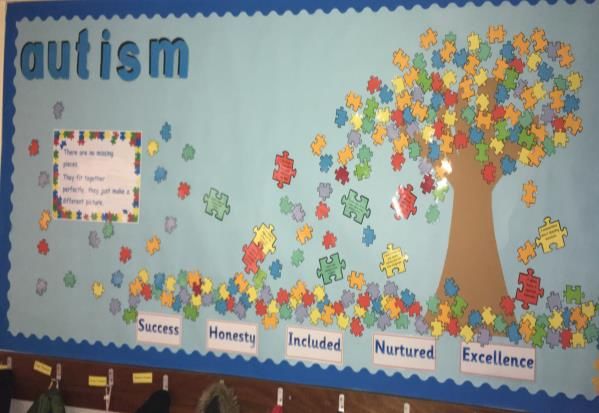
If you have concern for a child, call duty Social Work on 01343 563900 (08457 565 656 out of office
hours) and/or the Police on 101. Pass on your concern and all the information you have available to
you. This is not a process that intrudes on families and their children, but a process that is inclusive and
supportive to achieve the best outcomes for children.
The categories of abuse are:
Physical abuse
Emotional abuse
Sexual abuse
Neglect
If you are unsure, ask for the Child Protection Co-ordinator in the School. They have received the latest
training in Child Protection so that they are confident, well informed and supported to promote the
protection of children. You can discuss your concern with them. Social Work and/or Police can also be
consulted out with School hours if required.
More information can be found on the Moray Child Protection webpage here:
http://www.moray.gov.uk/moray_standard/page_55497.html
Security
During the school day all external doors are locked. All parents, visiting specialists, visitors or volunteers to
the school must report to the school reception and sign in before proceeding further into the building. All
volunteer helpers in the classrooms are required to complete a PVG (Protection of Vulnerable Groups
Scheme) form.
No child is allowed to leave the school or playground without permission. Please inform us if your child is
going to be absent for part of the day due to a medical appointment so that the appropriate arrangements for
collection are made.
Each child will have a ‘Named Person’ contact in school that is the point of contact for the child, parents,
professionals and the community. In Primary School this will be the Head Teacher.
The school also follows the Moray Child Protection Practice Guide which can be found at:
http://www.moray.gov.uk/downloads/file56162
Vision, Values and Aims
At Hythehill Primary School and Nursery our vision and values underpin the culture within our school.
Vision: We aim to inspire, include and improve educational experiences for all of our pupils and we
promote “High hopes, Health and Happiness at Hythehill” in all.
HIGH HOPES means: Having HEALTH means: Being HAPPY means:
5
S.H.I.N.E – SUCCESS – HONESTY – INCLUDED – NURTURED - EFFORT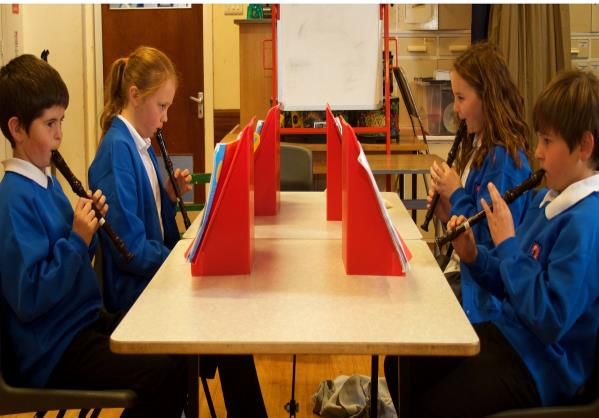
thinking that you will be able to having an active life smiling
achieve anything eating healthy food playing well together
always looking on the bright side being healthy inside and being friends
being willing to tackle a challenge outside learning
having ambition drinking lots of water playing well outside
not giving up engaging in Sport helping others
working hard exercising giggling and laughing
being determined and having goals developing social skills playing fairly
being positive through physical activity, being treated kindly
thinking of a bright future team building and taking responsibility
helping others to achieve positive behaviour getting a sticker for lovely work
aiming high making things in the sticky corner
believing in yourself winning a prize / SCOPE
not worrying, being happy joining in circle time
Values: The school community is currently reviewing the Values of the school in line with the school
undertaking UNICEF’s Rights Respecting School Award.
Promoting the Values - Whilst the review of the Values is being undertaken we have continued to working
with the currently values – S.H.I.N.E.
An inter-class competition operates in the school on a monthly basis. The initials indicate its purpose:
SUCCESS
HONESTY
INCLUDED
NURTURED
EFFORT
Every six weeks the school assembles so that class teachers can report on progress against their 3 class
targets which also reflect the School and Class Charters. The points from these targets are represented as
marbles in the class marble jar. When the jar is full the class can choose a treat. The winning class for each
month is also treated to refreshments and individual winners from each class are presented with a certificate.
Children coming into P7 are given a booklet about ‘Being a Senior Pupil in
Hythehill’ and they are all encouraged to apply for the post of girl or boy
house captain. Following the completion of application forms, the house
members read letters and listen to presentations before electing their own
house captains giving senior pupils the opportunity to take responsibility.
Together with our School Aims we encourage children to reach their
potential and become Responsible Citizens, Successful Learners, Confident
Individuals and Effective Contributors.
Successful Learners Confident Individuals
Plan a structured and balanced ‘Curriculum for Identify the emotional, physical and social needs of
Excellence’. pupils and help them develop positive attitudes,
Varied teaching methods and activities. E.g. ‘active personal and social skills.
learning’. Provide appropriate support for children with
Encourage pupil responsibility for self/peer additional needs.
assessment and target setting. Celebrating success in the classroom, the school and
Monitor progress, record achievement and attainment in ‘out of school’ life.
6
S.H.I.N.E – SUCCESS – HONESTY – INCLUDED – NURTURED - EFFORT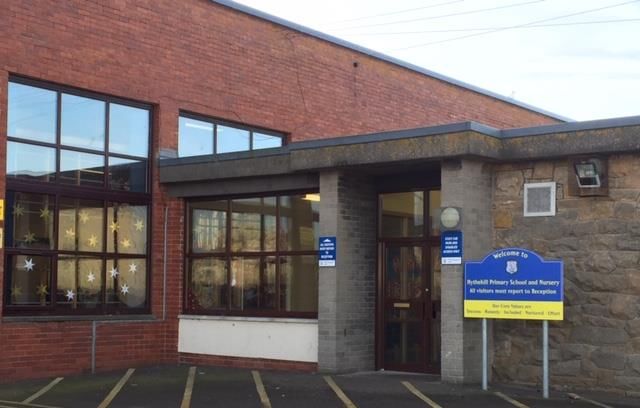
to ensure each child reaches their potential. Encourage a healthy and active lifestyle.
Create within the school a warm, caring and
supportive atmosphere in which children, staff and
parents feel secure and valued.
Responsible Citizens Effective Contributors
Encourage children to enrich the school and its Promote attitudes of enterprise and self-reliance.
community by acting responsibly and by valuing the Encourage pupils to work on their own, and in teams
unique culture and traditions of its past. to apply their thinking skills, to create and develop
Ensure that individual differences of race, culture and ideas, and to solve problems.
belief will be respected and celebrated as an enriching
factor in the school community. Equal opportunities
will exist for all.
Enable children to take part in decision making in the
school through the pupil council and class circle time
activities.
School Aims:
1. To encourage every child to develop appropriate life skills and positive attitudes to learning in order
to attain their highest potential.
2. To deliver a high quality curriculum providing breadth, depth, progression, coherence, relevance,
challenge and enjoyment, personalisation and choice in accordance with national guidance.
3. To promote good relationships within the school community and to maintain a happy, purposeful and
caring environment based on a sensible code of self and group discipline.
4. To encourage parents to take a positive and supportive role in the education of their child through the
development of mutual respect and partnership with the school.
5. To encourage pupils to play an active part in the local community and to involve the community in
the life of the school.
6. To provide a welcoming school environment that is well resourced and efficiently managed
7. To continually review policy and practice to maintain the highest standards within the school.
We encourage pupils to be responsible and to take an active part in the school while providing a relevant
context in which they can practise skills for learning, work and life through our ‘Contexts for Learning’ and
Pupil Groups.
PUPIL LEADERSHIP AND PUPIL VOICE
At Hythehill all children are part of at least one pupil voice
committee. These committees meet twice a term to develop
aspects of the School Improvement Plan or focus on a
community issues.
Choir Eco Committee
7
S.H.I.N.E – SUCCESS – HONESTY – INCLUDED – NURTURED - EFFORT
JRSO Health
(Junior Road Safety Officers)
RRSA Playground Leaders
(Rights Respecting School Award)
Gardening Clubs House Captains
P7 Buddies Website
Charities Committee
School and Nursery Ethos
There is an ethos of working together as a community with the pupils and staff providing a friendly and
approachable welcome where everyone feels valued. We work in a collegiate way with parents and pupils to
develop the school and use a variety of methods to seek their views and opinions. This may be through the
Parent or Pupil Voice, surveys or discussions.
Staff are supportive of each other and are motivated to develop their knowledge and skills. Self-reflection is
an ongoing development amongst pupils and staff to facilitate personal development and leadership
throughout the school. Pupils have a strong identity to Hythehill and the community and enjoy the
opportunities they have to ‘show case’ the school to others.
Primary 7 pupils undertake a variety of leadership roles across the school – house captains, working with
younger children, helping in the nursery on a regular basis etc.
All classes are represented on the various committees established in the school, giving pupils a voice into the
improvement of the school.
The emphasis on skills for learning, life and work are promoted within the school across all areas of the
curriculum through our Thinking, Talking Floorbooks, ‘Contexts for Learning’ and ‘Masterclass’ while
encouraging outdoor learning and responsibility for their environment.
Positive Behaviour
We encourage children to have a responsible and caring attitude towards others through our Positive
Behaviour Policy. This provides us with opportunities to celebrate their successes and achievements in the
classroom, in our regular assemblies, through our newsletters, through our ‘House Points’ system, Dojo
points and SCOPE awards.
Children are expected to follow the School Charter. They are made aware that they are responsible for their
own actions and we encourage them to be honest about their role in any situation, emphasising that if they
withhold the truth they will only make a bad situation worse for everyone involved. We believe in a positive
approach towards behaviour management but where this fails consequences will be enforced.
Consequences include:
verbal warnings for misbehaviour, or for persistent misbehaviour
loss playtime on the main playground
written exercises, or
withdrawal of privileges, or
reported to the Deputy Head Teacher or Head Teacher, or
parents/carers asked to discuss behaviour and agree future conditions, or
exclusion from school
When a child’s attitude or behaviour is giving cause for concern parents will be contacted to discuss together
possible strategies to support the pupil.
You should also note that any incidents involving violence, dangerous weapons, drugs or alcohol are
reported immediately to Educational Services, and the Police may also be involved.
8
S.H.I.N.E – SUCCESS – HONESTY – INCLUDED – NURTURED - EFFORT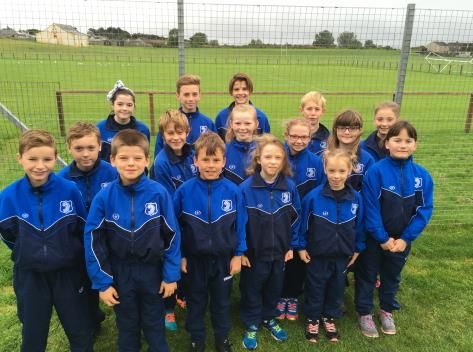
Leaflets and fuller information on Bullying, Disability Discrimination and Race Relations is available from
The Moray Council by telephoning the appropriate number, emailing or accessing the web page on the
council website. (See Appendix A for contact details).

Solution Oriented School (SOS)
Hythehill Primary is a ‘solution oriented’ school. We encourage children to treat others as they would like to
be treated themselves. Positive playground play and behaviour is emphasised. We have also developed
Nurture Groups. These groups are composed of children who have been identified by the class teacher or
who, through, working with parents have been identified as requiring some support in to cope in various
social situations. These situations can be in school and/or at home. All multi-agency meetings held in the
school use a ‘solution-oriented’ approach.

There are adult supervisors in the playground who reinforce the positive play message and monitor
behaviour. Pupils are asked to talk to an adult or teacher about matters that are not resolved or causing
distress.

Bullying
Incidences of potential bullying are taken very seriously. We try to help children to resolve any issues that
arise. It is very important that all children are encouraged to share if they are concerned or worried about a
situation in school. Please contact us if there is a matter causing your child concern. Together we can work
together as a team to ensure the best possible outcome for all involved.

Leaflets and fuller information on Bullying, Disability Discrimination and Race Relations are available from
The Moray Council by telephoning the respective number, emailing or accessing the web page on the
council website. (See Appendix A for contact details).

Enrolment and Transfer
New to school - Primary 1
Children starting school for the first time do so in August. Children are eligible for enrolment if they will be
five years old before 1st March the following year.
During term 2, potential new pupils and their families are invited to attend an open morning/afternoon. This
is an opportunity for parents choosing a school to have a look around the building, meet the Head Teacher,
Deputy Head Teacher and current Primary 1 teachers.
In January, a notice is placed in the local newspapers and significant places across the community which
inform parents about enrolment dates and times. Every parent enrolling a child for P1 will receive a copy of
the school handbook, Standards & Quality Report and P1 induction pack.
Following this there then begins an extensive transition process where staff from the school meet with the
various pre-school providers, the Health Visitors (the Named Person) and your child to begin to gather
information about your child’s development and interests.

                                             9
              S.H.I.N.E – SUCCESS – HONESTY – INCLUDED – NURTURED - EFFORT
In May, parents are invited along to an Induction meeting about the school day, curriculum etc. At this
meeting parents have an opportunity to meet their child’s class teacher. The ‘new’ P1 children are then
invited to the school during term 4 to spend some time over a period of weeks with the other children who
will start school with them.
When children start school in August, they attend on a part-time basis each day for the first week. This time
is equivalent to a nursery session of 3hours and 10 minutes a day. Parents are given a timetable in advance
which details these times.
The first few weeks in a new school can be a struggle for some children and their parents and so it is
important that a successful start is made in building relationships and establishing clear lines of
communication between home and school. Members of staff in Hythehill have experience in ensuring that
new pupils arriving at the school are handled sensitively. For some children, an extended six-week transition
can be provided in the summer term before starting school. This is organised by our SLT in discussion with
the relevant members of the ‘team around the child’.
New Pupils
We are very happy to welcome new pupils and their families. Anyone considering placing their child at
Hythehill Primary School should telephone the school office or call in to the school reception during office
hours to request an appointment to visit the school. You and your children will be shown around the school
building so that you all become familiar with the layout. There will also be the opportunity to visit classes at
work and meet some of the teachers, adult helpers and other staff members who work at Hythehill. The
Head Teacher or Depute Head Teacher will answer any questions that you or your children may have too.
Transfer from other schools
It is helpful if records and work from previous schools are available for your child’s new teacher so that we
can try to ensure that continuity of learning takes place. We also advise that children should be allowed to
settle over a few weeks, unless there are major concerns, and then parents should arrange to meet the teacher
to discuss how the transfer has gone.
MOD Support worker
Hythehill Primary School and Nursery serves the only RAF base in
Scotland. To support these children we have an allocated MOD Support
Worker, called Mrs Tracey McPherson. She works with parents, pupils and
the school in supporting children during transition periods and whilst a
parent is on detachment. Tracey holds regular coffee mornings and is
readily available to support.
Nursery
We have a nursery class in the school catering for 40 children in the Lossiemouth High Associated School
Group catchment area. Children can be enrolled during the month of January for joining the nursery class at
the start of the next school session. Places are allocated according to the criteria laid down by The Moray
Council with priority given to children resident within the same secondary school catchment as pre-school
10
S.H.I.N.E – SUCCESS – HONESTY – INCLUDED – NURTURED - EFFORTprovision. The requested place is managed by the Head Teacher with children already having a sibling in
attendance being given priority.
The parents of children who have been allocated a place are invited to participate in the induction
procedures during the summer term. A separate nursery handbook with additional information is available
on request.
Moving on to Secondary School
At the end of Primary 7, pupils move onto their secondary education. Pupils from Hythehill Primary usually
transfer to Lossiemouth High School. There is an extensive transition programme which begins in August
with a Transition Science Project undertaken by the four primary schools. In January, enrolment and
parental consent forms being completed. In February, Guidance staff visit the school. In early June
Guidance staff once again visit and pupils spend two days later in June at the High School.
There are enhanced transition opportunities scheduled for pupils who have additional needs or who may be
vulnerable. For these pupils extra visits are arranged and a transition programme runs over the summer
holidays too.
Lossiemouth High School holds an ‘Information for Parents’ evening in mid-June.
The contact details for Lossiemouth High School are:
Head Teacher: Mrs J Simpson
Telephone Number 01343 812047
Address: Coulardbank Road
Lossiemouth
Moray IV31 6JU
Email: admin.lossiehigh@moray-edunet.gov.uk
PROCEDURES FOR CONTACTING THE SCHOOL
The School Administrator is Mrs Diane Russell. Parents can contact the Office on 01343 812014 with any
enquiries or to advise the school of your child’s absence. The Office is open from 8.30am until 3.30pm.
Calls made to the office outwith these times may not be answered.
The school telephone information line can also be used to leave messages or to hear about any general
school information e.g. in the event of severe weather closing the school. You can use this information line
to leave any non-urgent messages when the school is not open.
Absence
For the safety and welfare of your child it is important that the school is informed, by telephone on the
morning of the first day of absence, if possible before 9.15am. Alternatively a message can be left on the
school telephone information line by following the instructions below for a non-urgent message. If an
absence is not recorded and contact is not made with the family by 9.30, then the school has a Duty of Care
to inform the Police.
Family Holidays During Term Time
Advice from the Scottish Executive is that holidays taken during the school session, other than in
exceptional circumstances, should be considered as unauthorised absences. Parents need to inform the
school about such holidays, and each case will be considered on its merits.
School Telephone Information Line
Instructions for the use of the School Telephone Information Line are as follows:
11
S.H.I.N.E – SUCCESS – HONESTY – INCLUDED – NURTURED - EFFORTCalls to this number will be charged a 2p per minute service charge plus your call provider’s access
charge
SEVERE WEATHER WARNING
Dial 0870 054 9999
Dial in the school’s PIN ~ 031270
This will take you to the Hythehill’s mailbox where you will enter a menu system
Press 1 – to hear information about severe weather affecting the school day.
LEAVING A NON URGENT MESSAGE
Dial 0870 054 9999
Dial in the school’s PIN ~ 031270
This will take you to the Hythehill’s mailbox where you will enter a menu system
Press 2 – to leave a non-urgent message
Record your message after the tone remembering to include your child's name
Press any number when you have finished.
Concerns and Complaints
Hythehill has an open door policy, which means that parents are encouraged to contact the school office in
order to make an appointment to speak to staff at a mutually convenient time. This appointment may not
take place on the same day as the request is made due to other learning and teaching commitments. If issues
remain unresolved then an appointment can be made (through the school administrator) with the Depute
Head Teacher or Head Teacher.
Daily communication with school can be made by using the homework diary and we encourage parents to
sign the diary each night to affirm that they have seen the homework their child has completed.
SCHOOL ACTION PLAN (School Improvement Plan)
At Hythehill we strive to improve the educational experiences for all our pupils. The priorities we have
identified for this year have been discussed with the Parent Council and Pupils. They are detailed in
Appendix B.
THE SCHOOLS SUCCESSES OVER THE YEAR
Full details of the school’s successes and achievements are available in the ‘Standards & Quality Report’ in
Appendix C.
Achievements continue to be celebrated regularly through assemblies, presentation of certificates and
stickers, monthly newsletters, out of school achievement displays in our foyer and celebration of events in
local newspapers. This year we have continued to experience many successes and achievements; some of
these are:
Taking part in local sporting competitions - cross country, orienteering, football, netball and Kwik
Cricket.
Enjoying a three day residential trip to Alltnacriche focusing on outdoor education and citizenship
12
S.H.I.N.E – SUCCESS – HONESTY – INCLUDED – NURTURED - EFFORT Open afternoons, class assemblies focusing on aspects of the SIP and highlighting these areas
through a whole school approach.
Very successful Harvest festival, where local senior citizens enjoyed our assembly, and tea and
refreshments afterwards. Donations received were shared between senior citizens and Moray
Foodbank.
House fundraising events for local and national charities
The Christmas Fayre involves all the children in making various crafts
P1-3 nativity and P4-7 concerts were a huge success.
Charity fundraising events e.g. Red, White and Blue Day and Children In Need.
A copy of the current School Improvement Plan and annual Standards and Quality Report are available from
the school office. A copy of the Standards and Quality Report is sent annually to all parents. If you wish
further information please contact the school.
Information on Hythehill (and other schools) performance can be obtained at:
http://www.educationscotland.gov.uk/inspectionandreview/reports/school/index.asp
CURRICULUM
Curriculum for Excellence (often shortened to CfE) is the curriculum in Scotland which applies to all
children and young people aged 3-18, wherever they are learning. It aims to raise attainment and
achievement for all, enabling young people to develop the skills, knowledge and understanding they need to
succeed in learning, life and work. It aims to raise standards, prepare our children for a future they do not yet
know and equip them for jobs of tomorrow in a fast changing world. All children and young people have an
entitlement to provision of an excellent education so that they develop skills for learning, life and work.
Curriculum for Excellence is not a 'one size fits all' curriculum. It provides greater personalisation and
choice so that learning is more challenging, enjoyable and relevant to each child’s needs, strengths and
interests. Curriculum for Excellence enables professionals to teach subjects creatively, to work together
across the school and with other schools, to share best practice and explore learning together. Glow,
Scotland’s unique, world-leading, online network will support learners and teachers in this and there are
plans already in place for parents across the country to have access to Glow in due time.
You can also access further information about the curriculum and supporting your child on:
http://www.LTScotland.org.uk/Parentzone
http://www.educationscotland.gov.uk/parentzone/cfe/index.asp
http://www.educationscotland.gov.uk/parentzone/resources/index.asp
Curriculum for Excellence develops skills for learning, life and work to help young people go on to further
studies, secure work and navigate life. It brings real life into the classroom, making learning relevant and
13
S.H.I.N.E – SUCCESS – HONESTY – INCLUDED – NURTURED - EFFORThelps young people apply lessons to their life beyond the classroom. It links knowledge in one subject area
to another, helping children understand the world and make connections. It develops skills so that children
can think for themselves, make sound judgements, challenge, enquire and find solutions.
Curriculum for Excellence is all about bringing real life into the classroom and taking lessons beyond it.
Learning and teaching will still focus on subjects and knowledge in addition to developing skills and
understanding. The following website page has more information on other subjects and knowledge covered
by the curriculum:
http://www.educationscotland.gov.uk/parentzone/cfe/subjectsandknowledge/index.asp
Curriculum Levels
These describe the progression in learning and development of children and young people from 3-18 years.
In brief, these are:
Early Level – pre-school through to the end of Primary 1
First Level - through to the end of Primary 4
Second Level – through to the end of Primary 7
Third and Fourth Level - Secondary 1-3
Senior Phase - Secondary 4-6
As a very general guide, children are expected to be at Second level, and beginning to learn and develop at
Third level, as they make the transition from primary into Secondary Education.
Children and young people progress through these levels at their own pace; and naturally some do so more
quickly, or a little later than expected, dependant on individual circumstances and needs.
Experiences and Outcomes (Es and Os)
Teachers plan work appropriate to groups or individual pupils using the CfE Experiences and Outcomes,
Children learn at different rates and teachers plan carefully to meet their needs, develop their skills and
attitudes and ensure challenge and progression.
Each learning experience will provide the opportunity for children to learn a number of outcomes
throughout a range of curriculum areas. We use detailed planning and ‘Thinking, Talking Floorbooks’ to
deliver inter-disciplinary learning opportunities using interesting ‘Contexts for Learning’ e.g. Scotland, The
Rainforest, Toys Then & Now, etc. Not only do children learn more about the context, but they are
continuously developing their literacy, numeracy and social skills too.
We are currently working hard to develop the children’s ability to discuss not only what they have learnt but
also how they learn.
Key areas of Education
Literacy across learning,
Numeracy across learning and
Health and Wellbeing across learning
Experience - describes the learning activity taking place.
Outcome - describes what the learning will achieve
e.g. knowledge, understanding, skills, awareness and attitudes.
The Seven Principles - The Eight Curriculum Areas –
all learning must take account of these principles: containing a range of subjects:
Challenge and Enjoyment Expressive Arts
Breadth Art, Drama, Music and Dance
14
S.H.I.N.E – SUCCESS – HONESTY – INCLUDED – NURTURED - EFFORT Progression Health & Wellbeing
Depth Personal, social and emotional health. Also P.E.
Personalisation and Choice Literacy and English
Coherence Communicating with others. Reading, Writing and
Relevance Modern Languages
Numeracy and Mathematics
This is to ensure children's development is useful Number work, Problem Solving
and meaningful Religious and Moral Education
Religions, values and beliefs.
Sciences
Understanding our planet
Social Studies
Scotland and the World; past, present and future.
Technologies
Food, Design and Computing.
MORE ABOUT THE CURRICULUM
Play
Play is acknowledged as an essential part of the primary curriculum, particularly at the early stages where it
could be described as a child’s ‘work’. It provides a focus for children to explore, and to learn about sharing
materials and ideas. Encouraging a growth mindset of curiosity helps children to learn, unlearn and relearn
concepts as well as gain an understanding of their world in a non-threatening way. The ways in which
children learn through play are discussed more fully at the nursery and P1 induction evenings.
Literacy
Language consists of reading, writing, speaking and listening. All of these are essential to other parts of the
curriculum and at the heart of the children’s learning. Through literacy they receive much of their
knowledge, enabling them to communicate effectively with others for a variety of purposes. The school aims
to develop in its pupils the skills necessary to read with understanding, listen attentively, talk confidently
and to write fluently and legibly with accurate spelling and punctuation.
Talking and Listening
We encourage:
clear pronunciation of words and correct grammar
discussion in groups/whole class
presentations to groups/whole class/ whole school
15
S.H.I.N.E – SUCCESS – HONESTY – INCLUDED – NURTURED - EFFORT listening to the opinions of others if they are to fit in socially and to increase their concentration
span.
Reading
The reading scheme is introduced in P1 alongside the Jolly Phonics
scheme. Children learn to build vocabulary through sound recognition and
blending. Children are also given keywords to build sight vocabulary.
Children are given both fiction and non-fiction books
by the class teacher, as well as presented with
opportunities to choose their own books from the
school library. Parental support with reading and
modelling of good practice is encouraged through
various homework activities.
Staff are always looking for new and exciting ways to encourage children to embrace
the love of reading.
Writing
The school uses a writing programme developed by the Authority. This programme offers individuality,
continuity and progression across the school.
Various forms of writing are undertaking in all year groups – persuasive, recount, report, imaginative, poetry
– to name but a few.
Spelling
From Primary 1, children use Jolly Phonics scheme which is a
multi-sensory approach to learning sounds.
From Primary 2 onwards children use Jolly Grammar for spelling
and grammar. The blends and spelling rule being taught are sent
home as part of the homework programme. Parental support in
learning spellings through various homework activities is
welcomed.
Handwriting
Letter formation is an important motor skill for all children to practise. Throughout the school children are
encouraged to develop a fluent style of handwriting and apply it to all aspects of their work.
1+2 Languages
All these literacy skills are further developed with the introduction of French from Primary 1 and a further
language, Spanish, being introduced at Primary 6. The availability of languages at second level depends on
teacher specialism. The school also offers British Sign Language as a further Language. This is a lunchtime
club offered by a member of staff.
Numeracy
Numeracy plays an important part in everyday life and within specific contexts such as
science, technology and industry. It is about solving problems not just ‘doing sums’. The
ability to calculate quickly is essential. We aim to develop the children’s ability and
confidence to have a high level of competence in mental calculations involving addition,
16
S.H.I.N.E – SUCCESS – HONESTY – INCLUDED – NURTURED - EFFORTsubtraction, multiplication and division so that they can apply these skills in real life situations.
At Hythehill the practical activities, necessary for children to fully understand computation, will come first.
We use a variety of teaching materials, textbooks, cards and computer programmes. Games and interactive
activities are used to learn basic facts and to give repeated practice.
Children need to practise orally and in written form to ensure that they can
access numerical facts quickly and accurately. Mental maths is given a high
priority in our school. Parental support in the learning of number bonds,
tables, etc is welcomed.
There are three broad topics within the Numeracy curriculum:
• Number, Money and Measurement
• Shape, Position and Movement
• Information Handling – the making and interpretation of databanks graphs, diagrams etc.
Many of these topics are met again in other curriculum areas to provide children with the opportunities to
practise their knowledge in a different context. Within all three of these topics there will be opportunities to
tackle problem solving activities that encourage the practical application of mathematical knowledge and
understanding.
Health & Wellbeing
Learning in health and wellbeing ensures that children and young people develop the knowledge and
understanding, skills, capabilities and attributes which they need for mental, emotional, social and physical
wellbeing now and in the future.
Learning through health and wellbeing enables children and young people to:
• make informed decisions in order to improve their mental, emotional, social and physical wellbeing.
• experience challenge and enjoyment.
• experience positive aspects of healthy living and activity for themselves.
• apply their mental, emotional, social and physical skills to pursue a healthy lifestyle.
• make a successful move to the next stage of education or work.
• establish a pattern of health and wellbeing which will be sustained into adult life, and which will help to
promote the next generation of children.
Through circle time we actively encourage the children to take turns in sharing ideas and experiences, as
well as displaying acceptable behaviour, courtesy and respect for all.
All children are given a variety of opportunities to work cooperatively as part of a group to help further
develop the skills introduced through circle time.
All children are given the opportunity to stand as a class rep for the following committees
Pupil Council
Eco Committee
Health Committee
JRSO
RRSA
At Hythehill we aim to promote a positive attitude towards physical and outdoor education. Our visiting
specialist, class teachers and outside agencies provide a wealth of opportunities to encourage all children to
experience a variety of sports.
Religious and Moral Education
At Hythehill we help the children to develop an understanding that the world is made up of people who may
or may not follow and practise different religions.
Christianity and Other World Religions are taught so that pupils learn about
Beliefs
17
S.H.I.N.E – SUCCESS – HONESTY – INCLUDED – NURTURED - EFFORT Values and Issues
Practices and Traditions
Teachers include social, moral and religious education within topics, and through this teach the concept of
tolerance towards all people.
Parents are entitled to withdraw their children from R.E. lessons if they so desire. To make these
arrangements please forward a letter to the Head Teacher stating your reason/s for this request.
Expressive Arts
Art and Design
Drama
Music
Dance
Expressive Arts encourages children to be creative and expressive, while providing
them with opportunities to explore different media. Primary 5 children benefit from
Recorder instruction and individual children are taught various instruments following
an audition. These individual lessons carry a fee which is billed directly to the parent
from the tuition service. The school does not have any interaction with administration
of these fees.
Technologies
Learning in the technologies enables children and
young people to be informed, skilled, thoughtful,
adaptable and enterprising citizens. The technologies
framework has been organised to offer opportunities
for personalisation and choice using diverse contexts
for learning. These are:
Technological development in society
ICT to enhance learning
Business
Computing science
Food and textiles
Craft, design, engineering and graphics
The school is very well supported with
netbooks and other technology resources, such
as k-nex and logo.
18
S.H.I.N.E – SUCCESS – HONESTY – INCLUDED – NURTURED - EFFORTLEARNING AND TEACHING
Varied Learning Methods
Curriculum for Excellence encourages the use of different approaches to
learning in schools developing learners’ skills, knowledge and
understanding in more depth.
At Hythehill the children will be presented with opportunities to learn
using a variety of different teaching methods. These are examples of how
children learn:
Using Technologies – find, research, communicate, create and
present
Active Learning – engaging with the learning task, whether mentally or physically rather than
being a passive learner and just completing a task.
Cooperative Learning/Critical Skills –encouraging learners to discuss their ideas and solve
problems together to gain a deeper understanding.
Interdisciplinary Learning – using links between different areas of learning to learn, unlearn and
relearn, as well reinforce and deepen understanding.
Outdoor Learning – Using the local community and
surrounding environment. Grant Park opposite our school
provides a wonderful environment in which to promote outdoor
learning. Outdoor learning forms an integral part of our health
and wellbeing curriculum and learning skills for life.
Personalisation and Choice - encouraged to plan their learning
with the class teacher through the use of Thinking, Talking
Floor Books, so that they have ownership of what they learn. This provides strong motivation and
engagement of our learners as well as giving them a deeper insight into what they are learning and
why they are learning it.
Skills
The CfE emphasises the development of skills for learning, life and work. These are wide ranging and
include:
High Order Thinking Skills – thinking about complex issues, problem solving, analysis, evaluation
and creativity.
Critical Thinking Skills – making judgements and decisions, communicating, cooperating with
others and self-organisation.
Growth Mindset – thinking and discussing how a fixed belief of non-achievement can be addressed
through rewording the approach to learning and celebrating success for all.
19
S.H.I.N.E – SUCCESS – HONESTY – INCLUDED – NURTURED - EFFORTAssessment
At Hythehill assessment is the cornerstone of good teaching and
learning and it is important that information about children’s
progress is collected systematically and used for appropriate
action.
Teachers assess all aspects of the curriculum and personal
development on a daily basis as they observe, question, listen,
correct work and prepare tasks. We assess to identify the
strengths and areas for development for each child in order to
improve their attainment. Effective assessment can ensure that
teaching and learning experiences are matched to the needs of all
the children and that this information is used to plan for the next stage of development. Teachers also
regularly update the school’s Tracking and Monitoring system, which informs planning, Reporting to
Families and pupils’ learning needs.
Pupils are actively encouraged to assess their own work and that of their peers, identifying their next steps
and developing their skills to become independent learners. These are recorded in the week Reporting to
Families reports sent home to parents. More formal ‘Progress over time’ is reported to parents on a termly
basis.
More formal assessments include:
PIPS (Performance Indicators in Primary Schools) testing of P1 pupils takes place at the start of the
school year to provide a baseline indicator of the knowledge each child has when entering school.
Primary 1 pupils also participate in SNSA assessments towards the end of Primary 1. This data
informs Teacher Professional Judgement.
Primary 2, 3, 5 and 6 pupils complete INCAS (Interactive Computerised Assessment System) tests in
Reading and Maths. These are used as an internal tool to confirm Teacher Professional Judgement
of the children’s’ learning needs and checks the child’s progress over time. This information is also
used to inform identified Support for Learning needs.
Primary 4 and 7 complete SNSA assessments. These assessments are to provide further information
to support Teacher Professional Judgement when assessing with a pupil has achieved a evel within
the Curriculum for Excellence.
Reporting
In October after the October holidays, Appointment Evenings take place, each parent has the opportunity to
meet with their child’s teacher with the purpose of discussing how well they have settled into their new class
and to set skills based targets for their child’s learning. Children are welcome at these meetings too.
Reporting to parents has undergone a transformation. From January 2018, parents have been informed
weekly of the learning taking place in class. The class teacher and the pupil provide a constructive comment
on a regular basis with an opportunity for parents to comment weekly. At the end of each term there is a
20
S.H.I.N.E – SUCCESS – HONESTY – INCLUDED – NURTURED - EFFORTsummary report sent home highlighting progress through a level, attainment, behaviour and completion of
homework. Again, parents and pupil are encouraged to comment on the progress being made.
Throughout the year, parents may be invited, or may request a meeting to discuss their child’s progress.
These appointments are made at a time convenient to both parent and class teacher.
Support for Learning/Additional Needs
Children do not all progress at the same rate and provision is made within the school for children who, for a
variety of reasons, are experiencing difficulties. When a child has been identified as requiring additional
support, parents will be notified and in some cases invited to come in to school to discuss the matter with the
class teacher and/or the Support for Learning teacher. A programme of work may be initiated to help to
overcome the difficulties being experienced by the child and this programme may involve a request for
additional home support. Some children will have an LSP (Learning Support Plan) and/or an IEP (Individual
Education Plan) devised for them. The LSP and IEP will be shared with parents and the programme will be
monitored and updated on a regular basis. Staff also work in partnership with other agencies e.g. Speech &
Language Therapy, Educational Psychology.
The Support for Learning teacher may work with a child, or group of children, in the classroom and
sometimes children are withdrawn from class for specific tasks. Some children may only need additional
help for a short period of time whereas others may have a longer term requirement.
We also appreciate that some pupils will exceed expectations and need to be challenged in their learning.
These needs will normally be met by the Classroom Teacher, but occasionally the Support for Learning
Teacher may work with individual pupils or small groups to extend their learning.
If you have any concerns please contact the Class Teacher in the first instance. On-going concerns will be
referred to the Head Teacher, Mrs Susanne Campbell or the Principal Teacher for ASfL, Mrs Alison Sayers.
The Education (Additional Support for Learning) (Scotland) Act 2009 came into force on 14 November
2010 and more information can be found on The Moray Council’s website regarding this and the council’s
provision for additional support needs in Moray. There are also internet links to other potentially useful
organisations via The Moray Council’s website. Please refer to Appendix A for how to access this.
Information on GIRFEC (“Getting it Right for Every Child”) is available at:
http://www.scotland.gov.uk/Topics/People/Young-People/gettingitright
Enquire – the Scottish advice service for additional support for learning
Enquire offers independent, confidential advice and information on additional support for learning through:
Telephone Helpline: 0845 123 2303
Email Enquiry service: info@enquire.org.uk
Advice and information is also available at www.enquire.org.uk
Enquire provides a range of clear and easy-to-read guides and factsheets including the parents’ guide to
additional support for learning.
21
S.H.I.N.E – SUCCESS – HONESTY – INCLUDED – NURTURED - EFFORTPARENTAL INVOLVEMENT OPPORTUNITIES
We aim to communicate effectively with parents and to work in partnership
with you. We ask that you, as parents, take an active interest in all that your
child does and support us in maintaining the high standards set by the school.
Parent Consultations
At Hythehill we value the opinions of our parents and members of the
community. We consult with a sample of people when making important
changes in the school and when revising policies.
Homework
The school has a homework policy and progression for P1-7. We actively encourage parent to support their
child’s learning at home. Allow time to complete reading and other homework in an environment that is free
from distractions. Discuss their learning with them and do not hesitate to add any comments you have about
their learning, when you sign their reading records or homework diaries.
Open Afternoons/Class Assemblies
We offer open afternoons for parents to view their child’s learning and
achievements. These may be a whole school event or as a class complete a
relevant piece of learning and wish to share it. Primary 1 carry out ‘shared
learning’ every Friday with their parents.
Each class also undertakes a ‘class assembly’ once a year to which parents are
invited.
Curriculum Information Sessions
At various times of the year and in accordance with the Action Plan of the school or Parent Council holds
explanatory sessions on different aspects of the school.
EXTRA CURRICULAR ACTIVITIES
The availability of activities offered varies from year to year.
22
S.H.I.N.E – SUCCESS – HONESTY – INCLUDED – NURTURED - EFFORTFootball Active Schools Netball
P1-7 P1-7 P6/7
Cross Country Orienteering Science Club
P4-7 P6/7 P4/5
Kwik Cricket Stem Choir
P6/7 P5-7
P7
PARENT ORGANISATIONS
Parent Council
The aim of our Parent Council is to enhance the co-operation and partnership which already exists between
parents, staff, the Education Authority and the wider community. This group is often asked by the Head
Teacher to consult on new policy documents, the School Improvement Plan, issues of safety etc.
23
S.H.I.N.E – SUCCESS – HONESTY – INCLUDED – NURTURED - EFFORTYou can also read


