Improving Mood Through Community Connection and Resources Using an Interactive Digital Platform: Development and Usability Study
←
→
Page content transcription
If your browser does not render page correctly, please read the page content below
JMIR MENTAL HEALTH                                                                                                                            Ortiz et al

     Original Paper

     Improving Mood Through Community Connection and Resources
     Using an Interactive Digital Platform: Development and Usability
     Study

     Robin Ortiz1*, MD; Lauren Southwick2*, MPH; Rachelle Schneider2*, BS; Elissa V Klinger2, MS; Arthur Pelullo2,
     MS; Sharath Chandra Guntuku2,3, PhD; Raina M Merchant3, MD; Anish K Agarwal2, MD, MPH
     1
      Perelman School of Medicine, University of Pennsylvania, Philadelphia, PA, United States
     2
      Department of Computer and Information Science, University of Pennsylvania, Philadelphia, PA, United States
     3
      Penn Medicine Center for Digital Health, Philadelphia, PA, United States
     *
      these authors contributed equally

     Corresponding Author:
     Robin Ortiz, MD
     Perelman School of Medicine
     University of Pennsylvania
     3400 Civic Center Bvld
     Philadelphia, PA, 19104
     United States
     Phone: 1 9145826995
     Email: robin.ortiz@pennmedicine.upenn.edu

     Abstract
     Background: COVID-19 continues to disrupt global health and well-being. In April-May 2020, we generated a digital, remote
     interactive tool to provide health and well-being resources and foster connectivity among community members through a text
     messaging platform.
     Objective: This study aimed to prospectively investigate the ability of a health system–based digital, remote, interactive tool
     to provide health and well-being resources to local community participants and to foster connectivity among them during the
     early phases of COVID-19.
     Methods: We performed descriptive and nonparametric longitudinal statistical analyses to describe and compare the participants’
     mood ratings over time and thematic analysis of their responses to text messages to further assess mood.
     Results: From among 393 individuals seeking care in an urban emergency department in an academic setting, engaged in a
     two-way text messaging platform, we recorded 287 mood ratings and 368 qualitative responses. We observed no difference in
     the initial mood rating by week of enrollment [Kruskal-Wallis chi-square H(5)=1.34; P=.93], and the average mood rating did
     not change for participants taken together [Friedman chi-square Q(3)=0.32; P=.96]. However, of participants providing mood
     ratings at baseline, mood improved significantly among participants who reported a low mood rating at baseline [n=25, 14.97%;
     Q(3)=20.68; P
JMIR MENTAL HEALTH Ortiz et al
Hypotheses
Introduction
We first hypothesized that texting individuals is feasible and
Background acceptable to disseminate the tool as we continually attempt to
Since January 2020, COVID-19 has continuously disrupted define and improve mental health and well-being. Second, given
global health and well-being. The World Health Organization that participants received differential text-based follow-up
(WHO) declared a state of global public health emergency, depending on their initial mood rating with the aim to improve
which is the highest level of alarm under international their self-reported mood rating by providing continuous support,
legislation. The WHO reported that COVID-19 induces and we hypothesized that participants beginning the intervention
exacerbates fear, worry, anxiety, loneliness, and stress, with low self-reported mood ratings would experience mood
especially among vulnerable populations and those with chronic improvement through the 4-week intervention, while those with
and underlying health conditions [1]. initial high self-reported mood ratings would retain such a rating.
Previous studies have reported that connecting individuals to Methods
community resources and providing ongoing support can
decrease loneliness, thereby potentially improving well-being Intervention and Participants
in the context of the trauma associated with COVID-19 [2,3]. In March 2020, we built a digital platform that deployed
Additionally, during the pandemic it is especially critical for automated texting to assess well-being and provide the
individuals to be directed to trusted community and health responders with access to community-based health and
information resources [4]. Given the concerns regarding the well-being resources. The platform provided participants with
mental health impacts of COVID-19, the need for community institution-supported health information, COVID-19 updates,
interventions to address these potential consequences has arisen virtual support, well-being tips, and additional resources. We
[5]. used Mosio, a platform complying with the Health Insurance
Despite the current need to address mental health through Portability and Accountability Act of 1996, to invite eligible
community-based interventions, the implementation of such participants and communicate with them through two-way
interventions has been difficult owing to public health texting. This study was approved by the institutional review
constraints such as social distancing. This is particularly board and quality improvement unit of the University of
concerning for vulnerable population (eg, homeless individuals, Pennsylvania.
older individuals, those with substance abuse, or those with Eligible participants, including adults aged >18 years and with
mental health issues) who may not have access to traditional SMS-capable phone numbers were identified from the electronic
support networks or resources because many physical locations health record and approached for enrollment through text
are nonoperational, operating through drastically reduced hours, message after being discharged from one of two emergency
or operating at limit capacity. Digital platforms and technology departments (ED) (including a university medical center ED
and their utility have received increasing attention in bridging with a high patient capacity, and a second community-based
the gaps between individuals and community-based support [4]. university-affiliated hospital ED with a comparatively lower
The rapid expansion of digital platforms that offer connection patient capacity) in the Philadelphia area between April 13 and
are critical for supporting individuals and their networks to May 8, 2020. Eligible subjects needed to opt into the follow-up
foster access to credible health information and support mental text messages and the 4-week program after enrollment (Figure
health and well-being during social distancing and 1).
shelter-in-place orders [6].
Upon enrollment, participants received weekly text messages
Objective asking them to rate their mood from 0 to 10 [7]. Individuals
This study aimed to prospectively investigate the ability of a could voluntarily provide qualitative descriptors of their mood
health system–based digital, remote, interactive tool to provide along with their rating. Tiers of mood rating by the participants
health and well-being resources to individuals and facilitate a trigger the receipt of differential content (Multimedia Appendix
sense of connection during the early phases of COVID-19. We 1). Participants reporting a “high” mood rating of 7-10 would
investigated self-reported individual mood ratings of the study always receive a link to an uplifting resource, whereas those
participants and hypothesized that digital engagement and reporting a “low” mood rating of 0-3 always received links to
community resources would improve their mood. Additionally, mental health and well-being resources. Those reporting a
we investigated user-generated comments to identify themes in “medium” mood rating of 4-6 received links to either an
areas of need. uplifting resource or to the resource homepage to view all
featured resources, alternating each week.
https://mental.jmir.org/2021/2/e25834 JMIR Ment Health 2021 | vol. 8 | iss. 2 | e25834 | p. 2
(page number not for citation purposes)
XSL• FO
RenderXJMIR MENTAL HEALTH Ortiz et al
Figure 1. Schematic representation of the study design. A total of 2431 individuals were sent an enrollment text after being discharged from the
emergency department at one of two academic medical centers emergency. Of them, 409 (17%) individuals opted in and were asked to self-report
well-being, of whom 286 (70%) responded. Of them, 236 (83%) individuals provided a mood rating at week 1 and 175 (60%) responded during week
1 and at least one follow-up, including 101 (35%) individuals who responded at weeks 1 and 4. Furthermore, 45 (16%) participants responded at all 4
weeks.
set of codes was generated after open review of a subset of
Statistical Analysis responses by the authors (RO and LS), which yielded a
Quantitative Analysis codebook (Multimedia Appendix 2). The author (LS) then coded
and independently reviewed qualitative responses (n=368) for
We used summary statistics to describe the participant
consistency and agreement.
demographics. We performed the two-sample Student t test and
Fisher exact test to compare the demographics of responders Qualitative Mood Themes
and nonresponders. We conducted a quantitative and qualitative After two authors (RO and LS) applied the initial codes to the
analysis of the mood rating data and a descriptive analysis for main content and reviewed them, we observed that the codes
all mood ratings. were reproducible and in themselves represented themes from
Changes in Mood Rating Stratified by Low and High among the main content messages. However, considering our
Initial Mood Ratings aim to assess mood in this study, we conducted a subanalysis
of the content in the text messages specifically under the main
We used a Kruskal-Wallis rank test to assess weekly mood
theme (code) of “mood” to form subthemes (LS). Word clouds
ratings of the cohort through the study period (7 weeks) and
were generated to capture the raw counts of most frequently
differences in δ mood (difference in mood rating between weeks
used words in the open-ended responses for messages identified
1 and 4) across the three groups of initial mood rating (low,
under the theme of “mood” and subthemes of “positive mood
medium, high) and further assessed these differences using the
elaborations” and “negative mood elaborations.”
Dunn post hoc test. We performed nonparametric longitudinal
statistical analysis using the Friedman test to compare mood Data Exclusion
ratings by participant over the course of their enrollment in the Over the study period, a total of 2431 individuals were
intervention (4 weeks). To test our hypothesis that participants discharged from the ED of one of two urban academic medical
with an initial “low” mood rating upon initial participation in centers and approached with an enrollment text. Of them, 409
the intervention would experience mood improvement over the (17%) opted into the “With You” program, and 383 participants
4-week intervention, we stratified the aforementioned analysis provided demographic (n=374) or mood rating (n=286) data.
by “low” (rating 0-3) and “high” (rating 7-10) mood. For completeness, all data available from the 383 samples were
Qualitative Overall Themes used for all statistical analyses.
We used a qualitative thematic analysis approach and applied
the five stages of framework analysis (familiarization,
Results
identification of a thematic framework, indexing, charting, Intervention and Participants
mapping, and interpretation) [8]. We performed thematic coding
of the data through an iterative open coding process. An initial The 409 individuals who opted in the “With You” program
were asked to self-report well-being. Almost two-third (n=286,
https://mental.jmir.org/2021/2/e25834 JMIR Ment Health 2021 | vol. 8 | iss. 2 | e25834 | p. 3
(page number not for citation purposes)
XSL• FO
RenderXJMIR MENTAL HEALTH Ortiz et al
70%) participants responded (Figure 1). Of them, 236 (83%) were female (n=264, 70.1%), and had a mean age of 46.9 (SD
responded with a mood rating at week 1, and 175 (60%) 16.8) years (Table 1). Most participants (n=225, 60.2%) were
responded during week 1 and to the follow-up text during week recruited from the ED of the hospital with a high overall patient
4, including 101 (35%) who responded during weeks 1 and 4. capacity (hospital A). We observed no difference in
Furthermore, 45 (16%) participants responded during all 4 demographics between mood-rating responders and
weeks. The majority of participants were Black (n=275, 73.5%), nonresponders.
Table 1. Participant demographics (N=374).
Characteristics Total populationa Responders (n=280) Nonresponders (n=94) P value
Age (years), mean (SD) 46.9 (16.8) 47.1 (16.9) 44.1 (17.2) .06
Females, n (%) 264 (70.1) 202 (54.0) 62 (16.6) .26
Race, n (%) .51
Black 275 (73.5) 204 (72.9) 71 (75.5)
White 69 (18.4) 55 (19.6) 14 (14.9)
Asian 14 (3.7) 11 (3.9) 3 (3.2)
Other 16 (4.3) 10 (3.6) 6 (6.4)
Hispanic ethnicity, n (%) 14 (3.7) 10 (3.6) 4 (4.3) .65
Emergency department, n (%) .91
Hospital A 225 (60.2) 168 (60.0) 57 (54.3)
Hospital B 149 (39.8) 112 (40.0) 37 (39.4)
a
Of the total study sample (n=383), all demographic data were missing for 9 (2.3%) participants.
[H(2)=14.85; PJMIR MENTAL HEALTH Ortiz et al
Changes in Mood Rating Stratified by Low and High significant increase in mood ratings at week 1 and those at weeks
Initial Mood Rating 2, 3, and 4 (PJMIR MENTAL HEALTH Ortiz et al
Table 2. Qualitative elaborations on mood (N=135a).
Themes (codes) Operational definition Frequency, n (%) Illustrative examples
Positive mood Elaborates on how or why 71 (52.6) • “I am in a good space. Praying for this attack on America to end so that we
elaborations they are in a good or posi- can get back to a normal existence. On a scale from 1-10 my mood is a 10.
tive mood I'm grateful to be alive and I'm trusting God to restore your lives the way
that is best for us and pleasing to Him.” [Participant #2, female, aged 58
years]
• “Should be a 10 later cause of the beautiful weather” [Participant #3, male,
aged 39 years]
• “My mood is much better. I am working with my therapist” [Participant #4,
female, aged 43 years]
Somatic Discusses somatic symp- 32 (23.7) • “My mood is an 8 right now just came from dialysis and is cramping a little”
toms [Participant #5, male, aged 62 years]
Negative mood Elaborates on how or why 17 (12.6) • “Thanks still at 3 I am going to call after I talk to my doctor” [Participant
elaborations they are in a bad or negative #6, male, aged 65 years]
mood • “My mood is up and down sometimes I feel sad because of life I already
have anxiety problems and already have depression almost every day I feel
like I'm having an anxiety attack sometimes …” [Participant #7, female,
aged 38 years]
Medical or Asks about medical appoint- 5 (3.7) • “I'm going to reach out to my PCP and see if there is anything he can do/let
scheduling con- ments or scheduling related him know what's going on” [Participant #8, female, aged 35 years]
cerns to mental health or mood
a
The sample of qualitative responses coded for the overall theme of “mood,” which was used for subanalysis of mood elaborations, including 10 (7.4%)
responses that were noncodable through subtheme analysis.
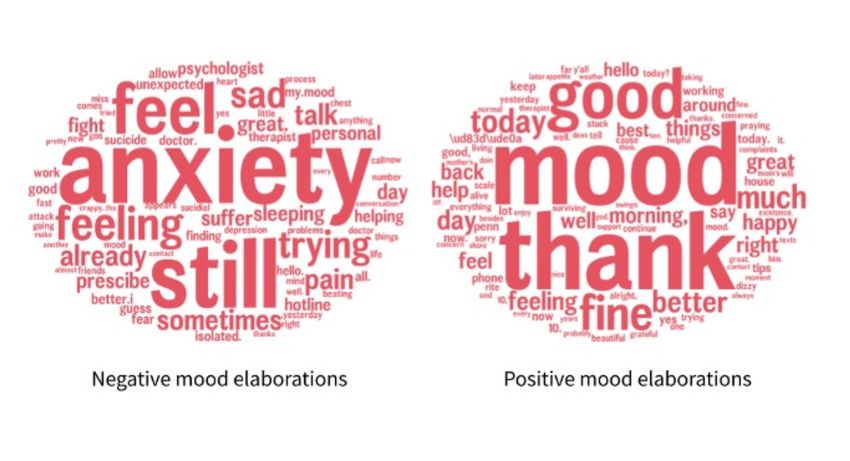
well-being (Figure 4). Among negative mood elaborations, the
Qualitative Mood Themes words “anxiety,” “still,” and “feel” were most commonly used.
Given our interest in understanding mental health, further We did not observe any theme or the use of the word
subanalysis of these 135 responses coded under the main theme “loneliness,” although 2 participants with negative mood
of “mood” revealed 7 subthemes among those listed in Table elaborations alluded to isolation from “friends” and “contact,”
2. Most subthemes were positive mood elaborations, with a with one stating, “I miss the personal contact and conversation.”
frequently observed association between mood and [Participant #11, female, aged 35 years]
health-related topics. For example, somatic health concerns
included citing pain impacting mood as, “my knees are bothering Among the positive mood elaborations, the words “thank” and
me this morning but otherwise I am okay” [Participant #2, “good” were most commonly used. For instance, several
female, aged 24 years]. Medical health concerns included the participants sent responses to the text messages, which were
need for the participants to reach out to their health care similar to the following representative responses:
providers (eg, primary care providers or psychiatrists) for Thank you for your help tips I also meant to tell you
medical assistance with their mood: that I'm over 60 years old I also am a diabetic and
I really don't know like I said I do have a psych asthma so it really is taking a toll on me but I do have
therapist he calls me once a week there is nothing a in home health care person he helps me out a whole
more that can be done for me ... I take my psych meds lot but when I am by myself that's when I feel the
everyday they help somewhat ... [Participant #3, worst so I will keep up with the tips and keep up with
female, aged 46 years] your team thank you. [Participant #4, female, aged
63 years]
Analysis of the subthemes for positive and negative mood
elaborations provided us a nuanced understanding of how I [am] feeling a lot better thank you so much for being
participants reflect and elaborate on their current level of here for me. [Participant #5, female, aged 57 years]
Table 2 provides additional examples of mood elaborations.
https://mental.jmir.org/2021/2/e25834 JMIR Ment Health 2021 | vol. 8 | iss. 2 | e25834 | p. 6
(page number not for citation purposes)
XSL• FO
RenderXJMIR MENTAL HEALTH Ortiz et al
Figure 4. For the respondents who provided qualitative text responses related to mood (n=136), positive mood elaborations were most common (n=71,
52.6%) and frequently referenced sentiments of “good mood” secondary to “thanks.” Negative mood elaborations (n=17, 12.6%) often referencing
statements of “anxiety,” “feel,” and “still.”
quarantining and social distancing, real-time digital platforms
Discussion are indispensable to patient care [9]. When designing novel
Principal Findings well-being and mental health digital tools, it is crucial for such
interventions to provide support to individuals with a low or
Our study demonstrates the feasibility of using a novel digital negative mood and to those with a high or positive mood. Our
texting platform to assess mood early during COVID-19 and study revealed an improvement in low mood ratings and the
the ability to acutely identify and address trends specifically stabilization of high mood ratings among participants enrolled
supporting mental health and well-being among individuals over 4 weeks. Although we cannot definitively conclude the
recruited from the EDs of two hospitals. First, we demonstrate cause of the observed changes in mood ratings without a
the feasibility of enrolling individuals to the digital platform in comparison group, our mixed methods analysis potentially
an otherwise less accessible population for consistent provides some valuable insights into digital patient care and
communication with the health system. The ED is a unique mood support. Our resources, including the social engagement
recruitment site with varying medical conditions, chief aspect of an interactive platform or the combination, may have
complaints, and a patient population often without access to or led to improvements among individuals with a low mood rating
engagement in consistent preventive care. Nonetheless, and to stability for those with a high mood rating. However,
individuals discharged from the ED, who opted into this study, our qualitative findings may provide preliminary insights into
were highly engaged. Our overall response rate of 70% a tool for mood enhancement and well-being during the
demonstrates the feasibility and acceptability of this platform pandemic. Our intervention may have effectively supported
in this cohort. Through the intervention, we obtained preliminary well-being and a positive mood through “gratitude” by fostering
results suggestive of a high efficacy of this platform for our a sense of connection and through positive reinforcement with
enrollees with low mood ratings at baseline, whose mood our resources. In particular, the interactive nature of the
improved over the enrollment period, while a high mood rating automated text messages to the participants when asking
was retained among those enrollees who reported high mood questions, making directed statements of thanks, and offering
ratings at baseline. Second, we identified common themes of pleasantries to the receiver may indicate that the participants
gratitude and positive mood elaborations in participant found the platform interpersonal. Of note, the theme of
communication through qualitative text messages. These “loneliness” was lacking, but the theme of “gratitude” was
findings suggest that for those who opt to engage in markedly apparent during communication through the platform.
communication through the platform, a text intervention for Lateef [10] reported that for, “EDs to make meaningful progress
resource delivery may benefit users by improving mood and in enhancing patient care, safety, satisfaction, and quality, staff
maintaining a positive mood. Further, our study reports must listen and respond to patients and customers.” Many
preliminary findings that support the need for a larger participants responded to the platform’s text messages as though
randomized controlled trial of our digital mood support platform. they were responding to a peer and would ask how about our
Prior to COVID-19, many health systems enacted clinical remote mood was and how we were doing through the pandemic.
monitoring lines; however, given the current practices of Having elicited sentiments of gratitude and connection, our
https://mental.jmir.org/2021/2/e25834 JMIR Ment Health 2021 | vol. 8 | iss. 2 | e25834 | p. 7
(page number not for citation purposes)
XSL• FO
RenderXJMIR MENTAL HEALTH Ortiz et al
intervention may serve as a digital modality for ensuring that enrolled. This may have resulted in a selection bias for those
patients and users feel heard. This pilot study shows how digital who were more motivated to accept the intervention, and that
platforms and technology can bridge the gaps between mood improvement among these participants might have
individuals and community-based support. resulted from their readiness to change their mood rather than
from the actual intervention itself. However, among the
Further large-scale randomized controlled trials are required to
individuals who opted into this study, we observed a relatively
understand the variables involved in interpersonal
high response rate (70%) to at least one mood rating despite
communication, compared to resource delivery; nonetheless,
limited follow-up for all four ratings. Accordingly, since
our findings provide preliminary evidence to show that the
recruitment essentially involved “cold” texting to most
combination of these elements may effectively enhance mood.
individuals discharged from the ED in a specific period, the
Further, since social media exposure is reportedly associated
response rate may be considered high given the pragmatic nature
with the exacerbation of anxiety and depression in China, which
of the approach. Future studies are required to address the
is hypothesized to be related to the “infodemic” of
barriers to and improvements in participant retention and in
misinformation classified by the WHO [11], our
engaging participants who may potentially change their mind
results—suggesting the possibility that accurate, virtual
to opt into the intervention or seek mood support. Lastly, our
resources and information can potentially benefit
study used a simplified rating scale for mood, and though our
individuals—provide a potential means to mitigate such
results provide qualitative insights into the participants’ mood
misinformation.
states, future studies could explore the interplay of mood ratings
Future Directions with depressive and anxiety symptoms. With the 70% response
To understand the effect of the COVID-19 pandemic on mental rate, this study highlights the feasibility of a pragmatic and
health and prepare for future public health crises, health systems completely remote mood intervention.
and community organizations should be equipped to implement Comparison With Previous Studies
population-level efforts to address and support well-being
The “With You” digital platform delivered real-time social or
through virtual means. The need for evidence-based mental
mood support, consistent with the broader goal of a digital
health platforms that provide reliable information to participants
microintervention [14]. Accordingly, our study reports on
was expressed even before the pandemic [12]. This study
assessment parameters suggested for digital microinterventions
provides insights into health systems and community centers,
such as user engagement, with 60% of subjects providing at
among other stakeholders, which are faced with challenges to
least two responses to mood ratings and quantitative and
devise solutions to address the immediate and long-term impact
qualitative data. In particular, data related to our primary
of the COVID-19 pandemic on mental health issues across
outcome of interest (ie, mood) and qualitative data including
communities [13]. Since individual needs would likely vary
the identification of users with general medical and health care
through periods of social distancing, phases of lockdown, or
concerns demonstrate the potential future implications of our
reopening of facilities, this platform offers a promising tool to
example of a digital microintervention aimed toward care
engage local community members with credible, relevant
delivery and social engagement. Our specific results reveal a
information and provide social support. Future randomized
generally positive and stable mood early during the pandemic,
controlled trials aiming to assess and enhance the applications
concurrent with previous reports [15]. This explains why our
of this platform need to compare the present intervention group
findings of improved mood in our study population particularly
with a control group and assess the participants’ readiness to
during the pandemic are promising. Furthermore, we found that
engage in support and change their mood, as this may improve
anxiety was a frequently reported negative mood elaboration
subject engagement and reach.
in our qualitative data, concurrent with previous reports. Early
Limitations during COVID-19, the Census Bureau and Centers for Disease
This study has several limitations. First, it did not have a Control and Prevention in the United States reported that
comparison or control group, thus limiting conclusions that can one-third of Americans experienced anxiety in May 2020, the
be drawn from mood improvements among participants with a prevalence rate being almost 2-fold that reported in the 2014
low self-reported mood rating. It is possible for these census [16]. However, previous studies have reported that
participants to have improved their mood without the resources interventions delivered through app-based platforms effectively
provided here, although the finding that overall mood did not decreased the prevalence of depression and anxiety, with
change over the 7-week study period suggests otherwise. particular improvements in anxiety when the app involved
Nonetheless, these preliminary data may potentially facilitate interactive coaching, as is the case for apps contained in the
the development of platforms focused on well-being, considering IntelliCare platform [17]. Indeed, our study suggests the
an increase in individuals experiencing mental health issues as potential for digital interventions for depression and anxiety to
an aftermath of the pandemic, and further highlight the need particularly meet the needs of individuals with low mood amid
for a randomized controlled trial to assess differential mood the pandemic.
changes between individuals who receive the intervention and Conclusions
those who do not. Second, this study is limited by its enrollment
Our findings suggest that a text messaging platform offering
and retention rates. Specifically, since this study used an opt-in
brief social engagement and vetted resources addressing mood
approach for participant enrollment, only a small subset of
support can assess and improve mood and potentially benefit
individuals discharged from the EDs of two hospitals were
https://mental.jmir.org/2021/2/e25834 JMIR Ment Health 2021 | vol. 8 | iss. 2 | e25834 | p. 8
(page number not for citation purposes)
XSL• FO
RenderXJMIR MENTAL HEALTH Ortiz et al
end users, specifically for a likely vulnerable population—those of future interventions in supporting mood, more specifically
accessing an ED during the pandemic and may otherwise not in the context of physical health, anxiety, and gratitude. Given
initiate their own digital engagement. This pilot study suggests the current need of digital interventions and data acquisition
that individuals with low mood, who opt to engage with the with social distancing, these findings have implications in future
texting platform, may experience mood improvement over a measures to address community engagement and mental health
4-week period. Finally, our qualitative data may clarify the role support.
Conflicts of Interest
RO is a consultant for the Aurrera Health Group on the ACEs Aware Initiative, which is beyond the scope of our study.
Multimedia Appendix 1
Opted in participants were texted weekly to assess mood and well-being using simple numeric scale (0-10, 0 representing worst
mood and 10 as best mood) (Panel A). For participants who reported a low mood, (0-3), they received follow-up message to
assess their mood compared to the previous day. If participants reported consistent low well-being scores (up to 3 days) or
responded with an urgent individual need (e.g. mental health issue) they were contacted by our team and connected to a trained
CHW. Mood scores four and greater received curated resources (Panel B). Panel C represents sample weekly featured resources.
[PNG File , 523 KB-Multimedia Appendix 1]
Multimedia Appendix 2
Supplemental Table 1.
[PNG File , 218 KB-Multimedia Appendix 2]
References
1. Mental Health and COVID-19. World Health Organization. URL: https://www.euro.who.int/en/health-topics/
noncommunicable-diseases/mental-health/data-and-resources/mental-health-and-covid-19 [accessed 2020-06-30]
2. Hwang T, Rabheru K, Peisah C, Reichman W, Ikeda M. Loneliness and social isolation during the COVID-19 pandemic.
Int Psychogeriatr 2020 Oct;32(10):1217-1220 [FREE Full text] [doi: 10.1017/S1041610220000988] [Medline: 32450943]
3. Masi C, Chen HY, Hawkley LC, Cacioppo JT. A meta-analysis of interventions to reduce loneliness. Pers Soc Psychol Rev
2011 Aug;15(3):219-266 [FREE Full text] [doi: 10.1177/1088868310377394] [Medline: 20716644]
4. Merchant R, Lurie N. Social Media and Emergency Preparedness in Response to Novel Coronavirus. JAMA 2020 May
26;323(20):2011-2012. [doi: 10.1001/jama.2020.4469] [Medline: 32202611]
5. Quinn A, Laws M. Addressing Community Needs and Preparing for the Secondary Impacts of Covid-19. NEJM Catal
Innov Care Deliv 2020 Jun 25 [FREE Full text] [doi: 10.1056/CAT.20.0186]
6. Shah S, Nogueras D, van Woerden H, Kiparoglou V. The Effectiveness of Digital Technology Interventions to Reduce
Loneliness in Adult People: A Protocol for a Systematic Review and Meta-Analysis. medRxiv. Preprint posted online July
03, 2019 [FREE Full text] [doi: 10.1101/19000414]
7. van Ballegooijen W, Ruwaard J, Karyotaki E, Ebert DD, Smit JH, Riper H. Reactivity to smartphone-based ecological
momentary assessment of depressive symptoms (MoodMonitor): protocol of a randomised controlled trial. BMC Psychiatry
2016 Oct 21;16(1):359 [FREE Full text] [doi: 10.1186/s12888-016-1065-5] [Medline: 27769201]
8. Srivastava A, Thomson S. Framework Analysis: A Qualitative Methodology for Applied Policy Research. Journal of
Administration and Governance 2009;72 [FREE Full text]
9. Morgan A, Balachandran M, Do D, Lam D, Parambath A, Chaiyachati K, et al. Remote Monitoring of Patients with
Covid-19: Design, implementation, and outcomes of the first 3,000 patients in COVID Watch. NEJM Catal 2020 Aug
05;1(4):1-12 [FREE Full text] [doi: 10.1056/CAT.20.0342]
10. Lateef F. Patient expectations and the paradigm shift of care in emergency medicine. J Emerg Trauma Shock 2011
Apr;4(2):163-167 [FREE Full text] [doi: 10.4103/0974-2700.82199] [Medline: 21769199]
11. Gao J, Zheng P, Jia Y, Chen H, Mao Y, Chen S, et al. Mental health problems and social media exposure during COVID-19
outbreak. PLoS One 2020;15(4):e0231924 [FREE Full text] [doi: 10.1371/journal.pone.0231924] [Medline: 32298385]
12. Torous J, Roberts LW. Needed Innovation in Digital Health and Smartphone Applications for Mental Health: Transparency
and Trust. JAMA Psychiatry 2017 May 01;74(5):437-438. [doi: 10.1001/jamapsychiatry.2017.0262] [Medline: 28384700]
13. Hill C, Martin JL, Thomson S, Scott-Ram N, Penfold H, Creswell C. Navigating the challenges of digital health innovation:
considerations and solutions in developing online and smartphone-application-based interventions for mental health disorders.
Br J Psychiatry 2017 Aug;211(2):65-69. [doi: 10.1192/bjp.bp.115.180372] [Medline: 28522435]
14. Baumel A, Fleming T, Schueller SM. Digital Micro Interventions for Behavioral and Mental Health Gains: Core Components
and Conceptualization of Digital Micro Intervention Care. J Med Internet Res 2020 Oct 29;22(10):e20631 [FREE Full text]
[doi: 10.2196/20631] [Medline: 33118946]
https://mental.jmir.org/2021/2/e25834 JMIR Ment Health 2021 | vol. 8 | iss. 2 | e25834 | p. 9
(page number not for citation purposes)
XSL• FO
RenderXJMIR MENTAL HEALTH Ortiz et al
15. Luchetti M, Lee JH, Aschwanden D, Sesker A, Strickhouser JE, Terracciano A, et al. The trajectory of loneliness in response
to COVID-19. Am Psychol 2020 Oct;75(7):897-908. [doi: 10.1037/amp0000690] [Medline: 32567879]
16. Anxiety and Depression: Household Pulse Survey. Centers for Disease Control and Prevention. 2020. URL: https://www.
cdc.gov/nchs/covid19/pulse/mental-health.htm [accessed 2020-08-31]
17. Mohr DC, Schueller SM, Tomasino KN, Kaiser SM, Alam N, Karr C, et al. Comparison of the Effects of Coaching and
Receipt of App Recommendations on Depression, Anxiety, and Engagement in the IntelliCare Platform: Factorial Randomized
Controlled Trial. J Med Internet Res 2019 Aug 28;21(8):e13609 [FREE Full text] [doi: 10.2196/13609] [Medline: 31464192]
Abbreviations
WHO: World Health Organization
ED: emergency department
Edited by J Torous; submitted 01.12.20; peer-reviewed by HJ Jeon, C Striley; comments to author 05.01.21; revised version received
19.01.21; accepted 28.01.21; published 26.02.21
Please cite as:
Ortiz R, Southwick L, Schneider R, Klinger EV, Pelullo A, Guntuku SC, Merchant RM, Agarwal AK
Improving Mood Through Community Connection and Resources Using an Interactive Digital Platform: Development and Usability
Study
JMIR Ment Health 2021;8(2):e25834
URL: https://mental.jmir.org/2021/2/e25834
doi: 10.2196/25834
PMID: 33635280
©Robin Ortiz, Lauren Southwick, Rachelle Schneider, Elissa V Klinger, Arthur Pelullo, Sharath Chandra Guntuku, Raina M
Merchant, Anish K Agarwal. Originally published in JMIR Mental Health (http://mental.jmir.org), 26.02.2021. This is an
open-access article distributed under the terms of the Creative Commons Attribution License
(https://creativecommons.org/licenses/by/4.0/), which permits unrestricted use, distribution, and reproduction in any medium,
provided the original work, first published in JMIR Mental Health, is properly cited. The complete bibliographic information, a
link to the original publication on http://mental.jmir.org/, as well as this copyright and license information must be included.
https://mental.jmir.org/2021/2/e25834 JMIR Ment Health 2021 | vol. 8 | iss. 2 | e25834 | p. 10
(page number not for citation purposes)
XSL• FO
RenderXYou can also read


