SCHOOL HEALTH UPDATE 2018 - Division of School Health Bureau of Community Health Systems - Pennsylvania Department of Health
←
→
Page content transcription
If your browser does not render page correctly, please read the page content below
SCHOOL HEALTH UPDATE 2018

  Division of School Health

       Bureau of
 Community Health Systems
DIVISION OF SCHOOL HEALTH

• Jill Clodgo, Acting Chief
• School Health Consultants
    Sheri Mountz
    Susan Templin
• Bureau Administrative Support
    Christine Weltmer, Administrative Officer 1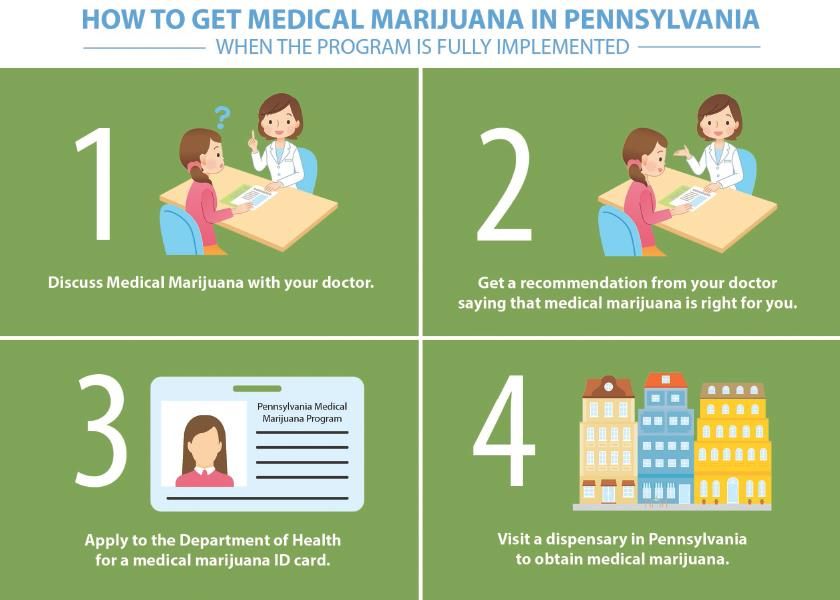
SCHOOL HEALTH CONSULTANTS

                  NC, NE and SW
                   Sheri Mountz
                   570-826-2062
                  smountz@pa.gov

                  SC, SE and NW
                    Sue Templin
                    717-787-8092
                  stemplin@pa.gov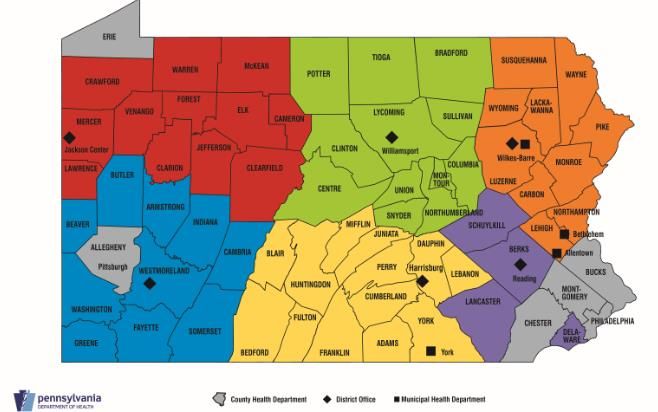
SCHOOL HEALTH WEBSITE

  www.health.pa.gov            Department of Health
www.health.pa.gov/schoolhealth Division of School Health

SCHOOL HEALTH WEBSITE (cont.)

SHARRS

 School Health Annual Reimbursement
     Request System (SHARRS)
    Access SHARRS at the following link:
   https://apps.health.pa.gov/sharrs
• There have been significant changes
  made to the submission dates due to
  the new processing system.
   It is important that reports and dental
   hygiene authorization plans be submitted
   timely. There will now be “hard” open
   and close dates.
SHARRS (cont.)
• It is important that schools mark their
calendars with the following Annual
Report and Dental Hygiene Plan Due
Dates.
It is the school’s responsibility to ensure
compliance with due dates.
The School Health Annual
Reimbursement Report will now open for
data entry May 15 and close
September 30.
Only the Superintendent/CEO may submit the
SHARRS report.SHARRS (cont.) • The Dental Hygiene Services Program Authorization Plan will now open for data entry April 1 and close April 30. Any SHARRS user may submit the Dental Hygiene Authorization Plan. The Dental Hygiene Authorization Plan must be closed before the SHARRS system can be opened for data entry in order for the system to process reports correctly.
SHARRS (cont.)

Schools that do not
 Have a hygienist hired, or
 Have a plan, developed and approved by
 the school dentist and administration,
 submitted to the Division of School Health
 on time
Will revert to a Mandated Dental
Program and cannot be changed after
the closing date due to processing
requirements.
SHARRS (cont.)

The September 30 SHARRS due date is
written in law. From the Public School Code of
1949:
 Section 2505.1. Reimbursement for Health Services.
 “…(b) …Reimbursement on account of health services
 rendered by a school district or joint school board
 may be withheld by the Secretary of Health unless
 the actual expenditures for the health services are
 certified to the Secretary of Health within three
 months after the end of the school year…” (the
 school year officially ends June 30 per the
 Department of Education).
SHARRS (cont.)

• An instructions button is located in the top
  right corner of every page.
• The instructions provide detailed guidance
  on how to complete the report, manage
  user accounts and determine which data
  must be included.
• The instructions button will direct the user
  to the section of the instructions that
  correlates to the page the user is on.
SHARRS (cont.)
• SHARRS data is used for statistical
  reporting and research, and should be
  accurate.
    Ungraded special education has been removed
    from the ADM field, as directed by PDE.
    Grade should be entered as defined in the
    student’s IEP.
• A CSN should review the report prior to
  submission to ensure healthcare data is
  accurate.
• Data entry errors delay the processing of
  the report and may result in deductions to a
  school’s reimbursement.
SHARRS (cont.)
• SHARRS webpage
Tally sheets
Instruction manual
Hard copy reportACT 48
• The Bureau of Public Health Preparedness
(BPHP)will enter Act 48 credits into PERMS
only as a last resort for certified school
staff who have no other tools, such as a
school or PASNAP membership.
All school districts are approved Act 48 providers.
If the school will not submit the hours, it may
need to be a contractual issue discussion.ACT 48 (cont.) • The certificates must be scanned and emailed to: RA-DHPATRAININGCOORD@pa.gov • This email inbox receives emails for the entire bureau. If not submitted correctly the credits will not be entered nor will you be contacted. In the subject line put “CON ED” so they know it is for Act 48 entry.
ACT 48 (cont.)
Provide your 7 digit PPID number and your name
as it is listed in PERMS on the certificate.
Make sure the name and date of the course and
the number of credits awarded is on the
certificate.
Incomplete or inaccurate submissions will not be
accepted, responded to or entered.
Do not send certificates to the Division of School
Health. They will not be entered or forwarded to
the Bureau of Public Health Preparedness.
ACT 48 (cont.)
• BPHP has also agreed to review and
  approve training courses for Act 48/58
  credits.
   It is the responsibility of the course
   presenter to obtain Act 48/58 approval and
   issue the certificate to attendees.
     BPHP will supply the presenter with a blank
     certificate and attendance roster.
     If certificates are submitted for courses taken
     independently, the certificate will not be reviewed
     for ACT 48/58 approval.
ACT 48 (cont.) The course materials must be scanned and emailed to: RA-DHPATRAININGCOORD@pa.gov In the subject line put “CON ED Course Approval” so BPHP knows it is for course approval. Incomplete or inaccurate submissions will not be accepted. For information on course submission requirements contact BPHP at the above email address.
ACT 48 CEU USED FOR ACT 58
• § 21.131. Continuing education
    (a) Requirement of continuing education. A
   registered nurse seeking licensure renewal shall
   complete 30 hours of continuing education
   approved by the Board during the biennial
   renewal period immediately preceding the
   application for renewal in accordance with section
   12.1 of the act (63 P.S. § 222) and this
   subchapter. The Board will not renew a license of
   a registered nurse who fails to verify compliance
   with the continuing education requirement.
ACT 48 CEU USED FOR ACT 58 (cont.) A registered nurse whose license is not renewed by the expiration of the biennial renewal period may not engage in the practice of professional nursing until the continuing education requirements are satisfied and the license has been renewed, reinstated or reactivated. … (5) For school nurses, evidence that the nurse’s certification by the Department of Education is current.
ACT 48 CEU USED FOR ACT 58 (cont.)

• Recommendations:
   Print screenshot proving active status
   from your Department of Education
   TIMS profile on the day your license is
   renewed
   Mail screen shot and Educational
   Specialist Certificate to BON if audited.
NARCAN (NALOXONE)

• Act 139 of 2014
       Administration of Naloxone
   School Health naloxone webpage
   Adapt Pharma Program
   Awarded a grant from the Clinton
   Foundation to Adapt Pharma.
   Address questions to:
  RA-DHNARCAN-SCHOOLS@pa.gov
NALOXONE (cont.) • The free Narcan doses, distributed by the Department of Health, will expire May 31, 2018. • There are currently no plans to offer replacement doses. • For replacement or additional doses, schools may purchase them from Adapt Pharma at a reduced cost (currently $75 per 2-dose carton).
NALOXONE (cont.)

• Adapt Pharma qualifies schools as
  “Direct Purchasers”
   https://www.narcan.com/direct-
   purchasers
     Download and complete the “Intake Form”
     from the above link. If you have any
     questions, please call ADAPT Customer
     Service at 1-844-4-NARCAN (844) 462-7226
     Fax or email the completed form to ADAPT
     Customer Service at (484) 367-7815 or
     customerservice@adaptpharma.com
DIABETES LEGISLATION • Act 86 of 2016 amended the Public School Code (Article XIV; 24 P.S. 14-1401 to 14-1424) with a number of provisions related to diabetes care in Pennsylvania schools.
DIABETES LEGISLATION (cont.)

 Act 86 permits school nurses, in consultation
 with their chief school administrator or a
 designee, to identify at least one school
 employee (“Identified Employee”) in each school
 building attended by a student with diabetes to
 be designated in a student’s service agreement
 or Individualized Education Program (IEP) to
 administer diabetes medication, use diabetes
 monitoring equipment and provide other
 diabetes care.
DIABETES LEGISLATION (cont.)

• This is not a mandated Act. Schools
  may voluntarily choose to implement
  the program.
• Only schools that implement the Act
  86 program are required to view the
  training modules and comply with all
  the requirements.
• The training slides may be used by
  anyone for informational purposes, if
  they so choose.
DIABETES LEGISLATION (cont.)

• Schools decide whether they want to
  allow unlicensed personnel to provide
  care to students with diabetes.
• Schools participating in Act 86 must
  adhere to all Act 86 requirements.
• Employees shall have the right to
  decline the responsibility.
ACT 2 OF 2017
• Section 1414.9. Administration of Epinephrine
  Auto-injectors by School Bus Drivers and School
  Crossing Guards.--The provisions of 42 Pa.C.S.
  §§ 8332 (relating to emergency response
  provider and bystander good Samaritan civil
  immunity) and 8337.1 (relating to civil immunity
  of school officers or employees relating to
  emergency care, first aid and rescue) shall apply
  to a school bus driver and a school crossing
  guard.
    Act 2 was approved May 16, 2017 and took effect
    60 days later.
ACT 2 OF 2017 (cont.) The school bus driver or school crossing guard may administer an epinephrine auto-injector to a student in a manner consistent with the policies established by their employer (school or independent contractor). The school bus driver or school crossing guard must successfully complete a training program developed and implemented by the Department of Health.
SCAN
• Suspected Child Abuse & Neglect
   Free live training for school nurses.
   Developed by the Pa Academy of Pediatrics.
     Presented on-site by a physician and a local
     Children & Youth worker.
     Approved for 3 credits (48/58) that satisfy Act
     126 and Act 31 requirements.
     Go to www.pascan.org to submit your
     presentation request.
     Contact Teresa Olsen, Program Director at the PA
     Chapter, American Academy of Pediatrics at
     tolsen@paaap.org with questions.
WHO IS ELIGIBLE FOR MM?
Who will be able to obtain medical
marijuana?
Patients who are residents
of the commonwealth who
have a serious medical
condition that have been
certified by a practitioner
may obtain medical
marijuana. A patient may
name a caregiver, and the
caregiver may obtain the
medical marijuana for the
patient.MEDICAL MARIJUANA (MM)– SAFE HARBOR
What is the Safe Harbor?
The Safe Harbor guidelines state that a caregiver, who has
completed an application provided by the Pennsylvania
Department of Health and been approved, may not violate Act
16 or the Pennsylvania Controlled Substance, Drug, Device and
Cosmetic Act. The caregiver legally obtains medical marijuana
in one of the approved forms under Act 16 to administer to a
minor (under the age of 18) who suffers from one of the 17
serious medical conditions covered by Act 16.MM CAREGIVER
Who is considered a “caregiver” under the
act?
• An individual 21 years of
age or older, unless
otherwise authorized:
• Parents
• Legal guardians
• Designees
• An individual fitting the
description above who
has successfully
completed an application
to the PADOH and
completed a background
checkMM CAREGIVER (cont.)
Can a caregiver be designated by
more than one patient?
Yes. A caregiver can have
up to five patients.MM SERIOUS MEDICAL CONDITIONS What is a “serious medical condition” under the act?
HOW TO APPLY FOR MM
QUESTIONS ABOUT MM

                      Questions?
Check the Department of Health website for updates on implementation.
     Visit www.health.pa.gov and click on “Pa. Medical Marijuana”
           under Hot Topics or www.medicalmarijuana.pa.gov

  To contact the staff at the Pennsylvania Office of Medical Marijuana,
             send an email to RA-DHMedMarijuana@pa.gov.
FIELD TRIP CONSIDERATIONS • Full document located on School Health website under Field trips. • Children entitled to same health services they need during school day.
FIELD TRIPS (cont.)

Consider the following when planning:
• Pennsylvania licensed prescriber order
  and written parental consent are
  required for all medications, including
  OTC’s.
• Parent may be asked, but not required,
  to attend.
• Parent may recruit “parental designee.”
FIELD TRIPS (cont.)

• School may not request a parent to
  sign a waiver of liability in relation to
  medication administration.
• Self-administration and/or self-
  carrying may be permitted for
  certain medications: rescue inhaler,
  epinephrine auto-injector, and
  diabetes medications
  (Glucagon/insulin).
FIELD TRIPS (cont.)

• EMTs and paramedics function under
  EMS medical command only, so they
  may not be utilized.

• Consider Pennsylvania licensed
  volunteers.
  Licensure verification: www.pals.pa.gov
FIELD TRIPS (cont.)

Licensed volunteer must:
 •   Function within scope of practice;
 •   Have necessary skills;
 •   Know plans of care/provider order; and
 •   Have clearances.

Consider: orientation to district, CPR,
first aid, TB test if > 10 hours per week
in direct contact with students.
FIELD TRIPS (cont.)

• Out of state: School should ensure
  licensed nurse or licensed volunteer
  permitted to practice under
  Pennsylvania license.
 https://www.ncbsn.org
• Out of country: U.S. State
  Department may be of assistance in
  reaching consulate.
 http://www.state.gov/s/cpr/rls/index.htm
SCHOOL JURISDICTION

• School jurisdiction
   Public School Code, Section 510
     School board may adopt rules during time
     students are under supervision of school,
     including time spent in coming to and
     returning from school.
   22 Pa. Code, Section 15.1
     Equal opportunity to participate in the
     school program and extracurricular
     activities.
SCHOOL JURISDICTION (cont.) Schools are required to provide nursing services to students any time they are under school jurisdiction School jurisdiction includes: Trips to and from school while in school furnished transportation. Class time (including lunch, recess, physical education). School sponsored extracurricular activities, field trips and camps. Non PIAA sports/athletic activities (such as intramural activities).
SCHOOL JURISDICTION (cont.)

• U.S. Department of Education
2013 Guidance
Civil rights protections for students
with disabilities under section 504
• http://www2.ed.gov/about/offices/lis
  t/ocr/letters/colleague-201301-
  504.html
SCHOOL JURISDICTION (cont.)

“A school district that offers extracurricular
athletics must do so in such manner as is
necessary to afford qualified students with
disabilities an equal opportunity for
participation. This means making reasonable
modifications and providing those aids and
services that are necessary to ensure an equal
opportunity to participate, unless the school
district can show that doing so would be a
fundamental alteration to its program.”
http://www2.ed.gov/about/offices/list/ocr/letters/c
olleague-201301-504.html
PRIVATE/NON PUBLIC SERVICES

• Provision of School Health Services to
  Private/Non-Public Schools
   School Nurse Act, Act 707 of 1962
    • Equal health services are required for public and non-public
      schools.
    • Neither the law nor regulation distinguish differences in the
      level of service to public vs. non-public schools.
   Pa. Public School Code, § 14-1401 and 14-1402
    • (1) "Children of school age“ …means every child attending or
      who should attend an elementary grade or high school, either
      public or private, within the Commonwealth
    • Section 1402(a.1) requires that “every child of school age
      shall be provided with school nurse services …”
PRIVATE/NON PUBLIC SERVICES
• Provision of School Health Services to
Private/Non-Public Schools
28 Pa. Code § 23.74
• A function of the school nurse is to interpret the
health needs of individual children including:
assessment of student health care needs, development
of appropriate plans of care, medication administration,
first aid and emergency care, etc.
School nurses rotate to every assigned
building; amount of time necessary is based
on assessment of student health needs as
determined by the school nurse.PRE-K AND K
• Schools do not have to provide services to K
and/or pre-K if those grades are not offered in
the public school, unless there is an
memorandum of understanding.
• Schools do have to provide services if the K or
pre-K is an “integral” part of the school district.
Integral means that the pre-K is operated by the
public school district, not just renting space in
the school building.
• Schools may not receive reimbursement via
SHARRS for “Pre-K Counts” students, as they
already receive funding for these students
(double dipping).ADMINISTRATIVE AUTHORITY
• Section 1106 of the Public School Code of
1949. Duty to Employ.--The board of school
directors in every school district shall employ
the necessary qualified professional
employees, substitutes and temporary
professional employees to keep the public
schools open in their respective districts in
compliance with the provisions of this act.
http://www.legis.state.pa.us/cfdocs/legis/LI/ucons
Check.cfm?txtType=HTM&yr=1949&sessInd=0&s
mthLwInd=0&act=14&chpt=11&sctn=6&subsctn=
0ADMINISTRATIVE AUTHORITY (cont.) • Section 1410. Employment of School Health Personnel. Section 1410. Employment of School Health Personnel. Except as otherwise provided in this article, all school districts alone or jointly with other districts or joint school boards shall employ school physicians and school dentists but only with the approval of the Secretary of Health... and shall employ one or more school nurses…
ADMINISTRATIVE AUTHORITY (cont.)

• Pa Code Chapter 23 School Health
   § 23.31. Administration.
      (a) General. The administration of the local school
     health program shall be the responsibility of the
     school board or joint school board. The
     administrative officer shall be the district
     superintendent, the supervising principal or the
     county superintendent.
ADMINISTRATIVE AUTHORITY (cont.)
§ 23.31. Administration.
(b) Duties of the administrative officer. The
administrative officer, through the board of school
directors, shall arrange for the appointment of all
health personnel including physicians, dentists,
nurses, dental hygienists, medical and dental
assistants, and medical technicians. With the
assistance of these personnel, the administrative
officer shall plan the health program. He shall check
and file periodic progress reports and sign all
reports for the various Commonwealth
departments. He shall integrate the educational
phases of the school health program with the
school curriculum, promote the formation of
advisory school health councils and attempt to
integrate the school health program with
community health programs.ADMINISTRATIVE AUTHORITY (cont.)
• Responsibility of nurse to determine
appropriate level of care for students.
PDE- CSPG 95- Principal
A principal may supervise and direct nurses …
exclusive of directing health services controlled by
the Nurse Practice Act.
CSPG 101- Paraprofessional
A paraprofessional shall not be directed to engage in
health-related activities reserved exclusively for
licensed professionals.ADMINISTRATIVE AUTHORITY (cont.)
• In loco parentis
Public School Code, Section 1317 Authority of
Teachers, Vice Principals and Principals over
Pupils.
Every teacher, vice principal and principal in the public
schools shall have the right to exercise the same
authority as to conduct and behavior over the pupils
attending his school, during the time they are in
attendance, including the time required in going to
and from their homes, as the parents, guardians or
persons in parental relation to such pupils may
exercise over them.
Does not provide parental authority for
medication administration and other nursing
functions.SHARING HEALTH INFORMATION
• Sharing health information
49 Pa. Code § 21.18 Nurse Practice Act
Covers standards of nursing conduct, requirement for
registered nurses to safeguard patients’ dignity, right
to privacy and the confidentiality of patient
information.
Records that are transferred to a student’s new
school are to be maintained by the new school.
Records entered into an electronic database must be
secure from unauthorized personnel access to a
student’s health information.
Records should never be sent back to the student’s previous
school, as that school no longer has a right to the student’s
health information.SHARING HEALTH INFORMATION (cont.)
• Sharing health information
Pa. Public School Code, § 14-1409
All health records … shall be confidential, and their
contents shall be divulged only when necessary for
the health of the child or at the request of the parent
or guardian to a physician …
28 Pa. Code § 23.55
Health records shall be maintained for each child …
kept in the school building where the child attends …
available to the school nurse at all times …shall be
transferred with the child when he moves from one
school to another or from one district to another.
Personally identifiable information should not be
submitted to the Division of School Health.FERPA HIPAA
• Family Educational Rights and Privacy Act
Health records maintained by a school district that
receives funds under any program administered by
the U.S. Department of Education are “education
records” subject to the Family Educational Rights
and Privacy Act (FERPA).
FERPA allows schools to disclose a student’s health
and medical information to teachers and other
school officials, without written consent, if these
school officials have “legitimate educational
interests” in accordance with school policy.FERPA HIPAA (cont.)
• Family Educational Rights and Privacy Act
The school district must issue annual notice of
rights under FERPA to parents and to students over
age 18, which includes information regarding
criteria used by the school for determining which
school staff members have been designated as
“school officials” and what is “legitimate
educational interest” for staff access to education
records.
FERPA@ed.govFERPA HIPAA (cont.) • HIPAA School nurses may communicate concerns about medical orders or share related health issues or information that may be relevant to the treatment regimen with the physician. HIPAA allows the school nurse and physician to communicate with each other without written authorization of the parent if it is for treatment purposes. State licensure statutes and professional standards of practice for nurses and physicians require nurses to question/clarify medical orders, when indicated, before carrying them out, regardless of the healthcare setting. They also require physicians to provide nurses with sufficient information for safe execution of the treatment plan.
EDUCATION FOR HOMELESS YOUTH
• The definition of a student “awaiting foster
  care placement” was removed from the
  definition of “homeless children and youth”
  effective Dec. 10, 2016.
    These students are subject to the same
    requirements of any enrolling student, such as
    immunizations.
    Access the current Department of Education's Basic
    Educational Circular (BEC) on homeless youth here
    To view all Department of Education BECs:
    http://www.education.pa.gov/Pages/Codes%20and
    %20Regulations/Basic-Education-Circulars.aspx
EDUCATION FOR HOMELESS YOUTH
Questions?
Contact Mr. Storm Camara
Pennsylvania Department of Education
ECYEH state coordinator
717-772-2066
scamara@pa.govNURSE PRACTICE ISSUES
• School nurses function under
multiple laws:
Nurse Practice Act
Public School Code
Federal accommodation laws
• Licensure requirements in effect
regardless of the nurse’s practice settingNURSE PRACTICE ISSUES (cont.)
• CSN caseload
CSN must go to all assigned buildings
on a regular basis.
School district is responsible for provision of
school health services.
Based on number of students and health
needs.
CSN can’t cover a caseload they never see.
• CSN substitute
Only CSN can “officially” substitute for another
CSN.NURSE PRACTICE ISSUES (cont.)
• Responsibilities:
Coordinate care.
Develop plans of care.
Participate in teams (ex. student assistance, IEP).
Communicate with parents.
Perform duties exclusively connected with medical
and dental school health activities (28 Pa. Code
Chapter 23, Section 23.34).
The duties of school nurses shall be those assigned
by the school district or joint school board which are
exclusively connected with medical and dental school
health activities. The technical content of the duties
of the nurse shall be those prescribed by the
Department of Health.NURSE PRACTICE ISSUES (cont.)
• Supplemental staff:
May not carry a caseload.
Function under their own license.
Function under the direction of the CSN.
• Responsibilities:
Daily care of students.
Assist with completion of mandated screens and
exams.NURSE PRACTICE ISSUES (cont.)
• Licensed Practical Nurse
A CSN may supervise if he or she has
supervisory certificate.
§ 21.141. Definitions.
Practice of practical nursing—The
performance of selected nursing acts in the
care of the ill, injured or infirm under the
direction of a licensed professional nurse, a
licensed physician or a licensed dentist
which do not require the specialized skill,
judgment and knowledge required in
professional nursing.SBAP AT A GLANCE
School-Based ACCESS Program (SBAP)
Nursing ServicesSBAP AT A GLANCE (cont.) SBAP allows local education agencies (LEAs) to seek reimbursement for certain medically necessary health- related services documented in IEPs for Medical Assistance (MA)-eligible students provided in school settings. Includes nursing services and medication administration
SBAP AT A GLANCE (cont.)

• Medical Authorization Requirements
 As a condition of Medicaid payment, health-
 related services identified in a student’s IEP must
 be ordered/prescribed by a licensed practitioner
 (i.e. CRNP) within their scope of practice, and
 enrolled in the Medical Assistance (MA) Program.

• Services provided to students prior to the
  date of the medical authorization are not
  compensable.
SBAP AT A GLANCE (cont.)

• Practitioner’s orders must be
  documented on prescription or SBAP
  medical practitioner authorization forms
  (MPAF).
• Practitioner’s orders must be concurrent
  with the IEP and obtained at least
  annually, or whenever there is a change
  to a student’s health-related service(s).
SBAP AT A GLANCE (cont.)
Ordering, Referring, Prescribing (ORP)
Providers:
• Federal law requires physicians and other
  practitioners within their scope of practice
  who order, refer or prescribe services for
  MA beneficiaries to enroll as MA providers.
• All licensed practitioners within their scope
  of practice signing prescriptions or MPAFs
  must be enrolled in the MA program.
SBAP AT A GLANCE (cont.)

• The prescribing practitioner’s credentials
  must be provided on the prescription or
  MPAF:
    National Provider Identifier (NPI) – 10-digit
    number, assigned to the provider on the
    federal level
    MA Provider Number – 13-digit number,
    assigned to the provider on the state level by
    DHS
SBAP AT A GLANCE (cont.) • In Pennsylvania, CRNPs must have a collaborative agreement with a licensed physician to order, refer or prescribe services (CRNP Practice 49 Pa. Code Section 21.282a) and to enroll in the MA Program. • Only licensed MD’s or DO’s can prescribe personal care services in the SBAP, effective 1/1/2017. • CRNPs signing medical authorizations for SBAP must have a collaborative agreement per their scope of practice.
SBAP AT A GLANCE (cont.)

Enrolling in MA:
MA Program online provider enrollment
application:
https://provider.enrollment.dpw.state.pa.us

• CRNPs would enroll as Provider Type 09

• DHS provider enrollment hotline 1-800-
  537-8862
SBAP AT A GLANCE (cont.)

Individual or group services:
• Individual and/or group must be clearly
  identified on both the MPAF and the IEP
  with the frequency and duration specified
  for each type of session.
• A combination of individual and/or group
  may be listed on the MPAF and the IEP, so
  long as it is deemed medically necessary
  and clearly indicates the frequency and
  duration for each type of session.
SBAP AT A GLANCE (cont.)

• Compensable examples for IEPs:
   “individual speech therapy for 30 minutes 2x per
  week”
   “group speech therapy for 30 minutes 2x per month”

• Non-compensable example for IEPs:
   “individual or group therapy for 30 minutes 10x per
 month” (does not properly identify the service to be
 provided)
SBAP AT A GLANCE (cont.)

Billing Units:
• Most SBAP services, including nursing
  services, are billed on a 15-minute unit,
  with the exception of evaluations and
  medication administration.
    Medication administration is billed on a per
    encounter unit of service.
    Evaluations are billed on a per evaluation unit
    of service.
SBAP AT A GLANCE (cont.) • Medication administration should be logged separately from all other nursing services, since they are separate rates. • Service minutes can accumulate only when the following occurs: same student, same date and same service. • Provider logs are required to contain exact “start time” and “end time” – do not round off or round up!
SBAP AT A GLANCE (cont.)
• Provider Logs used for billing have been
  updated for FY 2017-2018 dates of service
  – LEAs can modify templates but must
  contain all DHS-required fields.
• Logs are to be completed by qualified
  providers only.
• Direct services, face-to-face with the
  student, are the only ones that are
  compensable.
• Discussion of “Other Direct Service” –
  provider must provide a clear description of
  the service.
SBAP AT A GLANCE (cont.)

Random Moment Time Study (RMTS)

What is the purpose of RMTS?
The Random Moment Time Study (RMTS)
methodology is used to select, capture and
code moments in time for determining on a
statewide basis how frequently participants
are involved in a Medicaid billable activity.
SBAP AT A GLANCE (cont.)

• Nurses providing SBAP services can be
  included on the school’s Direct Services
  Staff Pool and would be eligible to be
  randomly selected for a “moment” or one
  minute moment of time.
• All staff receiving a “moment” must
  respond within five days to be valid.
• It is important for participants to both
  respond timely to the moment and provide
  a clear description of the activity during
  the moment.
SBAP AT A GLANCE (cont.)

• “Moment” notifications are emailed
  directly to the randomly selected
  participants each quarter and copied to
  the school.

• Follow-up questions are used if
  clarification or additional information is
  needed to code the moment.

• Failure to respond will disqualify the
  moment, impacting the state response
  rate.
SBAP AT A GLANCE (cont.)

RMTS Moment Questions:
1. Were you working during your sampled
   moment? (If the answer is “no,” the survey
   ends.)
2. Who was with you?
3. What were you doing?
4. Why were you doing this activity?
5. Is this activity regarding a special
   education student?
6. Is the service you provided part of the
   child’s IEP?
SBAP AT A GLANCE (CONT.)

DHS Contact Information:
SBAP Website:
http://www.dhs.pa.gov/provider/School-
BasedACCESS/

Becky Ludwick, SBAP director
717-787-5512
rebludwick@pa.gov
MEDICATION ADMINISTRATION

• CSN may designate unlicensed
  school staff to administer the
  following medications:
   Asthma rescue inhalers.
   Epinephrine auto-injectors.
   Glucagon (if opts into Act 86).
   Insulin (if opts into Act 86).
   Narcan (naloxone).
MEDICATION ADMINISTRATION

• If self administration or unlicensed staff
  are permitted, it requires at a minimum:
    School policies and procedures.
    Provider order and permission.
    Parent/guardian permission.
• CSN determines staff designation based
  on a student’s health needs.
    CSN assures staff training is completed.
    CSN assesses staff/student annual competency.
    CSN assures student acknowledgement.
STANDING ORDERS • Provider orders are good for one year. • Summer school and other school sponsored activities may need to be considered if standing orders are used over the summer. • School year officially begins July 1 per the Pa Department of Education.
STANDING ORDERS (CONT.)

• Standing orders must have school
  physician approval for use in the
  following cases:
   Non-licensed staff is giving emergency
   medications like rescue inhalers, epinephrine
   auto-injectors, and naloxone;
   District licensed nurses are providing care at
   non-public/private schools;
   District volunteers are providing care; and
   Supplemental nurses at CTC are using district
   standing orders.
STANDING ORDERS (CONT.)

• Schools may minimize use of medications
  under standing orders for various factors,
  including cost, expiration date, etc.
• OTC’s require an order and parent
  permission.
• Standing orders are null and void if the
  district loses its school physician,
  necessitating individual orders.
STANDING ORDERS (CONT.)

• Orders must contain exact dose, (age and
  or weight), route, frequency and
  indication. (Orders must not state, “per
  package or parental instructions.”)
• Orders must not require nurse to
  diagnose. (Example= Tinactin, Lotrimin)
STANDING ORDERS (CONT.)
• Fluoride tablet availability:
    Bulk fluoride tablets are no longer being manufactured
    and/or the price has increased dramatically.
    Systemic fluoride tablet supplementation should be
    individualized and all sources of fluoride for the
    individual should be considered before using systemic
    fluoride tablets.
    Fluoride varnish is the most effective way to provide
    topical fluoride supplementation with sustainable
    fluoride benefits lasting up to 3 months.
       Currently the only people that can apply fluoride varnish
       in schools are certified school dental hygienists.
WORKING WITH AGENCY NURSES • The CSN maintains the caseload at all times the student is under school jurisdiction. • The agency staff functions as a supplemental staff under the guidance of the CSN. • The agency must share with the school district the most current provider orders and nursing plans of care. • School nurses should be included in care conferences and receive all updated information.
WORKING WITH AGENCY NURSES (cont.)

• The school nurse should also receive
  copies of agency nurse notes to show care
  provided during school day (maintenance
  of comprehensive school health record).
• The school nurse should receive copies of
  the medication administration record
  (MAR). Meds administered by an agency
  should be counted in SHARRS.
WORKING WITH AGENCY NURSES (cont.)

• Home Health Agencies function under
  HIPAA except when in a school setting, at
  which time they function under FERPA.
• Agencies must ensure the school is
  provided with all the appropriated parental
  consents, a daily report of the care
  provided and mediation administered.
COMMUNICABLE DISEASES

• Report suspected cases and questions
  related to communicable disease to your
  local Pennsylvania state health center or,
  when appropriate, the local county or
  municipal health department.

• Immunization questions should be
  directed to your immunization nurse
  consultant. If they are not available,
  contact the Division of Immunizations.
You can also read


