2018 MIPS Promoting Interoperability Performance Category Fact Sheet - CMS.gov
←
→
Page content transcription
If your browser does not render page correctly, please read the page content below

2018 MIPS Promoting Interoperability
Performance Category Fact Sheet
The Medicare Access and CHIP Reauthorization Act of 2015 (MACRA) ended the Sustainable
Growth Rate (SGR) formula, which would have made major cuts to Medicare payment rates for
clinicians. The law requires us to implement the Quality Payment Program and gives you 2
ways to participate:

Please note that this guide focuses on MIPS. For more information on how to participate in
APMs, visit the QPP page of the CMS.gov. Additionally, clinicians participating in a MIPS APM
should refer to the MIPS APMs fact sheet for more information.
Under MIPS, there are 4 performance categories that affect your future Medicare payments.
Each performance category is scored by itself and has a specific weight that’s part of the MIPS
Final Score. The MIPS payment adjustment assessed for MIPS eligible clinicians is based on
the Final Score. These are the performance categories for the 2018 performance period:

                                                                                                1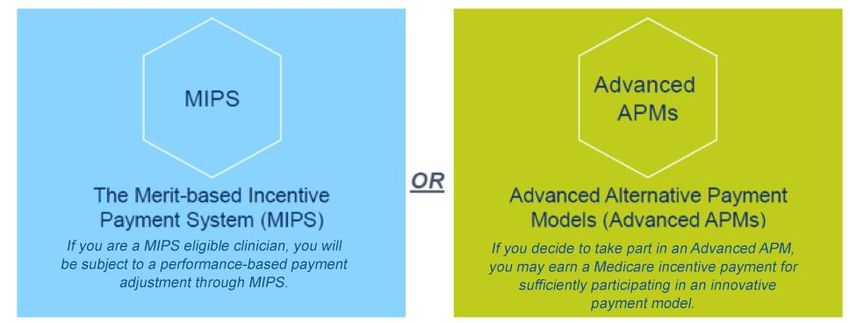
Starting in 2018, MIPS eligible clinicians may participate in MIPS individually, as a group, or as
a Virtual Group.

    Participate as an              Participate as a group             Participate as a Virtual
    individual                                                        Group
                                   MIPS eligible clinicians
    MIPS eligible clinicians       participating in MIPS with         MIPS eligible clinicians
    participating as               a group will receive a             participating in MIPS with a
    individuals, will have         payment adjustment                 Virtual Group will receive a
    their payment                  based on the group's               payment adjustment
    adjustment based on            performance.                       based on the Virtual
    their individual                                                  Group's performance.
                                   Under MIPS, a group is a
    performance.
                                   single Taxpayer                    A Virtual Group can be
    An individual is a single      Identification Number              made up of solo
    clinician, identified by a     (TIN) with 2 or more               practitioners and groups of
    single National Provider       eligible clinicians                10 or fewer eligible
    Identifier (NPI) number        (including at least 1 MIPS         clinicians who come
    tied to a Taxpayer             eligible clinician) as             together “virtually” (no
    Identification Number          identified by their National       matter what specialty or
    (TIN).                         Provider Identifiers (NPI),        location) to participate in
                                   who have reassigned their          MIPS for a performance
                                   Medicare billing rights to         period for a year
                                   the TIN.

                                                                                                     2
What is the Promoting Interoperability Performance Category?
The Promoting Interoperability (PI, formerly Advancing Care Information) performance category
promotes:
•   Patient engagement
•   The electronic exchange of health information using certified electronic health record
    technology (CEHRT).
The PI performance category replaced the Medicare EHR Incentive Program for eligible
professionals. It gives you more flexibility when you pick measures than the Medicare EHR
Incentive Program did. In 2018, this performance category is worth 25% of your MIPS Final
Score.

How Can I Use CEHRT to Report PI?
In 2018, there will still be 2 measure set options to report:
•   PI Objectives and Measures
•   2018 PI Transition Objectives and Measures
The option you’ll use to send in data is based on your CEHRT edition.

You can report the PI Objectives and Measures if you have:
•   Technology certified to the 2015 Edition; or
•   A combination of technologies certified to the 2014 and 2015 Editions that support these
    measures.

You can report the 2018 PI Transition Objectives and Measures if you have:
•   Technology certified to the 2015 Edition; or
•   Technology certified to the 2014 Edition; or
•   A combination of technologies certified to the 2014 and 2015 Editions

In the 2018 performance period, clinicians and groups that exclusively report the PI Objectives
and Measures will earn a 10% bonus for using only 2015 Edition CEHRT.
Appendix A has the full list of PI measures and 2018 PI transition measures. You can also find
more details outlining each element of the PI measures and 2018 PI transition measures in the
PI Measure Specification Fact Sheets.

                                                                                                  3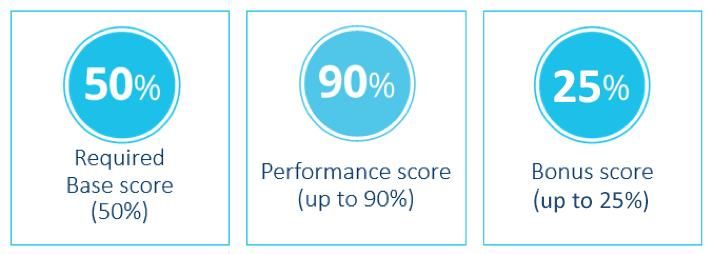
How is the PI Performance Category Score Calculated?
For scoring in the PI performance category (weighted at 25% of the MIPS Final Score), you may
earn a maximum score of up to 165%, but any score above 100% will be capped at 100%. We
designed scoring this way on purpose to make sure you have the flexibility to focus on
measures that are the most relevant to you and your practice.

The PI score is the sum of these 3 scores:

The performance score and bonus score are added to the base score to get the total PI
performance category score:

The total PI performance category score will then be multiplied by the 25% PI category weight.
This product is then added to the overall MIPS final score.
For example, if a MIPS eligible clinician receives the base score (50%) and a 40% performance
score and no bonus score, they would earn a 90% PI performance category score. When
weighted by 25%, this would add 22.5 points to the overall MIPS final score. (90 X .25 = 22.5).

                                                                                                  4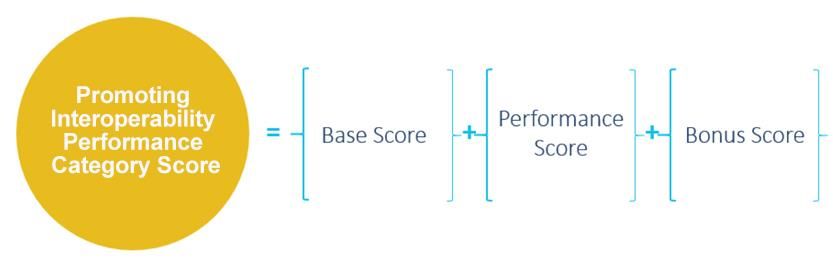
When is the PI Score Reweighted?
You have to use CEHRT to report on the PI performance category measures. You have to meet
certain criteria in order to qualify for a reweighting of this performance category to 0%. Not
having CEHRT is not sufficient by itself to qualify for a reweighting. The reweighting to 0%
means that the PI performance category isn’t included in your MIPS final score.

Here are the 2 reasons your PI performance category may be reweighted:
1. You’re one of the following types of MIPS eligible clinicians who qualify for automatic
   reweighting:
   o Ambulatory Surgical Center (ASC) - based MIPS eligible clinicians (begins with the 2017
     performance period)
   o Hospital-based MIPS eligible clinicians (definition updated to include off-campus
     outpatient hospital (Place of Service Code 19))
   o Physician assistants
   o Nurse practitioners
   o Clinical nurse specialists
   o Certified registered nurse anesthetists
   o Clinicians who lack face-to-face interactions with patients
   You can still choose to report if you’d like. If you do submit data, we’ll score your
   performance and weight your PI performance at 25% of your MIPS final score.
   To qualify as a hospital-based MIPS eligible clinician:
   o If you report for MIPS as an individual clinician, you have to furnish 75% or more of your
     covered professional services in the inpatient hospital, on-campus outpatient hospital, off-
     campus outpatient hospital or emergency room settings (based on place of service
     codes) during the applicable determination period.
   o If you report for MIPS as part of a group or virtual group, all of the MIPS eligible clinicians
     in the group must furnish 75% or more of their covered professional services in the
     inpatient hospital, on-campus outpatient hospital, or, off-campus outpatient hospital
     emergency room settings (based on place of service codes) during the determination
     period prior to the performance period as specified by CMS.
   If reporting for MIPS as a group, all MIPS eligible clinicians in the group must qualify for
   reweighting in order for the PI performance category score to be reweighted.
   However, if you’re one of these types of clinicians, you can still choose to report if you’d like.
   If you do submit data, we’ll score your performance and weight your PI performance.

2. You’re a MIPS eligible clinician who has applied for reweighting, using one of these
   reasons:
   o You’re in a small practice
   o You’re using decertified EHR technology
   o You have insufficient internet connectivity

                                                                                                        5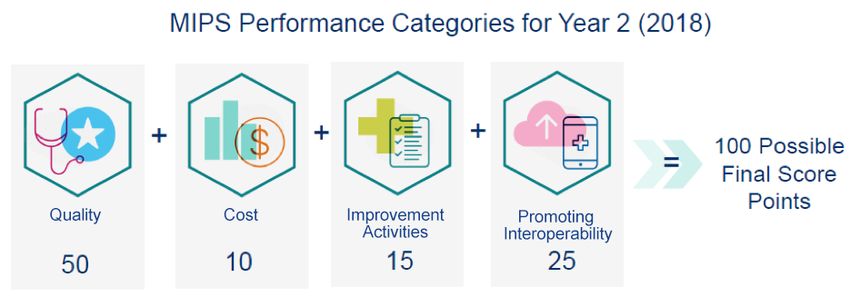
o You have extreme and uncontrollable circumstances
     o You don’t have any control over whether CEHRT is available

You’ll have to submit your application by December 31, 2018 for us to reweight the PI
performance category to 0%. We’ll be giving detailed information about the 2018 application and
when the application will be available for submission in upcoming sub-regulatory guidance. We’ll
also be giving guidance on how to submit a 2018 hardship application.

What are the Minimum PI Requirements?
For you to earn a score for the PI performance category, here are the minimum requirements:
•    Use CEHRT
•    Submit the performance period (a minimum of 90 consecutive days period in 2018
•    Submit a “yes” to the Prevention of Information Blocking Attestation
•    Submit a “yes” to the ONC Direct Review Attestation
•    Submit a “yes” for the security risk analysis measure, and at least a 1 in the numerator for the
     remaining base score measures or submit an exclusion for the base score measures

How is the Base Score Calculated?
You’ll need to meet the requirements of all the base score measures in order to receive the 50%
base score. If these requirements are not met, you will get a 0 for the overall PI performance
category score.
In order to receive the 50% base score, you have to submit a “yes” for the security risk analysis
measure, and at least a 1 in the numerator for the numerator/denominator of the remaining
measures.
The 5 base score PI measures are:
1.   Security Risk Analysis
2.   e-Prescribing*
3.   Provide Patient Access
4.   Send a Summary of Care*
5.   Request/Accept Summary of Care*

The 4 base score 2018 PI transition measures are:
1.   Security Risk Analysis
2.   e-Prescribing*
3.   Provide Patient Access
4.   Health Information Exchange*

                                                                                                        6
*The 2018 Quality Payment Program final rule with comment period added exclusions for the e-
Prescribing and Health Information Exchange measures beginning with the 2017 performance
period. If you qualify for these exclusions, you can still receive the base score if you:
• Report a 0 in the numerator/denominator for the applicable measure(s) AND
• Claim the exclusion through attestation or EHR reporting
If you claim these exclusions, you’ll meet the base score but will receive a 0% performance
score for the measure(s). If you report a 0 in the numerator/denominator for these measures
without claiming the exclusion, you wouldn’t meet the base score and would receive a 0 for the
overall PI performance category score.
• e-Prescribing Exclusion (both measure sets): Any MIPS eligible clinician who writes fewer
than 100 permissible prescriptions during the performance period
• Send a Summary of Care Exclusion (PI measure): Any MIPS eligible clinician who transfers
a patient to another setting or refers a patient fewer than 100 times during the performance
period.
• Request/Accept a Summary of Care Exclusion (PI measure):
Any MIPS eligible clinician who receives transitions of care or referrals fewer than 100 times
during the performance period OR has patient encounters where the MIPS eligible clinician
hasn’t ever before encountered the patient fewer than 100 times during the performance
period
• Health Information Exchange Exclusion (2018 PI transition measure): Any MIPS eligible
clinician who transfers a patient to another setting or refers a patient fewer than 100 times
during the performance period.
How is the Performance Score Calculated?
We calculate the performance score using the numerators and denominators you submitted for
measures included in the performance score. There’s one measure that we use the “yes” or “no”
as the answer submitted.
The potential total performance score is 90%. For each measure with a numerator/denominator,
the percentage score is determined by the performance rate. Most measures are worth a
maximum of 10 percentage points, except for two measures included in the 2018 Transition
measures, which are worth up to 20 percentage points.
7Performance rates for each measure worth up to 10%
Performance Rate >0-10 = 1% Performance Rate 51-60 = 6%
Performance Rate 11-20 = 2% Performance Rate 61-70 = 7%
Performance Rate 21-30 = 3% Performance Rate 71-80 = 8%
Performance Rate 31-40 = 4% Performance Rate 81-90 = 9%
Performance Rate 41-50 = 5% Performance Rate 91-100 = 10%
For example, if a MIPS eligible clinician submits a numerator and denominator of 85/100 for the
Patient-Specific Education measure, their performance rate would be 85%, and they would earn
9 out of 10 % points for that measure.
Performance rates for each measure worth up to 20%
Performance Rate >0-10 = 2% Performance Rate 51-60 = 12%
Performance Rate 11-20 = 4% Performance Rate 61-70 = 14%
Performance Rate 21-30 = 6% Performance Rate 71-80 = 16%
Performance Rate 31-40 = 8% Performance Rate 81-90 = 18%
Performance Rate 41-50 = 10% Performance Rate 91-100 = 20%
The only performance score measures that have yes/no responses are the Public Health and
Clinical Data Registry (CDR) Reporting measures and the Public Health Reporting measures.
MIPS eligible clinicians who are actively working with a public health agency or clinical data
registry who submit a “yes” for one of these measures would receive the full 10%. When
reporting as a group, the group can submit a “yes” for one of these measures as long as 1
clinician in the group is actively working with one of these entities.
How is the Bonus Score Calculated?
You can earn bonus percentage points:
• Reporting “yes” for 1 or more additional public health agencies or clinical data registries
beyond the one identified for the performance score measure results in a 5% bonus. Like the
performance score measure, groups can claim this as long as 1 clinician in the group is
actively working with an entity that’s different from what’s reported for the performance score.
8• Reporting “yes” to the completion of at least 1 of the specified Improvement Activities using
CEHRT will result in a 10% bonus and submitting that activity for the Improvement Activity
performance category. See Appendix B for the list of Improvement Activities that may be
completed using CEHRT to qualify for the bonus.
• Reporting only from the PI Objectives and Measures set (and only using 2015 edition CEHRT)
will result in a 10% bonus.
How is the PI Performance Score Calculated for Group Reporting?
When reporting as a group to the PI performance category, the group should combine all of their
MIPS eligible clinicians’ data under one Taxpayer Identification Number (TIN).
This includes the data of MIPS eligible clinicians who may qualify for a reweighting of the PI
performance category, such as a significant hardship or other type of exception, hospital-based
or ASC-based status, and certain types of non-physician practitioners (NPs, PAs, CNSs, and
CRNAs). If these MIPS eligible clinicians report as part of a group or virtual group, and have
data in CEHRT, their data should be included and they will be scored on the PI performance
category like all other MIPS eligible clinicians.
9Frequently Asked Questions (FAQs)
1. If a practice has multiple office locations under the same Tax Identification Number
(TIN), and one office is within a broadband availability area but the other office for the
practice is not, would that practice still qualify for the hardship exception for
Insufficient Internet Connectivity (same TIN)?
No, the office with broadband availability would not qualify for the hardship exception and, if
a practice has an office site with sufficient internet access, the group must report for those
clinicians for whom they have data.
2. Can MIPS eligible clinicians who have switched CEHRT vendors apply for a hardship
exception and have their PI performance category weight reallocated to the Quality
performance category?
Yes, if a MIPS eligible clinician switches CEHRT vendors during the performance period and
is unable to report for the PI performance category, the clinician may apply for an Extreme
and Uncontrollable Circumstances hardship exception. For example, if a MIPS eligible
clinician switches CEHRT vendors in 2017 and is unable to submit measures for the PI
performance category for the 2017 performance period, the MIPS eligible clinician can apply
for an Extreme and Uncontrollable Circumstance category hardship exception before the
submission deadline.
3. Will CMS require the submission of supporting documentation along with the Quality
Payment Program hardship exception application?
CMS does not require a MIPS eligible clinician or group to submit documentation with the
hardship exception application. CMS will review the application to record the category
selected and use the identifying information for each clinician and group listed on the
application. MIPS eligible clinicians and groups should retain documentation of their
circumstances supporting their application for their own records in the event CMS requests
data validation or audit.
4. If I submit a Quality Payment Program hardship exception application, does that mean
that I cannot report on the PI performance category for 2017 performance period?
No. You may still report on the PI performance category; however, if you choose to report,
your data will be scored and your hardship exception will be dismissed.
5. What can count as a specialized registry?
A submission to a specialized registry may count if the receiving entity meets the following
requirements: The receiving entity must declare that they are ready to accept data as a
specialized registry and be using the data to improve population health outcomes. Most
public health agencies and clinical data registries are declaring readiness via a public online
posting. Registries should make this information publicly available for potential registrants.
The receiving entity must also be able to receive electronic data generated from CEHRT.
The electronic file can be sent to the receiving entity through any appropriately secure
mechanism including, but not limited to, a secure upload function on a web portal or Direct.
Manual data entry into a web portal would not qualify for submission to a specialized
registry. The receiving entity should have a registration of intent process, a process to take
10the MIPS eligible clinician through test and validation and a process to move into production.
The receiving entity should be able to provide appropriate documentation for the sending
provider or their current status in Active Engagement. For qualified clinical data registries
(QCDRs), reporting to a QCDR may count for the public health specialized registry measure
as long as the submission to the registry is not only for the purposes of meeting CQM
requirements of the Quality performance category of MIPS. In other words, the submission
may count if the registry is also using the data for a public health purpose. Many QCDRs
use the data for a public health purpose beyond CQM reporting to CMS. A submission to
such a registry would meet the requirement for the measure if the submission data is
derived from CEHRT and transmitted electronically.
6. For MIPS, to calculate the PI measures and the PI transition measures for View,
Download, and Transmit, Secure Messaging and Patient-Specific Education requiring
patient action, can other MIPS eligible clinicians in the group or as part of the care team
get credit for the action in meeting the measure?
The transitive effect applies to the View, Download and Transmit measures, Secure
Messaging measures and to the Patient-Specific Education measures. If a MIPS eligible
clinician initiates or responds to a patient’ secure message about a clinical or health related
subject to on behalf of the group or care team, that patient can be counted in the numerator
of the Secure Messaging measure for any of the MIPS eligible clinicians in the group or part
of the care team who use the same CEHRT and who saw the patient during their
performance period. Similarly, if a patient views, downloads, or transmits to a third party the
health information that was made available online by their MIPS eligible clinician, that
patient can be counted in the numerator for any of the MIPS eligible clinicians in that group
or care team who use the same CEHRT and saw that patient during their performance
period. If patient-specific education resources are provided electronically, it may be counted
in the numerator for any MIPS eligible clinician within the group or part of the care team
sharing the CEHRT who has contributed information to the patient's record if that MIPS
eligible clinician has the patient in their denominator for the performance period. We clarify
that: if it is not possible to determine who provided the health information, or multiple MIPS
eligible clinicians in the group (or part of the care team) saw the patient during their
performance period, or multiple MIPS eligible clinicians contributed information to the
patient’s record and those MIPS eligible clinicians have the patient in their denominator for
the performance period, then the patient can be counted in the numerator of the applicable
measure(s) for those MIPS eligible clinicians. We note that this could include all MIPS
eligible clinicians who share the same CEHRT and saw the patient during the performance
period.
117. For the Protect Patient Health Information (ePHI) objective, can the security risk
analysis or review take place outside the MIPS performance period.
Yes, it is acceptable for the security risk analysis to be conducted outside the MIPS
performance period; however, the analysis must be conducted for the CEHRT used during
the MIPS performance period and the analysis or review must be conducted on an annual
basis and within the calendar year of the performance period. In other words, the MIPS
eligible clinician or group must conduct a unique analysis or review applicable for the MIPS
performance period and the scope of the analysis or review must include the full MIPS
performance period.
8. For the purposes of reporting to the PI performance category, does an eligible clinician
or group practice need to include data from CEHRT certified to the criteria for an
inpatient setting?
No, if the CEHRT is not equipped with all the capabilities necessary for an eligible clinician
to satisfy the PI measures, or is part of a CEHRT specific to an inpatient setting, the eligible
clinician does not need to include data from that CEHRT in their calculations.
9. What if my CEHRT is decertified?
If your CEHRT is decertified, you can still use that CEHRT to submit your PI performance
category measures if your performance period ended before the decertification occurred. If
your performance period ended after the decertification occurred, you can apply for a
hardship exception.
12Appendix A: PI Performance Category Measures & Scores
This is a chart of all the PI measures and 2018 PI transition measures. You can find more
details about each PI measure and 2018 PI transition measure in the PI Specification Sheets.
PI Measures & Scores 2018 PI Transition Measures & Scores
Required Measures for 50% Base
Required Measures for 50% Base Score
Score
Security Risk Analysis Security Risk Analysis
e-Prescribing e-Prescribing
Provide Patient Access* Provide Patient Access*
Send a Summary of Care* Health Information Exchange*
Request/Accept Summary Care* *Note that these measures are also
included as performance score
measures and will allow a clinician to
earn a score that contributes to the
performance score (see the list below).
% %
Measures for Performance Score Points Measures for Performance Score Points
Up to
Provide Patient Access* Up to 10% Provide Patient Access*
20%
Up to
Send a Summary of Care* Up to 10% Health Information Exchange*
20%
Up to
Request/Accept Summary Care* Up to 10% View, Download, or Transmit (VDT)
10%
Up to
Patient Specific Education Up to 10% Patient-Specific Education
10%
Up to
View, Download or Transmit (VDT) Up to 10% Secure Messaging
10%
Up to
Secure Messaging Up to 10% Medication Reconciliation
10%
One of the Public Health Reporting
Patient-Generated Health Data Up to 10% 0 or 10%
Measures
Clinical Information Reconciliation Up to 10%
One of the Public Health and
Clinical Data Registry Reporting 0 or 10%
Measures
% %
Requirements for Bonus Score Points Requirements for Bonus Score Points
13*Report to 1 or more of the following *Report to 1 or more of the following
public health agencies or clinical public health reporting registries not
data registries not reported for the reported for the performance score:
performance score:
• Immunization Registry Reporting
• Immunization Registry Reporting
• Syndromic Surveillance Reporting
• Syndromic Surveillance 5% 5%
Reporting • Specialized Registry Reporting
• Electronic Case Reporting
• Public Health Registry Reporting
• Clinical Data Registry Reporting
Report certain Improvement Report certain Improvement
10% 10%
Activities using CEHRT Activities using CEHRT
Report exclusively from this
10%
measure set (2015 edition CEHRT)
14Appendix B: Improvement Activities Eligible for the PI Performance
Category Bonus
This chart shows you the subset of Improvement Activities from the complete list of
Improvement Activities performance category that can be tied to the objectives, measures, and
CEHRT functions of the PI performance category beginning with the 2018 performance period.
These would qualify for the bonus in the PI performance category if you complete them using
CEHRT and report them when you submit to the Improvement Activities performance category.
While these activities can be made much better by using CEHRT, you don’t need to use CEHRT
to complete these activities for the Improvement Activities performance category.
Improvement Activity Name Activity Improvement Related PI
Activity Activity Measure(s)
Performance Performance
Category Category
Subcategory Weight
Expanded Provide 24/7 Provide 24/7 access to MIPS eligible High Provide
Practice Access access to clinicians, groups, or care teams for Patient
eligible clinicians advice about urgent and emergent Access
or groups who care (for example, eligible clinician
have real-time and care team access to medical Secure
access to record, cross-coverage with access Messaging
patient’s medical to medical record, or protocol-driven
record nurse line with access to medical Send a
record) that could include one or Summary of
more of the following: Care
- Expanded hours in evenings and
weekends with access to the patient Request/Acce
medical record (for example, pt Summary
coordinate with small practices to of Care
provide alternate hour office visits
and urgent care);
- Use of alternatives to increase
access to care team by MIPS eligible
clinicians and groups, such as e-
visits, phone visits, group visits,
home visits and alternative locations
(for example, senior centers and
assisted living centers); and/or
- Provision of same-day or next day
access to a consistent MIPS eligible
clinician, group or care team when
needed for urgent care or transition
management.
Patient Safety Communication A MIPS eligible clinician providing Medium Secure
and Practice of Unscheduled unscheduled care (such as an Messaging
Assessment Visit for Adverse emergency room, urgent care, or Send A
Drug Event and other unplanned encounter) attests Summary of
Nature of Event that, for greater than 75 percent of Care
case visits that result from a clinically Request/Acce
significant adverse drug event, the pt
MIPS eligible clinician transmits
15Improvement Activity Name Activity Improvement Related PI
Activity Activity Measure(s)
Performance Performance
Category Category
Subcategory Weight
information, including through the Summary of
use of CEHRT to the patient’s Care
primary care clinician regarding both
the unscheduled visit and the nature
of the adverse drug event within 48
hours. A clinically significant adverse
event is defined as a medication-
related harm or injury such as side-
effects, supratherapeutic effects,
allergic reactions, laboratory
abnormalities, or medication errors
requiring urgent/emergent
evaluation, treatment, or
hospitalization.
Patient Safety Consulting AUC Clinicians attest that they are High Clinical
and Practice using clinical consulting specified applicable AUC Decision
Assessment decision support through a qualified clinical decision Support
when ordering support mechanism for all applicable (CEHRT
advanced imaging services furnished in an function only)
diagnostic applicable setting, paid for under an
imaging applicable payment system, and
ordered on or after January 1, 2018.
This activity is for clinicians that are
early adopters of the Medicare AUC
program (2018 performance year)
and for clinicians that begin the
Medicare AUC program in future
years as specified in our regulation at
§414.94. The AUC program is
required under section 218 of the
Protecting Access to Medicare Act of
2014. Qualified mechanisms will be
able to provide a report to the
ordering clinician that can be used to
assess patterns of image-ordering
and improve upon those patterns to
ensure that patients are receiving the
most appropriate imaging for their
individual condition.
Patient Safety Cost Display for Implementation of a cost display for Medium Clinical
and Practice Laboratory and laboratory and radiographic orders, Decision
Assessment Radiographic such as costs that can be obtained Support
Orders through the Medicare clinical (CEHRT
laboratory fee schedule. function only)
Population Glycemic For at-risk outpatient Medicare Medium Patient-
Management screening beneficiaries, individual MIPS eligible Specific
services clinicians and groups must attest to Education
implementation of systematic Patient
preventive approaches in clinical Generated
practice for at least 60 percent for the Health Data
2018 performance period and 75 or Data from
16Improvement Activity Name Activity Improvement Related PI
Activity Activity Measure(s)
Performance Performance
Category Category
Subcategory Weight
percent in future years, of CEHRT Nonclinical
with documentation of screening Settings
patients for abnormal blood glucose
according to current US Preventive
Services Task Force (USPSTF)
and/or American Diabetes
Association (ADA) guidelines.
Population Glycemic For outpatient Medicare beneficiaries High Patient
Management management with diabetes and who are prescribed Generated
services antidiabetic agents (for example, Health Data
insulin, sulfonylureas), MIPS eligible
clinicians and groups must attest to Clinical
having: Information
Reconciliation
For the first performance period, at
least 60 percent of medical records Clinical
with documentation of an Decision
individualized glycemic treatment Support,
goal that: CCDS,
a) Takes into account patient- Family Health
specific factors, including, at History
least 1) age, 2) (CEHRT
comorbidities, and 3) risk for functions
hypoglycemia, and only)
b) Is reassessed at least
annually.
The performance threshold will
increase to 75 percent for the second
performance period and onward.
Clinicians would attest that, 60
percent for first year, or 75 percent
for the second year, of their medical
records that document individualized
glycemic treatment represent
patients who are being treated for at
least 90 days during the performance
period.
Population Glycemic For at-risk outpatient Medicare Medium Patient-
Management referring beneficiaries, individual MIPS eligible Specific
services clinicians and groups must attest to Education
implementation of systematic Patient
preventive approaches in clinical Generated
practice for at least 60 percent for the Health Data
CY 2018 performance period and 75 or Data from
percent in future years, of CEHRT Nonclinical
with documentation of referring Settings
eligible patients with prediabetes to a
CDC-recognized diabetes prevention
program operating under the
17Improvement Activity Name Activity Improvement Related PI
Activity Activity Measure(s)
Performance Performance
Category Category
Subcategory Weight
framework of the National Diabetes
Prevention Program.
Population Anticoagulant Individual MIPS eligible clinicians High Provide
Management management and groups who prescribe oral Patient
improvements Vitamin K antagonist therapy Access
(warfarin) must attest that, for 60
percent of practice patients in the Patient-
transition year and 75 percent of Specific
practice patients in Quality Payment Education
Program Year 2 and future years,
their ambulatory care patients View,
receiving warfarin are being Download,
managed by one or more of the Transmit
following improvement activities:
- Patients are being managed by an Secure
anticoagulant management service, Messaging
that involves systematic and
coordinated care, incorporating Patient
comprehensive patient education, Generated
systematic prothrombin time (PT- Health Data
INR) testing, tracking, follow-up, and or Data from
patient communication of results and Non- Clinical
dosing decisions; Setting
- Patients are being managed
according to validated electronic Send a
decision support and clinical Summary of
management tools that involve Care
systematic and coordinated care,
incorporating comprehensive patient Request/
education, systematic PT-INR Accept
testing, tracking, follow-up, and Summary of
patient communication of results and Care Clinical
dosing decisions; Information
- For rural or remote patients,
patients are managed using remote Reconciliation
monitoring or telehealth options that Exchange
involve systematic and coordinated
care, incorporating comprehensive Clinical
patient education, systematic PT-INR Decision
testing, tracking, follow-up, and Support
patient communication of results and (CEHRT
dosing decisions; and/or Function
- For patients who demonstrate Only)
motivation, competency, and
adherence, patients are managed
using either a patient self-testing
(PST) or patient-self management
(PSM) program.
Population Provide Clinical- Engaging community health workers Medium Provide
Management Community to provide a comprehensive link to Patient
Linkages community resources through family- Access
18Improvement Activity Name Activity Improvement Related PI
Activity Activity Measure(s)
Performance Performance
Category Category
Subcategory Weight
based services focusing on success Patient-
in health, education, and self- Specific
sufficiency. This activity supports Education
individual MIPS eligible clinicians or Patient-
groups that coordinate with primary Generated
care and other clinicians, engage Health Data
and support patients, use of CEHRT,
and employ quality measurement
and improvement processes. An
example of this community based
program is the NCQA Patient-
Centered Connected Care (PCCC)
Recognition Program or other such
programs that meet these criteria
Population Advance Care Implementation of Medium Patient-
Management Planning practices/processes to develop Specific
advance care planning that includes: Education
documenting the advance care plan Patient-
or living will within CEHRT, educating Generated
clinicians about advance care Health Data
planning, motivating them to address
advance care planning needs of their
patients, and how these needs can
translate into quality improvement,
educating clinicians on approaches
and barriers to talking to patients
about end-of-life and palliative care
needs and ways to manage its
documentation, as well as informing
clinicians of the healthcare policy
side of advance care planning.
Population Chronic care Proactively manage chronic and Medium Provide
Management and preventative preventive care for empaneled Patient
care patients that could include one or Access
management for more of the following:
empaneled - Provide patients annually with an Patient-
patients opportunity for development and/or Specific
adjustment of an individualized plan Education
of care as appropriate to age and
health status, including health risk View,
appraisal; gender, age and condition- Download,
specific preventive care services; Transmit
plan of care for chronic conditions;
and advance care planning; Secure
- Use condition-specific pathways for Messaging
care of chronic conditions (for
example, hypertension, diabetes, Patient
depression, asthma and heart failure) Generated
with evidence-based protocols to health Data or
guide treatment to target; Data from
19Improvement Activity Name Activity Improvement Related PI
Activity Activity Measure(s)
Performance Performance
Category Category
Subcategory Weight
- Use pre-visit planning to optimize Non-Clinical
preventive care and team Setting
management of patients with chronic
conditions; Send A
- Use panel support tools (registry Summary of
functionality) to identify services due; Care
- Use reminders and outreach (for
example, phone calls, emails, Request/Acce
postcards, patient portals and pt Summary
community health workers where of care
available) to alert and educate
patients about services due; and/or Clinical
- Routine medication reconciliation. Information
Reconciliation
Clinical
Decision
Support,
Family Health
History
(CEHRT
functions
only)
Population Implementation Provide longitudinal care Medium Provide
Management of management to patients at high risk Patient
methodologies for adverse health outcome or harm Access
for that could include one or more of the
improvements in following: Patient-
longitudinal care -Use a consistent method to assign Specific
management for and adjust global risk status for all Education
high risk empaneled patients to allow risk
patients stratification into actionable risk Patient
cohorts. Monitor the risk-stratification Generated
method and refine as necessary to Health Data
improve accuracy of risk status or Data from
identification; Nonclinical
-Use a personalized plan of care for Settings
patients at high risk for adverse
health outcome or harm, integrating Send A
patient goals, values and priorities; Summary of
and/or Care
-Use on-site practice-based or
shared care managers to proactively Request/Acce
monitor and coordinate care for the pt Summary
highest risk cohort of patients. of Care
Clinical
information
reconciliation
20Improvement Activity Name Activity Improvement Related PI
Activity Activity Measure(s)
Performance Performance
Category Category
Subcategory Weight
Clinical
Decision
Support,
CCDS,
Family Health
History,
Patient List
(CEHRT
functions
only)
Population Implementation Provide episodic care management, Medium Send A
Management of episodic care including management across Summary of
management transitions and referrals that could Care
practice include one or more of the following:
improvements - Routine and timely follow-up to Request/
hospitalizations, ED visits and stays Accept
in other institutional settings, Summary of
including symptom and disease Care
management, and medication
reconciliation and management; Clinical
and/or Information
- Managing care intensively through Reconciliation
new diagnoses, injuries and
exacerbations of illness.
Population Implementation Manage medications to maximize Medium Clinical
Management of medication efficiency, effectiveness and safety Information
management that could include one or more of the Reconciliation
practice following:
improvements - Reconcile and coordinate Clinical
medications and provide medication Decision
management across transitions of Support,
care settings and eligible clinicians or Computerized
groups; Physician
- Integrate a pharmacist into the care Order Entry
team; and/or Electronic
- Conduct periodic, structured Prescribing
medication reviews. (CEHRT
functions
only)
Achieving Health Promote use of Demonstrate performance of High Public Health
Equity patient-reported activities for employing patient- Registry
outcome tools reported outcome (PRO) tools and Reporting
corresponding collection of PRO data
(e.g., use of PQH-2 or PHQ-9 and Clinical Data
PROMIS instruments) such as Registry
patient reported Wound Quality of Reporting
Life (QoL), patient reported Wound
Outcome, and patient reported Patient-
Nutritional Screening. Generated
Health Data
21Improvement Activity Name Activity Improvement Related PI
Activity Activity Measure(s)
Performance Performance
Category Category
Subcategory Weight
Care Practice Develop pathways to Medium Send a
Coordination Improvements neighborhood/community-based Summary of
that Engage resources to support patient health Care
Community goals that could include one or more
Resources to of the following: Request/Acce
Support Patient - Maintain formal (referral) links to pt Summary
Health Goals community-based chronic disease of Care
self-management support programs,
exercise programs and other Patient-
wellness resources with the potential Generated
for bidirectional flow of information Health Data
and provide a guide to available
community resources.
- Including through the use of tools
that facilitate electronic
communication between settings;
- Screen patients for health-harming
legal needs;
- Screen and assess patients for
social needs using tools that are
CEHRT enabled and that include to
any extent standards-based, coded
question/field for the capture of data
as is feasible and available as part of
such tool; and/or
- Provide a guide to available
community resources.
Care Primary Care The primary care and behavioral Medium Send a
Coordination Physician and health practices use the same Summary of
Behavioral CEHRT system for shared patients Care
Health Bilateral or have an established bidirectional
Electronic flow of primary care and behavioral Request/Acce
Exchange of health records. pt Summary
Information for of Care
Shared Patients
Care PSH Care Participation in a Perioperative Medium Send a
Coordination Coordination Surgical Home (PSH) that provides a Summary of
patient-centered, physician-led, Care
interdisciplinary, and team-based
system of coordinated patient care, Request/Acce
which coordinates care from pre- pt Summary
procedure assessment through the of Care
acute care episode, recovery, and
post-acute care. This activity allows Clinical
for reporting of strategies and Information
processes related to care Reconciliation
coordination of patients receiving
surgical or procedural care within a Health
PSH. The clinician must perform one Information
or more of the following care Exchange
coordination activities:
22Improvement Activity Name Activity Improvement Related PI
Activity Activity Measure(s)
Performance Performance
Category Category
Subcategory Weight
- Coordinate with care
managers/navigators in preoperative
clinic to plan and implementation
comprehensive post discharge plan
of care;
- Deploy perioperative clinic and care
processes to reduce post-operative
visits to emergency rooms;
- Implement evidence-informed
practices and standardize care
across the entire spectrum of
surgical patients; or
- Implement processes to ensure
effective communications and
education of patients’ post-discharge
instructions.
Care Implementation Performance of regular practices that Medium Send A
Coordination or use of include providing specialist reports Summary of
specialist back to the referring MIPS eligible Care
reports back to clinician or group to close the referral
referring loop or where the referring MIPS Request/Acce
clinician or eligible clinician or group initiates pt Summary
group to close regular inquiries to specialist for of Care
referral loop specialist reports which could be
documented or noted in the CEHRT. Clinical
Information
Reconciliation
Care Implementation Implementation of Medium Secure
Coordination of practices/processes that document Messaging
documentation care coordination activities (e.g., a
improvements documented care coordination Send a
for encounter that tracks all clinical staff Summary of
practice/process involved and communications from Care
improvements date patient is scheduled for
outpatient procedure through day of Request/
procedure). Accept
Summary of
Care
Clinical
Information
Reconciliation
Care Implementation Implementation of Medium Provide
Coordination of practices/ practices/processes to develop Patient
processes for regularly updated individual care Access
developing plans for at-risk patients that are (formerly
regular shared what the beneficiary or Patient
individual care caregiver(s). Individual care plans Access)
plans should include consideration of a
23Improvement Activity Name Activity Improvement Related PI
Activity Activity Measure(s)
Performance Performance
Category Category
Subcategory Weight
patient’s goals and priorities, as well View,
as desired outcomes of care. Download,
Transmit
Secure
Messaging
Patient
Generated
Health Data
or Data from
Non-Clinical
Setting
Care Practice Ensure that there is bilateral Medium Send A
Coordination improvements exchange of necessary patient Summary of
for bilateral information to guide patient care that Care
exchange of could include one or more of the
patient following: Request/
information - Participate in a Health Information Accept
Exchange if available” and/or Summary of
- Use structured referral notes Care
Clinical
Information
Reconciliation
Beneficiary Engage Patients Engage patients and families to High Patient-
Engagement and Families to guide improvement in the system of Generated
Guide care by leveraging digital tools for Health Data
Improvement in ongoing guidance and assessments
the System of outside the encounter, including the Provide
Care collection and use of patient data for Patient
return-to-work and patient quality of Access
life improvement. Platforms and
devices that collect patient-generated View,
health data (PGHD) must do so with Download, or
an active feedback loop, either Transmit
providing PGHD in real or near-real
time to the care team, or generating
clinically endorsed real or near-real
time automated feedback to the
patient. Includes patient reported
outcomes (PROs). Examples include
patient engagement and outcomes
tracking platforms, cellular or web-
enabled bidirectional systems, and
other devices that transmit clinically
valid objective and subjective data
back to care teams.
Because many consumer-grade
devices capture PGHD (for example,
wellness devices), platforms or
24Improvement Activity Name Activity Improvement Related PI
Activity Activity Measure(s)
Performance Performance
Category Category
Subcategory Weight
devices eligible for this improvement
activity must be, at a minimum,
endorsed and offered clinically by
care teams to patients to
automatically send ongoing guidance
(one way). Platforms and devices
that additionally collect PGHD must
do so with an active feedback loop,
either providing PGHD in real or
near-real time to the care team, or
generating clinically endorsed real or
near-real time automated feedback
to the patient (e.g. automated
patient-facing instructions based on
glucometer readings). Therefore,
unlike passive platforms or devices
that may collect but do not transmit
PGHD in real or near-real time to
clinical care teams, active devices
and platforms can inform the patient
or the clinical care team in a timely
manner of important parameters
regarding a patient’s status,
adherence, comprehension, and
indicators of clinical concern.
Beneficiary Use of CEHRT In support of improving patient Medium Provide
Engagement to capture access, performing additional Patient
patient reported activities that enable capture of Access
outcomes patient reported outcomes (for
example, home blood pressure, Patient-
blood glucose logs, food diaries, at- specific
risk health factors such as tobacco or Education
alcohol use, etc.) or patient activation
measures through use of CEHRT, Care
containing this date in a separate Coordination
queue for clinician recognition and through
review. Patient
Engagement
Beneficiary Engagement of Access to an enhanced patient portal Medium Provide
Engagement patients through that provides up to date information Patient
implementation related to relevant chronic disease Access
health or blood pressure control, and
includes interactive features allowing Patient-
patients to enter health information specific
and/or enables bidirectional Education
communication about medication
changes and adherence.
Beneficiary Engagement of Engage patients, family and Medium Provide
Engagement patients, family caregivers in developing a plan of Patient
and caregivers care and prioritizing their goals for Access
action, documented in the CEHRT.
25Improvement Activity Name Activity Improvement Related PI
Activity Activity Measure(s)
Performance Performance
Category Category
Subcategory Weight
in developing a Patient-
plan of care specific
Education
View,
Download,
Transmit
(Patient
Action)
Secure
Messaging
Patient Safety Use of decision Use decision support and protocols Medium Clinical
and Practice support and to manage workflow in the team to Decision
Assessment standardized meet patient needs. Support
treatment (CEHRT
protocols function only)
Behavioral and Implementation Offer integrated behavioral health High Provide
Mental Health of integrated services to support patients with Patient
Patient behavioral health needs, dementia, Access
Centered and poorly controlled chronic
Behavioral conditions that could include one or Patient-
Health (PCBH) more of the following: Specific
model - Use evidence-based treatment Education
protocols and treatment to goal
where appropriate; View,
- Use evidence-based screening and Download,
case finding strategies to identify Transmit
individuals at risk and in need of
services; Secure
- Ensure regular communication and Messaging
coordinated workflows between
eligible clinicians in primary care and Patient
behavioral health; Generated
- Conduct regular case reviews for Health Data
at-risk or unstable patients and those or
who are not responding to treatment;
- Use of a registry or certified health
information technology functionality
to support active care management
and outreach to patients in treatment;
and/or
- Integrate behavioral health and
medical care plans and facilitate
integration through co-location of
services when feasible.
Behavioral and Electronic Enhancements to CEHRT to capture Medium Patient
Mental Health Health Record additional data on behavioral health Generated
Enhancements (BH) populations and use that data Health Data
for BH data for additional decision-making or Data from
capture purposes (for example, capture of
26Improvement Activity Name Activity Improvement Related PI
Activity Activity Measure(s)
Performance Performance
Category Category
Subcategory Weight
additional BH data results in Non-clinical
additional depression screening for Setting
at-risk patient not previously
identified). Send A
Summary of
Care
Request/
Accept
Summary of
Care
Clinical
Information
Reconciliation
27You can also read


