Newfoundland and Labrador's Guideline for Prioritization and Use of Personal Protective Equipment (PPE) in Pandemic COVID-19 in Low Prevalence ...
←
→
Page content transcription
If your browser does not render page correctly, please read the page content below
C

Newfoundland and Labrador’s Guideline for Prioritization and
Use of Personal Protective Equipment (PPE) in Pandemic
COVID-19 in Low Prevalence Period and Increasing or
Widespread Community Prevalence Period

                       Prepared by: Provincial COVID-19 PPE Task Force
                                              Original: April 15th, 2020
                                         Updated: February 10th, 2021
TABLE OF CONTENTS
Purpose…………………………………………………………………………………………………………………..Page 1
Background……………………………………………………………………………………………………………..Page 1
Basic Principles of Infection Prevention and Control (IPAC)……………………………………..Page 5
Hierarchy of Controls…………………………………………………………………………………………..….Page 6
Personal Protective Equipment Shortage Strategy……………………………………………..……Page 7
Staged Use of PPE in the Health Care System …………………………………..…………………..…Page 9
Use of PPE in a period of Low Prevalence of COVID-19 cases…………………………….……Page 13
Use of PPE in a period of Increasing Prevalence or Widespread Community Transmission of
COVID-19 case……………………………………………………………………………………………………....Page 17
Definitions…………………………………………………………………………………………………………….Page 21
Appendix A: Joint Statement…………………………………………………………………………….……Page 22
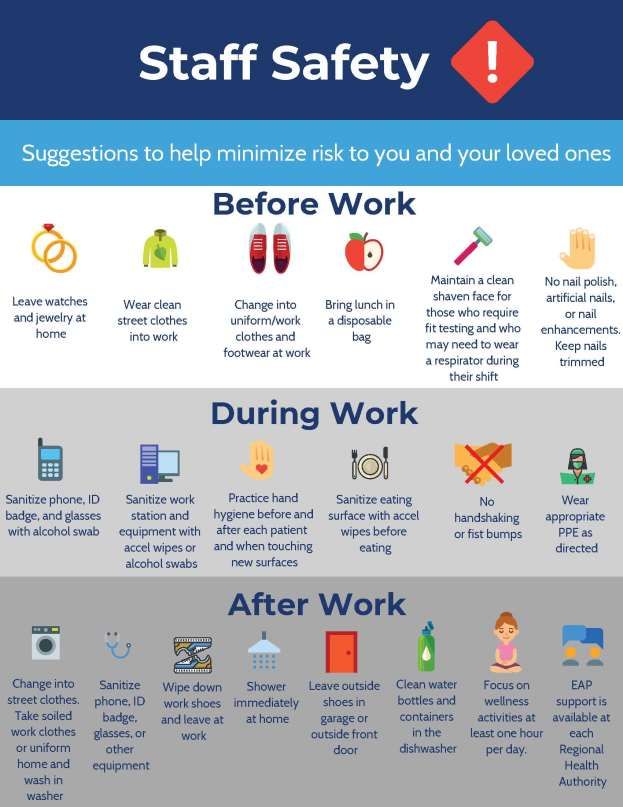
Appendix B: Staff Safety…………………………………………………………………………………………Page 25
APPENDIX C: Point-of-Care Risk Assessment for COVID-19……………………………………..Page 26

APPENDIX D: Mask Descriptions ……………..………………………………………………………….…Page 27

For more details, visit https://www.gov.nl.ca/covid-19/
PHAC: https://www.canada.ca/en/public-health.html

ACKNOWLEDGEMENT
Newfoundland and Labrador Public Health acknowledges the British Columbia Center for
Disease Control document COVID-19: Emergency Prioritization in a Pandemic
Personal Protective Equipment (PPE) Allocation Framework
https://www2.gov.bc.ca/assets/gov/health/about-bc-s-health-care-system/office-of-the-
provincial-health-officer/covid-19/ppe_allocation_framework_march_25_2020.pdf accessed
June 1, 2020

                                                                                          2
Purpose
This document provides guidance and establishes provincial standards for utilization of
personal protective equipment (PPE) for Health Care Workers (HCWs) in Newfoundland and
Labrador (NL) during the COVID-19 Pandemic. HCWs include all staff in acute care, long-term
care, personal care homes and community including home care settings. The
recommendations in this document have been developed in response to the identification of
COVID-19 cases in NL. As we learn to live with COVID-19, we will need to be nimble in our
response to the changing knowledge and epidemiology of the virus as well as in our use of PPE.
Given the long-term approach that we need to take, this document will be updated as required.
In the event of a pandemic declared by World Health Organization, this guideline will be
implemented when one or more of the following occur:
There is localized or widespread COVID-19 in the community, region or province as
determined by the Regional Medical Officers of Health (RMOH) and Regional Incident
Commanders based on the epidemiology and ongoing surveillance of COVID-19 within
the region and province;
The supply of PPE is at critical levels;
There is no clear path to procuring PPE in a timely manner;
All attempts at procuring PPE have been exhausted; and,
There is a limited likelihood of restored supply prior to the exhaustion of some or all of
the PPE required provide care, including but not limited to complete testing, perform
required procedures, care for patients or residents in all settings, including community
and in the home, who are confirmed positive or suspected cases. For case definitions
see https://www.canada.ca/en/public-health/services/diseases/2019-novel-
coronavirus-infection/health-professionals/national-case-definition.html
The NL PPE COVID-19 Guidelines will be assessed when the province reaches Alert Level 1 of
Foundation for Living with COVID-19 https://www.gov.nl.ca/covid-19/ Moving between alert
levels will be assessed through the activation process on page nine.
Background
As Newfoundland and Labrador continues to adapt to COVID-19 and the unprecedented
impacts on the health care system, Regional Health Authorities (RHAs) have taken a provincial
approach to recommendations for the use of Personal Protective Equipment (PPE). The global
spread of the COVID-19 virus has caused major shortages of PPE. Traditionally, the use of PPE
in hospitals has been guided by the recommendations in the provincial Routine Practices and
Additional Precautions Guideline1. This Pandemic Guideline focuses on COVID-19’s changing
1 Routine Practices and Additional Precautions across the Continuum of Care (2014).
3epidemiology and the enhanced recommendations for PPE while being cognizant of the basic
principles of infection prevention and control. There are recommendations for Use of PPE in
periods of low prevalence and moderate to high prevalence.
On April 30, 2020, the Chief Medical Officer of Health (CMOH) announced Newfoundland and
Labrador’s plan for living with COVID-19. The plan, A Foundation for Living with COVID-19,
includes five alert levels. Depending on which level the province is in, as determined by the
CMOH, public health restrictions will be gradually relaxed or in the event of resurgence,
increased. The PPE recommendations will be assessed on an ongoing basis as we progress
through each of the five levels, and as epidemiology and supply of PPE evolve. Necessary
changes will be made to recommendations as the situation evolves or as required. Alert level
four was implemented on May 11, 2020, allowing people more freedom while continuing to
maintain the main public health measures. From May through to the end of June 2020
Newfoundland and Labrador has moved to Alert level two, encouraging people to learn to live
with COVID-19 for the foreseeable future.
The transition from low prevalence of COVID-19 to increasing or widespread transmission will
be determined by the RMOHs in concert with the CMOH. This may be implemented at a
community, regional or provincial level dependent upon the epidemiology of COVID-19, other
respiratory viruses circulating and the ability of the acute care setting to respond to increases in
cases. Notification of the move from low to increasing will be directed from the RMOH and the
regional lead to the HCS Emergency Operations Center. This will include direction to move to
the appropriate section of this document. Use of PPE for these levels are found on pages 12 to
19.
Decisions on the PPE requirements when performing an aerosol-generating procedure will be
guided by a risk assessment of the patient’s status and of the prevalence of COVID-19 in the
community.
On May 8, 2020, the Department of Health and Community Services with the Public Sector
Unions released a Joint Statement on COVID-19 and Personal Protective Equipment (Appendix
A) to provide clarity on the approach to PPE use in this Province. This Statement has been taken
into consideration in the updating of this document. A similar agreement has been released in
other Provinces.
This guideline focuses on the risk of exposure (e.g., type of activity), the transmission dynamics
of the pathogen (e.g., contact, droplet or airborne) and the local/provincial epidemiology and
supply chain stability.
HCWs are on the front lines of the COVID-19 outbreak response and as such are exposed to
hazards that put them at risk of infection. This guideline stresses the safety of HCWs and the
use of appropriate PPE, which can change depending upon the risk of disease prevalence as
determined by the CMOH or designate (Appendix B).
4This document has taken into consideration the following:
Study of local or regional epidemiology of COVID-19 on an ongoing basis.
Capacity to respond to changing indications for testing.
Availability of testing for COVID-19.
Ability to quickly identify suspect COVID-19 cases through active surveillance.
Facility readiness (e.g., availability and supply of PPE; hand hygiene supplies; private
rooms; ICU beds; ventilators; ability to provide special separation in triage, at patient
access points including diagnostic imaging, outpatient laboratory or anywhere
patients directly access health care);
Ability to quickly and proactively identify, access and utilize alternate patient
assessment and patient care sites when current facilities become overwhelmed.
Facility monitoring of existing supply of PPE.
Coordinated procurement of supplies with provincial and Federal-Provincial-
Territorial (FPT) buying groups to maximize access.
Anticipation of an increased requirement for infection prevention and control (IPC)
professionals and occupational health and safety (OHS) staff;
Status of HCW training on Routine Practices and Additional Precautions (RPAP),
donning and doffing of PPE and the Point-of-care Risk Assessment (PCRA);
Likelihood of performing aerosol-generating medical procedures (AGMPs) in the
facility, along with training and readiness for HCWs who will be participating in
AGMPs; (https://www.gov.nl.ca/covid-19/files/NL-AGMPs-COVID-19-Guideline-June-
10-2020.pdf
The status of HCWs who have been fit tested and instructed in the use of N95
respirator or equivalent; and
Training for HCWs to rapidly identify any cases of COVID-19 at entry to the facility,
including cases in visitors (active screening/surveillance) and close contacts of cases.
Basic Principles of Infection Prevention and Control (IPAC)
Throughout the pandemic period, we will continue to follow the basic principles of infection
prevention and control, with modifications as indicated by the epidemiology, knowledge of the
disease and supply chain stability.
Source Controls
Respiratory hygiene – Involves educating and encouraging all individuals (patients,
HCWs and visitors) who have the physical and cognitive abilities to practice
respiratory hygiene.
5 Physical Separation – A two-meter physical separation and spacing recommendation
to decrease exposure to microorganisms for all patients and visitors in clinical and
waiting areas should be implemented.
Routine Practices and Additional Precautions2
These are the practices that HCWs use daily in providing care within health care facilities and
include, at a minimum, these two fundamental principles:
Hand Hygiene – The single most important way to prevent the spread of infections
o Perform hand hygiene as per the four moments of hand hygiene
Hands must be cleaned after glove use, as gloves are not a substitute for
hand hygiene.
Hands must be cleaned before and after the donning and doffing of PPE.
Point-of-Care Risk Assessment (PCRA) – A PCRA is an activity whereby HCWs in any
health care setting across the continuum of care:
o Evaluate the likelihood of exposure to an infectious agent for a specific
interaction:
With a specific patient in a specific environment (e.g., single room,
hallway)
Under available conditions (e.g., no designated handwashing sink); and
o Choose the appropriate actions/PPE needed to minimize the risk of exposure for
the specific patient, other patients in the environment, the HCW, other staff,
visitors, contractors, etc.
2 Routine Practices and Additional Precautions across the Continuum of Care.
6Hierarchy of Controls
A hierarchy of controls is an approach for determining how to implement feasible and effective
infection prevention and control solutions. The idea behind this hierarchy is that the control
methods at the top of the graphic are potentially more effective and protective than those at
the bottom. Following this hierarchy normally leads to the implementation of inherently safer
systems, where the risk of illness has been substantially reduced.
Engineering controls aim to reduce the spread of pathogens and reduce the contamination of
surfaces and inanimate objects. This would include isolating a confirmed/suspect COVID-19
patient by placing them in a private negative pressure room or installing barriers to isolate staff
from the risk (i.e. screening desks).
Administrative controls include ensuring the availability of resources for IPAC, the development
of clear IPAC policies, access to laboratory testing, appropriate triage and placement of
patients, adequate staff-to-patient ratios, development of policies and procedures and training
of staff.
Finally, PPE is the last hierarch of controls and is required when engineering and administrative
controls are unable to mitigate the risk of exposure to staff, clients, and the public.
Personal Protective Equipment Shortage Strategy
The World Health Organization3 has recommended that PPE is one strategy in concert with a
focus on administrative and engineering controls.
A. Recognizing the challenges and frustration of global shortages, creative solutions will be
required to maximize the use of PPE and to conserve the supply of PPE while being
cognizant of the safe care of clients and the safety of HCWs. The Joint Statement on PPE
(Appendix A) stresses the importance of the PCRA. Based on the PCRA, HCWs shall have
3 World Health Organization. (2020). Rational use of personal protective equipment for coronavirus disease 2019
(COVID-19).
7access to the appropriate PPE. This will not be unreasonably denied by their employer, or
the employee shall be deployed to another area.
Point-of-Care Risk Assessment (PCRA) – Prior to every patient interaction, HCWs have a
responsibility to assess the infectious risk posed to themselves and other patients,
visitors and HCWs by a patient, situation or procedure (https://www.gov.nl.ca/covid-
19/files/NL-AGMPs-COVID-19-Guideline-June-10-2020.pdf and Appendix C.
Medical masks Level 2 or 3 ASTM rated (or equivalent) will be used for repeated
interactions with multiple patients:
o Masks must be changed if wet, damaged, or soiled.
o Masks are to be worn for one shift maximum of 12 hours
A face shield, when required, will be used for repeated interactions with multiple patients.
Gowns may be used for routine patient care if indicated by the PCRA (See Appendices C
& D):
o A gown is to be considered an extension of the uniform; it is to be worn for
repeated interactions with multiple patients.
o The gown is to be changed if wet, soiled, or damaged.
Medical gloves rated ASTM 3578-5 or equivalent should be chosen as appropriate for
the task. If worn with isolation gowns the glove must cover the fabric cuff, such that
there is a seal at the wrist.
Droplet-Contact Precautions
Acknowledging the change to a low COVID-19 prevalence environment, Droplet-Contact
precautions (with N95 respirator) should be followed for the performance of AGMPs in patients
with signs and symptoms of COVID-19 and suspected or confirmed COVID-19. (Private room
with door closed or an Airborne Infection Isolation Room-AIIR/Negative Pressure Room).
N95 respirators or equivalents are required during AGMPs (https://www.gov.nl.ca/covid-
19/files/NL-AGMPs-COVID-19-Guideline-June-10-2020.pdf) when COVID-19 is suspected or
confirmed. AGMPs generate aerosols and small droplet nuclei in high concentrations. These
droplets may contain bacteria or viruses such as SARS, COVID-19, or influenza-like illness.
Wearing an N95 respirator, or equivalent, when performing an AGMP reduces the likelihood of
transmission of these diseases to health care workers.
Patients who do not have symptoms of influenza-like illness or COVID-19 and require an AGMP
do not always require an N95 respirator or equivalent, Routine Practices are sufficient as
indicated by a PCRA. Low prevalence or increasing or widespread transmission of an emerging
pathogen should be considered in the PCRA (See Appendices C & D).
8PPE Supply and Demand Monitoring
The Provincial Procurement and Supply Chain, Regional Health Authority Operational Leads,
Infection Prevention and Control and Occupational Health and Safety professionals, determine
PPE supply and demand volumes. In the event of a pandemic, PPE supply and demand are to be
monitored and assessed daily (at minimum) at site, regional and provincial levels.
Risk Stratification for HCWs
The following prioritization list attempts to stratify HCWs based on workplace risk. HCWs in
Priority A are considered to be working in the highest priority for PPE, as they work in areas
where transmission and spread are a higher risk.
Table 1: HCWs with the Highest Risk
Priority Health Care Workers in the following settings
A Emergency, Paramedicine, Operating Rooms, Critical Care and Case rooms
B COVID-19 cohort units or wards
C Other Acute Care and Primary Care
D Long Term Care and Personal Care Homes
E Ambulatory Care and Home Care, including home visits
Staged Use of PPE in the Health Care System
During times of potential decreased supply of PPE, it may be necessary to take a staged
approach to PPE use, based on six stages of risk (described in Table 2 pages 8 & 9). When there
is a high probability that at least one PPE item will be depleted within the coming weeks,
resource allocation decisions for the provision of health care will involve heightened ethical and
societal dimensions. Therefore, it is important that appropriate roles, responsibilities, and
priority use of PPE is determined in advance. During the pandemic, PPE risk will reach Stages 4
and possibly 5, or 6 (with stages representing escalating shortages of PPE). However, even
when PPE risk is at Stage 1, there are required actions that need to be taken to protect the
supply. Of note, as PPE supply ebbs and flows the Province may move between the six stages.
Activation of Stages of PPE Use
The movement from one stage (1-5, as outlined in Table 2), to another is determined and
recommended to the HCS- EOC by the Procurement and Supply advisors, in consultation with
unions, other health care professionals and the PPE Task Group. The HCS-EOC then makes the
determination for the appropriate Stage.
9Activation decision will include consideration of:
Communication
Control of the supply of PPE
Conservation of PPE
Continued monitoring and reassessment of the supply and associated stage
Crafting and providing education regarding the changes to PPE requirements at a
Regional level following Provincial Guidelines
The weekly burn rate how that impacts the movement from one stage to another
includes procurement and estimated time of arrival, how these must be balanced to
identify stage level
TABLE 2: STAGED USE OF PPE DURING DECREASED SUPPLY AVAILABILITY
Stage Description of Supply Guiding Principles
1 All PPE item levels are Continue to source current PPE items.
intact and there is low Implement infection control practices of diligent hand
probability that any item hygiene, physical distancing where possible, and not
will be depleted in the touching your face
foreseeable future, as Implement approval strategies to ensure appropriate
identified by the allocation of items
Procurement and Supply Communicate PPE usage and allocation expectations to
Staff. stakeholders
Monitor usage
Identify appropriate alternative PPE items
Develop contingency plans for implementation of
alternative PPE items
Investigate the use of alternative rated products
2 All PPE item levels remain Source current and alternative PPE items
intact but there is a Communicate PPE usage and allocation expectations to
possibility that at least one stakeholders
item will be depleted in Monitor usage
the coming 2-3 weeks, as Initiate all pre-work required to implement contingency
identified by the plans
Investigate the use of alternative rated products
10Stage Description of Supply Guiding Principles
Procurement and Supply Implement contingency plans for implementation of
Staff. alternative PPE
3 All PPE levels remain intact Reallocate PPE to priority areas
but there is a very high Communicate with stakeholders
probability at least one Consider accepting other standards (e.g. European), and
item will be depleted sourcing from non-traditional suppliers
within the coming 2-3 Extend use of PPE
weeks, as identified by the Request PPE from federal or other PT sources
Procurement and Supply Plan for disinfection of single use PPE using Health Canada
Staff. approved standards
Review third party reprocessing responsibilities
4 All PPE levels remain intact Implement all contingency plans and further reallocation of PPE
but at least one item will to priority areas.
be depleted within a Issue decisions from the Health and Community Services
matter of 7 days, as EOC
identified by the Investigate use of PPE approved under standards from other
Procurement and Supply countries when supply is critical if available
Staff. Communicate with stakeholders
Extend use of PPE
When new N95 respirators are depleted, use equivalent
respirators; when these are depleted use N95 beyond
manufacturer’s stated expiry date (taken from bullet in
Level 5)
Extend use of N95 if used for Airborne Precautions (e.g. TB)
as the situation dictates
Extended use of N95 for AGMPs in COVID unit with multiple
critically ill patients
Request of PPE from federal or other PT sources
11Stage Description of Supply Guiding Principles
5 One PPE item has been Issue decisions from the Health and Community Services
depleted EOC
Communicate with stakeholders
Depending upon the item Implement “next level down” PPE item for use for medical
masks, gowns, or face shields.
Investigate use of PPE approved under standards from other
countries when supply is critical if available
When new N95 respirators are depleted, use equivalent
respirators; when these are depleted, use N95 respirators
beyond manufacturer’s stated expiry date, when these are
depleted use reprocessed N95 masks
Extend use of reusable half face respirators for repeated
close contact encounters with all suspected or confirmed
COVID-19 patients, without removing the respirator
Request PPE from federal or other PT sources
Disinfect single use PPE using Health Canada approved
standards
RHAs may need to review their single use policies
Review third party reprocessing responsibilities
6 Multiple PPE items have Issue decisions from the Health and Community Services
been depleted EOC
Communicate with stakeholders
Implement “next level down” PPE item for use
Implement “homemade” items (e.g. masks)
Use PPE not evaluated or approved
COVID-19: Emergency Prioritization in a Pandemic
Personal Protective Equipment (PPE) Allocation Framework
https://www2.gov.bc.ca/assets/gov/health/about-bc-s-health-care-system/office-of-the-
provincial-health-officer/covid-19/ppe_allocation_framework_march_25_2020.pdf accessed
June 1, 2020
12Use of PPE in a period of Low Prevalence of COVID-19 cases (issued May 15, 2020)
The level of risk and prevalence will be determined by the CMOH, RMOHs and HCS-EOC based
on epidemiology and ongoing surveillance of COVID-19 within the regional and provincial
context. The HCS-EOC will update the RHAs as the situation evolves.
Guidelines for Health Care Facilities
These recommendations are for PPE usage in a period of Low Prevalence of COVID-19 and
include the following recommendations as determined by workplace risk and Point of Care Risk
Assessment (PCRA).
Notes for all settings:
Medical mask or approved equivalent standard is to be worn at all times, including when
in common areas (hallways, elevators) of health care facilities.
All visitors/clients/staff entering HCFs will be given an ASTM (Level 1, 2 or 3) rated mask.
Visitors/clients/staff in non-clinical areas: Level 1
Staff in clinical areas: level 2 or 3
For RHA staff working in non-health care facilities who do not provide direct patient
care a non-medical mask may be worn. Public health guidance on masking must be
followed. https://www.gov.nl.ca/covid-19/non-medical-masks-use-in-public/
If a patient is placed in isolation for a non-COVID-19 reason (e.g. Clostridium difficille)
the RPAP recommendation for Additional Precautions (e.g. Contact Precautions) must
be followed.
For suspect or confirmed TB, the HCW is to use Airborne Precautions.
Medical gloves rated ASTM 3578-5 or equivalent should be chosen as appropriate for
the task. If worn with isolation gowns the glove must cover the fabric cuff, such that
there is a seal at the wrist.
A minimum of Droplet and Contact Precautions (which includes wearing gloves, a gown,
a medical mask and eye protection) should be implemented when caring for patients
who are considered exposed to, or suspected or confirmed to have COVID-19;
substitution of an N95 or equivalent respirator in place of a medical mask may occur
based on a HCW’s point-of-care risk assessment (PCRA) (Infection prevention and
control for COVID-19: Interim guidance for acute healthcare settings - Canada.ca-
retrieved Jan 22nd 2021)
This will not be unreasonably denied by their employer, or the employee shall be
deployed to another area, a PCRA (See Appendices A, C & D) will determine if Additional
Precautions are required.
13A. Staff in COVID-19 dedicated units, COVID-19 ICUs
HCWs providing direct care will be required to follow Droplet-Contact Precautions:
A Level II gown or approved equivalent standard
Medical mask (level 2 or 3) or approved equivalent standard (Appendix D)
A face shield
Nitrile gloves or approved equivalent standard – 9” or 12”with extended cuffs
N95 respirator or approved equivalent standard, with face shield, must be worn for
AGMPs or as per PCRA for routine care.
Neck protection for AGMP as determined by PCRA (See
https://www.gov.nl.ca/covid-19/files/NL-AGMPs-COVID-19-Guideline-June-10-
2020.pdf and Appendix C)
B. Staff in COVID-19 Assessment Clinic
HCWs providing direct care will be required to follow Droplet-Contact Precautions:
A Level II gown or approved equivalent standard
Medical mask (level 2 or3) or approved equivalent standard (Appendix D) or N95 as
per PCRA for routine care.
A face shield
Nitrile gloves or approved equivalent standard – 9” or 12”with extended cuffs
C. Staff in Paramedicine, Emergency Rooms, Operating Rooms, Non-COVID ICUs, and Case
Rooms
A PCRA (See Appendices C & D) will determine if Additional Precautions are required.
i. If the screening of the patient reveals that the patient has influenza-like symptoms
and/or suspect or confirmed COVID-19, the HCWs should follow Droplet-Contact
Precautions:
A Level II gown or approved equivalent standard
Medical mask (level 2 or 3) or approved equivalent standard (Appendix D) or N95
as per PCRA for routine care.
A face shield
Nitrile gloves or approved equivalent standard – 9” or 12”with extended cuffs
Neck protection for AGMP as determined by PCRA (See
https://www.gov.nl.ca/covid-19/files/NL-AGMPs-COVID-19-Guideline-June-10-
2020.pdf and Appendix C)
14ii. If the patient has a negative screening tool, then the HCWs performing direct patient
care will perform a PCRA (See Appendices C & D) to determine the need for additional
precautions.
Medical mask (level 2 or 3) or approved equivalent standard is to be worn at all times.
PCRA (See Appendices C & D) before all AGMPs.
iii. For AGMPs in Emergency Rooms, staff will use PPE based on PCRA. If screening tool is
positive or unknown, patient is managed using Droplet-Contact Precautions (private
room with door closed or AIIR/Negative Pressure Room –with N95).
iv. If screening tool is negative, precautions and PPE will be based on PCRA (for example,
patient awaiting inpatient placement).
v. In Paramedicine PPE should worn be in accordance with the use a risk assessment that
was developed with IPAC and distributed by Provincial Medical Oversite (PMO)
communications.
Medical mask or approved equivalent standard to be worn at all times.
All AGMPs performed or encountered by Paramedicine providers require the use
of an N95 respirator or equivalent and Droplet-Contact precautions.
D. Staff who work in an acute care settings with patients who do not have symptoms of
influenza-like-illness or signs and symptoms of COVID-19:
Medical mask (level 2 or 3) or approved equivalent standard is to be worn at all times,
including when in common areas (hallways, elevators).
The mask is to be worn for repeated interactions with multiple patients
o It must be changed if it becomes wet, damaged or soiled
o It is to be worn for one shift, maximum of 12 hours
PCRA (See https://www.gov.nl.ca/covid-19/files/NL-AGMPs-COVID-19-Guideline-June-
10-2020.pdf and Appendix C) before all AGMPs and routine care to determine
appropriate choice of PPE.
E. Long Term Care and Personal Care Homes
Medical mask (level 2 or 3) or approved equivalent standard is to be worn at all times,
including when in common areas (hallways, elevators).
A mask is to be worn for repeated interactions with multiple residents
o It must be changed if it becomes wet, damaged or soiled
It is to be worn for one shift, maximum of 12 hours
If a resident becomes ill with influenza-like symptoms or is suspected or confirmed to have
COVID-19, Droplet-Contact Precautions must be initiated immediately, and the resident
15should be placed in a private room. PCRA performed prior to client encounter to determine
appropriate choice of PPE.
IPAC or Communicable Disease Community Nurse (CDCN) must be
immediately contacted to reevaluate the facility risk for COVID-19
PCRA before all AGMPs (See https://www.gov.nl.ca/covid-19/files/NL-
AGMPs-COVID-19-Guideline-June-10-2020.pdf and Appendix C)
F. Community and Home Care
Medical mask (level 2 or 3) or approved equivalent standard is to be worn during home
visits and while performing direct client care
A mask is to be worn for repeated interactions with multiple patients
o It must be changed if it becomes wet, damaged, or soiled
o It is to be worn for one shift, maximum of 12 hours
If a client becomes ill with influenza-like symptoms or is suspected or confirmed to have
COVID-19, Droplet-Contact Precautions must be initiated immediately. PCRA performed
prior to client encounter to determine appropriate choice of PPE.
o Follow recommendations found at https://www.gov.nl.ca/covid-19/long-term-
care-and-community-support-services/
G. HCWs not providing direct client care while in the health care setting
Medical mask (level1) or approved equivalent standard is to be worn at all times,
including when in common areas (hallways, elevators).
▪ A mask is to be worn for repeated interactions with multiple patients
▪ It must be changed if it becomes wet, damaged or soiled
H. Staff working without any contact with patients or patient care areas
A medical mask (level 1) or approved equivalent standard must be worn when
the two-meter distancing is not feasible and when in common areas such as
hallways, staff lounges, cafeterias, etc.
A medical mask (level 1) will be provided per shift, and must be changed if
becomes wet, damaged, or soiled
I. Patients/Clients
16Ambulatory care patients or clients will be given an ASTM rated Level 1 (or approved equivalent)
mask and screened for symptoms of COVID-19 upon entering the health care facility before
proceeding to treatment or assessment areas.
Hand hygiene must be performed prior to donning the procedural mask and the
patient instructed that it must remain fully in place for the duration of the visit
The mask must be worn for all encounters and should be changed if it becomes
wet, damaged, or soiled
If the patient cannot tolerate wearing a mask this must be addressed on a case by case basis
J. Visitor restrictions must be strongly enforced in all healthcare facilities
See link: https://www.gov.nl.ca/search/?q=visitors+to+hospitals
Visitors that are permitted to enter will be given an ASTM rated Level 1 (or approved
equivalent) mask and screened for symptoms of COVID-19.
Hand hygiene must be performed prior to donning the procedure mask and the
visitor instructed that it must remain fully in place for the duration of the visit
The mask must be worn for all encounters and should be changed if it becomes
wet, damaged, or soiled
17Use of PPE in a period of increasing prevalence or widespread community
transmission of COVID-19 cases (Updated January 22nd, 2021)
The level of risk and prevalence will be determined by the CMOH, RMOHs and HCS-EOC based
on epidemiology and ongoing surveillance of COVID-19 within the regional and provincial
context. The HCS-EOC will update the RHAs as the situation evolves.
Guidelines for Health Care Facilities
These recommendations are for PPE usage in a period of increasing prevalence or widespread
community transmission. Prevalence of COVID-19 and include the following recommendations
as determined by workplace risk and Point of Care Risk Assessment (PCRA).
Notes for all settings:
Medical mask (level 2 or 3) or approved equivalent standard is to be worn at all times,
including when in common areas (hallways, elevators).
Eye protection (e.g., full face shields), in addition to medical masks (continuous eye
protection), is recommended for all HCWs when they have contact with patients, based
on local epidemiology and PCRA. This is determined by the CMOH, RMOH and HCS-EOC.
If a patient is placed in isolation for a non-COVID-19 reason (e.g. Clostridium difficille)
the RPAP recommendation for Additional Precautions (e.g. Contact Precautions) must
be followed.
For suspect or confirmed TB, the HCW is to use Airborne Precautions.
Medical gloves rated ASTM 3578-5 or equivalent should be chosen as appropriate for
the task. If worn with isolation gowns the glove must cover the fabric cuff, such that
there is a seal at the wrist.
A minimum of Droplet and Contact Precautions (which includes wearing gloves, a gown,
a medical mask and eye protection) should be implemented when caring for patients
who are considered exposed to, or suspected or confirmed to have COVID-19;
substitution of an N95 or equivalent respirator in place of a medical mask may occur
based on a HCW’s point-of-care risk assessment (PCRA) (Infection prevention and
control for COVID-19: Interim guidance for acute healthcare settings - Canada.ca-
retrieved January 22nd 2021)
This will not be unreasonably denied by their employer, or the employee shall be
deployed to another area, a PCRA (See Appendices A, C & D) will determine if Additional
Precautions are required.
A. Staff in Emergency Rooms, Intensive Care Units, Paramedicine, COVID-19 Assessment
and Treatment units, Case Room and other areas deemed high risk as the situation
evolves
HCWs providing direct care to confirmed or suspect cases will be required to follow Droplet-
Contact Precautions:
18 A Level II gown or approved equivalent standard
Medical mask (level 2 or 3) or approved equivalent standard (Appendix D)
A face shield
Nitrile gloves or approved equivalent standard – 9” or 12”with extended cuffs
N95 respirator or approved equivalent standard, with face shield, must be worn for
AGMPs or as per PCRA for routine care.
Neck protection for AGMP as determined by PCRA (Seehttps://www.gov.nl.ca/covid-
19/files/NL-AGMPs-COVID-19-Guideline-June-10-2020.pdf and Appendix C)
If the patient has a negative screening tool and a negative swab for COVID-19, then the
HCWs performing direct patient care will perform a PCRA to determine the need for
additional precautions. Medical mask (level 2 or 3) or approved equivalent standard and
full face shield is to be worn at all times.
PCRA before all AGMPs (see https://www.gov.nl.ca/covid-19/files/NL-AGMPs-COVID-19-
Guideline-June-10-2020.pdf and Appendix C.
In Paramedicine PPE should worn be in accordance with the use a risk assessment that was
developed with IPAC and distributed by Provincial Medical Oversite (PMO) communications.
Medical mask or approved equivalent standard to be worn at all times
All AGMPs performed or encountered by Paramedicine providers require the use
of an N95 mask and all Droplet-Contact precautions
B. Staff who work in an acute care settings with patients who do not have symptoms of ILI
or signs and symptoms of COVID-19 or exposure to COVID-19:
Medical mask (level 2 or 3) or approved equivalent standard is to be worn at all times,
including when in common areas (hallways, elevators).
The mask is to be worn for repeated interactions with multiple patients
o It must be changed if it becomes wet, damaged, or soiled
o It is to be worn for one shift, maximum of 12 hours
PCRA before all AGMPs (See https://www.gov.nl.ca/covid-19/files/NL-AGMPs-COVID-
19-Guideline-June-10-2020.pdf and Appendix C)
C. Long Term Care and Personal Care Homes
Medical mask (level 2 or 3) or approved equivalent standard is to be worn at all times,
including when in common areas (hallways, elevators).
A mask is to be worn for repeated interactions with multiple residents
19o It must be changed if it becomes wet, damaged or soiled
o It is to be worn for one shift, maximum of 12 hours
If a resident becomes ill with influenza-like symptoms, or is suspected or confirmed to have
COVID-19, Droplet-Contact Precautions must be initiated immediately, and the resident
should be placed in a private room
IPAC or Communicable Disease Community Nurse (CDCN) must be immediately
contacted to reevaluate the facility risk for COVID-19
PCRA before all AGMPs and routine care to determine appropriate choice of PPE. (See
https://www.gov.nl.ca/covid-19/files/NL-AGMPs-COVID-19-Guideline-June-10-
2020.pdf and Appendix C)
D. Community and Home Care
Medical mask (level 2 or 3) or approved equivalent standard is to be worn during home
visits and while performing direct client care.
A mask is to be worn for repeated interactions with multiple patients
▪ It must be changed if it becomes wet, damaged, or soiled
▪ It is to be worn for one shift, maximum of 12 hours
If a client becomes ill with influenza-like symptoms or is suspected or confirmed to have
COVID-19, Droplet-Contact Precautions must be initiated immediately.
Perform PCRA prior to client encounter to determine choice of PPE (including full face
shield).
▪ Follow recommendations found at https://www.gov.nl.ca/covid-19/long-
term-care-and-community-support-services/
E. HCWs not providing direct client care while in the health care setting
Medical mask (level 1) or approved equivalent standard is to be worn while working
▪ A mask is to be worn for repeated interactions with multiple patients
▪ It must be changed if it becomes wet, damaged, or soiled
F. Staff working without any contact with patients or patient care areas
A medical mask (level 1) or approved equivalent standard must be worn when in
common areas, and/or when the two-meter distancing is not feasible
A mask or approved equivalent will be provided per shift, must be changed if becomes
wet, damaged, or soiled
G. Patients/Clients
20Ambulatory care patient or clients will be given a medical mask (level 1) and screened for
symptoms of COVID-19 upon entering the health care facility before proceeding to treatment
or assessment areas.
Hand hygiene must be performed prior to donning the mask and the patient
instructed that it must remain fully in place for the duration of the visit
The mask must be worn for all encounters and should be changed if it becomes
wet, damaged, or soiled
If the patient cannot tolerate wearing a mask this must be addressed on a case
by case basis
H. Visitor restriction must be strongly enforced in all healthcare facilities
See link: https://www.gov.nl.ca/search/?q=visitors+to+hospitals
Visitors that are permitted to enter will be given a medical mask (level 1) or approved
equivalent and screened for symptoms of COVID-19.
Hand hygiene must be performed prior to donning the mask and the visitor
instructed that it must remain fully in place for the duration of the visit.
The mask must be worn for all encounters and should be changed if it becomes
wet, damaged, or soiled.
21Définitions
Healthcare Worker: All staff in acute care, long-term care, personal care homes and community
including home care settings.
Direct patient care: Any aspect of the health care of a patient, including treatments,
diagnostic testing, counselling, self-care, patient education and administration of medication.
For this purpose, it will be defined as direct care within 2 meters of the patient.
COVID-19 Unit: A unit designated by the facility as special care for COVID-19 patients.
For Case definitions see: https://www.canada.ca/en/public-health/services/diseases/2019-
novel-coronavirus-infection/health-professionals/national-case-definition.html
22APPENDIX A: Joint Statement
Joint Statement: COVID-19 and Personal Protective Equipment (PPE)
Protecting the health and safety of health care workers4 is an imperative for government,
employers and unions/associations.
During the current COVID-19 pandemic, it is critical that appropriate steps are taken to protect
the health and safety of all health care workers and patients in Newfoundland and Labrador.
Utilizing the precautionary principle and preventing exposure to and transmission of COVID-19,
while also preserving supplies of specialized equipment for when they are required to safely
provide care, is critical.
This joint statement is issued by the Registered Nurses’ Union Newfoundland & Labrador
(RNU), Newfoundland and Labrador Association of Public and Private Employees (NAPE),
Newfoundland and Labrador Medical Association (NLMA), Canadian Union of Public
Employees (CUPE), Association of Allied Health Professionals (AAHP), Professional
Association of Residents of Newfoundland and Labrador (PARNL), Government of
Newfoundland and Labrador and regional health authorities to provide clarity on the approach in
this province.
The parties agree to the following personal protection equipment (PPE) standards for health care
workers in Newfoundland and Labrador dealing with suspected, presumed or confirmed COVID-
19 patients:
1. The Chief Medical Office of Health will continue to provide guidance, based on best
practice, supplemented by new evidence as it becomes available during the pandemic, on
the criteria for determining suspected, presumed and confirmed COVID-19 patients.
2. All health care workers who cannot maintain a two meter personal distance from patients,
residents, clients or family members who meet the criteria for suspected, presumed or
confirmed COVID-19 shall have access to appropriate PPE (according to the procedure
described in (3) below). This will include access to: surgical/procedure masks, fit tested
NIOSH and/or Health Canada approved N-95 respirators or approved equivalent or better
protection, gloves, face shields with side protection (or goggles), impermeable or, at
least, fluid resistant gowns.
The employers commit to provide health care workers with information on safe
utilization of all PPE and employees shall be appropriately trained to safely don and doff
all of these supplies.
3. A point-of-care risk assessment (PCRA) must be performed before every patient
interaction to determine the risk of exposure and appropriate routine practices and
4
Health care workers include all employees, contractors, managers, and those holding medical privileges.
23additional precautions required for safe care 5 (Public Health Agency of Canada, 2017).
Based on the PCRA, if a health care worker determines, based on their professional and
clinical judgement of patient acuity, environment or otherwise, that PPE is required, they
shall have access to the appropriate PPE. This will not be unreasonably denied by their
employer, or the employee shall be deployed to another area. The PCRA should include
the frequency and probability of routine or emergent aerosol-generating medical
procedures being required. A health care worker who is not required to complete a PCRA
but is required to perform work within two metres of a suspected, presumed or confirmed
COVID-19 patient should consult with the direct care provider to determine appropriate
PPE.
4. At a minimum, contact and droplet precautions must be used by health care workers for
all interactions with suspected, presumed or confirmed COVID-19 patients or clients.
Contact and droplet precautions includes gloves, face shields or goggles, gowns, and
surgical/procedure masks.
5. Airborne precautions (including N95 respirator or approved equivalent or better
protection) must be mandatory in areas where aerosol-generating medical procedures
(AGMP) are being performed, are frequently performed, or in areas where there are
intubated patients, including but not limited to emergency rooms, operating rooms,
intensive care units and bronchoscopy suites.
AGMPs include but are not limited to: intubation and related procedures (e.g. manual
ventilation, open endotracheal suctioning), cardio pulmonary resuscitation,
bronchoscopy, sputum induction, nebulized therapy, non-invasive ventilation (e.g.
BiPAP), open respiratory/airway suctioning, high frequency oscillatory ventilation,
tracheostomy care, nebulized therapy/aerosolized medication administration, high flow
heated oxygen therapy devices (ex. ARVO, optiflow) and autopsy.
6. The parties agree with the importance of conservation and stewardship of PPE and will
assess the available supply of PPEs on an ongoing basis. The parties commit to continue
to explore all available avenues to obtain and maintain a sufficient supply. The
employers, government, and health care unions/associations will assess and discuss the
available supply of PPE on a weekly basis.
Contingency plans will be developed for the possibility that the supply of PPE may reach
a point where current supplies are anticipated to last for only 10 days (i.e. a shortage).
The government and employers, as appropriate, will be responsible for developing these
5
Risk Assessments : 1) Health Care Workers have a responsibility to perform a Point-of-Care risk assessment
before every patient interaction ; 2) Organizations have a responsibility to conduct an Organizational Risk
Assessment and education/train staff accordingly; 3) Organizations should apply a hierarchy of hazard controls,
which include elimination and substitution, engineering and systems controls, administrative controls, and
personal protective equipment.
24contingency plans in consultation with unions/associations, to ensure the safety of health
care workers.
References
Public Health Agency of Canada (2017). Routine Practices and Additional Precautions for
Preventing the Transmission of Infection in Healthcare Settings. Retrieved from
https://www.canada.ca/en/public-health/services/publications/diseases-conditions/routine-
practices-precautions-healthcare-associated-infections.html
___________________________
Debbie Forward
President, RNUNL
___________________________
Samantha Woodrow Mullett
President, PARNL
________________________
Jerry Earle
President, NAPE
________________________
Sherry Hillier
President, CUPE
________________________
Charlene Fitzgerald
President, NLMA
________________________
Virginia Whitten
President, AAHP
25APPENDIX B: Staff Safety
26APPENDIX C: Point of Care Risk assessment for COVID-19
BEFORE each patient/resident/client interaction, the health care worker (HCW) completes a
‘Point of Care Risk Assessment’ (PCRA) to determine the risk of exposure and appropriate
Routine Practices and Additional Precautions required for safe care by asking the following
questions:
What is the prevalence of COVID-19 in the RHA?
What are the patient’s symptoms?
What is the degree of contact?
What is the degree of contamination?
What is the patient’s level of understanding and cooperation?
What is the degree of difficulty of the procedure being performed and the experience
level of the care provider?
What is my risk of exposure to blood, body fluids, excretions, secretions, non-intact skin
and mucous membranes? The PCRA allows the HCW to determine what personal
protective equipment (PPE) to select and wear for that interaction.
27APPENDIX D: Mask Descriptions
There are several types of masks available for use in the health care system. All individuals using medical
face masks must be aware of the protective capabilities of the mask being worn. A point-of-care risk
(PCRA) assessment should be performed to determine which offers appropriate
Due to the global demand for Personal Protective Equipment (PPE) as a result of COVID-19, the quantity
of supply of PPE from regular distributors and manufacturers has been very limited leaving some forms
of PPE (like medical masks) in short supply. As a result, Newfoundland and Labrador (NL), like other
jurisdictions across Canada, has been seeking alternate sources of supply to accommodate the growing
demand for PPE within our province.
Each country has their own certification standard for each mask type. For example, Europe uses the EN
14683 standard for medical masks, US/Canada use the ASTM standard and China uses the YY 0469
standard. Each standard varies by country; however they are broadly similar. The ASTM standard ASTM
F2100-11 (2011) and the European standard EN 14683 are both intended to help facilitate the choice of
medical face masks in the US/Canada & European markets by standardizing the information and
performance data required for the masks.
All PPE is reviewed by Health Canada to assess if it meets Canadian standards for the tasks it is
intended for.
The EN standard and others are listed on the Government of Canada’s web site
https://buyandsell.gc.ca/specifications-for-COVID-19-products#200
The following describes which ASTM rated mask is appropriate for specific settings
An ASTM rating is used to determine if the mask design, fit and filtration matches the protection
needed. A point-of-care risk assessment should be performed to determine which offers appropriate
protection. ASTM ratings range from levels 1 through 3.
An ASTM rated mask is often referred to as a medical or surgical mask
Level 3 is often used in the OR setting and commonly referred to as a surgical mask
A surgical mask is used inside the operating room or within other -procedure areas to protect the
patient environment from contamination
o It also protects the clinician from contaminated fluid or debris generated during the
procedure.
Both Level 2 and 3 ASTM rated masks provide protection for routine care and are often referred to as a
medical mask
o Level 2 & 3 are suitable for routine care of COVID-19 patients
o Level 1 rated medical masks are recommended for visitors, ambulatory clients, and staff in
non-clinical areas
There are masks that do not have ASTM or equivalent ratings, in the past often referred to as procedural
masks.
28Document reviewed:
May 15th, 2020
November 9th, 2020
December 22nd, 2020
January 22nd, 2021
29You can also read


